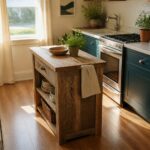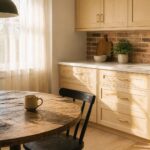
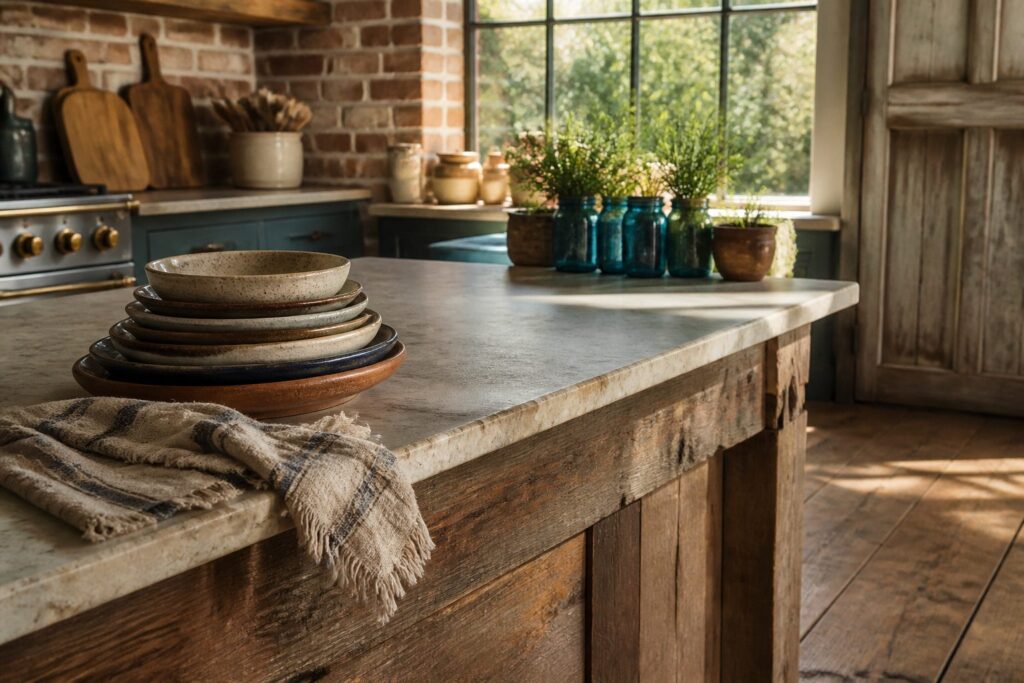
A rustic farmhouse kitchen can run from a $100 weekend shelf swap to a full cabinet rebuild, and the deciding factor is whether you own the walls or just punch holes in them.
Renters get the same warm palette and Shaker lines, but the apron-front sink and real shiplap stay off the table unless your landlord is unusually patient.
The giveaway detail that separates authentic from staged is the floor: five-inch planks with a matte finish read lived-in, while two-and-a-quarter-inch strip boards look like they took a wrong turn from a suburban hallway.
1. Color Schemes
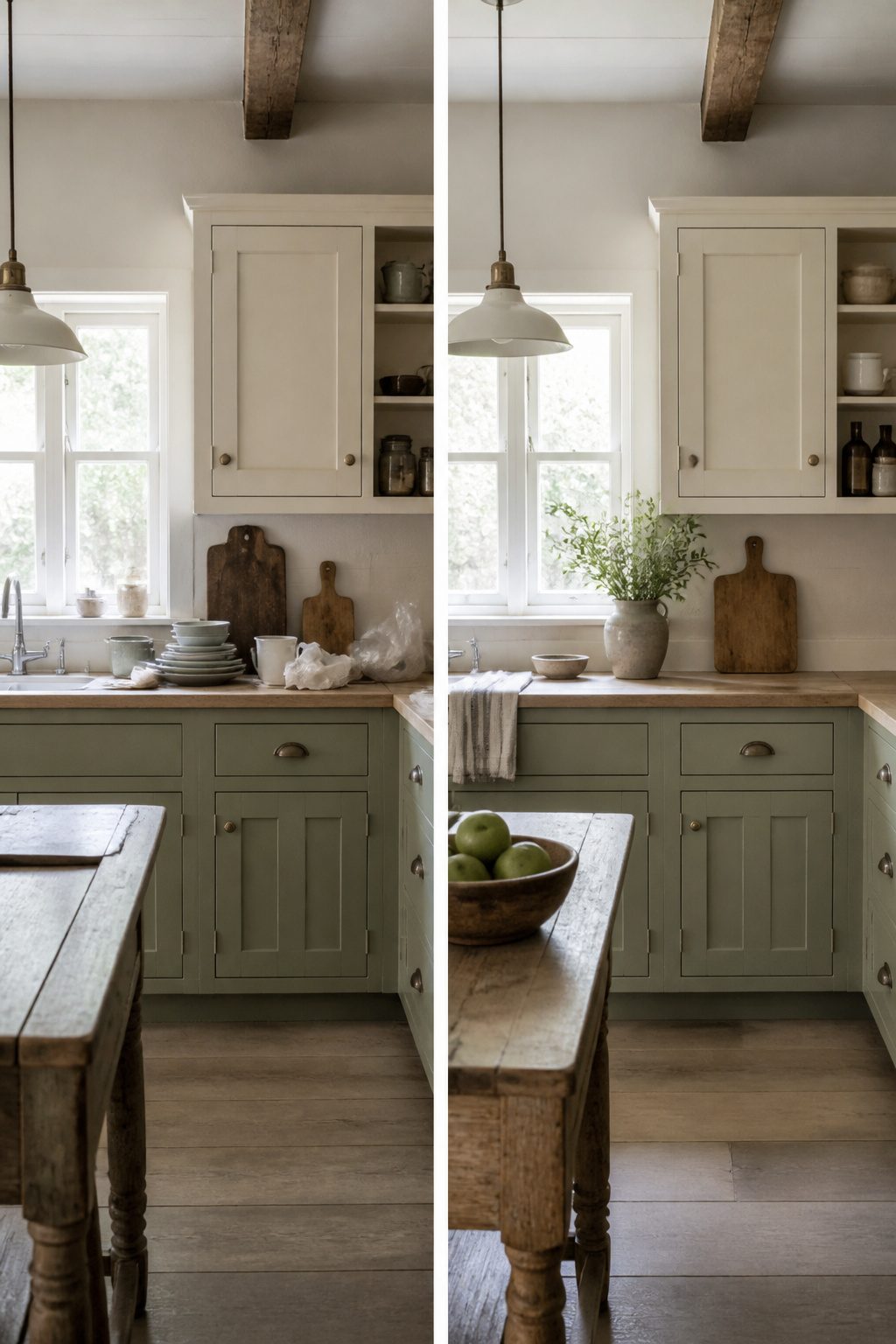
Creamy whites, soft grays, and muted greens form the backbone of most rustic farmhouse kitchens I see that actually work.
These aren’t the stark whites that read sterile; they carry warm undertones that keep the room feeling lived-in rather than showroom-finished. Sage green in particular has staying power, and it pairs cleanly with natural wood without competing for attention.
For smaller kitchens, this palette matters more. Light colors on cabinets and walls keep the visual weight down, which helps a cramped space feel open rather than boxed in.
I’ve noticed that renters especially benefit here because a warm white or soft beige base accepts whatever hardware or accents the landlord already installed, so you’re not fighting the existing fixtures.
Two ways to play this: stick with neutrals and cream throughout for a safe, bright result, or bring in a muted green or light gray on lower cabinets if you want depth without darkening the whole room.
The all-neutral route wins for resale or lease turnover; the two-tone approach works when you plan to stay put and want the kitchen to feel designed rather than decorated.
Either way, avoid cool-toned grays with blue undertones, which turn harsh under warm incandescent bulbs and read modern in a way that fights the rustic warmth you’re after.
Recommended Products

DIMENSIONS: Width 30" | Height 24" | Depth 12", and includes 2 Shaker Style Door, and 1 Adjustable Shelf for efficient storage without sacrificing room space

Three Wall Cabinets Sets - Single cabinet dimensions: 24"W x 12"D x 22"H. The total width for all three sets is 72''. Whether you’re looking to store cleaning supplies, towels, or kitchen essentials, the FIMELLO Wall Cabinets sets with enclosed doors keeps your items neatly stored and maximize your space to fulfill all your storage needs with ease.
2. Cabinet Styles
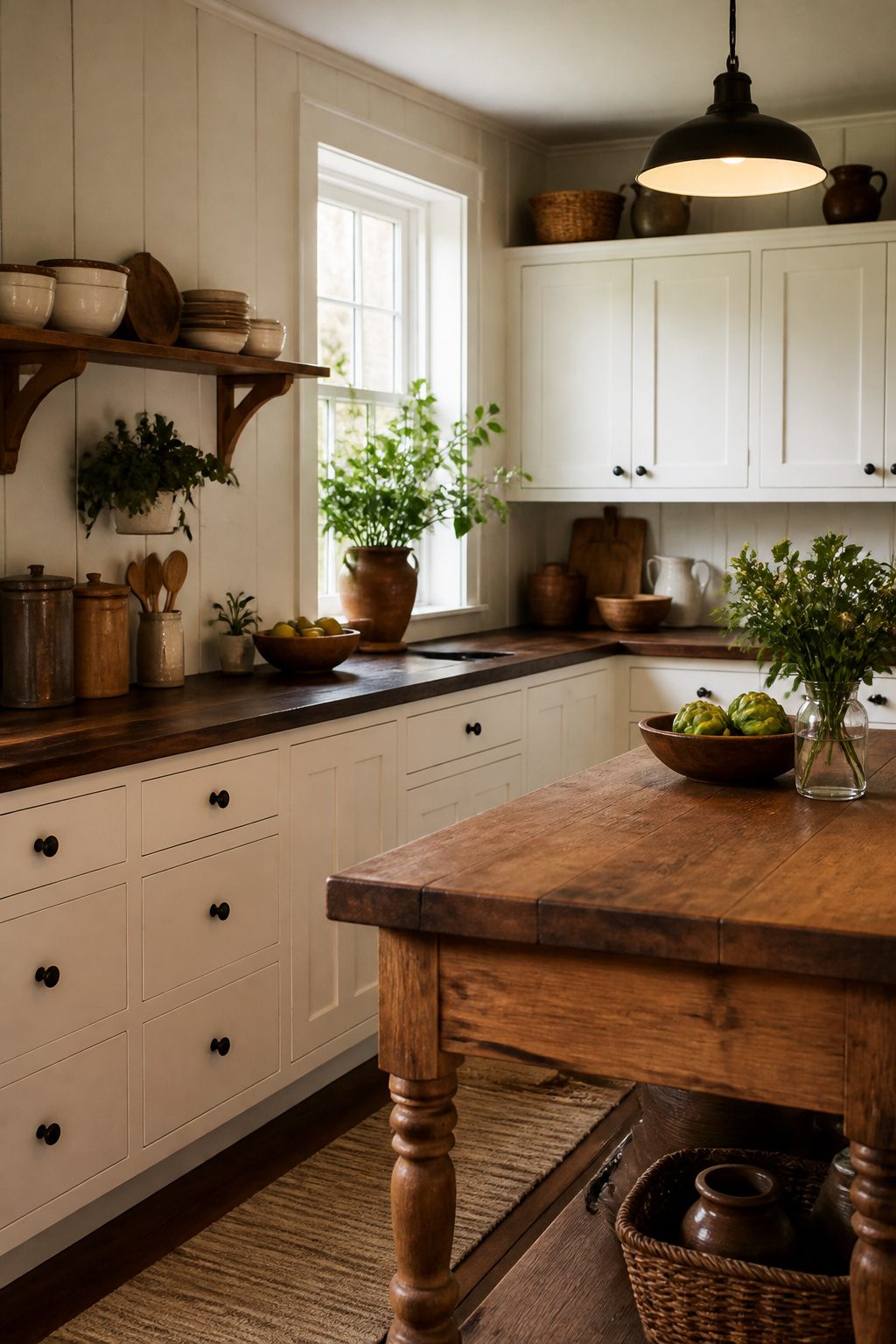
Shaker cabinets carry the rustic farmhouse kitchen better than raised-panel or flat-slab alternatives because their recessed center panel reads as handmade without the fuss.
Raised-panel doors pile on molding that competes with apron sinks and open shelving; flat-slab reads too modern and leaves the room feeling cold against butcher block or distressed wood.
Shaker splits the difference: clean enough to paint, structured enough to hold character.
Existing cabinets painted in soft white or warm gray uppers with sage green lowers can deliver the same look for a fraction of replacement cost.
Painted cabinets cost the least and still look great in photos. I would skip two-tone unless the kitchen gets strong natural light; in darker rooms, a single muted color keeps the walls from closing in.
Flat-slab and raised-panel both lose here. Shaker wins because it was built for exactly this kind of practical, warm kitchen.
Recommended Products

MINIMALIST STYLISH DESIGN: Combining paneled design with modern functionality, minimalist style with enormous capacity, this freestanding kitchen pantry features classic details and timeless eleglance, which seamlessly complements any contemporary aesthetic, making it a versatile choice for your home

Belong To Your kitchen: The kitchen cabinet features 2 large door cabinets and 2 full extension drawers great for storing coffee beans, seasoner, spare kitchen paper, or some sundries. Meanwhile, your coffee maker, toaster, can sit on our wide tabletop

Ample Storage: Revamp your kitchen with this kitchen pantry, designed for all kinds of storage. Upper featuring 4 glass doors, curved wine racks, mug hooks, and stemware racks to keep items within easy reach, it also has a spacious countertop, two deep drawers, and a 4-door cabinet that integrates all in one to supply copious storage solutions
3. Countertops
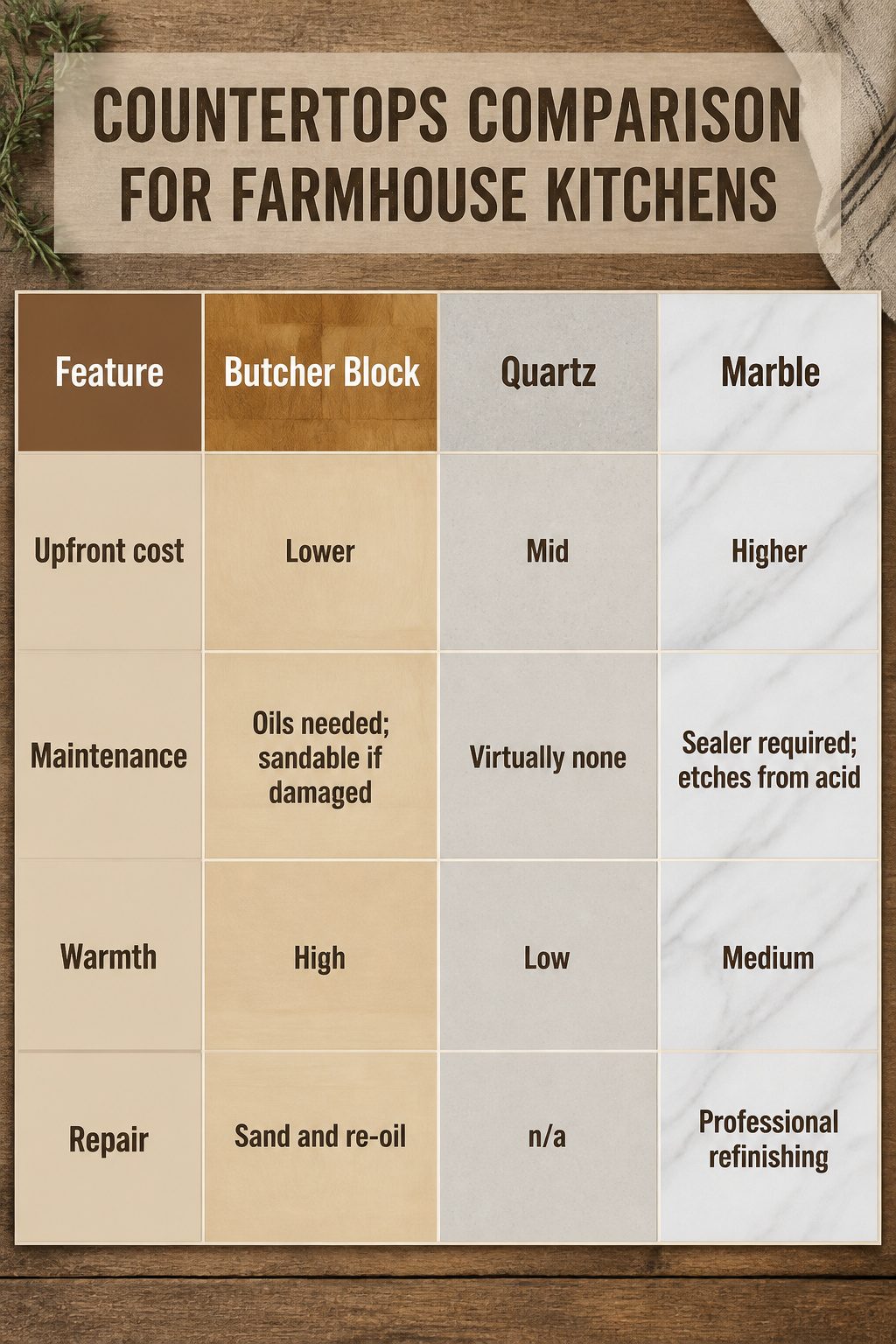
Butcher block, quartz, and marble each pull the rustic farmhouse kitchen in a different direction, and the choice usually comes down to how much maintenance you will actually do versus how much warmth you need.
| Feature | Butcher Block | Quartz | Marble |
|---|---|---|---|
| Upfront cost | Lower | Mid | Higher |
| Maintenance | Oils needed; sandable if damaged | Virtually none | Sealer required; etches from acid |
| Warmth | High | Low | Medium |
| Repair | Sand and re-oil | n/a | Professional refinishing |
I keep coming back to butcher block for the farmhouse look because it costs less and the damage is fixable.
A friend of mine sanded out a burn mark in twenty minutes on a Saturday. Quartz resists stains better than anything, and sources like London Fog give you that soft gray tone that reads modern farmhouse without trying too hard.
But the surface feels cold under your hands, and paired with white cabinets it can tip sterile.
Marble, Carrara especially, looks right in a rustic setting. The veining gives you variation without pattern overload, and it balances the wood tones that farmhouse kitchens lean on.
Etching is the problem. Lemon juice or red wine will leave a dull spot you cannot sand out yourself.
Some people live with the patina. I would not, not in a kitchen I use daily.
For my money, butcher block on the island and quartz on the perimeter covers both bases. You get the warmth where you lean and chop, and the durability where you set down hot pans without thinking.
Recommended Products

Ultra-Durable & Pet-Friendly Construction: With a 0.3mm wear layer tested over 15,000 abrasion cycles, this luxury vinyl plank flooring resists scratches, dents, and spills. Suitable for busy homes with pets and kids, it stays beautiful for years even in high-traffic areas
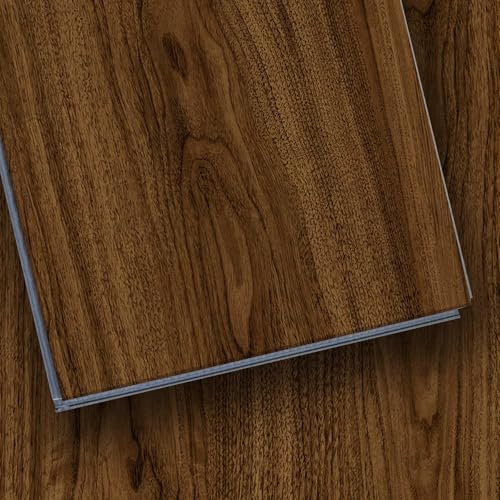
【Ultra-Durable & Pet-Friendly】With a 0.3mm wear layer tested over 15,000 abrasion cycles, this luxury vinyl plank flooring resists scratches, dents, and spills. Ideal for busy homes with pets and kids, it stays beautiful for years even in high-traffic areas.

【PRODUCT MATERIAL】 Floor transition strips are non-toxic, odorless, healthy, and environmentally friendly. The surface is scratch-resistant, abrasion-resistant, dirt-resistant, easy to clean, and not easy to stain. Different from other similar products which are made of aluminum alloy, viny material is softer. The transition cover is beneficial to protect children or the elderly not to tripping.
4. Sinks
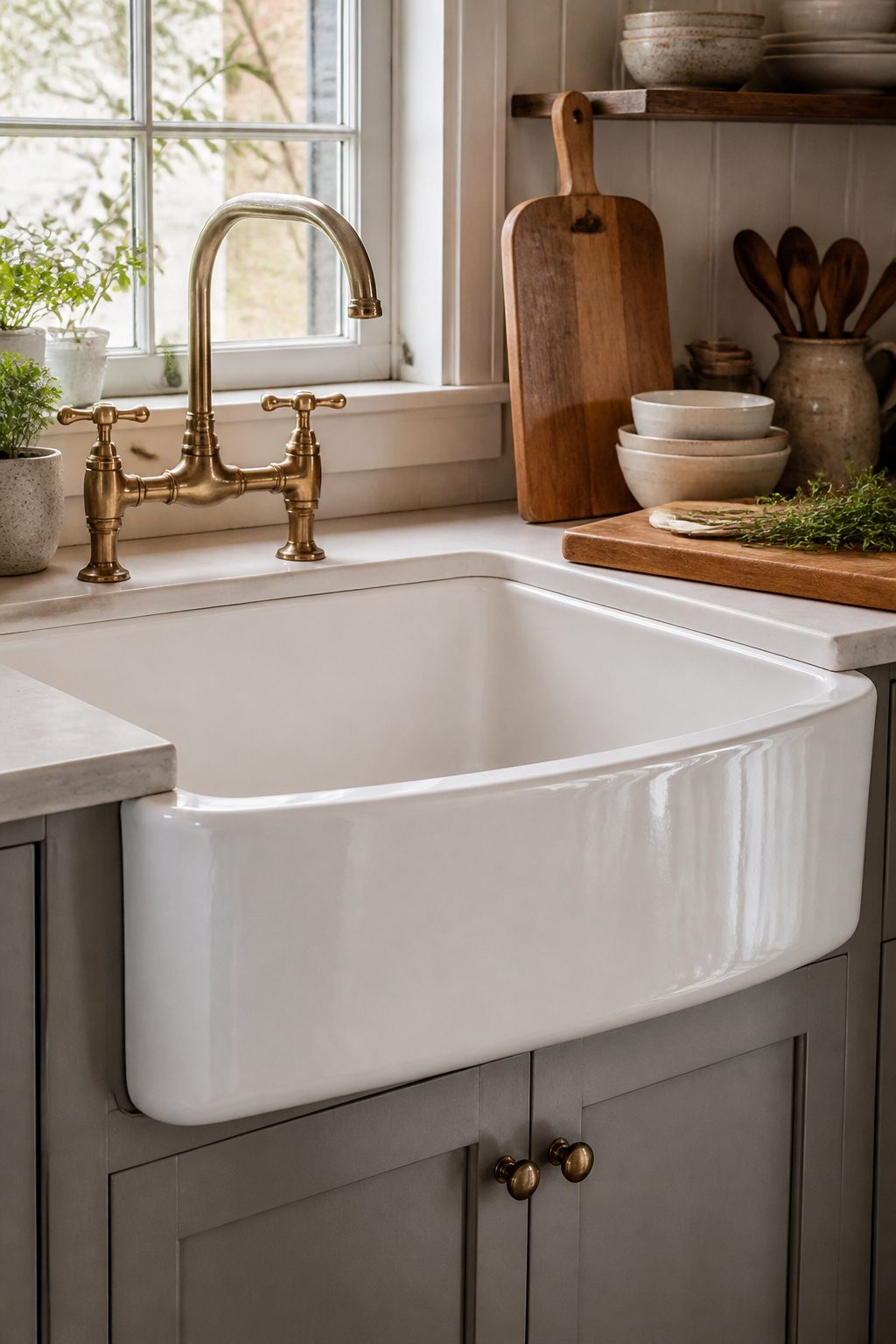
An apron-front farmhouse sink is the single detail that signals rustic farmhouse kitchen faster than anything else you can swap in a weekend.
The exposed front panel puts the sink on display from across the room, and that visible face changes how the whole run of cabinetry reads.
Fireclay in white keeps it traditional; hammered copper pushes the look toward rougher, more rustic territory.
I would pair either with a vintage-style bridge faucet in brushed brass or matte black, because the faucet’s cross handles and high arch echo the sink’s period lines and complete the picture.
The front exposure is not just for show.
The apron drops forward of the cabinet face, which brings the basin closer to your body and saves your lower back when you are rinsing a stockpot. That same forward placement is what creates the installation trade-off.
Standard base cabinets are built with a false drawer front where the sink cabinet sits; an apron-front sink needs that front removed and the cabinet sides cut down or rebuilt to support the basin’s weight from below.
If you are doing the work yourself, the modification costs nothing but time and a fresh piece of plywood. If you are hiring it out, that labor adds to the budget in a way a drop-in sink never would.
For a renter or a first-home owner weighing every hundred dollars, the self-install is what makes this choice realistic; otherwise, a deep ceramic undermount with a traditional faucet gets you most of the function without the carpentry bill.
Recommended Products

Steadier Countertop Tear-Off: A 6.6 in round base with non-slip bottom pads helps reduce sliding and tipping when you pull a sheet, keeping paper towels easy to reach during cooking, cleaning, and spills.

【Handmade Rustic Towel Holder】Featuring an attractive floral embossing detail reminiscent of the old countryside, a warm copper label for a vintage-inspired touch, and adorable ball feet that tie the entire design language together, Autumn Alley Farmhouse Galvanized Kitchen Paper Towel Holder adds function & charm to your kitchen counter. Let this galvanized paper towel holder complement your interiors with a shabby chic farmhouse appeal, understated elegance and unmatched functionality!
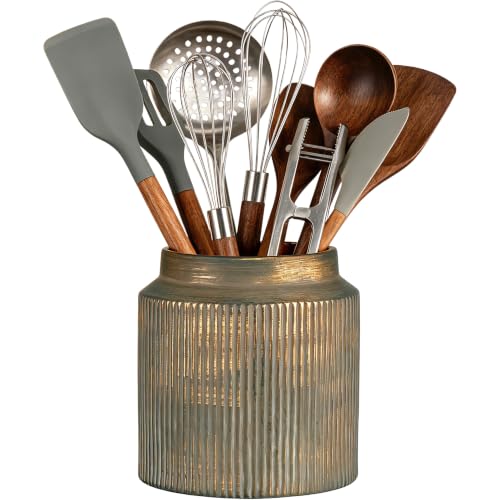
ORGANIZED KITCHEN COUNTER: You get a rustic utensil holder for kitchen counter storage that helps keep spatulas, spoons, whisks, ladles, tongs, and daily cooking tools together instead of scattered across your workspace
5. Lighting
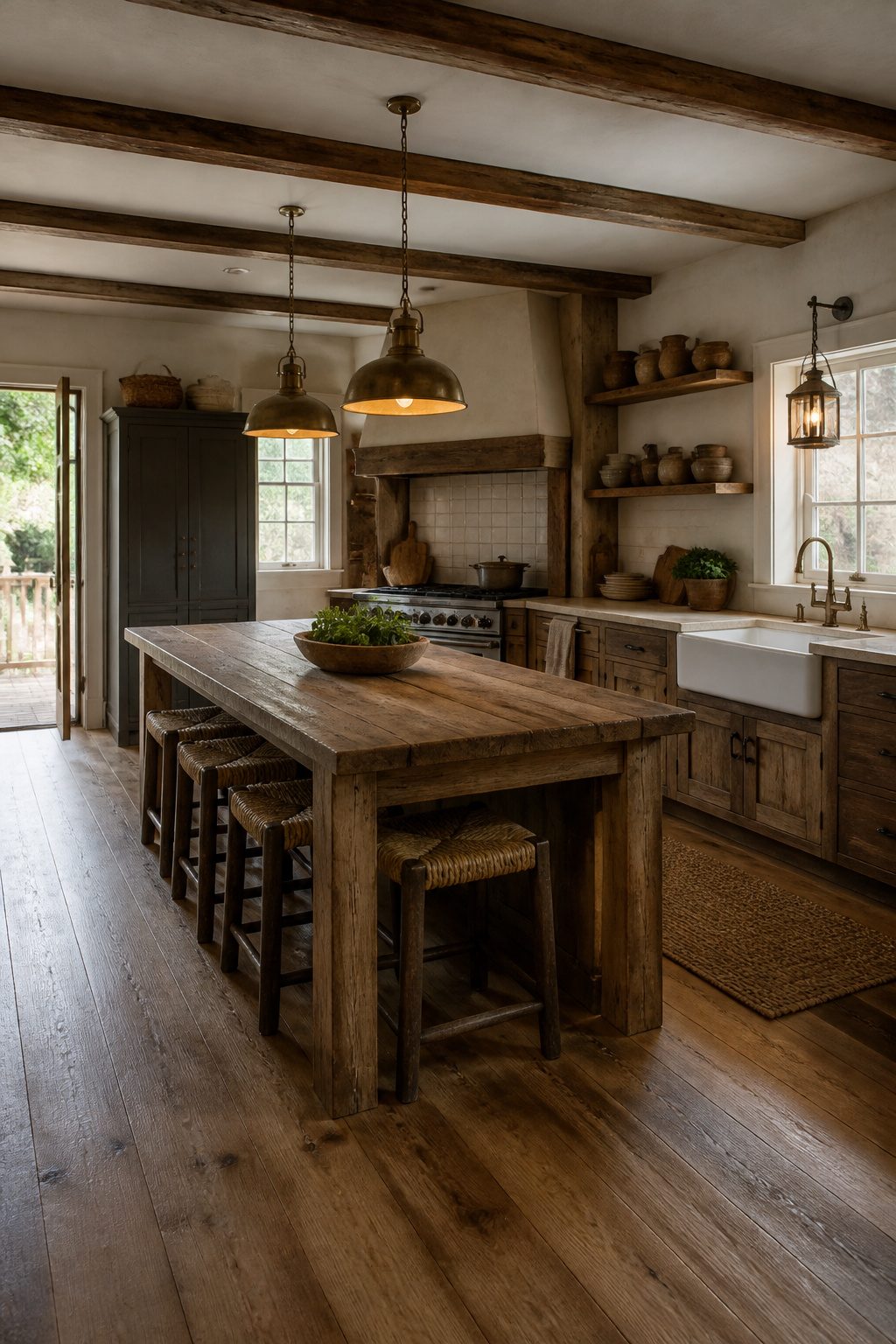
Vintage pendants and lanterns read as farmhouse because of the finish, not the silhouette. Aged brass or oil-rubbed bronze does the heavy lifting; the same shape in polished chrome looks like a showroom mistake.
I hang two or three pendants over an island at a height where they cast light onto the work surface without blocking sightlines across the kitchen.
Over the sink, a single lantern or schoolhouse fixture centered on the basin is enough.
The finish should match the cabinet hardware, or at least live in the same warm family, so the room feels tied together rather than collected at random.
If a junction box already exists where you want pendants, swapping the fixture is a Saturday morning job for anyone comfortable with a wire nut and a breaker switch.
Running new wire to a bare ceiling is a different project entirely; it means drywall repair, permits in most jurisdictions, and likely an electrician.
I would rather spend that budget on a better fixture where the wiring already exists than fight the walls for another light.
Recommended Products

【WORKSTATION SINK】This farmhouse sink come with integrated ledge for sliding accessories allows you to work right over the sink while minimizing clutter on the kitchen counter, The fireclay workstation sink provides the possibility of making the kitchen more tidy and more convenient.

【Made of Fine Fireclay】Miuara farmhouse sink is made of fine fireclay fired at extra high temperature above 2600℉ for 26 hours, it’s very hard and sturdy. And the solid core construction makes the fireclay sink drop in superior strengthen and durable to withstand heavy use, which is highly resistant to stain,heat,crack and scratch. Miuara farm sink is classic and gorgeous!
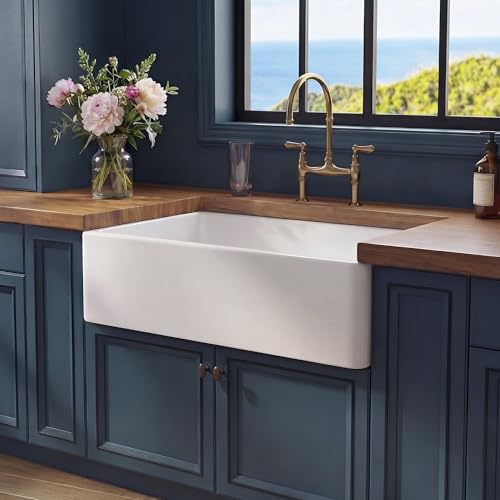
【Made of Fine Fireclay】Miuara farmhouse sink 30 inch is made of fine fireclay fired at extremely high temperature above 2600℉ for 26 hours,it’s very hard and sturdy.And the solid core construction makes the fireclay farm sink superior strengthen and durable to withstand heavy use, which is highly resistant to stain, crack and scratch. Miuara white apron sink is classic and gorgeous!
6. Open Shelving
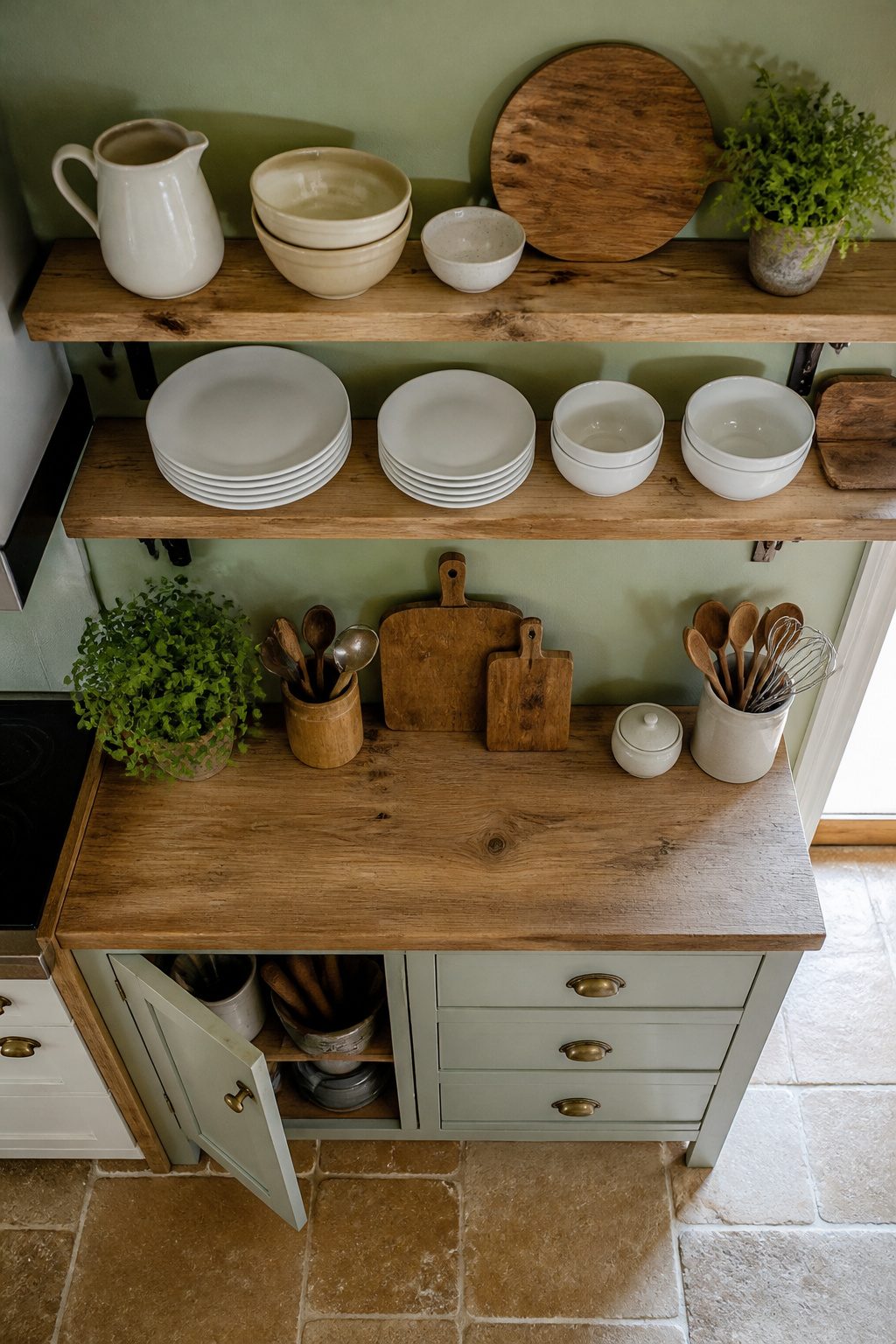
Open shelves in a rustic farmhouse kitchen give you a place to stack white plates and lean cutting boards against the wall where the grain shows.
Removing a run of upper cabinets and mounting two or three pine boards on cast-iron brackets runs about $100 and finishes in a weekend if the wall behind is in paintable condition. You will be dusting.
Daily-use dishes collect cooking grease along with dust, so I keep everyday plates in a lower cabinet and use the open shelves for pieces I rotate in and out. The styled look costs you the convenience of hiding clutter.
If you are renting, the brackets screw into studs the same way cabinets do, and you patch the holes when you move. Painted MDF boards work if solid pine is not in the budget, though they sag under heavy pottery.
I prefer a face grain that runs the full length of the board; glue-ups with too many seams read busy from across the room.
Recommended Products
DIMENSIONS: Width 24" | Height 30" | Depth 12", and includes 2 Shaker Style Door, and 2 Adjustable Shelves for efficient storage without sacrificing room space

[Space-Saving Max Storage Design] Transform empty wall space into a major storage hub! This versatile laundry room cabinet measures 29.5"W x 11.8"D x 31.5"H, perfectly sized to keep your bathroom, laundry room, or kitchen clutter-free. Its chic shaker doors neatly conceal clutter inside, while offering generous interior capacity for everything from toiletries and cleaning supplies to kitchen essentials and more. Get organized without sacrificing style.

Provides ample space for morning preparations. Enhanced resistance to cracking, warping and moisture. Concealed European style 6-way adjustable hinges with a soft-close feature. UV coated natural plywood finish interior. .
7. Flooring
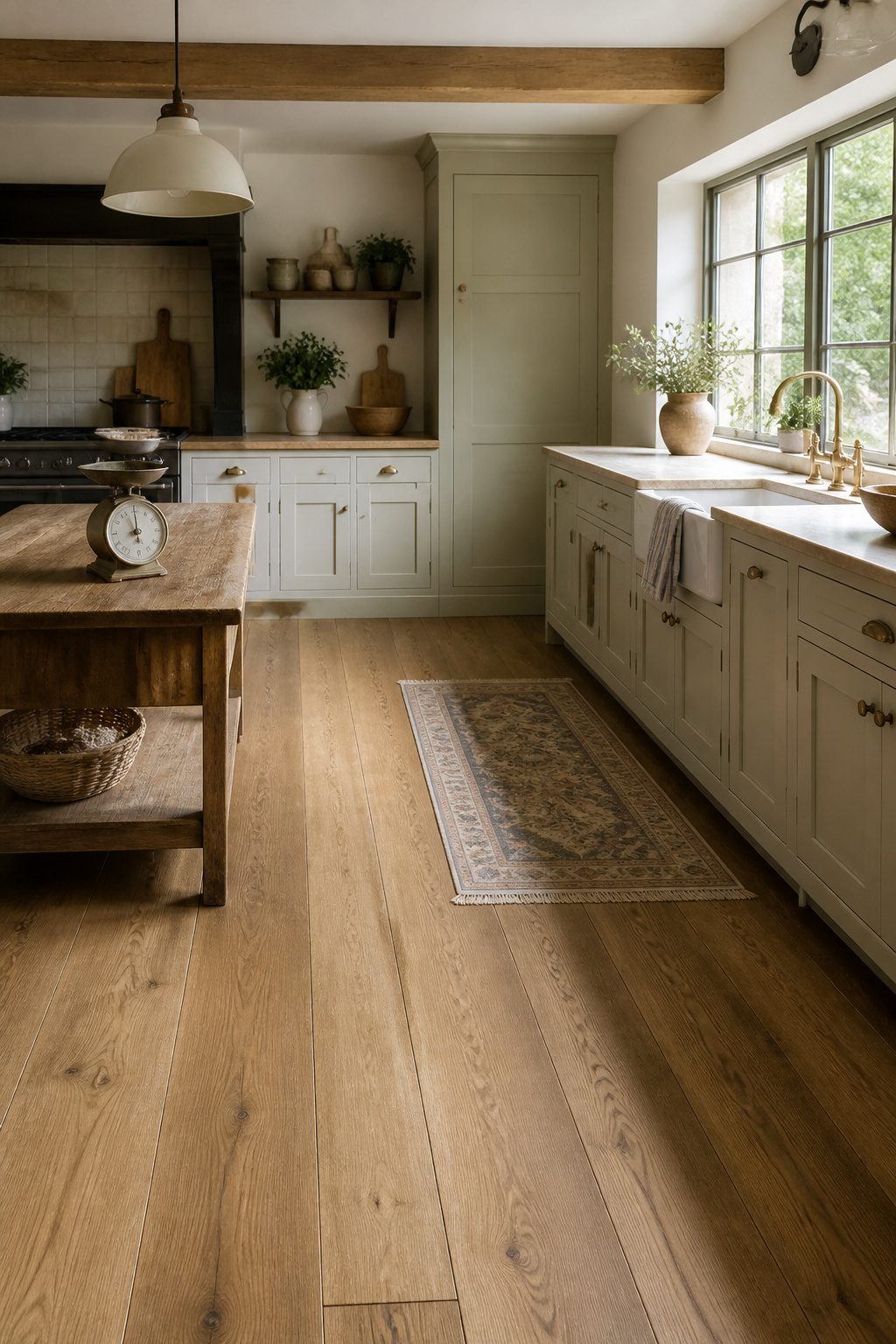
Wood flooring is what separates a rustic farmhouse kitchen from one that merely borrows the label.
Wide-plank oak or pine with a matte or distressed finish reads authentic in a way narrow strip flooring never manages; a 5-inch plank carries visual weight that 2.25-inch strip boards lose in a busy kitchen.
The width is the first thing your eye registers when you walk in.
Below grade or over concrete, solid wood is a risk I would not take. Engineered wood with a hand-scraped look gives you the same warmth and texture, and it handles the moisture swings that warp solid boards in those conditions.
The distressed surface also hides the scuffs and dropped pots that a kitchen floor collects, which matters more than most people figure until they live with it.
If your subfloor allows either, I still lean engineered for the kitchen. The dimensional stability costs nothing in looks and saves you from the seasonal gaps that open in solid wood when winter heating pulls the moisture out.
Recommended Products

Spacious Vertical Storage: Keep your bathroom or kitchen organized with 6-door design and multiple compartments that maximize vertical storage without taking up much floor space

⭐【Clutter-to-Calm in Seconds】With 2 spacious drawers to stash away odds and ends, wide tabletop and 2 open shelves for showcasing your decor, and roomy bottom cabinet for larger items, this bathroom cabinet meet to your various storage needs. You can absolutely end the chaos with this tall cabinet and enjoy a clutter-free home

【2 Pack Value Set】Sized at 15” x 8” x 12.8” each, these organizers fit perfectly for bathroom organizers and storage, kitchen organizers and storage, under sink organizer and under cabinet storage.
8. Decor Elements
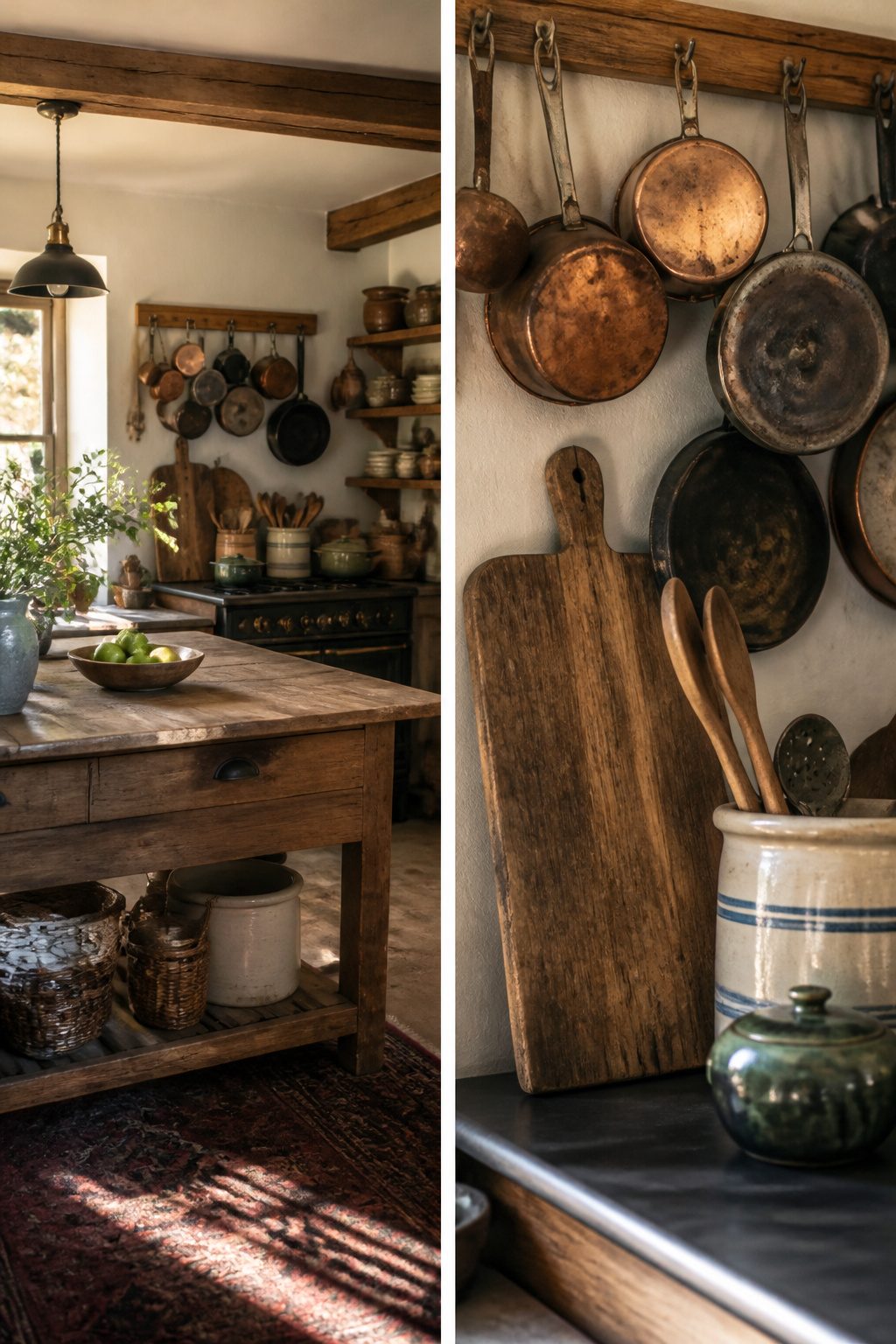
The best rustic farmhouse kitchens look like someone actually cooks in them, and vintage pots and pans hung on the wall do that work better than any sign that says "gather."
A cast-iron skillet or copper-bottomed saucepan with thirty years of patina reads as warmth because it earned it, not because a factory distressed it.
Real pieces come from estate sales, flea markets, and family kitchens. That chipped ceramic crock from your grandmother’s pantry costs nothing and carries more weight than a $40 reproduction from a big-box store.
The reproduction makes sense only when you need a specific size or shape for actual use and the antique market wants $200 for a cracked original.
Cutting boards show the difference fastest. A vintage board with knife scars and rounded edges from decades of washing tells a true story.
The new "distressed" version tells the story of a sanding machine in a warehouse. I would rather hang one real board above the stove than fill the wall with three factory-aged fakes.
For sourcing, I have found that small-town estate sales price cookware at what it is, functional kitchenware, while city vintage dealers mark it up as "decor."
I look for the box lot at the end of the sale, where the auctioneer bundles the mismatched pieces no one bid on. That is where the honest, uncurated collections live.
Recommended Products

Premium Quality : Biyoee Peel and Stick Vinyl Flooring Tiles are made of high-quality vinyl, ensuring durability and long-lasting performance. Each pack contains 10 tiles (5 matte black + 5 matte white), each measuring 12x12 inches, covering 10 square feet – perfect for refreshing any room in your home.

【PRODUCT MATERIAL】 Floor transition strips are non-toxic, odorless, healthy, and environmentally friendly. The surface is scratch-resistant, abrasion-resistant, dirt-resistant, easy to clean, and not easy to stain. Different from other similar products which are made of aluminum alloy, viny material is softer. The transition cover is beneficial to protect children or the elderly not to tripping

【PRODUCT MATERIAL】 Floor transition strips are non-toxic, odorless, healthy, and environmentally friendly. The surface is scratch-resistant, abrasion-resistant, dirt-resistant, easy to clean, and not easy to stain. Different from other similar products which are made of aluminum alloy, viny material is softer. The transition cover is beneficial to protect children or the elderly not to tripping
9. Kitchen Islands
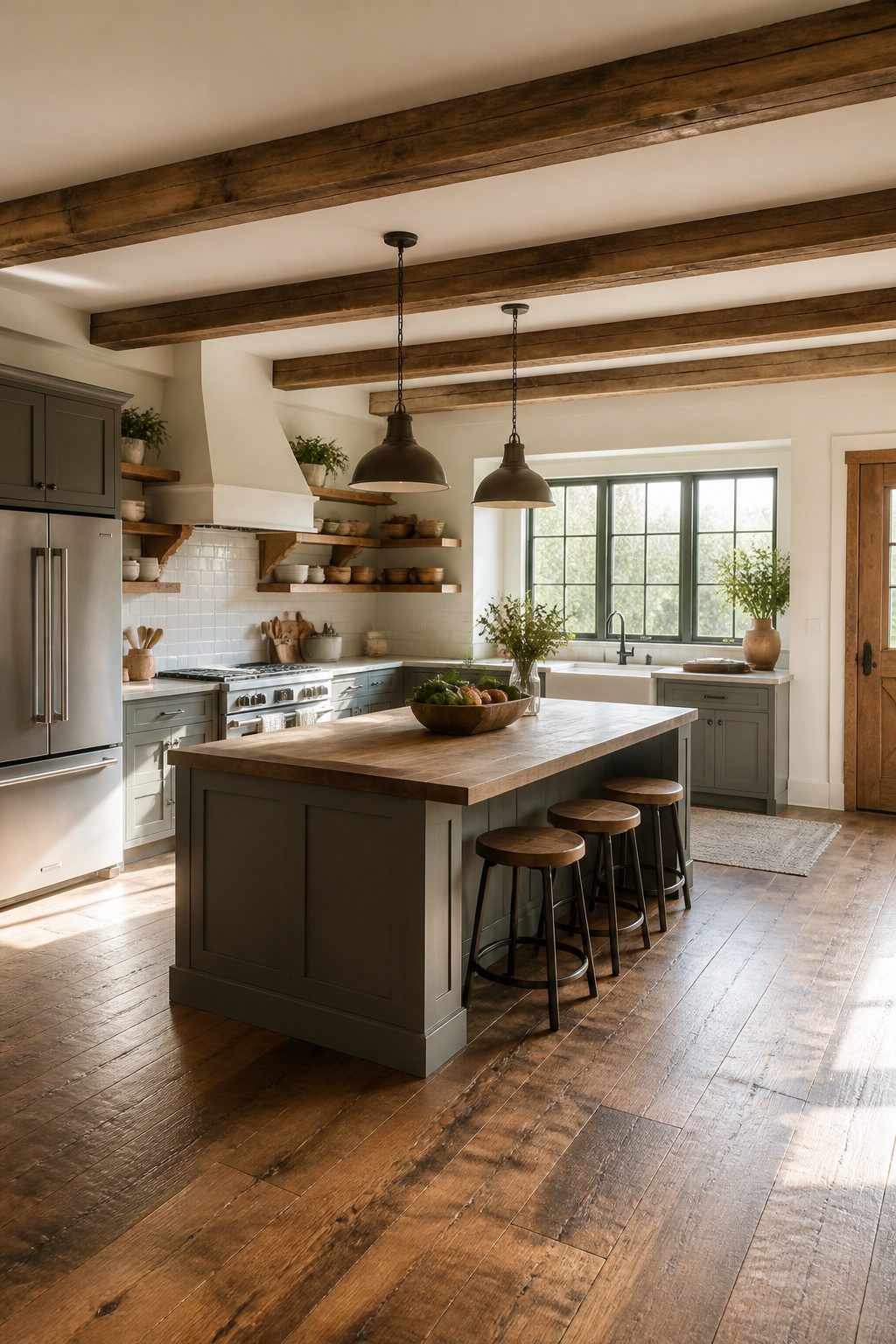
A central island in a rustic farmhouse kitchen works best when it actually gets used for sitting, not just for show.
Reclaimed wood tops the list for looks, but the reality is that genuine reclaimed lumber rarely fits a tight budget unless you get lucky at a salvage yard or already own a barn.
New wood stained to match gives you the same warmth for a fraction of the cost, and most guests will not know the difference once the finish is down.
If seating is the goal, plan the overhang before you build anything. I like at least 12 inches of clear knee space past the base cabinet, and 15 is more comfortable for anyone taller than average.
Less than that, and people end up kicking the cabinet or leaning forward like they are eating at a desk.
Butcher block on a new wood base works best for me: it reads rustic, it takes abuse well, and you can sand out burns or knife marks instead of living with them. You will have to maintain it.
It needs oiling a few times a year, and standing water is its enemy. If you are the type to leave dishes in the sink, think twice.
Recommended Products
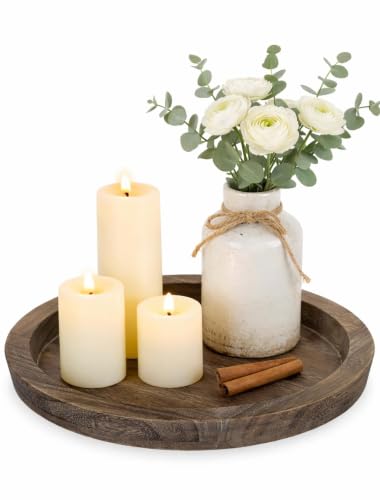
DECORATIVE TABLE CENTERPIECE: Our small candle tray is a a lovely table centerpiece for any table, placed it on living room table or coffee table, perfect to display flameless candles, tea light, succulent, vase or other decorations. It can be used on kitchen or dining room table, decorate with flowers to create a warm atmosphere

-CAPACITY: 6.4"H x 5.1"D, it can store more than 10 pieces of tableware, large enough to hold all the frequently used tableware on the counter, a convenient solution to the problem of cluttered kitchen drawers and countertops.

FALL FLORAL PUMPKIN GLASS DISPENSER: Features a glass soap dispenser with rustic autumn floral and pumpkin design. The refillable bottle brings harvest season charm to kitchen and bathroom countertops
10. Wall Treatments
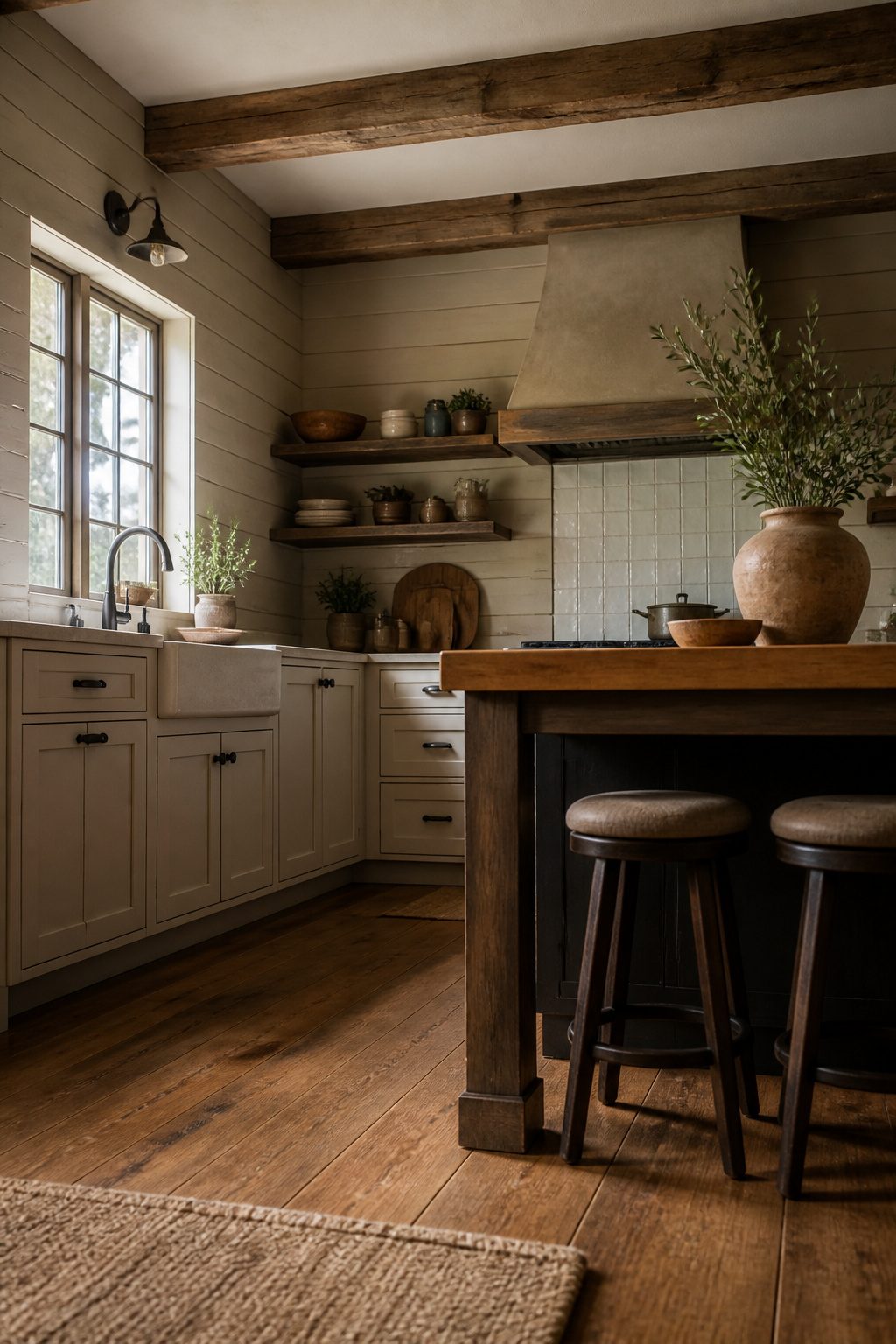
Shiplap is the wall treatment most people picture first, but the boards sold as shiplap in most home centers are 1/8-inch MDF paneling with routed grooves, not actual overlapping boards.
Real shiplap has a rabbeted edge where each board laps over the next, giving you shadow lines that read as depth rather than wallpaper texture.
I would spend the extra half day to install the genuine boards; the MDF version telegraphs as flat within a year or two of seasonal swelling.
For ceilings, exposed beams bring the same warmth. Original structural members are ideal, though most kitchens built after the 1970s do not have them.
Faux beams work fine if you build hollow boxes wrapped around a 2×4 secured to the ceiling joists. A medium oak or weathered finish keeps the room grounded; anything darker than that starts to read as lodge rather than farmhouse.
The gap between the box and the ceiling needs to be tight, or the illusion breaks the moment someone looks up from the sink.
Recommended Products

💦【100% TRUE Fireclay Sink】Upgrade your kitchen with GETPRO premium farmhouse kitchen sink. Crafted from high-quality fireclay material, our white kitchen sink is not only visually stunning but also exceptionally durable and resistant to stains, making kitchen chores a breeze. The classic white finish apron sink complements both traditional and modern styles, making the farm sink a versatile choice for any home.

【Smooth Front Heavy Duty Fireclay Sink for Kitchen】The front of the farmhouse apron sink 33 Inch is smooth, with a pure white glaze, making the farm sink look gorgeous and easy to clean.It is a heavy-duty fireclay sink weighing over 70 pounds, It is recommended to have two people move together.

50/50 DIVIDE FARMHOUSE SINK: The double bowl farmhouse sink provides dedicated space for soaking, handwashing, drying, and stacking dishes. The 50/50 bowl ratio facilitates efficient zone based operation, streamlining your kitchen workflow.
What Rustic Farmhouse Kitchen Means Now
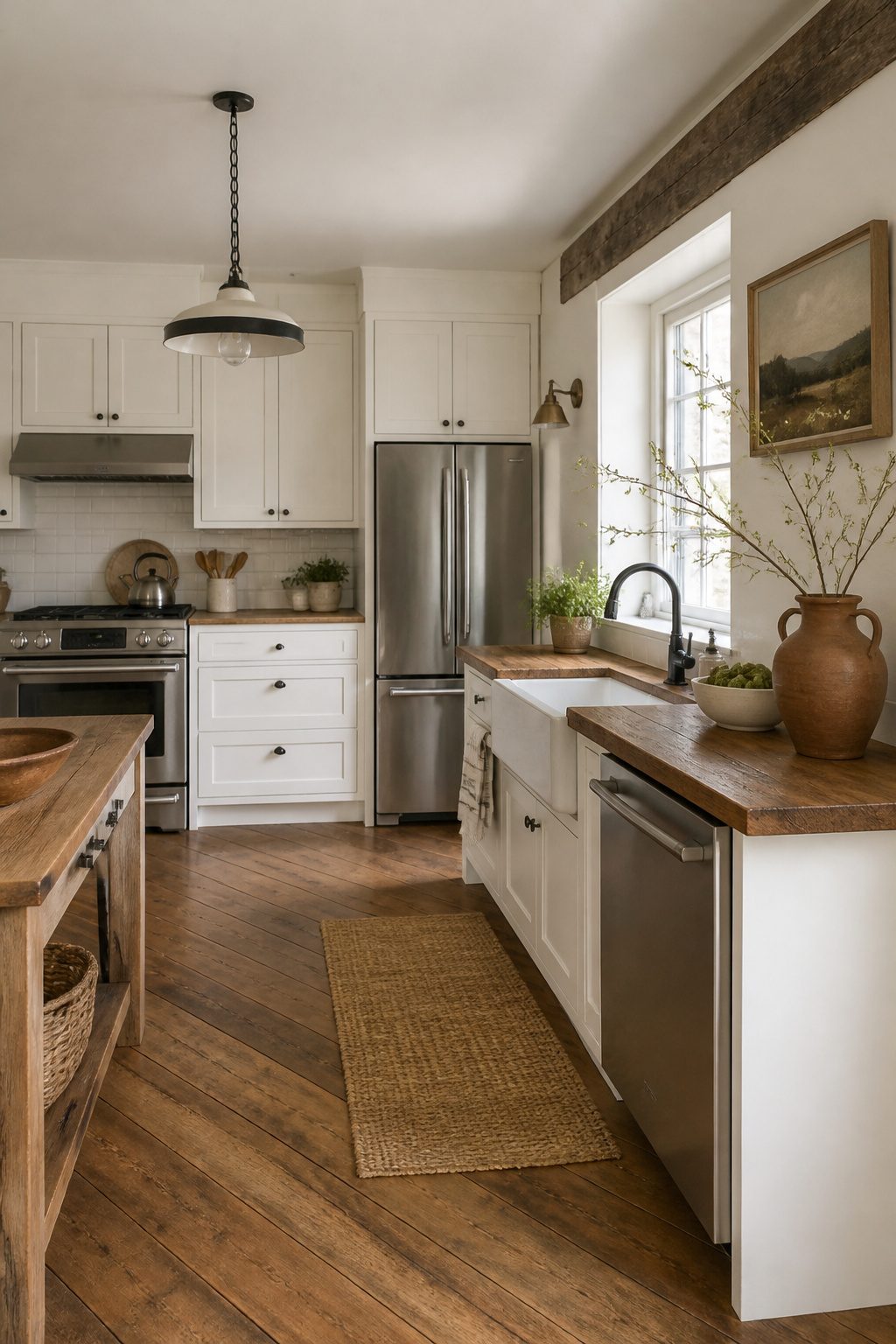
A rustic farmhouse kitchen today is not a period room. It is a working kitchen that borrows warmth from the past while keeping the layout and appliances modern.
Shaker-style cabinets in Alpine White paired with a ceramic sink and natural wood countertops make the point: the look reads heritage, but the storage and workflow are contemporary. Stainless steel appliances fit without apology.
I think this matters more than most people expect, because a kitchen that tries too hard to look old forces daily compromises, a farmhouse sink under a eight-foot ceiling, for example, or vintage hardware that snags on a dishwasher front.
The real win is in the mix. Reclaimed wood shelves above a clean-lined island, black hardware against white cabinetry, a butcher-block top on a metal base.
These pairings do not recreate 1890; they let the kitchen function like a kitchen. The diagonal wood floor Herr used is the detail that sells it, old material laid in a modern direction so the eye registers both at once.
I would skip anything that sacrifices counter depth or drawer clearance for a "more authentic" silhouette. The reader searching this term wants warmth, not a museum piece they cook in.
Natural Materials That Hold Up
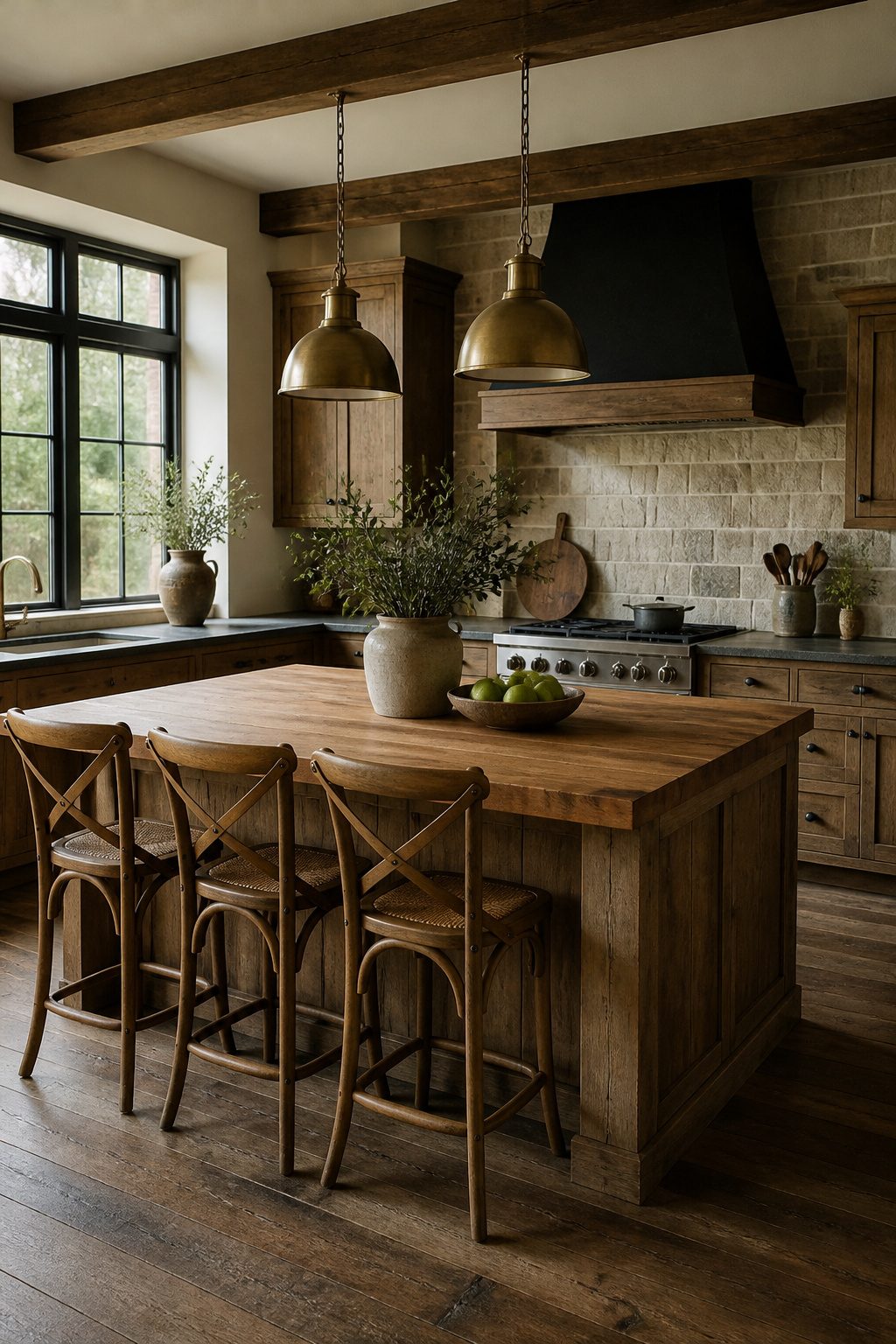
A rustic farmhouse kitchen lives or dies on whether the materials can take real cooking, not just the photoshoot.
Reclaimed wood gives you the grain and wear, but it needs sealing every year or two to keep steam from warping open shelves and butcher-block tops.
Skip the maintenance, and you’ll see cupping around the sink within a season. Natural stone, whether on a backsplash or island edge, handles heat without complaint; that’s the practical edge that stone holds over wood near the range.
Metal is where I split the difference. Brass or black iron hardware, a rustic metal base on an island table, and milk-glass pendants overhead all read farmhouse, but the metal pieces don’t ask for oiling or resealing.
Chrome pulls and stainless steel appliances bridge into modern kitchens cleanly if you ever want to pull back from full rustic.
The cost of that low upkeep is fingerprints and the occasional hard-water spot; stone hides both better than polished metal does.
My vote goes to stone for the heavy-use zones, sealed wood where you want warmth under your hands, and metal for the details that would be a pain to replace.
Making It Yours Without Clutter
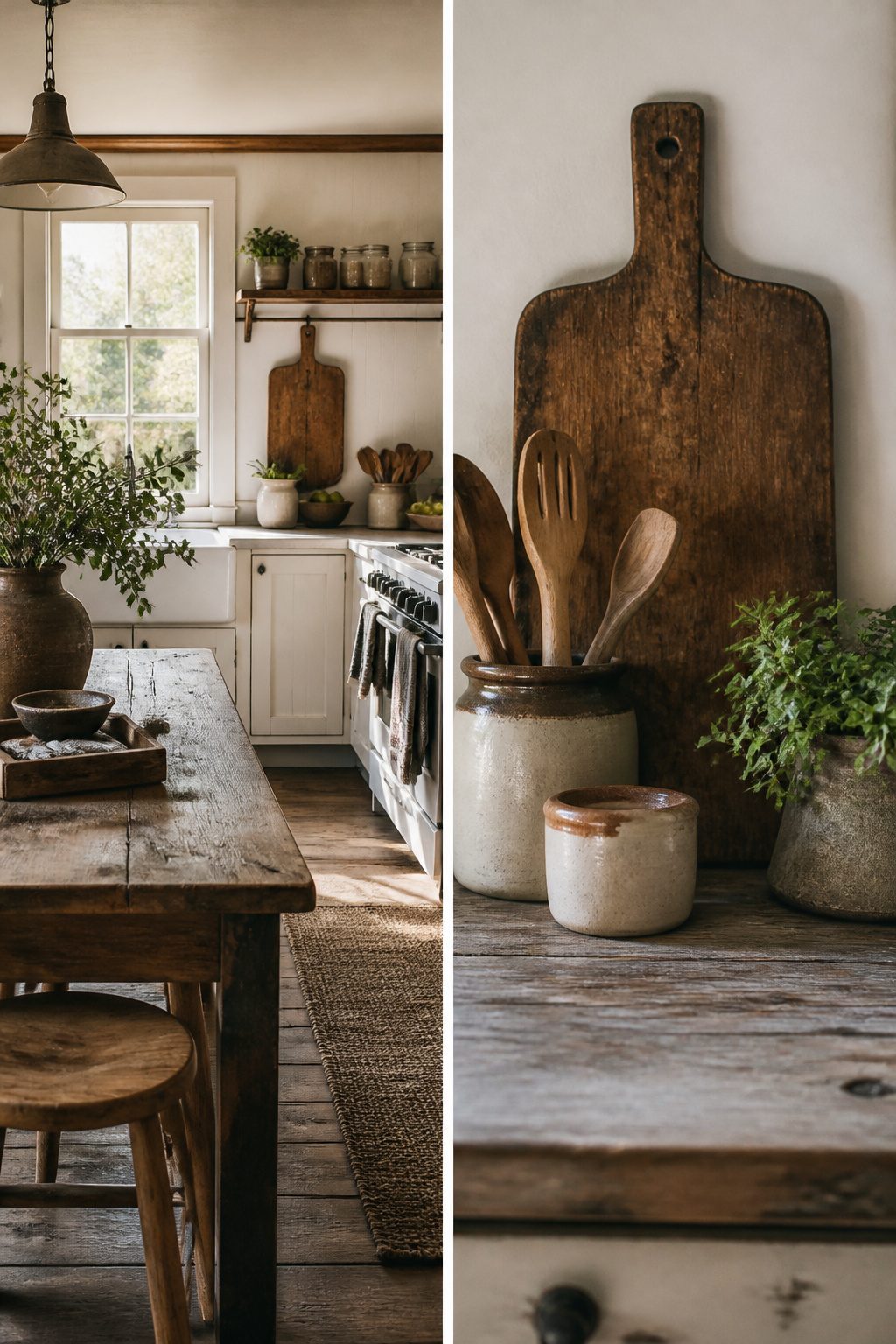
The line between a rustic farmhouse kitchen that feels lived-in and one that looks staged runs thinner than most people think. wooden signs, antique clocks, framed botanical prints, and vintage farmhouse charm pieces all work, but only when they retain a connection to something real.
A sign you bought because the color matched reads exactly like that; a wooden sign with paint worn to gray where your grandmother’s thumb rested for forty years carries the whole wall.
I keep one shelf for the inherited and found, and I stop there.
Custom open shelving can display collections of vintage kitchen utensils or similar items, yet the moment the collection grows past what that single shelf holds, you have crossed into clutter.
The essentials scattered on a countertop tell a story only when they are the ones you actually used this morning.
Edit by the light, not by the label. If an object disappears into shadow at noon, it is already visual noise no matter how sentimental.
Start from the foundation pieces like the kitchen island and build up with decor deliberately, because beginning with the extravagant items guarantees you will run out of restraint before you run out of surfaces.
Small Space Moves That Still Read Farmhouse
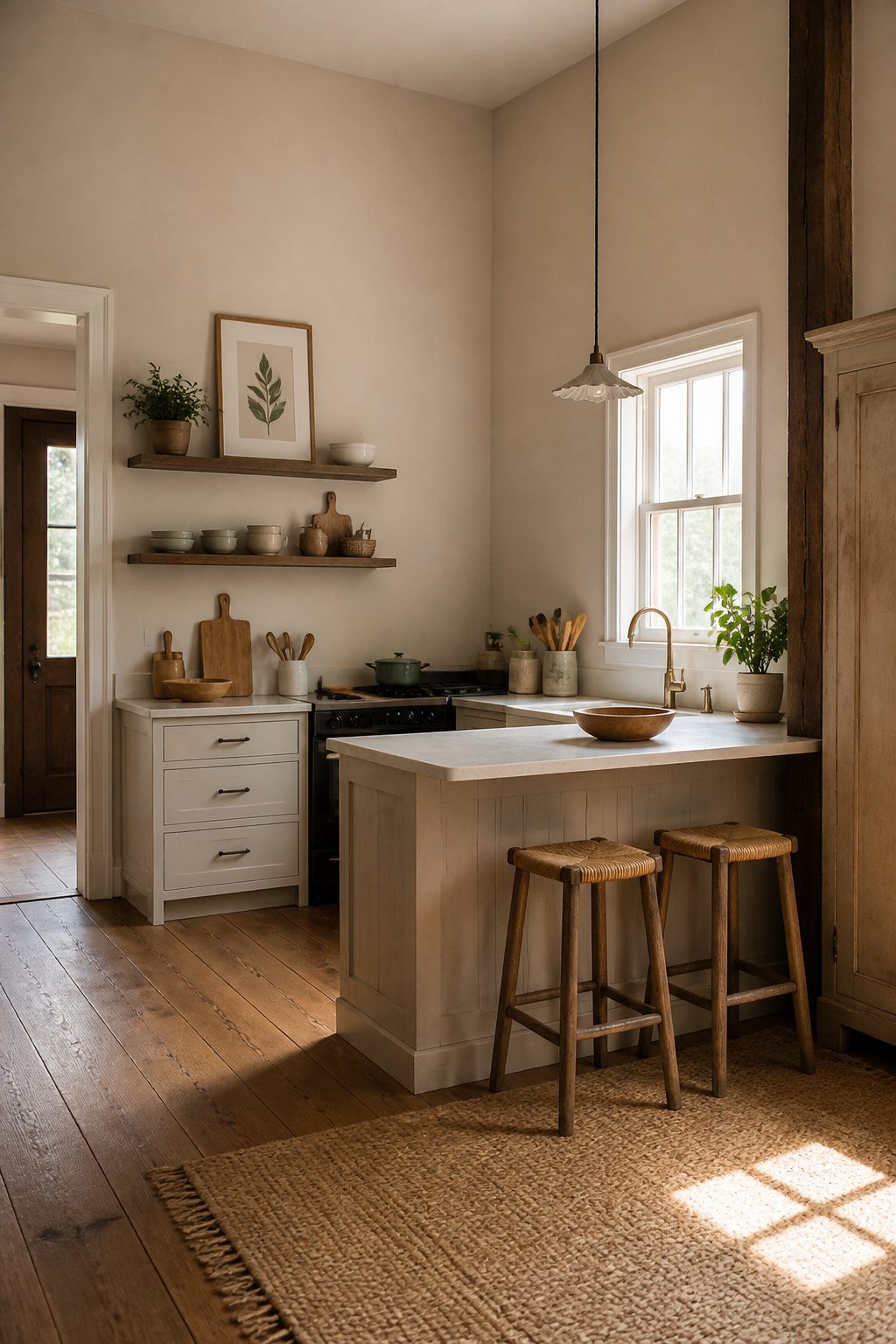
A small rustic farmhouse kitchen lives or dies on whether the walls push back or close in.
I keep the palette continuous, off-white or a soft neutral like Lacquer Sand, because every break in color chops the room into smaller pieces. Panel molding draws the eye upward and stretches ceiling height without adding a single inch.
Upper cabinets swallow visual space in tight quarters. Open shelving along one wall replaces them and keeps the room from feeling boxed in.
Edit: a few stacked plates, a hanging rack for pots, maybe one basket. Overfill it and the airy effect collapses into clutter.
Storage has to work harder when square footage is scarce.
Baskets on open shelves, a slim pantry pull-out, and integrated appliance slots keep counters clear. A peninsula extension with a small overhang gives you landing space and a breakfast bar without the footprint of a full island.
The farmhouse look in a small kitchen is not about salvaged beams and vintage rugs alone; it is about restraint. One rustic gesture, like exposed beams or dark-grout subway tile, carries the style.
Two or three compete for air. Chrome pulls on gray-blue cabinets with marble-look counters prove the style does not need generous dimensions to read clearly.
Frequently Asked Questions
What defines a rustic farmhouse kitchen design?
A rustic farmhouse kitchen blends natural materials, warm colors, and vintage-inspired elements like Shaker cabinets and apron-front sinks with a layout that still functions for modern cooking.
The look borrows warmth from the past, think wide-plank floors, butcher block counters, and aged brass hardware, without forcing you into a museum-piece workflow.
Stainless steel appliances and clean-lined islands fit right in; the point is heritage character, not historical reenactment.
How can I create a farmhouse kitchen on a budget?
Paint your existing cabinets in soft white or warm gray instead of replacing them, and swap upper cabinets for open pine shelving on cast-iron brackets, which runs about $100 and finishes in a weekend.
This combination photographs nearly as well as full replacement for a fraction of the cost.
Skip genuine reclaimed lumber for island tops; new wood stained to match gives the same warmth and most guests will not know the difference once the finish is down.
What colors work best in a farmhouse kitchen?
Creamy whites, soft grays, and muted greens like sage form the backbone; they carry warm undertones that keep the room feeling lived-in rather than sterile.
Light colors on cabinets and walls keep visual weight down, which helps smaller spaces feel open rather than boxed in.
Avoid cool-toned grays with blue undertones, which turn harsh under warm incandescent bulbs and read modern in a way that fights the rustic warmth you are after.
Are farmhouse kitchens suitable for small spaces?
Yes, with the right moves. Keep the palette continuous in off-white or a soft neutral so the walls read as one plane, and replace upper cabinets with open shelving along one wall to stop the room from feeling boxed in.
A single rustic gesture, like exposed beams or dark-grout subway tile, carries the style without competing for air; restraint matters more than square footage here.
How to decorate a rustic farmhouse kitchen without clutter?
Limit yourself to one shelf for inherited and found pieces, and stop there. Objects earn their place only if they connect to something real, like a cutting board with decades of knife scars rather than a factory-distressed reproduction.
Edit by the light: if an object disappears into shadow at noon, it is already visual noise no matter how sentimental.
Start from foundation pieces like the kitchen island and build up deliberately, because beginning with the extravagant items guarantees you will run out of restraint before you run out of surfaces.