
The line between rustic and modern is thin enough to lose your balance on.
One honest piece of reclaimed wood, a beam with actual nail holes, does more work than cabinets scored to imitate age. The same rule decides every choice below: real material, not applied finish.
A 2700K bulb, not cooler. Honed granite, not high polish, unless your cabinets already carry the roughness.
The cost of getting it wrong is not money. It is a kitchen that reads as costume, or as cold.
1. Natural Materials
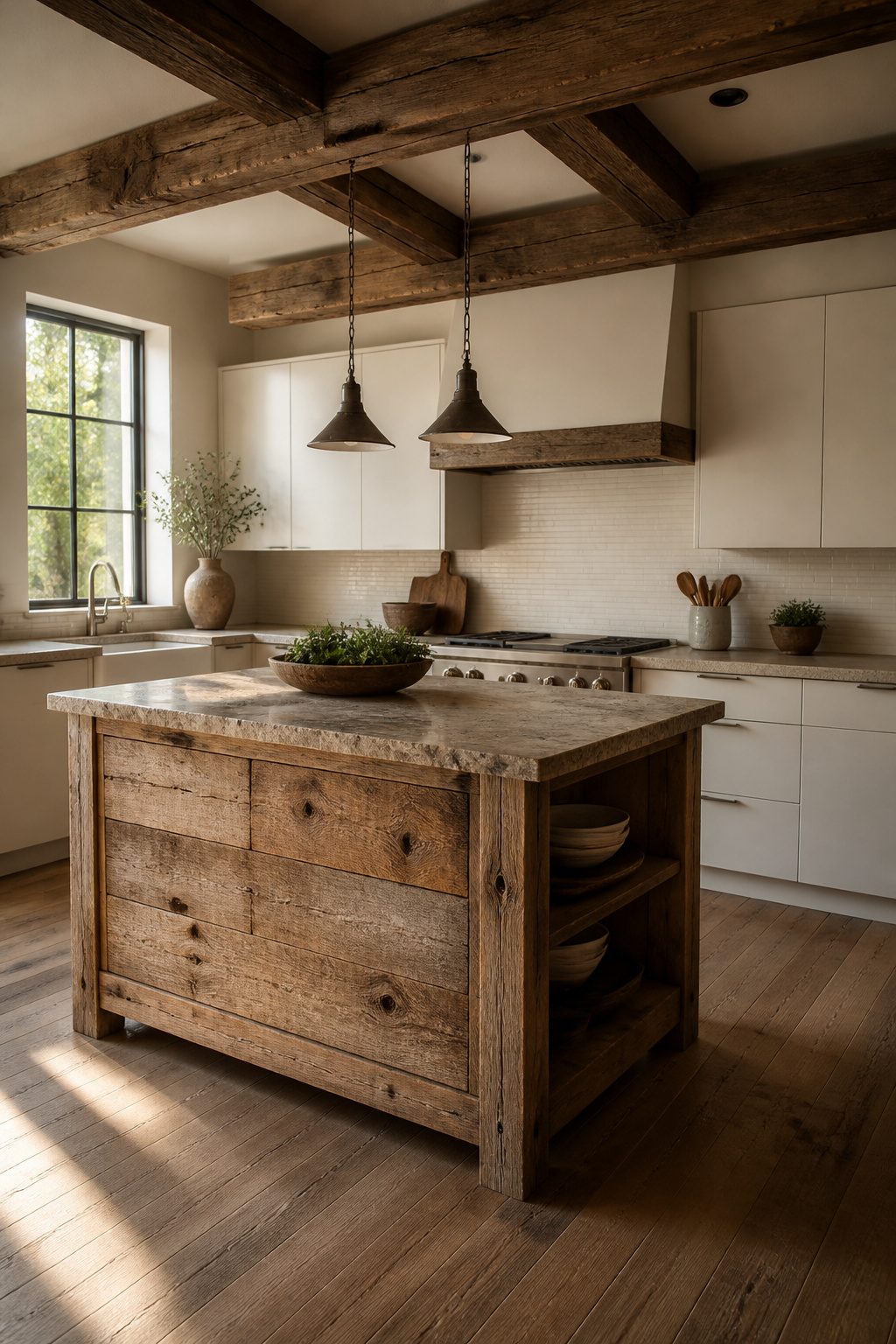
Wood and stone are the two anchors that keep a rustic modern kitchen from reading as just another white box.
Reclaimed wood carries the heavier load of the two. Use it for ceiling beams, open shelves, or the base of an island, and you get the knots, cracks, and nail holes that no factory finish can replicate.
I reach for it partly for the look and partly because it sidesteps new lumber; the sustainability is built in, not bolted on.
Stone works as the counterweight. Honed granite or quartz in an earthy tone gives you modern performance without the cold gloss, and a stone backsplash or accent wall adds texture where cabinets run flat.
The balance matters. Too much stone and the room stiffens; too much reclaimed wood and the modern side disappears.
I aim for stone on the fixed surfaces where I need durability, reclaimed wood on the elements I want to feel worn from the first morning I walk in.
2. Color Palettes
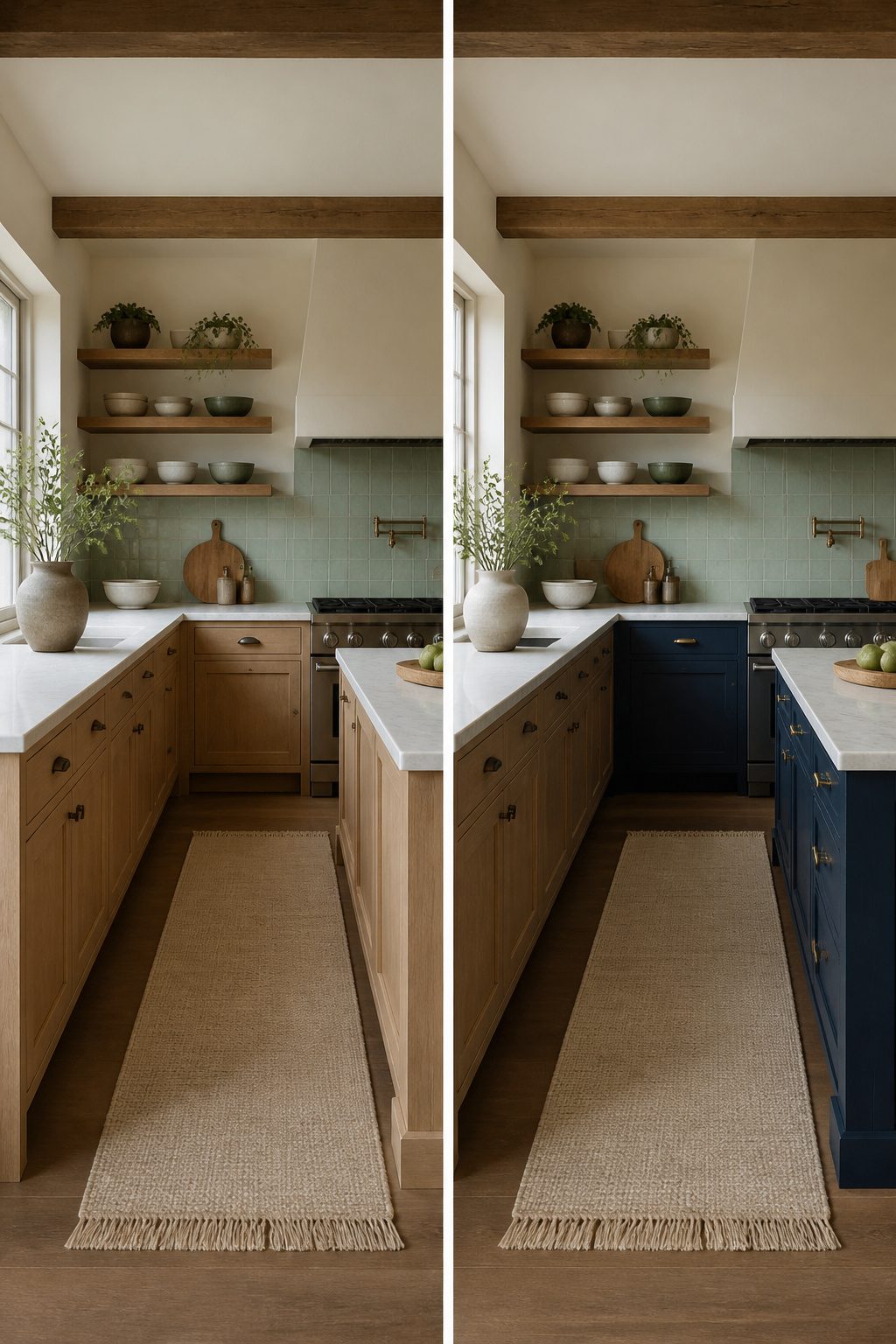
A warm base of creamy white, soft taupe, or sandy beige anchors most walls and cabinetry in a rustic modern kitchen.
Restraint matters here; too many competing colors muddy the effect, while a tight palette adds the calm that makes rustic and modern sit well together.
From that neutral ground, I layer in muted greens.
Sage and olive read as pulled from actual landscapes rather than paint-catalog trends, and they bring a steadiness that brighter hues would break. Where I want contrast, a charcoal island or navy accent cabinet sharpens the lines without turning cold.
White deserves a deliberate note.
It risks sterility if it goes too clean, but a veined white surface paired with natural wood cabinetry keeps the space feeling modern and still cozy. The yellow-tinged off-whites, I skip; they read dated against warm woods.
For finishes, eggshell or matte sheen reinforces the rustic side. Satin or gloss would fight the texture you’ve already paid for.
Brown and gray work as partners, not alternatives. A brown backsplash adds depth against beige or gray cabinets, and two-tone cabinetry mixing wood and painted finishes is where the style gains its real character.
3. Lighting
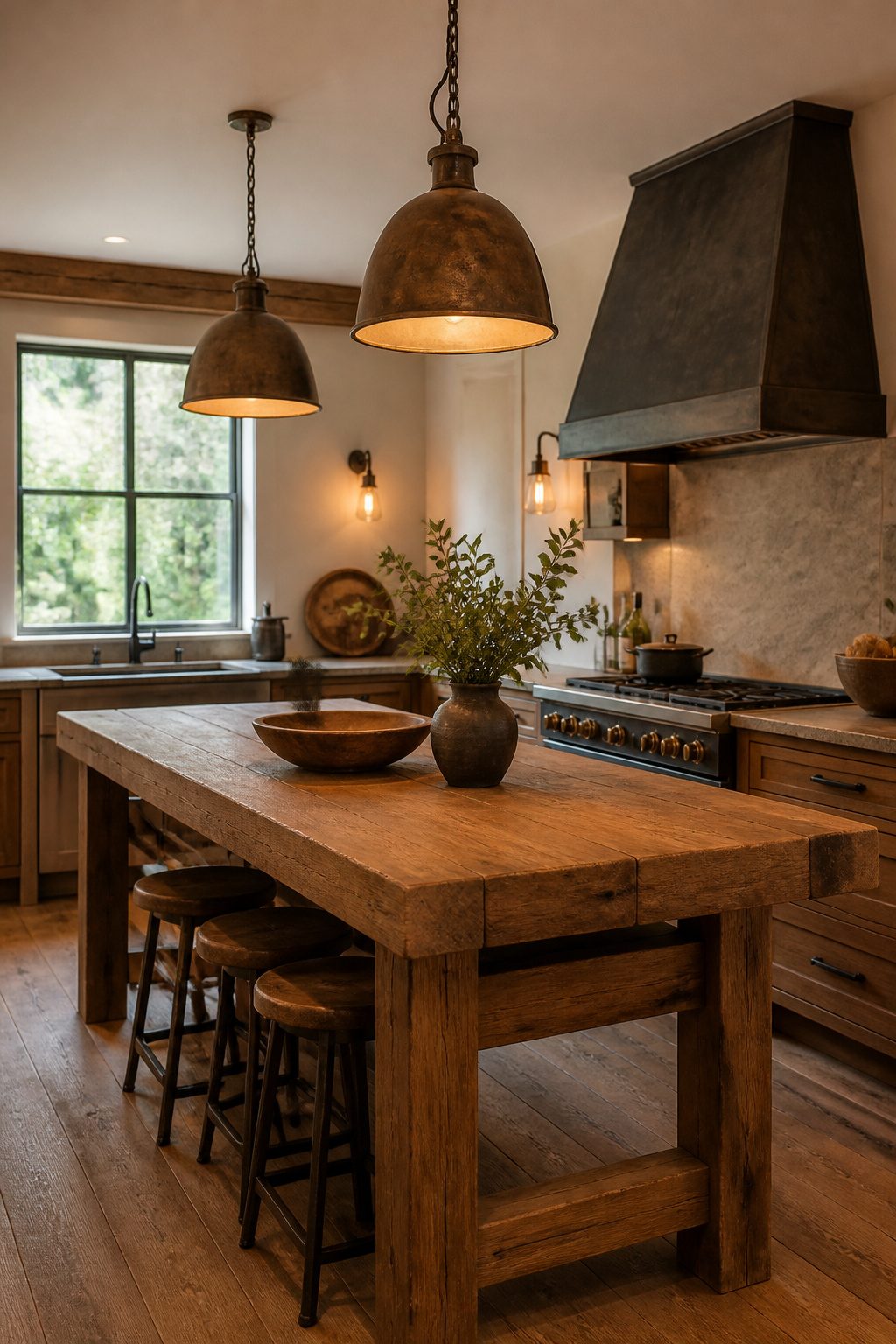
Vintage or antique lighting is what separates a rustic modern kitchen from a kitchen that just has wood cabinets.
A pendant in aged metal, matte black, or enamel above the island carries the weight and history that makes the rustic side feel earned, not decorated.
I prefer fixtures with some actual wear, a patina that reads as honest rather than applied in a factory, because the eye catches the difference even when you cannot name it.
Warm-toned bulbs matter as much as the fixture itself. A 2700K bulb casts the amber glow that flatters wood grain and stone; anything cooler fights the cozy atmosphere you are building and leaves the space feeling like a showroom.
Wall sconces with exposed bulbs or antique-style glass shades layer that warmth at counter height, which keeps the kitchen from reading as a cavern when the overheads are dimmed.
The balance comes from restraint. One substantial vintage piece, a reconditioned ceiling fixture or a salvaged pendant, does more work than three matching distressed items.
Pair it with clean, simple hardware and let the modern side stay quiet. The light bridges both aesthetics because it is functional first; it earns its place by what it does, not by what it references.
4. Open Shelving
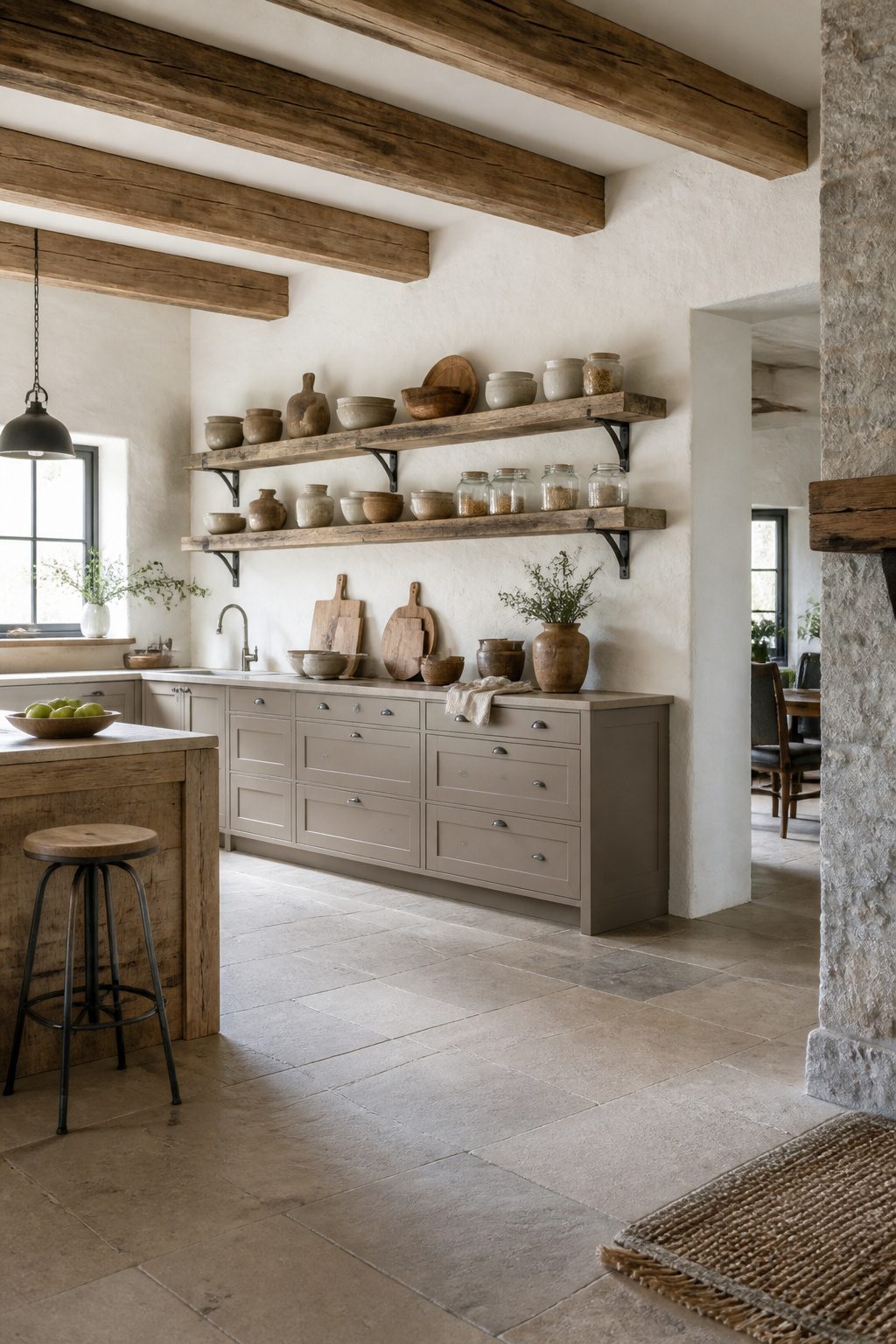
Open shelving gives a rustic modern kitchen its working memory. Reclaimed wood planks, especially when paired with wrought iron brackets, carry the history that makes a space feel collected rather than staged.
The shelves keep everyday essentials visible and within reach, which matters more in a kitchen than in almost any other room.
What you display becomes the decor. Clay pottery, cutting boards in worn wood, vintage-inspired jars.
These are the items that read as rustic, but the open format itself is the modern move. It borrows from commercial kitchen logic: if you use it daily, you should be able to grab it without opening a door.
The risk is clutter.
Open shelves work only if you edit what sits on them. I would rather see a single shelf with four well-chosen pieces than three shelves packed to the wall.
The simplicity of plain-fronted cupboards that Helen Parker describes applies here too. Everything should feel solid and a little humble, even when it is on display.
If you are renting, this is one of the easier swaps.
Bracket-mounted shelves go up with a drill and come down with spackle. The reclaimed wood can follow you to the next place.
5. Kitchen Islands
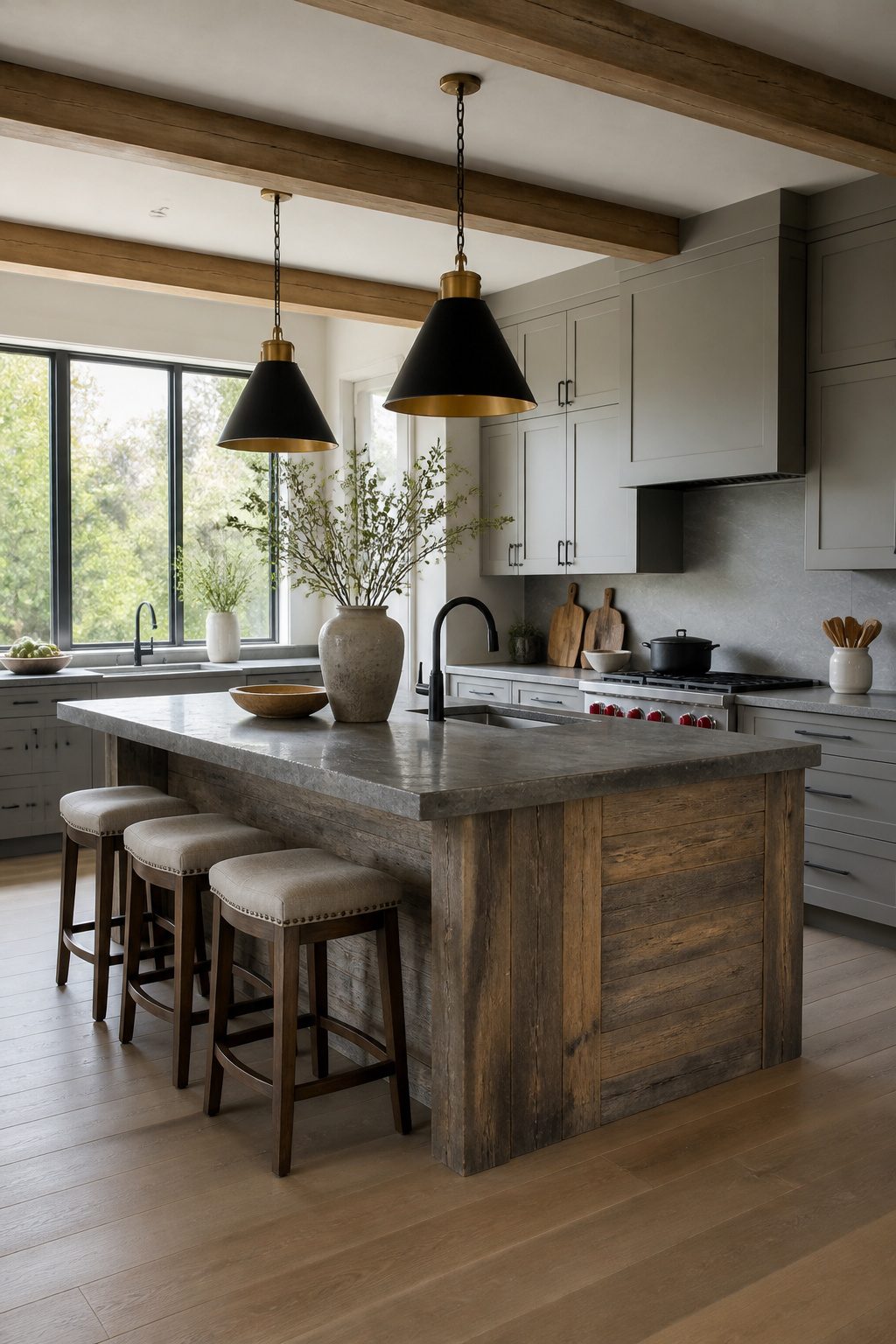
A kitchen island built from reclaimed wood or topped with honed granite gives you the extra counter space most weekend cooks actually need, and it does something the perimeter cabinets cannot: it carries the full weight of the rustic side of the equation.
I like to let the island stay rougher, warmer, more hand-worked while the surrounding cabinets run flat-panel and modern in a matte gray or soft white.
The island becomes the room’s anchor, the place your eye lands first, and everything else reads as deliberate contrast rather than confusion.
The real payoff is function. A 36-inch clearance on all sides keeps traffic moving, and the surface works as prep space, a breakfast bar with stools, and the spot where someone inevitably sits to talk while you cook.
Quartz on that island gives modern performance if you lean harder into rustic wood bases; a stone slab over reclaimed timber does the opposite, grounding the room in age while the cabinets stay crisp.
Either pairing works, but the island has to commit to one material story so the mix around it stays legible.
Two ways to play it: let the island dominate with thick, textured wood and keep countertops elsewhere quiet, or run a bold stone top on a simple base and let the cabinets pick up warmth through hardware in antique brass or matte black.
The wood base wins if you want the rustic feel to read from across the room; the stone top wins for cleanup and durability with kids or heavy cooking.
I would skip the middle ground of trying both stone and heavy carving on one island. That fights the clean lines that make the modern half of this style feel current.
6. Contrasting Textures
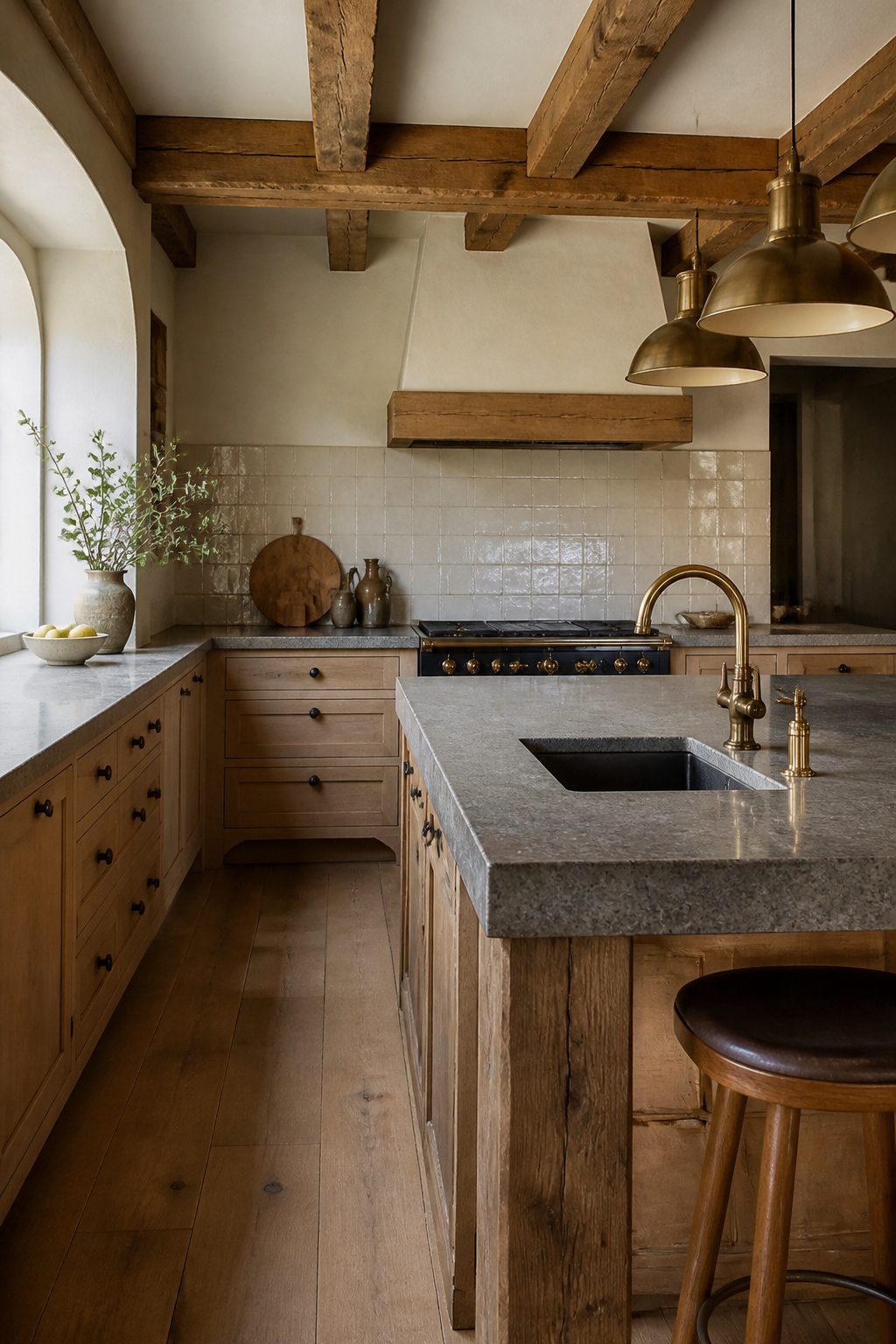
A rustic modern kitchen lives or dies on the tension between rough and smooth.
Pair reclaimed wood beams with honed granite countertops, and each material reads louder than it would alone. The wood softens the stone’s cool precision; the stone keeps the wood from sliding into plain cabin territory.
I think the most useful contrast happens at eye level.
Hand-glazed ceramic tile against matte black hardware gives you texture you can touch and a finish that refuses to compete for attention. Antique brass bridges the two eras without announcing itself as a compromise.
The risk is overloading. One rough element per sightline is usually enough.
Concrete pendant lighting over a wood island works; concrete pendants, a hammered metal hood, and exposed beams fight each other into noise. I would rather see one zinc-and-marble counter against original barn flooring than three mixed metals pretending to coordinate.
Quartz in an earthy tone handles the daily abuse better than butcher block, and that practicality matters more than nostalgia. The contrast should feel lived in, not staged.
7. Vintage Elements
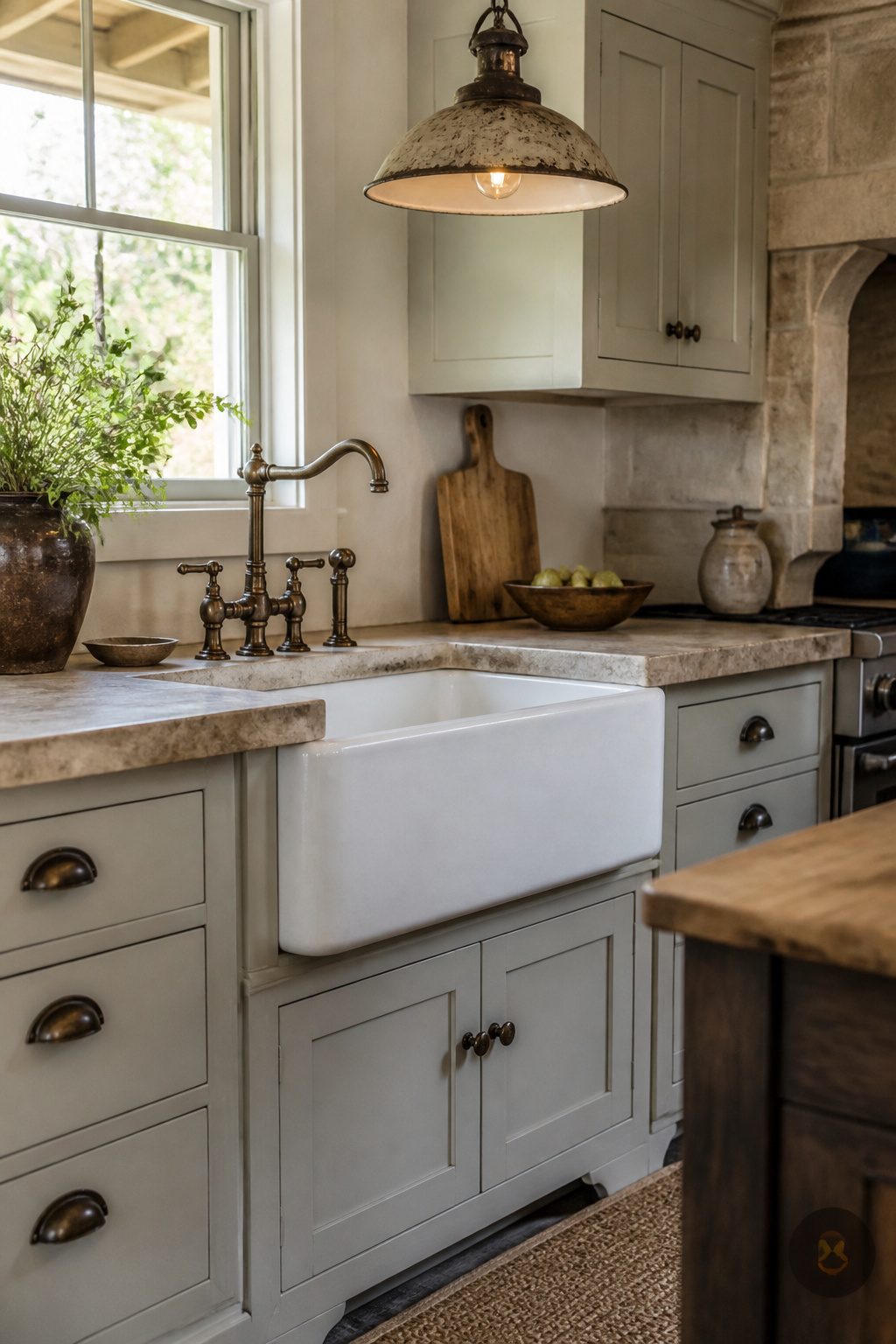
A farmhouse sink carries more weight in a rustic modern kitchen than most single pieces can.
The apron-front design reads as history even in a new build, and the depth matters for real use: pots lay flat instead of angling out of a standard basin.
Vintage lighting does the same work of rooting the room in something older.
A ceiling fixture pulled from a local salvage shop, originally wired for a Victorian home, gives you hardware with actual age rather than aged finish. Cabinet hardware from the same source keeps the story consistent.
Reclaimed furniture or a retro appliance, like a reconditioned stove from the 1930s, adds the same authenticity.
The risk is overdoing it: one major vintage piece per kitchen usually suffices, with smaller details supporting rather than competing. Natural stone or wooden countertops alongside the sink keep the palette from feeling like a period set.
I tend to look for local artisans when salvage turns up nothing.
The piece costs more than reproduction, but the construction holds up and the material, often local wood or forged iron, ties to the place rather than a catalog aesthetic.
For renters, a vintage light fixture travels; the farmhouse sink does not, so that decision belongs to owners ready to cut into cabinetry.
8. Modern Appliances
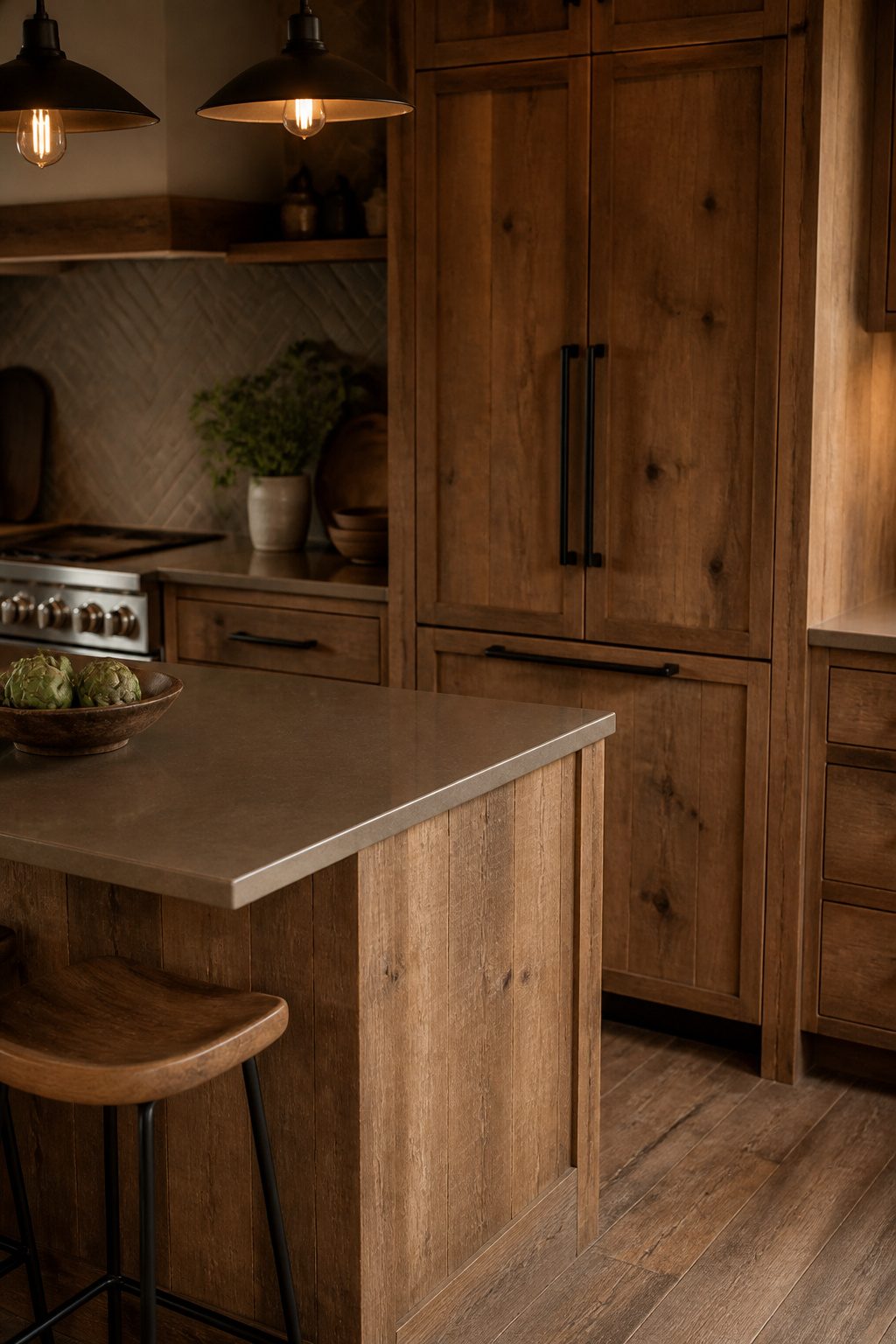
A panel-ready refrigerator or dishwasher lets you mount a cabinet front directly to the door, so the appliance disappears into a run of plain, unadorned cupboards.
That simplicity, the kind Helen Parker at deVOL Kitchens describes as "solid and a little humble," is what keeps the rustic side intact.
I think the integration matters more here than in most kitchens, because exposed stainless steel against heavy timber reads industrial by accident, not by choice.
If you are keeping an existing range or hood, consider a slide-in model with controls on the front. The backguard drops away, and the line across your counters stays uninterrupted.
For the hood itself, a custom surround in reclaimed wood or zinc, like the zinc-and-marble pairing Russell Groves used in that Connecticut barn, bridges the gap without pretending the vent is not there.
The trade-off is cost and lead time.
Panel-ready appliances run higher than standard finishes, and the custom panels add cabinet-grade labor. But for a few hundred square feet of kitchen, two integrated pieces, the refrigerator and dishwasher, do almost all the visual work.
The rest can be honest stainless if the budget tightens; just keep them below counter sightlines where you can.
Countertop Options
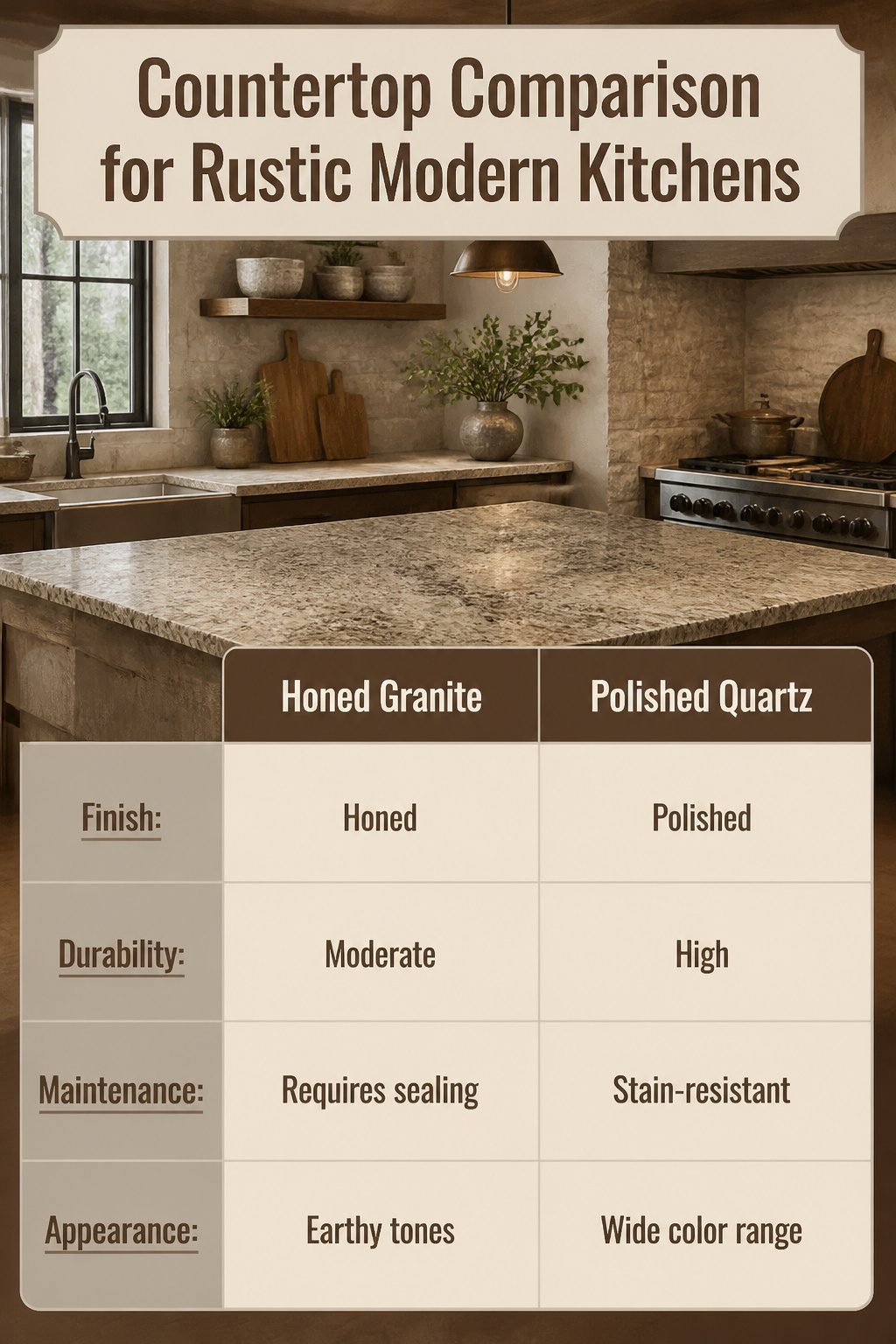
Stone countertops settle the balance between old and new in a rustic modern kitchen, and honed granite in an earthy tone leans rustic while polished quartz reads more modern.
Granite and marble carry natural veining and texture that warm the space, though I think marble asks too much of a real kitchen unless you are meticulous about sealing.
Quartz, like Caesarstone, offers stain resistance and a wider color range, which makes it the safer pick for daily cooking.
The finish decides the mood more than the material itself: a high polish feels contemporary, a honed or leathered surface feels lived-in.
If your cabinets are already rustic with visible grain or distressing, I would go polished on the counter to keep the kitchen from tipping into theme-park territory.
If the cabinetry is flat-panel and modern, a honed stone or concrete-look quartz adds the warmth you need.
Stone gains character over time, and that aging is part of the appeal in this style, so choose a surface you will still like as it changes.
Updating an Outdated Kitchen
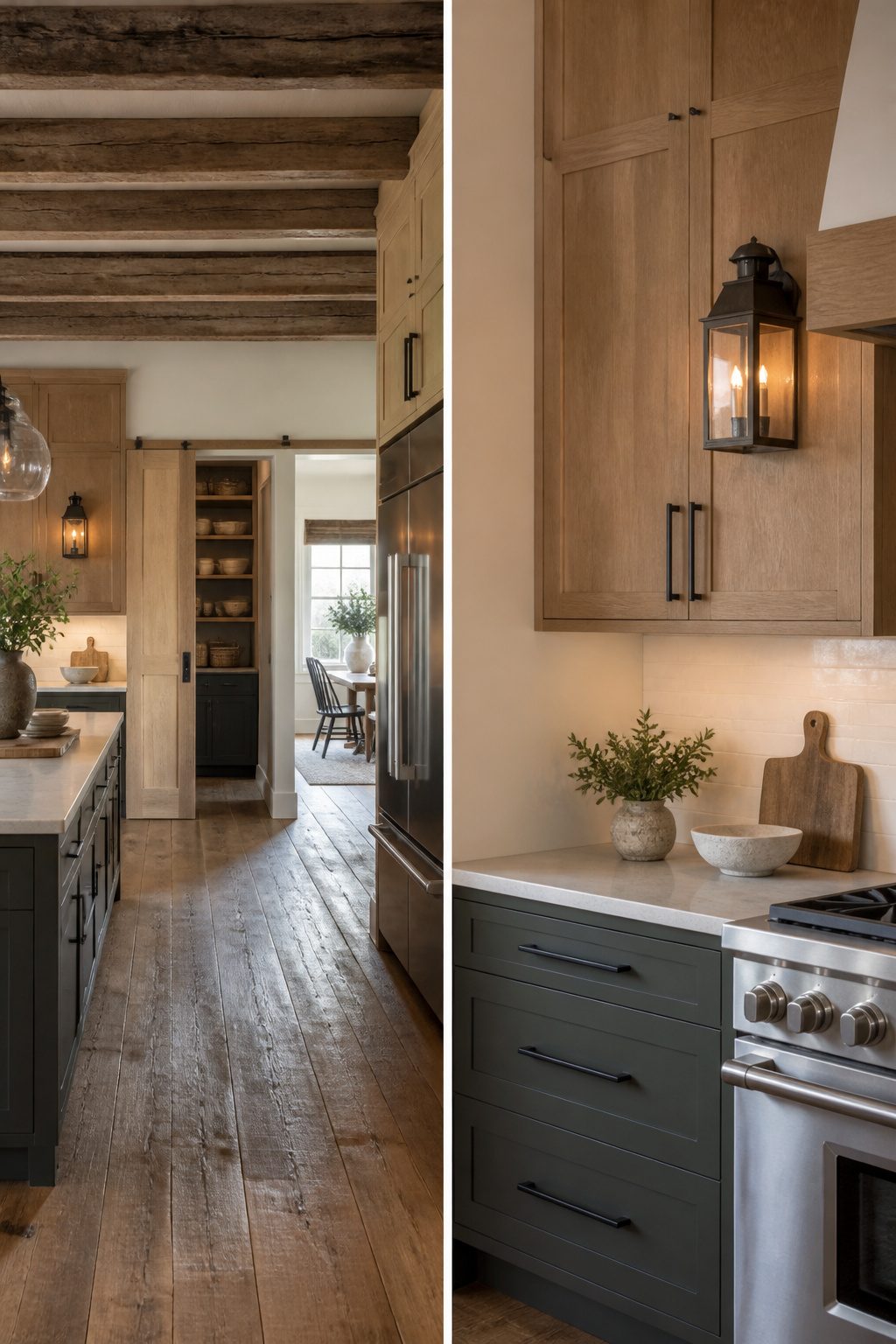
The assumption that rustic means outdated is the first thing I’d dismantle if I were standing in your kitchen right now.
Modern rustic design preserves what still works, your existing wooden beams or barn board, and** replaces only what is truly beyond repair with cleaner, more functional alternatives**.
That distinction matters because it keeps the budget in the few-hundred-to-thousand-dollar range where most of us operate, rather than gutting a room that has good bones.
Where I’d start is the hardware. Vintage-style wall lanterns or forged matte black pulls cost little and signal the farmhouse thread without the dated feel of the originals they reference.
Pair them with stainless steel appliances or a sleek hideaway fridge to ground the space in the current century.
Two-tone cabinetry, deeper paint below and natural wood or a lighter tone above, adds depth without demanding custom work; open shelving mixed with full-height storage lets you display the dishes you actually use while hiding the rest.
A sliding barn door on the pantry is a classic farmhouse moment, but the modern move is keeping the track minimal and the door itself flat-paneled rather than heavily distressed.
The trade-off is time over money. Spray-painting a base the right creamy white, swapping pulls, rehanging lanterns: these are weekend projects, not weeks.
The risk is editing too lightly. One distressed iron element grounds the room; three, and you are back in the territory you started in.
Farmhouse Sinks and Practical Details
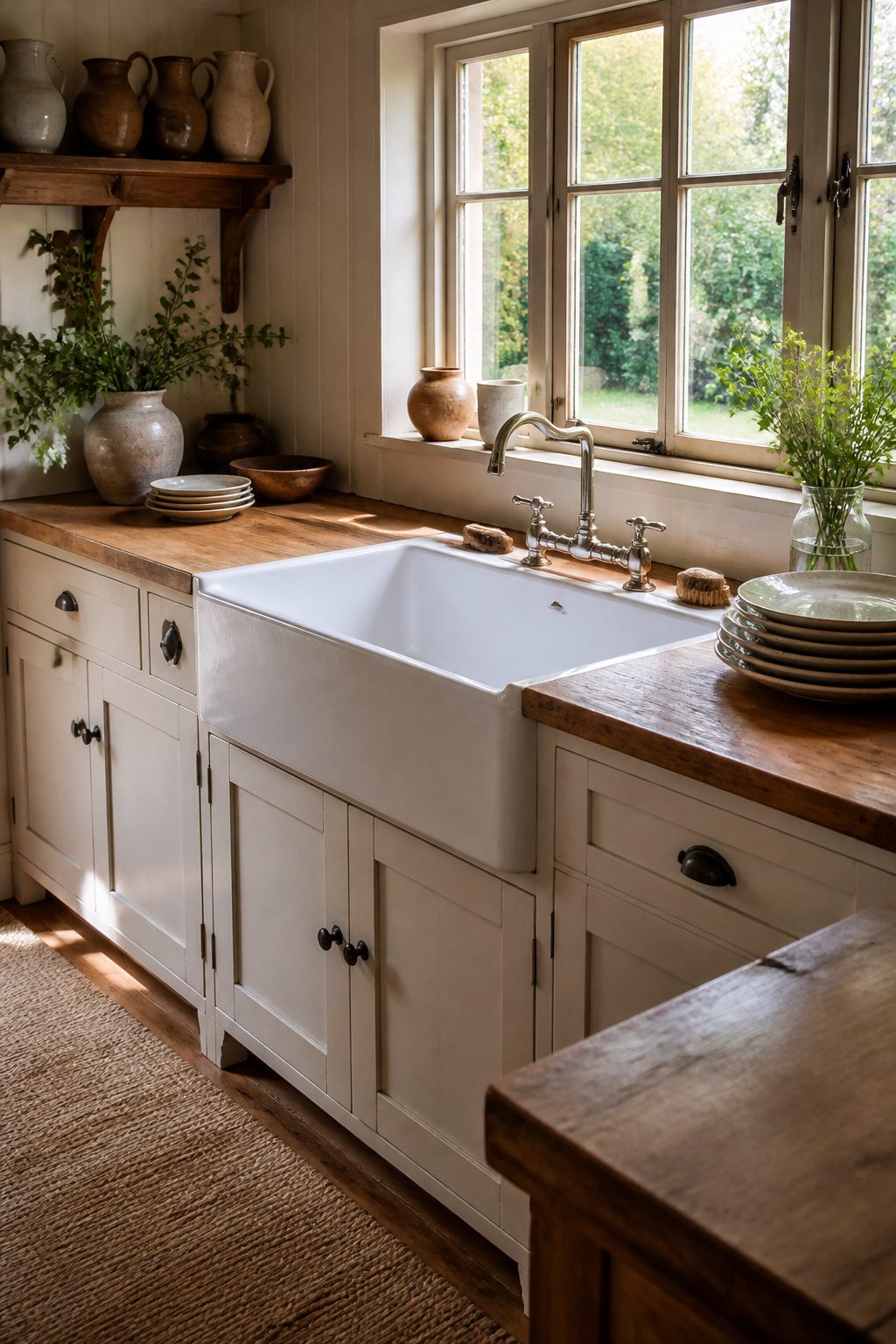
An apron-front sink belongs in a rustic modern kitchen because it does two jobs at once.
It gives you a defined focal point while adding real everyday utility. The exposed front panel sits proud of the cabinet line, which breaks up rows of flat doors and draws the eye to something that looks built to last.
Depth and width matter more than ornament here.
These sinks run deep enough to hold a large roasting pan or a stack of dinner plates without splashing onto your counter, and that single basin or wide double bowl changes how you work at the sink.
Natural stone or wood countertops against that front panel reinforce the blend this style asks for; the sink reads as vintage, the surrounding materials as honest and unfussy.
Installation is where weekend projects get complicated. The cabinet base must be cut back to accommodate the apron front, and the weight, especially in fireclay or cast iron, demands reinforced supports underneath.
If you are renting, skip the retrofit entirely and look for a drop-in apron-front design that sits on top of a standard cabinet, or plan this upgrade for a home you own.
For a first-home owner taking on the work, measure twice for the rough opening; these sinks do not forgive a half-inch short on either side.
Copper, classic white, or hammered finish, the sink works best when the rest of the kitchen stays restrained. One substantial piece of vintage character beats scattered farmhouse cues every time.
What to Avoid
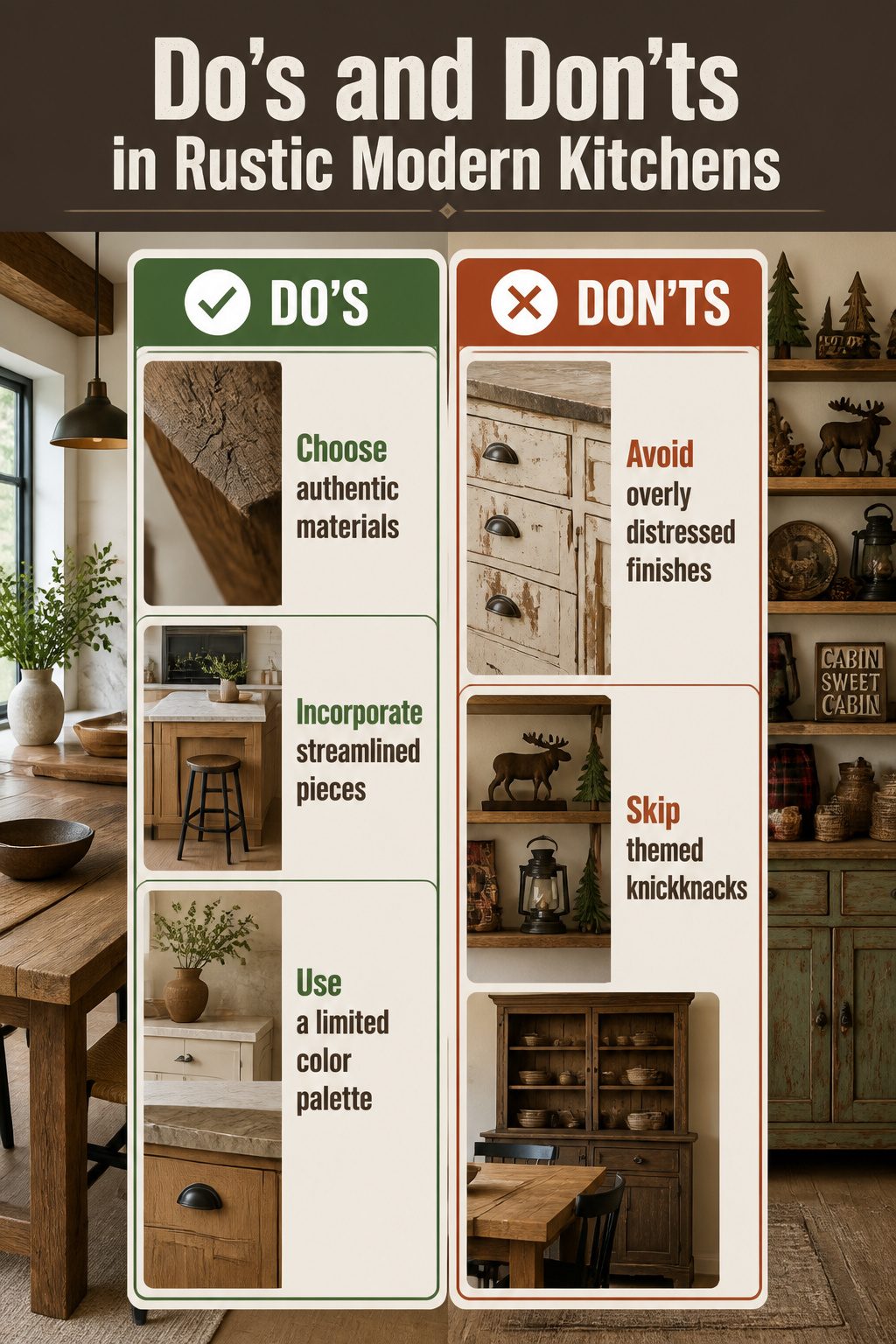
The most common way a rustic modern kitchen fails is by piling on distressed finishes until the room starts to feel like a set.
One authentically weathered element, something like a reclaimed beam or a naturally worn table, has more impact than cabinets, floors, and hardware all trying to look artificially roughed up.
I would rather see a single honest piece of old wood than a cabinet face scored to imitate age.
Too much rustic tips into costume; too much modern reads as cold.
The balance lives in material honesty. Real stone, solid wood, raw metal.
Skip the themed knickknacks and novelty decor that shout mountain lodge. That approach feels staged, and it dates fast.
Scale matters too. Oversized hutches and chunky farmhouse tables swallow smaller kitchens whole.
I look for streamlined, well-proportioned pieces that carry rustic weight without blocking flow. Shaker-style cabinets work here; their clean lines keep the modern side alive without losing warmth.
Natural materials ask something of you. Wood shifts with humidity.
Stone needs sealing. Copper develops a patina whether you want it or not.
These are not flaws, but they are realities. Go in expecting maintenance, not fighting it.
Color discipline helps hold the line. Limit the palette to a few related shades anchored by natural tones.
Let the wood grain, stone, and ceramics supply the visual interest. Saturated colors scattered everywhere compete with those textures instead of letting them breathe.