
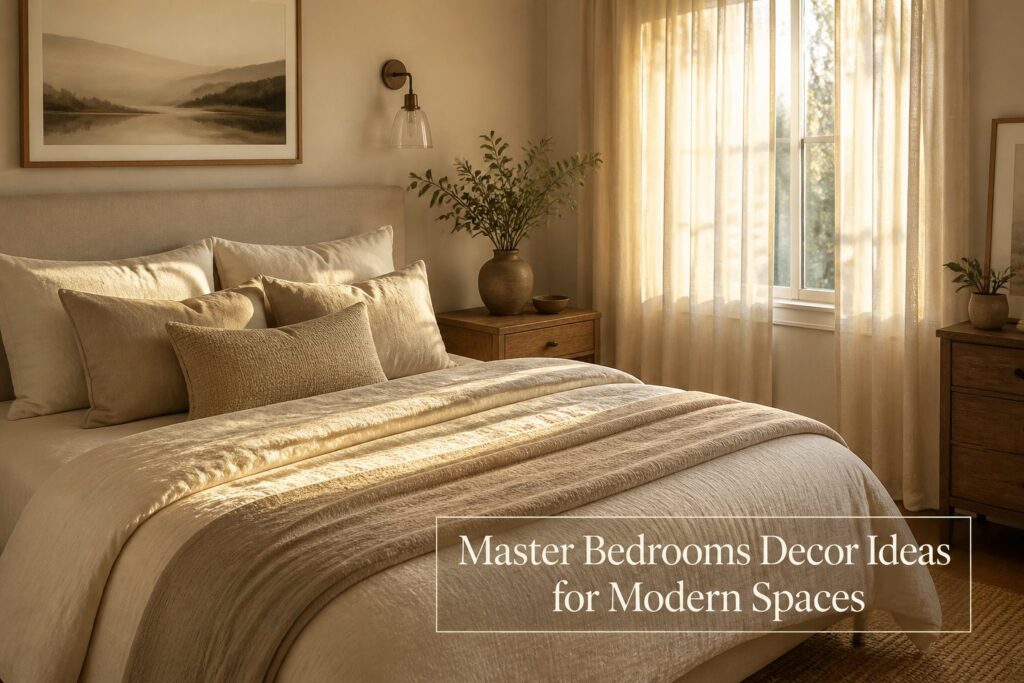
Modern master bedrooms decor ranges from a weekend paint project to built-in carpentry, and the deciding factor is how much visual noise you can tolerate before sleep suffers.
The 56% of buyers choosing neutral bedding sets the baseline, but the real test comes in what you allow to stay visible: closed storage keeps the room calm, while open shelving turns even styled objects into clutter you process at midnight.
1. Start with the Bed
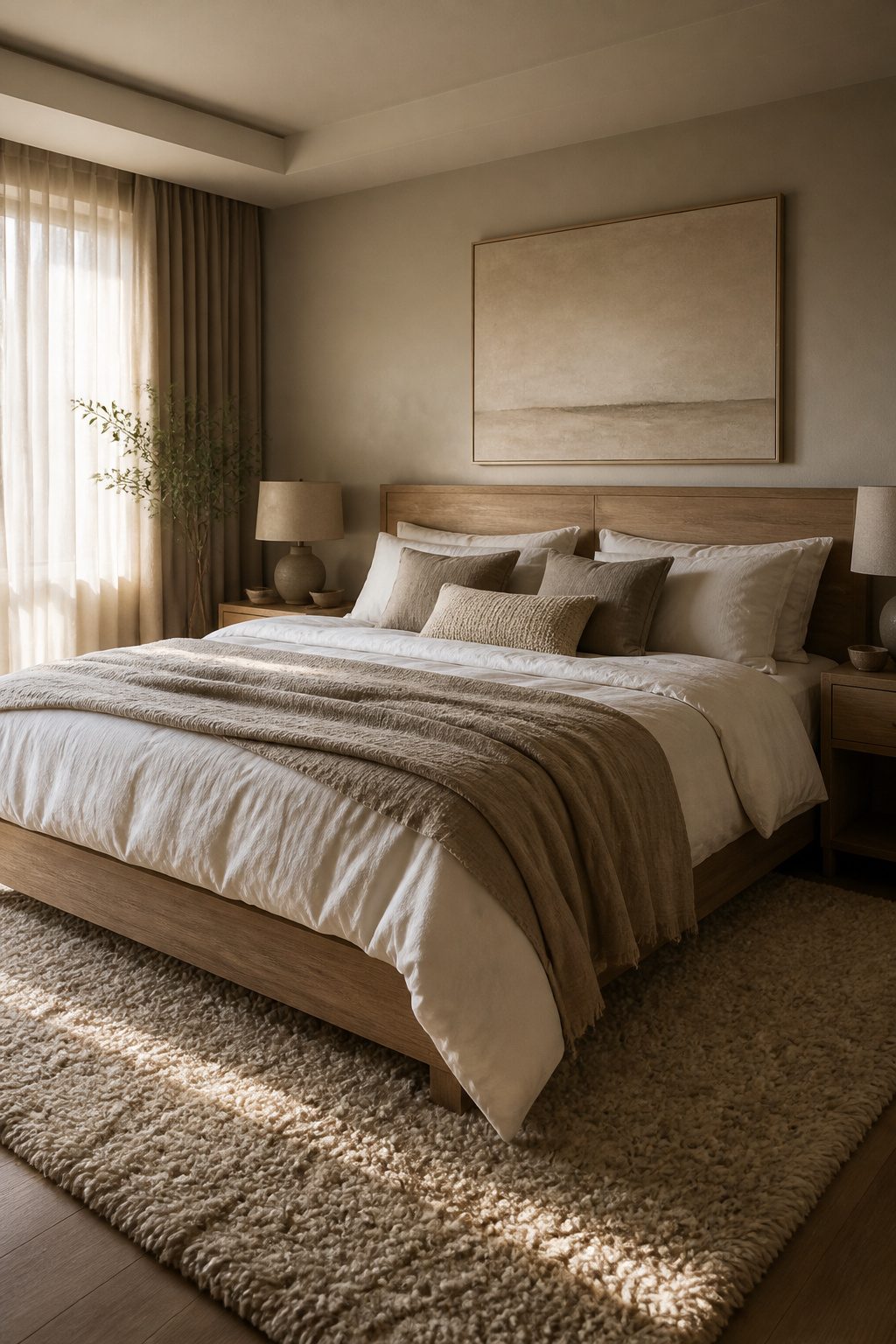
The bed sits dead center in most master bedrooms, which makes it the natural place to anchor the room’s entire palette.
King Living’s data puts 56% of buyers choosing neutral tones for bedding, and that majority makes sense: soft beige, ivory, sand, pale grey, stone, and taupe all let you layer everything else without fighting for attention.
A warm neutral duvet becomes the largest soft surface in the room, so the tone you pick here sets whether the space reads cozy or cool.
Comfort matters more than color, though.
I would skip the temptation to build a "look" from throw pillows and start with what actually touches you: the weight of the coverlet, the weave of the sheets, whether the mattress sits high enough to feel substantial without climbing.
A bed that looks great but sleeps hot or saggy is a showroom piece, not a bedroom.
From that base, window treatments echo rather than duplicate the palette.
Linen bedding with linen drapes in a slightly shifted tone keeps the room calm; pattern on the bed asks for quieter windows, and solid bedding can handle more movement in the curtains.
The rug comes last, and in a master suite the lighter traffic means you can go lighter in tone than you would elsewhere.
Hand-loomed wool or a high-pile weave softens the first step out of bed on cold mornings, which is where the comfort you built actually pays off.
Recommended Products

Exquisite Minimalist Style: Designed with a clean, solid-color look and modern colorways, the WRENSONGE comforter set effortlessly matches any bedroom décor. Perfect for creating a cozy, relaxed, and inviting atmosphere.

Rustic Elegance & Earthy Tones: This brown comforter queen size is crafted in rich, solid brown hues, exuding warmth and natural charm. Inspired by the timeless appeal of farmhouse and bohemian aesthetics, it seamlessly integrates into your decor. Elevate your space with this essential brown shade, creating a cozy and stylish haven.
2. Neutral and Calming Colors
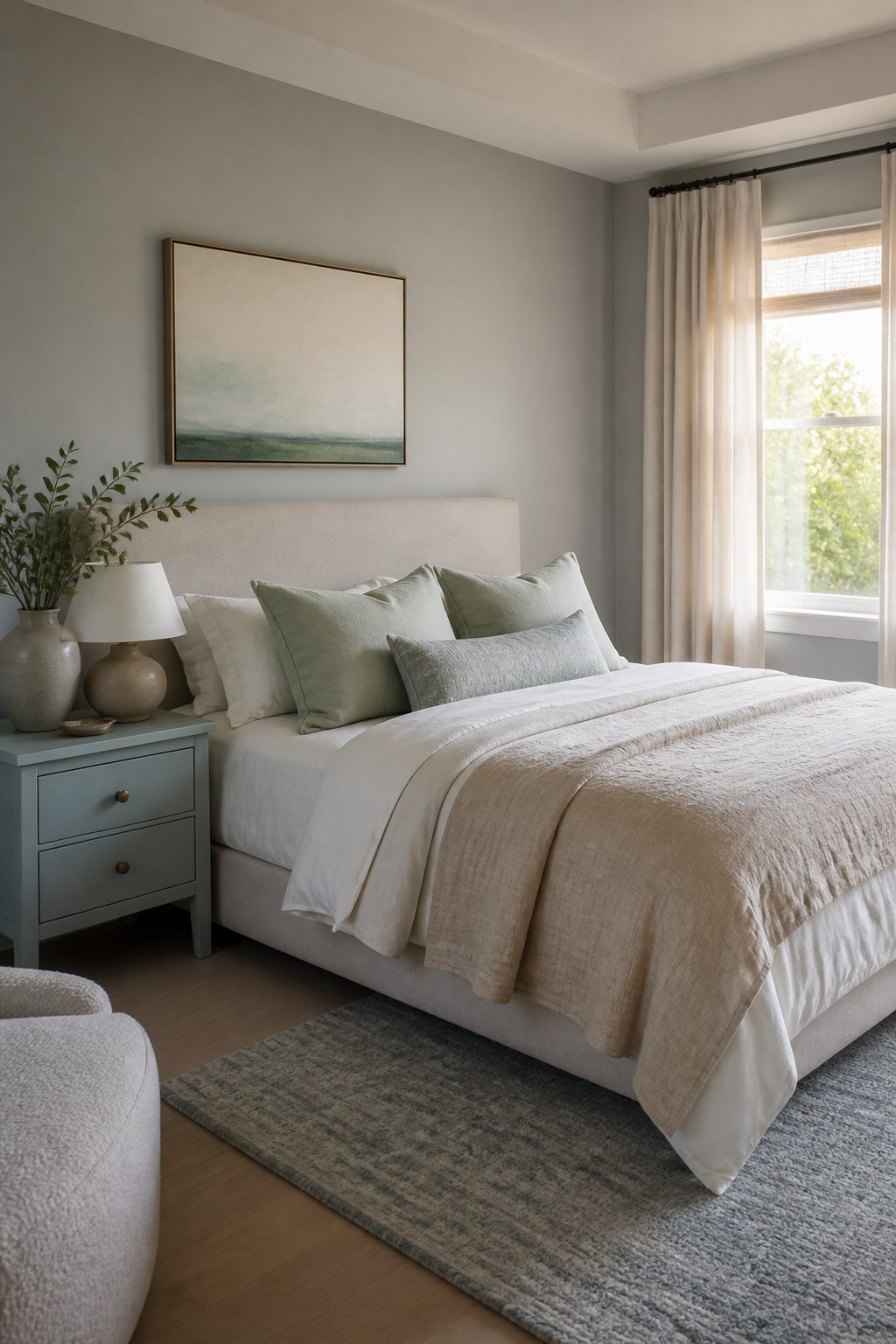
Soft blues, muted greens, greys, beige, and pastels settle a bedroom in a way saturated colors rarely manage. These tones pull the eye down, slow the pulse, and let the room read as finished without demanding attention.
For a weekend project on a few hundred dollars, paint and bedding in this range deliver the most visible calm for the least cash.
A 2026 study of over 3,000 bed purchases found that 56% of customers preferred neutral tones, with warmer browns climbing and cooler greys and blues steadily fading.
That shift toward earthy, grounded palettes mirrors what I would choose for a master bedroom now: sandy throws over crisp white sheets, stone-toned cushions, touches of clay or almond that warm the space without cluttering it.
A 2026 study analysing over 3,000 bed purchases found that 56% of King Living customers preferred neutral tones, with warmer browns also on the rise.
For renters especially, this palette is forgiving. A warm neutral wall color works with landlord-beige carpet you cannot change, and white bedding with gray or linen accents shifts seasonally with just new throw pillows.
I would skip the cooler blue-gray that dominated bedrooms five years ago; it reads chilly now against the warmer direction these neutrals have taken.
Recommended Products

VERSATILE PAINT - These artist-quality acrylic paints are rich and creamy and are perfect for basecoating, stenciling, and more. This color comes in a convenient 2 oz size
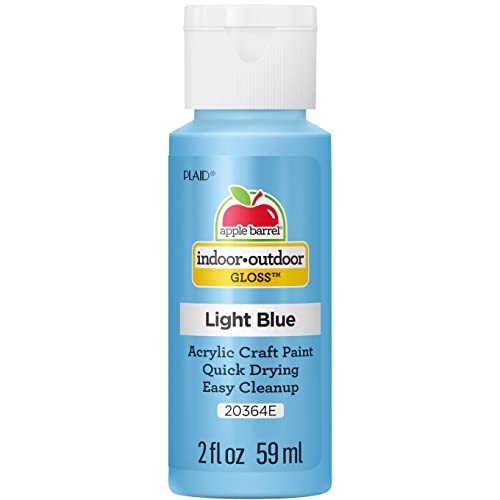
CONVENIENT SIZE - This Apple Barrel Gloss Acrylic Paint comes in a versatile 2 oz size that is great for basecoating, stenciling and so much more

CONVENIENT SIZE - This Apple Barrel Acrylic Paint comes in a versatile 2 oz size that is great for basecoating, stenciling, and so much more
3. Layered Lighting Setup
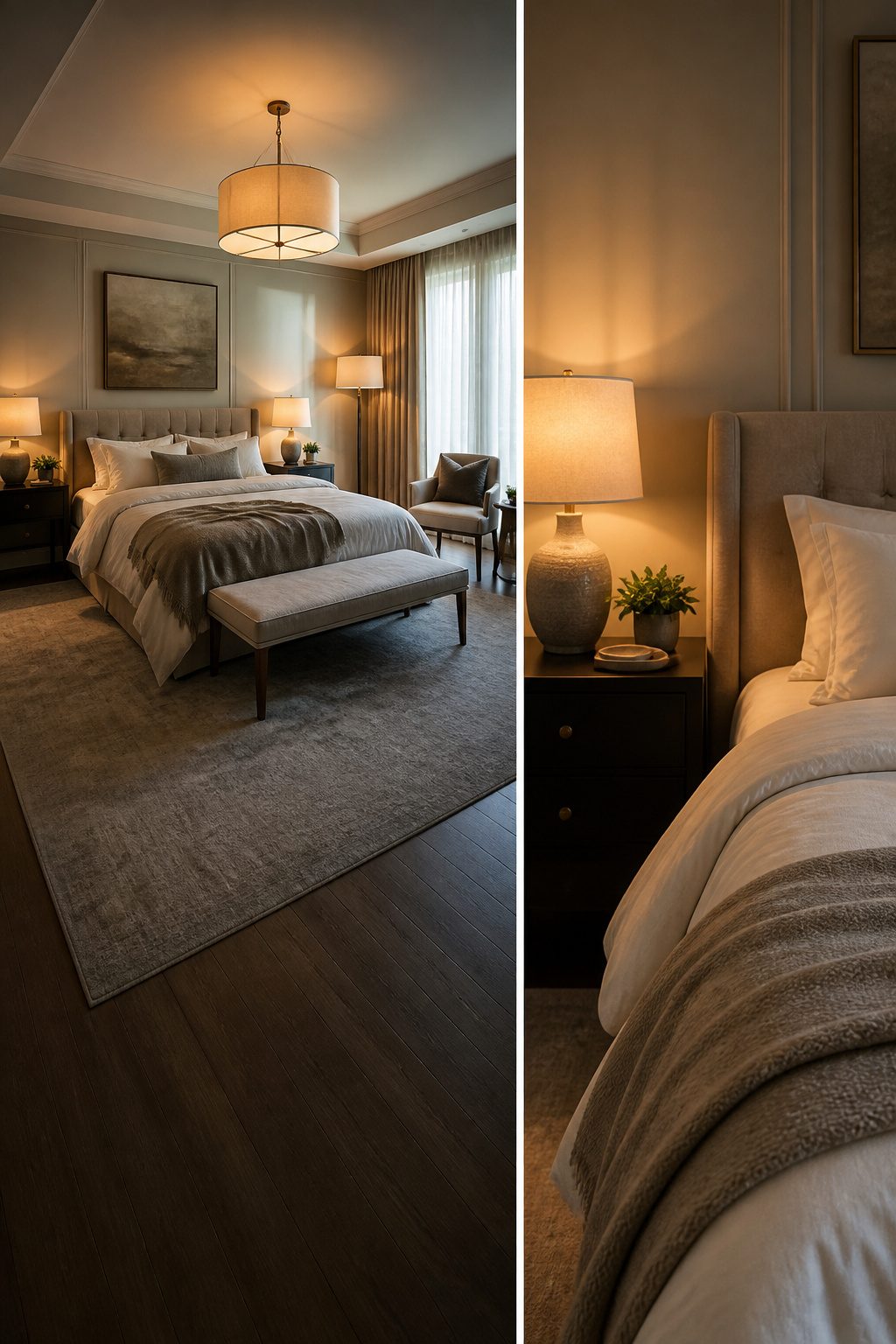
A single ceiling fixture flattens a master bedroom. It forces the same brightness on every task, from getting dressed to reading to winding down, and that is why layered lighting divides the job between three types: ambient, task, and accent.
Start with the light you will use most often at night, which is usually bedside lighting.
Table lamps are forgiving and easy to update. Wall sconces save nightstand space and help the room feel more intentional.
After that, add ambient light from a ceiling fixture, recessed lighting, or a semi-flush mount. Then finish with one quieter layer, such as a small accent lamp on a dresser or soft backlighting behind a headboard.
Warm bulbs feel best in bedrooms, and so do dimmers.
A practical setup puts a task light at bedside for reading without glare, a central ambient fixture on a dimmer, and a smaller accent lamp near a dresser, chair, or mirror.
Dimmable settings and warm white bulbs support circadian rhythms and let you tailor the space from early sunrise starts to midnight wind-downs.
Recommended Products

Tribal inspired style is versatile enough to work with bohemian, rustic, contemporary or cabin & lodge home décor

[COLOR & DESIGN]: SAFAVIEH's Blossom rug spreads a Persian floral in green over multi; its 5/8" pile is soft and dense in a living room; color and pattern contrast may look different in person, and shade can vary depending on lighting and screen settings.

Luxuriously Soft & Non-Slip: This 8x10 area rugs features dense low-pile for ultra-soft underfoot comfort. Enhanced TPR non-slip backing keeps it securely in place on all floors, providing peace of mind for families with kids and pets
4. Texture Over Bold Color
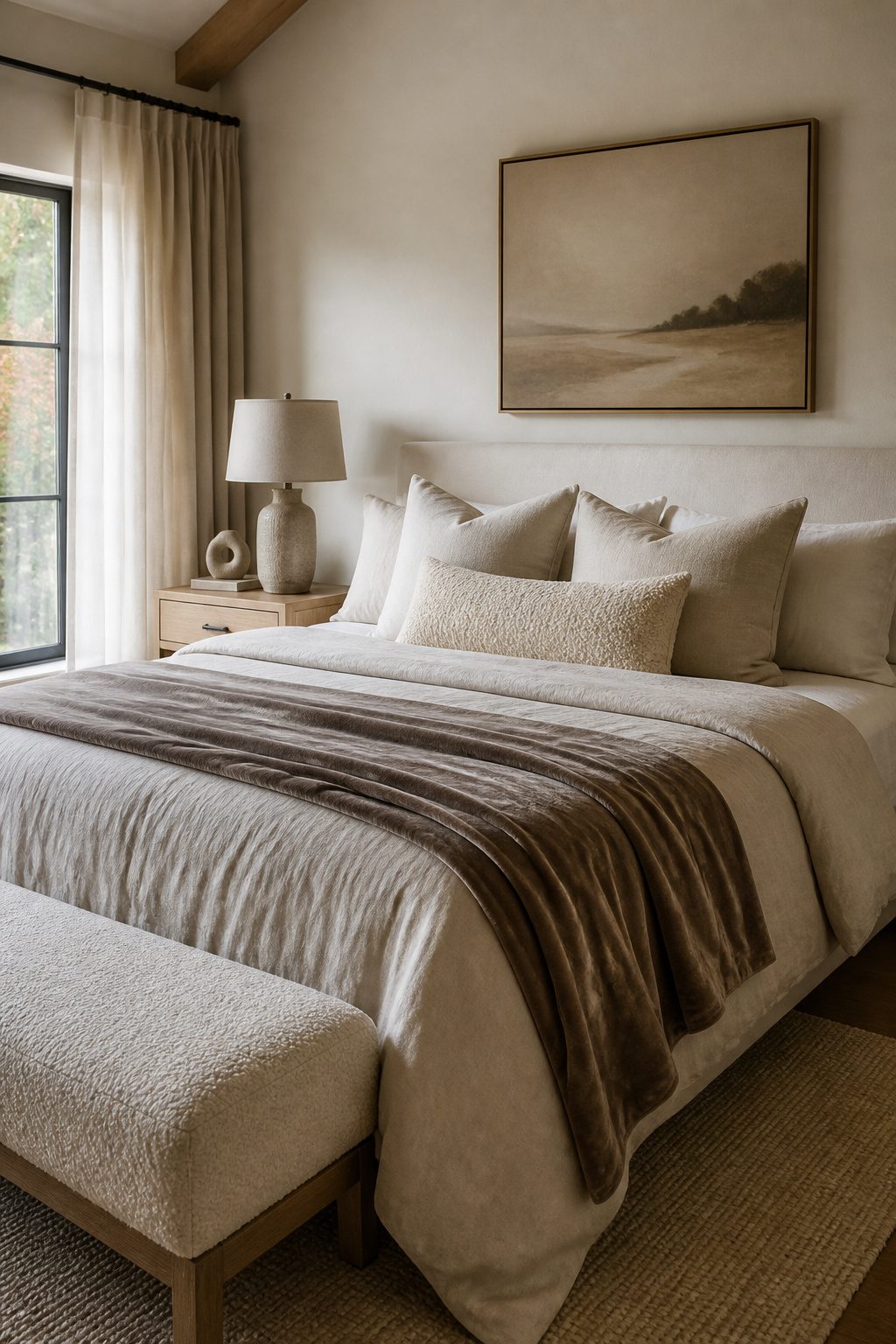
Linen, velvet, and bouclé do more for a bedroom than any bold print could.
These fabrics build depth through touch rather than color, which matters in a space meant to slow you down. Pattern demands attention; texture rewards it only when you’re already close.
I would start with the bed itself. A linen duvet lays the quiet base, then a velvet throw at the foot adds weight without shouting.
If you want one piece that shifts the whole mood, a bouclé pillow or ottoman introduces that nubby, irregular surface that catches light differently all day.
The variation keeps the room from reading flat, especially under the soft lamps most people use at night.
The sleep-focused part is worth taking seriously. Your eyes process pattern even in low light; texture fades into the background and lets the nervous system rest.
An upholstered headboard in velvet softens sound too, which many people notice once they have it, though it needs to speak to the rest of the room.
Casual cotton bedding against a lush velvet headboard fights itself; the same velvet against crisp linen and a single warm metal accent, like a bronze tray, holds together.
Texture ages better than trend-heavy pattern.
That is the practical case for choosing it first and drama second. In a smaller bedroom, lighter fabrics keep walls from closing in, while mid-tones in larger spaces add the coziness without the cave effect.
5. Built-In Storage Solutions
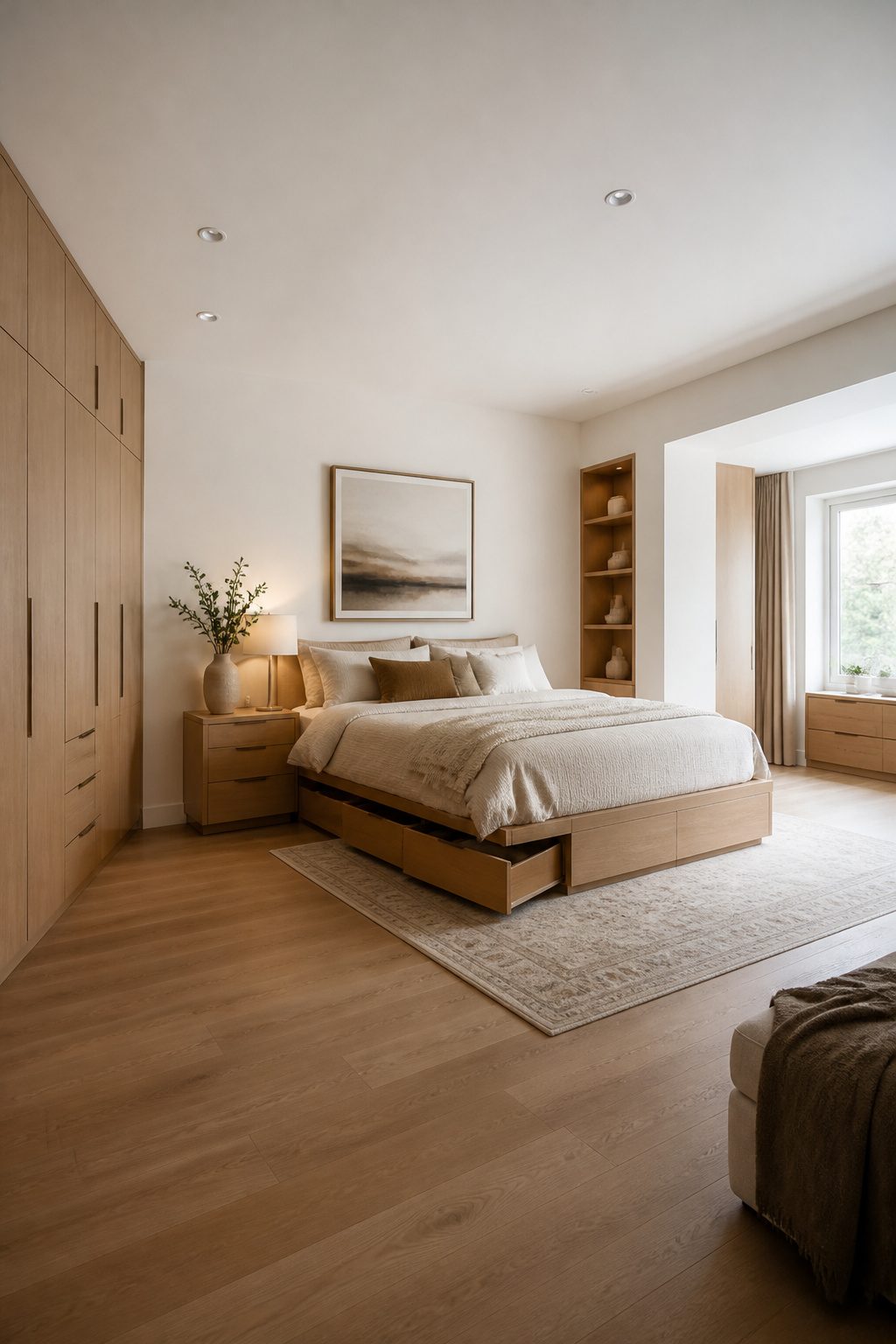
Built-in storage only works if it disappears. I have seen bedrooms where the wardrobe doors are the first thing the eye finds, and that is a mistake in a space meant to calm down.
Under-bed drawers with flat fronts and no visible hardware solve the worst storage problem, which is the stuff you need but do not want to stage.
The King Living beds with concealed shelving and internal compartments get this right; the storage is there, but the bed reads as a bed. Low-profile baskets beneath a frame work too, though they collect dust and read as temporary.
For walls, built-in wardrobes that run flush to the drywall keep the visual plane clean.
Floating drawers beside the bed replace chunky nightstands. Behind the headboard, a slimline console adds surface area without a new footprint.
Custom sizing matters in older homes with short walls or narrow king-bed clearances.
Ready-made dressers often sit too high, block windows, or force awkward circulation. In those cases, built-ins sized to the inch win over anything from a box.
I would skip open shelving in a master bedroom entirely.
Books and baskets styled on a shelf still read as clutter. Closed storage keeps the room level; that calm is what you are after.
6. Personal Touches and Decor
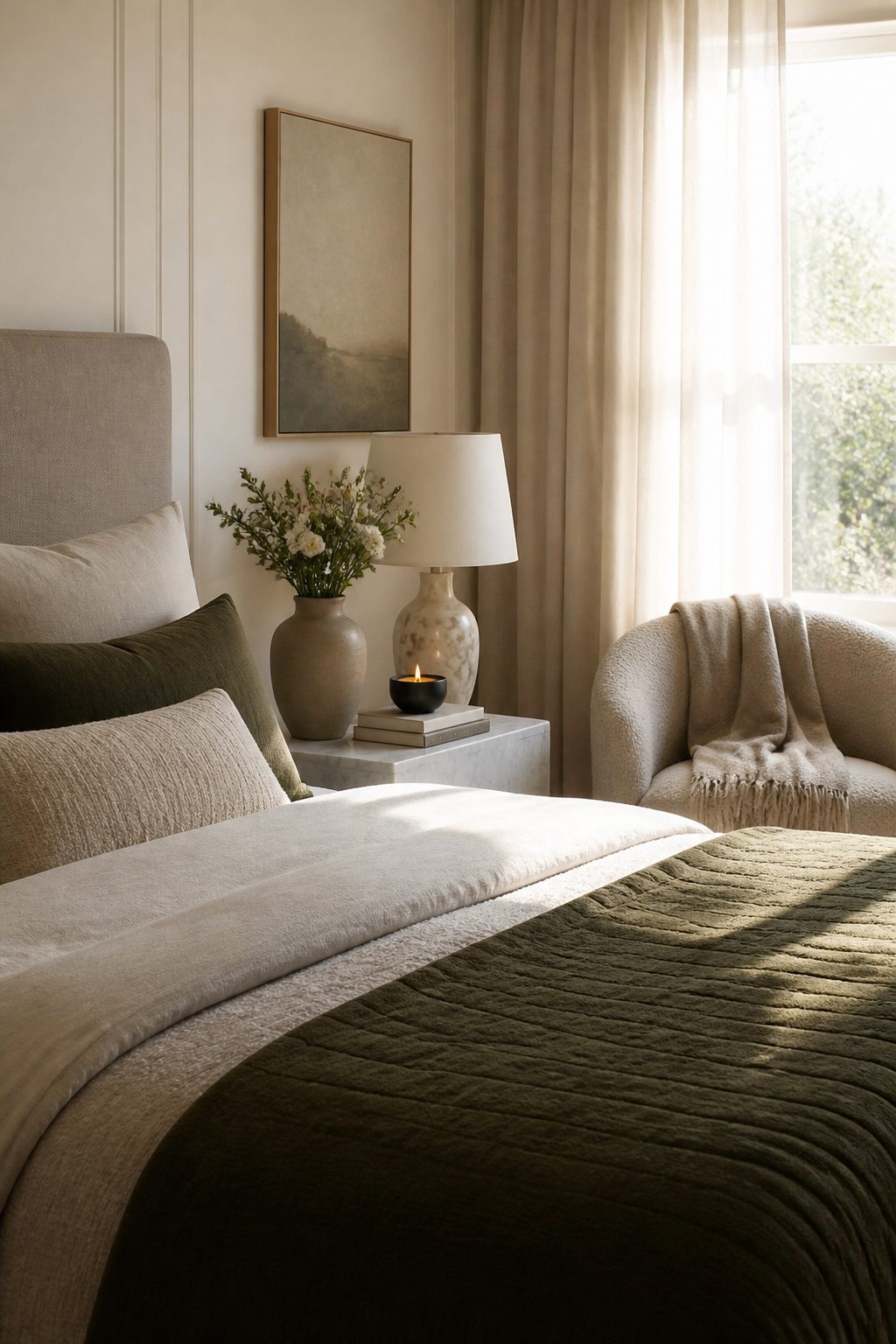
A marble side table stacked with design books, a hand-thrown ceramic filled with freshly cut florals, or a sculptural candle to light as the day fades.
These quiet touches shape the atmosphere more than any staged vignette, and in a master bedroom, that distinction matters. The room has to rest, but it also has to feel inhabited.
The line sits between chosen and cluttered. I keep personal objects to surfaces that do not compete with sleep: a bedside table, a dresser top, a single shelf.
A favorite book left open, a ceramic tray holding a few keepsakes, a photograph that carries real memory rather than generic sentiment.
Each piece earns its place by what it does to the light or the quiet of the room, not by how well it photographs.
Where this goes wrong is density. A stack of magazines, a signature scent, a travel object, a nostalgic frame, a second stack of books.
Three objects on a bedside surface is my ceiling, and one of them should be functional, a lamp or a clock or the book I am actually reading.
Beyond that, the room starts to narrate instead of settle, and a master bedroom where privacy is the luxury needs to settle first.
Sentimental objects work best when they carry texture the room otherwise lacks.
A worn ceramic, a soft stack of pages, a small sculptural piece. These add soul without adding noise, and they let the room feel finished without feeling filled.
7. Organic Shapes and Natural Materials
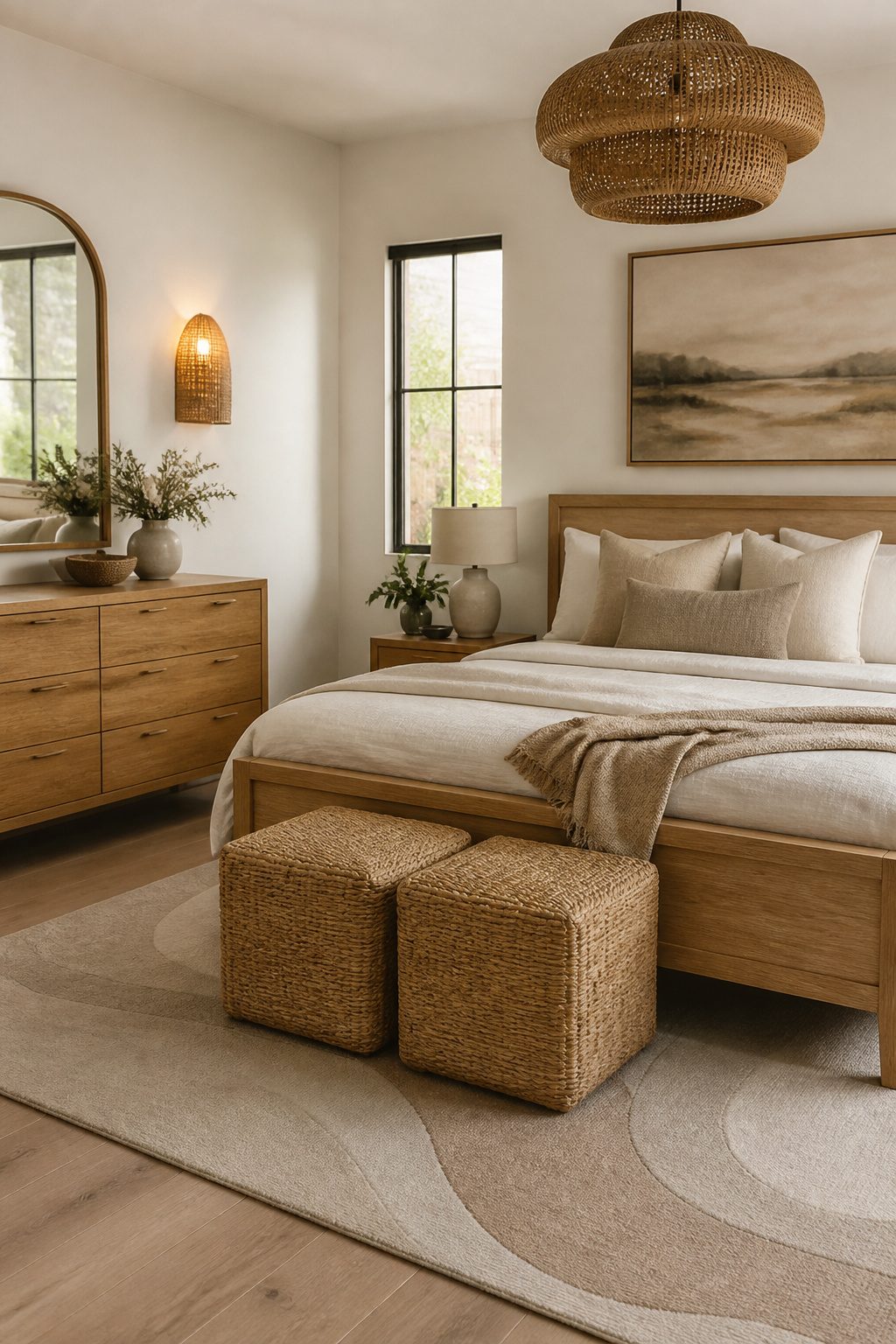
Organic shapes soften a space without asking for attention, and in a master bedroom that quality matters more than almost anywhere else.
The bed creates a strong center of symmetry, so a flowing rug beneath it or a curved mirror above the dresser gently breaks that rigidity and lets the eye move without jarring it.
I would pick a ripple-textured wall sconce over something geometric every time for this room; the light stays functional but the form invites you to breathe a little deeper.
Wood, stone, and woven materials work the same way. White oak or maple beds carry warmth without the visual weight of darker stains, especially when you balance them with softer companions like an upholstered bench or lighter bedding.
One caution I give often: avoid choosing the darkest stain on every piece unless the room gets strong natural light.
Rich wood is beautiful, but too much dark finish flattens the room and makes it feel smaller than it is. A cherry dresser paired with simpler mirror frames and warm off-white walls keeps the craftsmanship present without heaviness.
If you are mixing in curved forms, a sculpted archway to the ensuite or a crescent table beside the bed does the work of biophilic design without buying anything labeled as such.
The rhythm those curves create is worth more than a matching set.
8. Statement Headboards and Furniture
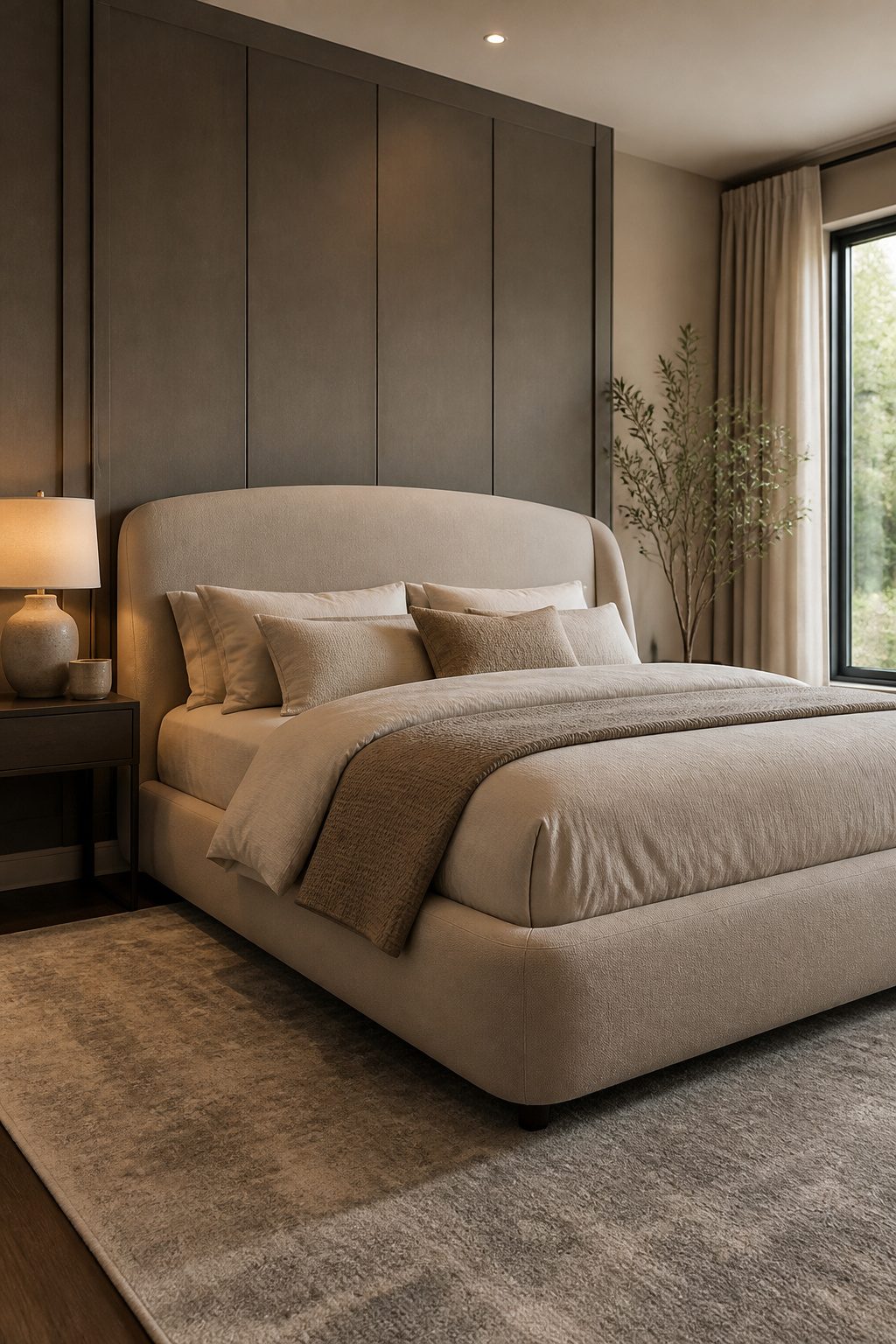
An upholstered platform bed gives a master bedroom its center without asking the walls to do the work.
It softens hard lines, makes the whole setup look intentional, and the padded headboard earns its keep when you want to lean back with a book or a laptop.
I point renters toward this option often because it does two jobs: it anchors the room, and it makes daily use more comfortable.
The risk is piling on more statement pieces and letting them fight. One bold piece carries the room’s character.
Add a sculptural armchair, an ornate mirror, and a carved dresser, and the eye has nowhere to land. One statement, quiet everything else is the rule I follow.
A defined bedside table with a slender silhouette can offset a curved, tactile bed without starting its own conversation. Let the bed inform the other pieces rather than compete with them.
9. Canopy Beds and Drapery
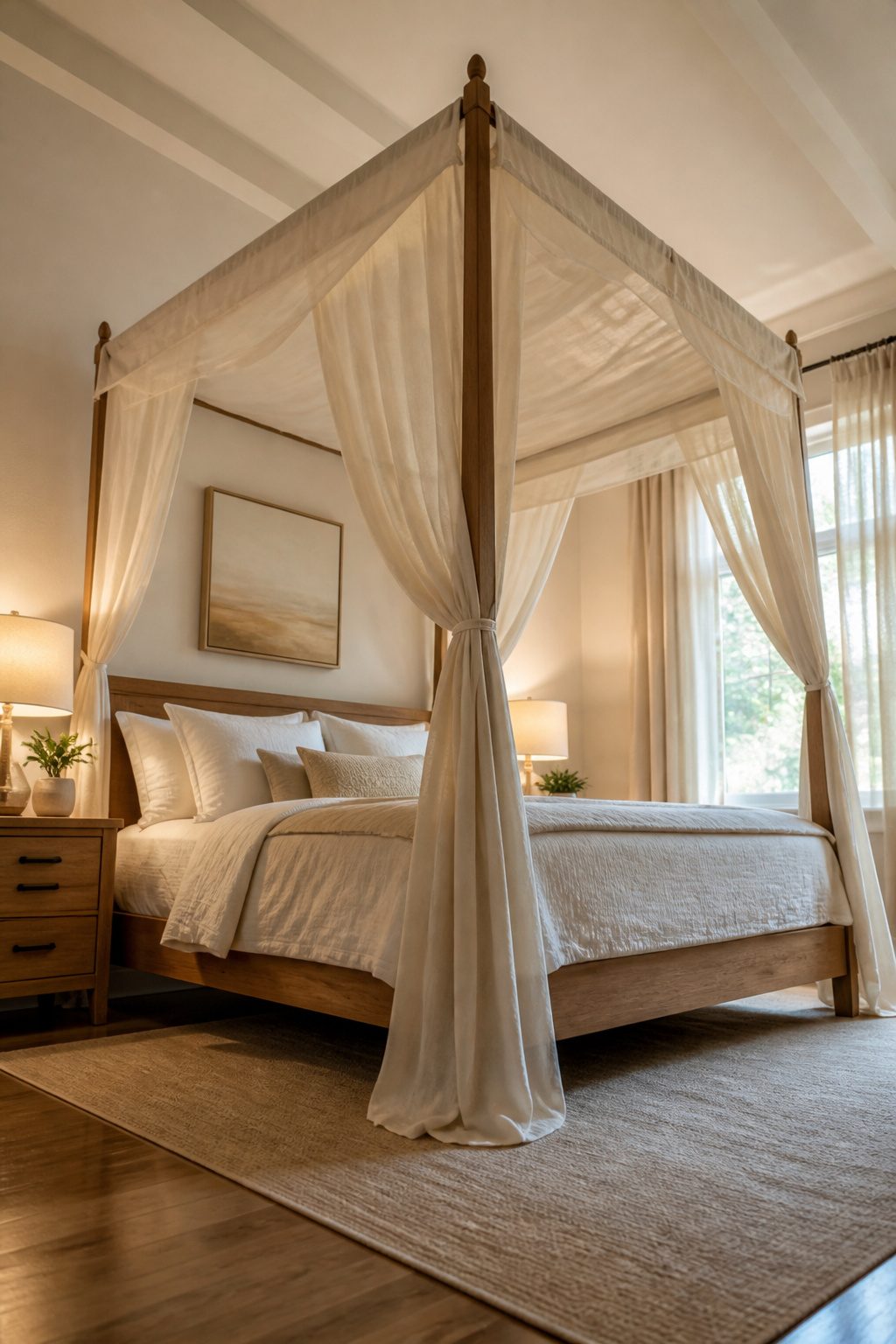
A canopy bed draws the eye upward and creates vertical space where the floor has none, which is why it works in a small master bedroom better than most people expect.
Ceiling height decides whether a canopy works. Below eight feet, the frame itself starts to compete for air; you feel the posts before you notice the lift.
At nine feet or more, the same structure opens the room up, especially when you keep the canopy bare and let the lines do the work.
Draped fabric changes the calculation. Sides and back in a soft natural fiber like linen add movement and diffuse morning light, but they also eat into the footprint visually.
In a room under 12 feet wide, I would skip the full surround and drape only the top rail, or leave the structure bare for a cleaner modern look.
The Adelaide bed with its Breeze Canopy net shows the other end of the spectrum: fabric pooling to the floor reads romantic and billowy, but it needs a 14-foot ceiling and enough floor space that the drapes do not become the walls.
10. Accent Walls and Layout Variations
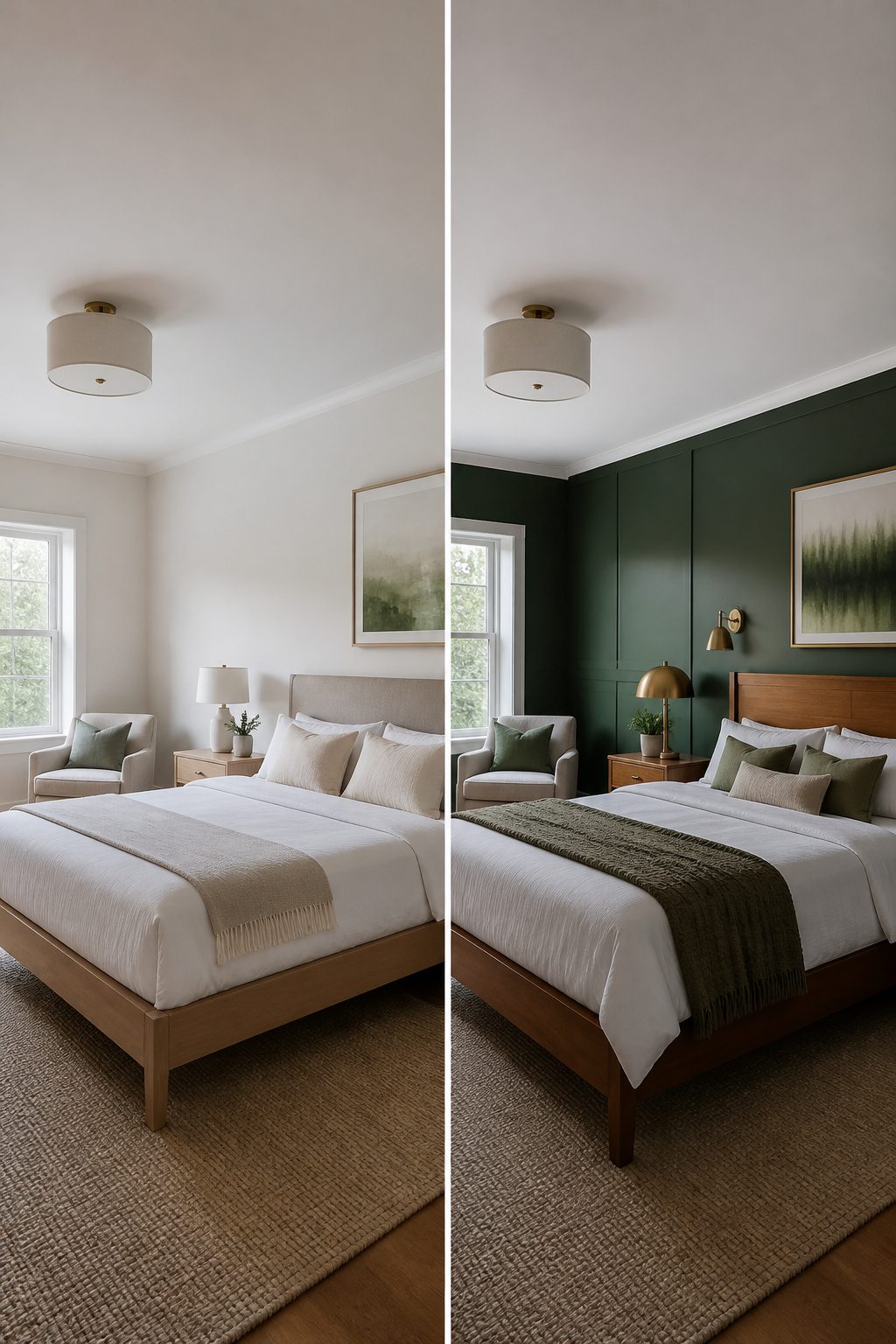
The wall behind the bed is the fastest place to give a master bedroom some direction.
A single coat of deep forest green reads instantly against oak or walnut frames, and it warms up brass hardware and cream bedding in a way flat white never will.
If the room already feels heavy, soft sage keeps things lighter and pairs cleanly with woven textures.
What I would skip is picking the paint first and hoping the furniture catches up. That only works when the undertones already agree, and in most bedrooms they do not.
Paint a 2-foot square sample and live with it through morning light, afternoon glare, and lamplight before you commit. Bedrooms shift that much across a day.
Layout matters just as much as color, and you can fix it without moving walls.
On a diagonal, the bed becomes the room’s anchor instead of its obstacle. A folding screen behind the headboard can fake that separation in an open plan or a studio where the sleeping area needs its own boundary.
I would not angle the bed in a narrow rectangle; the corners eat walking space and the room starts to feel like a maze. But in a square or oversized plan, that single turn opens circulation without a single permit.
Smart Integration Without Clutter
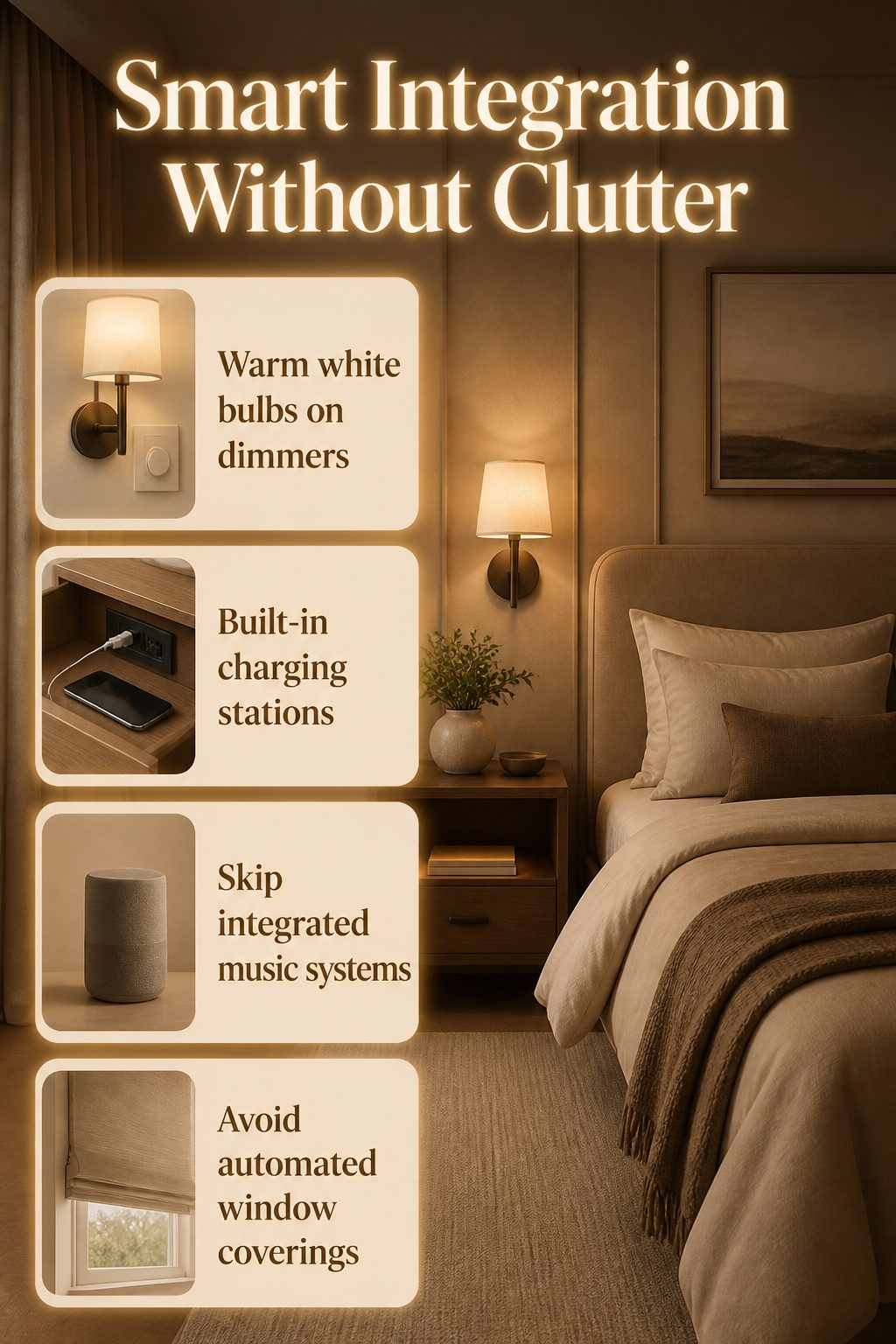
Smart lighting in a master bedroom works best when it hides in plain sight.
I would start with warm white bulbs on dimmers, which sources back for circadian rhythm support, rather than color-changing strips that read as gadgetry the moment you walk in.
Wall sconces or bedside lamps with built-in dimming keep the technology invisible while still letting two people set different levels for reading or winding down.
Built-in charging stations belong inside nightstands or drawer faces, not on top of them where cables collect dust and defeat the calm you are trying to build.
A charging table that connects cleanly to the bed frame keeps phones accessible but sightlines clear.
What I would skip: integrated music systems and automated window coverings. The first invites notifications and alarms into sleep space; the second adds motor cost and maintenance for a task a hand-operated shade does in seconds.
If your bedroom doubles as an office, a single smart light with scheduled fade is enough tech. Anything more and the room starts feeling like a showroom instead of a retreat.
Layout and Energy Flow
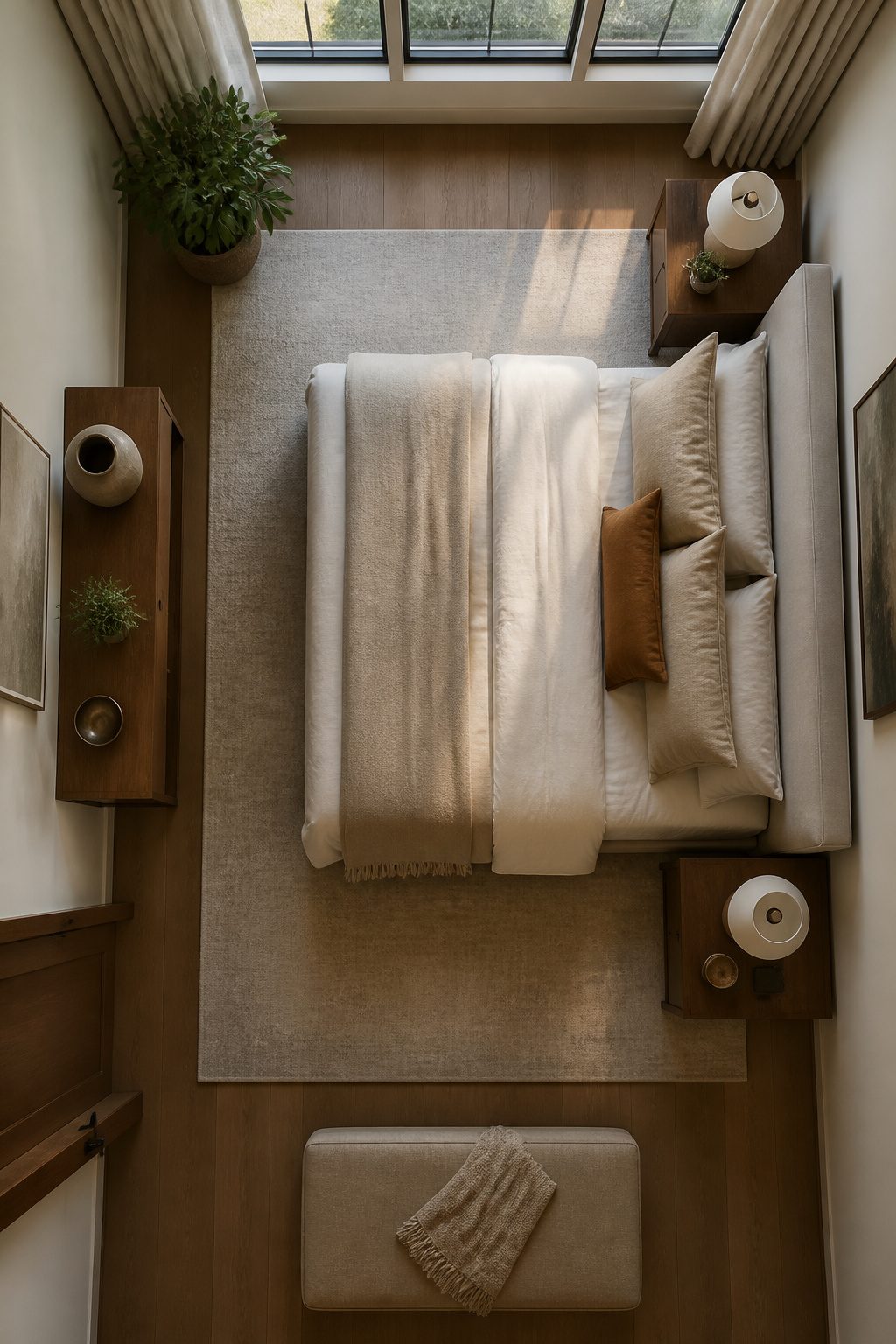
Bed placement sets the tone more than any single piece of furniture.
I put the headboard against the wall with windows to either side, never directly below or in front of them, because that position gives the room a clear sense of shelter without blocking morning light or forcing the bed into a draft.
The more critical rule is what you see when you wake: your feet should not point directly at the door. That alignment, sometimes called the "coffin position," creates a subtle tension you feel even if you cannot name it.
The door sightline matters from the hallway, too. Walking in and facing the bed head-on flattens the room’s energy, while an angled placement or a partial screen lets the space unfold.
I think the clutter question is where feng shui meets real budgets. Sources pushing contemporary design in 2026 treat visual calm as an energy principle, not just an aesthetic one, which means storage decisions come before decor choices.
Built-in wardrobes, floating drawers, or a slim console behind the headboard keep surfaces clear without adding footprint.
Skip the storage only if you enjoy rotating decorative objects monthly, and even then, a single low basket beneath the bed outperforms a shelf of small items that never stay arranged.
Eclectic Mixing That Holds Together
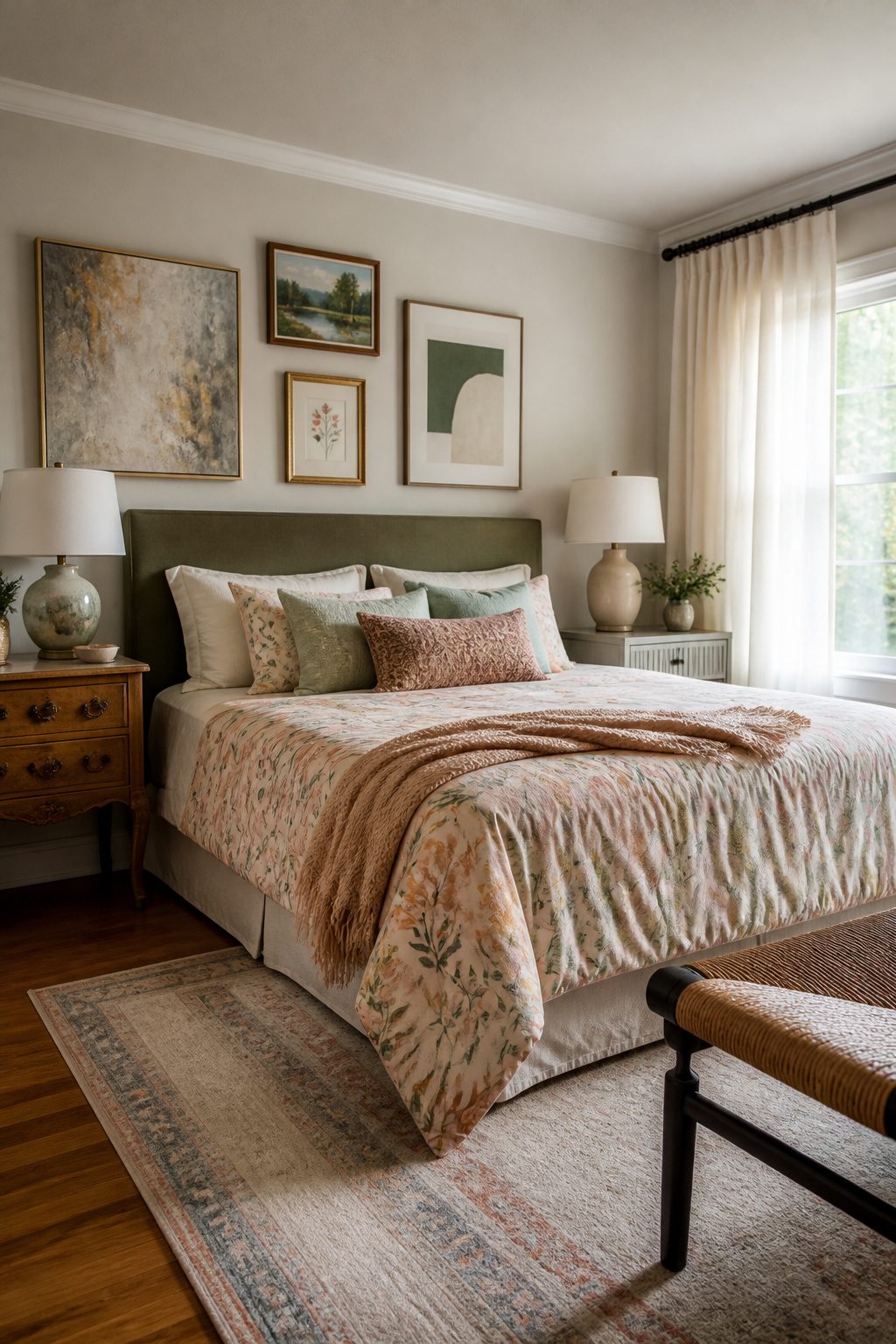
An eclectic master bedroom only looks scattered when every piece insists on being noticed. The restraint that holds it together is coordination in color, weight, and mood, not matching.
I would pair old and new in the same room, but I would never let both fight for attention. One carries the visual weight, the other supports it.
The bed and windows need to speak the same language. That does not mean identical fabrics.
Exact matching reads dated. What works is a shared undertone between duvet, pillows, and curtains so the eye moves calmly across the space.
Symmetry helps here, and I use it deliberately. Two matching lamps or nightstands cut the number of decisions in half and give the eclectic mix a frame it can lean against.
Art is where I break the rule. Two pieces from the same series, not identical, keep the room from feeling staged.
Texture and pattern can contrast, but I limit the palette that carries them. Three colors, maybe four, and one of them is always a quiet neutral that lets the others rest.
The freedom of eclectic design is real, but the limit is what makes it readable. Without that boundary, personality becomes clutter, and the room loses the calm a master bedroom needs.
Frequently Asked Questions
How can I make my master bedroom nice?
Update the color scheme with calming tones or an accent wall, invest in comfortable bedding with a statement headboard, and use warm lighting with lamps or sconces.
Add soft textures like rugs and throws, maximize storage to keep clutter hidden, and personalize with artwork or a reading nook. Good ventilation and a few plants finish the retreat.
What’s the best color to have in a bedroom?
Soft blues, muted greens, greys, beige, and pastels settle a bedroom best because they slow the pulse and let the room read as finished without demanding attention.
A 2026 study of over 3,000 bed purchases found 56% of customers preferred neutral tones, with warmer browns climbing and cooler greys fading. Sandy throws over crisp white sheets or stone-toned cushions warm the space without cluttering it.
What are some master bedroom ideas?
Start with a neutral palette and comfortable bedding as your base, then build layered lighting with bedside lamps, ambient ceiling fixtures, and accent lights on dimmers.
Add texture through linen, velvet, or bouclé rather than bold prints, and include built-in storage that disappears into the architecture. Personal touches belong on a single surface, limited to three objects, with one being functional.
How do I design a master bedroom?
Focus on layout first: place the headboard against a solid wall with windows to either side, never directly below, and avoid positioning your feet toward the door.
From there, choose a calming color scheme, add layered lighting, and select furniture that balances one statement piece against quieter supporting elements. Built-in storage and a few personal objects complete the room without crowding it.
How should I decorate my master bedroom?
Anchor the room with a comfortable bed in warm neutral bedding, echo the palette in window treatments, and add a light-toned rug for softness underfoot.
Layer lighting so no single fixture does all the work, choose texture over pattern for rest, and keep personal decor to three objects per surface with one functional item among them.
What are the trends for master bedrooms in 2026?
Warmer earthy neutrals have overtaken the cool blue-gray palettes of previous years, with sandy, clay, and almond tones rising alongside stone and taupe.
Texture-first design through linen, velvet, and bouclé replaces bold prints, and built-in concealed storage wins over open shelving. Smart integration stays hidden, limited to warm dimmable bulbs and built-in charging rather than visible gadgetry.
What are the 7 golden rules for bedroom design?
One: start with the bed as the anchor and build outward.
Two: choose neutral, calming colors that lower the pulse. Three: layer ambient, task, and accent lighting with warm bulbs and dimmers.
Four: prioritize texture over bold color for rest. Five: use built-in storage that disappears visually.
Six: limit personal objects to three per surface. Seven: place the bed against a solid wall with feet away from the door.
What are some good design ideas for a master bedroom?
An upholstered platform bed softens hard lines and anchors the room, while a canopy bed draws the eye upward and creates vertical space in smaller rooms with ceilings above eight feet.
An accent wall behind the bed in deep forest green or soft sage gives direction without overwhelming. For layout, angling the bed on a diagonal opens circulation in square or oversized plans.