An olive green kitchen can run from a fifty-dollar hardware swap to a full cabinet repaint that still costs less than one new appliance.
The deciding factor is almost always natural light: olive absorbs instead of reflects, and in a dim space it turns muddy fast. Sample Sherwin-Williams Ripe Olive SW 6209 generously on every wall before you commit.
1. Full Olive Green Cabinets
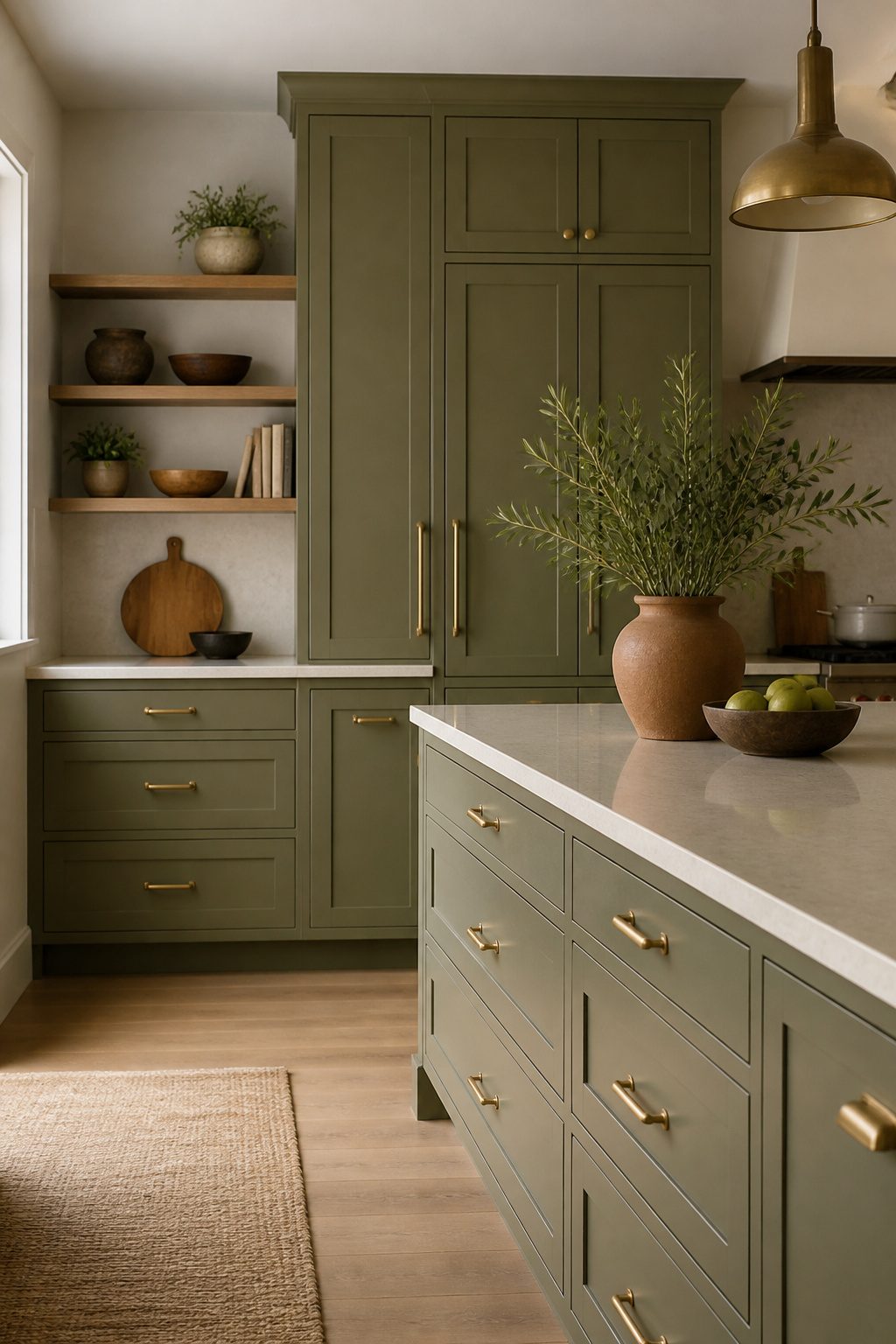
Olive drawn across every cabinet surface is the kind of decision that either grounds a kitchen beautifully or swallows it whole, and the difference is almost always natural light.
The muted tone absorbs rather than reflects, so in a dim space it turns muddy fast. Sample generously on every wall before you commit.
Sherwin-Williams Ripe Olive SW 6209 reads nearly neutral once brass hardware and wood accents settle in, and it is the safest deep olive in their range for an entire kitchen.
For a softer, grey-green take, Benjamin Moore October Mist 1495 flatters shaker fronts and pairs well with open shelving without feeling theatrical.
A matte or eggshell finish on the cabinet fronts reads more expensive than gloss, which tends to look plasticky and shows fingerprints immediately.
2. Two-Tone Cabinets, Olive Below and Lighter Above
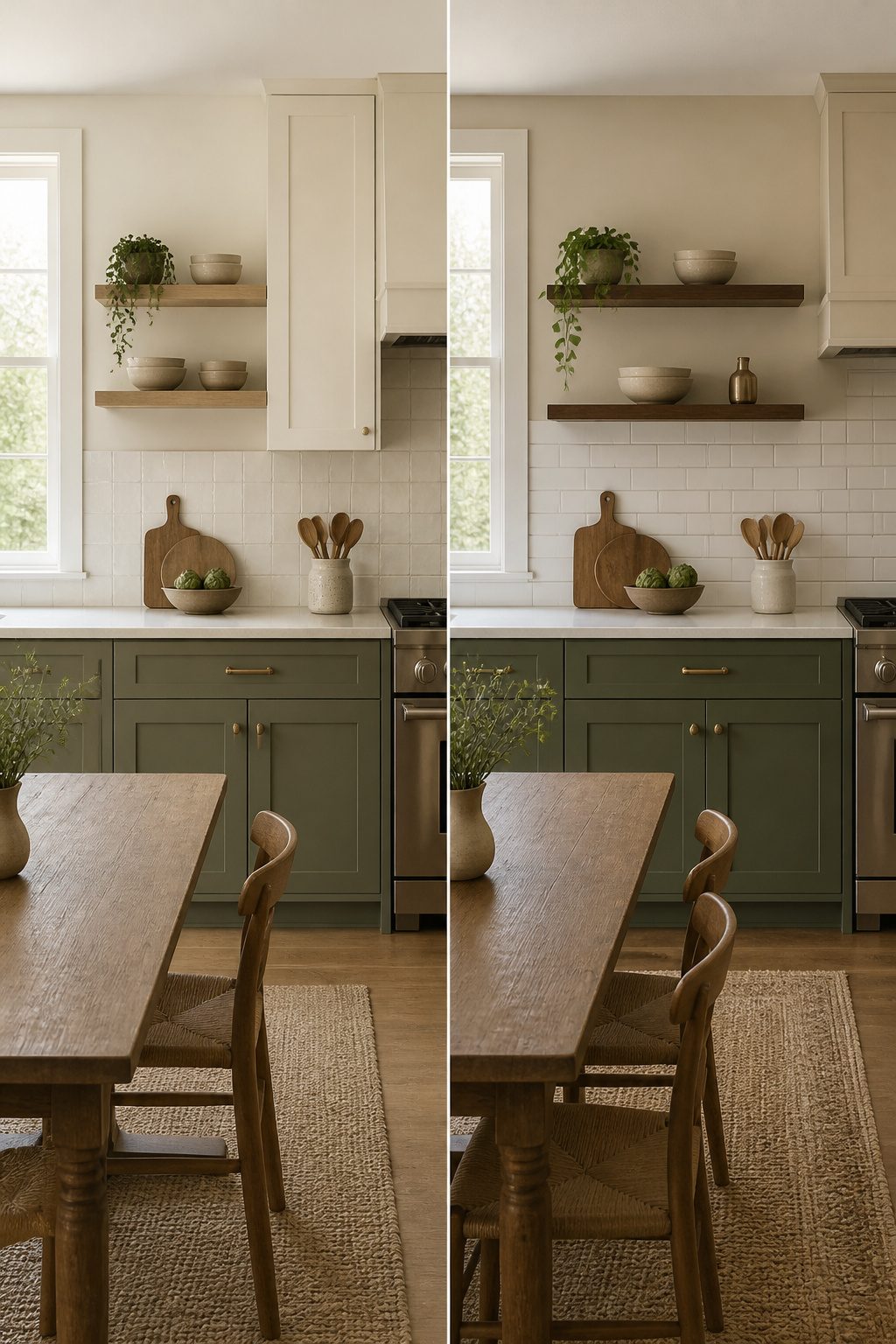
The olive-on-bottom, light-on-top formula keeps a kitchen from feeling like a cave. The upper cabinets in white or cream preserve your ceiling height, which is what makes a small space read as small in the first place.
Olive on the base cabinets grounds the room at the floorline, where dark weight belongs, while the lighter up top lets light bounce around.
I like Sherwin-Williams Rosemary SW 6187 below with Alabaster SW 7008 above.
The pairing has enough warmth that neither shade fights the other. For the ceiling, carry that same warm cream up rather than breaking to a stark white; the contrast against olive reads as harsh rather than crisp.
Swap solid uppers for open wood shelving if you want to loosen the look. Oak or walnut floating shelves pull the warmth out of the green without adding another painted surface to the room.
The island-only flip works too: white perimeter cabinets with a single olive island.
It anchors the room without committing the whole kitchen. In a larger space, that is often the smarter half-measure.
3. Olive Green Island
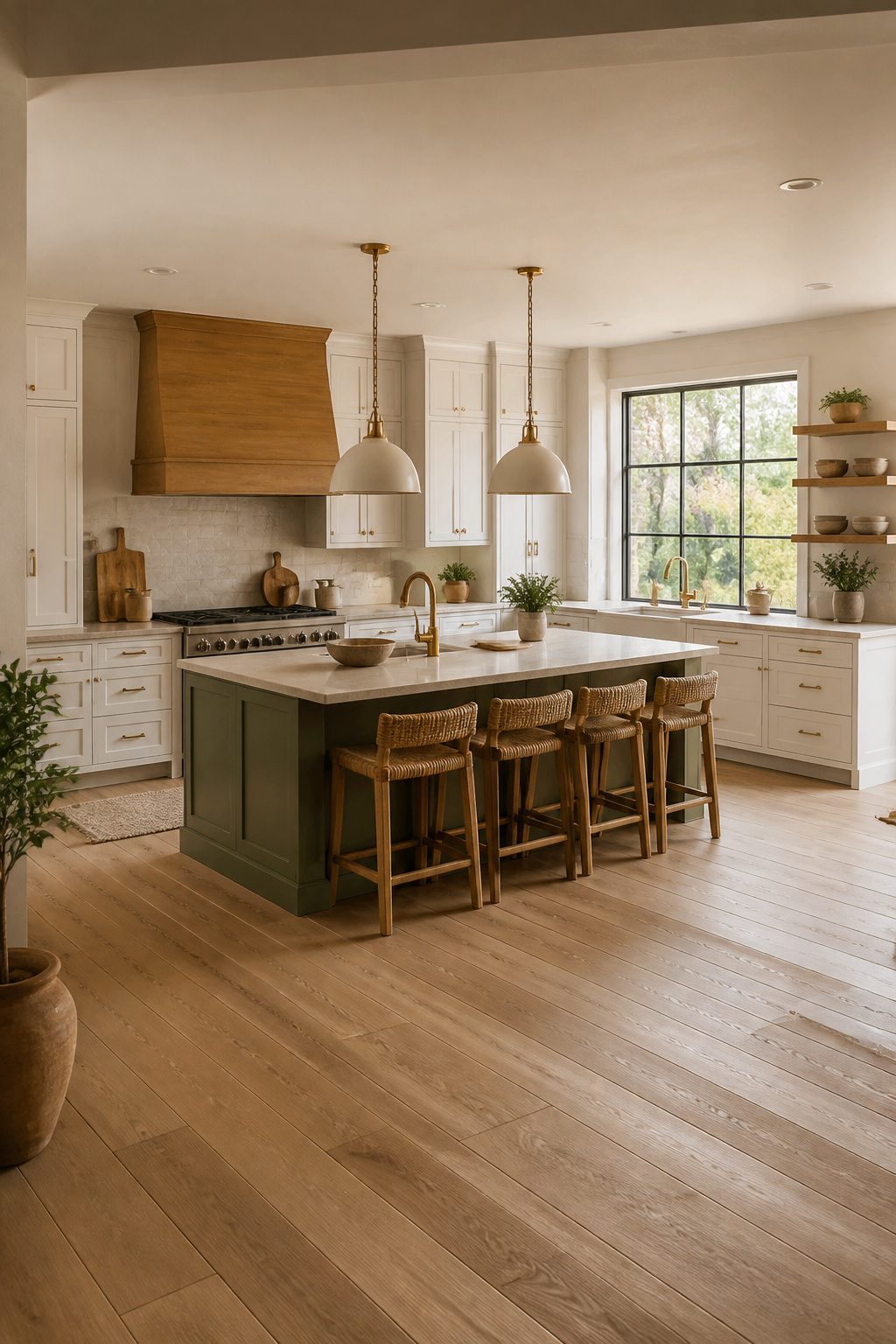
Painting just the island olive keeps the commitment small and the impact sharp.
In a galley kitchen, where cabinets run both long walls, a full olive stretch can press the walls inward; a single block of color at the center breaks that tunnel without adding weight.
The perimeter stays white or whatever neutral is already there, and the island becomes the room’s anchor.
The two-tone approach also protects your budget if you are renting or planning to sell. One cabinet bank in olive, everything else untouched, means less paint, less labor, and an easier reversal later.
Sources pair this layout with warm wood open shelving or a matching plaster range hood to keep the scheme from looking piecemeal, but the island alone is enough to get the look started.
A single olive island costs a fraction of a full kitchen repaint and reads as intentional rather than timid.
The risk is low because the footprint is contained, and the grounded warmth you get pulls people toward the center of the room.
4. Olive Green Walls
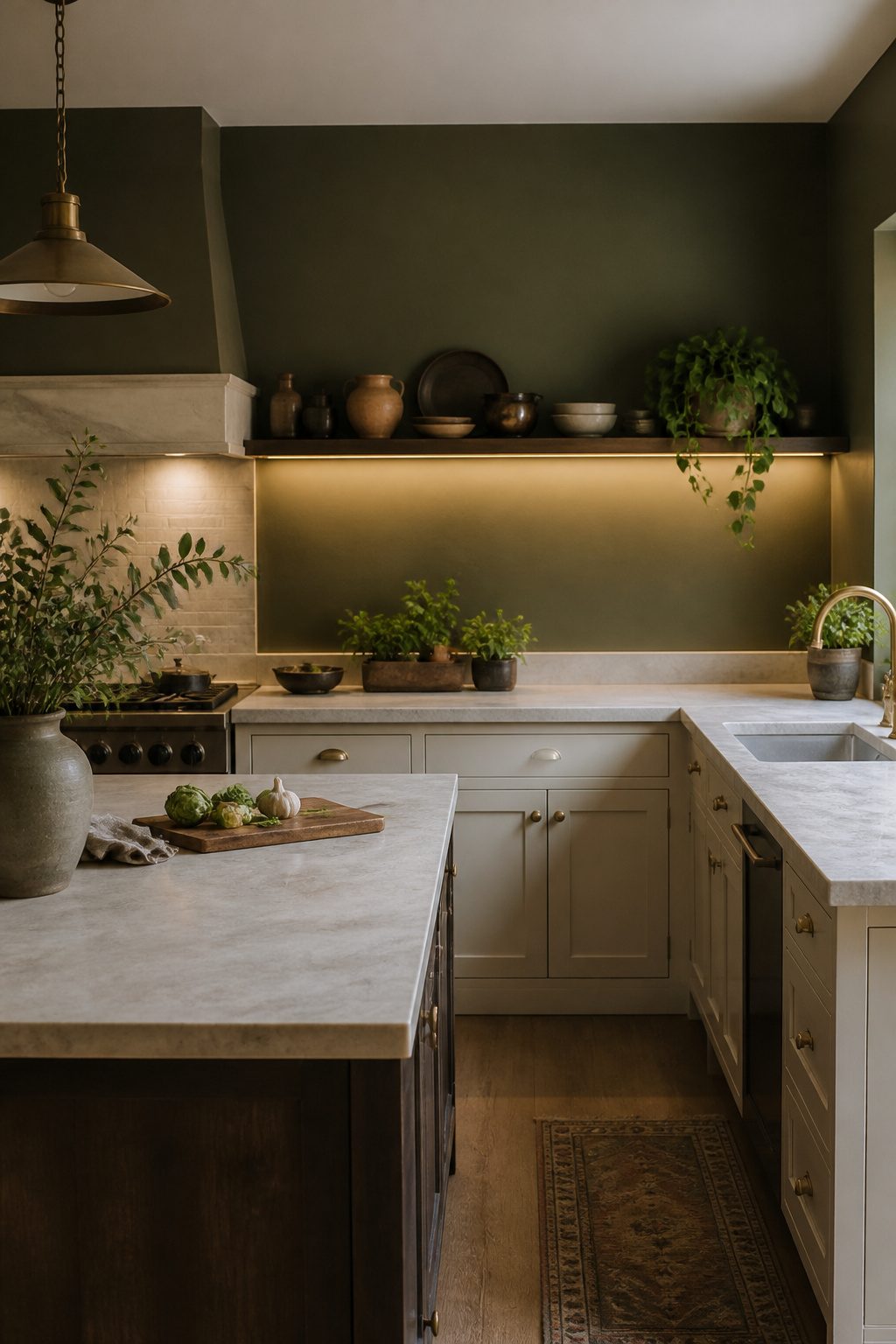
Painting a wall olive green is the cheapest way to test the color before you commit to cabinets.
A single gallon of paint runs about $35–$50, versus the cost of refinishing even a small kitchen’s worth of doors and boxes. Olive on a large surface can pull the ceiling down fast if you do not plan for it.
I would keep the cabinets and countertops light. Cream or warm white cabinets create the lift that keeps olive walls from making the room feel caved in.
The same goes for the counter: a lighter stone or solid surface reflects light back into the space rather than absorbing it.
Lighting matters as much as the paint choice itself.
Warm bulbs, 2700K to 3000K, keep olive earthy; cool light drags it toward gray and institutional. Under-cabinet lighting earns its place here, especially if the wall color sits in a corner with no window.
The glow at counter level breaks up the expanse of green and gives the room a second layer of brightness after the overhead fixture.
If the wall is your only olive element, one accent finish is enough.
Brass hardware or open walnut shelving adds warmth, but both together fight for attention in a small kitchen. Pick the one that matches the hardware you already have, or the one you can swap out in an afternoon.
5. Olive Green Backsplash
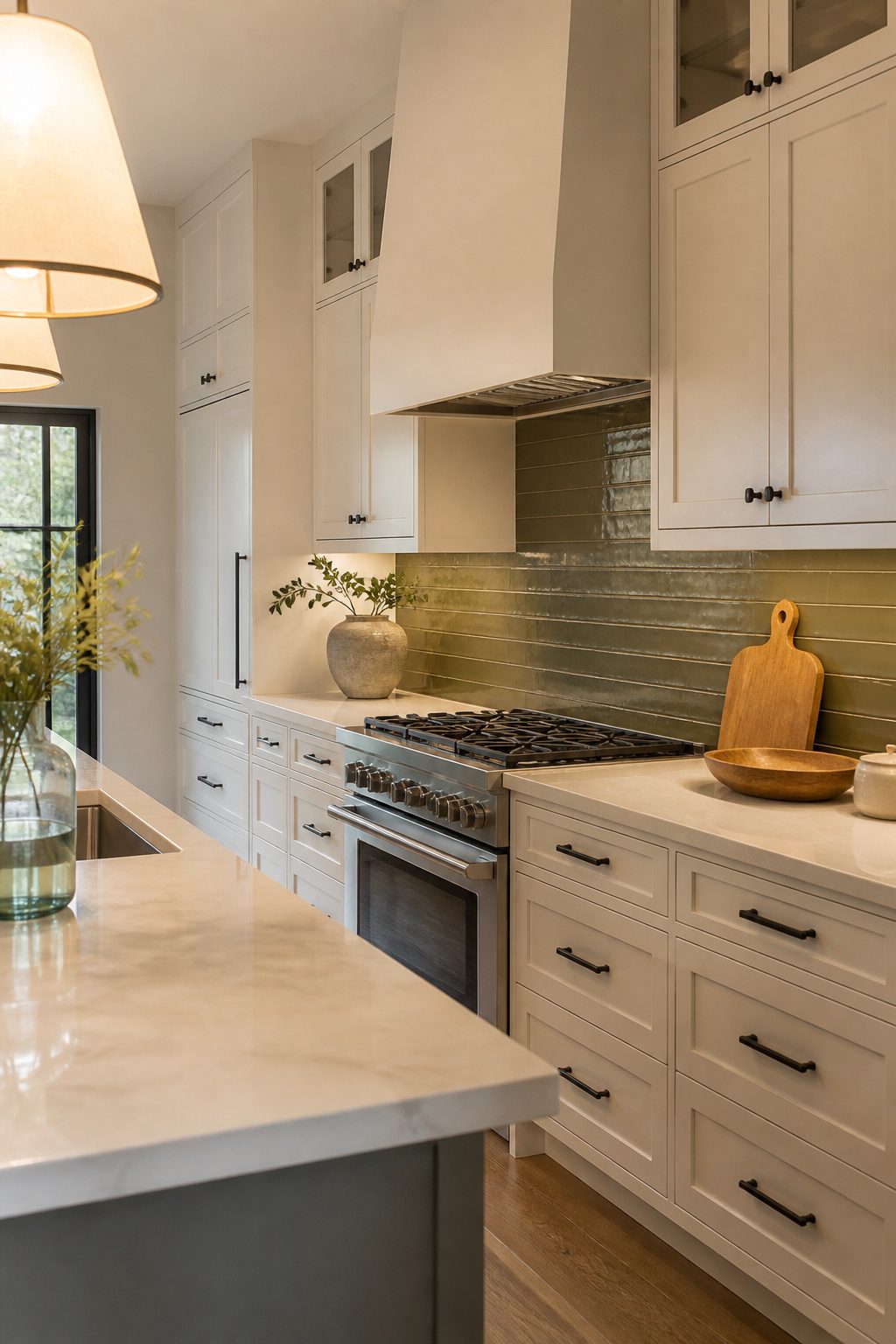
Cream or bone quartz countertops give an olive backsplash the warmest setting. Stark bright white fights the green, while that slight yellow shift in quartz makes the two surfaces feel like they belong together.
An olive backsplash can go in as a narrow band between counter and cabinet, which keeps the commitment small.
Painted tile covers the space for the cost of a weekend and a gallon; real zellige or subway tile takes longer but still lifts out without touching the cabinets.
Either way, the color sits in a strip that is easy to repaint or retile later, which matters if you are renting or if you just want to test olive before you take it farther.
Farmhouse kitchens lean toward honed cream zellige or warm white subway in a horizontal brick pattern.
Modern kitchens read cleaner with a vertical stack bond or a single brass strip running at counter level. Both directions still read as olive at a glance; the difference is only in whether the tile feels handmade or precise.
I would skip busy pattern or bright color behind the range; olive is already doing the visual work, and the backsplash should answer it rather than shout over it.
6. Olive Green Accents in Hardware, Lighting and Decor
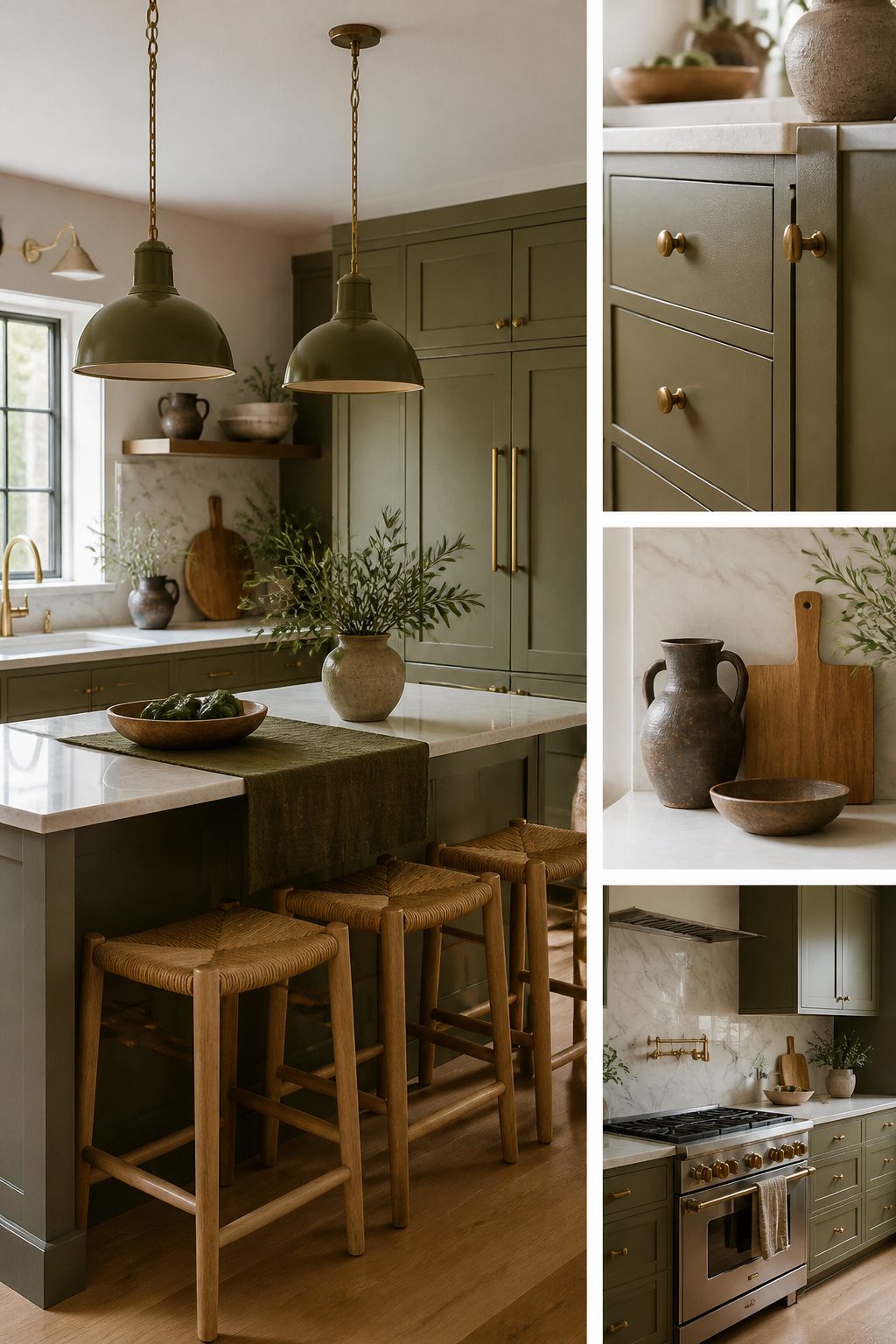
The smallest olive green kitchen projects carry the most change for the least commitment. Swapping cabinet hardware costs maybe fifty dollars and an afternoon, yet the shift reads immediate and intentional.
Brass and bronze finishes belong on olive green.
Unlacquered brass ages to a soft patina that lives alongside olive instead of fighting it. Oil-rubbed bronze runs quieter and deeper, better for traditional rooms where you want the hardware to recede.
Chrome and brushed nickel cool the green toward grey. Pick one warm metal and stay consistent, taps included.
Pendant shades in olive or natural linen hung over an island pull the color upward without touching a wall.
Bar stools in olive leather or woven textile do the same at counter level. A few stoneware pieces or a single linen runner in deep green ground the work surface without registering as a theme.
The mistake is scattering olive everywhere at once.
One layer, fixed and clean, beats three competing accents. Hardware is permanent in feel though reversible in fact.
The textile or the shade lives even shorter. Start where you can undo by Sunday evening if the tone sits wrong.
Color Combinations That Ground the Green
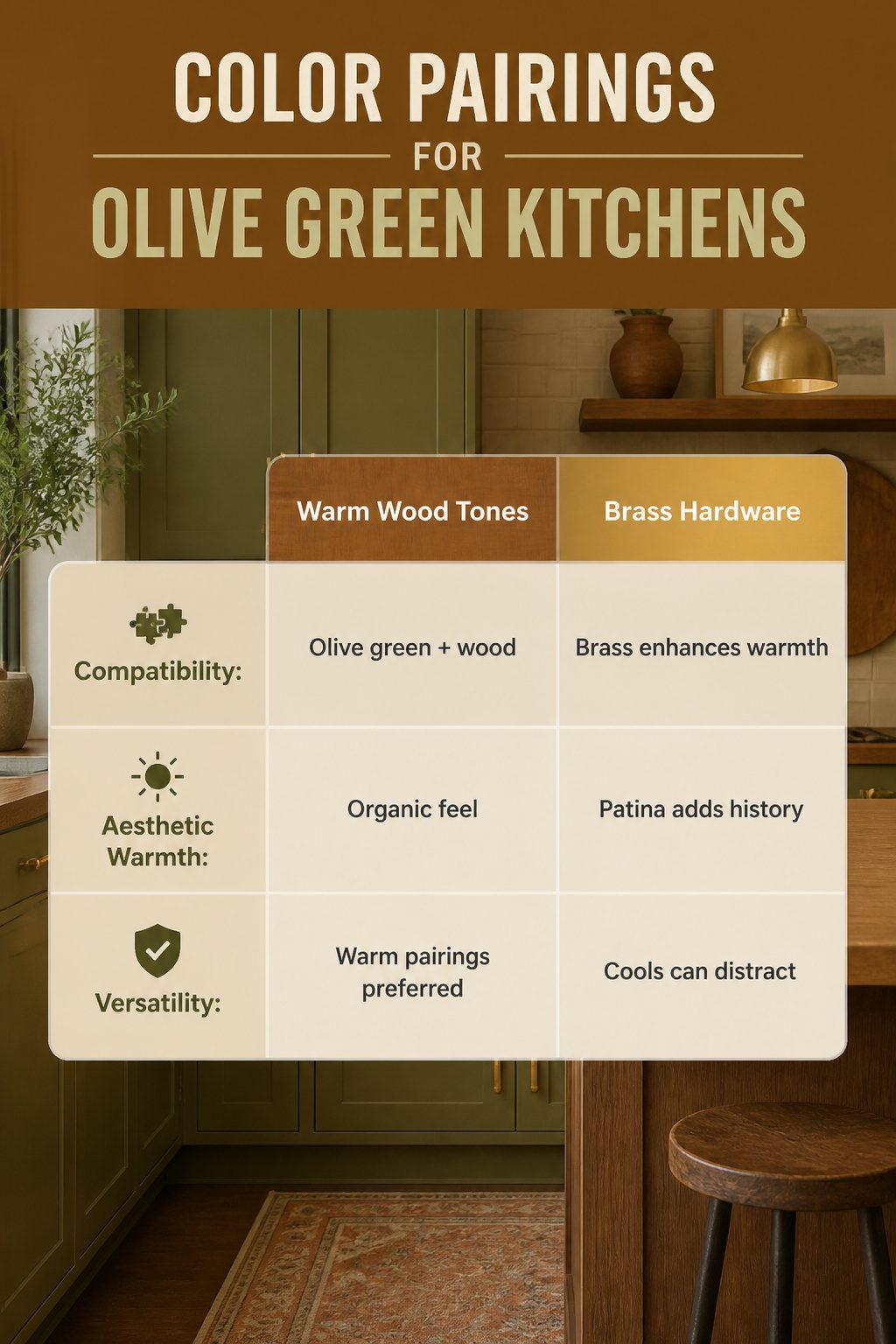
Warm wood tones are the first pairing every designer reaches for with olive cabinets, and for good reason.
Walnut, oak, or even a mid-tone pine keeps the kitchen from feeling like a paint swatch come to life. The green needs something organic to push against.
Brass hardware locks in that warmth.
Aged or unlacquered brass specifically, not the polished kind that reads showroom-new. The patina catches light in a way that makes olive feel like it has history already, and committing to one metal keeps the palette from turning chaotic.
Cream and bone whites do the same work from the lighter side.
They brighten without the stark contrast of a pure white, which can make olive look muddy rather than grounded. Terracotta and copper belong in the same family if you want to push warmer.
Olive does play well with cool tones too, blue and black included.
That versatility is real, but it is also where a kitchen can start to feel unfocused. For the grounded atmosphere most olive kitchens aim for, warm pairings are the safer default.
Why Olive Green Reads as Timeless
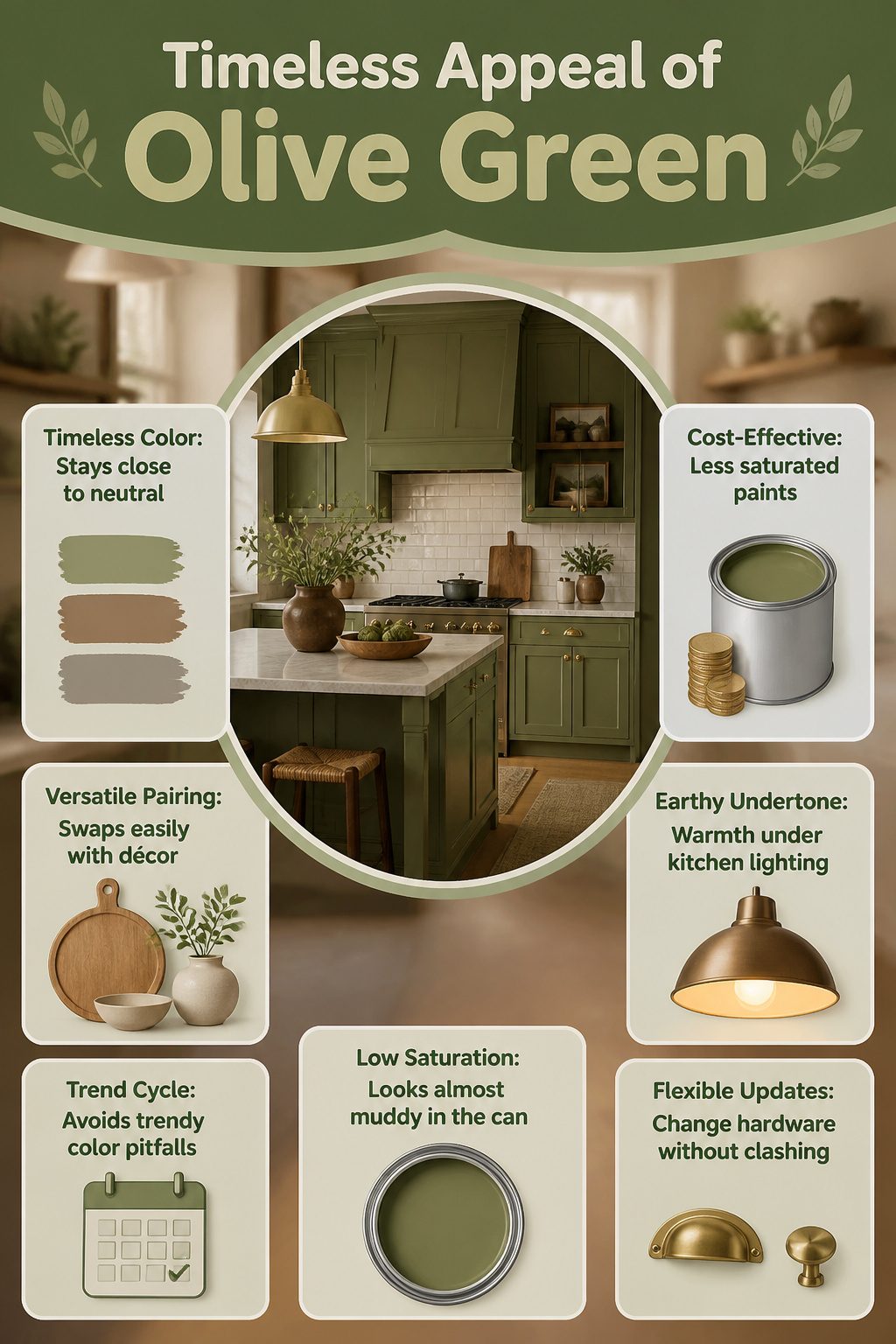
Muted, earthy greens have shown up in kitchens for decades because they sit close to neutral.
That proximity to brown and gray is why olive green reads as timeless rather than trendy, and it is the brighter, yellow-leaning limes that tend to feel of a moment.
The safe paint shades bear this out. Sherwin-Williams Ripe Olive SW 6209, Rosemary SW 6187, and Dried Thyme SW 6186, plus Benjamin Moore October Mist 1495, all stay low in saturation and high in earthy undertone.
They do not shout. They also do not lock you into a single trend cycle the way a saturated emerald or a neon sage would.
If you are choosing between olives, gravitate toward the ones that look almost muddy in the can. They gain warmth under kitchen lighting and let you swap hardware or countertops later without the color turning dated.
Lighting Choices That Warm or Flatten the Tone
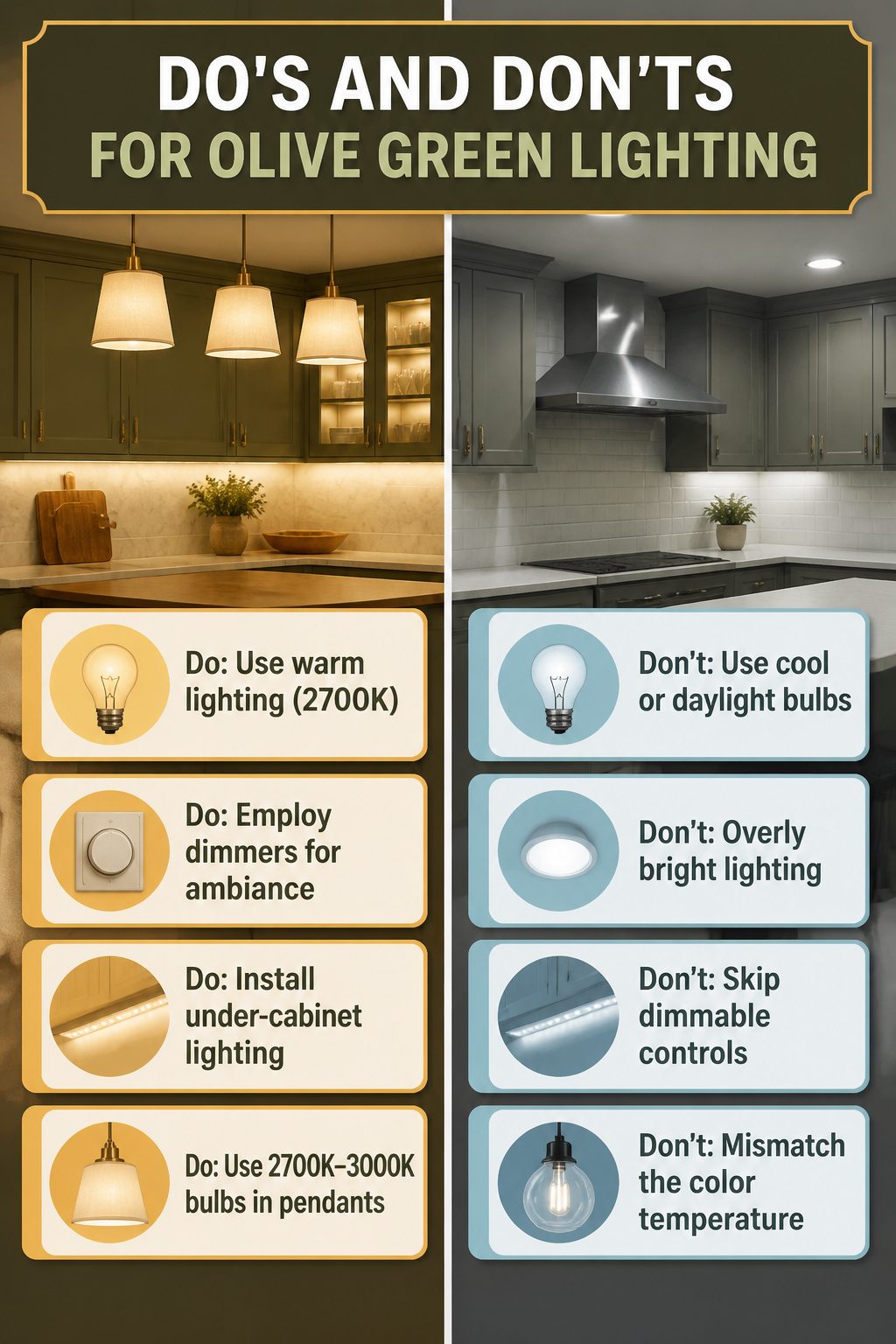
Warm light keeps olive green from sliding toward gray, and 2700K is the temperature that does it. Cool or daylight bulbs flatten the color into something dingy, which is the mistake that wastes a paint job you already paid for.
I get my under-cabinet strips in warm white LED and run them the full length of the uppers.
They kill the work shadows and bounce a little light back onto the backsplash. If the cabinets are glass-fronted, small puck lights inside add depth after sunset without costing much or drawing attention to themselves.
Dimmer switches matter more here than in a white kitchen. At full brightness the green holds; lowered to evening levels it turns intimate rather than muddy.
Two or three pendants in aged brass with cream linen shades over an island finish the layer, but only if the bulbs inside them match the 2700K–3000K range the rest of the room runs on.
Hardware Finishes That Work
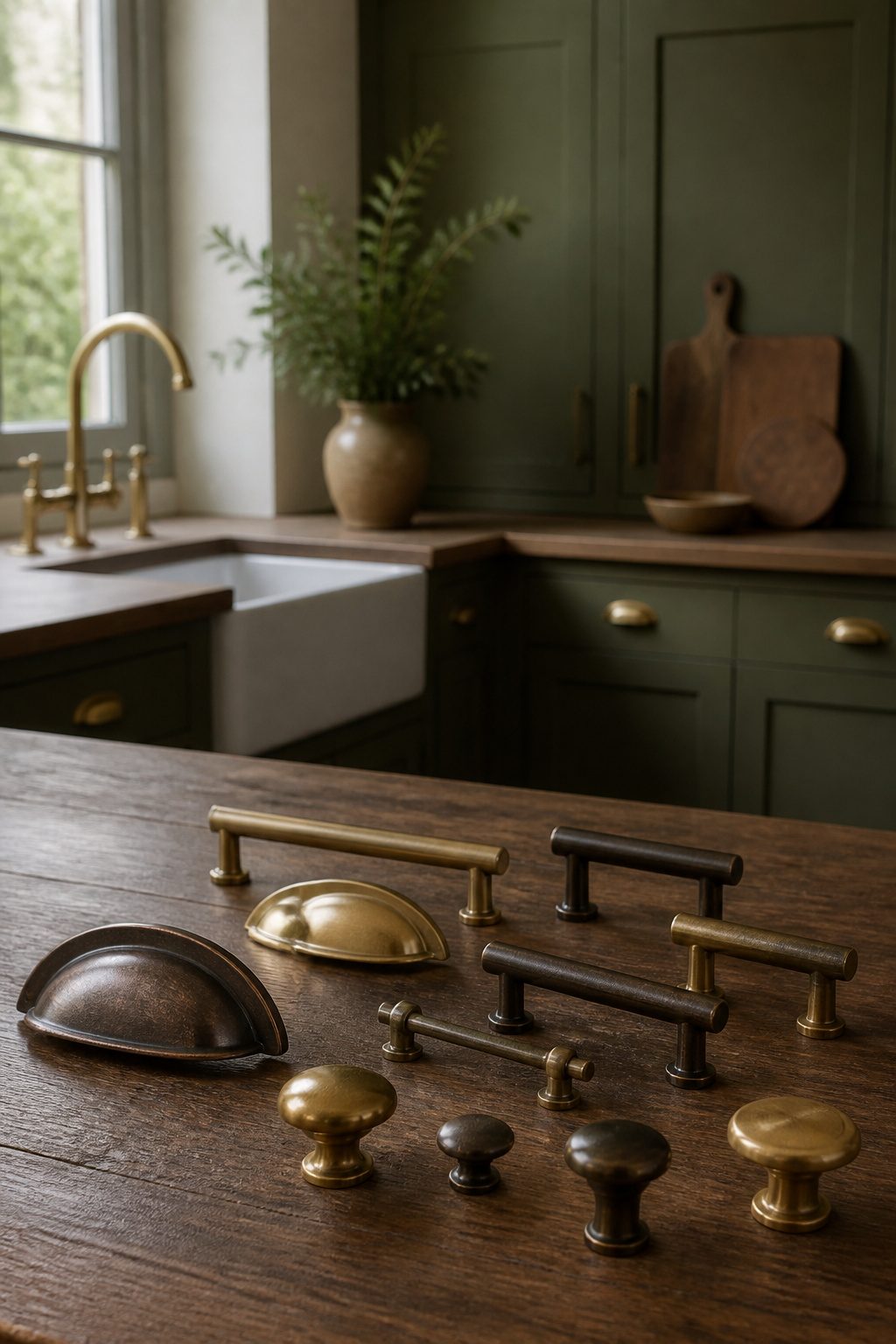
Unlacquered brass and aged bronze are the two warm metals that actually belong with olive green. Unlacquered brass ages to a soft patina over time, and that living finish keeps the palette from feeling static.
Aged bronze runs quieter than brass, which suits a more traditional kitchen where you want the hardware to settle in rather than stand out.
Chrome and polished nickel fight the color.
They cool olive down until it reads flat and slightly grey, the exact mismatch that makes a kitchen look assembled rather than designed. Skip chrome and nickel entirely.
The consistency matters across every metal surface: cabinet pulls, knobs, faucet, and pendant lights.
Pick one warm metal and repeat it. Mixed metals, brass plus chrome plus black, read chaotic against olive’s depth.
Aged brass with its patina wins over polished brass, which stays too bright and new. Look specifically for "antique brass" or "unlacquered brass" on the label.
Paint Your Existing Cabinets Instead
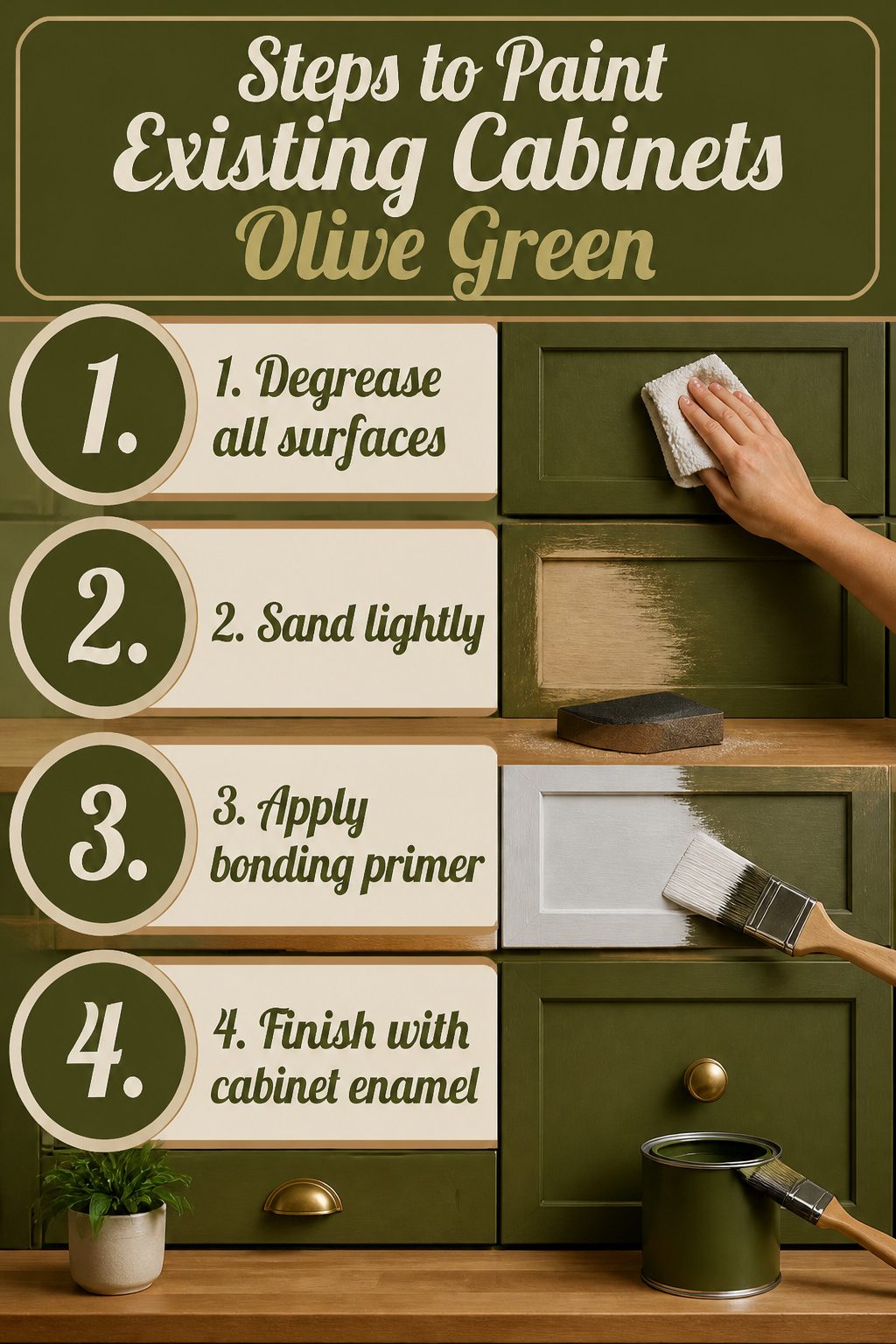
Painting existing cabinets olive green is the single highest-return update you can make to a kitchen that already functions well.
New cabinets eat most of a remodel budget and leave nothing for the details you actually touch. The swap is straightforward: degrease every surface, sand lightly, roll on a bonding primer, and finish with a hard-wearing cabinet enamel.
Rushing the prep is what makes painted cabinets chip, and that failure mode is almost always visible by the second year. I would rather see a homeowner spend three Saturdays on prep and one on color than reverse that ratio.
Butcher block counters pair better with olive than budget gray laminate if you are adding a surface, and brass hardware behind the sink and stove is enough warmth without fitting every door.
The whole project lands in a few hundred dollars and a couple of weekends, not the five figures and six weeks of a full replacement.
Frequently Asked Questions
Does an olive green kitchen date quickly?
No. Muted, earthy greens have shown up in kitchens for decades because they sit close to neutral.
The shades that look almost muddy in the can, like Sherwin-Williams Ripe Olive SW 6209 or Benjamin Moore October Mist 1495, gain warmth under kitchen lighting and let you swap hardware or countertops later without the color turning dated.
What countertop goes best with olive green cabinets?
Cream or bone toned quartz is the safest choice, and warm veined marble is the most elegant.
Honed Calacatta marble with warm grey veining on a white background is the gold standard. Stark bright white and cool grey countertops fight olive’s warmth and should be avoided.
Can I paint my existing kitchen cabinets olive green?
Yes, and it is the single highest-return update you can make to a kitchen that already functions well.
The whole project lands in a few hundred dollars and a couple of weekends: degrease every surface, sand lightly, roll on a bonding primer, and finish with a hard-wearing cabinet enamel.
Rushing the prep is what makes painted cabinets chip by the second year.
What hardware finish suits olive green?
Warm metals, specifically unlacquered brass and aged bronze. Unlacquered brass ages to a soft patina that lives alongside olive instead of fighting it.
Chrome and brushed nickel cool the green toward grey and should be skipped entirely. Pick one warm metal and stay consistent across pulls, knobs, faucet, and pendants.