
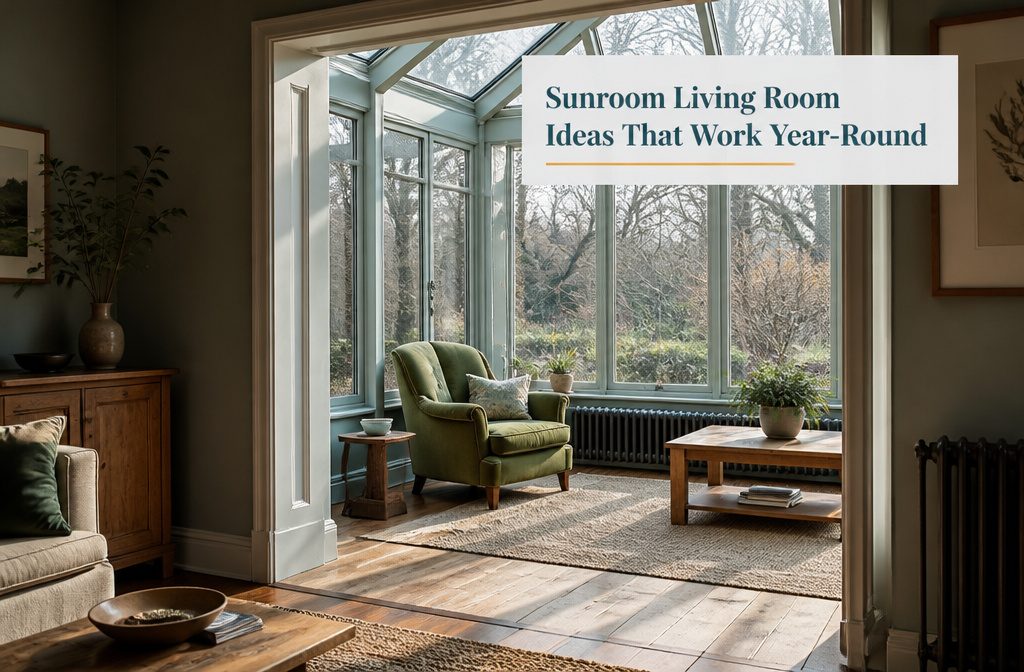
A sunroom living room is a glass-enclosed space that functions as both a sitting area and a light-filled extension of your main living room.
The difficulty is keeping it usable when temperature swings make it too hot in summer or too cold in winter, which is why insulation, climate control, and window treatments matter more here than in a standard room.
One approach runs the same paint color from the adjoining living room into the sunroom so the transition reads as one continuous space rather than an add-on.
1. Make the Sunroom an Extension of the Living Room
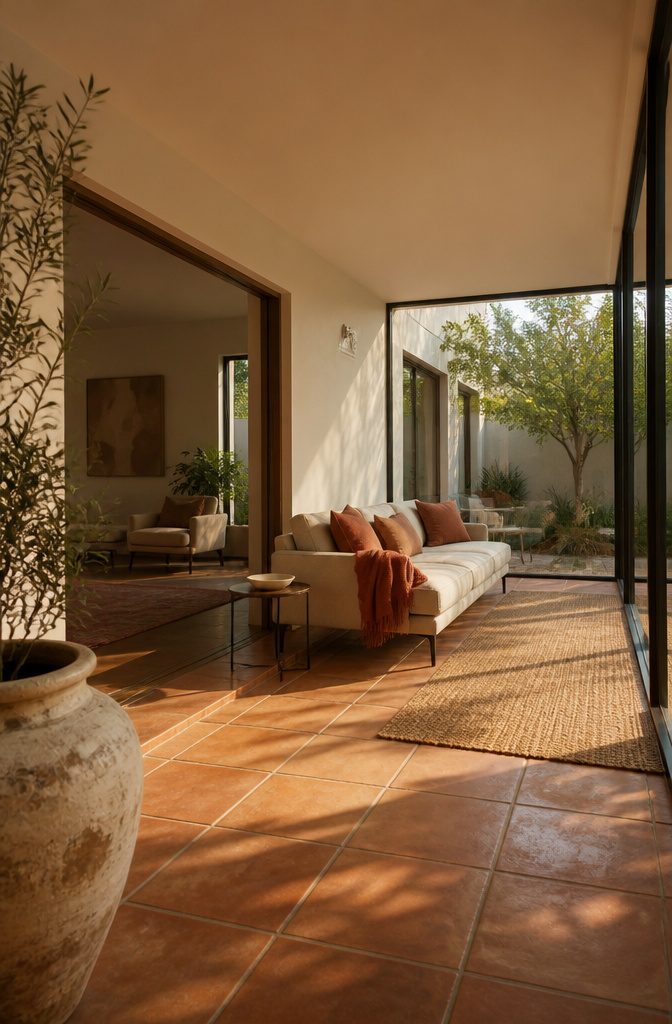
A color palette that echoes the rest of your home keeps the sunroom from reading as an add-on.
Pick up the same wall color or one shade lighter, and carry over the accent colors you already use in throw pillows, rugs, or artwork.
If your living room leans warm with terracotta and cream, the sunroom should too; a cool gray-and-navy scheme stays consistent the same way.
Furniture style matters as much as color. A sunroom filled with wicker reads cottage even if the adjoining room is mid-century, and that break pulls attention to the threshold instead of letting the two spaces blur together.
Match the lines: if your living room uses clean-lined sofas and metal-leg tables, bring that into the sunroom rather than switching to ornate or overly casual pieces.
2. Choose an All-Season Room for Year-Round Living
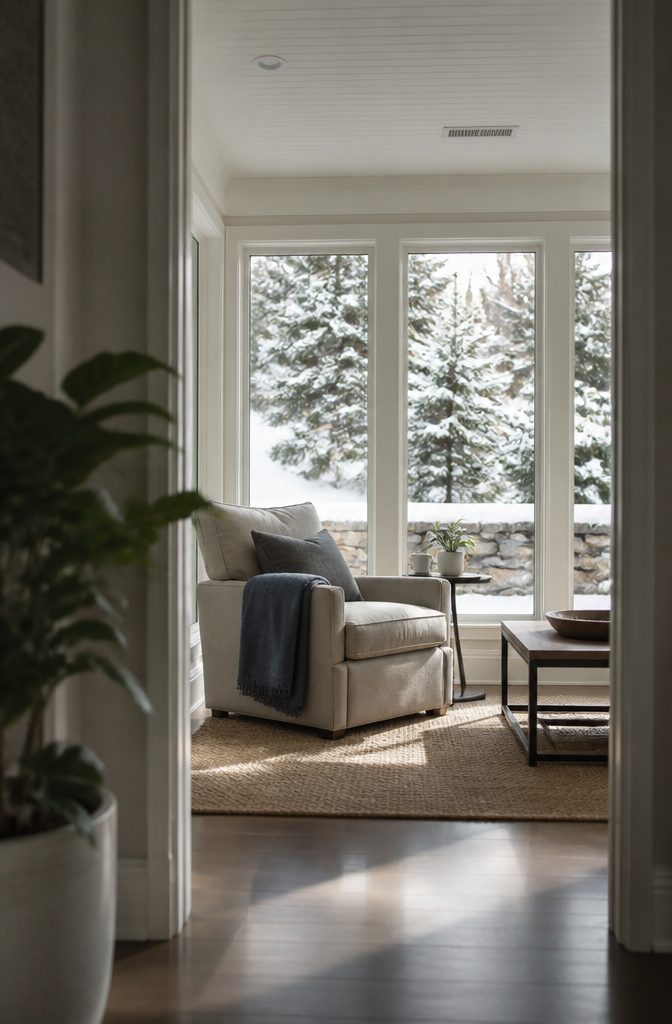
An all-season sunroom holds temperature through winter and summer because the walls, floors, and ceilings are fully insulated, the same way the rest of your house is built.
That insulation turns a glass-wrapped box into a room you can sit in during January without a blanket and August without sweat pooling under your knees.
You will also need heating and cooling, either by running ducts from your existing HVAC system or installing a standalone unit in the sunroom itself.
Three-season enclosures skip the insulation and rely on screens or single-pane glass, which makes them fine from April through October and miserable outside that window.
If you want a living room that works every month, you need a Category V sunroom rated for year-round use.
Local building codes may require specific insulation values and ventilation standards for any space you treat as living area, so check those before you start framing.
3. Arrange Seating Around Views and Lounging
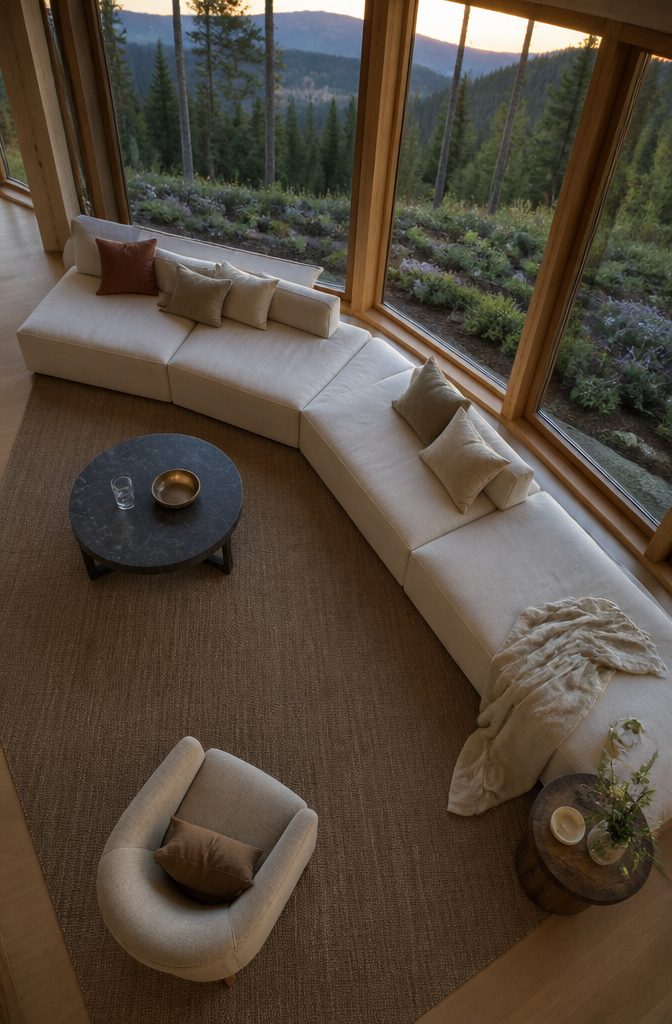
I placed a sectional along the window wall in my sunroom last spring, and the change showed up most at dusk — six people could watch the light drop behind the ridge without anyone blocking anyone else’s view.
A sectional runs the length of the glass and keeps seating low enough that the person behind you still sees out, which matters more here than in a standard living room where walls frame the conversation instead of mountains or a garden.
The extra surface also turns the room into a place people actually stretch out in, not just sit upright and leave.
Custom built-in seating works the same way for sightlines but lets you follow the wall if it curves or breaks at an angle.
I’ve seen benches designed to match the shape of a bay or a rounded corner, and they sit low by default since there’s no sofa back to build over.
A sectional moves if the room’s use changes; a built-in stays put.
If your view is the reason the sunroom exists, either option keeps it unobstructed and gives you more people in the space than a pair of chairs ever would.
4. Add Curtains, Shades, or Retractable Windows
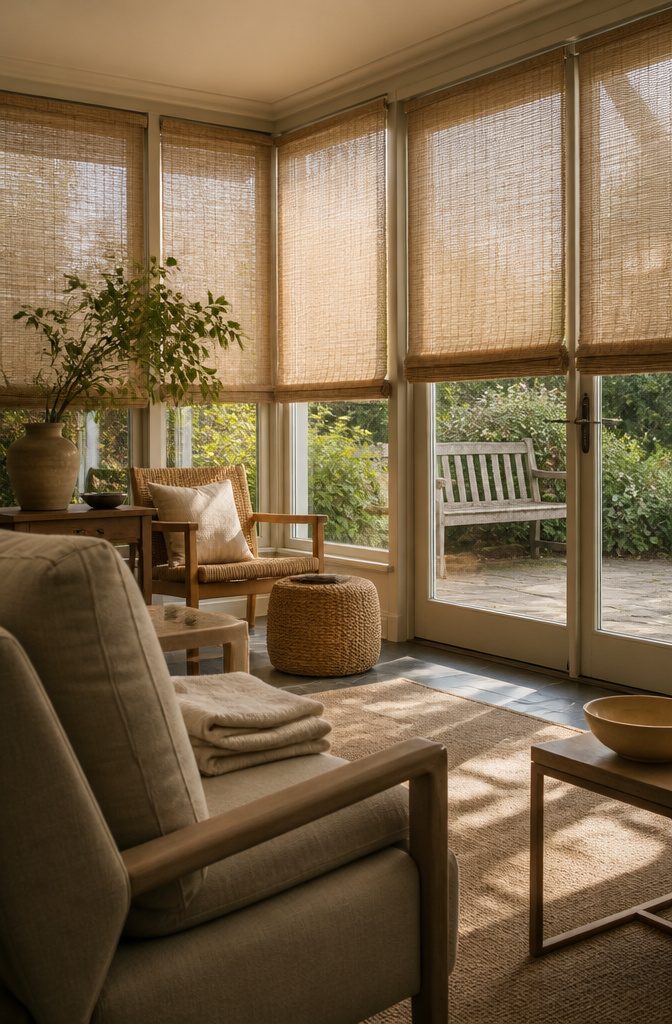
Sheer curtains filter sunlight without darkening the space completely—floor-to-ceiling panels in a soft color let you adjust privacy while keeping the room bright.
The fabric diffuses harsh afternoon sun and ties the sunroom visually to adjoining rooms when you match or complement their palette.
For full control over exposure, decorative shades on every window and glass door create consistent light filtering across the entire room and block glare during peak hours.
Use the same shade style throughout so the treatment reads as intentional rather than patched together.
Retractable windows turn a three-season porch into an enclosed sunroom at the touch of a button.
Storm shutters disappear into their tracks when you want airflow and seal the space completely when weather turns. That setup gives you year-round flexibility without permanent walls cutting off the outdoor connection.
Thick curtains handle temperature extremes—they block summer heat and winter drafts better than sheer fabric, though you sacrifice some of the natural light that made the sunroom worth adding in the first place.
5. Use Bold or Reflective Paint
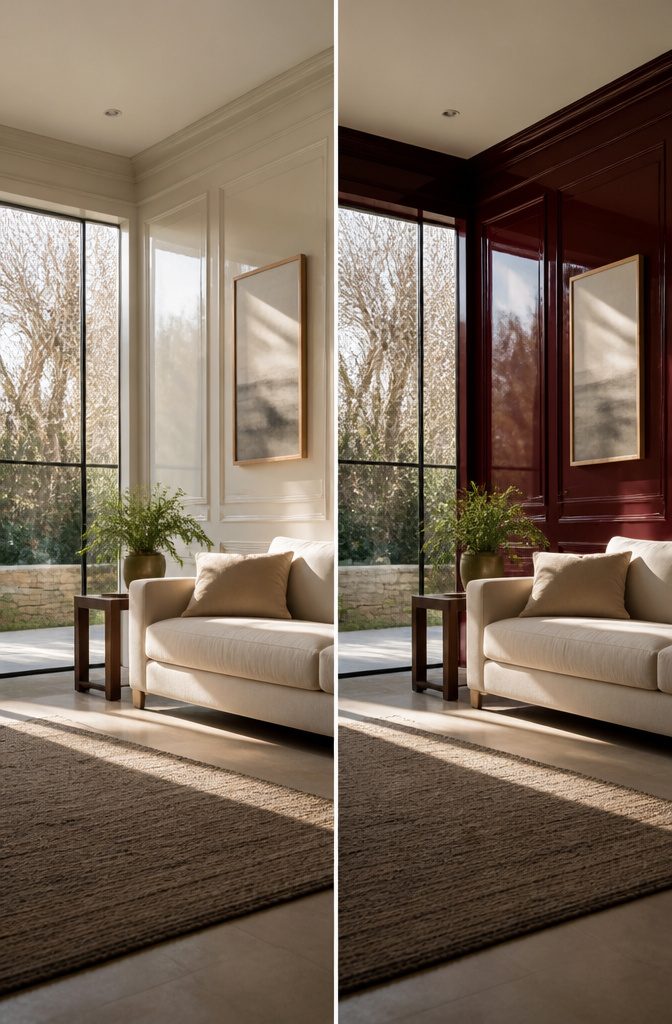
High-gloss paint bounces natural light back into the room, so a color you’d normally save for a dim hallway can work here without turning the space dark.
The sheen does the lifting: oxblood in a glossy finish reads moody but never cave-like when sun hits it from three sides.
Farrow & Ball Green Blue is another one that holds up under strong light — deep enough to feel intentional, but the gloss keeps it from closing in.
I’d lean toward this approach in a sunroom that already gets plenty of brightness but lacks personality.
The color gives the room weight, and the reflective finish keeps it from feeling heavy. Flat or eggshell in the same shade would absorb too much light and leave the room looking dull by afternoon.
6. Add Wood to Walls, Ceilings, or Details
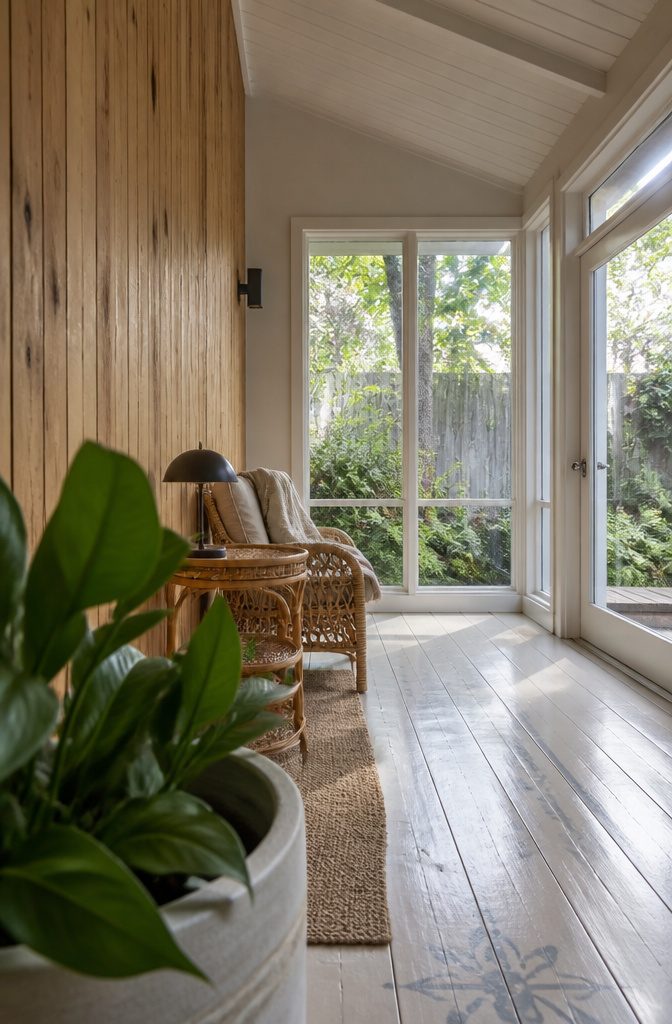
Wood paneling wraps a sunroom in warmth the way metal and glass never will.
Pecky cypress works especially well on walls — the natural pitting in the grain adds texture without breaking up the light, and the blonde tone stays neutral enough to pair with blues, grays, or earthy greens.
If full wall coverage feels like too much, run wood across the ceiling instead and leave the walls white or glass.
Wooden window frames and trim tie the room to older cabin architecture without requiring period furniture.
Pair them with a painted wood floor in a rug pattern if you want the look of textile underfoot but none of the maintenance — the design stays put, sheds dirt with a damp mop, and costs less than replacing an actual rug every few seasons.
Natural wood furniture in rattan or bamboo keeps the material consistent without doubling down on rustic; the woven texture reads modern enough that the room doesn’t tip into lodge territory.
7. Bring in Plants or Create a Greenhouse Feel
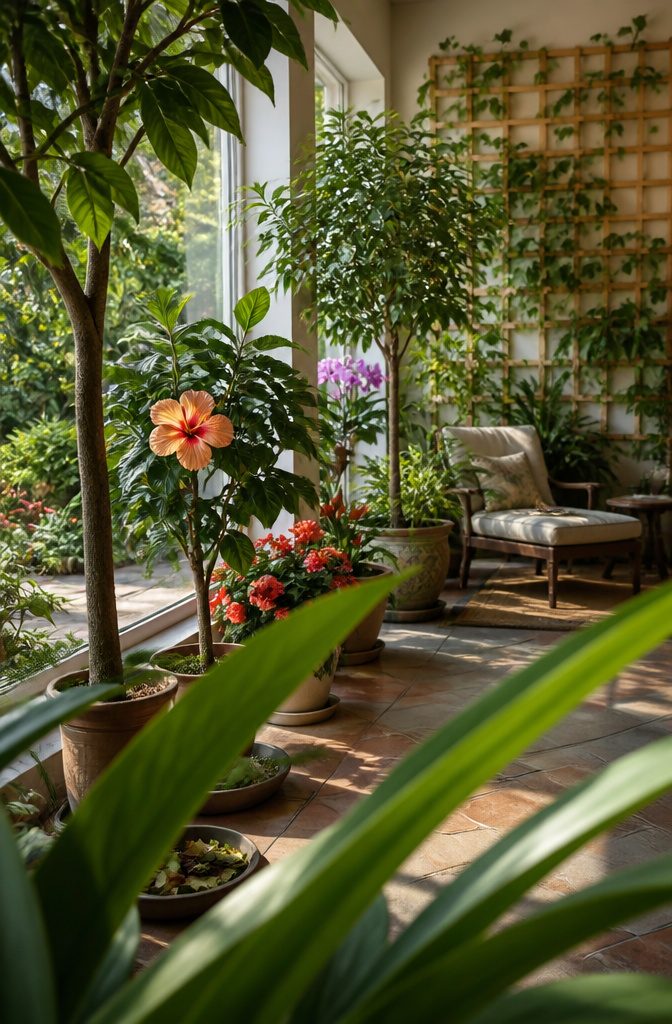
Houseplants soften the glass and frame the light without blocking it.
A row of potted indoor trees along one wall turns the room into a conservatory without adding structure, and if the sunroom already gets morning sun on three sides, the plants give you a reason to keep it that way.
Hibiscus, begonias, orchids, African violets, and passion flower all handle the swings in humidity and temperature a sunroom throws at them, and most tolerate direct afternoon light better than the fiddle-leaf fig that sits in your hallway.
A trellis against the back wall or overhead beams lets you train a vine without giving up floor space.
The green reads as intentional rather than decorative when it follows the bones of the room, and it connects the furniture to the garden outside in a way that a single potted palm never quite manages.
8. Create a Dining Area or Nook
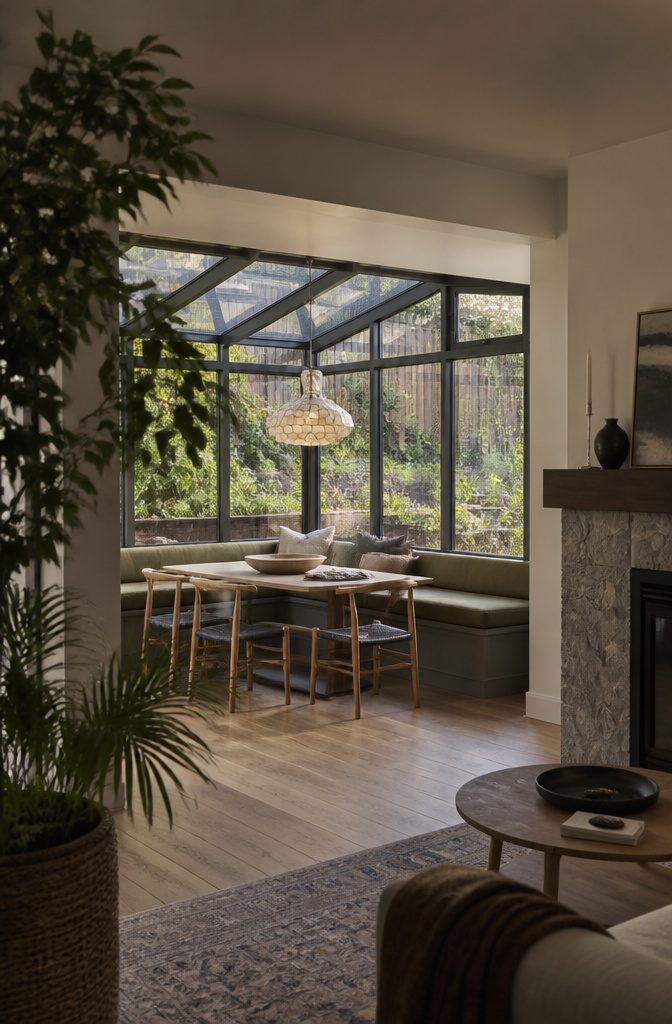
A custom banquette turns a sunroom into a place the family actually gathers for meals.
Claire Thomas built one with built-in seating along the window wall and paired it with a table that sits four—practical dining furniture that also anchors the room.
The banquette uses the perimeter efficiently, leaves the center open, and puts diners right against the glass where the light is best. A shell pendant light overhead marks the nook as its own zone within the sunroom.
A freestanding table and chairs work when the sunroom is large enough to define separate areas. Brigette Romanek used modern green patio chairs around a dining table in one corner, treating the sunroom as an indoor-outdoor hybrid.
The patio chairs handle temperature swings better than upholstered dining chairs, and the setup can be moved if the room needs to flex between uses.
9. Make the Room a Game or Family Hangout Space
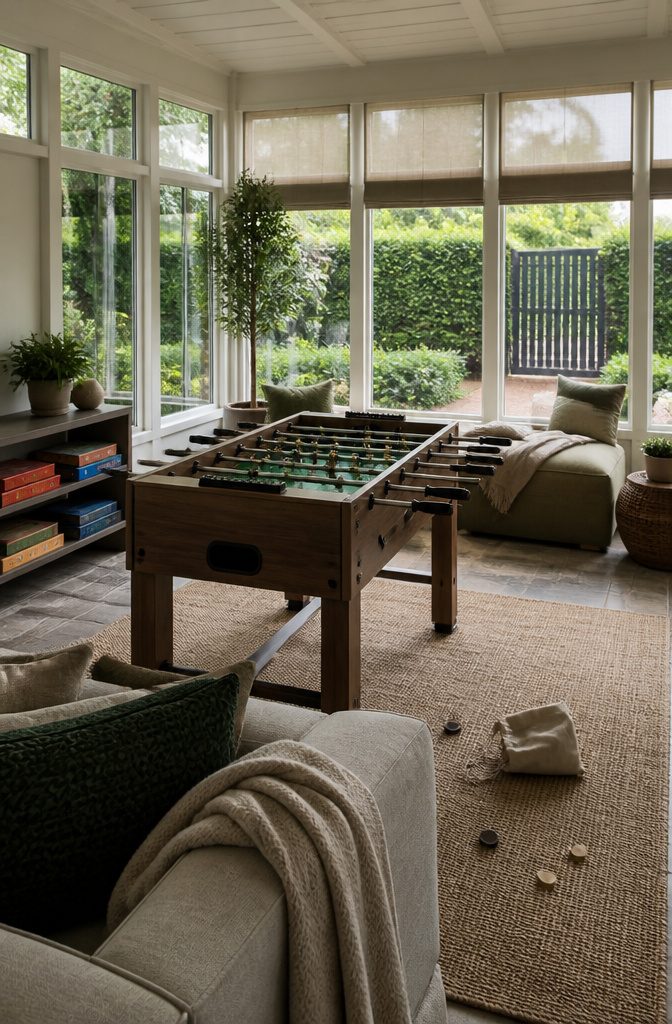
A foosball table and a stack of board games turn a sunroom into the room everyone gravitates toward.
One Nantucket home skipped formal seating entirely and made the space a dedicated game room—foosball anchored the center, board games lined the shelves, and seating spread around the perimeter so players and spectators both had a spot.
The setup works because sunrooms already feel separate from the everyday rooms; people relax differently when they cross that threshold.
If you’re keeping a mix of uses, push a game table against the windows rather than centering it.
A sectional or modular seating gives you the flexibility to rearrange when you switch from movie night to game night, and it holds more people than a sofa and chairs without eating the floor.
The light matters here too—morning sun works for card games, but you’ll want shades or curtains by afternoon if glare washes out the board.
10. Use a Fireplace for Warmth and Focus
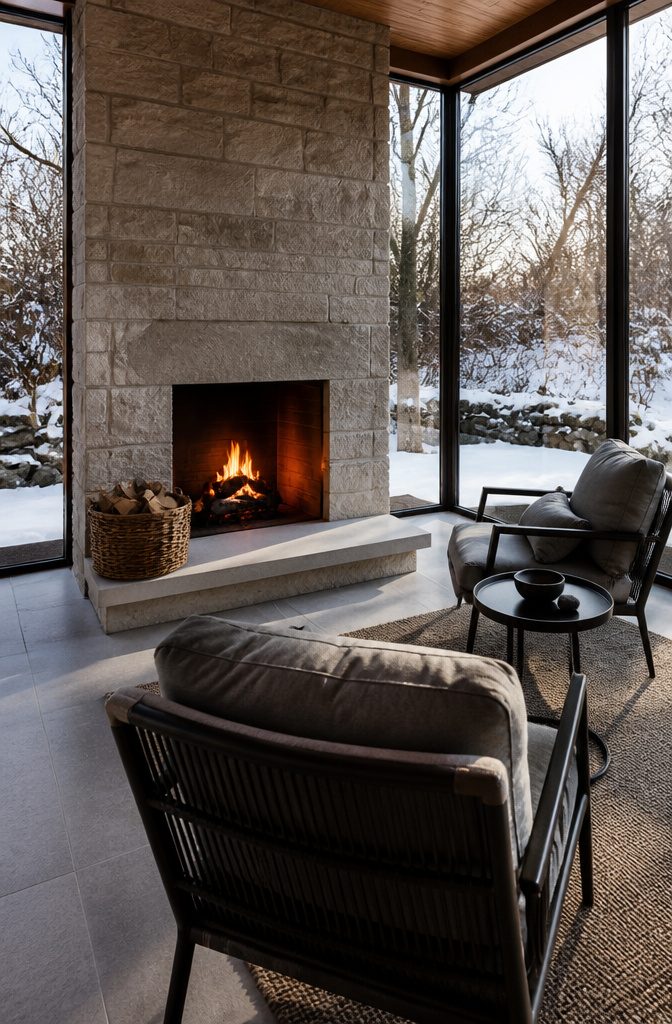
A fireplace anchors a sunroom that works in winter. Glass on three sides lets in light but also cold, and an outdoor fireplace gives you a warm focal point when the temperature drops.
You still get the views and the brightness; the fire just makes the room usable past October.
Decorate the surround with brick or stone to pull in texture and make the fireplace feel permanent rather than tacked on.
The material choice matters less than keeping it simple—ornate mantels fight with all that glass, and a sunroom already has enough going on visually. Stone reads clean and lets the windows stay the main feature.
The fireplace works whether the sunroom is set up for dining or for sitting.
In a lounge layout it becomes the natural gathering point, the spot chairs face when conversation matters more than the view. In a dining sunroom it warms the room without taking up floor space a heater would claim.
11. Create a Reading Space or Library
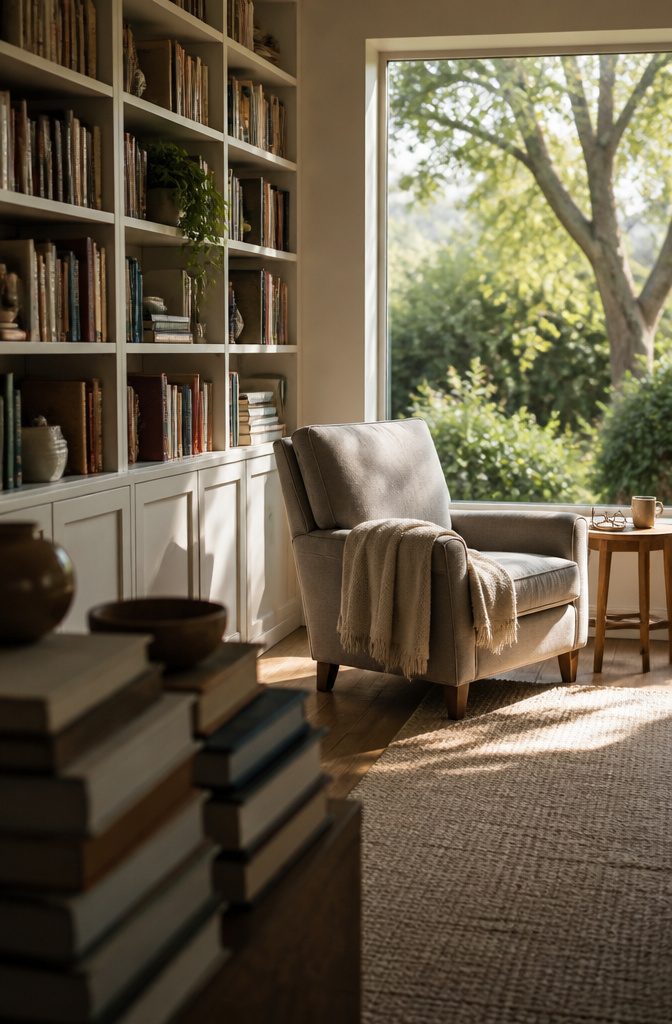
A wall of shelves and a chair near the window turns a sunroom into a reading room that gets used.
The light is already there—adding books makes it a space with a reason to sit for more than a few minutes at a time.
Floor-to-ceiling shelves on one wall hold more than a standalone bookcase and keep the center of the room open.
Built-ins work if the budget allows; freestanding units from IKEA or a used furniture shop do the same job for less and move with you if you rent.
Either way, the shelves go against the wall opposite the largest window so the books stay out of direct sun, which fades spines faster than most people expect.
The chair matters more than the shelves.
A deep armchair or a chaise fits an afternoon better than an upright dining chair, and placing it where it catches natural light without glare—usually perpendicular to the window rather than facing it—means you use the room the way it was designed to work.
12. Use the Sunroom as an Office, Playroom, Guest Room, or Flexible Bonus Room
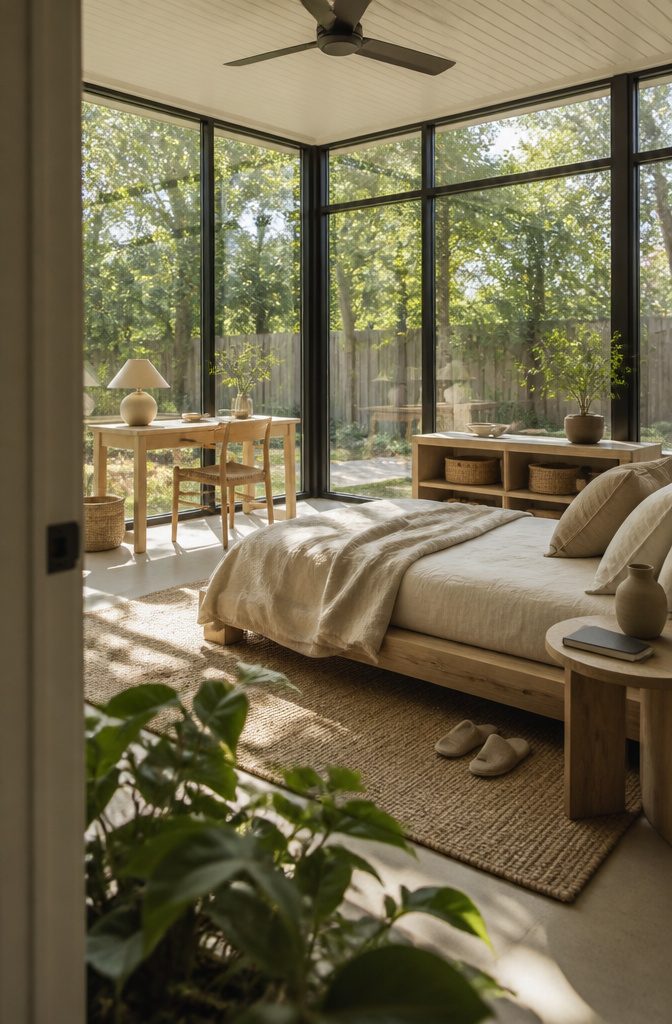
A sunroom handles more than one job. Set up a desk near the windows and the space becomes an office where natural light keeps you alert through afternoon calls.
Lay down a soft rug and stock a low shelf with toys, and you have a playroom that contains the mess without cutting the kids off from the rest of the house.
Add a daybed or futon and the room turns into a guest room that actually feels like a retreat rather than a repurposed corner.
The glass walls make any of these setups work better than they would in a standard interior room.
An office gets enough daylight that you rarely need the desk lamp before evening. A playroom lets parents keep an eye on the yard while the kids build forts indoors.
A guest sleeping in a sunroom wakes to a view instead of a blank wall, and the separation from the main house gives them privacy without requiring a dedicated bedroom year-round.
Flexibility is the point. A desk and a futon couch can coexist if the room is large enough, letting the space shift from work to hosting without moving furniture.
13. Use Rugs and Textiles to Add Comfort or Color
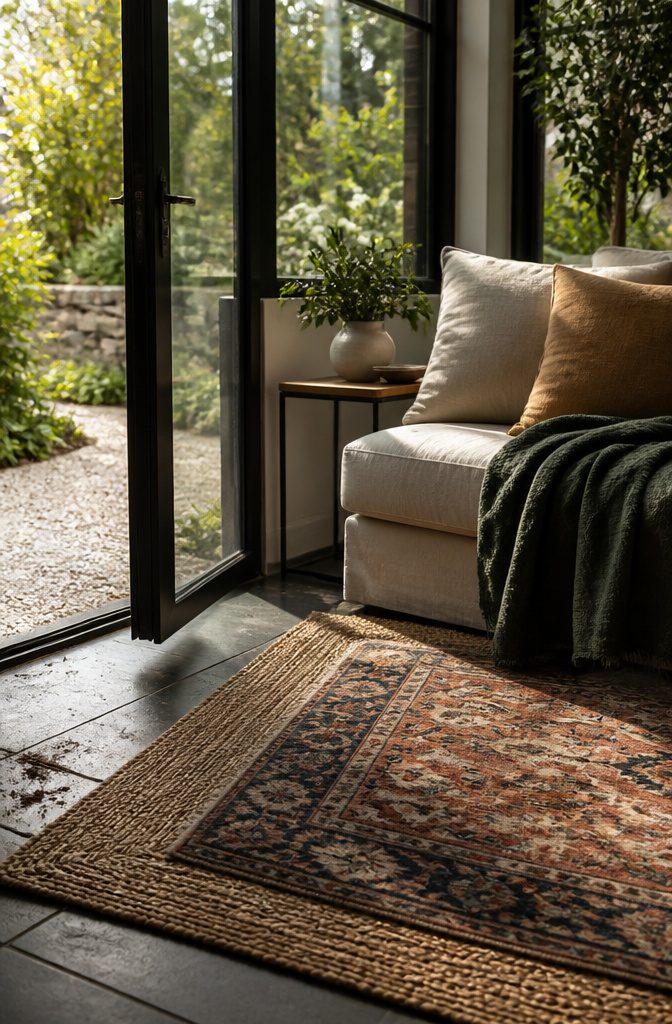
Rugs anchor seating groups and keep a sunroom from feeling like outdoor furniture brought inside.
A jute or sisal rug reads casual and handles sun exposure without fading fast, while a low-pile synthetic in a deeper color hides the dust that drifts in when windows stay open.
Layer a smaller washable rug over a neutral base if the room gets heavy foot traffic from a door to the yard.
Pillows and throws soften hard seating and let you shift the mood without replacing furniture. Velvet holds richness in morning light, linen stays cool through summer afternoons, and both work better than outdoor fabric if the room stays conditioned.
Swap covers seasonally instead of storing pieces — lighter tones and loose weaves in warm months, heavier textures and saturated colors when daylight thins out.
14. Choose a Distinct Style, Such as Cottage, Boho, or Metropolitan
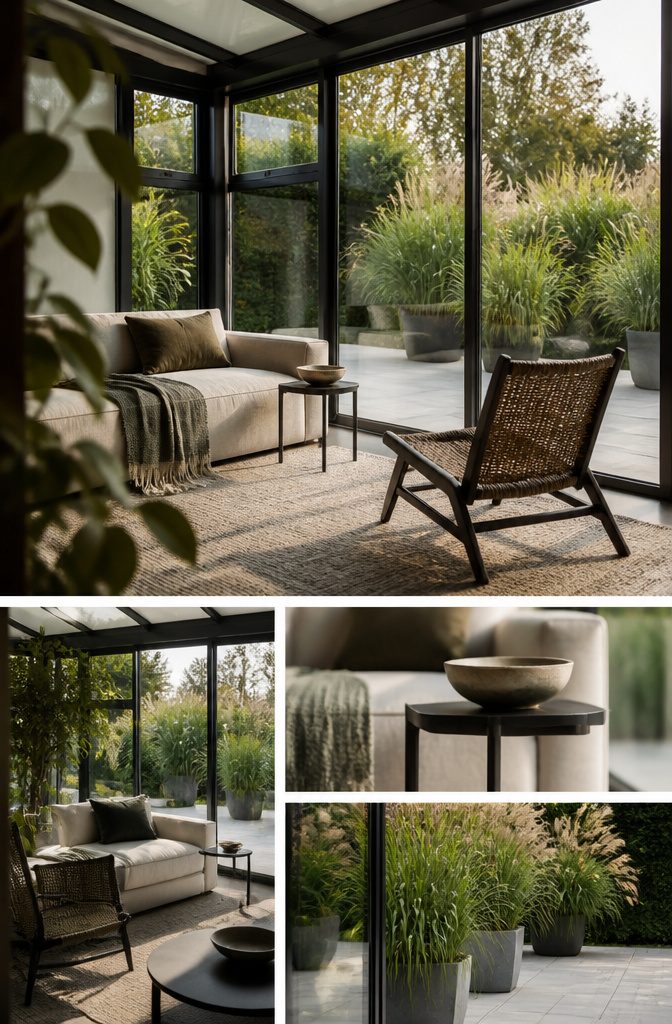
A clear style keeps the room from looking like a furniture showroom with no direction.
Cottage brings in painted wood, slip-covered sofas, and soft neutrals; boho layers in woven textures, low seating, and warm earth tones; metropolitan leans on clean lines, metal frames, and a tighter palette.
Pick one and let it decide the next five choices — the rug pattern, the side table material, whether the throw pillows match or contrast.
Wooden, rattan, or bamboo furniture works across most of these styles if you want something that feels rooted rather than temporary.
A rattan chair reads cottage in white paint and boho in natural finish; the same piece changes character depending on what you set next to it.
The consistency matters more than the label — three furniture styles in one small room competes for attention instead of giving the eye a place to rest.
15. Highlight Architecture or Disguise Functional Details
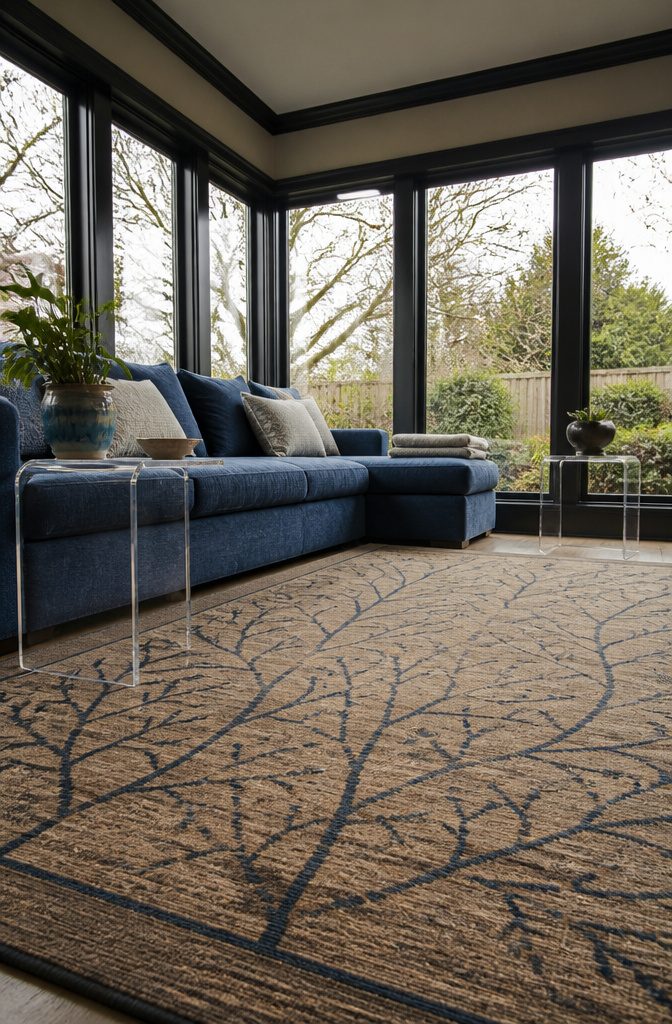
A sunroom’s bones matter more than you might expect. If the space came with casement windows in a dark finish or period trim worth keeping, let those features set the tone rather than fighting them.
One renovation kept the original black window frames and built the room’s palette around them—vintage furniture with clear bases and a kilim rug that picked up the branch motif already present in adjoining rooms.
The dark frames anchored the light without weighing it down.
When function gets in the way, hide it completely. Ductwork and utility panels have no business being the first thing someone sees in a glass-walled room.
One design team boxed out mechanical runs and painted over access panels to match the walls, then filled the space with a piano and seating that made you forget there was anything to conceal.
The effort went to what deserved attention: the garden views outside and the gathering space inside.
Curved walls or angled architecture call for furniture that follows the same line. A blue sectional cut to mirror angled walls and color-matched to Farrow & Ball’s Green Blue turned an odd layout into the point of the room.
When the structure gives you something unusual, repeat it in what you bring in rather than ignoring it.
Frequently Asked Questions
Can a sunroom be used as a living room?
Yes, if it’s built as an all-season room with full insulation in the walls, floors, and ceilings, plus heating and cooling.
Three-season sunrooms lack the insulation and climate control needed for year-round comfort, so they work only from spring through fall. Local building codes may set specific insulation and ventilation standards for any space you treat as living area.
How much does a 20×20 sunroom cost?
Cost depends on whether you’re building a three-season enclosure or a fully insulated all-season room, plus local labor rates and material choices.
An all-season sunroom runs higher because it requires the same insulation, HVAC extensions, and energy-efficient windows as the rest of your house.
Get quotes from local contractors who can assess your site and give you a figure based on your specific build.
Is it cheaper to add on a room or sunroom?
A three-season sunroom costs less than a standard room addition because it skips full insulation and uses more glass than framed walls.
An all-season sunroom built to the same standards as interior living space costs about the same as a conventional addition, since both need insulation, climate control, and finished walls.
The glass itself adds expense, but simplified framing can offset some of that difference.