
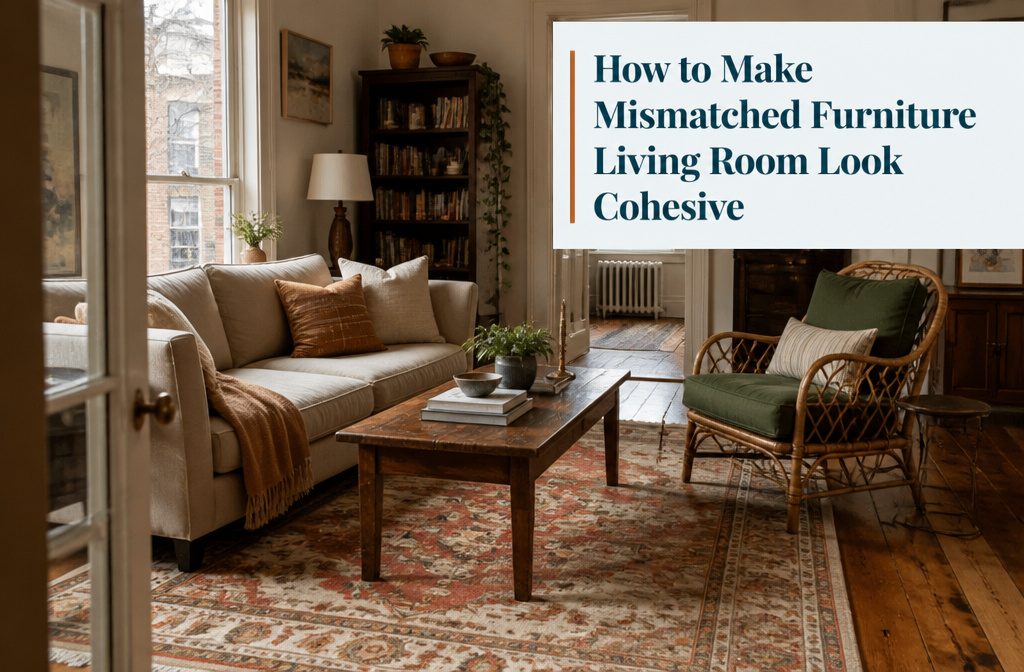
A room with furniture from different eras, finishes, and styles looks cohesive when a repeated element connects the pieces: matching wood tones, a shared color in pillows and upholstery, or similar scale across seating.
Most rooms fail because they skip that visual thread and try to make contrast work on its own.
A beige sofa, walnut coffee table, and rattan chair hold together through warm neutrals repeated in a rug and throws, not by forcing the furniture itself to match.
1. Find a Visual Thread That Connects the Pieces
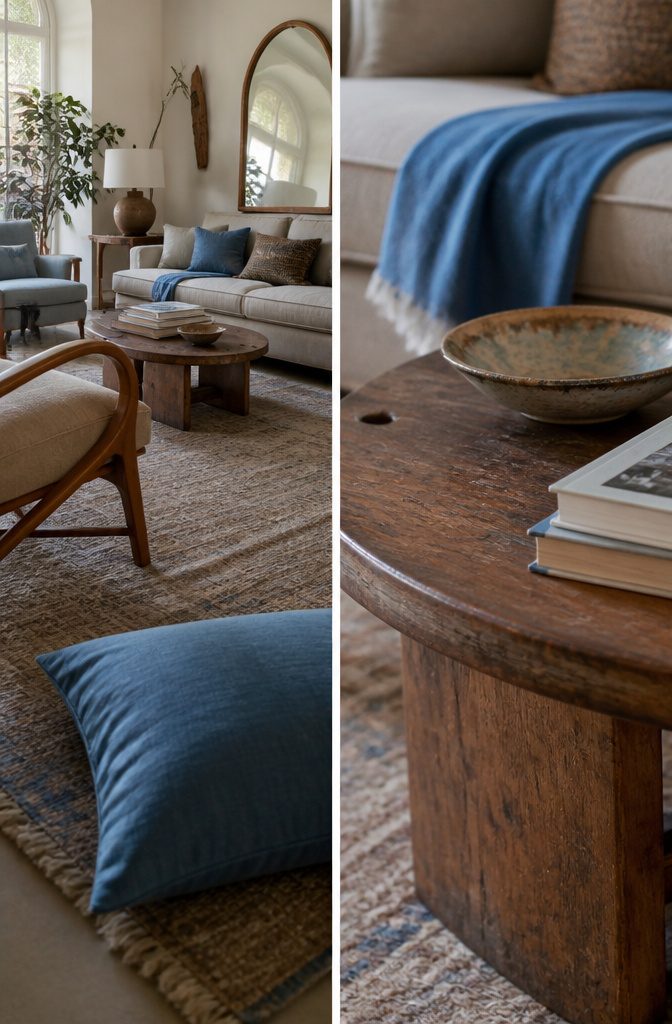
A repeated element pulls unrelated pieces into the same story.
That element can be color—warm browns running from upholstery through wood frames to a rug—or material: the same dark walnut finish across tables and shelving, or matching linen on chairs that share nothing else.
Shape works the same way: curved chair arms echoing an arched mirror, or square coffee table legs that repeat the lines of a bookcase.
The color thread doesn’t mean identical shades. A palette of beige, gray, and scattered blue accents works across different furniture styles and materials as long as those tones show up more than once.
Pillows, throws, and rugs carry color where the furniture itself won’t, so a modern sofa and a vintage coffee table stay connected through matching accent colors rather than trying to match the pieces themselves.
When nothing shares color or style, go with fabric or finish. The same upholstery across different chair shapes, or one wood tone for every hard surface, holds an eclectic room together where pattern and silhouette diverge completely.
2. Mix Styles, Eras, and Old With New
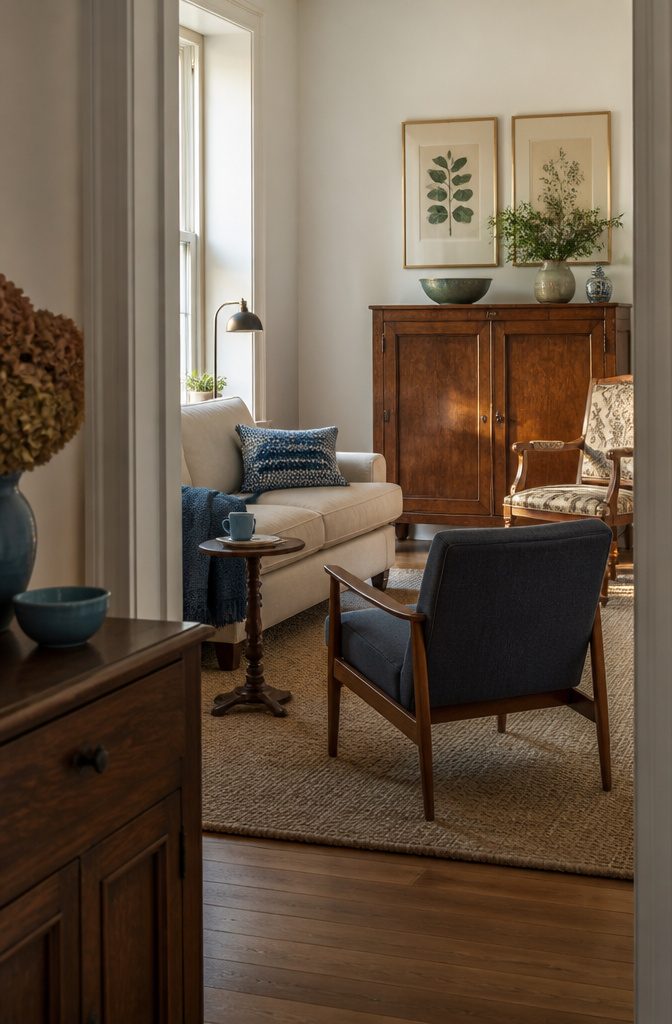
Pairing a modern sofa with an antique side table or a sleek chair beside a vintage wooden cabinet makes the room feel collected over time, not ordered in a single trip.
The pieces come from different eras, but they coexist when a shared element ties them together—matching wood tones, similar scale, a repeated curve in the legs, or accent colors that appear in throws and pillows across both old and new.
Too many unrelated styles turn the room chaotic.
Pick one main style and let the other act as an accent: a contemporary living room gains character from a single ornate armchair or a rustic coffee table, but five competing design languages read as a flea market rather than a home.
The mix works when each piece stands out on its own and still contributes to the whole, giving the impression the room evolved rather than arriving fully formed.
3. Use Contrast in Color, Fabrics, Textures, and Patterns
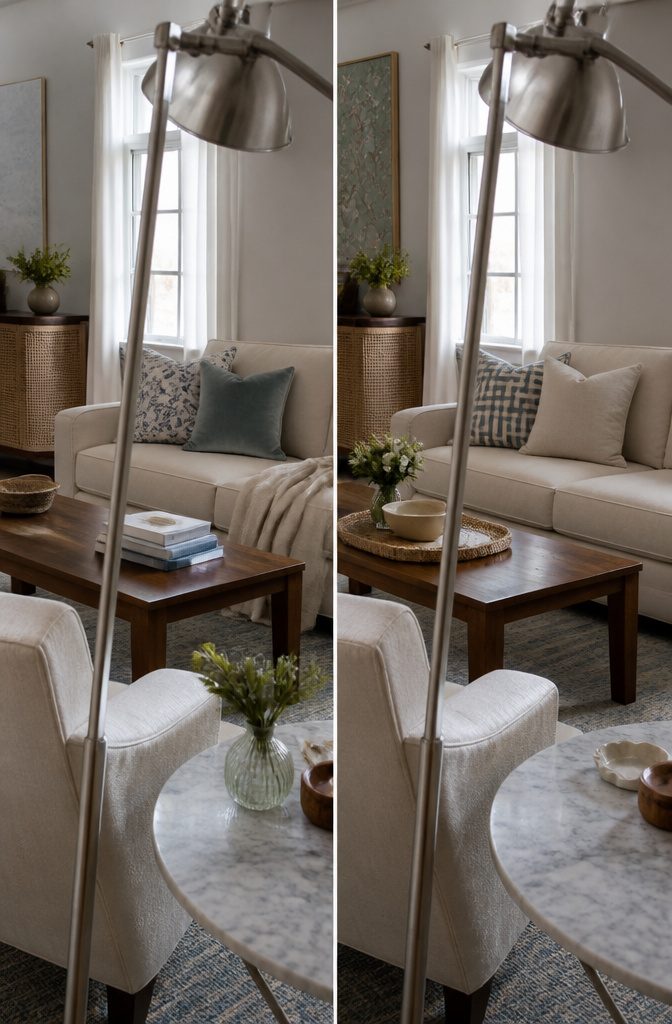
Contrasting materials and upholstery gives a room depth rather than letting it read flat.
I pair leather against linen or velvet, set metal side tables next to a soft rug, or bring in rattan beside marble—the variety in texture catches the eye and keeps the space from feeling one-note.
In a recent setup I worked through, brushed steel, rattan, and marble sat together without fighting because the palette underneath stayed tight.
Color works the same way. A beige sofa, walnut coffee table, cream chairs, and black metal lighting look different in style and finish, but the repeated neutral and warm brown tones connect them.
You can go bolder—one dominant color with smaller hits of a complementary shade in pillows or art—but the principle holds. Two or three shades repeated across furniture, fabric, and accessories hold mismatched pieces in the same visual family.
A floral pillow next to a geometric one works when they share a tone, and that shared thread makes the contrast feel considered instead of accidental.
4. Balance Scale, Proportion, and Visual Weight
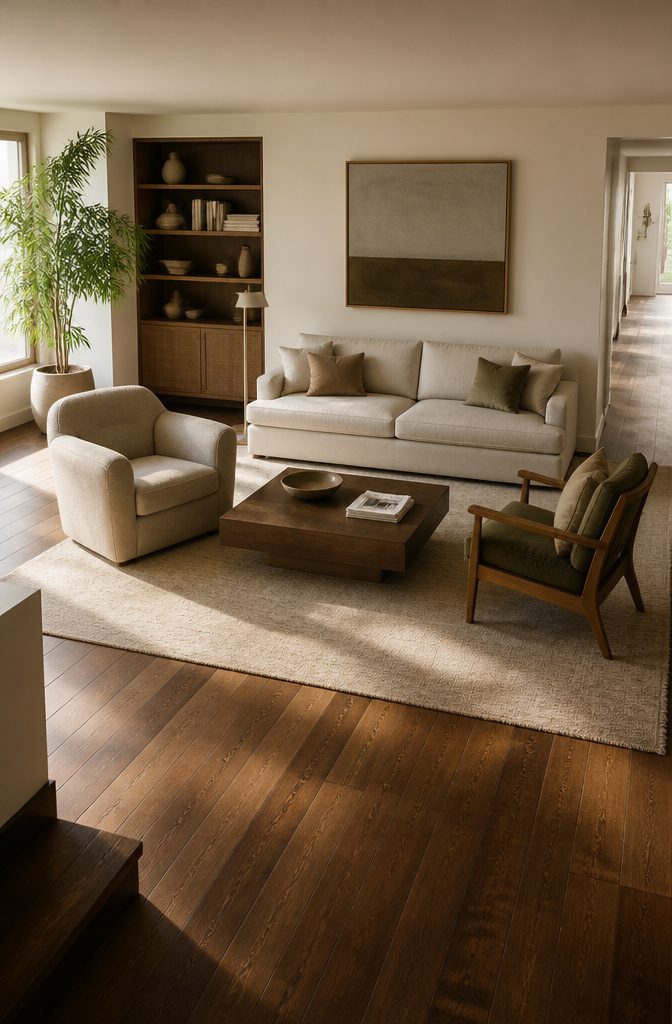
A large sectional paired with a delicate side table looks off because the scale is inconsistent. Before you add anything new, check the height of nearby pieces, the overall width and length, and how much visual weight each one carries.
Large furniture generally needs other substantial pieces to hold their own; lighter pieces can create breathing space when the room is tight.
One important thing to check for is scale and height, as standards vary greatly between periods and countries. As an example, mid-century furnishings tend to lean towards the petite and lower side (meaning seat heights of 14-16" versus a more typical 17-18"), and the same applies to table heights.
If you buy vintage or older pieces sight unseen, measure them. A mid-century chair with a 14-inch seat height can feel dwarfed next to an 18-inch contemporary sofa, and proportion matters more than matching styles.
Two mismatched accent chairs can still frame a sofa when their heights and visual weights balance. Perfect symmetry is not the goal; visual balance is.
5. Create a Focal Point or Anchor
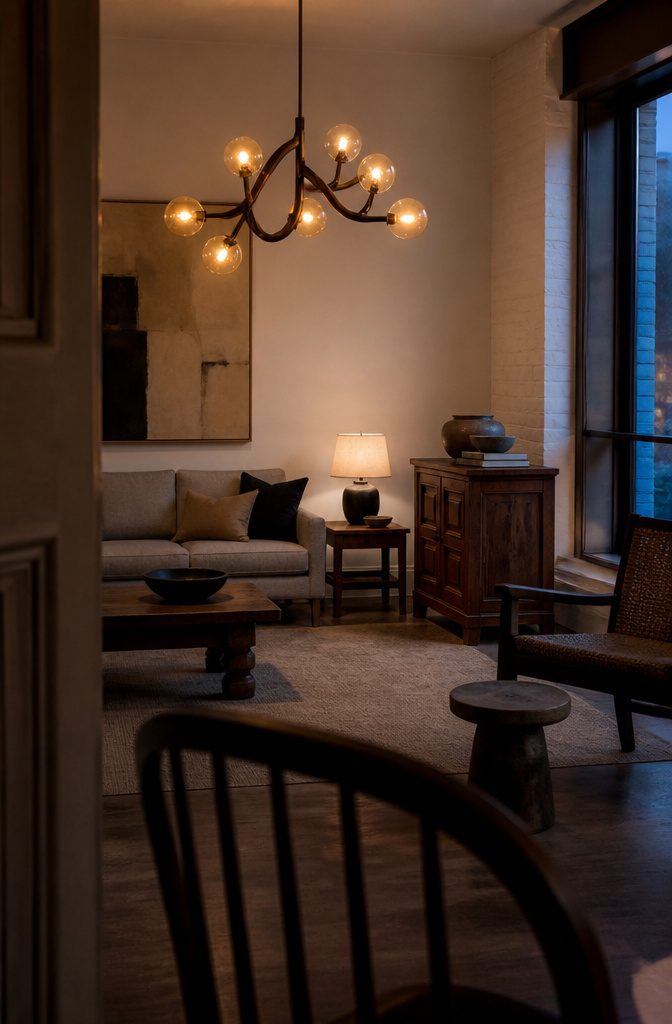
A statement piece organizes a mismatched room by giving the eye one clear place to land first.
That could be a chandelier hung dead-center, a six-foot canvas on the longest wall, or an upholstered accent chair in a saturated jewel tone.
Once you anchor attention to a single strong element, the surrounding furniture reads as supporting cast rather than a collision of unrelated pieces.
Lighting works especially well because it pulls the eye up and holds it there.
The Abacus Chandelier draws focus to the center of the room and to the painting behind it, which lets a mix of wood tones and textures sit together without fighting for dominance.
A sculptural floor lamp does similar work on a smaller budget. The rest of the furniture then arranges itself around that anchor rather than competing with it.
White space around the focal point amplifies the effect.
An oversized cabinet feels intentional when the wall beside it stays bare and a pendant light hangs above it, but crowded when every surface is filled. The focal point needs room to register as one.
6. Use Rugs and Accessories to Tie the Room Together
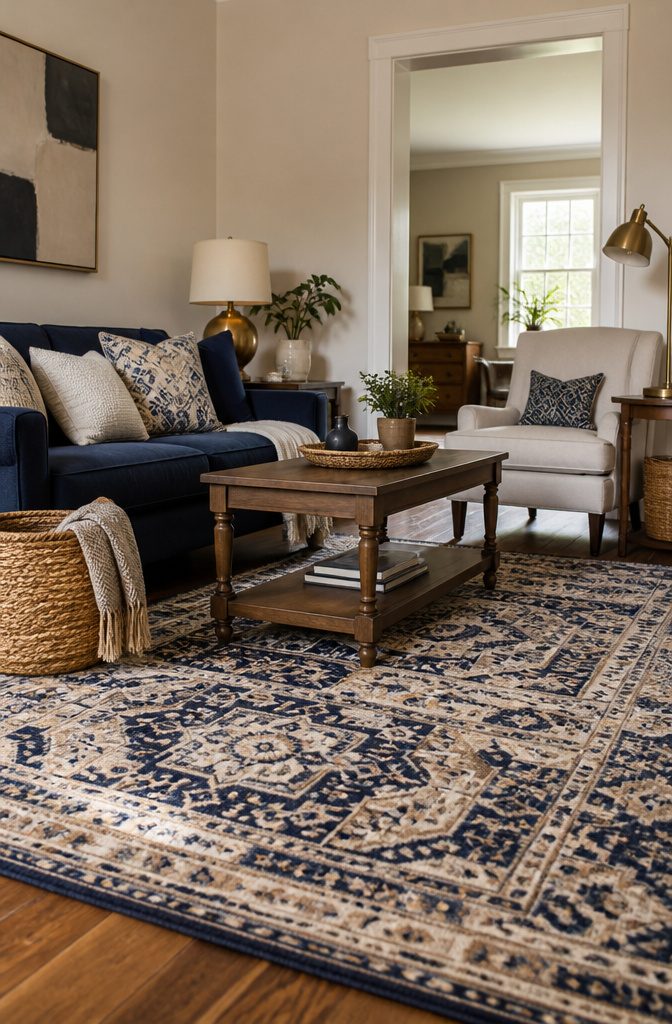
A rug anchors mismatched furniture by giving every piece a shared foundation. Place the sofa, chairs, and coffee table on the same rug—even if just their front legs touch—and the arrangement reads as intentional rather than random.
Pick a rug that pulls in colors already present in the room: if your sofa is navy and your chair is cream, a rug with both tones stitches them together without forcing an exact match.
Pillows and throws do the same work at smaller scale. I use three to four pillows per sofa, with one or two in each corner, and repeat a single fabric or color across different seats.
A blanket draped over the back of one piece can acknowledge the upholstery of another without matching it outright.
Lamps, vases, and decorative objects extend the thread: brass lamp bases on mismatched side tables, or woven baskets in similar tones, make the variety feel like a choice you controlled.
7. Arrange the Furniture to Support Flow and Breathing Room
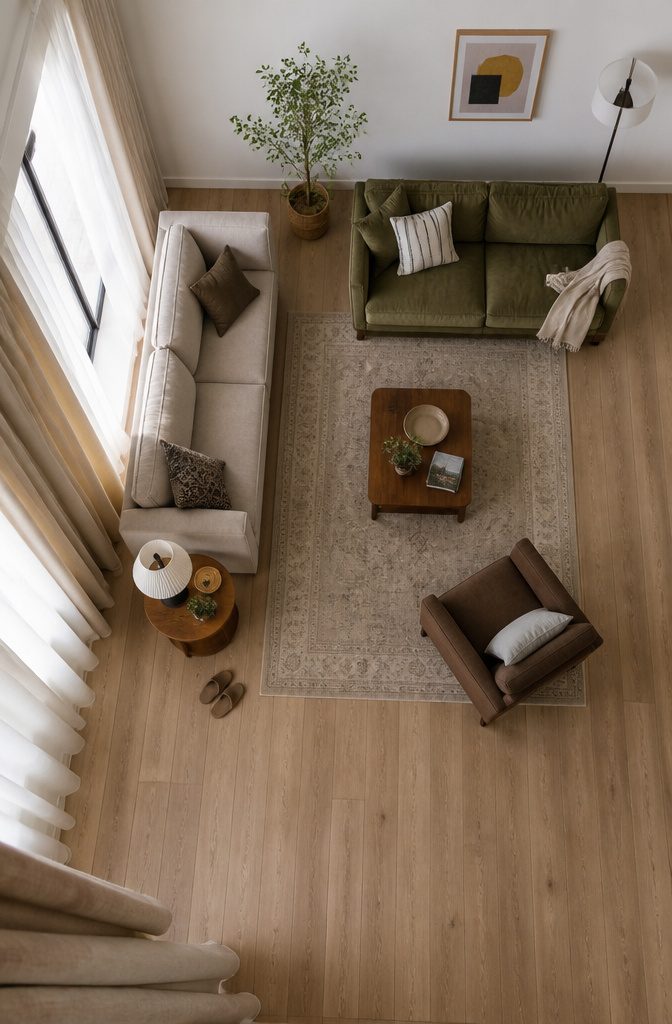
A smaller coffee table leaves unobstructed paths between pieces, which matters more when the pieces themselves don’t match.
I’ve seen L-shaped arrangements where two different sofas meet at a right angle with an armchair placed catty-corner on the rug — the open center and the walkable perimeter prevent the mix from reading as clutter.
Oversized statement pieces paired with petite side tables create hierarchy, but a large sofa can block movement in a small room, so test the layout before committing.
Negative space makes contrasting furniture easier to appreciate. Rather than filling every corner with tables, chairs, and cabinets, leave walls empty and position larger pieces with room around them.
A focal point pulls the eye upward or toward one end of the room, which keeps assorted items from competing. Light curtains and well-spaced furniture create breathing room without requiring white walls — any light neutral works.
8. Let Personal or Unusual Pieces Add Character
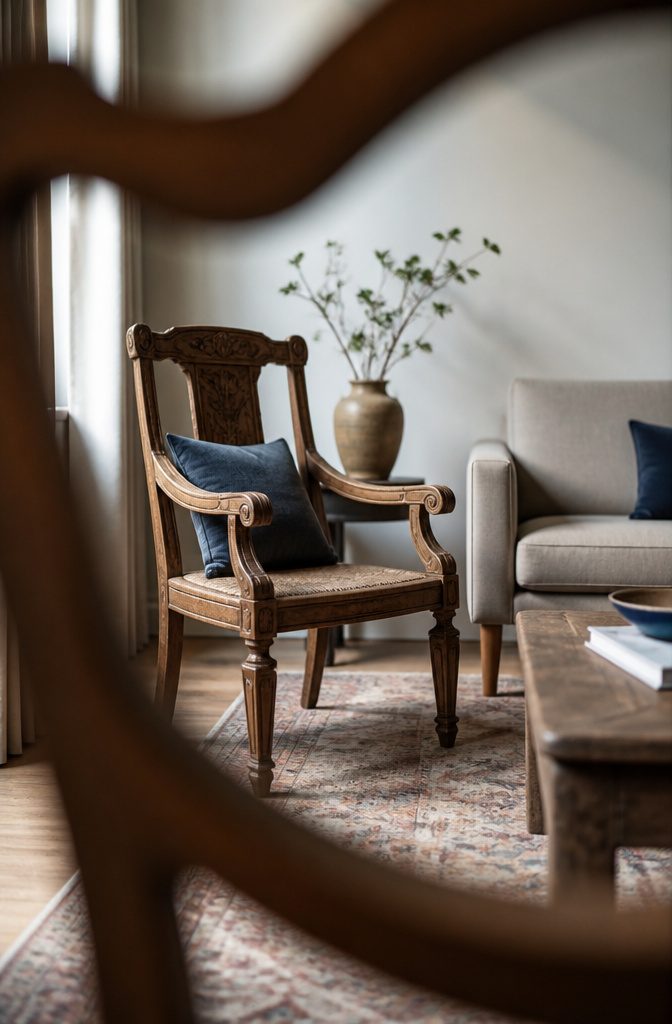
A vintage armchair your grandmother passed down or a one-off side table you found at an estate sale can give the room more personality than anything bought new—as long as they share at least one trait with the rest of the furniture.
Look for color, material, or rough scale that ties back to what’s already there.
A wooden cabinet with warm undertones works beside a modern sofa if the sofa’s legs are also wood, and an inherited piece with carved detail fits when your coffee table has similar weight or finish.
The meaningful objects make the space feel collected rather than bought from a catalog, but they still need a visual thread to the wider room. Without it, they read as leftovers instead of intentional choices.
Six Ways to Arrange Two Different Sofas
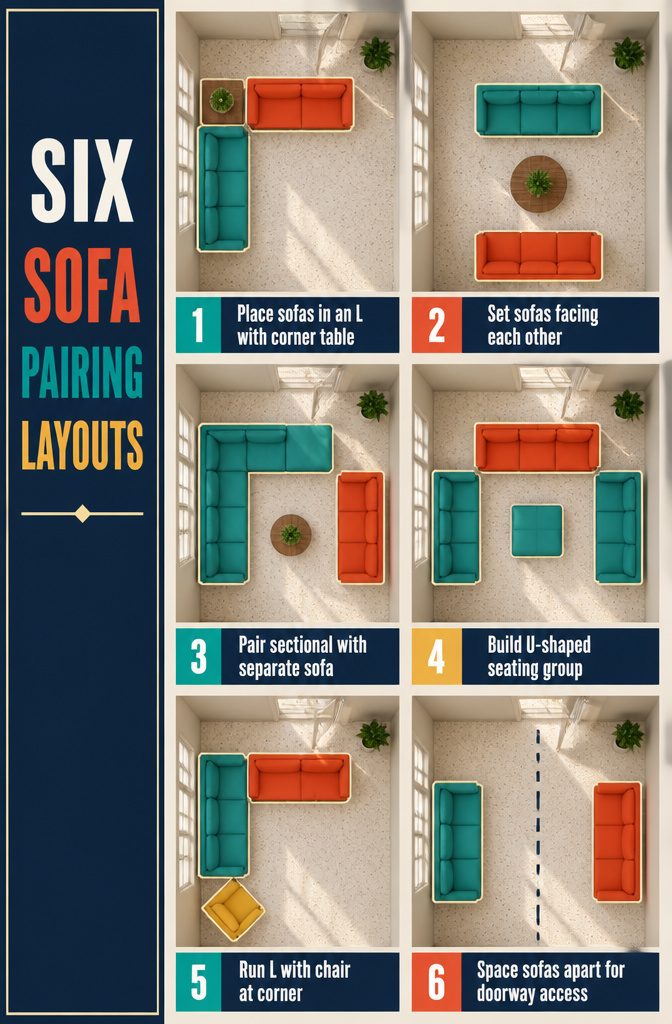
Pairing two different sofas works when the layout makes the decision feel intentional rather than accidental. A few arrangements handle the mismatch particularly well:
- Place them in an L with a side table at the corner. The table gives each sofa its own territory while visually bridging the gap.
- Set them facing each other. This works best when the seat heights and widths stay within a few inches of each other—a long low sofa facing a tall narrow loveseat reads awkward no matter how you style it.
- Pair a sectional with a separate sofa. The sectional anchors one side of the room; the standalone piece fills in across from it without competing.
- Build a U-shaped seating group. Two sofas form the sides, chairs or an ottoman close the end.
- Run them in an L with a chair at the corner. The chair acts as a hinge and keeps the two sofas from needing to relate directly.
- Space them apart to preserve doorway access. If traffic flow cuts through the middle of the room, pull the sofas toward opposite walls and let the gap serve the layout.
Repeating a color between the two pieces—through pillows, throws, or upholstery—helps the pairing feel less random.
When Covering Furniture Makes Sense
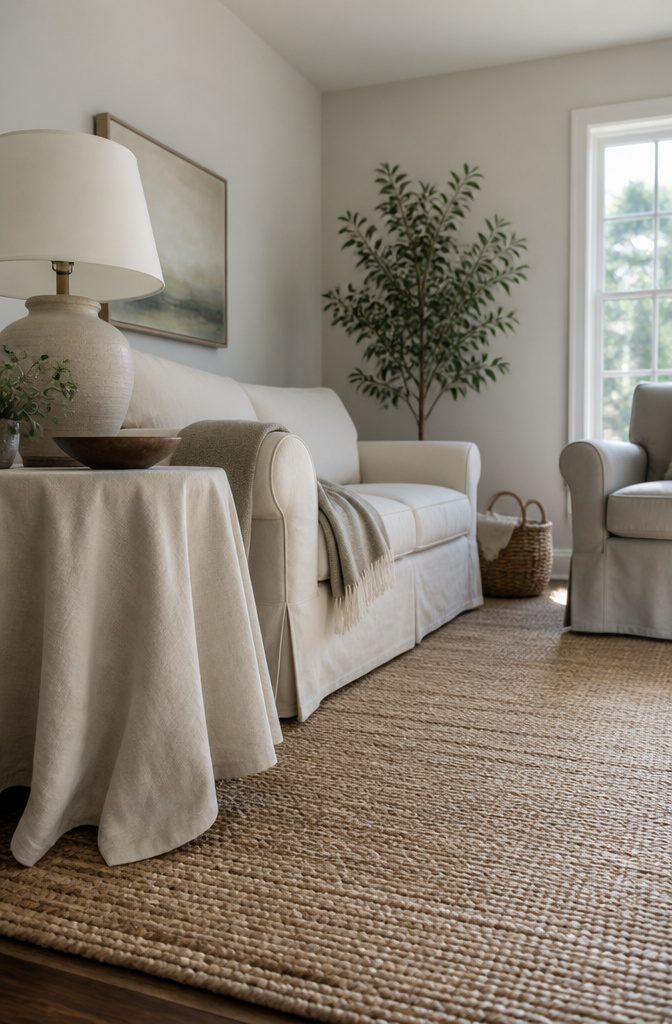
Slipcovers pull a room together when a sofa or chair sits too far outside the palette you’re building, or when buying new isn’t in the budget.
They come in linen, cotton twill, and performance fabric that hides the original upholstery completely, so a floral loveseat from the 1990s reads as solid cream instead.
I’ve used them on pieces I inherited but didn’t love — the shape worked, the color didn’t, and a slipcover cost $80 instead of $900 for replacement.
The same approach works for side tables if wood tone or finish throws the room off. A floor-length cloth in the right neutral makes the base disappear.
Slipcovers also protect upholstery from spills and pet accidents, which matters if you’re working with older pieces that can’t take another cleaning. You pull the cover off, wash it, and the furniture underneath stays intact.
Mixing Wood Tones and Finishes
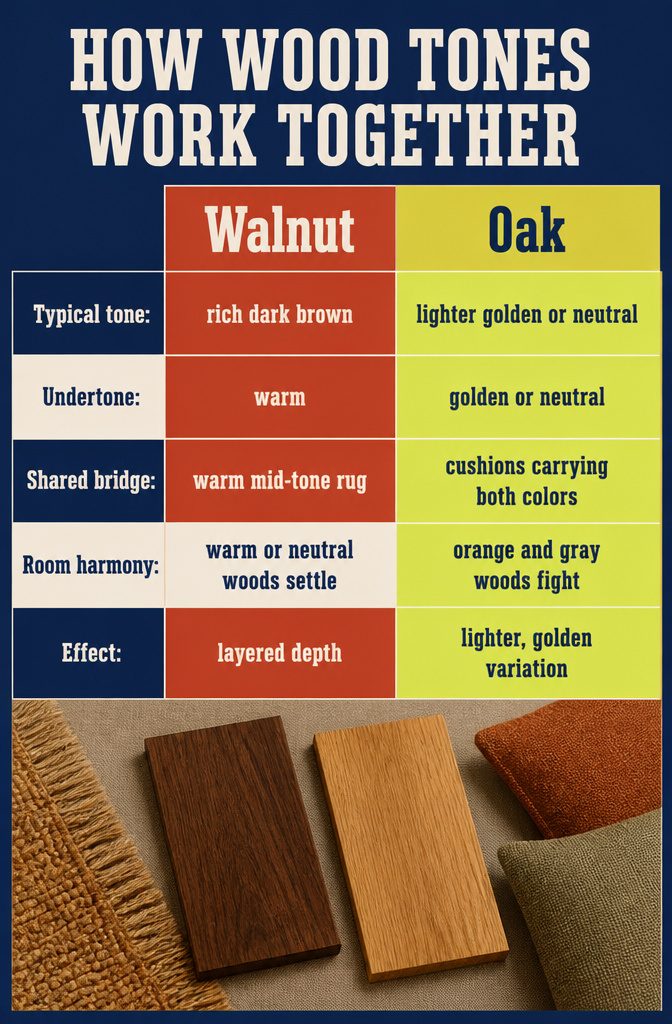
Mismatched wood works when the undertones get along.
Walnut runs rich dark brown, oak tends lighter with golden or neutral undertones, and the gap between them reads as layered rather than confused when you bridge it with something both can share.
A rug in a warm mid-tone, cushions that carry both woods’ colors, or a wall painted in greige holds the two finishes in the same room without forcing either one to match.
The look you’re after is warm or cool across all the wood, not identical stain.
If one piece skews orange and another gray, they fight. If both lean warm or both lean neutral, they settle.
Mixing finishes this way gives you depth—the kind that comes from years of collecting furniture rather than buying a set—and keeps the space from reading as flat or too coordinated.
Frequently Asked Questions
Is it okay to have mismatched furniture?
Yes, mismatched furniture adds depth and character when pieces share at least one connecting element like color, material, or scale.
A repeated warm brown tone across different wood finishes, or matching linen on chairs that otherwise differ, holds the room together. Without a visual thread, the pieces read as random rather than intentional.
Can you mix light and dark furniture in a room?
Yes, light and dark furniture work together when you distribute both values across the room rather than clustering one on each side.
Use a rug, pillows, or throws that pull in both tones to connect them. A beige sofa, walnut coffee table, and black metal lighting stay cohesive when the palette repeats through smaller accents.
Is it OK to mix and match furniture styles?
Yes, mixing styles works when you pick one main style and let others act as accents.
A contemporary living room gains character from a single ornate armchair or rustic coffee table, but five competing design languages read as clutter. Shared color, material, or scale between pieces keeps the mix from feeling chaotic.
Are mismatched couches in style?
Yes, two different sofas feel current when arranged intentionally and tied together through color, fabric, or layout.
Placing them in an L-shape with a side table at the corner or facing each other with similar seat heights makes the pairing look collected over time. Repeating a color through pillows or throws helps the arrangement feel less random.
Can you mix walnut and oak furniture?
Yes, walnut and oak work together when you bridge the gap between their tones with something both can share.
A rug in a warm mid-tone, cushions that carry both woods’ colors, or a greige wall holds the two finishes in the same room. Both should lean warm or both lean neutral to avoid a fight.
Should all furniture in a room be the same color?
No, furniture in different colors works when 2 or 3 shades repeat across pieces, fabric, and accessories.
A beige sofa, walnut coffee table, cream chairs, and black metal lighting look different in finish but stay connected through repeated neutral and warm brown tones. A single palette holds mismatched pieces in the same visual family.
Can you have black and white furniture in the same room?
Yes, black and white furniture balance each other when distributed across the room and softened with texture or a third neutral.
A black metal side table next to a white sofa works when a beige rug, linen pillows, or warm wood accents keep the contrast from reading too stark.
The pairing gains depth from varied materials rather than relying on color alone.