
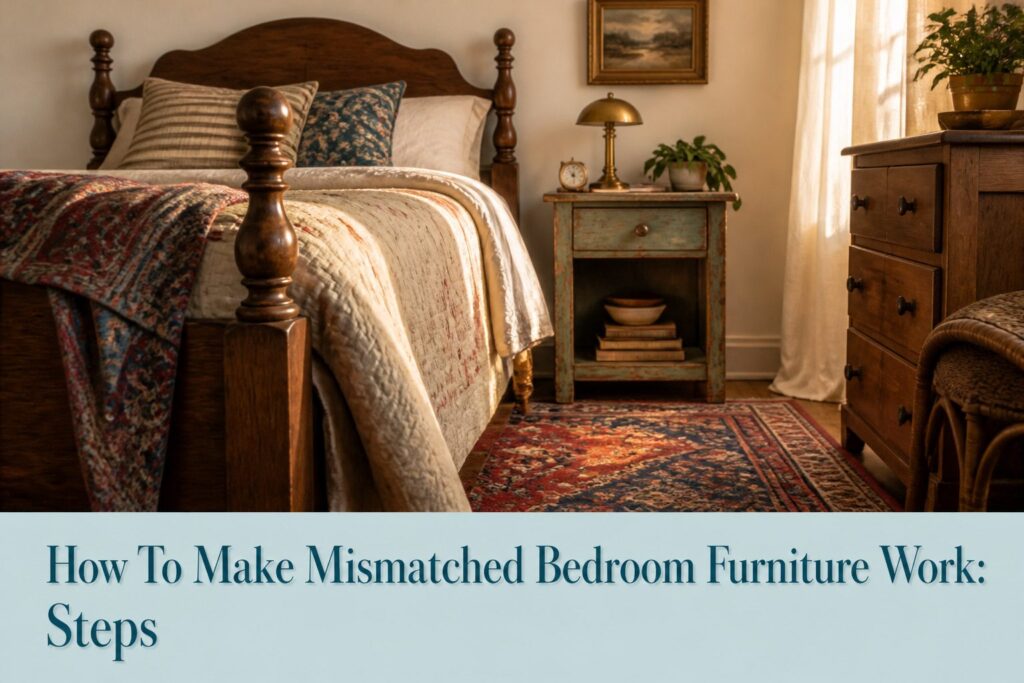
You can make mismatched bedroom furniture look intentional rather than accidental, but only if you are willing to hunt for common threads and force the connection yourself.
Paint, fabric, and hardware are what bridge a flea-market rocker with a curbside nightstand, not luck.
The risk is a room that reads like a storage unit; the reward is a space that reflects an actual person instead of a showroom floor.
1. Understand the Concept
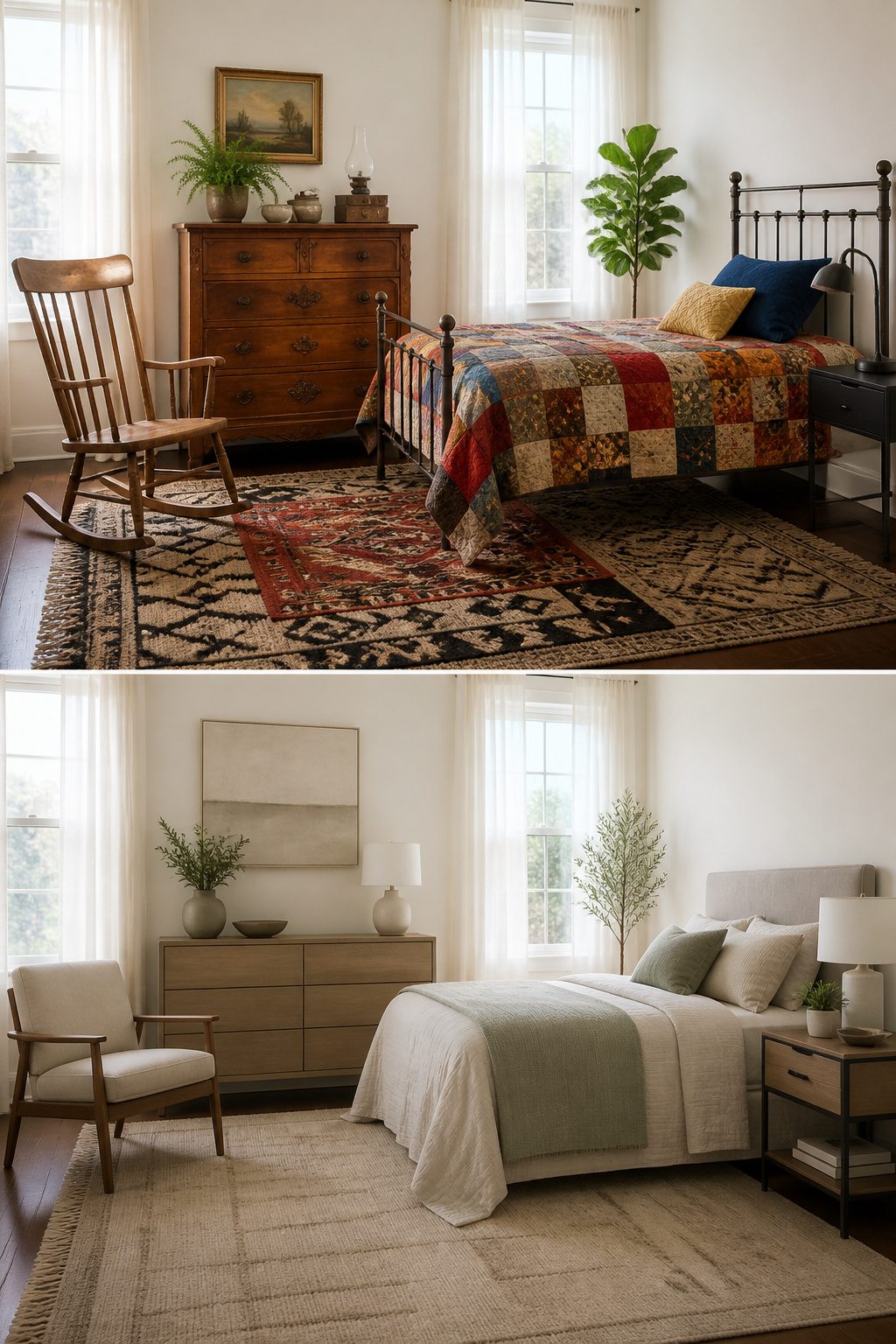
A matching bedroom set is a shortcut to design, and you don’t really want to match all your bedroom furniture because it’s dull.
The pieces arrive already coordinated, which saves a Saturday but costs you the room’s personality. What you gain in speed, you lose in the layered look that comes from collecting things over time.
Mismatched furniture works when you treat it as intentional, not accidental.
The flea market rocker, the inherited dresser, the curbside nightstand, the antique-shop bed: each piece carries its own history, and together they reflect an actual person rather than a showroom floor.
The risk, of course, is a bedroom that looks like a storage unit. The difference between a collection that works and one that does not is the eye that selects and the effort that links them.
Paint, fabric, and the right accessories are what turn a pile of random finds into a room that holds together.
A matching set can feel outdated fast, especially if the style is ornate or formal. Mixed pieces age better because they were never tied to one moment in the first place.
2. Find Common Design Elements
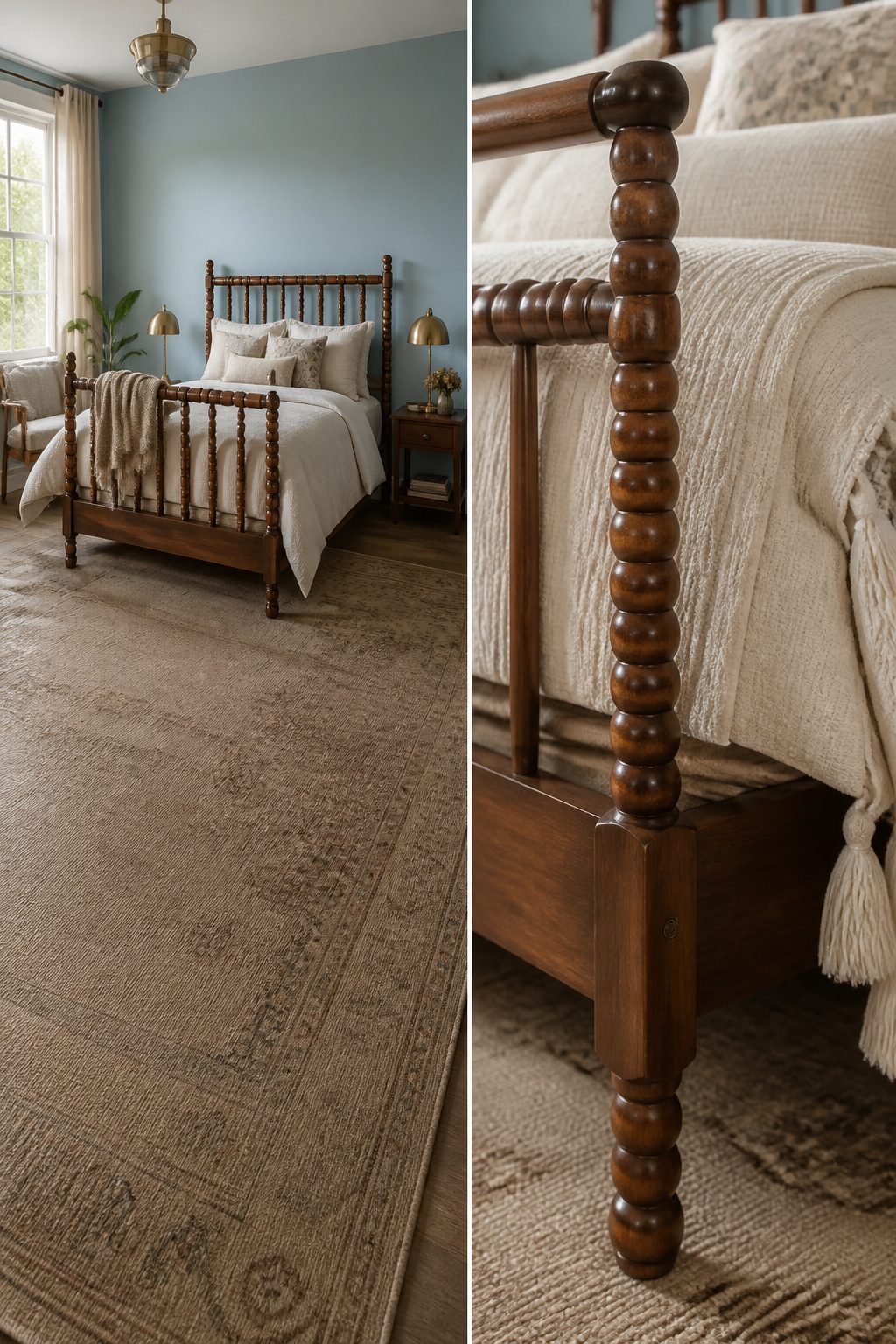
The first thing to check on mismatched bedroom furniture is whether anything already rhymes. A spool bed and a small vintage wood table in a similar wood tone share enough DNA that you can build outward from them.
Hunt for a nightstand in that same wood, turn the occasional table into a nightstand, and coordinate the two with matching lamps.
Any other wood furniture in the room should echo those tones or be painted to match the walls or trim.
The eye needs somewhere to rest.
When every furniture piece is a standalone, the room feels chaotic; when the wood tone, color, or style repeats, the mix reads as deliberate. A common thread can turn a garage sale of bedroom furniture into a chic retreat.
Fabric works as that thread too: stretch an arresting print over the bed as a canopy, cover pillow shams for the bed and chair or bench, and pull colors from it to shine against neutral walls.
White, pale gray, linen, or the merest hint of lilac, powder blue or blush pink gives the background room to breathe.
A bright russet and lemon print might inspire a rust velvet bedspread, pale yellow ceramic bedside lamps, and russet raw silk roman shades.
A subdued toast, cream and pewter print pairs with bamboo roll-up shades, gray-painted sawhorse desktop supports, and a faded tobacco, cream and gray oriental rug.
Style, finish, color, heft and scale should live in the same neighborhood so they harmonize, even if the pieces came home at different times from different places.
3. Unify With Paint or Fabric
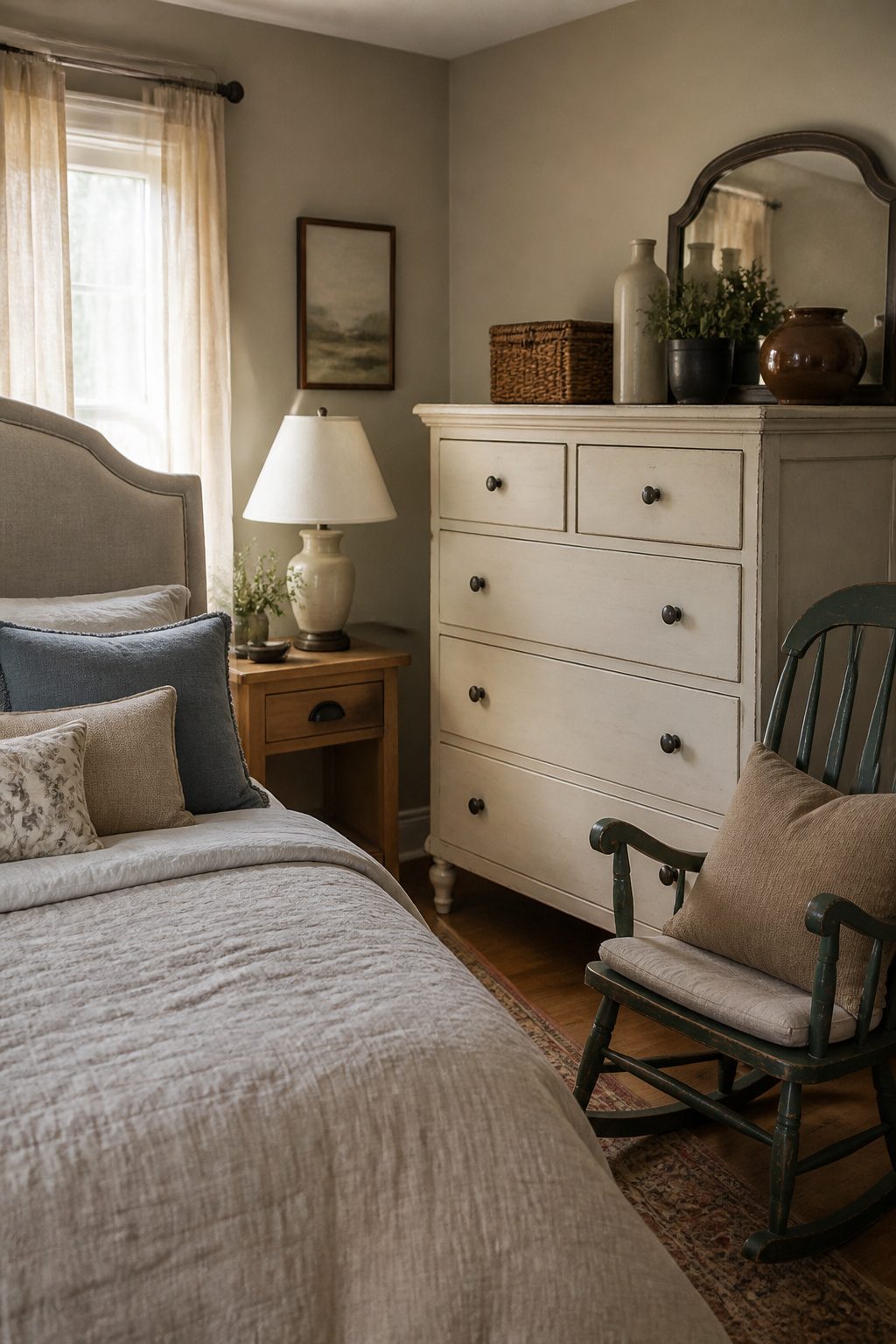
Paint is the fastest way to force unrelated pieces into the same family. A flea-market rocker, a curbside nightstand, and an inherited dresser can all read as intentional choices once they share one color or one finish technique.
Milk paint over a dark base coat gives you that chipped, layered look in a weekend: barn red or forest green underneath, cream or white on top, with crackle glaze between them so the darker color shows through in patches.
Lightly sand the edges and handle areas where real wear would happen, and the pieces look collected rather than collected-up.
Fabric works the same way on seating or a headboard.
Reupholstering a single chair is usually a Saturday job if the frame is simple; doing two in the same linen or the same striped wool makes them feel like a set even if the wood legs still disagree.
The cost stays low because you are buying yardage, not new furniture, and the mistake most people make is choosing a fabric that fights the existing wood tones instead of bridging them.
I would pick something with enough neutral in it to talk to both the warm and cool pieces in the room.
4. Balance Visual Weight
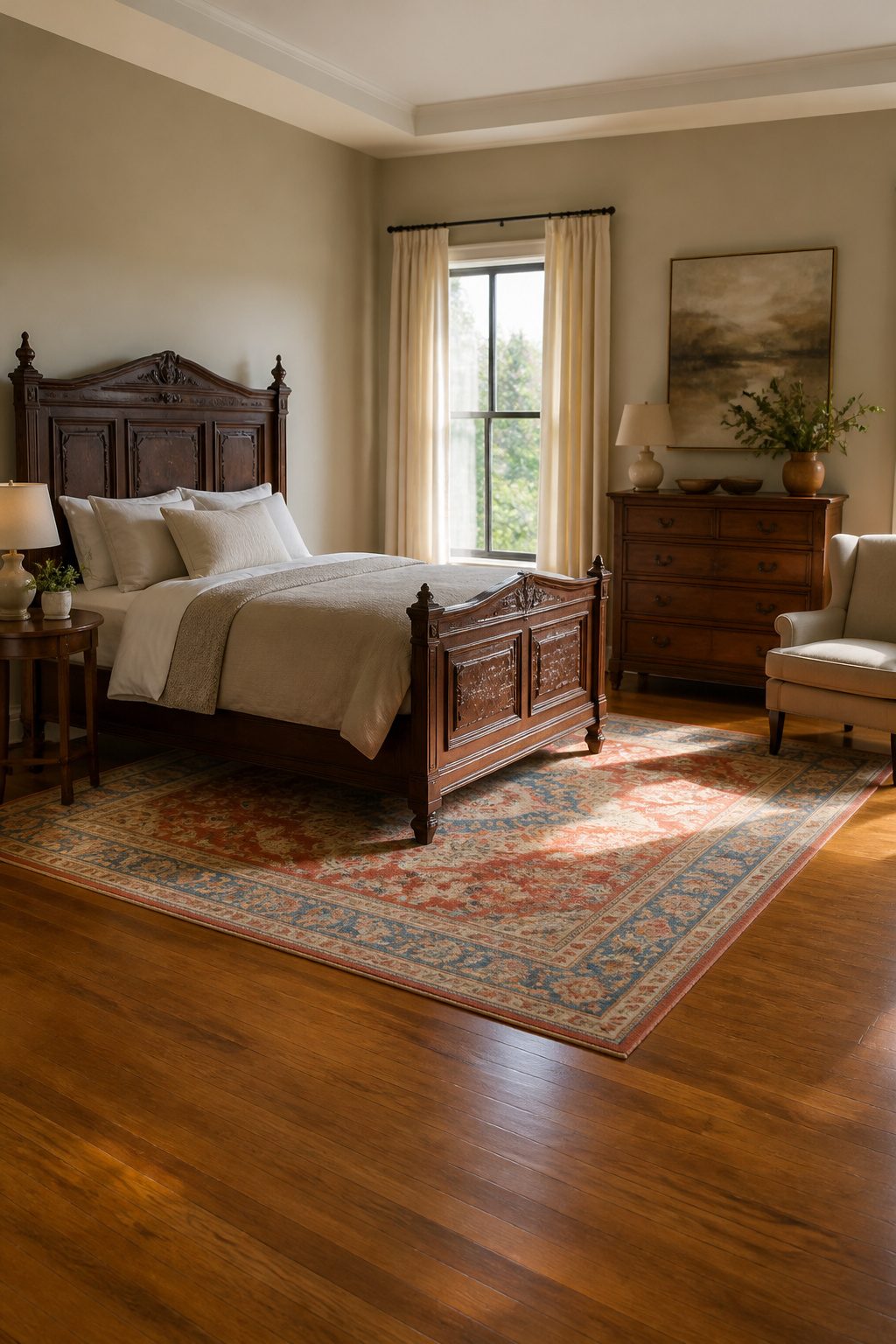
A room goes lopsided when one piece hogs the eye line.
I think of it like a seesaw: a bulky armoire on one wall needs something with comparable heft on the opposite side, even if the two pieces share nothing else.
The shape of each silhouette matters as much as its footprint.
Round and oval forms read softer and lighter; squares, rectangles, and live-edge slabs carry more visual mass. Pair a round nightstand with a rectangular dresser and the contrast keeps the eye moving without letting either shape dominate.
Height plays into this too.
Two nightstands with a 0–4 inch difference keep a similar visual plane and feel intentional; push past that and the shorter piece risks disappearing unless you give it something bold, a sculptural base or an unusual material, to reclaim its presence.
I would skip the temptation to match everything in scale. Two heavy pieces facing each other turn the room into a standoff, while two delicate ones leave the center feeling empty.
The move that usually wins is one substantial anchor, a solid bed frame or a wide dresser, balanced by airier companions: a leggy side table, a wall-mounted shelf, a stool with negative space beneath it.
If your bed itself is ornate or oversized, I would keep the surrounding furniture visually quieter. Let the bed own the wall and distribute smaller, simpler shapes around it so nothing competes for the same glance twice.
5. Tie in Accessories

Lamps do more than light the room; they repeat a finish or a shape across pieces that never came from the same store.
I would run matching lamps on two different nightstands, or echo the brass base of one lamp in the drawer pulls of a dresser that sits across the room. The eye catches that repetition and reads the furniture as intentional.
A rug anchors the floor and gives every leg, whatever wood or paint it wears, a common ground to stand on.
Bedding works the same way: the same linen or the same stripe across a spool bed and a curbside find ties them together without asking the frames to match.
Soft throw pillows in varied textures and a repeated hue do the heavy lifting here; they add the visual interest that makes a collected room feel welcoming rather than scattered.
Hardware is the cheapest bridge. Swap the knobs on an inherited dresser for ones that share the metal or the shape of a lamp base, and the two pieces suddenly belong to the same story.
The flea market rocker and the antique-shop bed do not need to match. They need one detail, repeated two or three times, that tells the eye someone chose them on purpose.
6. Add Personal Touches
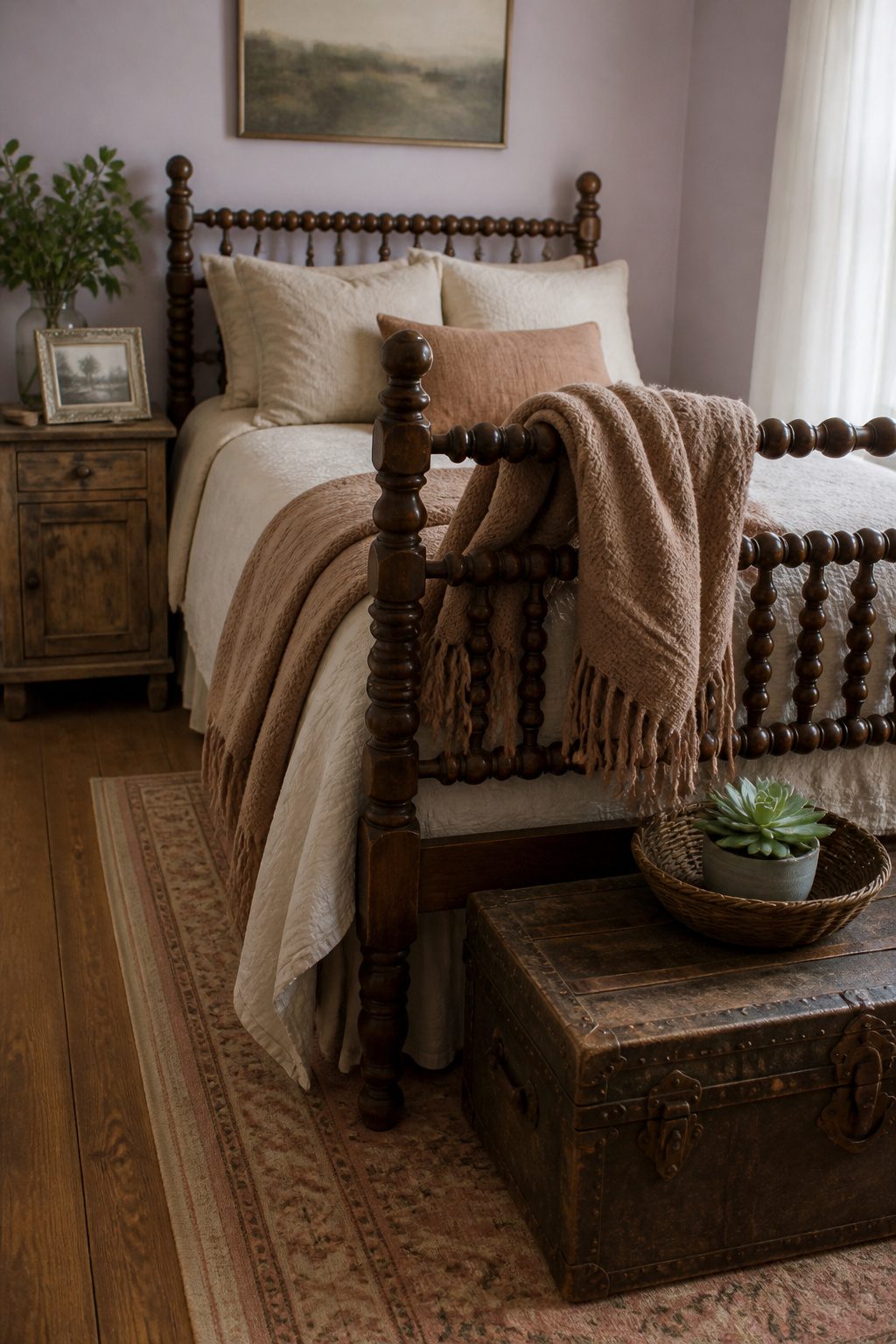
The difference between a bedroom that looks collected and one that looks like a storage unit usually comes down to whether the pieces feel chosen or inherited by default.
I would keep one or two items that carry real weight, a spool bed from a grandmother, a small vintage wood table with family history, and let that story anchor the room.
The nicks and dents in old furniture add something paint cannot replicate, and that worn surface gives permission for newer pieces to feel less precious around it.
Placement makes it work. A sentimental piece reads as intentional when it sits at the center of a grouping rather than off to the side like an afterthought.
Pair that inherited bed with a nightstand in a similar wood tone, add matching lamps, and suddenly the set looks intentional rather than cobbled together.
If the style, finish, and scale live in the same neighborhood, the eye accepts the mix. What I would skip is forcing every old piece to stay; one or two with meaning beats five with dust.
7. Rearrange Until It Works
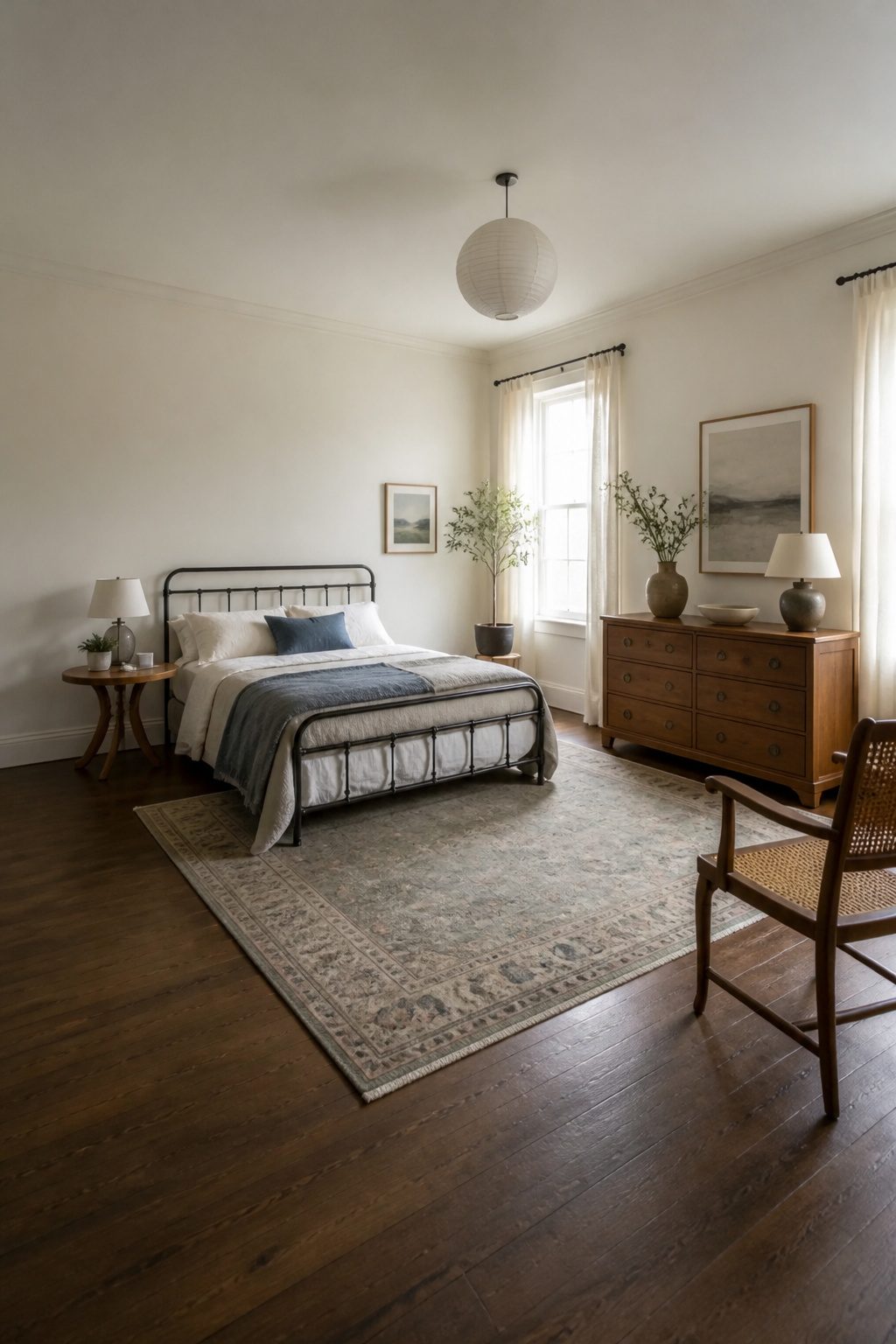
Bedroom dimensions decide whether mismatched pieces cooperate or fight each other.
A bed frame, two nightstands, a dresser, and sometimes a wardrobe is the standard matching set lineup, but pulling those same functions from separate sources means testing each piece against windows, doors, and whatever built-ins you cannot move.
I start by placing the bed on the longest clear wall, then walk the actual paths: can you open the closet door without clipping the dresser corner, and does the nightstand clear the window trim when you pull it out to clean?
If a piece blocks circulation, it does not matter how well the wood tone matches.
Swap hardware before you commit to placement.
The same cheap ceramic knobs on a curbside nightstand and a flea-market dresser can make them read as intentional cousins, and moving lamps between pieces reveals whether height differences feel layered or just off.
I have shifted a low vintage table to the far side of a bed where the window starts higher, letting it sit under the sill instead of crowding it.
Painted legs or a fabric skirt can also lower the visual weight of a piece that sits too tall for its spot.
The real test is living with the arrangement for a morning. Mismatched furniture has to earn its place by functioning better than a set would, not just looking interesting.
Matching Sets vs. Mixed Pieces
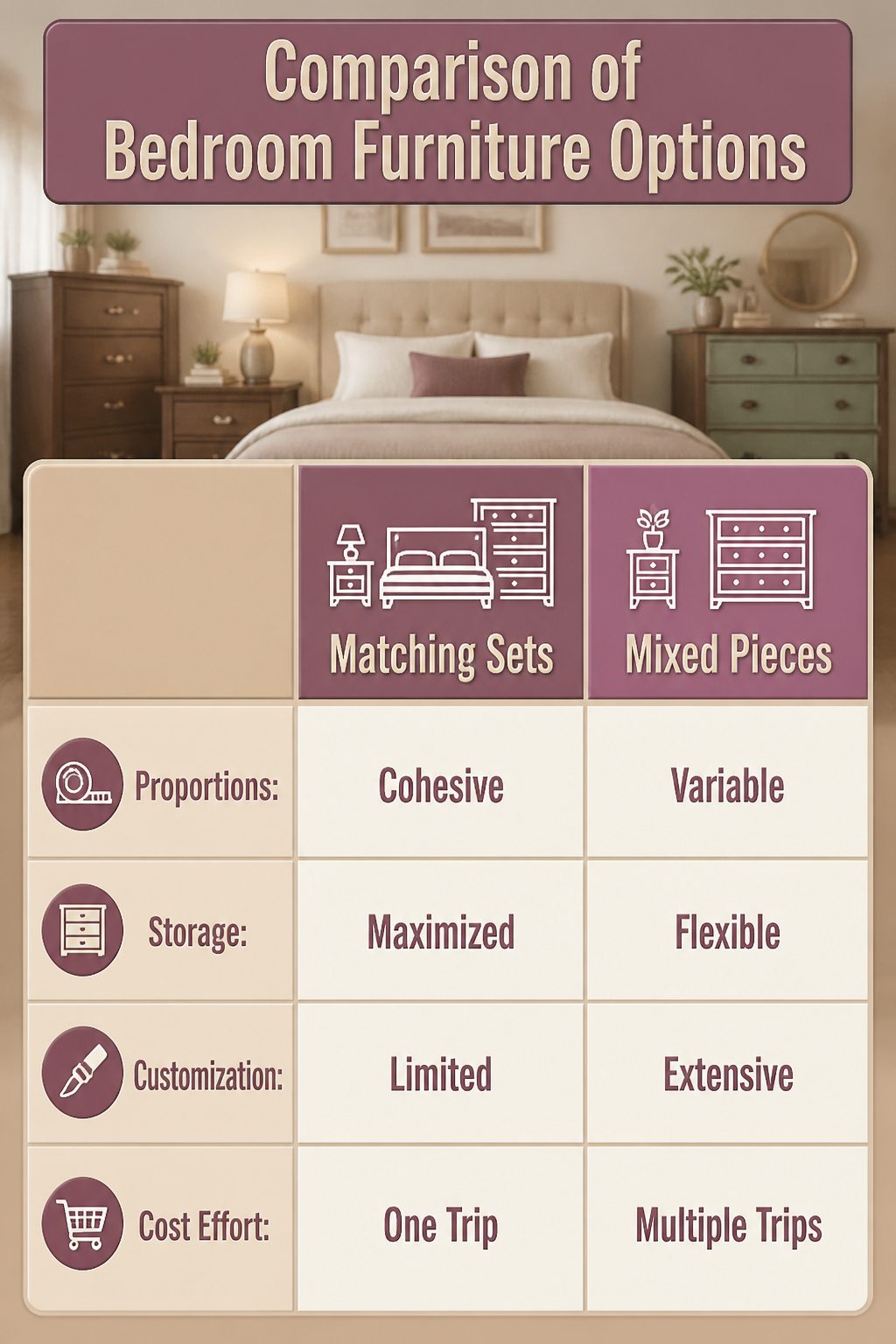
A matching bedroom set gives you proportions that already work together, drawers sized to the frame, and one trip to checkout instead of six.
If your weekend is tight and your patience for measuring is low, that simplicity is hard to beat. Sometimes the whole set costs less than three separate pieces, too.
"they are designed for maximum storage and function"
What that means for you: the nightstand depth lines up with the bed rail, the dresser clears the door swing, and you are not stuck holding a tape measure in an IKEA aisle.
But sets can feel like a single decision made years ago, especially when the finish turns ornate or the hardware gets formal.
Mismatched pieces let you pull in a walnut nightstand you already own, add a painted yard-sale dresser, and stop the room from reading like a showroom floor.
You trade the guaranteed fit for a layout that actually fits your storage habits and your eye.
I would choose the set if I were furnishing a guest room fast or moving into a rental I did not plan to stay in.
For the bedroom I use every morning and night, I would rather hunt for two pieces that function well and trust the third to tie them together later.
Do Nightstands Need to Match
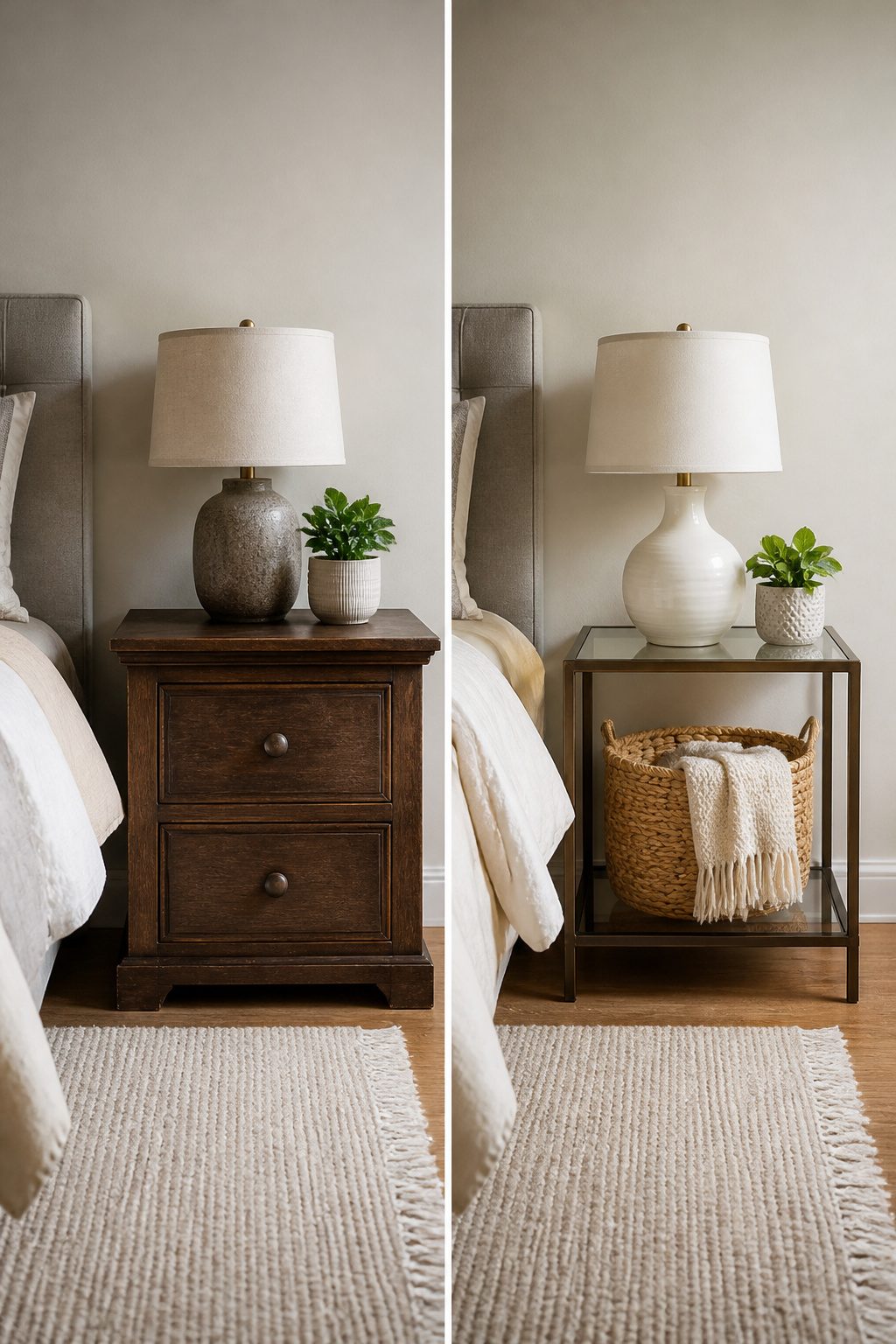
Nightstands do not need to match, and mixing them is one of the easiest ways to break up the flat look of a matching set.
I would keep the two pieces within about four inches in height so your lamps and water glasses still sit at a useful level, but beyond that, the rules loosen up quickly.
What matters more than sameness is that the pair shares at least one thread. Two different woods can work if the stains relate, or a metal nightstand can pair with a painted one if the shapes echo each other.
I would skip pairing two pieces that are both bulky and both ornate; the room starts to feel crowded instead of intentional.
Symmetry still has a functional role. If you read in bed, you want both sides to hold a lamp at roughly the same light level.
Storage is the same: at least one nightstand should offer a drawer for the clutter you reach for last thing at night.
The visual interest comes from the contrast, but the room still needs to function when the lights are off.
Why I Skip Matching Sets
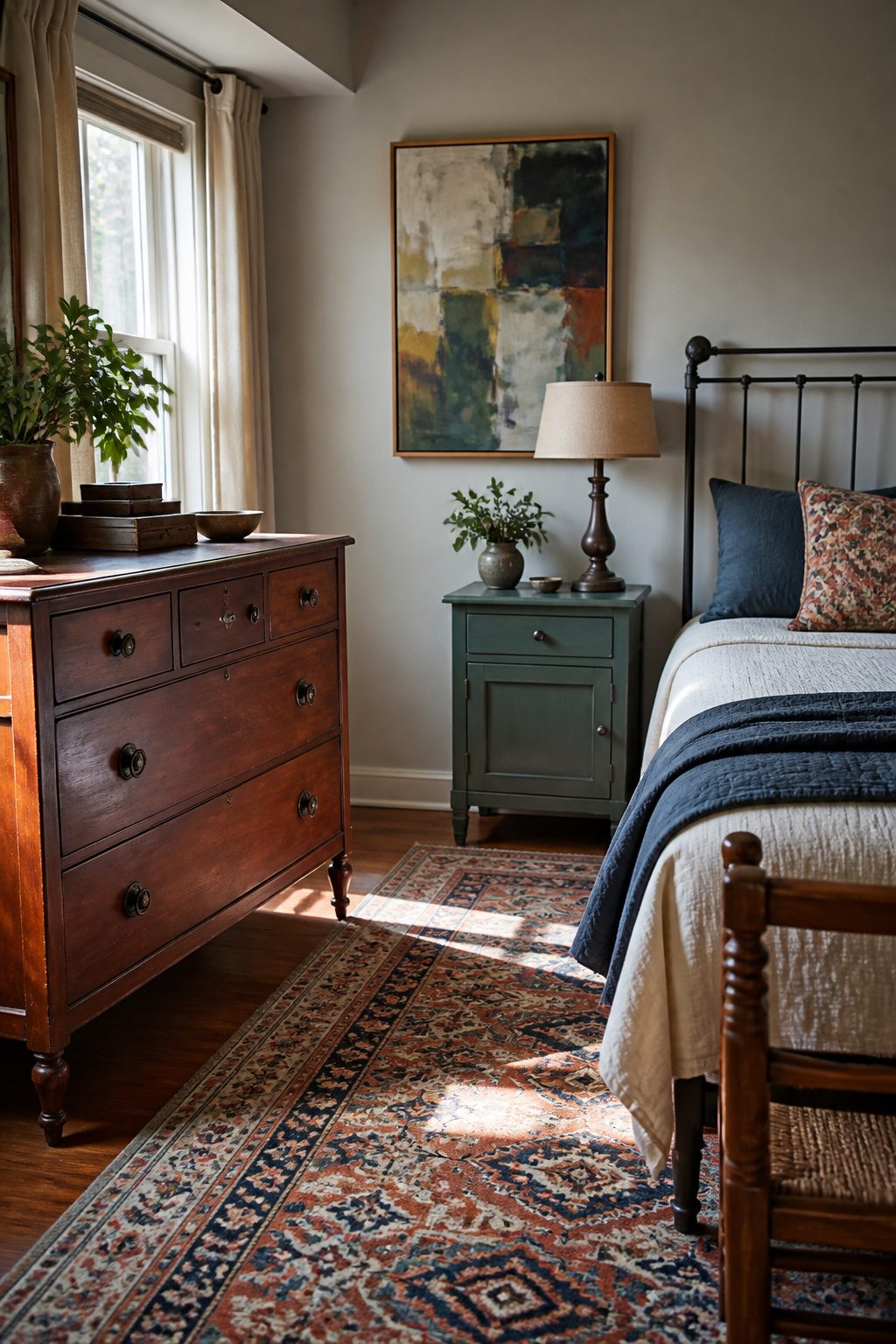
A matching bedroom set is practical, and I would never tell someone their inherited dresser and nightstands are wrong for the room.
But after years of pulling rooms together piece by piece, I look for furniture one at a time and skip the showroom package entirely.
The problem with a set is not quality; it is that every surface shares the same finish, the same hardware, the same proportion.
The eye reads it as one object, and the room flattens out. Uniformity reads as dated faster than any single style choice, especially when the set leans ornate or formal.
Mixing pieces takes longer. You hunt, you measure twice, you pass on the nightstand that is two inches too tall.
That friction is the trade-off, and it costs patience, not dollars. What you gain is a room that looks collected rather than delivered, and in my experience, that collected feel is what makes mismatched bedroom furniture worth the effort.
Frequently Asked Questions
Do nightstands have to match?
Nightstands do not need to match, and mixing them is one of the easiest ways to break up the flat look of a matching set.
Keep the two pieces within about four inches in height so lamps and water glasses still sit at a useful level.
What matters more than sameness is that the pair shares at least one thread, like related wood stains or echoing shapes.
How can I make mismatched furniture work together?
Hunt for common design elements that already rhyme, like similar wood tones or related styles, then build outward from there.
Paint, fabric, and accessories do the rest: a shared finish on hardware, matching lamps, or a unifying rug turns random finds into a room that holds together.
The eye needs somewhere to rest; when one detail repeats, the mix reads as deliberate.
What are the benefits of matching bedroom sets?
Matching sets give you proportions that already work together, drawers sized to the frame, and one trip to checkout instead of six.
The dimensions and surfaces are designed for maximum storage and function, so the nightstand depth lines up with the bed rail and the dresser clears the door swing. Sometimes the whole set costs less than buying three separate pieces, too.
How to match furniture in a bedroom?
Start by finding one common thread among your pieces: a wood tone, a color, a style, or even just a similar heft and scale.
Repeat that thread two or three times through paint, fabric, or accessories so the eye catches the pattern and reads the furniture as chosen on purpose.
A rug on the floor and bedding that carries the same linen or stripe across different frames ties everything together without asking the frames to match.
What are some ideas for mismatched nightstands?
Pair a metal nightstand with a painted one if their shapes echo each other, or mix two different woods whose stains relate.
Run matching lamps on both pieces to repeat a finish across the room, and keep heights within four inches so function stays balanced.
Avoid pairing two pieces that are both bulky and ornate; contrast works best when one piece carries more visual weight than the other.