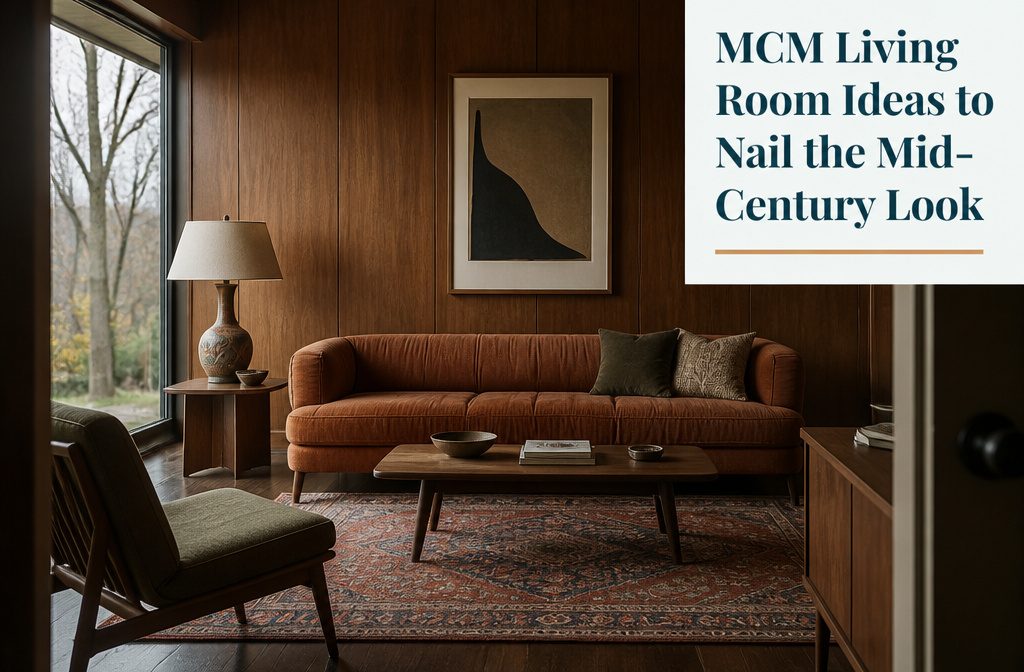
Mid-century living rooms run from stark minimalism to color-forward maximalism, and the deciding factor is how much warmth you’re willing to trade for visual restraint.
But even the cleanest MCM setup still leans on organic shapes and natural materials—walnut, teak, rounded seating—because the style never went fully cold.
Kelly Wearstler kept the original timber paneling in her Malibu beach house and built the room around it, proving that mid-century works best when the architecture does half the lifting.
1. Use Wood Furniture and Accents
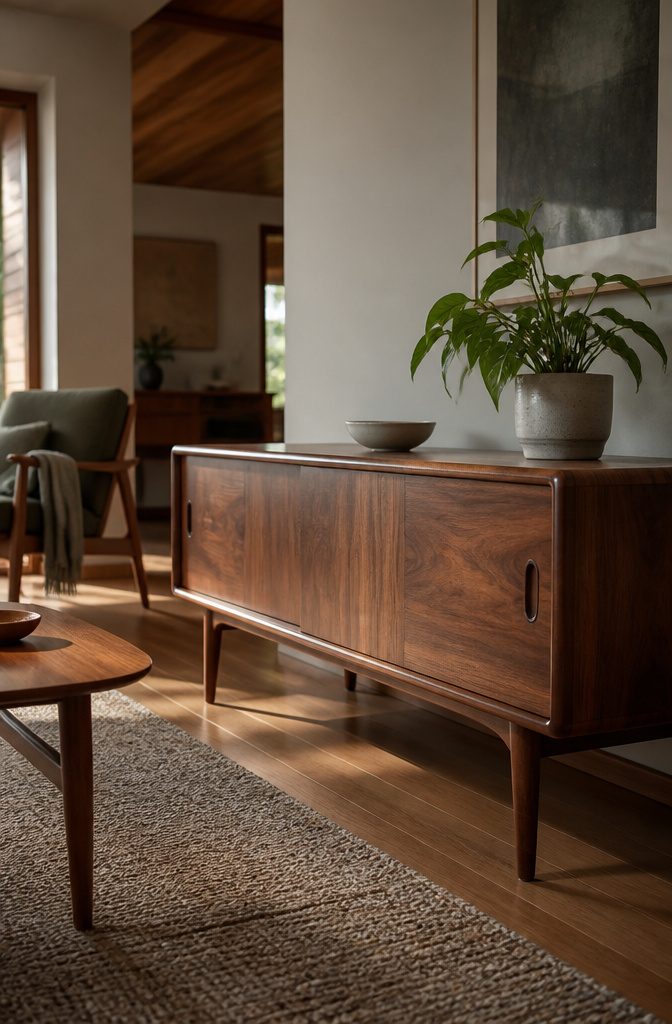
Wood furniture anchors the mid-century modern living room, and the right choices come down to species and shape.
Maple, teak, walnut and beech show up most often for their durability and the depth of color they bring—teak especially holds that warm, honeyed tone that reads as classic MCM without feeling dated.
I look for those woods in frames, coffee tables, sideboards and consoles, where the grain stays visible and the finish lets the material do the work.
Tapered legs mark the era as clearly as any single detail.
They lighten the visual weight of a piece and keep it from sitting too heavy on the floor, which matters in a room where sleek lines already pull a lot of the design load.
A walnut console on tapered legs or a beech-framed chair brings the look without needing much else around it.
The wood tones should complement each other—not match exactly, but sit in the same warm range so the room holds together.
Recommended Products

【Modern Coffee Table】The living room tables have a refined aesthetic look; a unique triangular frame; soft, rounded edges, blending modern & simple styles. Adds funky flair to a living room or apartment, great for elevating small spaces

【MDF DENSITY BOARD】The desktop of nesting coffee table is made of high-quality MDF density board, which ensures long-term use without deformation, and is waterproof, scratch-proof and collision-proof, which can perfectly resist daily wear and tear.This side tables and coffee table set is not natural wood. Please choose carefully before buying.

【MID CENTURY STYLE】 Elevate your living room with this mid century modern coffee table featuring an exquisite fluted texture and warm finish; distinctive slatted tambour doors of this walnut coffee table slide smoothly along curved edges to seamlessly conceal clutter and provide effortless access with retro sophistication
2. Choose Low-Set Seating With Sleek Legs
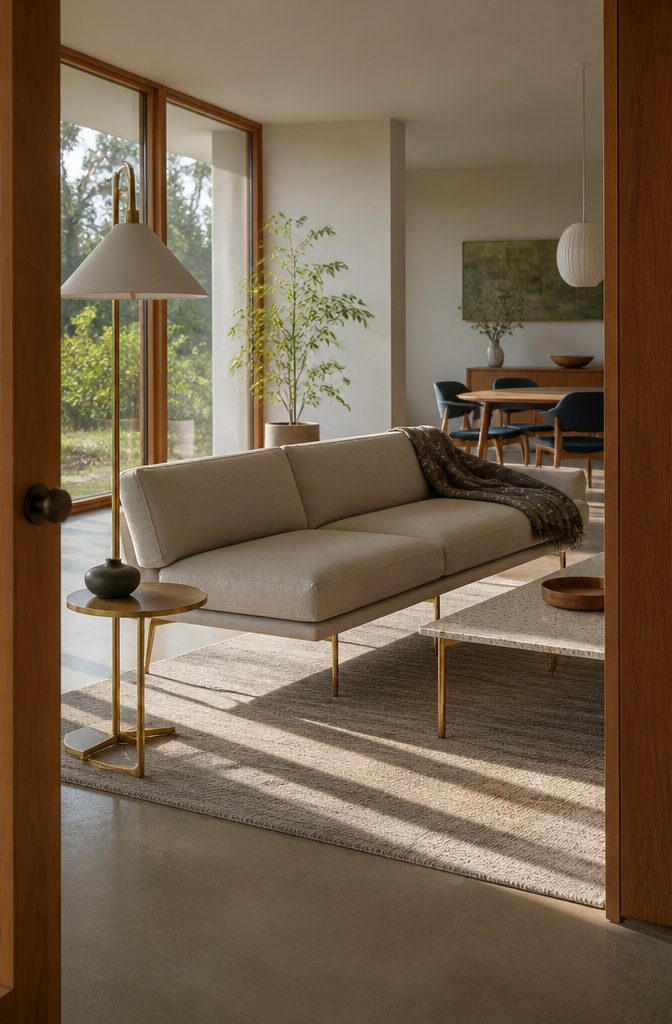
Low furniture with tapered or metal legs anchors the mid-century look more reliably than any single piece.
The profile matters: seating sits close to the floor while the legs themselves stay slim, whether they run to hairpin wire, straight brass rods, or wood turned down to a narrow taper.
That combination—low seat height, visible leg—opens up the sight lines in a way bulkier frames and skirted bases never do.
The effect shows clearest in a sofa.
A low-slung frame on metal legs reads mid-century even before you add the rest of the room, because it replicates the furniture that defined the style when designers like Wegner and Eames were drawing it.
Pair that with a terrazzo or wood coffee table on similar legs and the look locks in without needing a single piece of vintage stock.
Recommended Products

Packages Include: 4 x gold furniture legs 3 inch with mounting screws;Each leg can bear 300 lbs/136kg, and the combined use has a stronger load-bearing capacity.

4PCS metal furniture sofa legs,with top quality chrome in Black/Gold, durable and supportable.

Package includes 4 x Metal Sofa Legs and 16 x Mounting Screws, each furniture feet has pre-drilled holes, easy and convenient to install or disassemble; Total height is 15cm / 6 inches and the top width is 11.5cm / 4.5 inches.
3. Favor Fluid, Organic, or Rounded Shapes
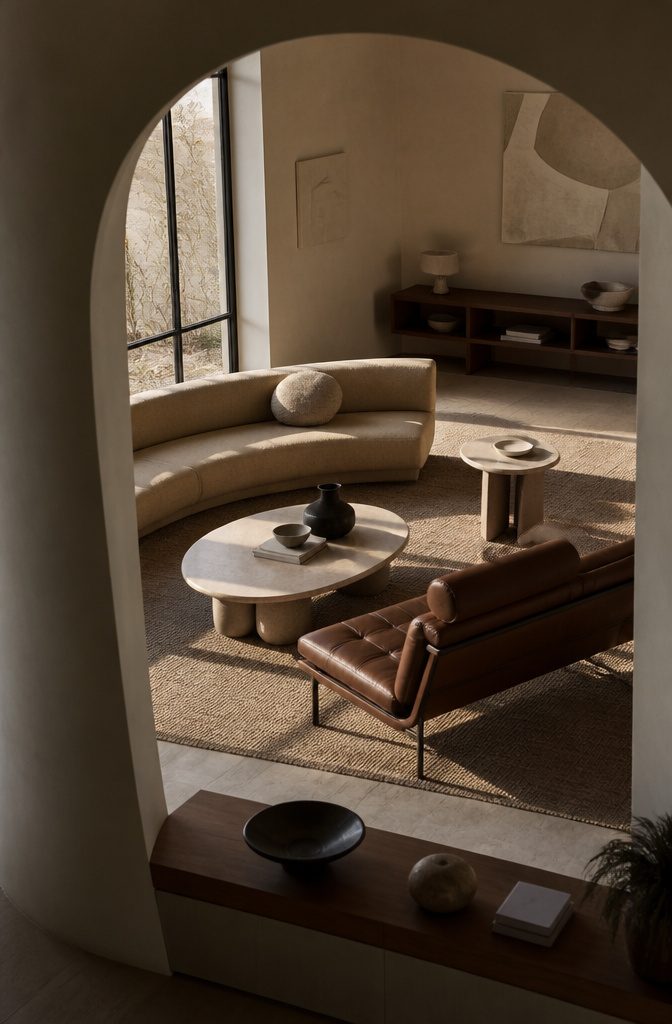
Mid-century furniture trades corners for curves. Rounded sofas anchor the room without cutting visual lines the way a squared frame does, and that openness makes a small space read larger than boxy pieces of the same footprint.
A stone coffee table with smooth edges follows the same logic—soft contours keep traffic flow intuitive and the silhouette light.
Organic shapes show up in side tables, too: ovals and kidney forms instead of rectangles. The contrast works because the rest of the style runs clean and minimal; a curved piece against straight architectural lines holds attention without clutter.
Leather loungers with rolled backs fit here—sculptural enough to count as statement furniture, but the rounded profile keeps them approachable rather than stiff.
Angular design still has a place in legs and frames, but the body of the furniture benefits from fluid form. That balance—straight supports under rounded seating—is what keeps mid-century rooms from looking too soft or too severe.
Recommended Products

ELEGANT MID CENTURY MODERN DESIGN: Include timeless appeal to your home with our mid-century modern buffet cabinet with storage; The unique geometric pattern enhances the...
4. Add an Iconic Mid-Century Piece
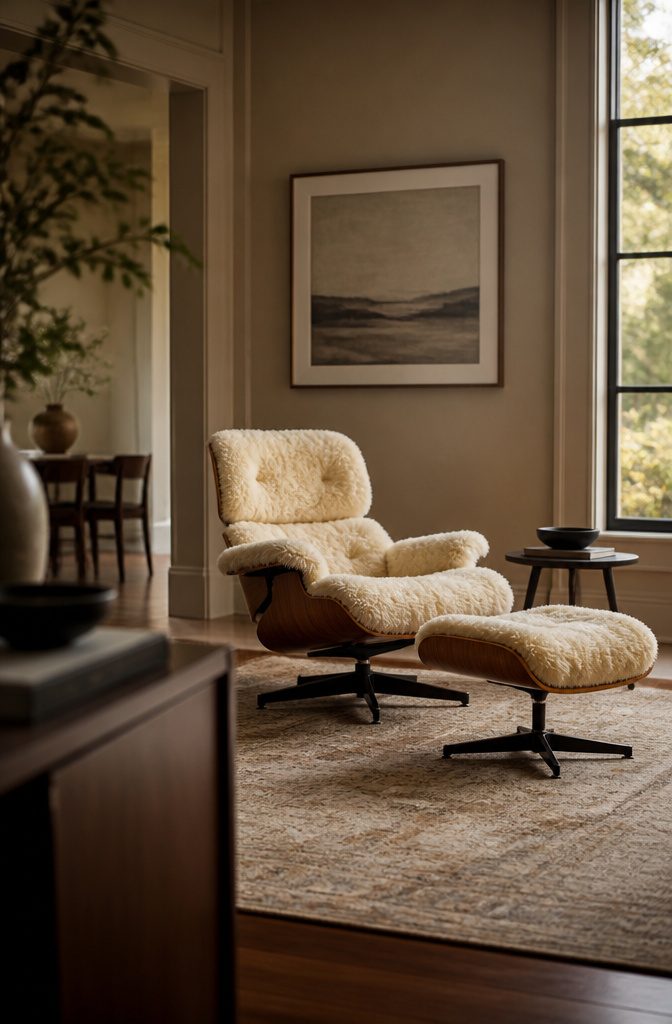
The Eames lounge chair and ottoman is the piece that says mid-century modern the second someone walks through the door.
Charles and Ray Eames designed it in the Fifties with one goal: pair elegant lines with the kind of comfort that makes you stay put.
The chair delivers both, and it still holds up decades later because the proportions were right the first time.
A sheepskin-covered Eames chair softens the look without losing the structure underneath.
The texture works particularly well in a room with a neutral backdrop, where the chair becomes the focal point rather than competing with pattern or color on the walls.
Paint your trim and molding the same shade as the walls if you’re placing mid-century furniture in a traditional home — the architectural details recede, and the chair takes over.
One or two iconic pieces anchor the room. More than that and the space reads like a showroom instead of a place someone actually lives.
Recommended Products

★ Please note:Since wood is a natural material, each wooden chair leg is unique. Changes in color, texture and texture are normal,each sofa leg may be slightly different in the photo presentation, displayed on the website.

Comfortable Decorative Touch (12 x 20 inches): Made from soft flannelette, these pillow covers create a gentle and inviting surface that adds warmth to your living space. Whether placed on a sofa, bed, or armchair, they bring both comfort and visual harmony to the room.

Heavy Duty Sofa Table Legs: 3mm thicken steel construction keeps metal sofa legs solid and stable enough to support the whole furniture up to 1800lbs!
5. Use a Neutral Backdrop
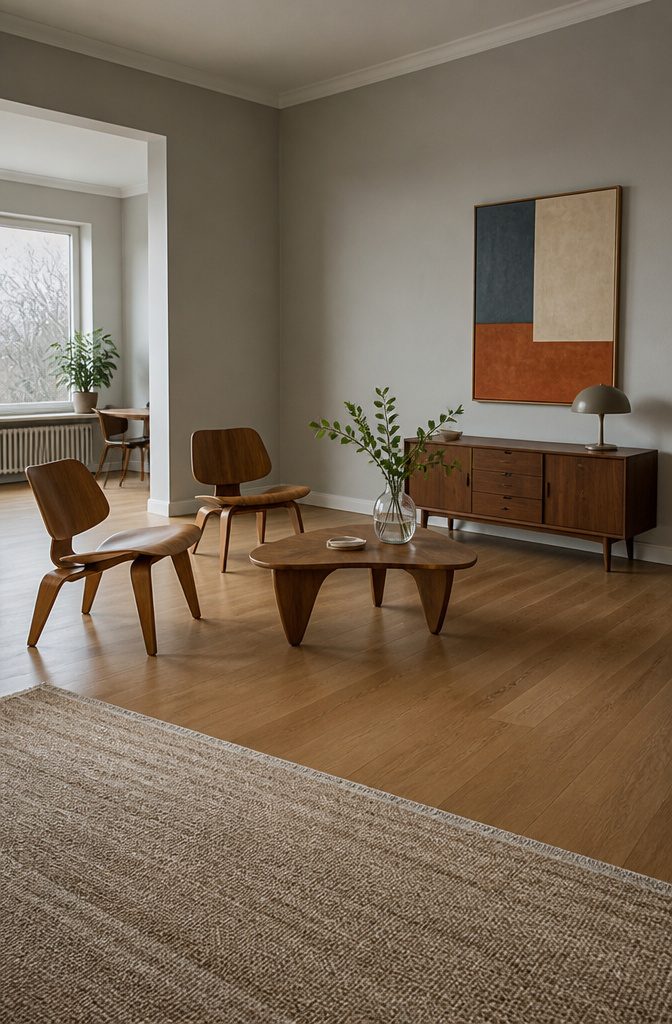
A neutral wall lets mid-century furniture do what it does best: hold the room. White or soft gray gives wood grain, leather, and those sculptural chair legs a clean stage to work against.
The warmth of walnut or teak reads stronger when it isn’t competing with pattern or color on the walls, and the same goes for abstract art — a bold print or a geometric piece pulls focus when the backdrop steps back.
This setup works especially well in a minimalist space where each piece carries more visual weight.
A Noguchi table or a pair of molded plywood chairs becomes the anchor rather than one more layer, and the room stays open without feeling sparse.
The neutral treatment also turns the living room into gallery space: mid-century art tends toward color and abstraction, and a plain wall makes that pop without needing much else around it.
Recommended Products

High quality- The furniture legs are made of solid rubber wood and coated with varnish.

4 PCS Kit:4PCS 16 Inch Oblique Conical furniture legs, 16PCS Mounting screws. Total size is 2.95" x 2.95" x 15.75" / 7.5 x 7.5 x 40cm

☆PREMIUM CARBON STEEL & ANTI-RUST FINISH☆: The 16” Metal Furniture Legs are made of heavy-duty carbon steel, these 16” table legs feature an advanced anti-rust coating. This durable finish makes them perfect for both indoor living rooms and outdoor patios, ensuring they remain stylish and rust-free in any environment;
6. Hang Bold, Abstract, Geometric, or Atomic-Style Artwork
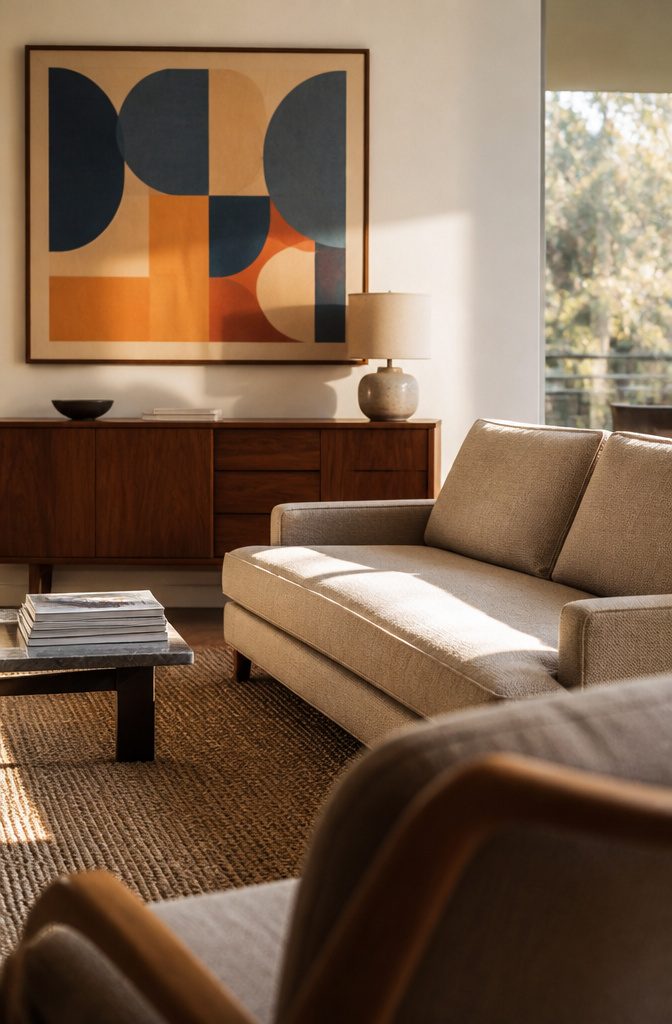
Abstract art introduces the modern side of mid-century style in a way that geometric prints and bold color blocks cannot replicate on their own.
Op Art patterns, repeated motifs, and expressionist color work read as decisively mid-century when hung over a low sofa or behind a credenza, especially in larger formats that command the wall rather than fill it cautiously.
Atomic Age design, which ran from the late 1940s through 1960, leans on curvilinear shapes and references to organic forms—amoebas, microscopic organisms, plant life—alongside alchemy and chemistry symbolism.
The aesthetic carries an edge that balances well against wood-heavy rooms, and it brings color in without committing to primary hues across the whole palette.
Retro architectural prints work too, particularly California mid-century buildings rendered in flat, graphic styles. They anchor the era without requiring abstract taste, and they pair cleanly with neutral backdrops when the room already carries enough pattern in the textiles.
Recommended Products

MID-CENTURY COFFEE TABLE: The sophisticated and elegant exterior design of this coffee table will definitely refresh your space. The slatted sliding doors feature a vintage-meets-modern design. Whether your furniture is modern or vintage, the unique beauty of this coffee table will blend perfectly with the environment.

Material : Wood. Assembly required

【100% Solid Oak】Built with only the solid oak, this table guarantees exceptional durability and longevity. There are 0 veneers or engineered woods—just pure, real wood that stands up to the demands of everyday use.
7. Add Wood Wall Paneling
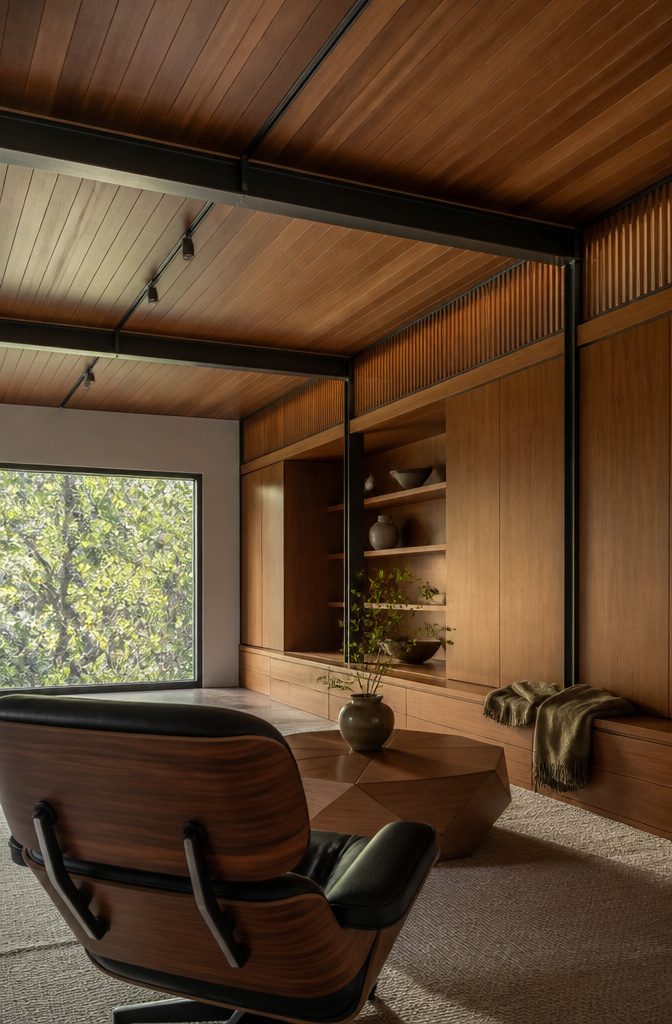
Wood paneling on walls or ceilings puts architecture itself into the mid-century conversation.
Kelly Wearstler’s Malibu beach house keeps the original timber paneling from when the house was built, and that wall becomes the backdrop for a mix of Californian and European pieces—an iroko side table, vintage tessellated coffee tables, 1968 Pulkka lounge chairs—without fighting any of them for attention.
The paneling holds the room together.
Ceilings take it just as well. A living room with wooden ceiling panels between exposed metal beams changes the geometry overhead, which matters when most of the furniture sits low and the eye travels up.
Built-in wooden shelving along a paneled wall doubles down on the material and turns storage into part of the wall plane instead of something added later.
White paint on the other walls lets the woodwork read as the feature rather than as texture everywhere.
Recommended Products

【Sturdy and Stable】Our desk riser is made of thickened pp plastic with solid construction. The rubber non-slip design on the bottom can easily grip the floor not easy to slide. Compared to other bed lifts risers, our plastic risers are small and lightweight but definitely durable for heavy furniture ! Whether it's heavy furniture for home or office, it can be lifted easily and securely.

LOAD CAPACITY BALL CASTER: Total 450 lbs (counting 3 pcs casters only) reinforced frame for more secure load bearing,durable thickened frame provide smooth rolling under high loads, brass caster wheel suited for DIY projects and furniture upcycling tasks

【Sturdy and Stable】Our desk riser is made of thickened pp plastic with solid construction. The rubber non-slip design on the bottom can easily grip the floor not easy to slide. Compared to other bed lifts risers, our plastic risers are small and lightweight but definitely durable for heavy furniture ! Whether it's heavy furniture for home or office, it can be lifted easily and securely.
8. Bring in Color Through Primary Colors or Accents
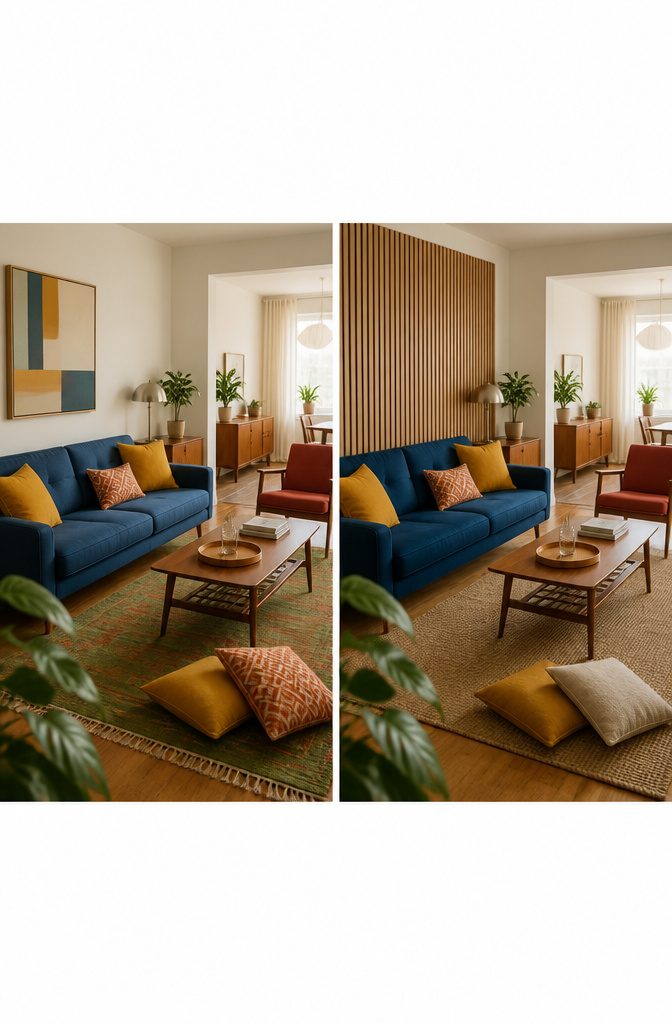
Mid-century modern palettes lean on primary colors—red, yellow, and blue—used as accents rather than full-room commitments.
A lush blue couch anchored against neutral walls gives the space its focal point without overwhelming it, and you can layer in sage green, orange, and yellow through throw pillows, a side chair, or a table lamp.
The approach keeps the room grounded while letting color punctuate key pieces.
Nature-inspired tones show up just as often: sea-like blues, clay browns, earthy greens, bright fall yellows, and wooden finishes that pull warmth into the space.
Olive green and honey gold work especially well on upholstered chairs or woven textiles, and warm orange tones in geometric patterns land cleanly on pillows or wall art without dating the room.
Materials like glass, metal, vinyl, and teak double as accent finishes, so a vinyl record sleeve propped on a shelf or a teak tray on the coffee table carries the palette forward without adding another painted surface.
9. Carry the Style Through an Open-Plan Space
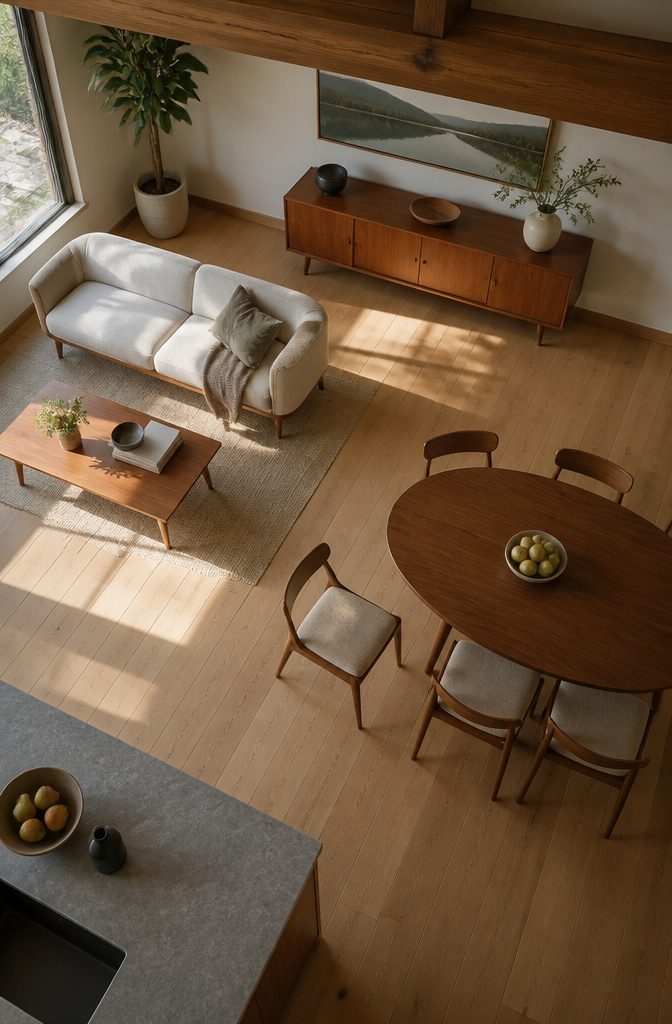
Open-plan layouts can lose coherence when mid-century details scatter unevenly across zones.
The approach that holds is repetition of a few signature elements rather than matching every piece: repeat tapered legs on dining chairs, a side table, and a credenza; carry walnut or teak through cabinetry and occasional furniture; or echo a curve from living seating into the dining area with something like a Saarinen Tulip table.
The white-painted ceiling and timber beams in Kate Totten’s design anchor separate areas without hard divisions, a strategy that works when the structural element spans the whole space.
Stick to warm tones and natural materials throughout, and resist the urge to fill every corner—mid-century reads as intentionally spare, so an open room crowded with furniture reads as something else entirely.
Recommended Products

【High Quality】Made of 100% solid oak wood with original wood color, which is hard quality, stable, durable and glossy. Cotton felt pad are included,super strong and durable.

PERFECT FIT - Suitable for all types of furniture in your home and can be compatible with different furniture styles, the eye-catching wood leg furniture set 4 is perfect for sofas, chairs, tables, end tables, dressers, sofas, cabinets, nightstands, and more; They're not just for function, our sofa legs will also enhance your interior decor
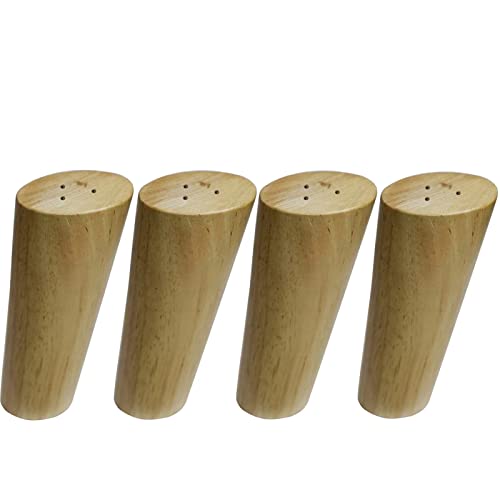
★ 4 inches high vertically,Top width: 2-3/8” Bottom width: 1-5/8”,raise up the furniture to a more desirable height,Make furniture more comfortable.
10. Mix Mid-Century Pieces With Other Eras or Styles
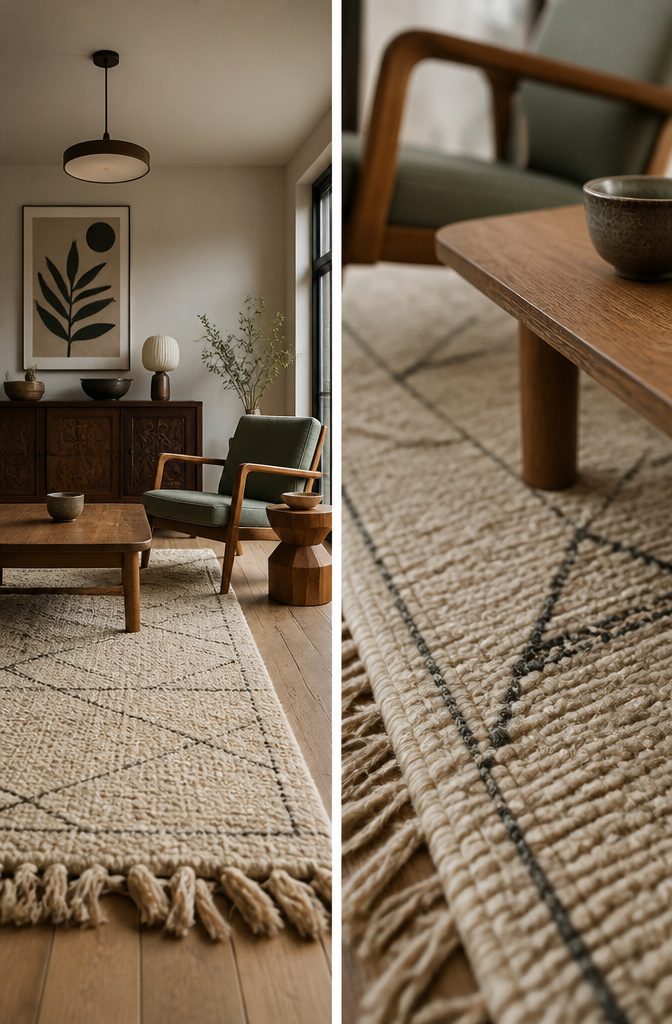
Mid-century modern pieces sit comfortably next to Scandinavian furniture, Art Deco accents, and Japanese design—all three share the same lean silhouette and attention to material.
The Hans Wegner Ming chair, for instance, draws directly from a Chinese Ming Period original, so pairing a mid-century armchair with a simple low table in the Japanese style reads as coherent rather than patched together.
Art Deco brings a bit of polish: an etched mirror or a geometric side table ties the angles without cluttering the line.
A room that mixes eras feels collected rather than ordered in one go.
Set a mid-century sofa against a traditional end table, hang contemporary lighting overhead, or drop an antique sideboard along one wall. The variety keeps the space from looking like a catalog page.
Industrial metal, boho textiles, and farmhouse details all work if the proportions stay calm—gingham on a lampshade or a Berber rug underfoot warms a modern frame without fighting it.
Recommended Products

16" H x 11.8" W: 16 inch table legs are prefect for custom bench legs, coffee tables, end table, side tables, TV stands, nightstands and so on

✅ FITS 18-INCH COFFEE TABLES, END TABLES & NIGHTSTANDS — Designed for the standard 18" height that pairs with sofas (15-18" seat height) and beds. Compatible with rectangular tops 24"-48"L and round tops 18"-36" diameter.

✔Size Detail: 16 inches ,Top width: 1-1/2” Bottom width: 1”,raise up the furniture to a more desirable height,Make furniture more comfortable.
What Defines Mid-Century Modern Style
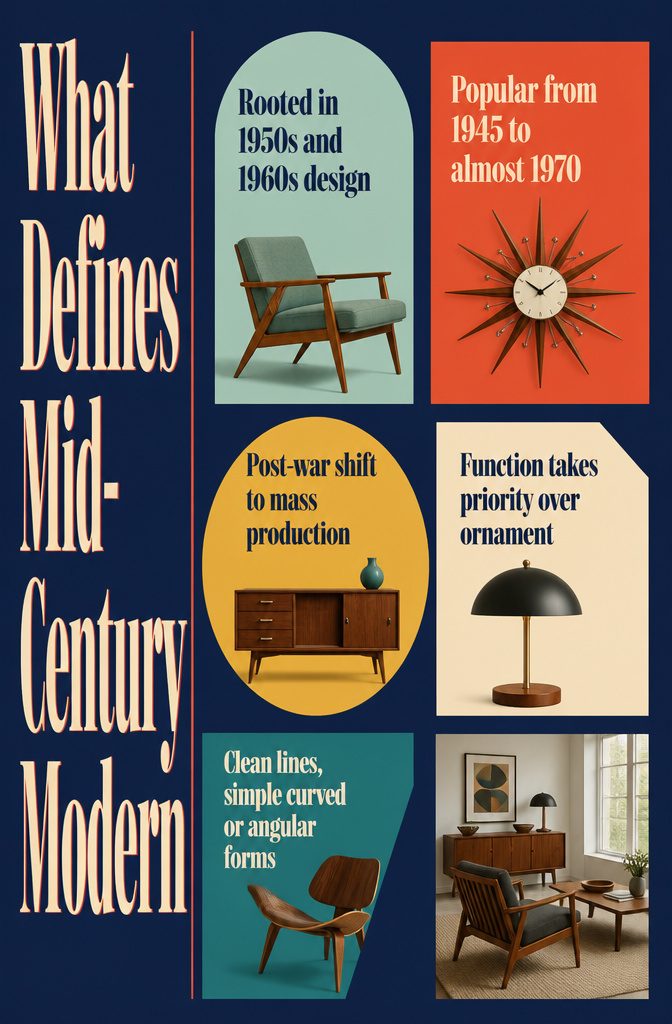
Mid-century modern became popular in 1945 and continued until almost 1970, rooted in the design of the 1950s and 1960s with influences stretching from the 1930s into the 1970s.
Some argue the movement started in 1947 and ran through 1957, but most sources settle on the broader mid-20th-century timeframe. The style emerged as a response to post-war life, when traditional handmade furniture gave way to mass production and simpler forms.
The look is defined by clean lines, pared-back silhouettes, and function over ornament. Natural shapes and biomorphic forms show up often, and the color palette runs rich—dark woods, bold primaries, metal detailing.
You see both curved lines and sharp angular geometry, but always simple. The style prioritizes what a piece does, not how much decoration it carries, and that restraint is what makes it hold up decades later.
Materials That Work
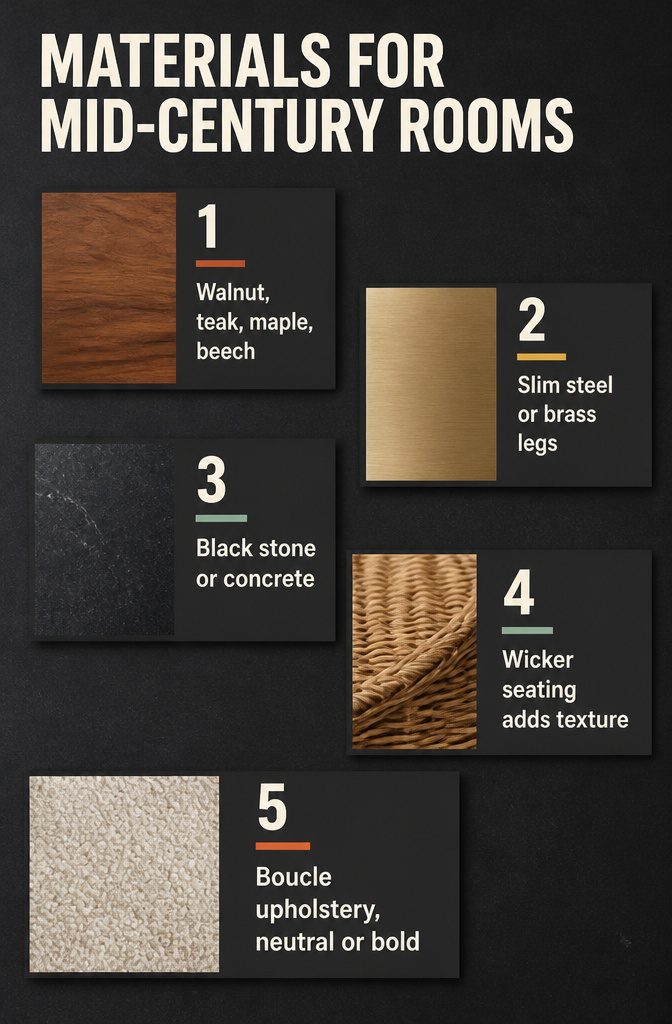
Mid-century modern relies on natural materials with visible grain and texture. Wood anchors the look, but metal, stone, and wicker all show up.
- Wood: Walnut, teak, maple, and beech are the go-to species for their durability and warm tones. Frames, coffee tables, and side tables all lean on solid wood construction, often with tapered legs.
- Metal: Steel or brass legs appear on tables and chairs, usually slim and angled. The contrast between metal and wood keeps pieces from feeling heavy.
- Stone: Black stone or concrete works for floors and fireplace surrounds, adding weight that balances lighter furniture.
- Wicker: Wicker frames on seating bring in texture without losing the clean lines the style is known for.
- Upholstery: Soft fabrics like boucle cover cushions and seat pads, often in neutral beige or punchy accent colors.
The raw, unfinished quality of these materials is the point. Mid-century modern doesn’t hide what something is made of.
Frequently Asked Questions
What is mid century modern style decor?
Mid-century modern is a design style from 1945 to 1970, rooted in the 1950s and 1960s, defined by clean lines, simple silhouettes, and function over ornament.
The style emerged after World War II when mass production replaced traditional handmade furniture, prioritizing what a piece does rather than how much decoration it carries.
You’ll recognize it by tapered legs, low seating, natural wood tones like walnut and teak, and bold accent colors against neutral backdrops.
What styles go well with mid-century modern?
Scandinavian furniture, Art Deco accents, and Japanese design all pair cleanly with mid-century pieces because they share the same lean silhouette and focus on material. Industrial metal, boho textiles, and farmhouse details work too if the proportions stay calm.
Mixing eras keeps the space from looking like a catalog page, so an antique sideboard or contemporary lighting alongside a mid-century sofa reads as collected rather than staged.
How do you make a room feel mid-century modern?
Start with low furniture on tapered or metal legs, then add wood in warm species like walnut or teak for coffee tables and consoles.
Use a neutral wall color so the furniture holds the room, bring in primary accent colors through pillows or a single bold piece, and hang abstract or geometric art.
One or two iconic pieces like an Eames chair anchor the look without turning the space into a showroom.