
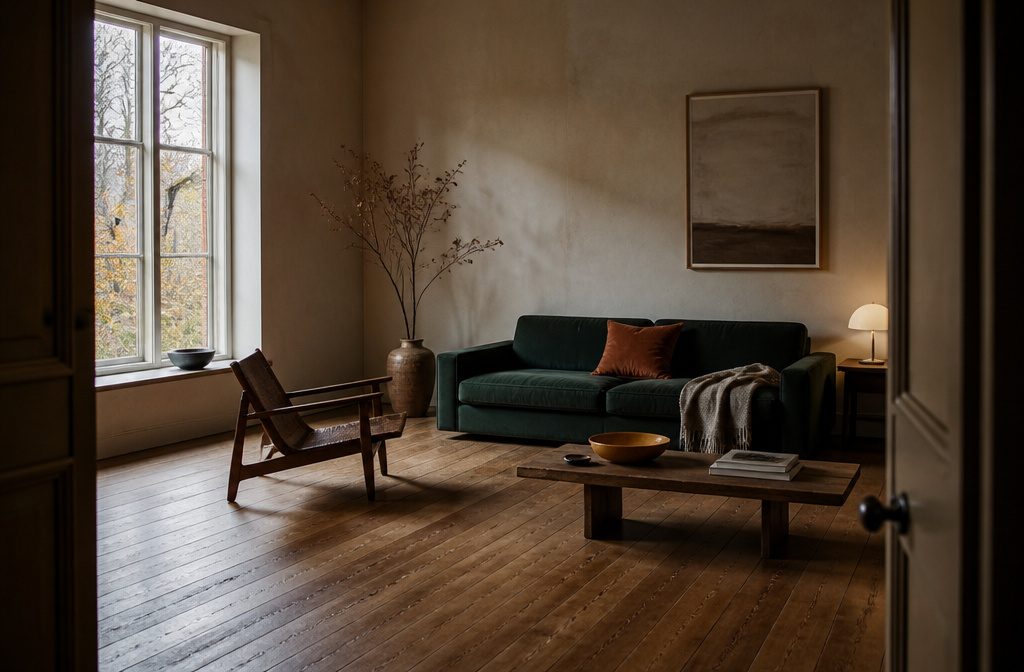
A minimalist living room runs from stark white and barely furnished to warm-toned and layered with texture, and the version that works depends on whether you need the space to feel larger, warmer, or just calmer than it is now.
The difference shows up in lighting temperature—2700K to 3000K keeps the room from reading as sterile—and in how much floor space you give back by replacing a sectional with a low-profile sofa and a single accent chair.
1. Use Neutral or Tonal Colors With Selected Accents
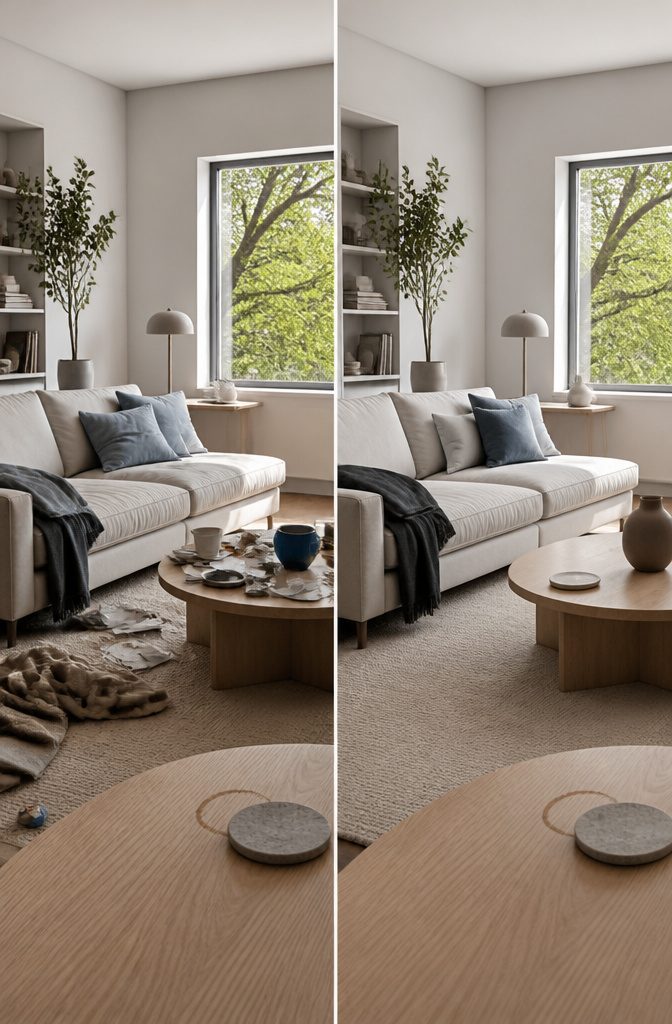
White, gray, beige, and earth tones form the base palette in a minimalist living room because they keep the space calm and open.
These neutrals work as a monochromatic scheme, where you pick one main color and layer in two or three complementary tones.
In smaller rooms, soft colors make the space feel larger, while brighter or larger spaces can handle darker neutrals like slate or charcoal.
Accent colors add personality without breaking the simplicity.
Dusty rose, camel, or muted blue bring depth when used sparingly in pillows, rugs, or wall art. Olive green, soft brown, and inky charcoal function almost like neutrals themselves—subtle enough that they add interest rather than competition.
Balance a neutral backdrop with small touches of color close to what you’d see in nature, so the room stays serene but never bland.
Recommended Products

NATURAL LINEN LOOK: Textured woven fabric creates a natural linen-like look with subtle depth and dimension, bringing a warm, relaxed feel to modern, farmhouse, boho, and neutral interiors.

【Natural Linen Fabric】 Made of grade natural ramie linen blend. Natural linen fabric makes it soft, comfortable, and breathable—good workmanship, tightly sewn
【Natural Linen Fabric】 Made of grade natural ramie linen blend. Natural linen fabric makes it soft, comfortable, and breathable—good workmanship, tightly sewn
2. Add Warmth Through Natural Materials and Texture
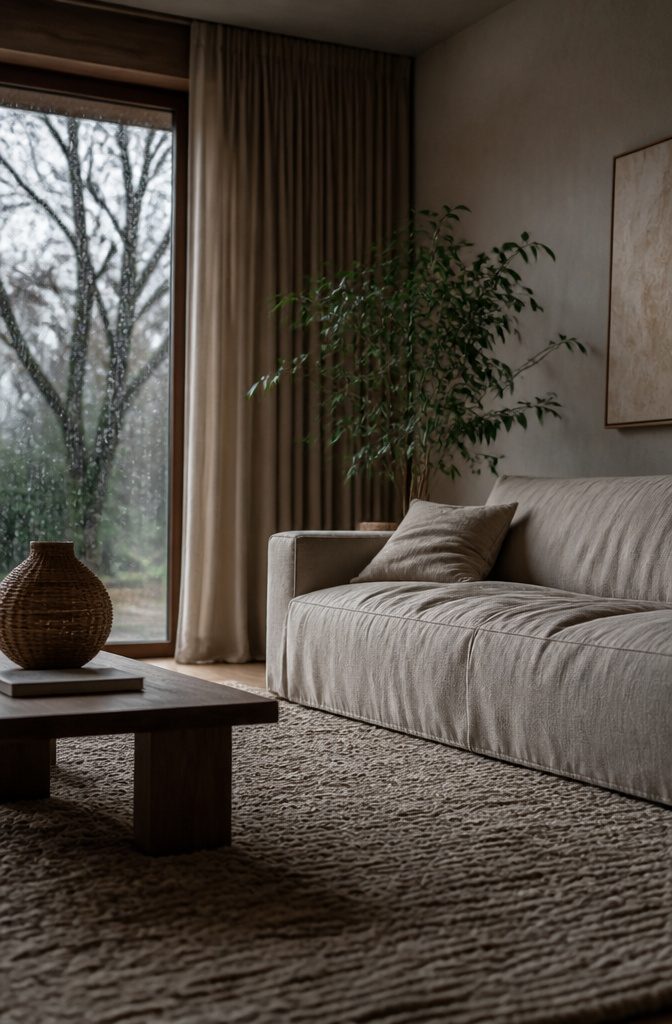
Materials like wood, linen, and wool bring warmth to a neutral room without loading it with objects.
A smooth linen sofa against a coarse wool rug, or a flat-weave jute underfoot below glass and matte-finished wood furniture, gives the eye something to notice without breaking the restraint.
Contrast a smooth wall with heavy linen drapery and you get depth without adding a single extra piece.
I lean toward natural surfaces — wood paneling, clay vessels, woven rattan — because they read as grounded rather than sterile. Matte finishes over gloss.
Ribbed upholstery or a fine herringbone weave instead of solid flat fabric. Make sure no two adjacent textiles share the same weave density: put something nubby next to something smooth, something soft against something hard.
A microfiber rug or faux fur throw next to streamlined furniture pulls the room toward comfort. Plants count here too; they add organic texture without cluttering surfaces, and a single large one does more than three small ones ever could.
Recommended Products
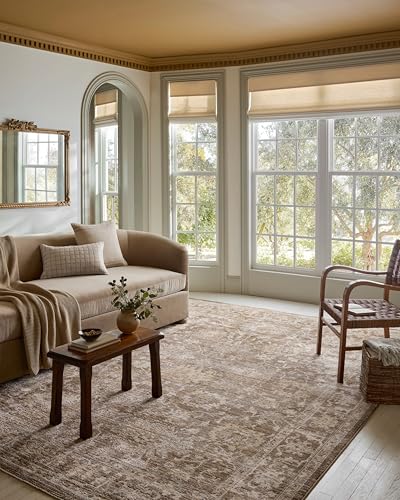
Traditional Area Rug: The Pace Collection is a traditional area rug with a neutral color palette that works in any room of the home; designed by Magnolia Home by Joanna Gaines x Loloi.

Traditional Area Rug: The Pace Collection is a traditional area rug with a neutral color palette that works in any room of the home; designed by Magnolia Home by Joanna Gaines x Loloi.
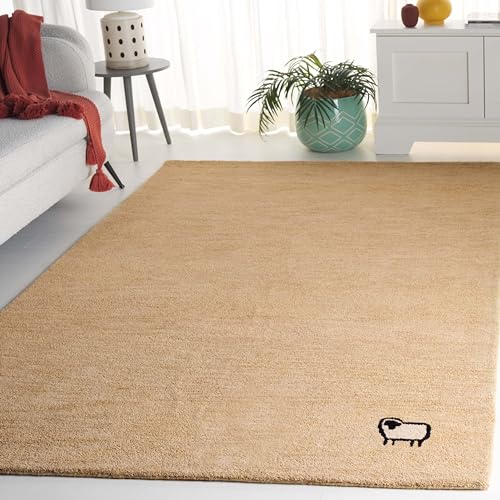
Design: A minimal solid field accented with a whimsical sheep motif brings playful warmth to relaxed contemporary spaces. Here the pattern is worked in beige. Expect the tone to shift with your light and screen settings
3. Keep Only Useful or Meaningful Objects
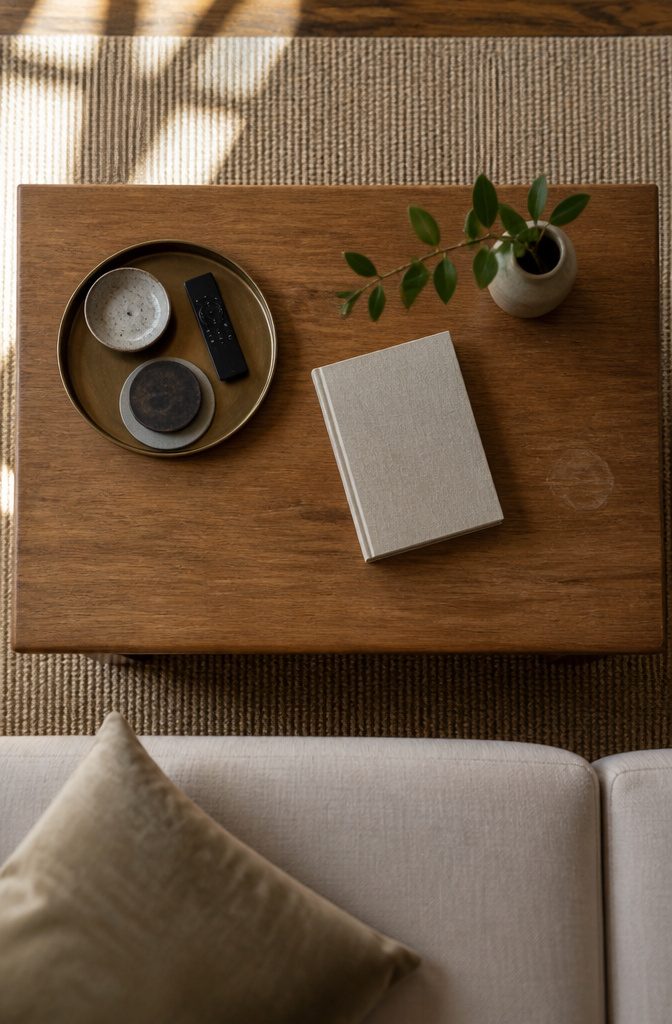
Each object in a minimalist living room should either work or matter. Functional pieces—a catch-all tray for remotes, a reading lamp—earn their place by solving a problem.
Decorative ones earn it by holding personal meaning: a sculptural vase you inherited, a stack of design books you actually open, a photograph that anchors the room in your life. If an item does neither, it leaves.
Grouping small essentials on a tray keeps surfaces tidy without hiding them entirely.
A bronze bowl or ceramic dish corrals keys and coasters in one deliberate spot rather than scattered across the coffee table. The tray itself becomes part of the composition.
Coffee tables stay clearest when you limit what sits there to 3 pieces that vary in height or form. A linen-bound book, a vessel with greenery, and that functional tray form a natural visual triangle without crowding the surface.
Vary the heights slightly so the eye moves across them instead of locking onto a single plane. The restraint lets each object stand out, and the table still works when you need it to hold a drink.
Recommended Products

Sophisticated Modern Design: The accent chair boasts a streamlined, low-profile silhouette with a flat backrest, blending seamlessly into modern, minimalist, and contemporary interiors. Its timeless design makes it an ideal choice for living rooms, bedrooms or offices.

Accent Chair with Modern Low-Profile Silhouette: With its sleek, low-profile frame and neutral color options, this accent chair brings understated elegance to any space. The clean lines and compact shape make it ideal for minimalist interiors, while the modern design adds a refined, contemporary edge

Plush Upholstered Accent Chair: Experience superior comfort with this plush accent chair, designed with soft, high-quality upholstery that delivers a cozy, inviting feel. The generous seat depth enhances relaxation, while the modern aesthetic elevates bedrooms, living rooms, and reading corners with a warm, stylish touch
4. Choose Functional Furniture With Clean Lines
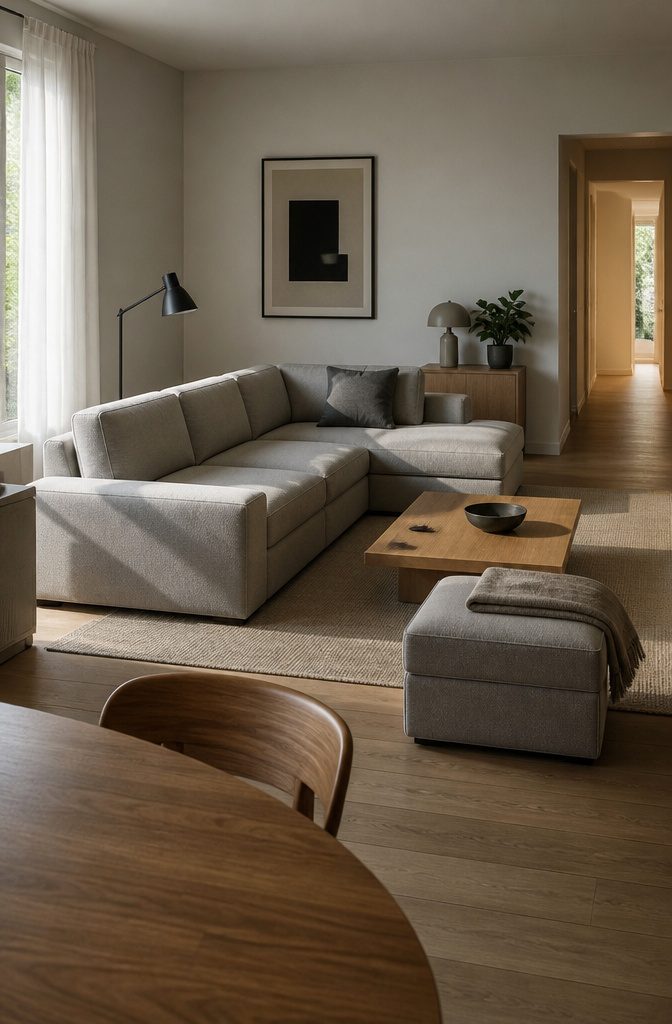
Furniture in a minimalist living room does just one thing: what you need it for. A sofa with structured upholstery and a low profile gives you somewhere to sit without dominating the room.
A coffee table in wood, stone, or glass anchors the seating and holds what you actually use. Each piece should serve a clear function—if you can’t name what it does, you probably don’t need it.
In smaller rooms, that function rule gets stricter.
A storage ottoman works as both seating and a place to stash remotes or blankets. A modular sofa adapts when you rearrange.
Furniture that doesn’t multitask takes up space you don’t have, so stick with pieces that earn their footprint. The shape matters less than whether it actually works for how you live in the room.
5. Make Use of Natural Light and Layered Lighting
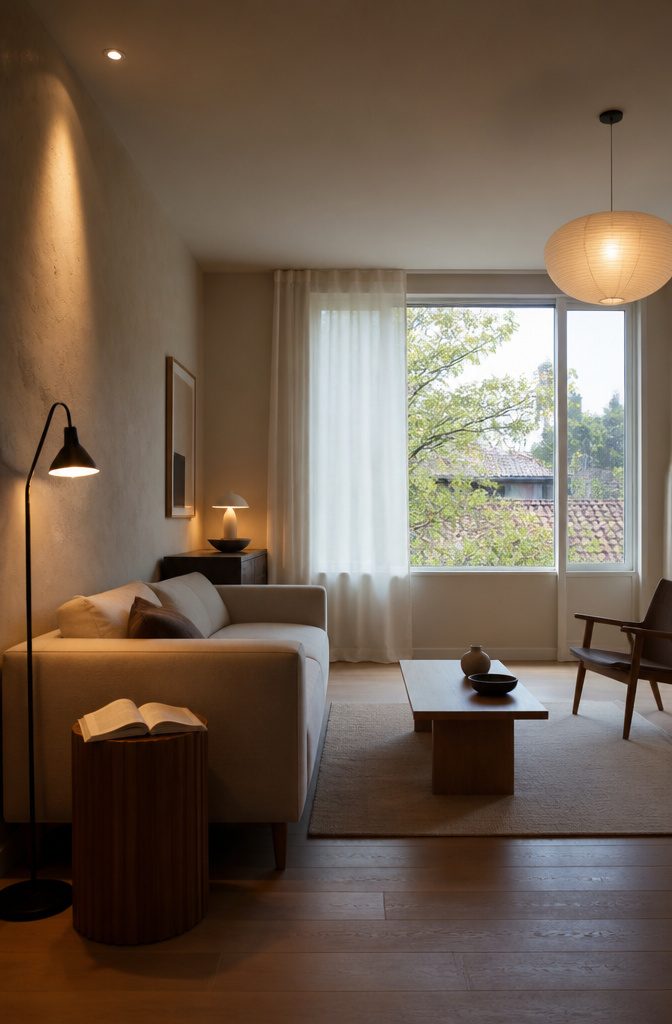
Natural light keeps a minimalist living room from feeling cold, so use it where you have it. If the windows allow, skip heavy drapes in favor of light linen curtains that let daylight move through the room during the day.
Where natural light falls short, artificial lighting has to do the work without breaking the calm you built everywhere else.
Warm LED bulbs at 2700K–3000K give you the soft glow of late afternoon sun indoors.
Anything above 3500K reads as clinical, the kind of light that flattens a room and turns it sterile. Stick to the warm end and the space holds its warmth after dark.
Layer the light instead of relying on one overhead fixture. Ambient lighting from recessed fixtures or a pendant spreads even light across the room.
A floor lamp or table lamp handles task lighting for reading without glare. Wall sconces or a directional spotlight can pull attention to a textured wall or an architectural detail without adding clutter.
Dimmable controls let you shift the mood from bright midday function to soft evening wind-down, and that flexibility matters more than any single fixture.
6. Use Concealed or Built-In Storage
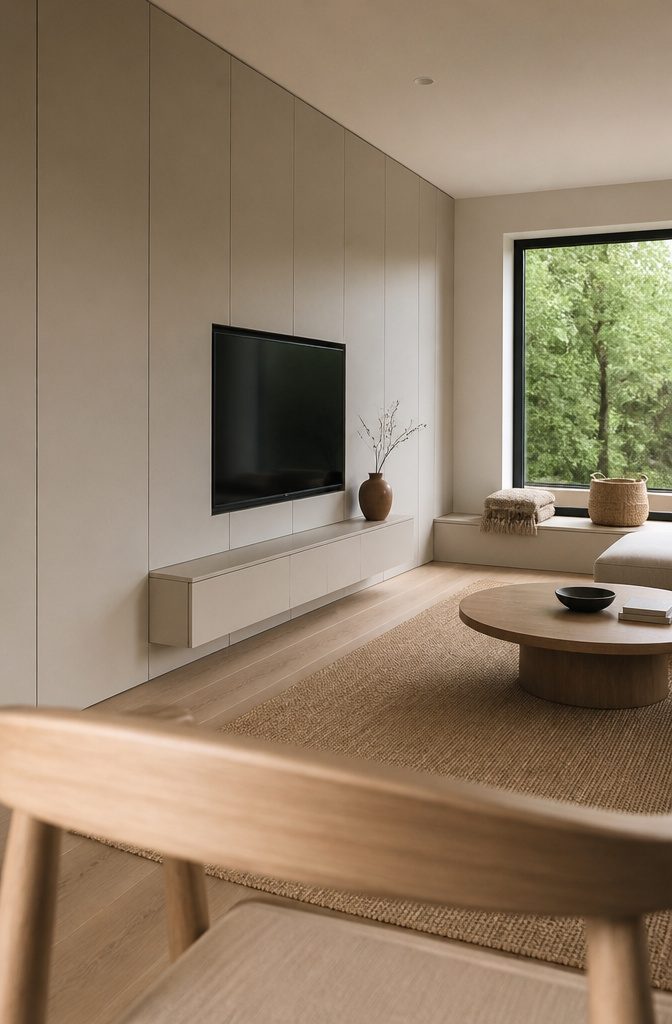
Hidden storage does the real work of keeping a minimalist room minimal.
Floor-to-ceiling, flat-front cabinets with push-to-open mechanisms eliminate visual clutter entirely—no handles, no hardware, just clean wall surface that hides board games, remotes, and the everyday mess that kills a calm room.
Run them flush from floor to ceiling with zero gap at the top so they read as architecture, not furniture.
Floating media consoles work the same way when you paint them to match the wall exactly.
Mount the console 10 to 12 inches off the floor to make it look weightless, then use the same paint shade on both surfaces so the unit disappears.
Pair it with a matte-screen television to cut the visual weight of a black rectangle dominating the room.
A storage bench or ottoman pulls double duty as a coffee table and hides what you need gone fast—toys, throws, the remotes you actually use.
7. Add a Few Personal Objects, Artwork, or Plants
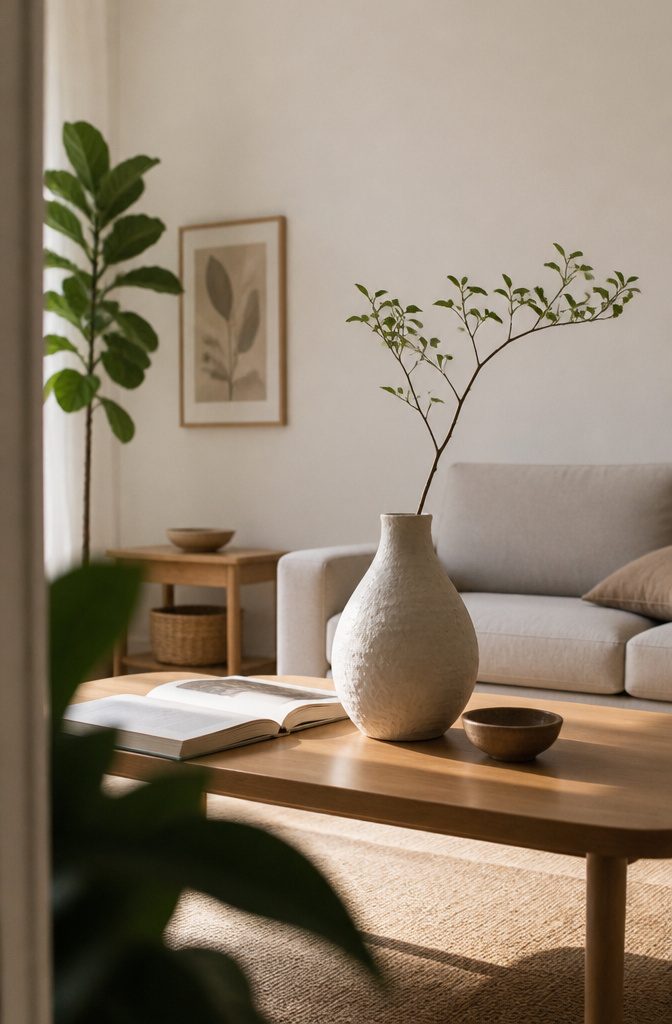
A room stripped down still needs someone in it, and a few chosen objects do that work.
Books stacked on a coffee table, a single sculptural vase, a piece of artwork that means something to you—each one becomes a focal point when it isn’t competing with clutter.
Indoor plants like succulents or a fiddle-leaf fig bring natural movement without adding visual noise.
Think about asymmetry and negative space. I love displaying a few significant collectables in clusters, or a few chosen works of art.
The designer’s point holds: group a few objects deliberately rather than spreading them evenly across every surface. A handwoven basket, a ceramic bowl, or a vintage mirror carries more weight than a dozen small trinkets.
The restraint is what makes each piece register. One coffee table approach that works is limiting the surface to exactly three items—an architectural book, a vessel, and a catch-all—varying their heights to form a subtle triangle.
Choose pieces that have personal meaning or speak to your design style, then let them stand alone.
8. Consider Scale and Layout for Your Room Size
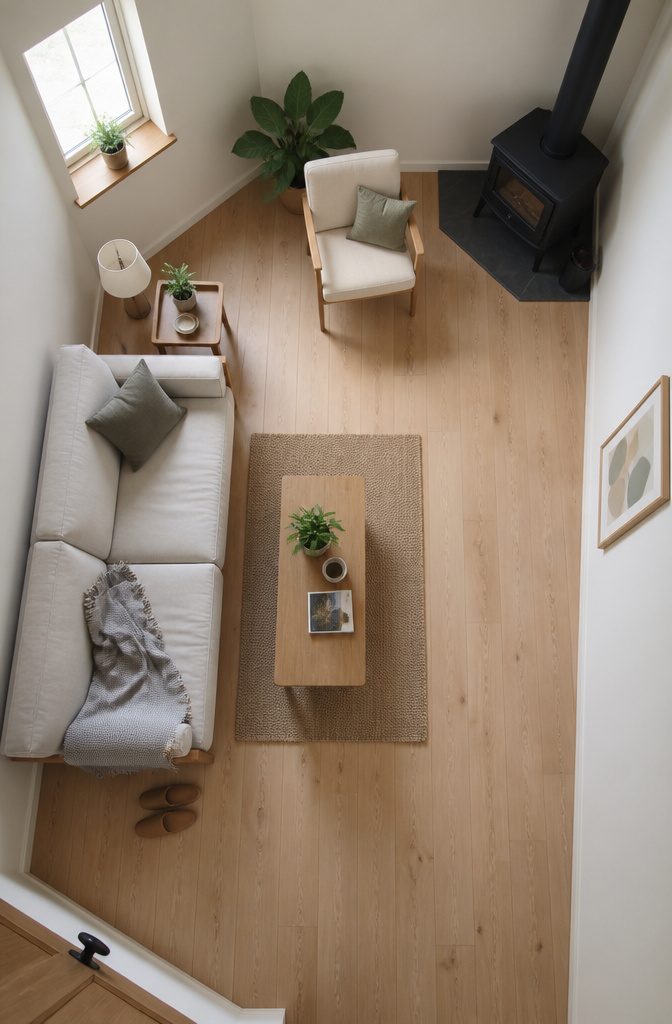
Furniture should fit the room’s proportions and still leave breathing room. In small spaces, a low-profile sofa and a single accent chair often work better than an oversized sectional that dominates the floor.
Scale matters as much as count—one large statement piece reads as intentional, while several mid-sized items can feel crowded even when the total footprint is smaller.
Before you buy, sketch a simple floor plan. Mark the woodstove, the windows, the door swing, and measure how much clearance you actually have.
Owners moving into a 12×12-foot living room report underestimating how much a standard sofa shrinks the usable space, and many wish they had drawn it out first.
The sketch does not need to be precise—hand-drawn is fine—but it catches the mistakes a mental picture misses, especially in rooms where a corner stove or an angled wall eats more space than you expect.
9. Use One Curved or Sculptural Form for Interest
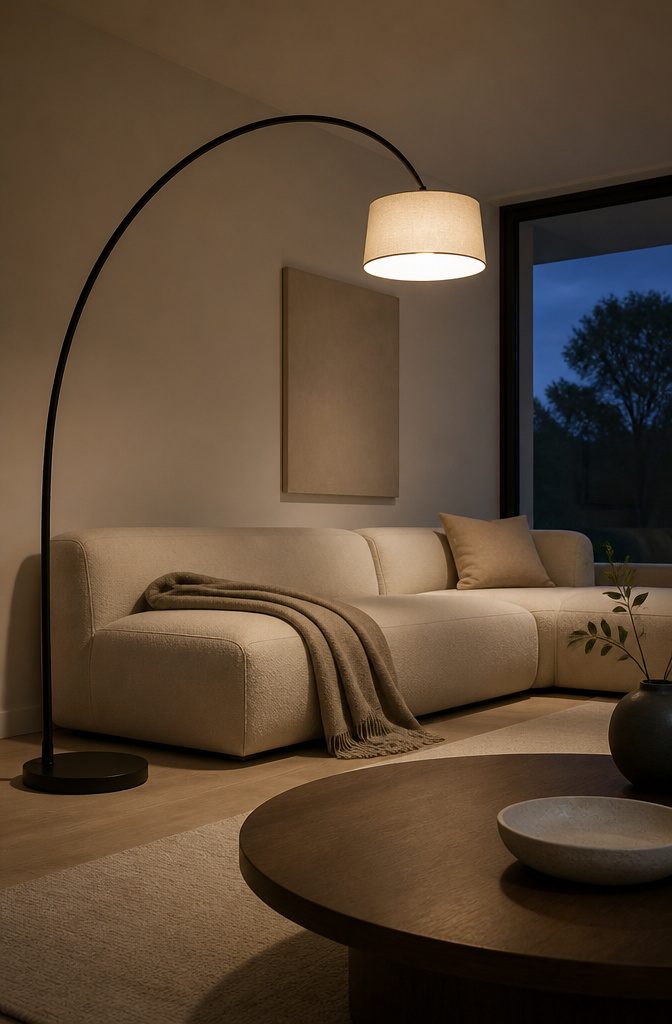
A curved floor lamp or a single sculptural chair pulls the eye in a way straight lines alone never do.
The arc of a lamp that sweeps over the sofa or the heavy, deliberate shape of a Jeanneret-style lounger breaks up the grid without cluttering it, and one strong form does more work than three safe ones.
Pair an arched floor lamp with low, linear furniture and the curve reads as intentional rather than decorative.
If you go with a statement chair instead, angle it slightly inward toward the coffee table so it invites conversation without blocking the room’s flow.
The sculptural ceiling light or the wide, curved legs on a coffee table serve the same purpose—they add structure and make the space feel considered.
Stick to one. Two sculptural pieces start competing, and the restraint that makes minimalism feel calm disappears.
10. Anchor the Room With a Rug
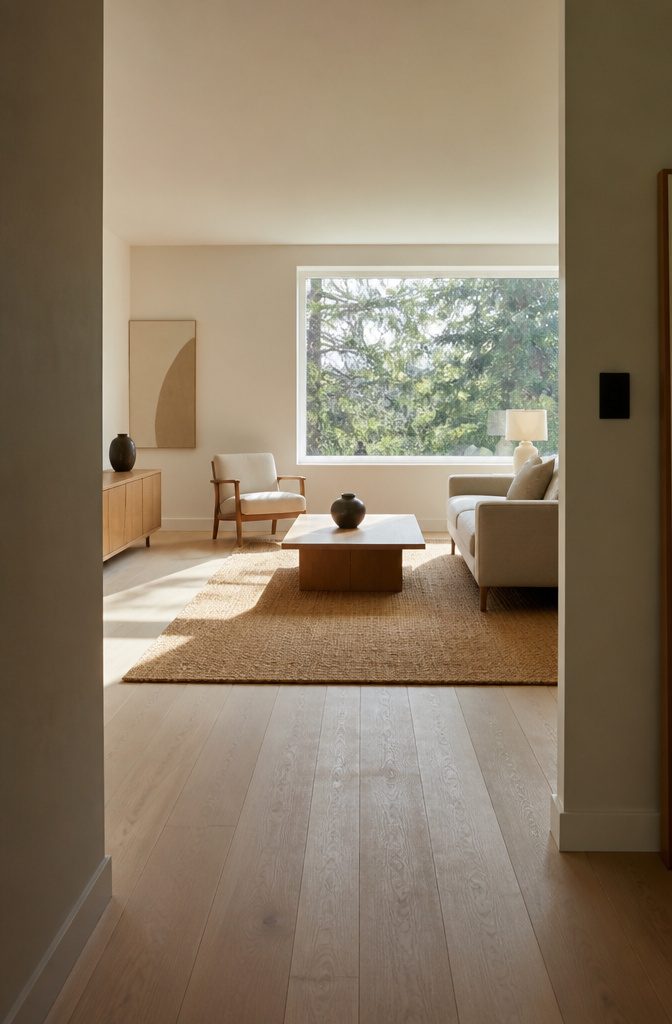
A rug softens hard flooring and gives the eye a resting point in a room stripped of clutter. In a minimalist living room, it does double duty: it adds warmth underfoot and defines the seating area without adding visual noise.
The rug should extend at least 12 inches past the edges of your sofa on each side. That keeps the furniture from looking like it’s floating and pulls the seating group into a single zone.
If the room is small, you can tuck just the front legs of the sofa and chairs onto the rug instead of placing all four legs on it, but the overhang rule still applies—stop the rug too soon and the arrangement looks pinched.
Stick with a flat weave or low pile. Thick, textured rugs compete for attention; a thin jute, sisal, or cotton dhurrie stays in the background where a minimalist rug belongs.
11. Choose Light, Understated Window Treatments or Leave Windows Bare
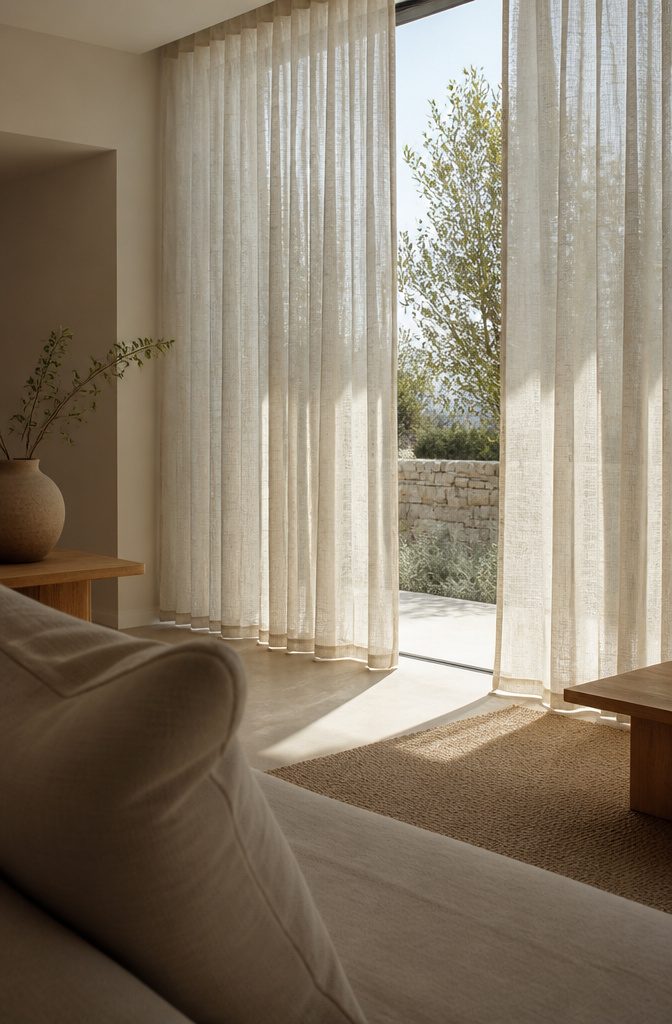
Bare windows maximize daylight and keep the room sharp, which is why a lot of minimalist spaces leave them uncovered when privacy permits.
If you need softness or want to filter afternoon glare without blocking light, install sheer or neutral curtains that hang from the ceiling to 1 inch above the floor.
That vertical line makes the room look taller and the walls less broken.
Sheer linen works particularly well because it diffuses light without darkening the space.
Mount the rod or track at the ceiling rather than just above the frame — the uninterrupted fall reads cleaner than a curtain that stops and starts partway down.
Let the fabric just kiss the floor; a gap or a puddle both ruin the line.
Budget-friendly sheers come in eleven neutral shades if you want to match existing tones without custom ordering.
12. Use Shelving to Display a Few Objects and Draw the Eye Up
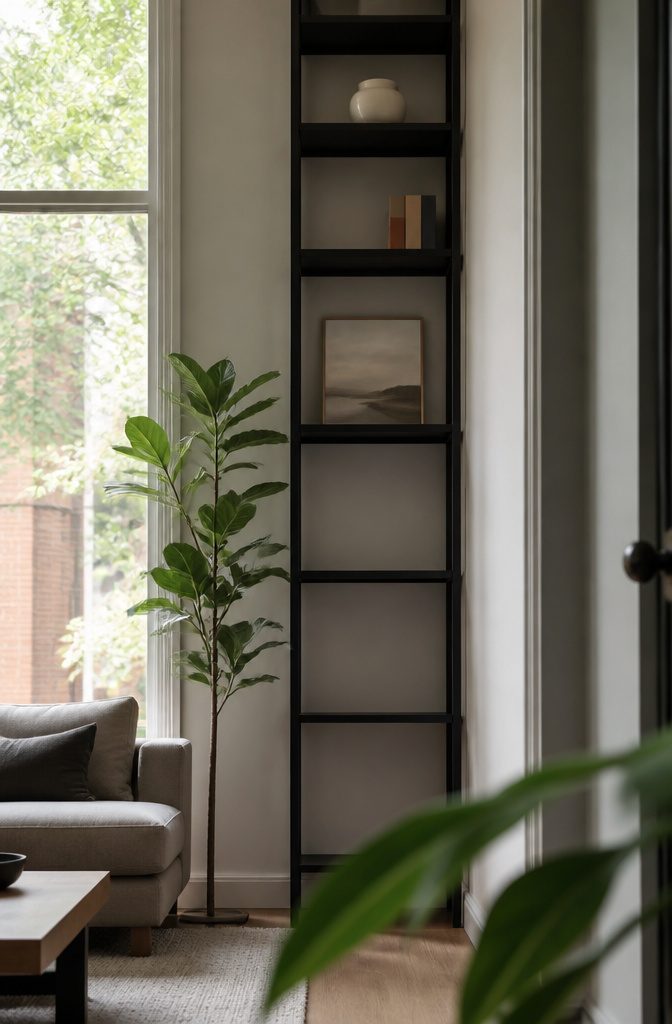
Shelves pull the eye upward and give you a place to display a few carefully chosen objects without adding visual weight. Leave half of the shelf space completely empty so the pieces you do show have room to register.
Push books to one edge of the shelf and leave the center blank, or group a small ceramic and a single stack of color-blocked spines on opposite ends with nothing in between.
Vertical elements matter most in small rooms, where height compensates for limited floor area.
A tall bookshelf styled with minimal decor placed higher up draws attention upward and makes the room feel larger than it is. Floating shelves work the same way and keep the floor clear, which helps when every square foot counts.
Keep the styling simple—a tall indoor plant, a framed print in muted tones, or a few objects that mean something to you rather than a crowded arrangement that defeats the purpose.
13. Reflect Light With Mirrors in Small Rooms
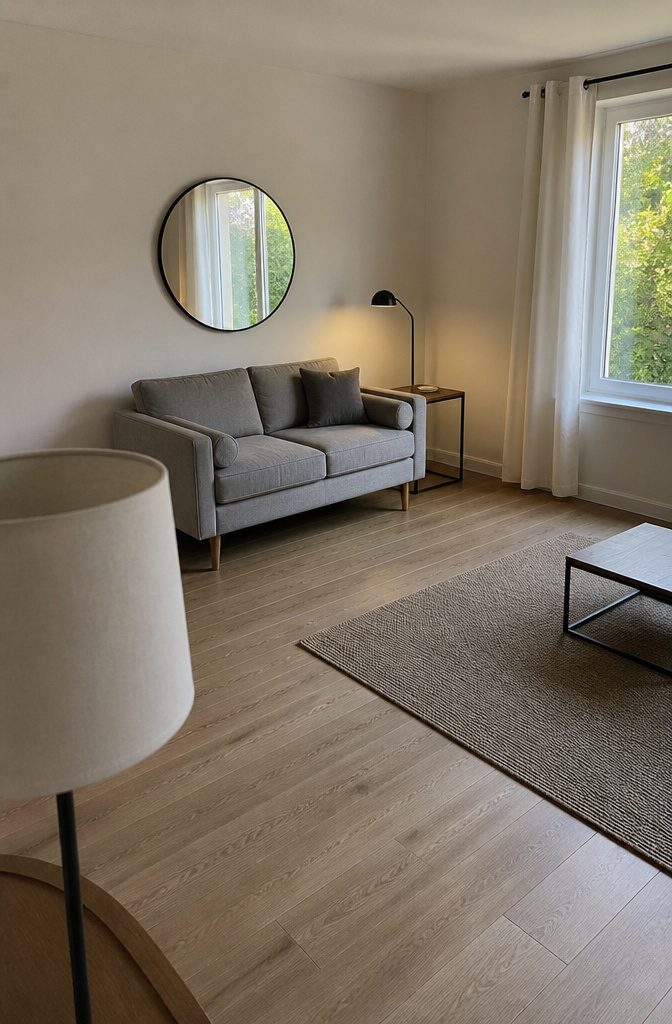
Mirrors reflect light back into the room and make tight spaces feel less closed in.
An 18-inch round mirror works in most small living rooms without taking over the wall, though a full-length arched mirror leans into a corner if you have the clearance and want more surface area doing the work.
Place the mirror where it catches a window or a lamp. Position mirrors to bounce light toward the seating area rather than just reflecting a blank wall back at itself.
If natural light in the room is weak, pair the mirror with motion-sensing battery sconces that light a corner without running wires or putting holes in the wall. The sconces recharge, so they move when the layout does.
A mirror with a slim frame keeps the look minimal. White or black plastic frames read cleaner than ornate metal, and a round or arched shape softens the hard lines elsewhere in the room without adding visual clutter.
14. Use Nesting or Lift-Top Tables to Free Floor Space
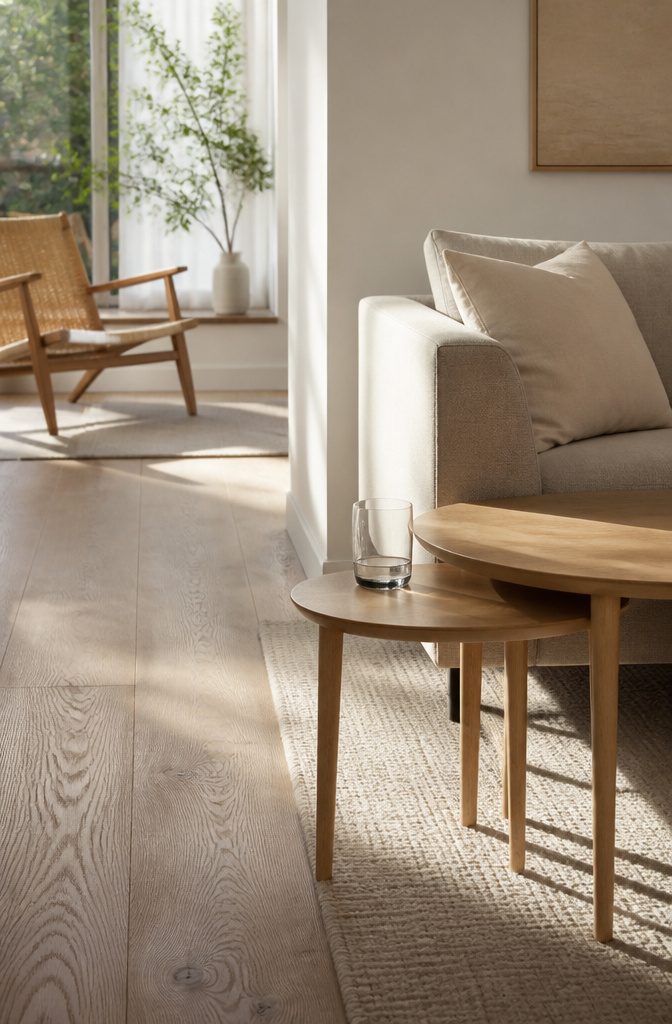
Nesting tables give you a surface when you need one and disappear when you don’t.
Stack two or three together for everyday living, then pull one out when someone sets down a drink or you want a spot for your phone.
When the room empties out, they tuck back in and free the floor space you need for movement.
Lift-top tables work the same way but vertically: the top rises toward you so you can work from the couch without hunching, then drops flat when you’re done.
Both options matter most in small living rooms where a permanent second table would block the path or crowd the seating. You keep the function without committing the square footage.
15. Use One Statement Chair Instead of a Matching Pair
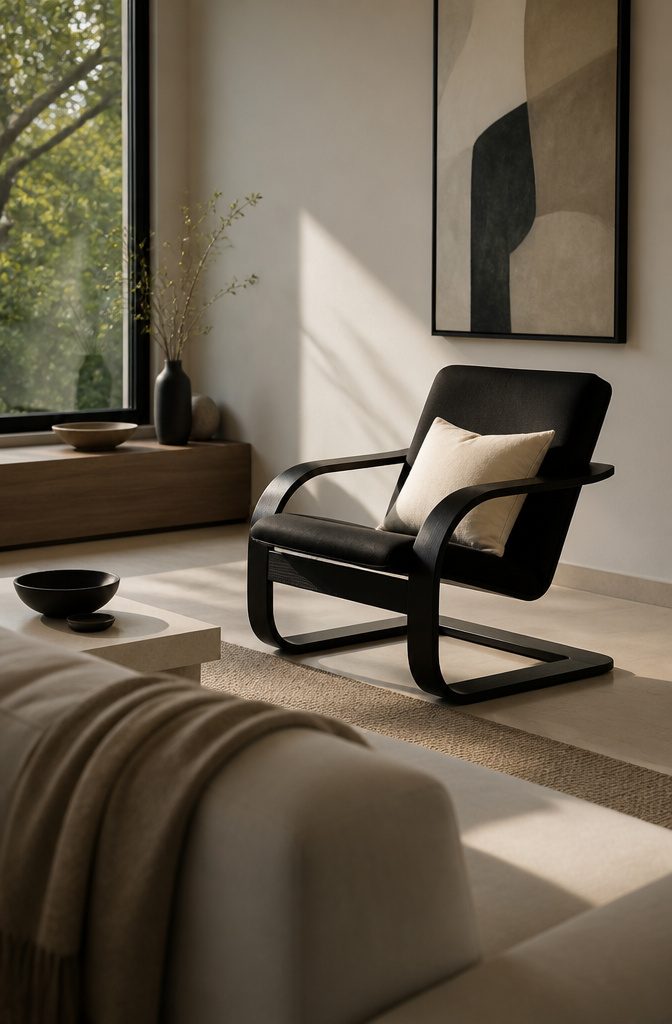
A single accent chair with a sculptural silhouette gives a minimalist room a focal point without demanding a matching piece on the other side.
The asymmetry keeps the eye moving, and a distinctive shape—curved wood legs, a cantilevered frame, something with real presence—reads as intentional rather than incomplete.
A black chair against white shelving or pale walls supplies the contrast a stripped-back room needs without adding pattern or clutter.
Place it where it anchors a corner or balances the sofa across the room, not shoved against a wall as an afterthought.
A sheepskin throw or a single pillow softens the seat without covering the form you chose it for. The rest of the room stays quiet, so the chair carries the weight.
Frequently Asked Questions
What are the best colors for a minimalist living room?
White, gray, beige, and earth tones form the base palette because they keep the space calm and open.
Pick one main color and layer in 2 or 3 complementary tones for a monochromatic scheme. Add small amounts of dusty rose, camel, muted blue, olive green, or soft brown for personality without breaking the simplicity.
What items shouldn’t you keep in a minimalist living room?
Remove anything that doesn’t work or hold personal meaning. Furniture that serves no clear function takes up space you don’t need, and decorative objects without significance add clutter rather than value.
If you can’t name what an item does or why it matters to you, it doesn’t belong in the room.
How can I keep a minimalist living room uncluttered?
Keep only useful or meaningful objects, and group small essentials like remotes and coasters on a tray so they stay in one spot.
Limit coffee table displays to 3 pieces that vary in height. Use concealed storage with floor-to-ceiling cabinets or floating consoles to hide everyday mess completely.
How to arrange a small living room?
Choose furniture that fits the room’s proportions and still leaves breathing room.
A low-profile sofa and single accent chair often work better than an oversized sectional in tight spaces. Sketch a simple floor plan before you buy to mark windows, doors, and clearances so you catch mistakes a mental picture misses.