A cozy living room can run light and airy or dark and enveloping, and the decision comes down to how much contrast you want against the soft materials that make either one work.
But warmth without function still leaves you standing in the doorway looking for a place to sit.
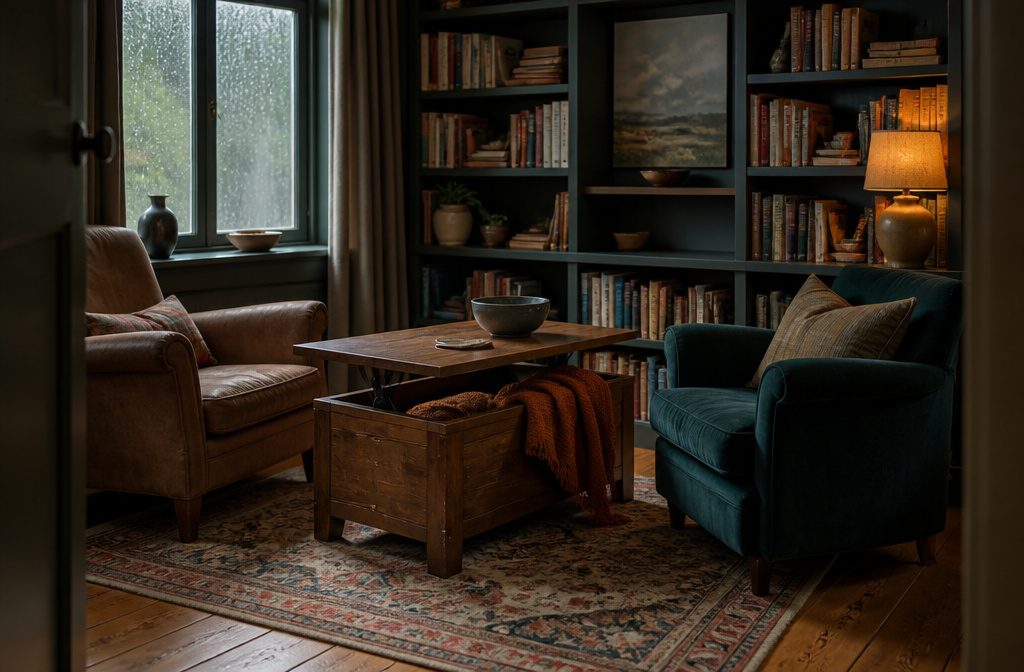
Arrange seating six to eight feet apart so conversation stays easy, and add a lift-top coffee table or storage ottoman so the remote and the throw blanket have somewhere to go besides the cushions.
1. Use Soft, Layered Textiles
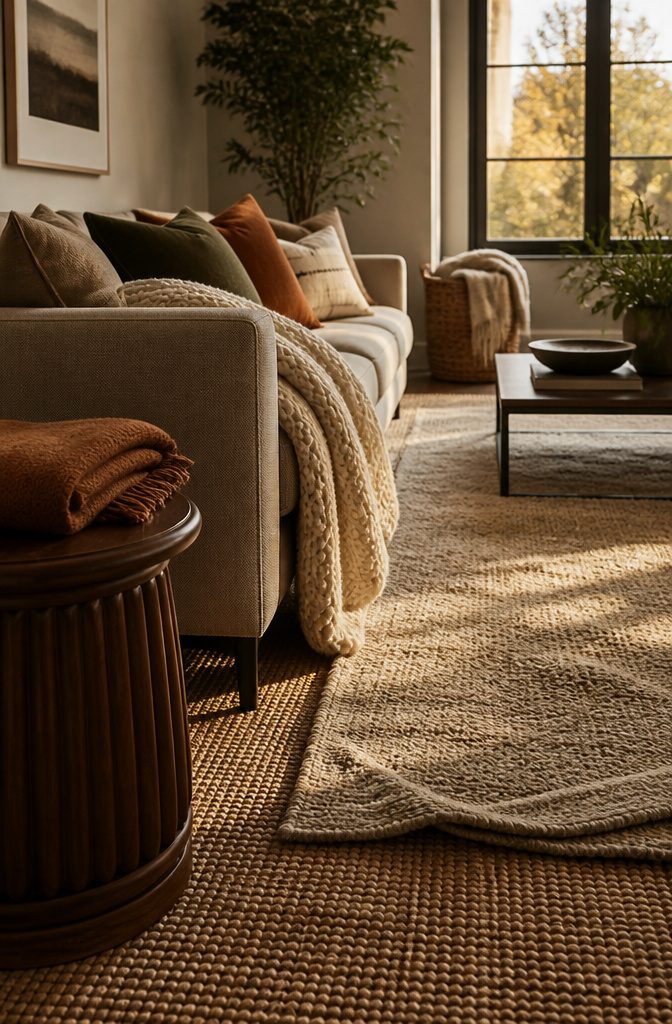
Throws and cushions soften a room faster than almost anything else. I pile them on sofas during colder months—velvet or silk for a bit of luxury, chenille or cotton for something more relaxed.
Mixing smooth fabrics with textured ones works: a chunky knit blanket over a sleek sofa makes even a modern piece feel approachable.
Alpaca throws add warmth without weight, and I’ve found that mismatched cushions keep the space from looking too coordinated, which is exactly the point.
Rugs work the same way.
A wool or sheepskin rug underfoot emphasizes comfort, and layering rugs over each other introduces visual interest without requiring a full redesign. Jute rugs handle spills and vacuum easily, which matters if you’re working around kids or pets.
Darker rugs anchor the room; lighter ones in natural fibers keep it airy. Proportion matters: make sure the rug fits the furniture group, not just the floor.
2. Choose Comfortable Seating
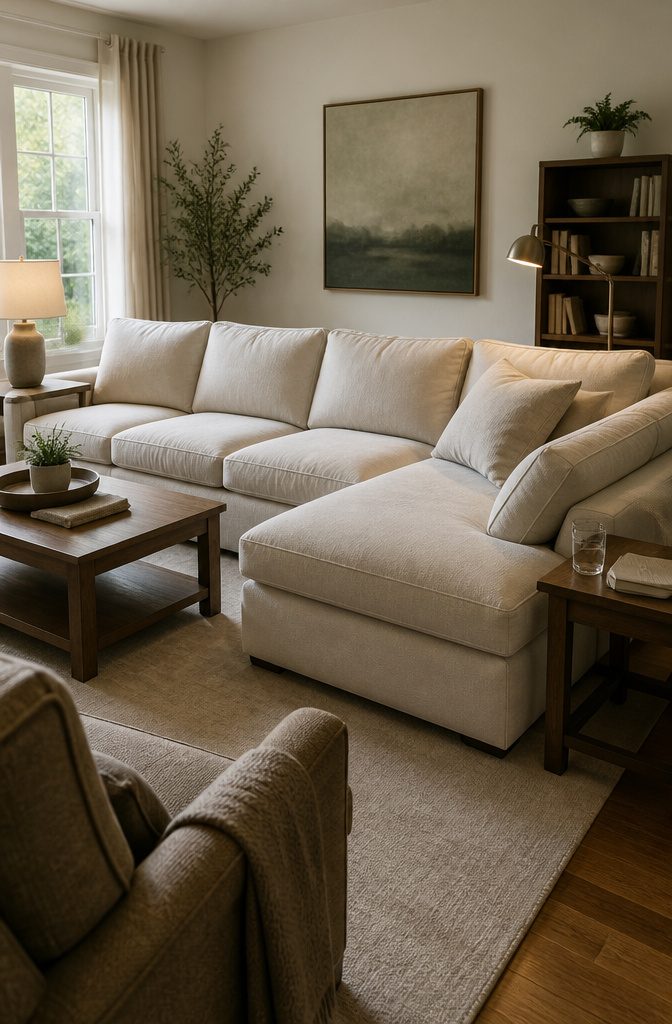
A sectional gives everyone a spot without the puzzle of finding enough chairs, and if you pick one with reversible orientation, you can flip the chaise when you move furniture around or shift to a new place.
Pair it with a coffee table and a couple of end tables so drinks and remotes have somewhere to land besides the cushions.
Oversized armchairs and low-profile sofas both work if the cushions are actually thick enough to sink into.
I’d add a loveseat or an ottoman when the room allows it—loveseats fit one person stretched out or two who don’t mind sitting close, and an ottoman turns any chair into a place to put your feet up.
Clean lines keep a small room from looking crowded, but only if the padding underneath is generous enough that you’d choose to sit there over the bed.
3. Use Warm or Adjustable Lighting
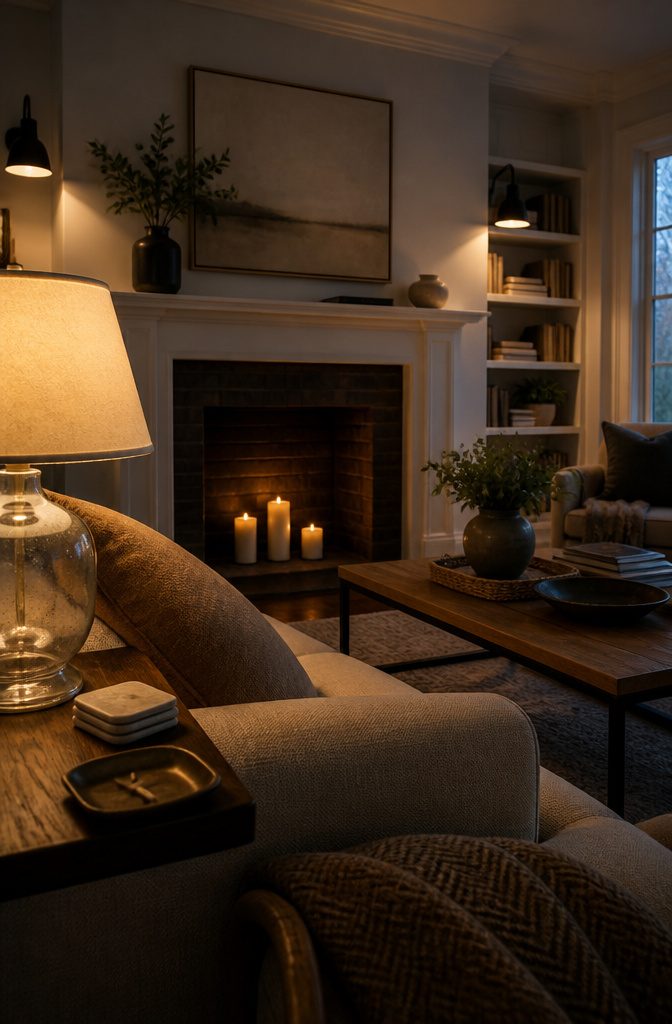
Overhead fixtures wash out a living room the way fluorescent tubes wash out a kitchen.
Lamps at table height and floor level give you pools of light instead of one flat layer, and that difference alone shifts the room from functional to settled-in.
I keep at least two lamps running in the evening and leave the ceiling fixture off unless I’m looking for something I dropped.
Dimmers let you drop the brightness for a movie or bring it up when someone’s reading, and metallic or glass lamp bases reflect light softly rather than absorbing it the way a matte ceramic one does.
A pair of wall sconces flanking a bookshelf or a sofa adds another layer without taking up floor space, and black metal sconces throw warm light while the fixture itself stays visually quiet.
Candles work if you actually light them. A dozen unlit votives on a mantel do nothing; three burning candles in a fireplace opening create a focal point that holds attention longer than another hour of scrolling.
Lantern-style candleholders contain the flame and let you move the light around without dripping wax on the floor.
4. Bring in Natural Materials and Nature-Inspired Details
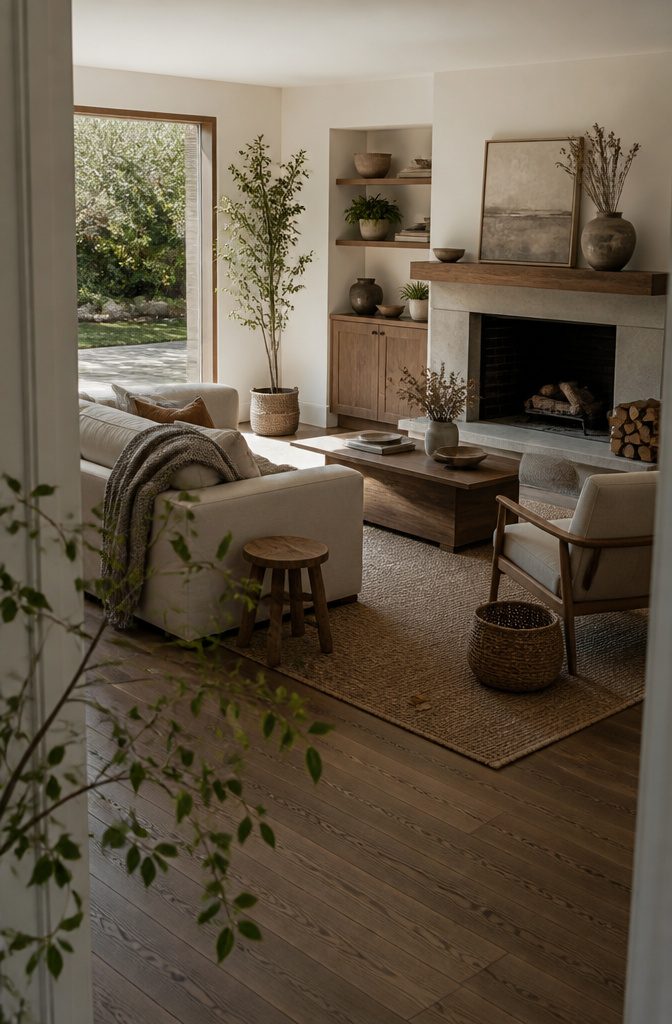
Wood grounds a cozy living room faster than almost anything else.
Coffee tables in walnut, oak, or maple read as warm before you add a single cushion, and exposed wood legs on a sofa or chair keep the piece from feeling too upholstered and heavy.
Leave beams and paneling uncovered if you have them — the grain does work that paint cannot.
Woven fibers work the same way underfoot. Jute and sisal rugs bring texture without pattern, and jute handles vacuum cleaners and spills well enough that it works in a house with kids or dogs.
Rattan furniture and woven baskets add the same organic weight without taking up floor space.
Plants fill corners and shelves that would otherwise sit empty. A tall indoor plant anchors a corner; smaller ones in textured neutral pots layer onto side tables and shelves.
Fresh flowers add color you can rotate weekly, and dried arrangements hold interest longer with no maintenance. Stoneware or terracotta planters in earthy tones — green, taupe, tan — support the effect without competing for attention.
Foraged details bring the season indoors. Logs stacked near a fireplace, shells from a beach walk, wildflowers from a weekend hike — small finds that cost nothing and change as the months do.
5. Choose a Color Direction
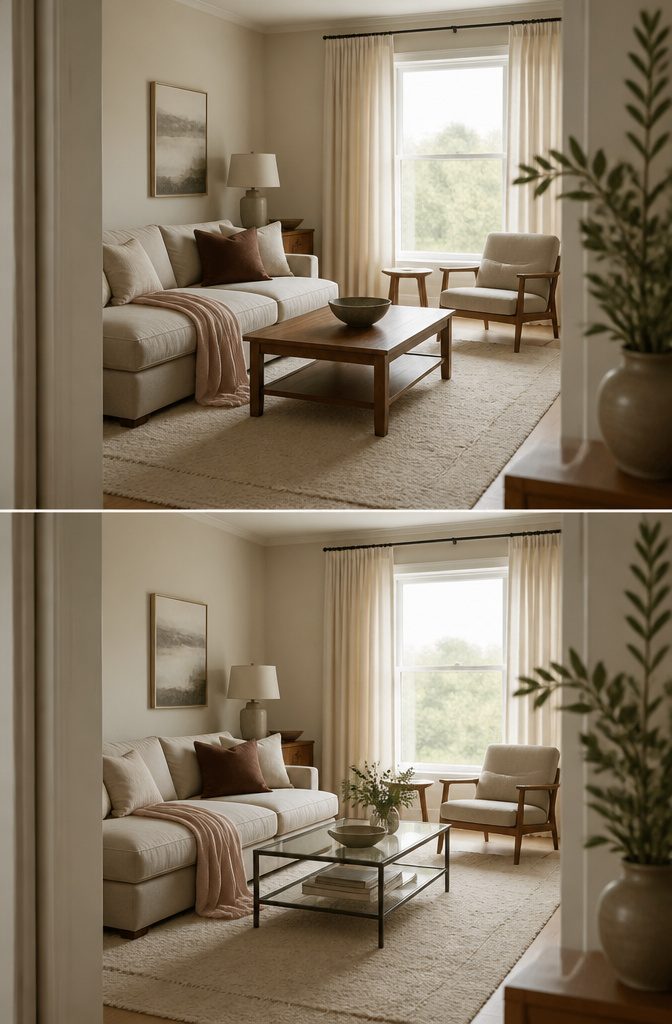
Warm neutrals like cream, beige, and gray create a soothing, streamlined backdrop that keeps the room feeling open.
Soft pinks, peaches, and muted whites work the same way—understated tones that let you layer in texture without crowding the space. I reach for those when I want bright and airy.
But a cozy room does not have to be light. Dark walls in chocolate brown, navy, or charcoal deliver just as much warmth when you pair them with soft materials—flannel throws, velvet cushions, a plush rug underfoot.
The room feels like a place to settle in for a movie or a Friday night with takeout, and the low light only adds to that.
Earthy greens, sage, and muted blues land somewhere between the two.
They pull from nature—hedgerows in autumn, coastal calm—and they soften sharp light without going heavy. If you want color but still want the room to feel restful, those shades do both.
6. Make the Layout Functional and Define Areas
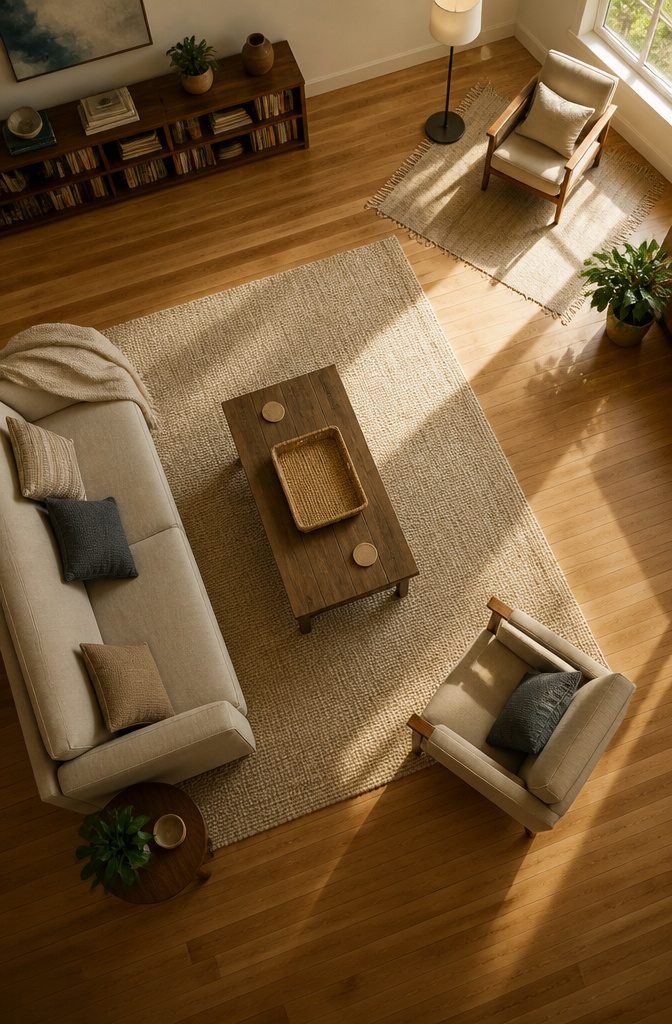
Start with the conversation circle: pull seating pieces in close enough that someone on the sofa can pass a drink to someone in the chair without standing up.
That distance—around six to eight feet between facing seats—keeps talk easy without shouting across dead air.
Angle an accent chair slightly toward the sofa rather than lining everything up against the walls; the angle invites people in instead of making them feel like they’re waiting for a bus.
In larger rooms, break the floor into more than one zone.
An area rug under the main seating group sets that cluster apart from the rest of the space, and a second rug can mark off a reading corner or a spot near the window.
The rugs do the work bookcases or screens would do, but without blocking sightlines. Keep furniture proportional to the rug—front legs on, back legs off, or all four on, but never floating two feet away from the edge.
If the room has a fireplace, arrange seating around it instead of aiming everything at the television. The fireplace pulls people toward the center of the room and gives you a focal point that feels intentional.
No fireplace? A coffee table works the same way: it gives the seating something to face and a surface people actually use.
7. Use Art and Personal Objects as Focal Points
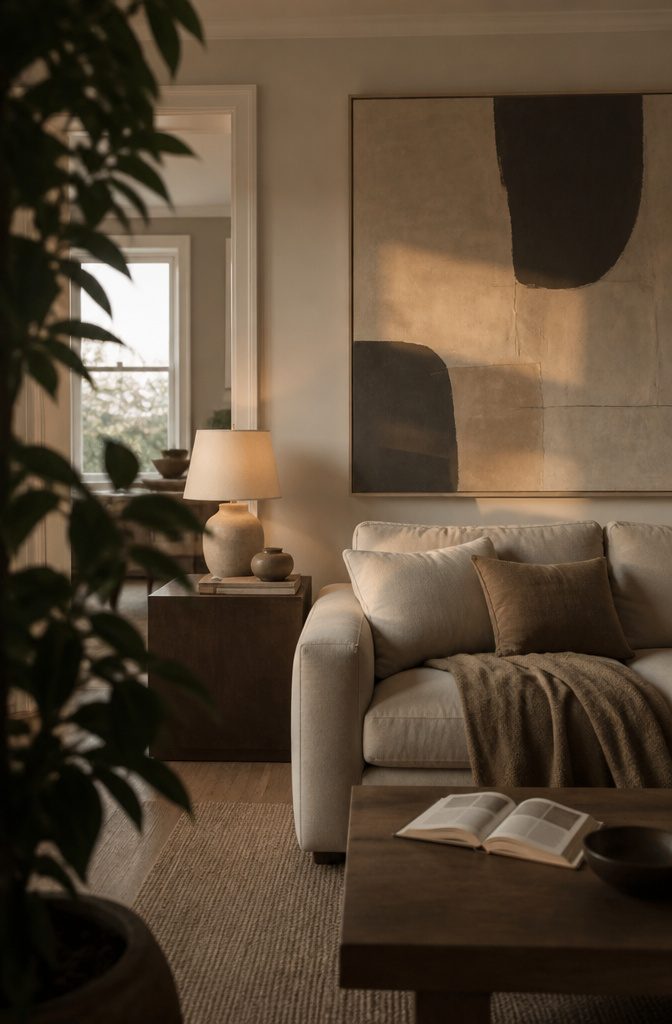
A single piece of art that fills the wall behind the sofa can anchor the whole room without eating floor space. Oversized work brings immediate personality and drama, and it reads faster than a gallery wall when someone walks in.
I’ve noticed that scale matters more than subject—a large abstract or a bold landscape photograph both work as long as the piece commands attention from across the room.
Personal objects earn their spot when they mean something specific. A shelf stocked with books you’ve actually read, a few travel pieces grouped in odd numbers, or framed photos that matter to you all become part of the room’s story.
The restraint comes from curation: pick a calm base palette, then let the objects bring warmth against it.
A vignette on an end table with a lamp, a stack of two or three books, and one small meaningful object feels intentional rather than cluttered. Nothing should look accidental, and nothing should crowd out breathing room.
8. Add Storage That Controls Clutter
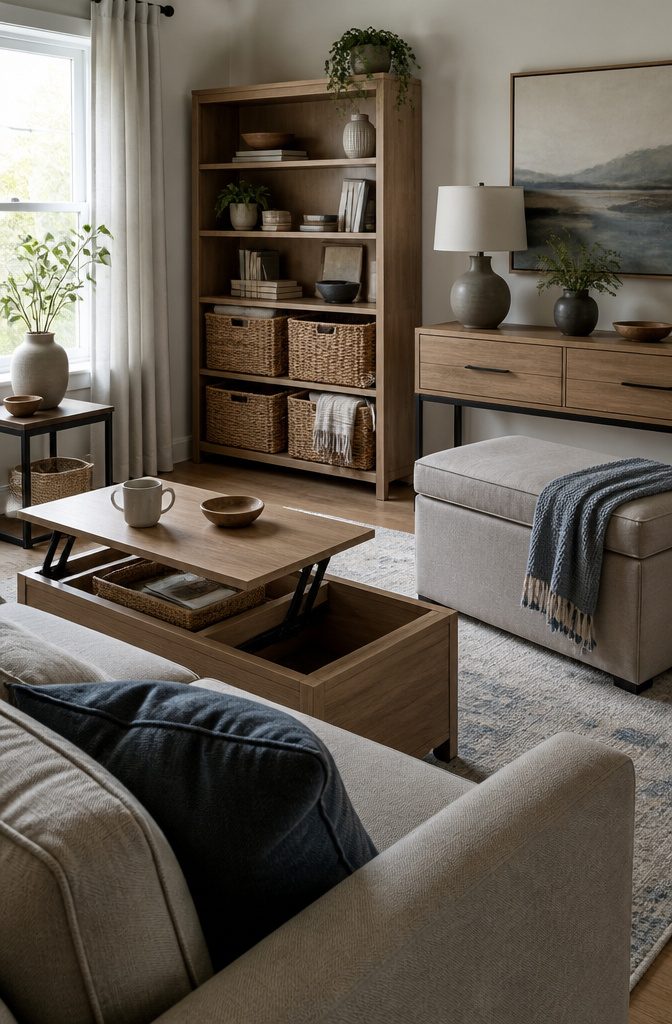
A large bookcase keeps your collection within reach and gives you somewhere to sit the remote when guests arrive.
Built-in shelves cost more and tie you to the room, but a freestanding bookcase travels with you and still holds the same load.
Pick one with deep shelves — nine inches or more — so you can tuck storage baskets on the lower tiers for chargers, throws, and anything else that tends to migrate across the coffee table by Thursday.
A coffee table with a lift top or a hidden compartment below the surface does double duty without taking up more floor space.
Storage ottomans work the same way: extra seating that opens to swallow the clutter, and you can pull one out when someone needs a place to sit.
A slim console with closed drawers keeps the mail and keys off the couch arm without the bulk of a cabinet. I’d take the console if wall space allows it, the ottoman if the room runs tight on seating.
9. Use Bookshelves or Books to Add a Library-Like Feel
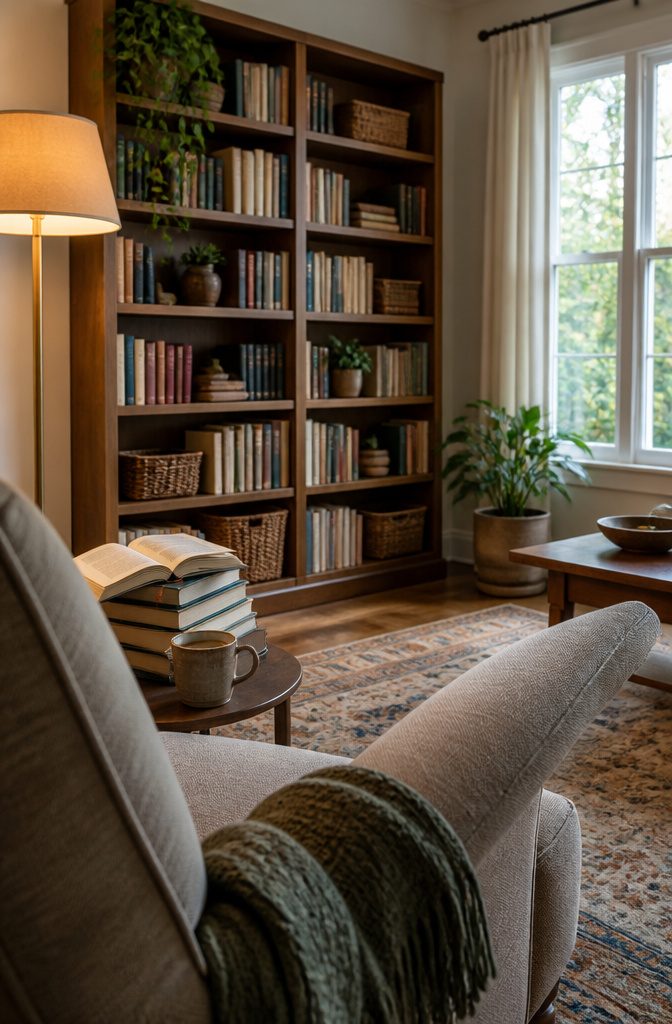
Books add warmth through both color and use.
A large bookcase filled with spines in different shades brings in pattern without needing artwork, and the depth of the shelves gives you room to mix in small objects or storage baskets for remotes and chargers.
Built-in shelves read as permanent and architectural, but a standalone bookcase in a corner works the same way if floor space is tight.
The presence of books signals a place to settle in. Stacks ready to pick up make a living room feel like a retreat rather than just a pass-through, especially when paired with a reading chair and a lamp nearby.
If your ceilings are high, floor-to-ceiling shelves fill vertical space and ground the room without making it feel closed in, particularly when the walls are painted white or another light color that reflects rather than absorbs light.
10. Add a Mirror or Reflective Surface
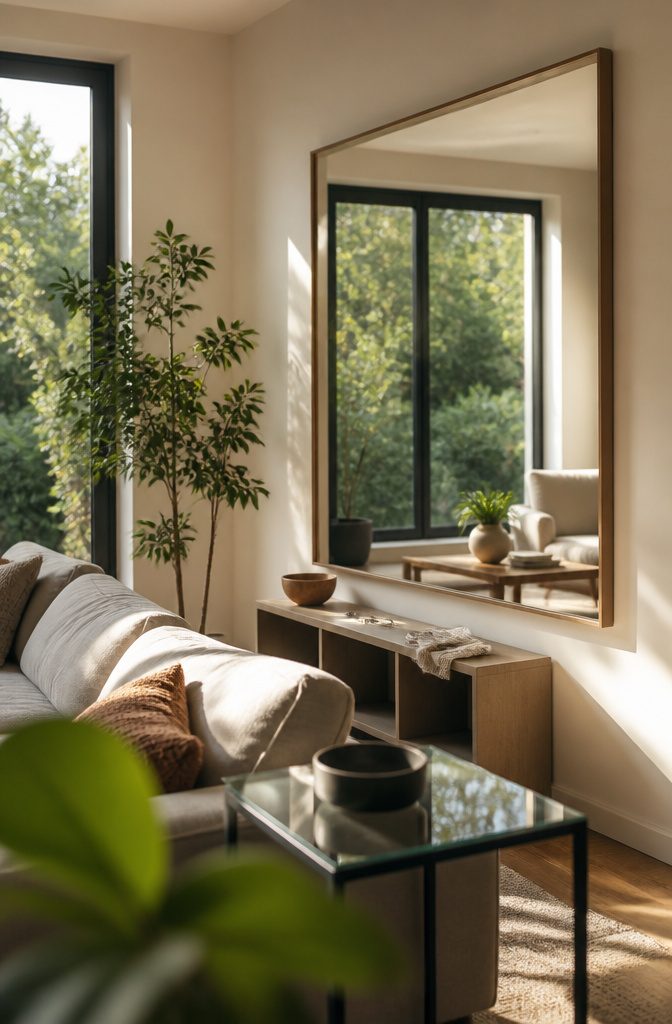
A mirror opposite a window reflects natural light back into the room and makes a small space feel twice as wide.
The placement matters most in dim corners or rooms with only one window — a large mirror on the wall across from the glass doubles the light you’re working with and pushes the walls out visually.
I’ve seen this work best when the mirror sits at eye level or higher, so it catches the window rather than the floor.
A leaning floor mirror does the same thing if you don’t want to drill into the wall, and it’s easy to angle toward the light source.
Glass or mirrored furniture — a console table with a mirrored top, an acrylic side table — keeps the reflective effect going without adding visual weight.
In a room that already gets good light, the mirror becomes more about depth than brightness. It still opens the space, but you’re not depending on it to fix a dark corner.
11. Use Wallpaper or Wall Coverings for Color and Texture
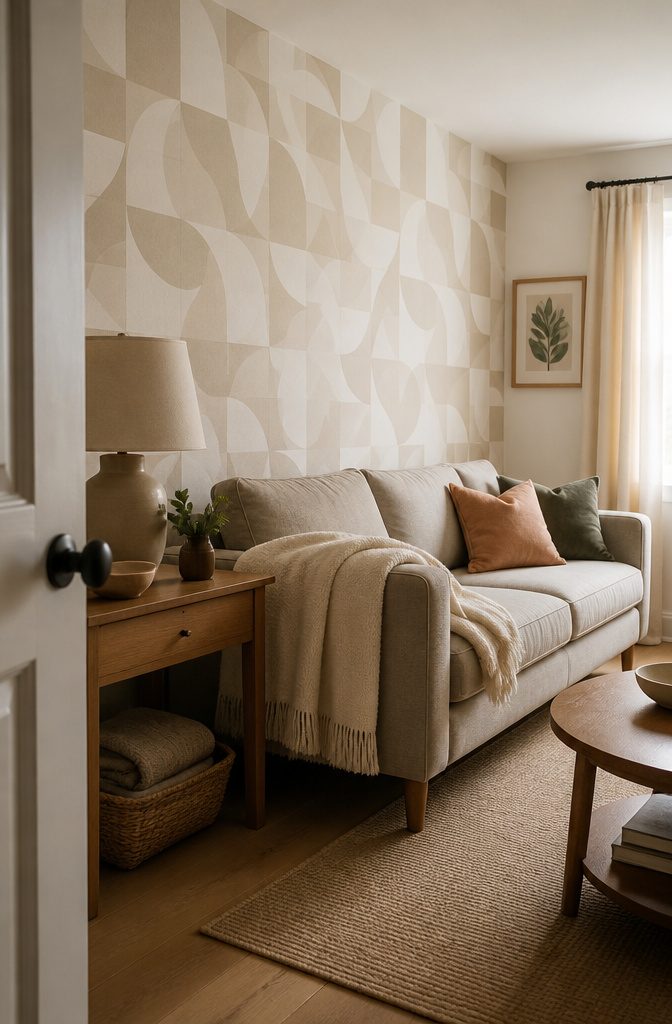
Patterned wallpaper brings warmth through repetition and scale in a way paint cannot.
A geometric pattern like LIVDEN’s Lani wallpaper adds structure without shouting—bold enough to give the room energy, soft enough that you can sit with it every evening and not get tired of it.
The pattern expands how large the space reads, which matters in a smaller living room where the walls sit close.
Fabric hung as a wall covering does similar work on a lower budget. Pin or nail it with a few pleats for movement, and you get color and texture in one gesture.
You can swap it with the season if you want, and it fills wall space without the cost of framing or the weight of framed pieces.
The scale is what makes it cozy—big blocks of pattern or color rather than small scattered frames.
12. Create a Cozy Nook or Focal Corner
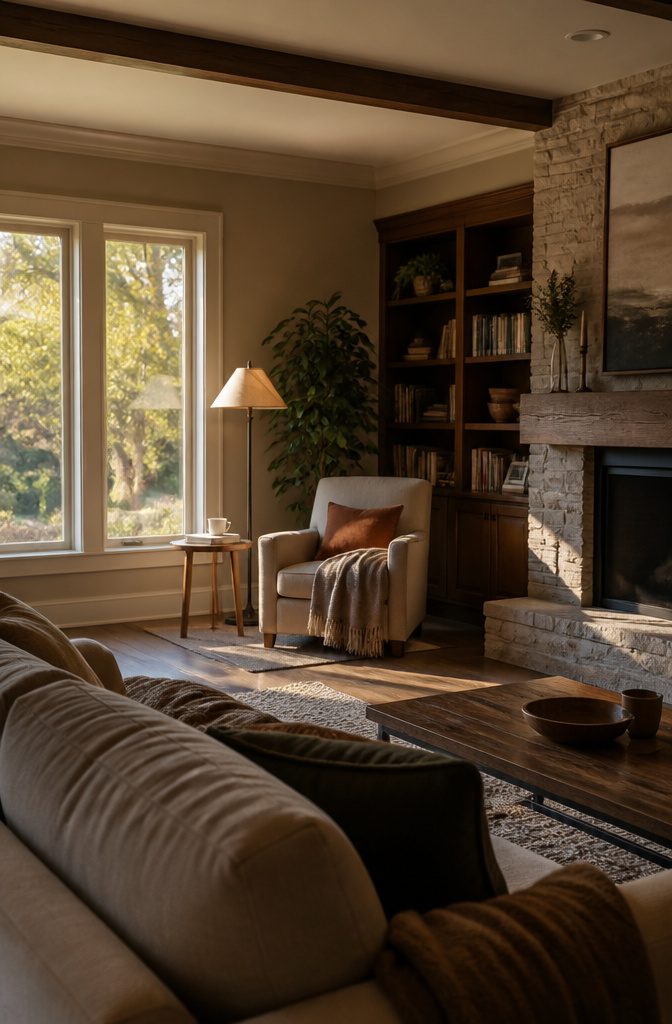
A corner turned into something particular pulls more weight than the same chair sitting in the middle of the floor.
In a large living room, a reading nook or conversation corner gives you a place to retreat without leaving the room entirely.
A plush accent chair and a floor lamp make a functional reading spot, and the contained footprint means the rest of the layout stays open.
If the corner seats more than one person, angle a chair slightly toward the sofa rather than lining everything up square to the walls.
That small shift makes the group feel like it was arranged for talking, not for looking at the television.
A bespoke corner sofa that follows the wall line can claim most of the floor in a small snug and still read as intentional rather than overstuffed, especially when the upholstery contrasts with the wall colour.
For a corner that does not need extra seating, one commanding piece of art over a pair of small stools turns dead space into a focal point.
The stools pull out when you need them and stay tucked when you do not.
Small-Room Space and Scale
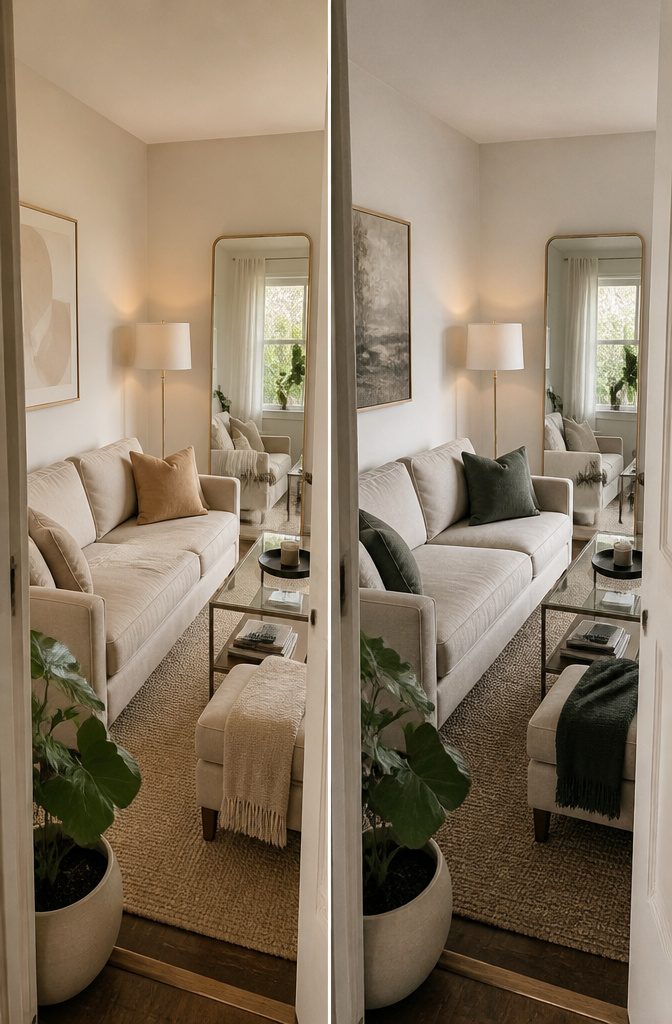
A small living room doesn’t automatically mean small furniture. Scale matters, but not every piece should shrink to match the square footage.
A single full-size sofa often reads better than a cramped loveseat flanked by two chairs trying to compensate, because the latter multiplies visual breaks and leaves less open floor.
Choose one or two properly sized anchor pieces and keep the rest minimal.
Light colors on walls and upholstery reflect more light and push the boundaries outward.
A mirror placed across from a window doubles the daylight and suggests depth the room doesn’t have. Metallic finishes work the same way: a brass lamp or glass coffee table bounces light without adding visual weight.
Multifunctional furniture earns its floor space. A storage ottoman holds throws and serves as extra seating.
A coffee table with shelves underneath keeps remotes and books off the surface. In a room where every piece competes for the same six feet, anything that does two jobs wins over anything that does one.
Frequently Asked Questions
What makes a living room look cozy?
Soft layered textiles like throws and cushions, warm or adjustable lighting at table and floor level, and natural materials such as wood and woven fibers create a cozy look.
Comfortable seating you can sink into, a warm color palette, and personal objects that mean something to you complete the effect.
What is the 2/3 rule for a living room?
The 2/3 rule suggests that a rug should cover about two-thirds of the floor space in a living room, with furniture arranged so front legs sit on the rug while back legs remain off.
This proportion anchors the seating group without making the rug look too small or the furniture too far from the edge.
What is the 3-5-7 rule for interior decorating?
The 3-5-7 rule recommends grouping decorative objects in odd numbers (3, 5, or 7 items) for a balanced and visually interesting display.
Odd-numbered arrangements feel more natural and less rigid than even groupings, which works well for vignettes on shelves, coffee tables, and mantels.
What is the coziest interior design style?
Styles that layer soft textures, use warm lighting, and incorporate natural materials tend to feel coziest.
This includes bohemian, farmhouse, and cottage styles, though any design approach that prioritizes comfortable seating, tactile fabrics, and personal objects over minimalism can achieve the same warmth.