
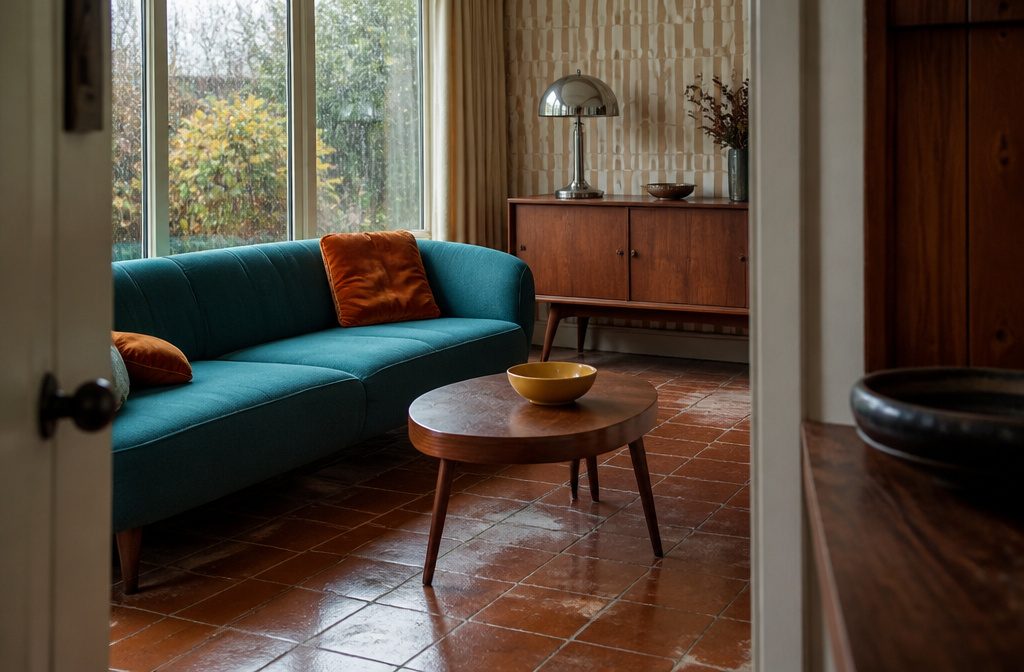
A retro living room pulls from the 50s through the 70s, and the decade you land on depends on whether you want the clean lines of mid-century modern or the saturated color and texture of the 70s.
Walnut furniture with tapered legs and an egg chair anchor one end; burnt orange velvet and psychedelic wallpaper anchor the other.
Commit to a palette—mustard with teal, or orange with pink—and let that choice dictate whether your arc lamp gets a chrome finish or your sofa sits low enough to read as a conversation pit.
1. Mid-Century Wood and Low-Profile Furniture
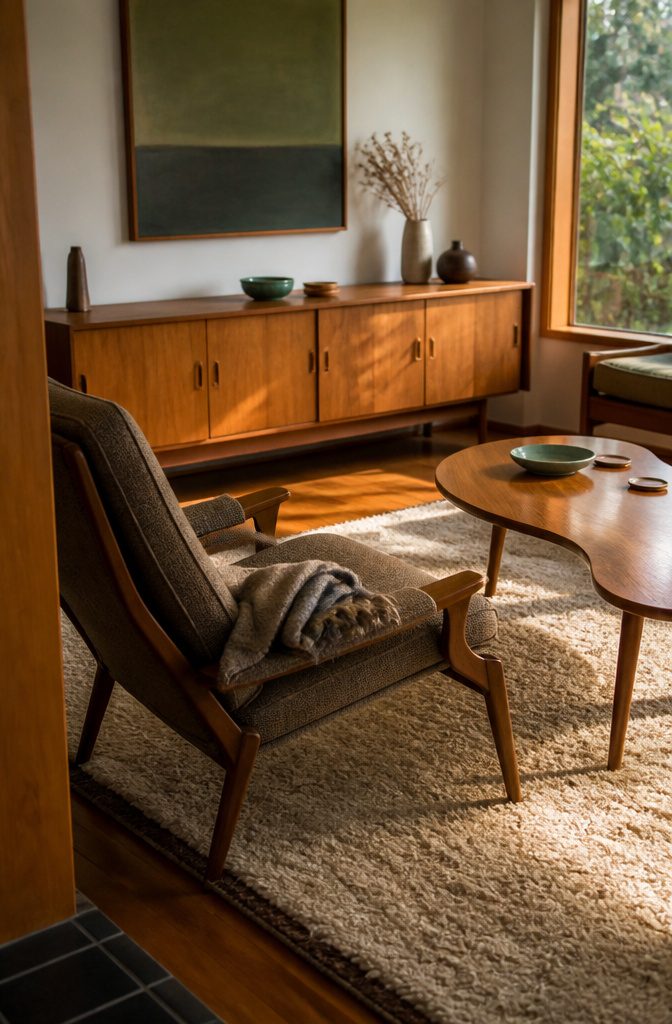
Walnut and teak pieces with tapered legs sit lower to the ground than what most furniture stores sell today, and that profile alone pulls a room back to the fifties and sixties.
An Eames lounge chair or an egg chair anchors one corner without taking up visual space the way a tall-backed recliner would.
Pair it with a curved coffee table—something oval or kidney-shaped in warm wood—and the room reads mid-century even if the sofa is new.
The wood tone matters. Mid-century designers worked in walnut, teak, and lighter oak, all of which show grain without heavy stain.
A sideboard or credenza in one of those finishes gives you storage that doubles as the period detail, especially if the hardware is recessed or minimal.
Keep the lines clean and the silhouette low, and the furniture does most of the work.
Recommended Products
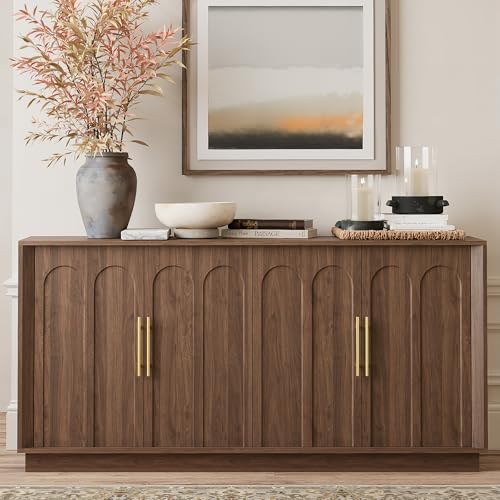
【Minimalist Mid-Century Modern Design】Transform your living space with this mid-century modern storage cabinet, which seamlessly blends minimalist aesthetics with functional design. Perfect for any living room, kitchen, or dining room, it brings a touch of sophistication while providing ample storage. The sleek arched doors and metal handles create a stylish, timeless look that fits effortlessly into any home décor

【Generous Storage with Adjustable Shelves】This sideboard buffet cabinet provides ample storage space with 8 storage compartments and 1 drawer. Smooth-gliding drawers store everyday essentials. There are two storage compartments below to organize smaller items neatly. The two-compartment storage spaces feature adjustable shelves to accommodate stacked dishes or bulky appliances. There are hidden compartments on each side, perfect for storing items like tall vases. Everything stays in place, keeping your space neat and organized.

US SELLER – MADE IN VIETNAM: Crafted by skilled artisans in Vietnam, this nightstand reflects thoughtful construction and attention to detail, with fulfillment from the U.S. for efficient delivery
2. Bold Color Combinations
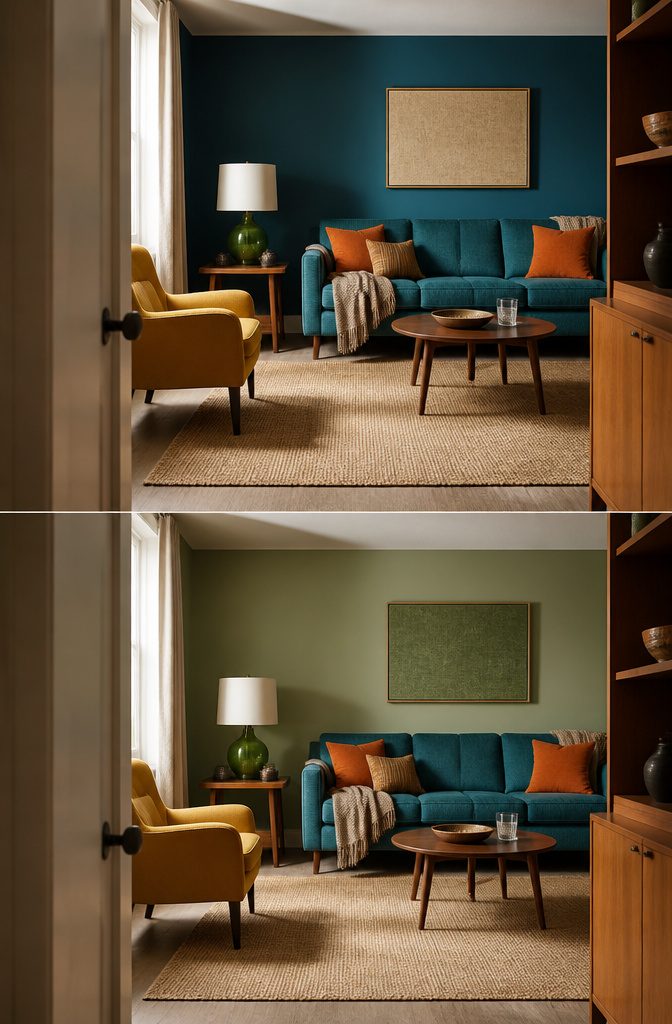
The 60s and 70s ran on saturated color, and a retro living room earns that reference most directly through burnt orange, mustard yellow, avocado green, and teal.
Pair mustard with teal for a warm-cool contrast that feels optimistic without tipping into kitsch.
Orange cushions on a teal sofa work the same way, especially when you add neutrals in the rug or lampshades to create breathing room between the bold blocks.
Pink with orange is another pairing worth considering if you want a softer psychedelic edge. Balance warm and cool tones so the palette has depth rather than flattening into a single temperature.
A colorful accent wall in one of these hues anchors the scheme without requiring you to commit saturated color to every surface, and beige or white elsewhere keeps the room from reading as a period replica.
Recommended Products

Heavy Duty Sofa Table Legs: 3mm thicken steel construction keeps metal sofa legs solid and stable enough to support the whole furniture up to 1800lbs!

✅ 【Package Contents】: This set includes four furniture legs with fixed hanger bolts, 4 round mounting plates, and 24 screws.

Crafted from natural hardwood with black finish, providing sturdy and reliable support for furniture pieces, they seamlessly blend with any decor style.
3. Geometric, Floral, or Psychedelic Patterns
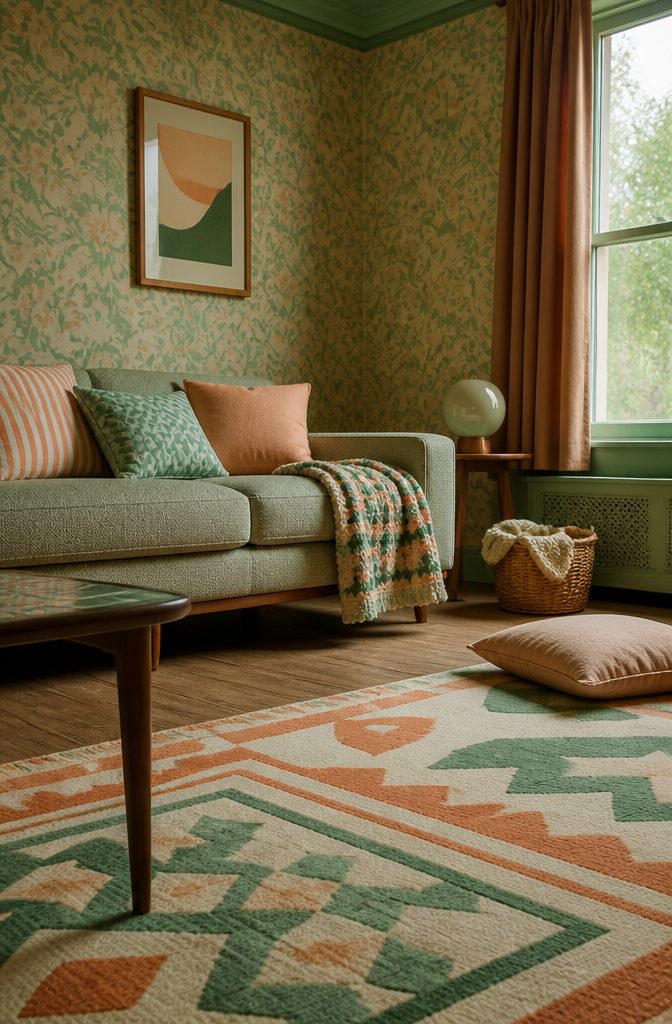
Wallpaper sets the stage fastest: psychedelic prints transport the space straight to the 60s and 70s with swirling florals, hypnotic rounded shapes, or peace symbols in mint green and peach.
Geometric designs work when you want structure instead of movement. Pair wallpaper with paint two shades deeper than one of the print colors—mint wallpaper pulls elderflower or plush blush on the trim.
Rugs carry the same patterns at floor level. Shag, tufted, or flat-weave with bold prints anchor seating without competing with the walls.
Curtains in heavy drapes pick up earthy tones or geometric prints from elsewhere in the room, and the weight matters—light, flowy fabric loses the retro character even when the print reads vintage.
Cushions let you layer florals, stripes, and geometrics on one sofa. Psychedelic or geometric prints add color; crochet or macrame throws bring texture.
Faux fur keeps it cozy without going full boho. Mix the patterns but keep the palette tight—three colors maximum, repeated across surfaces.
Recommended Products

5-Minute Installation: No tools needed for setup! This stylish pullout sofa full size comes with all parts pre-assembled. Simply connect the large module, and you’ll be ready in just 5 minutes. This efficient design saves you time and cuts out complicated assembly steps. Whether for home or office use, the quick installation feature makes it easy to set up and enjoy the comfort of modern sleeper sofa bed full right away

GREAT FIT: This innovated 4 Piece sofa couch cover is crafted from luxurious velvet plush fabric, including 1 piece of base cover and 3 piece of cushion covers. Sofa slipcovers (fit sitting width between 72-90 inch). Feature one-size-fits-most, kindly measure before ordering

REAL VELVET: Velvet!Velvet!Velvet! This premium sofa slipcover is crafted from luxurious velvet plush fabric, feature high stretchy and durability, extra soft, thick and comfortable, this rich velvet must dressed your furniture a new decent visual. High recommended for both leather and cloth sofa
4. Wood-Paneled Walls
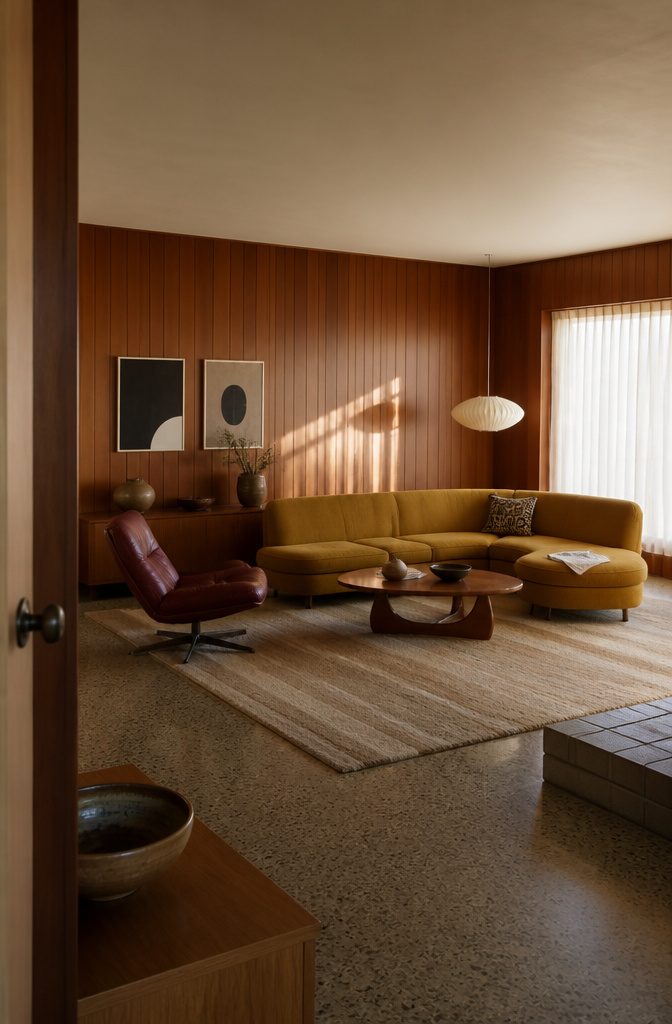
Wood paneling grounds a retro living room in a way painted drywall cannot. The vertical grain and warmth of the material create a backdrop that lets bold furniture stand out without fighting for attention.
A mustard sectional or orange sofa reads even brighter against rich wood tones, and the contrast feels intentional rather than accidental.
The paneling also allows you to layer in saturated accent pieces—burgundy lounge chairs, deep leather seating—without the room tipping into chaos.
Everything stays anchored. Curved sofas and geometric art play off the straight lines of the panels, and the result is a space that feels both grounded and confident.
Leather accents modernize the look, pulling it away from anything too dated, while keeping that midcentury warmth intact.
5. Curved or Sculptural Seating
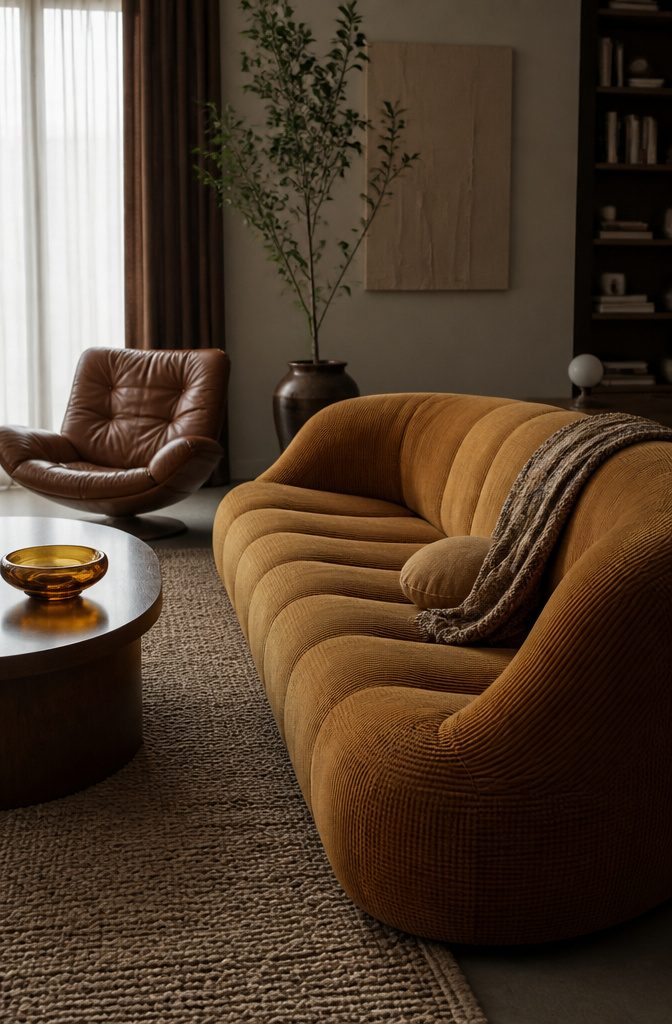
A rounded sofa anchors the room in a way flat-backed seating never can. The Togo-style piece—low, deeply tufted, foam-filled—reads instantly as 70s even when upholstered in boucle or corduroy instead of the original quilted nylon.
The egg chair works the same way: one sculptural silhouette does more than three safe choices combined.
Furniture items, like the Kangaroo chairs and B&B Italia sofa, add a distinct mid-century feeling
Material matters as much as shape. Velvet catches light along every curve, leather softens with wear, and both feel richer than linen ever will in a retro room.
An Eames lounger in worn leather holds the center without competing with anything else you add. If the room needs more seating, a modular set in warm fabric keeps the curves going without doubling up on icons.
6. Statement Lighting
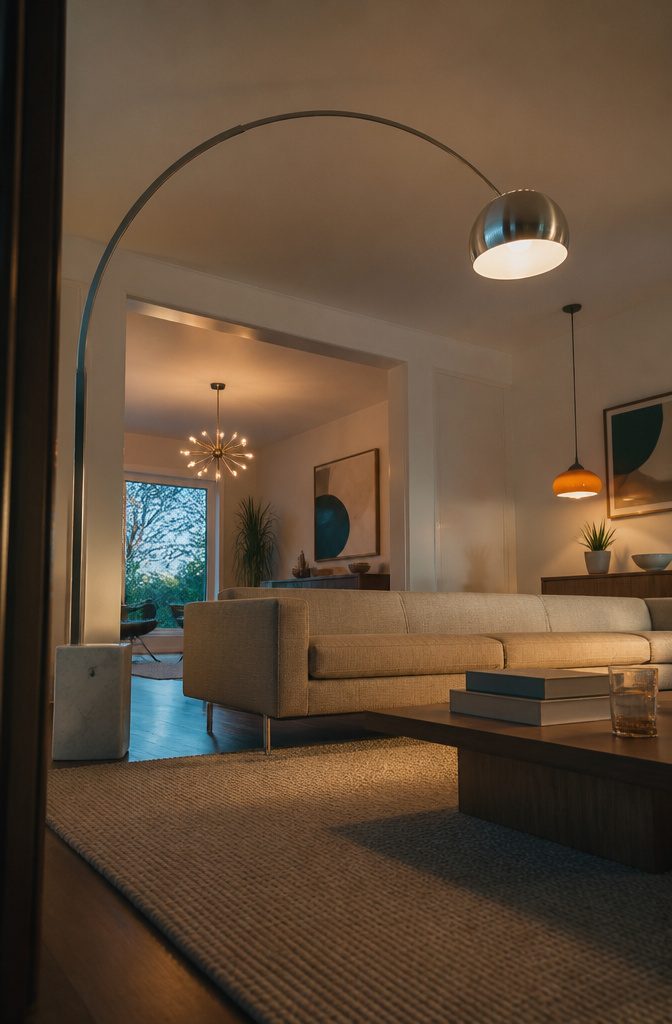
An arc lamp with a chrome finish changes how a room feels before you flip the switch. The sculptural curve draws the eye up and across, breaking the boxy geometry that most furniture locks you into.
Sputnik chandeliers work the same way — all those radiating arms turn the ceiling into part of the composition instead of dead space above the sofa.
Pendant lights with colored glass bring warmth without adding clutter to surfaces. A flowerpot-style pendant in orange or yellow reads as playful rather than precious, and the shade diffuses light in a way that overhead cans never manage.
Metallic finishes on the hardware tie back to chrome legs on tables and chairs, so the fixture feels like it belongs rather than floating unconnected.
One overhead fixture leaves the room flat; three or four at different heights give you depth and let you dim what doesn’t need to be on.
7. Vintage and Modern Pieces Mixed Together
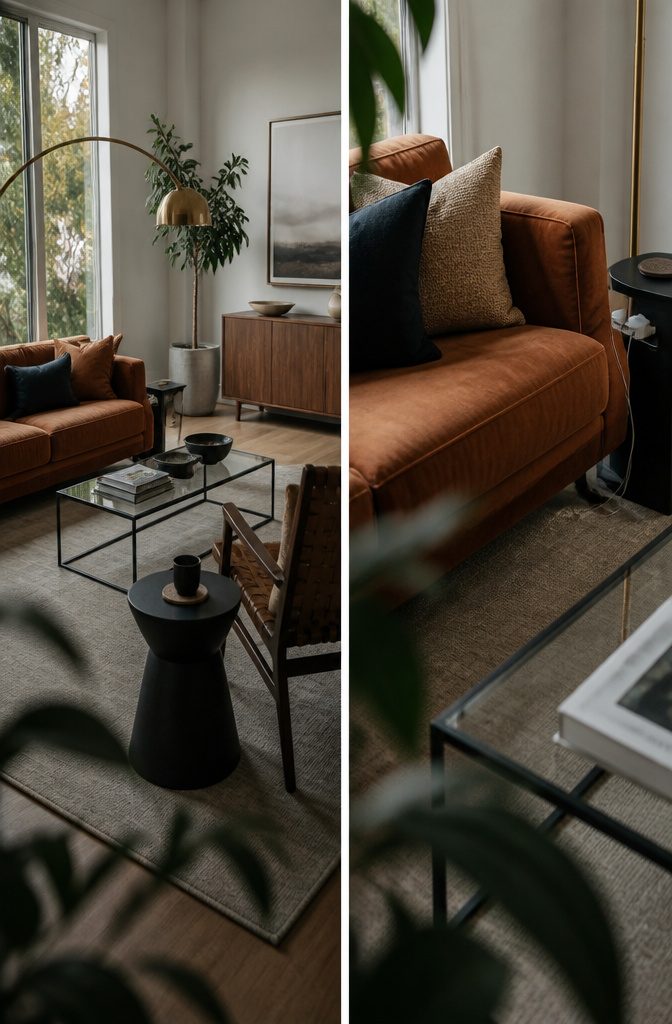
I pair a vintage velvet sofa with a glass coffee table and leave the room balanced instead of trapped in one decade.
Contemporary pieces keep retro references from sliding into full period reconstruction—a clean-lined side table next to a brass arc lamp, a frameless mirror above a sculptural ’70s credenza.
The modern elements ground the room in the present without competing for attention.
Smart technology hides inside retro shells when the setup is deliberate. A wooden cabinet that reads mid-century holds a television that retracts or sits flush behind doors, and a minimalist side table with vintage lines conceals charging ports.
The room holds its nostalgic character while functioning for how people actually live now, screens included but never leading the design.
Going too heavy on vintage turns the space into a time capsule rather than a living room.
I hold back on the retro pieces—three or four anchors, not a dozen—and let contemporary finishes like matte black hardware or a concrete-look side table fill the gaps.
The balance tips toward restraint: modern keeps it fresh, retro gives it warmth, and neither one dominates.
8. Rugs as a Focal Point
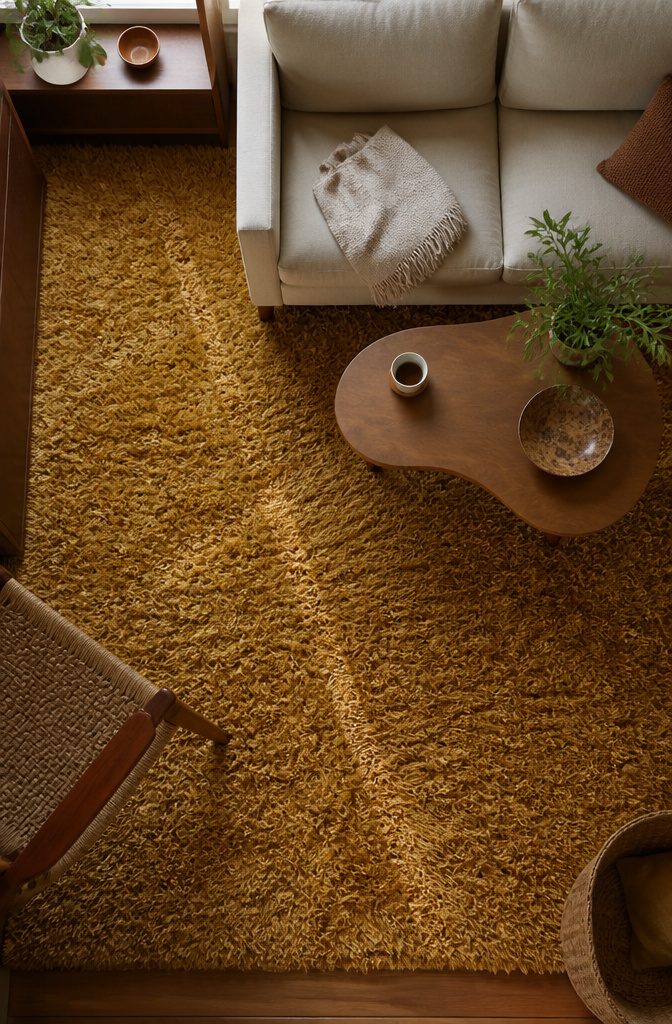
A shag rug in mustard or burnt orange pulls the eye down and gives seating something to wrap around, especially when the walls stay white or beige.
The texture alone reads as retro—pile height around two inches or more—and the color carries the era without touching furniture or paint.
Geometric patterns work the same way: a houndstooth or bold chevron in black and cream defines the conversation zone and holds the palette when you want the sofa to stay neutral.
Vintage rugs with worn-in color anchor a room that mixes decades.
A faded Persian or Turkish rug in rust and navy grounds mid-century furniture without fighting it, and the pattern gives you permission to keep the rest of the room clean.
The rug becomes the anchor, not the backdrop, and everything else responds to it rather than competing for attention.
9. Plants and Botanical References
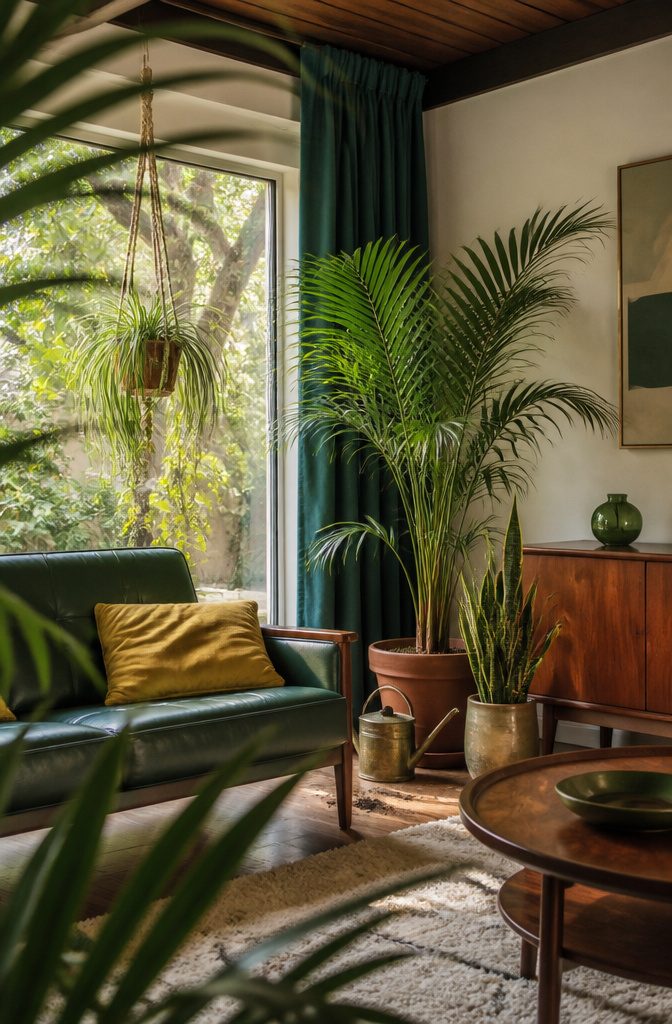
Spider plants and snake plants show up in retro rooms because they were everywhere in the 60s and 70s, when indoor gardening hit its stride.
Both tolerate low light and need watering maybe once a week, which made them practical then and keeps them practical now. Hang a spider plant in a macrame planter and you’ve placed two period details in one move.
Large potted palms bring in the tropical feel that defined a lot of 70s interiors.
A parlor palm or kentia in the corner softens hard edges and fills vertical space without blocking sightlines. If the room already leans bold—mustard sofa, teal walls—the green calms it down rather than competing with it.
Leafy wallpaper works the same way: it layers in pattern and keeps the palette grounded when you don’t want more furniture doing the talking.
10. Vintage Art and Displayed Collections
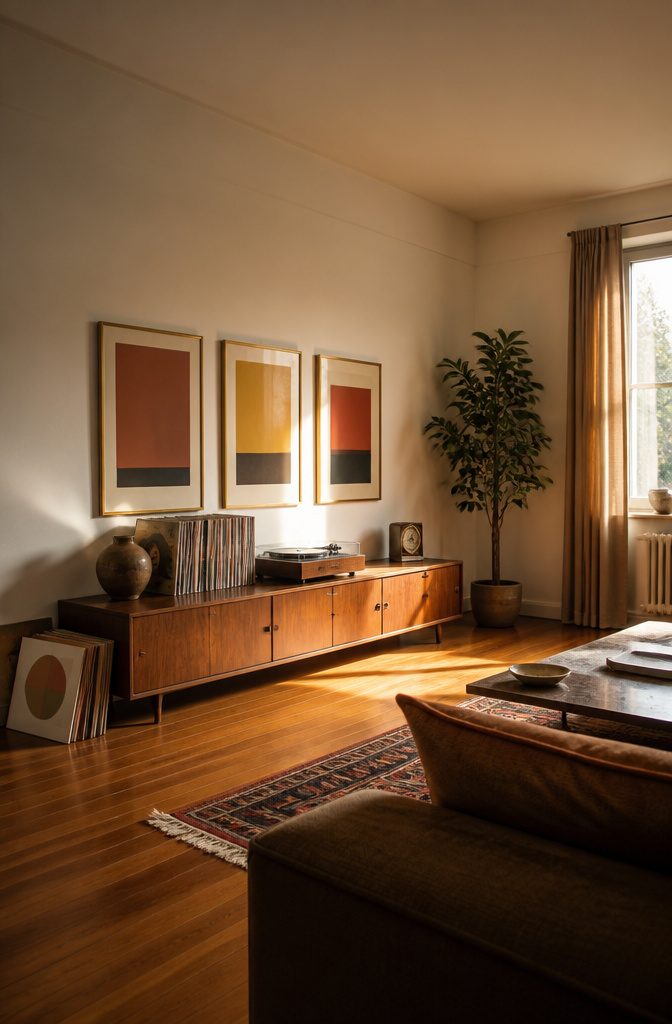
Framed pop art prints pull straight from the 60s and 70s: Andy Warhol’s repeated color blocks and Roy Lichtenstein’s bold comic panels work as statement pieces above a sofa or grouped along one wall.
Vintage record sleeves in simple frames cost less and layer in music references without hunting down original prints. Walnut-framed art feels right with wood furniture; brass frames sit better against painted walls.
A record collection belongs where it can be seen.
Lay a few vinyl records on the coffee table or stack them beside the player on a low console. The oval shape of a record breaks up straight lines, and the album art adds color the room might otherwise lack.
Ceramic vases, rotary phones, and vintage clocks fill shelves without crowding them, but only if each piece holds up on its own—three strong objects beat seven forgettable ones.
11. Retro Wallpaper as the Main Feature
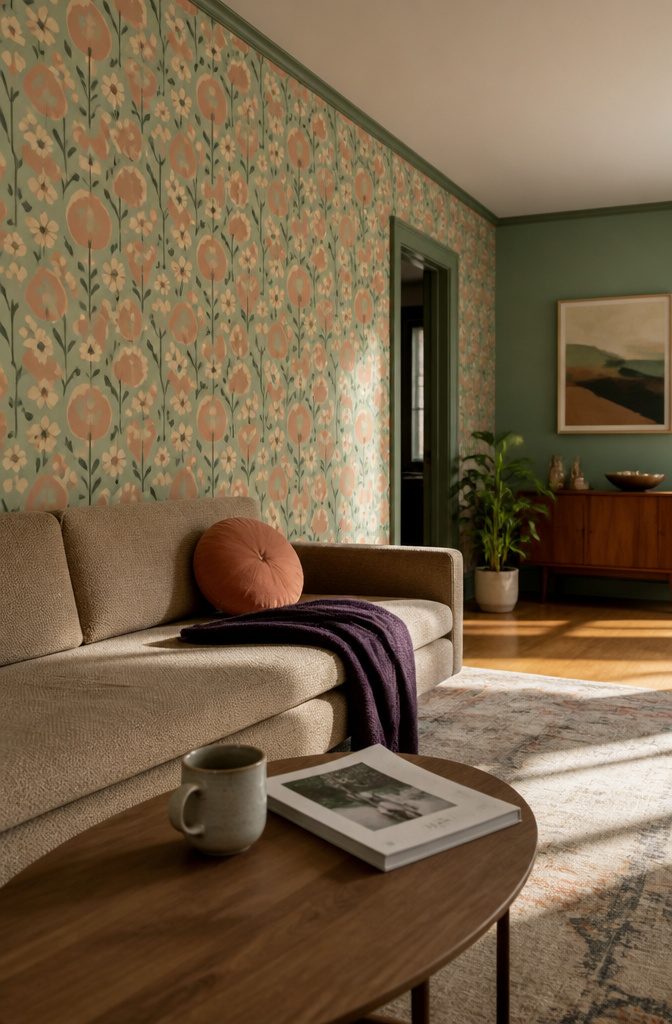
Wallpaper styled for a specific decade sets the whole room’s direction, and everything else follows its palette. Pair Peace and Love wallpaper in mint green and peach with Elderflower Emulsion Paint, which complements the green without competing for attention.
If the wallpaper leans toward peach, Plush Blush on the remaining walls keeps the tone warm, or So Fresh and So Clean gives you a neutral that lets the pattern speak.
Groovy Baby in sunset pink and orange calls for Candy Floss paint and accessories in deep purple or velvet textures that match the era’s low-slung, soft furniture aesthetic.
Get Your Funk On, with its orange, brown, and nude drip pattern, works with earth tones throughout the rest of the space. The wallpaper chooses the decade; the paint and furniture lock it in.
12. Warm, Layered Textures
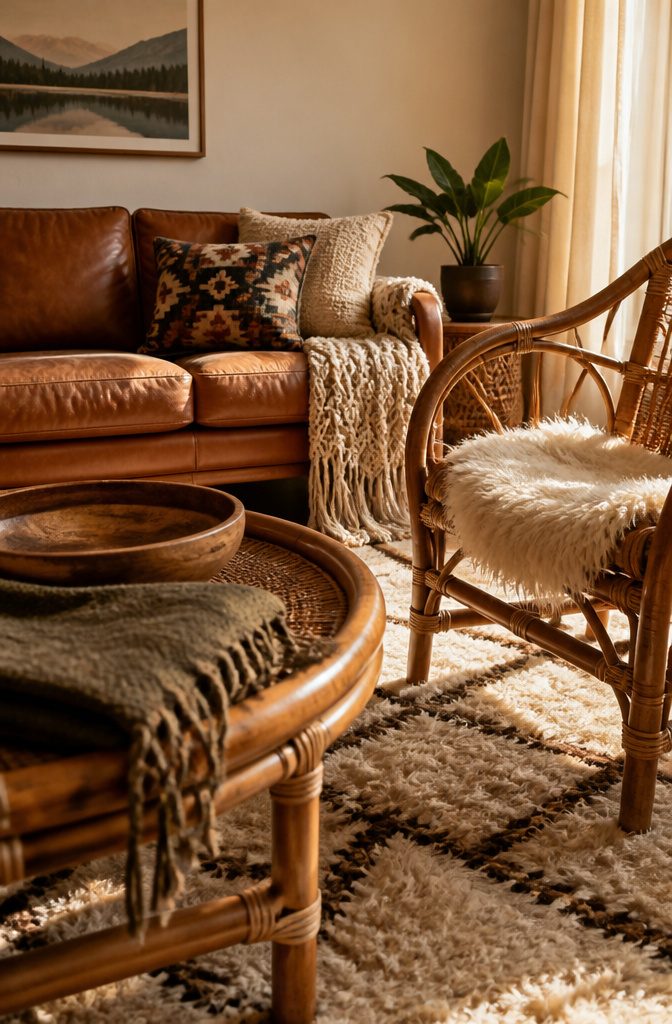
Velvet pulls a room into comfort the way few materials can.
A tobacco-colored leather chair or a caramel sofa grounds the space with warmth that only improves as it ages, while woven rattan or bamboo furniture keeps the retro palette from feeling heavy.
High-pile rugs, macrame throws, and sheepskin layered over seating introduce softness without forced coordination—each texture carries its own weight.
Boucle, wool, and faux fur work as throws or cushion covers when you want a room that invites you to sit and stay.
Geometric or psychedelic prints on cushions add pattern, but the crochet and handcrafted pieces supply the lived-in feel that pure vintage references miss.
The combination reads as collected over time rather than decorated in one pass, which is what makes it feel like home instead of a set.
13. Retro Flooring and Tiles
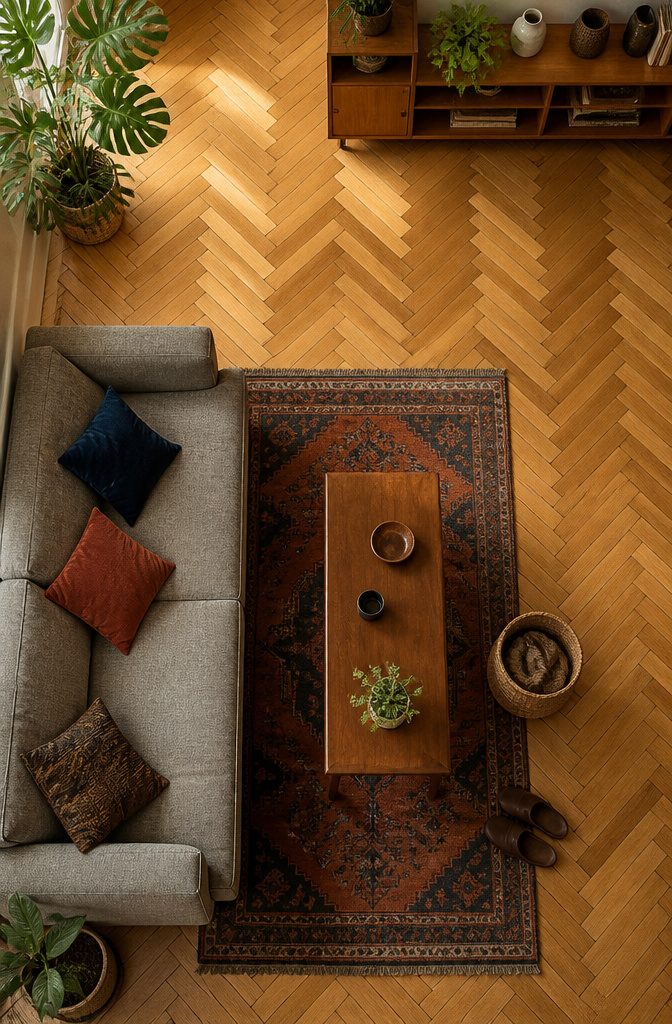
Parquet floors in herringbone or chevron pattern carry mid-century credibility without overwhelming the room, especially in warm wood tones that pair well with vintage shelving and low sofas.
Terrazzo—speckled, polished composite—reads unmistakably retro and works as flooring or as a detail on a coffee table if the full floor commitment feels too permanent for a rental.
Patterned tile anchors diner-inspired layouts: black and white checkerboard is the obvious move, but geometric tiles in grey and white keep the vintage reference quieter and let bold furniture take the lead.
For renters or anyone working over existing flooring, a shag rug in a bold pattern or a vintage rug with worn-in color delivers the period cue without demo.
Concrete floors stay neutral and let the retro pieces above them do the talking, which matters in rooms where the sofa or lighting already commands attention.
14. Fireplace-Led Room Design
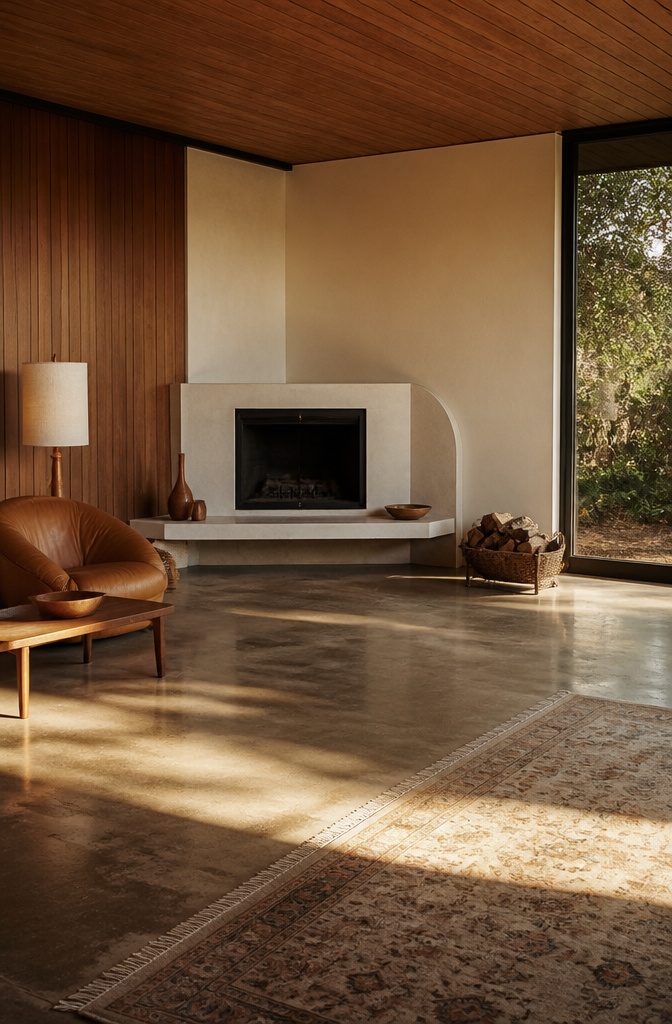
A fireplace from the 1950s or 1960s can set the retro tone before you touch anything else.
Prefab fireplaces became a clear signal that a home was keeping up with the times, sleek and practical without the weight of full masonry.
If yours survived, leave it alone. The materials and the way it sits in the room already do the work.
Marble surrounds and sculptural wood mantels pull the look toward soft modern retro, especially when the rest of the palette stays neutral.
Brick holds more warmth and pairs well with wood paneling or darker tones. The fireplace decides whether the room leans minimal or cozy, so the seating and lighting should follow its lead rather than fight it.
15. Conversation-Focused Seating
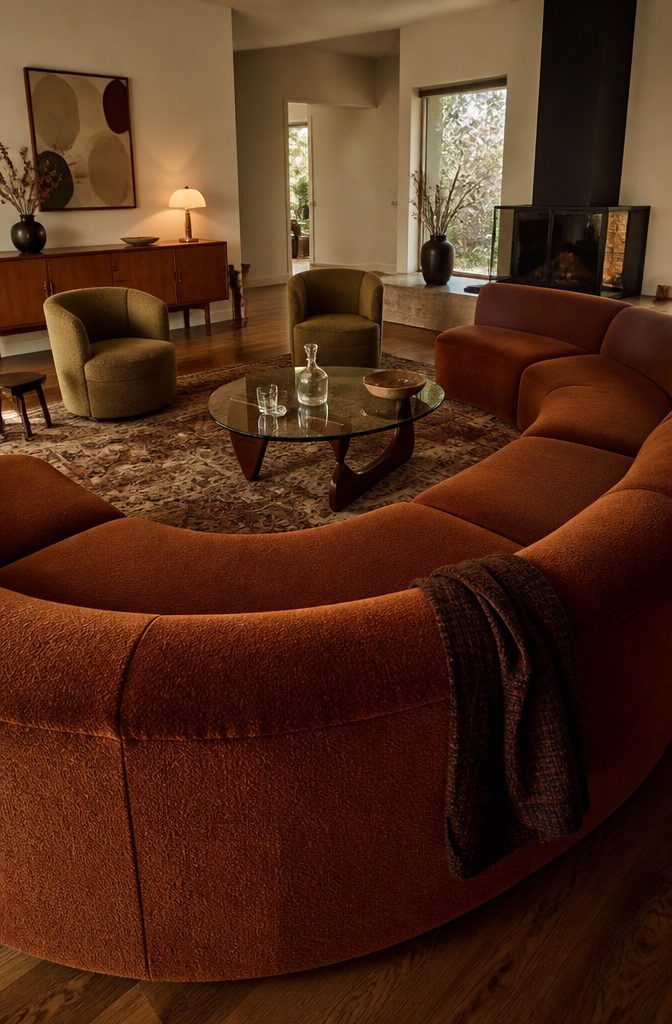
Seating from that era was built around the idea that people would sit and talk for hours, so arrangements faced each other rather than the television.
A sectional wrapped in a U pulls everyone into the same orbit, and when it sits low and wide the way midcentury pieces did, the room reads as grounded rather than crowded.
Burnt orange, olive, or chocolate upholstery keeps the palette anchored in the period without demanding vintage fabric.
The conversation pit took that principle further by dropping the floor and surrounding it with built-in seating, though few homes have the structure for one now.
You can borrow the effect with an oversized sectional arranged around a low coffee table, the kind that holds drinks without blocking sightlines across the group.
Glass tops were common and still work—they keep the visual weight down while the seating does the talking.
Frequently Asked Questions
What defines a retro living room design?
Retro living rooms pull from mid-century modern and 1970s aesthetics, combining low-profile wood furniture, saturated colors like mustard and burnt orange, geometric or psychedelic patterns, and sculptural lighting.
The style mixes bold visual choices with warm textures and curved seating that reads instantly as period without feeling like a museum recreation.
How do you add a modern twist to a retro living room?
Pair vintage pieces with contemporary furniture that has clean lines: a glass coffee table next to a brass arc lamp, or a frameless mirror above a 70s credenza.
Modern finishes like matte black hardware or concrete-look surfaces keep the room grounded in the present, and smart technology hides inside retro shells so the space functions for how people actually live now.
Can retro living room designs work in small spaces?
Yes, when you use low-profile furniture that sits closer to the ground and choose 3 or 4 statement pieces instead of filling every corner.
Keep walls in lighter or neutral tones so bold furniture stands out without crowding the space, and avoid layering too many patterns at once.
What flooring works best in a retro living room?
Parquet in herringbone or chevron pattern anchors mid-century rooms, while terrazzo brings unmistakable 70s character.
Patterned tile in black and white checkerboard or geometric grey works for diner-inspired layouts, and shag or vintage rugs deliver the period reference without permanent installation. Concrete stays neutral and lets bold furniture lead.
How do I keep a retro room from looking dated?
Balance vintage elements with contemporary pieces: 3 or 4 retro anchors like a curved sofa or arc lamp, then fill gaps with modern finishes that keep the room current.
Hold back on saturated color so it appears as deliberate accent rather than wall-to-wall commitment, and avoid overcrowding with too many period details.
What’s the difference between retro and mid-century style?
Mid-century leans minimal and functional with clean lines from the 1940s through 1960s, while retro pulls broader and bolder from the 60s and 70s with more saturated color, playful patterns, and sculptural shapes.
Both use low furniture and warm wood, but retro pushes further into psychedelic prints and statement color combinations.