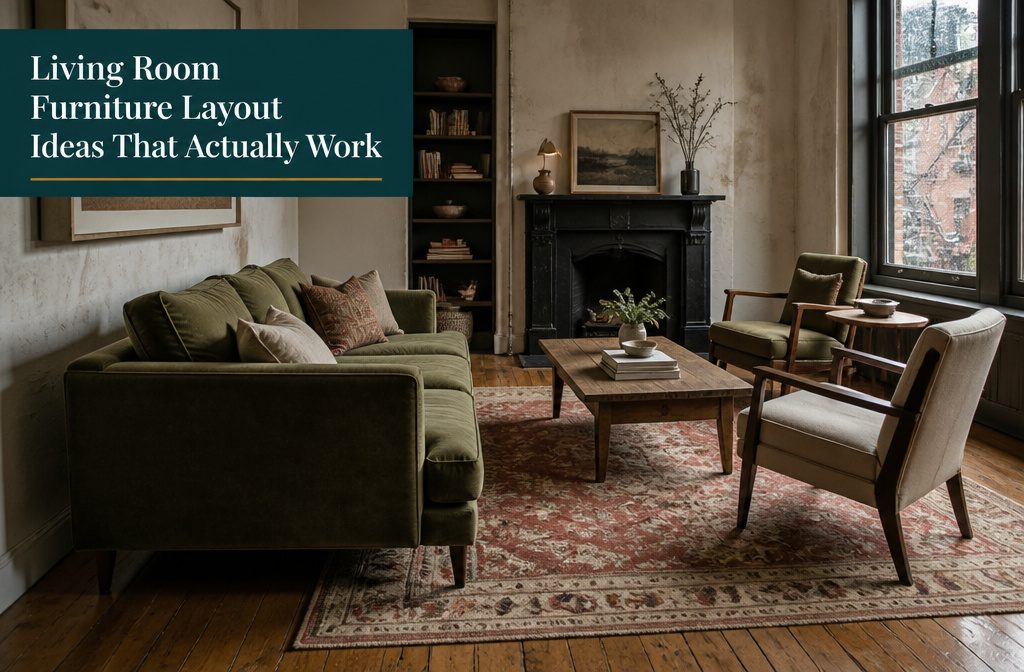
The sofa goes first because it decides where everything else belongs. Place it facing the room’s natural focal point—a fireplace, a window, the television—then arrange chairs and tables around that axis.
Pull it a few inches off the wall rather than pushing it flush; floating the sofa forward opens up circulation and makes even a small room read as larger.
1. Circular or Semicircular Conversation Group
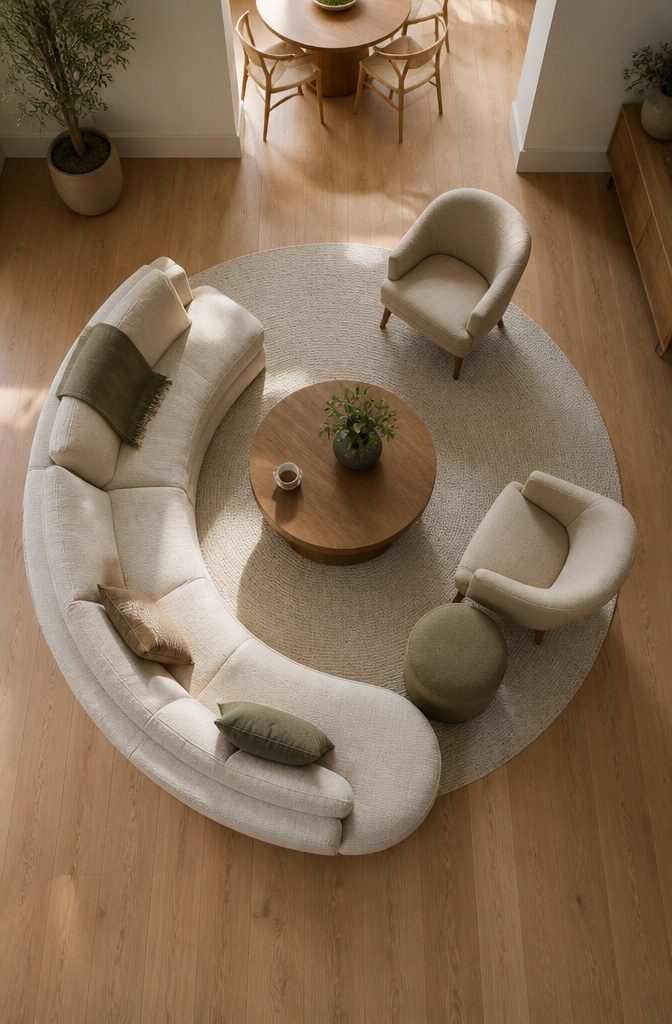
Seating curves around a central spot to pull everyone into the conversation rather than spreading attention across the room.
A curved sofa or sectional anchors the circle, with accent chairs or ottomans filling the gaps to seat more people without losing the shape.
If you prefer chairs to a sofa, arrange three or four armchairs in a loose circle—they’re easier to shift when you need to open the room back up.
A round coffee table and rug reinforce the arrangement and give the group a shared center.
The layout works for hosting but also creates a calm, private feel when the room is quiet, since the inward orientation naturally closes off the space from the rest of the house.
It’s flexible enough to rearrange for a dinner party one week and a quiet evening the next.
Recommended Products
Style Reigns: Discover the MAEZO Collection—a furniture line featuring streamlined designs, tapered legs, and smooth, curved transitions. Each piece adds a touch of mid-century modern flair to your home

Unique Half-Moon Design: This half-moon patio furniture set features a stylish semi-circular lounge with 8 curved sofas, perfect for outdoor gatherings on your balcony, patio, or poolside

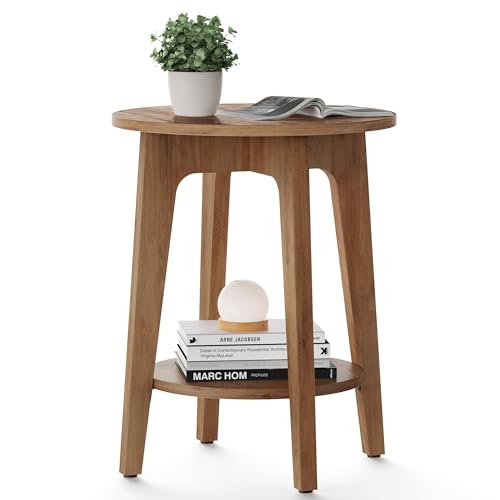
ELEGANT MINIMALIST ROUND SIDE TABLE: Unique curved white pedestal base paired with warm walnut wood grain round tabletop, this modern accent table blends mid-century modern & Scandinavian styles, perfectly matches sofas and farmhouse decor, elevates any living room and bedroom aesthetic instantly
2. L-Shaped Arrangement
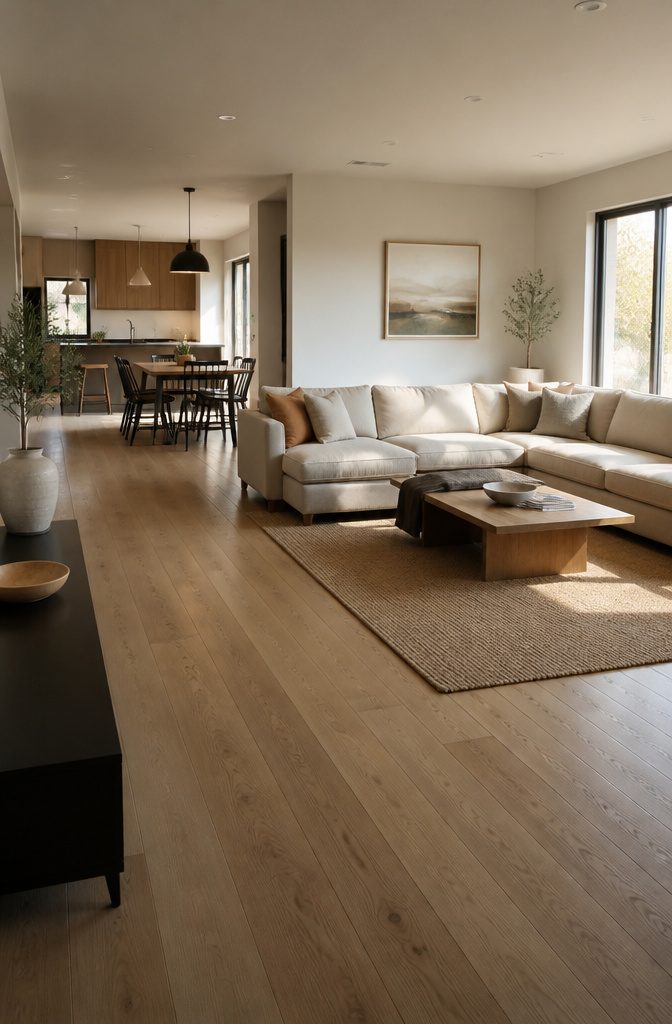
An L-shaped sectional or two-piece grouping claims the corner and leaves the center open, which matters in rooms where floor space runs tight.
The right angle naturally pulls two sides of seating into conversation range without pushing furniture into the middle of the room.
Place the longest side against the wall and let the short leg float — the setup works whether you’re using a true sectional or pairing a sofa with a perpendicular loveseat or chair.
The back of the sofa doubles as a divider in open layouts. Run it perpendicular to the wall and you’ve got a living zone on one side, dining or workspace on the other, without adding a screen or a bookcase.
The corner itself anchors the arrangement, so even a small room reads as furnished rather than cluttered.
Recommended Products

Easy to Assemble: You will receive detailed and clear instructions in the packages you receive. It only takes two to three people about an hour to complete the entire assembly process. Even if you encounter any difficulties, please do not hesitate to mail us and we will provide timely assistance

Protects from Stains and Messes: the Sofa Shield Patented Furniture Protector is stain and fade resistant, a perfect choice for homes with kids, dogs, cats, and other pets; pet friendly couch covers are constructed with durable, tear resistant microfiber to help protect furniture from everyday wear including pet hair, dirt and messes; designed with long arms and back flaps helps shield hard to clean areas

Waterproof Couch Cover: This l-shaped sectional couch cover for dogs is designed for families with kids and pets, The sectional sofa cover features waterproof membrane back lining fabric within the seat sections, preventing water and other liquids from seeping into the sofa, while protecting it from pet hair and stains, offering lasting protection while maintaining softness and visual appeal
3. Symmetrical, Opposing Seating
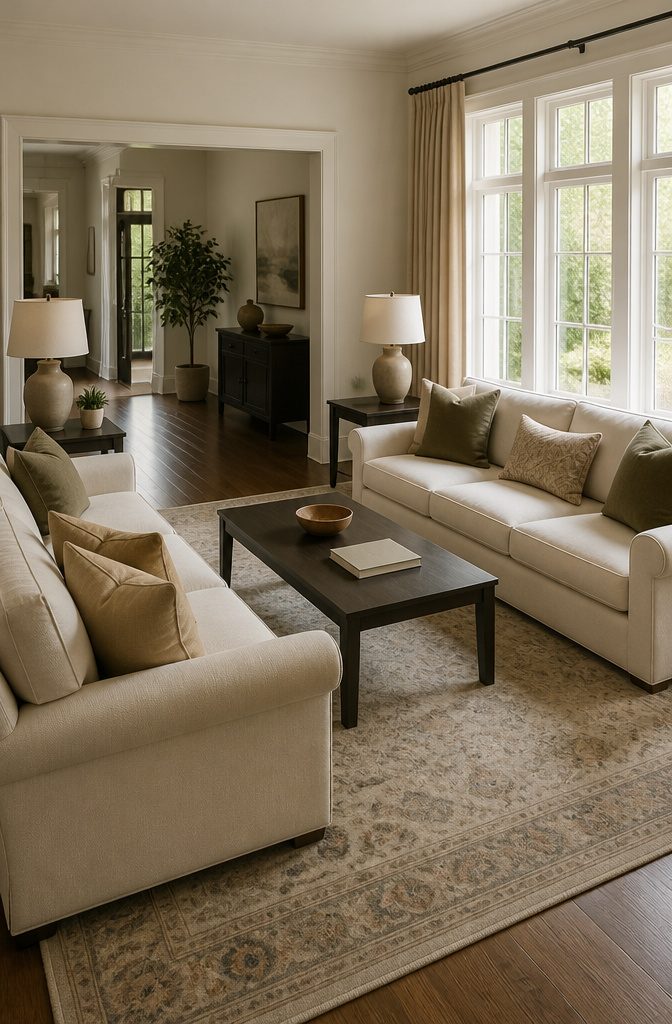
Two matching sofas facing each other across a coffee table or rug give you the most formal arrangement you can build in a living room.
The setup is perfectly mirrored — what sits on one side is echoed on the other — and that visual symmetry reads as polished and traditional. It works well in rooms where you entertain guests or want a more dignified atmosphere.
The look stays formal even when you swap one sofa for a pair of armchairs, though that version relaxes the feel slightly.
Both variations anchor the seating area around a central coffee table or rug, which ties the two sides together and reinforces the balance.
The arrangement fits most living room shapes, which explains why it shows up so often in traditional interiors.
4. Asymmetrical Parallel Seating
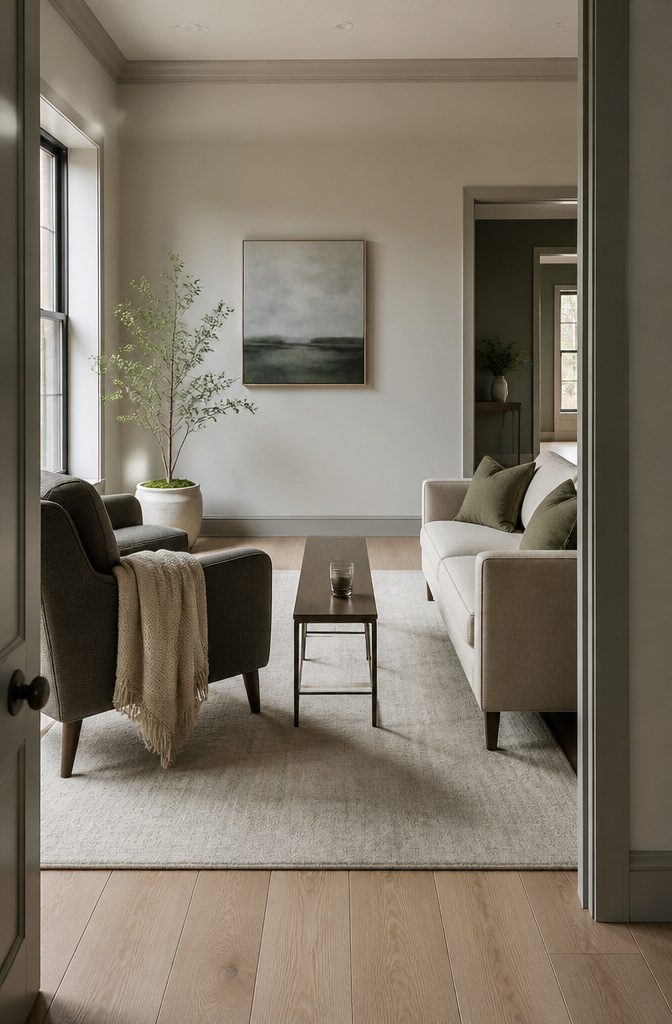
Different pieces face each other without matching — an armchair opposite a loveseat, or two armchairs across from a sofa — and the extra circulation paths make it easier to move through the room than when a large sofa anchors one side.
You can walk around two chairs more easily than around one long piece, which matters in rooms where people cross through to other doorways or where kids tend to run laps.
The look is less formal than a mirrored setup, so it works when you want the room to feel pulled together without looking staged.
I use this in living rooms where the layout has to double as a hallway, because blocking one pathway with a sofa means everyone funnels through the same narrow gap on the other side.
Recommended Products

Ultra Soft & Non-slip: Featuring a shaggy carpet surface, the Ophanie soft area rug is highly soft with a high-density sponge interlayer. This rug effectively reduces shedding, and the non-slip bottom with small, durable anti-slip dots enhances friction to prevent sliding.

Ultra Soft & Non-slip: Featuring a shaggy carpet surface, the Ophanie soft area rug is highly soft with a high-density sponge interlayer. This rug effectively reduces shedding, and the non-slip bottom with small, durable anti-slip dots enhances friction to prevent sliding.

Ultra Soft & Non-slip: Featuring a shaggy carpet surface, the Ophanie soft area rug is highly soft with a high-density sponge interlayer. This rug effectively reduces shedding, and the non-slip bottom with small, durable anti-slip dots enhances friction to prevent sliding.
5. Box-Shaped Inward-Facing Group
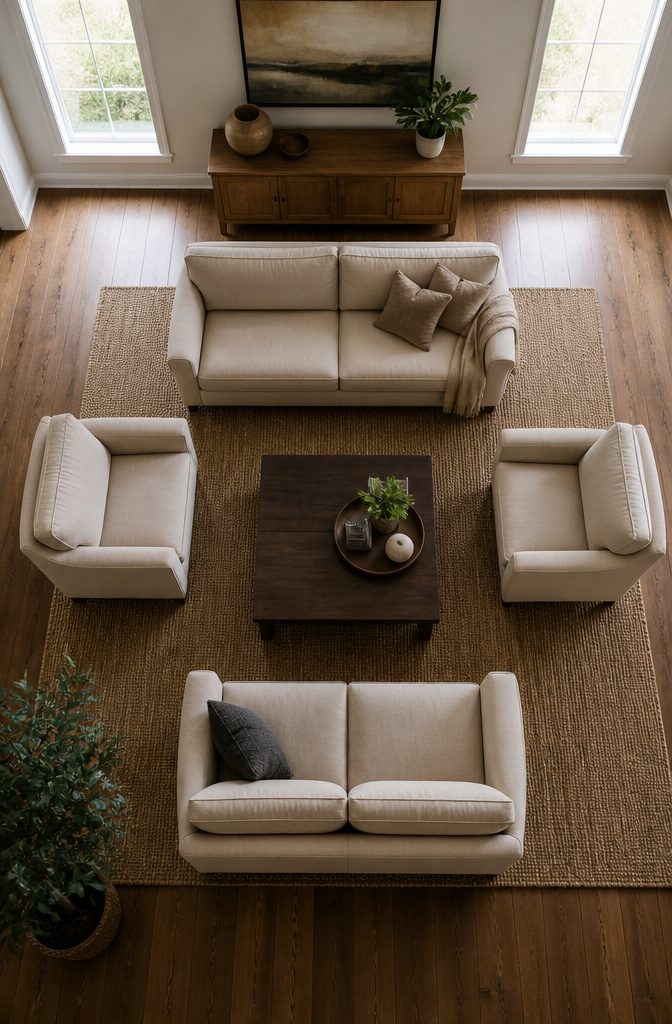
A box-shaped furniture arrangement puts four sides of seating around a central coffee table, facing inward. The setup makes the conversation group itself the room’s anchor rather than pointing attention toward a fireplace or window.
Rooms that lack a natural focal point gain one this way — the furniture creates the destination instead of relying on architecture to supply it.
The arrangement works best with a cohesive furniture collection: matching or coordinating fabrics, similar colors, consistent textures across all pieces.
Mismatched seating can make the square read as cluttered rather than intentional. A coffee table centered in the layout ties the group together and gives everyone a shared surface within reach.
This layout directs conversation inward by design, so it suits spaces meant for entertaining or relaxing as a group.
It won’t work as well if anyone in the room regularly needs to face a television or look out toward another part of the house.
Recommended Products

Ultra-Soft Corduroy Fabric – Cozy, Stylish & Built to Last: This 125” cloud couch sectional is upholstered in upgraded wrinkle-resistant corduroy, delivering a plush, warm, and luxurious feel. The breathable texture adds modern charm to your living room while providing year-round comfort and lasting durability—perfect for families who want both style and performance.
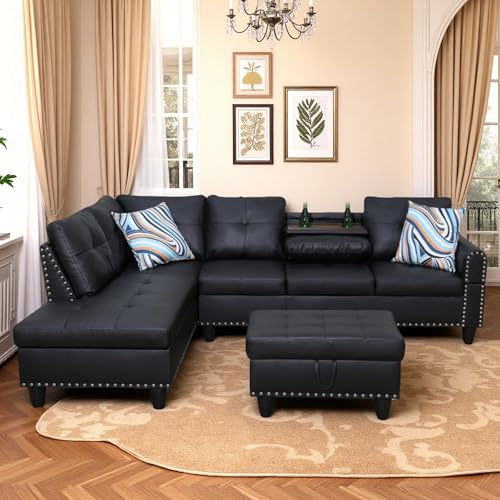
3-Package: Modular sofa ships in 3 separate parcels, with times varying slightly—please be patient. Once all pieces arrive,pat the sofa to help cushions and fabric rebound to their original plush state

[Comfy Desigh & Higher Back] Nurrizus sectional sofas for living room is with high back to offer you better back support, extra deap seat allows you to sink in to be more comfy. Higher back provides more supoort is more ergonomic and cozy
6. U-Shaped Seating
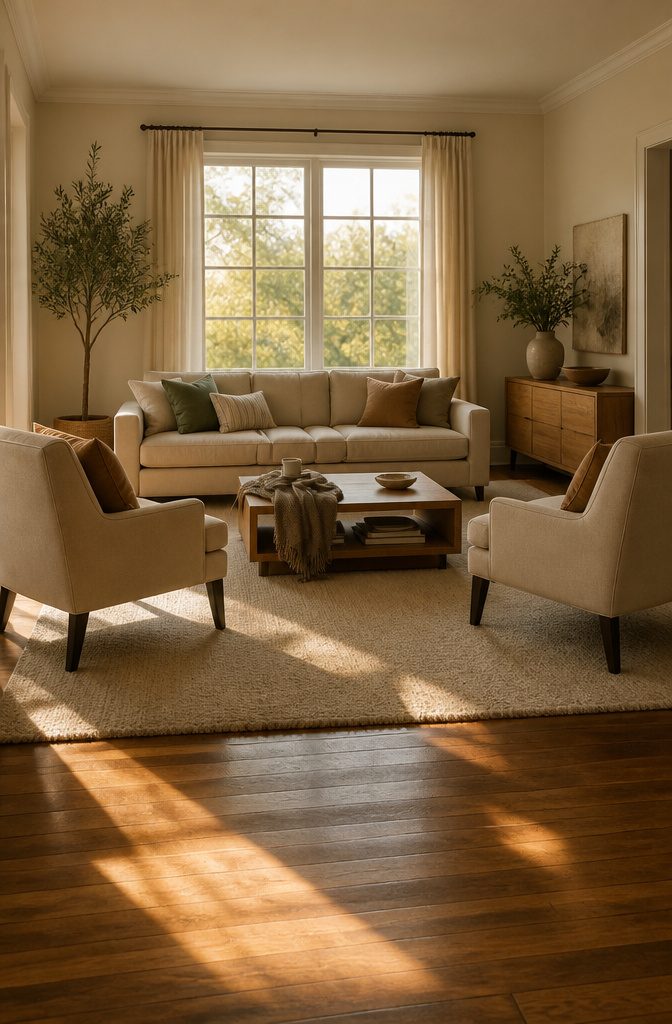
A sofa or sectional forms the base with chairs or loveseats flanking it on either side, and the arrangement opens toward a coffee table or focal point.
The shape wraps seating around three sides of the conversation zone, so no one sits with their back to the group and sightlines stay open across the room.
The layout handles larger gatherings without crowding because it spreads seats across more wall length than a single sofa and loveseat pairing would.
I’d use it in rooms at least 14 feet wide, where the sides have enough clearance to pull chairs away from the wall without blocking traffic.
In tighter spaces, a U- or C-shaped sectional delivers the same wraparound seating without the gaps between pieces.
Two parallel sofas with armchairs or a bench closing the open end work when you already own the sofas and want to avoid buying a sectional. Individual pieces need more space behind them than a sectional that hugs the perimeter.
Recommended Products

【2 Tier Round Coffee Table】This elegant round coffee table boasts a minimalist design, featuring a smooth wood top with a diameter of 22.8 inches and a height of 19 inches. The sturdy base is crafted from wood and black iron, adding a touch of contemporary flair to any living room. The table’s neutral colors and clean lines make it a versatile piece that complements various interior styles, from modern to industrial. Additionally, its compact form makes it an ideal centerpiece for smaller spaces, while still providing ample room for your favorite magazines and coffee cups.

ELEGANT MINIMALIST ROUND SIDE TABLE: Unique curved white pedestal base paired with amber wood grain round tabletop, this modern accent table blends mid-century modern & Scandinavian styles, perfectly matches sofas and farmhouse decor, elevates any living room and bedroom aesthetic instantly

Elegant Minimalist Round Design, Match All Home Styles: Pure white circular tabletop paired with unique curved tripod base, soft streamlined silhouette creates gentle modern aesthetic. Perfectly match cream sofa, French cottage, Nordic, minimalist, ins-style home decor; ideal beside couch, bed, window nook as accent table.
7. Corner Reading or Relaxation Retreat
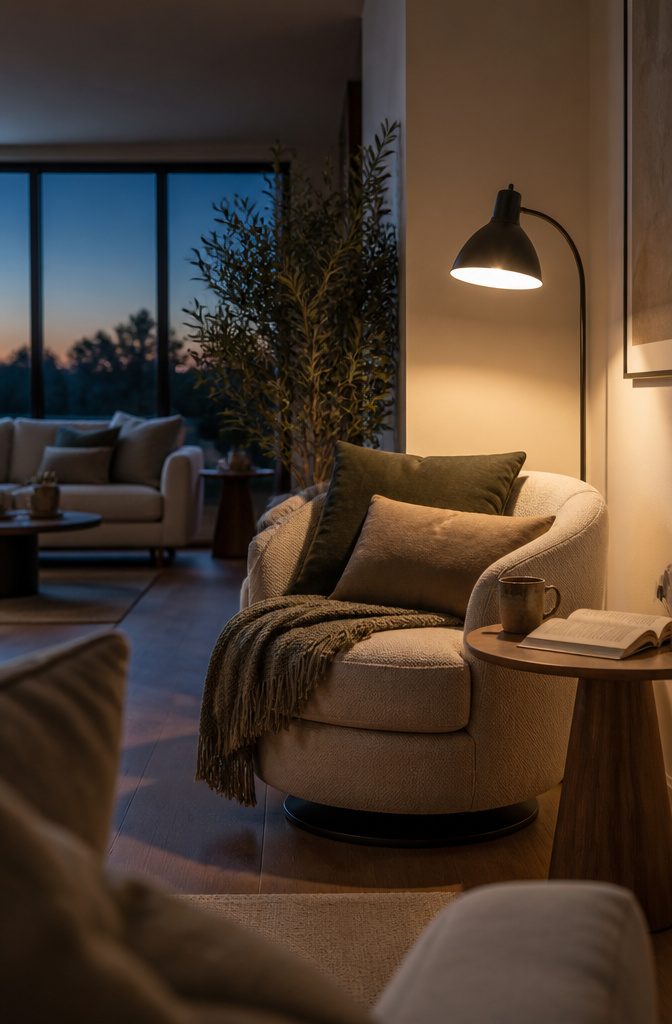
A chair or chaise tucked into a corner with a floor lamp and side table turns forgotten space into a separate zone for reading or unwinding.
The setup sits away from the main seating, so it reads as a retreat rather than overflow.
Use a swivel chair if the corner faces the room — you can join the conversation when you want and turn away when you don’t.
Add a soft throw and a few pillows to mark it as comfort territory. Task lighting matters more than mood lighting here; a floor lamp that directs light over your shoulder keeps the spot functional after dark.
The corner layout works best when the rest of the room already has a clear conversation group, because this piece is solving for the person who wants out of it.
Recommended Products

Soft Chenille Fabric: This cloud couch features chenille with great breathability and long-lasting durability.As a flexible 6 seater sectional sofa,it is suited for living rooms,spacious bedrooms,and home offices

Complete Protection: Keep your outdoor corner sectional sofa safe from the elements with weatherproof fabric and waterproof tape seams; enjoy comfortable, worry-free outdoor leisure with our weatherproof fabric and waterproof tape seams

Soft Chenille Fabric: This cloud couch features chenille with great breathability and long-lasting durability.As a flexible 6 seater sectional sofa,it is suited for living rooms,spacious bedrooms,and home offices
8. Open-Concept Zones
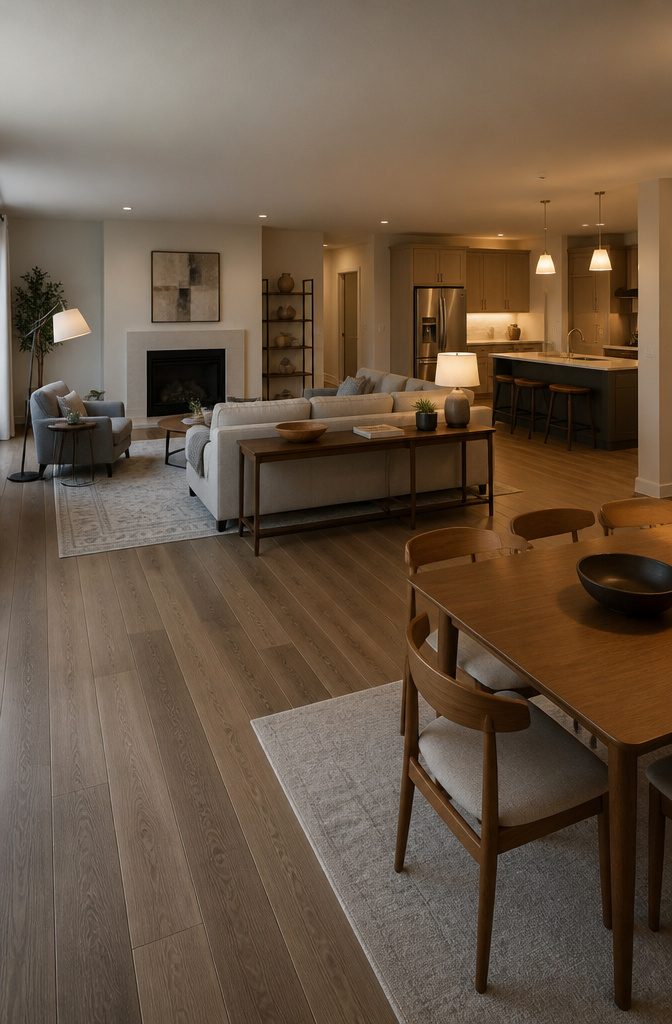
A rug that sits under the front legs of every piece in the living area tells the room where that zone begins, even when walls don’t.
The back of the sofa can mark the line between sitting space and dining space in a combined room, functioning almost like a low divider that keeps sight lines open.
A console table behind the sofa sharpens that boundary further without closing off movement or conversation across the space.
Lighting does quieter work in the same direction.
A floor lamp next to a reading chair defines that corner as its own zone. A table lamp at the end of a sectional softens the edge and separates the seating group from whatever happens behind it.
Layered lighting—ambient overhead, task lamps where you need them, accent spots on a feature wall—adds dimension and makes each area read as distinct even when they share the same open floor.
Recommended Products

Flexible Lift-Top Design: This lift-top coffee table features 2 tabletops that can be raised in different directions, easily creating 2 separate work areas. The large tabletop is foldable to meet various daily needs

【High Stability】The modern coffee table set contains adjustable legs to prevent scratching the floor. When the table is unstable, the table legs can be adjusted to enhance the stability of the table. It is easy to operate and easy to set up

【Round Vintage Coffee Table for Two】This farmhouse coffee table for two is designed for living space, the round shape makes your living room full of cozy and warm feeling, and the side rattan design gives your living space a new look, which is suitable for modern farmhouse style as well as vintage style
9. Dual Seating Areas
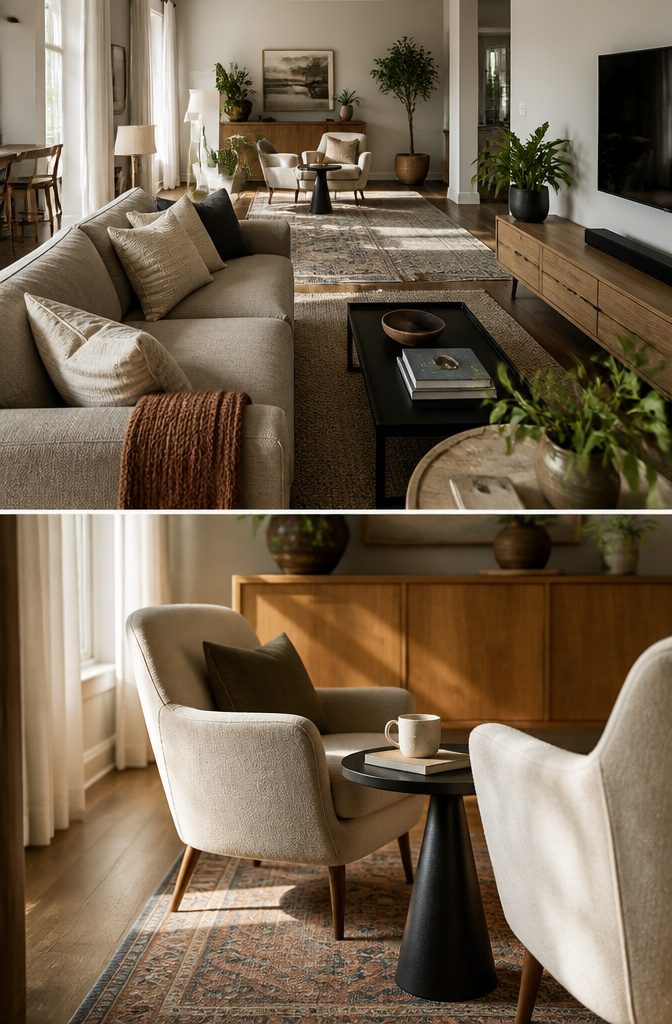
A main seating group placed in the center of the room leaves space for a second, smaller arrangement tucked toward one end or corner.
I pair a sofa angled toward the TV or fireplace with two armchairs and a side table set up for reading or morning coffee, and the room handles two people doing different things at once without anyone feeling squeezed out.
The secondary group works best when it faces away from the screen, so someone reading isn’t staring into flickering light.
In a long room, this setup breaks up the bowling-alley effect—one zone for watching, one for working or talking—and modular pieces let you shift the boundary when you need more of one and less of the other.
Recommended Products

Fluffy Rug with Rubber Backing: The biggest feature of this material is its amazingly soft touch, especially when you walk on it. This softness comes from thousands of 1.5 inches plush fibers. In addition, this soft fabric rug is crafted with high-density sponge layer and anti-slip backing to keep it in place and prevent sliding. The non-slip backing also protects floors from scratches

[Supreme Comfort and Softness] Treat yourself to the luxurious comfort of the OLANLY Machine Washable Area Rug. Its plush, high-density pile provides an incredibly soft, plush feel underfoot. Enjoy the warmth and coziness, all while the rug remains fiber-shed-free, making it ideal for your bedroom, living room, or nursery.

Fluffy Rug with Rubber Backing: The biggest feature of this material is its amazingly soft touch, especially when you walk on it. This softness comes from thousands of 1.5 inches plush fibers. In addition, this soft fabric rug is crafted with high-density sponge layer and anti-slip backing to keep it in place and prevent sliding. The non-slip backing also protects floors from scratches
10. TV-Centered Setup
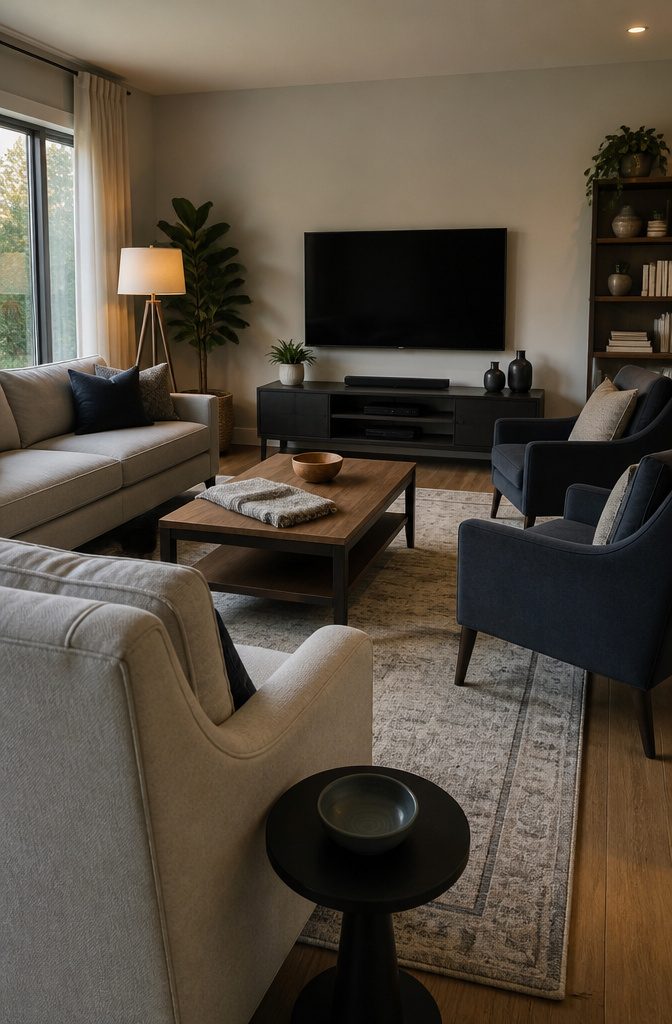
The sofa sits directly across from the TV, and that one decision sets the rest.
Position the television on a central wall where glare from windows won’t wash out the screen, then place the sofa facing it at a distance where you don’t crane your neck — usually 8 to 10 feet for a mid-sized set.
Additional seating goes beside or angled near the sofa: armchairs, a loveseat, or recliners that let guests watch without blocking sightlines.
A media console or wall mount keeps cords contained and the floor clear. This layout works when the TV is the room’s main draw — family movie nights, Sunday football, weeknight streaming — and everything else arranges itself around viewing comfort.
It’s not a layout for conversation-heavy entertaining, but it delivers what it promises: every seat has a clear view.
Recommended Products

Ultra-Soft Corduroy Fabric – Cozy, Stylish & Built to Last: This 142” cloud couch sectional is upholstered in upgraded wrinkle-resistant corduroy, delivering a plush, warm, and luxurious feel. The breathable texture adds modern charm to your living room while providing year-round comfort and lasting durability—perfect for families who want both style and performance.
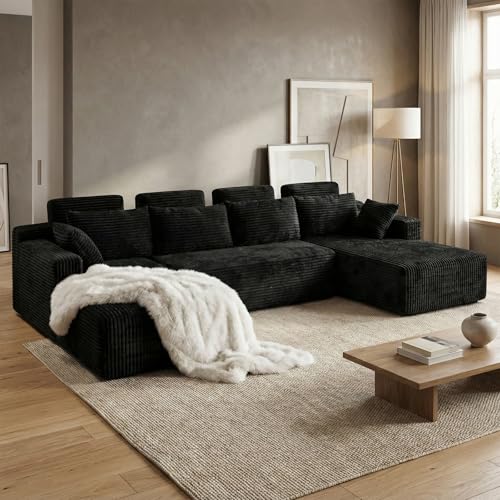
Ergonomic U-Shape Design:Ample Space, Zero Fatigue Our U-shaped sectional sofa boasts a humanized structure that delivers generous seating room for the whole family, friends gatherings, or cozy solo relaxation. The ergonomically curved backrest & armrests are tailored to fit the natural curve of your back and waist, providing targeted support that keeps you comfy even after hours of sitting, lying, or napping. Say goodbye to sore backs from prolonged lounging!

Famous Surrealist Art: Sacrament of the Last Supper by Salvador Dali - the classic icon of Surrealism reproduced at 16x24 inch with the depth and detail of the original
11. Floating, Open-and-Airy Layout
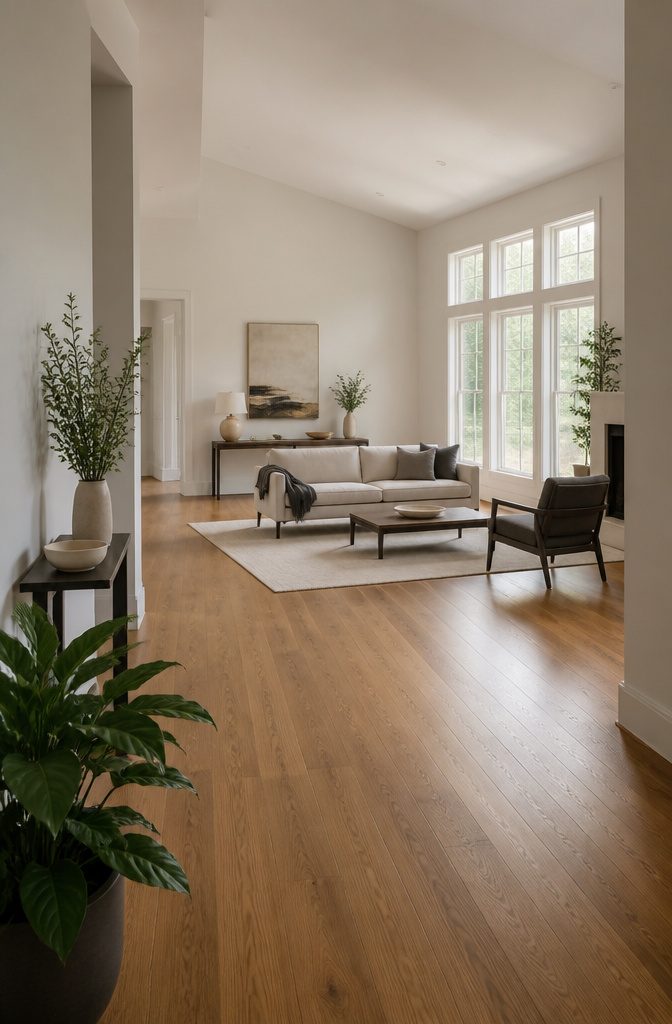
A sofa that floats a few feet from the wall opens up circulation and makes the room read larger, especially when you pair it with low-profile pieces that don’t block sight lines.
The mistake most people make is pushing everything against the perimeter in a small space, which leaves an awkward gap in the center and actually draws attention to the limited square footage.
Pull the sofa toward the middle instead, even just 6 or 8 inches, and the room immediately feels more breathable.
Low furniture matters here because you can see over and through it. A leggy sofa or chair that shows the floor underneath adds to the sense of openness, and a slim coffee table or ottoman keeps the visual weight down.
The Pebble Loveseat works well in this layout because it sits light and doesn’t crowd the view. Tall ceilings benefit the most from this approach, since the vertical space stays uninterrupted and the room feels taller than it measures.
12. Long-Room Zones
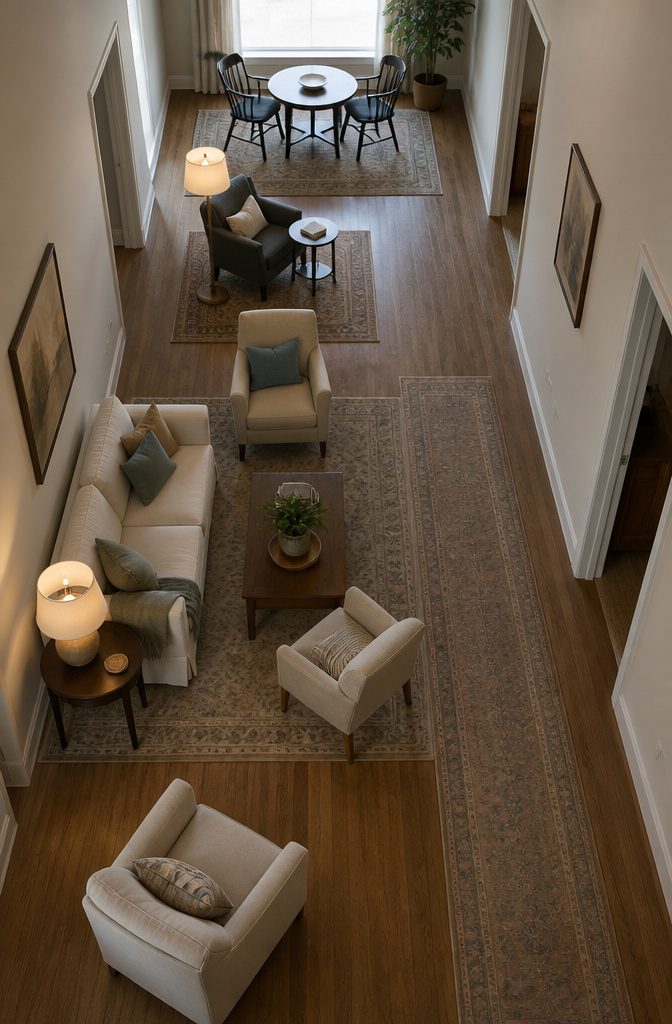
A narrow room reads as a tunnel unless you break it into smaller areas.
Instead of lining furniture along the walls, divide the length into two or three zones—a main seating group near one end, a reading corner or desk spot in the middle, and maybe a small side table with chairs at the far end.
The separate zones give the room purpose beyond a single long shot down the center.
Modular furniture works well here because you can rearrange sections to fit each zone without buying new pieces. A few movable chairs let you shift the layout when one area needs more seating.
Custom-order pieces built to exact dimensions make the zones feel deliberate rather than accidental, especially when standard sofas run too long for the space you carved out.
13. Room Focused on Its Existing Feature
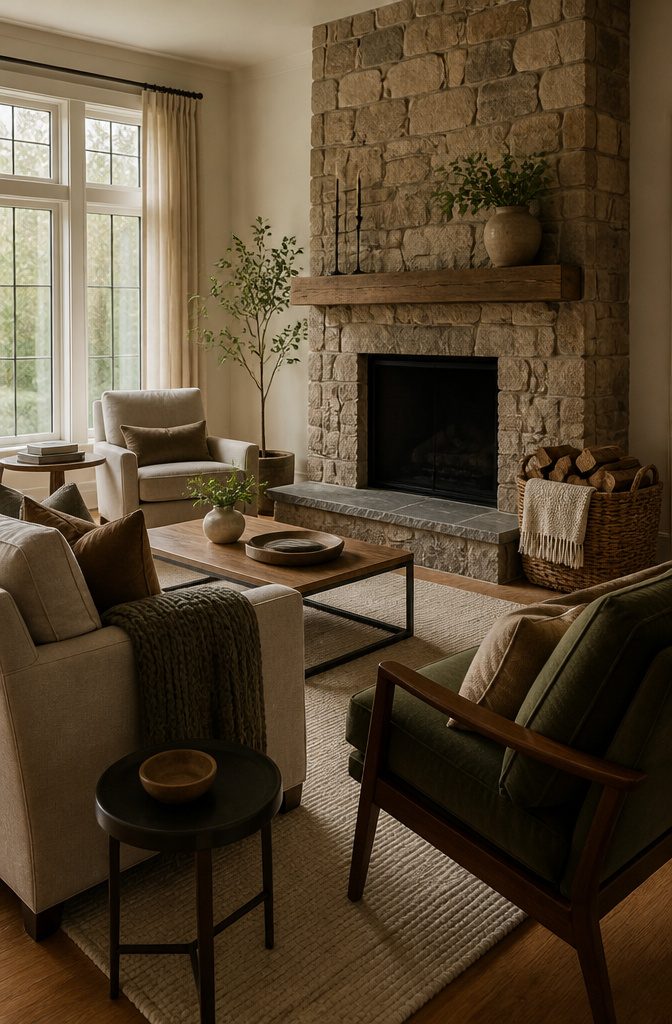
A fireplace pulls furniture toward it without asking.
If yours sits on the main wall, place the sofa opposite and angle a pair of chairs inward to frame the hearth. That creates a conversation zone centered on the thing the room already built for you.
A bay window works the same way—orient seating to face the view rather than turning backs on it, and the architecture does half the decorating work.
Rooms with strong features don’t need manufactured focal points.
I’ve watched people hang enormous art beside a stone chimney or prop a console in front of floor-to-ceiling glass, and the result reads as clutter because the room already had a leader.
Let the fireplace or the window hold the stage. Arrange secondary pieces—an accent chair, a side table—around that anchor without competing for attention.
Televisions complicate this. A screen mounted above the mantel solves placement but introduces glare and neck angle problems.
If the TV must stay, keep the sofa low enough that viewing feels natural, and accept that the room will serve media first and the fireplace second.
For households planning a media-centered layout, a calculator for sofa and television placement helps sort the technical side while the furniture plan handles comfort and proportion.
14. Sofa as the Room’s Anchor
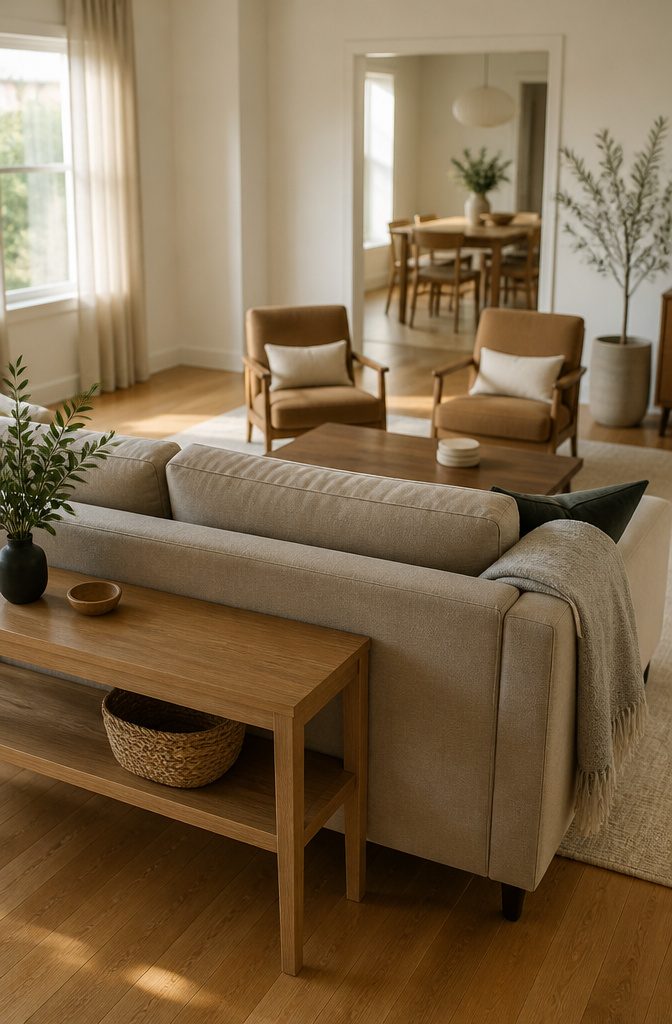
I place the sofa first in every living room I work on.
It’s the biggest piece in the room, and positioning it sets the traffic pattern and purpose for everything that follows. Chairs, side tables and ottomans arrange themselves around it once the sofa has its spot.
Pull the sofa a few inches off the wall instead of pushing it flush. That small gap makes the room feel larger and more intentional, even in tight spaces.
The instinct is to shove furniture against walls to save floor space, but floating the sofa forward by 6 to 12 inches opens up the layout and gives you room to walk behind it if the floor plan allows.
Once the sofa is down, I can see what the room needs next.
A sectional in the center works for conversation-focused rooms where guests will sit facing each other. An L-shaped sofa tucked into a corner saves space in smaller layouts and leaves the opposite wall open for a media console or bookshelf.
Either way, the sofa decides where the coffee table lands, how far the accent chairs sit, and which direction the room faces.
Identify or Create a Focal Point
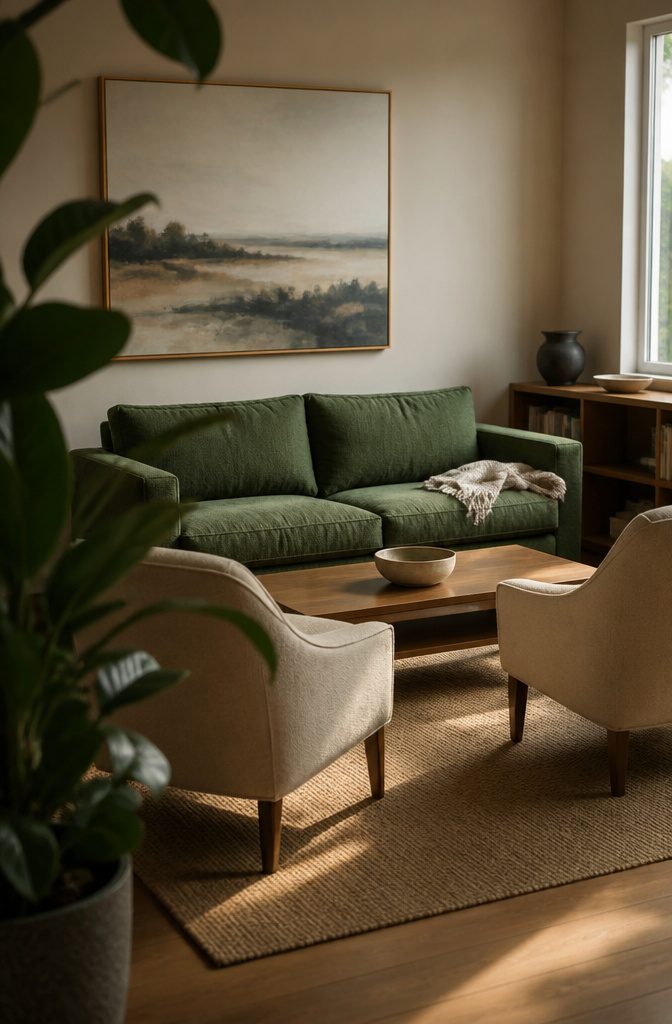
Every layout starts with the room’s visual anchor. A fireplace, a wall of windows, a Hudson Valley view through a picture window—whatever commands attention when you walk in gets the main seating facing toward it.
A sofa that frames the fireplace or armchairs angled to catch the light through the glass makes the room feel like it knows what it’s about.
Rooms without an architectural feature need one you build yourself.
A bold sofa in a saturated color or a standout fabric can hold a room on its own. So can a large piece of art, a gallery wall, or an heirloom bookshelf with enough presence to anchor the space.
This gives the arrangement a visual reason to exist rather than furniture that argues with itself or defaults to the walls because nothing else decided the center.
Frequently Asked Questions
What are some tips for arranging furniture in a small living room?
Use fewer pieces and choose multifunctional furniture to avoid crowding.
Scale every piece to the room’s actual size rather than buying standard dimensions that overpower the space. Float the sofa a few inches from the wall instead of pushing it flush, which counterintuitively makes the room feel larger.
How do I arrange furniture around a fireplace in the living room?
Place the sofa opposite the fireplace and angle a pair of chairs inward to frame the hearth.
That setup makes the fireplace the conversation zone’s center without blocking movement through the room. Keep the sofa low enough that the mantel doesn’t interrupt sightlines.
How do I arrange furniture with both a TV and a fireplace?
Mount the TV on an adjacent wall and face the sofa toward the fireplace, then angle chairs so they can see both.
Accept that the room will serve media first if the TV goes above the mantel, since that placement introduces glare and awkward viewing angles. Keep the sofa low enough that looking up feels natural.
What is the first piece of furniture I should place?
Place the sofa first.
It’s the largest piece in the room, and its position sets the traffic pattern and purpose for everything else. Once the sofa has its spot, chairs, side tables and ottomans arrange themselves around it.
Can I place a sofa with its back to the front door?
Yes. In an open-plan home, running the sofa perpendicular to the wall creates a living zone on one side and dining or workspace on the other.
A console table behind the sofa sharpens that boundary and provides a landing surface without closing off sightlines.
How can I make my small living room feel bigger?
Pull the sofa toward the middle instead of pushing it against the wall, even just 6 to 8 inches.
Use low-profile pieces with exposed legs that show the floor underneath, and keep the coffee table slim so it doesn’t add visual weight. Lighter colors and mirrors amplify the effect.
What is the 2/3 sofa rule?
Keep the sofa at about two-thirds (66%) of the wall length it occupies.
That ratio keeps the room in proportion and prevents the sofa from visually swallowing the wall or looking oddly adrift. Scale comes before style: the wrong size in the right style still fails.