An elegant living room can start with a curved sofa or a jewel-toned wall, but the choice depends on whether you want the room to anchor around a single statement piece or build refinement through layered materials and deliberate restraint.
Most rooms tip into either formal or cozy when they commit too hard to one approach.
Designer Wendy Labrum’s Chicago living room paired antique furniture against modern pieces and let the contrast define the space, a move that works when one unifying detail ties the mismatched elements together.
1. Use a Statement Sofa or Furniture Piece
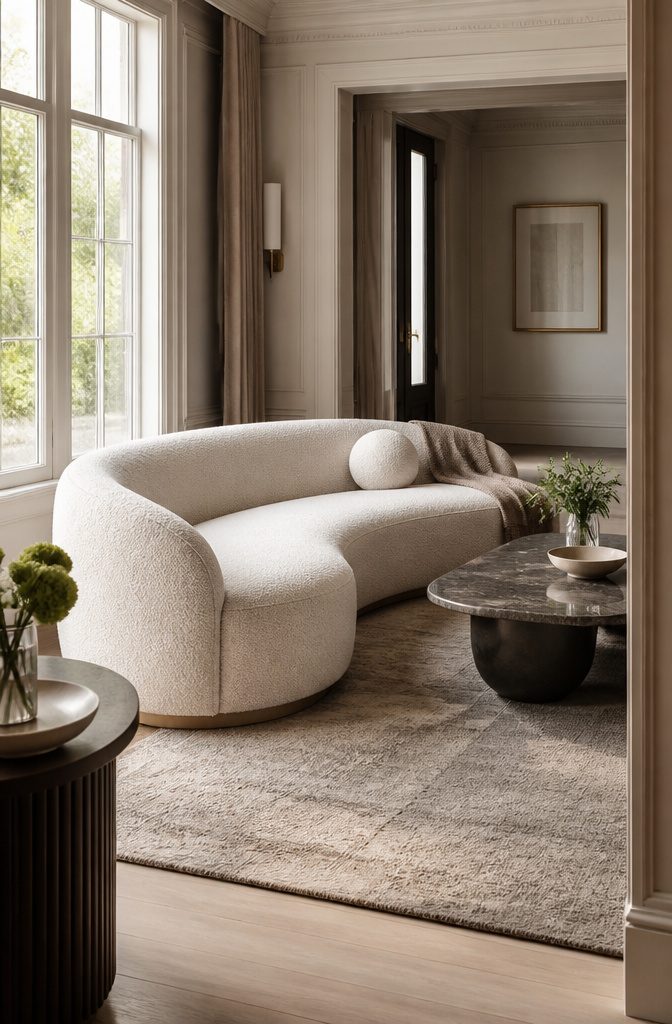
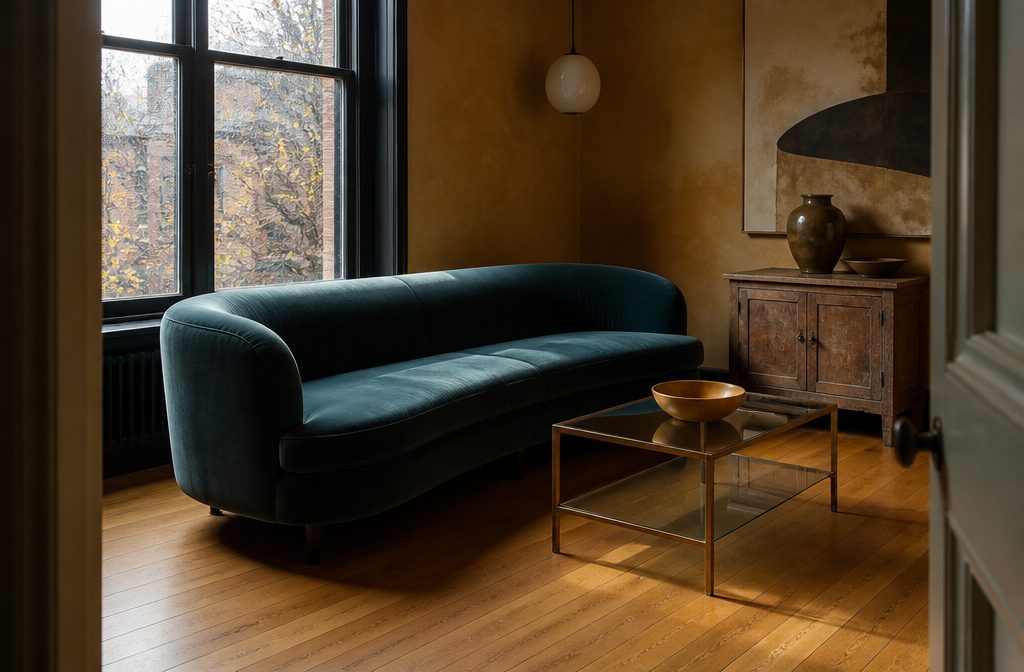
A sofa can anchor the whole room if it earns the attention. I look for pieces with distinctive shape or proportion — something designed to be seen, not just sat on.
A curved silhouette works particularly well: the rounded profile softens hard angles in the space and reads as both modern and inviting without tipping into trend territory.
"I wanted to fit 10 people comfortably," says homeowner and realtor Dawn McKenna.
That Florida living room was designed around a 17-foot vintage sectional, and the scale made sense because the space opened straight into the entry. If your room carries that kind of visual weight, size up accordingly.
An artistic coffee table pulls the same move from a different angle. Pieces that combine sculptural form with actual function — something with material interest or an unexpected base — give you a focal point that doesn’t demand wall space.
Recommended Products

【Versatile Modular Couch】 This curved sectional sofa comes in two separate modules that can be easily rearranged into an L-shaped sectional for everyday lounging or adjusted into a spacious sofa bed, giving you flexible options for movie nights, naps, or hosting overnight guests.

Modular Cloud Sofa for Any Space: This cloud couch arrives in multiple boxes and configures any way you need—U-shaped conversation pit, L-chaise, loveseat with solo seats, or split across rooms. Whether you're furnishing a cozy apartment, family living room, basement hangout, home office, or professional workspace, simply add modules when you need more seats or remove them when space is tight. A modular sectional sofa that truly scales with your lifestyle.

[Perfect Size for Multiple Spaces] Measuring 79.5 inches, this floor sofa is ideal for living rooms, bedrooms, apartments, lofts, or offices. Its compact yet roomy design maximizes seating capacity without taking up unnecessary space, adapting seamlessly to various home and office environments.
2. Add Sculptural or Striking Lighting
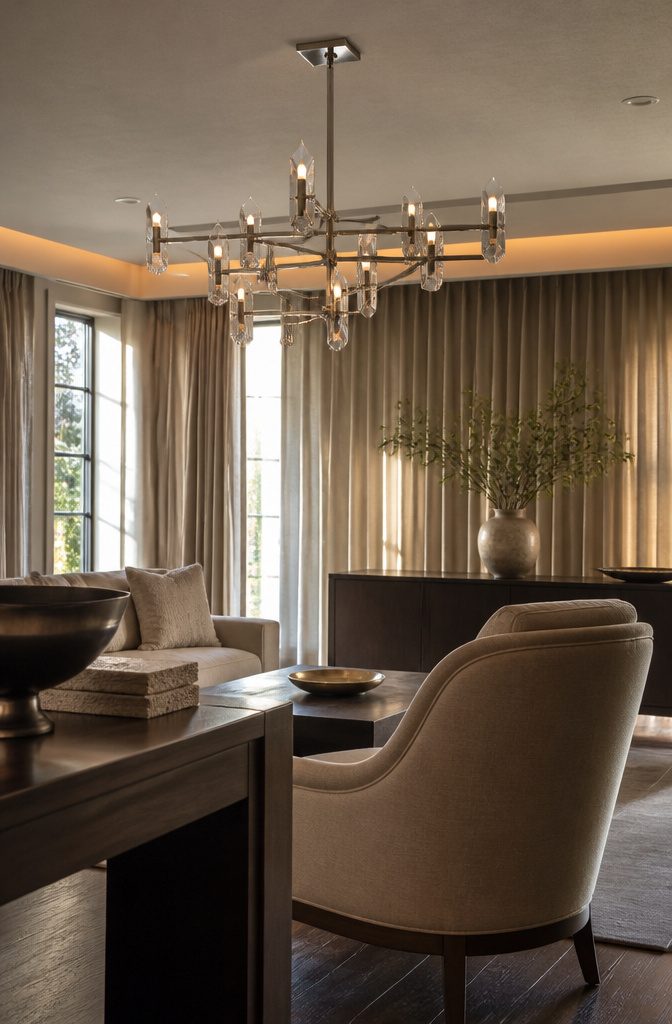
A chandelier with a sculptural profile or an oversized floor lamp does more than light the room—it acts as a centerpiece.
I look for fixtures with clean geometry or organic forms that hold attention without fighting the rest of the space.
Crystal chandeliers and modern gold-finish pendants both work, depending on whether the room skews traditional or contemporary, and either brings instant refinement when the silhouette is deliberate rather than fussy.
Layering helps. Ambient light washes the ceiling and walls, then accent pieces—LED strips tucked behind crown molding or under floating shelves—add depth.
Programmable LEDs let you shift the tone from warm and conversational to cool and focused, which matters more than I expected when I started paying attention to how a room feels at different times of day.
The effect stays polished when the hardware itself is minimal and the color shifts stay subtle.
Recommended Products

DIMENSIONS: Large statement chandelier measuring 32 inches in diameter and 34 inches in height, with a 5-inch diameter ceiling mount and 3-foot chain for adjustable hanging height

OVERSIZED 60-INCH STATEMENT DESIGN – Created for rooms that need greater visual scale, this black branch chandelier spans an impressive 60 inches with five sweeping arms. The wide architectural silhouette makes a dramatic centerpiece above long dining tables and throughout great rooms and open-concept interiors.

4 GU10 Bulbs Required (Bulbs not included).Full Assembly Required with time and effort.
3. Layer Textiles and Rugs
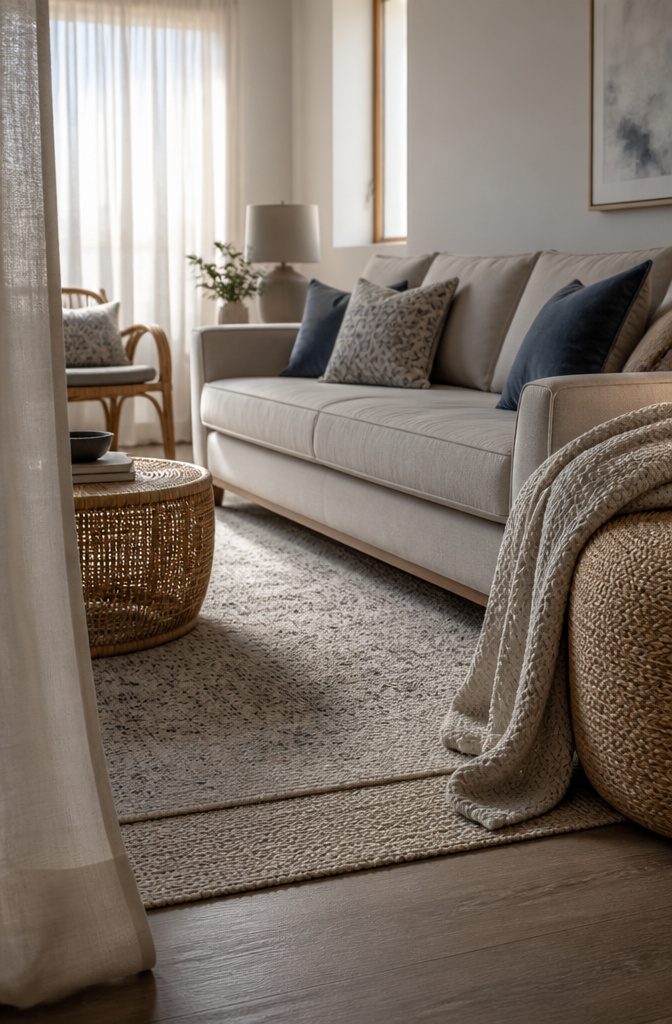
Velvet cushions soften a linen sofa the way cashmere throws soften a leather armchair — silk and velvet carry weight without bulk, and that makes a room feel finished rather than stuffed.
I layer a sisal rug under linen upholstery, toss a chunky wool throw over a jute pouf, and pair rattan side tables with cotton-linen pillows; the mix reads as depth, not clutter.
On the floor, a sleek flatweave beneath a patterned rug gives you two textures at once and keeps the look dynamic without crowding the furniture.
Natural fibers anchor the palette, and plush fabrics — a luxury lumbar, bold geometrics next to delicate florals, patterned piping to tie them — turn seating into something you want to sit in.
Curtains in silk or cashmere finish the perimeter and pull the textile layer off the furniture and onto the walls.
Recommended Products

Timeless Layered Front Porch Mat Combo – Elevate your entryway, front door, or patio instantly with this stylish 2-piece set! The 16.5"x29.1" HELLO Coco Coir Door Mat layers perfectly atop the 27.5"x43.3" Black and White Buffalo Plaid Rug, creating a welcoming farmhouse vibe that complements any outdoor decor.

【A Complete & Stylishly Flexible Entryway Set】Stop piecing together mismatched outdoor doormats. This thoughtfully curated 2-piece welcome mat set offers designer versatility. The Hello wildflower artificial coir mat (30”x17”) catches dirt, while the larger black & white striped outdoor rug (43”x28”) adds farmhouse charm. Layer them at your front door for impact, or separate them for porch and patio — a ready-made solution for a polished, welcoming entrance.

2 Pieces Fall Layered Doormat Decorations Set: this bundle includes 2 autumn welcome doormats: a classic black and white striped mat and a whimsical pumpkin shaped mat; The warm orange tones paired with bold black and white accents create a cozy harvest vibe, suitable for updating your entryway for fall and Thanksgiving
4. Choose a Deliberate Color Palette
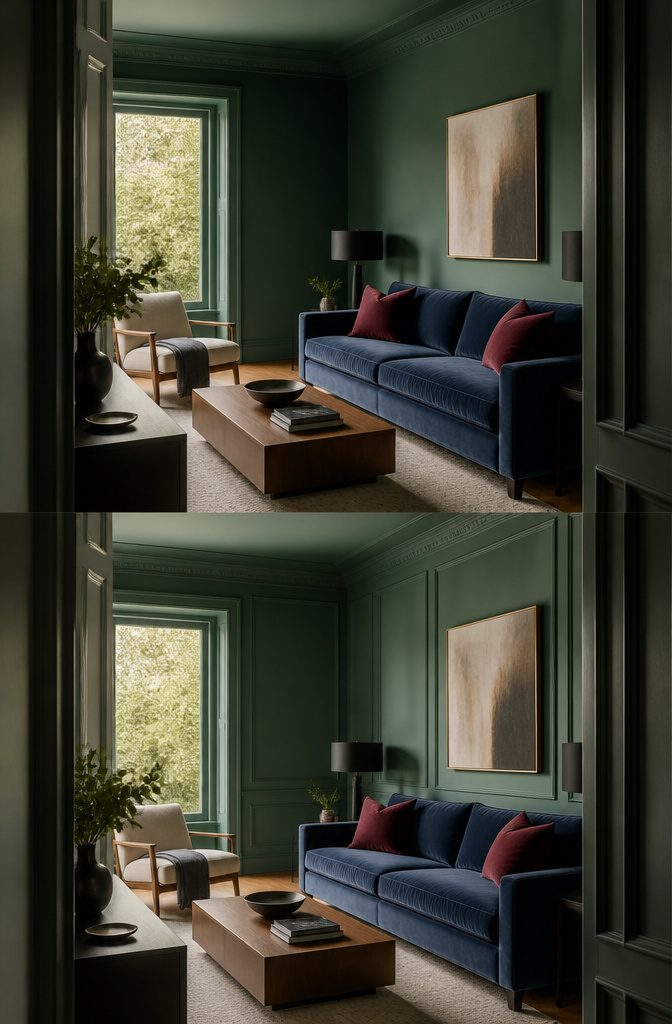
Neutrals form the safest foundation: ivory, taupe and gray hold the room together without demanding attention, and they let furniture and art carry the personality. I reach for them when I want calm rather than drama.
Jewel tones—emerald green, sapphire blue, rich burgundy—flip that priority and make color the headline. They read opulent without pattern, especially when you commit and drench the whole room instead of leaving them as accents.
Sage green splits the difference. It saturates like a jewel tone but stays soft enough to feel cozy rather than moody, and I have seen it work beautifully on walls, upholstery and trim all at once.
If jewel tones feel too bold but neutrals feel too safe, sage delivers cohesion without the risk. Layer charcoal or deep navy with emerald or sapphire to ground the brighter shades and keep the mood from tipping theatrical.
5. Add Architectural or Wall Detail
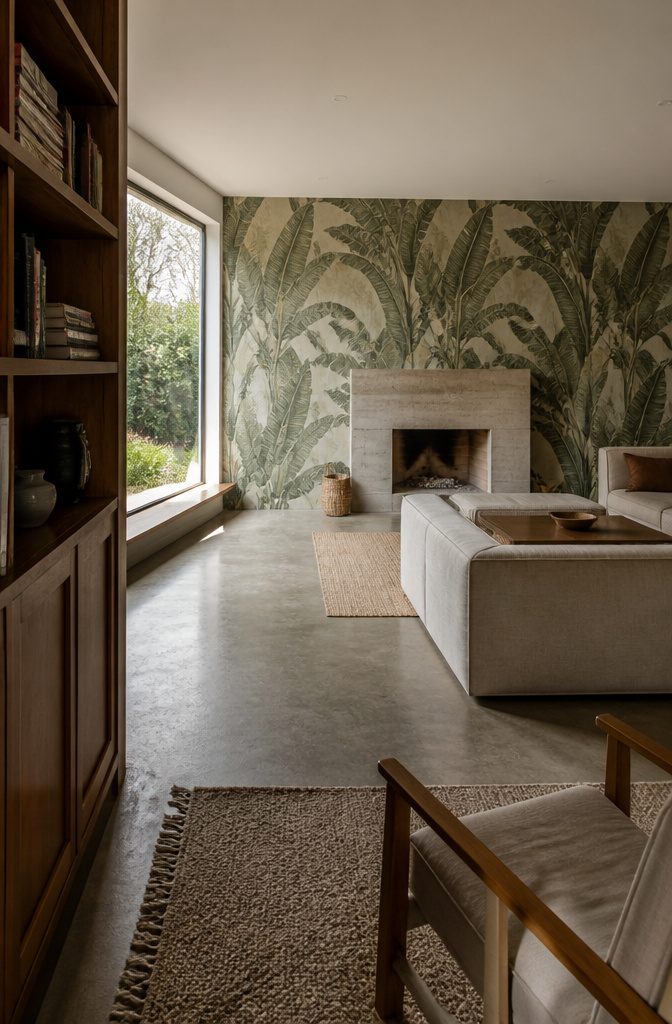
Paneling gives a room the kind of structure paint alone can’t — it draws the eye up, breaks a large wall into deliberate zones, and reads as permanent rather than decorative.
Wainscoting works when you want detail below waist height without competing with art or windows above it. Full-height board-and-batten or shiplap takes over the whole wall and suits rooms where the architecture is the statement.
Wallpaper does the opposite job: it adds pattern and warmth fast, and you can pull it down when the look changes.
A jungle-inspired print or a large-scale botanical turns a neutral room into something that feels wrapped and intentional, the kind of space you settle into rather than pass through.
It works best on a single accent wall or in a room small enough that the pattern holds together without feeling busy.
A fireplace surround anchors the room even when the fire isn’t lit.
Concrete surrounds using a board-form technique keep the industrial edge but pick up a subtle woodgrain texture that softens the look. Smooth concrete stays sleeker and pairs well with low-profile furniture and minimal trim.
Recommended Products
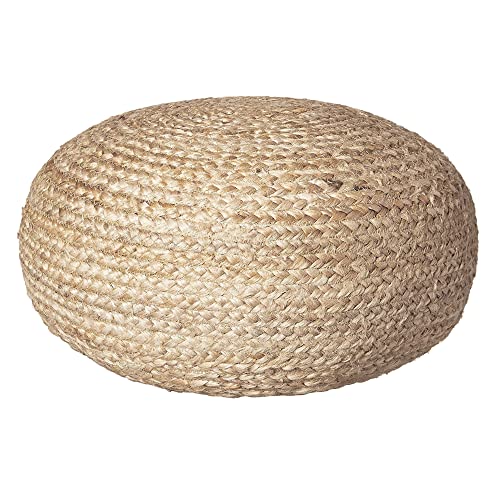
Natural Texture With Boho Style: This round pouf features beautiful woven natural jute, adding a touch of bohemian flair and texture to your room decor

【QUALITY MATERIALS】:Kilim Upholstery: Handmade Jute Rug

Natural braided jute style: Handcrafted from 100% natural jute, this braided pouf adds rich texture and organic warmth to farmhouse, boho, coastal, or modern decor. The neutral tone blends effortlessly with existing furnishings while the woven design creates a relaxed, timeless accent for living rooms, bedrooms, nurseries, and reading nooks.
6. Use Mirrors to Add Visual Interest and Reflect Light
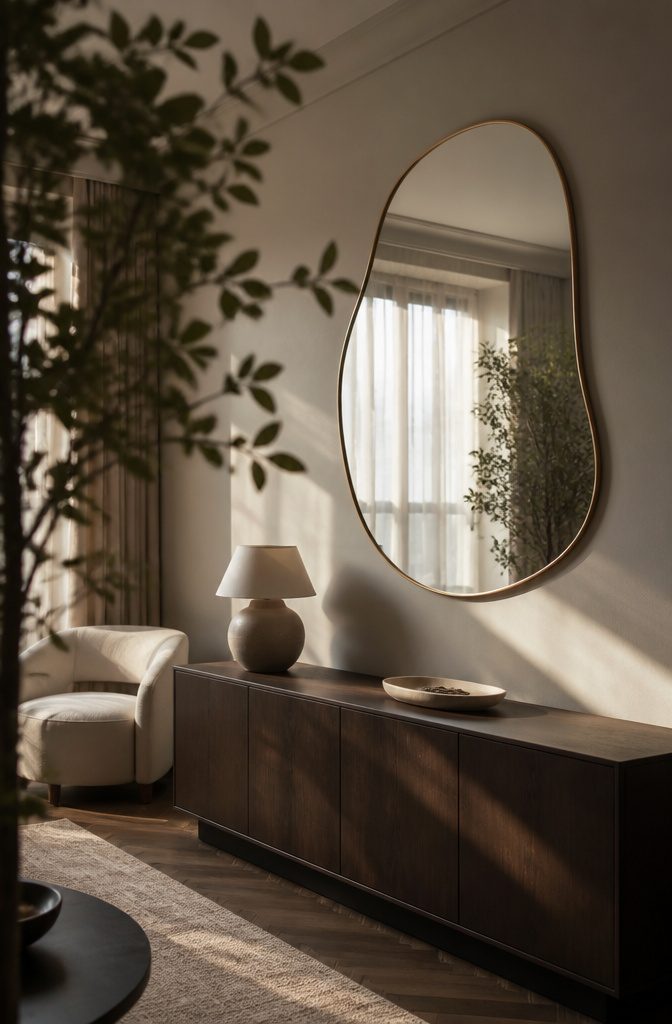
A mirror with some shape to it—sculptural, wavy, something with actual presence—gives you two things at once: it bounces light around the room and acts as a piece worth looking at on its own.
A sculptural mirror like the Glance Mirror works as both functional surface and focal point, which matters in a room where elegance comes from a few strong choices rather than a crowd of small ones.
Wavy mirrors and pieces with organic edges soften spaces that lean formal without pulling them into cottage territory. They add movement, a bit of visual rhythm that keeps a composed room from reading as stiff.
You’re still working within a refined palette, but the curves loosen it just enough. Pair one with streamlined furniture and you get that balance: intentional but not rigid, pulled together but still breathing.
Recommended Products

[Extra-Wide Dimensions for Multi-Person Gatherings] Featuring a 127 inch expanded sectional design, the sectional sofa provides ample seating and lounging space. It easily accommodates multiple people, whether for daily family interactions or hosting friends, and is particularly well-suited for large living rooms and open-concept layouts—striking a balance between space efficiency and comfort.

【Zero Assembly Required - Ready to Use Out of the Box】Forget the bulky box and complicated instruction manuals. Our boneless sofa is vacuum-compressed into one compact box that fits easily through any doorway. No tools, no assembly required - just unbox, give it a gentle fluff to aid expansion, and let it rest for 48-72 hours to fully bounce back to its plush shape

Tool-Free Assembly & Ready to Use: Skip the hassle of traditional furniture—no tools, screws, or complicated instructions needed. This sectional sofa arrives vacuum-packed for safe delivery and easy handling. Simply unbox, remove the packaging, and let each piece expand naturally. Within 24–48 hours, the cushions fully regain their shape and comfort. With no learning curve, it’s ideal for apartments, first homes, rentals, or housewarming gifts—effortless, intuitive, and stress-free from day one.
7. Mix Patterns or Contrasting Furnishings
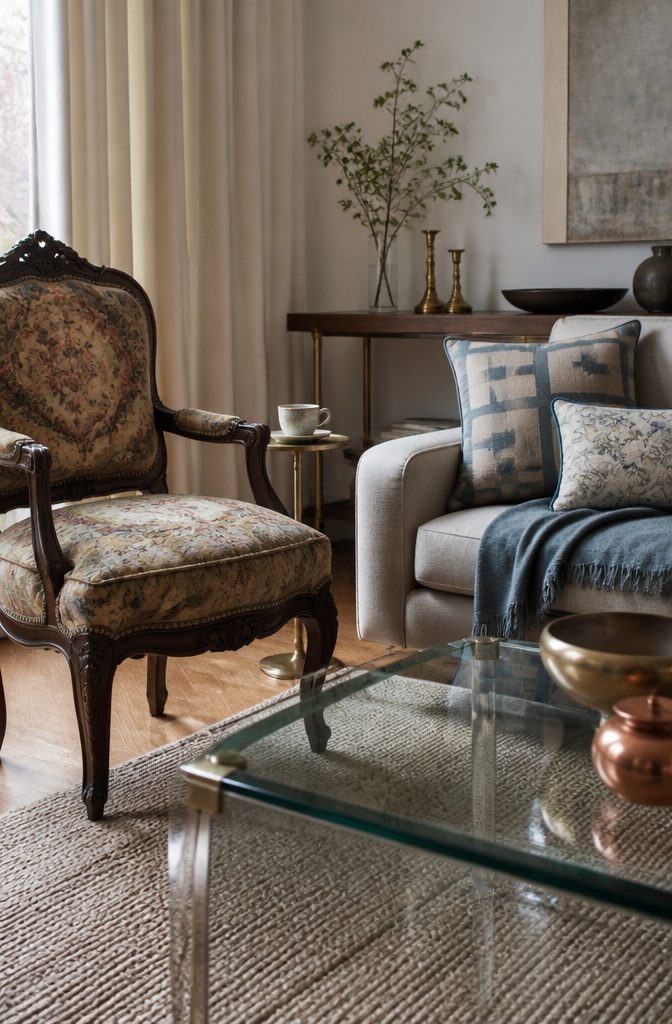
Pairing an antique armchair with a glass coffee table, or running a floral throw pillow next to a geometric one, gives a room intention — the kind you notice because the contrast looks deliberate rather than accidental.
Pick one detail that ties the mismatched pieces together: finish, color temperature, or scale.
In a Chicago living room, designer Wendy Labrum set antique furniture against modern pieces and let the juxtaposition do the work, creating a space that reads timeless instead of trapped in a single era.
When you mix metals, let one finish dominate and use the others as accents — industrial brass balanced with chrome, vintage copper woven in for warmth, matte pewter to ground the palette.
On upholstery, mix print scales but unify through patterned piping or a shared accent color so the result feels intentional, not collected at random.
Recommended Products

Design: Sculptural champagne bronze chandelier with modern artistic presence, featuring 6 candelabra lights and elegant open design with premium finishes and authentic materials for dining room, living room, kitchen, or bedroom spaces

Design: Sculptural chandelier with asymmetrical branching form inspired by organic plant formations; thoughtfully-designed candlestick arms spiral upward creating dynamic visual interest from every angle to transform spaces

DIMENSIONS: Large statement chandelier measuring 36 inches in diameter and 36 inches in height, with a 5-inch diameter ceiling mount and 3-foot chain for adjustable hanging height
8. Include Curated Accessories and Art
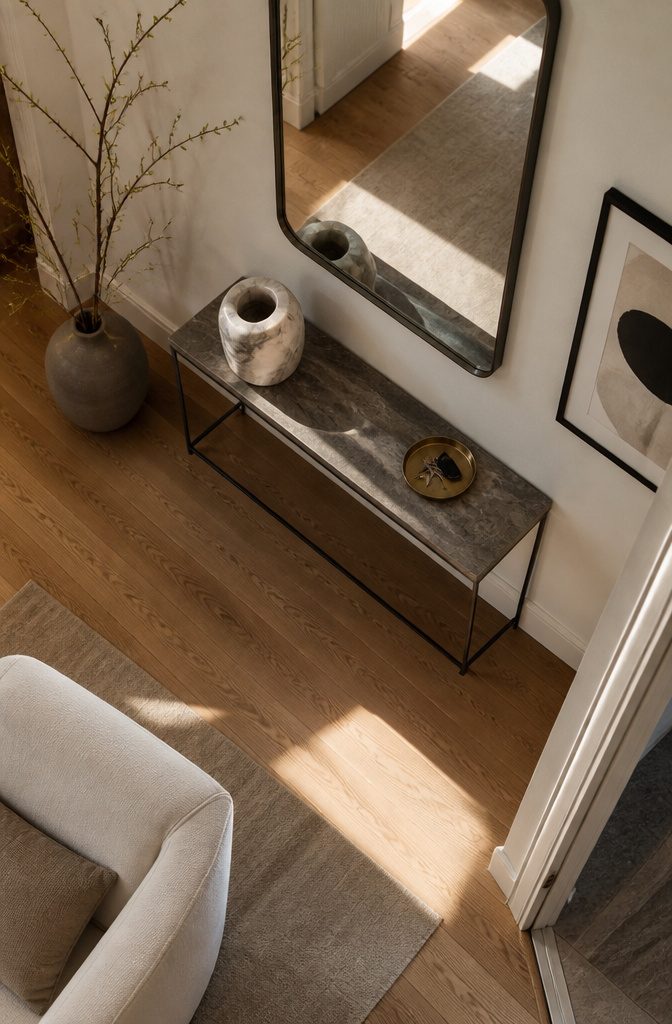
Accessories work when they look chosen, not collected. A sculptural vase in marble or brass reads as intentional; three smaller ones in a row read as clutter.
I keep pieces to a minimum—one standout ceramic on the console, a single framed work above it, and nothing that needs an explanation for being there.
Pair a statement mirror with a slim console if you want a single composed moment on the wall.
The Pietra Console Table and Venice Mirror combination works because the scale balances without crowding, and the materials—stone, metal, glass—each hold their own weight.
If the wall needs to stay open for other uses, mount the mirror elsewhere and let the console stand alone.
Rotate what sits on surfaces.
A matte glaze vessel one season, a brass tray the next. The room stays current without buying new furniture, and each object gets enough visual space to register as something worth owning.
Recommended Products

Selected Elastic Material , Soft, Stretchable and Comfortable

Fall Door Mat Combo Set: This set includes 1 pumpkin welcome mat and 1 black and white buffalo check rug, creating a layered doormat look for fall porch decor, Thanksgiving entryway decor, front doors, and farmhouse-style spaces

2 Piece Layered Door Mat Set; includes one natural coir welcome doormat and one black and white buffalo plaid rug; designed for a classic layered front porch look that fits farmhouse modern and everyday entryway decor
9. Make Seating Support Conversation and Comfort
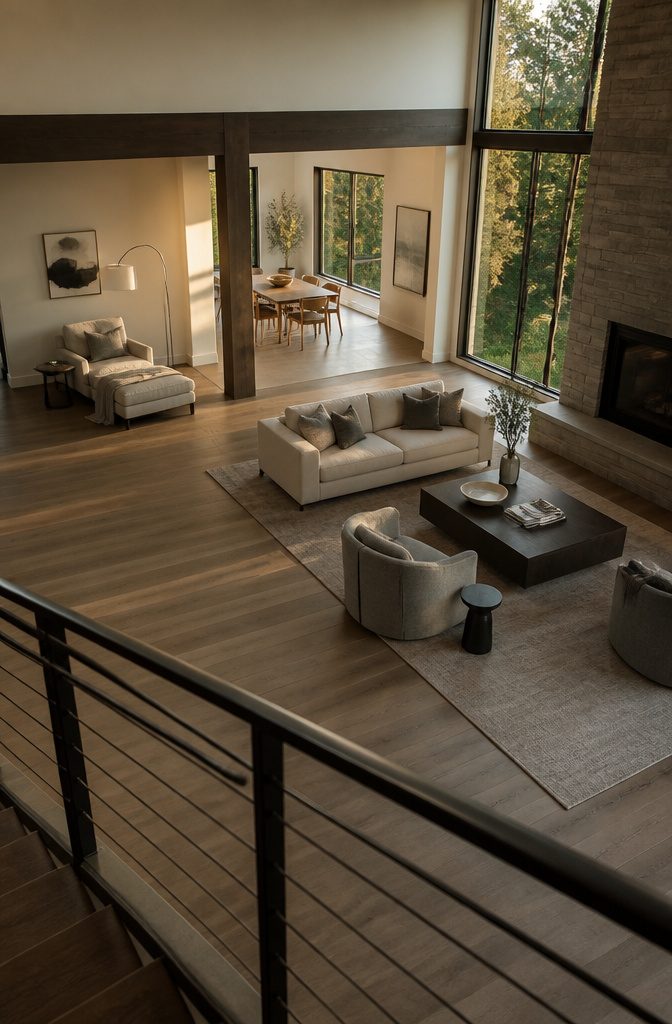
Arrangement decides whether a room gathers people or leaves them scanning for a place to land.
Different zones throughout the space let a family spread out: one corner for conversation, another for lounging, a third that shifts when you need it to.
Janie Molster designed a Florida living room this way, using the room’s height to carve out separate hangout areas without walls. Every seat got performance fabric so the kids could use any of them.
Furniture that can be reconfigured solves this. A sofa facing two chairs works when four people sit down to talk, but the same room needs a sectional or a chaise if someone wants to stretch out with a book.
Scale and balance let you mix more pieces than you’d expect without the room reading as cluttered.
Pair a low bench with taller seating, or keep the sofa light-framed if the armchairs are deep. The frame matters less than making sure each seat has a reason and a place to face.
Recommended Products

Stylish Set of 4 Design: this decorative pillowcase set includes 4 pieces 18x18 inch velvet pillow covers in a bold yet balanced double-colored color blocking design; The fall gradient colors include burnt orange, warm yellow, sage green, and reddish-brown; The unique jewel toned pillow covers easily create a rich seasonal atmosphere for your sofa or bed

【Package Includes】: 12 Pack kraft jewlery boxes, perfect for necklace and bracelet presentation or other jewelries, and Gift-giving

UNIQUE 3D ICE FLOWER TEXTURE:Featuring a unique "Ice Flower" crushed texture,these decorative pillow covers offer a stunning dimensional look unlike plain fabrics.The artistic 3D effect adds depth and elegance,making these velvet pillow covers a perfect focal point for your living room or bedroom decor.
10. Use Natural Materials and Varied Textures
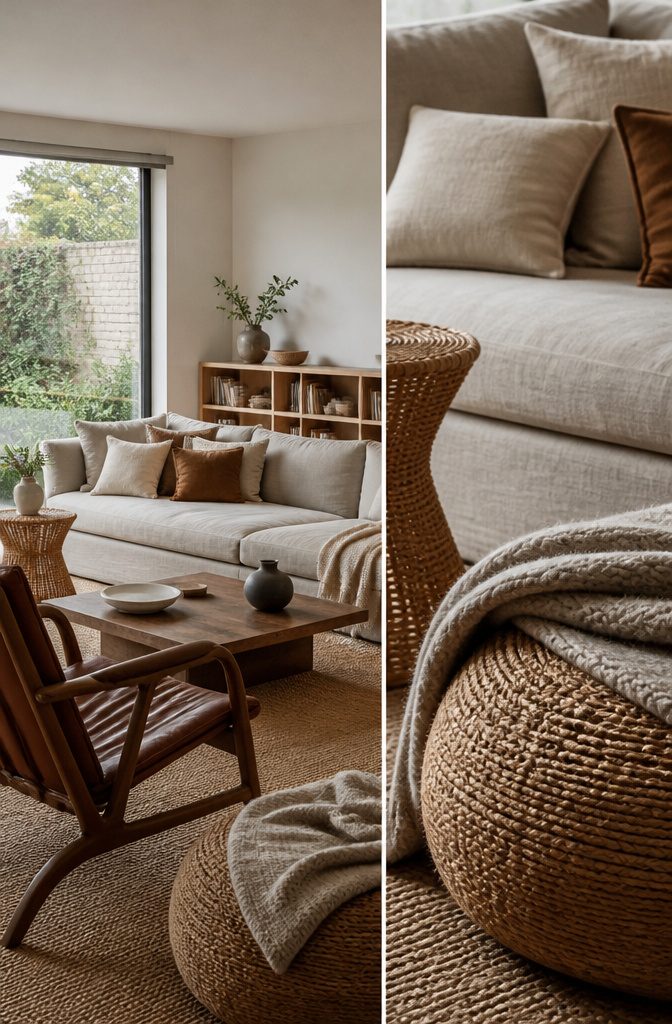
Linen against jute, wool over rattan, leather next to ceramic — material contrast adds warmth without pattern or color doing the work.
A sisal rug under a linen sofa gives you surface variety at the foundation, and a chunky wool throw over a jute pouf continues it vertically.
Rattan side tables next to cotton-linen pillows keep the palette quiet but the eye engaged, because every surface reads differently under the same light.
I lean toward matte ceramics and natural fibers over high-gloss brass or crystal in most rooms, though marble and brass work when the rest of the palette stays restrained.
Aim for tactile depth, not decoration: run your hand over the back of the sofa, the arm of the chair, the edge of the table, and each one should feel distinct.
That range of texture is what makes a room feel considered rather than staged.
Recommended Products

SHELL: 100% Jute, Made by skilled artisans in India. 100% Solid Block of Polystyrene Beads. Beautifully handwoven of thick, sustainable, and durable jute fibers. Truly one of a kind reversible seating. Its very lightweight thus very easy to move yet very sturdy and comfortable.

Natural braided jute style: Handcrafted from 100% natural jute, this braided pouf adds rich texture and organic warmth to farmhouse, boho, coastal, or modern decor. The neutral tone blends effortlessly with existing furnishings while the woven design creates a relaxed, timeless accent for living rooms, bedrooms, nurseries, and reading nooks.

Handmade Cover: Pouf Ottoman is made of sustainable, and durable natural seaweed & corn husk braid.High-end sewing technology makes natural materials more tight and not easy to open
11. Arrange Furniture and Rugs to Support Flow
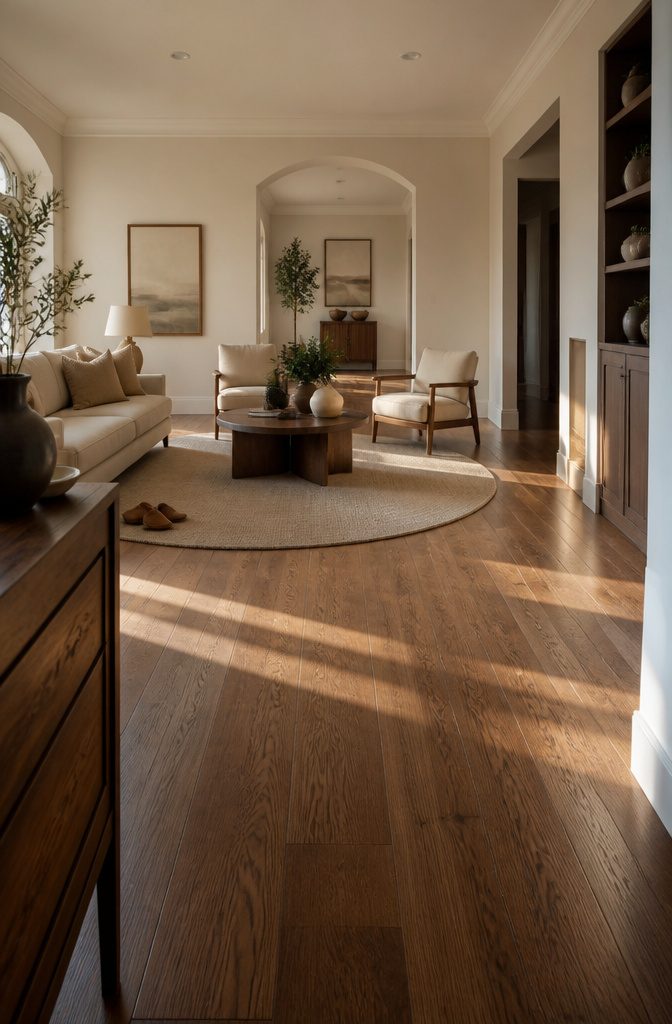
Furniture groupings do most of the work here. A sofa and two chairs pulled around a coffee table mark the main seating area without walls, and a rug sized to fit all front legs anchors the zone.
Leave at least 30 inches between the coffee table and seating so people can pass through without turning sideways, and keep major walkways clear of furniture corners that catch shins or block the route from the entry to the hall.
A round coffee table smooths traffic when the room sees a lot of movement.
The curved edge lets people cut across at more angles than a rectangle allows, and pairing it with a round rug reinforces the flow rather than fighting it with hard corners.
If the space is large enough for more than one seating area, repeat the principle: group furniture to define each zone, then check that the path between them stays open.
12. Plan for Practical Use as Well as Appearance
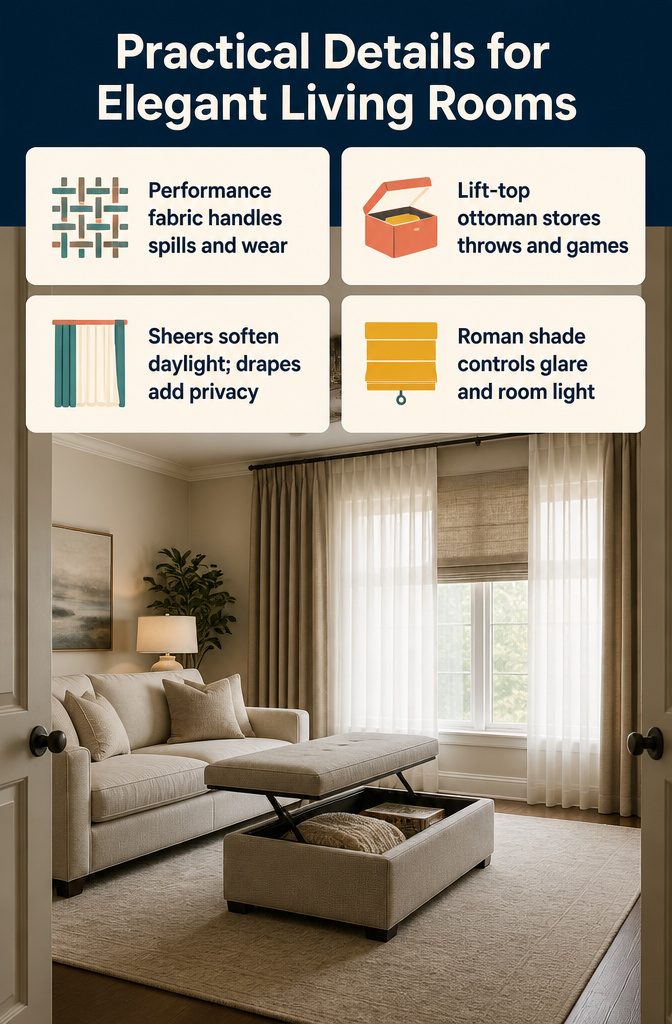
An elegant living room still has to work on a Tuesday night. Performance fabrics handle spills and daily wear without losing their tailored look—particularly useful if the room sees pets, kids, or frequent entertaining.
The upholstery keeps its shape, the room keeps its polish, and you skip the anxiety that comes with pristine-but-fragile materials.
Storage built into seating clears the floor without breaking the visual line. Modular ottomans with lift-top compartments hold throws, remotes, and board games; you gain function without adding a single piece of furniture that reads as utility.
The room stays open, and you reclaim space that would otherwise go to a basket or side cabinet.
Window treatments need to do more than frame the view. Layer sheer panels with heavier drapes and add a roman shade or tailored blind between them.
Sheers soften daylight, drapes provide privacy and insulation, and the shade gives you precise control when glare hits the screen or you want the room dim for a movie.
Silk sheers in neutral tones keep the look refined while the layers handle real demands.
Examples Worth Looking At
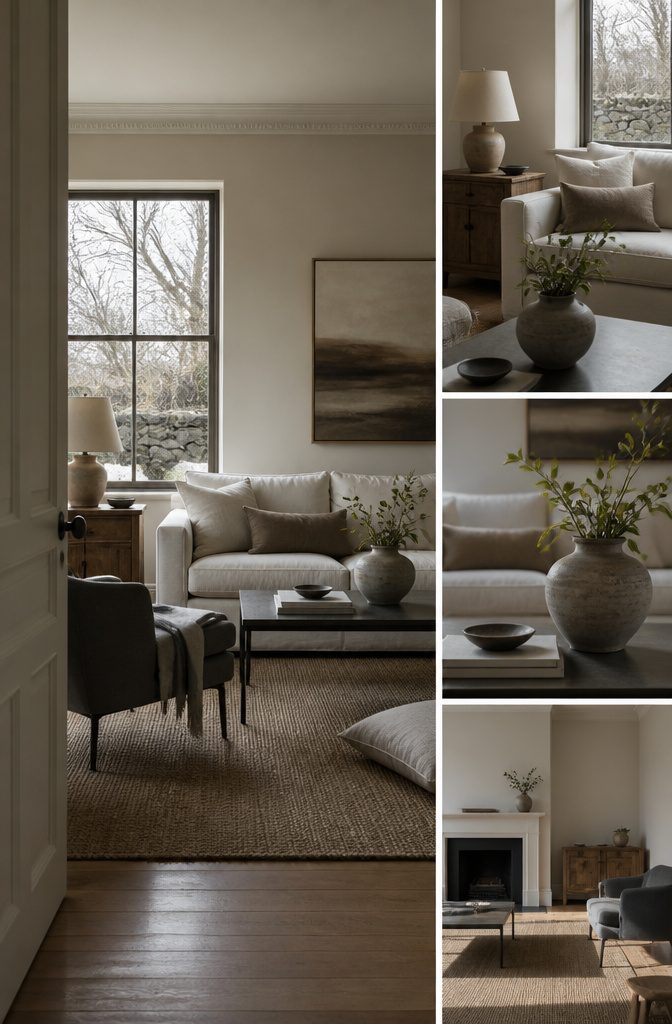
I looked through two dozen professionally photographed living rooms while putting this piece together, and the variety is wider than you might expect from the phrase "elegant living room."
Garrison Hullinger’s work tends toward warm neutrals and heavy wood, while Jane Lockhart Interior Design skews cooler and more contemporary. Clay Construction shows up in both camps depending on the project.
Stephanie Sabbe, Breegan Jane, Amber Lewis, and Suzanne Kasler all land in different corners of what passes for elegant in 2025, which tells you the word covers more ground than a single aesthetic.
If you are scanning galleries for direction, filter by the designers whose rooms feel closest to what you already like rather than trying to absorb everything at once.
Color and Mood Work Together
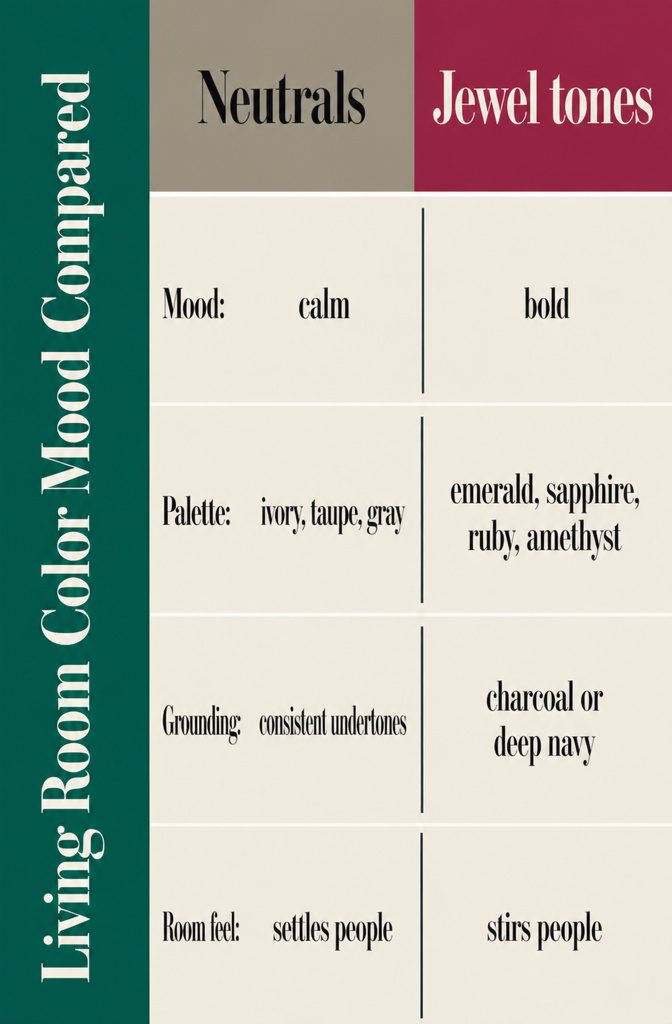
Neutrals read as timeless when you keep the undertones consistent across the room—ivory, taupe and gray stay classic because they layer without fighting each other.
I use them when I want calm rather than drama, and the result holds up through trends.
Jewel tones go the other way: emerald, sapphire, ruby and amethyst create refined drama when you saturate the room in one and ground it with charcoal or deep navy.
The mood turns bolder, but it stays controlled if you keep the palette tight. Sage green drenched wall to wall, including the sofa, gives instant cohesion and warmth.
Teal walls with a green velvet sofa work the same way but lean cooler. The choice comes down to whether you want the room to settle people or stir them—neutrals do the first, saturated color does the second.
Furniture Chosen for Comfort and Flexibility
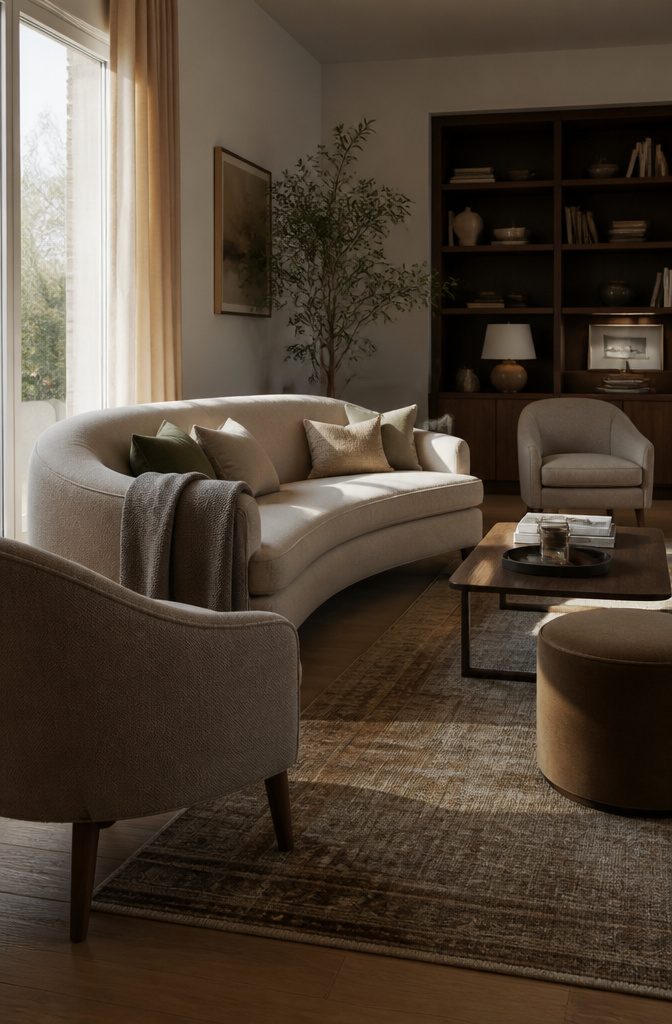
I’d start with seating that invites you to sit — a curved sofa softens the room without sacrificing depth, and the rounded profile works whether you’re working a corner or anchoring a long wall.
Sectionals handle larger gatherings and let you rearrange the pieces when the room changes, though they read as more casual than a matching sofa and chairs.
Pairing a sofa with two easy chairs gives you the formality back and makes conversation easier than a single long piece does.
Coffee tables earn their place when they’re sized right: large enough to serve the seating around them but low enough that sight lines stay open.
Glass tops keep the floor visible and make a small room feel less crowded; wood frames add warmth without bulk.
If the room does double duty, ottomans work as tables and extra seating both, and you can move them out of traffic when you need the space.
Frequently Asked Questions
How to make a living room look rich?
Start with a statement sofa or sculptural furniture piece that anchors the room, then layer high-quality textiles like velvet, linen and cashmere across seating and throws.
Add a striking light fixture with sculptural presence, whether a crystal chandelier or a modern pendant, and keep accessories minimal but deliberate: a marble vase, a single framed work, pieces that look chosen rather than collected.
Mix natural materials like jute, rattan and ceramic to build textural depth without needing pattern or color to do the work.
What is the 60-30-10 rule for decorating living rooms?
The 60-30-10 rule splits a room’s color palette into three proportions: 60% of a dominant neutral (walls, large furniture), 30% of a secondary color (upholstery, curtains), and 10% of an accent shade (pillows, art, accessories).
It creates visual balance without requiring exact measurement, and it works whether you’re layering neutrals or introducing jewel tones.
What is the 2/3 rule for a living room?
The 2/3 rule guides rug placement and wall art: a rug should extend under at least the front legs of all seating pieces, covering about two-thirds of the floor area in the seating zone, and artwork hung above a sofa should span roughly two-thirds of the sofa’s width.
This keeps proportions balanced and anchors furniture groupings without the rug or art looking too small or overwhelming the space.