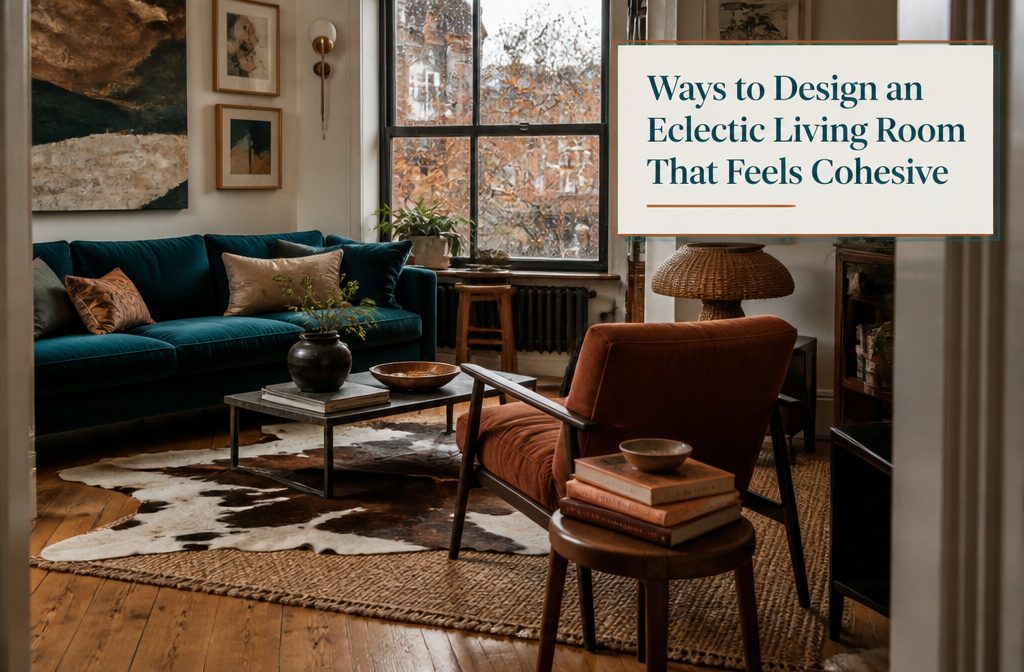
Eclectic living rooms range from vintage-heavy spaces anchored by one modern piece to contemporary rooms warmed by a single rattan chair, and what decides your version is how much contrast you can hold before the room stops reading as collected.
The difference between cohesive and chaotic sits in repetition: a finish that shows up on three or four pieces, or a single color pulled through pillows, a chair seat, and the spine of a stack of books.
Cowhide paired with jute, linen chairs next to leather, velvet on the sofa—five textures in one room—proves the mix is what makes it work.
1. Use a Unifying Thread
A mismatched room snaps into place the moment you repeat something deliberate across it.
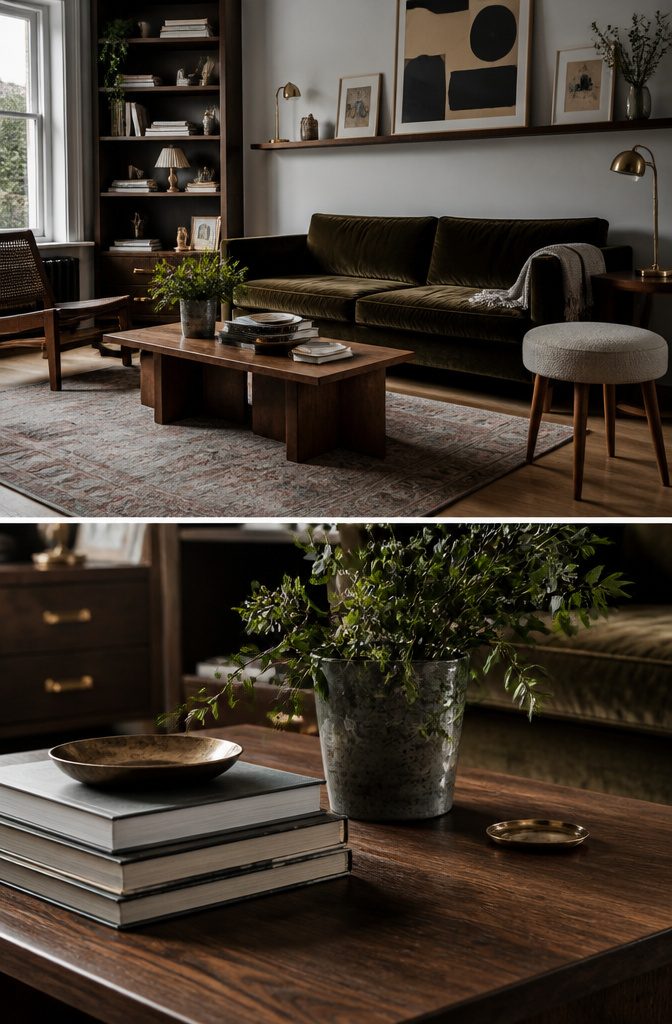
That thread can be a finish that shows up on 3 or 4 pieces — brass drawer pulls, brass lamp bases, brass picture frames — or a single color you pull through pillows, a chair seat, and the spine of a stack of books.
The repetition does not need to be loud. A walnut coffee table, walnut picture ledge, and walnut stool legs are enough to make a vintage velvet sofa and a modern bookshelf read as choices instead of accidents.
Without that recurring element, contrast lands as clutter. With it, the room feels collected on purpose.
Recommended Products

[Responsive Customer Support]: This is a small pull. Please check the size before ordering. Our aftersales will respond to all product inquiries within 24 hours, ensuring a...
2. Mix Styles and Eras with Intention
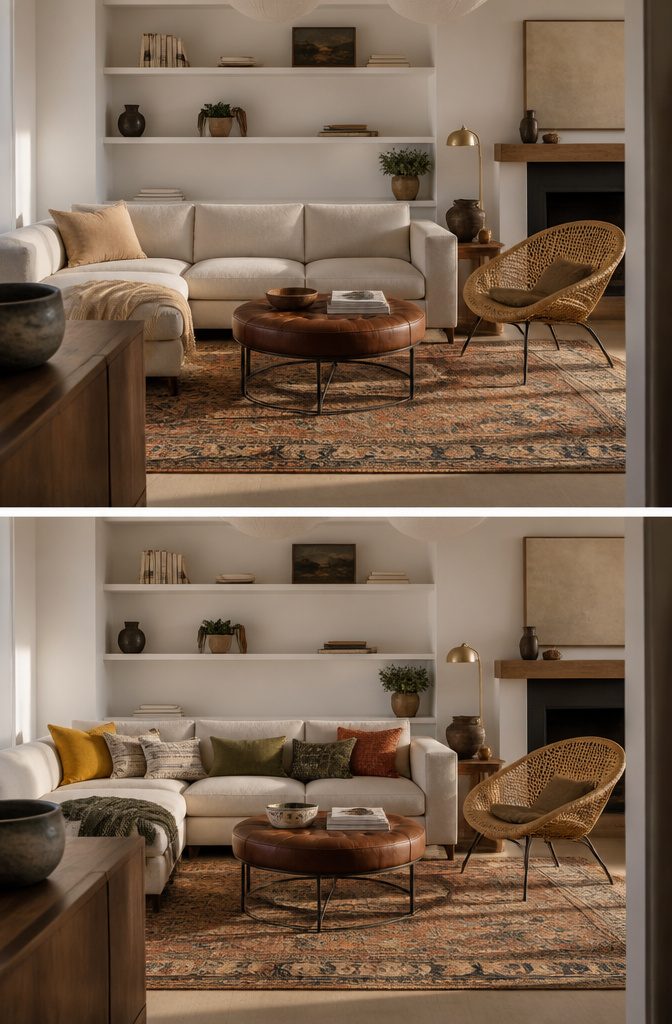
A modern sectional can hold the room when a rattan chair from the 1970s sits beside it and a brass floor lamp from another decade stands behind.
Let one piece lead and the others support it. The sectional anchors the seating, so the vintage chair adds character without needing to match, and the lamp brings warmth without competing for attention.
The backdrop often decides which style reads loudest.
Straight lines and a neutral wall lean modern even when vintage finds fill the shelves, while flowing curves and bold pattern pull the room toward classic territory no matter how clean the sofa.
A vintage rug under contemporary furniture works because the rug brings color and the sofa keeps the silhouette simple.
Leather can bridge the gap when the frame stays modern.
An ottoman with traditional tufting but metal legs sits comfortably next to a wood side table and a vintage mantel because the materials repeat across the room and nothing tries to dominate the whole space at once.
Recommended Products

Rustic and Modern Design: Elevate your home with the timeless appeal of this swivel barrel chair. Featuring a natural rattan frame paired with luxurious brown leather, this rattan accent chair strikes the perfect balance between rustic charm and modern sophistication, offering an organic yet polished look for any space

French countryside inspiration: Inspired by French country charm, this accent chair features an elegant curved back and natural wood grain, adding a touch of sophistication to your living room.
3. Choose and Repeat Colors
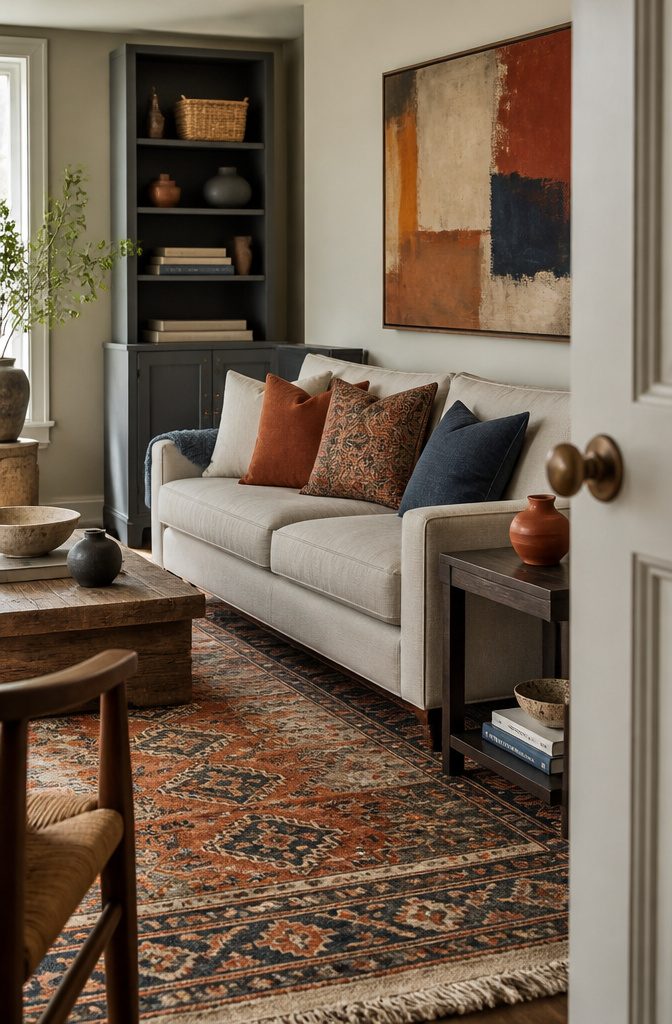
A palette that repeats across the room is what keeps an eclectic space from feeling scattered.
Two or three main colors plus one accent is the usual starting point—a workable range without needing to track too many threads at once.
More colors can work if each one shows up in at least three places: a rust tone in pillows, artwork, and a rug reads as deliberate; the same rust on one throw pillow reads as leftover.
Bold, layered palettes suit the style as much as neutral bases do.
A room built on cream, gray, and navy with pops of terracotta will hold together differently than one built on jewel tones and metallics, but both lean on the same principle: the colors you choose matter less than whether they reappear.
I look for the thread first—what shows up more than once—before I decide if the palette works.
Recommended Products

Soft Comfort & Certified Materials — Made from soft 100% polyester carpet material certified to OEKO-TEX STANDARD 100, this washable rug offers a cozy, comfortable feel underfoot. Available in compact, runner, and room-size options, it adds warmth to entryways, hallways, bedrooms, home offices, living rooms, and dining areas. Inviting for barefoot use and active households, it brings together everyday comfort, versatile style, and trusted material standards.

Machine Washable: Keep room rug fresh with ease! Simply vacuum regularly; modern carpet is crafted from premium stain resistant materials that are completely machine washable; Ideal as a living room rug, bedroom rug, or a washable pet mat, Say goodbye to worries about spills or stains, and enjoy a fresh, clean area rug effortlessly

Soft Comfort & Certified Materials — Made from soft 100% polyester carpet material certified to OEKO-TEX STANDARD 100, this washable rug offers a cozy, comfortable feel underfoot. Available in compact, runner, and room-size options, it adds warmth to entryways, hallways, bedrooms, home offices, living rooms, and dining areas. Inviting for barefoot use and active households, it brings together everyday comfort, versatile style, and trusted material standards.
4. Layer Contrasting Textures and Materials
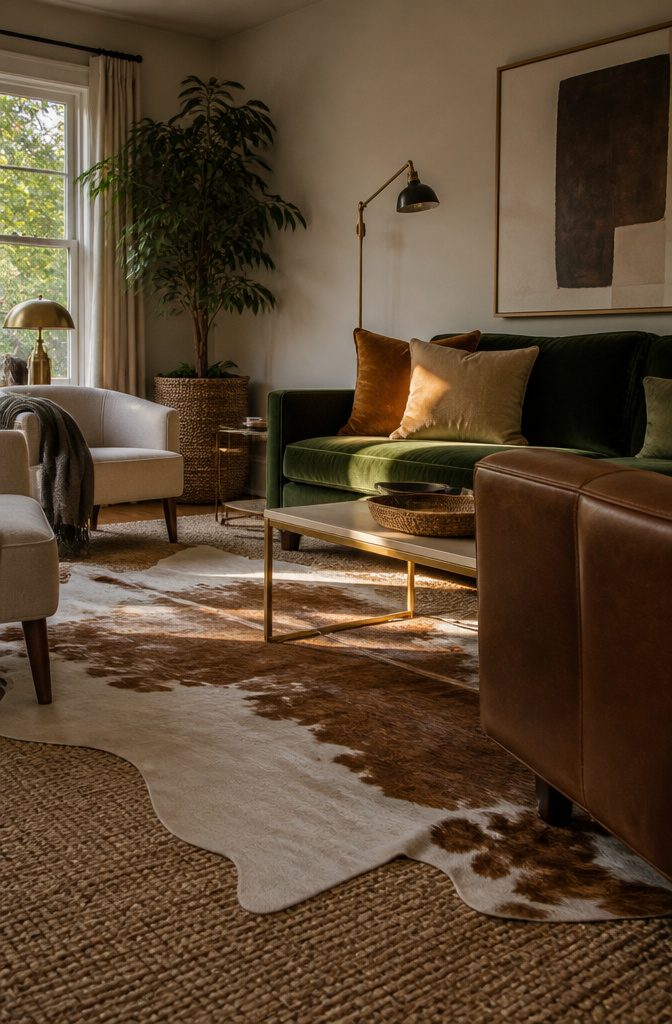
I paired cowhide with jute on the floor, linen chairs with a leather accent piece, and velvet on the sofa — five different textures in one room, and the mix is what makes it feel layered instead of flat.
The cowhide can go patchwork or full hide; patchwork holds up better to foot traffic and reads more modern.
Jute underneath anchors it. Brass and black finishes on the lamp bases pull the room away from anything too soft, and velvet throw pillows add one more surface that catches light differently than the rest.
Metal, bouclé, and rattan work the same way. Rattan brings warmth without adding color, bouclé gives you texture you can see from across the room, and metal keeps the whole thing from tilting too cozy.
Contrast works when you can feel it, not just see it: smooth next to rough, matte next to shine.
5. Make a Focal Point or Anchor
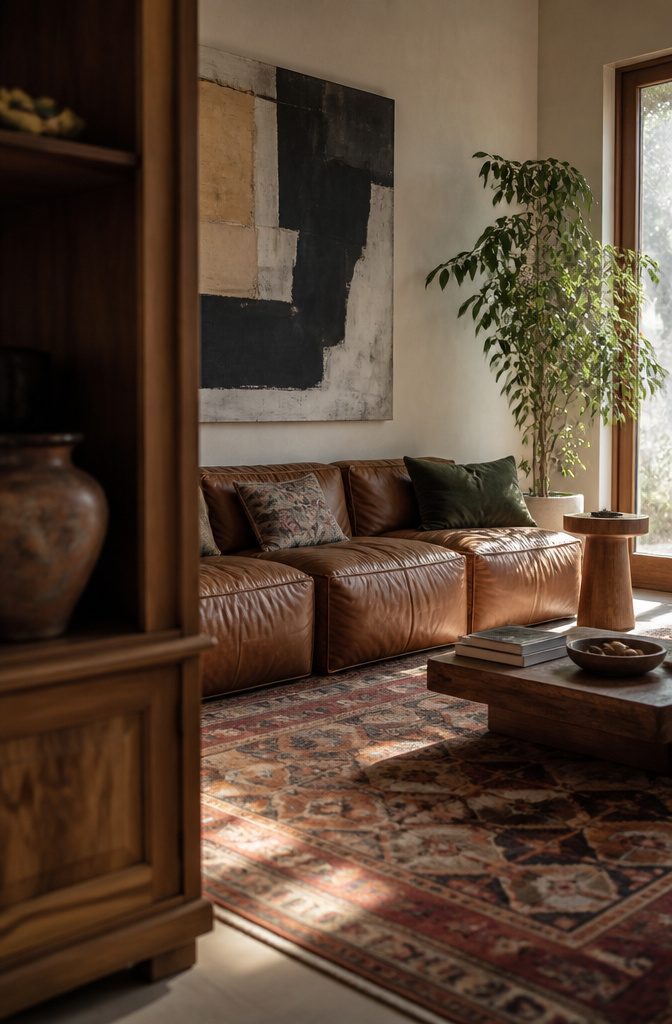
A room holds together better when one piece grounds it first.
The sofa often works best for this—large enough to anchor the seating area but easy to build around. A rug can do it too, or a wall mural that sets the color story before anything else goes in.
The Cronus-Brown Genuine Leather Modular Sofa works as that kind of anchor: warm brown leather pairs with vintage rugs, wood cabinets, and bold wall art without fighting any of them.
Once the anchor is down, everything else should support it rather than compete. If the mural is strong, keep furniture simple.
If the sofa or rug carries the room’s boldest color, let the art stay quieter. A collected room can still hold plenty of contrast, but only when one item leads and the rest give it breathing space.
6. Balance Contrast with Cohesion
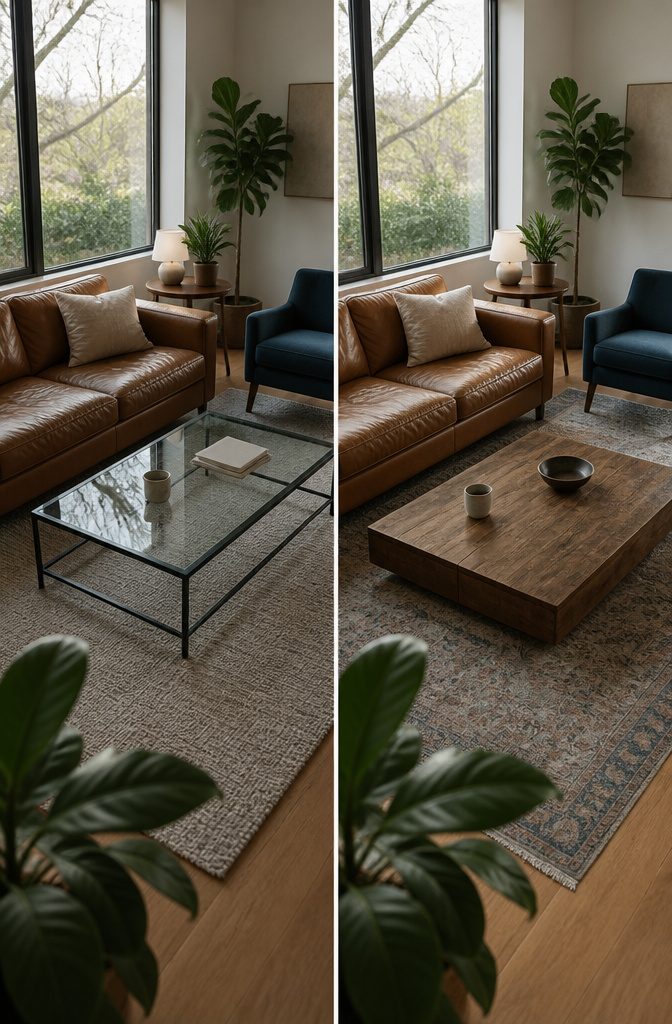
Pairing a sleek glass coffee table with a worn leather sofa works because both sit low and let the room breathe, even though one reads modern and the other reads lived-in.
The shape and the scale agree, so the finish can disagree.
That is the line: opposite styles need at least one shared quality — color temperature, visual weight, material honestly shown — or the room fractures into a pile of things that happen to be in the same space.
Warm leather against cool blue upholstery holds together when the proportions stay tailored and nothing tries to shout over anything else.
The restraint is what makes the contrast legible. A room that asks every piece to be a statement ends up with none, because there is no ground left to stand out against.
I would rather see one bold choice and three quiet ones than four pieces all trying to anchor the space at once.
7. Use Art and Wall Treatments
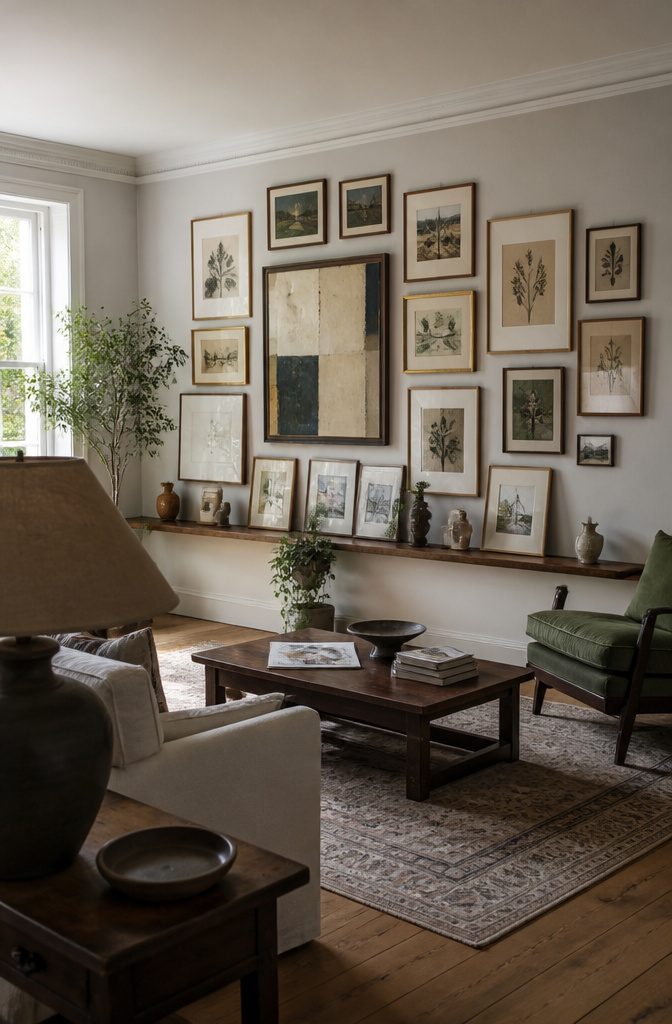
A gallery wall pulls together mismatched frames, subjects and sizes into one deliberate spot instead of scattering them around the room.
Arrange them close enough that the group reads as a single block on the wall, usually 2 to 3 inches between frames.
Start with the largest piece near center height and work outward, or lay the whole arrangement on the floor first and transfer it up once the spacing looks right.
Picture ledges work the same way but let you swap pieces without putting new holes in the wall. Lean frames and small objects in layers, with taller pieces in back and shorter ones overlapping in front.
A single large piece—a vintage poster, an oversized abstract, a textile—anchors the room faster than a collection and costs less to fill the space. You can find prints and canvases under $30 that set the palette for everything else.
8. Keep the Room Edited, Not Cluttered
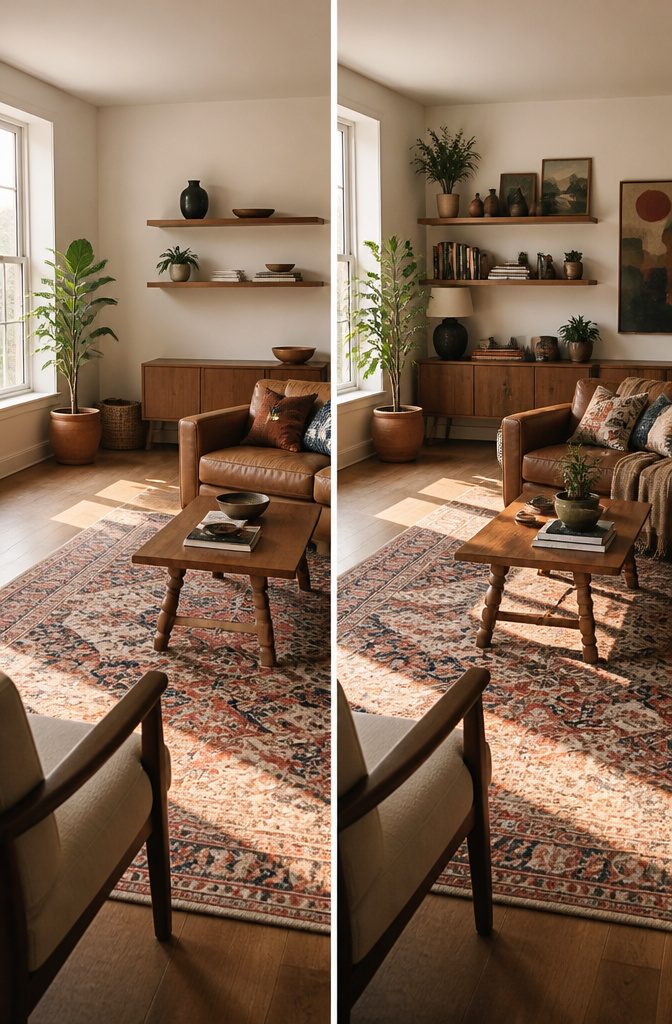
A collected eclectic living room can hold vintage art, bold color, mixed furniture, and layered textures without tipping into chaos.
The difference sits in how much competes at once. One piece should anchor the room—a leather sofa, a patterned rug, a gallery wall—while everything else supports it or steps back.
When every item asks for attention at the same time, the room reads as cluttered no matter how carefully each piece was chosen.
Breathing room matters as much as what fills it.
Leave some surfaces clear, some wall space open, and enough floor visible that the eye can settle. A rug can carry bold pattern if the furniture around it stays simple.
A statement coffee table works when the shelves behind it hold fewer objects. Repetition helps too: when a few colors or materials show up more than once, the room feels connected even when the styles vary.
Storage that actually closes keeps daily clutter out of sight, so the pieces you want seen can do their work.
9. Choose Furniture with Compatible Scale and Shape
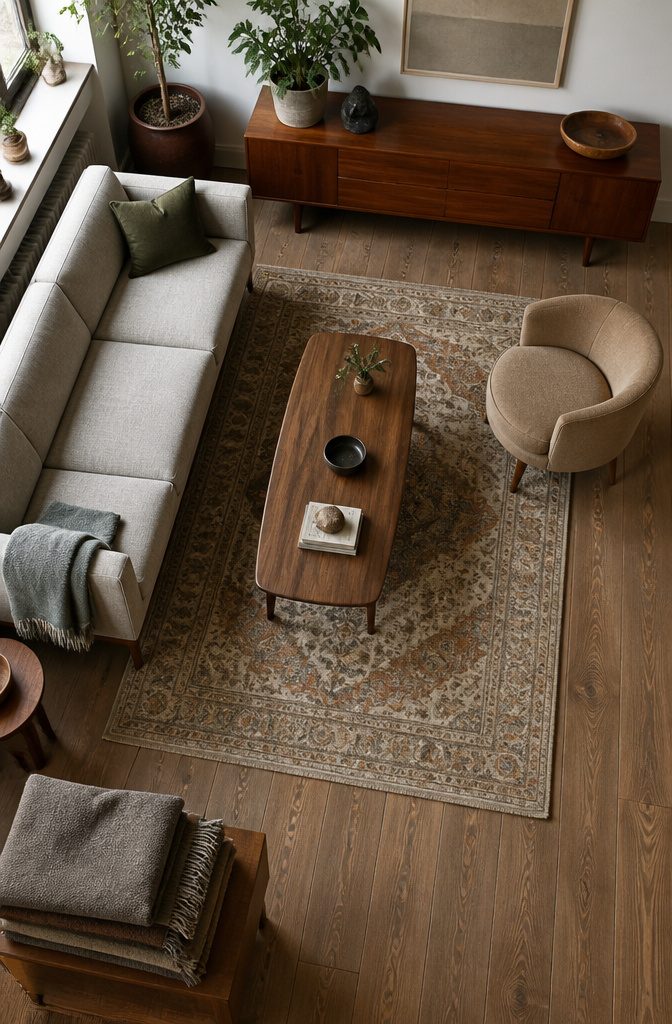
A sofa scaled for a twelve-foot wall makes everything else in the room look like dollhouse furniture, and two blocky chairs facing each other across a narrow coffee table turn the center of the room into an obstacle course.
Pieces need to share a proportional range — not identical heights or widths, but close enough that one does not dominate by mass alone.
A low-slung midcentury credenza works next to a streamlined modern sofa because both keep their profiles trim; the same credenza next to an overstuffed English roll-arm reads like a mistake.
Shape matters as much as size. Rounded forms soften angular ones when the underlying proportions stay compatible, but a room full of competing curves — an oval coffee table, a kidney-shaped chair, a scalloped mirror — loses any sense of order.
Pick a dominant silhouette and let a few contrasting pieces play against it.
10. Use a Restrained Approach in Small Spaces
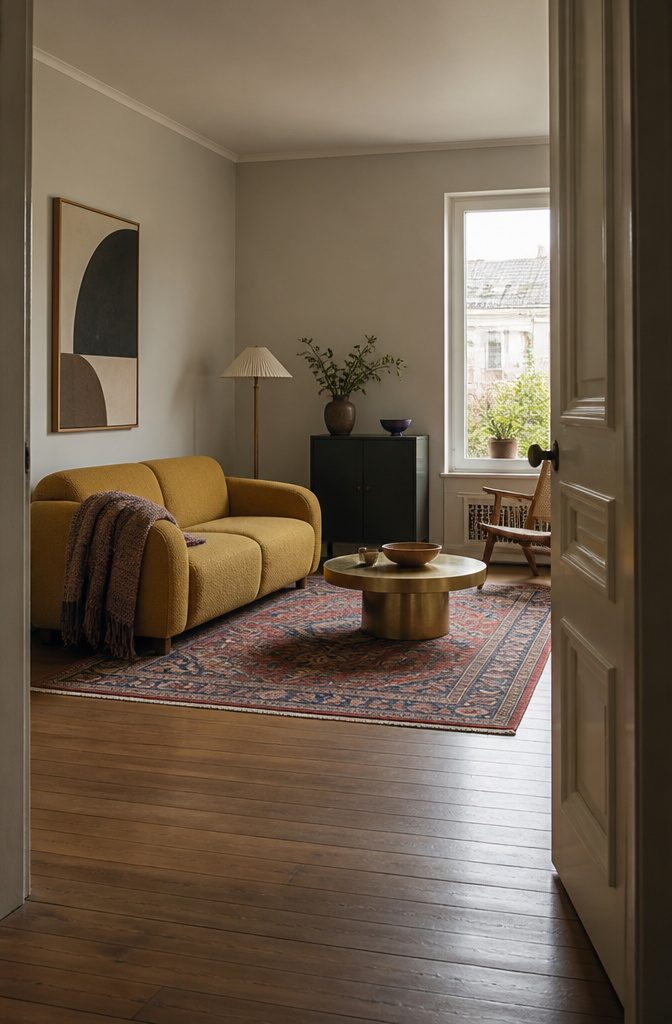
Small rooms need fewer pieces, not smaller ones. A single standout sofa or a coffee table with a brass finish gives you the visual contrast eclectic style depends on without crowding the floor.
Add a bold rug for color, then stop before the room starts to feel packed. The impact comes from what you choose, not how much you fit in.
Closed storage matters more here than in a large space. Built-in shelving, a cabinet with doors, or storage ottomans keep the room from tipping into chaos when books, remotes, and everyday clutter have nowhere to go.
With strong storage in place, you can layer in vintage finds, art, and textiles without the room reading as messy.
One or two competing focal points work; five do not. Pick the couch, the rug, or a single piece of wall art to carry the personality, and let the rest stay quieter.
11. Make the Design Personal
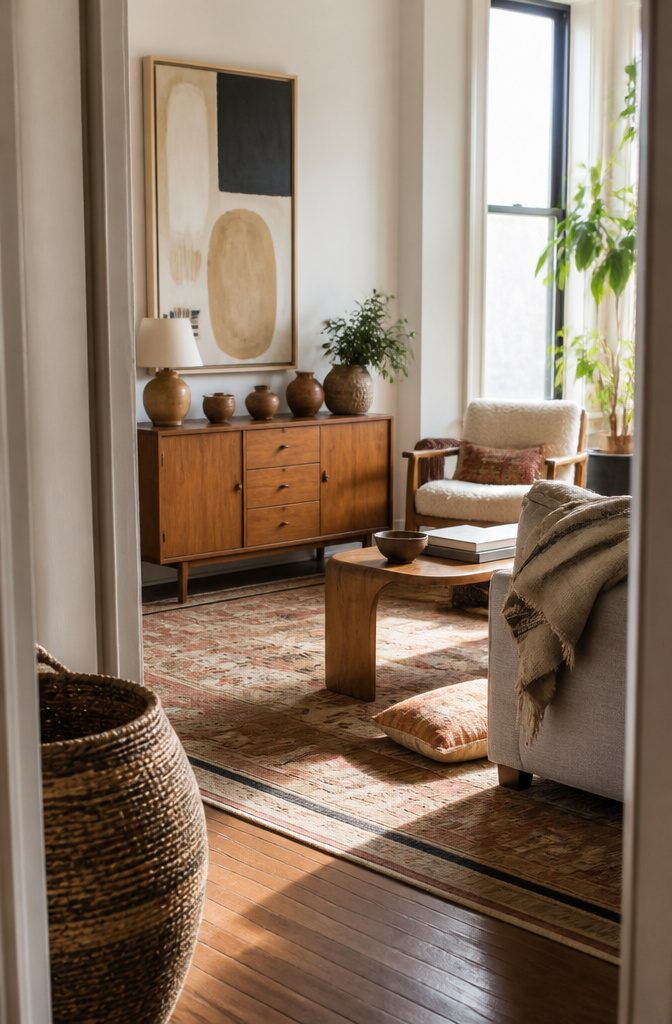
The rooms that feel most personal are the ones where someone made decisions based on what they actually like, not what a single aesthetic told them to like.
One client I worked with gravitates toward Anthropologie and Restoration Hardware — two lines that don’t share much vocabulary — but her living room pulls from both because those pieces reflect her taste.
Designer Emily Henderson built Bri Emery’s living room around vintage finds and handmade textiles that came from Bri’s own travels, and Ian Brennan’s space leans into his collection of midcentury furniture mixed with contemporary art he bought over years.
The thread holding an eclectic room together is often just the resident’s eye, not a borrowed formula. A room assembled from someone else’s mood board reads hollow; a room assembled from things you kept choosing reads like home.
12. Use Lighting as Part of the Mix
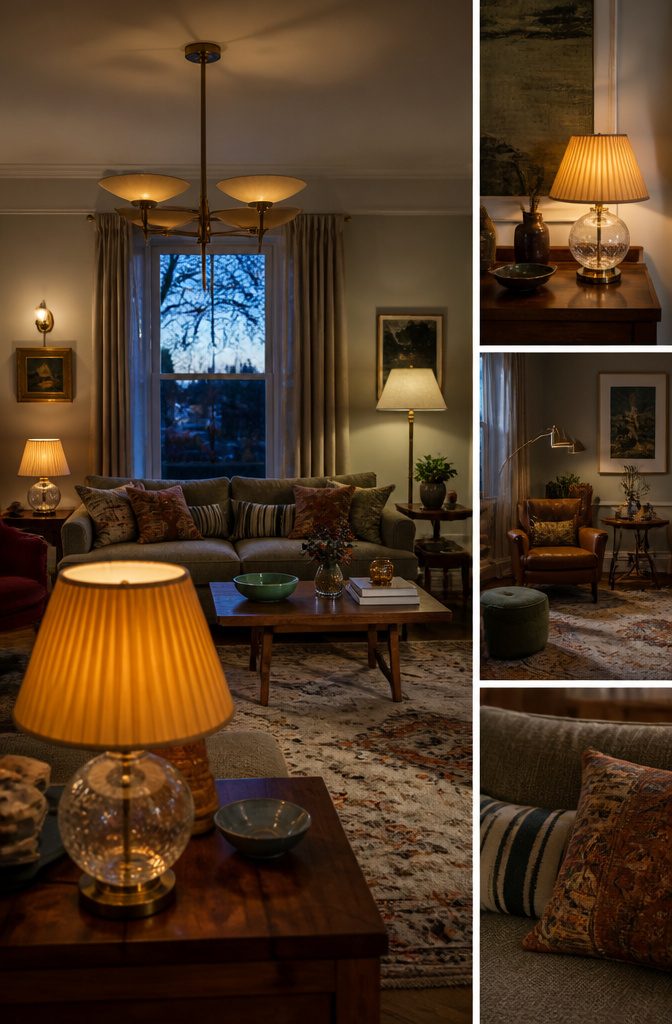
Lamps and overhead lights do more than brighten the room — they add personality and help pull an eclectic space together.
Layering ceiling lights, table lamps, floor lamps, and wall lights gives you the flexibility to soften the room at night, support different activities, and highlight the mix of materials and colors you’ve already brought in.
A floor lamp in one corner and a pair of table lamps flanking the sofa can create symmetry even when everything else in the room is deliberately mismatched.
I’ve used Target lamps in spaces where I wanted something that looked considered without spending much, and they hold up better than their price suggests.
The round crystal ball base lamps work on a nightstand or side table when surface space is tight, and a mid-century task lamp or a whimsical floral floor lamp can push a transitional room into eclectic territory without fighting the furniture you already own.
Solve Storage and Function Before Adding More Decor
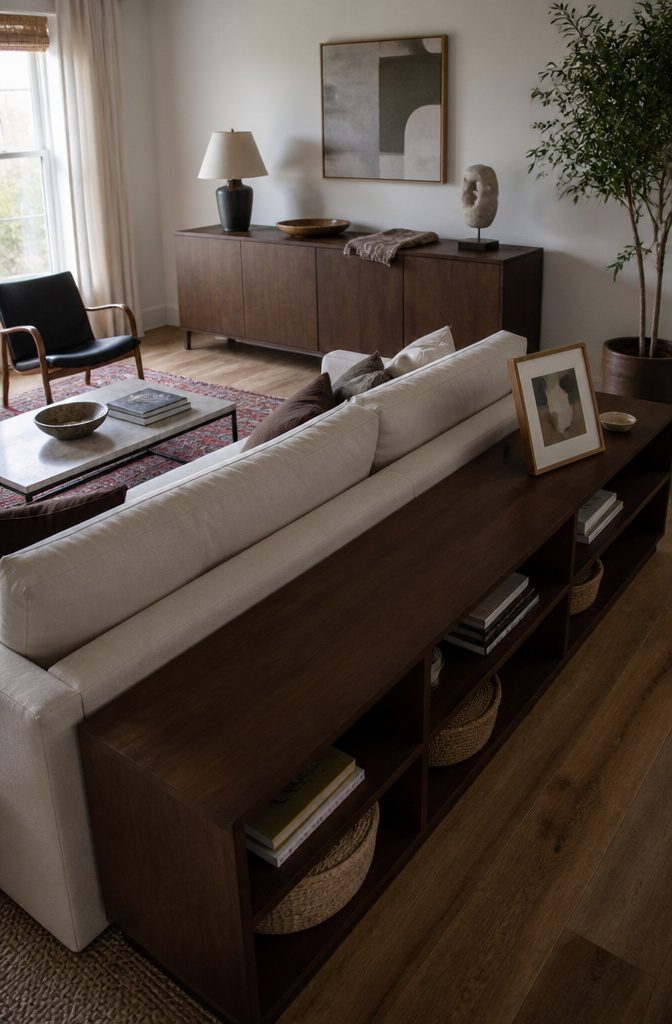
A sideboard or low cabinet gives you somewhere to put the remotes, mail, and whatever else lands in the living room, which means those things disappear instead of sitting on the coffee table or stacking up on shelves where you actually want to display something.
The practical storage resets the room faster and leaves the surfaces free for the pieces you chose on purpose—the bowl you found at a flea market, the vintage tray, the sculptural object that doesn’t belong anywhere but works here.
When the functional layer is handled, the eclectic parts get room to register. A console behind the sofa holds books and baskets underneath, and the top stays open for a lamp and a single framed print.
The storage does its job quietly, and the mix reads as a mix instead of as visual noise on top of regular household disorder.
Keep Larger Purchases Flexible
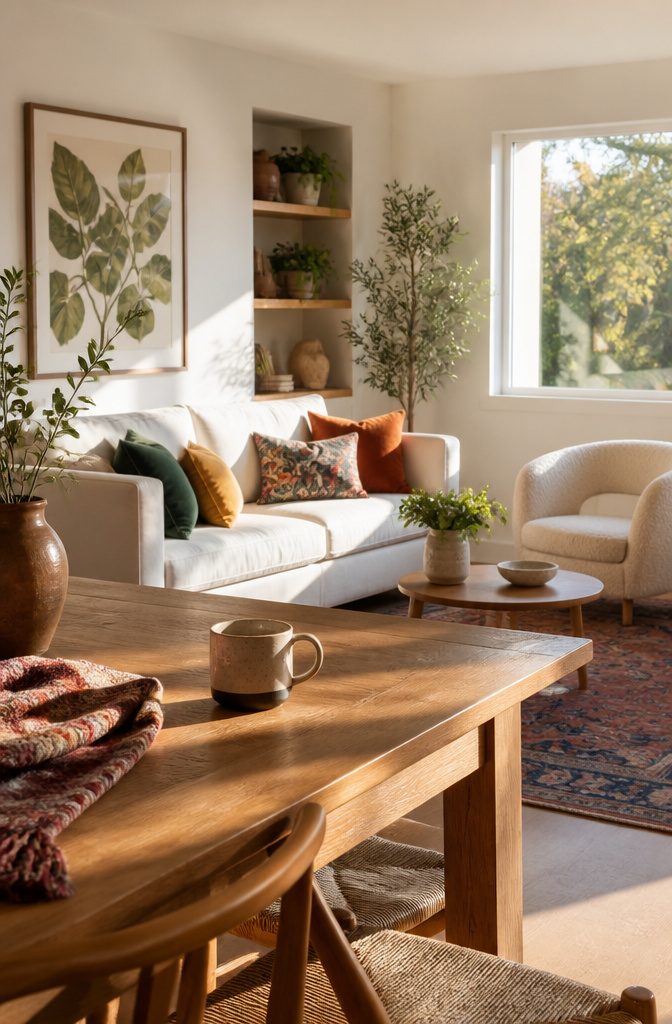
Anchor your room with neutral larger pieces—a white sofa, a cream armchair, an oak dining table—because they cost more and stay longer.
The small stuff cycles through as your eye shifts: a pillow, a throw, a print on the wall. Those you swap out for thirty or sixty dollars when the color feels tired or the pattern stops working.
A sofa runs a thousand or more, and replacing it every time you want a different look locks you into whatever appealed when you bought it.
White upholstery and natural wood hold their ground no matter what accent color or style layer you build around them, so the room can move from warm jewel tones one year to cooler grays the next without the big pieces fighting the shift.
Frequently Asked Questions
What is eclectic style in interior design?
Eclectic style is a deliberate mix of furniture from different periods, colors, textures, and materials, held together by repeated elements like finish, color, or shape.
It’s chosen rather than random: a vintage chair can sit next to a modern sofa when both share a color thread or proportional scale.
The style works when one piece anchors the room and the rest support it without competing for attention.
How do you start designing an eclectic living room?
Start with one anchor piece like a sofa, rug, or wall treatment that grounds the room. Pick 2 or 3 main colors and repeat them across at least 3 items each, then layer in contrasting textures like leather, linen, velvet, and metal.
Add personal or vintage finds in smaller doses, solve storage first, and leave breathing room so the eye can settle.
How can you tell if an eclectic room looks collected or cluttered?
A collected room has one clear focal point, repeated colors or materials, functional storage, and visible floor or wall space.
Clutter happens when every piece asks for attention at once, surfaces stay filled, and nothing repeats across the room. Breathing room and restraint make contrast legible instead of chaotic.
What mistakes make eclectic rooms feel messy?
Too many statement pieces competing at once, furniture that’s badly scaled to each other or the room, overfilled surfaces with no place for the eye to rest, and no repeated colors or finishes to tie things together.
Ignoring storage leaves daily clutter visible, and skipping the anchor leaves nothing for the rest of the room to support.
Can eclectic style work in a small apartment?
Yes. Use fewer pieces, not smaller ones: one standout sofa or coffee table plus a bold rug gives you the contrast eclectic style needs without crowding the floor.
Strong storage keeps the room from tipping into chaos, and sticking to one or two focal points instead of five lets each choice register.
Small rooms need the impact to come from what you choose, not how much you fit in.
Can I create an eclectic room with mostly modern furniture?
Yes. Anchor the room with clean-lined modern furniture, then bring in vintage or textured accent pieces like a rattan chair, a brass lamp, or a patterned rug.
The modern pieces provide structure, and the expressive accents add personality without needing to match. Repetition of one finish or color across 3 or 4 items keeps the mix from reading as accidental.
Should the largest furniture piece in an eclectic room be neutral or bold?
Keep the largest piece neutral if the rug, art, or accent chairs already carry strong color or pattern. Use a bold sofa or cabinet when the room needs a focal point and everything else stays quieter.
The largest piece costs more and stays longer, so choosing white, cream, or natural wood gives you flexibility to shift accent colors and styles around it.
How many colors should an eclectic living room use?
Start with 2 or 3 main colors plus one accent.
More colors work if each one shows up in at least 3 places: rust in pillows, artwork, and a rug reads as deliberate, while rust on one throw pillow reads as leftover. Repetition matters more than the palette itself.
What lighting works best in an eclectic room?
Layer ceiling lights, table lamps, floor lamps, and wall lights to support different activities and soften the room at night.
A floor lamp in one corner and a pair of table lamps flanking the sofa can create symmetry even when the rest of the room is deliberately mismatched.
The layering gives you flexibility and highlights the mix of materials and colors already in the space.