
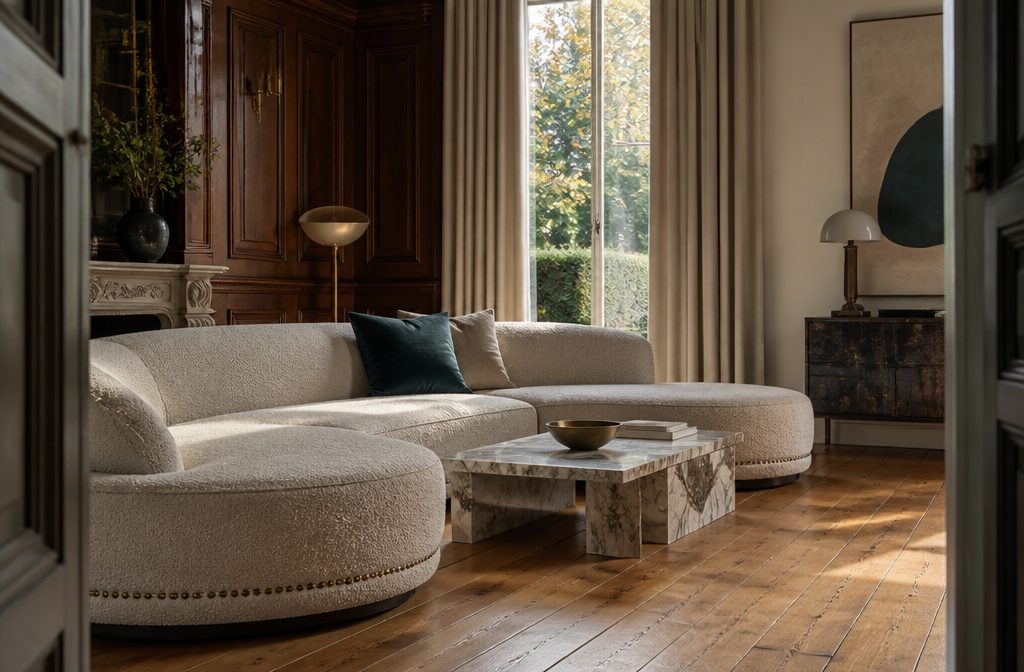
A luxury living room spans everything from a single anchor piece and a considered palette to layered lighting, custom millwork, and the small metallic trimmings that make upholstery read as tailored rather than bought.
The difference between assembled and complete comes down to whether each decision responds to the last one—whether the curved bouclé sectional led to the jewel-tone pillow, whether the marble coffee table sits at two-thirds the sofa’s length, whether the curtains hang from the ceiling instead of the frame.
1. Start with a focal point or anchor piece
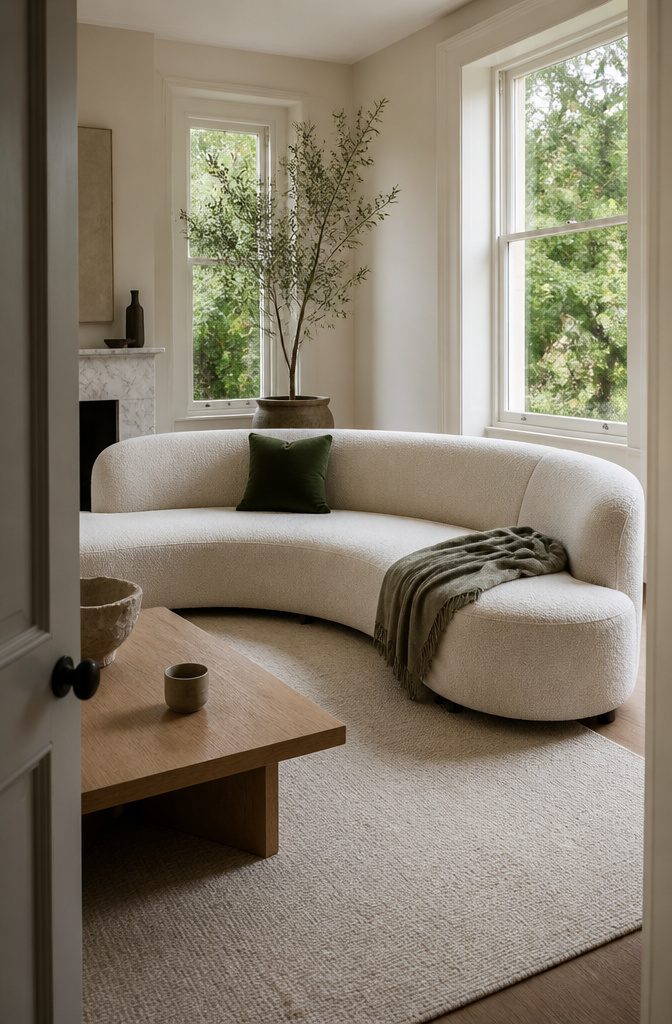
A large sofa or a piece of bold art gives the rest of the room something to lean on. Pick one standout element and let everything else respond to it—color, scale, the feeling you want when you walk in.
A curved bouclé sectional in ivory sets a soft, approachable tone; a Stanley Whitney canvas on the far wall pushes the palette toward saturated accents and quiet surroundings. Either works, but the decision has to come first.
If natural light floods the space, keep walls pale and pull color through pillows and throws. Dark rooms call for richer upholstery or a statement fireplace surround in marble.
The anchor doesn’t have to be the most expensive thing you own. It just has to be the thing you notice first, the piece that tells you what belongs next to it and what doesn’t.
Recommended Products

QUALITY MATERIAL: Made of 100% high quality shiny velvet microfiber, which will exhibit different color as it catches light in different angle, not only thick and durable but also breathable and cozy.

Moroccan Medallion Pillow Covers 18x18 Set of 2 Decorative Home Accent: These ornate medallion throw pillow covers feature a bold mandala medallion design in teal, orange, and warm earthy tones, bringing a rich bohemian look to your couch, sofa, bed, or lounge chair. The layered circular pattern adds depth, texture, and visual interest, making these pillow covers a stylish accent for eclectic, boho, ethnic, or globally inspired interiors

Soft Touching: Made of 100% grade A velvet, comfortable to touch and lay on, soft. 1 PACK 12 x 20 Inch sofa pillow cover, INSERT is NOT included
2. Build a considered color palette
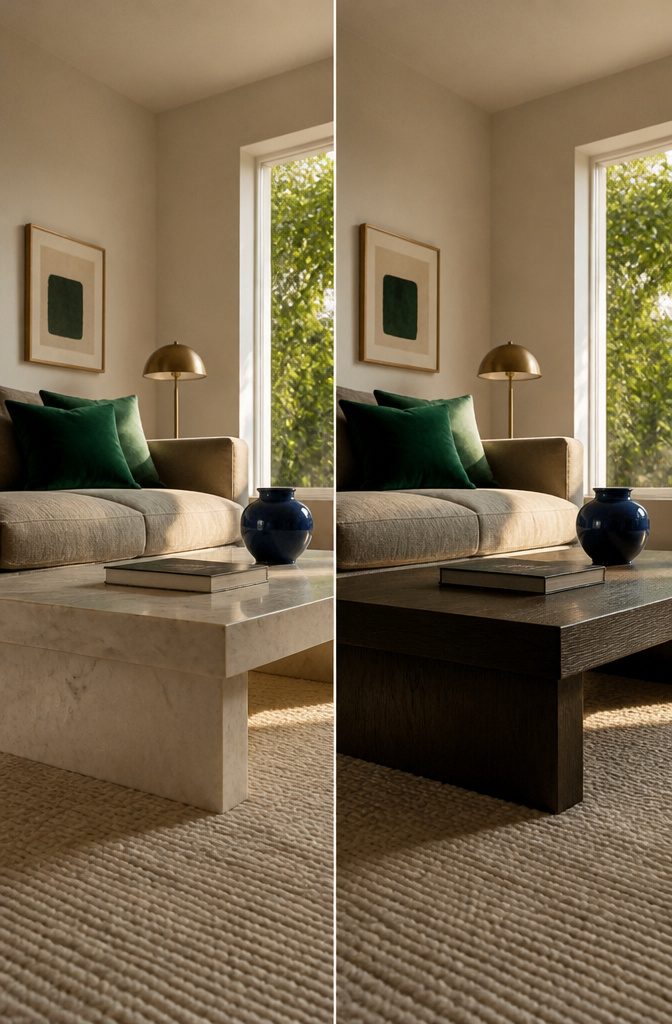
I pick neutrals as the foundation—warm white, cream, taupe, greige—then decide whether the room stays tonal or gets one or two bold accent colors like emerald, sapphire, or burgundy.
The neutral base lets materials do the work: marble, velvet, brass. A jewel-tone pillow or a single painted accent wall adds punch without fighting the rest of the palette.
Room size dictates how far I can push it. A large living room handles a looser mix of colors; a smaller one needs restraint.
I keep it to three harmonizing colors in tight spaces, using them as a thread across furniture, art, and textiles so the room reads as one idea instead of a collection of unrelated pieces.
Recommended Products

GENUINE MARBLE TOP: A real white marble surface gives this coffee table natural depth and individual character. Veining and tone will vary from piece to piece, so each table is distinctive and may differ slightly from the images

CONCRETE COFFEE TABLE ROUND – Made from durable concrete, the Alora Circle Coffee Table features a sturdy cylindrical base supporting a thick, round top. The faux stone finish adds a refined look, giving the table a bold yet simple design

[Minimalist Modern Style] A marble white table top, bright tempered glass shelf underneath, and elegant golden steel legs—everything is a perfect match designed for your exquisite life
3. Layer textures and materials
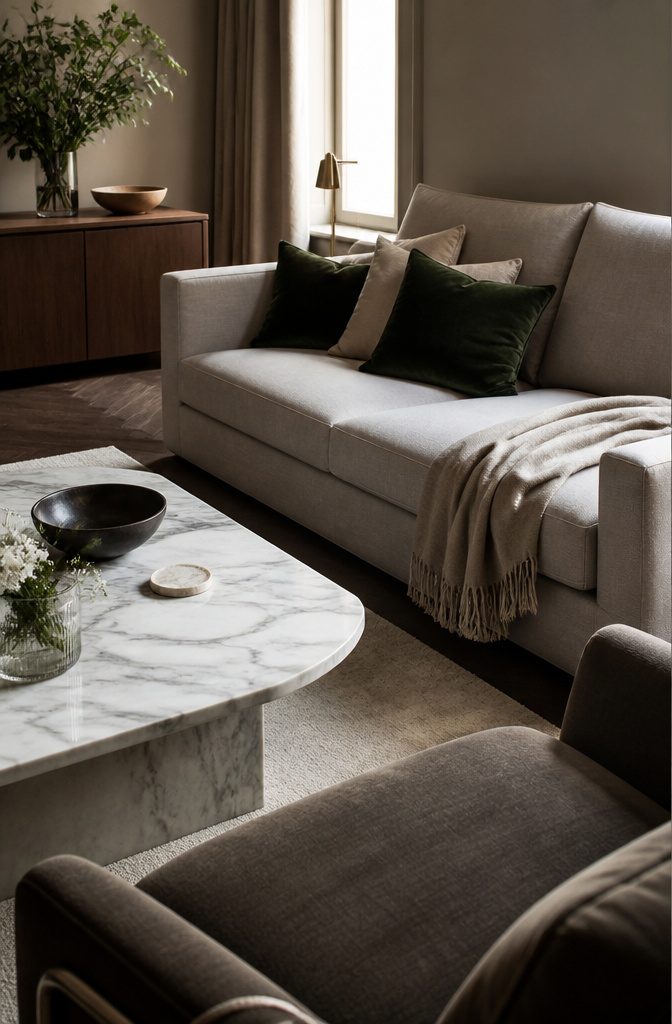
Mixing velvet cushions with a linen sofa and a smooth marble coffee table gives the room weight it would not have if everything shared the same finish.
The contrast between soft and hard, matte and polished, makes each material register more clearly. A wool throw over leather seating does the same work.
Stick to 3 or 4 main materials so the room feels intentional rather than chaotic.
Velvet, linen, bouclé and knits layer well without competing, and pairing any of them with wood, stone or metal keeps the palette grounded. I avoid introducing more than that—past 4, the eye loses track and the luxury effect drops off.
Recommended Products

SOFT VELVET THROW PILLOW COVERS: Lightweight, breathable and cozy, our luxuriously soft throw pillow cases offer soothing, serene comfort that will make you feel refreshed and rejuvenated!

【Package Includes】: 12 Pack kraft jewlery boxes, perfect for necklace and bracelet presentation or other jewelries, and Gift-giving

Material: The exterior of this chair cushion is made of velvet, which has a smooth and comfortable feeling. It is soft and skin friendly, and is not prone to pilling. The interior is comfortable and soft 380g filling with a thickness of 2.5 inches,so it will not deform even after prolonged sitting.
4. Use layered, atmospheric lighting
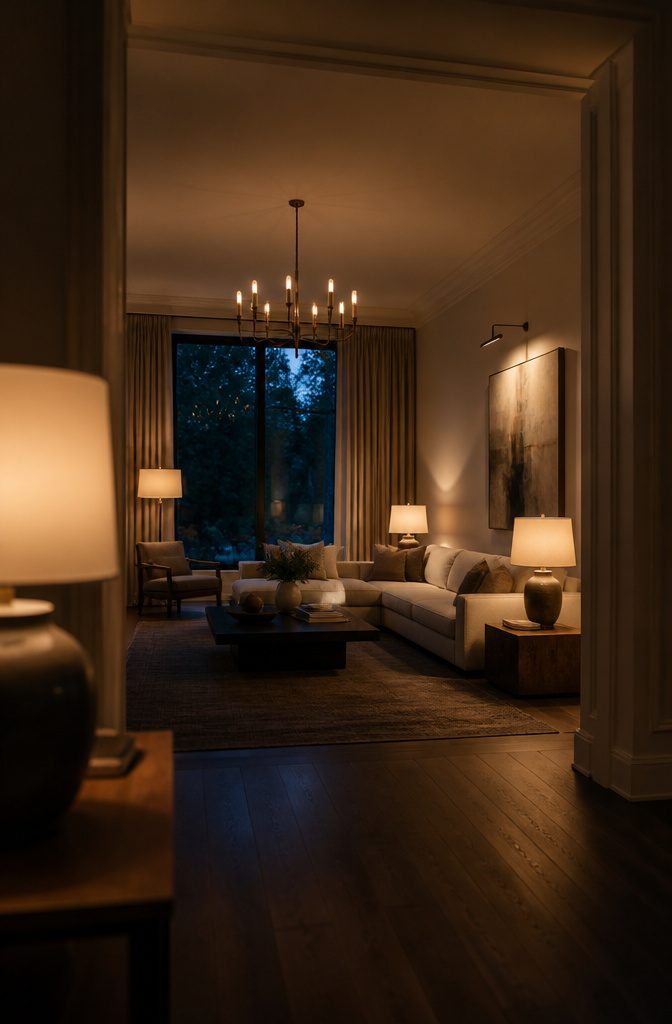
A single overhead fixture washes everything flat. Luxury rooms build depth by spreading light across several sources at different heights: a sculptural chandelier, table lamps flanking the sofa, a floor lamp in the corner, sconces on the wall.
Each one throws its own pool of warmth, and the overlap creates layers you can feel when you walk in.
Warm-white bulbs around 2700K–3000K soften wood finishes and fabrics in a way cool light never will. Add dimmers and the room shifts with the hour—bright enough to read in the afternoon, low and atmospheric by evening.
Accent lighting does double work. Aim a fixture at a piece of art and the light reflects back into the room, warmer and more interesting than general overhead wash.
An adjustable sconce works just as well as a purpose-made picture light if the arm lets you direct the beam where it counts.
5. Display art and meaningful objects
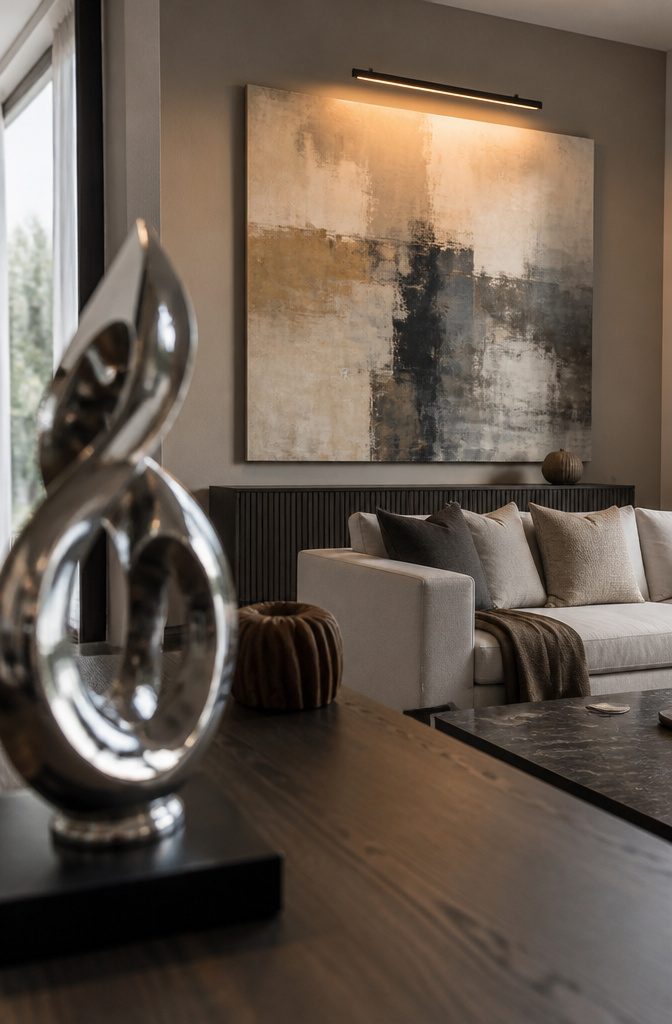
Artwork placed with thought reads as intentional rather than decorative filler. A piece hung above a sofa should span roughly two-thirds the sofa’s width, centered at eye level so it anchors the wall without floating.
An oversized abstract or a grouping of smaller frames in metallic and matte finishes both work, but the former makes a clearer statement in a single move.
Collections and objects earn their keep when they’re lit and spaced to stand out.
A picture light or an articulated wall sconce directs attention to the work and throws reflected light back into the room, which reads as atmosphere rather than overhead glare.
On shelves, I mix heights and group objects in odd numbers—start with one large piece, build around it with smaller ones, and leave breathing room between clusters.
A chrome sculpture on the console or a carved wood piece on the coffee table carries more weight than a dozen smaller items competing for attention.
6. Choose or refresh seating
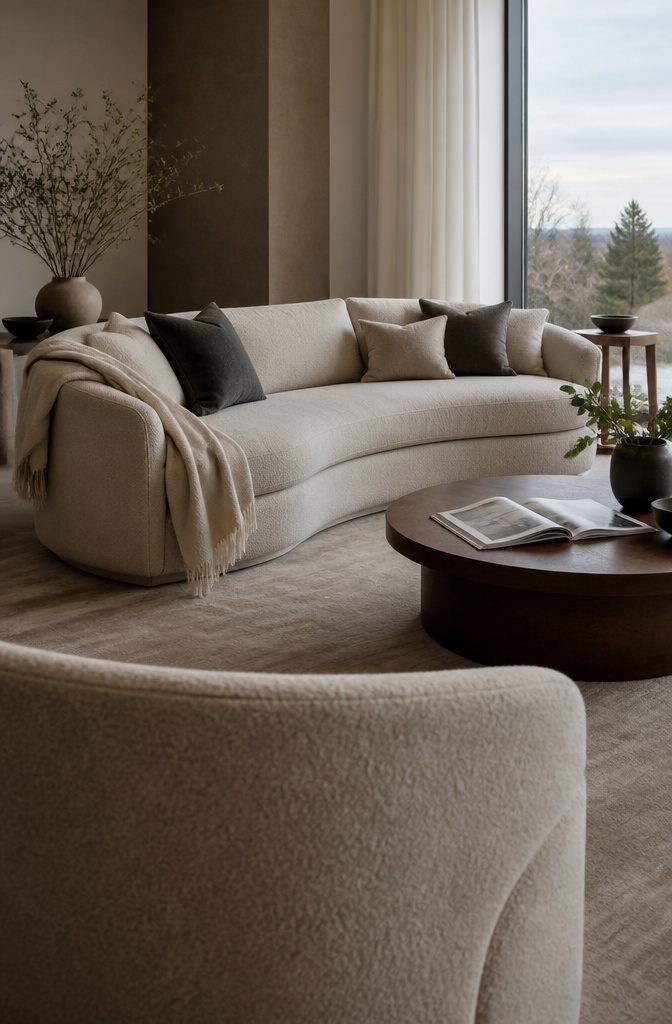
A standout sofa anchors a luxury living room and sets the entire tone. Curved sofas and oversized sectionals continue to lead in high-end interiors because they soften hard angles and create natural conversation zones.
Prioritize quality upholstery: bouclé, velvet, premium linen, high-performance fabric, or Italian leather all hold up and improve how the room photographs. Neutrals like ivory, oatmeal, taupe, and mushroom gray pair with changing décor over years without looking dated.
If your room allows, choose the largest sofa that comfortably fits rather than several smaller pieces.
Bigger reads more expensive. Layer it with textured cushions in velvet, linen, cashmere, or faux fur, and drape a soft throw naturally across one arm.
Tired furniture can be reupholstered instead of replaced.
Velvet works for pieces in constant use because it is tightly woven and durable. Silk or mohair can wear well on occasional seating like an ottoman, where style matters more than daily punishment.
A pair of accent chairs opposite or beside the sofa balances the room and adds personality without matching every stick of furniture.
7. Plan a welcoming seating layout
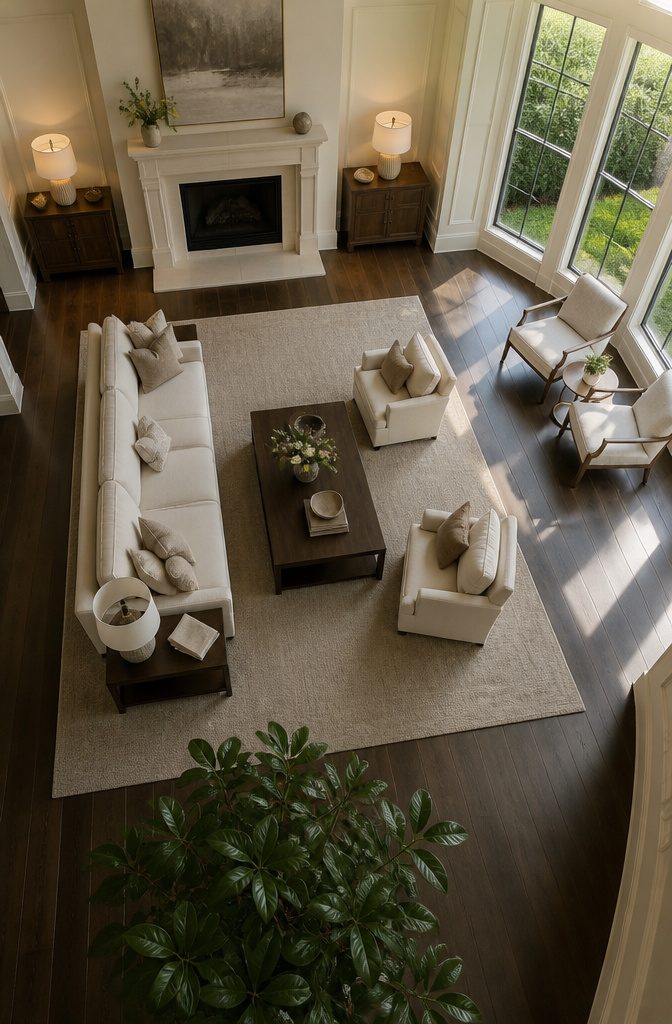
A sofa alone does not finish the layout — the way people will actually sit and talk does.
I arrange seating so chairs and sofas face toward each other rather than all pointing at a screen, keeping about 8 feet between pieces so conversation does not feel like shouting across a canyon. Architectural Digest puts it plainly:
"Perhaps what you want is not one centralized living space, but several sections that lend themselves to mingling in smaller groups."
That salon-and-banquette split gives you options: a couple sits to read while four others talk across the room, no one feeling crowded out.
When a room has a fireplace or matched windows, I mirror seating on both sides — two chairs flanking the hearth, lamps positioned the same distance from each edge — because symmetry reads as calm without reading as stiff.
The layout becomes something you stop noticing, which is exactly the point.
8. Make the rug and flooring work for the room
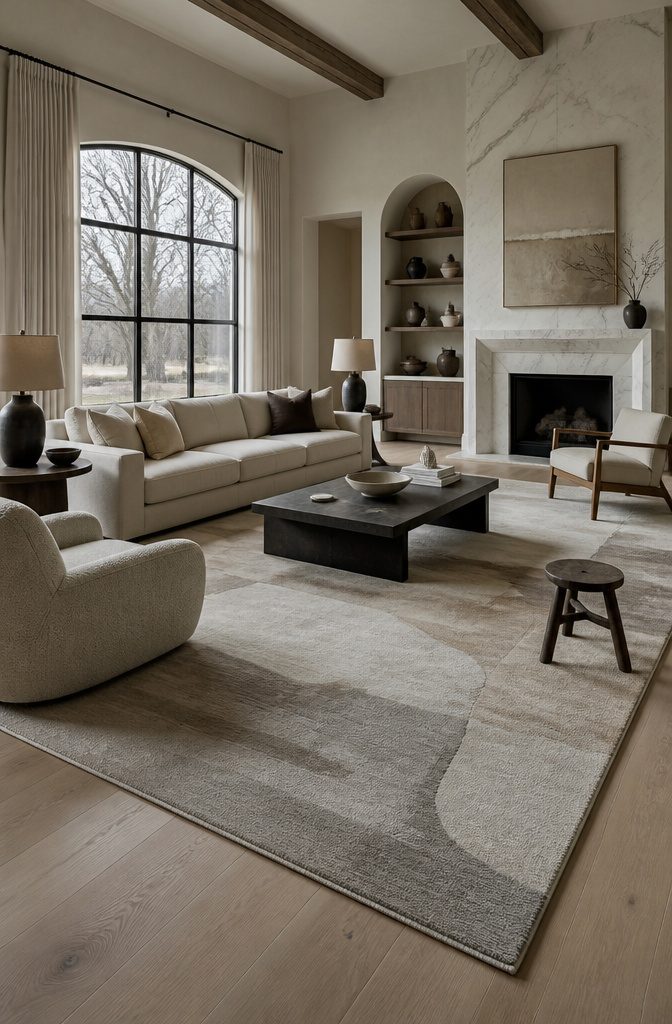
A large rug pulls the furniture into one cohesive zone and keeps the room from feeling like pieces scattered across the floor.
The rug should be roughly two-thirds the size of the room, and if you can manage it, extend it 6–8 inches beyond the furniture on each side so the front legs of every major seating piece rest on it.
Small rugs disconnect the layout and make even a well-furnished room feel cramped.
Wool, silk blends, and hand-knotted rugs add softness underfoot and dampen the echo you get with hard floors.
Soft creams, warm grays, taupe, and muted earth tones work as a foundation when the furniture or art carries the color. If the seating is neutral, an artistic rug with large abstract or organic patterns can anchor the whole scheme.
9. Style shelves with intention
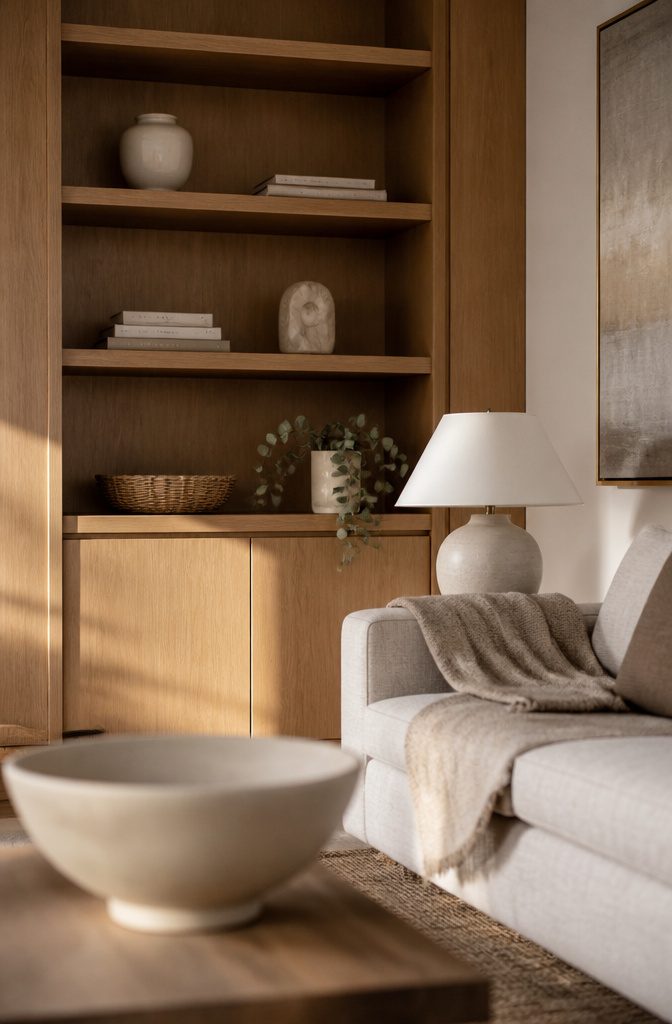
Start with larger anchor pieces—art books, sculptures, vases, or framed work—then add smaller accessories around them.
Mix materials across the shelves: marble next to wood, glass beside ceramic, woven baskets near metal. The combination keeps the eye moving without feeling cluttered.
Leave space between objects.
That negative space is what separates a crowded shelf from one that looks considered. Display books both vertically and horizontally for variety, and group smaller items in odd numbers rather than spacing them evenly.
Natural elements soften the composition.
A small olive tree, an orchid, eucalyptus stems, or preserved moss bring warmth without adding visual weight. Fill selectively, not exhaustively: someone scanning the room should move across the display comfortably, not hunt for a place to rest their eyes.
10. Style the coffee table
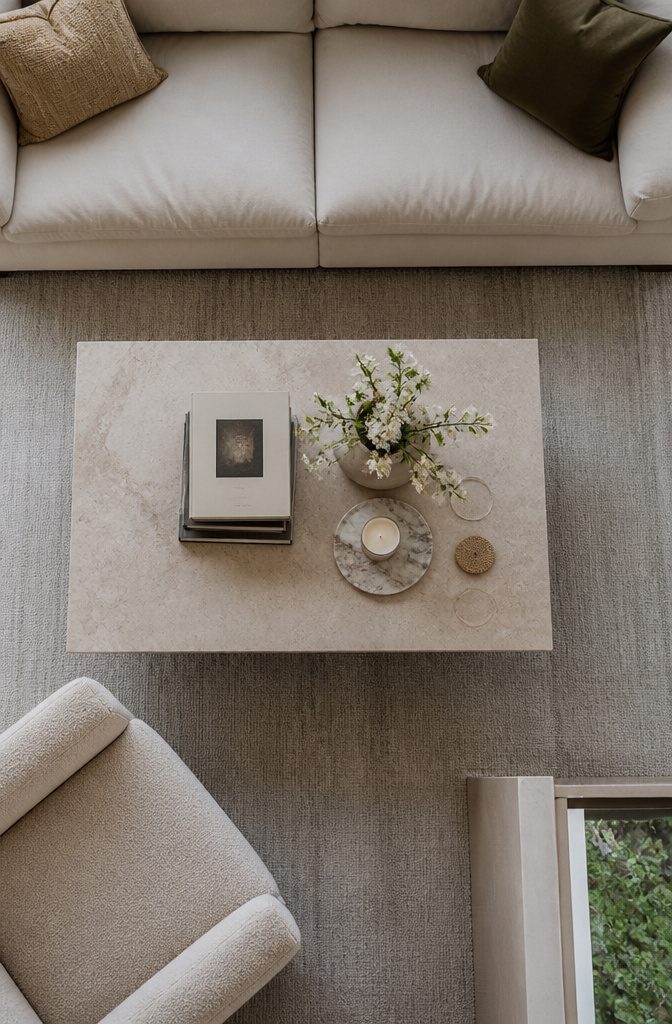
A stack of coffee table books paired with a low ceramic vase and a marble tray holding a candle gives the coffee table a designer look without making it unusable.
Designers usually arrange objects in groups of 3 or 5 because odd numbers look more balanced than even ones.
Fresh flowers work well here—white orchids, peonies, or seasonal greenery lift the room the way hotel lobbies do. Candles introduce both scent and mood; sandalwood, fig, or white tea read more refined than anything overtly sweet.
The coffee table should sit at roughly two-thirds the length of the sofa to keep the proportions readable. A tray corrals smaller items so the arrangement looks intentional rather than scattered.
Leave enough open surface for someone to set down a drink or a book. Rotating a few pieces each season keeps the table from going stale without requiring a full reset.
11. Dress windows thoughtfully
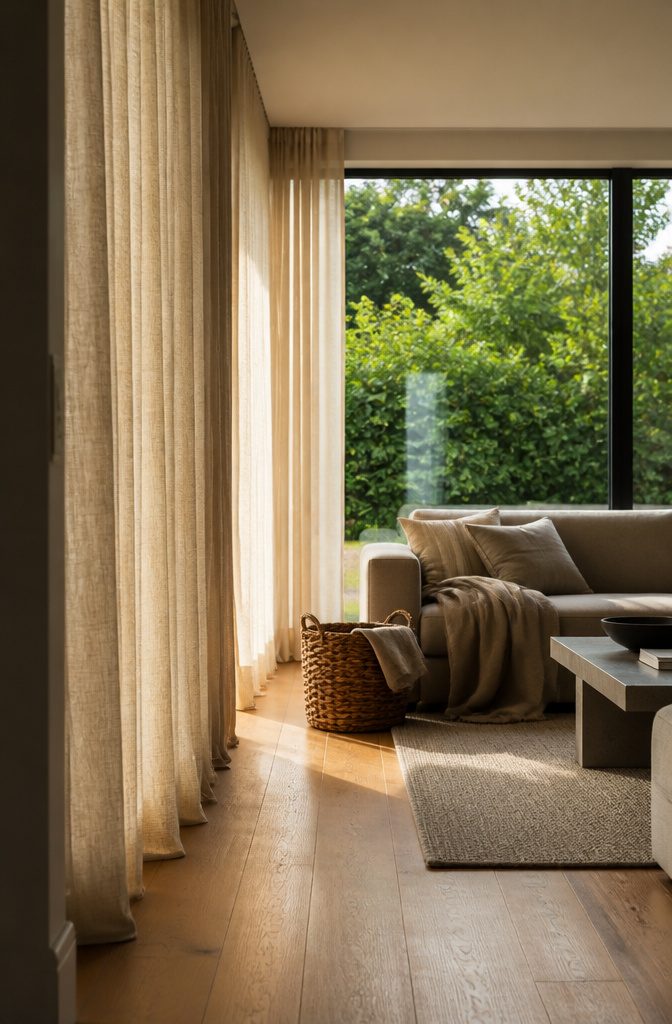
Curtains hung close to the ceiling and dropping to the floor make a room read taller and more finished than fabric that starts at the frame.
The effect works even when ceilings stay the same height — you’re borrowing the visual line.
Linen curtains in cream, oatmeal, or light gray sit well in most rooms without locking you into a single palette.
They soften hard architecture and filter light without going full blackout. For more control, layer sheers behind a heavier drape; you get the resort look and the option to adjust privacy through the day.
The fabric should lightly touch the floor or pool an inch or two if you want a softer hand.
Anything shorter breaks the vertical line you just built. Motorized tracks add the five-star convenience of opening curtains without crossing the room, though a simple rod and rings work fine if that feels like overkill.
12. Bring in natural materials or greenery
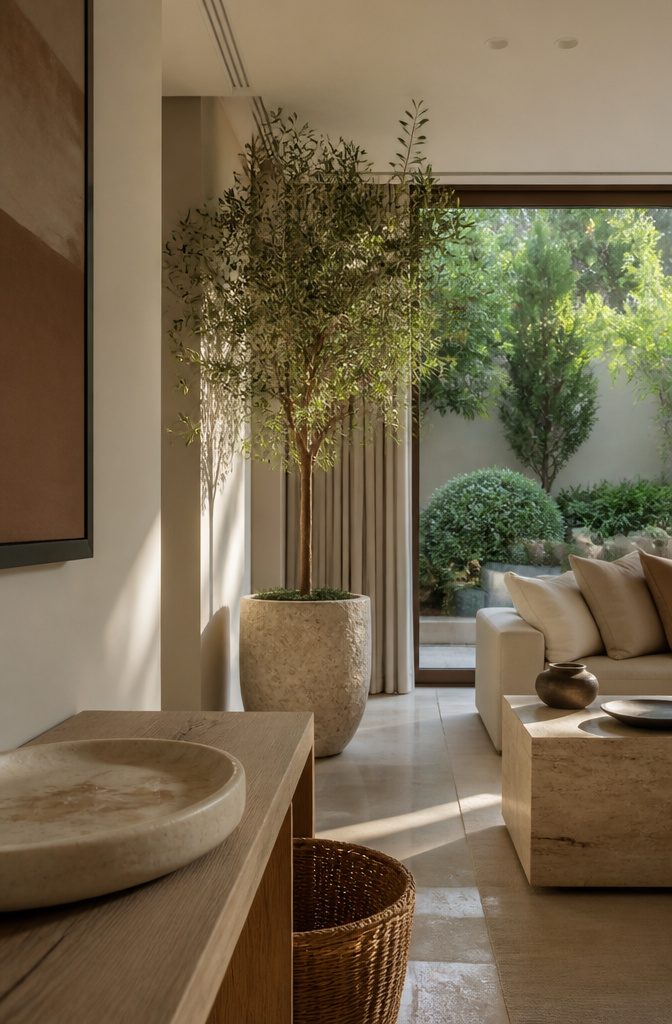
Wood accents and stone surfaces bring warmth that metal and glass can’t match on their own.
Travertine side tables, marble trays, and oak beams soften modern lines without losing the polished look — natural materials make luxury feel lived-in rather than staged.
A marble coffee table anchors the room with pattern you can’t replicate, and rough-sawn wood or woven baskets add texture that balances smooth upholstery.
A single well-placed plant does more than fill a corner. Fiddle leaf figs, olive trees, and bird of paradise soften architectural edges and introduce movement.
I’d pick one sculptural piece — a tall olive tree near a window or a kentia palm beside the sofa — over scattering small pots that read as clutter.
If live plants don’t fit your schedule, premium artificial versions now look convincing enough to pass close inspection, and ceramic or stone planters reinforce the organic thread without maintenance.
13. Use mirrors to add light or a sense of space
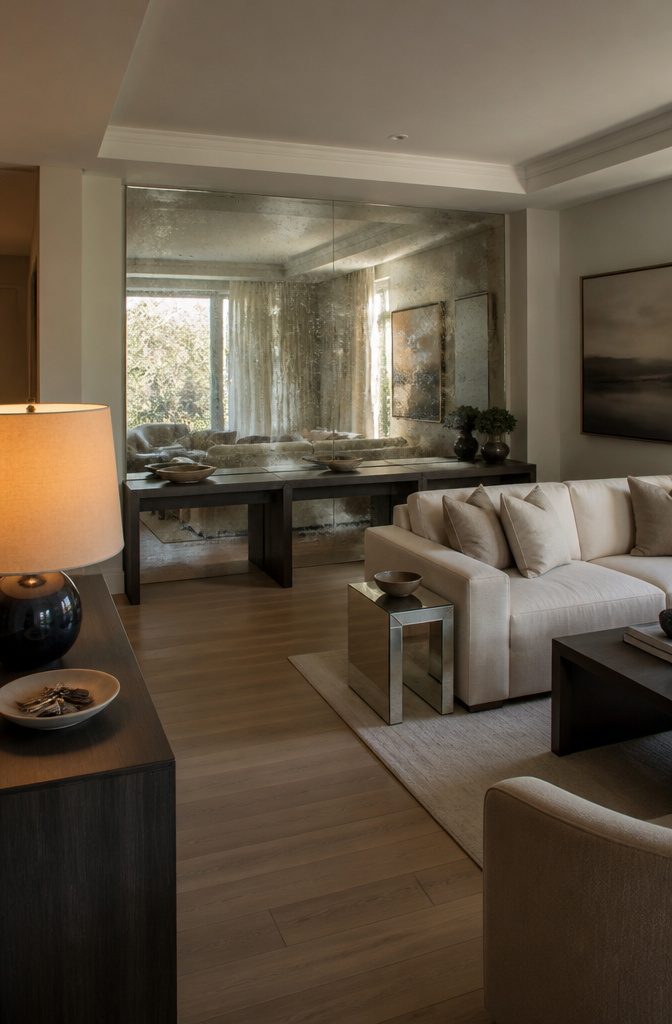
Mirrors reflect light across the room and, when they’re large enough, make a small space feel twice its actual size.
In a southwest-facing room worked on by K&H Design, a pair of slumped mirrors filled the alcoves and projected sunlight throughout the space while adding depth.
The antiqued finish softened the glow — anything too smooth reads more like a salon mirror than a living room piece.
For small footprints, a wall-wide mirror or mirrored side tables double the perceived space by bouncing light and creating the illusion of an entire second room behind the glass.
Pale walls and one large mirror beat a cluster of small ones; the single reflective plane makes the room feel open rather than busy.
If you’re working with limited square footage, that reflected light turns a cramped layout into something that breathes.
14. Add architectural character
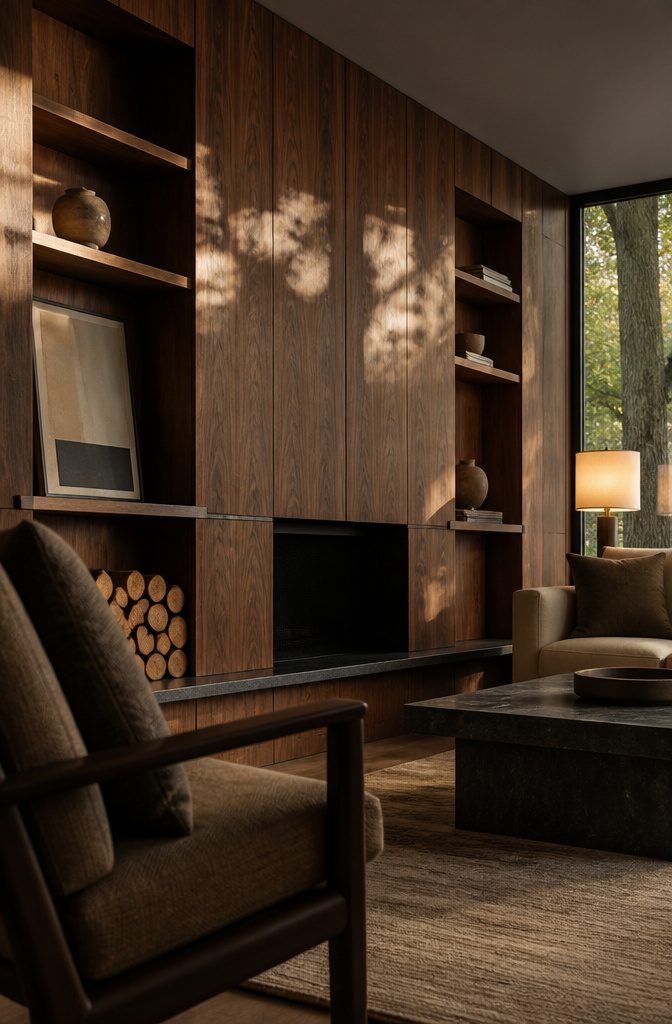
A fireplace carved from Italian viola marble or oak millwork running floor to ceiling gives a living room the kind of architectural weight that paint and furniture alone never will.
Custom millwork—built-in shelving, paneling, or ceiling beams—adds dimension and makes the room feel deliberately designed rather than dropped into place.
A 30-foot ceiling changes the entire proportion of the space, and lighting that reaches up into it turns height into drama instead of empty air.
If you are working with what the builder gave you, a fireplace becomes the natural focal point.
Frame it with built-ins on both sides or flank it with floor-to-ceiling panels in walnut or travertine. The repetition of one material across a wall makes even a modest room feel anchored and intentional.
Smoked-mirror panels behind floating shelves reflect light without the obvious bounce of clear glass, and they work in apartments where you cannot alter the walls themselves.
15. Introduce metallic or decorative finishing details
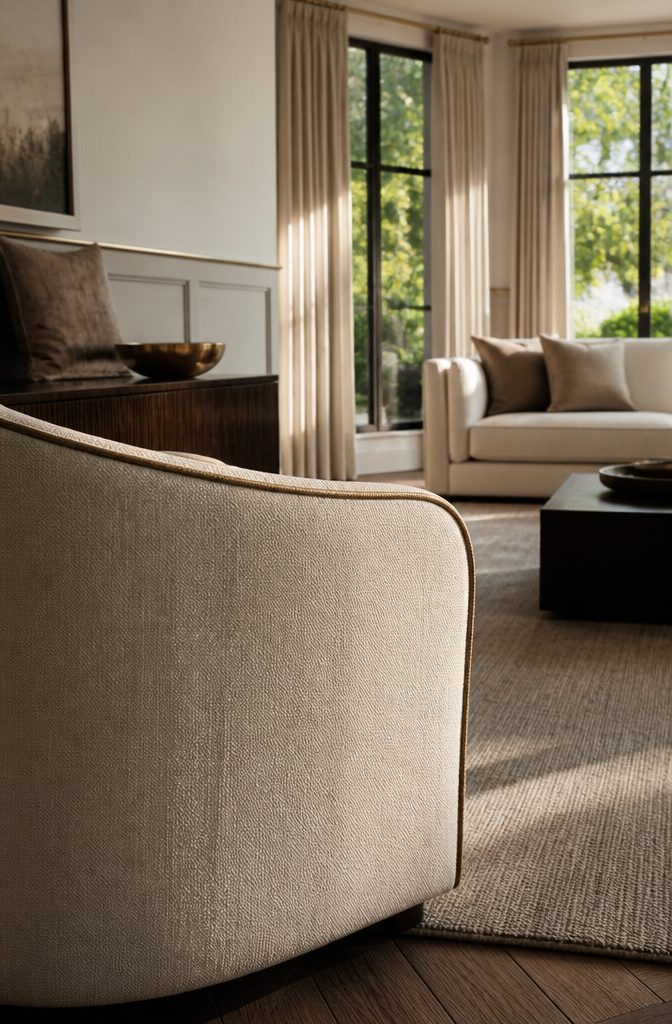
Decorative trimmings and metallic touches turn a living room from assembled to intentional.
Brass, gold and soft silver accents catch light in ways that flat finishes never do — a set of brushed brass curtain rods reads differently than painted steel, and the difference registers before you name it.
Look past the furniture.
Cord trim inserted into upholstery seams traces the line of a chair’s frame and gives it definition. Narrow borders along skirting boards or where fabric wall panels meet wood add a tailored edge that plain butt joints lack.
A slim brass strip at the base of a wainscot panel, a delicate gimp finish where upholstery meets wood — these are the details that make a scheme feel considered rather than catalogued.
They cost little in material and take an afternoon to install, but they register every time someone walks into the room.
Frequently Asked Questions
What is a luxury living room?
A luxury living room combines thoughtful design, quality materials, and an intentional feel rather than relying only on expensive furniture.
It’s about layered textures, atmospheric lighting, considered art, and pieces that work together to create a polished, inviting space. The room should feel complete and considered, not staged or showy.
How can I make my living room look rich?
Layer textures like velvet cushions, linen throws, and marble surfaces to add depth. Use statement lighting at multiple heights, display art with intention, and choose a few high-quality anchor pieces over many cheaper items.
Details like brass accents, an oversized rug, and natural materials make the space feel polished without requiring a huge budget.
What is the 2/3 rule for living rooms?
The rug should be roughly two-thirds the size of the room, and the coffee table should be about two-thirds the length of the sofa.
These proportions keep the furniture balanced and visually connected. Following this rule prevents a rug from looking too small or a coffee table from overwhelming the seating.
How do you pick a living room color scheme?
Start with neutrals like warm white, cream, taupe, or greige as the foundation, then add one or two bold accent colors if the room can handle them.
Let your anchor piece (a sofa, art, or natural light) guide the palette. Stick to 3 harmonizing colors in smaller spaces so the room reads as one cohesive idea.
What are the colors for modern luxury interior design?
Neutrals like cream, taupe, greige, and mushroom gray form the base, with jewel-tone accents like emerald, sapphire, or burgundy adding depth.
These colors let materials like marble, velvet, and brass do the work. Dark rooms call for richer tones; light-filled spaces stay pale with color pulled through pillows and throws.
What are luxury materials for interiors?
Natural stone like marble and travertine, hardwood, velvet, linen, bouclé, Italian leather, brass, bronze, and ceramics are standard luxury materials.
Mixing 3 or 4 of these in one room creates depth without chaos. Pair soft materials like velvet with hard ones like marble to make each register more clearly.