

Cozy master bedrooms decor runs from a weekend paint project to a full wallpaper install, and the deciding factor is how much you actually use the room versus how you want it to photograph.
The catch comes early: a reading nook only works when the floor plan gives you something to work with, and forcing one into a few-hundred-square-foot master makes the space feel smaller, not warmer.
Start with 2700K amber bulbs and linen sheets that soften with every wash; comfort outranks aesthetics here.
1. Layered Bedding
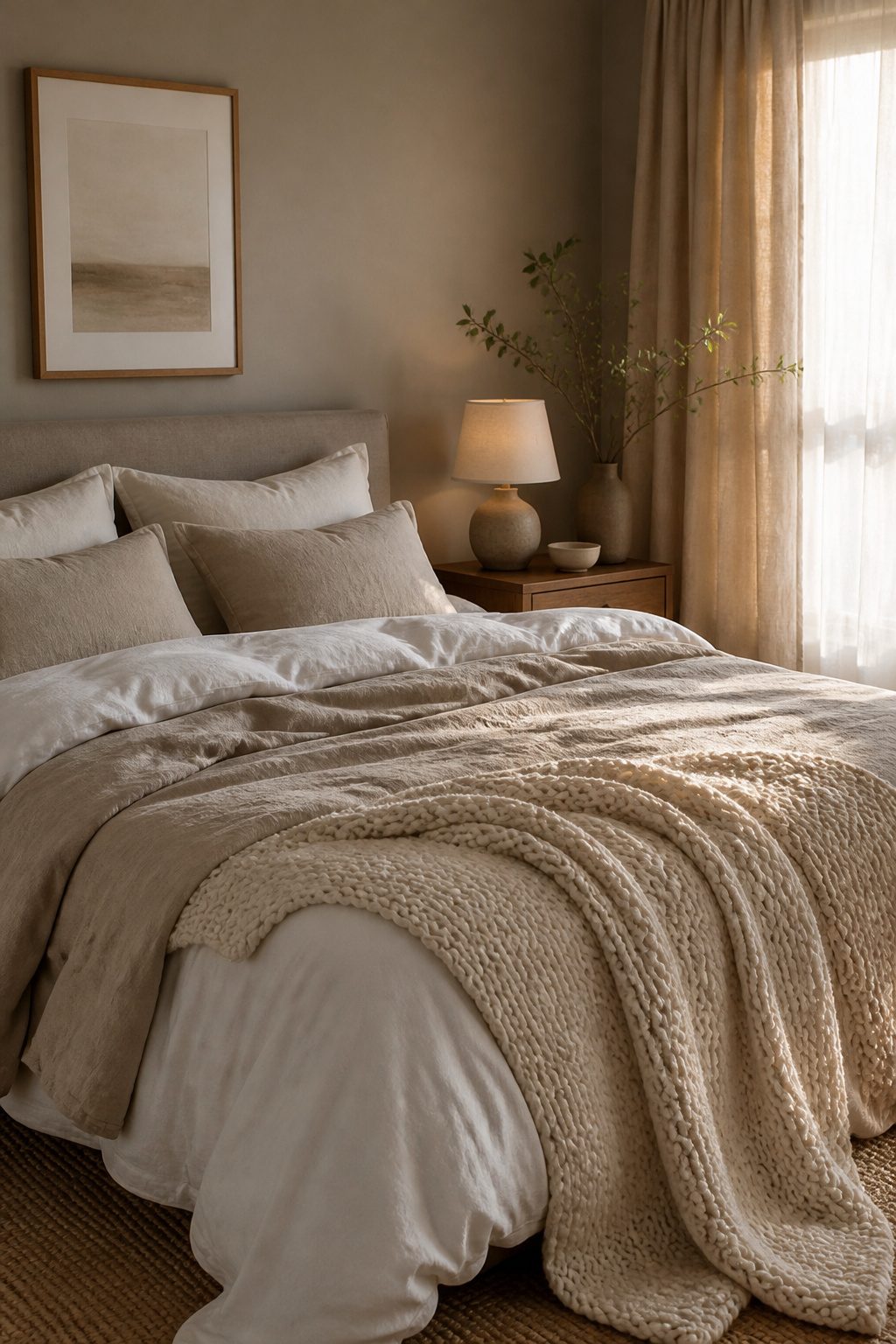
Layering bedding with high-quality sheets, quilts, and throws creates a warm and inviting look that actually functions in a mountain climate.
I start with cotton sheets for the base layer because cotton breathes against your skin through the night, then add linen for the middle layer since it softens with every wash and keeps that rumpled, Sunday-morning texture that reads as relaxed rather than messy.
For the top layer, down traps heat without the weight of synthetic fills, so you stay warm in January without feeling buried.
The quilt-over-duvet question comes down to how you sleep: I run cold, so I keep both within reach and peel back layers as the room warms.
A chunky knit throw across the foot of the bed gives you something to pull up for reading without committing to a full re-make, and the varied textures, velvet or linen on the pillows, do the styling work without extra decor.
The bedding should feel better than it photographs; this is the one place in the house where daily physical comfort outranks aesthetics every time.
2. Soft Lighting
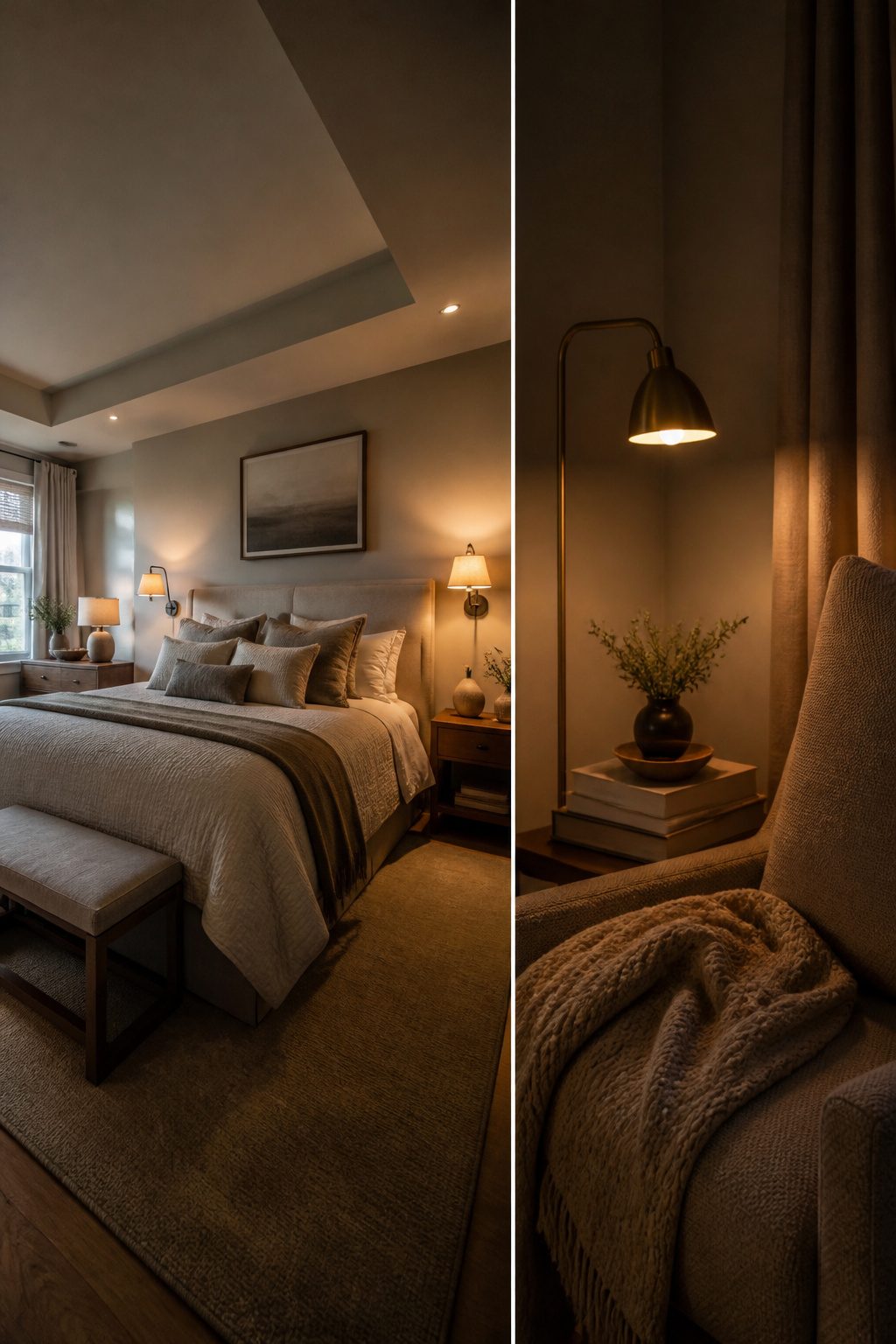
Overhead light alone reads cold in a bedroom. I swap it for warm, amber-toned bulbs at 2700K or lower in bedside lamps and sconces, and the room drops ten degrees in perceived temperature without touching the thermostat.
Bedside sconces are worth the small install effort: they free nightstand surface and throw light at an angle that flatters rather than interrogates. Articulating or dimmable sconces add function for late reading without waking a partner.
Multiple sources beat one bright wash every time. A table lamp on a dresser, a sconce on each side, and a low-watt accent somewhere distant let you layer down to near-darkness.
"I love using table lamps, sconces, and reading lamps with warm bulbs for ambient lighting."
Bulb temperature matters as much as the fixture shape, so check the Kelvin number before you buy.
A beautiful sconce with a 5000K bulb still feels like a clinic. Dimmable switches or smart bulbs let you taper light through evening without getting up, and that adjustability is what turns a lit room into a retreat.
3. Calming Colors
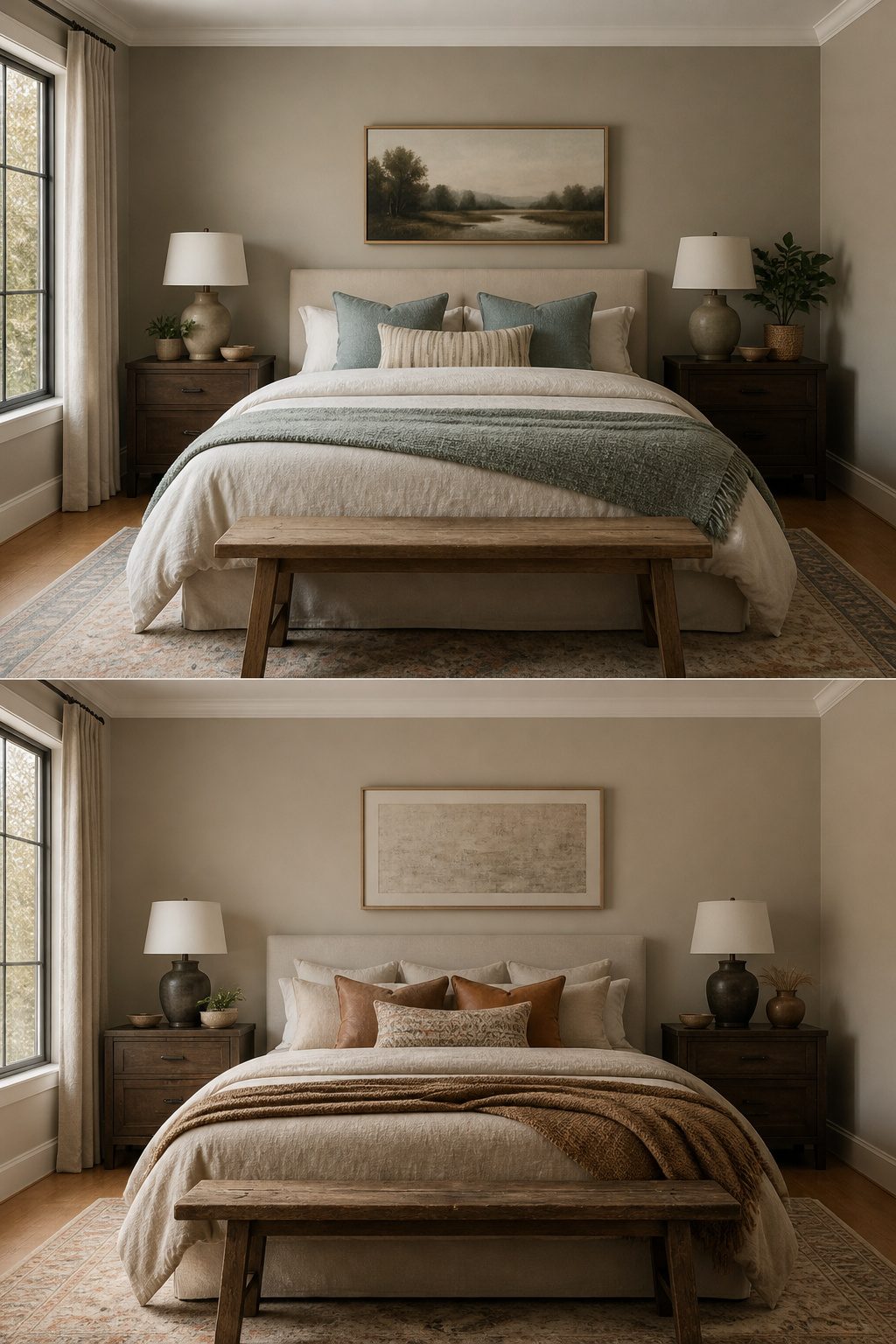
Sherwin Williams Perfect Greige sits right where warm gray meets soft beige, and that middle ground is why I would start a cozy bedroom with it.
The color shifts with the light in a room: cooler in morning sun, warmer by lamplight, so the wall never reads flat.
Muted tones do the heavy lifting for a serene space.
Soft blues, greens, and warm neutrals slow the eye down where brighter colors would keep it moving. I would skip orange, yellow, and red entirely; they are too energizing for a room meant for rest.
Nature-inspired colors ground the space in something familiar.
Earthy greens, in particular, carry a calming quality that reads as intentional rather than trendy. For a cocoon-like feel in a larger master bedroom, deeper tones work better than pale ones.
A forest green or muted berry envelops the room where a light shade would just feel cold. Keep the palette tonal so the walls, furniture, and fabrics read as connected rather than competing.
4. Textured Rugs
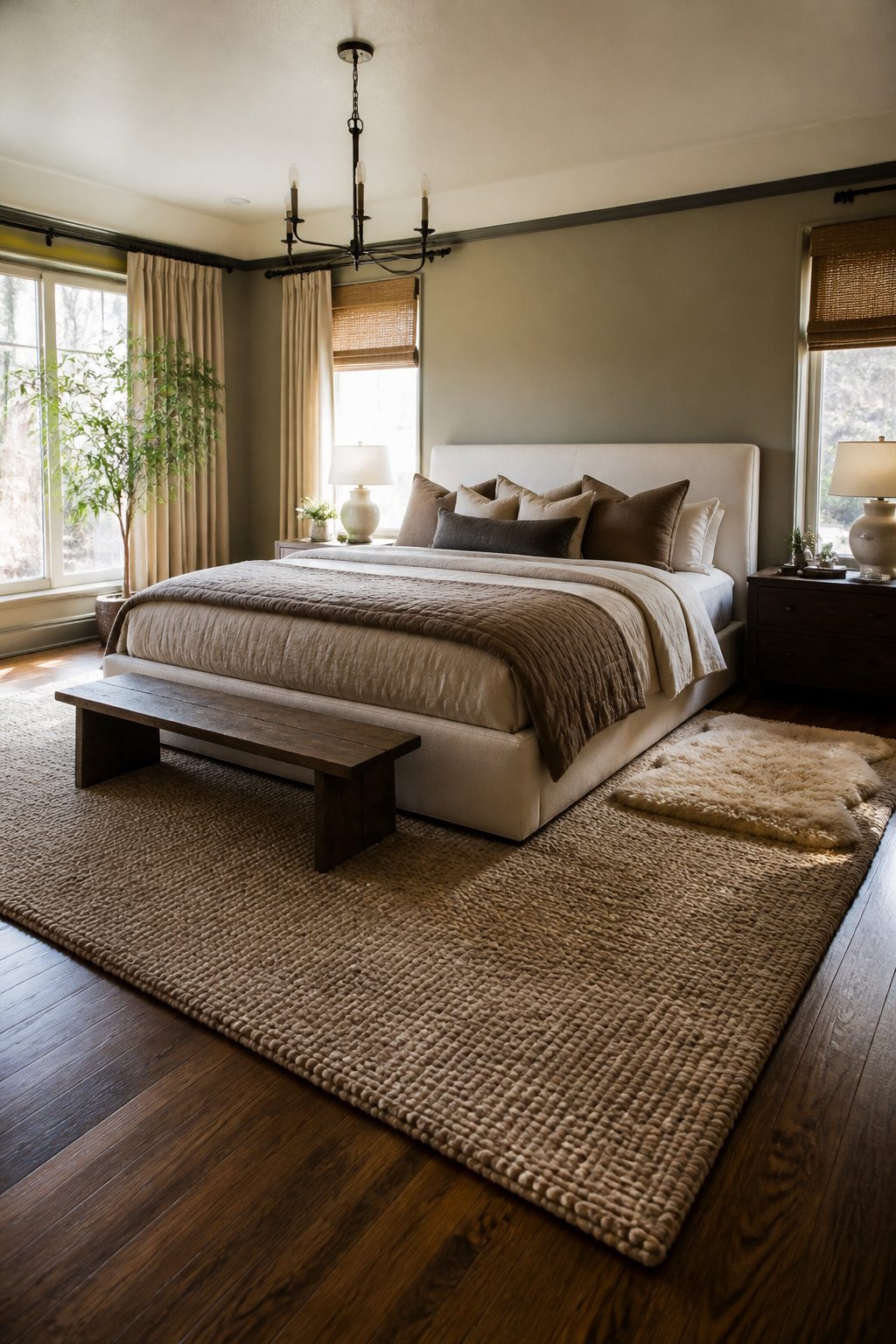
A plush area rug is the first thing your feet touch in the morning, and that texture sets the tone for the whole room.
I would put a thick wool or silk rug directly under the bed, extending at least 24 inches past each side so you step onto softness when you get up.
Wool holds up best for daily traffic and still feels warm; silk is softer but costs more and shows wear faster, so I would save it for lower-traffic guest rooms or layered looks.
Jute works if you want something flatter and more casual, though it is less forgiving underfoot than the plush options.
The rug also marks where the sleeping area ends, which matters in open-plan rooms or awkward layouts where the bed floats instead of hugging a wall.
Layer a smaller sheepskin or shag piece on either side for extra softness, or stack two rugs if you already own a thinner one and do not want to replace it.
Either way, the floor covering does more than warm your feet; it gives the bed a visual anchor that makes the whole space feel finished.
5. Heavier Curtains
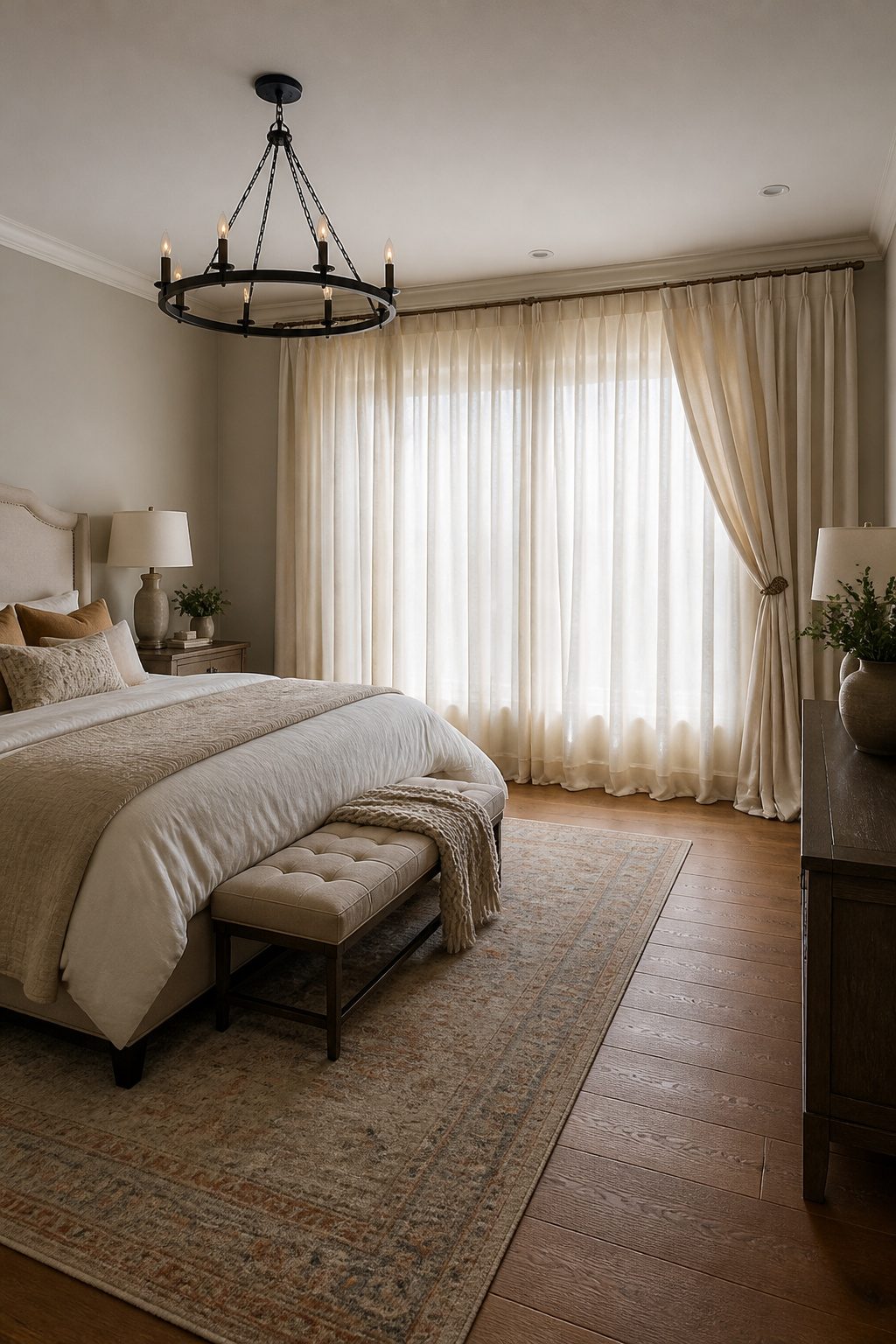
Heavier curtains do more than dress a window. Linen and velvet both add weight that standard sheers cannot, and that weight matters in a room where you want to feel enclosed.
Floor-length panels that pool slightly at the bottom frame the glass completely and stop drafts that slide past the frame, which is often the coldest surface in a master bedroom after dark.
I would pick linen for a softer, more relaxed look that still reads warm, or velvet if the room already has enough casual texture and needs something denser.
Both fabrics absorb sound; in a large master bedroom, that acoustic softness keeps the space from feeling hollow, which is a subtle effect but a real one. You notice it when you stop noticing the echo.
Curtains also block outside light, which helps sleep.
For a weekend project with a few hundred dollars, this is one of the faster wins: measure the window, add eight to twelve inches in width for fullness, and hang the rod four to six inches above the frame so the fabric clears the top completely.
Heavier curtains collect more dust and need more cleaning. Velvet collects dust and needs attention more often than linen, which shakes out easily.
In a bedroom with heating vents below the windows, I would still choose velvet and vacuum it seasonally. The cozier result is worth the extra step.
6. Reading Nook
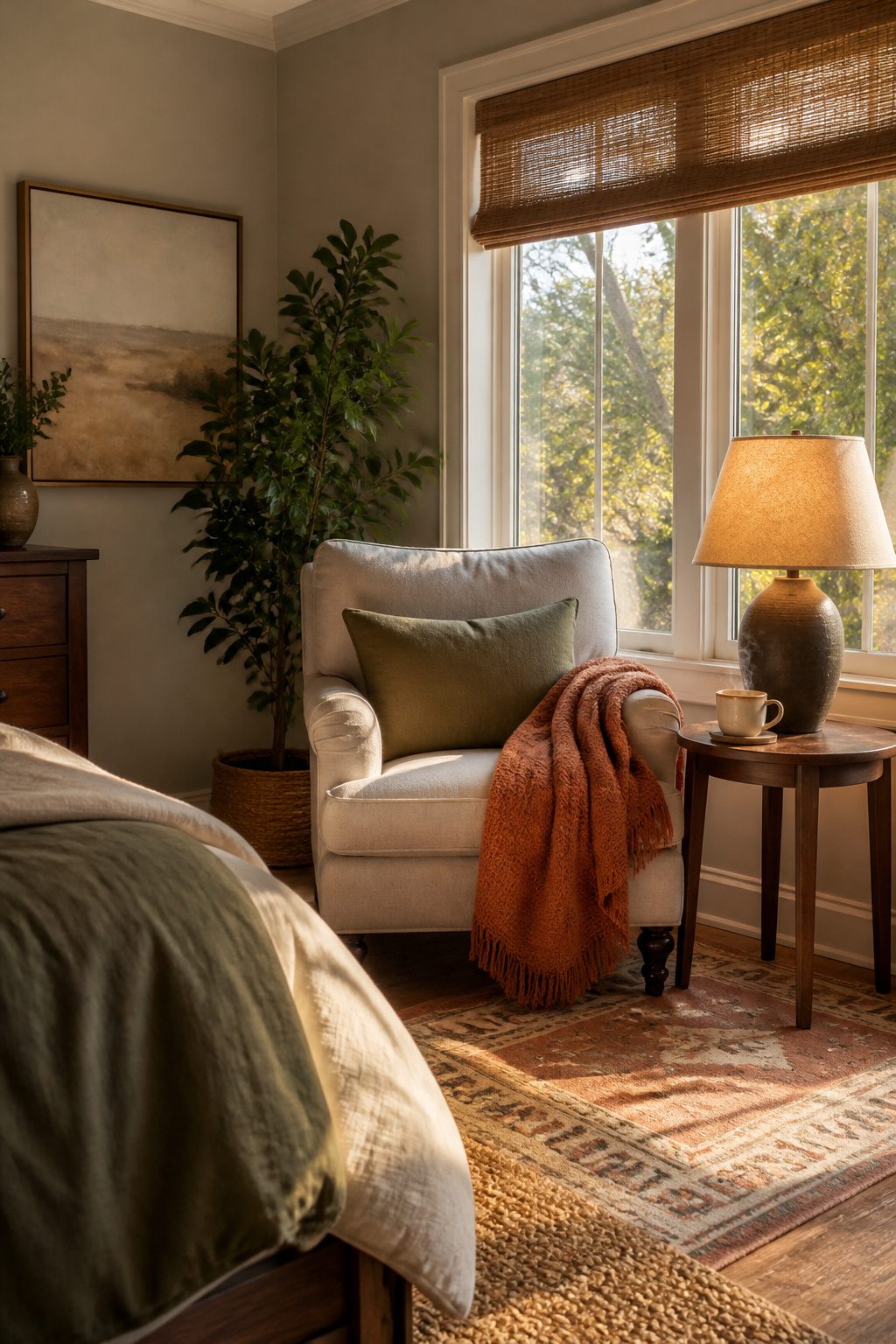
A reading nook is the kind of luxury that only works when the floor plan gives you something to work with. Start with a single comfortable armchair, then build outward.
A small side table matters more than most people think; it holds the coffee cup, the reading lamp, the phone you set down. Without it, the chair becomes a place to drop clothes, not a place to sit.
The throw is what turns seating into a nook. A soft throw layered across the arm gives you permission to stop moving and stay put.
If the space is tight, skip the second chair and the matching set. One chair, one table, one lamp, and a throw you actually want against your skin will do more than a half-empty conversation area that never gets used.
Most master bedrooms in the range readers are working with, a few hundred square feet, do not have the extra real estate.
When the wall-to-wall bed and dresser already fight for space, forcing a seating area makes the room feel smaller, not cozier.
The reading nook wins only when it sits naturally in the leftover corner, not when it steals space from walking paths.
If the only place for a chair blocks the closet door or crowds the bed frame, I would rather put that money toward heavier curtains or a second layer of bedding and call the bed itself the retreat.
7. Personal Touches
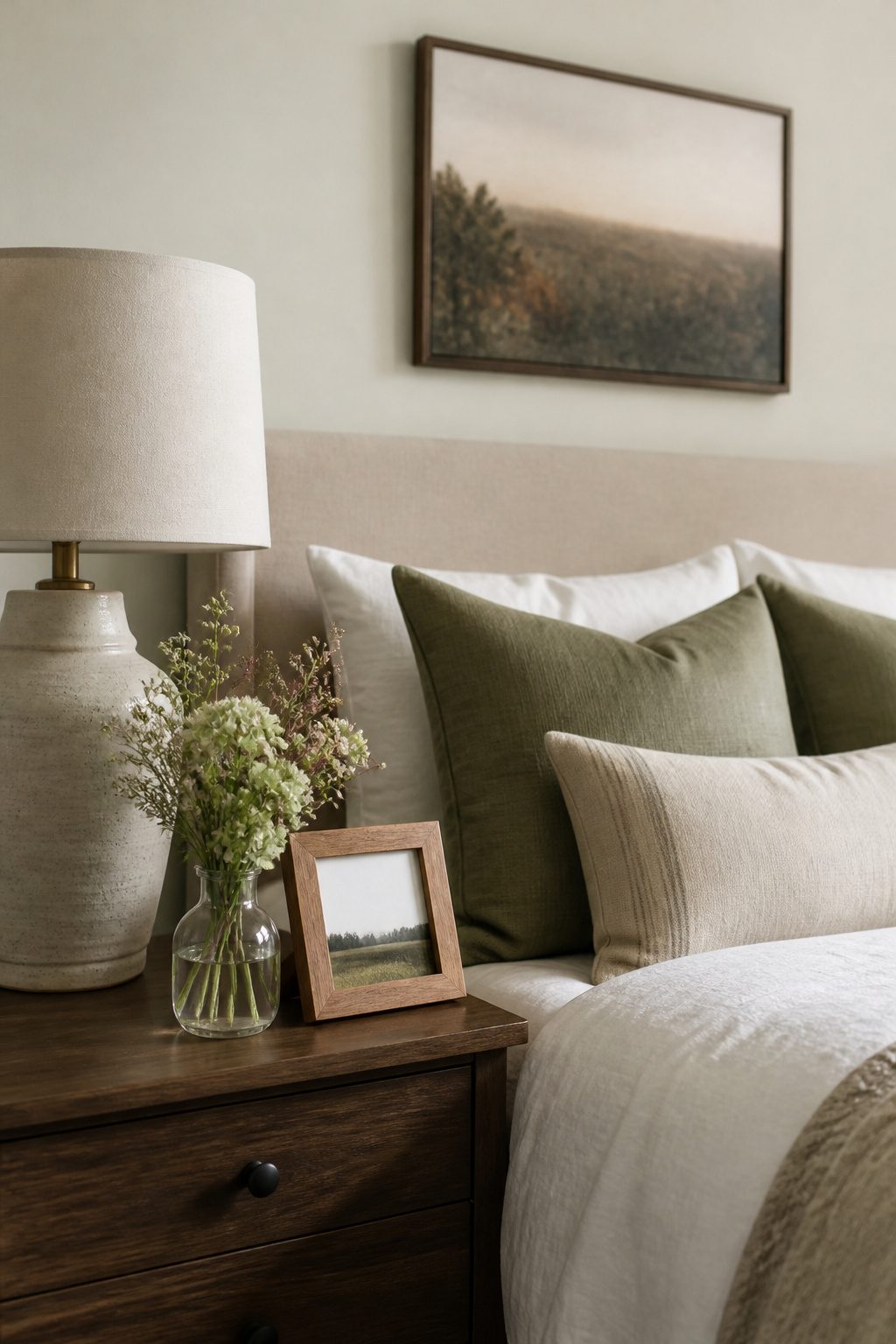
The items you choose to display are what separate a bedroom that looks decorated from one that actually feels like yours.
A few meaningful pieces, placed where you will see them last thing at night and first thing in the morning, do more for warmth than any throw blanket ever could.
I would skip the gallery wall of mass-produced prints and instead hang one piece of art you genuinely love above the bed, or set framed family photos on the bedside table where they catch lamplight.
Georgia Metcalfe puts it well, a bedroom should feel like a hug every time you walk in, and that happens when the space holds things that carry memory rather than just matching the color scheme.
A small bud vase of seasonal blooms, a favorite candle, a ceramic match striker, these are the little luxuries that make a room feel lived-in rather than staged.
Restraint matters; too many personal items and the calm you are trying to build turns to clutter.
I keep it to two or three pieces per surface, enough to invite a second look but not so many that the eye has nowhere to rest.
8. Natural Elements
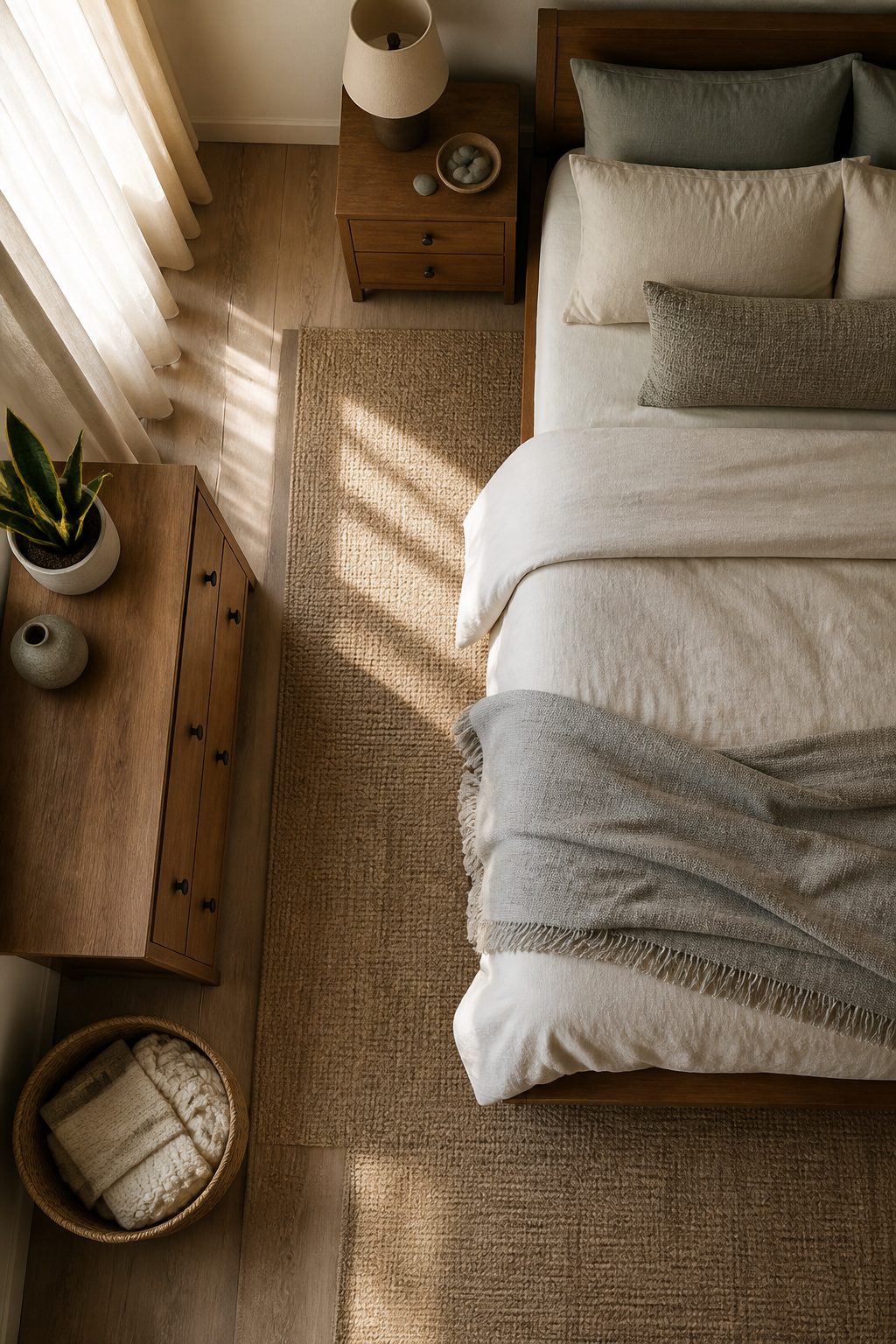
A small vase of flowers on the nightstand or a potted plant on the dresser brings a calm that nothing manufactured quite matches.
I would skip artificial trees; they collect dust and the eye reads them as plastic even when the label says "faux."
Low-light bedrooms need snake plants, pothos, or ZZ plants, all of which forgive a northern window and still put out steady green.
Wood furniture, woven baskets, and pottery add the same quiet texture without any watering schedule.
I think gathered rocks or shells work if you actually collected them; the ones bought in a bag at a craft store look like exactly that.
A fiddle leaf fig or olive tree in the corner makes a stronger statement, but only if the light earns it. Otherwise you are watching something die by inches, which is the opposite of cozy.
Plants and natural materials need upkeep, but they also bring actual life into the room.
A room with no living plants feels flatter to me, but a room with dead ones feels neglected. Pick one or two spots, choose species that match your actual light, and let the rest be wood and linen.
9. Statement Headboard
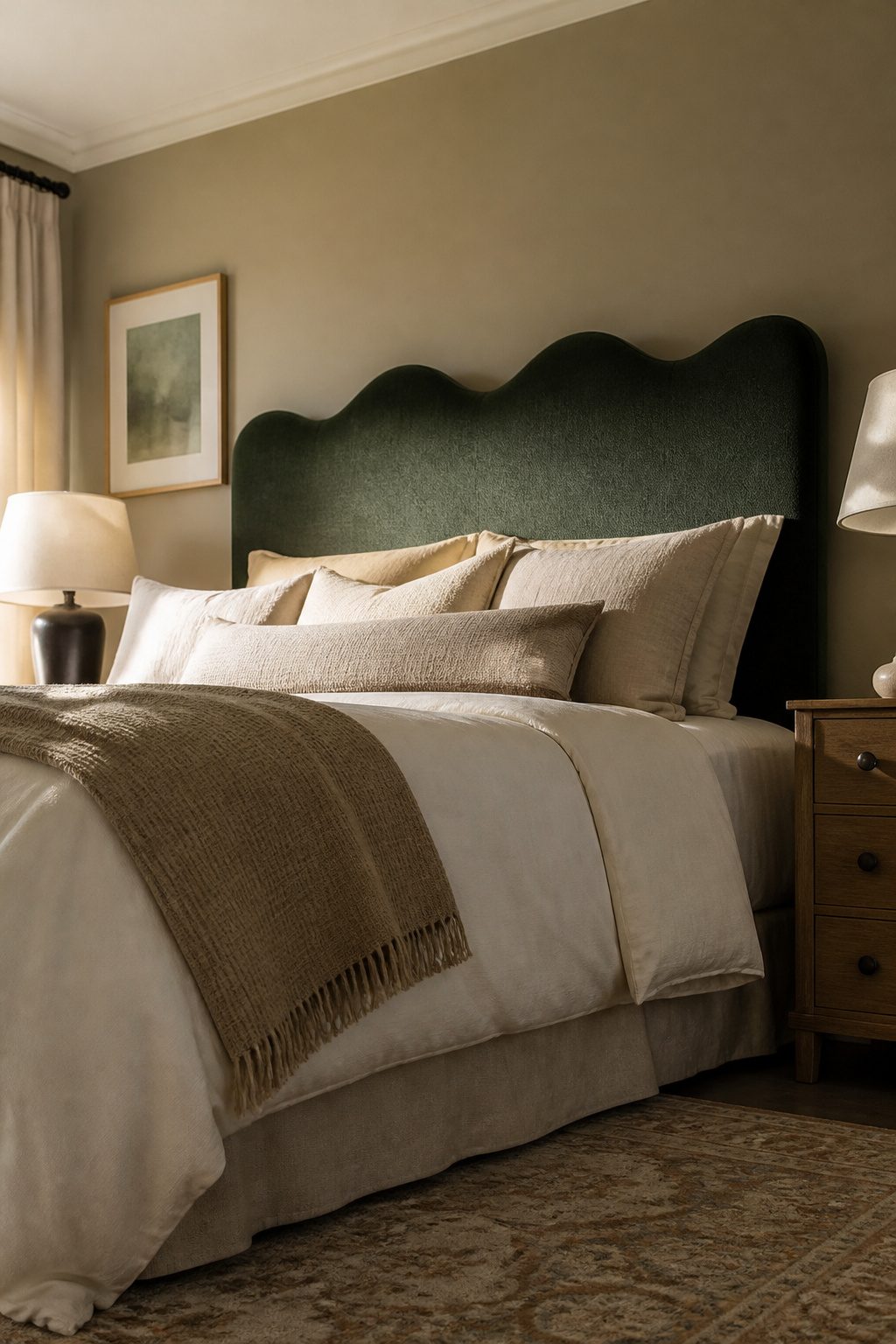
The headboard you choose sets the tone of the entire room, and going bigger than you expect usually pays off.
A small headboard in a large master bedroom looks undersized and temporary, while an oversized style adds immediate comfort and draws the eye upward, which helps even a compact room feel larger.
For a budget-friendly option, the Ruffled Wall Mounted Headboard from Threshold designed with Studio McGee comes in 11 patterns and mounts directly to the wall.
If you want to ground a lighter palette, a richly colored upholstered headboard in a luxurious fabric adds visual softness without darkening the whole space.
A single statement piece in an unexpected material, like a sculptural boucle frame with a wave-shaped edge, can define the entire bedroom while the bedding stays deliberately minimal and stays out of the way.
10. Layered Textures
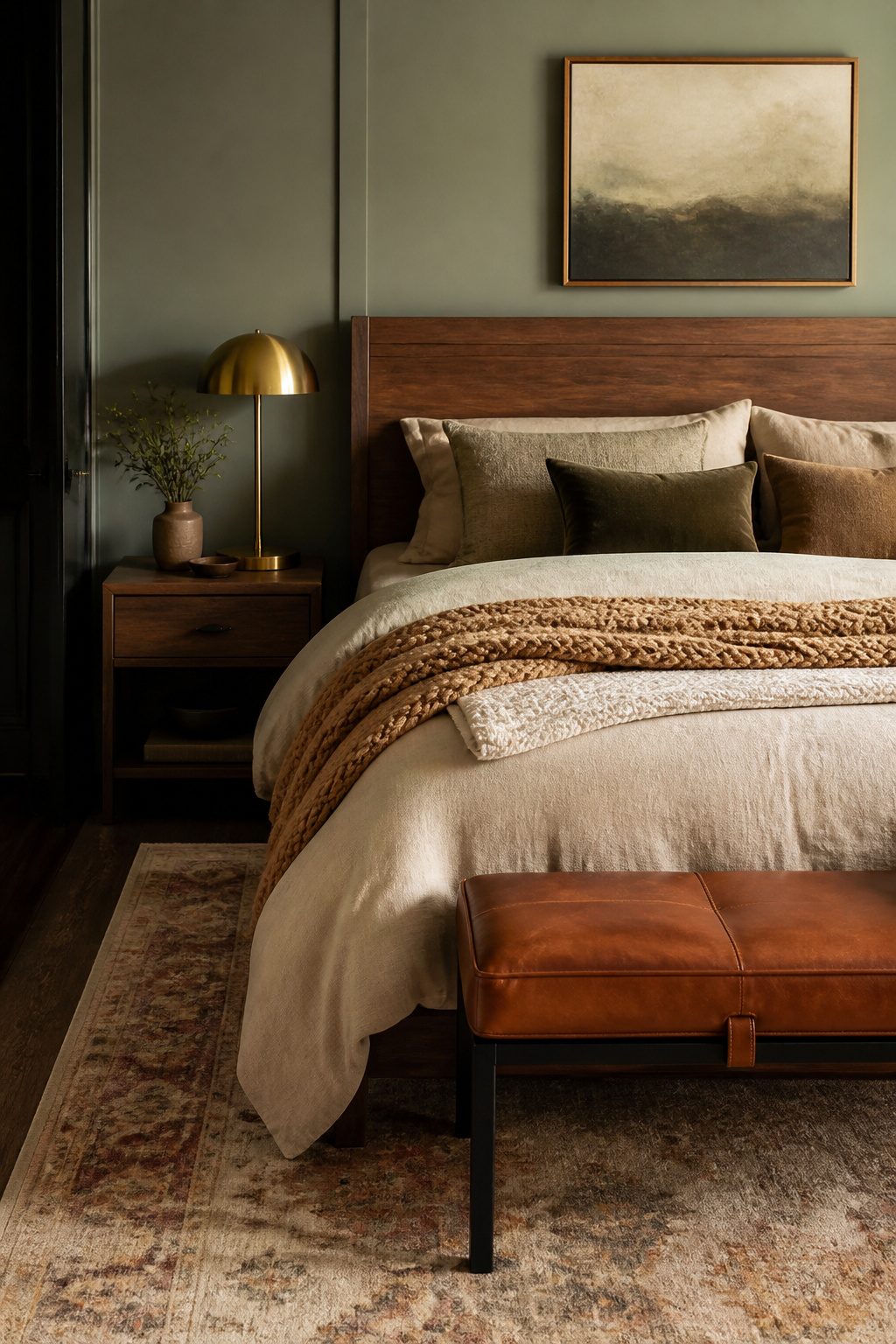
A bedroom built from one material reads unfinished, even when every piece is quality. Wood headboard, wood nightstands, wood dresser, wood floor: it all flattens into a single beige note.
The fix is mixing categories, not matching within them. Metal lamp bases against that wood headboard, a leather bench at the foot of the bed, linen curtains that catch morning light differently than the cotton quilt.
Velvet and linen throws layered together keep a bed from looking catalog-styled, the way Georgia Metcalfe approaches it, doubling up textures rather than doubling down on one.
I would skip the temptation to coordinate every finish. A black metal frame on a bedside lamp does not need to repeat in the curtain rod or the mirror.
Two or three materials distributed deliberately give the eye somewhere to land; four or five start to feel scattered, and one feels like a showroom floor.
The same rule holds for pillows: varying sizes matter less than varying surfaces, linen against velvet against embroidered cotton, each one readable as its own thing.
Physical comfort follows from the visual variety, a bed you actually want to sink into rather than one that only photographs well.
11. Walls With Dimension
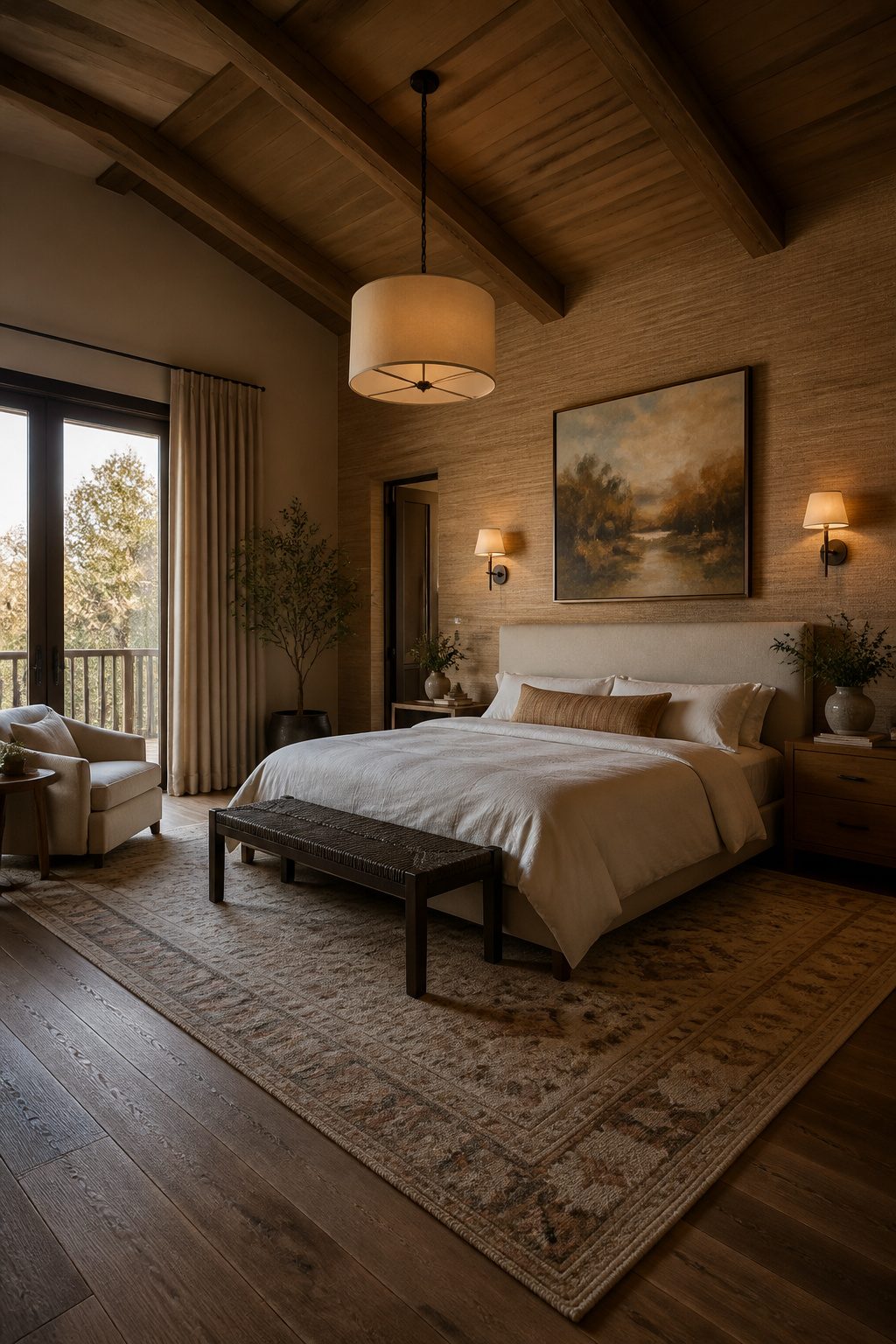
Wallpaper wraps a room in warmth that flat paint simply cannot match. Grasscloth or fabric-backed paper adds texture you can feel even in dim light, and an all-over pattern creates the layered depth that makes a stripped-down bedroom feel finished.
For a true cocoon, run it across all four walls or onto the ceiling so you gaze up at pattern while you fall asleep.
If you rent and cannot commit, artwork is your movable substitute. A single large piece above the bed, or a cluster of framed photos on the bedside table, brings personality without landlord negotiations.
Size is what matters: one substantial piece reads as intentional, while too many small frames scatter the eye and break the calm you are trying to build.
I would take one 24 x 36 inch print over a gallery wall every time, especially in a smaller footprint where grasscloth on every surface would overwhelm.
Shared Bedroom Balance
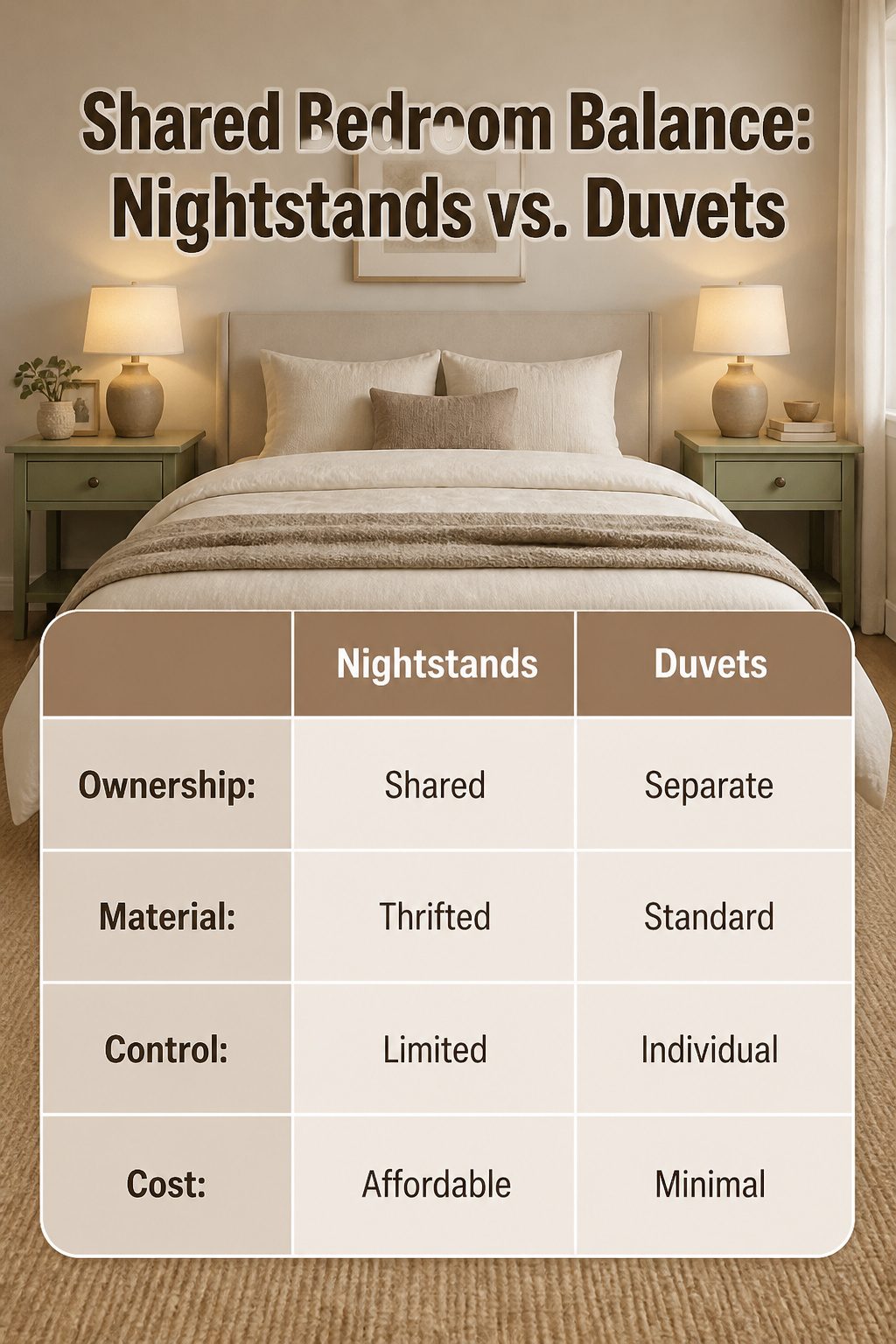
Two matching nightstands with their own lamps do more for a shared bedroom than most people expect.
Each person gets their own drawer, their own surface, and their own switch for reading light, which removes the small daily negotiations that wear on a couple.
The nightstands do not need to be expensive or even identical; two thrifted pieces painted the same color read as a set and cost far less than a matching pair from a catalog.
Temperature is the harder problem, and bedding is where you solve it.
One heavy duvet shared between two people with different body temperatures leaves someone sweating or shivering every night. Two separate duvets on one bed, standard in much of Europe, lets each person control their own warmth without a midnight tug-of-war.
If that feels like too much change, a lighter shared base layer with an extra blanket on one side is the simpler halfway fix.
Either approach works on a weekend and costs nothing beyond an extra duvet or throw you probably already own.
Weekend Projects in Order
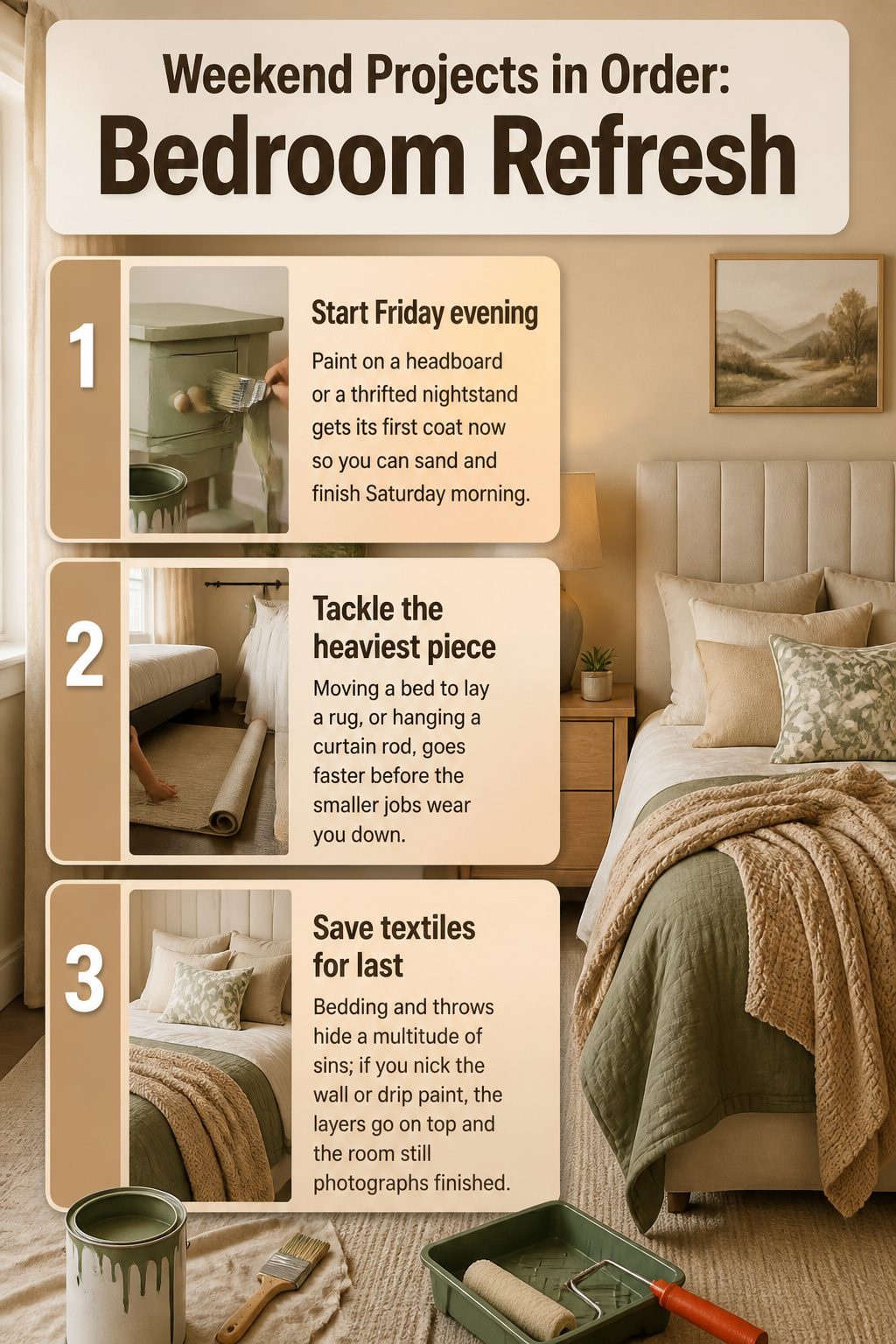
- Start Friday evening with anything that needs to dry overnight. Paint on a headboard or a thrifted nightstand gets its first coat now so you can sand and finish Saturday morning.
- Tackle the heaviest piece next, while energy is high. Moving a bed to lay a rug, or hanging a curtain rod, goes faster before the smaller jobs wear you down.
- Save textiles for last. Bedding and throws hide a multitude of sins; if you nick the wall or drip paint, the layers go on top and the room still photographs finished.
What Cozy Actually Means
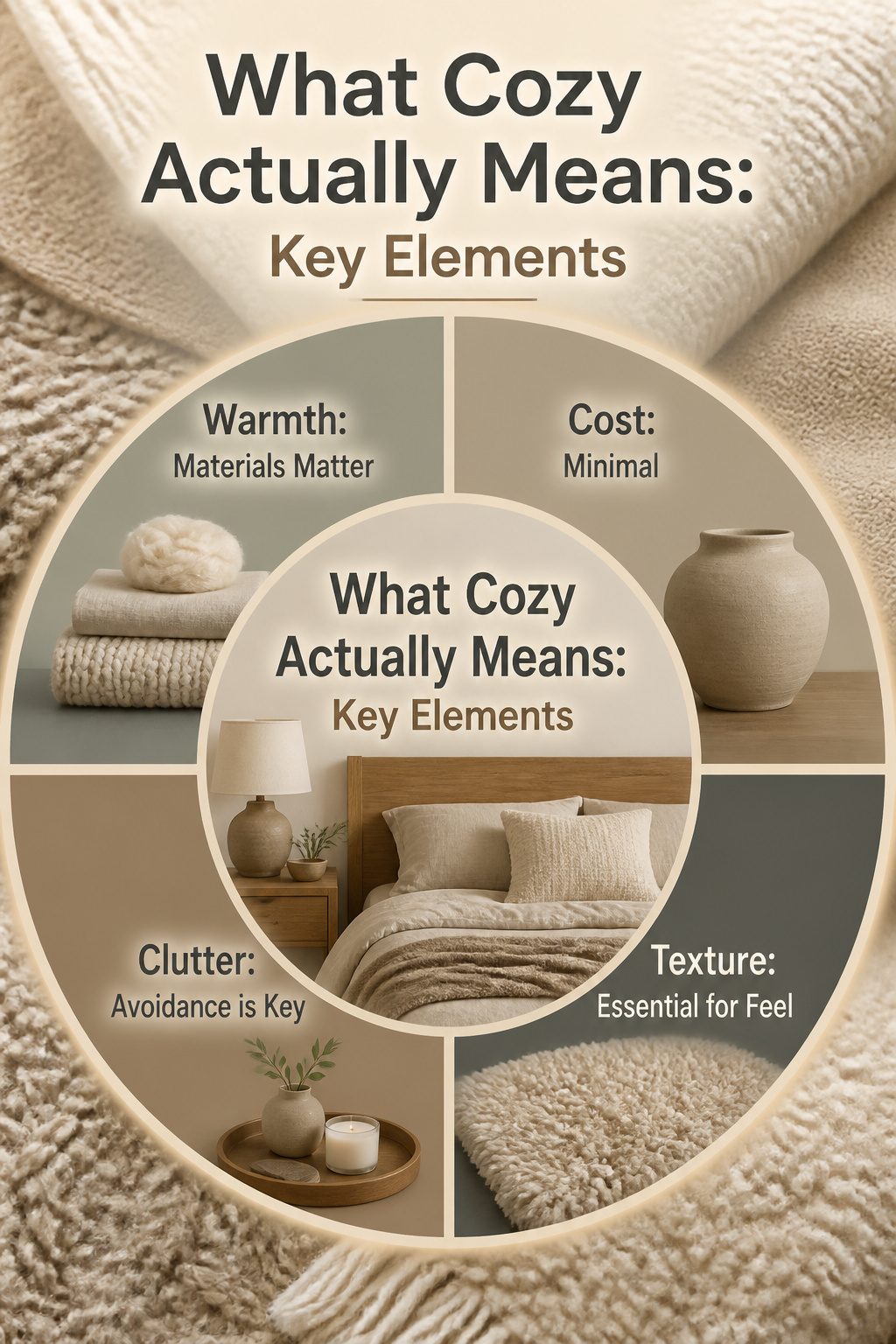
Cozy is not the same as dark, and it is definitely not the same as cluttered.
A room can feel warm and still breathe. The difference is how materials meet each other, not how many of them you pile in.
Matyas at Kelsey Deirdre Design puts it plainly: the way to make a minimalist bedroom feel cozy is to mix materials thoughtfully within a tonal or neutral palette.
Linen bedding against wool throws, bouclé cushions on a plush rug, one wood tone running through nightstands or headboard to pull it together. Nothing competes; everything relates.
I would skip the instinct to add more color for warmth. One wood tone does more than three accent pillows ever could, and it keeps the room from feeling sterile without tipping into busy.
Patience pays off: finding the right weight of linen or the right nap on a rug takes longer than grabbing a bright throw. The result, though, is a room that feels held together rather than decorated.
Lighting and texture still matter, but they work because the palette is already settled. Cozy starts with restraint, then earns its warmth through what you touch.
Frequently Asked Questions
How to make your bedroom feel more cozy and warm?
Start with layered bedding: cotton sheets for breathability, linen for a relaxed middle layer that softens with every wash, and a down duvet on top for warmth without weight.
Add a chunky knit throw at the foot of the bed for reading, swap overhead lighting for warm amber bulbs at 2700K or lower in bedside lamps and sconces, and anchor the space with a thick wool rug extending at least 24 inches past each side of the bed.
The physical comfort of what you touch matters more than how any of it photographs.
What colors are relaxing for the bedroom?
Warm neutrals, soft blues, greens, and greiges like Sherwin-Williams Perfect Greige work best because they slow the eye down where brighter colors would keep it moving. Avoid orange, yellow, and red entirely; they read as too energizing for rest.
For a cocoon-like feel in a larger room, go deeper rather than paler: forest green or muted berry envelops the space where a light shade would feel cold, kept tonal so walls, furniture, and fabrics connect rather than compete.
How to make a minimalist bedroom look cozy?
Mix materials thoughtfully within a tonal or neutral palette: linen bedding against wool throws, bouclé cushions on a plush rug, one wood tone running through nightstands or headboard to pull it together. Nothing competes; everything relates.
One consistent wood tone adds more warmth than multiple accent pillows ever could, keeping the room from feeling sterile without tipping into busy. Cozy starts with restraint, then earns its warmth through what you actually touch.
How can I create a cozy reading nook in my bedroom?
Start with a single comfortable armchair and a small side table to hold a lamp, coffee cup, and phone; without it, the chair becomes a place to drop clothes.
Add a soft throw across the arm to turn seating into a real nook.
Skip a second chair if space is tight: one chair, one table, one lamp, and a throw you want against your skin beats a half-empty conversation area.
Only build one if the floor plan offers a natural leftover corner; forcing it into a crowded room makes the space feel smaller, not cozier.