

A masculine bedroom can run from a $50 gallon of navy paint to a full built-in storage bed, and the deciding factor is how long you plan to stay in the space.
Renters should skip wallpaper and bold walls beyond the headboard; owners can commit to paneling and tufted installations that anchor the room permanently.
The one detail that separates intentional from accidental is the 2700K bulb. Warm light changes how every color reads more than the paint itself, and it costs nothing beyond remembering the number at the hardware store.
1. Choose a Strong Color Palette
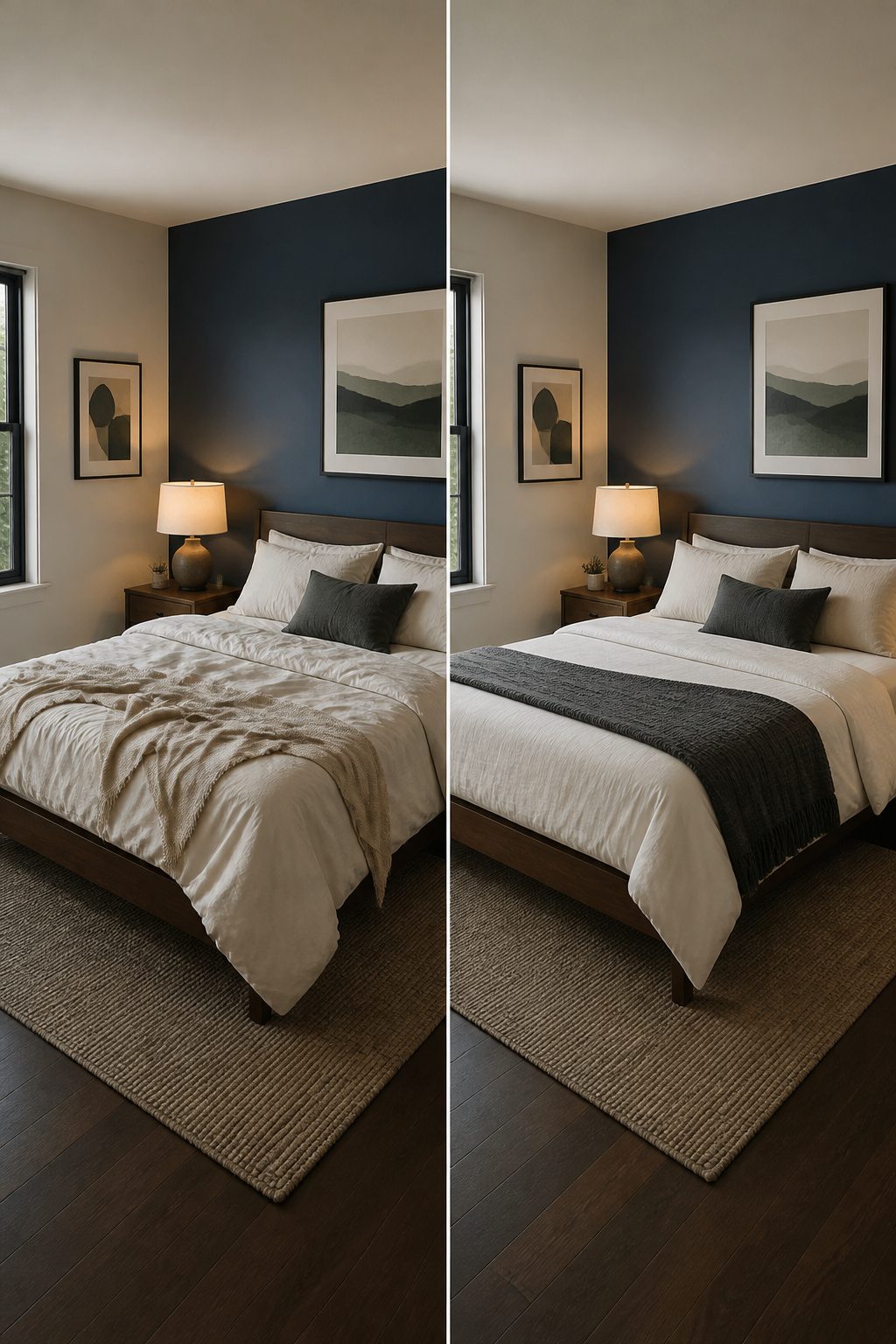
Deep blues, charcoal gray, and forest green form the backbone of any masculine bedroom that reads intentional rather than accidental.
Navy blue walls carry the most weight for anchoring the space; the shade is forgiving enough to handle imperfect lighting and pairs cleanly with warm wood tones without looking like a showroom set.
Charcoal gray works as a quieter alternative if you want the room to feel smaller and more enclosed at night, though it can read flat without texture.
Forest green demands more natural light than most bedrooms offer, so I would skip it unless the room faces south or you plan to layer in enough warm metal to keep it from turning muddy.
The neutral balance matters as much as the bold choice. Beige and ivory keep the palette from feeling like a cave, but I would limit them to bedding, curtains, or a single rug rather than splitting the room fifty-fifty.
A navy wall with cream linens and a dark wood bed frame hits the right ratio without overthinking it.
Black and white combinations read timeless but can feel sterile if you stop there; one small warm accent, a leather pillow or brass lamp base, keeps the room livable.
Bright color pops work against this foundation only in small doses, a single throw or a framed print, anything more and the room loses the restraint that makes it masculine rather than merely male.
Recommended Products

1.Premium Quality Canvas Each panel is made with high-quality canvas and wooden frame, providing long-lasting durability and vivid colors

1. Blush Pink and Blue Wall Art Size: 16x24inx3pcs (40x60cmx3pcs), frameless posters, perfect gift for friends and family.

Abstract Floral Wall Art Set: Includes two 12x12 inches (30x30 cm) canvas panels, creating a balanced and versatile wall display that complements various spaces.
2. Layer Rich Fabrics
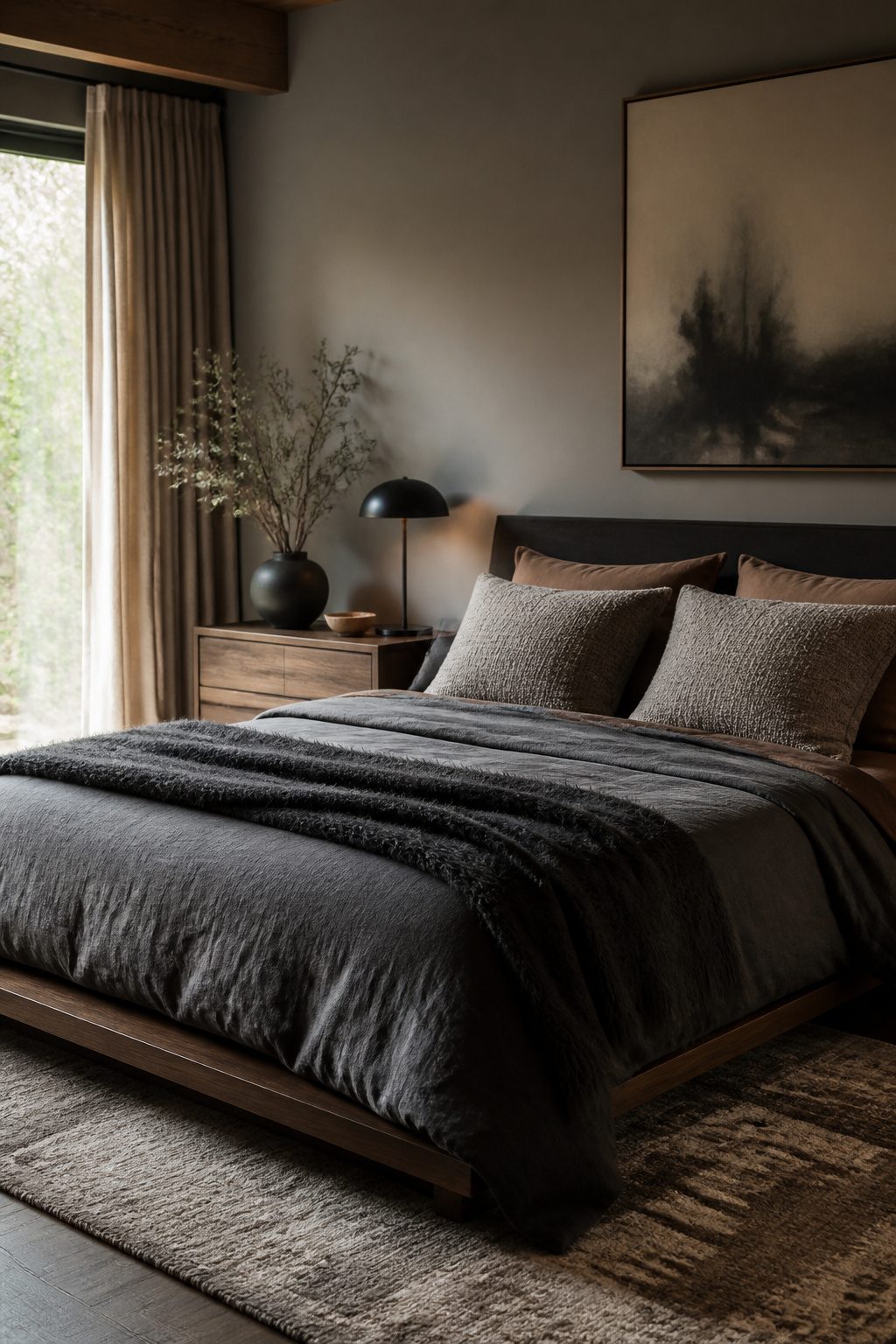
Mohair throws in charcoal or forest green add warmth that reads as refined rather than soft.
The fiber has a slight sheen and enough body to hold a crisp fold across the foot of a bed, which keeps the look intentional.
I would skip pale grays or blush tones here; they shift the same material into territory that feels borrowed.
Silk works best in small doses and matte weaves. A slubbed silk pillow in tobacco or slate catches light without gleaming, and the texture reads closer to linen than to anything you’d find in a formal living room.
I would use one or two at most, mixed with cotton or wool, so the bed doesn’t start to look like a hotel suite.
The combination matters more than either fabric alone. Layer mohair as the top throw, silk as the accent pillow, and ground both with a heavy cotton duvet or a nubby wool blanket.
That weight at the bottom keeps the overall impression masculine in the way a leather jacket does: the materials are luxurious, but the structure is what you notice first.
Keep the palette to two tones, both of them muted, and avoid patterns that read as decorative. Solid colors let the textures do the work.
Recommended Products

60W Incandescent Replacement Bulb: A19 LED bulbs are more energy efficient than incandescent bulbs but generate less heat. No lead or mercury, no IR radiation. It provides a comfortable lighting space and protects our visual health at the same time

Replacement Soft White Bulbs: Make your home more energy efficient with our soft white LED light bulbs; Relax HD Light Bulbs offer a warm, soft white light that is perfect for comfortable moments and cozy spaces

Ruboffcs A19 LED light bulbs is an energy-saving 9-watt bulb (equivalent to a 60-watt traditional incandescent bulb). Compared to the traditional 60-watt incandescent bulb, it can save up to 90% of energy. This LED bulb is well-designed and highly efficient, making it an ideal alternative to traditional bulbs.
3. Streamline Furnishings
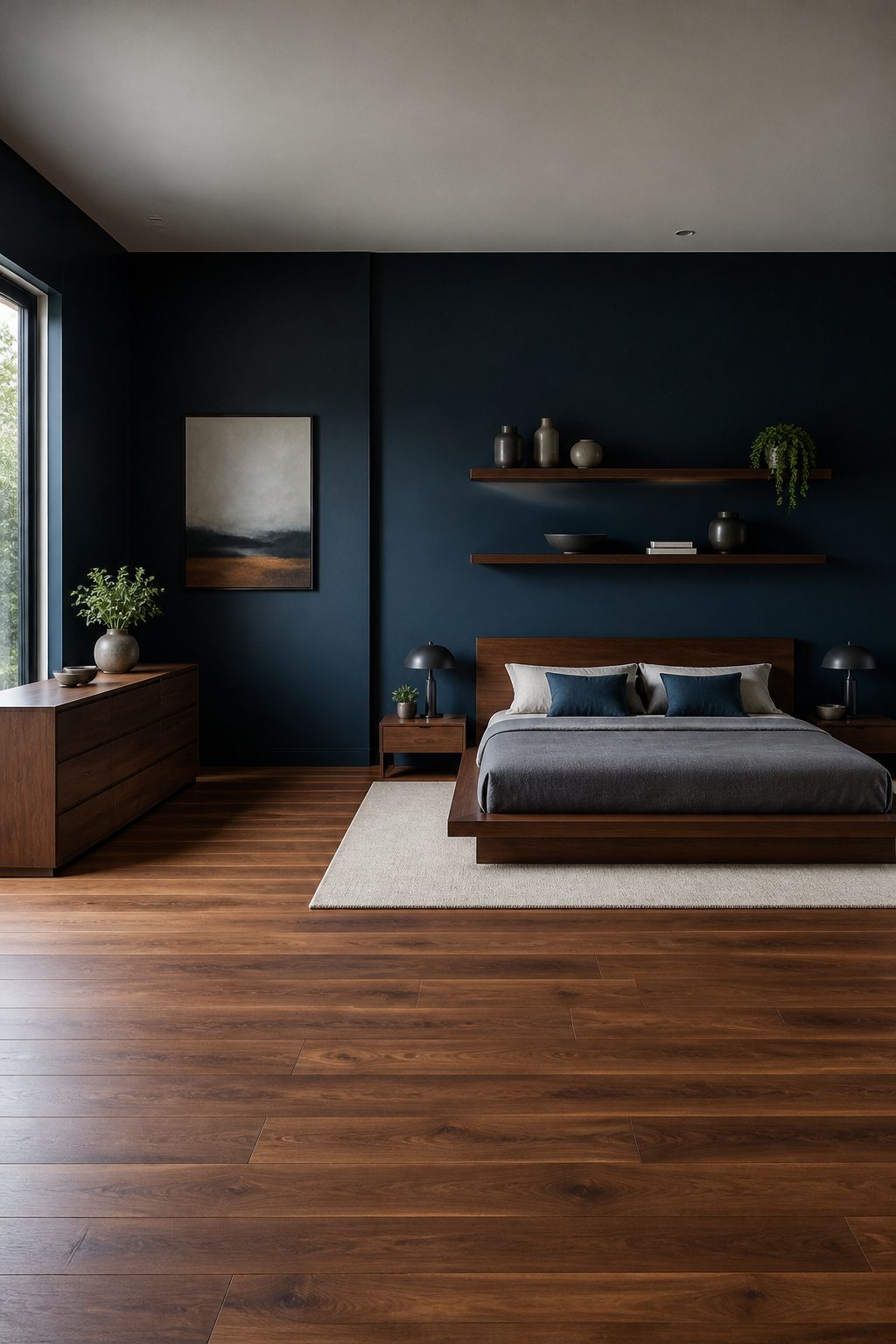
A platform bed with a low profile frame sets the tone without asking for attention. I would pick one in walnut or matte black, something that sits close to the floor and leaves the wall above it open.
The space around the bed matters as much as the bed itself; let the floor show between the frame and the dresser rather than crowding the room full.
Deep tones work best when the shapes stay simple. Navy walls or a charcoal headboard read as intentional, not heavy, so long as the furniture keeps clean lines and the bedding stays to solid linen or wool.
I would skip anything with visible hardware or decorative trim; a drawer that opens with a fingertip lip beats one with a pull.
Storage needs to disappear. Built-in shelves or under-bed containers keep the surfaces clear, and clear surfaces are what make a dark room feel calm instead of closed in.
I would rather have one good piece with nothing on top of it than two pieces holding each other’s clutter.
Recommended Products

EXTRA SOFT COMFORT: Experience cloud-like softness with our uniquely brushed microfiber comforter that feels incredibly gentle against skin while providing year-round coziness without overheating.

Textured Design: Maireve's stylish comforter set is designed with an ingenious crinkle texture for a beautiful and delicate look, which is paired with the matching sheets and shams, creating a casual and sophisticated look for your bedroom. Stylish and classic, the geometric pattern is perfect for modern bedrooms and boho farmhouse style bedrooms.

Gothic Red Rose Design: Bring a bold, romantic touch to your bedroom with striking crimson roses, black botanical leaves, and vintage-inspired gray stripes. This gothic floral comforter set creates a dramatic yet elegant look, perfect for dark romantic, Victorian-inspired, and alternative bedroom decor.
4. Add Mixed Textures
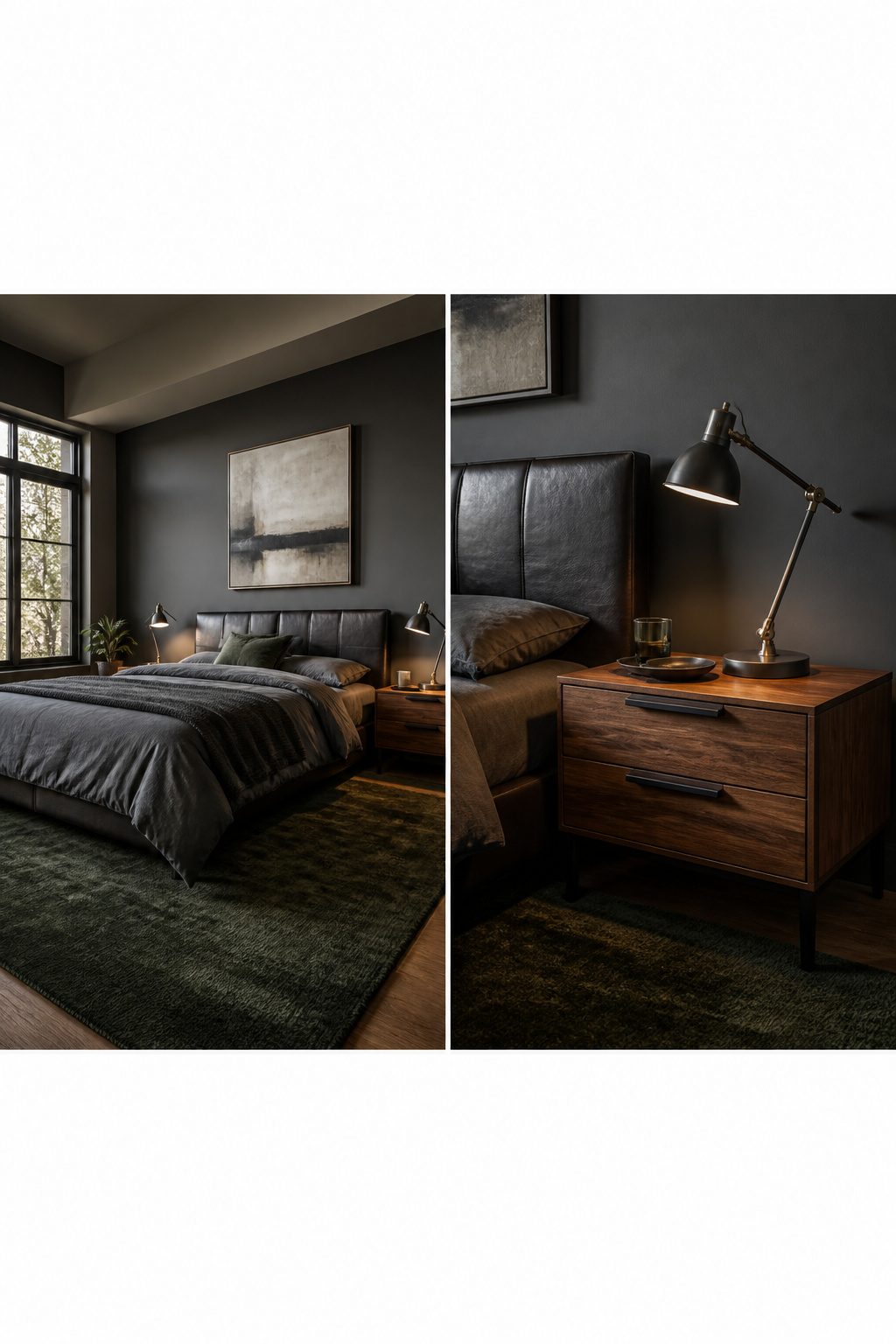
Leather, wood, and metal together give a bedroom the kind of depth that reads as intentional rather than decorated.
The pairing that works starts with weight: a leather headboard or desk chair against a walnut dresser, both grounded by a black iron bed frame or simple metal lamp base.
Iron in particular reads masculine without trying, and the darker tones keep the mix from feeling like a catalog spread.
Margaret Donaldson, who designs out of Charleston, notes that iron, wood, leather, and darker colors always feel more masculine, and she looks for patterns or textures that warm the space while keeping that cohesion.
The combination that does not work is all three at equal volume. A leather sofa, reclaimed wood wall, and wrought-iron chandelier in the same sightline compete instead of layer.
Pick one material to lead and let the other two show up in smaller doses: the leather as a single chair or bench, the metal as hardware or a slim frame, the wood as the largest surface.
Reclaimed wood works best when it has one job, a headboard or a single accent wall, not both. Warm browns and deep greens or blues bridge the three materials without adding a fourth texture that tips into lodge territory.
Jute or burlap can soften the room, but they are easy to overuse; one small rug or throw is usually enough.
Recommended Products

High-Quality Faux Fur: Features a luxurious shaggy surface (1.53-inch high pile), a shock-absorbent sponge mid-layer for cushioning support, and durable non-woven fabric backing. This rug is 30% thicker than competitors' options, with no fiber shedding issues

【Premium material】Our fluffy and soft rug surface is made of high-quality velvet, and the middle layer is upgraded to memory foam, making the bedroom carpet more comfortable and soft

Serene Forest Design: Transform any room with a lush green forest rugs, featuring rich botanical details and calming vintage accents. This 5x7 washable area rug elegant design brings the tranquility of the forest into your living room, bedroom, or kitchen
5. Build an Accent Wall
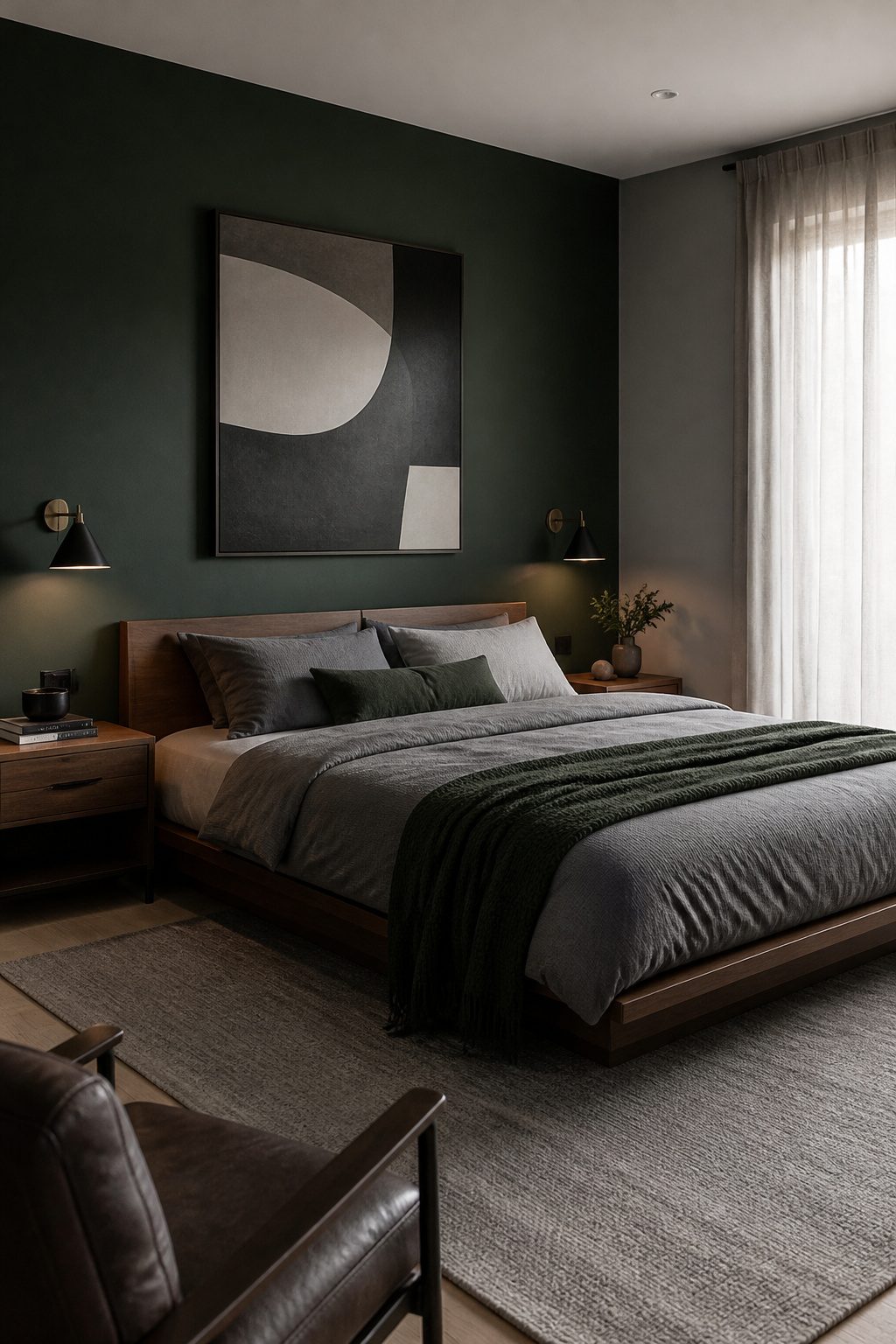
The wall behind your headboard is the only place bold color belongs in a bedroom. Any other wall fights the bed for attention and the room ends up restless.
I keep the remaining three walls in a neutral dichromatic scheme, something like warm white against a soft gray, so the accent wall has something to settle against.
Paint is the safer bet for renters and first-home owners. One gallon covers that single wall for under $50, and you can roll it back to landlord-white in an afternoon when you move.
Wallpaper gives you pattern and texture, but the commitment is real: removal takes hours and often damages the surface underneath.
If you own and plan to stay, a dark geometric paper or wood paneling can warm the space the way iron and leather do in masculine rooms, but I’d skip it in a rental.
How bold is too bold?
I draw the line at neon or anything that needs its own plug. Bright color is fine, even a deep cobalt or forest green, but the moment you add illumination the wall becomes signage, not structure.
The same goes for sports memorabilia as a wall treatment. A single framed jersey reads personal; a grid of them reads storage unit.
For most bedrooms, one saturated color on the headboard wall keeps the room sharp without making it loud.
Recommended Products

Pillow Cover Only, Insert Not Included. Simply fill this modern design cover with your favorite pillow insert to refresh the look of your room. Includes 1 pillow cover, 12" x 20"

Modern design pillow covers. Simply fill these with your pillow inserts to update the look of your room!

Material: Durable Soft Faux Leather with Piping Desgin, Thickly & Cozy Touch, Superior Quality, High Class, Solid Dyed Leather Fabric
6. Add Industrial Elements
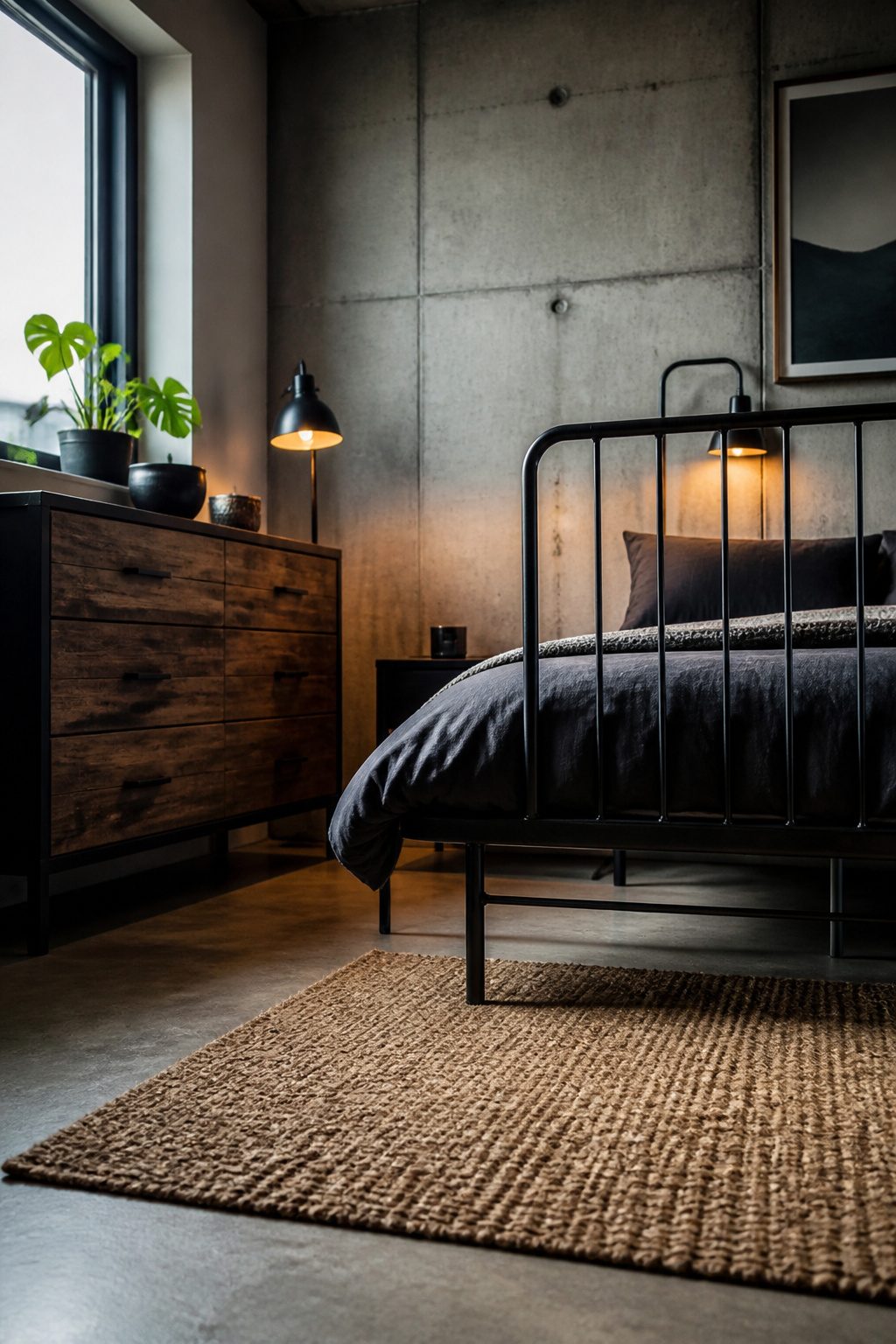
Metal furniture and concrete surfaces give a bedroom the kind of rugged structure that reads masculine without trying too hard.
A metal bed frame with clean lines does the heavy lifting here, and it pairs naturally with a concrete-look accent wall or polished concrete floors if your space allows them.
The materials are durable, low-maintenance, and they age better than most finishes.
Exposed pipes are the move when the architecture already has them. In a loft or older building, leaving ductwork or plumbing visible turns a structural necessity into the design feature.
If you’re in a standard apartment without that bones, skip the fake exposed-pipe installations. They read as costume, and the money is better spent on a solid metal desk or shelving unit that actually functions.
The coldness is the real risk.
Industrial spaces can feel like workshops if you don’t break them up. Wood accents on a headboard or nightstand add the warmth you need, and warm lighting keeps the room from feeling like a garage after dark.
I would keep the palette to black, gray, and white, then let the natural grain of one or two wood pieces do the softening.
Plants help too, though I would choose low-maintenance varieties since this look only works if it stays sharp without constant fussing.
Recommended Products

Use for a variety of indoor and outdoor project surfaces including wood, metal, plaster, masonry or unglazed ceramic

Perfect Size for Versatile Display – This stunning triptych wall art measures 12x16 inches (each panel), offering an ideal size to enhance your space without overwhelming it. The three-panel design creates a cohesive yet dynamic visual impact.

Framed Wall Art: This 28.5 x 57 inch large wall art features a deep navy blue abstract design in a tall vertical format Finished with a solid wood frame with a 1.38-inch frame thickness, it adds structure and a clean finished edge around the artwork, giving the canvas a modern gallery-style presentation while helping protect and support the piece on your wall
7. Pick a Bold Headboard
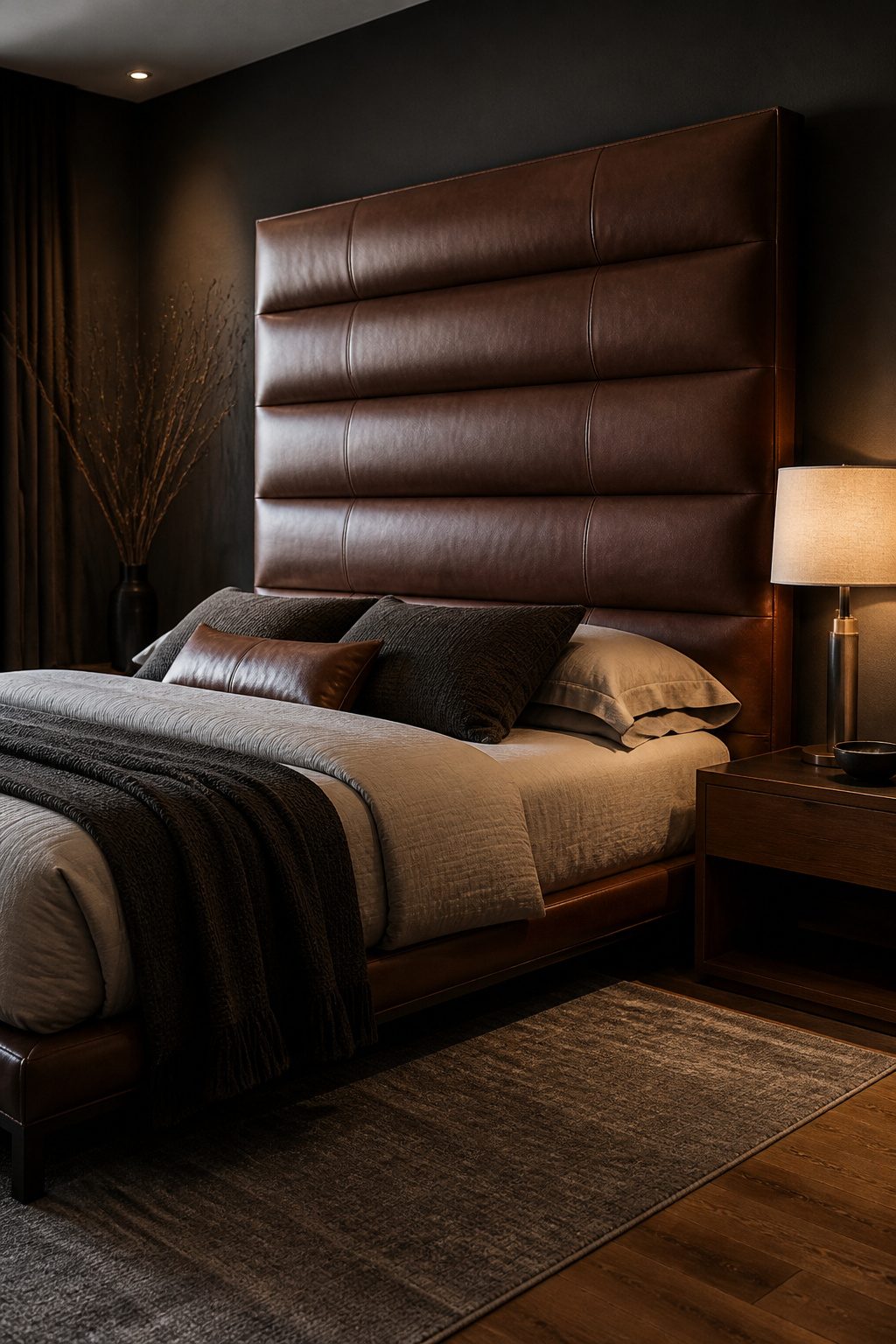
A platform bed with a bold headboard anchors the room faster than any other single piece. The bed is already the natural focal point; giving it height and weight just makes that work for you instead of against you.
I would go with something in the 54–60 inch range, tall enough to read as intentional from across the room without brushing the ceiling.
Wood with real grain or leather with brass studs both do the heavy lifting. Carved wood reads warmer and hides dust; leather cleans easier but costs more and can look cold under overhead lighting.
For a first apartment or a rental you plan to keep three to five years, wood wins on forgiveness and warmth.
A wall-size built-in tufted headboard in gray works if you own the place and the wall. For most renters, a standalone headboard on a simple platform frame gives ninety percent of the effect with none of the commitment.
Skip the plank-style or bare-mattress look. Even a basic frame with nothing above it reads unfinished, and the whole room follows that downward.
Recommended Products

【Energy Efficient & Cost-saving】Adopting energy-efficient LED chips, DEGNJU A19 LED light bulbs offer the same brightness as traditional 60-watt light bulbs while utilizing only 8.5 watts with the same lighting quality, which helps in decreasing the bill cost greatly.
✔ 2700K WARM YELLOWISH LIGHT: The A19 dimmable LED light bulbs give off 800 lumens of 2700k cozy color light. Easy installation with the standard medium screw base E26. NOTE: Please confirm the Kelvin (K) value. This is the most accurate way to select your desired light color. This bulb is 2700K light, which produces a WARM YELLOWISH light. It is not a Bright White or Daylight White bulb. If you prefer a whiter light, please consider our 4000k Cool White or 5000K Daylight options.

【Energy Efficient & Cost Effective】Reduce energy consumption significantly—each bulb uses only 8 watts while providing 750 lumens of brightness, equivalent to a standard 60W bulb. With an estimated yearly energy cost of $0.96 per bulb, Sigalux A19 LED Bulbs offer both immediate and long-term savings on household electricity expenses.
8. Use Warm Lighting
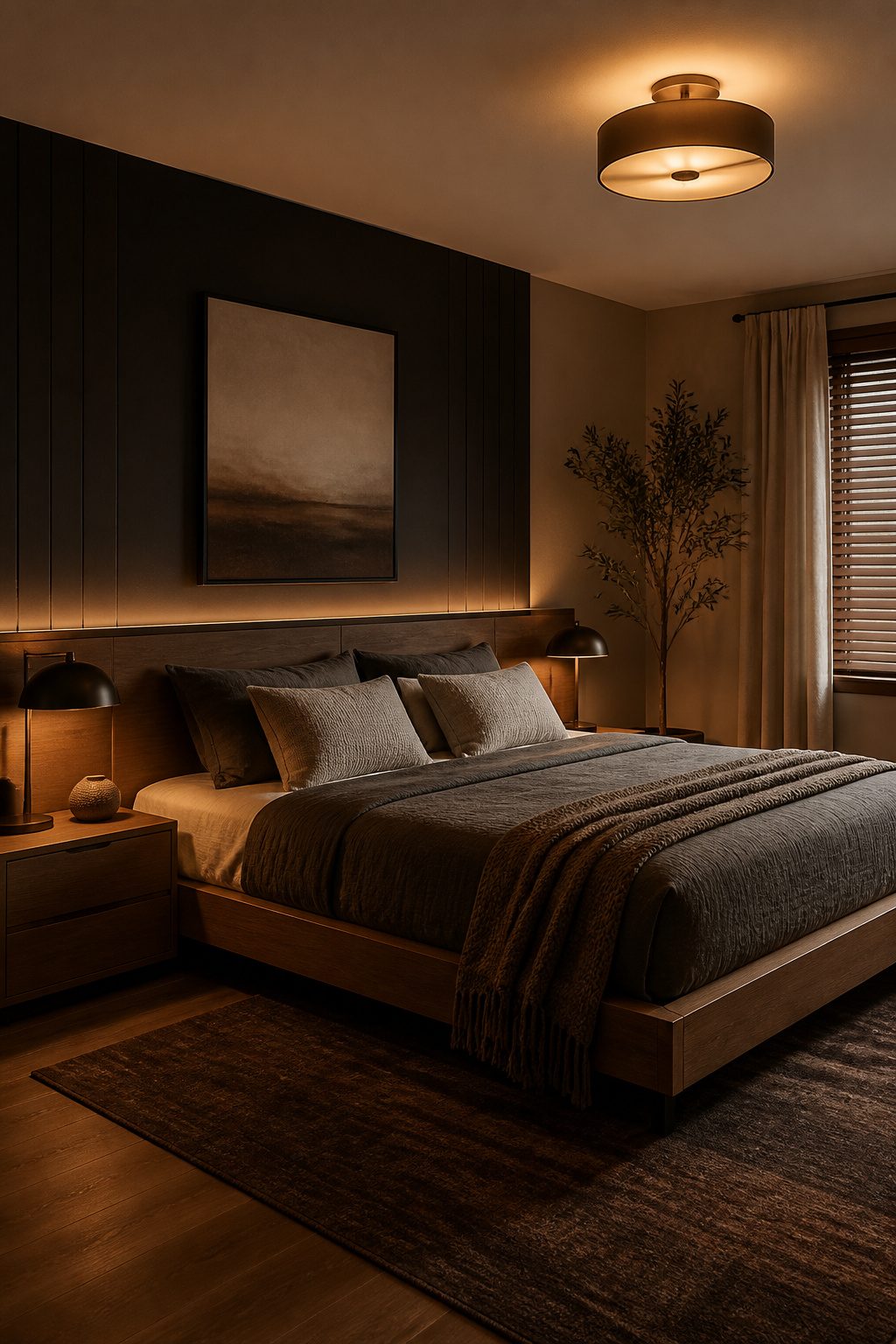
Warm light changes how a bedroom feels more than any paint color can.
I start with the bulb itself: 2700K is the number to look for, maybe 3000K if you need slightly more clarity for reading. Anything above that, and the room starts reading like a workshop or a clinic.
Layering matters more than buying one expensive fixture. Ceiling fixtures or recessed lights handle ambient light for moving around.
Bedside lamps or sconces give you task light for actual work. LED strips behind a headboard or along a shelf add accent light that gives the room depth after dark.
Dimmer switches are worth the twenty-minute install. A single bright setting flattens everything out; being able to drop the ambient layer and leave a lamp on is what makes a room feel finished at ten o’clock.
If your bedroom has industrial pieces, metal furniture or exposed lines, warm light does the softening for you.
No extra textiles needed. The bulbs do the work.
Recommended Products

Soft Lightweight and Warm Oversized Queen Comforter: Soft and lightweight polyester material ensures a comfortable and cozy sleep. Warm breathable dark grey oversized queen size comforter for colder nights without feeling too heavy or stuffy

Upland 7-Piece Comforter Set Includes: 1 Comforter, 2 Shams, 1 Bedskirt, 1 Cushion, 1 Neck Roll, 1 Breakfast Pillow

Included: 1 king cotton comforter (104"×90") and 2 pillow shams with edge-trim stitching (20"×36"). Place the king comforter’s longer side along the bed’s width. - Your comforter is vacuum-sealed for shipping, so it may appear thinner and have a slight odor when first opened. Don’t worry—this is completely normal. Simply wash and dry it before first use to restore its full loft and freshness. After that, you can care for it just like any regular bedding.
9. Create Artwork Focal Points
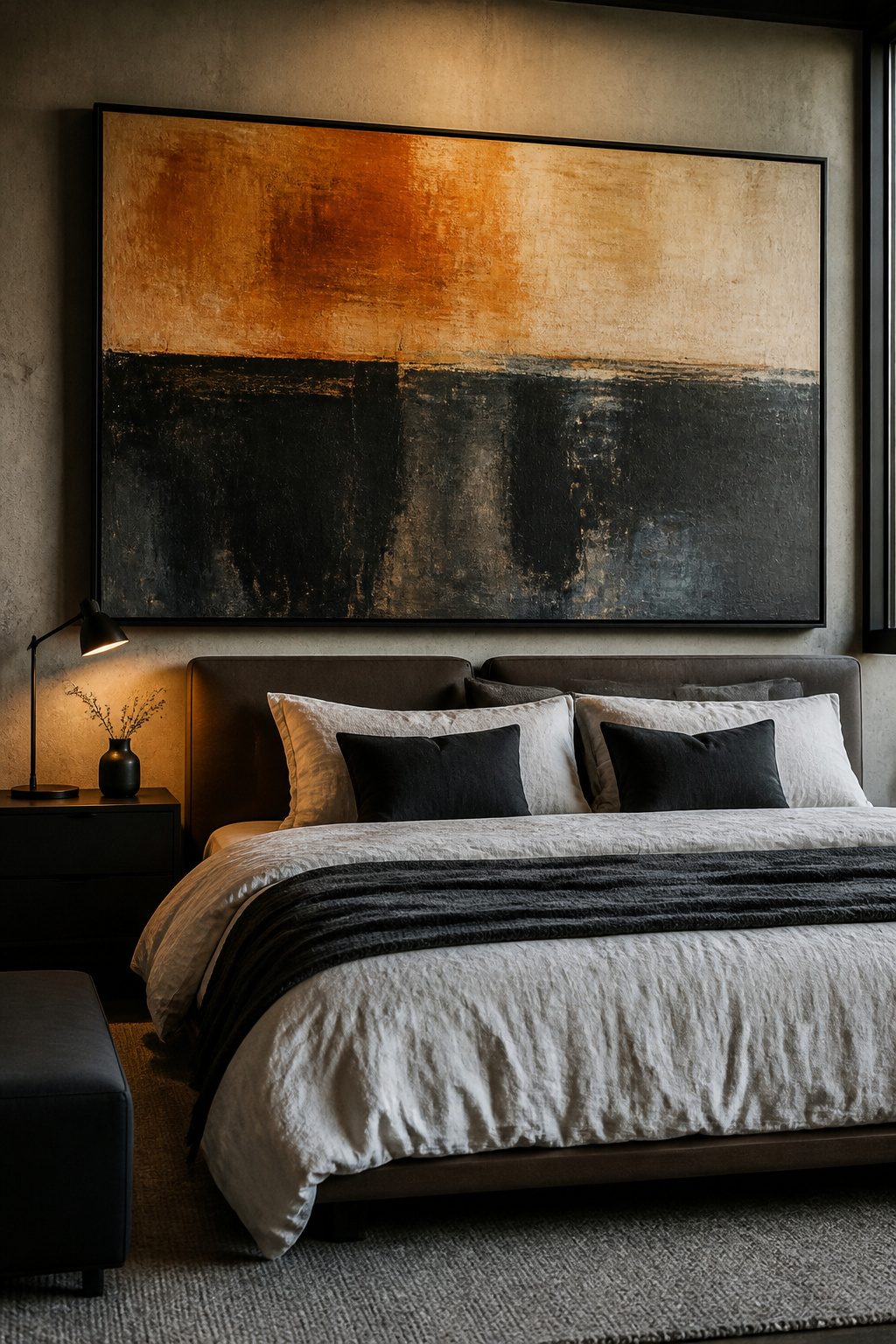
A bedroom without a focal point reads unfinished, and oversized artwork is the fastest way to anchor the wall above a bed or across from the door.
I would skip the gallery wall for this space; one large piece at 36 inches wide or more does the work of five small frames and keeps the look clean.
Scale matters more than subject.
A canvas that stops a foot short of the headboard width looks like you misjudged, not like you chose restraint. Measure the furniture below it and aim for the art to span roughly two-thirds to three-quarters of that width.
Height follows the same rule: center it 57–60 inches from the floor to hit average eye level, or hang it 6–8 inches above the headboard if that is the anchor piece.
Framing changes the whole statement. A thin black metal frame keeps a photograph or print sharp and modern; a canvas wrap without frame edges softens the same image and works better in a room with mixed textures already.
I would not spend extra on ornate molding here; the weight should come from the image itself, not the border around it.
Personalized pieces, a neon acrylic sign with a custom design or a single large photograph you took yourself, read as intentional rather than decorative filler.
Go bold and illuminated, or try a sculptural vignette that pairs art with a mirror or pedestal piece.
I would choose one or the other: either a single bold wall piece or a composed corner arrangement, but not both in the same sight line. Two focal points compete, and the room ends up feeling busy instead of directed.
Recommended Products

【New Color Design】DweIke rugs color design was done after customer preference survey. According to the results of most people's choice, the carpets in the new color feels warmer and more comfortable
【Premium material】Our fluffy and soft rug surface is made of high-quality velvet, and the middle layer is upgraded to memory foam, making the bedroom carpet more comfortable and soft

Botanical Floral Rug: Intricate garden motifs of this 5x7 rug create natural elegance that harmonizes with both classic and modern interiors. It's ideal for living room, bedrooms, dining room, kids' playrooms or home office, injecting vibrancy and freshness into your space.
10. Display Personal Collections
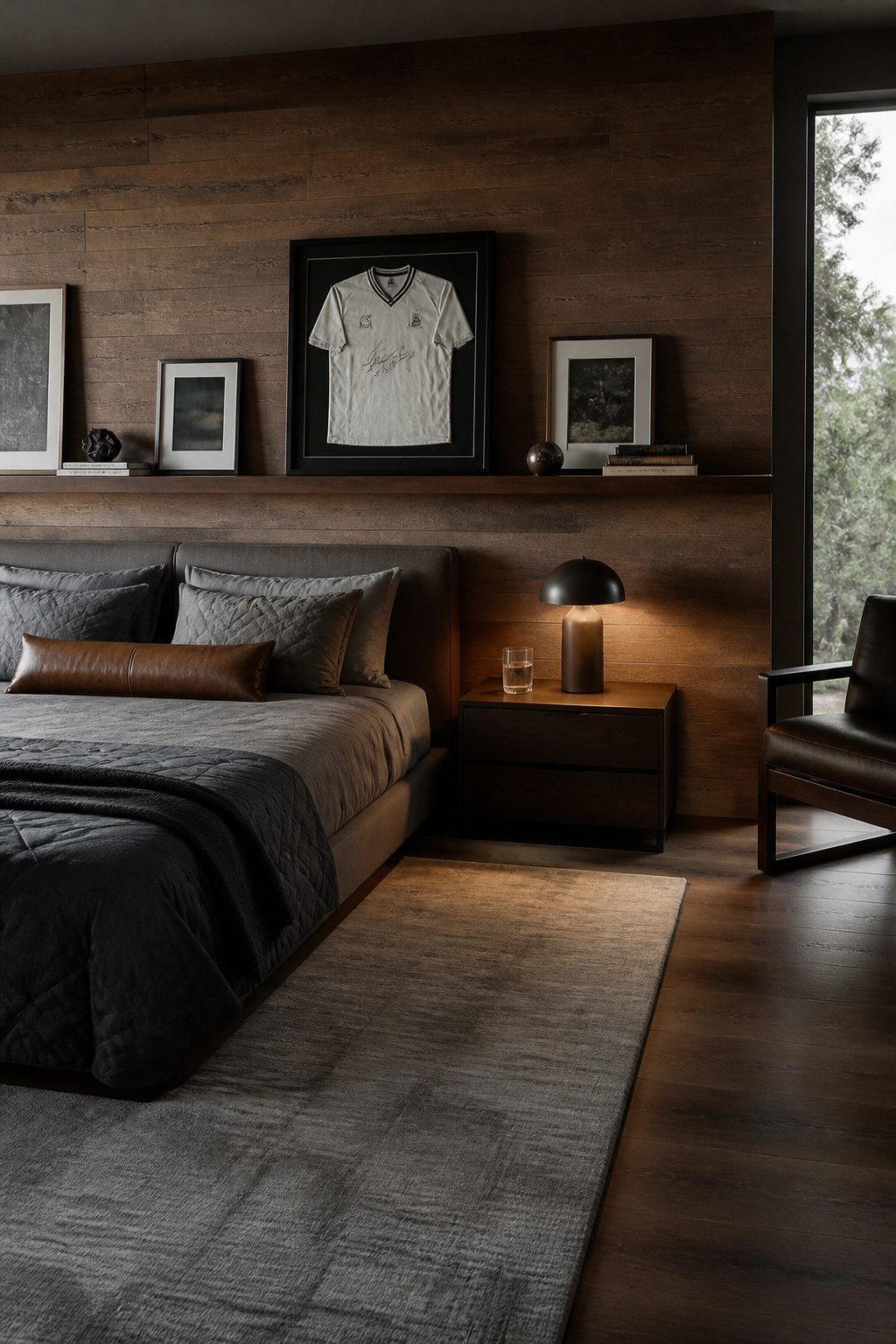
A signed jersey loses its punch when it is crammed between a concert poster and a thrift-store lamp on the same wall. Treat the piece like the object it is, not like wallpaper.
I would hang one jersey in a shadow box with a black mat so the fabric floats instead of sagging, or float a signed poster in a frame with UV glass if the signature matters.
Two pieces, maybe three if the room is large, and everything else stays in a drawer.
Team colors can guide the accent palette, but I would keep them to a pillow or a single throw, not the bedding itself; the room still has to sleep.
For smaller items, a floating shelf with a glass lid, basically a shallow display case, keeps ticket stubs or baseballs visible and dust-free without the bulk of a full cabinet.
A man’s bedroom is a more private space, so it’s the perfect place to showcase items like guitars, framed art, or collectibles that might not feel refined enough for the public areas of the home.
What that means for you: the bedroom is where your collection earns its spot, but only if you edit it down to what actually means something.
I would skip the vintage equipment unless you already own it; reproduction leather helmets and wooden skis read as costume shop faster than they read as personal history. One real piece beats five nostalgic props.
Recommended Products

Material & Package: 2 pcs pillow covers made of premium faux leather. NO INSERT.

💎MATERIAL--the throw pillow cover is made of high-quality faux leather, very comfortable to handle

2 Pack: Package includes 2 pack leather throw pillow covers, Only Covers no insert, instantly create a balanced, pulled-together look on your living room couch, guest bed, or outdoor bench
11. Add Low-Maintenance Plants
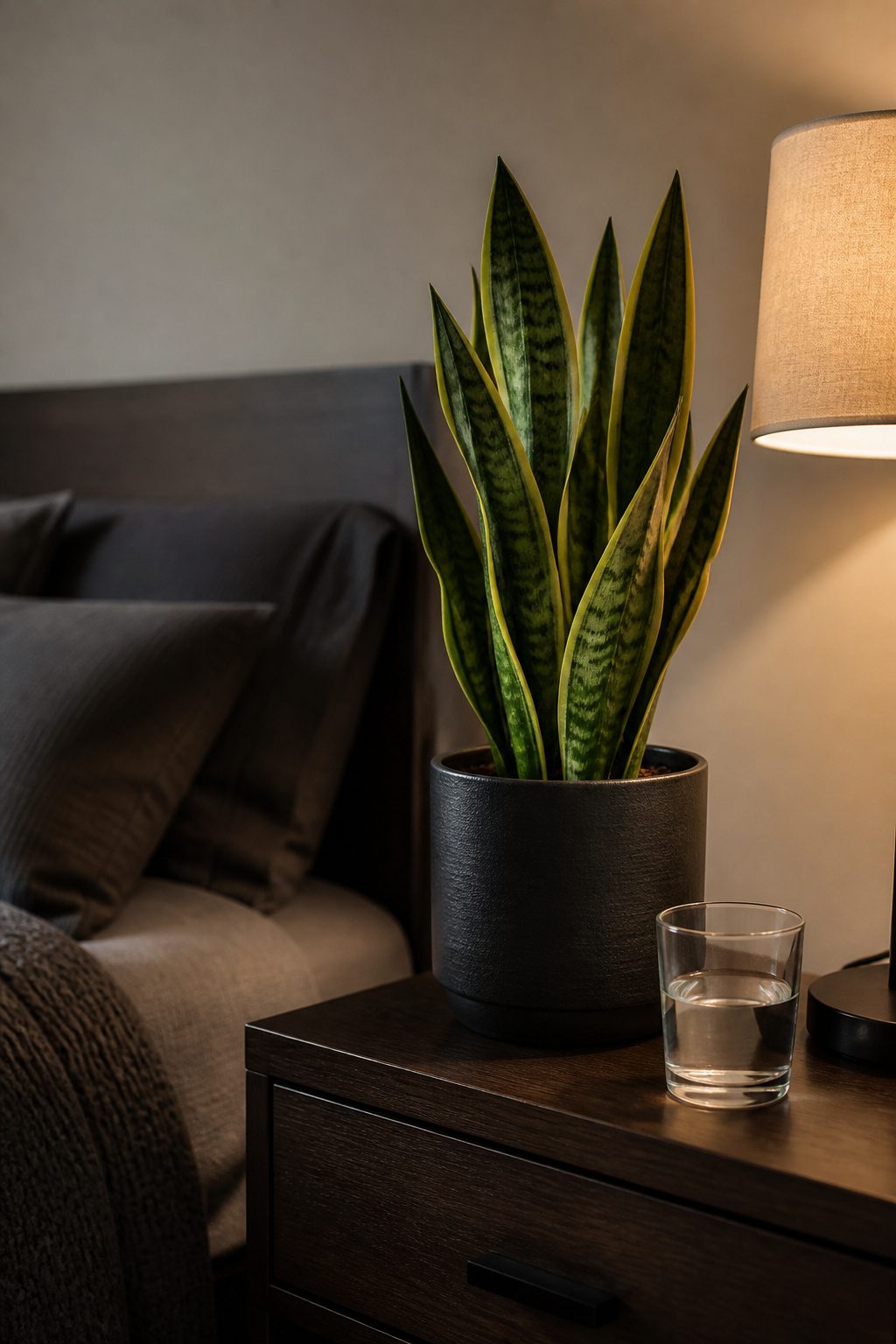
Sansevieria handles the air-quality side of a bedroom without asking for attention.
The stiff, upright leaves read more architectural than decorative, which suits a space that leans masculine, and the plant pulls enough oxygen duty to matter in a room full of electronics.
Water it roughly every four weeks and it keeps going; forget for longer and it still forgives you.
Hydroponic setups cut out soil entirely, so there is no potting mess and no gnats breeding in the tray.
That matters more than it sounds if your bedroom doubles as a workspace and you do not want to explain insects to a landlord.
A standard nursery pot works fine too, but the soil-free route removes the one maintenance task that actually creates problems.
I would place one on a nightstand or low dresser where the vertical lines repeat the room’s height rather than cluttering the horizontal surfaces.
Faux greenery is the fallback if you know you will ignore even a monthly reminder, though a real Sansevieria costs little enough that replacing one every couple of years still runs cheaper than a convincing fake.
For my money, the living plant wins: it does the air-purifying work, and the care is barely care at all.
12. Incorporate Vintage Accents
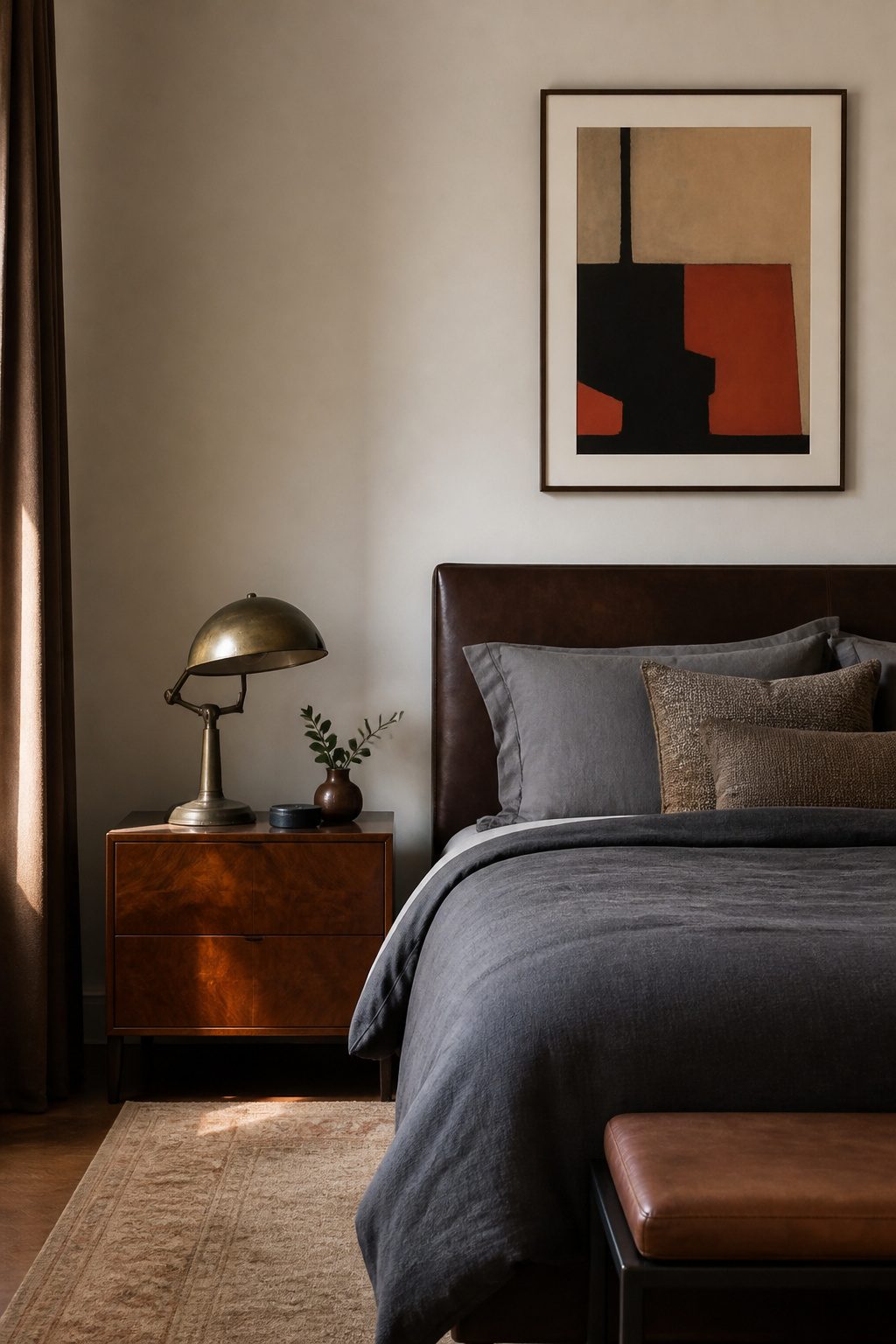
One vintage piece does more for a bedroom than a room full of them.
A single 1930s Spanish Revival painting or a vintage abstract canvas can anchor the whole space, giving the eye somewhere to land without turning the room into a flea market stall.
I would pick the artwork first and let everything else stay quiet around it.
The same rule holds for smaller finds. A vintage lamp or clock from a thrift store adds character because it carries real age, not because it matches a theme.
I would skip the retro bed frame or the full vintage vanity; those pieces fight too hard for attention and can make the room feel like a set rather than a place you actually sleep.
One well-framed vintage print, hung properly instead of stuck up with tape, reads as taste. A wall of old movie posters reads as dorm room.
If you want fabric with history, a single vintage textile repurposed as a pillow cover against crisp linen gives you the texture and story without the dust.
The limit is one or two pieces total. Past that, you are collecting, not decorating, and the bedroom loses the calm that makes it worth walking into.
13. Choose Multi-Functional Furniture
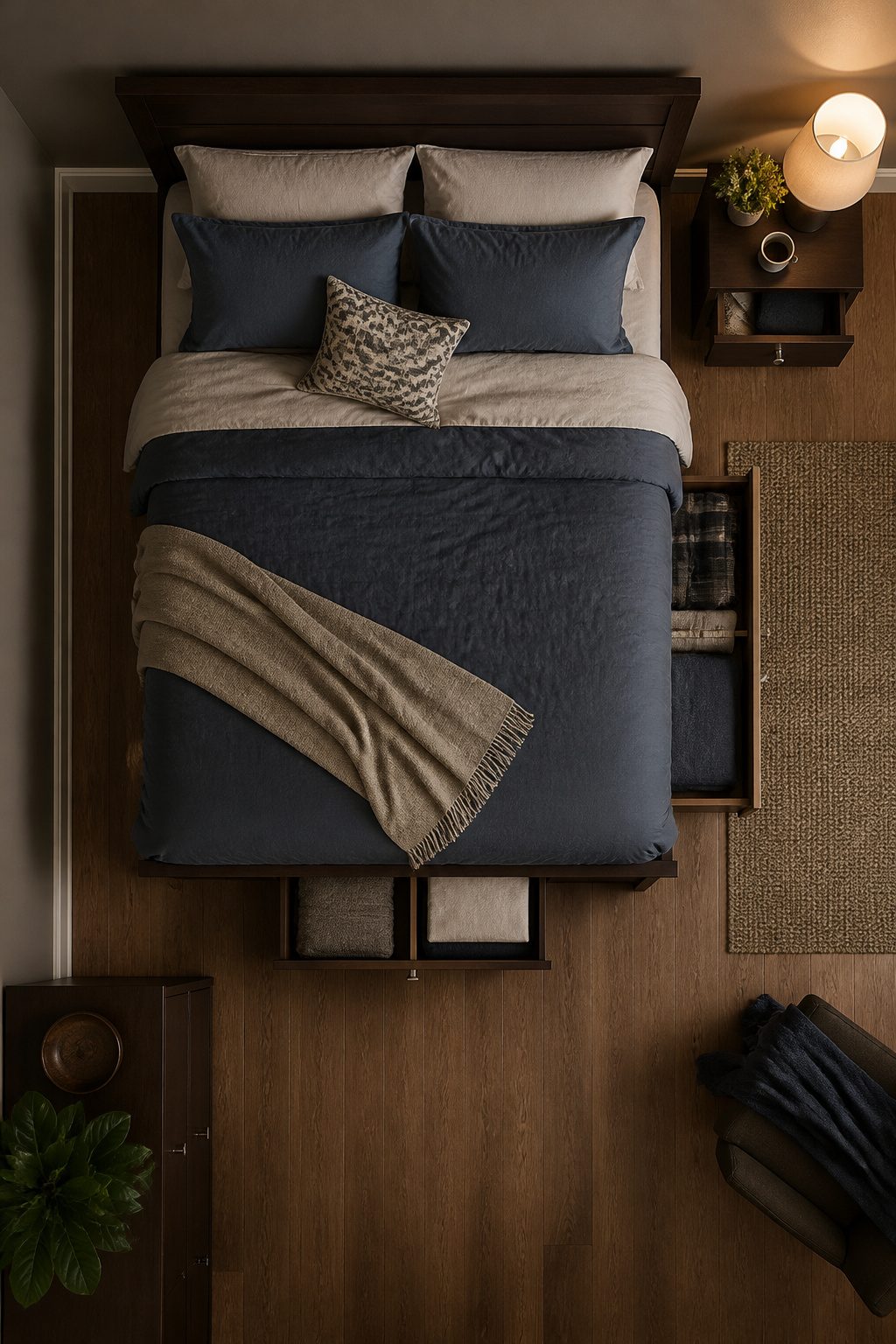
A bed with drawers built into the frame saves you from buying a separate dresser and keeps the floor line clean.
I would skip the hydraulic lift platforms that need two hands and a clear afternoon to access; drawers you pull while standing are what you actually use on a Tuesday night.
Nightstands with drawers beat open shelves for the same reason. One drawer hides the charger cable and the melatonin bottle, and the top stays clear for a lamp and a glass of water.
Matching nightstands on both sides of the bed look sharp, but one good piece wins over two cheap ones if space is tight.
Built-in storage reads as furniture, not clutter.
Under-bed bins work, yet they collect dust and scream temporary fix. A storage bed or a nightstand with a drawer solves the same problem while the room looks finished.
14. Add Smart Home Tech
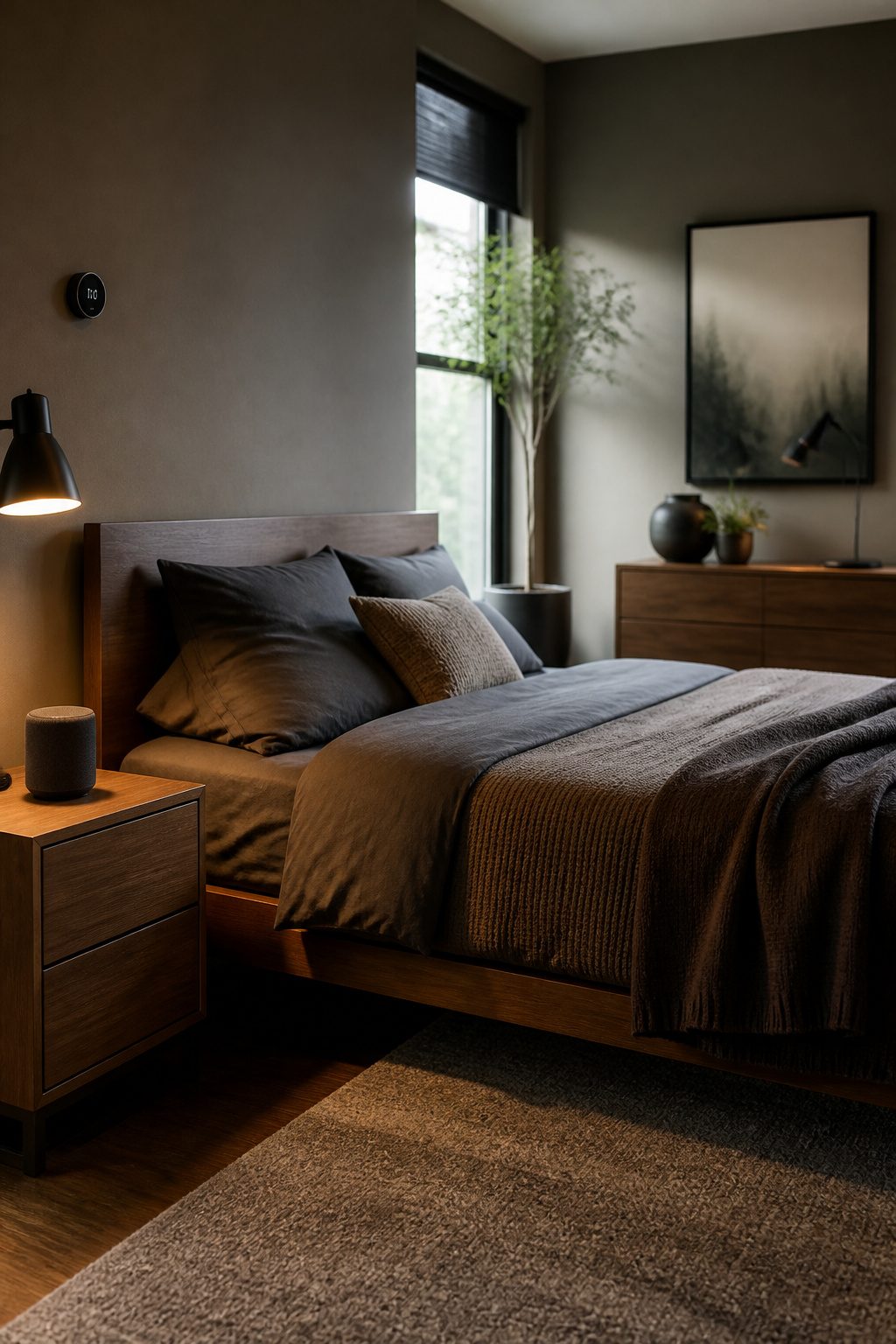
A smart thermostat with voice assistance pays for itself in about two years if you program it properly, and the convenience of adjusting temperature without leaving the bed is hard to give up once you have it.
I would skip the projector unless you already own one; the setup, screen placement, and light control turn a simple movie night into a project that eats the whole weekend.
Sleek speakers that double as decor are the better audio investment, since they solve two problems at once and keep surfaces clear.
Cable management is non-negotiable. No gadget looks good with wires snaking down the wall, and a pack of adhesive organizers costs less than a coffee run.
Smart displays can replace a bedside clock, but I think one compact device is enough; two start to feel like a store display. Gaming consoles belong in the bedroom only if you actually use them there.
A PlayStation or Xbox you touch twice a month is just clutter with a power draw. The same budget buys better sleep: smart blinds that darken the room automatically, or a sound system you will use every morning.
15. Keep Lines Clean
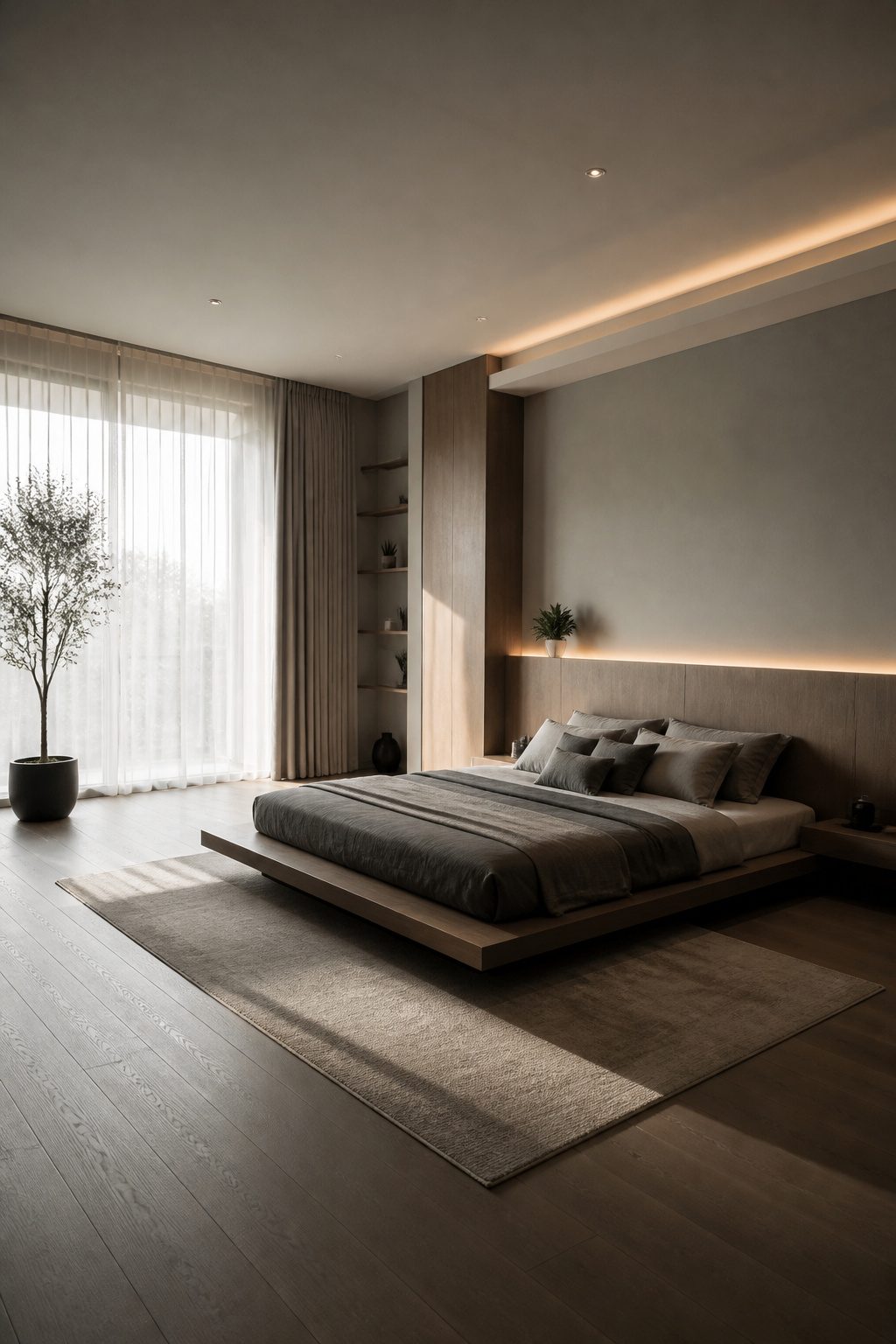
A platform bed with a low profile frame sets the tone without asking for attention, and built-in shelves or under-bed storage keep the visual field clear.
That spareness is the point: the eye lands on nothing in particular, so the mind settles faster.
But sterile is the risk, not the exception, in rooms where every surface is flat and every color reads as white, beige, or gray. Texture, delivered through rugs, curtains, throws, and bedding, warms the space without breaking the line.
I would add a single plant, even a small succulent on the windowsill, because living green interrupts the geometry in a way manufactured objects rarely manage.
Two textures, one plant, and the room stays calm without turning clinical. That is the stopping point; more layers and you are back to decorating, not editing.
Frequently Asked Questions
What colors are best for a masculine bedroom?
Deep blues, charcoal gray, and forest green form the strongest foundation, with navy blue carrying the most weight for anchoring a space.
Keep neutrals like beige and ivory to bedding, curtains, or a single rug rather than splitting the room evenly. One small warm accent, such as a leather pillow or brass lamp base, keeps black and white combinations from turning sterile.
How can I make my bedroom more masculine?
Lean toward sleek, minimalist designs with darker hues and materials like wood, leather, and metal.
Strong lines and contemporary pieces read masculine without trying too hard. Balance matters: sparse, simple forms with an edgy feel work best when you layer in enough texture to keep the room from feeling clinical.
What furniture is essential for a man’s bedroom?
A platform bed with a low profile frame sets the tone, ideally in walnut or matte black.
Add a sleek dresser or wardrobe for storage, nightstands with clean lines, and a minimalist desk if you need workspace. A statement chair or bench rounds out the room without adding clutter.
What should be in a man’s bedroom?
Beyond the bed and storage, focus on layered textures: mohair throws, slubbed silk pillows, and heavy cotton or wool bedding.
Warm lighting at 2700K, one or two personal pieces displayed with intention, and a single plant or vintage accent keep the space feeling lived-in rather than decorated.
What are some cool bedroom ideas for guys?
Build an accent wall behind the headboard in navy or forest green, add industrial elements like a metal bed frame or concrete surfaces, or hang oversized artwork at two-thirds the width of your bed.
Mixed textures, smart home tech like sleek speakers, and low-maintenance plants like Sansevieria all sharpen the space without overcomplicating it.
What should a guy have in his room?
The essentials stay minimal: a platform bed, clean-lined storage, warm lighting with dimmer switches, and one or two personal items edited down to what actually matters.
A shadow-boxed jersey, a single vintage print, or a collected piece with real history beats a wall of props. Cable management and clear surfaces finish the look.