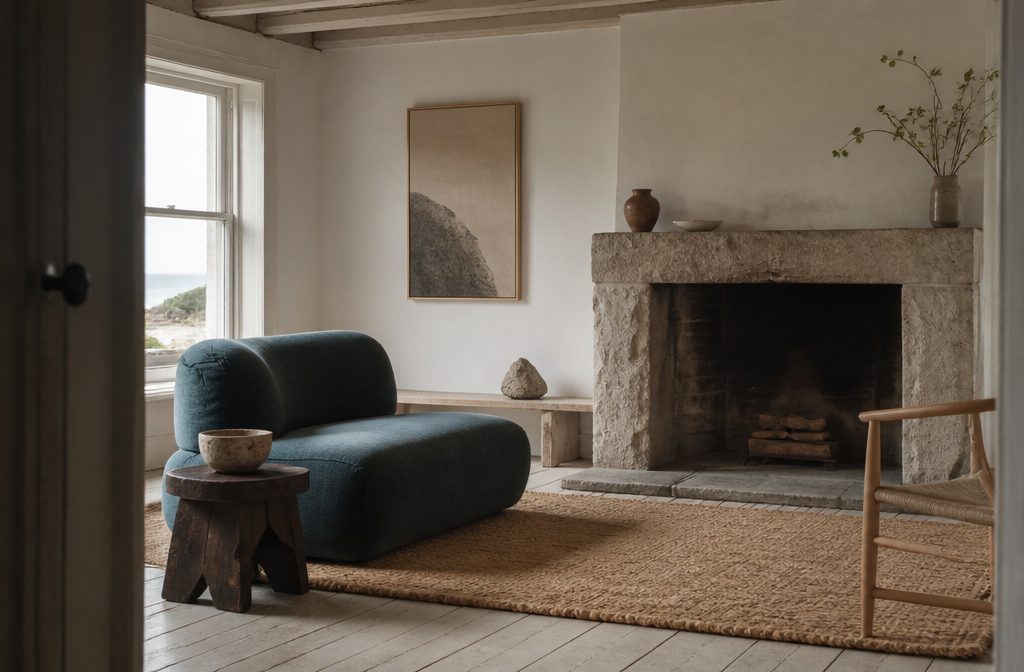
An organic modern living room combines the clean lines and minimal silhouettes of contemporary design with natural materials like wood, stone, and woven fibers that add warmth.
The balance keeps the space from reading too cold or too cluttered, but it depends on getting the ratio right: 70% streamlined furniture and 30% textured, earthy accents. Flip that and the modern edge disappears entirely.
1. Balance Clean Modern Lines with Natural Warmth
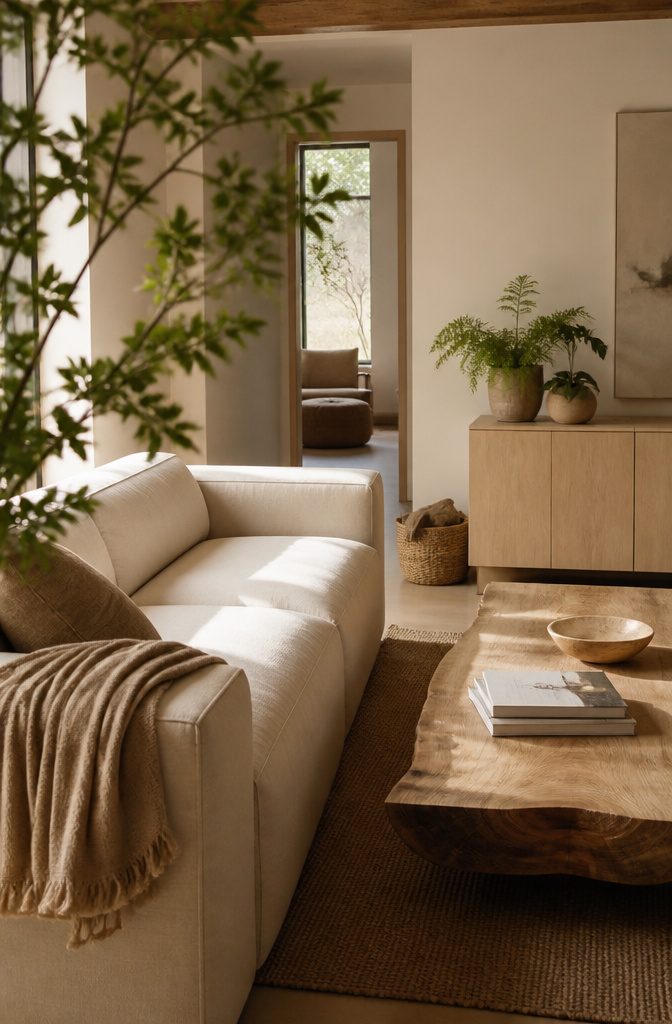
Organic modern living rooms work because they pair the structured lines of modern design with materials and textures that soften the space. A sleek sofa in linen or bouclé sits beside a raw wood coffee table.
A clean-lined credenza holds ceramic planters and a woven basket. The modern side keeps the room from feeling overly rustic; the natural side keeps it from feeling cold.
The balance shows up in every choice.
Modern furniture provides the foundation—streamlined shapes, minimal detailing, pieces that read as intentional rather than accumulated. Natural materials add the warmth: wood with visible grain, stone, clay, textiles in cotton and linen.
Light, sun-faded tones work better than saturated ones. The room should feel grounded without looking overdone.
Furniture with angular or geometric frames can handle soft throws and textured pillows.
A concrete side table works next to a velvet chair. The modern pieces define the space; the organic ones make you want to sit down in it.
2. Use a Calm, Nature-Led Palette
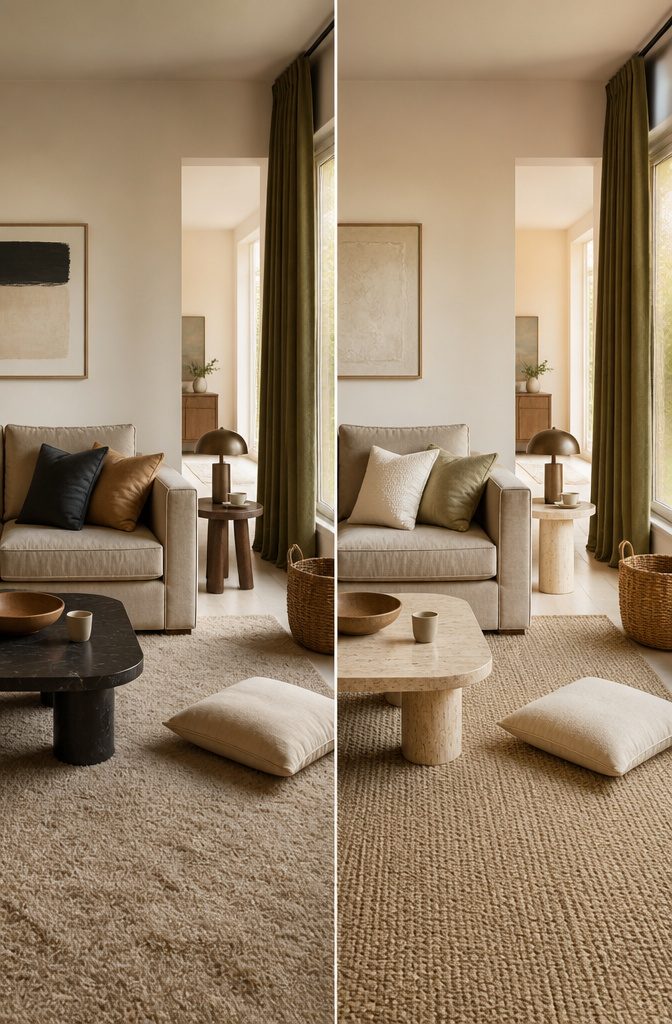
The palette starts with warm neutrals—cream walls, soft grays, beige linen, earthy browns—but organic modern does not mean every surface stays pale.
Moodier, saturated tones ground the room and keep it from reading flat. A muddy ochre pillow, a deep olive drape, or a rust-toned ceramic pulls the eye in and registers as depth rather than decoration.
Nature does not match, so your seagrass basket can run warmer than your linen cushions. The variation is what makes it feel lived-in.
Patina matters as much as pigment. Unlacquered brass tarnishes over time, oxidized metals darken, and both give the room a sense of history that polished finishes never will.
Layer your neutrals—taupe sofa, mushroom rug, charcoal cushions—and punctuate with natural accent colors like sage green, terracotta, or matte black to create contrast without breaking the earthy base.
3. Layer Natural Textures and Materials
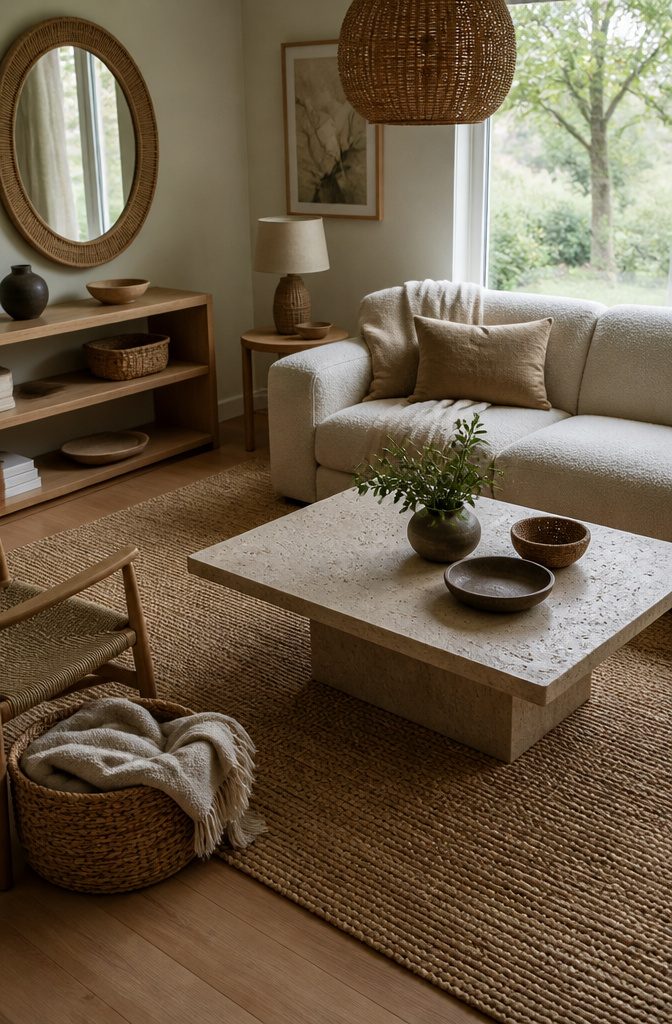
Wood, stone, woven fibers, and soft textiles stack better than you’d expect once you stop treating them as separate categories.
A travertine coffee table grounds the room in a way painted MDF never will, and pairing it with a bouclé sofa and jute rug adds the warmth stone alone can’t.
Carrara marble and slate work the same way—cold until you layer linen throws and seagrass baskets around them.
Rattan, water hyacinth, and bamboo show up best when they repeat across lighting, storage, and wall pieces rather than sitting alone as a single accent.
A pendant in one and a mirror frame in another ties the room together without matching too neatly, because handwoven pieces vary enough to avoid looking like a set.
Raw wood and ceramics fill in the gaps—side tables, bowls, vases—and Belgian linen or nubby wool cushions finish it. The texture does more than the color.
4. Choose Streamlined Furniture with Organic Shapes
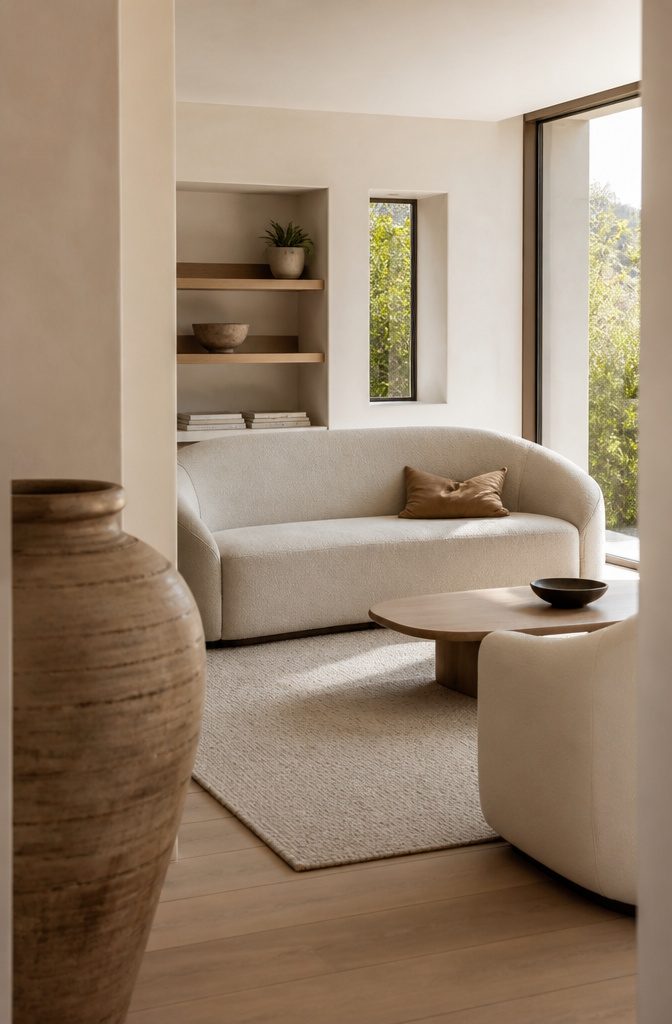
Clean-lined furniture gains warmth when the form itself bends.
A sofa with a rounded back or sculptural curve softens the geometry without adding fuss, and a coffee table with soft edges lets the eye move through the room instead of catching on corners.
Low-profile silhouettes work especially well—they drop the visual weight and let the ceiling feel taller, which matters more in a smaller room than an oversized seat does.
Upholstery choices split on how much real life the room sees. Crypton fabric resists stains but still needs cleaning—marinara does not float away on its own, and red wine demands immediate attention.
It works if you want the look of linen with some protection built in. White leather takes the opposite approach: it wipes clean with far less effort, which makes sense with children and dogs in the house.
Both deliver the brightness organic modern relies on; the choice comes down to whether you trust yourself with a glass of wine on a Saturday night.
5. Use Rugs to Ground the Room
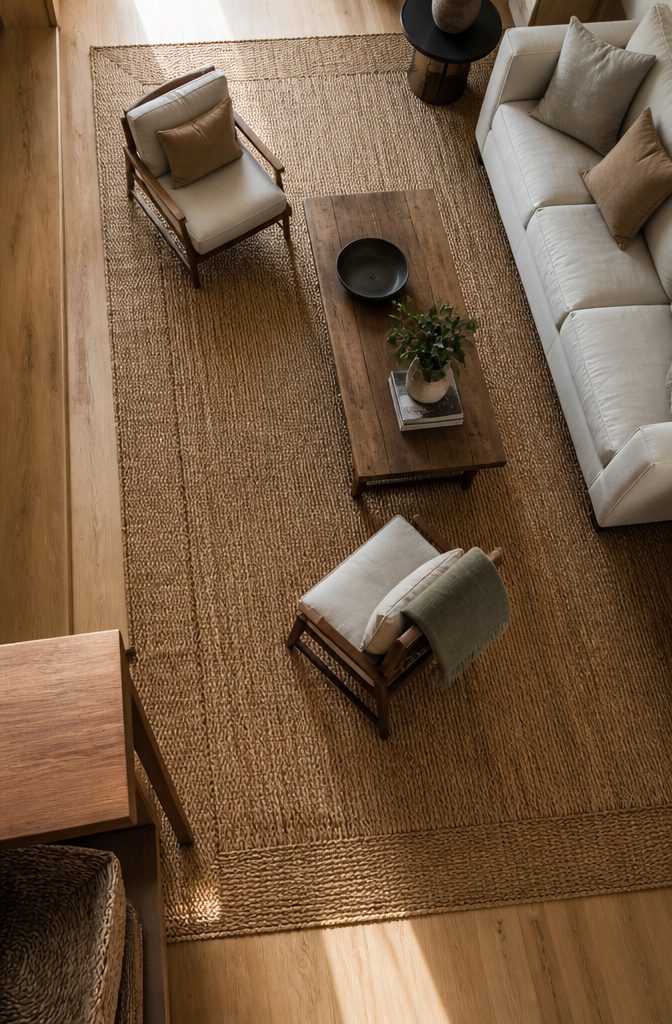
A rug does more work than covering floor.
It marks off the seating zone from circulation paths, pulls chairs and a sofa into one visual grouping, and makes an empty stretch of floor read as a choice instead of an oversight.
Natural fibers like sisal, jute or hemp add the textured, matte surface organic modern depends on, and they cost less than wool.
Polypropylene and polysilk mimic the look at a lower price and clean more easily if you have kids or pets tracking through.
Size matters more than price. A rug that barely reaches the front legs of the furniture looks like it shrank in the wash.
I would rather cut a 10 by 14 foot rug down to 10 by 10 feet for $250 than buy an 8 by 10 that leaves six inches of leg showing on every side.
6. Bring in Greenery and Natural Light
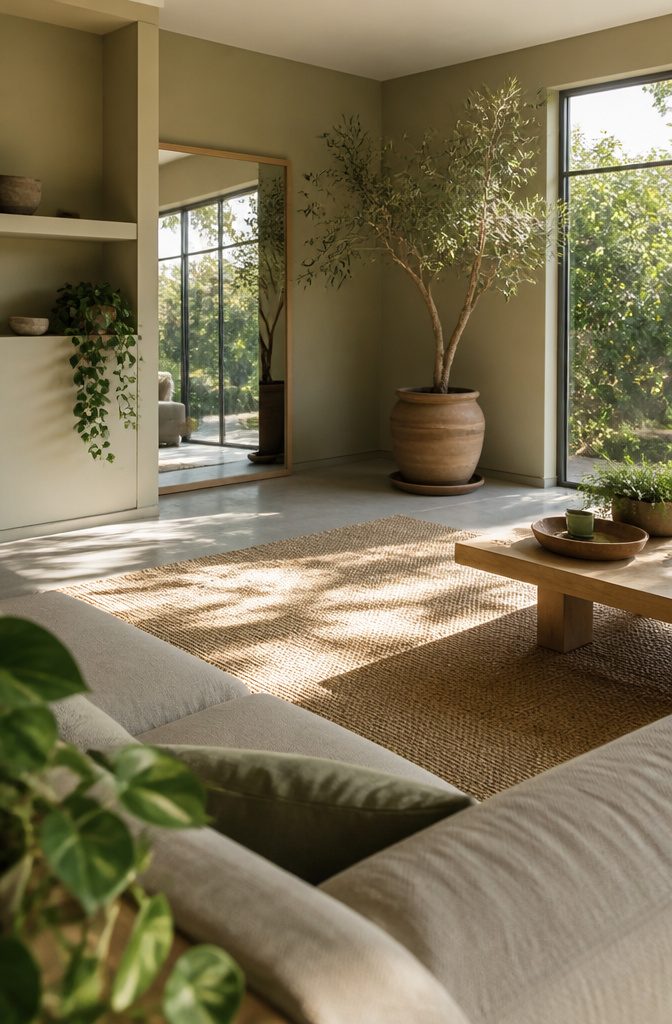
Plants soften modern lines and keep a neutral room from reading as cold.
An olive tree or Ficus Audrey anchors a corner without crowding the floor plan, and their broad, architectural leaves hold the room’s attention the way a sculpture would.
Smaller plants—pothos trailing from a shelf, succulents clustered on a side table—add life in tighter spots where a statement piece would tip the balance.
Natural light does as much work as the greenery.
Sage walls or pale linen upholstery depend on daylight to show their warmth; under dim artificial light, they flatten. If the room faces south or west, leave the windows mostly clear and let the plants catch the sun.
North-facing rooms need more help: position greenery near the glass and use mirrors on adjacent walls to bounce what light there is deeper into the space.
7. Use Lighting to Add Warmth and Texture
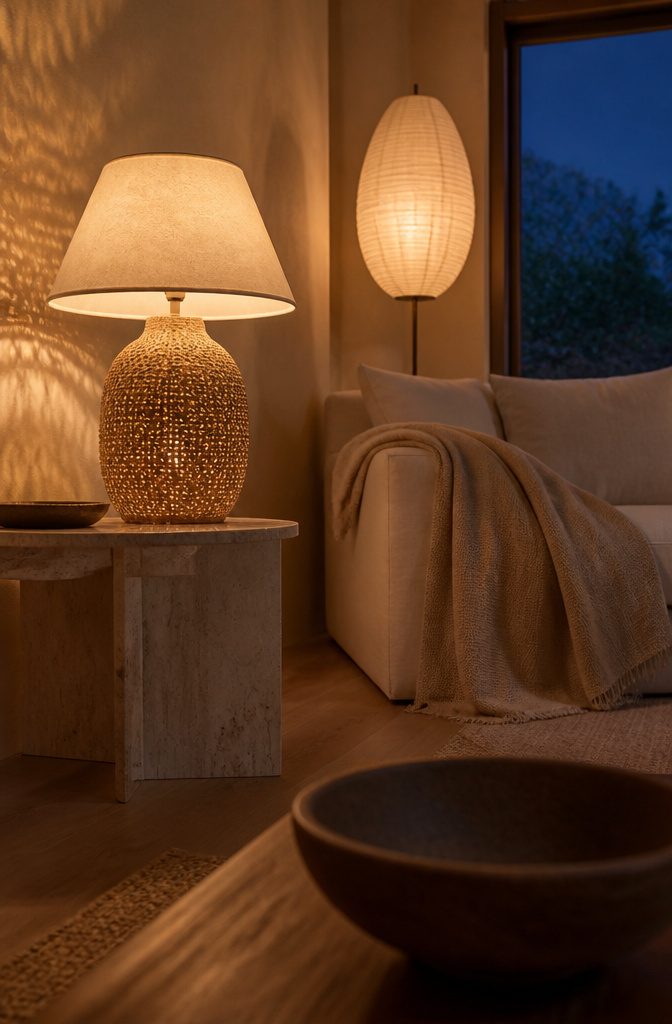
I swapped every bulb in my living room to warm white (2700K) last year and turned off the ceiling fixture for a full week, and Source 8’s advice holds: nothing else costs this little or changes the room as completely.
Wood grain and woven textures depend on side light to show their surface; an overhead fixture flattens all of it into a single plane.
Add light low in the room from table and floor lamps with linen or paper shades. Handwoven rattan or seagrass bases filter light through irregular fibers and cast warm, dappled patterns on nearby walls.
The dual purpose matters: by day they read as sculpture, by night they create the filtered-daylight quality that makes organic modern feel livable after dark.
For a bolder move, Isamu Noguchi’s Akari light sculptures suspend oversized ribbed washi paper above the heavier wood and stone elements below.
The visual friction between a weightless paper lantern and a grounded plinth creates spatial balance. If you want directional drama, matte ceramic or unlacquered brass sconces graze textured plaster walls and cast shadows that turn flat surfaces into tactile landscapes.
8. Keep the Room Edited and Intentional
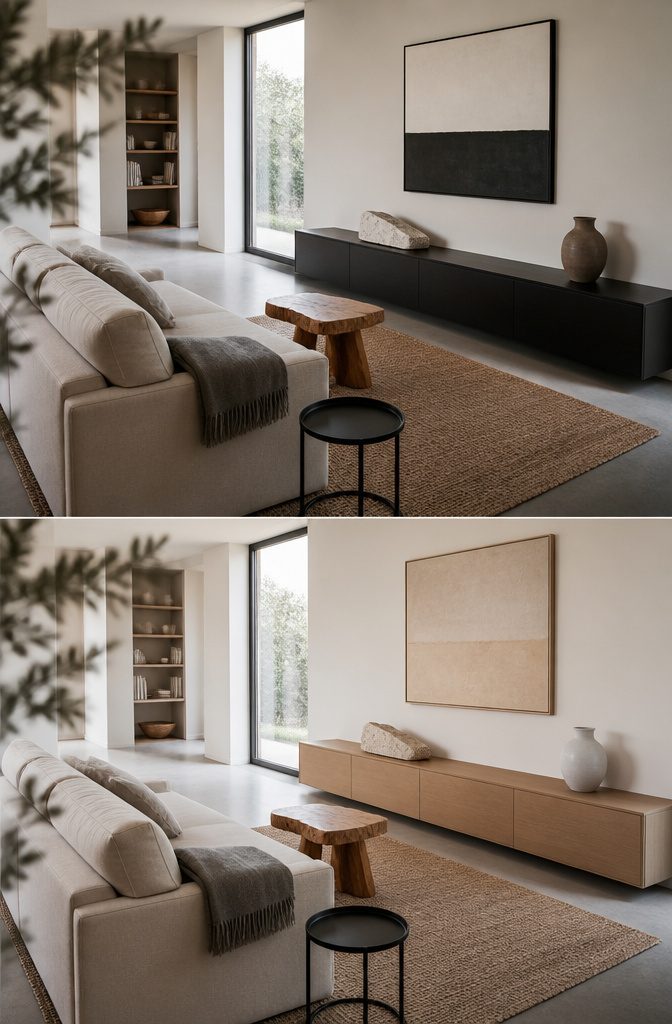
The 70/30 balance keeps organic modern from tipping into rustic clutter or cold minimalism. 70% of the room should be clean, modern silhouettes—track-arm sofas, handleless consoles, matte steel accents—and the remaining 30% is where you layer in texture.
A live-edge stool, unpolished marble slab, or thick jute rug grounds the sharp lines without overwhelming them. Flip that ratio and the modern edge dissolves entirely; too much raw wood and woven wool reads heavy, not sophisticated.
I build the sleek foundation first. It’s far easier to add organic warmth to a streamlined room than to impose modernism on a space already dominated by texture.
Each piece should justify its presence, whether through function or visual weight. This restraint creates breathing room, so the few textured elements you do include stand out instead of competing for attention.
9. Arrange Furniture to Support Flow and Gathering
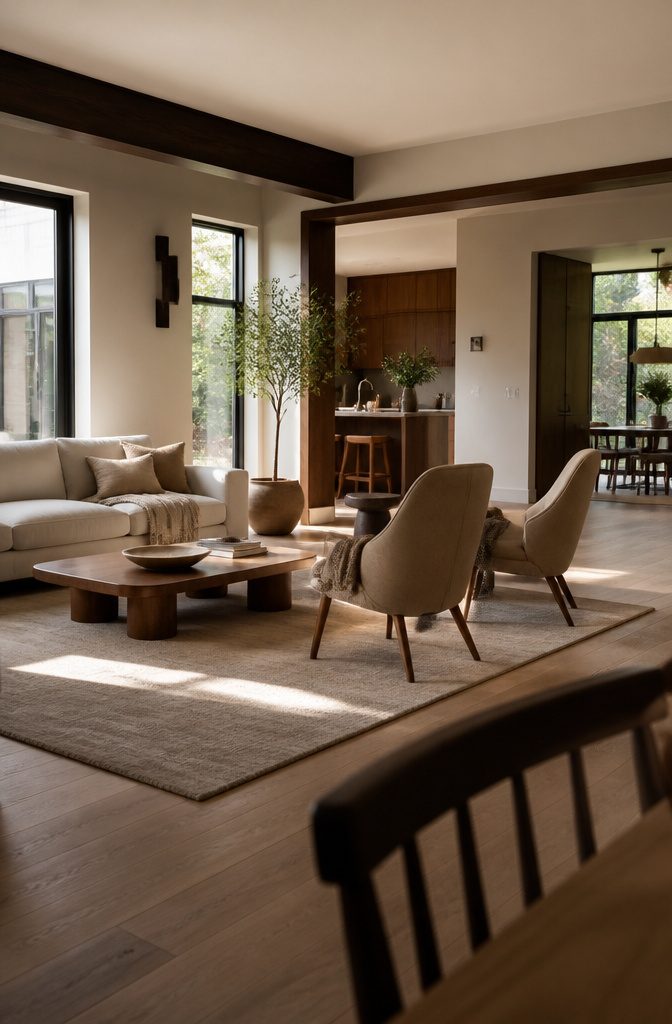
Furniture grouping decides whether a room feels scattered or settled.
Position seating within 8 to 10 feet of each other to make conversation comfortable without shouting across the space, then anchor the arrangement with a low coffee table or wide ottoman that everyone can reach.
A sofa facing two armchairs pulls people toward the center; a sectional pushed against the wall leaves the middle open and makes the room read larger than the same pieces floating in the middle would.
I avoid blocking sightlines between zones. If the living area shares the floor with a dining table or kitchen island, angle a chair or leave a gap so you can see through from one end to the other.
That openness is what makes the layout feel breathable rather than carved into separate boxes, and it lets natural light travel farther into the room instead of stopping at the first piece of upholstery it hits.
10. Include Practical Storage and Purposeful Accessories
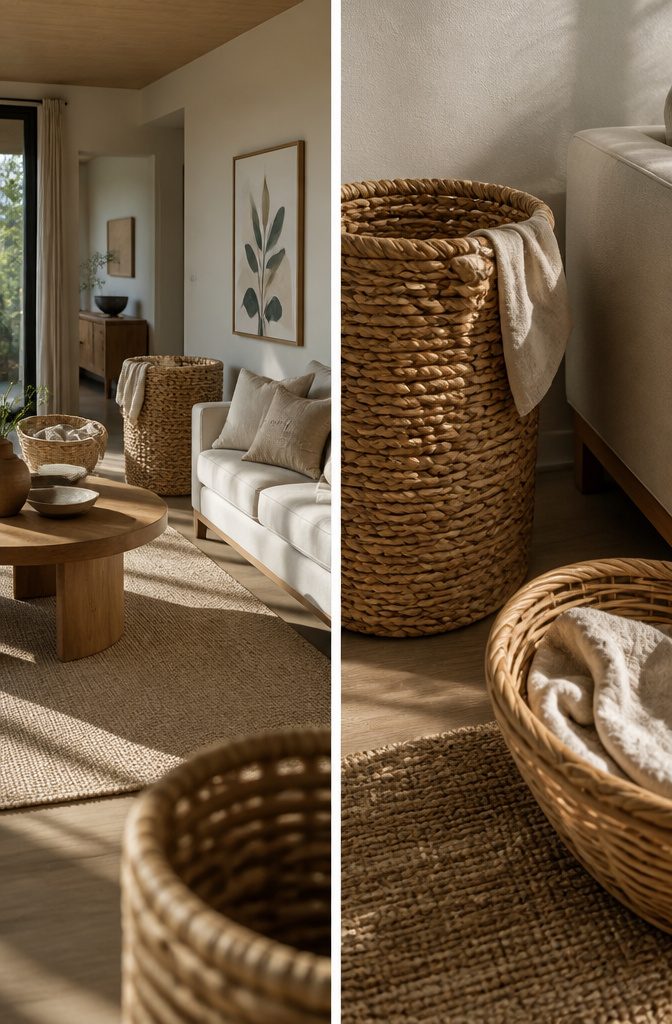
Baskets and ceramics do the work accessories should always do: hold what you use and look good doing it. Woven storage baskets keep throws, magazines, and remotes off the couch while adding visible texture that reads as intentional, not leftover.
The Water Hyacinth Storage Hamper Basket sits beside the sofa or in a corner and breaks up the horizontal line of the furniture with its vertical form. The handwoven pattern catches light through the day, which flat storage never manages.
Wicker baskets from Kim Son, Vietnam—a weaving village with nearly 200 years of tradition—bring that artisan detail into the room without announcing it. The structure keeps the space organized, the material keeps it warm.
Ceramics and artwork follow the same rule: choose pieces that reinforce the natural palette rather than fighting it, and make sure they serve a purpose or earn their spot by being worth looking at.
Functional pieces that double as sculpture are exactly what organic modern asks for.
The 3-5-7 Rule for Styling Surfaces
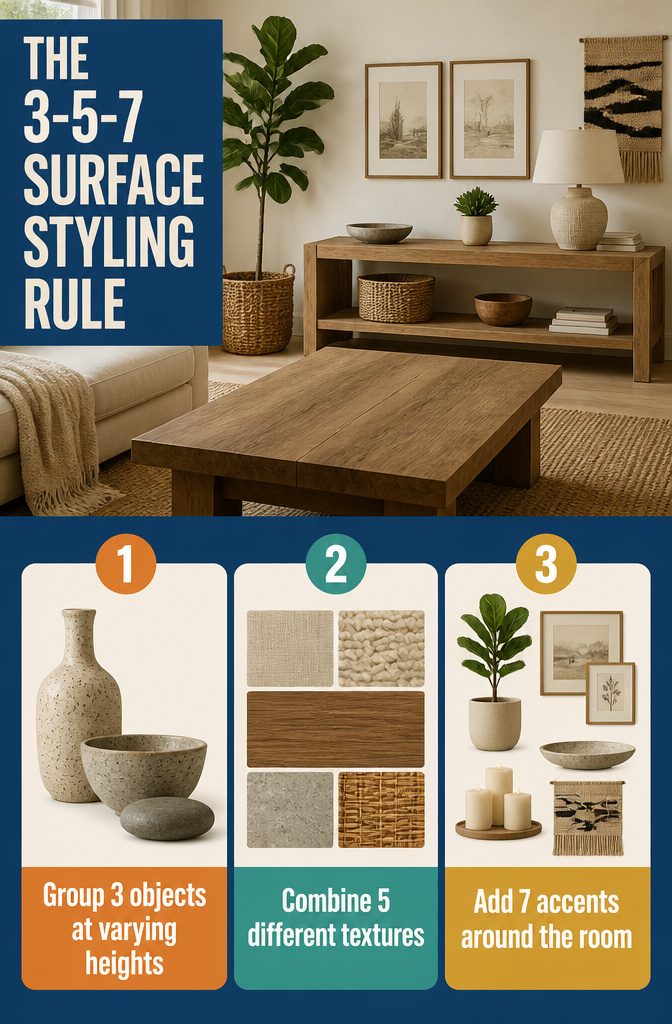
- Group 3 objects at varying heights. Start with small items like vases, stones, or ceramics on a coffee table or console. Place one tall, one medium, one low — the stagger gives the eye something to follow instead of landing on a flat row. A 10-inch vase, a 6-inch bowl, and a 3-inch stone work, or swap in a candlestick and a small planter if that fits what you already own.
- Combine 5 textures. Pull together linen, wool, wood, stone, and rattan across the room. A linen throw on the sofa, a wool rug underfoot, a wood side table, a stone tray, and a rattan basket give you the mix without hunting down new categories. The variety keeps the room from reading as all soft or all hard.
- Add 7 smaller accents for rhythm. Plants, prints, small curios — these fill in the gaps and give the room personality. A potted fiddle leaf, two framed prints, a cluster of candles, a ceramic dish, and a woven wall hanging get you there. The number matters less than spreading them around so no single surface carries the whole load.
What Order to Refresh a Room
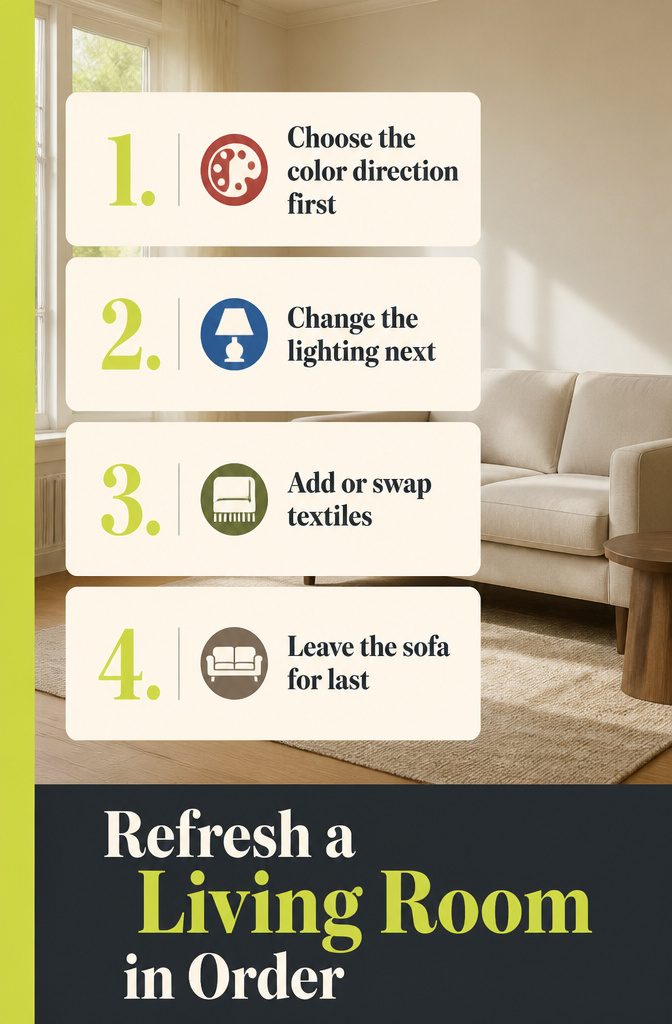
- Pick your color direction before you buy anything else. An earthy palette built on warm beige, terracotta and soft greens calls for different woods and fabrics than a moody one anchored in charcoal, deep olive and black accents. Settling that first keeps you from collecting pieces that fight each other.
- Change the lighting next. Overhead fixtures and table lamps set the room’s tone faster than furniture does, and they are easier to return if the finish or scale is wrong.
- Add or swap textiles. Throw pillows, blankets and curtains cost less than seating and let you test whether the palette works before larger purchases arrive.
- Leave the sofa for last. It is the biggest expense and the hardest piece to return, so let the room’s lighting, color and textile choices settle first. By then you will know what shape, fabric and leg finish the space actually needs.
Frequently Asked Questions
What’s the difference between organic modern and mid-century modern?
Organic modern is more contemporary and nature-centered than mid-century modern, with stronger emphasis on natural shapes, textures, and connection to the natural world.
Both share clean lines, but organic modern layers in more raw materials like stone, wood with visible grain, and woven fibers to create warmth.
What’s the difference between organic modern and farmhouse style?
Organic modern pairs sleek, minimal furniture with natural materials for a polished, serene feel, while farmhouse leans rustic with reclaimed wood, distressed metals, and vintage touches.
Both use neutrals and natural accents, but organic modern stays refined and airy where farmhouse feels cozy and lived-in.
What are the colors of organic modern style?
The palette starts with warm neutrals like cream, soft grays, beige, and earthy browns, then adds moodier accents like muddy ochre, deep olive, rust, sage green, or terracotta.
Nature doesn’t match, so layer your neutrals and punctuate with natural accent colors for depth without breaking the earthy base.
What are the best materials for organic modern design?
Wood with visible grain, stone like travertine or marble, woven fibers such as jute, rattan, and water hyacinth, and soft textiles like linen and bouclé.
Choose materials that show their natural surface rather than polished or painted finishes, and layer them to add warmth without clutter.
How do I make my living room modern?
Start with streamlined furniture in minimal silhouettes, then add natural materials and textures to soften the space.
Keep 70% of the room clean and modern, reserve 30% for organic warmth like raw wood, woven textiles, and stone, and use a warm neutral palette with matte finishes.
What is the 2/3 rule for a living room?
This ratio keeps the space refined without tipping into rustic clutter or cold minimalism.