
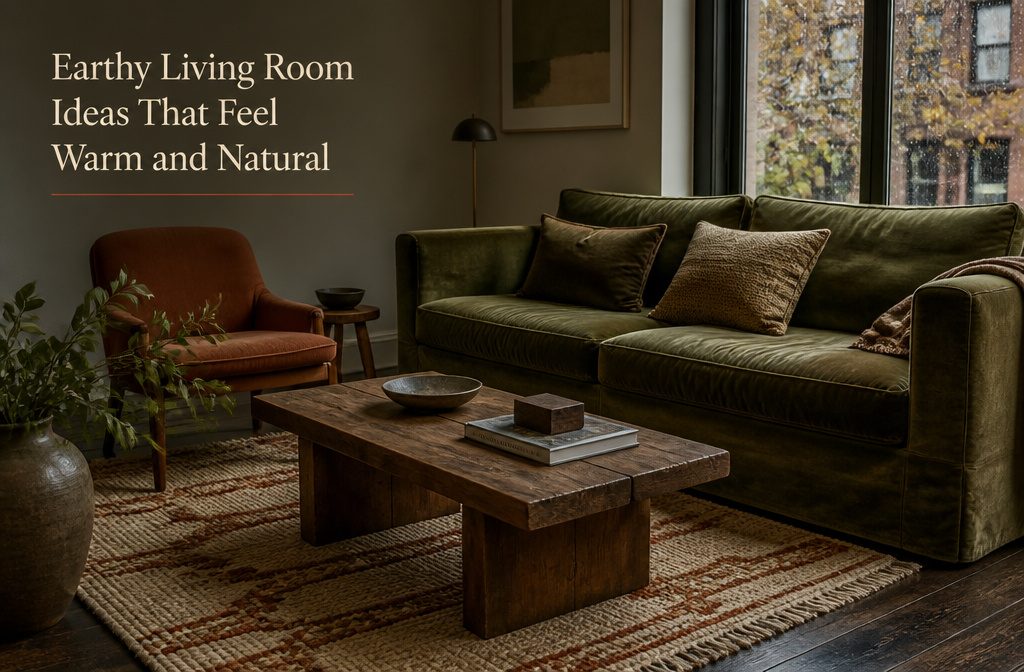
An earthy living room spans green velvet sofas and cream sectionals, rust accent chairs and timber coffee tables, textured rugs and woven rattan. What ties them together is warmth—natural materials, grounded tones, and tactile layers that soften hard surfaces.
The palette matters most.
Warm neutrals anchor the space, but they flatten without depth from olive, terracotta, or rust. Sample paint at different times; what reads right at noon can shift amber or flat by evening.
1. Use a Nature-Inspired Palette
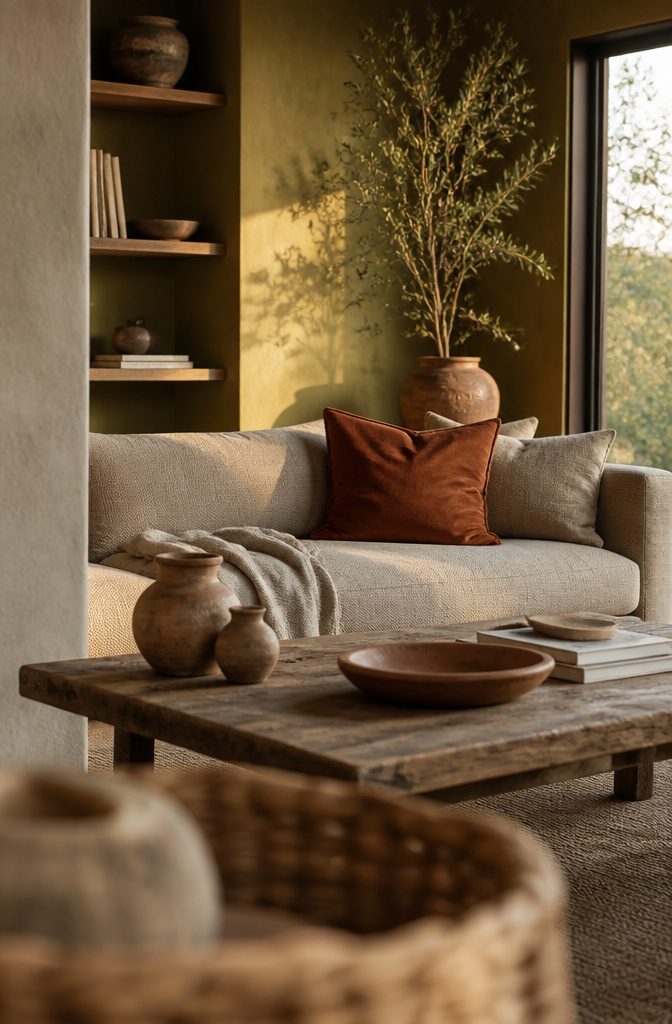
Warm neutrals—creamy sands, beiges, soft taupes—form the foundation, then layer in olive greens, terracottas, rusts, deep browns, or muted grays to ground the space.
The palette mirrors what you see outdoors: moss, clay, tree bark, stone. Avoid sharp cool grays alongside warm neutrals; the clash reads as unsettled, especially when daylight shifts through the day.
You can commit fully to one bolder tone on the walls—an olive with a golden undertone reads like a sunlit forest—or keep walls neutral and bring the depth through upholstery and accessories.
Burgundy, mustard, or deep red work when you want a stronger accent without stepping outside the earthy range.
Small pops of softer color, like a dusty pink pillow against sage seating, still feel natural if the undertones stay warm. Sample paint at different times before deciding; what looks right at noon can shift amber or flat by evening.
2. Choose a Green Sofa or Seating
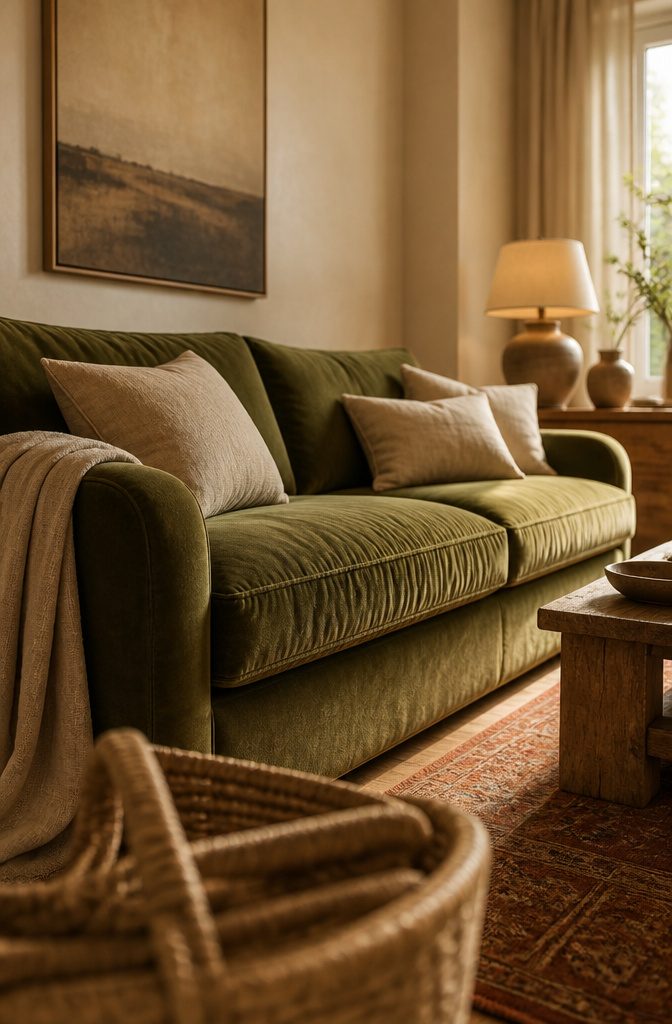
Green upholstery brings an immediate sense of calm and grounds the whole room in nature.
Olive green or sage sofas work as a strong focal point because they read as a neutral in an earthy palette while still carrying color—they anchor without competing with wood tones or terra cotta accents.
Deeper greens in velvet look moody and rich, especially paired with warm amber lighting or a rust-colored rug. Lighter sage tones lean softer and suit smaller rooms or layouts where you want the sofa to recede slightly.
Either way, green seating holds up against neutral walls without disappearing, and it ages better visually than beige or gray when paired with natural textures like woven baskets or linen throws.
A bold green sofa balanced with cream or warm wood keeps the room from feeling too saturated.
3. Choose Warm Neutral or Cream Seating
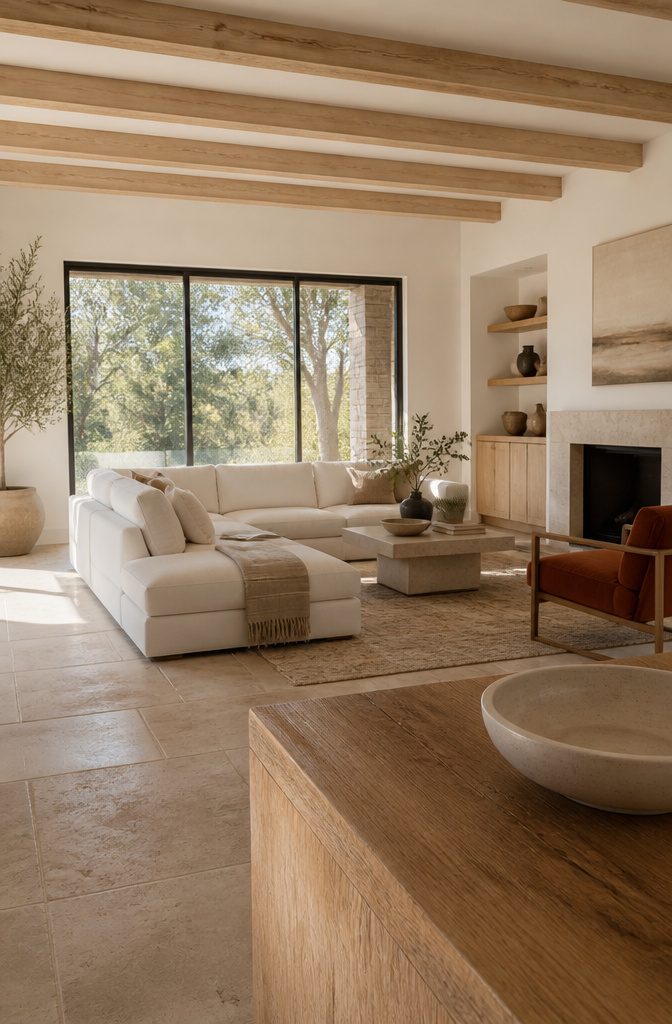
A cream or beige sectional anchors the room without competing for attention. The neutral base lets wood, stone, and textiles carry the warmth, and it pairs cleanly with rust chairs or a patterned rug when you want contrast.
Soft seating in warm neutrals works best when the rest of the room brings texture and color — the sofa stays quiet so the materials around it can speak.
Cream works in bright rooms where light oak and pale stone dominate. Beige holds up better in dim corners or next to dark wood, keeping the space from reading cold.
A white accent chair can sit alongside either one, but a full white sofa needs strong natural light or it flattens the palette.
If the room leans minimal, neutral seating keeps it grounded. If it leans layered, the sofa becomes the calm thread that ties it together.
4. Use Rust or Terracotta as a Strong Accent
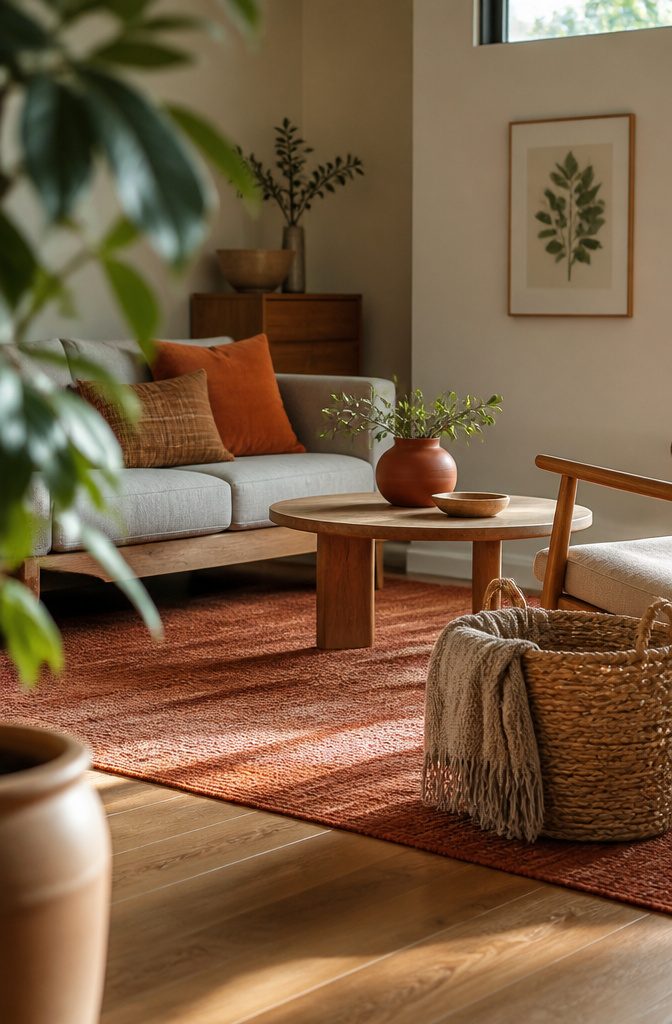
Rust and terracotta pull warmth forward without tipping into brightness. These tones sit between red and brown — grounded enough to feel natural, saturated enough to anchor a room.
A rust-colored chair or a terracotta velvet sofa becomes the piece everything else orbits, especially when the rest of the palette stays neutral. The color reads as confident rather than loud.
If upholstery feels like too much commitment, a terracotta textured area rug delivers the same warmth underfoot and holds up better to wear than lighter options.
Smaller doses work too: ochre and rust in throw pillows tie back to a rug or walls without requiring a full furniture swap.
The repetition matters more than the scale — echo the tone in at least two places so it reads as intentional rather than random.
Walls in rust bring heat to a room that leans too cool, though they demand more natural light to keep from closing in. Pair them with wood tones and grey seating to keep the space from skewing too warm.
5. Bring in Timber Furniture
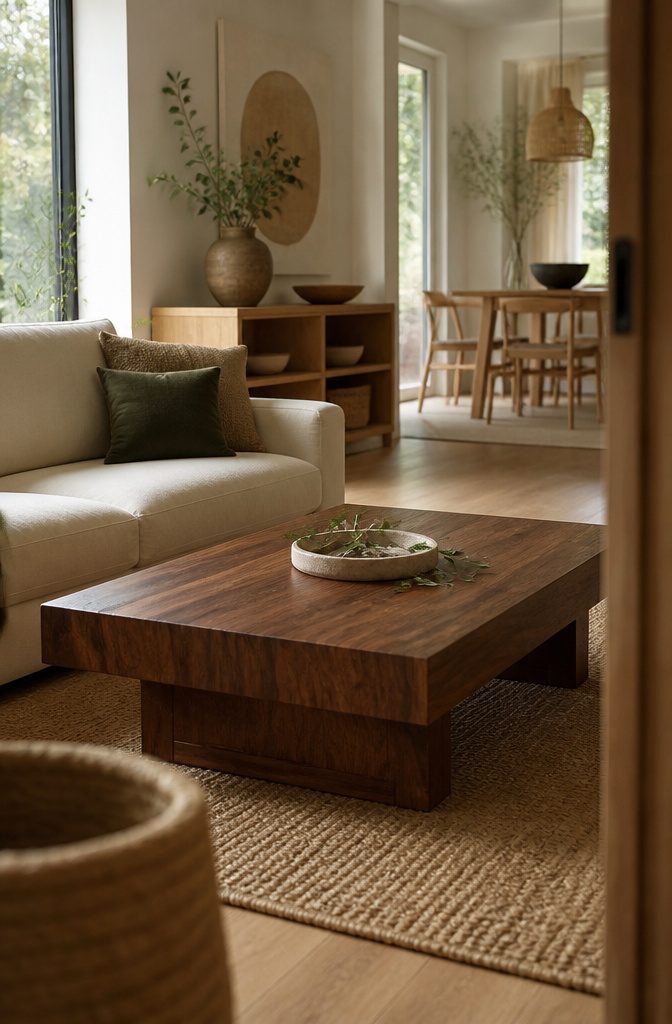
A solid wood console or coffee table pins everything else in place.
I keep coming back to American Walnut and Natural Oak — both carry enough grain and warmth that you don’t need to layer much around them, and they age better than anything stained to look like them.
Walnut reads darker and more formal; oak stays lighter and opens the room up.
Smoked Oak and Onyx finishes work if the room already has enough light coming in, but they pull the mood down fast in a dim corner.
I’d rather go with a natural mid-tone and let the wood do the grounding on its own.
A dining table works the same way in an open-plan setup where the living room bleeds into the eating area. The timber carries through both zones without needing to match everything else.
6. Layer Natural, Tactile Textiles
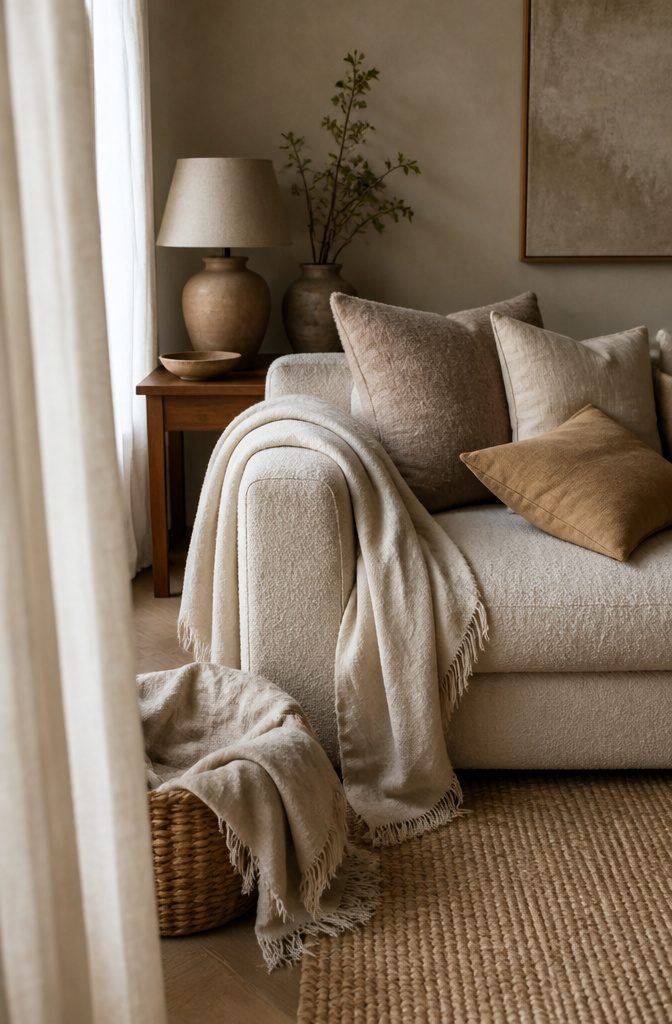
Textiles soften the structure of a room and make it feel like someone actually lives there.
A linen throw draped over the arm of a sofa, a few canvas or wool pillows in uneven sizes, and cotton or jute curtains all add layers that catch light differently and give the eye something to rest on.
The variety keeps the space from feeling flat or staged.
Mix at least three different textures in a single seating area—something smooth, something with a visible weave, and something with weight or nap.
That contrast is what registers as warmth. Upholstery plays a role too: a sofa in bouclé or a chair in leather reads as natural in a way that microfiber never will.
King Living offers over 200 fabrics and leathers if you want that level of choice built into the piece itself, though most of the effect comes from what you layer on top.
7. Add Greenery
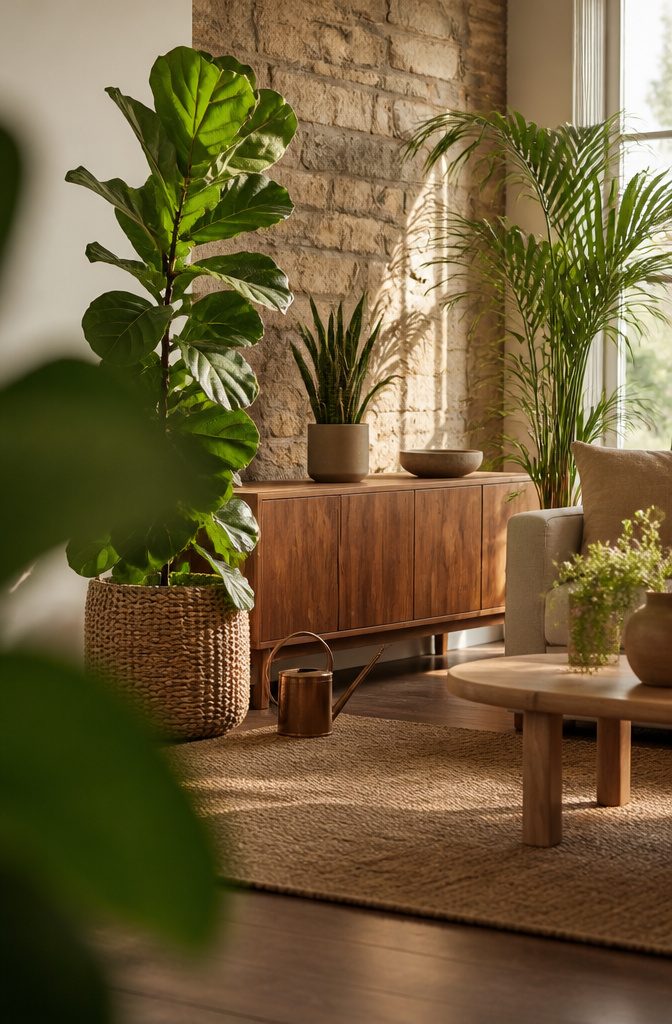
Plants soften a room in ways paint and fabric can’t.
A fiddle-leaf fig in the corner or a pothos trailing from a shelf brings movement and breaks up neutral palettes without competing with them. The air feels fresher, the space less finished in the good way.
I keep a snake plant near the window and a Kentia palm by the sofa. Both handle low light and need water maybe once every two weeks, so they survive real life.
The palm adds height without blocking sightlines; the snake plant fills dead space on a side table or the floor next to a console.
Greenery makes hard surfaces feel more approachable.
A room with exposed stone or a lot of wood reads warmer when something green sits nearby. The contrast works, and the plants give you permission to leave other surfaces bare.
8. Use a Textured or Patterned Rug
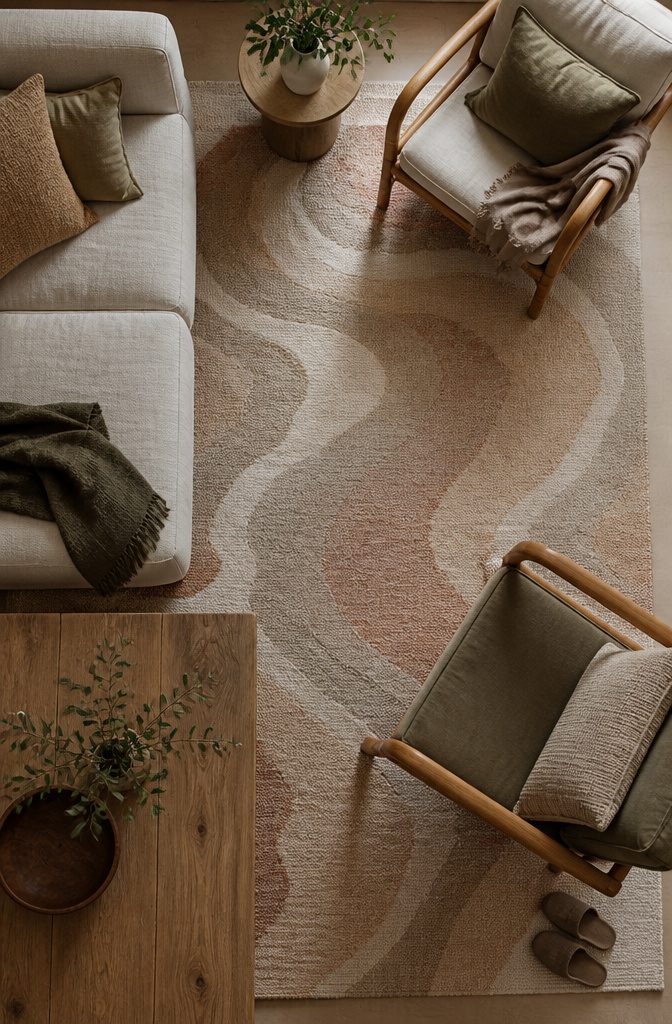
A rug grounds the seating area and brings in tactile warmth through pattern or weave.
The foundation rule: the rug should extend under the front legs of all major seating. A too-small rug shrinks the visual field and disrupts flow, so it needs to stretch far enough to define the conversation zone.
Hand-loomed rugs in New Zealand wool blends, linens, and art silk add refined texture through multi-tonal threads in earthy shades.
Look for wave-like weaves, subtle topographical patterns, or organic motifs that echo mountains and coastlines. The simple comfort of bare feet sinking into natural fibers after a long day makes the room feel instantly warmer and more inviting.
9. Style Coffee Tables and Side Tables
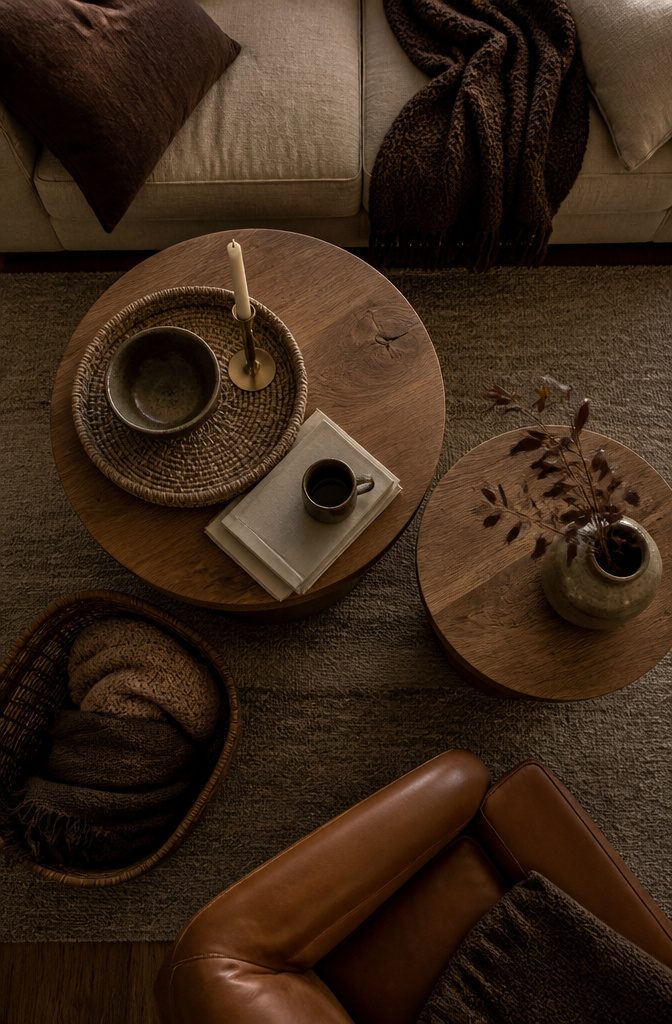
A coffee table groups the room into a usable zone, and timber finishes pair naturally with clay or jute decor while stone and travertine work better with glass, metal or polished ceramic.
A hand-thrown bowl or woven tray stacked with linen-bound books gives the surface purpose without crowding it, and sculptural vases styled with bronze candlesticks add weight beside cooler stone tops.
Clustering two timber tables at different heights mimics the irregular layering you see outdoors and leaves room for a drink or a book between the pieces.
A rattan basket holding textured throws can sit next to the coffee table so comfort stays within reach.
If the room has a lounge chair, add a side table there—the extra surface keeps the setup practical without breaking the grounded feeling.
10. Feature Stone or a Fireplace
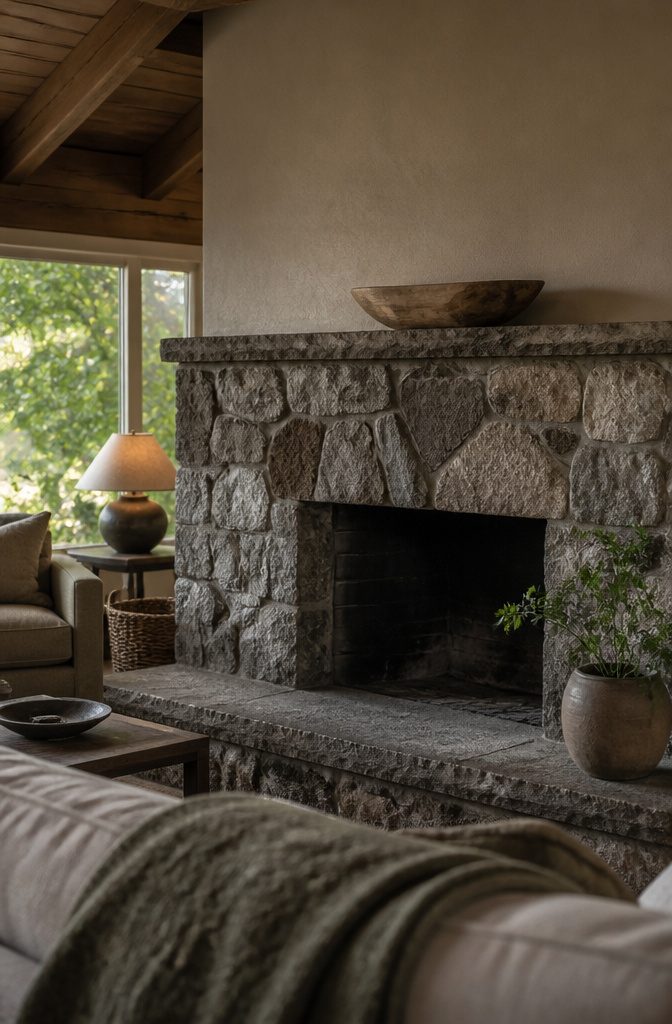
A fireplace or stone wall does one thing better than anything else in the room: it tells you where the center is.
The hearth becomes the spot everything faces, the wall you can’t ignore when you walk in. Stone brings mass and permanence, the sense that the room has been here longer than the furniture and will outlast it.
The material itself grounds the space. Rough stone next to soft linen or woven baskets sets up a contrast that reads as natural rather than designed, and the texture holds up even when the fire isn’t lit.
A floor-to-ceiling surround works in rooms with high ceilings, where the vertical pull keeps the stone from feeling bottom-heavy.
In a room with eight-foot ceilings, stop the stone halfway up or keep it low around the firebox so it doesn’t crowd the wall.
Stone softens with what you put near it. Greenery, warm lighting, and textiles—throws, pillows, anything with give—keep the surface from reading as cold or severe.
11. Bring in Woven Natural Materials
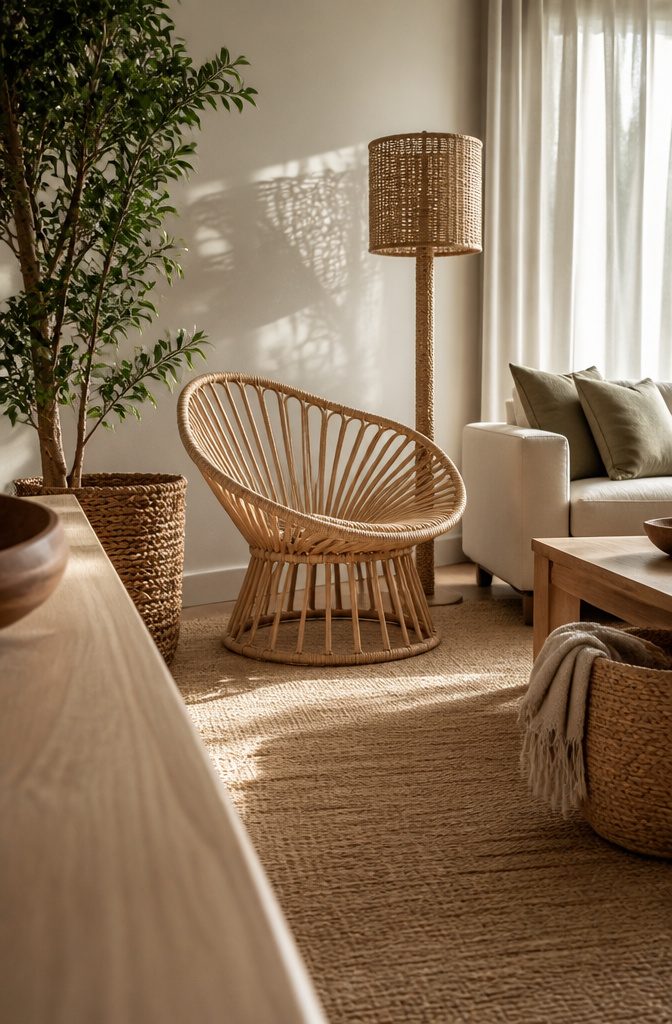
Rattan chairs, cane-backed stools, jute planters, and woven accent pieces layer texture across the room without needing paint or upholstery.
A woven petal accent chair works as a statement piece against smoother surfaces—white consoles, tufted sectionals, sleek media units—because the pattern catches light differently than flat upholstery does.
Woven planter baskets sit around floor plants in corners or beside sofas, adding warmth where ceramic would read cold.
Rattan works equally well in upright forms like floor lamps or hanging pendants, breaking up rigid lines near windows or above coffee tables.
The contrast matters: every visual zone benefits from at least one textural element reminiscent of the outdoors, whether that’s a side table with cane insets or a low basket holding throws.
Natural fibers like jute, rattan, and woven materials counteract synthetic finishes and make the space feel lived-in rather than staged.
12. Mix Vintage or Traditional Pieces with Newer Furnishings
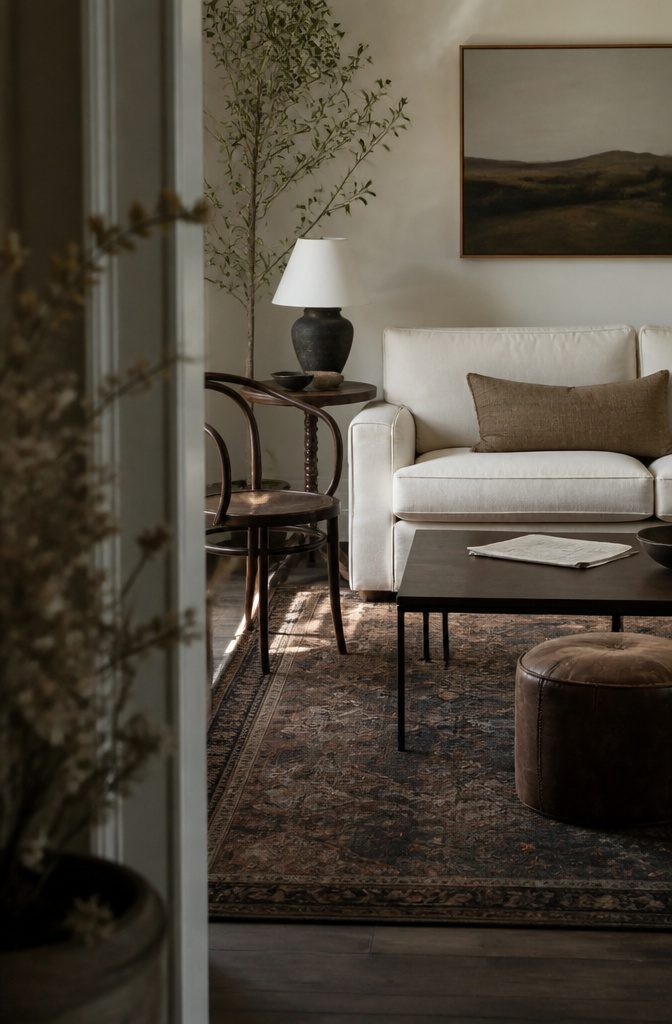
A room that looks like it arrived fully styled in one order reads flat.
Pairing a traditional bentwood chair with a newer cream sofa, or setting a vintage moody rug under clean-lined furniture, gives the space the depth of something collected over time rather than matched from a catalog.
The mix says someone lives here and has kept what they loved.
Let one era anchor the room and the other play accent. A soft modern sofa grounds easily when flanked by a worn leather ottoman or a turned-leg side table.
The reverse works just as well: classic upholstery with heritage prints stays current when the coffee table is simple and the lighting skews minimal. Contrast in silhouette and finish does more work than a strict count of decades.
Vintage pieces tend to carry more texture—carved wood, patina, visible grain—so they naturally warm a space that would otherwise feel too spare.
Newer furnishings keep the room from tipping into theme-park nostalgia. The balance between the two is what makes it feel earthy without feeling heavy.
13. Use Architectural Wood Details
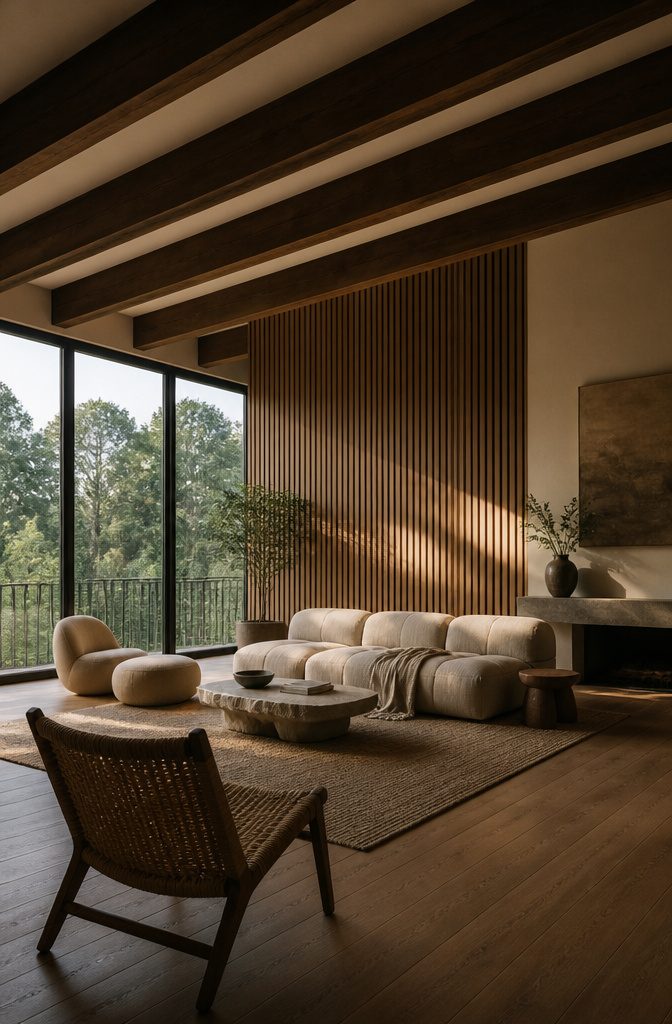
Exposed beams anchor a room the way a strong frame anchors a painting.
They pull the eye up and give weight to the space without closing it in. Deep wood tones against lighter walls create contrast that feels intentional, not accidental, and the natural grain keeps the formality from tipping into stiff.
Beams work best in rooms with enough ceiling height to carry them — at least nine feet — or they sit too heavy and press down instead of lifting.
Paneling and wood-slat walls add the same kind of depth on a vertical plane. A slatted feature wall behind a sofa or flanking a fireplace introduces shadow lines that shift through the day as light moves across the room.
The vertical rhythm draws the eye without demanding it, and the repetition feels architectural rather than decorative.
Pair slat work with soft, rounded furniture to balance the geometry, or the room reads too rigid. Stone and plush seating soften edges the wood leaves crisp, and the combination feels grounded but not austere.
14. Choose Curved or Organic Forms
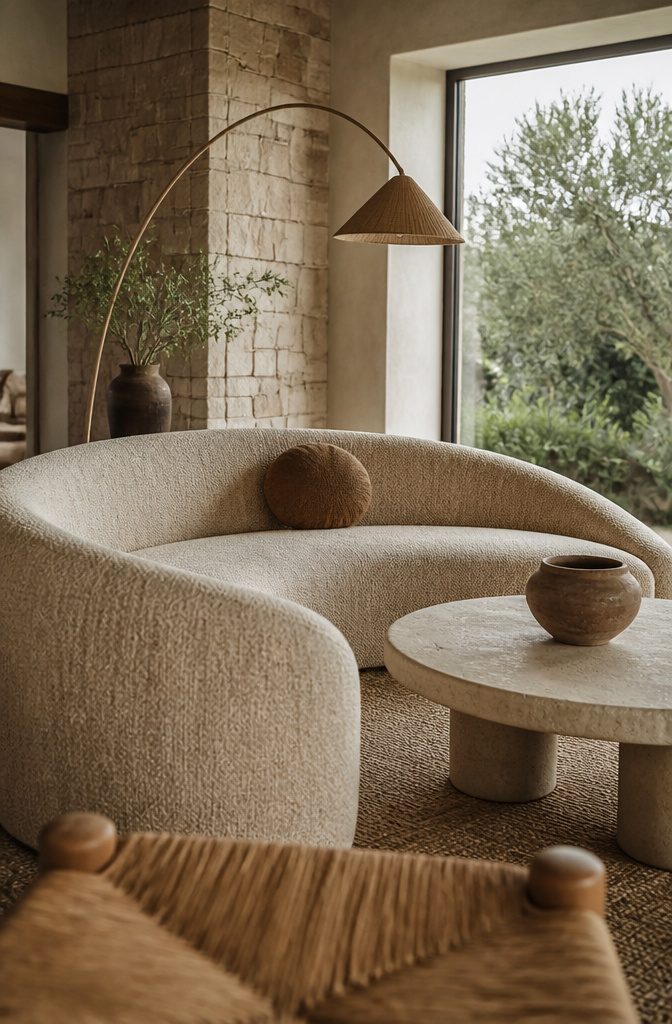
Rounded furniture softens the whole room.
A curved sofa reads as welcoming rather than formal, and sculptural pieces bring the same earthy effect by mirroring the organic lines found in nature. Straight edges feel deliberate; curves feel like they grew that way.
A sculptural design like a curved sofa can bring the same earthy effect by mirroring the organic lines and fluidity found in nature. Rounded silhouettes introduce a sense of flow and movement, softening the geometry of a room and creating a natural focal point without relying on bold tones.
That flow matters when you want the room grounded instead of rigid.
An arched floor lamp or a low organic coffee table pulls the same weight: shape does the work color would otherwise have to carry. If your palette stays neutral, form is what keeps it from reading flat.
15. Make the Room Minimal but Warm
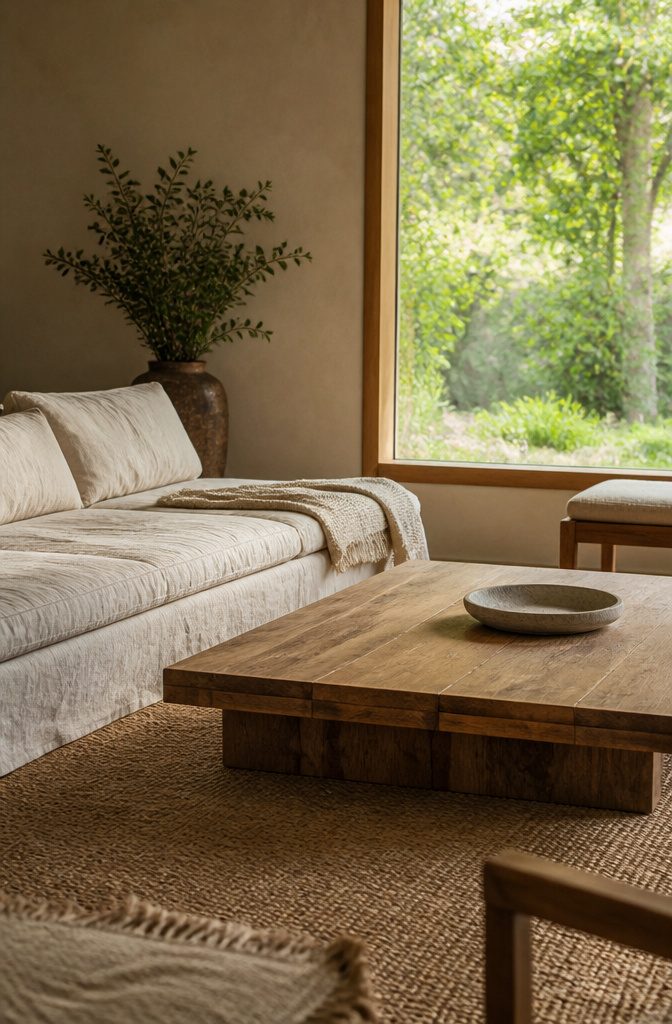
The palette can stay neutral and the room can still feel warm when you let material and texture carry the comfort.
Clean lines and a restrained color range work if the surfaces themselves have weight: warm wood, woven fabric, something with a hand you can see.
The calm comes from not competing for attention, and the coziness comes from what those surfaces are made of.
Soft neutrals and simple forms keep the space from feeling busy, but tactile pieces keep it from reading cold.
A low-profile sofa in linen or cotton, a wood coffee table with visible grain, a rug with enough weave to catch light differently across its surface — each one quiet on its own, grounded together.
The room feels intentional because nothing is there just to fill space, and it feels livable because the things that are there invite you to sit down and stay.
Frequently Asked Questions
What are earthy colors for a living room?
Warm neutrals like cream, beige, and taupe form the base, then layer in olive green, terracotta, rust, deep brown, or muted gray.
The palette mirrors outdoor elements: moss, clay, tree bark, and stone. Avoid pairing sharp cool grays with warm neutrals, as the contrast reads unsettled.
What materials best express an earthy mood?
Natural fibers like jute, linen, wool, and rattan bring tactile warmth, while solid wood in walnut or oak grounds the space.
Stone and woven materials add texture that mimics what you find outdoors. Mix at least 3 different textures in a single seating area for contrast.
Which plants work best in earthy living rooms?
Fiddle-leaf fig, pothos, snake plant, and Kentia palm all handle low light and need watering once every 2 weeks.
Combine upright plants with trailing varieties to add movement and soften neutral palettes. Greenery makes hard surfaces feel more approachable.
Do I need to replace all my furniture for an earthy look?
No.
Start with textiles and accessories, changing no more than 30% of visible items at a time. A linen throw, canvas pillows, or a jute rug can shift the mood without requiring a full furniture swap.