
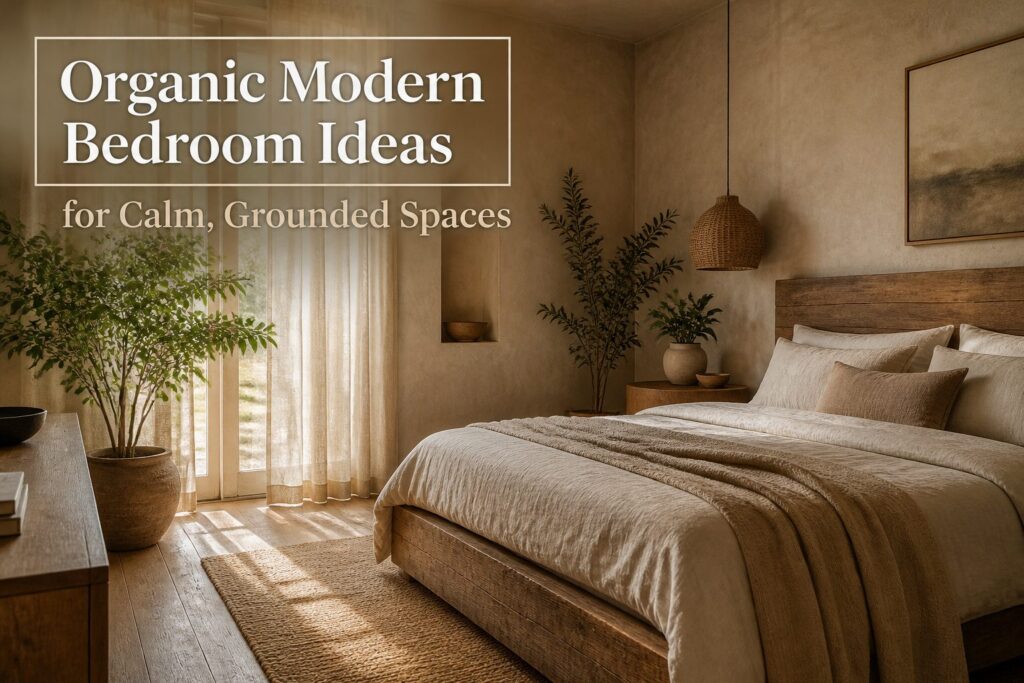
The fifteen rooms below range from a single painted wall to full built-ins, and the one that fits depends on how much patience you have for texture: Venetian plaster rewards a skilled hand, lime wash forgives a first try, and both need unbleached linen rather than matching upholstery to keep the look grounded.
A 2700K bulb cap runs through nearly every entry, because anything cooler turns oak gray and linen flat.
1. Soft Blue Serenity
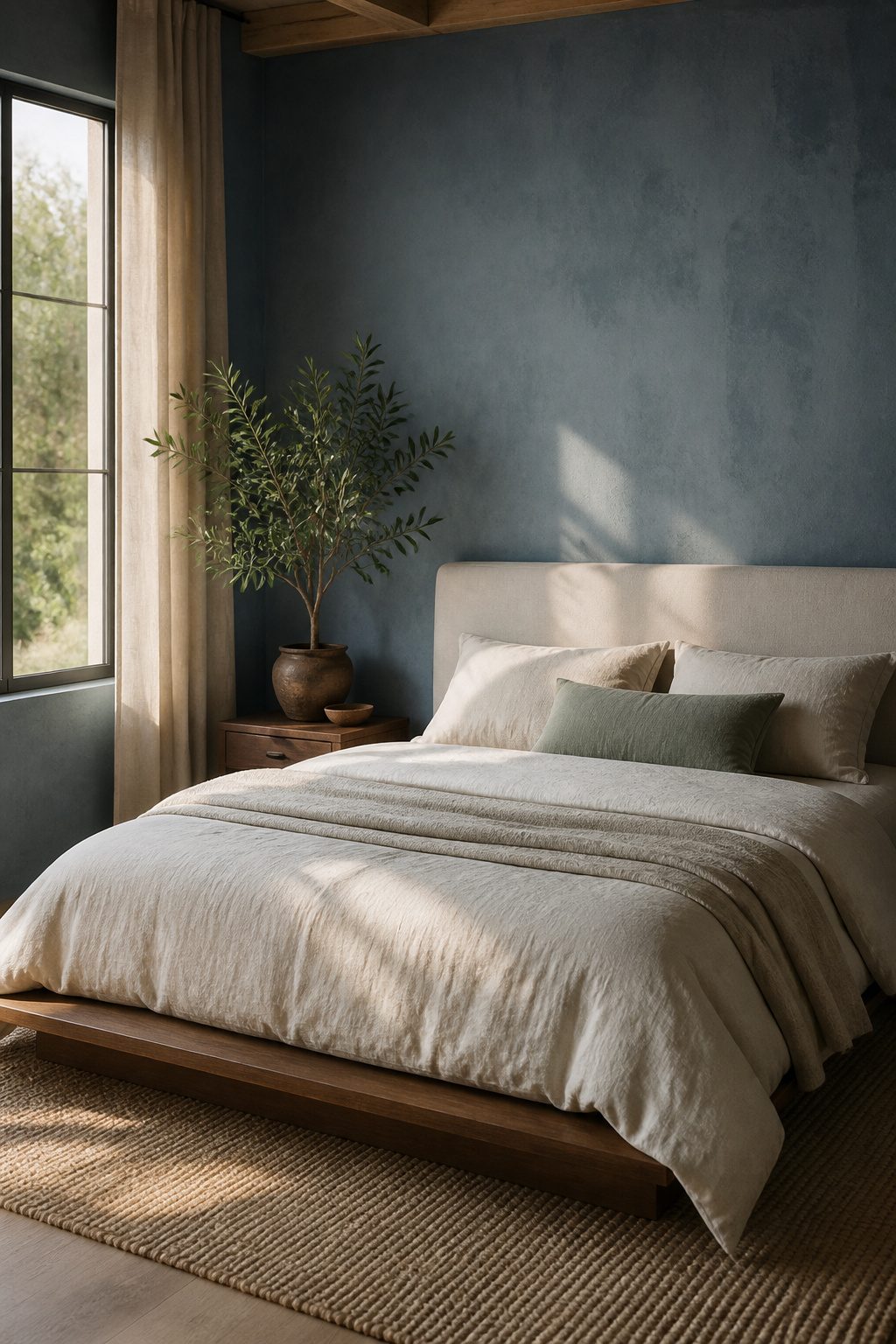
A dusty blue plaster wall behind the bed catches morning light the way flat paint never could, softening and shifting through the day like cloud cover over a ridge.
That living surface is what keeps the color from reading coastal or cold.
I would pair it with an unbleached linen headboard and pale oak framing, letting the raw texture of the linen echo the wall’s hand-worked finish rather than competing with it.
Soft blue works two ways: layered with patterned bedding and matching lamps for symmetry that feels almost hotel-put-together, or kept restrained so the plaster itself carries the room.
For a weekend project on a real budget, the plaster alone is the statement. I would skip the chandelier and the patterned layers, add one good linen duvet in a shade lighter than the wall, and stop there.
Venetian plaster takes patience or a skilled hand; lime wash is more forgiving for a first try and gives nearly the same depth.
Either way, the headboard stays simple. Upholstery in a matching blue is what tips this look toward the coastal-leaning palette I would avoid; unbleached linen keeps it grounded in the mountain version of calm.
2. Moody Floral Drama
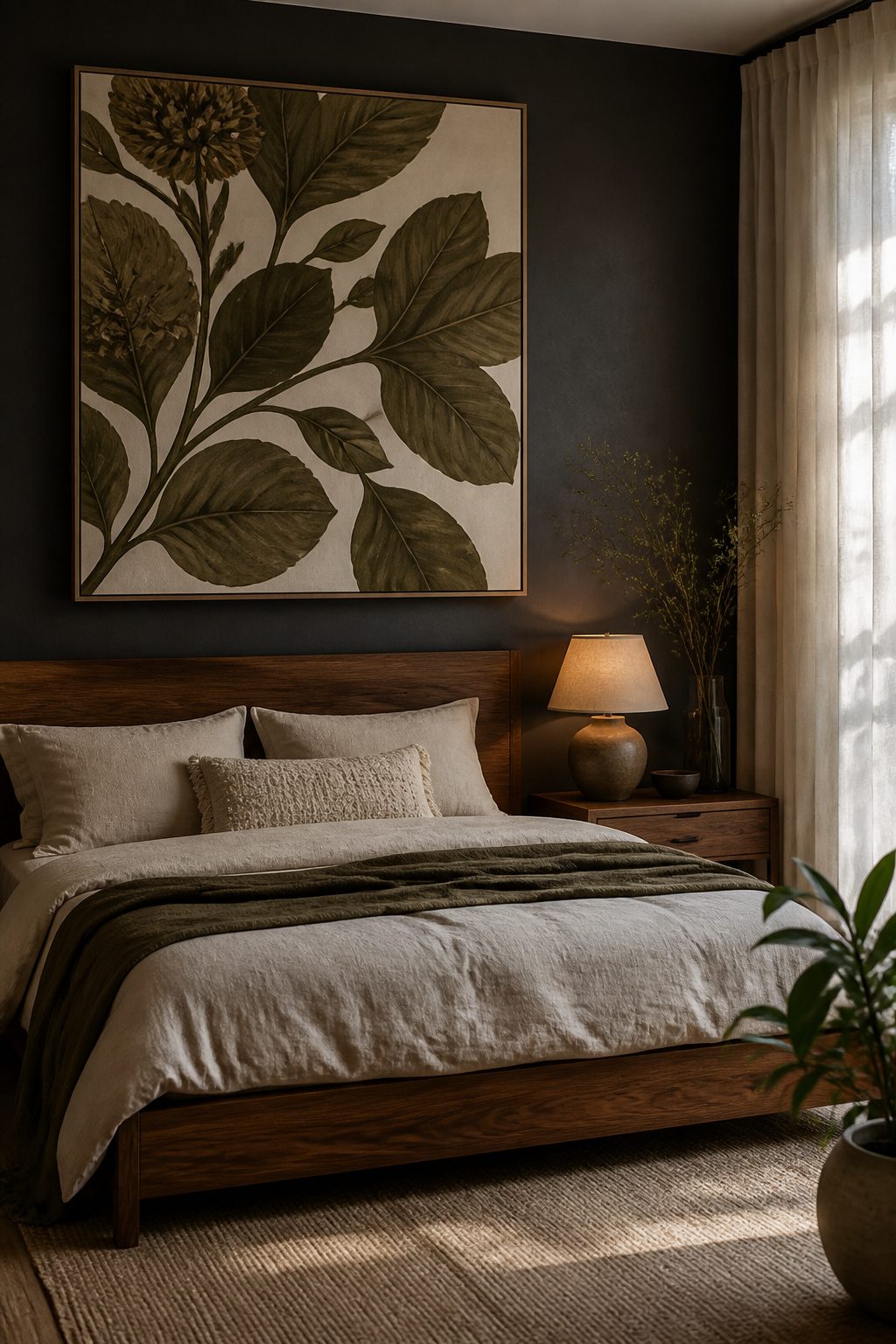
A single oversized botanical print in deep olive or charcoal does the heavy lifting here.
The image fills the visual field, so the rest of the room stays quiet: a simple wood bed frame with visible grain, plain bedding in a warm neutral, and nothing else competing for attention.
That restraint is what keeps the mood grounded rather than chaotic.
I would skip throw pillows with competing patterns entirely. The floral is the statement; let it be the only one.
Low-profile furniture with clean lines and natural texture supports the organic modern bedroom feel without adding noise. Warm lighting against the dark wall softens the drama just enough to keep the space livable.
3. Cozy Modern Retreat
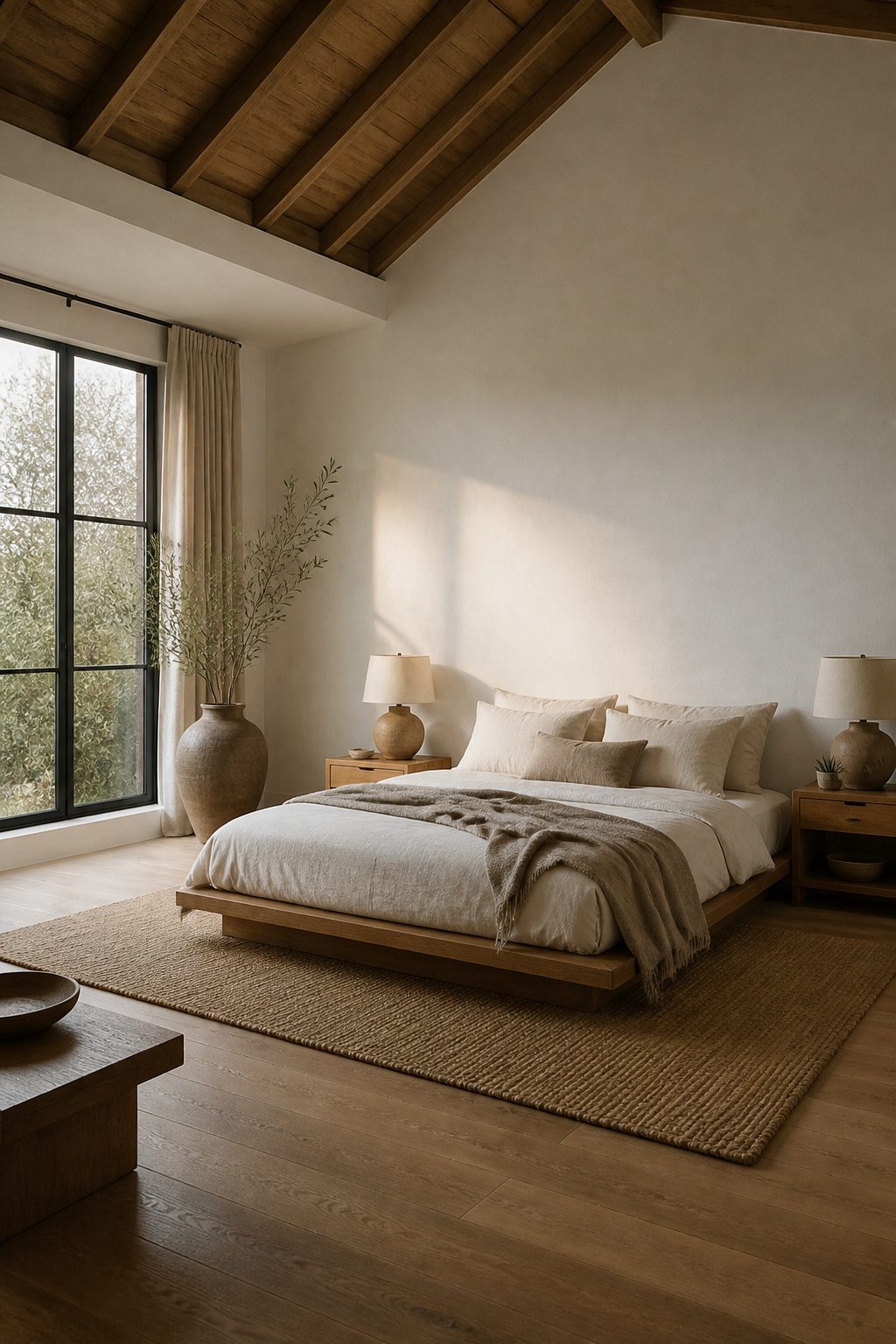
A 12- to 14-inch platform bed grounds the room in a way that taller frames rarely manage, though the exact height matters less than keeping the nightstands in proportion.
If your bed runs taller, choose nightstands with enough visual weight to meet it; thin legs and a light silhouette leave the bed floating instead of settled.
Layer a wool throw over a single heavy linen duvet, the kind that rumples instead of smoothing out, since that slight imperfection is what keeps an organic modern bedroom from reading as staged.
The linen regulates temperature better than cotton through every season, and the wool adds the textural break that one solid layer cannot give on its own.
Keep the walls warm white and cap the lighting at 2700K; anything cooler starts to read clinical against the natural materials you are building from.
4. Light and Airy Statement
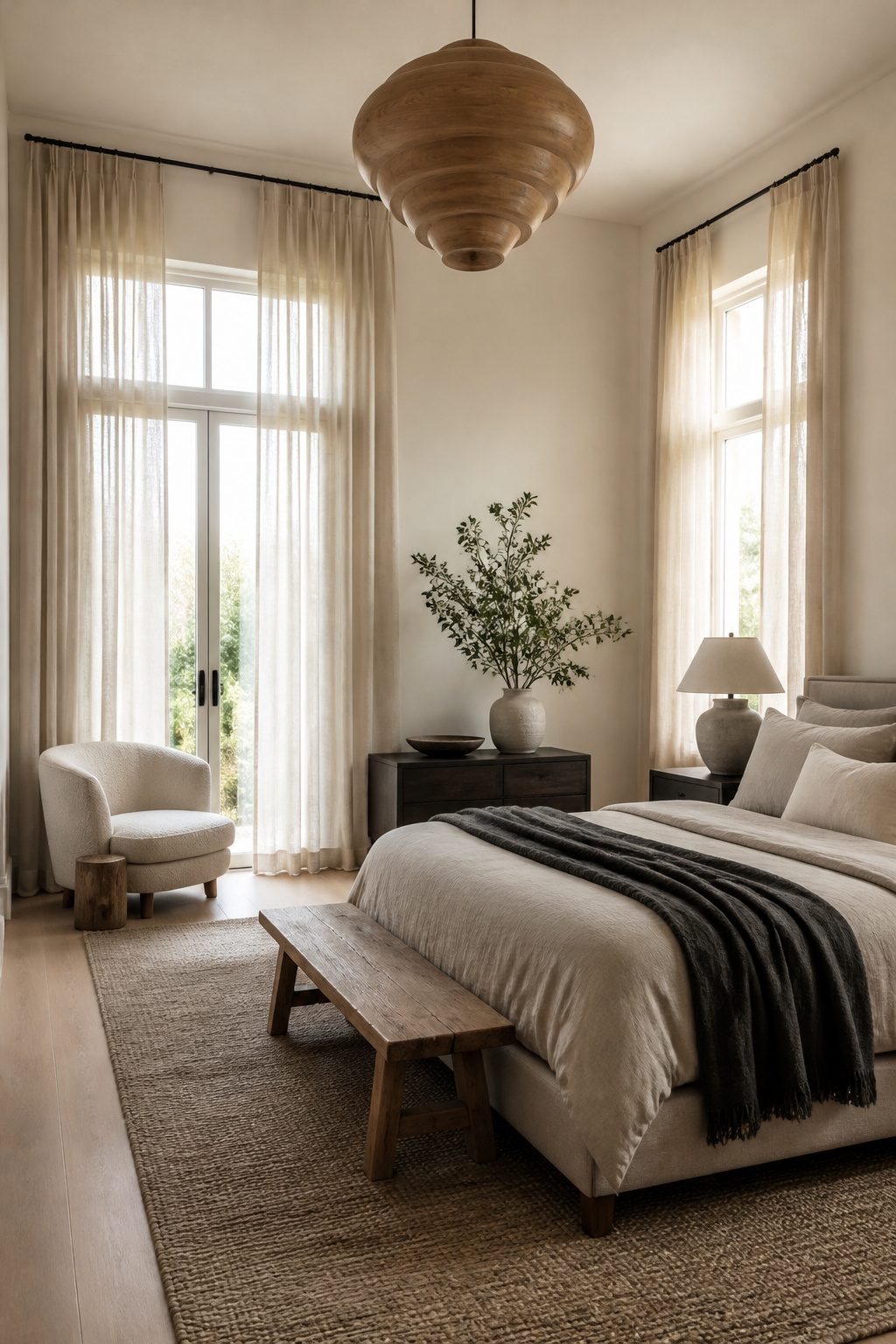
High ceilings or tall windows do half the work in an organic modern bedroom.
The other half is sheer linen curtains hung as close to the ceiling as the track allows, drawing the eye upward and filtering light without blocking it.
I would keep the palette in warm whites and sand tones so the space stays grounded rather than sterile.
A single sculptural piece anchors the room without clutter: a turned wood pendant with visible grain, or a hand-thrown ceramic lamp with an uneven rim that catches morning light. Either one reads as art that happens to function.
I would add one dark element, a walnut stool at the bedside or a charcoal throw folded across the foot of the bed, so the room does not float away entirely. The contrast gives the eye a place to land.
5. Earthy Green Balance
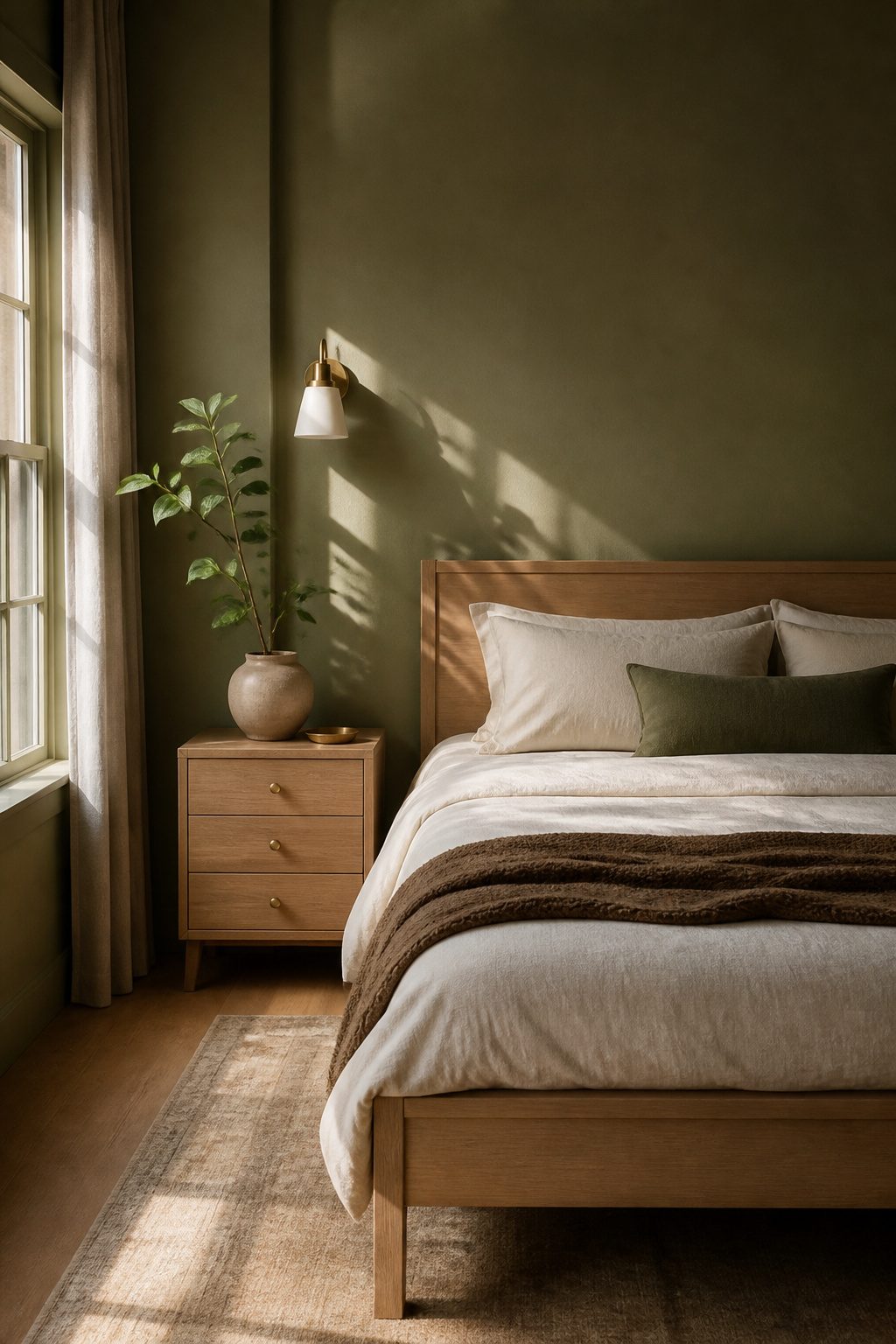
Sage walls in an organic modern bedroom work best when the green reads like soil or leaf, not mint or forest.
I would aim for a clay-green or dried-olive tone, something that looks like it could have been mixed from ochre and umber rather than a color that belongs in a spa.
Raw-edge furniture against that wall needs restraint. I have seen olive ash and white oak mixed in the same room, and the two tones fight each other for attention.
Limit yourself to one wood species throughout. White oak with a matte oil finish sits well against clay-green; the pale warmth picks up the ochre in the paint without turning yellow.
Brass hardware should have aged to a soft brown, not a bright lacquered shine. Unlacquered brass darkens over months of handling, and that patina is what keeps the metal from looking like jewelry against the quiet wall.
If you are buying new, look for "living finish" brass or hardware that arrives pre-aged. The soft brown reads as found rather than bought, which is what the organic side of this style is after.
6. Warm Neutral Layers
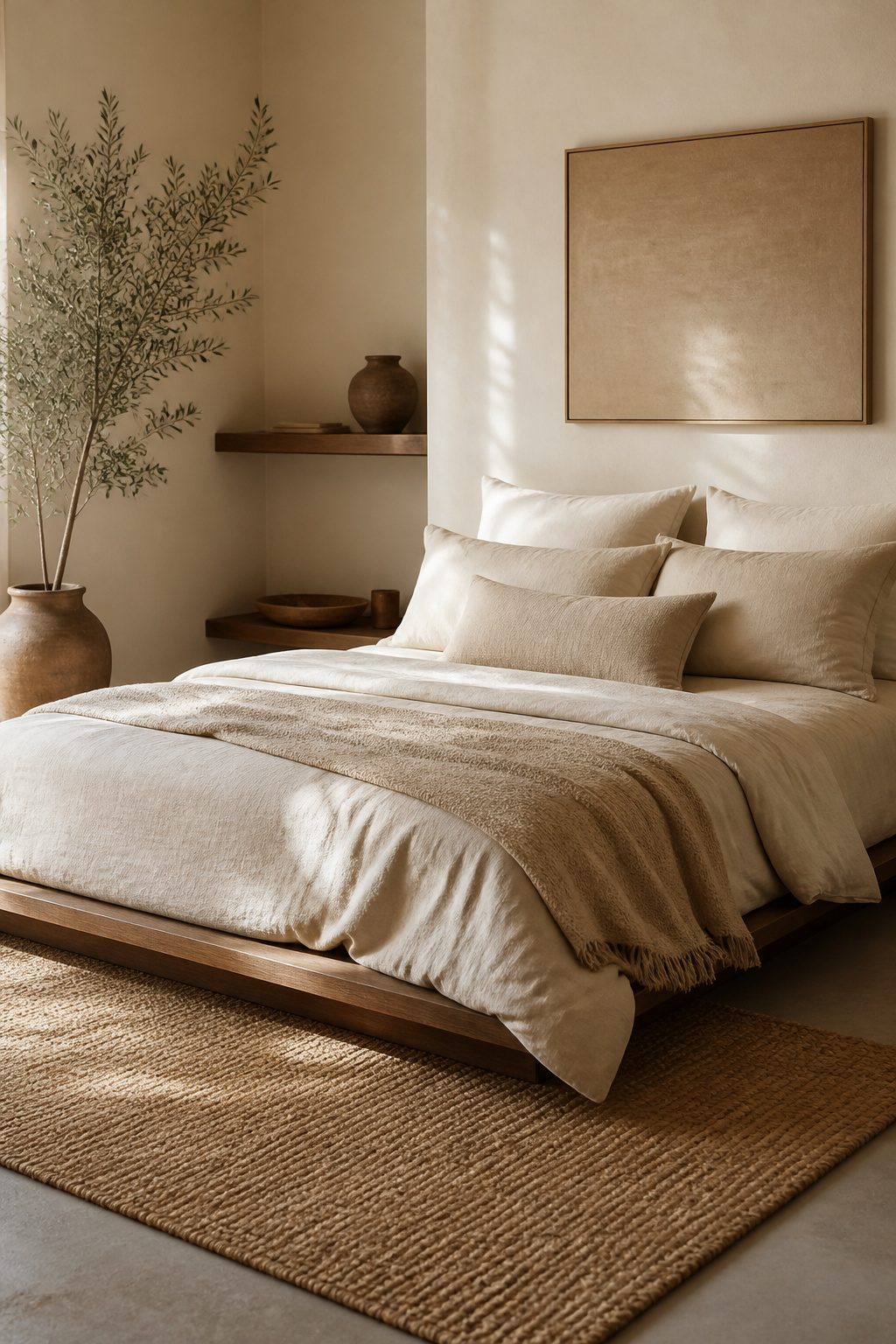
Cream, oatmeal, and camel are the three tones that make an organic modern bedroom feel grounded rather than flat.
I would keep them undyed, because the slight variation in raw wool and raw linen does what dye usually tries to fake.
The bedding formula I follow is specific: cotton percale for the fitted sheet, linen for the top layer, and a wool throw folded at the foot.
No pattern anywhere. The interest comes from weave and weight, not print.
Percale against skin is smooth and cool; linen on top relaxes into shallow wrinkles that read as shadow in evening light; wool gives the bed a denser edge that makes the whole thing look settled.
A hotel-flat bed photographs well but often feels thin once you live with it.
The trade-off with linen is that it will never look pressed, which is exactly why it works here. For a low platform bed, I would skip the tall pillow stack and let the layers fall closer to the mattress.
On a taller upholstered frame, you can add a little more loft, though I still stop at one tonal pillow contrast rather than building a pile.
7. Classic Comfort with a Twist
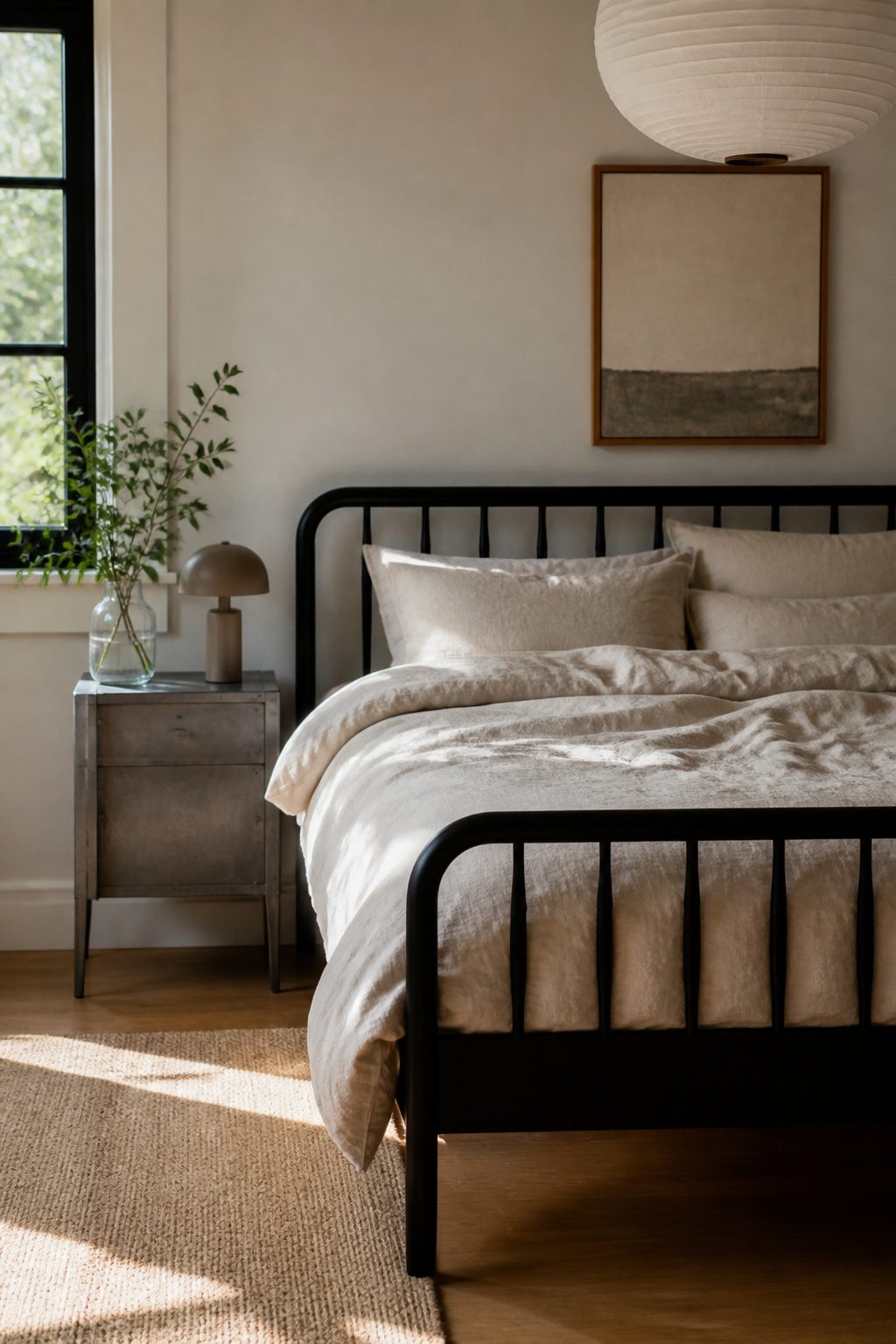
A spindle bed in matte black carries all the familiarity of a traditional shape, but the finish strips away the country-cottage feeling most people want to avoid in an organic modern bedroom.
Raw steel on a turned-leg nightstand works the same way. The form is old; the material makes it current.
The risk is the room sliding toward industrial.
I would keep the bedding loose and textured, linen or a washed cotton that looks like it was just pulled back. Rumpled softness against the hard finish is what keeps the balance.
A tight hospital corner on black metal starts to feel like a showroom. Three unmade inches of duvet spilling over the side fixes that.
I would skip any extra metal in the room, no steel lamps or iron wall art.
Let the bed or the nightstand be the single hard note, and build everything else from wood, wool, or clay tones. The contrast only works if it stays lonely.
8. Sleek Hotel Energy
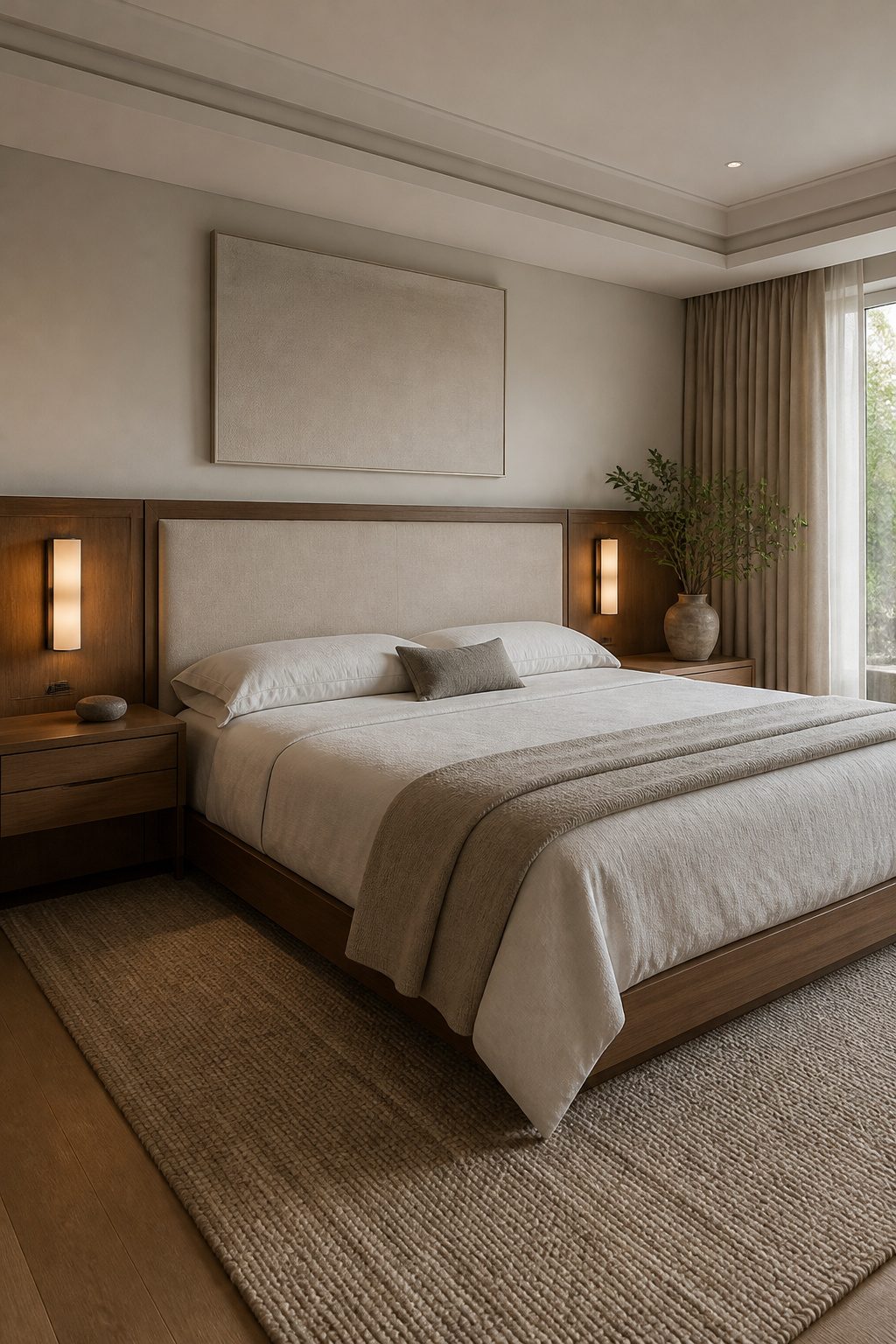
The hotel look in an organic modern bedroom stays tight, not loose. I think tight upholstery with a 2-inch flange on crisp linens does more for the feeling than any throw pillow ever could.
Built-in or floating nightstands keep the floor plane open, which matters more in a small bedroom than most people realize.
The organic element here comes from material gravity, not from softness.
A single slab headboard in walnut gives the warmth; one stone paperweight on the nightstand gives the weight. Shadow does the rest.
For lighting, 2400K bulbs are worth the hunt if you can find them. The 2700K maximum is the fallback, but 2400K signals the body toward sleep more honestly.
A warm ceramic lamp paired with a brass sconce slightly above and beside the bed gives depth that one source alone cannot. A cool white bulb undermines it all, no matter how beautiful the lamp.
9. Effortless Neutral Living
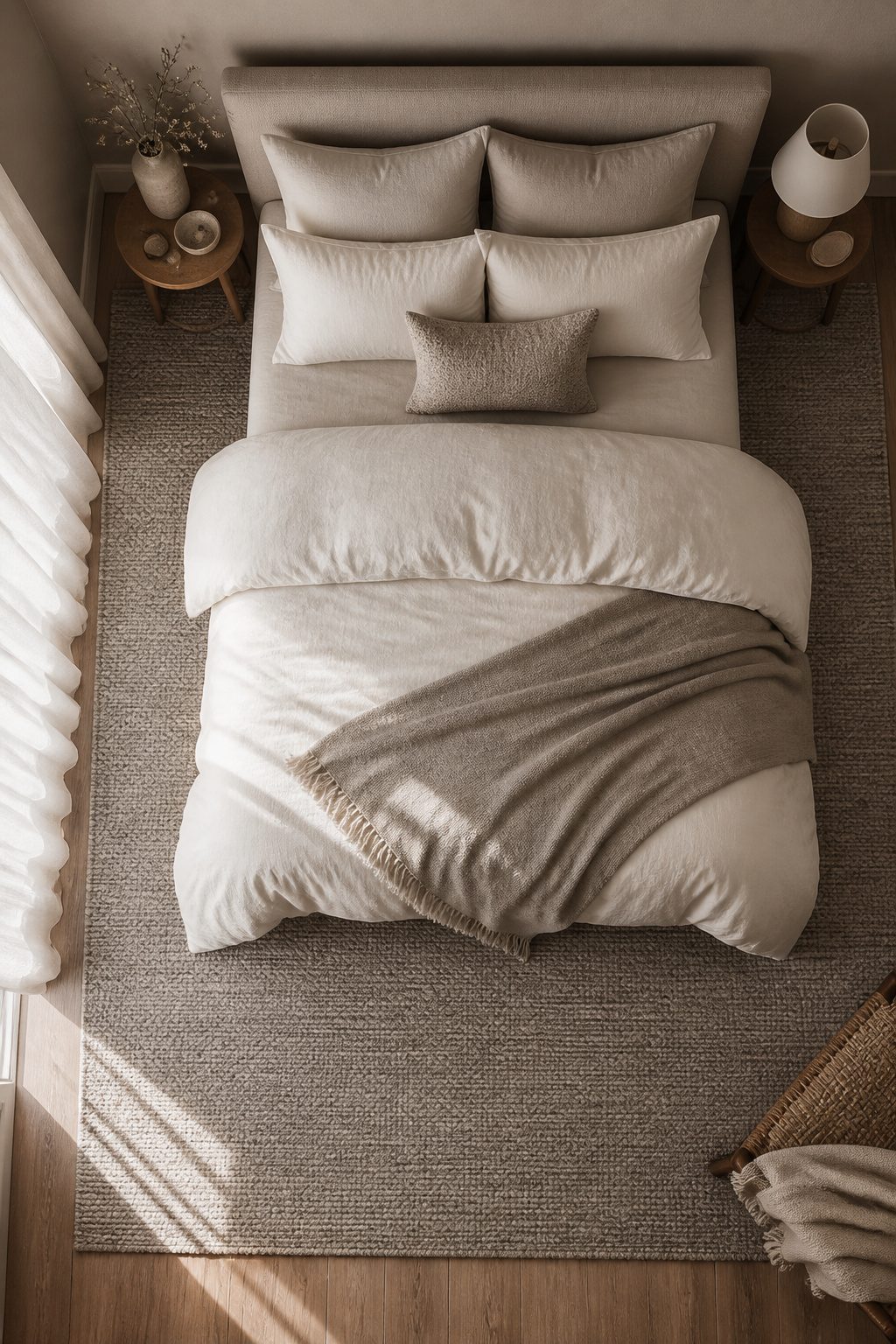
A wall of mid-tone warm grays and taupes lets the eye move slowly enough to actually rest.
I would keep everything in that same value range, because contrast is what wakes a brain up, and this room is meant to do the opposite.
Texture carries the interest instead. Bouclé on a bench at the foot of the bed, slubbed linen on the duvet, a hand-knotted wool rug underfoot.
Each one reads as a slightly different version of the same quiet color, so the room feels layered without ever getting busy.
An 8 by 10 rug anchors a queen bed; size up to 9 by 12 for a king. The real test is morning use: both feet should land on wool when you swing out of bed.
A warm oat or sandy tone keeps the palette intact while the fiber does the visual work that pattern would otherwise try to do.
10. Calm Contemporary Mix
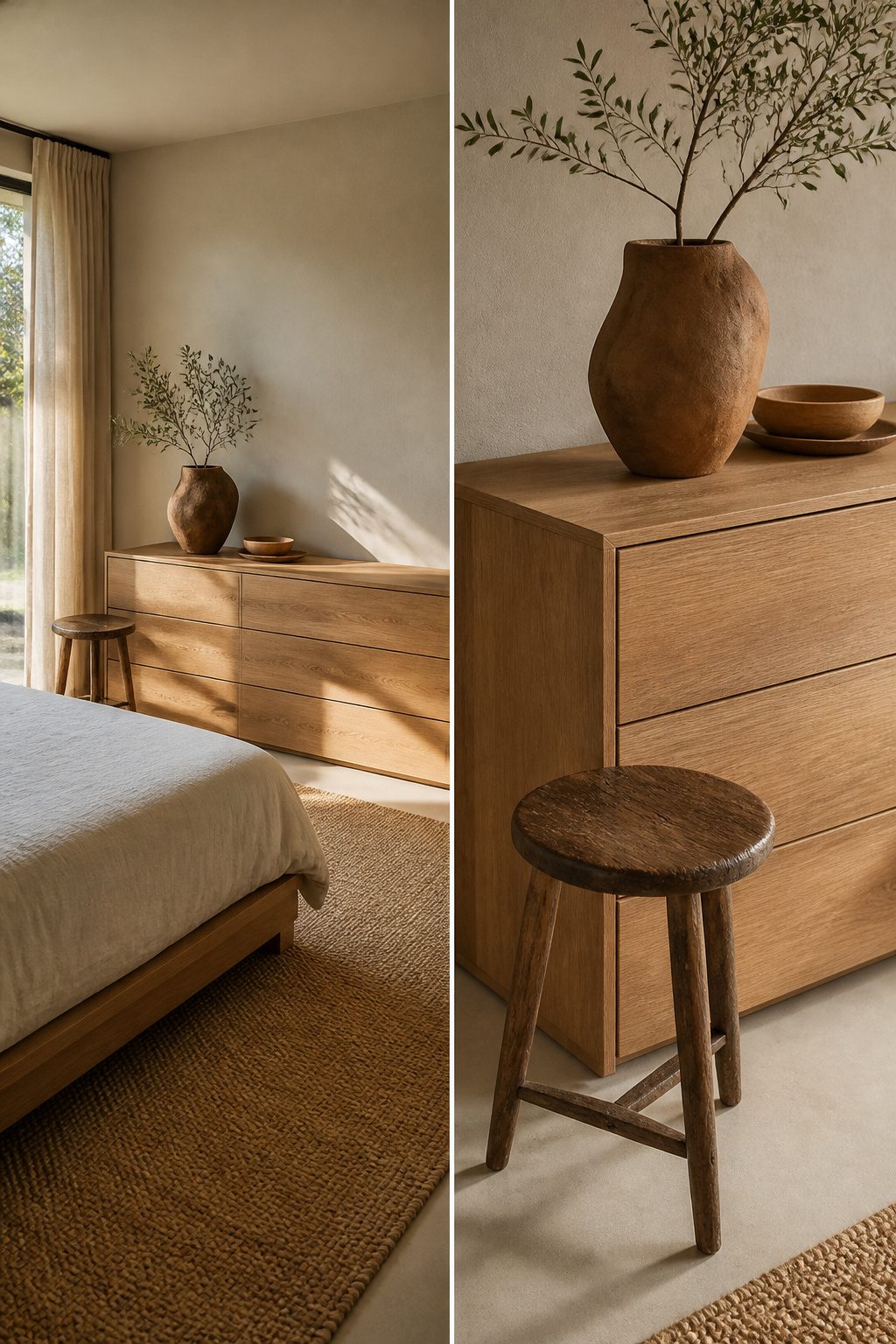
A low dresser with no visible hardware sets the right contemporary note, and the piece you pair it with matters more than the dresser itself.
I would look for a stool or mirror with real age, something with wear that reads as time rather than damage.
The mix only holds together when the finishes relate: both matte, both warm in undertone. Glossy lacquer on one side and chrome on the other breaks the calm you are building.
I skip anything with a reflective surface here.
Chrome legs on a vintage stool, or a high-gloss dresser top, pull the eye and fight the grounded feeling that defines an organic modern bedroom. Matte oak against matte walnut works; matte oak against polished brass does not.
The vintage piece does not need to be precious. A thrifted stool with water rings, a mirror with foxing at the edges, both do the job if the tone is right.
Hold them next to each other before you commit. If one reads orange and the other reads gray, the pairing will feel accidental, not intentional.
11. Moody Luxe Contrast
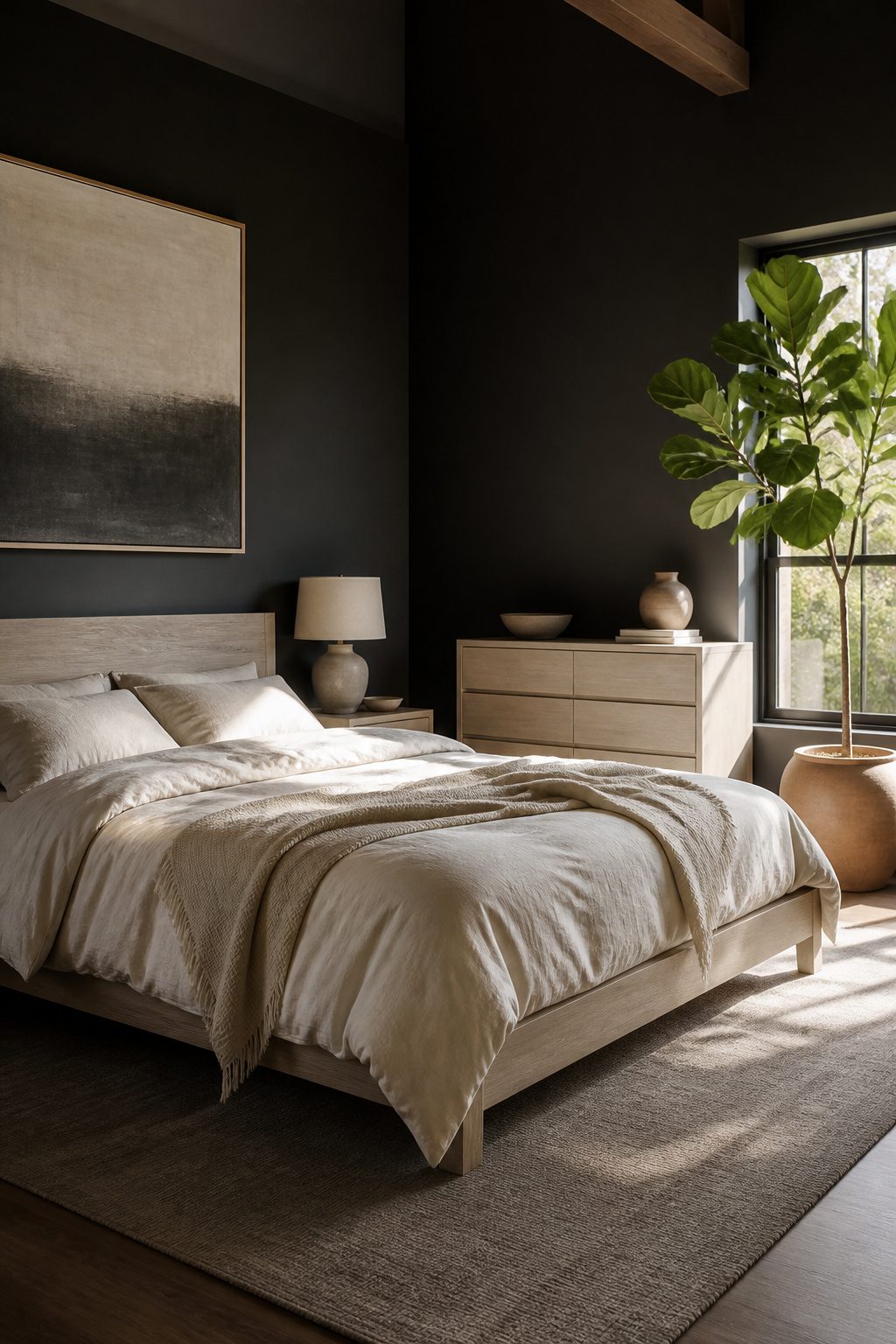
Charcoal walls read as depth, not gloom, when the furniture sitting against them is pale ash or bleached oak. The contrast should sit between the wall and the piece, not between competing dark tones.
A walnut dresser against umber paint fights for attention; a light oak frame lets the wall do the work and keeps the room from closing in.
Ivory bedding finishes the same move, catching whatever light the windows offer and holding it against the dark surround.
One large plant, a fiddle leaf fig or a rubber tree, outperforms a cluster of small pots here. Three succulents on the nightstand would read as clutter against the deliberate drama of the walls.
A single specimen in a warm ceramic pot, positioned where morning light reaches it and where it is visible from the bed, gives the room its living element without breaking the calm.
12. Classic Neutral Elegance
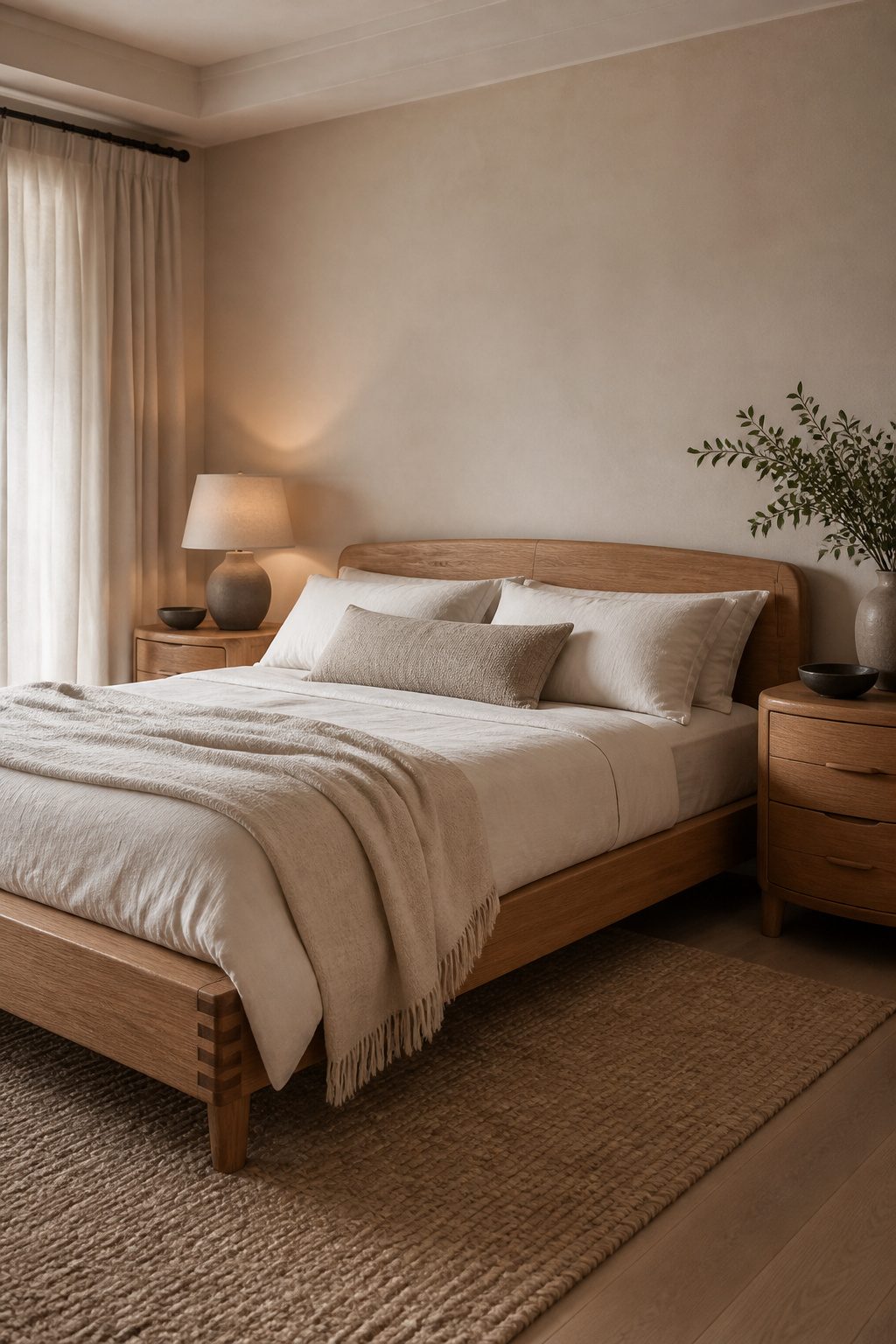
The bed frame is where I would spend first, and where I would look for dovetail joints visible from the side rail.
That joint is the difference between a frame that lasts through two moves and one that loosens by year three.
Solid wood with that detail runs higher than veneer, but in an organic modern bedroom it is the single piece that carries the material story.
For bedding, linen in warm white or oat is the right foundation, and the weight matters more than the color.
A higher gsm linen holds its structure through washes and keeps the slight rumple that separates organic modern from sloppy. I would fold the top sheet back evenly, about twelve inches, and let the duvet sit flat beneath it.
The symmetry does the work here: matching nightstands, matching lamps, bedding aligned the same on both sides. The organic quality lives in the linen’s texture and the wood’s grain, not in any deliberate mismatch.
Two curved oak bedside tables, one on each side, complete the arrangement. The curve repeats whatever softness the headboard already has, and the pair keeps the room from feeling collected rather than chosen.
I would skip the throw blanket at the foot unless the room reads cold without it; layering is easy to overdo, and this palette is already warm enough.
13. Soft Minimal Warmth
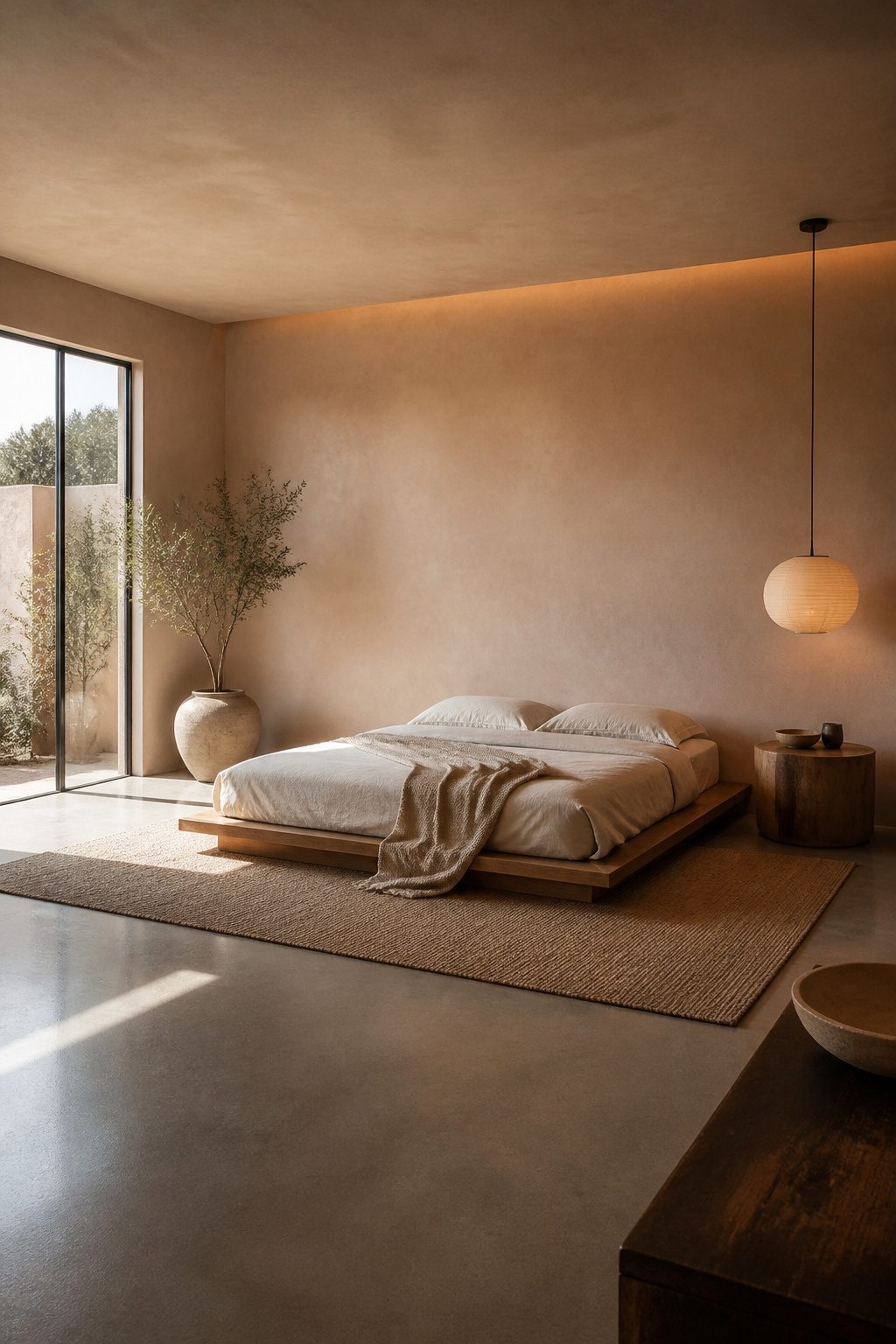
A platform bed with no headboard reads as calmer from the doorway than one with a tall panel competing for wall space. The mattress sits low, which opens more wall above it and keeps the room’s horizon quiet.
I would add one round side table, nothing on the other side, and a single pendant overhead rather than a pair of sconces or a table lamp that needs a surface.
The warmth in this setup has to come from somewhere, since the furniture is doing almost nothing decorative.
A tinted plaster wall in peach or sand gives the room that cloud-like depth that catches light differently than flat paint, and it does it without adding a single accessory.
I would run it on the wall behind the bed specifically; it gives the sleep zone a backdrop that feels considered even though the bed itself is bare.
Every fixture, including that pendant, should carry a 2700K bulb. Anything cooler and the plaster turns flat, the wood looks gray, and the whole room shifts toward clinical.
The bulb choice matters as much as the plaster color here, maybe more, because you can change it in ten minutes if you get it wrong.
14. Effortless Cozy Layers
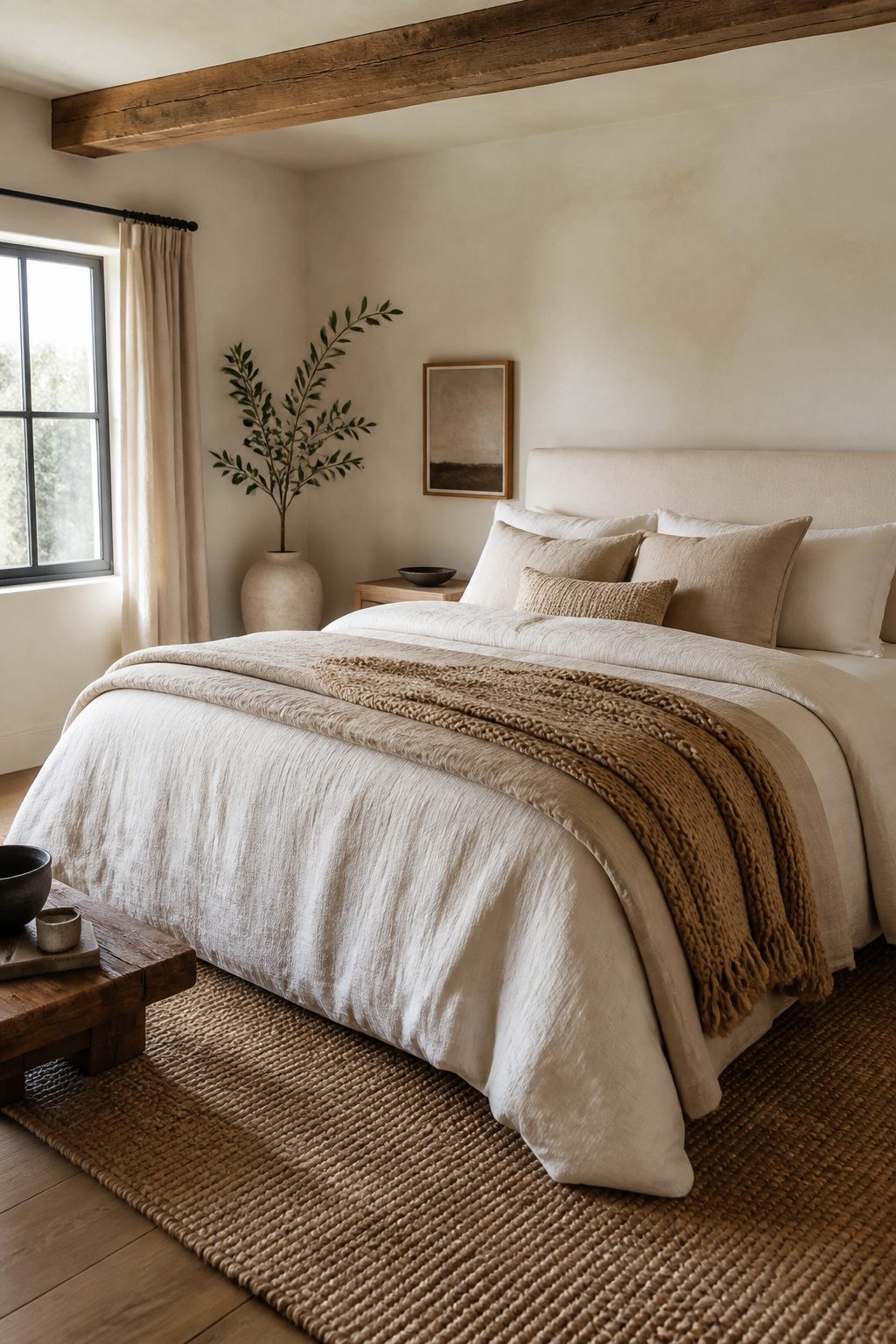
A bed dressed in cotton, linen, and wool does more for an organic modern bedroom than any wall color could.
I start with a cotton quilt in warm white, add a linen coverlet in oatmeal or soft sand, and finish with a knitted throw folded across the foot in tobacco or mushroom.
The shift from light to dark happens in small tonal steps, not matching shades, so the layers read as depth rather than clutter.
Walls stay quiet: warm white or very pale gray, consistent across all four walls. The enveloping quality matters more than contrast.
The risk with this much soft texture is preciousness. One rough element breaks it.
A raw wood beam overhead, a stone vase on the nightstand, anything with irregular grain or weight. Without that counterbalance, the bed starts to look styled rather than slept in.
A low platform bed wants relaxed, slightly weighty layers that fall close to the mattress.
A taller upholstered frame can carry more loft, but restraint still wins. The bed should invite you from the doorway and hold up when you are standing right beside it.
15. Blue-Toned Calm
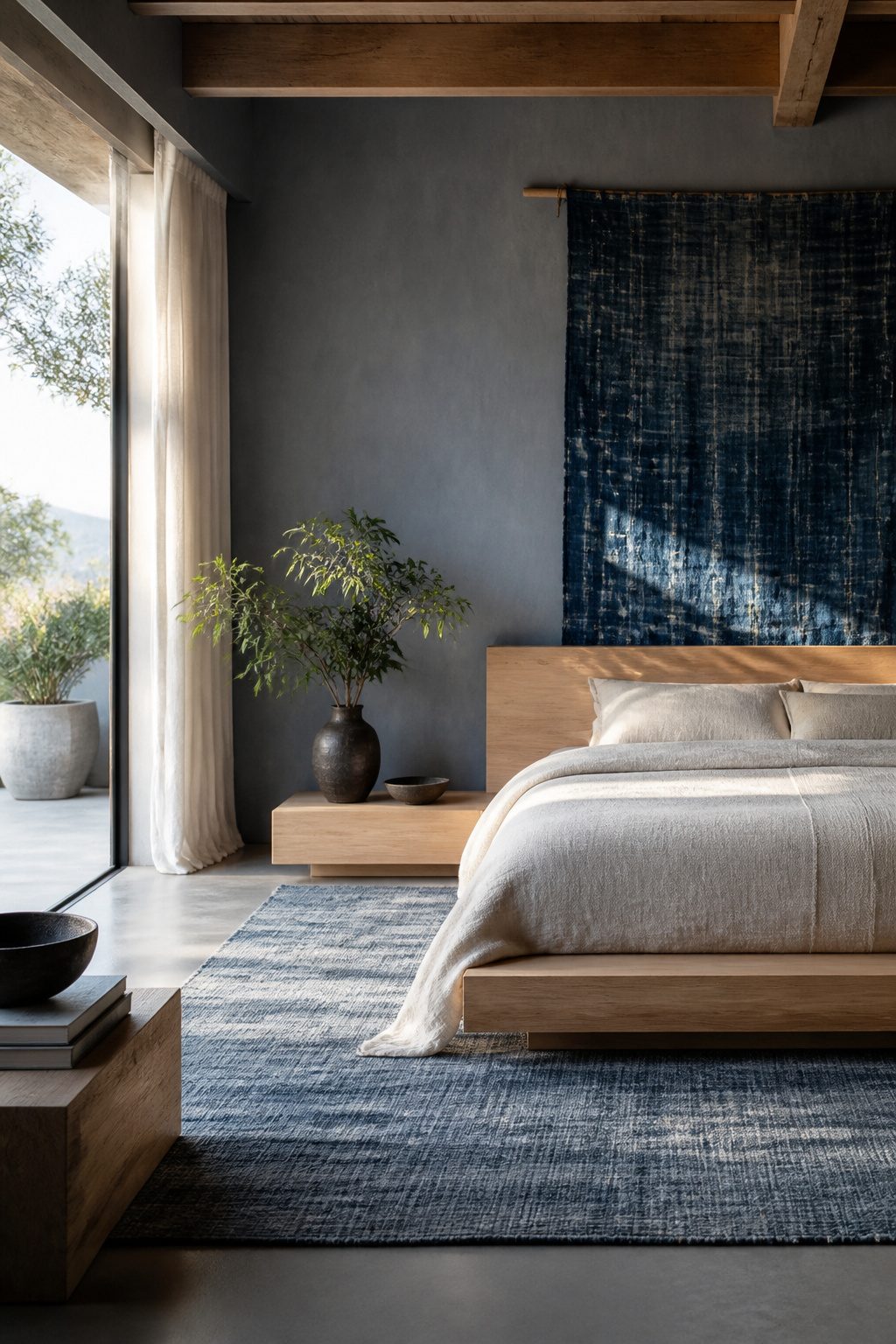
A stonier blue-gray reads as sky just before dusk rather than midday, and that weight is what keeps an organic modern bedroom from feeling too airy.
I would put it on the walls if the room gets strong morning light; otherwise a flat-weave rug in that tone anchors the floor without competing with whatever linen or cotton sits above it.
Bleached oak and unbleached cotton are the right companions here, both of them slightly sun-faded, neither trying to match.
The oak should read a little ashy, the cotton a little raw. Against that quiet ground, one vintage indigo textile does the work of color, pattern, and history all at once.
Use it as a coverlet folded at the foot of the bed, or hang it on the wall behind if the bed has no real headboard.
One piece only; two starts to look like a collection, and this palette is about restraint.
The indigo will likely have uneven saturation, lighter where it wore, darker in the folds.
That variation is the interest. I would skip anything else blue in the room and let that single textile carry the entire cool side of the scheme.
Frequently Asked Questions
What is organic modern bedroom style?
It is the intersection of minimalism and nature: clean lines paired with natural materials like linen, wood, and stone, kept warm by visible grain, tactile bedding, and softened forms.
Unlike strict minimalism, which can read empty, organic modern should feel edited and grounded, not cold.
How do I make my bedroom look organic modern?
Start with a linen duvet and a simple wood nightstand, then add one or two large plants.
Keep the palette in warm neutrals and let texture, not pattern, do the decorating. A single sculptural piece, like a turned wood pendant or hand-thrown ceramic lamp, anchors the room without clutter.
What furniture works best in an organic modern bedroom?
Low-profile platform beds, simple wood frames with visible grain, and furniture that feels visually settled and proportionate to the wall.
A 12- to 14-inch platform bed grounds the room especially well, though a taller bed can work if its form or wood grain still gives the space weight.
Is organic modern still in style?
Yes, organic modern bedrooms are redefining restful, stylish spaces for 2026 by blending clean contemporary lines with natural materials. The approach remains relevant because it prioritizes balance and intention over trend-driven excess.
What colors are used in organic modern style?
Earth tones dominate: warm white, oatmeal, camel, sand, clay-green, dried olive, dusty blue, and charcoal.
Sage works when it reads like soil or leaf, not mint. The palette stays restrained so that texture and material, not color contrast, create interest.
What is the best color for a modern bedroom?
Warm neutrals such as cream, oatmeal, and camel keep an organic modern bedroom grounded rather than flat.
For walls, tinted plaster in peach, sand, or dusty blue catches light with depth that flat paint cannot match. Calm works; clinical does not.