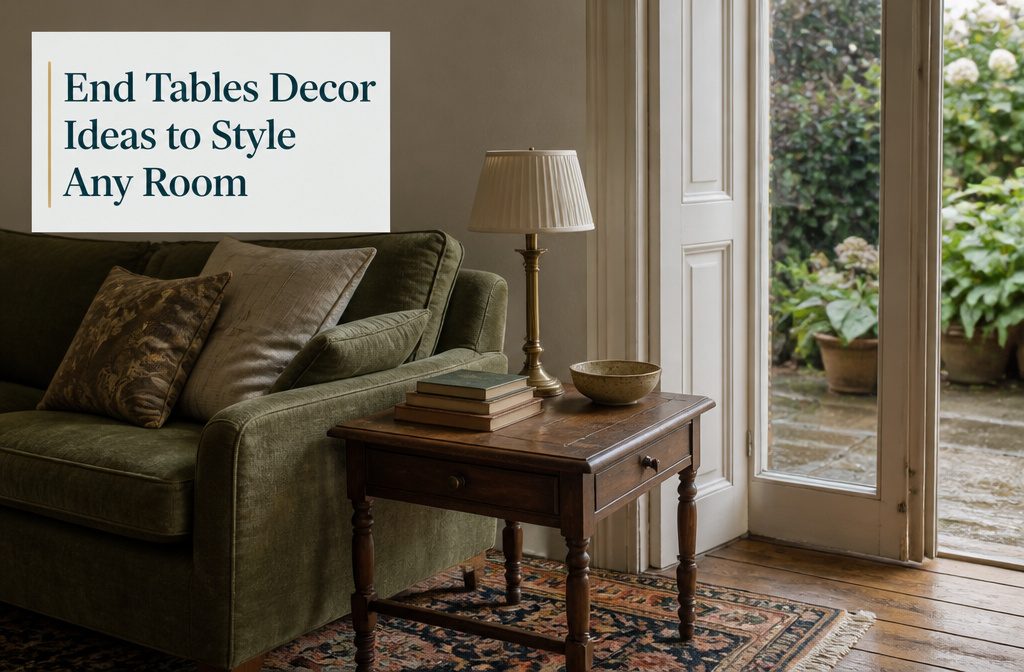
End tables decor can run from a single lamp and a stack of books to layered groupings that change with the season, and what works comes down to how much surface area you have left after the table does its actual job.
A sofa-side table that holds your phone and a drink most nights can’t carry the same arrangement as a corner table that never gets touched, and matching that load to the space is what keeps the styling from turning into clutter you have to move every time you sit down.
The difference between a table that looks finished and one that looks crowded often comes down to three objects instead of five, or leaving one end completely open.
A tall lamp next to a medium vase next to a short stack pulls the eye through different heights without filling every inch, and that negative space is what makes the grouped items register as a choice rather than everything you owned that fit.
1. Add a Lamp for Light and Balance
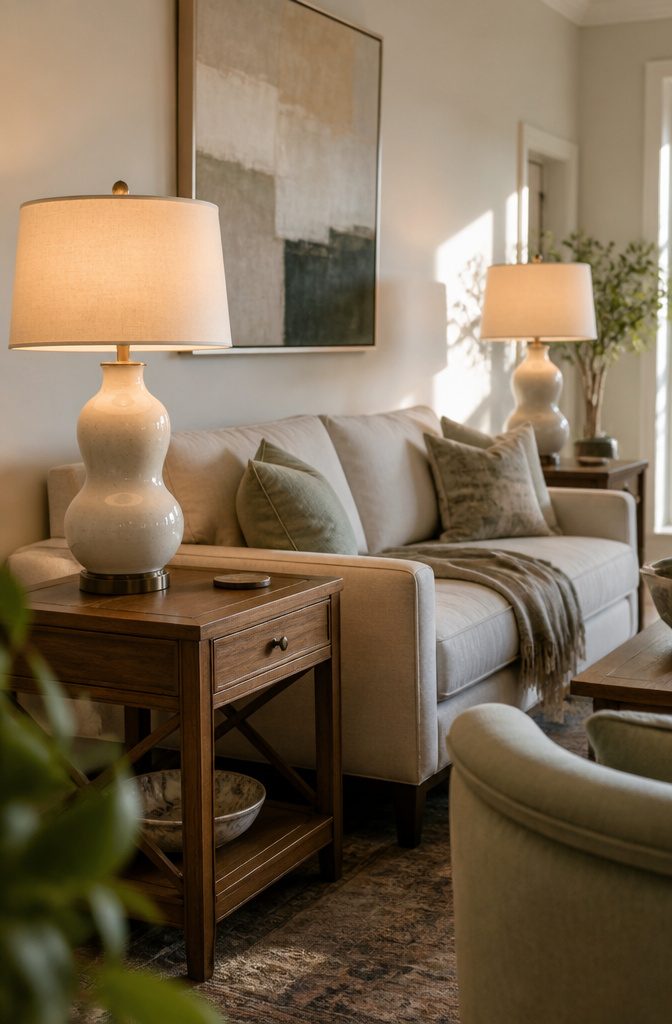
A lamp provides light and serves as a balancing feature on its own.
If you have end tables on either side of a sofa or sectional, matched pairs create balance and even lighting throughout the space. Two lamps at the same height keep the room from feeling lopsided.
Choose a lamp base that fits the room’s aesthetic.
Metal or glass looks sleek in a modern space. Ceramic or stone fits a transitional living room.
Concrete works with the neutral tones of a traditional space. A porcelain lamp with a curved design brings movement without overwhelming a smaller table, and the shape itself can echo other pieces in the room.
Recommended Products

Farmhouse & Industrial Design:This table lamp for living room blends rustic farmhouse charm with industrial style to add effortless vintage flair to any space. It features a retro lantern silhouette and clean minimalist lines, with solid metal construction for long-lasting, stable, safe daily use. The premium soft linen shade and warm frosted glass nightlight create layered, cozy ambiance.

Compact Dimension: Height : 10.43in, Base Diameter: 4.72in, Weight: 1.32Ib. With a compact size, this small table lamp will not take up too much room. You can place it easily in the space you need it most, even a relatively narrow corner. It's a nice selection to be a bedside table lamp, nightstand lamp, college dorm lamp or hallway night light.
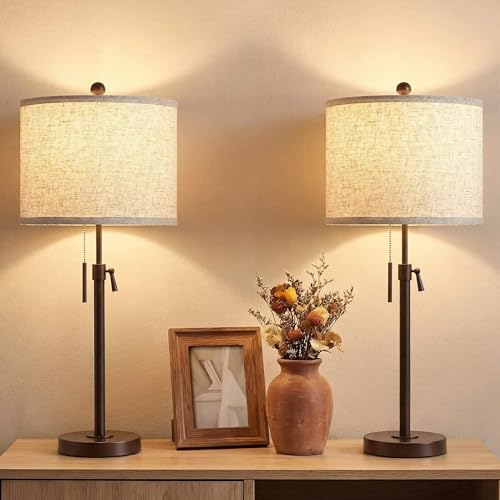
Versatile Height & Solid Stability: The QINGMIAO table lamps set of 2 offers an adjustable height from 22" to 30", effortlessly adapting to various table heights and lighting needs throughout your home. Anchored by a heavy, premium metal base, these lamps provide exceptional stability to prevent tipping, even in busy households. For added care, each base is finished with a protective bottom pad to ensure your furniture remains scratch-free, while the elegant lampshade creates a soft glow in any space
2. Add Greenery, Plants, or Flowers
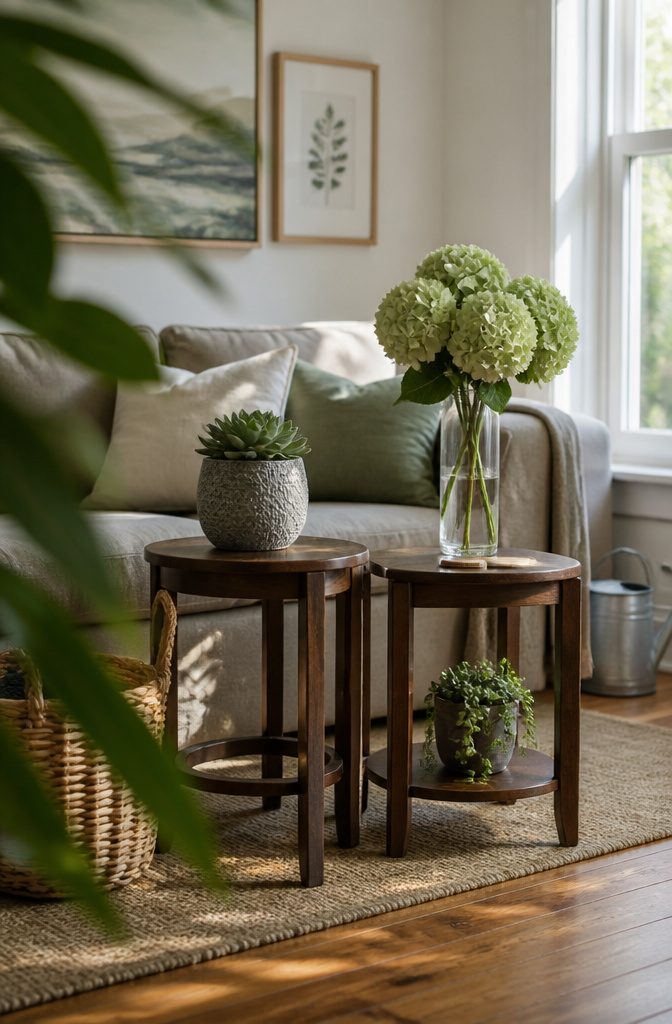
Plants bring color and a living texture that nothing else quite matches. I keep potted succulents on both end tables in the living room because they need minimal water and sunlight and still look full.
Air plants work the same way if you want something smaller or odd-shaped. Dried eucalyptus lasts months in a vase and adds height without the upkeep.
Fresh flowers make more of a statement when you want one. I fill a narrow vase with hydrangea stems when I’m expecting people over—the blooms are large enough to read from across the room.
The vase matters as much as what goes in it: smooth glass keeps the focus on a bold table, and a textured ceramic vase adds interest when the table itself is plain.
Recommended Products

This is a very artistic vase. It has doughnuts in the shape of water drops. It is a vase with modern decorative Nordic style.
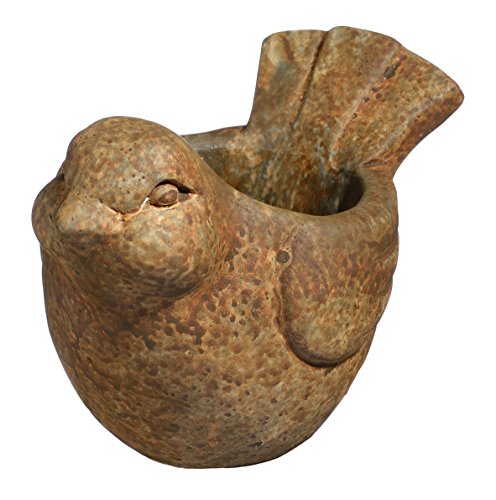
CONTEMPORARY DESIGN: This animal plant pot adds an adorable touch to any space. You can use this cute planter as a display piece indoors on your deck, desk, or table or outdoors on your porch or patio.

Sizes and Accessories: The top outer diameter of the succulent planters is 5.6"/ 14.2cm, the waist diameter is 6.1"/ 15.5cm, and the height including tray is 2.6"/ 6.5cm, with a removable ceramic plant saucer and a mesh pad(ONLY CERAMIC PLANTER IS INCLUDED, PLANTS ARE NOT INCLUDED)
3. Use Books as Decor or a Readable Stack
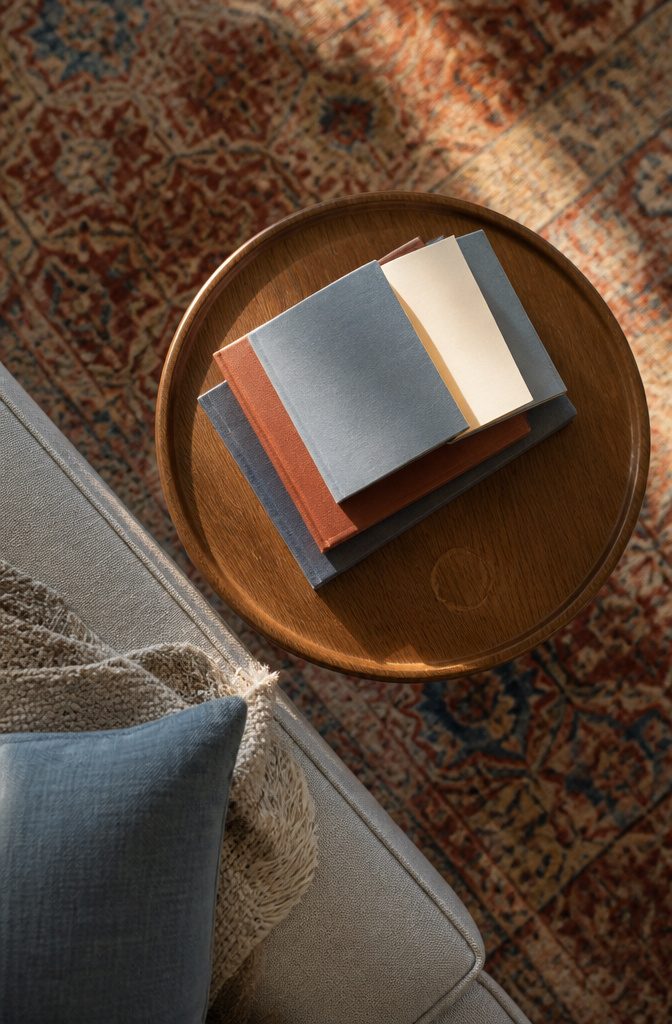
I stack two or three books on an end table when I want instant visual weight without buying anything new.
The bigger book goes on the bottom — that keeps the stack stable and gives you contrast in size. A coffee table book paired with a smaller hardcover adds height and fills empty space without crowding the surface.
Pick books with covers that pull a color from the room: a spine that echoes your throw pillow or a jacket that matches the rug ties the whole table into the space.
If your covers clash, flip them so the pages face out — you lose the title, but you get a clean neutral edge instead.
A stack also gives guests something to pick up.
I keep books I actually want to read within arm’s reach of the couch, so the decor doubles as a reading list. Swap them out when you finish one or when you want a different color on the table.
Recommended Products

Unique Vases: This glass vase is made by solid translucent glass and coated with glossy to ensure durable and glamorous in the same time. The clear glass vase will absorb the color of the flowers, making the vase colorful. (NOT INCLUDE FLOWERS)

Tall Ribbed Glass Design Vase - This 10 Inch glass vases for decor is made of primary colored translucent lead free glass while ensuring safety, The interior and exterior of this unique vase have vertical and uniform ridges with beautiful textures, The wide mouth and straight design makes it easy to clean, just rinse with clean water. The ribbed glass design plays well with the light & it gives stunning reflections and charm.

Premium Glass Construction: Crafted from high-quality glass material that provides durability and elegant transparency for displaying your favorite flowers.
4. Group Objects in Threes
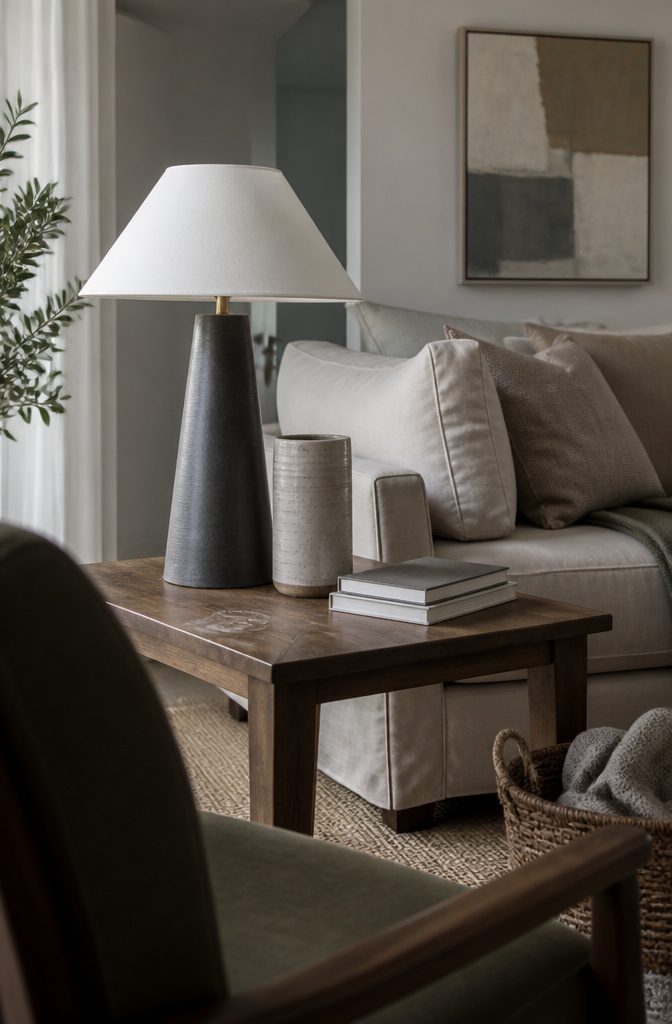
A tall lamp, a medium vase, and a stack of books or a decorative box — three objects of varying heights — will always look more finished than two or four.
The rule of three works because an odd number feels less symmetrical and more natural than pairs, and it gives the eye a path to follow from tallest to shortest without the arrangement reading as staged.
Pick pieces that differ in shape as well as height.
A cylindrical vase next to a rectangular book stack next to a lamp with a conical shade keeps each item distinct. If everything is the same width or silhouette, the grouping flattens out even when the heights vary.
This is not about filling the surface. Three items grouped on one side of the table, with the rest left open, looks more composed than five spread across the whole top.
The negative space around the group is what lets the arrangement register as intentional rather than crowded.
5. Vary the Heights of Pieces
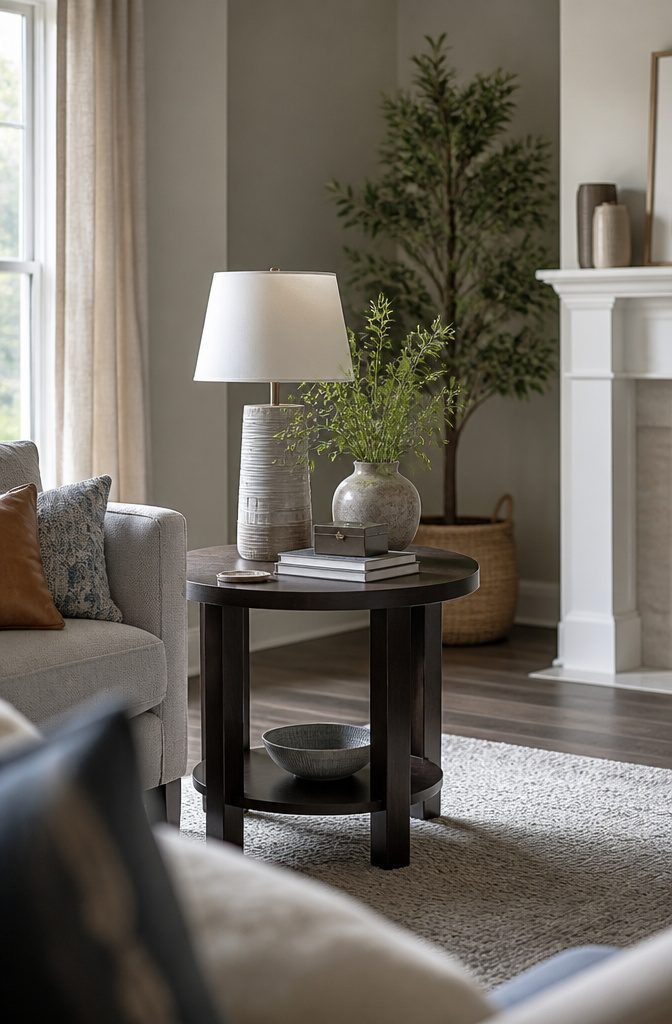
Different heights keep the arrangement from reading as flat.
A tall lamp next to a short stack of books next to a medium vase creates a visual triangle that pulls the eye through the display rather than leaving it to rest on a single plane.
The contrast adds depth without requiring more surface area.
I mix tall and short deliberately: a candleholder that clears twelve inches sits beside a low decorative box, and the gap between them registers as intentional layering rather than clutter.
Three heights work better than two—the lamp, the tray, the small sculpture each occupy a different level, and the composition holds together.
When everything sits at the same height, the table reads as a shelf rather than a styled surface, and the pieces stop talking to one another.
Recommended Products

【Small Ceramic Planter】Our cute animal succulent planters is great for a slow growing or miniature cactus or succulents. Would be great for planting and growing a baby succulent

Coming with Pot Hole Mesh Pads & Mini Transplanting Tools: Avoid soil leaking out when planting baby succulents or other small plants into the mini plant pots for succulents. A screen go over a drain hole to prevent soil loss! 3pcs of mini transplanting tools help you put fragile mini succulent in each little pots for plants easily with little efforts.

3 pcs Wood Air Plant Holder Air Plant Pots Air Plants Display Containers Table Centerpiece Succulent plants Pot for Home Office Tabletop Decor
6. Leave Open Space for Day-to-Day Items
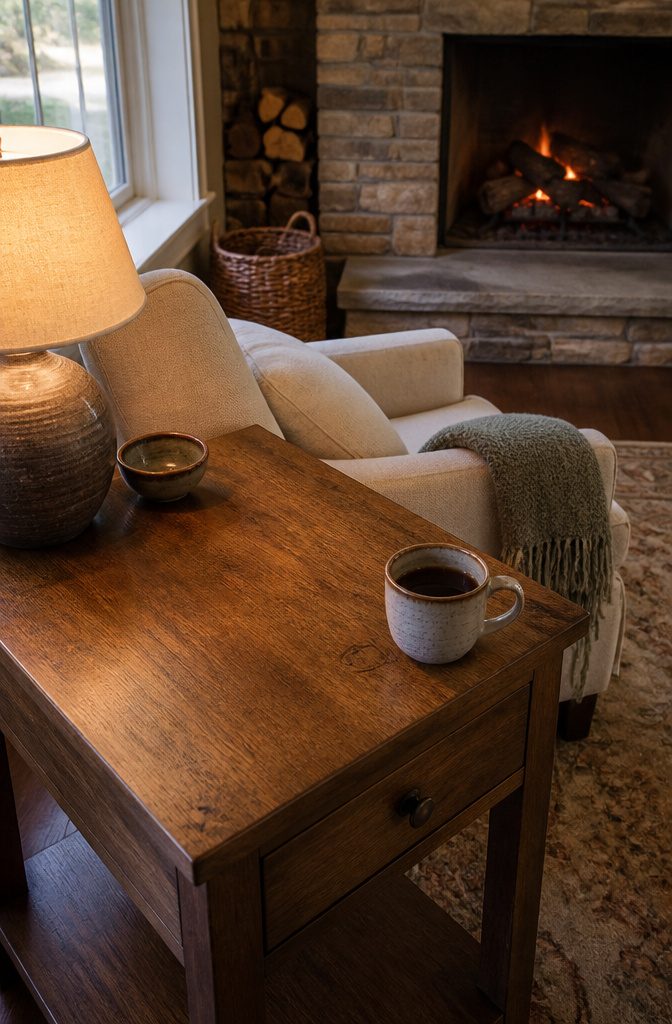
An end table needs to hold what you actually use while sitting—a drink, a book, your phone—and leaving clear surface space is what keeps it functional.
I pick decor that stays to one end or clusters in a corner so the rest of the table stays open.
A lamp and a small bowl work better than spreading five pieces across the whole top, because spreading them forces you to move something every time you set a glass down.
The table should ground the chair without turning into a display shelf.
A lone chair by the fireplace only needs room for a cup of tea, but a sofa-side table has to fit a lamp and still leave space for daily use.
Too much decor crowds out function, and a table you have to clear before you can use it stops working as a table.
Recommended Products

Upgraded Floor Lamp: Crafted from natural wood for vintage charm, this round side table features adjustable foot pads for enhanced stability. Its rounded shape, free of sharp corners, ensures added safety. The soft profile helps balance angular rooms, creating a cozy atmosphere that blends vintage charm with practical functionality

Black Table Lamp: Constructed of high-quality pull chain table lamp base and fabric shade,the small table lamp add a touch of elegance and stylish to your house,great to be used as black lamps,reading light,living room lamp,bedroom lamp and buffet candlestick

KID FRIENDLY DESIGN: Light up a room with this decorative kids lamp designed with Teenage Mutant Ninja Turtles printed graphics. A fun theme to add to a kids' bedroom, play space or study area with this Ninja Turtles lamp.
7. Use a Tray to Gather Small Items
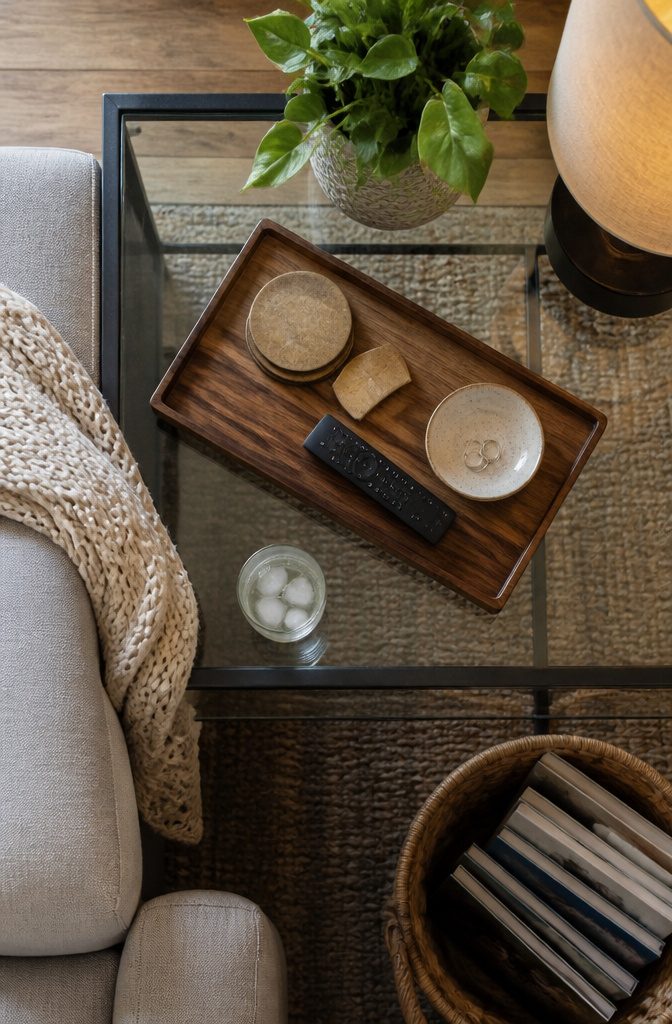
A tray corrals small items that would otherwise drift across the table and makes the surface easier to wipe down in one motion.
I use one to hold coasters, remotes, and whatever lands when I walk in, and it keeps those things from migrating to the edges or falling behind the table.
A decorative tray turns clutter into something that looks intentional, so the same pile of everyday objects reads as styled rather than forgotten.
The tray works best when you’re not using the tabletop for much else—it takes up space, so it suits tables that function as drop zones more than ones that hold a drink and a book most nights.
Pick a material that contrasts with the table itself: a wooden tray on a glass table, a metal one on wood, anything that gives the eye a defined boundary rather than blending in.
8. Include Candles for Warmth or Scent
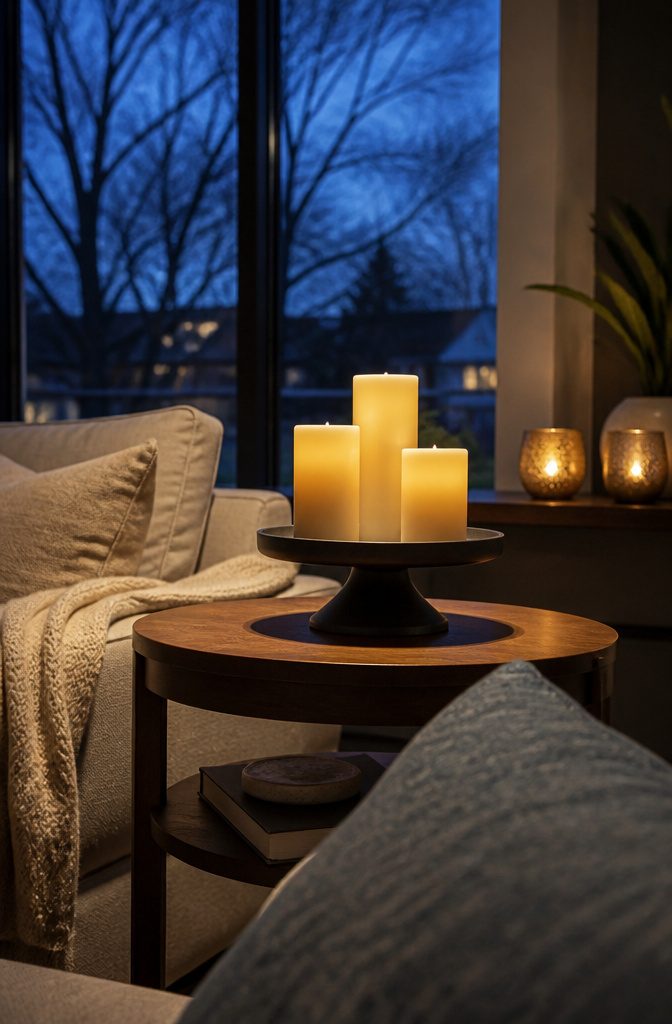
Candles bring a warm glow and the right scent to an end table without taking up much room.
A trio of pillar candles on a small pedestal holder works well on a round end table, where the structured base keeps the arrangement from looking cluttered. For a narrower table, a pair of votives is enough.
Match the scent to the season—fresh citrus in summer, bergamot in winter. Changing out the candles every few months keeps the room from smelling stale and gives you a reason to refresh the table’s look.
If you have pets or children, LED or battery-operated candles give you the flicker without the open flame.
The good battery versions now have a timer built in, so they turn on at dusk without you remembering to flip a switch.
Recommended Products

HIGH QUALITY CONSTRUCTION: Vase for flowers is made of 100 percent pure glass, is sure to set the tone in any room of your house. This long-lasting, high-quality vase set will keep your decor appearing fresh and current year after year

Ribbed Design: Featuring a unique ribbed design, this flower vase is both stylish and elegant. It is an ideal choice for home decor, weddings, restaurants, and offices.Its elegant appearance enhances the beauty of any setting

Unique Iridescent Color Vases: This glass vase is made by solid translucent glass and coated with glossy iridescent color to ensure durable and glamorous in the same time, making it more unique than other transparent or colored glass vases.(NOT INCLUDE FLOWERS)
9. Display a Sculpture or Small Decorative Object
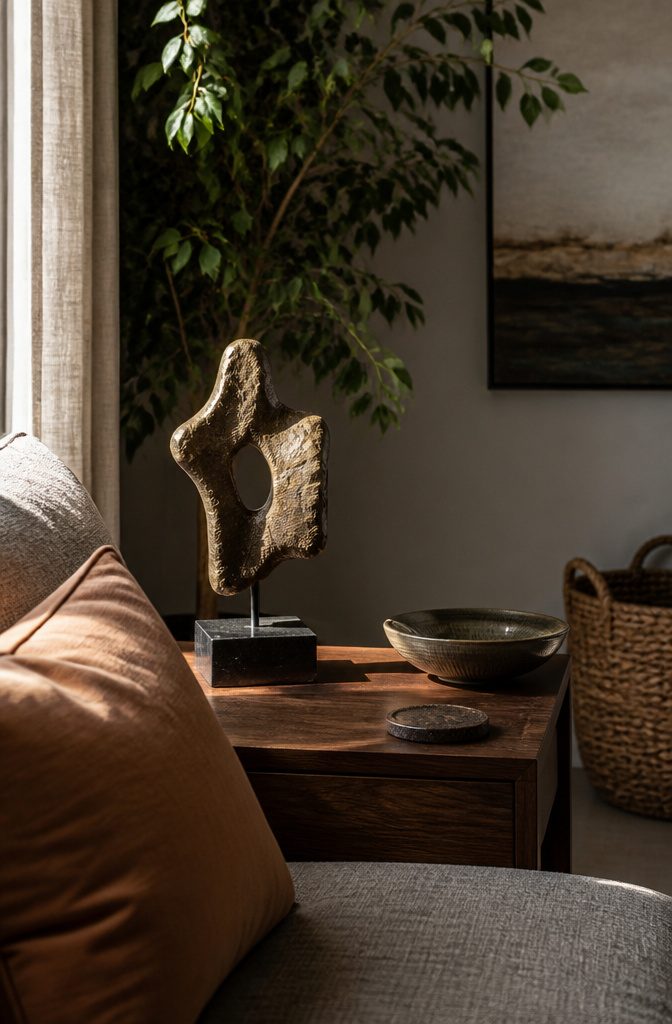
A sculpture or small decorative object brings weight to the arrangement without eating up surface area. I go for pieces with texture or an unusual silhouette—something that reads as intentional from across the room.
Abstract forms work well because they don’t compete with framed photos or other representational items nearby. A sculpture on a stand adds height without bulk, which matters when the table sits low next to a sofa.
The object should anchor the grouping but not crowd it.
I place it toward the back or to one side, leaving the front quadrant open for a drink or phone. Pottery, carved wood, or metal pieces all hold their own; the material matters less than the shape.
If the table is small, skip anything wider than six inches at the base—it crowds out everything else and turns functional space into pure display.
10. Add Framed Photos or Personal Objects
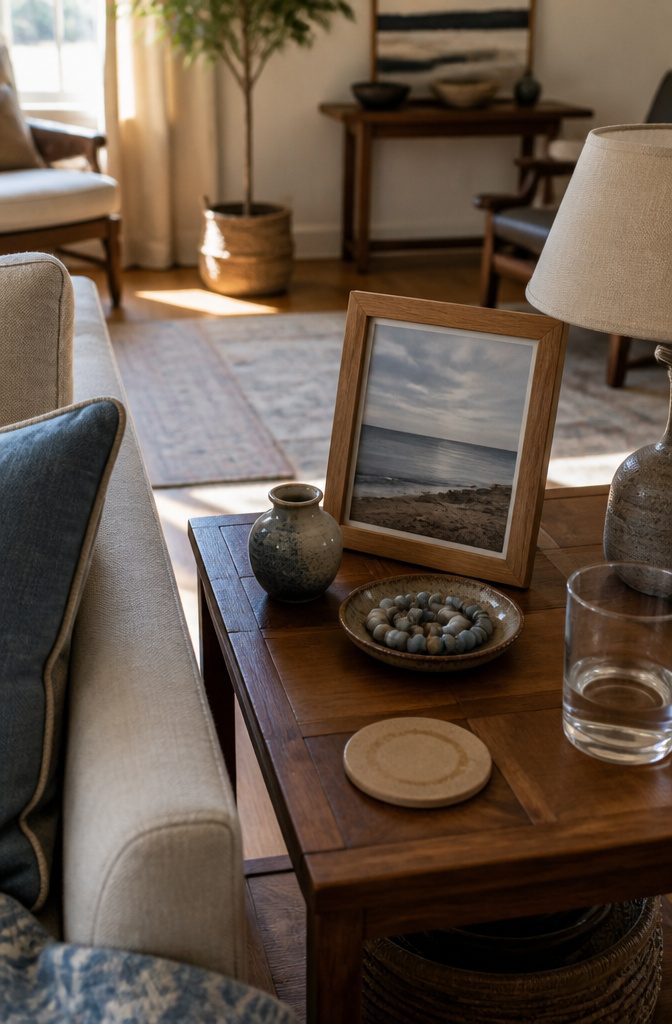
Framed photos bring a room into focus faster than most decorative objects because they carry actual memory. A shot from a trip or a face that matters sits on the end table and the space stops feeling like a showroom.
The frame itself does some work here—wood reads warmer than metal, and a 5×7 or 8×10 holds enough detail to register from across the room without crowding a small surface.
Travel souvenirs work the same way when they have shape worth looking at: a small pottery piece from a studio visit, a carved figure, handmade beads arranged in a low dish.
These function as conversation starters without you needing to label them, and they break up the predictable lamp-and-candle setup most end tables settle into.
Pick objects that mean something specific to you rather than filling space with generic decor, and the table starts to reflect who lives there instead of who staged it.
Recommended Products

Covers soil for interior plants

[Metal Material ] : Iron with gold plating . Gold can be a symbol of noble, glorious, luxurious, brilliant role, the metal gold air plant stands with gloss are very compatible with your room , parties, wedding etc.
11. Use Vases, Bowls, or Other Accessories
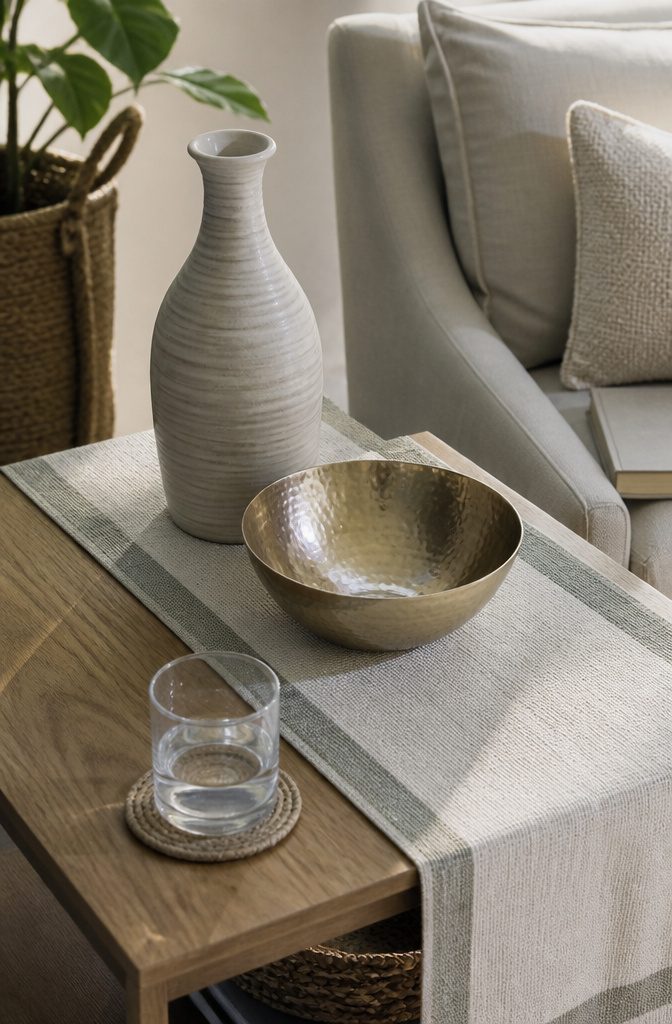
An empty vase carries as much weight as a filled one if the shape is right.
A tall ceramic vase with a narrow neck pulls the eye up even when it holds nothing, and a wide bowl in hammered metal or textured stoneware adds form without requiring flowers or filler. The object itself becomes the decoration.
Pair accessories in twos or threes when the table has room, mixing smooth glass with rough ceramic or woven materials.
A fabric runner softens hard edges underneath, and different finishes—matte next to glossy, organic shapes beside geometric ones—create contrast without crowding the surface. The variety keeps the arrangement from reading flat.
Leave function intact.
An end table styled with vases and bowls still needs space for a water glass or a phone at night, so keep accessories toward the back or clustered to one side rather than spreading them edge to edge.
12. Choose Colors That Relate to the Room
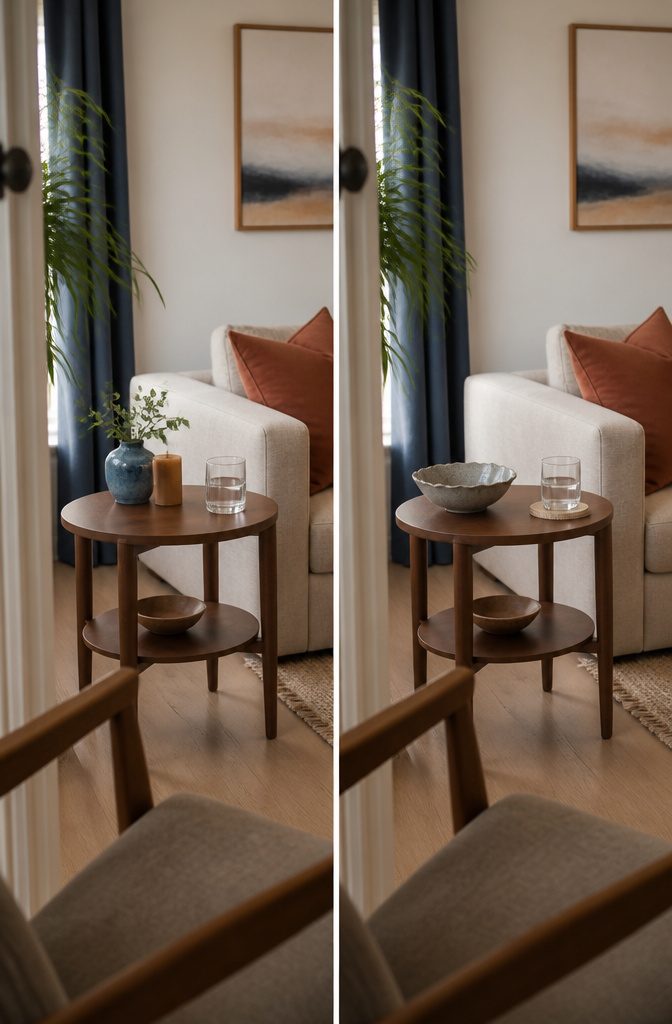
I pick one or two colors already somewhere else in the room—a throw pillow on the couch, the rug, a piece of art—and repeat them in what sits on the end table.
A vase in the same blue as the curtains ties the table into the rest of the space without announcing itself.
Two accent colors is usually enough; more than that and the table starts competing with the room instead of belonging to it.
If the room reads neutral and you want the table to stand out, one deliberate accent works: a candle in a color nothing else shares, or a small object in a finish the rest of the furniture doesn’t use.
That reads as a choice rather than a mistake. Metallic finishes—brass, copper, matte black—pair well with modern rooms, and wood or clay tones fit better where the look skews rustic or casual.
13. Mix Materials and Textures
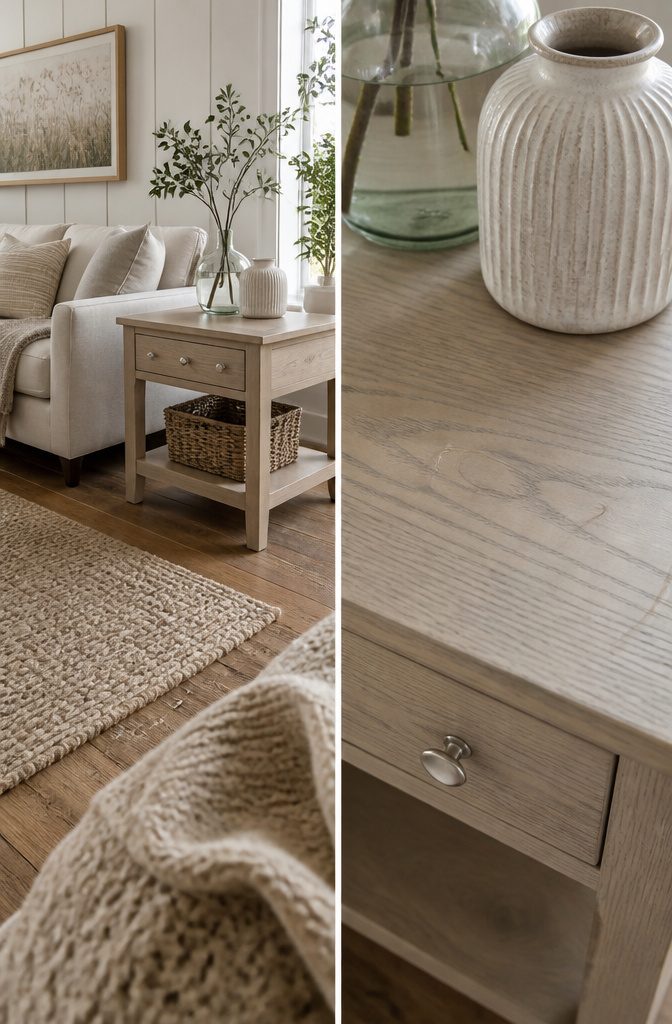
Combining different materials on the same table stops the surface from reading flat. Wood and metal work together in farmhouse, industrial, modern, and craftsman rooms — the warmth of one offsets the coolness of the other.
Stone and metal is another pairing that holds up, as is stone and wood, though those lean heavier and suit rooms with more visual weight to begin with.
The type of wood matters as much as the pairing itself. A light ash grain next to brushed nickel gives you a completely different look than walnut next to oil-rubbed bronze, even though both are wood and metal.
The same goes for metal finishes: the same steel reads industrial when left raw and refined when polished to chrome.
I look for one textured piece — a woven basket, a ceramic vase with visible glaze ridges — and set it against something smooth like glass or lacquered wood. The contrast does more than two smooth surfaces ever will.
14. Change Decor With the Seasons
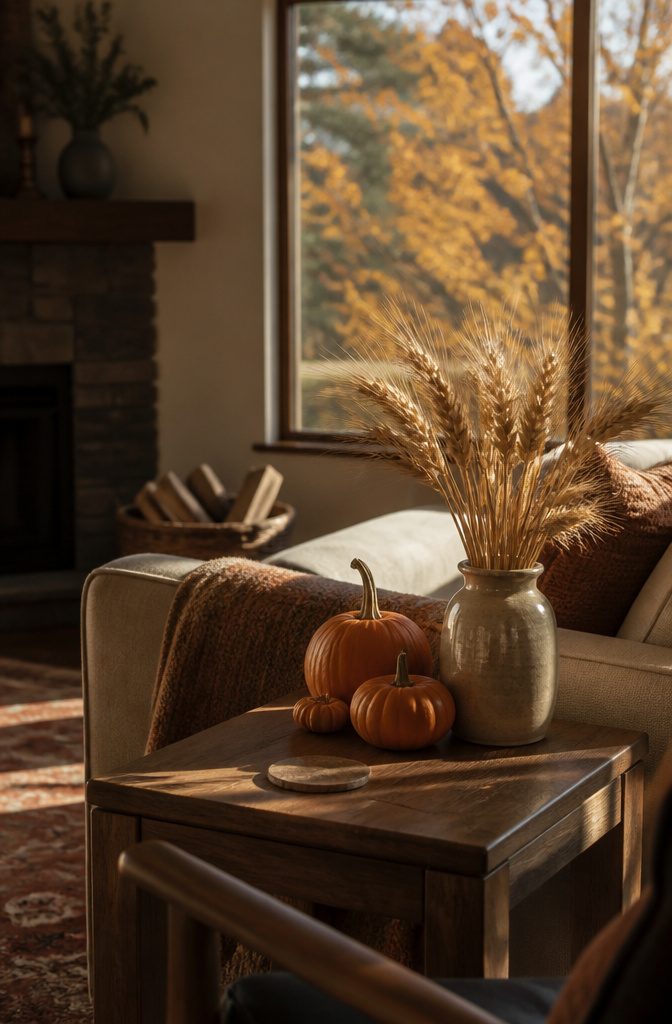
I rotate what sits on the end table every few months to match the season, and it keeps the room from feeling static.
Pumpkins and dried wheat in fall, pinecones and bare branches in winter—small changes that cost almost nothing if you collect them yourself or pick them up at the craft store for a few dollars.
A single stem of faux eucalyptus works through spring and summer, then swaps out for something warmer when the air cools.
The swap takes five minutes.
Pull off what was there, wipe the table, set down the new piece. If the seasonal item matches what you’ve already put on the dining table or mantel, the whole room feels intentional without much planning.
I keep a bin in the closet with a handful of options for each season, so I’m not starting from scratch every time.
15. Use Decorative Coasters That Protect the Table
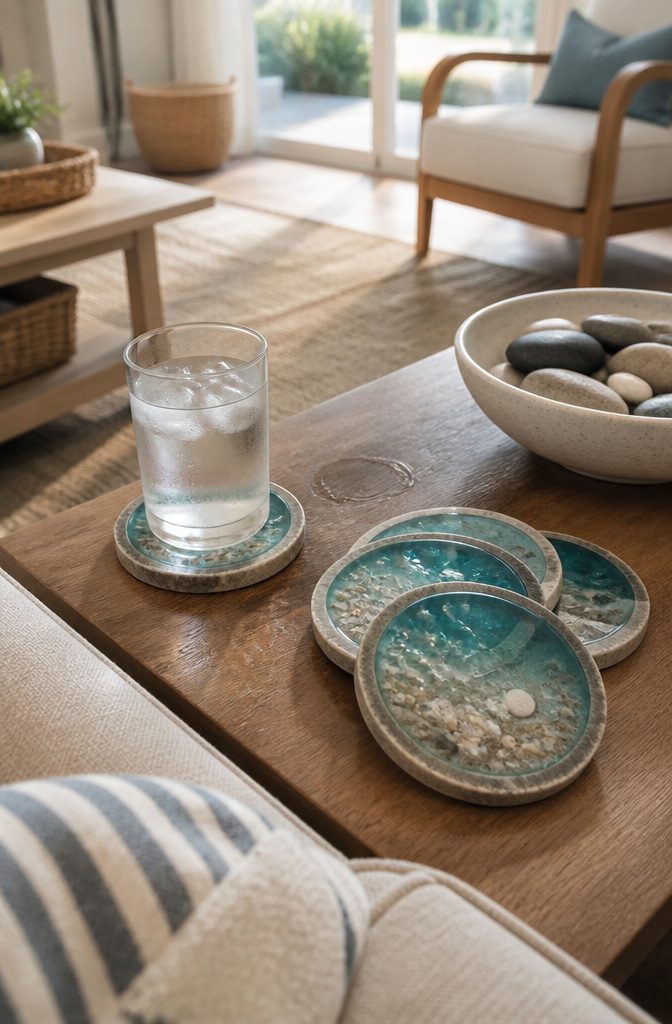
Coasters meant something before they looked like something, and that order still holds: pick resin-and-stone coasters that handle condensation without staining the table, then let the design fill in the theme you’re already working with.
A set with an ocean scene—waves trapped in resin, sand and shell fragments suspended mid-pour—lands the coastal look without a single word of explanation.
The same material gives you marbled neutrals, agate slice patterns, terrazzo scatter, whatever the room calls for.
The functional part matters more than it sounds like it should. A coaster that can’t take a cold glass without leaving a ring defeats the point, and resin holds up where cork and fabric don’t.
Stone adds weight so the coaster stays put when you lift the cup. Both together mean you get something that protects the finish and doesn’t slide off the edge five minutes after you set it down.
If the end table sits in a room with a coastal or nautical slant, the beach-scene coasters finish the sentence the rest of the decor started.
If it doesn’t, a neutral set in stone tones does the same job without fighting the walls.
Frequently Asked Questions
What do you put on end tables?
A lamp for light and balance, a plant or vase with flowers, and a stack of 2 to 3 books creates a functional and styled surface.
Group items in varying heights to add depth, and leave open space for daily use like setting down a drink or phone. A tray can corral small items like coasters and remotes while keeping the table organized.
What are the rules for side tables in a living room?
Keep the table height level with or slightly lower than the sofa arm for comfortable reach.
Leave clear surface space for everyday items rather than filling the entire top with decor. Use 3 objects of different heights to create visual interest, and place taller pieces like lamps toward the back so the front stays accessible.