
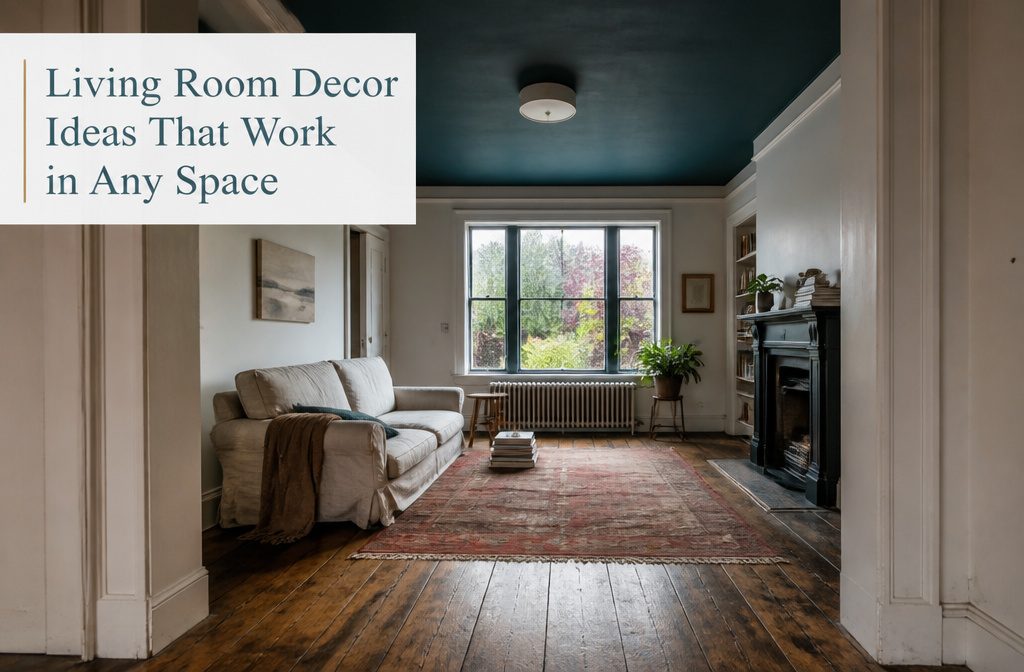
Living room decor spans the spectrum from spare minimalism to layered bohemian, and the choice comes down to how much visual weight your space can carry without closing in.
The trick shifts depending on ceiling height, natural light, and whether you’re working with a rental’s white walls or a room you can repaint.
A single gallon of ceiling paint covers about 400 square feet, which means most living rooms need just one can to pull the eye up and turn what most people leave white into the room’s anchor.
1. Use a Cohesive Color Scheme
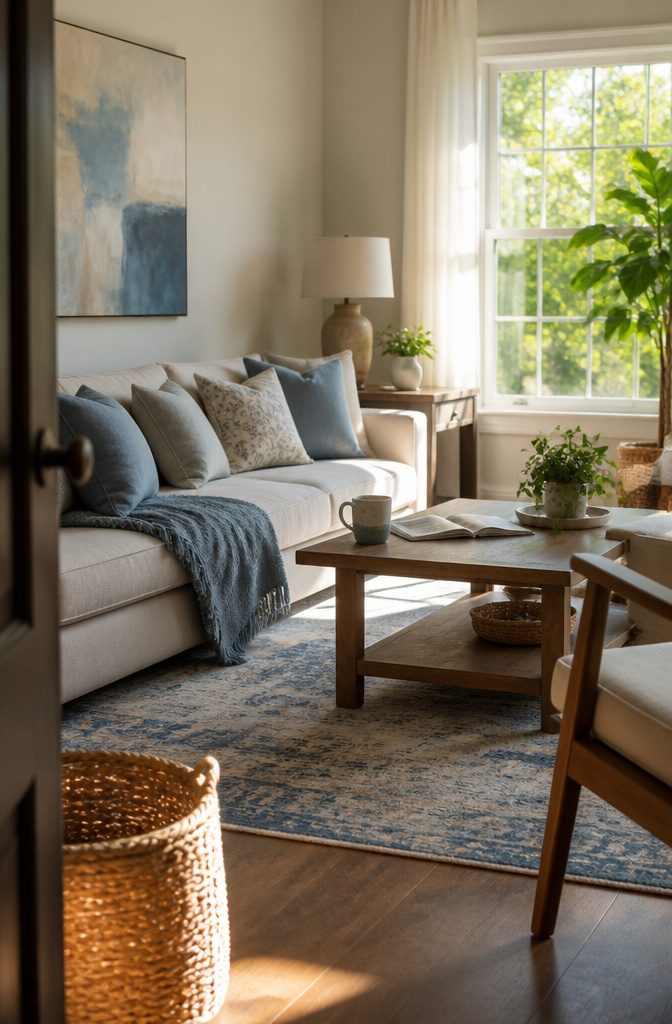
Repeating a small set of colors pulls a living room together without needing a decorator.
I stick to about three colors and let shades within that group fill the space: light blue, earthy tan, and whites worked for one summer room, where the exact blues varied but stayed in the same family.
Monochrome schemes simplify the choice further—black and white reads clean and graphic even in a minimalist setup, and earth-toned textiles over neutral walls add pattern without breaking the palette.
Bold accent colors work the same way if the base stays consistent. Throw pillows, rugs, and art are where I bring the repetition in, since swapping them costs less than repainting and the color shows up where you look most.
2. Make a Statement with the Ceiling
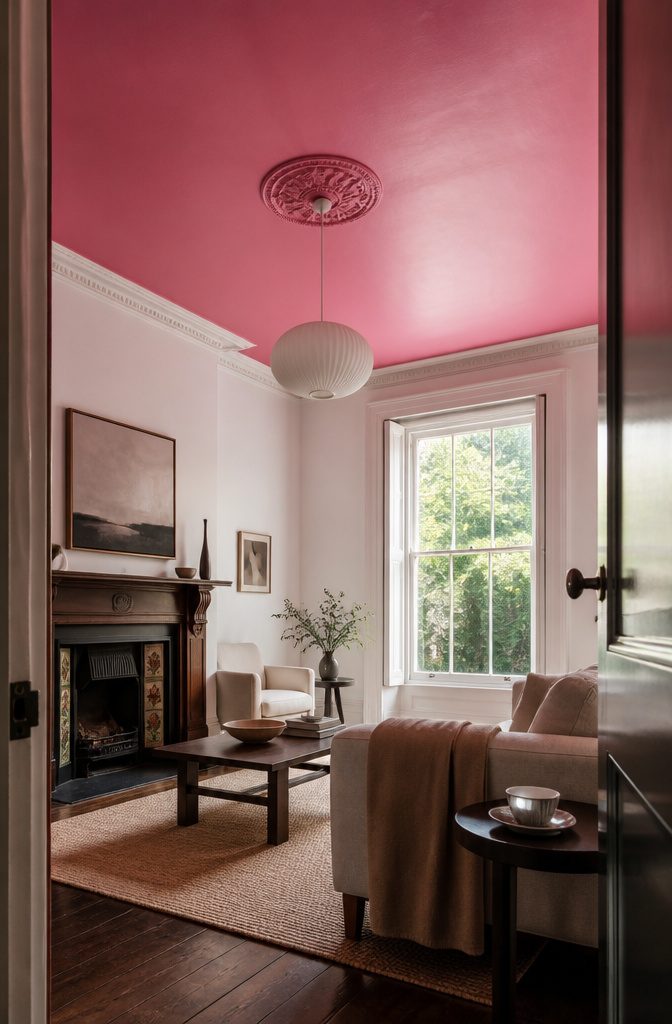
A painted ceiling pulls the eye up and turns what most people leave white into the room’s anchor.
The trick works because it reads as intentional without demanding much floor space or furniture, and the cost stays low—one gallon covers about 400 square feet, so most living rooms need just a single can.
Bold works better than safe here: a pink ceiling in a high-ceilinged Victorian living room commands the room in a way that cream never will, and the contrast with white or neutral walls keeps it from closing in.
If the thought of a full ceiling feels like too much, paint just the center panel in a coffered ceiling or take color only as far as the crown molding, stopping where the flat plane begins.
3. Use White Walls as a Simple Design Feature
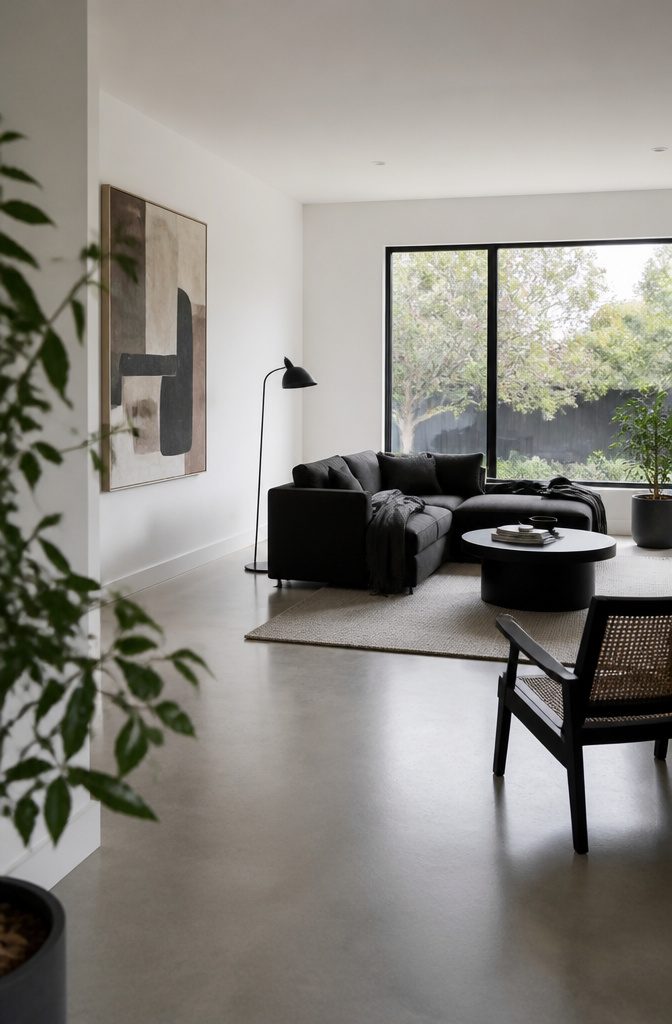
White-washed walls read as minimalist on purpose when you treat them that way.
The living room in a Swiss apartment pulls this off by pairing clean white walls with black and dark gray accent pieces — the dark furniture creates contrast sharp enough that the white stops looking like builder-grade and starts looking like a decision.
The graphic weight of black against white keeps the room from feeling empty while still reading as spare.
What makes it work is adding something intentional against all that white.
A gallery wall works the same way: bright Oakland loft, neutral palette everywhere, then one oversized art arrangement that makes the white feel like breathing room instead of unfinished space.
The white becomes the frame, not the problem you are waiting to solve.
4. Add Dark, Moody Color Without Making the Room Feel Dim
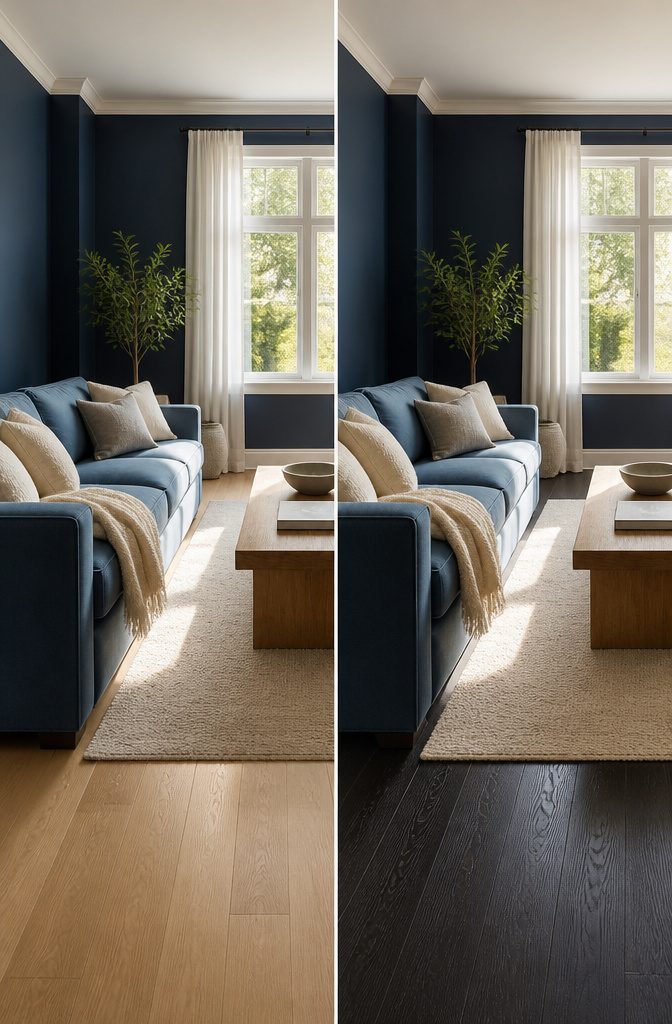
Dark paint works when you balance it with enough light coming back. Deep gray or navy on the walls reads warm instead of cave-like if you layer in pale textiles and leave the windows unblocked.
A dark gray living room stays bright when the sofa throws and curtains sit in the cream-to-white range and daylight moves through the room without fighting heavy drapes.
Deep blue walls paired with a blue sofa can still feel open if the upholstery leans lighter than the paint and you keep one wall or the ceiling in a reflective tone.
The monochrome approach works because the variation in value—dark behind, medium in front—gives the eye something to move across instead of one flat field.
Skip it if your windows face north or the room sits in the center of the floor plan with no direct sun; dark color needs natural light to carry it, and artificial light alone flattens the effect.
5. Add Texture and Pattern
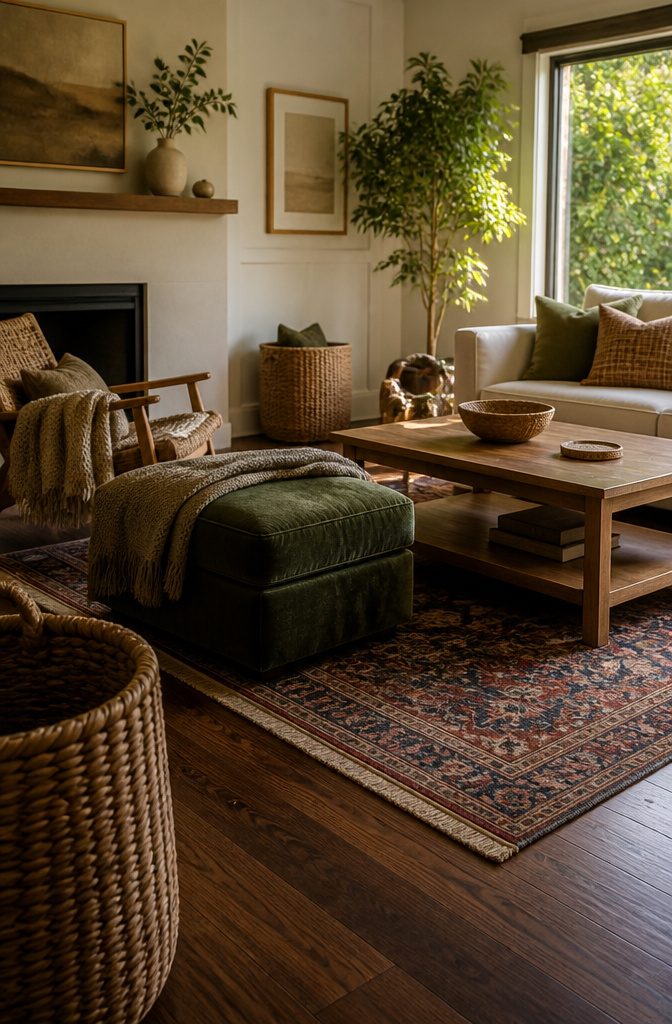
Layering different materials changes how a room reads without adding a single piece of furniture.
I start with three textures and repeat them across the space—a light wood tone in the coffee table and picture frames, woven pieces in the throw and a basket or two, and something smooth like coral or stone on the mantel.
The repetition makes the room feel intentional rather than assembled from whatever was on sale.
Velvet against leather does more work than either fabric alone. A knitted throw over a woven chair invites you to sit; plush velvet on an ottoman softens the contrast against smooth wood floors.
Natural fibers—jute, linen, sisal—add warmth that works with any palette, and patterned prints in bold colors hold their own when the walls and floors stay neutral. The variety keeps the eye moving without making the space feel busy.
6. Choose a Colorful Sofa
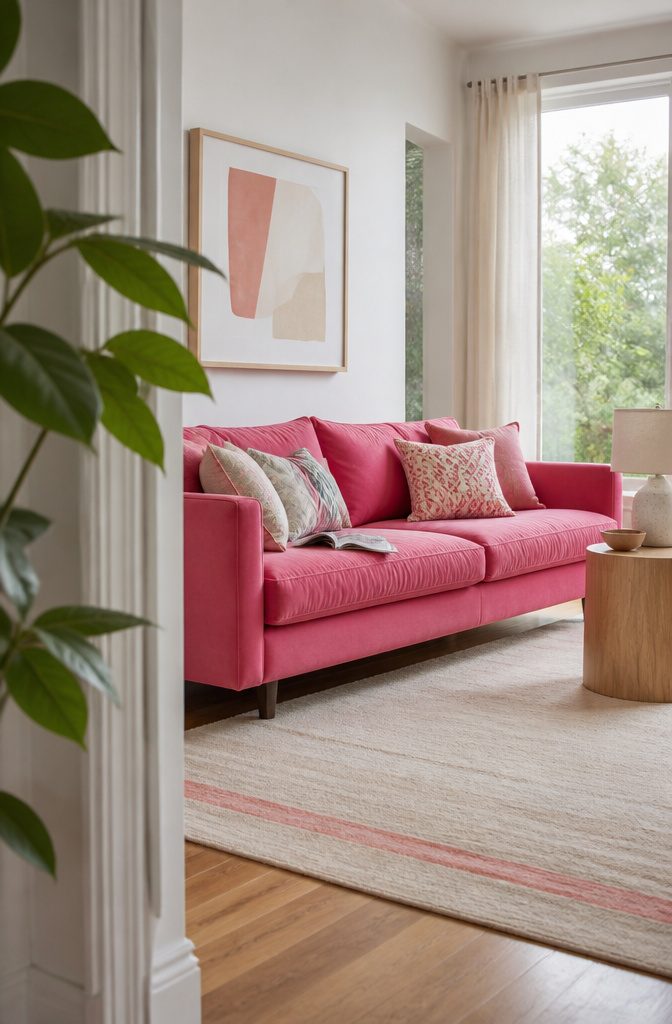
A sofa in a strong color can shift the feel of the whole room without changing anything else.
Electric pink works if the rest of the palette stays calm — white walls, wood floors, linen curtains — so the sofa reads as confident rather than chaotic.
Buttery yellow lands softer but still catches the eye, especially in smaller spaces where a dark piece would close things in.
What makes it work is committing to one bold furniture piece and letting everything else support it.
A bright sofa paired with patterned throw pillows and competing accent chairs fights for attention; the same sofa with neutral surroundings becomes the anchor.
If you’re working with a rental or a tight budget, a slipcover in a saturated color gives you the look without replacing the frame underneath.
This approach works best when the color ties to something you already own — a rug with a coral stripe, art with a teal background — so the sofa feels intentional rather than dropped in from another room.
7. Bring in Rustic or Natural Elements
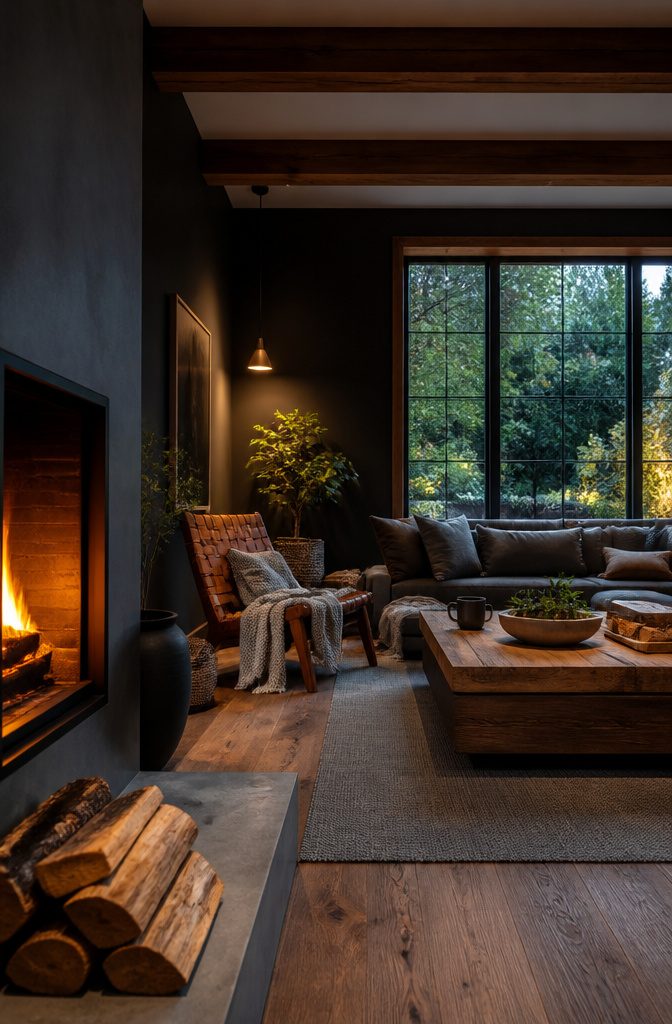
Wood floors, real wood logs, even antlers — natural materials give a living room the kind of warmth you can’t fake with paint alone.
The wooden table in a neutral room or stained beams against charcoal walls deliver richly stained wooden elements that inject a welcoming warmth without tilting the whole space into cabin territory.
I’ve seen this pull off surprisingly sophisticated results when the rest of the room stays streamlined: clean-lined furniture, minimal clutter, and the wood doing the heavy lifting on texture.
Layering helps. A knitted throw over a woven leather chair, plush velvet beside smooth floors, natural fibers woven in — that mix of textures keeps a monochrome room from reading flat.
The organic details harmonize with any color scheme, so you’re not locked into one look.
Pair the wood with atmospheric lighting — a fireplace glow, pendant fixtures that cast gentle light, even indoor greenery — and the space feels homey without feeling rural.
8. Mix Old and New or Combine Styles
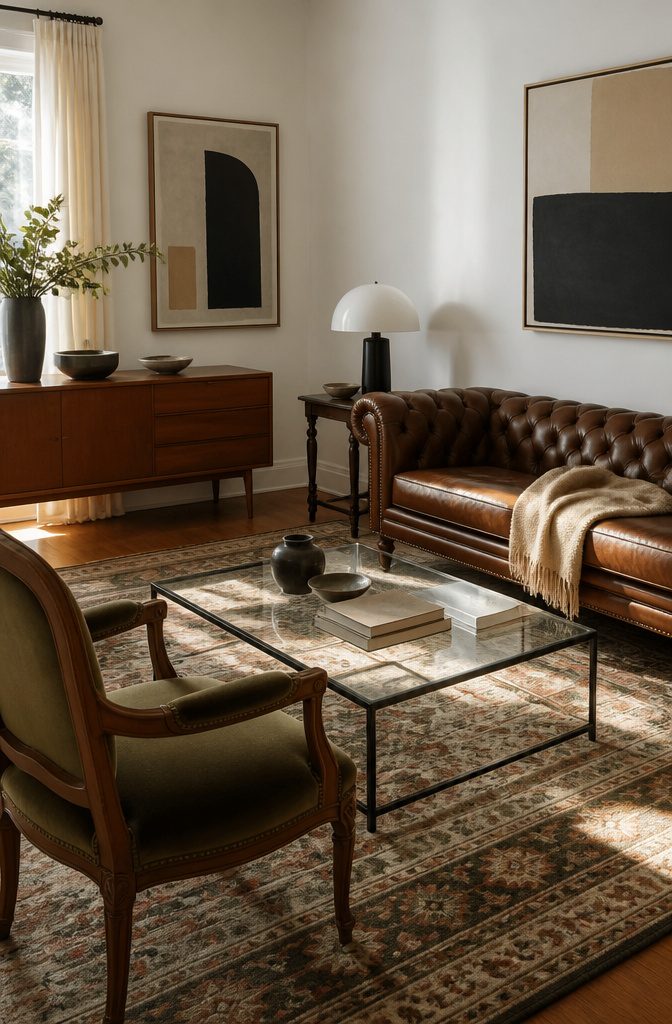
A vintage chair beside a glass coffee table and white walls holds together when you pick the connecting thread—not "eclectic" as permission to scatter, but a deliberate overlap in line or finish.
The traditional piece supplies warmth; the modern one keeps the room from reading like a period exhibit.
I’ve seen rooms where a mid-century credenza anchors one wall and a tufted Chesterfield faces it, and the pairing works because both have clean, low profiles and the wood tone on the credenza matches the Chesterfield’s turned legs.
The balance tips when you layer contemporary art over classic furniture or set a sculptural lamp on an antique side table.
That juxtaposition—old form, new accent—lets you keep inherited or thrift-store finds in a room that still reads current.
The reverse works too: modern architectural trim with vintage decor softens what would otherwise feel sterile. Either direction, you’re building contrast within a shared vocabulary of scale or material, not just hoping two unlike things will get along.
9. Use Global or Bohemian Touches
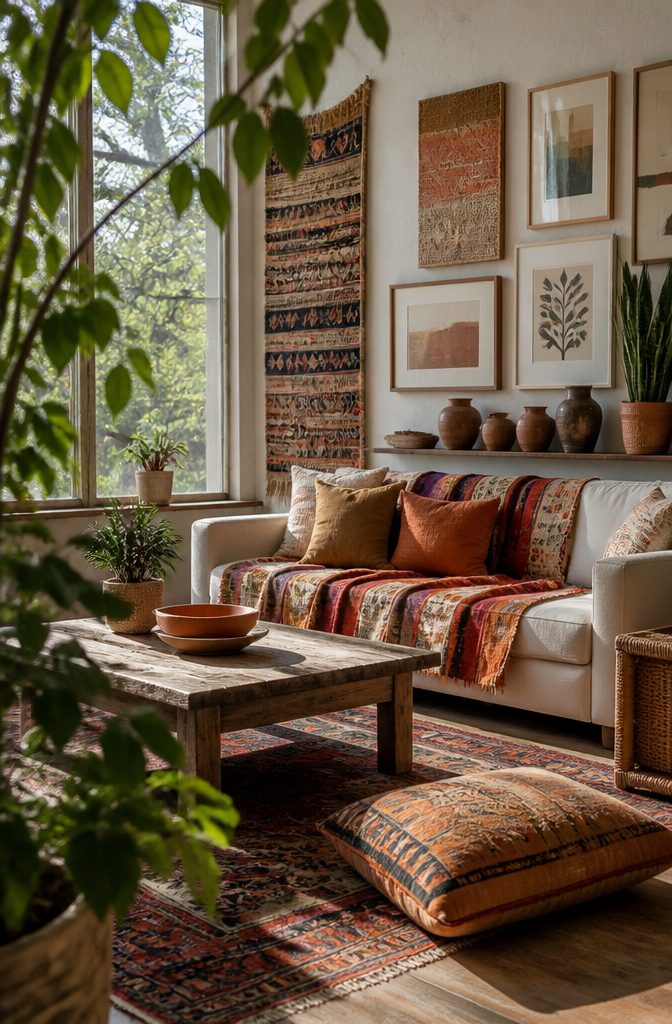
A globally inspired living room pulls you in with pieces that feel collected rather than bought in one trip.
Art from abroad works best when you hang it without matching it too neatly — a Moroccan textile beside a framed print from somewhere else entirely, all propped against different walls.
The personality comes from the friction between them, not from theme.
Accessories carry color without weighing the room down. Orange bowls, multi-colored textiles, and odd finds from markets layer in texture and worldly character that a single palette never quite achieves.
What makes it work is letting bold pieces sit next to earth tones — houseplants, artisanal furniture, woven baskets — so the bright ones read as intentional rather than loud.
Bohemian style skews more sophisticated when you keep the base neutral and save the color for smaller moments: a rug, a throw, art on the wall.
Christian Siriano’s Connecticut living room runs brightly painted blue walls with orange and multi-colored textiles, and the refinement comes from letting each piece breathe rather than cramming every surface.
If your rental won’t let you paint, pull the same effect through pillows and throws against white or beige upholstery.
10. Choose Statement Art or a Gallery Wall
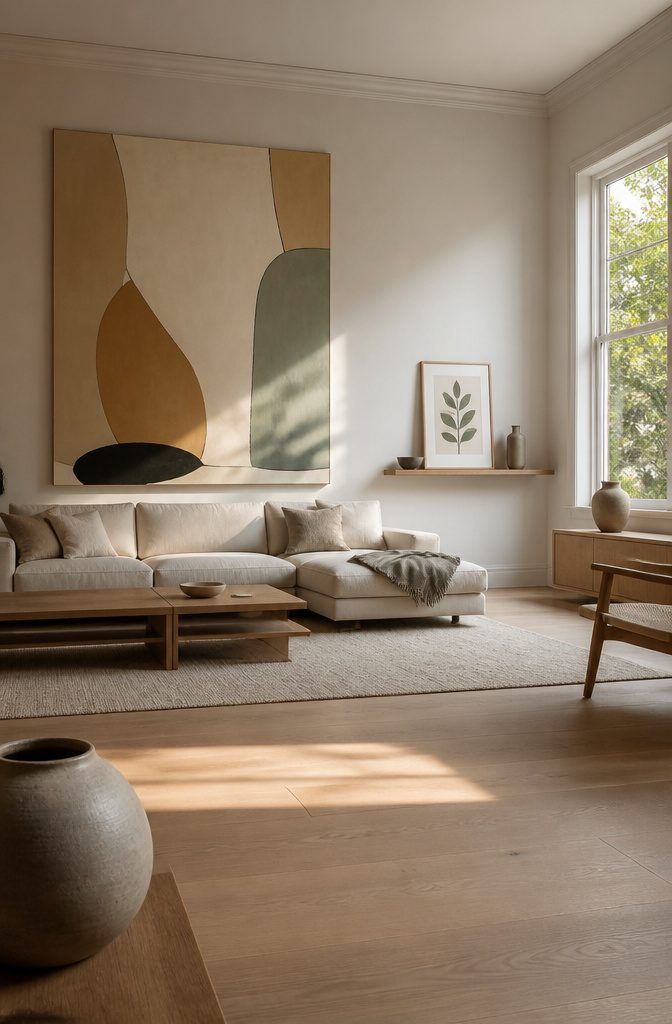
A single piece of oversized art pulls the eye and gives the room a center without crowding it with frames. Abstract work with multiple colors ties into neutral furniture and rugs, so the bold statement still reads calm.
The scale matters more than the subject—something large enough to hold a bare wall on its own feels deliberate, where smaller prints can look like fillers.
A gallery wall works when you have pieces you want to keep together or a tall wall that needs the arrangement.
Leaning frames along a floating shelf instead of nailing them up lets you shift the order without patching holes, and the salon look still reads full.
Pair vintage pieces with something current to keep it from landing too heavy in one era.
11. Display Art on Shelves or Ledges
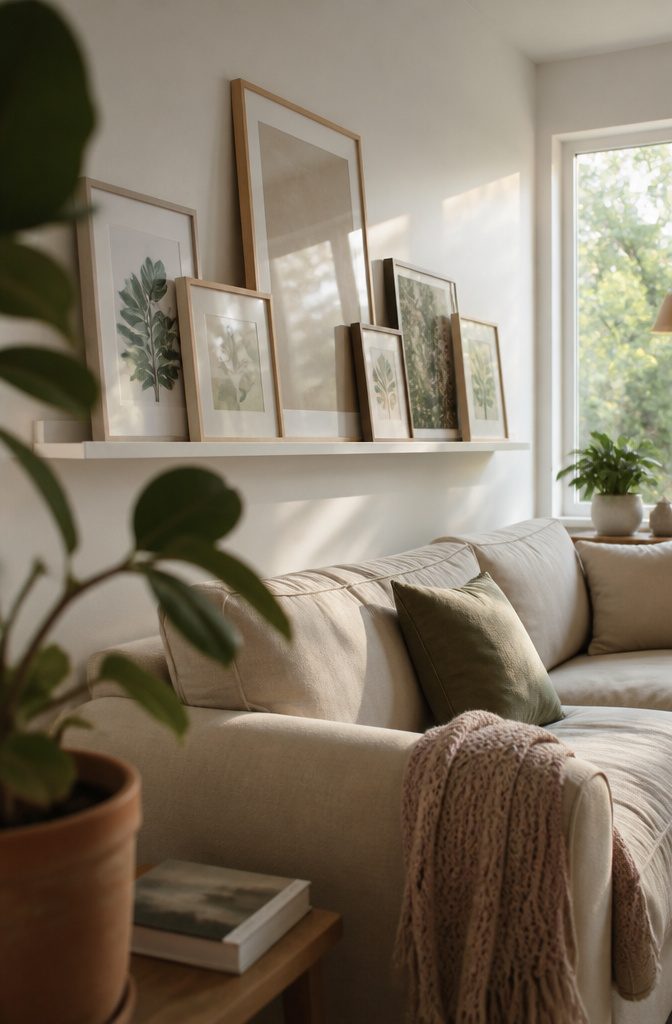
A floating shelf or picture ledge lets you lean artwork against the wall instead of committing to nails and picture wire.
The look stays clean—no visible hardware, and you can swap pieces in five minutes when you want a change.
I’ve found this works especially well in a salon-style arrangement where frames of different sizes sit side by side, because you’re not trying to measure and level each one separately.
The shelf itself should be thin enough to disappear behind the frames.
A depth of around two inches holds most framed art without looking bulky. Mount it at eye level or just above the sofa back, and layer smaller pieces in front of larger ones if you want more depth.
The frames stay put on their own as long as the shelf has a lip, but you can add museum putty behind each one if the wall gets a lot of traffic.
12. Use Shelves as Display and Storage
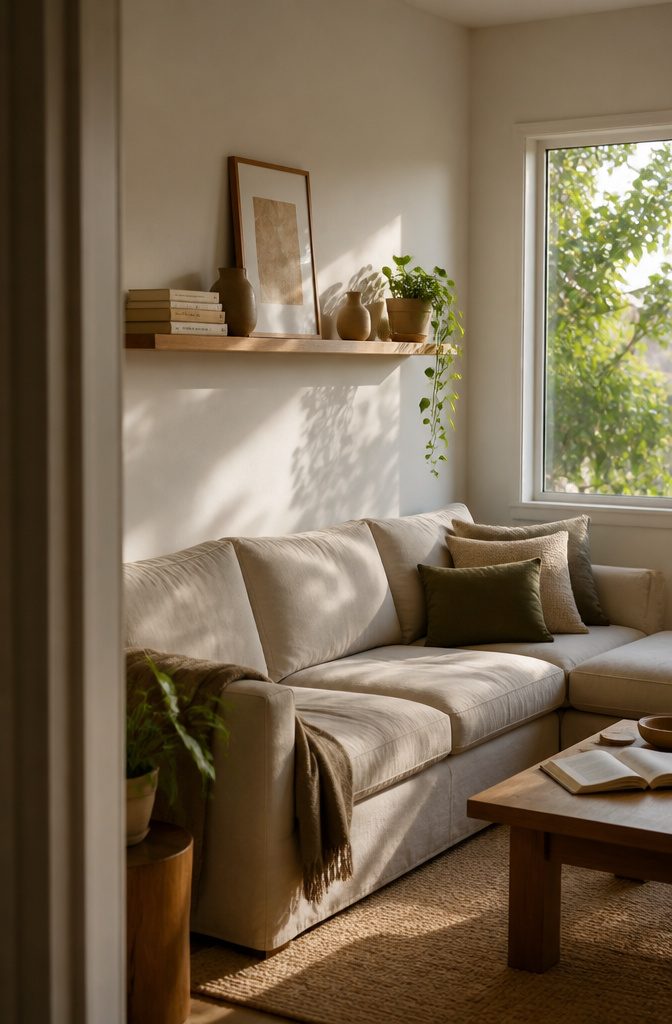
Floating shelves hold books and decorative objects without taking up floor space.
Mount a slim shelf above your sofa to keep favorite pieces at eye level — a few small ceramics, a framed photo, a single plant — or run a pair of them along an empty wall to break up blank space and add storage you can actually reach.
The setup works best when you treat the shelf as both: stack books on one end, leave room for a small vase or candle on the other.
A shelf that holds only décor reads as staged, and one packed solid with books looks like overflow. Mix the two and the wall feels intentional instead of cluttered.
Skip deep shelves if you’re short on width. A six-inch bracket clears enough room for most hardcovers and sits flush enough that the display stays tight to the wall.
13. Add Interest to a Wall with Exposed Materials or Wall Treatments
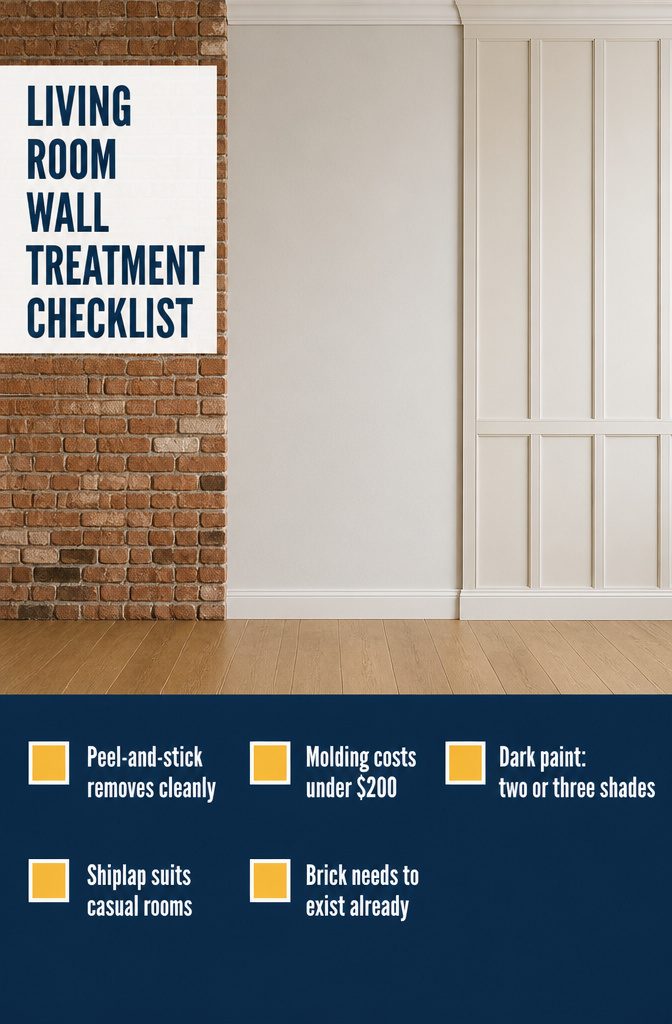
A bare wall or an off-center space might need more than a coat of paint to carry the room.
Exposed brick reads instantly warm, especially against neutral furniture, but it only works where the brick already exists — uncovering it is a plaster-and-dust project.
Where the wall is smooth and you want pattern without commitment, peel-and-stick wallpaper goes up in an afternoon and pulls off clean when you move.
Other routes worth considering:
- Board-and-batten or picture-frame molding adds dimension for under $200 in a standard living room, painted the same color as the wall or in contrasting trim white.
- A single wall painted two or three shades darker than the rest anchors a seating area without closing the room in.
- Shiplap brings texture but skews cottage; it works best where the rest of the room already leans rustic or casual.
Pick the treatment that suits the wall’s role.
An accent wall behind the sofa can handle bold wallpaper or dark paint. A smaller wall near the entry might be better left simple, with a mirror or a narrow shelf to keep it functional.
14. Choose Statement Lighting
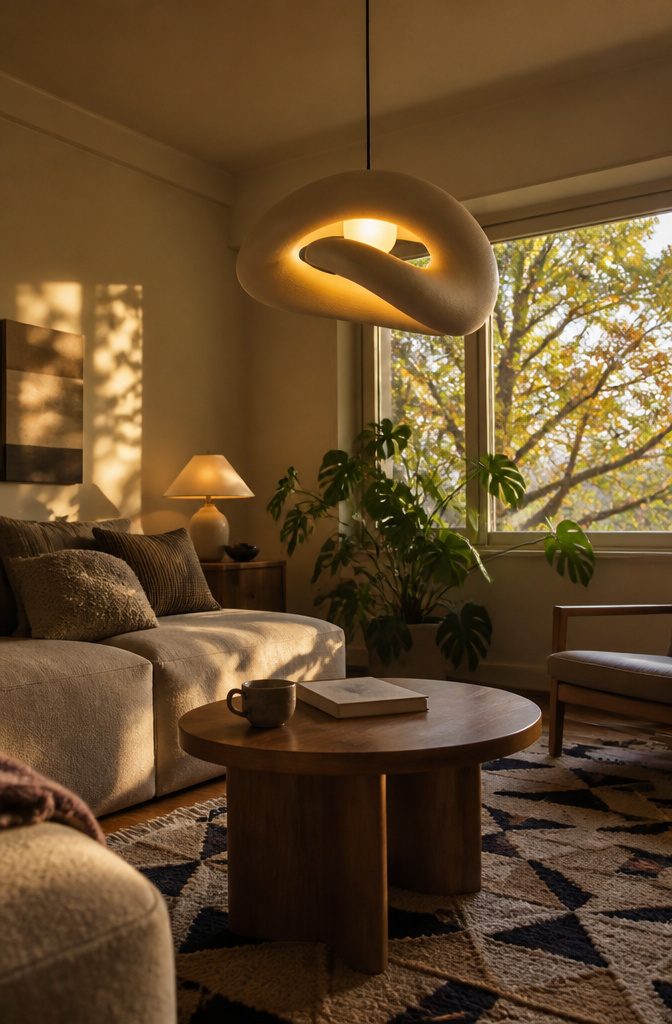
A pendant or chandelier that pulls the eye changes the entire read of a room, and you can do it without replacing furniture.
The fixture itself becomes the focal point—something sculptural, with enough presence that it anchors the space from the moment someone walks in.
A Chicago rental proved that out: one pendant over the seating area delivered more shift in tone than a new sofa would have.
Look for shapes that work as art on their own. Sculptural lamps and fixtures with unusual silhouettes add style and function at once, casting shadows that layer depth across the walls and ceiling.
The light itself matters less than the form; ambient glow from a statement piece plays off surrounding surfaces and gives the room dimension without harsh overhead brightness. Keep the rest of the lighting quieter so the pendant stays the point.
15. Use Floor Lamps or Other Creative Lighting
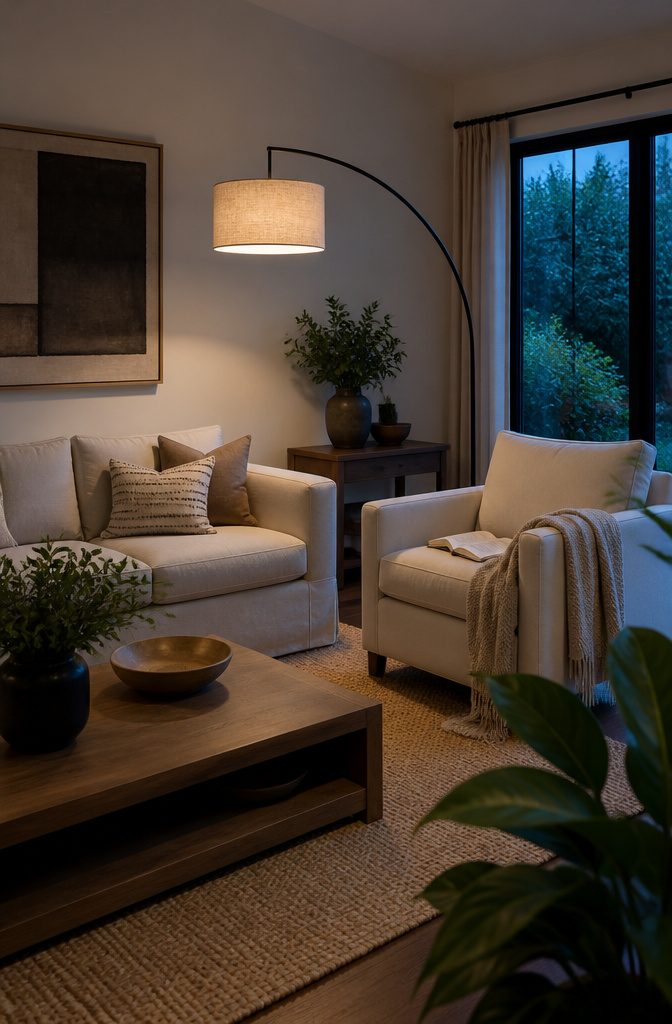
Floor lamps fill the gaps overhead fixtures leave.
A tall arc lamp reaches over a sofa to light reading without drilling into the ceiling, and a tripod floor lamp in a corner adds height where a table lamp has no surface to sit on.
I keep one behind an armchair in my own living room because the overhead is centered for the whole room, not for where anyone actually sits.
Wall sconces free up side table space and work near a fireplace or flanking a window where plug-in options crowd the layout.
Mount them 60 to 65 inches from the floor so the light falls at seated eye level, not directly into it. Hardwiring costs more upfront, but plug-in sconces with a fabric-wrapped cord give the same look on a rental budget.
Hanging lanterns or pendant lights over a coffee table add a layer between the ceiling fixture and the lamps on surfaces.
The style reads more finished than a single overhead doing all the work, and you control the mood with a dimmer.
Just check the chain or cord length before you buy—most living room ceilings need at least 18 inches of drop to keep the fixture from looking like it is climbing back up.
Frequently Asked Questions
What is the 2/3 rule for living rooms?
Fill about two-thirds of your living room with furniture and decor, leaving one-third empty.
This ratio keeps the space from feeling cluttered while still looking intentional, though you can adjust the proportion based on your room’s size and how you use it.
How do you fill odd space in a living room?
Use wall decor, a gallery wall, a mirror, shelving, or a single large piece like a floor lamp or vintage furniture.
An oversized item fills the space without making it look crowded, and functional pieces like a narrow shelf or sconce keep the area from reading as leftover.
How do you fill a large open space in a living room?
Create distinct zones for different activities and use larger-scale furniture to anchor each area.
A cohesive color scheme repeated across the zones ties the space together, and statement pieces like a bold sofa or oversized art give the room a center without filling every inch.