TV walls run from $35 marble-look panels to $3,500 Frame TVs that double as gallery art, and the right one depends on whether you want the screen to blend in or sit front and center.
Most setups fail because people mount the TV and call it done, leaving a black rectangle on drywall with nowhere for the eye to go when the screen is off.
Wood slats, textured stone, or a dark painted wall give the TV a backdrop that makes it feel deliberate rather than stuck on by itself.
1. Material or Textured Feature Wall
A textured wall behind the TV gives you something to look at that isn’t the screen.
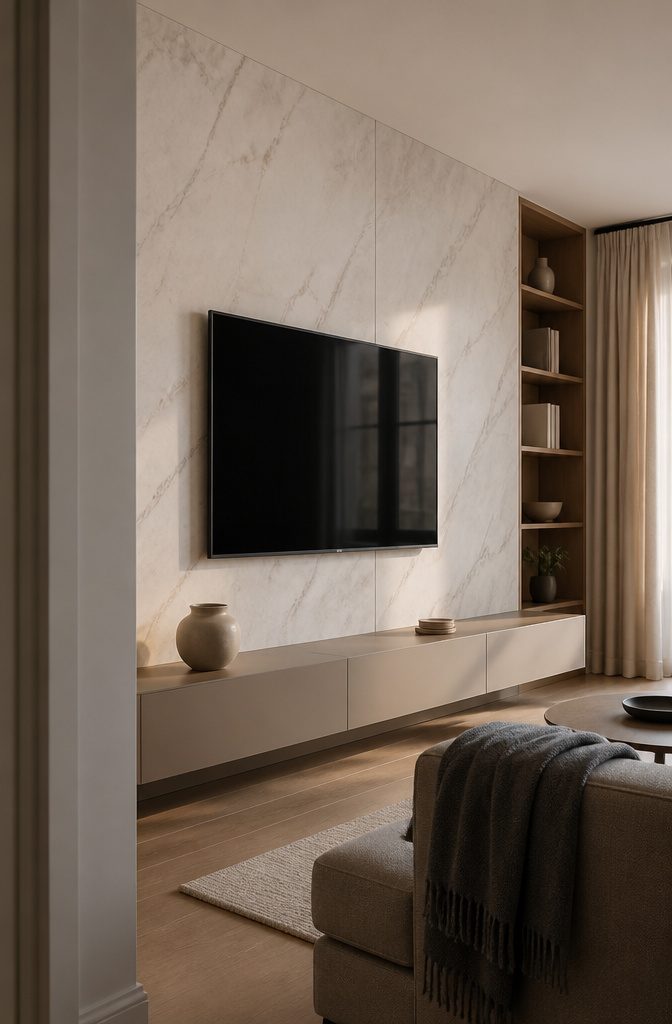
Marble, stone, wood, brick, tile, wallpaper, or concrete finishes add depth and make the TV feel like part of a deliberate design rather than a black rectangle stuck to drywall.
The texture softens the hard edges of the screen and gives the eye somewhere else to land when the TV is off.
Real marble costs serious money—Lowe’s sells marble-look wall panels for around $35 per four-by-eight sheet, and actual marble runs roughly a hundred times that price installed.
The panels look convincing from a few feet away and go up in an afternoon.
Wood planks or reclaimed brick bring warmth; concrete-look tile or dark stone lean modern. Wallpaper with texture or a subtle pattern works if you’re renting and can’t alter the wall itself.
The material you pick sets the room’s tone, so match it to what’s already there rather than introducing a finish that fights the rest of the space.
2. Wood Slats, Planks, or Paneling
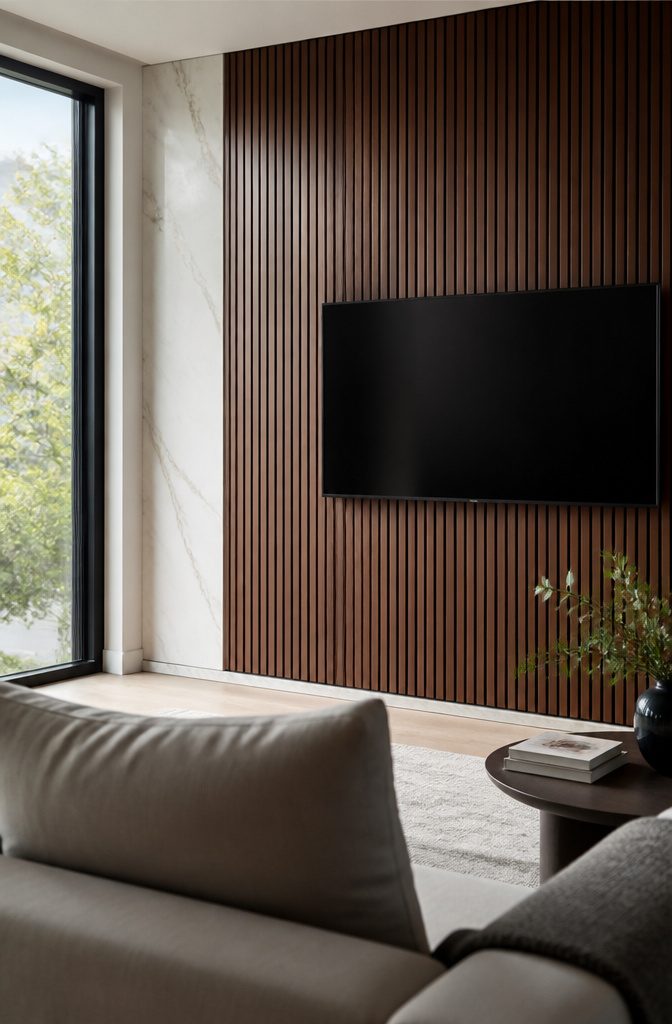
Vertical or horizontal wood adds texture behind a TV without competing with it, especially when the grain runs in clean lines.
The marble-and-wood pairing balances brightness with warmth — white marble draws the eye, wood slats break up the glare, and the TV sits between them looking intentional rather than stuck on by itself.
Dark wood tones help a screen blend in. Walnut reads richer than lighter species, but solid walnut costs more than stained ash or pine.
Walnut veneer panels over MDF backing hold the look at a lower price, and ash or pine stained dark gets close enough that most people scanning a room will not spot the difference.
Light slats work when you want the wall itself to carry the design.
Vertical paneling adds height, horizontal reads calmer, and either one gives the backdrop enough visual weight that the TV does not dominate the room the second someone walks in.
3. Shelving or Built-Ins Around the TV
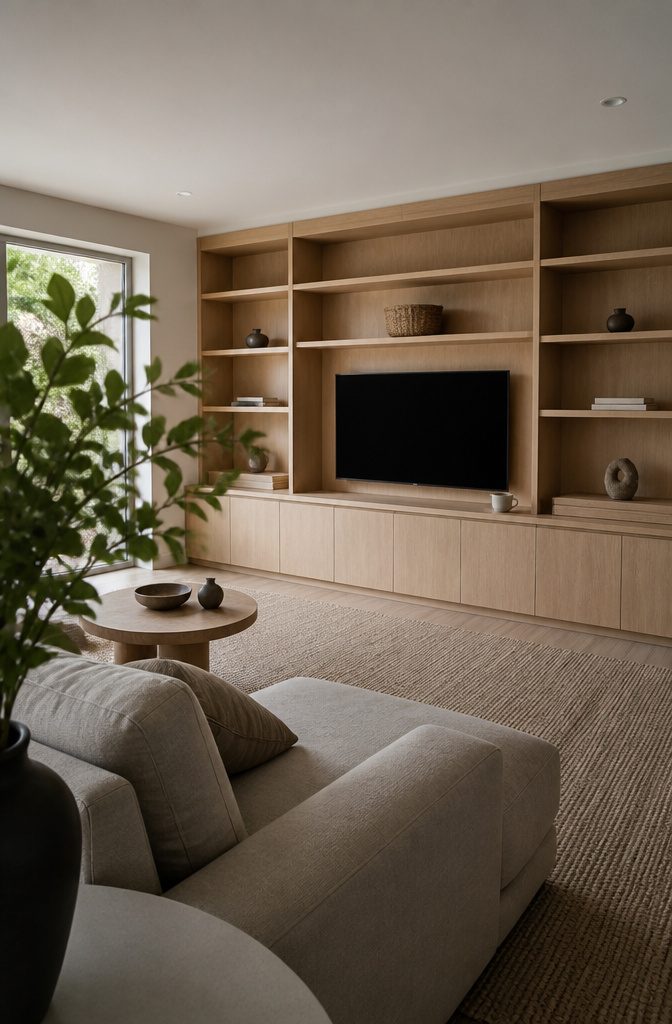
Open shelving or a built-in unit can frame the screen without swallowing the room.
Leave plenty of negative space between what you put on the shelves—a few books, a basket or two, maybe a small sculpture—so the display stays clean rather than cluttered.
A pared-down console with most of its surface empty lets the TV sit in the center without fighting for attention.
Built-ins with closed storage below and open shelves above work especially well: the lower cabinets hide remotes and cables, while the upper section gives you room to place a few decorative pieces on either side of the screen.
Stick to relatively neutral accents and resist the urge to fill every shelf. The restraint is what makes the whole unit look intentional rather than busy.
4. Console or Floating Cabinet Beneath the TV
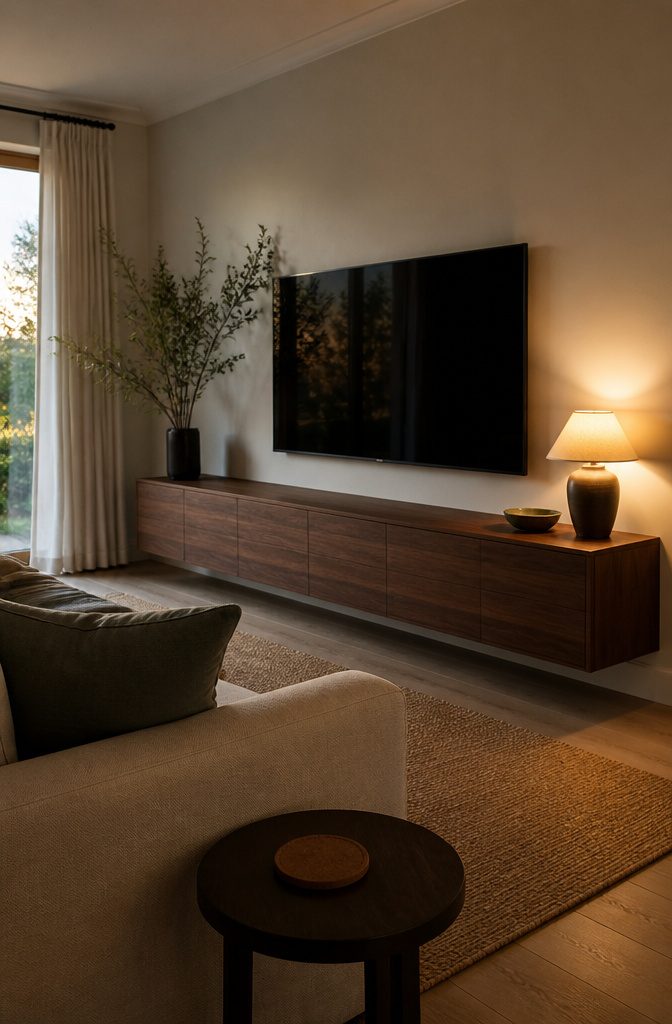
A floating cabinet or low console grounds the screen without fighting it for attention.
Wall-mounting the TV above leaves the furniture with more breathing room and pushes the setup toward minimalist territory, especially if the cabinet itself has clean lines and a narrow profile.
The 1960s console by Guillerme et Chambron in Todd Raymond’s SoHo loft proves the approach: its built-in lamp with an off-white shade throws ambient light that doesn’t glare against the screen, and the whole piece reads as furniture first, TV holder second.
Custom cabinetry works the same way when the upper section stays open for personality around the screen—books, frames, small objects—and the lower section hides electronics and cables behind doors or in drawers.
That grounding effect matters: a TV floating on a bare wall looks temporary, but pair it with a substantial piece below and the whole arrangement settles.
5. Art or Gallery Arrangement Around the TV
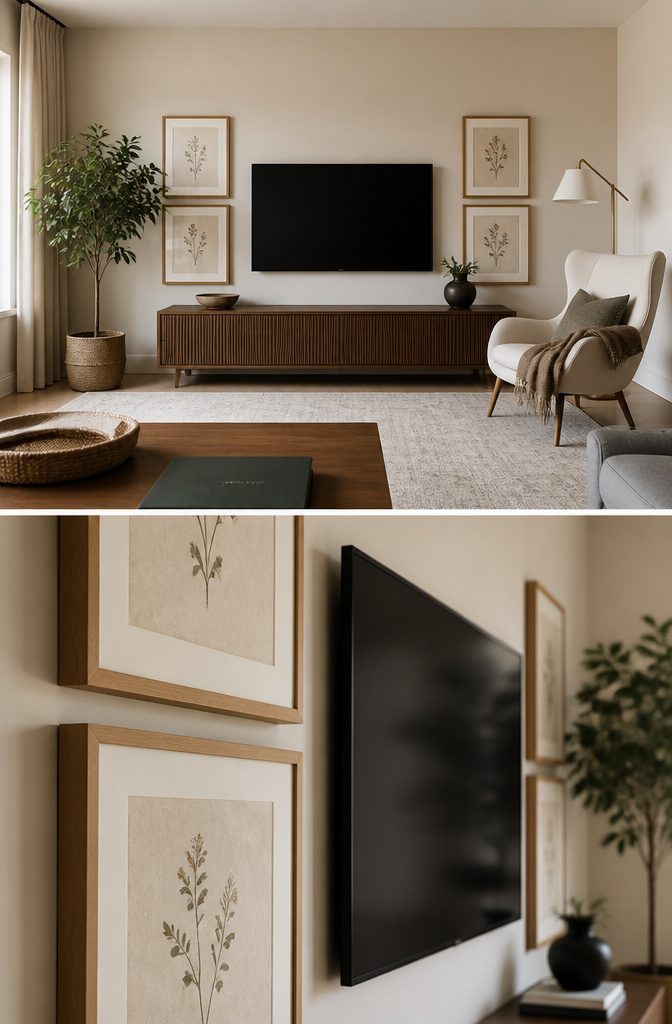
The Samsung Frame TV runs $3,500 and displays museum-quality art when you’re not streaming, which makes it the starting point for a gallery arrangement that hides the screen in plain sight.
Framebridge prints in matching frames surround it, and from ten feet back the TV disappears into the collection — you notice the whole wall before you notice which piece turns on.
Art alone can do the work if you don’t want to spend on the Frame. Hang framed etchings or prints symmetrically around a standard TV, the way vintage galleries displayed botanical illustrations in grids.
The frames pull attention off the black rectangle, and the symmetry makes the screen feel like part of a layout instead of the thing everything else works around. Light wood mats soften the contrast between old prints and new technology.
A less formal version puts art on one side of the TV and a tall plant on the other, with a sculptural chair and a standing lamp filling the edges.
The arrangement reads as curated without needing to match frame sizes or line anything up — you’re building a corner that feels collected rather than a gallery wall that happens to include a screen.
6. Backlighting or Layered Lighting
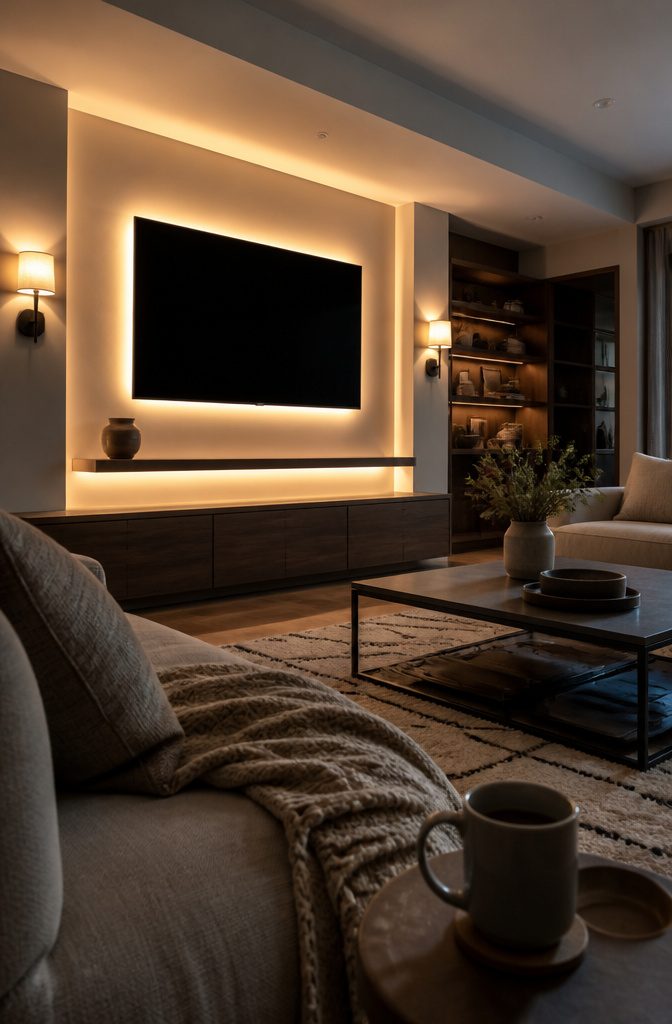
LED strips behind the TV panel or sconces mounted on either side deliver the soft glow that makes a room comfortable to watch in.
Maura Clark, a lighting designer based in Los Angeles, explains why scattered light sources matter more than most people think:
It’s really important for our eyes to not have just one intense, bright [light] source in a dark room.
She calls it bias lighting, and it prevents eye strain when the screen is the only bright object in the room.
A sconce with a fabric shade or an LED strip that pushes light back toward the wall both work, as long as the output stays indirect.
Recessed lights in display boxes or lit shelving flanking the TV add depth without glare.
The more varied your light sources, the less your eyes work to adjust between the screen and the rest of the room, and the longer you can watch without fatigue.
7. Black or Dark Accent Wall
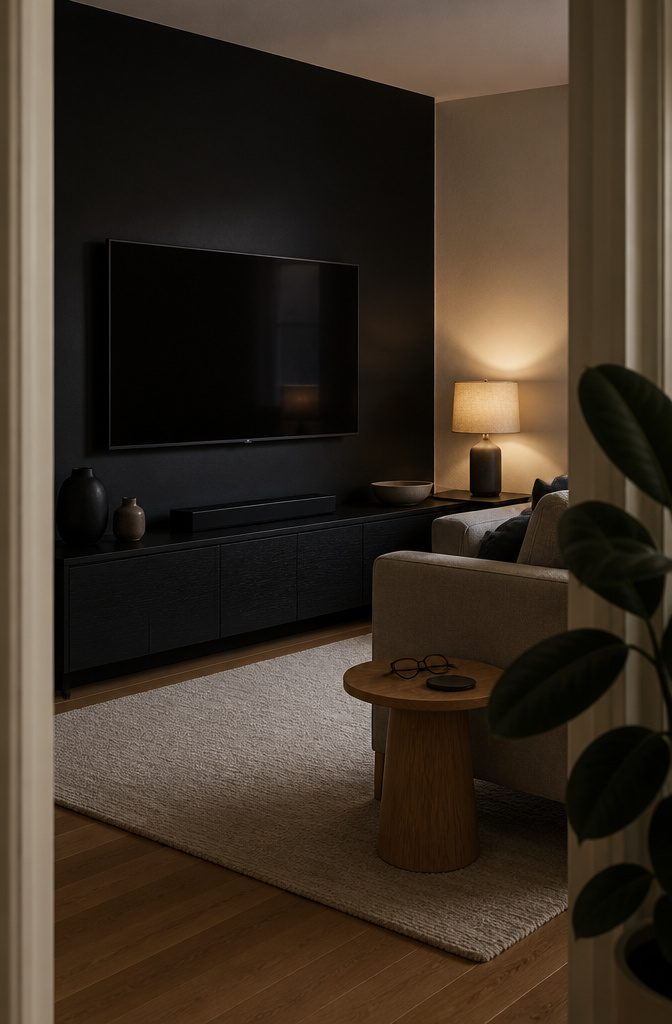
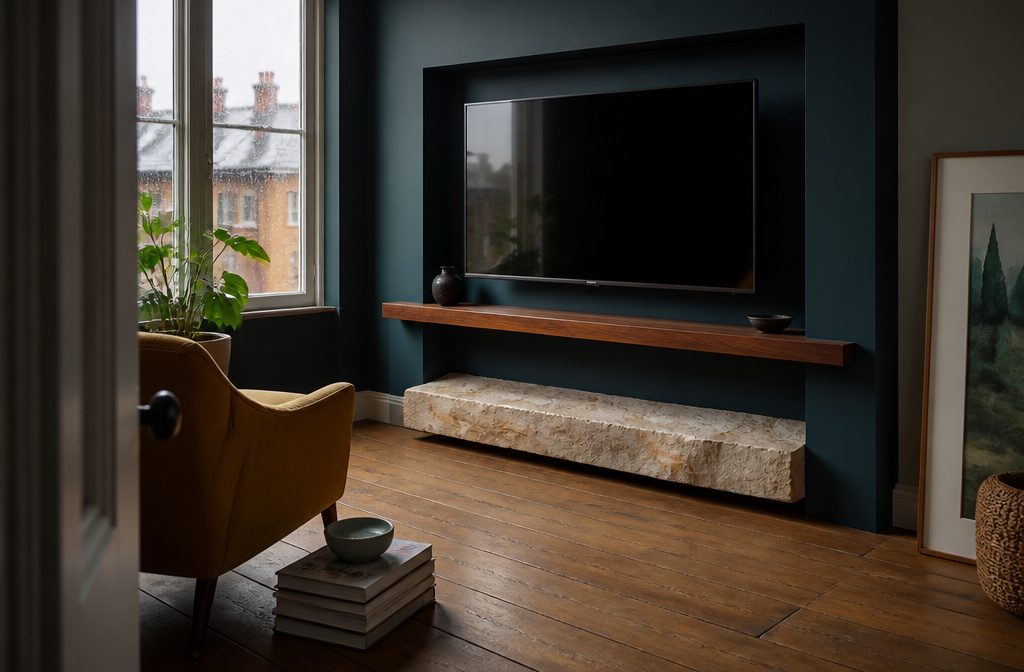
Black paint drops the TV into the background instead of trying to hide it.
The screen sits against the wall without competing, and in a room that already leans dark or minimal, a matte black accent wall makes the TV disappear when it’s off.
You can paint the whole surface if the wall is narrow, or stop the paint at a clean vertical line partway across a wider room to frame just the TV zone.
Use frog tape if you’re cutting that line mid-wall — it keeps the edge sharp where the black meets whatever lighter colour sits next to it.
Black wood slat panels add the same receding effect but with texture running behind the screen. The slats read as intentional rather than plain, and the vertical lines pull the eye up instead of widening the wall.
Mount the TV directly to the slats or set it on a low console; either way the black holds it in place visually without extra styling.
8. Painted Tongue-and-Groove or Beadboard Wall
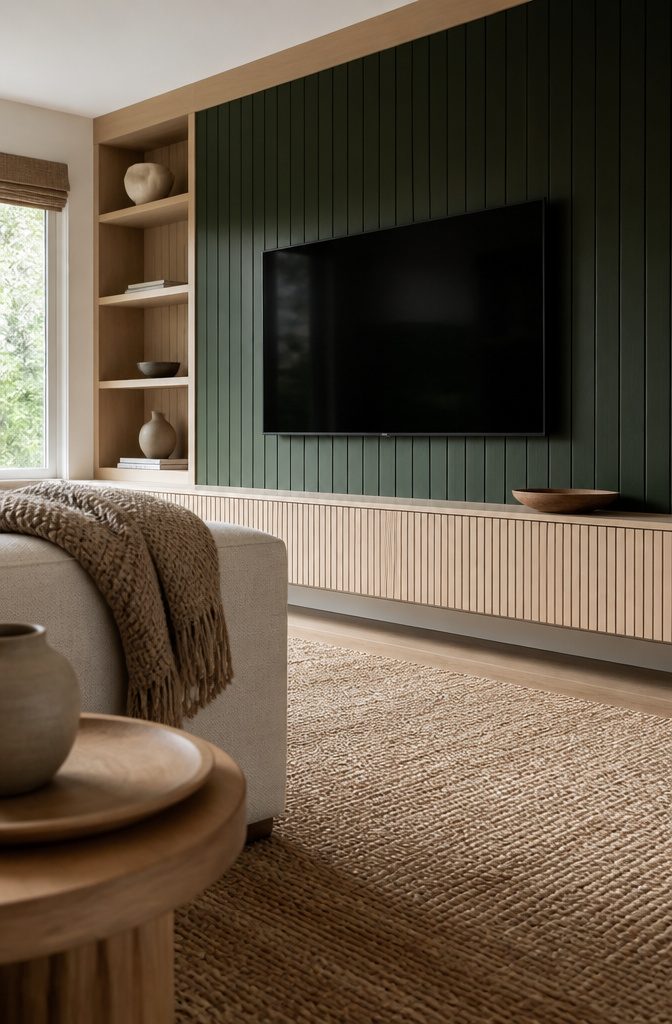
Tongue-and-groove boards or beadboard paneling painted a dark color work particularly well behind a TV because the screen disappears into the background rather than floating on a bare wall.
The vertical lines add texture that dates to the 1950s without feeling stuck there, especially when the paneling is set against lighter shelving or furniture that stands out from the dark backdrop.
The paneling reads as intentional rather than decorative overkill when you keep the lines minimal and the color choice deliberate.
Dark green, charcoal, or deep navy all handle the job better than leaving the boards natural or going with a light neutral that makes the TV the only dark rectangle on the wall.
The contrast between dark paneling and pale wood shelving pulls this off — one recedes, the other pops, and the TV sits where it belongs instead of demanding all the attention.
9. TV Above a Mantel or Fireplace
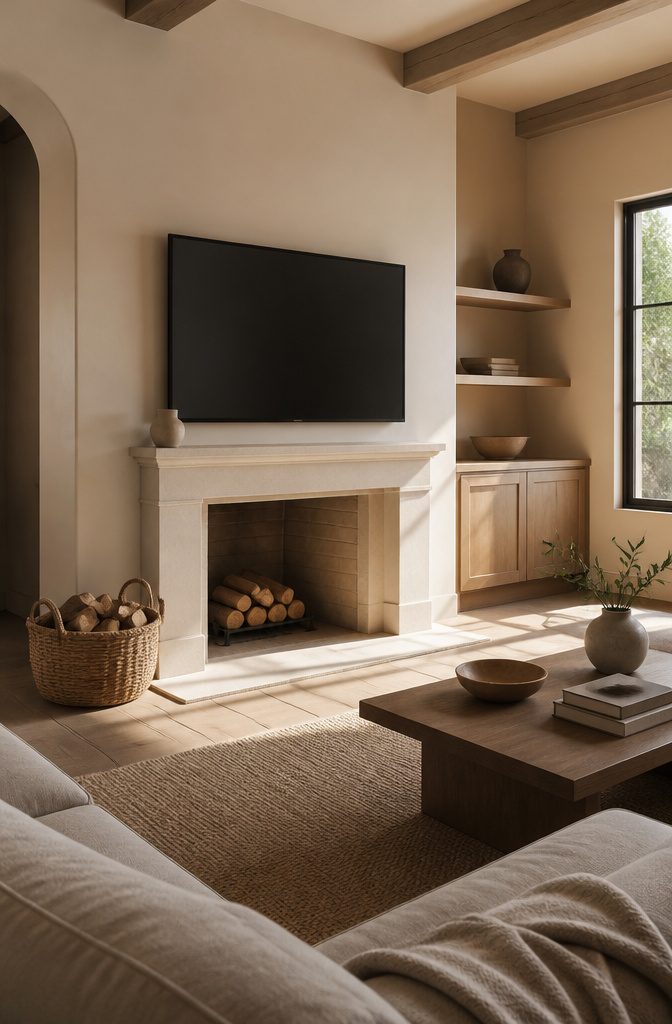
A TV above the fireplace only works if you treat height and styling as part of the design decision, not as something to sort out after the mount goes up.
Mount the TV low enough that you’re not tilting your head back — if the mantel sits high, this placement probably isn’t the one.
A low-profile mount pulls the screen close to the wall and keeps the whole setup from jutting into the room.
Keep what sits on the mantel simple.
A few objects or a single piece of art that holds up when the TV is off works better than a crowded arrangement competing for attention. The screen already dominates; the mantel styling should frame it, not fight it.
10. TV Easel
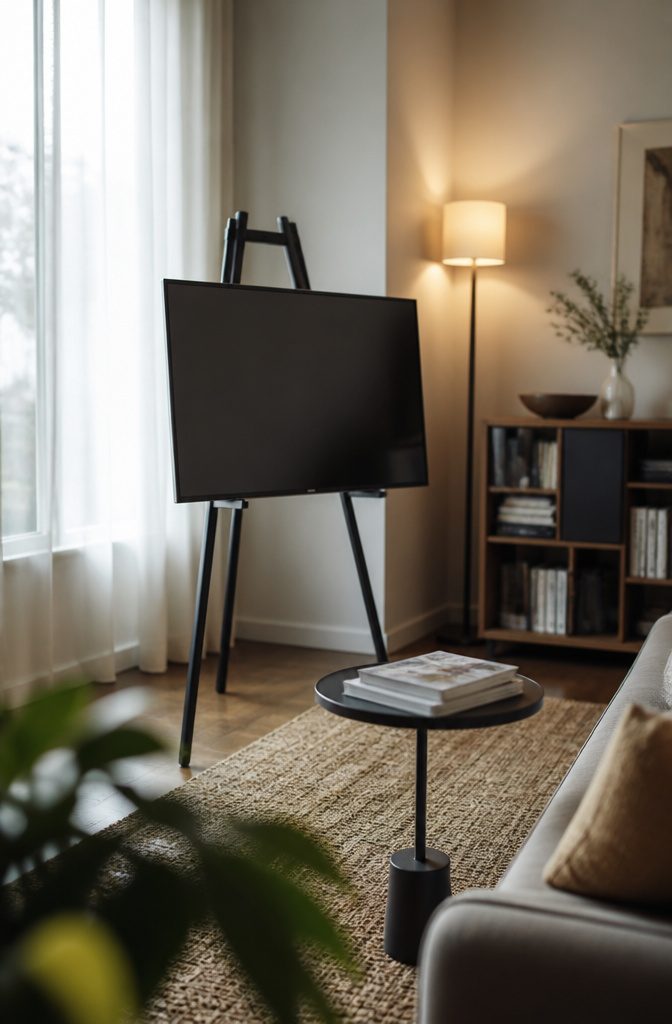
I came across the Vivo TV easel on Wayfair after getting tired of trying to find the right wall for a mount.
The setup works like any studio easel — the screen leans into the frame rather than hanging — so you can shift it wherever you’re sitting instead of committing to one viewing angle.
It reads more like furniture than tech, which helps if the TV would otherwise dominate a small room or land on a wall that already has windows or built-ins you don’t want to block.
The trade is stability: an easel sits on the floor rather than anchoring into studs, so it moves if someone bumps it, and it takes up a few square feet of floor space a wall mount would leave open.
11. Vintage-Inspired Styling
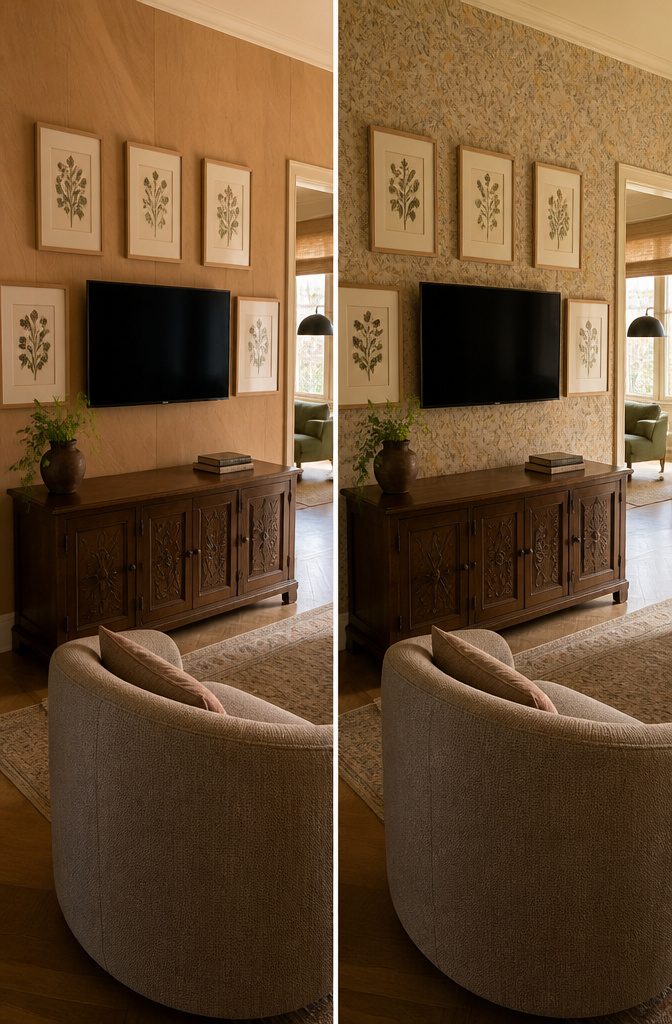
A light wood backdrop pulls the screen into a gentler register when the rest of the room leans vintage.
The warm grain reads as furniture rather than electronics, and that shift matters when black glass would otherwise sit cold against carved wood or upholstered curves.
Frame a set of prints symmetrically around the TV—etchings work well, anything with a matte rather than glossy surface—and the wall becomes a composed arrangement instead of a screen with apologies around it.
The framed pieces give the eye somewhere else to land, so the TV stops dominating even when it’s off.
This approach works best when the prints share a palette or subject; five unrelated images turn into clutter, but five botanical studies or architectural drawings hold the wall together and let the screen recede into the grid.
12. The TV Itself as Art
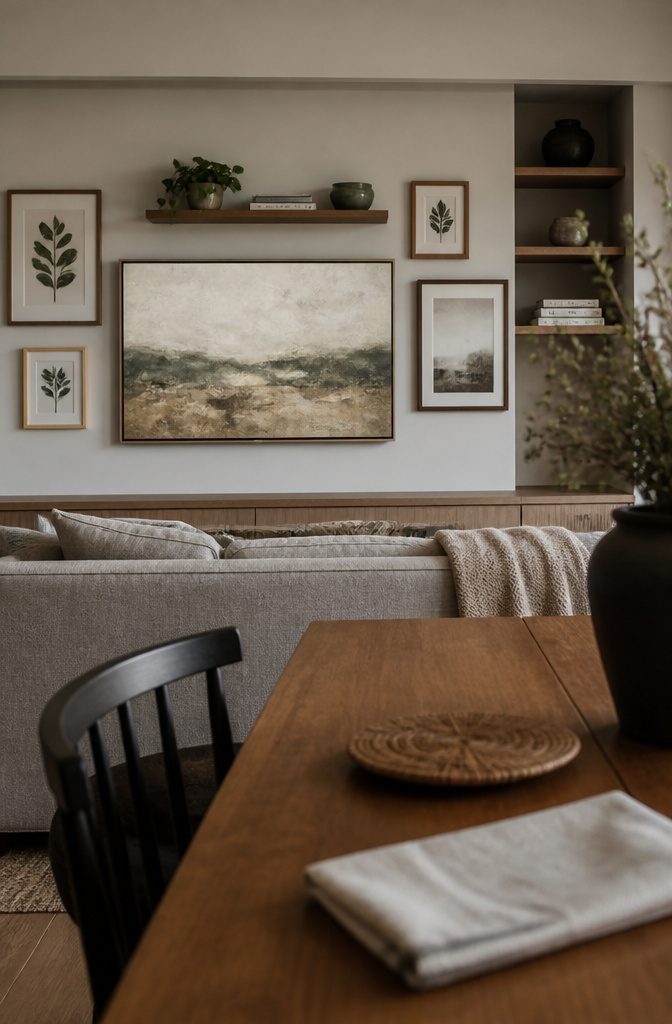
Samsung’s The Frame sits around $3,500 and displays museum-quality artwork or your own photography when you’re not streaming.
The TV disappears into a gallery wall rather than dominating it. The matte finish kills the glare you get from a standard glossy screen, and the bezels look like picture frames rather than black plastic.
You can also treat a regular TV as one frame among many by building shelving around it and filling the surrounding cubbies with actual art, plants, or books.
The screen reads as part of a composed wall instead of the only thing on it.
I’d keep the pieces around it intentionally smaller so the TV doesn’t look like it’s trying to hide — it just becomes one object in a larger arrangement that happens to light up at night.
Making the TV Fit the Room Visually
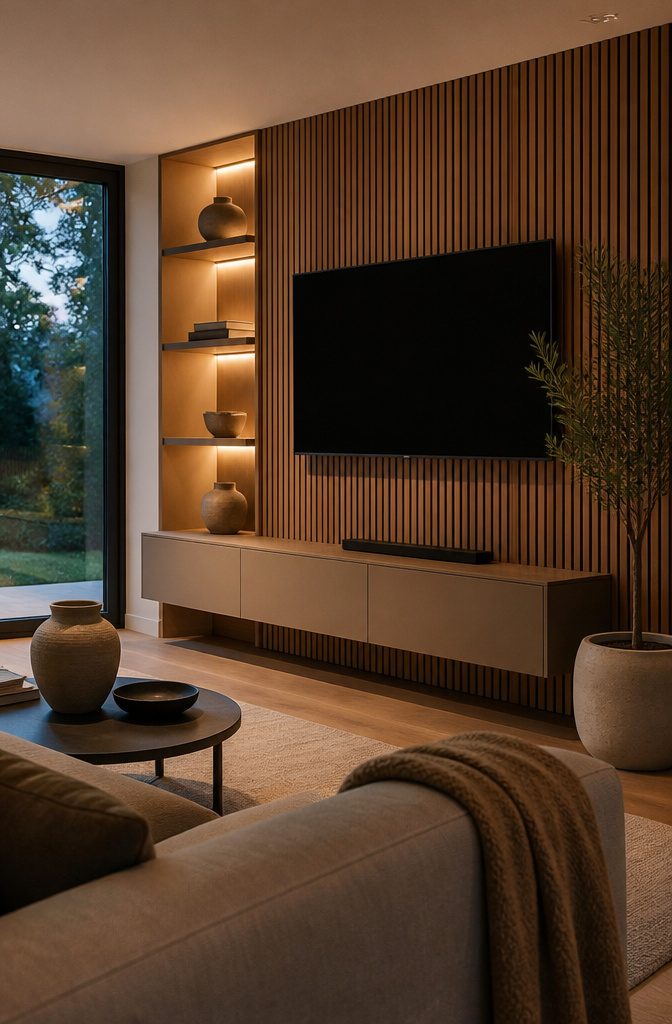
A textured wall panel or warm wood surround makes the screen read as part of a deliberate composition rather than a black hole in the middle of the room.
Wood slats run vertically behind the TV to add dimension without weight, and the grain softens the hard edge of the screen.
Stone panels with backlighting work the same way — the glow draws attention to the material, not just the electronics mounted in front of it.
Flanking the TV with lit shelving or a glass-front cabinet shifts the visual load. The screen becomes one piece in a larger arrangement instead of the only thing your eye lands on.
A matte taupe floating cabinet beneath it keeps the floor open and gives you a surface to style with books or sculptural objects, which pulls the whole wall together.
Asymmetry helps: flowers on one side, a standing lamp on the other, or the TV mounted slightly off-center with a tall plant filling the gap.
Aim for balance, not symmetry, so the screen feels intentional rather than stuck wherever the studs were.
Balancing Appearance With Function
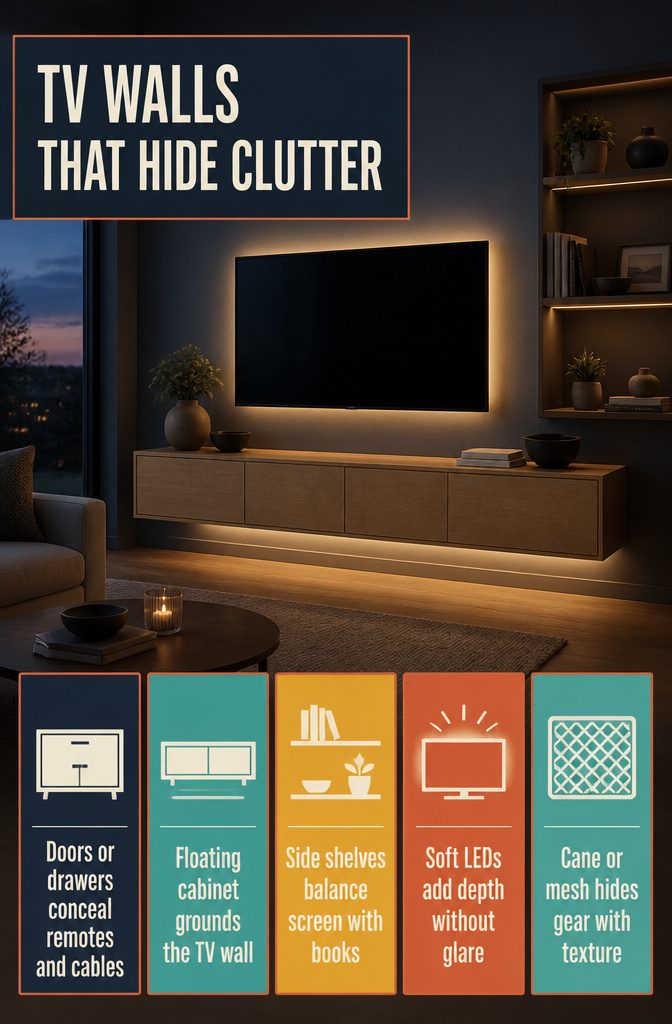
A TV wall that looks good still has to work. Storage below the screen keeps remotes, cables and consoles out of sight while giving you a surface to style without the clutter piling up on the floor.
Floating cabinets with doors or drawers ground the TV and make the whole wall feel deliberate rather than tacked on.
Open shelving to the side adds space for books and small objects that balance the screen’s weight without boxing it in.
Lighting changes how the setup reads at night. Soft LED backlighting behind the TV or inside shelving adds depth and warmth without glare, and it pulls attention to the wall’s shape instead of leaving the screen floating in the dark.
A low console with mesh doors or natural cane brings texture and hides what you don’t want seen, and the right one does both without looking heavy. Pair function with finish, and the TV wall stops feeling like a compromise.
Frequently Asked Questions
How to design a wall with a TV?
Add texture behind the screen with materials like wood slats, stone panels, or dark paint so the TV sits within a deliberate backdrop rather than floating on bare drywall.
Flank it with shelving, art, or soft lighting to spread visual weight across the wall instead of letting the screen dominate. Ground the setup with a floating cabinet or console below to anchor the composition and hide cables.
Is it a good idea to hang a TV on a wall?
Wall mounting clears floor space and keeps the setup minimal, especially when paired with a floating cabinet below.
It works best when you mount the screen at eye level from your usual seating position and add texture or styling around it so the TV feels part of the wall’s design.
Skip it if you need flexibility to move the screen between rooms or prefer furniture that holds the TV without drilling into studs.
What are some good TV wall decor ideas?
Frame the TV with symmetrical art prints, open shelving with a few books or small objects, or vertical wood slats that add dimension without competing for attention.
Backlighting with LED strips or sconces softens the screen’s glare and adds depth at night. Dark accent paint or textured stone panels make the TV recede into the wall when it’s off.