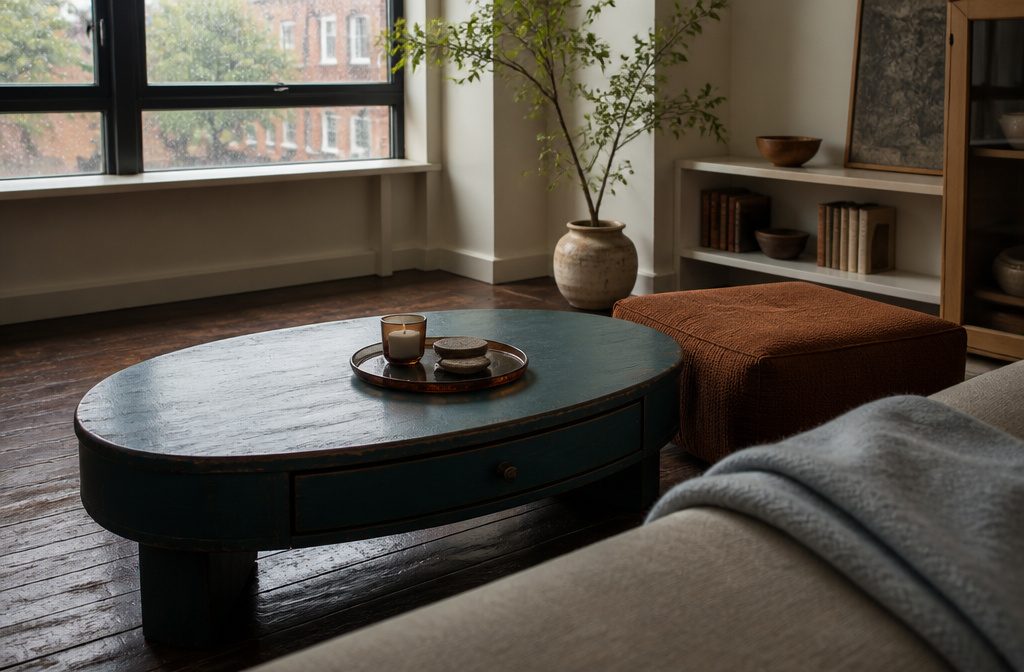
Coffee table styling ranges from a single sculptural piece left bare to a layered arrangement of books, trays, and plants across the surface.
What decides which approach works is the table itself: a piece with unusual form or transparent material needs less on top, while a conventional rectangular table holds more without looking crowded.
The standard move is grouping objects in threes at different heights—a low book stack, a medium candle, a taller vase—so the arrangement reads as deliberate rather than random.
But that formula breaks down if the table has a drawer unit underneath (where remotes and coasters live out of sight) or if you swapped the table for an ottoman that compresses under weight and needs everything corralled on a tray.
1. Use a Tray or Bowl to Gather Items
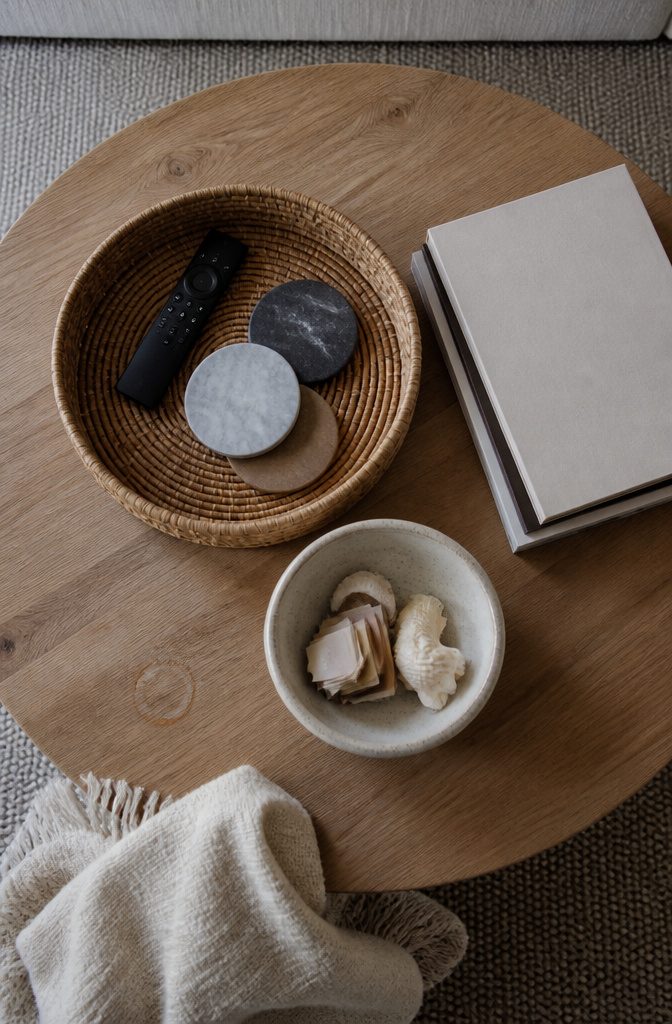
A tray or bowl turns a loose pile of remotes and coasters into something that looks like you meant it.
The frame gives random objects permission to sit together, and when you need the table clear for dinner or a board game, you lift the whole thing in one move instead of ferrying items back and forth.
Match the tray shape to the table shape — a round tray on a round table, rectangular on rectangular — so the proportions feel deliberate rather than like you grabbed what was in the cabinet.
On a large rectangular table, two smaller trays often look better than one oversized piece trying to fill the span.
A bowl works the same way and adds a curve when everything else on the table runs in straight lines.
I keep one for matchbooks and another for shells from a trip; the circular form breaks up the geometry of stacked books and picture frames without adding visual weight.
2. Add Books or Magazines
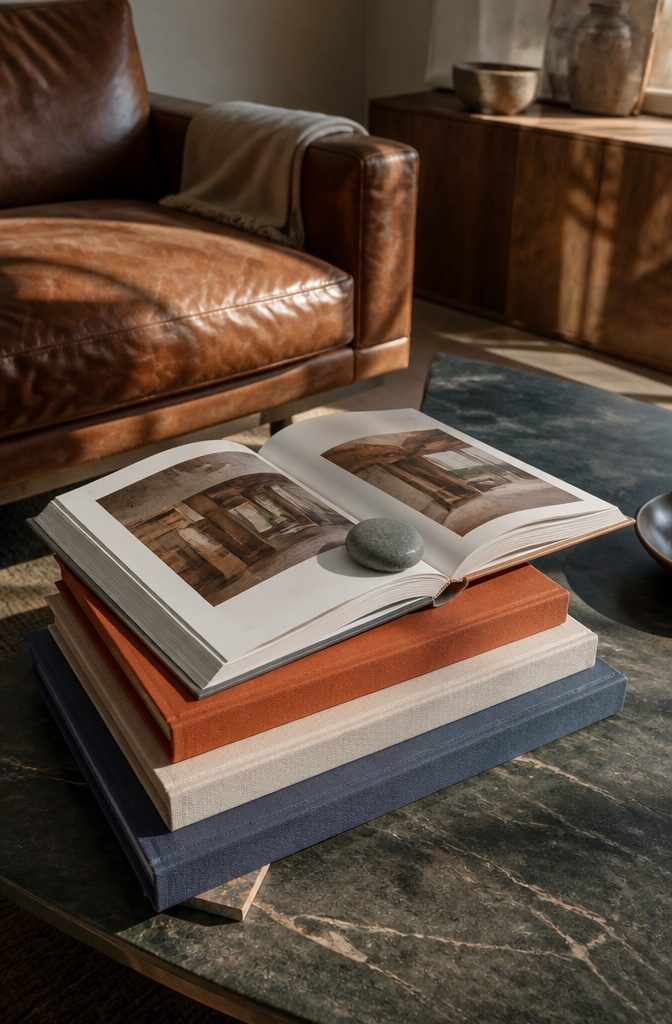
Books add height and structure to a coffee table while showing what you care about—travel, design, architecture, whatever keeps landing in your cart.
One stack of three or four books, depending on how thick each one is, gives the table a place for the eye to settle without crowding the surface.
That single pile actually makes a small table look less cluttered than leaving it bare.
Stack by size with the largest at the bottom, and if you store them under the table, arrange spines by color so they still look intentional.
For a more lived-in look, prop one open to a favorite page rather than leaving every book closed. A paperweight or display stand holds the pages flat if the binding won’t cooperate on its own.
3. Add Greenery, Flowers, or a Plant
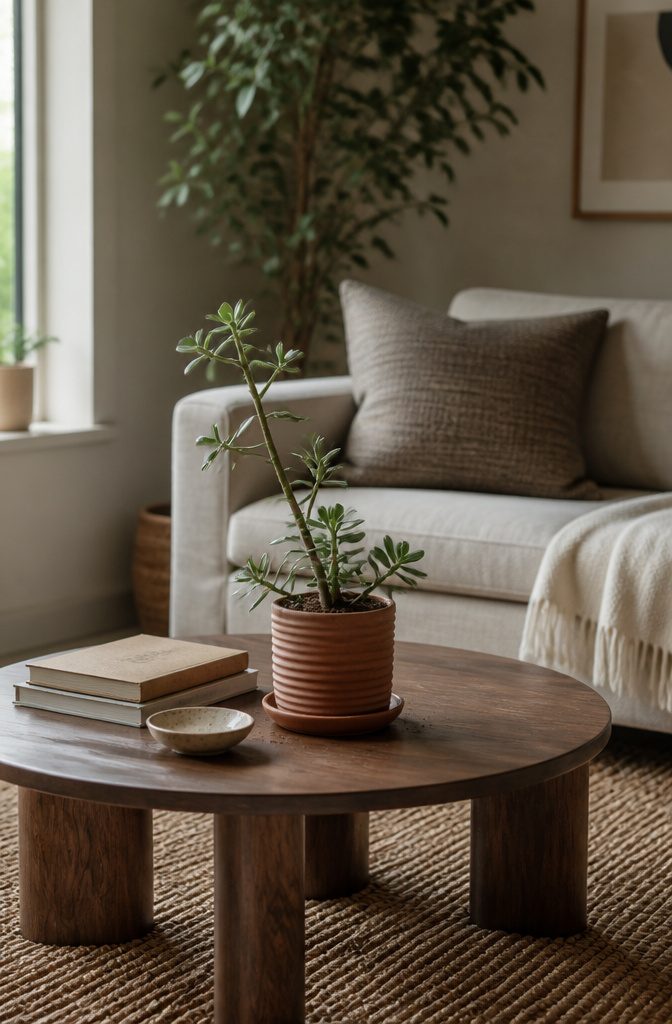
A plant or a vase of flowers pulls the eye up and adds something alive to a surface that is otherwise all hard angles.
Real greenery works if you water it; faux stems work if they look convincing enough to pass a glance from the couch. I keep a small succulent on mine because it survives neglect and still reads as intentional.
Height matters more than species. A low bowl of moss sits flat and disappears behind a stack of books, but a stem arrangement in a tall vase breaks up the horizontal line the table naturally wants to follow.
If the table is small, a bud vase with a single stem or a petite potted plant does the job without eating up the surface.
On a larger table, a statement vase or a cluster of small plants in varied containers adds weight without blocking sightlines across the room.
Dried flowers and branches last longer than fresh cuts and still bring texture. Pampas grass and bunny ear stems bend to fit the arrangement, and both hold their shape for months without water.
4. Group Objects and Vary Their Height, Shape, or Texture
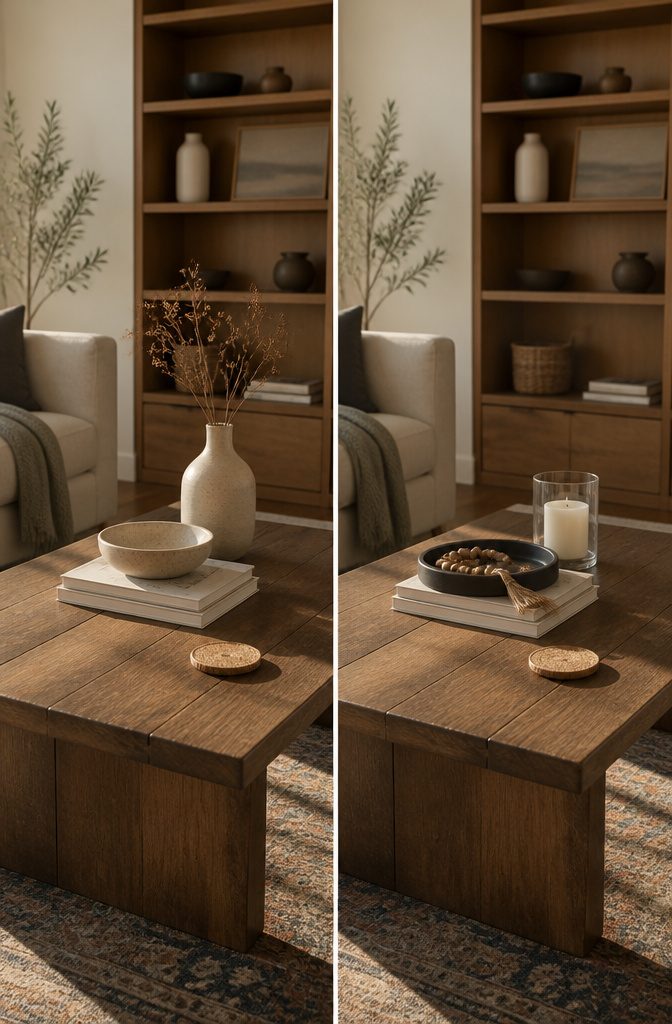
I group coffee-table items in threes at different heights: a low book stack, a medium candle or dish, and a taller vase.
The variation keeps the arrangement from reading flat, and the odd count looks more relaxed than pairs lined up side by side.
When I’m working with a rectangular table, I bring in round or organic shapes to offset the straight edges—a ceramic bowl next to stacked books, or a sculptural object beside a plant.
The contrast in form matters as much as the height.
Start with your heaviest piece at the bottom if you’re layering. A large book anchors a candle better than the reverse, and stacking a tall object on something smaller throws the whole group off balance.
I’ve also had luck with groups of two when the table is narrow, but three or six items generally fill the space better than an even number.
5. Keep the Arrangement Simple and Leave Usable Space
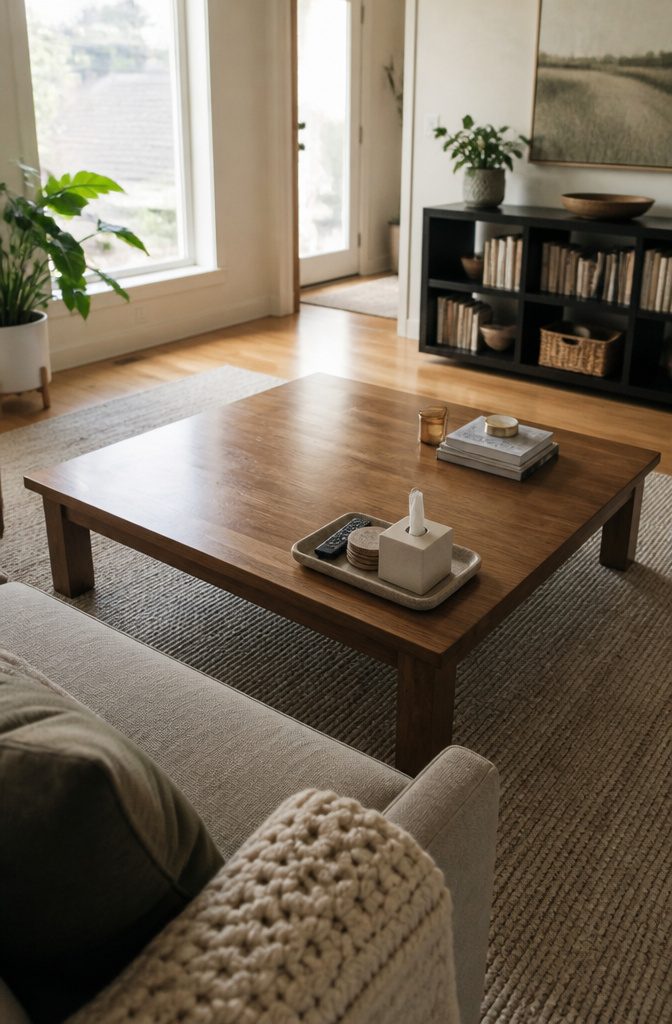
I edit my coffee table display down to a handful of items so remotes, coasters, and drinks still have a home.
A tray corrals what I need daily—remotes, a small stack of coasters, maybe tissues—so they look intentional instead of scattered.
Keep at least half the surface clear during spring and summer when cold drinks and snacks land on the table more often.
I add one book stack, one low candle, and leave room for a laptop if that is how I actually use the table during the day.
When guests arrive, I slide the laptop aside, bring out a small vase or a bowl of snacks, and keep one zone open for shared glasses and a platter.
Decide what lives on the table full-time and what shows up only when the room switches roles.
6. Use Candles or Candlesticks
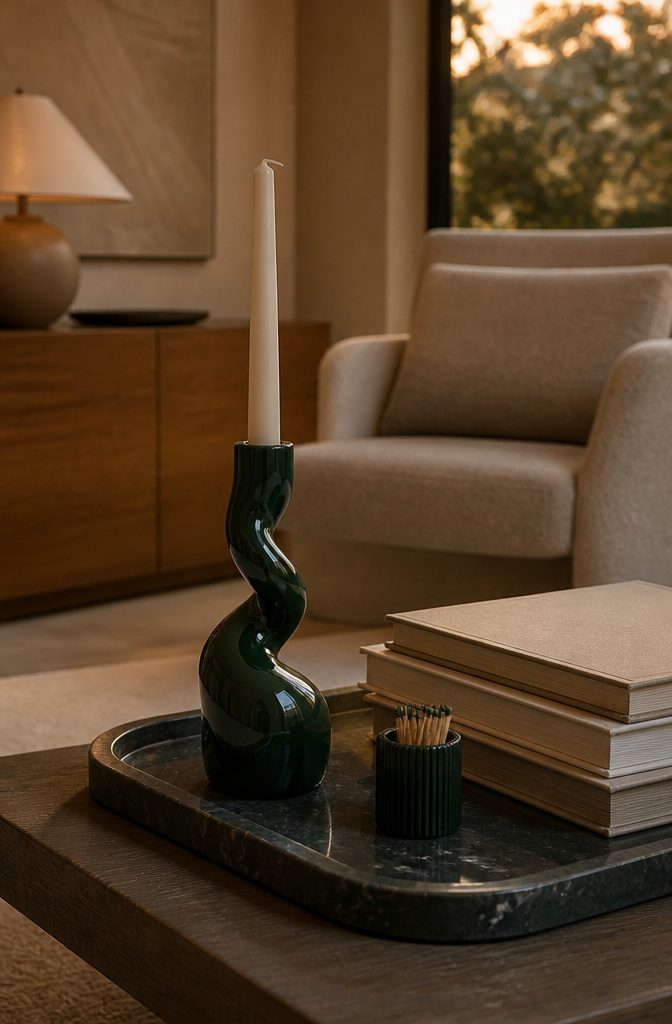
A candle or candlestick turns into a focal point when you layer it into the arrangement instead of setting it down alone.
On a small table, place one sculptural candlestick on a tray next to a book stack — the height draws your eye immediately, and the tray keeps it from reading as random.
If the table has room, set a candle on top of stacked books or a stone tray, then add a cloche, a wick trimmer or a match holder nearby so the whole grouping feels collected rather than spare.
The candlestick itself can lean off-kilter in shape or finish; a high-gloss lacquer twist or a swirl does more work than a plain taper holder.
Light it when you want the mood, and the same piece shifts from sculpture to atmosphere without moving anything else.
7. Add Personal or Collected Objects
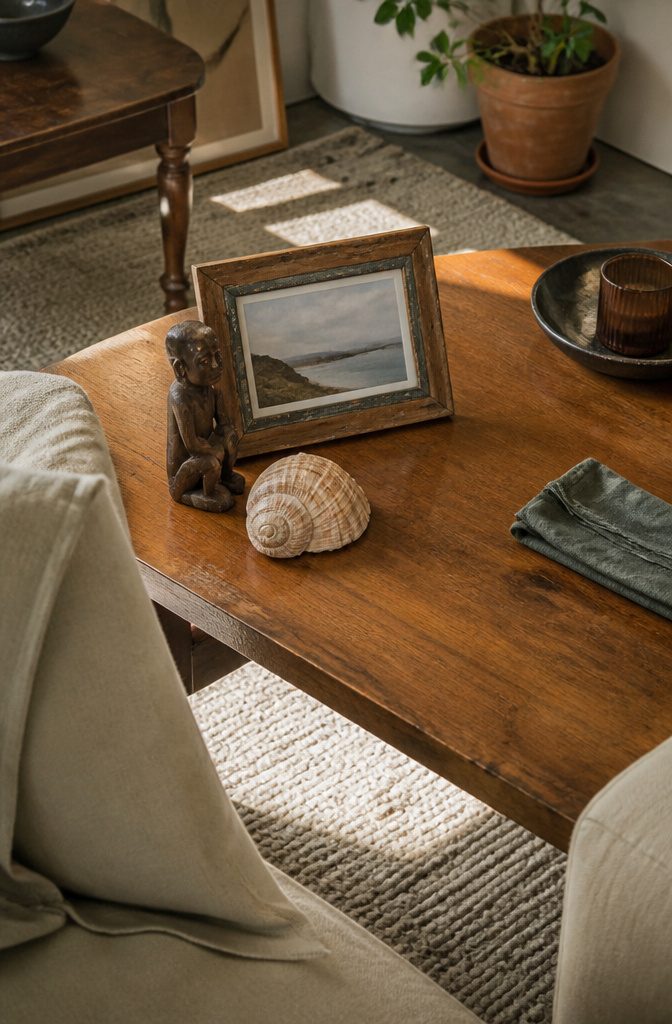
A framed photo from a trip, a small sculpture you picked up at an estate sale, or a shell you grabbed on a beach walk works better than catalog decor because it came from your actual life.
The table reads as yours when the objects sitting on it have a story, even if the story is just "I liked the shape." Thrift finds and travel souvenirs don’t need to match each other—the variety is the point.
If you’re adding framed photographs, size matters less than placement. A single large frame in the center draws attention; a few smaller ones grouped in a corner complement without dominating.
Play with the arrangement until the table feels balanced but not stiff. A surface that looks collected over time, not bought in one afternoon.
8. Layer Objects
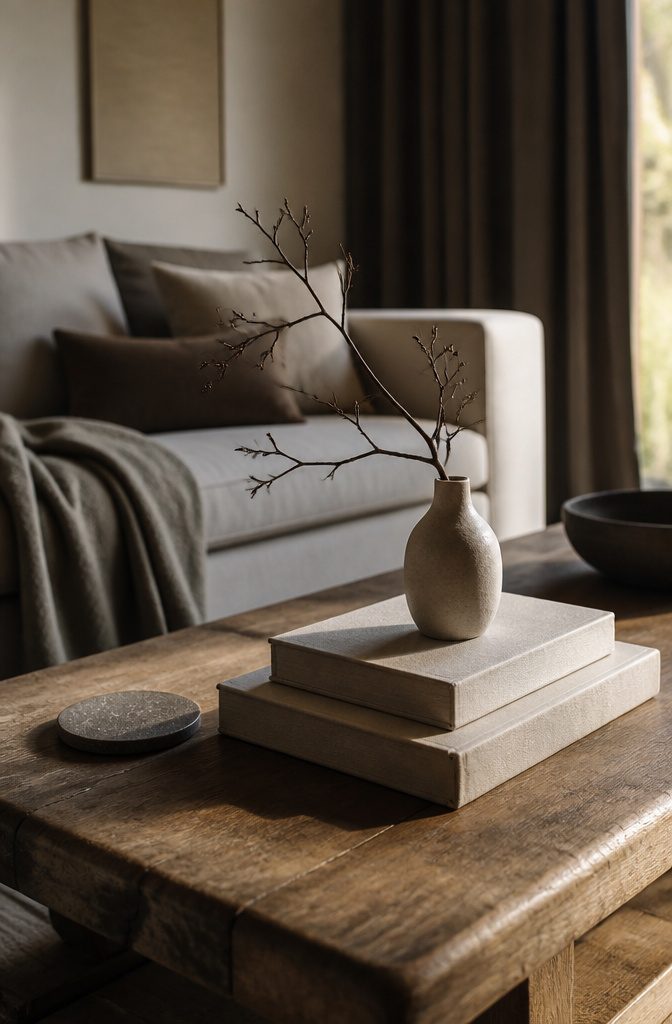
I stack books at the edge of the table with the largest at the bottom, then set something smaller on top — a paperweight, a short vase, a wooden box — to give the whole thing dimension.
The height difference matters more than the object itself. A single sculptural branch in a matte vase on top of two linen-covered books looks intentional; the same books alone look like something I meant to shelve.
The top layer should be lighter and smaller than what sits beneath it. Placing a large object on a smaller one tips the balance visually, and the whole grouping reads as unstable even when it isn’t.
I keep the heaviest pieces at the base and work up toward something delicate or narrow at the finish.
9. Choose a Table With Storage
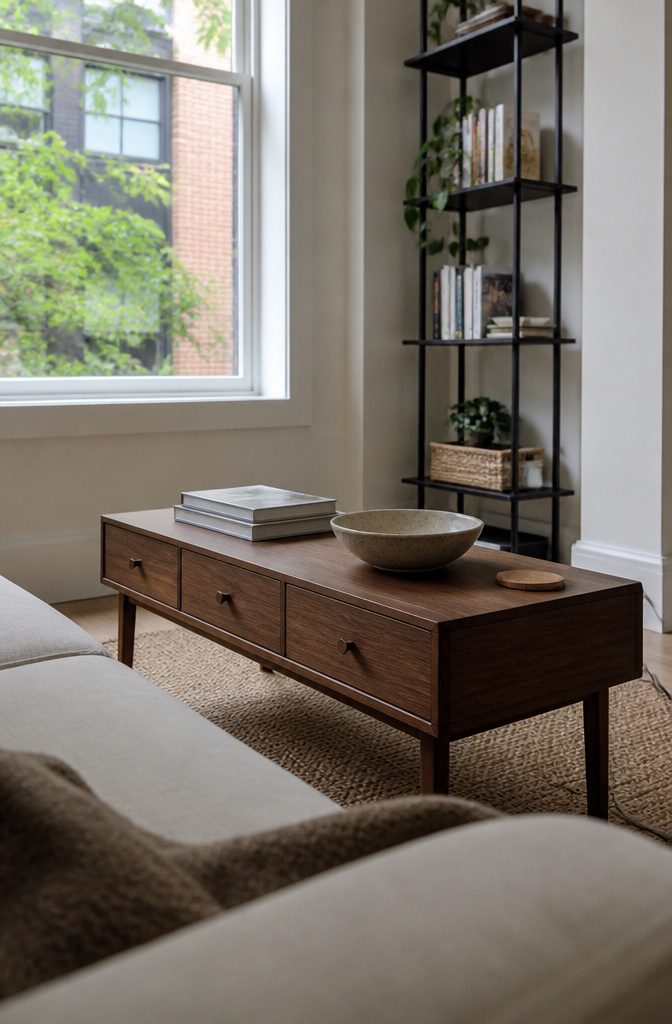
A table with drawers or shelves underneath keeps remotes, coasters, and charging cables within reach without leaving them scattered on top.
Built-in storage means you can clear the display surface in about ten seconds when guests arrive, then pull everything back out just as fast.
Closed storage works better than open shelves if you want the table to look finished from every angle, since open cubbies still show what is inside them.
The setup works particularly well in small spaces where the coffee table doubles as the only storage between the sofa and the screen.
A slim table with a three-drawer unit tucked underneath gives you the surface for styling and the hidden space for the practical stuff, and the whole footprint stays under 48 inches wide.
Shelves beat drawers if you want one-hand access to magazines or books you actually pick up during the week.
10. Use an Ottoman or Bench Instead of a Conventional Table
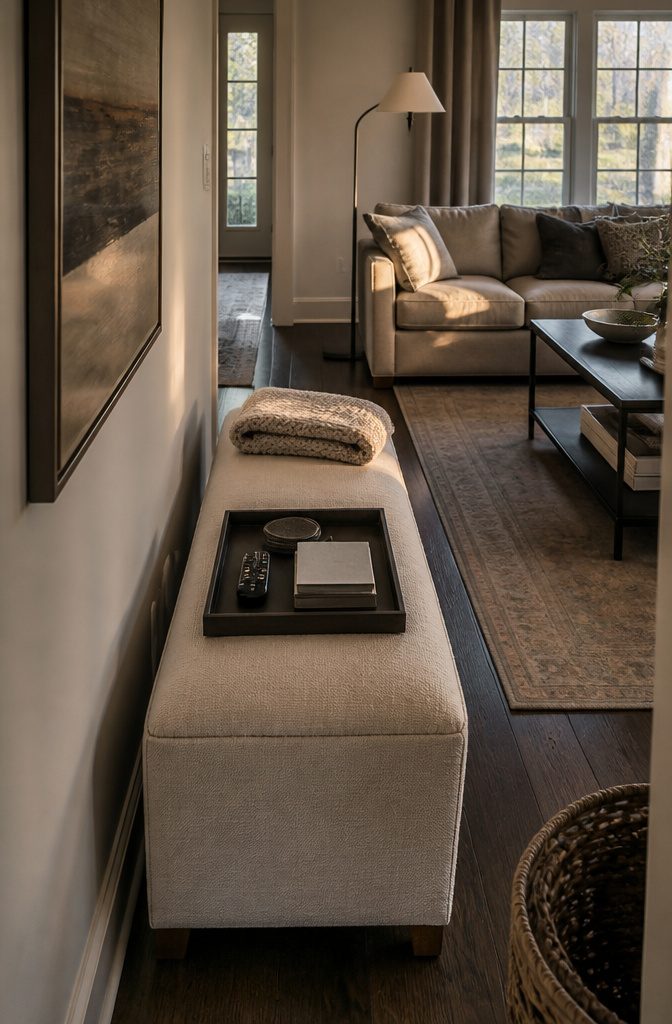
A cushioned ottoman or upholstered bench anchors the room differently than a hard-surface table, and the styling follows that shift.
You rest your feet on it, pile throws on it in winter, maybe use it as overflow seating when someone drops by.
That means anything you set on top needs to sit on a tray or a stable base so it doesn’t tip when the surface compresses.
A bench works especially well in a narrow room where a standard coffee table would block the path.
Use serving trays to corral remotes, coasters, or a small stack of books so they stay in place and lift off easily when you need the full surface. The tray becomes the styling layer; the bench itself stays clean.
The look skews more relaxed than a glass-and-metal table, which suits a living room that doubles as the place where people actually sit and talk rather than one arranged for show.
11. Choose a Transparent Table or Surface
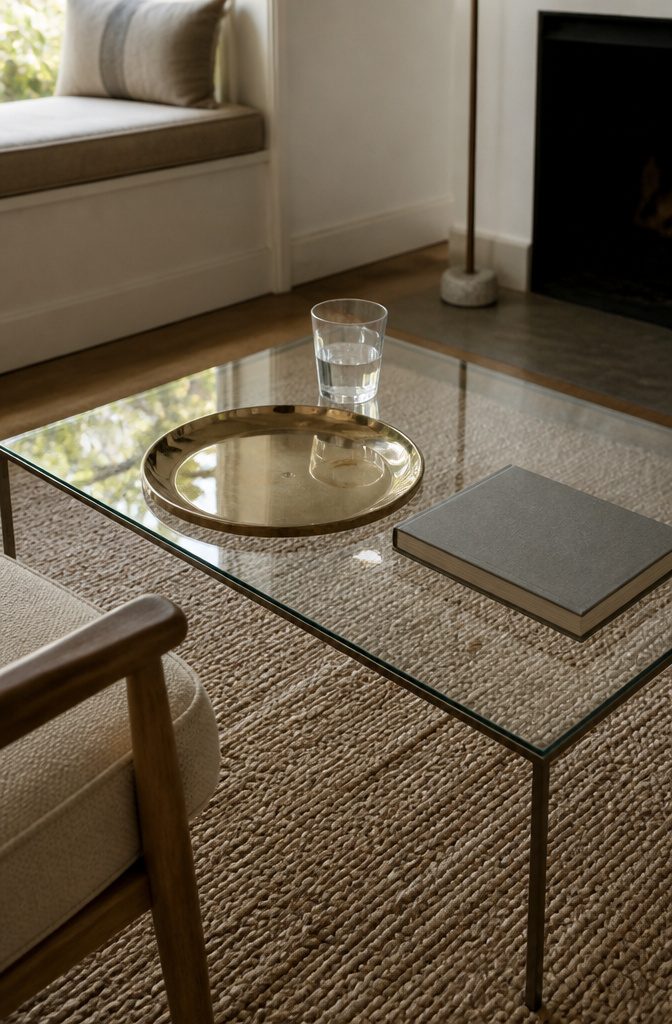
Glass or acrylic keeps a coffee table from eating up visual space. The surface still functions, but your eye moves through it instead of stopping, so a small room reads larger than it would with solid wood or metal.
Mirrored tables work the same way — the reflection doubles whatever sits behind the table, and the object itself nearly disappears.
A thin acrylic slab or a glass top with minimal framing does the most.
Thicker glass with heavy wood trim brings back some of that visual weight, so if you want openness, stick with a design where the structure barely registers.
Reflective trays layered on top of an existing table get you halfway there without replacing the piece.
The approach works best in tight quarters where a conventional table would crowd the sight lines. You still get somewhere to set a drink or a book, but the room feels less blocked.
12. Use Multiple or Nested Tables
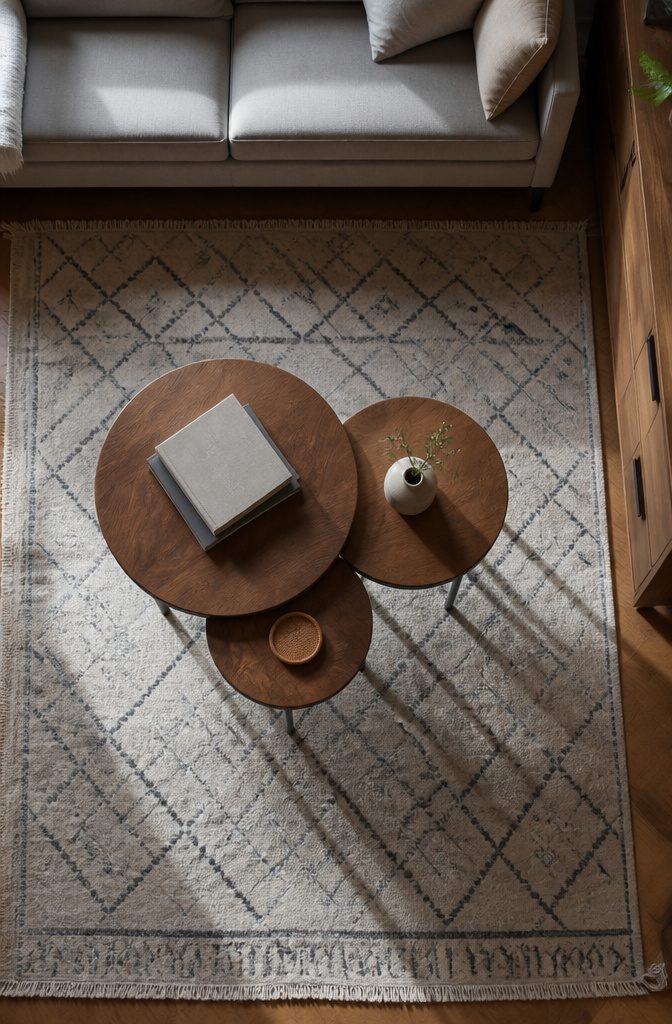
Two or three smaller tables let you adjust the layout when you need the surface space and tuck one away when you don’t.
Nesting tables work particularly well in small rooms where a single large table would crowd the floor but you still want room for drinks during a gathering.
The smallest table slides under the larger one when not in use, and you pull it out only when guests arrive or you need a spot for a laptop.
Grouping separate tables of different heights instead of nesting them gives you a more sculptural arrangement.
A round table next to a rectangular one, or a low square table beside a taller drum, breaks up the predictable single-surface look and lets you style each one differently—one holds a stack of books, the other a vase.
The mixed shapes add dimension without making the room feel cluttered, as long as you keep the total footprint smaller than one oversized table would have been.
13. Use a Table With an Unusual or Sculptural Form
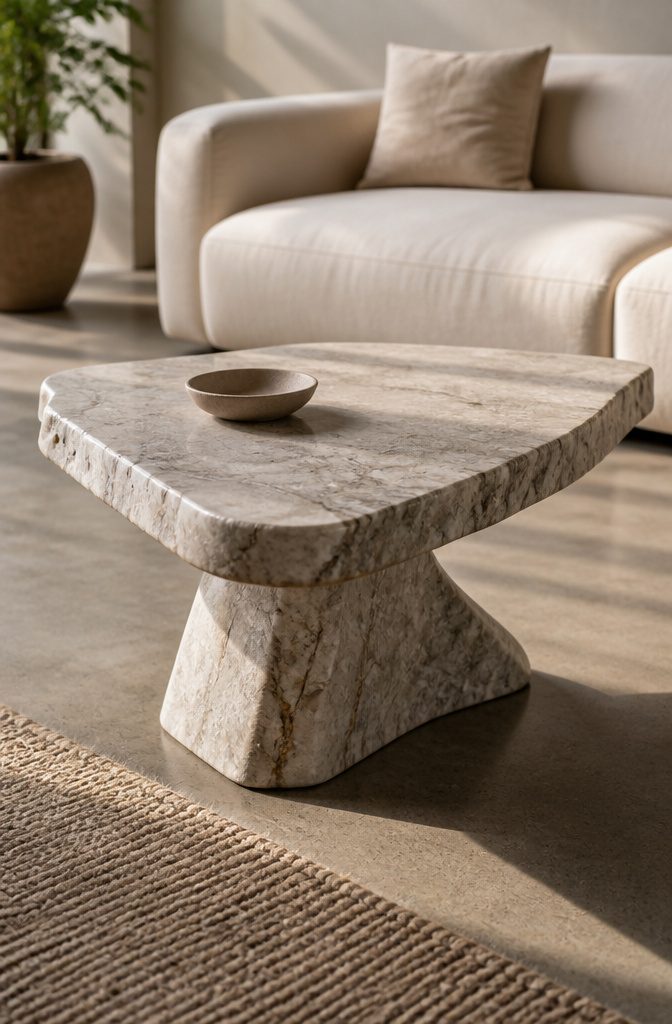
A table with sculptural presence doesn’t need much else. The form carries the room on its own, and loading the surface with decor can bury what you paid for.
Sam Klemick’s coffee table works this way, its unusual construction strong enough to anchor the space with almost nothing on top.
Style your coffee table in the simplest possible way: Don’t. Let your coffee table speak for itself by investing in one that will demand a double take all on its own.
A triangular stone table or a piece with organic, asymmetrical lines makes a statement before you set anything down.
If the table itself is the focal point, a single object at most keeps the surface from looking abandoned without competing for attention.
The shape does the work, and styling light or skipping it entirely lets the table read clearly instead of turning into a pedestal for other things.
14. Coordinate the Display With the Room’s Palette or Theme
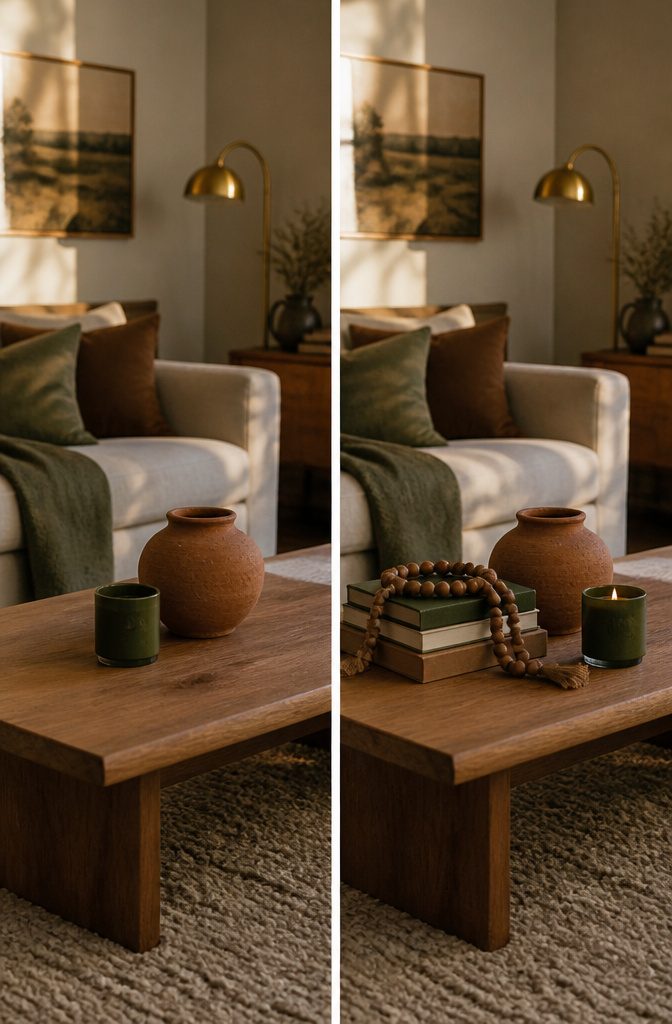
Pick colors and materials that already live in the room. If your sofa throws lean toward sage and your rug runs warm, pull those same tones onto the table through a ceramic vase, linen-bound books, or a small wooden bowl.
The table reads as part of the space instead of fighting it.
When the season shifts to fall and winter, move to warm neutrals, terracotta, deep greens, and brass accents.
Swap out lighter ceramics for chunky candleholders in darker finishes, stack books with richer spines, and consider a wooden bead garland draped across the pile.
A sculptural brass object or a deep green candle ties back to the cozy-month palette without announcing itself.
The palette doesn’t need to match exactly.
A coffee table in primary blue still works if one other piece in the room shares that intensity. Repetition of a single strong color or finish is enough to make everything feel like it belongs to the same plan.
15. Use a Cloth or Runner
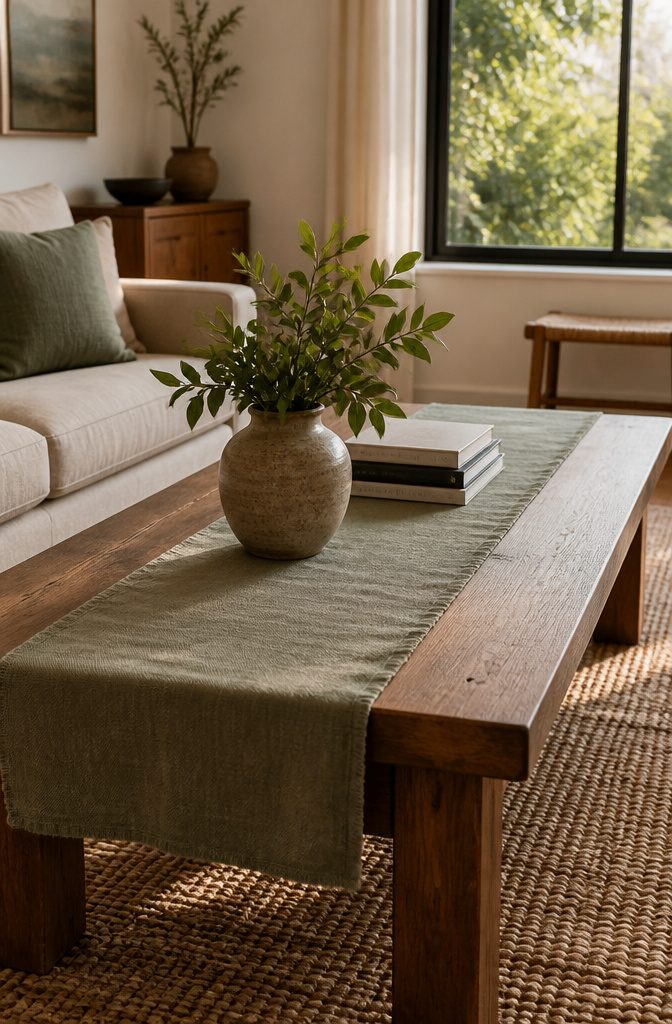
A cloth softens the table and keeps the surface safe from watermarks and scratches.
The texture breaks up hard lines in a room full of wood or metal, and if the rest of the space already leans cozy, the cloth reinforces it rather than fighting the direction you set.
Pick a cloth that shares a color with something already in the room — a pillow on the sofa, the rug, the curtains.
Matching one accent ties the scheme together without making you hunt for a new palette. A neutral linen works when nothing coordinates, but a deliberate color choice makes the table look considered instead of accidental.
The cloth sits under everything else, so it needs to stay flat and let objects rest stable on top of it.
A runner down the center works the same way and leaves the ends of the table bare if you prefer that look.
Frequently Asked Questions
How many items should I have on my coffee table?
A small table works with 3 objects in a single grouping.
Medium or large tables typically hold 5 to 7 items split across 2 or 3 clusters. If you can’t comfortably set down a drink without moving things, edit until you have breathing room.
Can I style a very small coffee table or ottoman?
Yes.
Use a tray to hold a small stack of books and one living element like a plant or vase. If you need more surface space regularly, add a nesting side table you can pull out when needed.
How often should I change my coffee table décor?
Change seasonally or when another major element in the room shifts, like a new rug or paint color. Treat it as a 10-minute reset rather than a full redesign.
What if my coffee table is also my dining or work surface?
Put all your decor on a tray so you can lift the whole arrangement off in one move when you need the full surface. Return the tray once you’re done eating or working.
What is the 2/3 rule for coffee tables?
The coffee table should be about 2/3 the length of your sofa. This proportion keeps the table from looking too small or overwhelming the seating area, and leaves enough surface space without blocking traffic flow.
What are common coffee table styling mistakes?
Stacking large objects on smaller ones creates visual imbalance.
Overcrowding the surface until there’s no room for drinks or remotes defeats the table’s function. Matching every object’s shape to the table’s shape makes the arrangement feel rigid instead of collected.