

The right bedroom wall decor depends on one thing: whether you rent or own, because that determines what you can hang, how heavy it can be, and how easily it comes down.
A canvas 80 centimeters or taller reads as intentional when leaned against a wall, while a smaller frame at floor level looks forgotten, not styled.
Peel-and-stick wallpaper now removes cleanly at lease-end, and paper templates let you test a gallery layout for a full day before a single nail touches drywall.
1. Large-Scale Artwork
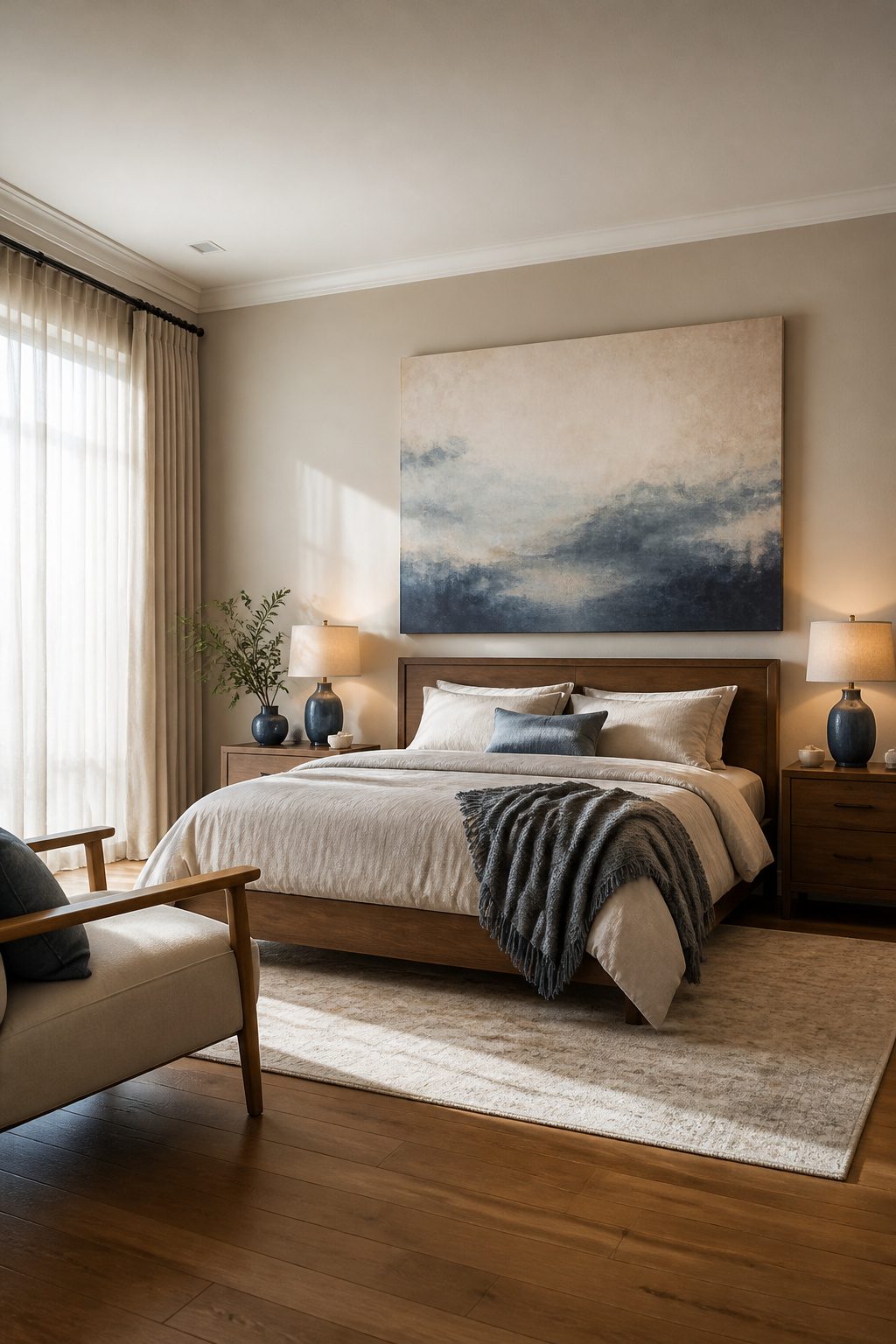
A single large piece above the bed does more to settle a room than a dozen small ones scattered around it.
The combined width should span about two-thirds of your bed’s width, not the whole wall. On a queen bed, that comes to roughly 40 inches of artwork.
Hang the bottom edge 6 to 10 inches above the headboard so the piece reads as connected to the bed, not drifting toward the ceiling, and stays in view when you are lying down.
Canvas beats glass here.
Bedrooms have lamps, morning sun, phone screens; glass throws all of that back at you. Canvas absorbs light, stays readable at every hour, and weighs less, which matters when you are drilling above where you sleep.
For heavier framed pieces, a French cleat or an anchor rated at least 50% above the item’s weight is the hardware I would trust.
Recommended Products

Tree of Life Wall Art: Available in 20x40 and 24x48 inches. Comes gallery wrapped over an inner frame and includes hooks for wall installation

【Unique Design 】This wall art has a full sense of design, substantially add brilliance in color and exceptional detail to your space. It will bring you a beautiful experience and feeling, and is an ideal choice for home wall decoration.

Framed African American Wall Art: Enhance your home with this framed vintage wall art, featuring African American Black Girl Reading Book in neutral tones. The serene composition and muted earthy palette evoke a sense of intellectual sophistication and calm—perfect for lovers of classic literature, African American art, or timeless elegant decor
2. Gallery Walls
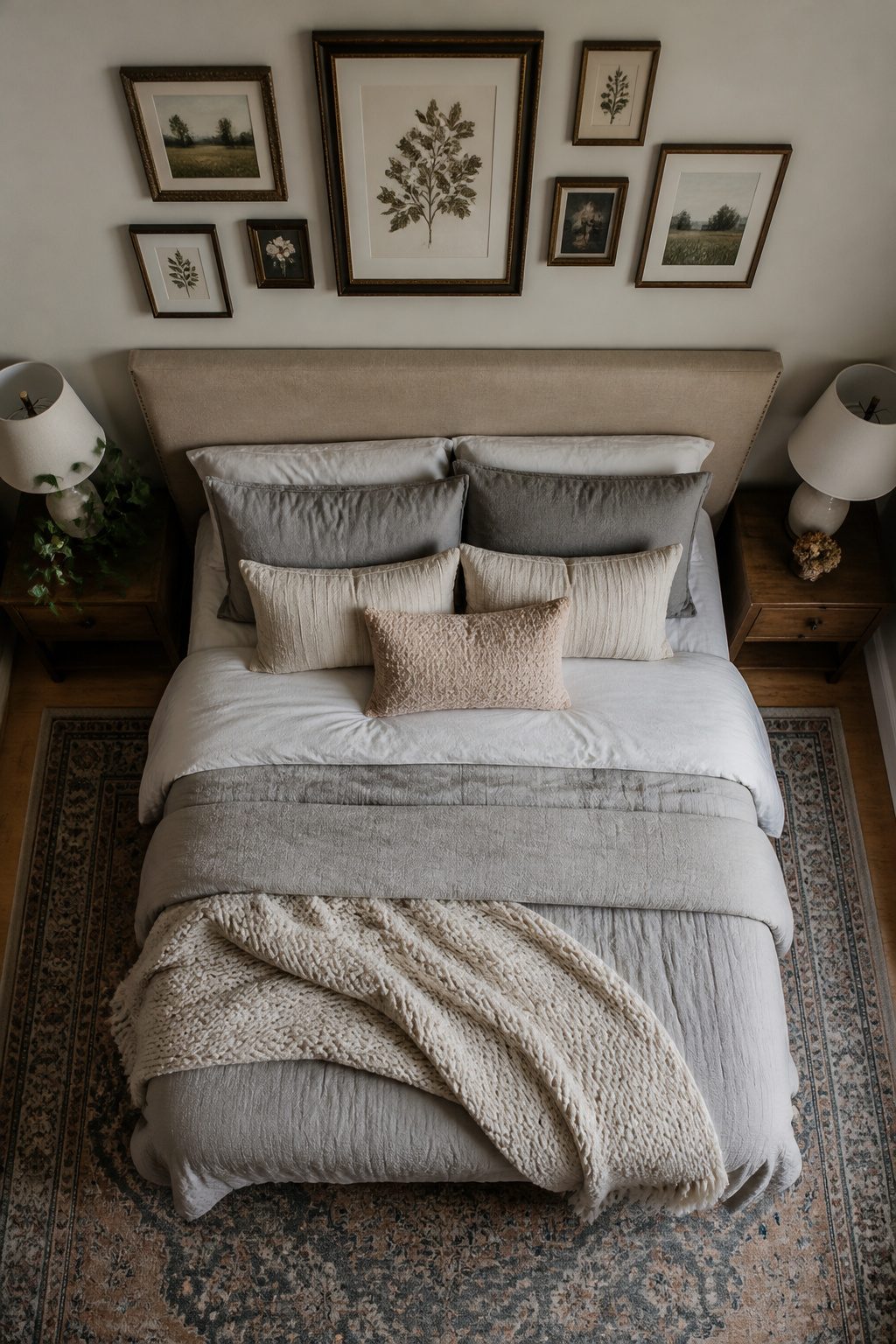
A gallery wall above the bed works best when it reads as one unit rather than a scattered afterthought.
Start with the largest frame as the anchor, then cluster smaller pieces around it, keeping the overall assembly to roughly two-thirds the width of your headboard. That proportion keeps the arrangement from floating aimlessly over the mattress.
Mixed frame finishes and deliberately uneven sizes are the current move, but the spacing needs discipline.
Two to three inches between every frame, maintained consistently, keeps the looseness from looking accidental. Lay the whole arrangement out on the floor first to check the rhythm before anything touches the wall.
For renters mapping placement without extra nail holes, paper templates are the practical first step. Cut kraft paper or newspaper to each frame size, tape them up, and live with the layout for a day.
Shift anything that reads off-center in morning light. Once the template feels right, the nails go in once.
Recommended Products

Contemporary Gallery Frame Set – This collection features 9 gallery wall frames that can display 8x10 in. photographs or art prints with the included mat or 11x14 in. photos or art prints without the mat. Each frame is finished in a traditional matte black that complements most modern and contemporary home design.

Capture Your Memories: From the faces of your loved ones to great times with friends and family get-togethers, this collage photo frame lets you display an array of wonderful moments. It features 12 frames, each perfectly sized for 4x6 photos

Contemporary Gallery Frame Set – This collection features gallery wall frames that can display photographs or art prints with the included art prints. Each frame is finished in a traditional color that complements almost every décor style.
3. Mirrors
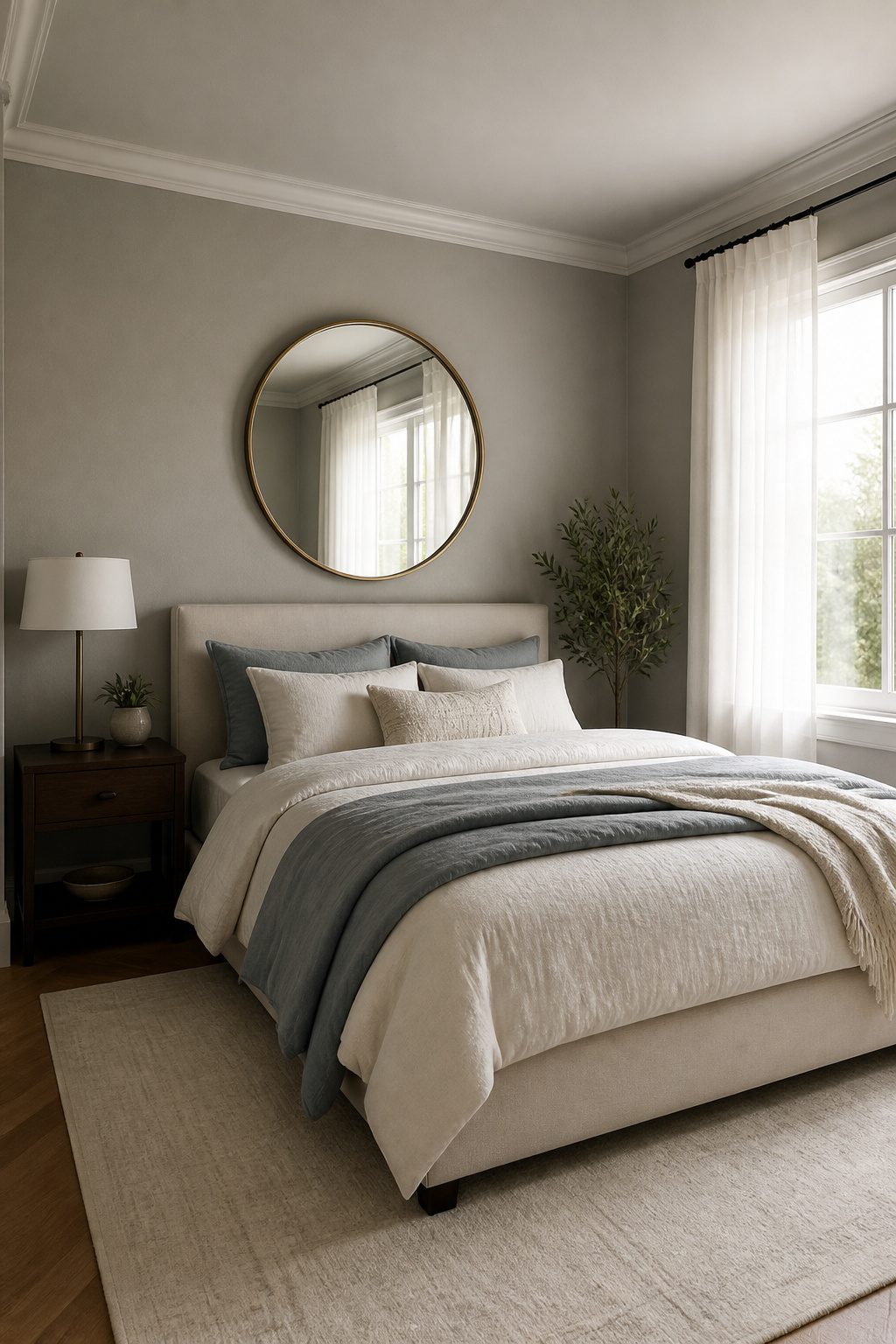
Mirrors do something flat art cannot: they bounce natural light back into the room and make a small bedroom feel bigger.
A large mirror on the wall opposite the window does more for a dark space than any lamp, though some sleepers prefer the glass off to the side rather than directly facing the bed.
That reflection at 3 a.m. is a personal call.
For heavy pieces, a French cleat distributes the weight properly across studs. For renters, a leaning full-length mirror against the wall gives the same spatial effect without drilling a single hole.
I would skip the sunburst trio with the gold iron frame and distortion-free floating glass unless the twelve-inch scale actually fits your grouping.
The no-assembly setup is nice, but three small mirrors read as clutter in a tight room. One large round mirror, brass-framed and flanked by two slim prints, anchors the wall without the puzzle-piece fuss.
Recommended Products

Full Size: Our OLIXIS large mirror full length is 64" in length and 21" in width, which is large enough to give you a view of your entire figure and ensure that you go out every day in perfect condition

See Every Detail, Instantly: No more squinting or twisting—this oversized full length mirror gives you a true, distortion-free full-body view from head to toe. Whether you’re checking an outfit, doing makeup, or just want that “wow” moment, it turns your daily routine into a mini confidence boost. Works like a charm in bedrooms, closets, living rooms, even your home gym

Sturdy Support: Using 65" x 21" size, Sweetcrispy LED full mirror fits perfectly into a variety of modern decorative styles. High quality aluminum alloy thin frame serves as a sturdy support with a sense of texture and security. No need for tedious installation, ready to use out of the box
4. Textiles and Woven Hangings
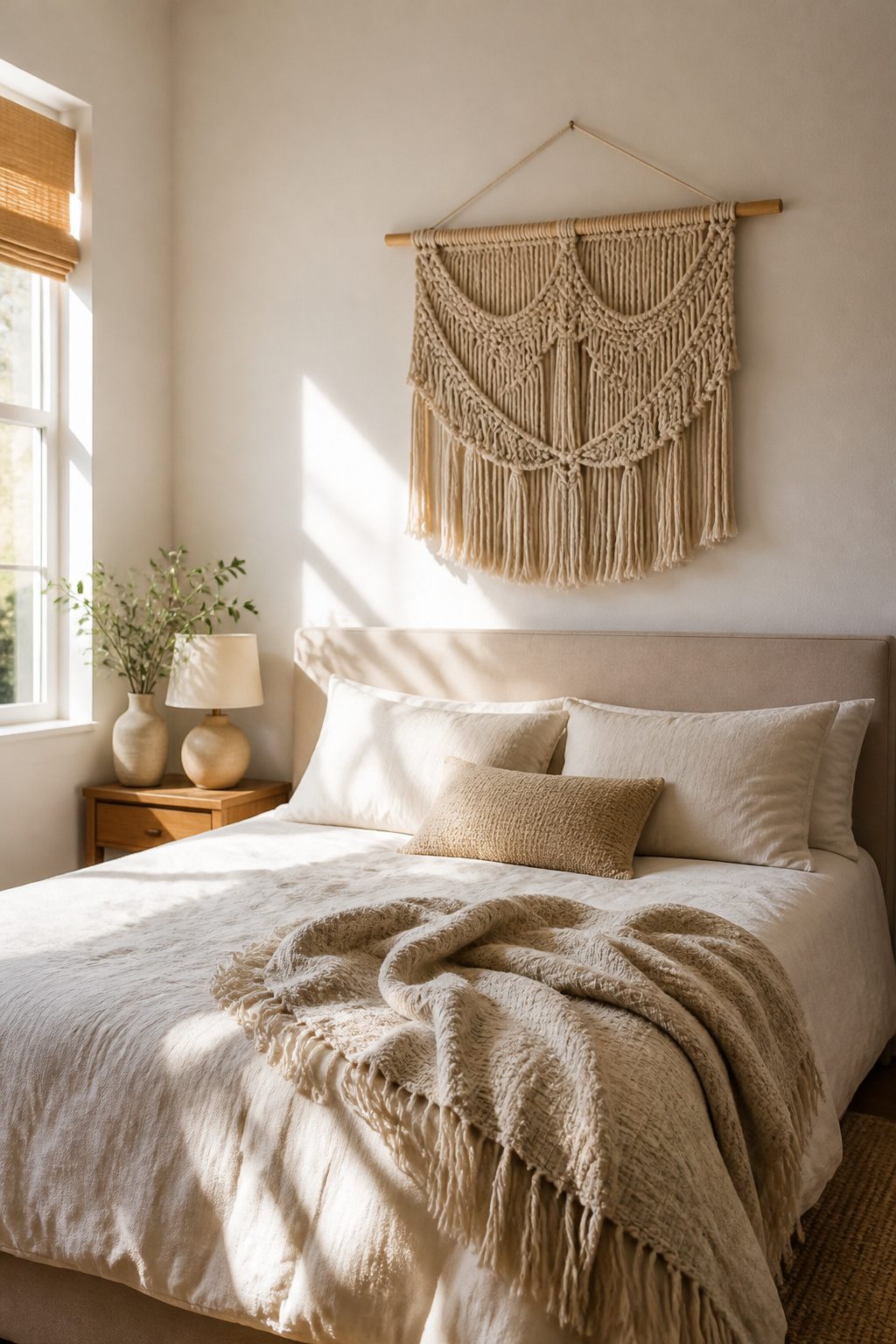
Woven wall hangings do something paint and prints cannot: they soften sound in a room that needs quiet.
Wool, cotton, or jute fibers absorb light and muffle the echo off hard floors, which matters more in a bedroom than most people realize until they hang one.
A roughly 39 by 30-inch piece built on wooden rods gives you real scale without the commitment of framed art.
The better ones split into two smaller hangings if you move or want to rearrange. Macramé falls into this same category, cotton cord knotted in leaf-and-tassel patterns that read as texture first and pattern second.
For mountain or cabin-themed bedrooms, this is where I would put my money.
Color matters less here than the material itself. Chunky wool in cream, rust, or clay on a timber dowel adds warmth that a flat print never reaches.
You do get dust and the occasional stray fiber.
These pieces need a lint roller every few months, and they do not travel well, packing flat but creasing if you fold them wrong. If you rent and move often, a lightweight cotton weave beats a heavy wool build.
Recommended Products

𝐍𝐔𝐑𝐒𝐄𝐑𝐘 𝐅𝐋𝐎𝐑𝐀𝐋 𝐖𝐀𝐋𝐋𝐏𝐀𝐏𝐄𝐑 — Peel and stick wallpaper designed for nursery and baby room walls, featuring soft green botanical floral patterns. Easy to install, repositionable, and removable without residue, perfect for creating a calm and natural space.

SIZE:The size of each roll of wallpaper is 17.7“× 118”(1.48ft × 9.84ft) covering 14.56 square feet. Strong coverage. making it not easy tear and offering superior coverage. You won't have to worry about show-through at all

Black Wallpaper --Embossing Process- It can effectively reduce the generation of bubbles. The solid color gives the room a more advanced texture. Our backing paper is designed with a measure-and-cut grid which makes our black wallpaper easy to cut and apply to any size bedroom wall
5. Wallpaper and Mural Panels
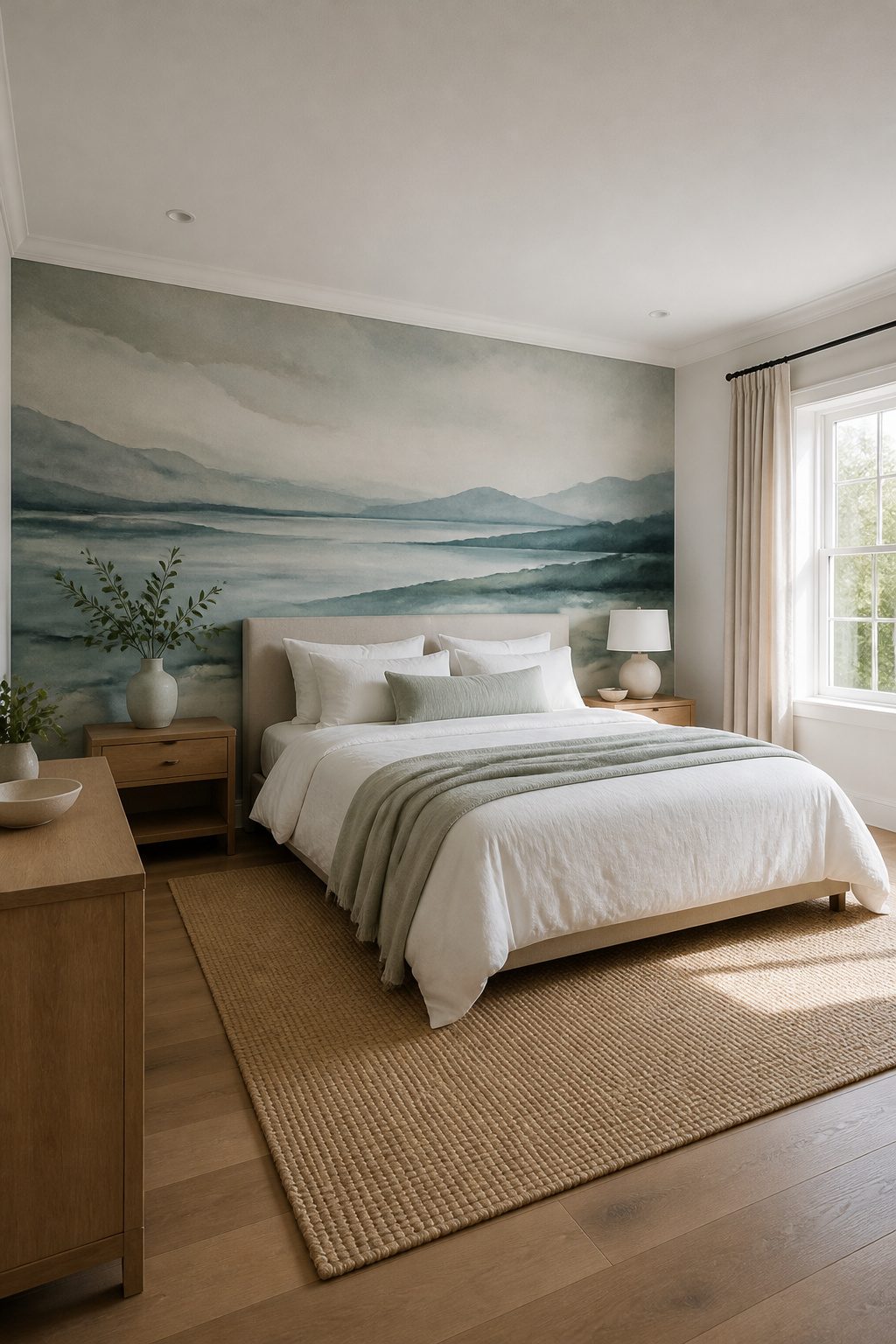
A single accent wall behind the bed replaces the need for above-bed art entirely, which is why I would start here if I were redoing a bedroom from scratch.
Peel-and-stick wallpaper has improved enough in recent years to look nearly identical to traditional paper, and it removes cleanly at lease-end.
Bold botanical or abstract prints work in larger rooms with good natural light, while smaller bedrooms usually do better with a subtler, tonal pattern.
Mural panels create the same focal point with less pattern repetition across the wall. I would steer toward soft blues, muted greens, or warm neutrals rather than high-contrast or busy designs that fight rest.
An abstract tonal landscape covering the entire headboard wall goes up in an afternoon and delivers the biggest visual change available to a renter.
Recommended Products

[ What You Get ] : 2 pairs 2 Inch french cleat picture hanger X 4 pieces self-tapping screws X 4 pieces self drilling screw X 4 pieces expansion rubber plugs X 4 pieces clear bumpers

【Secure Decorative Hook】: Our French cleat picture hangers are made of high-quality aluminum alloy, never rusting, ensuring strong support and long-lasting durability. Its innovative design incorporates the French cleat hidden hook technique, securely fastening your picture frames to the wall, preventing wobbling and instability.

Interlocking Z Clip Hanger: AENTGIU French cleat is made from rust-resistant, durable aluminum alloy material, securely supporting up to 120 lbs without. Z-shaped interlocking design locks your artwork firmly in place while allowing to easily adjust in seconds. Ideal for rotating seasonal décor or achieving a clean, professional gallery-style display
6. Shelving and Picture Ledges
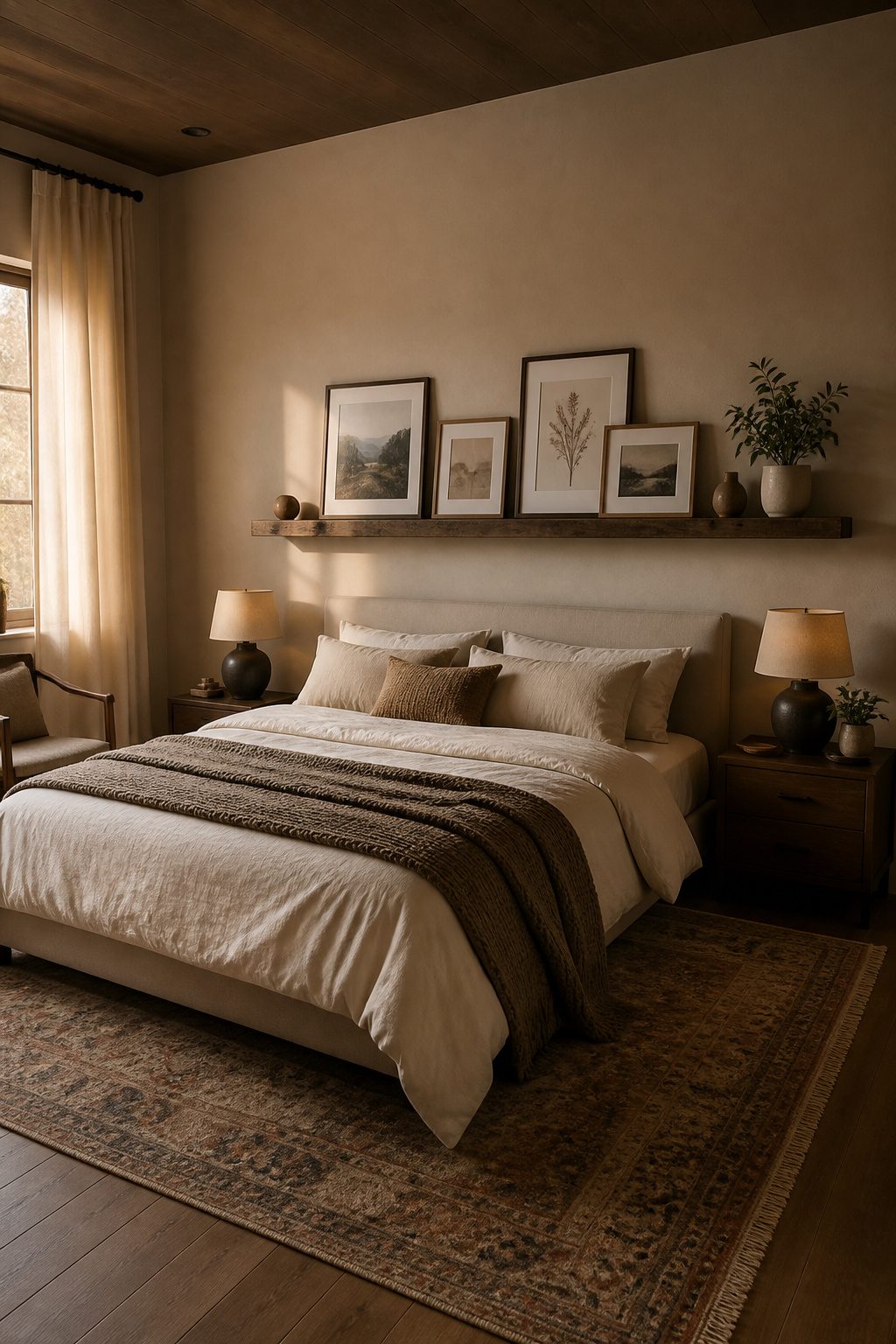
Shallow ledges above the bed let you lean framed prints instead of committing to nail holes.
I like this setup because the whole arrangement can be restyled in about ten minutes when you want a different mood or a new season.
The ledge itself becomes part of the look, and a small plant or a found object beside the frames keeps the display from feeling too planned.
Keep the ledge low enough that it replaces your headboard art rather than stacking on top of it.
Anything competing above the shelf just reads as clutter. For renters who cannot drill, adhesive picture ledges exist that hold light frames without touching the drywall, though I would test the weight limit before leaning anything glass-heavy.
One long timber ledge running the full wall width stretches a narrow bedroom visually, while overlapping frames at a single height keep the eye moving horizontally instead of bouncing up and down.
Open shelves collect dust, and leaning art means pulling pieces forward to clean behind them.
I would still pick this over a gallery wall for anyone who changes their mind often or wants to swap in a postcard from last weekend’s hike without reaching for a hammer.
Recommended Products

GREAT SIZE FOR VERSATILE SPACES: This 8.6x11.4 inch oval wall art is a great size for decorating kids’ rooms, playrooms, nurseries, bedrooms, bathrooms, kitchens, dorms, offices, and more. Its compact size adds a cozy, stylish touch without overwhelming your space.

【COZY VINTAGE LADY ART】This warm retro canvas print depicts a lady in deep emerald loungewear dozing on a soft mint green sofa, with a sleepy black cat curled beside her and a fallen open book on the wooden floor. HD printing restores thick textured brushstrokes and muted earthy vintage tones, bringing quiet, comforting cottagecore vintage charm to your wall decor.

Size:12inchx16inchx3 Pieces (30cmx40cmx3 Pieces)
7. Vintage and Antique Decor
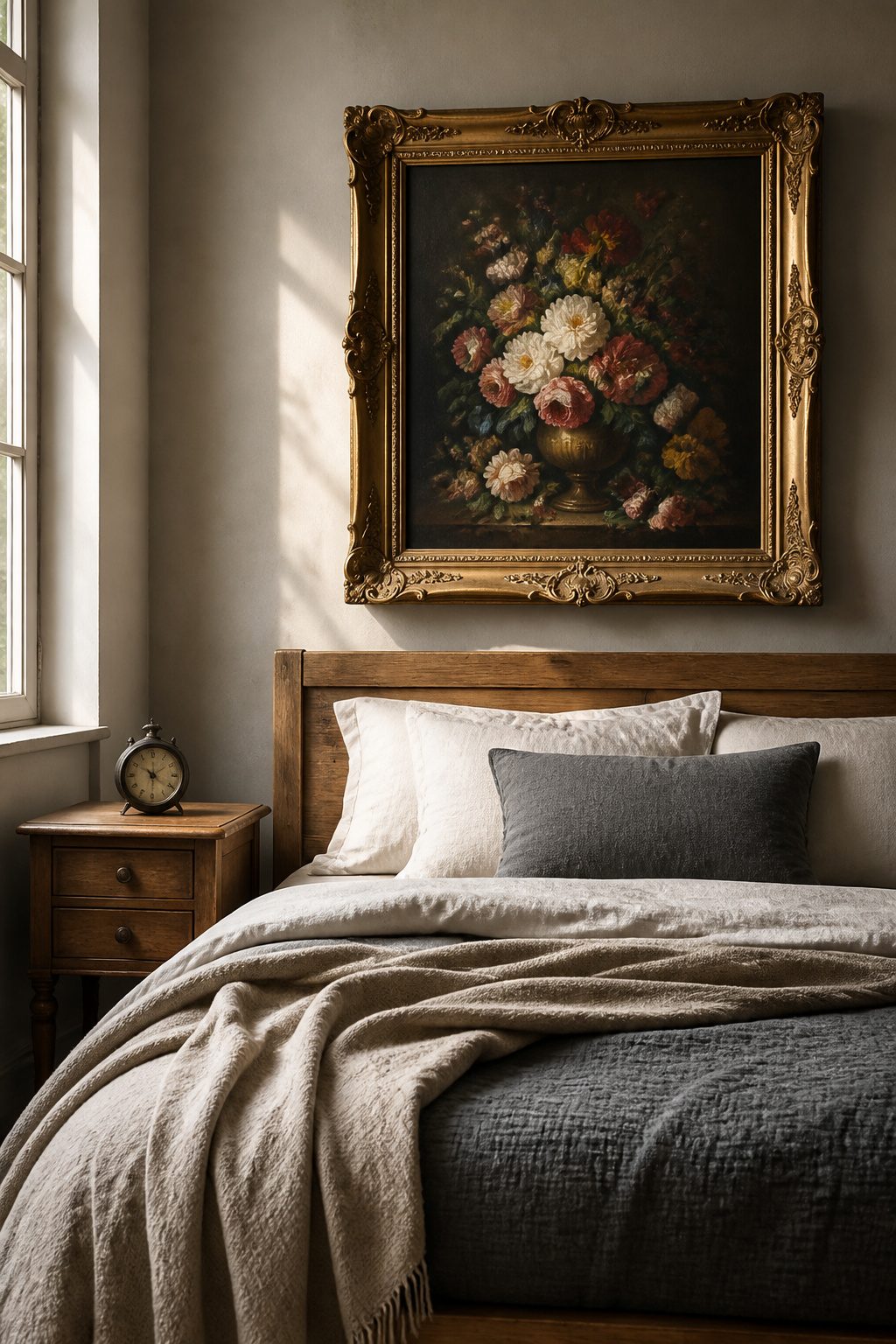
New manufacture rarely matches the age and variation of old frames, salvaged architectural pieces, or antique prints.
I scout flea markets, estate sales, and family attics for pieces with real patina. A single vintage oil painting in a worn gilt frame outperforms a wall of matching new prints if you want character rather than coordination.
Old Master florals are public domain now, so you can download a museum-resolution scan free and pay only for printing and framing. That makes it the best-value route to a substantial look.
Before hanging anything vintage, check the weight. Old frames run heavy, and the hardware matters more above a bed than almost anywhere else in the house.
A French cleat rated for at least the full weight of the piece removes the guesswork entirely, and for anything I am unsure about, I treat it as heavy and use one anyway.
Wall anchors rated for 50% more than the item’s actual weight work for medium-weight frames, though I still locate a stud whenever possible even with anchors as backup.
Recommended Products

Contemporary Gallery Frame Set – This collection features 9 mixed gallery wall frames. Each frame is finished in a color that complements your contemporary home design.

Contemporary Gallery Frame Set – This collection features gallery wall frames that can display photographs or art prints with the included art prints. Each frame is finished in a traditional color that complements almost every décor style.

Create a timeless art gallery wall with our vintage-style frames. Their ornate, classic design elevates oil prints and artworks, adding an elegant touch to any room.
8. Personalized and Custom Art
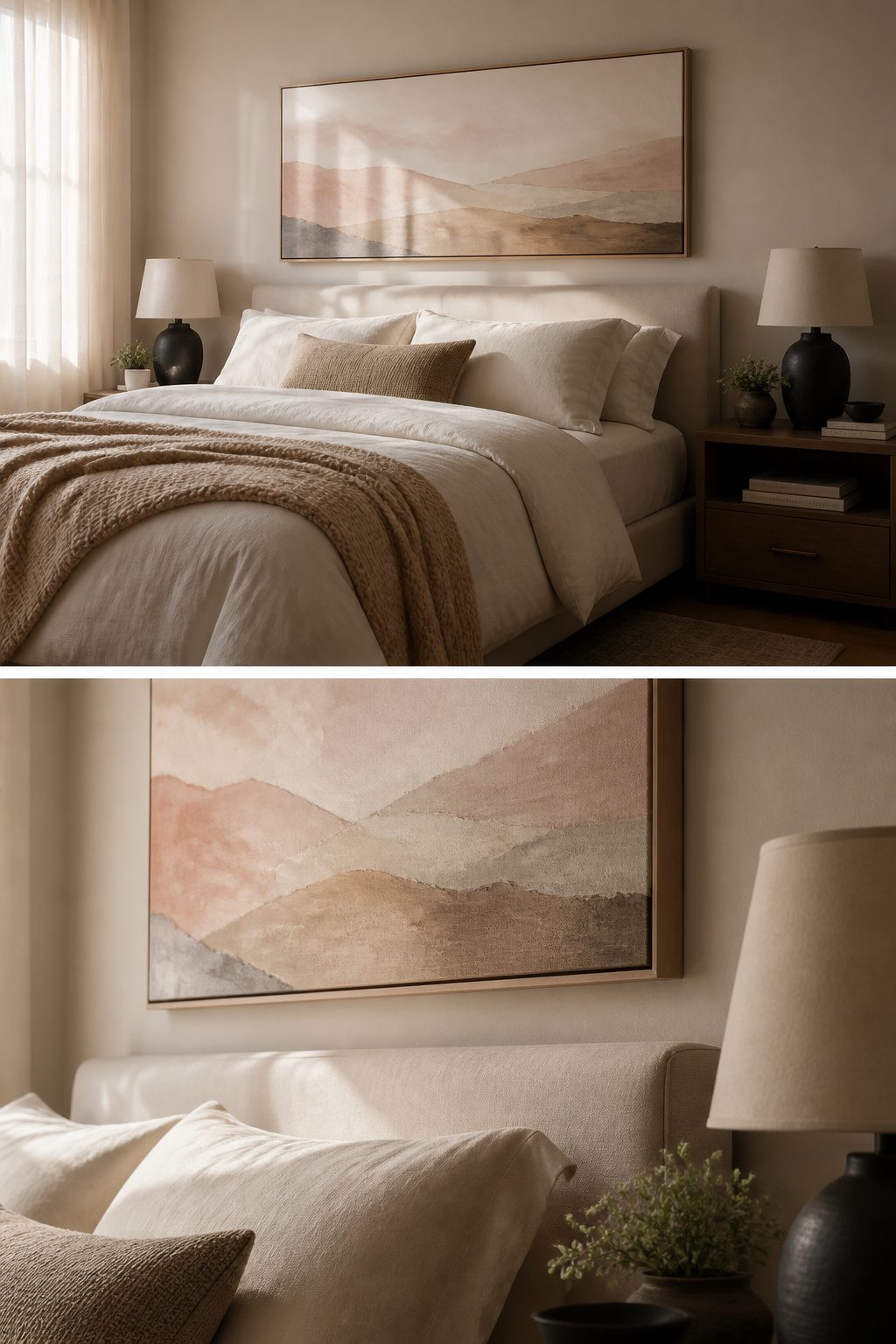
The fastest way to get wall decor bedroom sizing wrong is to buy the piece that looks right online and hope it fits.
Commissioned or custom-printed work solves this directly because you set the dimensions before anyone picks up a brush or loads a file.
Above a bed, art should span roughly two-thirds the width of the headboard. On a king bed that lands around 48 inches or more, which is a genuinely large piece and not something you find hanging in a standard frame aisle.
Ordering to that exact width means the proportions read as intentional, not like you shrunk a living-room canvas into an awkward gap.
Local print shops and online services can pull phone photos onto canvas or paper at scale, though turnaround and cost run higher than grabbing something off the rack.
You wait longer and pay more, but you get a piece that actually fits the wall you have, not the room in your head.
Recommended Products
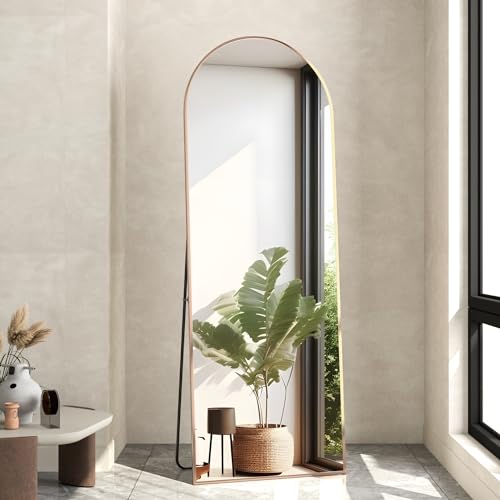
MODERN ARCHED DESIGN: The arched design of this 56 inch mirrors arch brings you a new visual experience, become the focal point of your room. Whether you want to make a small space feel larger or add a touch of luxury to your home, full body mirror for bedroom are a great place to start.

Full Length Viewing and Stable Standing: The 56 x 15 inch mirror provides a clear full body view and can stand securely on the floor or lean against the wall for everyday outfit checks.
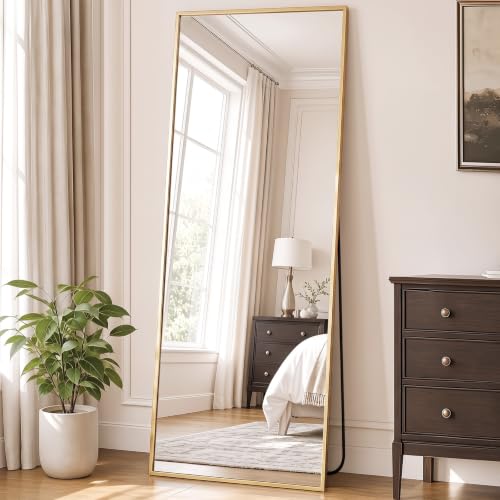
Large Full Length Mirror: Measuring 64" x 21", this full-length mirror offers a generous viewing area that easily reflects your entire body. With a clean, minimalist design featuring a rectangular arched vertical frame and a smooth, flawless surface, it not only serves its purpose but also enhances the beauty of any space
9. Minimalist Art
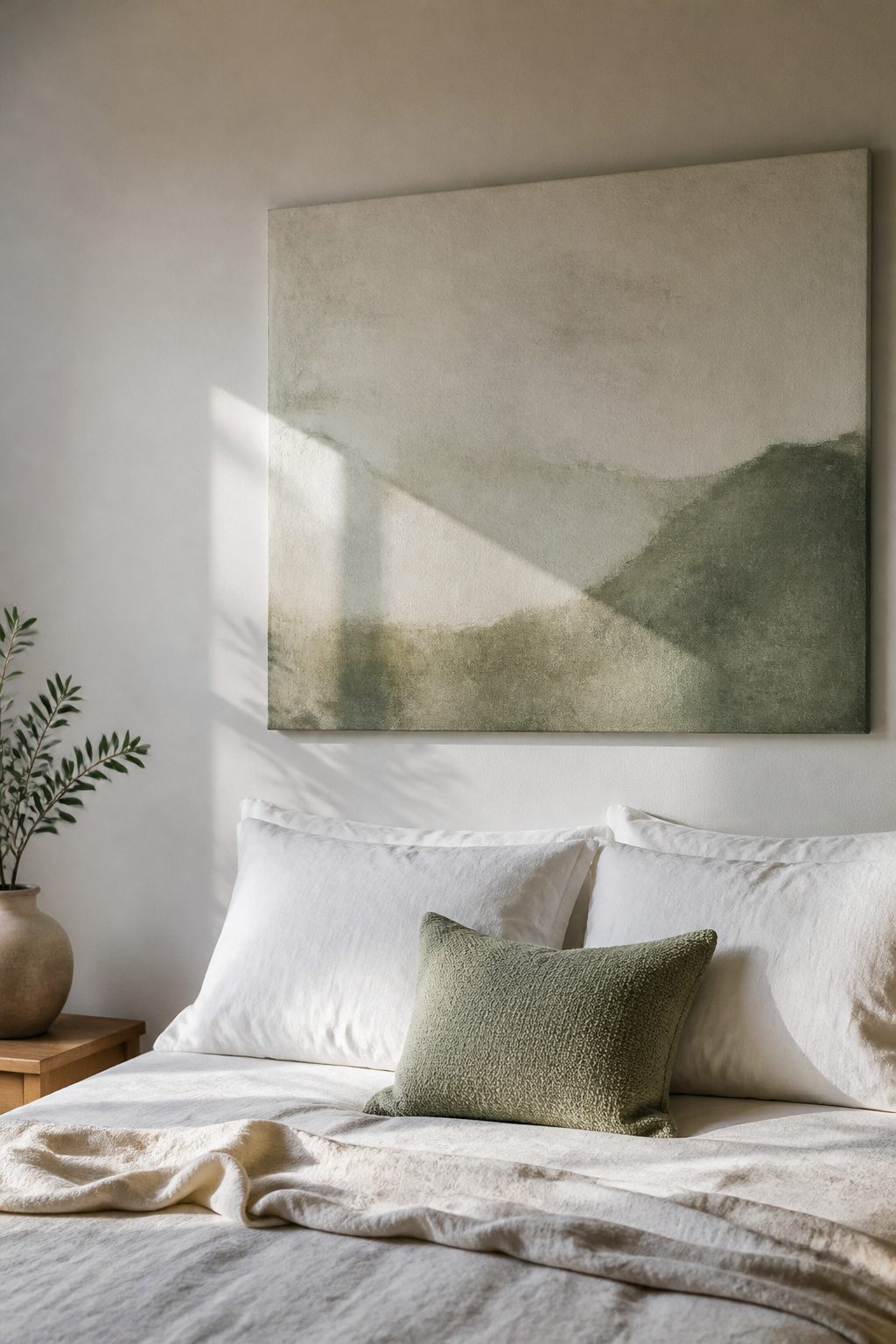
Quiet pieces with restrained color palettes suit bedrooms because they do not demand attention.
Single-line drawings, muted abstracts, or black-and-white photography with ample negative space all work here. The frame matters: a thin wood frame or an unframed canvas edge keeps the look light, not heavy.
I would skip gold metal line-art sets above the bed; the shine and shadow read as jewelry on the wall, and jewelry wakes up a room more than most people want at 11 PM.
Hang the bottom edge 6 to 10 inches above the headboard or mattress top, and size the combined width to roughly two-thirds of the bed’s width.
Soft blues, muted greens, and warm neutrals show their full value here. An abstracted landscape in sage and fog grey outperforms literal nature photography because it carries calm without pinning the room to a specific season or place.
For hardware, French cleats handle heavy pieces; for medium frames, anchors rated 50% above the item’s weight do the job.
Recommended Products

Unique design:This peel and stick wallpaper features abstract floral and grass patterns, blending a rich variety of flowers, grasses, and petals. The thoughtfully designed color scheme and layered floral patterns create a vibrant yet artistic effect. Whether you're looking to add trendy colors or create a cozy, inviting atmosphere, this boho wallpaper is the perfect fit. The bold color palette combined with floral designs brings a unique personality and ambiance, making it an ideal choice for any space.

Black Wallpaper--Embossing Process- It can effectively reduce the generation of bubbles. The solid color gives the room a more advanced texture, and enhance the ambiance of any room with the stylish and understated matt luxury black finish. This dark textured walls sticker papers complements both modern and traditional decor styles elevates any room instantly
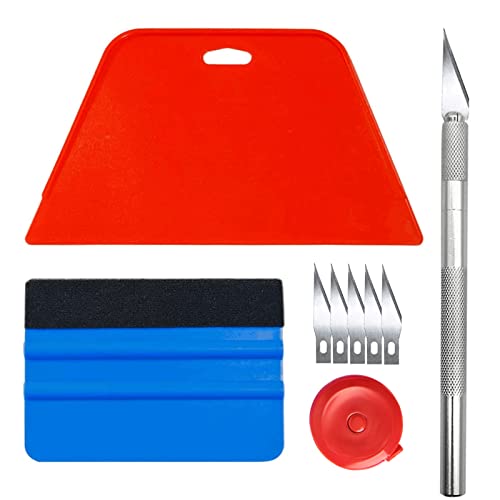
Complete Tool Kit: Includes a large smoothing tool, blue squeegee, utility knife, replacement blades, and measuring tape for installation tasks.
Sizing and Placement Rules
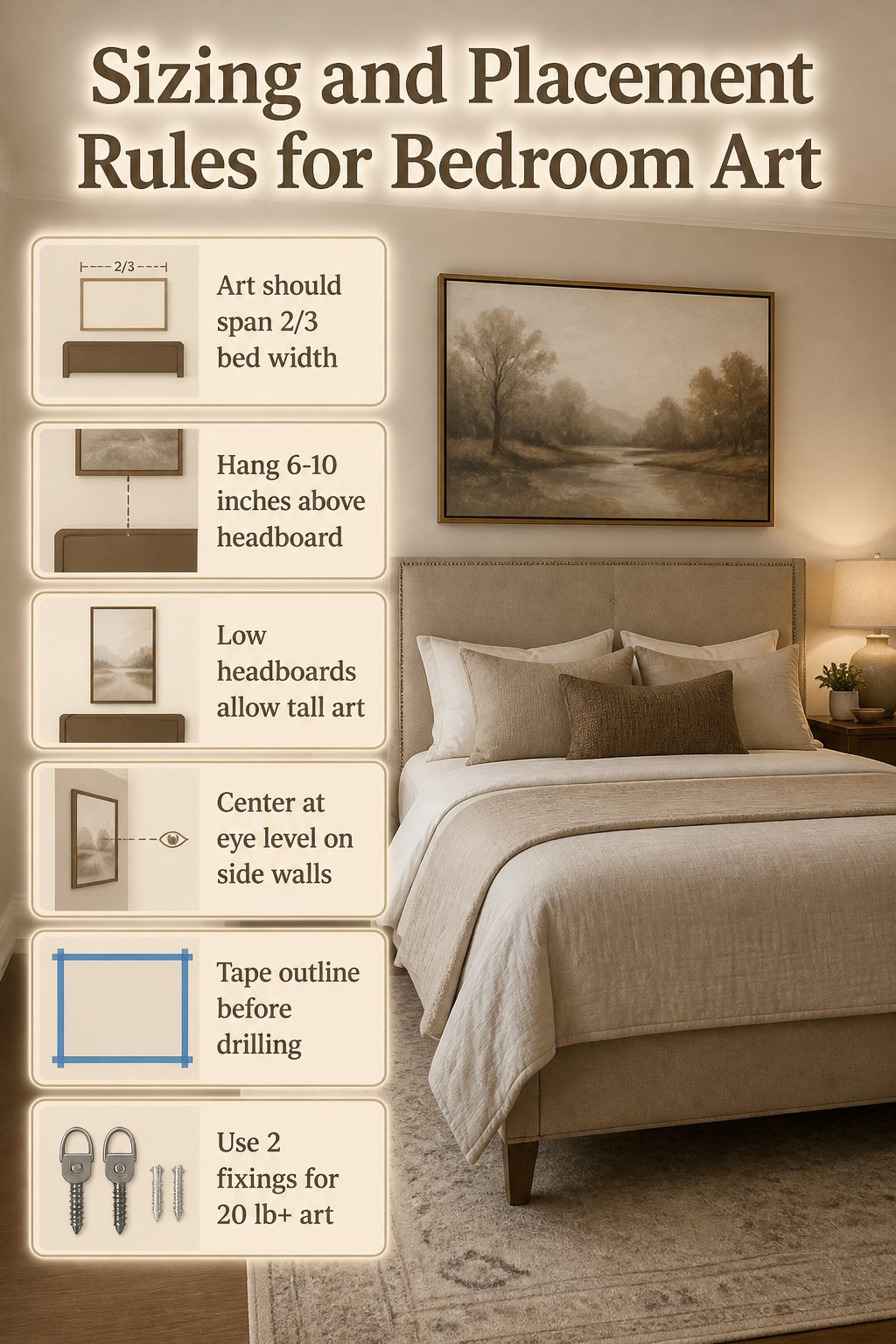
Art above a bed should span roughly two-thirds the bed’s width, not the wall’s.
A queen at 60 inches wants about 40 inches of art; a king at 76 inches wants around 50. Measure the whole group including gaps if you are hanging more than one piece.
Hang the bottom edge 6 to 10 inches above the headboard.
You view a bedroom wall from a lower position than a living room, and art hung at sofa height, 16 to 20 inches up, floats free of the bed and disappears the moment you lie down.
Very low headboards let you break upward: a taller piece fills the vertical space without breaking the connection.
Very tall headboards may need the full 10 inches, even 12, to keep the art from crowding the mattress. For side walls, center at eye level from a standing position, the same rule as any other room.
Before you drill, tape the outline on the wall with painter’s tape and live with it for a day. It costs nothing and prevents the one mistake you cannot undo cheaply.
Anything over about 20 lb needs two fixings, not one, spread across two D-rings and two anchors. For renters, heavy-duty adhesive strips hold roughly 16 lb per pair.
Recommended Products

Application:This french cleat hanger wall mounting bracket hardware kit includes all of the tools for a quick and easy installation. Z hanging kit is designed with Z shapes, can make your picture frame firmly fit with the wall without leaving redundant holes; you’ll have all you need to begin hanging your memories throughout home

1.Heavy-Duty and Reliable Aluminum Alloy Construction-Crafted from premium-grade 3mm thick aluminum alloy, our mirror mounting hardware ensure a durable and rust-resistant solution for securely mounting mirrors, pictures, or panels. The Z-bar clip design provides exceptional strength, capable of holding heavy loads without bending or deforming. The mirror brackets for wall mounting is ideal for both residential and commercial use, these mirror hangers are built to last.
Color and Mood
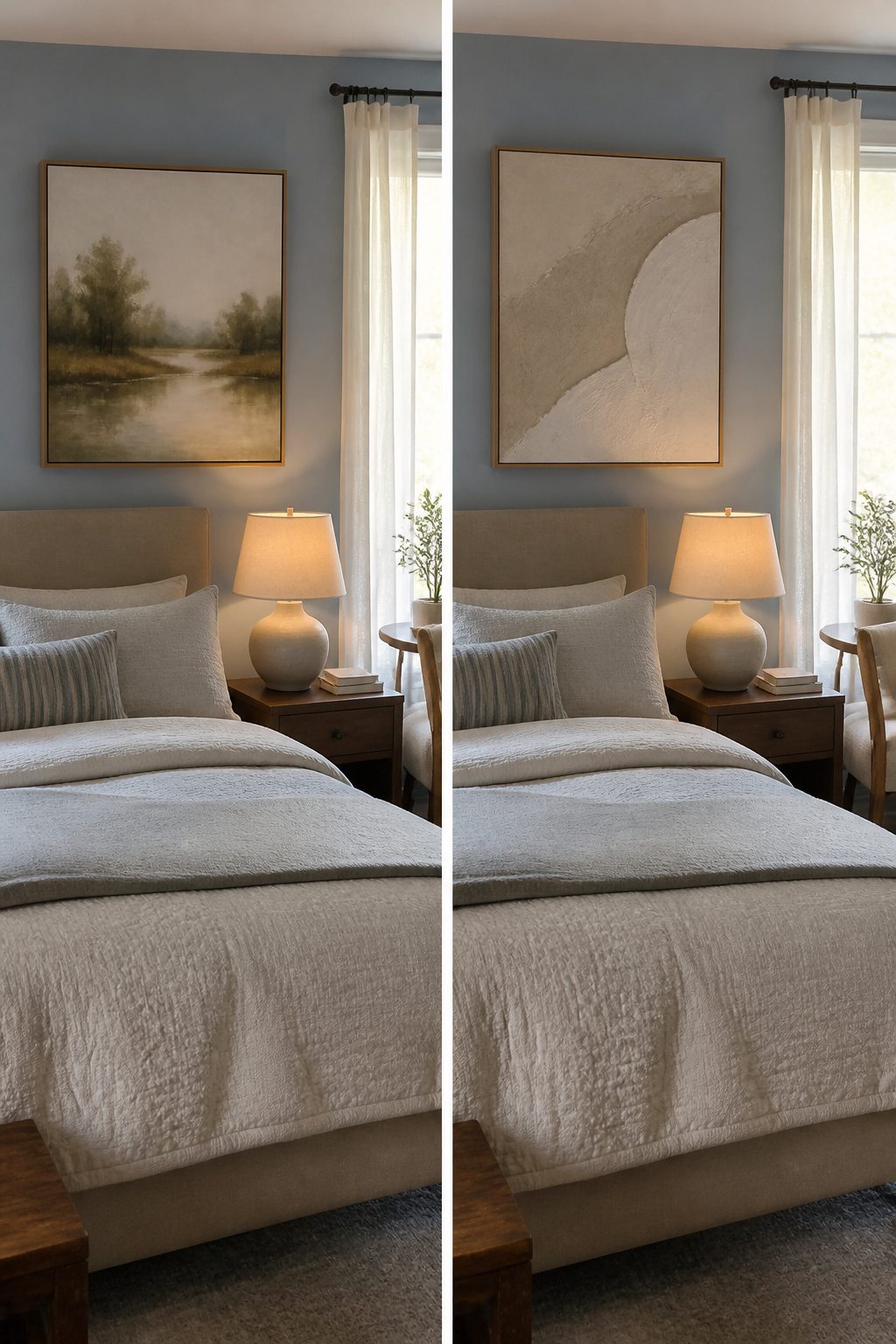
Bedroom walls call for a different color logic than the spaces where you entertain. In a living room, a saturated red or high-contrast black-and-white piece feels energetic; above a headboard, that same energy works against the goal of the room.
I would skip anything with a sharp value jump or a primary-heavy palette and hang soft blues, muted greens, and warm neutrals instead. These tones drop the visual noise that keeps a brain alert.
The material matters as much as the pigment. Canvas and textile absorb light, which keeps a piece feeling calm even when a bedside lamp hits it at 10 p.m.
Glass and metal can glare; I would test the angle before committing a framed print directly across from a morning window.
Frame choice follows the same rule. A black frame reads harder against light walls than natural wood, so for a restful wall I would reach for unfinished or lightly stained wood over a stark border.
Layering Walls With What You Already Own
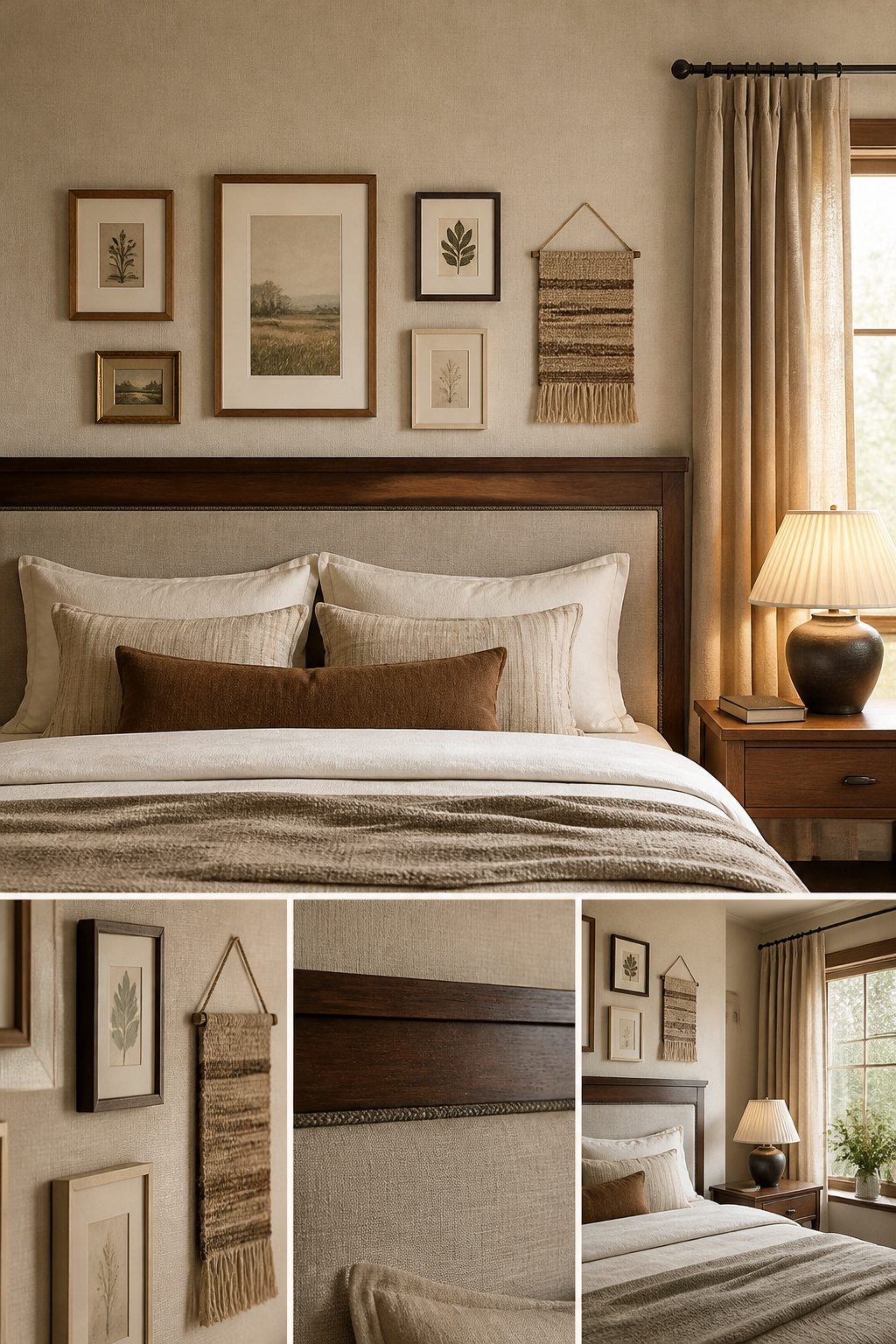
The wall above your bed already holds more than you think.
I start every bedroom project by treating what is there as three distinct layers, because a headboard and two stacked ledges read as one muddy middle layer unless you space them deliberately.
The base layer is your paint or existing wallpaper.
It sets the emotional temperature, warm and enveloping or cool and airy, and it has to stay visible. If you are working with a dark headboard wall, leave at least six inches of that color breathing on every side.
The middle layer is your headboard, bedding, and curtains.
I keep this stage neutral, almost flat, so the top layer can do the actual talking. A linen headboard in oatmeal, curtains that match the wall tone, bedding without a competing pattern: this is the stage, not the performance.
The top layer is where personality lives. A single original painting, a considered gallery arrangement, or a textile with real texture.
Original artwork does something reproductions often cannot: it holds light and brushwork differently depending on the hour, which gives a bedroom quiet movement rather than a flat, printed surface.
If you are building a gallery arrangement, plan the anchor piece first and build outward.
The sequence matters more than the accumulation. Each layer should read as intentional, and each should still be visible when you step back.
Renter-Friendly Methods
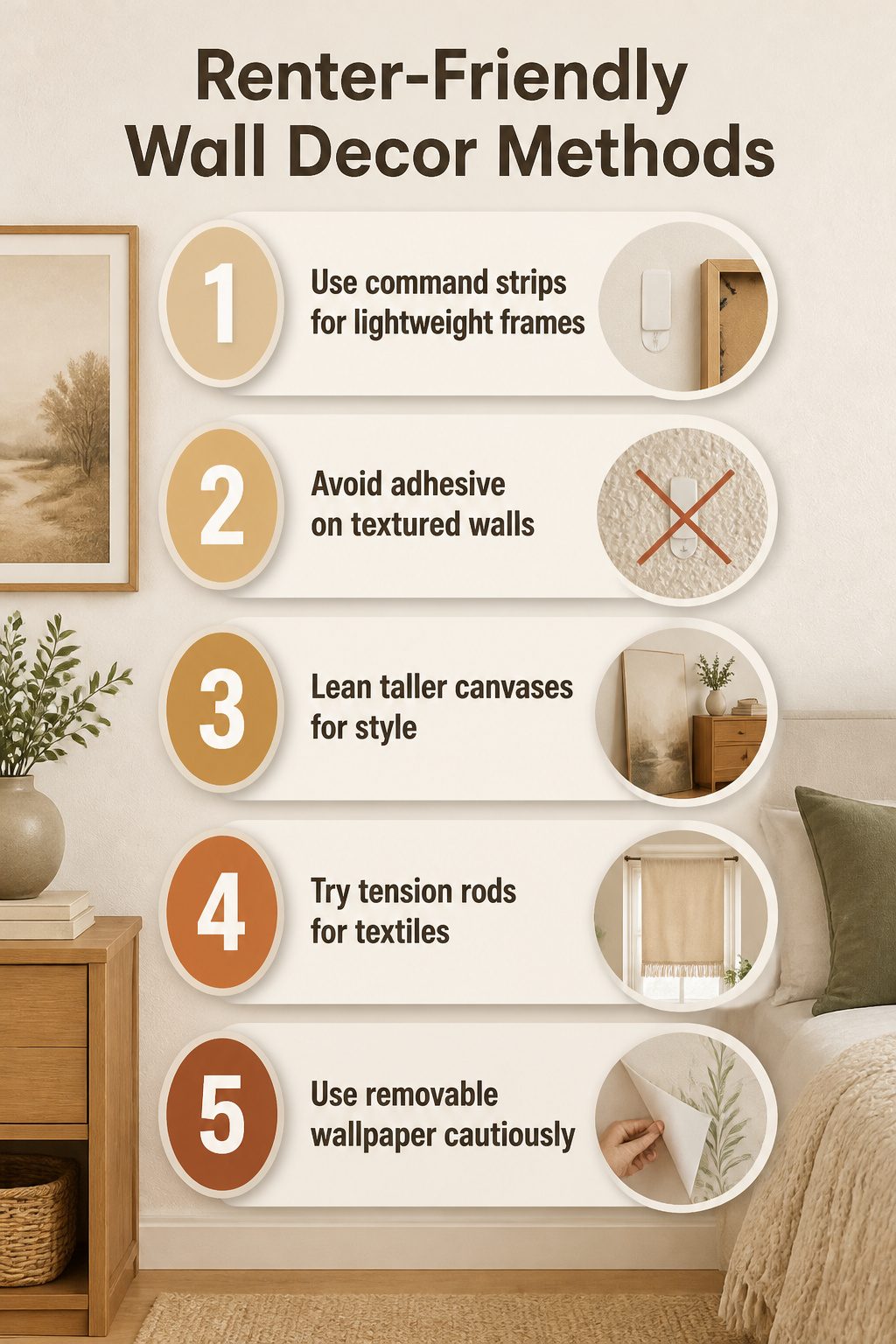
Command strips rated to 5 or 10 pounds handle most lightweight frames, but textured walls defeat standard adhesive hooks before the lease is half over.
The adhesive needs full contact with a smooth surface; popcorn or orange-peel texture leaves gaps that turn into failure points within weeks.
I would skip them entirely on anything but flat paint and use adhesive picture ledges instead, which spread the load across a wider strip and let you rearrange without starting over.
For heavier pieces, a canvas 80 centimeters or taller reads as intentional when leaned against the wall behind a dresser or beside the bed.
A smaller frame at floor level looks forgotten, not styled. Tension rods in a window recess or between two walls can hold a textile hanging with no hardware at all, and the whole setup drops in minutes.
Removable wallpaper covers a headboard wall in an afternoon and lifts at move-out, though not every product marketed as temporary actually releases cleanly. I would test a corner first and pull slowly, not trust the label.
Most of these ideas are simple enough to accomplish in a day. All you need is a hammer, a few nails, and a little creativity.
The hammer and nails are optional. The creativity is what makes the fifteen-minute teardown possible.
Seasonal Swaps
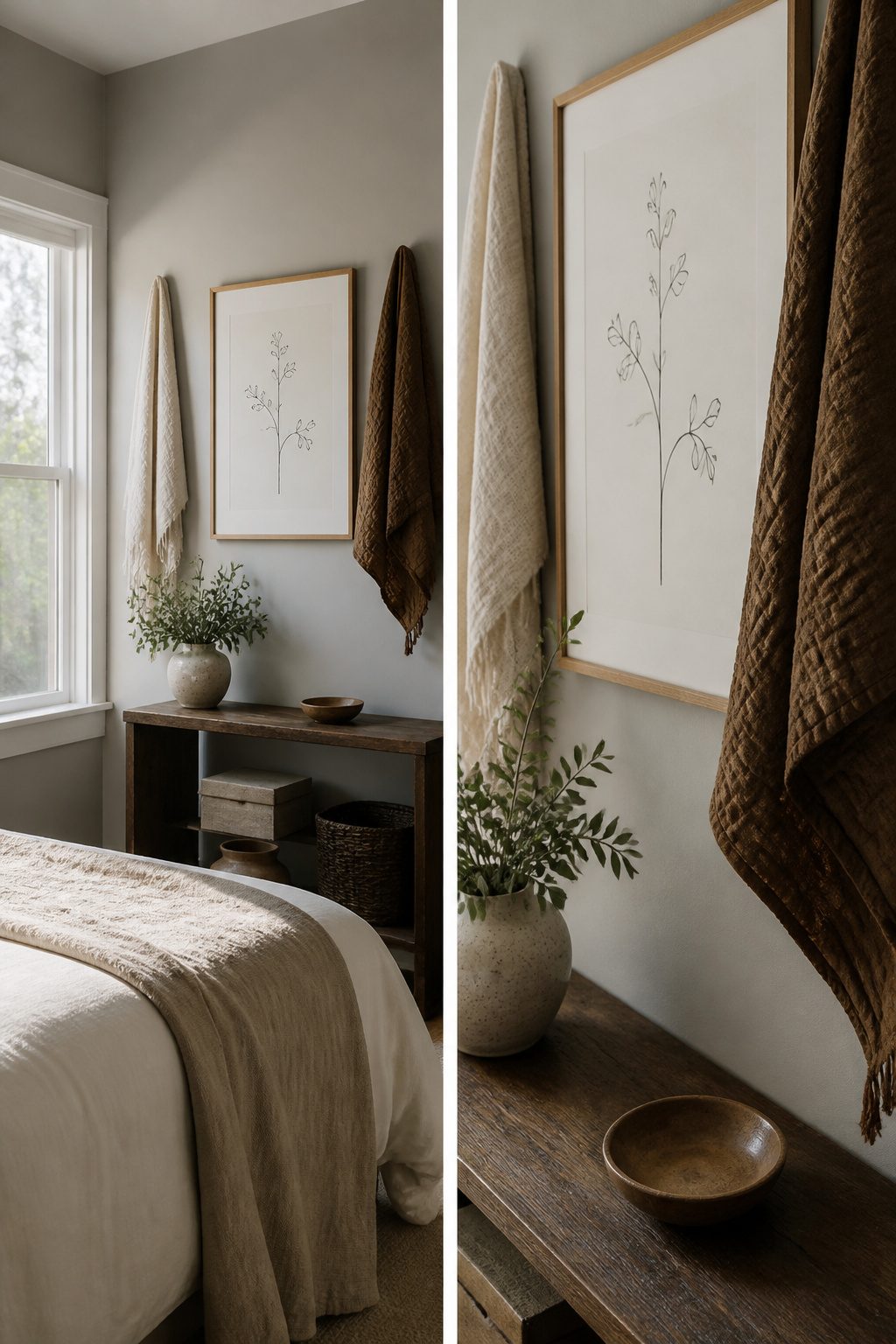
The trick to a seasonal wall refresh is keeping the off-season pieces small. A framed print in a standard 16-by-20-inch size slides flat under a bed or behind a narrow console with almost no clearance needed.
Textiles, a lightweight summer wall hanging or a small quilted piece for winter, fold to the size of a sweater. Lean three or four pieces in rotation rather than hanging a dozen canvases that demand real storage space.
I would pick one winter piece, something with heavier texture or darker tones, and one summer piece in lighter colors or open weave.
The other two should work year-round: a simple line drawing, a black-and-white photograph, anything that does not read strongly as one season. That keeps the stash at four items total, not a closet full.
The swap itself is about an hour.
Pull the current piece, hang the next, done. That fits the weekend project window without touching the rest of the room.
Four pieces, one hour, no storage bin required. The year-round pair stays up through the transitions, so you are never looking at bare walls while you hunt for the next season’s box.
Frequently Asked Questions
How high should art hang above a bed?
The bottom edge of the artwork should sit 6 to 10 inches above the headboard.
This keeps the piece visually tied to the bed rather than floating toward the ceiling, and it stays in view when you are lying down. Very tall headboards may need the full 10 inches or even 12 to avoid crowding the mattress.
What size art should go above a queen bed?
Aim for artwork that spans roughly 40 inches across, which is about two-thirds the width of a standard 60-inch queen bed.
This proportion reads as intentional rather than too small or overwhelming. The same two-thirds rule applies to gallery walls: measure the entire grouping including gaps.
Are mirrors good for small bedrooms?
Yes. A large mirror on the wall opposite the window bounces natural light back into the room and makes the space feel bigger than any lamp can.
Some sleepers prefer the mirror off to the side rather than directly facing the bed to avoid catching your own reflection at night.
What colors work best for bedroom wall art?
Soft blues, muted greens, and warm neutrals support a restful mood and drop the visual noise that keeps a brain alert.
Skip saturated primaries or high-contrast black-and-white pieces that feel energetic in a living room but work against sleep. Canvas and textile absorb light and stay calm even when a bedside lamp hits them late at night.
Can renters decorate above the bed without drilling?
Yes. Leaning a large canvas against the wall behind a dresser reads as intentional styling, not a forgotten frame.
Adhesive picture ledges spread weight across a wider strip and let you rearrange without fresh nail holes. Removable peel-and-stick wallpaper covers a headboard wall in an afternoon and lifts cleanly at move-out, though testing a corner first is smart.
How to style an empty bedroom wall?
Start by treating what is already there as three layers.
The base layer is your paint or wallpaper, which sets the emotional temperature. The middle layer is your headboard, bedding, and curtains, kept neutral so the top layer can stand out.
The top layer is where personality lives: a single painting, a gallery arrangement, or a textile with real texture. Each layer should read as intentional and still be visible when you step back.
What are some good wall art prints for bedrooms?
Single-line drawings, muted abstracts, and black-and-white photography with ample negative space all suit bedrooms because they do not demand attention.
Old Master florals are public domain now, so you can download a museum-resolution scan free and pay only for printing and framing.
An abstracted landscape in sage and fog grey outperforms literal nature photography because it carries calm without pinning the room to one season.