
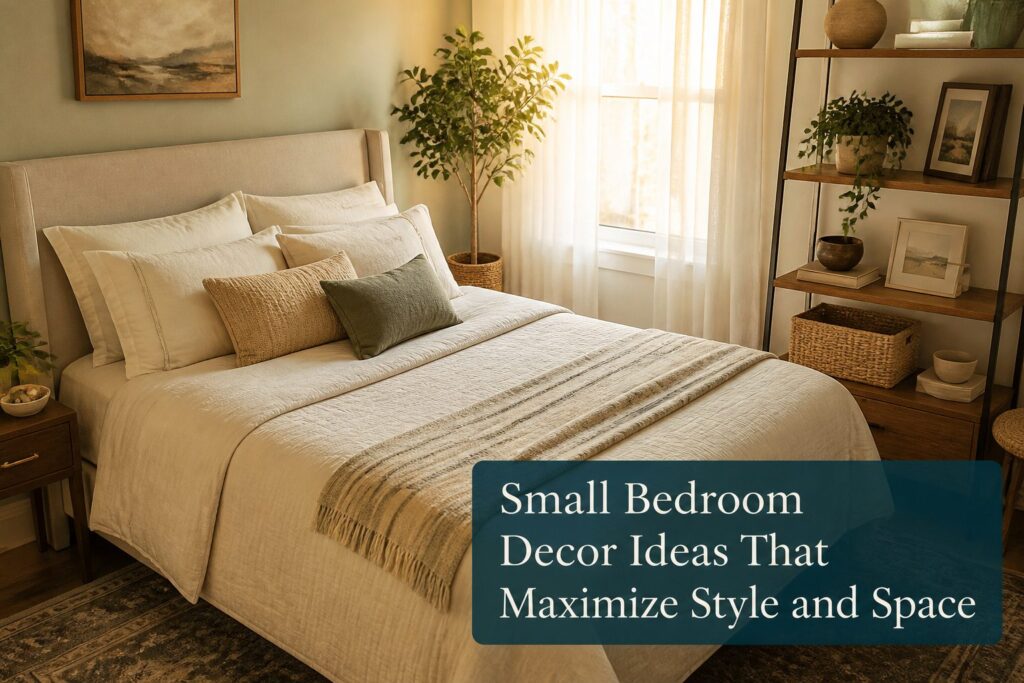
The best small bedroom decor ideas range from a $40 dimmer retrofit to a full built-in storage bed, and the one that belongs in your room depends on whether you rent or own.
Renters should know that a painted headboard wall wins every time: one can of Sherwin-Williams Alabaster and a weekend, zero hardware left behind.
1. Choose a Focal Point
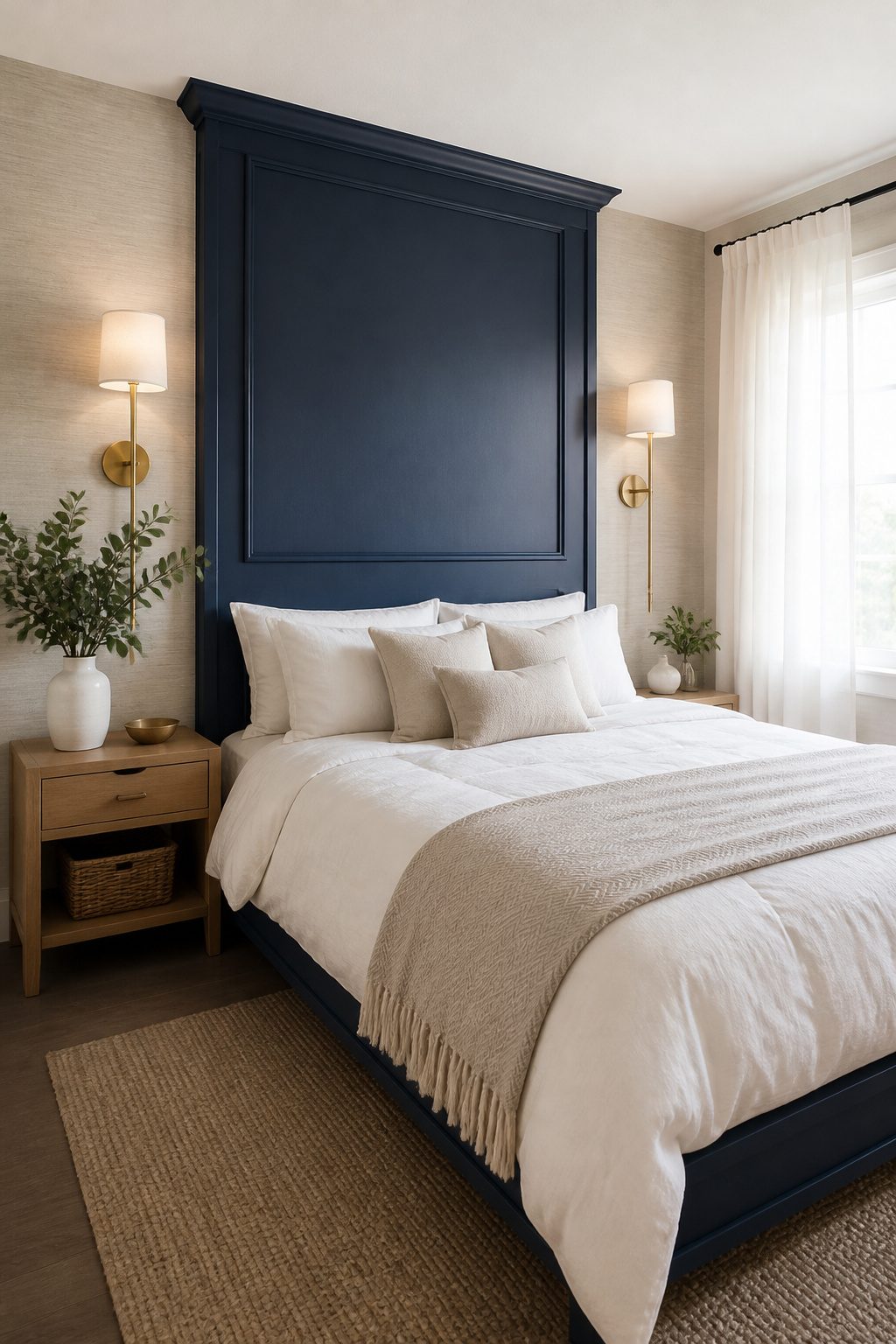
A small bedroom shrinks when the eye lands in three places at once. One strong focal point fixes that.
The bed wall is the natural anchor, and five separate approaches back this: a single large piece of art, a painted headboard, a wood board mounted behind the bed, a half-painted accent wall, or shelving built around the frame.
Each one draws attention upward and creates the depth that scattered decor destroys.
I would skip the gallery wall every time. Multiple small frames read as clutter in tight quarters, and the room ends up feeling more crowded, not less.
A painted headboard wins for renters because it costs a can of paint and a weekend, and it leaves no hardware behind.
If you own the place, a wood board attached to the wall gives that built-in look, but the principle stays identical: decide where the eye goes, then mute everything else.
Test it by walking through the door. If your attention splits between the bed, a dresser vignette, and window curtains, two of those need to go quiet.
Recommended Products

Special Gentle Adhesive– Safe for Latex Paint Walls– Designed with a gentle adhesive that sticks securely but won’t damage your wall paint. It leaves no residue, prevents peeling, no harm to walls. Self-adhesive vinyl material, Not intended for repeated use.

【Wall & Furniture Protection】These EVA foam headboard stoppers and furniture wall protectors effectively prevent headboard rocking, reduce noise, and shield walls from damage. Ideal as wall bumpers to protect walls for beds, sofas, and chairs – ensuring silent, scratch-free furniture.

Wall Art Size : 24×24 inches (60×60 cm). Original handmade oil painting. 100% handpainted Tree of Life Artworks paintings by professional artists, not printed or poster.Each painting features rich texture, strong three-dimensional effect and is unique.
2. Opt for Streamlined Furniture
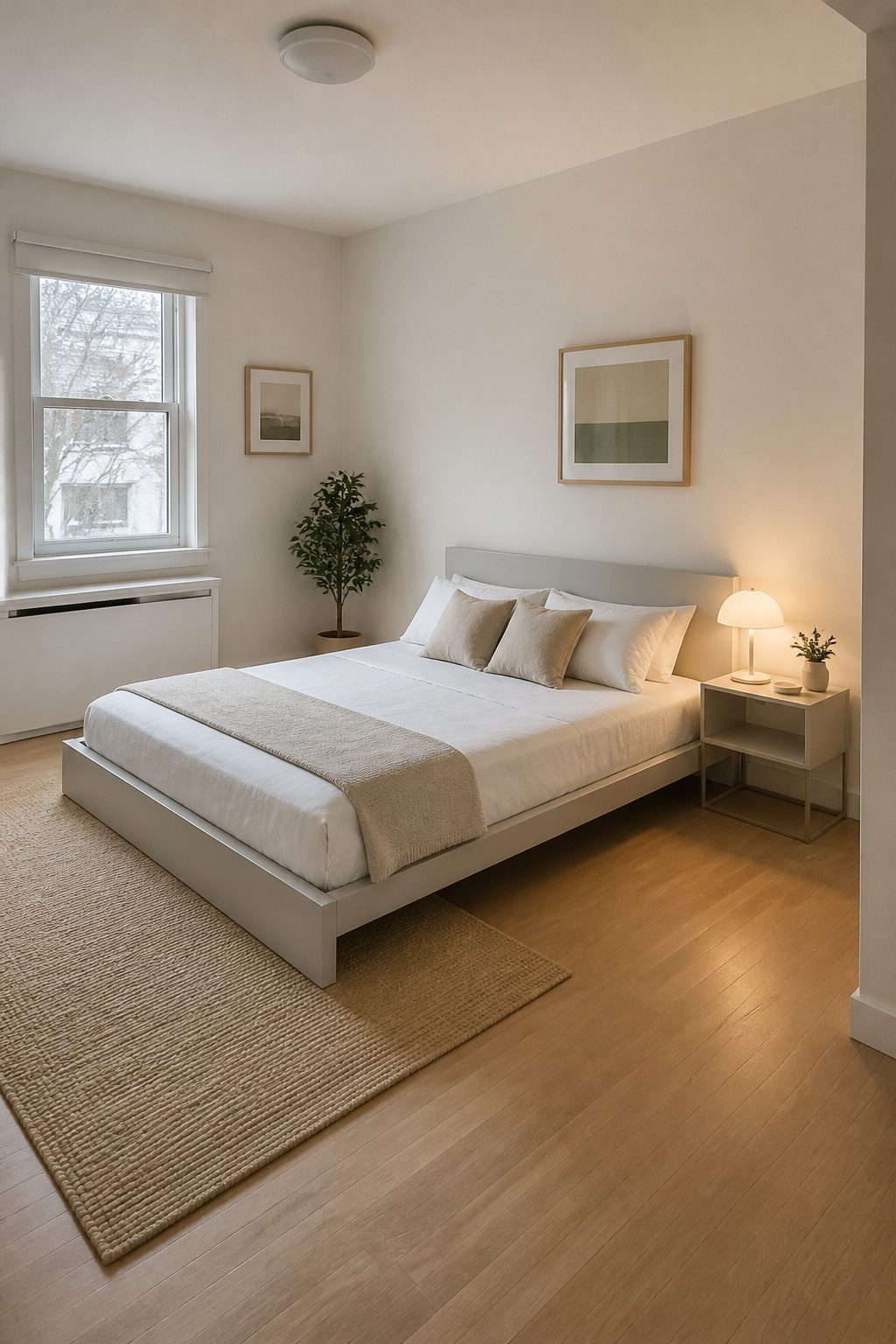
Streamlined furniture is the single biggest move in a small bedroom, because the visual weight matters more than the square footage.
A low-profile bed sits closer to the floor and quits demanding attention, so the room reads open even when the dimensions are tight.
The principle is air under and around: furniture legs that show six inches of floor underneath let the eye travel straight through instead of stopping at a solid block.
A 30-inch nightstand in a 10-foot room eats a quarter of your wall and leaves barely enough gap for the door swing.
I would pick the 24-inch version every time. It still holds a lamp and a glass of water, but the extra six inches of visible floor on each side keeps the room from feeling stuffed into a box.
Skip the bed skirt, too. Covering those legs undoes the whole effect; even a few storage bins underneath are fine, but let the space show.
If I were buying one piece first, it would be a plain platform frame no wider than the mattress itself.
Sleigh beds and pedestal bases look beautiful in a catalog, but they take up room you do not have to spare.
3. Add Visual Height
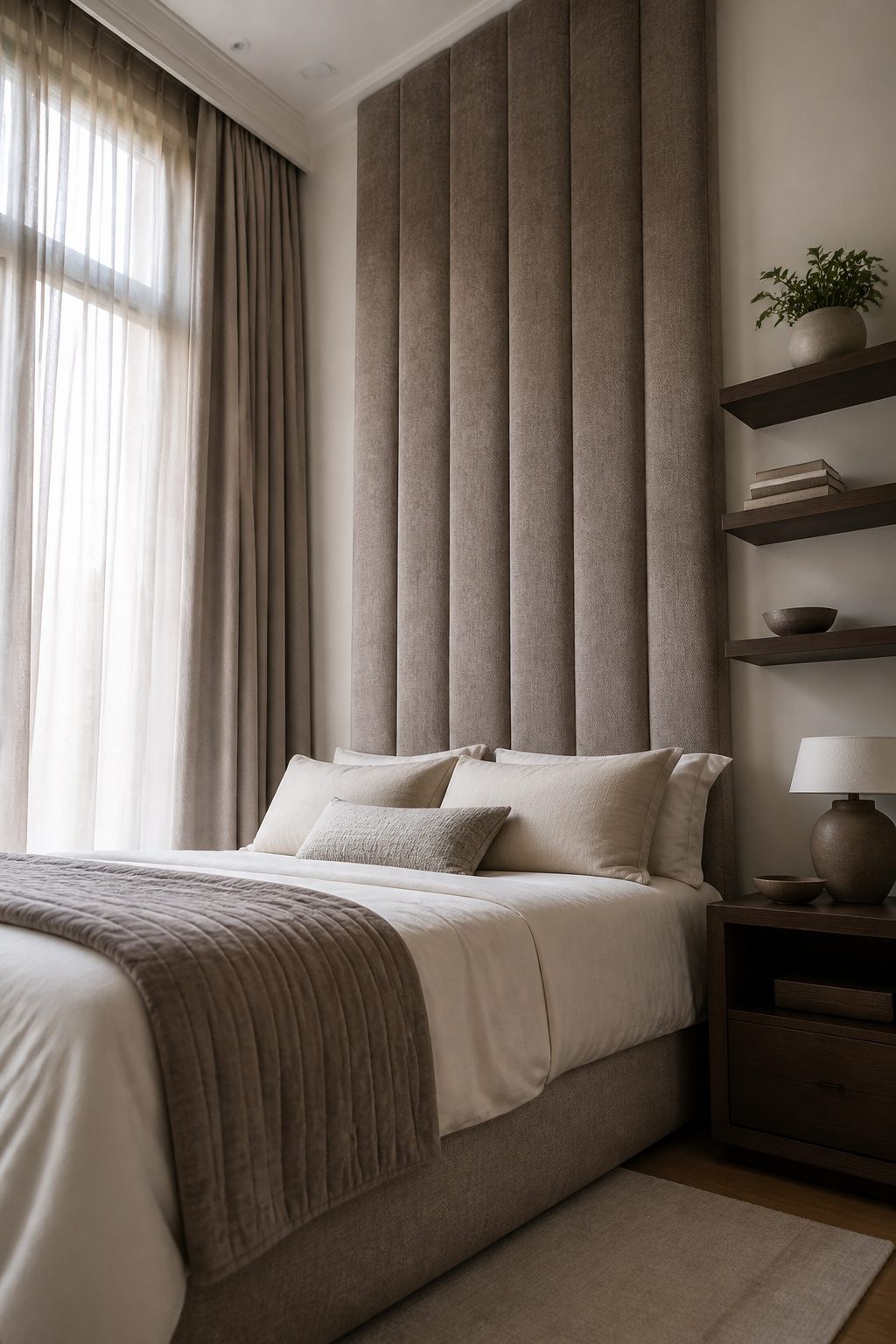
Vertical lines pull the eye upward, and in a small bedroom that upward pull is half the battle.
A tall headboard, even a simple upholstered panel that rises 54–60 inches, frames the bed as something intentional rather than a mattress dropped in a corner. I would skip anything shorter than 48 inches here; it reads as furniture, not architecture.
The move that costs almost nothing and changes the most is hanging curtains at the ceiling, not the window frame.
Mount the rod 4–6 inches below crown molding or right at the ceiling line, and let the panels pool slightly or just kiss the floor.
The window itself stays the same size, but the wall reads taller and the room stops feeling like a box.
For storage, one mounted shelf stack above the nightstand or desk keeps the floor clear without the visual weight of a bookcase.
Floating shelves in a 36–48 inch vertical run hold what you need within arm’s reach and leave the lower wall open, which matters when square footage is tight.
I would keep the stack narrow, 8–10 inches deep, so it does not turn into a ledge for clutter.
Recommended Products

- Custom Design Fabric:To reduce budget while keeping the linen/cotton organic characteristics,XTMYI R&D designer makes this stone-washed ultra soft yet linen look blended fabric - 20% cotton,20 linen,60% polyester.It drapes well,medium thick,airy and breathable in hot summer.

Flexible Division, Instant Privacy:Made from a single, sturdy panel, this curtain creates a complete visual barrier. Without costly renovations, just pull it closed to form a private space for work, rest, or leisure in any room—living room/bedroom/office/closet/sliding glass doors/patio doors... It also hides cluttered shelves and exposed pipes, instantly improving the room’s look and helping you handle surprise guests.

WELL MADE - Made of European flax linen fabric. Dual rod pockets top with 2.8" diameter, universal fit to most of curtain rods. 2" bottom hem enable sheer curtains hanging vertically.
4. Clever Storage Solutions
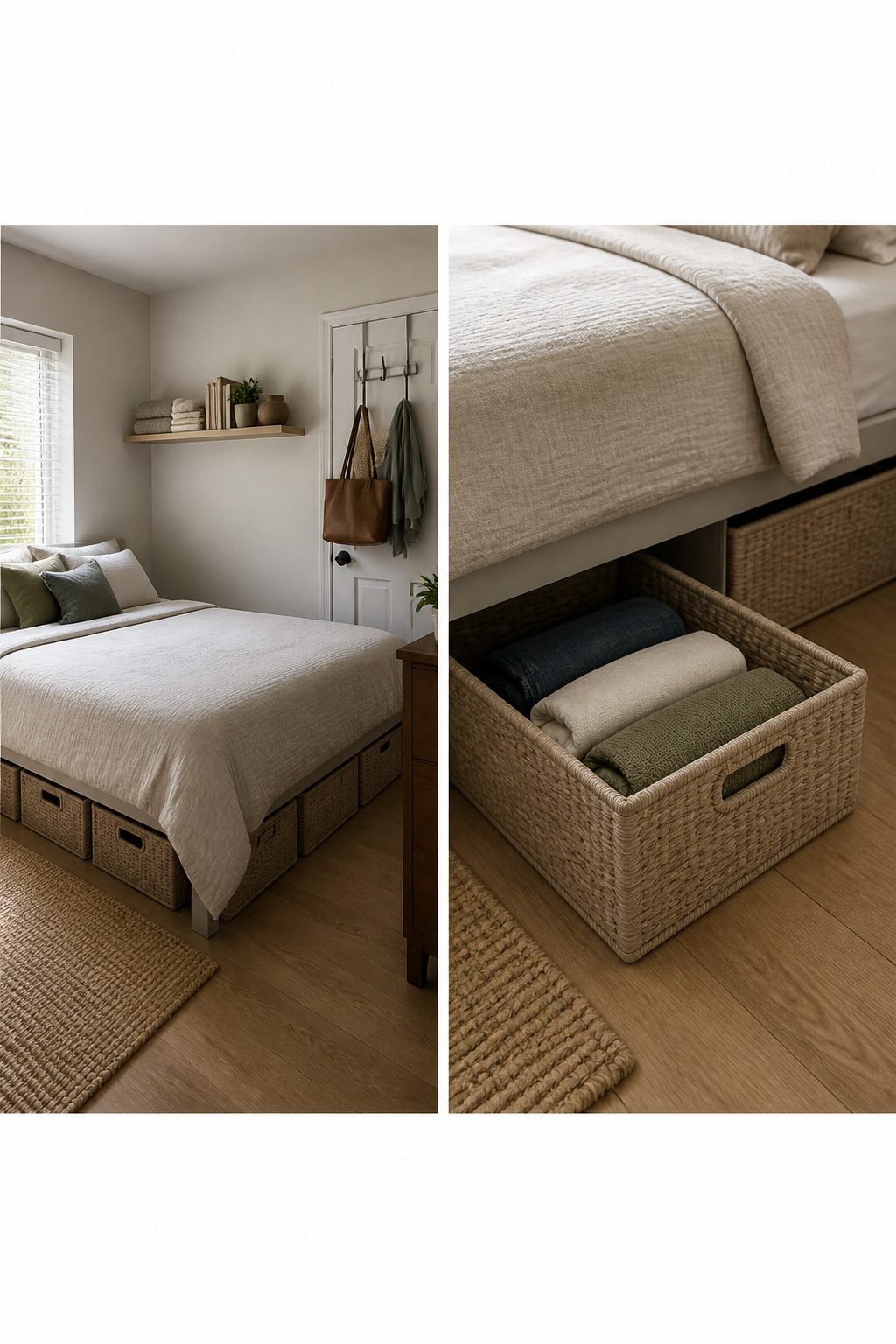
Under-bed storage only works if the bins actually slide out without a fight.
I give myself 6 inches of clearance minimum so casters roll smooth over carpet or hardwood. Go lower and you are fishing bins out with a yardstick.
I prefer textured storage boxes in a woven polypropylene. They look intentional, not like the plastic totes from a dorm move-in, and the weave gives just enough grip that they do not slide around on their own.
Wall space above the door frame is dead space until you mount a shelf there. A narrow floating ledge, 8 to 10 inches deep, holds extra linens or books without stealing an inch from the room below.
The back of the door is the last spot to exploit. Over-the-door hooks or a slim organizer with pockets turns that surface into storage for shoes, bags, or tomorrow’s outfit.
Keep it shallow. A bulky hanger bangs the door frame every time you close it, and in a small bedroom that noise gets old fast.
Recommended Products

Modern LED Black Nightstand: Enhance your space with Lazzanto's sleek nightstand, featuring a smart LED light strip. Control the lighting via cord or app, with options for timer settings, voice activation, and music sync to create the perfect ambiance

Modern LED Nightstand: Enhance your space with Lazzanto's sleek nightstand, featuring a smart LED light strip. Control the lighting via cord or app, with options for timer settings, voice activation, and music sync to create the perfect ambiance

【Night Stand with Charger Station】Add 2 AC outlets, 1 USB port and 1 type-c port, more charging spots for bedtime, plug in your phones and turn on your lamps, this nightstand with drawer will comfort your bedtime with convenient charging. Plus: Contain patent pending drawer slide
5. Multi-Functional Furniture
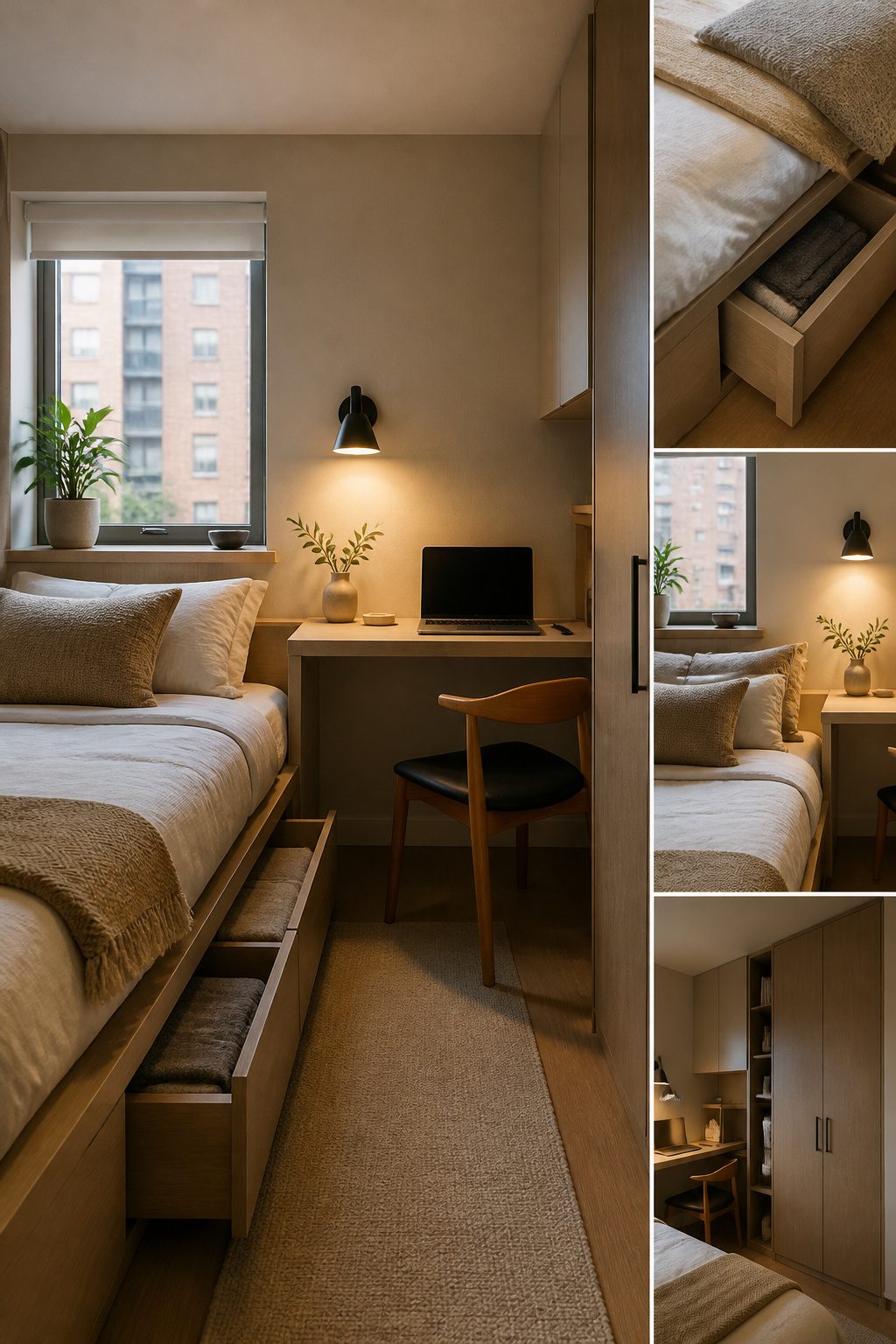
A bed with built-in drawers is the first place I would put money in a small bedroom, because it replaces a separate dresser and keeps your walkway clear.
Source 6 calls this out as the piece that solves the storage problem without asking for more floor space, and I agree: if the drawers slide smoothly on real casters and the frame sits low enough that you do not stub your toe, it earns its spot.
The second piece I would look at is a desk that works as a nightstand.
The same surface holds your lamp, your phone, and a laptop when you need one. I get picky about this part.
The question that decides whether a piece earns its double duty is simple: does it do both jobs without fighting itself? A desk that is too deep crowds the bed.
A nightstand with no legroom underneath fails as a workspace. I would measure the 24 inches you need for a chair to slide back, then check whether the drawer depth still leaves room for your knees.
If the desk wobbles when you write, or the bed drawers bind after six months, the second function becomes a burden and the room feels smaller, not larger. I would rather have one solid piece than two half-working ones.
6. Keep Decor Minimal
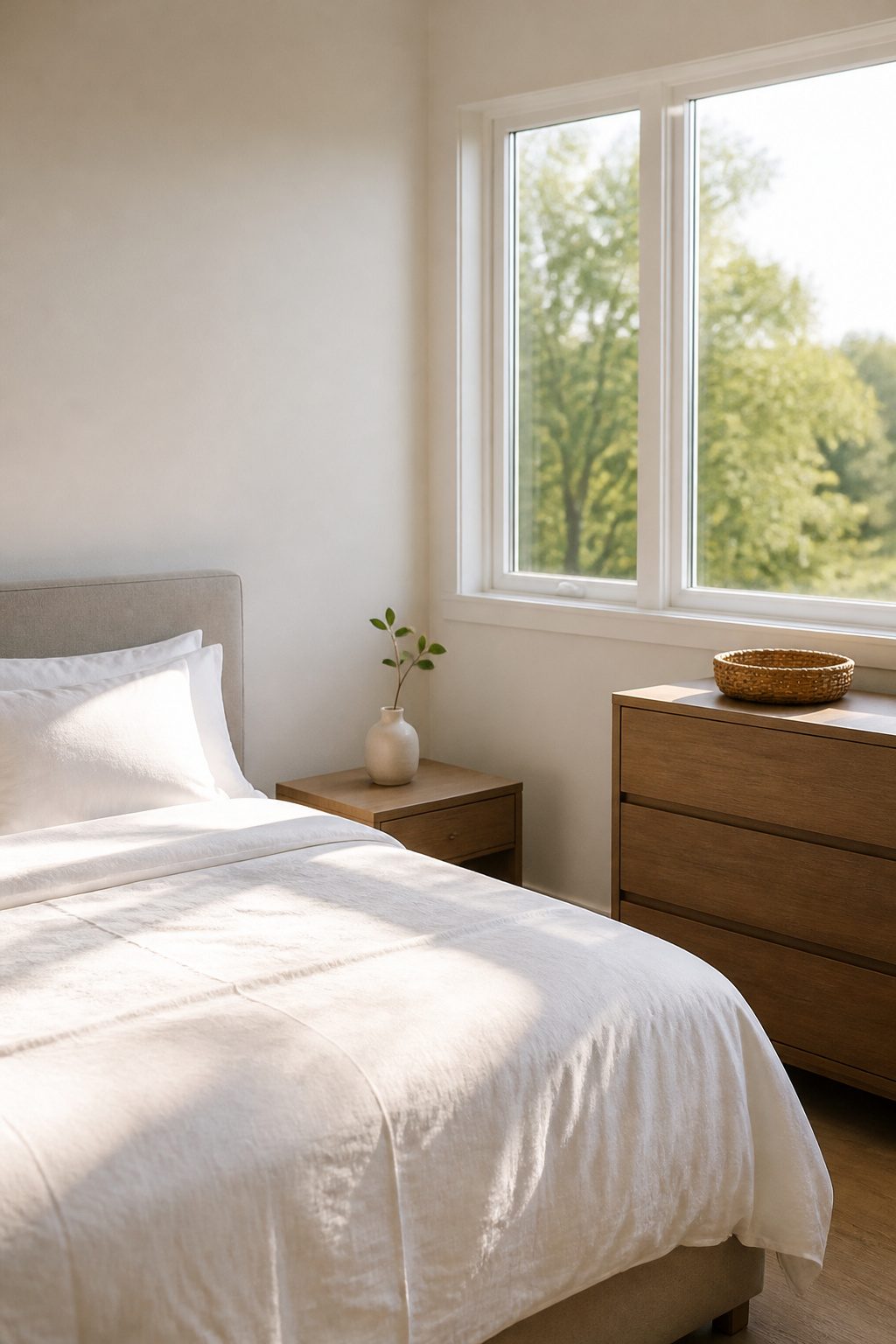
A small bedroom shrinks visually the moment surfaces crowd up. I stick to one piece per horizontal surface as a hard rule: the dresser gets a single woven basket, not four trinket boxes lined up like a flea market stall.
The nightstand is the only exception I make, and even then I treat it as temporary, a place for the book and the glass that both go back to the kitchen in the morning.
Fewer, larger pieces keep the eye moving across open space instead of stopping at every tiny object.
A single vase on a nightstand reads as calm; that same nightstand covered in knick-knacks reads as clutter, and clutter makes a room feel smaller than it is.
When I clear a room, I take everything out, put back only what I need and love, and the square footage I already have suddenly breathes again.
Recommended Products

4 Pack Headboard Panels: Includes 4 black peel and stick headboard panels, each 7.8 x 15.7 in. Use together to create a soft padded area behind a bed, sofa, reading corner, or kids room wall

Special Gentle Adhesive – Safe for Latex Paint Walls– Designed with a gentle adhesive that sticks securely but won’t damage your wall paint. It leaves no residue, prevents peeling, no harm to walls. Self-adhesive vinyl material, Not intended for repeated use.

QUALITY MATERIAL - The interlocking hanging buckle is made of stainless steel with smooth surface, rustproof and durable.
7. Use Light Colors
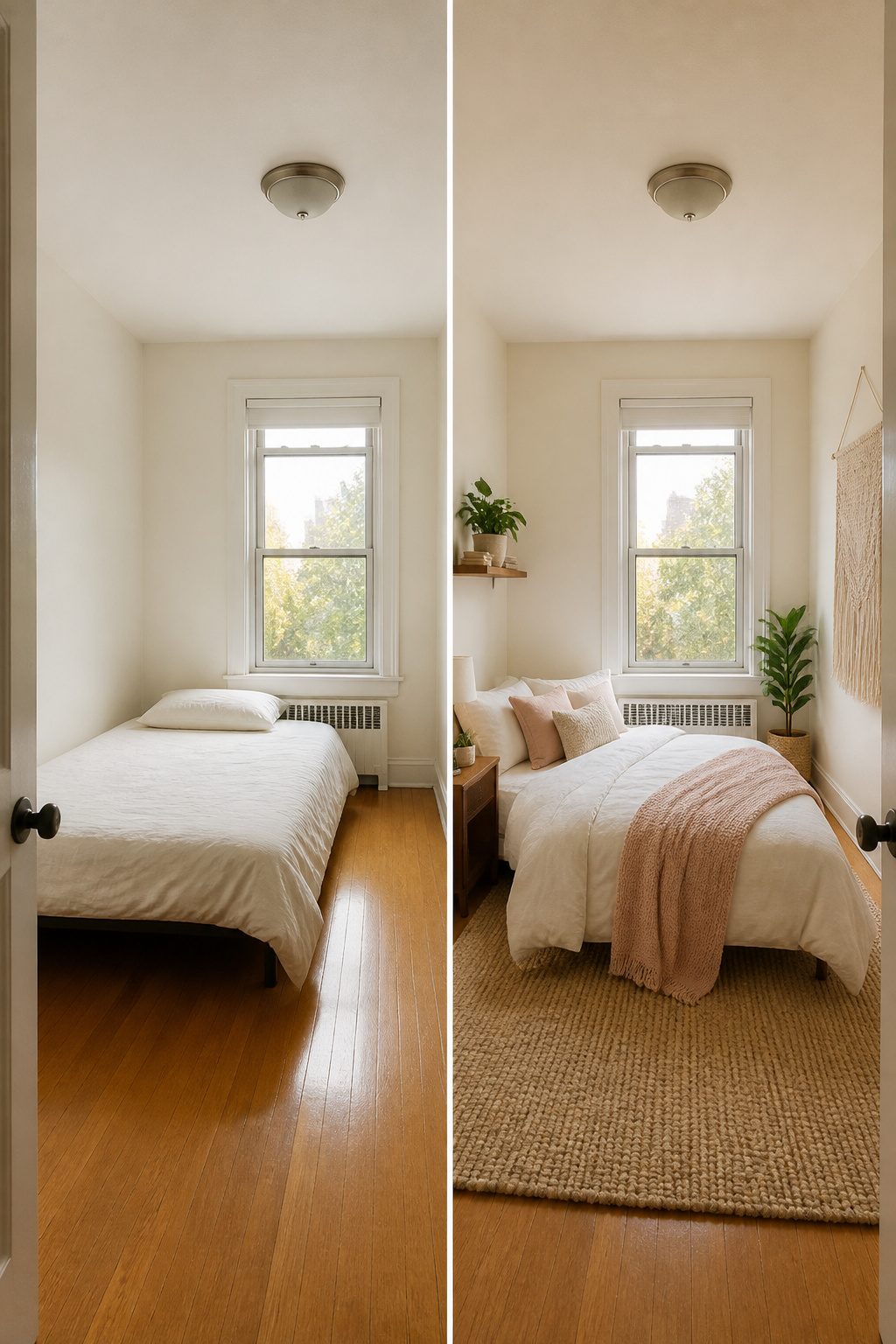
Bright white walls do the most to push back the walls of a small bedroom, but I find pure white reads cold in a space you want to feel like a retreat.
The shade I keep coming back to is Sherwin-Williams Alabaster (SW 7008), an off-white with a faint warm undertone that catches morning light without tipping into cream.
It still reflects enough to keep the room open, just with a little more life in it.
Where I draw the line is gray undertones in a north-facing room.
Light from that direction already runs cool, and a gray-leaning white turns flat and shadowy by afternoon. Alabaster’s subtle warmth corrects for that instead of compounding it.
If your bedroom faces south or west, a cooler white can work, but I would still test a 2-foot patch and watch it across the day before committing to the can.
For trim and ceiling, I match the wall color in the same sheen or step up one notch in gloss. The uninterrupted surface does more for the eye than a crisp white border that chops the room into smaller pieces.
Paint is cheap enough to get right, and in a small bedroom, the wrong white is a mistake you notice every evening.
Recommended Products

Queen Size Bed Frame Dimension:79.5" L x 59.5" W x 4" H. Weight capacity up to 3000 lbs.

Queen Wood Platform Bed Frame with Wooden Slat Mattress Foundation
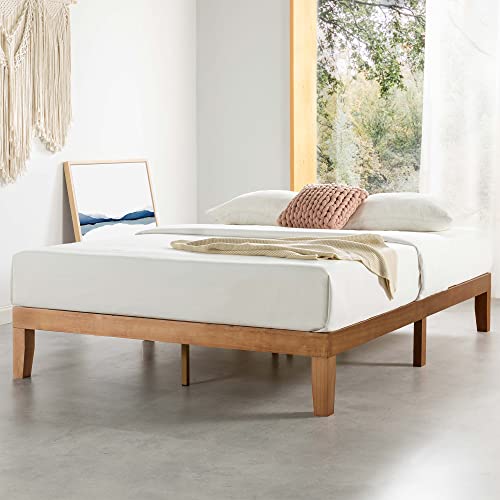
Full Wood Platform Bed Frame with Wooden Slat Mattress Foundation
8. Layer Lighting
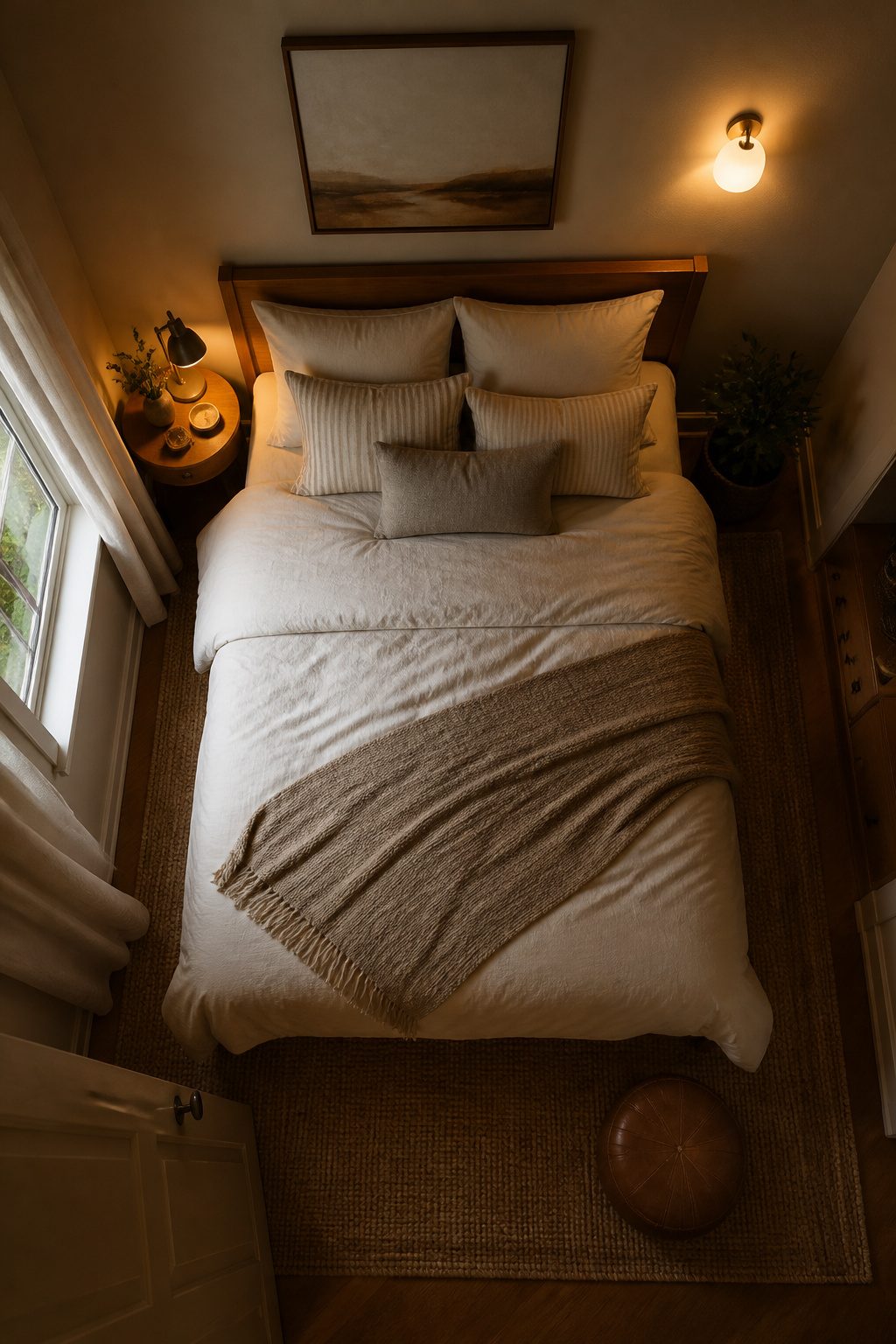
A single overhead flattens a small bedroom and leaves harsh shadows where you actually need light. The fix is three layers: ambient, task, and accent.
For under $200, I would buy a ceiling flush-mount with a dimmer, a clip-on reading light, and one plug-in wall sconce. The dimmer matters more than whatever you spend on the fixture itself.
A $40 flush-mount on a dimmer gives you control over the whole room’s mood; a $120 statement piece stuck at full blast still feels like a jail cell at 10 p.m. Warm bulbs, not Cool White, keep the space from turning stark.
The clip-on light handles reading without eating nightstand space, and the plug-in sconce adds accent where a table lamp would crowd the surface. Skip hardwired installs if you are renting; these three move with you.
Recommended Products

Ready Made & Four Hanging Design: Set of 2 linen & cotton blend curtain panels and 32 hooks per package.Each panel measures 50 inches wide.Top design of Back tab & loop pocket provide 4 hanging options. (a) Hanging from the back loops to create an elegant pleated look. (b) Using our 32 small hooks on the hook belt and pinning on your own rings.(Rings are not included) (c) Using your own clip rings. (d) A classic rod pocket style, simply hang our curtains by passing the 3-inch rod pocket.

Well Made: 1 panel linen texture curtain per package-Panel measures 52''x 132''.Constructed with silver grommet(Diameter: 1.6"), effortless for installment and slide.Also,the curtain has a 1.96-inch seam allowance at the bottom, a 3.93-inch seam at the top, and a 0.78-inch seam at the side. We steadfastly uphold a commitment to delivering premium quality to our customers, transcending market norms, even as our prices reflect the inherent value of our unparalleled products.

Basic Information: Includes 2 curtain panels, each measuring 50 inches wide for a total of 100 inches. Easy care for machine washable in cold water, do not bleach, tumble dry low, iron on low heat if needed.
9. Use Mirrors
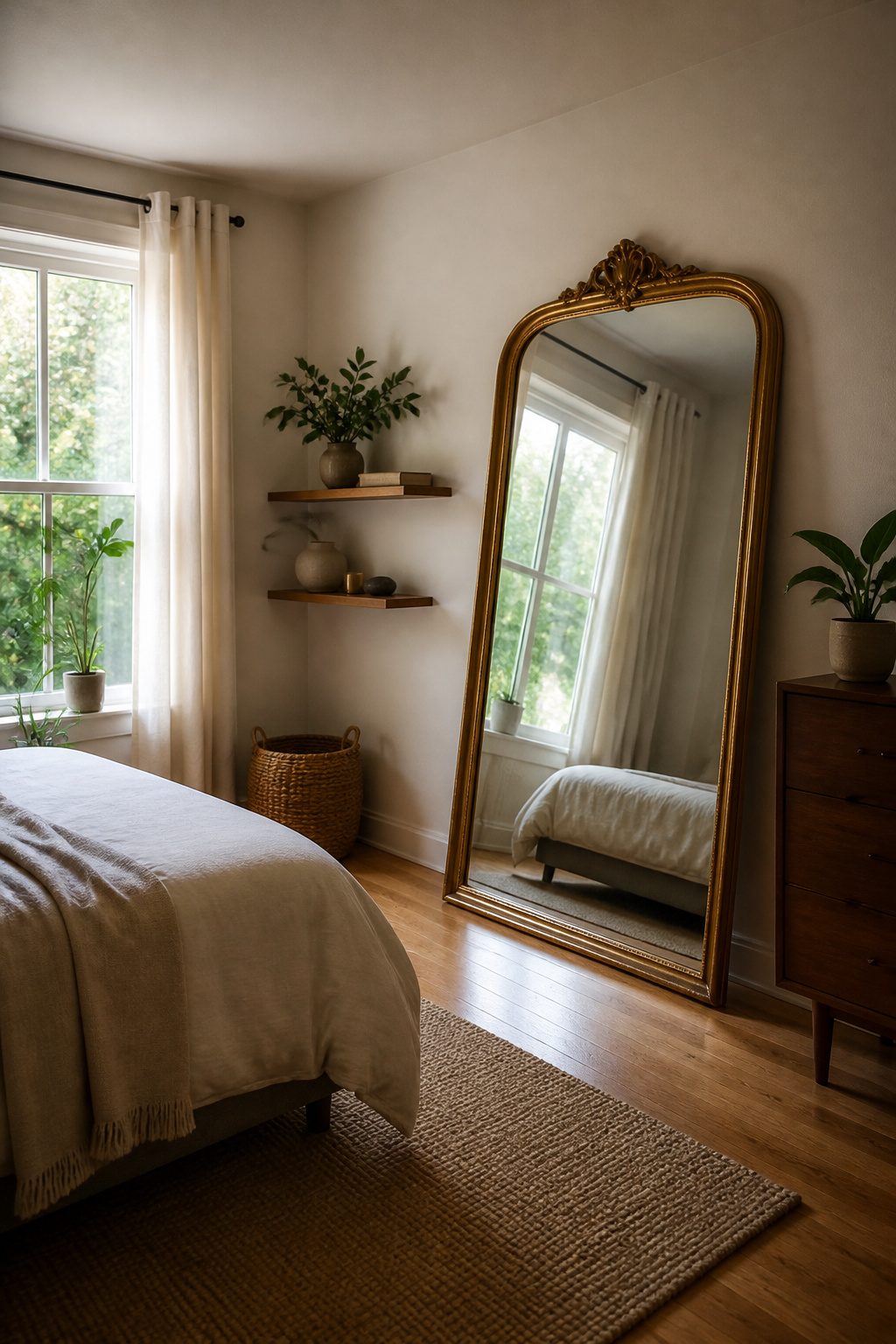
A mirror is the cheapest way to make a small bedroom read larger than its footprint, but placement matters more than size.
Hang it opposite a window or angle it to catch a lamp so it pulls light and actual room depth into the reflection. Facing a blank wall, it just doubles the flat surface and wastes the trick.
I skip the entirely mirrored wall; one big piece hung on the wall or a tall standalone leaned in a corner does the work without turning the room into a studio rental.
Oversized mirrors and mirrored furniture pieces can push the effect further, though I find the furniture route starts to feel like a hotel lobby fast.
The ceiling on this is roughly a third of the wall.
Past that, the mirror stops expanding the room and starts eating it. I also avoid hanging one directly across from the bed; the reflection at eye level first thing in the morning is not the depth I want to notice.
Recommended Products

𝐀𝐥𝐰𝐚𝐲𝐬 𝐛𝐲 𝐘𝐨𝐮𝐫 𝐒𝐢𝐝𝐞. 𝐎𝐯𝐞𝐫𝐚𝐥𝐥 𝐃𝐢𝐦𝐞𝐧𝐬𝐢𝐨𝐧𝐬: 𝟏𝟓.𝟕𝟓"𝐋 𝐱 𝟏𝟏.𝟖𝟏"𝐖 𝐱 𝟐𝟑.𝟔"𝐇

【Touch Control & 3-Way Dimmable】Say goodbye to fumbling for the switch when half asleep! The touch lamps for nightstand with dual USB ports is available to control the brightness by touching the lamp base. These lamps for night stands offer three brightness levels: Low, Medium, and High. With just a soft touch on the bedside lamps to select the ideal lighting for working, gaming, reading and relaxing.

【Night Stand with Charging Station】Designed with 2 installation options for flexible placement. Equipped with 2 AC outlets, 1 USB-C port, and 1 USB port, this bedside table keeps your phone, tablet, earbuds, and lamp powered within reach while helping reduce spill risks around charging devices
10. Incorporate Plants
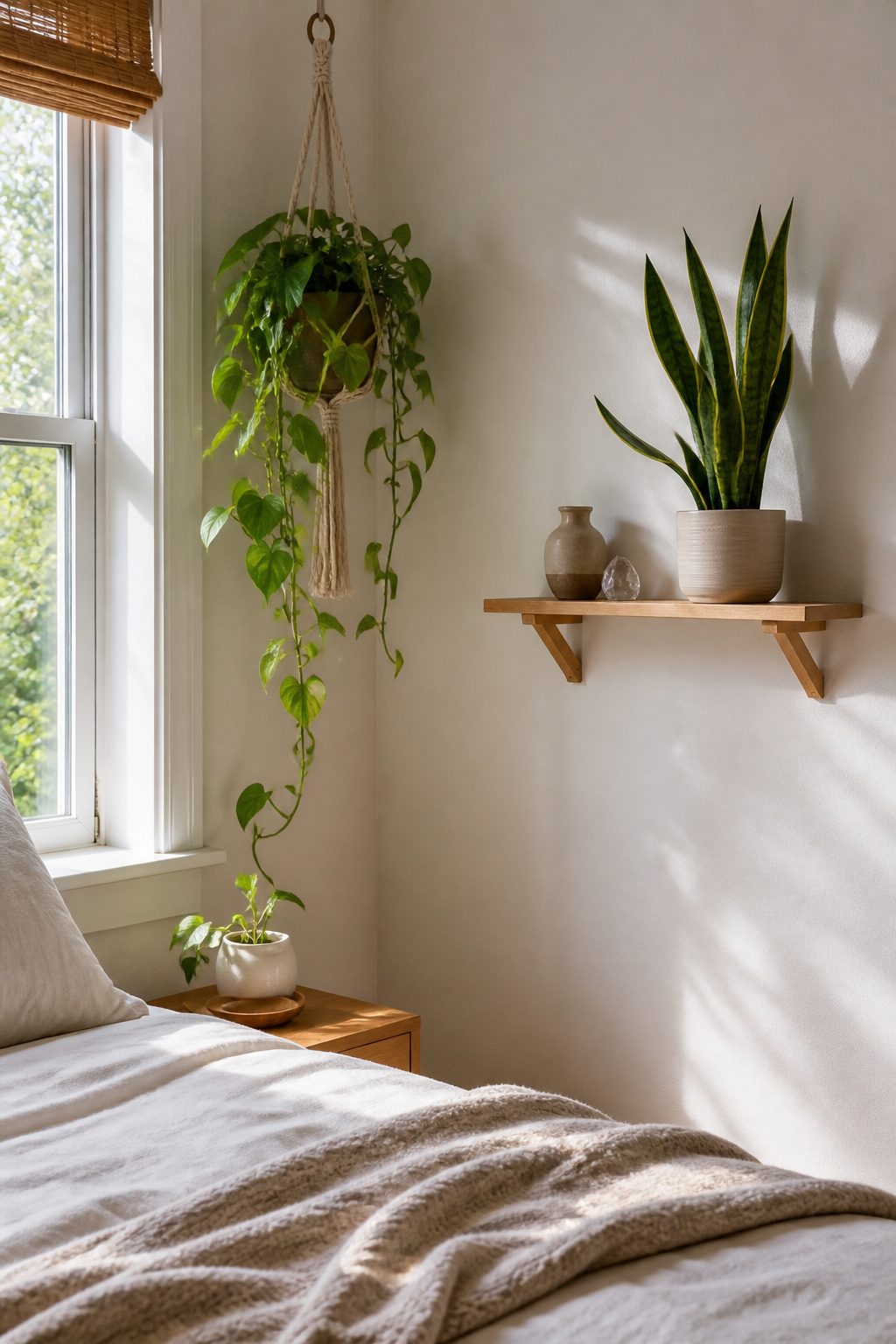
Greenery in a small bedroom works when the plant can survive the corner you have left.
Pothos, snake plant, and ZZ plant all tolerate low light and the dry air that comes with tight quarters, and none of them need the humidity of a bathroom or a daily watering routine that turns into a chore.
The pothos trails, so I hang it; the snake plant and ZZ stay upright and narrow, which means they fit where a lamp or a stack of books already lives.
The placement that keeps them alive without eating floor space is the top of the wardrobe or a floating shelf at eye level when you are standing, not when you are lying in bed.
Up there they catch the ambient light from the window without sitting in the draft or getting knocked by the duvet.
I use a 4-inch pot, never larger, because root-bound plants grow slowly and stay proportioned to a nightstand or a narrow ledge.
A 6-inch pot looks like a statement piece and demands a statement piece’s worth of soil, water, and space; the smaller pot dries faster, weighs less, and does not turn into a project.
Recommended Products
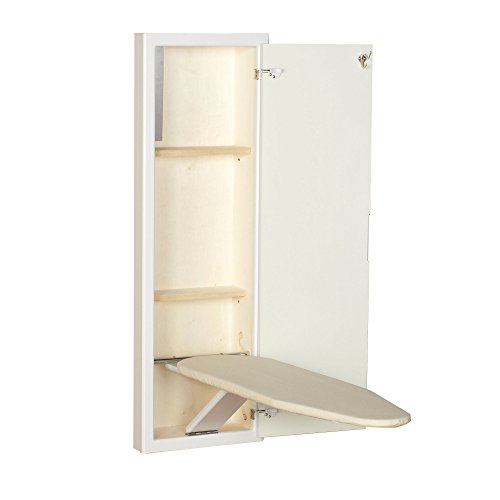
a ironing board cabinet designed to save space with recessed installation and a sleek white finish

★【Large Capacity】: 4 spacious storage shelves and 2 hanging hooks can accommodate most accessories and small irons, as well as provide a convenient space for hanging clothes, keeping your room clean and tidy

Sturdy and Durable: We’ve upgraded the pin display board with a more sophisticated and robust mounting process to reinforce the load-bearing capacity of the hanging surface, so you can confidently display and store your enamel pins, brooches, earrings, and other accessories.
Curtains and Window Treatments
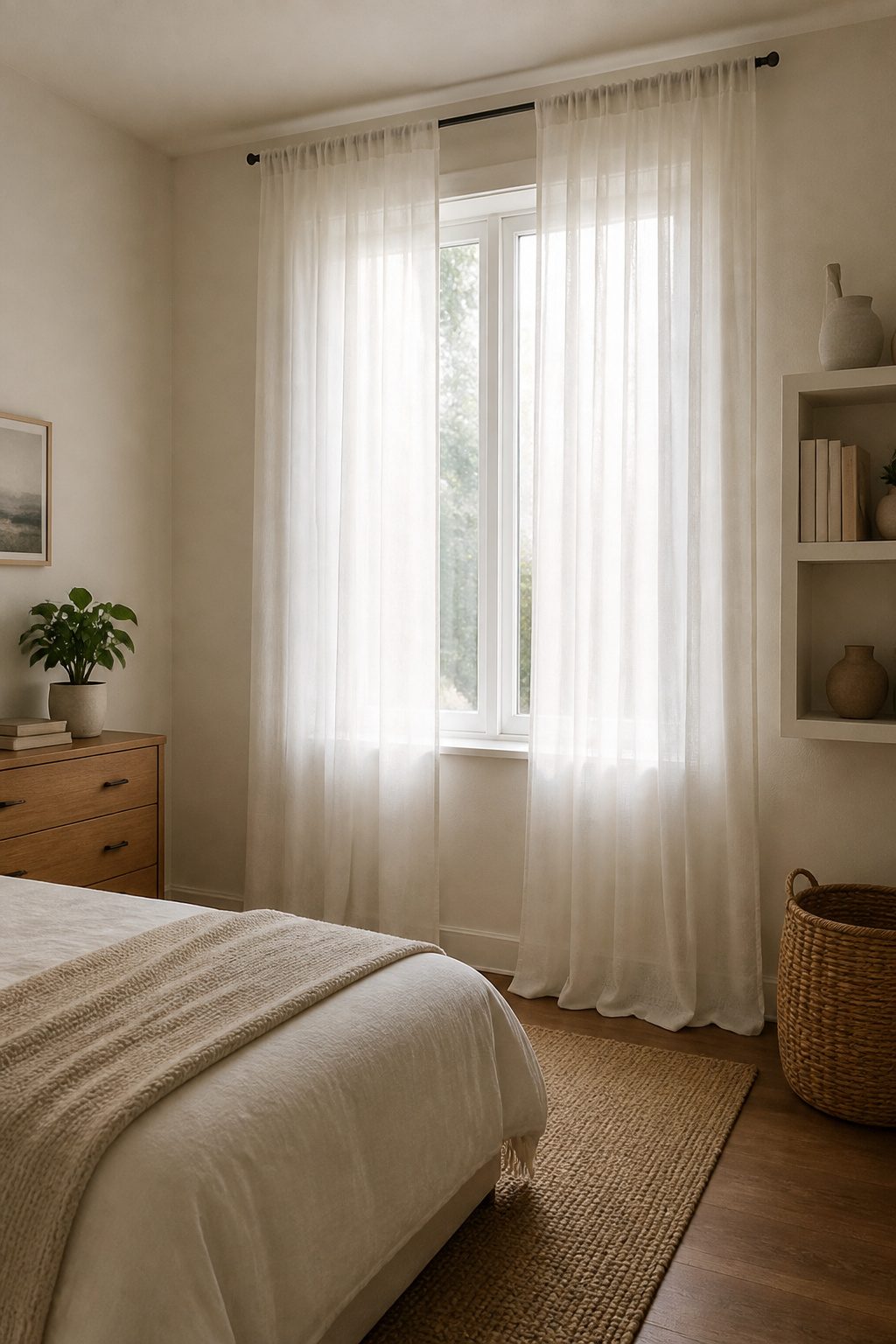
Sheer curtains win in a small bedroom because they filter light without swallowing the window. Heavy drapes, even when pulled open, read as a solid mass that shrinks the wall.
I mount the rod four to six inches above the window frame and let the panel skim the floor; the extra height draws the eye up and the room feels taller than it is.
I skip valances entirely. They break the vertical line and add a layer that competes for attention in tight quarters.
The one exception is sleep: if you need darkness, add a blackout liner behind the sheer panel. I attach it with clip rings on a second, smaller rod hung inside the main bracket.
That keeps the face of the curtain unchanged during the day, so the room still reads as light and open when the liner is pulled back.
Accent Walls That Work
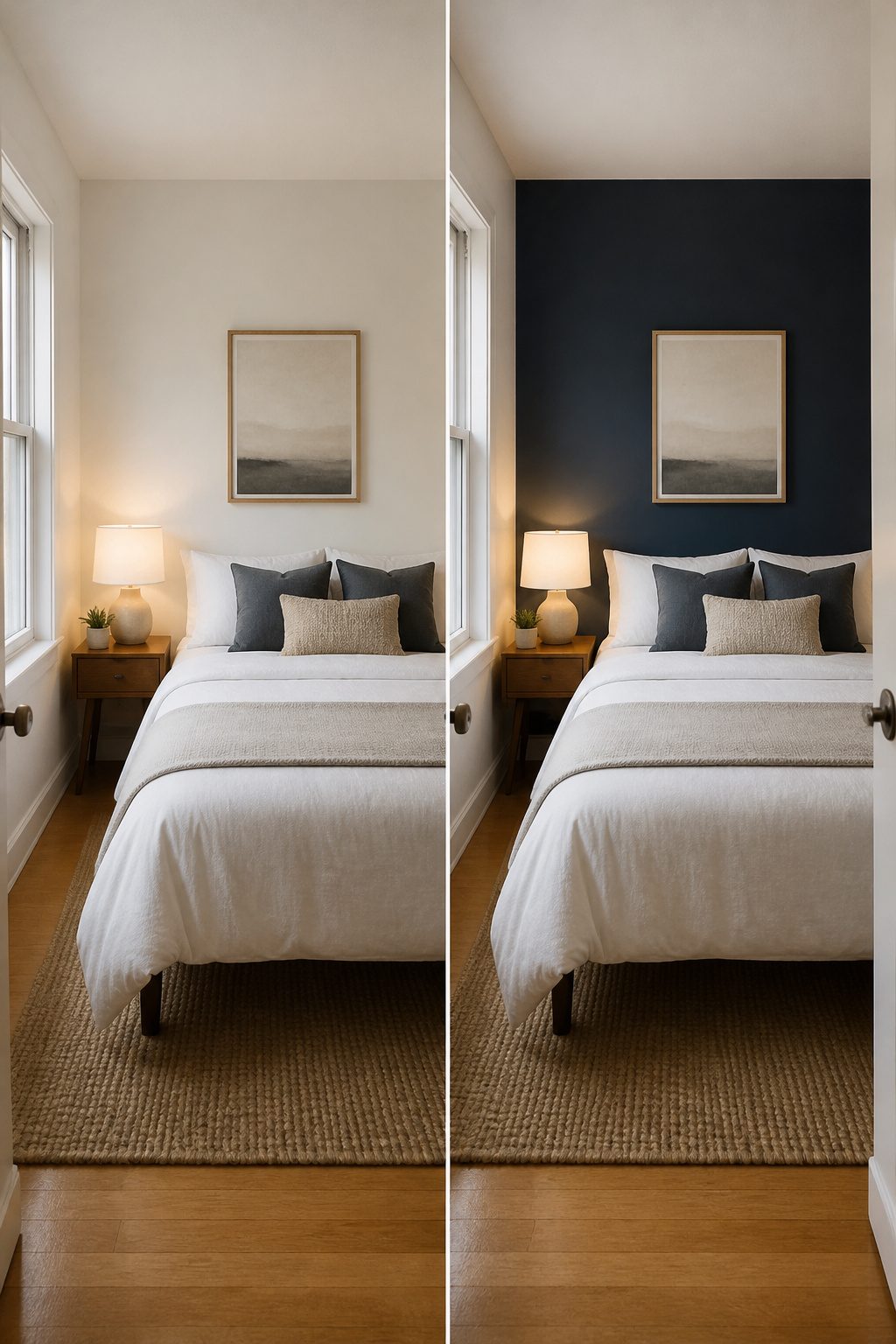
In a small bedroom, the wall behind the headboard is the one to paint. It is already broken by furniture, so a deep color there reads as intentional depth rather than a room closing in.
I have used navy in that exact spot: the bed and any wall-mounted light or art sit in front of it, which keeps the dark surface from advancing toward you the way four dark walls would.
The other three walls stay clean white or a pale greige, and that contrast does the work of making the room feel larger than a single mid-tone scheme ever could.
I stop at one bold wall because two starts a boxing match for attention.
A small room has no space for that kind of visual argument. The headboard wall wins by default; it is the natural focal point already, and painting it only confirms what the eye was going to settle on anyway.
A half-painted black accent wall behind the bed creates depth the same way, though I prefer the full wall in navy for the cleaner line it gives when you walk in.
Either way, one wall, not the room, is the rule that keeps a small bedroom from turning into the cave a client of mine once worried about.
Personal Touches Without Clutter
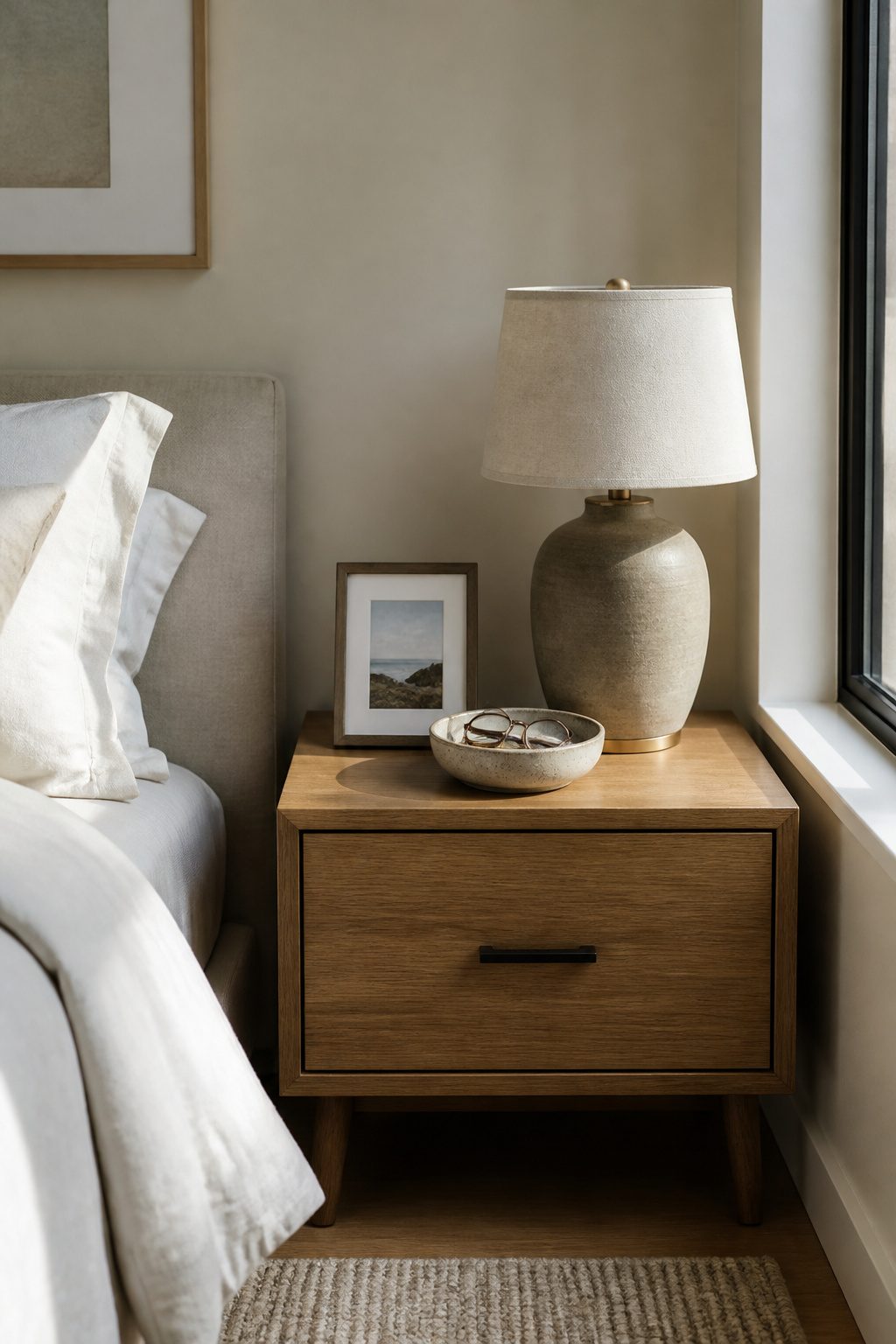
A small bedroom starts to feel like storage when every surface holds a keepsake. I keep one frame and one object with a story on display at a time, and I swap them out with the seasons.
The rotation matters more than the total count. A single framed photo from a winter hike carries more weight in January than a gallery wall that blends into wallpaper.
The same goes for the ceramic bowl I picked up in New Mexico or the small brass clock that was my grandmother’s.
Three months is long enough to notice it, short enough to keep it from disappearing into the background. The rest live in a shoebox under the bed, which takes up no visual space at all.
This method costs nothing and takes ten minutes four times a year. What it saves is the mental load of a room that shouts for attention from every shelf.
Frequently Asked Questions
How do you decorate a small primary bedroom?
Start with one strong focal point on the bed wall, such as a painted headboard or a single large piece of art, then keep everything else muted.
Choose streamlined furniture with visible legs and at least six inches of floor clearance underneath. Add storage that doubles as structure, like a platform bed with drawers, and limit surfaces to one decorative piece each.
How can I make my small bedroom look bigger?
Hang curtains at the ceiling line rather than the window frame to draw the eye upward, and place a mirror opposite a window or angled toward a lamp so it pulls in light and depth.
Stick to light wall colors like an off-white with warm undertones, and keep the floor as clear as possible with under-bed storage and wall-mounted shelves.
What color should I paint a small bedroom?
An off-white with a faint warm undertone, such as Sherwin-Williams Alabaster, reflects light without reading cold or flat.
Avoid gray-leaning whites in north-facing rooms, where cool light already runs shadowy. For trim and ceiling, match the wall color or step up one gloss level so the surface stays uninterrupted.
Where should the bed go in a small bedroom?
Position the bed against the longest wall to preserve open floor space and clear walkways, and avoid blocking windows or doors. The bed wall itself should become your focal point, since the eye naturally lands there first when you enter.
Test the layout by walking through the door; if your attention splits between multiple spots, two of them need to go quiet.
What are some modern ideas for a small bedroom?
A half-painted or fully painted accent wall behind the headboard adds depth without closing in the room, especially in navy or black balanced by three pale walls.
Layer three types of lighting, a dimmable flush-mount, a clip-on reading light, and a plug-in sconce, rather than relying on one overhead fixture.
Choose multi-functional furniture like a desk that doubles as a nightstand, but only if it leaves 24 inches for a chair to slide back.
How to decorate a room with simple things?
Rotate one framed photo and one object with personal meaning every three months, storing the rest out of sight.
A single vase or woven basket per surface reads as calm; multiple small items read as clutter that shrinks the room. This costs nothing, takes ten minutes per season, and keeps the space from feeling like storage.
What are some good IKEA bedroom ideas for small rooms?
Look for a plain platform frame no wider than the mattress, with legs that show floor underneath, and skip the bed skirt.
A 24-inch nightstand still holds a lamp and glass while leaving more visible floor than a 30-inch version. Add floating shelves in a 36–48 inch vertical run, kept narrow at 8–10 inches deep so they do not become clutter ledges.
What colors make a small bedroom look bigger?
Bright, light colors that reflect light make walls appear to push back, with warm off-whites performing better than cool grays in dim or north-facing rooms.
A single dark accent wall behind the headboard can also expand perceived depth, provided the other three walls stay pale and uninterrupted. Test any color in a 2-foot patch and observe it across the day before buying the full can.