A bedroom accent wall can cost $40 in paint or climb past $500 in custom millwork, and the difference comes down to whether you own a brad nailer already.
Board and batten at $150–300 is the safest middle ground, but skip the high-contrast paint if you plan to sell within five years; tone-on-tone keeps the architectural character without locking the room to one decade’s farmhouse mood.
1. Board and Batten
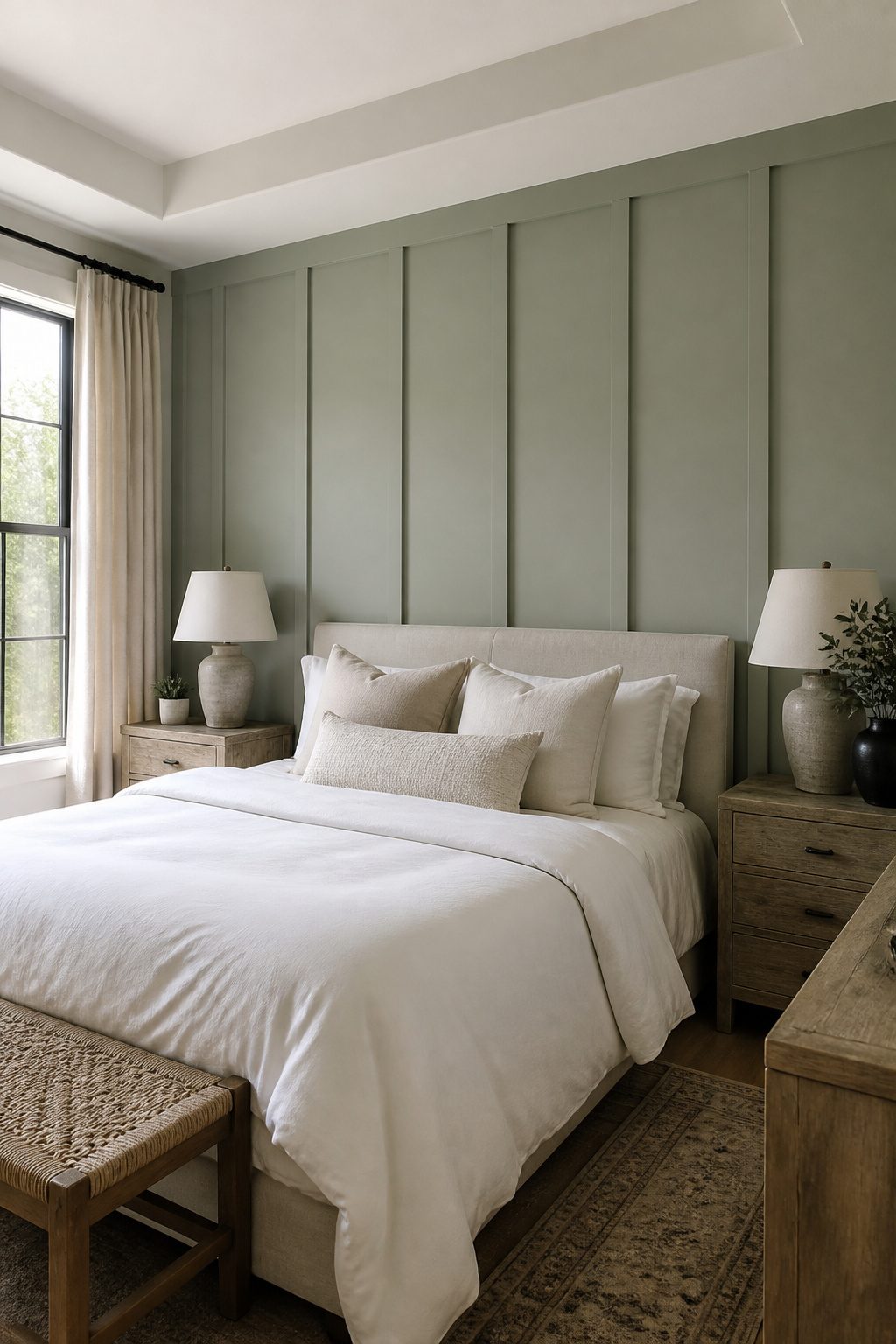
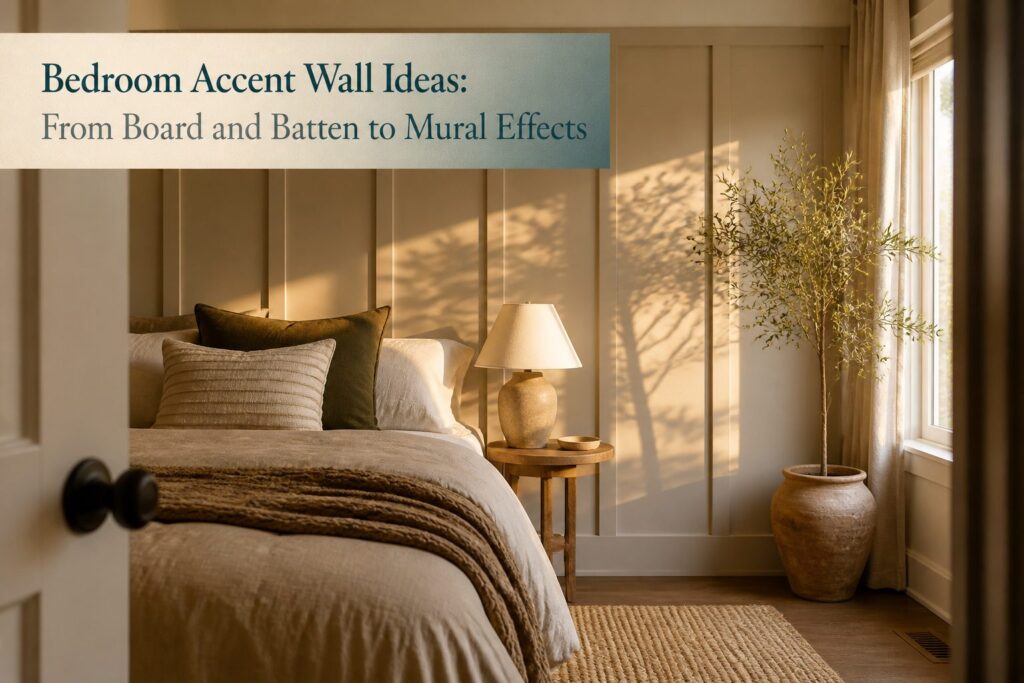
Board and batten is the accent wall treatment I recommend most often, and the one I’d call the safest bet on this list. It’s a series of vertical or horizontal wood strips, the battens, applied over a flat painted base.
The strips cast shadow lines that read as real texture even in flat afternoon light, which is why the wall behind a bed is where this pays off most: you see it from across the room, and from bed itself, at every hour.
Pre-primed MDF strips run a few dollars each, and the cuts are simple straight lines.
In a standard 8-foot ceiling bedroom, I’d keep the battens around 3 to 4 inches wide with spacing closer to 12 to 16 inches on center; anything narrower or tighter starts to feel busy, and anything wider reads as furniture scale rather than architecture.
Most people can finish a single accent wall in a weekend with a level, a brad nailer, caulk, and paint, for roughly $100 to $300 depending on wall width and whether you already own the nailer.
The difference is subtle but real. Board and batten adds more architectural character than almost anything else at this budget, yet it is still a layer on top of drywall, not true paneling.
In a builder-grade home that feels generic, that distinction rarely matters. Where it does matter is in resale: this look is current, but it is also specific to the modern farmhouse and coastal moods that have dominated the last decade.
I would still build it in my own bedroom today, but I’d paint it in a tone-on-tone scheme rather than high contrast if I planned to sell within five years.
Recommended Products

All-in-One Design - Package of 20 premade molding trim slat + 4 decorative edge strip create instant board & batten walls

【Complete Wainscoting Kit】Board and batten wainscoting kit includes 23 premade MDF molding trim slat and 5 decorative trim strips, covering 220in x 51in to create sophisticated board and batten wall decor

MDF Material for Lasting Use: this board and batten wall panel kit is made from MDF, offering sturdiness and water resistance; The surface is smooth, providing a comfortable touch for interior wall applications
2. Geometric Wood Trim
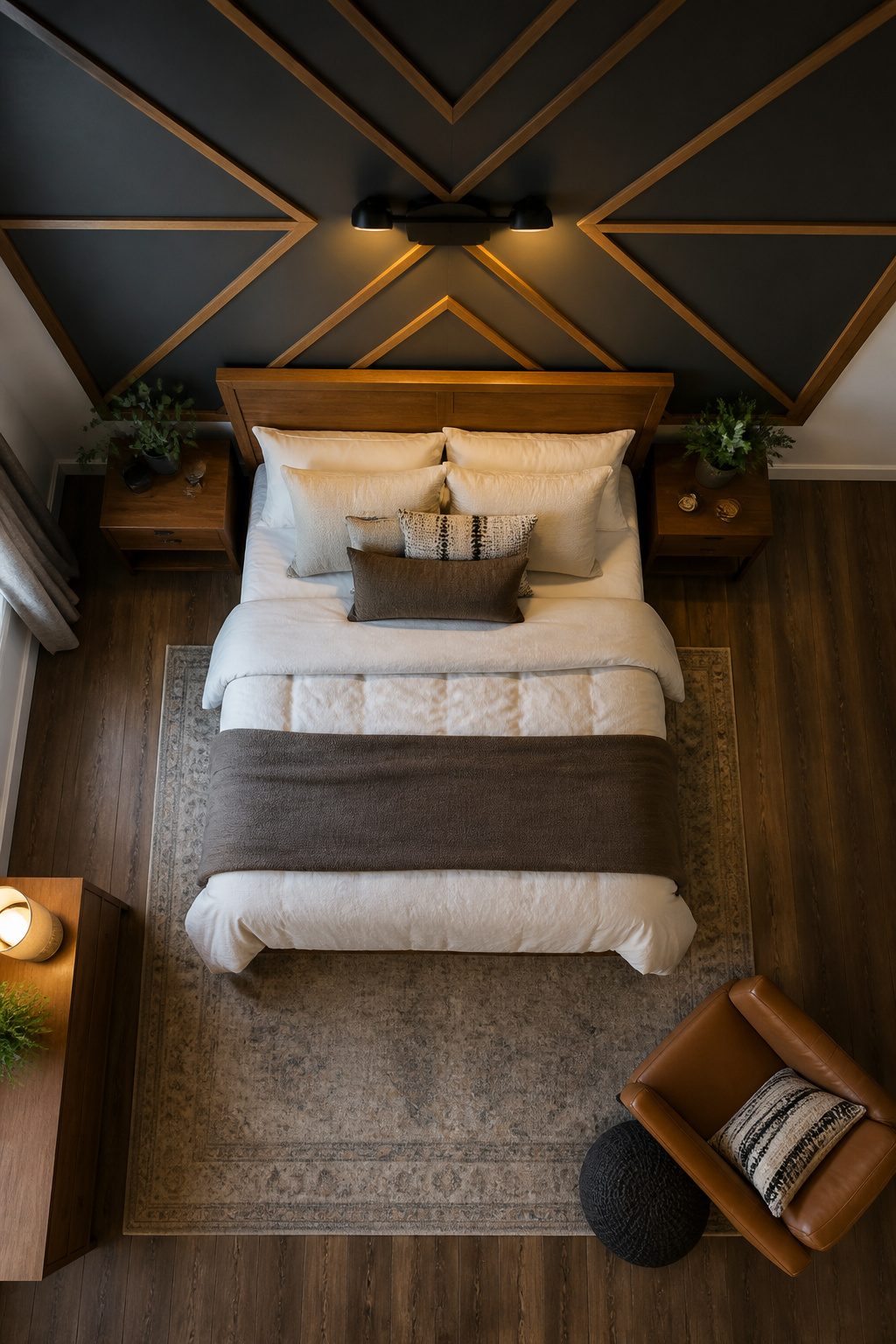
Geometric wood trim trades the predictable rhythm of board and batten for diagonals, X-patterns, or asymmetric grids that break the wall into large, irregular panels.
The effect reads more sculptural and graphic, which is exactly why it fails more often than the safer vertical-strip approach.
One angled cut that drifts by even a few degrees throws off every panel that follows, and unlike evenly spaced battens, there is no forgiving repetition to hide the slip.
You will need a miter saw for the angled cuts, and taping the full layout on the wall before you commit a single nail matters more here than with almost any other treatment.
Build outward from a center point, check every intersection with a level, and accept that the dark moody paint behind the trim that makes the look so striking also reveals every gap.
I would attempt the diagonal layout that breaks the wall into a few large panels, paired with warm wood and brass hardware to keep it from reading as too graphic or cold.
The X-pattern or a tight asymmetric grid I would skip; the cut count multiplies fast, and the visual noise fights the calm a bedroom needs.
This treatment belongs in an entryway or office where drama is welcome, and even there I treat it as the bold cousin to board and batten, not its replacement.
Recommended Products
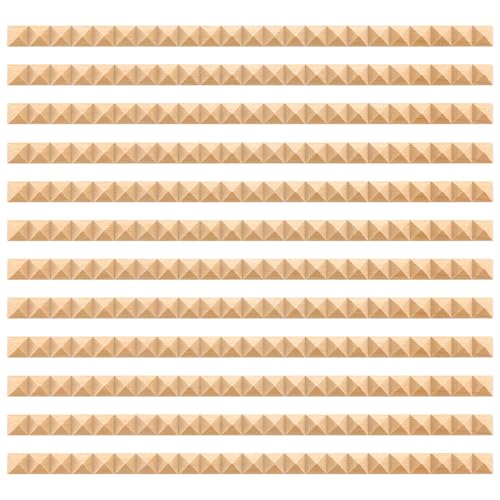
Enough Quantity and Dimensions: the package includes 12 DIY wood trims, each with a measurement of 0.71 inches in width, 15.75 inches in length and 0.2 inches in thickness; The wooden trim is delicately designed to suit every cut according to different thoughts, ensuring a nice finishing touch

Package includes: 12 PCS cylinder wood trim molding decorative, that are 15.8 inch in length, 0.55 inch in width, and 0.39 inches in thickness

Enough Quantity and Dimensions: the package includes 12 DIY wood trims, each with a measurement of 0.79 inches in width, 15.75 inches in length and 0.28 inches in thickness; The wooden trim is delicately designed to suit every cut according to different thoughts, ensuring a nice finishing touch
3. Vertical Wood Slats
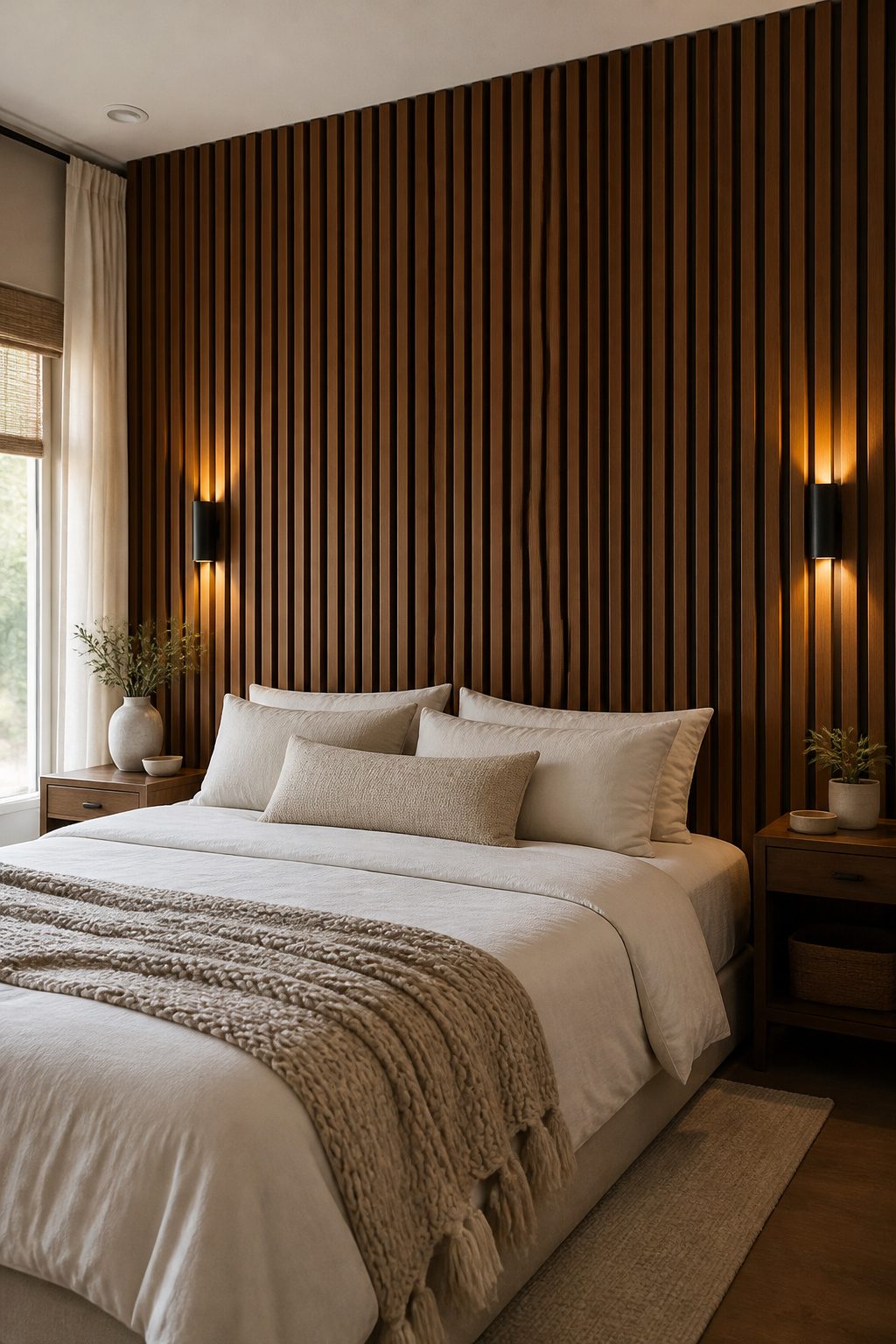
The spacing between slats is what separates a modern accent wall from a paneled basement.
Three-quarters of an inch to an inch of gap between slats, with the slats themselves running about an inch and a half wide, gives you clean shadow lines without the gaps reading as empty drywall.
Mount them over a stained or dark-painted backer so the negative space stays intentional.
Vertical slats draw the eye upward, which makes them my pick for bedrooms with low ceilings rather than soaring cabin great rooms.
In a standard 8-foot bedroom the lines add perceived height; in a space that is already 9 feet or taller the effect gets lost among everything else competing for attention.
The wood tone matters too. A natural finish leans warm and works with both modern and traditional pieces, so you are not locked into one look if your bedding or furniture changes.
Backlighting or flanking sconces turn the slat wall into a soft light source at night, but the slats themselves do the real work. Skip the LED strip if the budget is tight; the wall still reads as designed without it.
Recommended Products
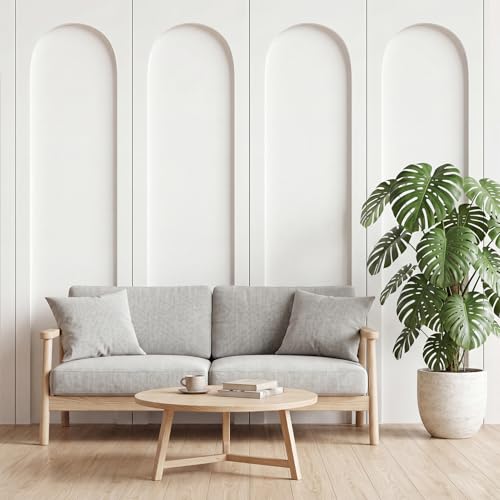
Transform Your Space with Ease - The wall panels for interior wall decor will help bring blank walls to life and create a sophisticated wall paneling look that elevates your home's aesthetic

ELEVATE ANY ROOM INSTANTLY: Transform boring walls into high-end architectural features. This classic wainscoting pattern adds sophisticated depth and texture, making it the perfect DIY accent wall for living rooms, bedrooms, hallways, stairwells, and dining spaces
4. Herringbone Panels
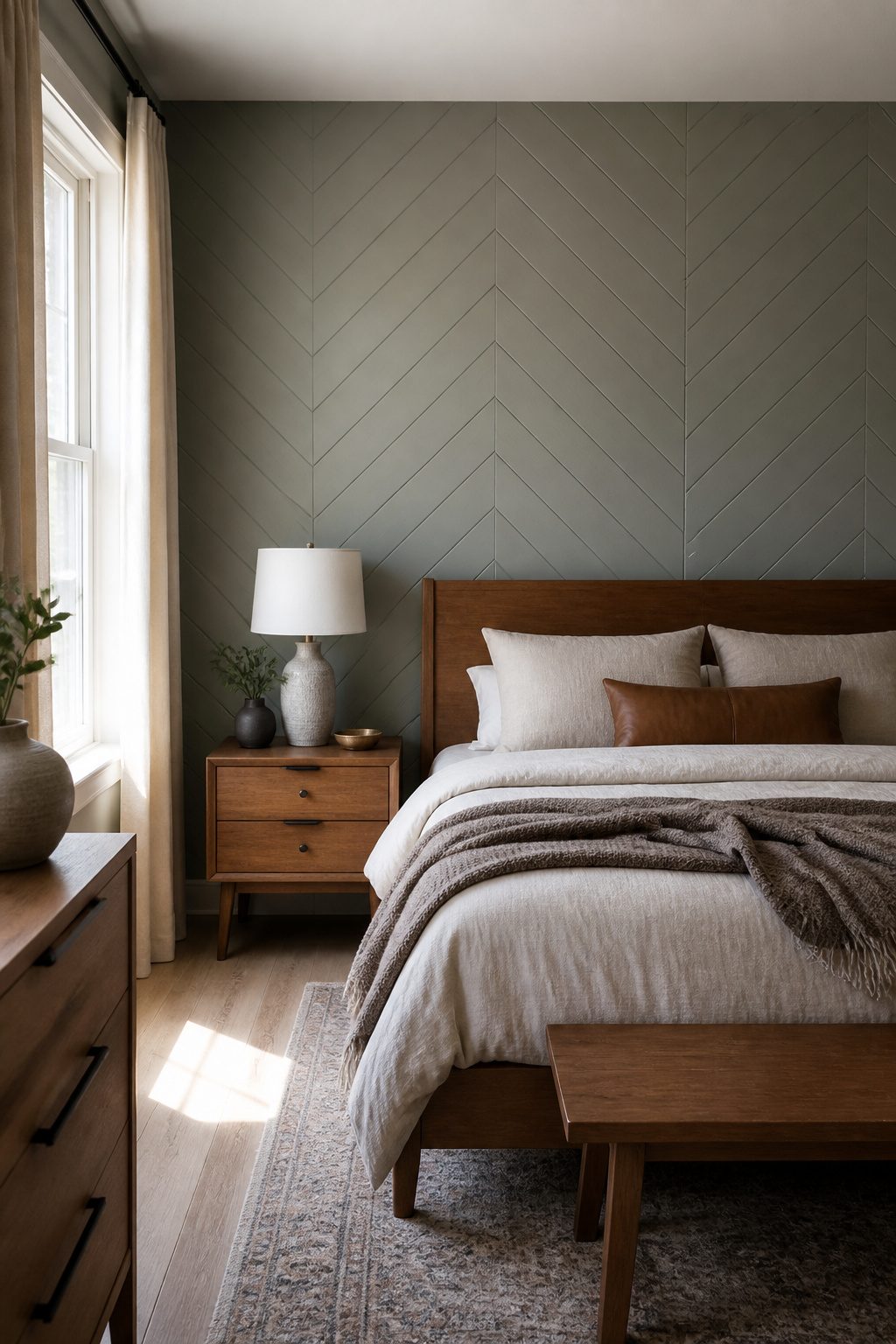
Herringbone panels carry the same V-pattern you’d see on a classic parquet floor, just turned vertical.
Each plank meets the next at a 45-degree angle, and that geometry comes with a real waste factor: every cut discards a triangular off-cut, so you will burn through more material than the wall area suggests.
On a floor, the pattern has room to breathe and repeat; on a bedroom wall, the scale can feel busy unless the room itself is large enough to let the eye rest between angles.
For a standard bedroom, the one shortcut that keeps this feasible is painting the pattern out in a single, subtle color.
Caulk the seams, finish with one tone, and the herringbone reads as texture rather than geometry. The pattern still does the work, but it stops competing for attention and starts reading like quiet millwork.
I would keep the palette low and let the shadow lines carry the interest; a loud color here fights the very detail you paid for in extra lumber and extra cuts.
Recommended Products

WHAT'S IN THIS 10 PIECE PAINT KIT FOR WALLS: includes one plastic paint tray; one 9 inch roller frame; one 4 inch mini roller frame; two 9 inch microfiber roller covers (1/2 inch nap); two 4 inch microfiber roller covers (1/2 inch nap); one 1 inch flat brush; one 1.5 inch angle sash brush; one 2 inch angle sash brush
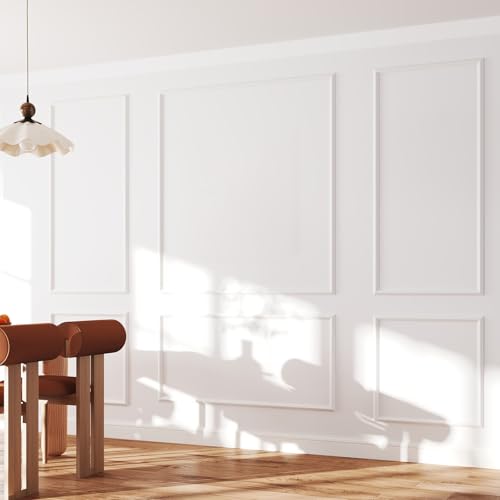
Wall Molding Kit: The package includes 24 pcs wall molding (24in-14 pcs, 54in-6 pcs, 48in-4 pcs), which can be combined into 6 frames, allowing you to easily create a stylish accent wall. The 6-frame layout shown is designed for a wall measuring approximately 10 feet high by 11 feet wide. Please measure your wall and plan the layout before installation.

Transformative - Art3d pre-cut molding trim adds depth and character to walls, gives traditional elegance with a hint of contemporary refinement
5. Textured Faux Brick Paneling
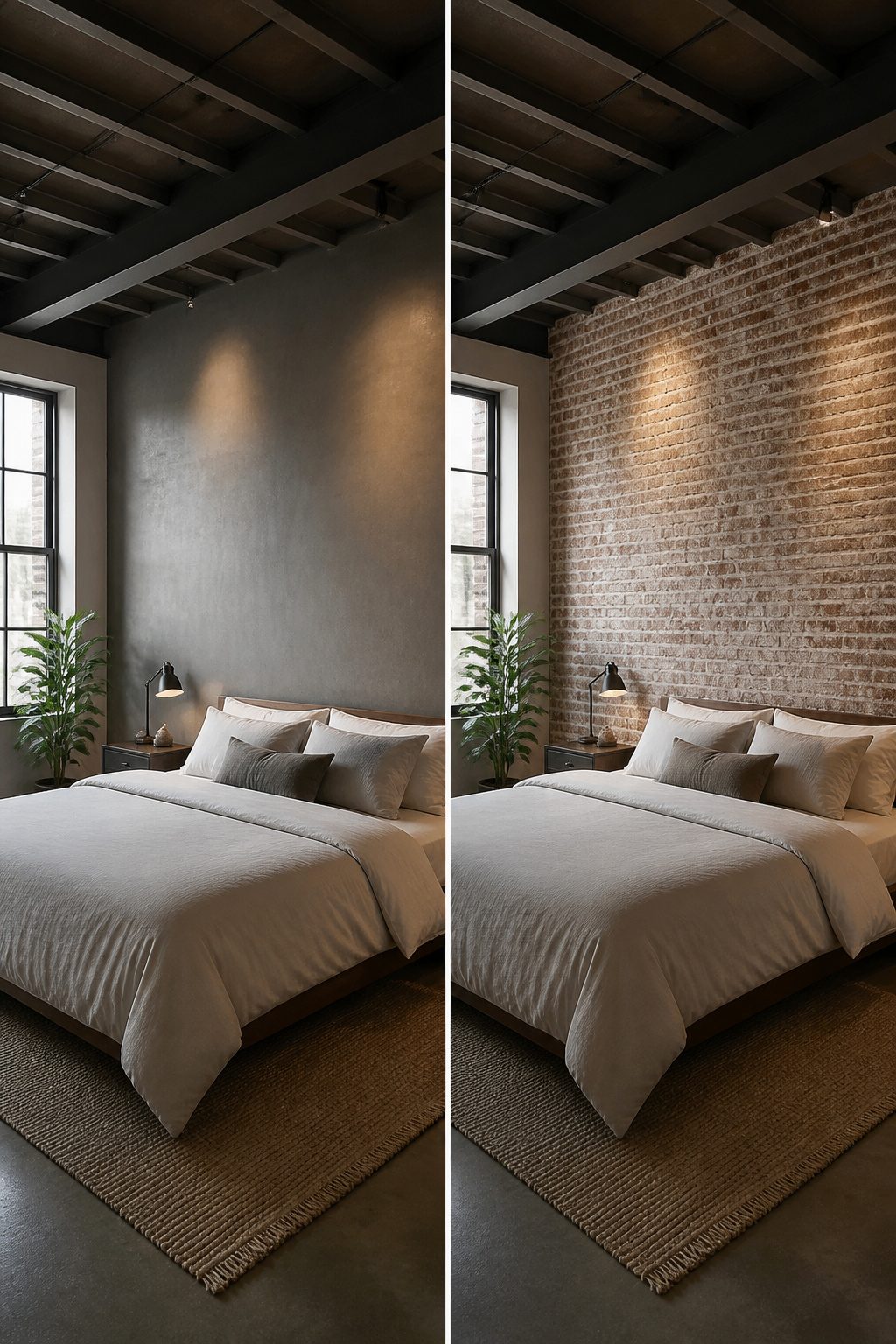
Modern faux brick paneling is good enough that I genuinely have to look twice to tell. The panels weigh a fraction of real brick, which matters when you’re covering a bedroom wall rather than reinforcing a foundation.
Most versions run 1/4 to 1/2 inch thick and install with construction adhesive rather than mechanical fastening, though I’d check the wall first: adhesive alone holds fine on clean drywall, but a panel with any warp or a wall with texture needs a few finish nails to stay flat.
Out of the box, the surface reads plastic. A thin whitewash or German schmear, stippled so paint settles into the grout lines, is what turns it into aged plaster over real brick.
Flat exterior paint in a warm white like Swiss Coffee softens the factory uniformity. Skip the gloss entirely; any sheen catches light on the fake edges and gives the game away.
I’d use this in a loft-style bedroom or anywhere the architecture already leans industrial. In a formal traditional room, the texture feels out of place no matter how well you paint it.
Recommended Products

【3-in-1 Multifunctional Hanging Tool, All-in-One Integrated Design】 Combines measuring ruler, built-in bubble level and push nail structure in one single tool. No need to prepare separate measuring or leveling tools. Fast measuring, leveling and nailing let you hang mirrors, canvases and wall art neatly within minutes, perfectly fit for gallery wall layout.

Premium Material: Made of premium zinc-plated steel, the 18 gauge brad nails are heavy duty, corrosion-resistant and anti-rust. The Ultimate tensile strength (UTS) is up to 1100MPA
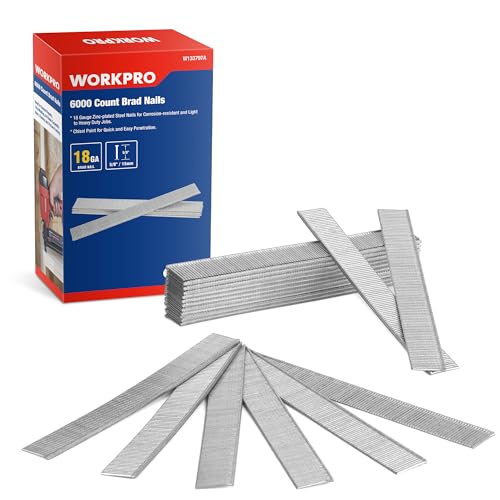
Suitable for Light Woodworking Projects – Perfect for securing wood pieces, assembling furniture, fixing window and door frames, installing flooring, and attaching decorative trim. Also ideal for fine woodworking such as chairs, tables, or cabinets. Small nail holes create a clean finish, stay hidden in the wood, and preserve the natural look.
6. Wainscoting
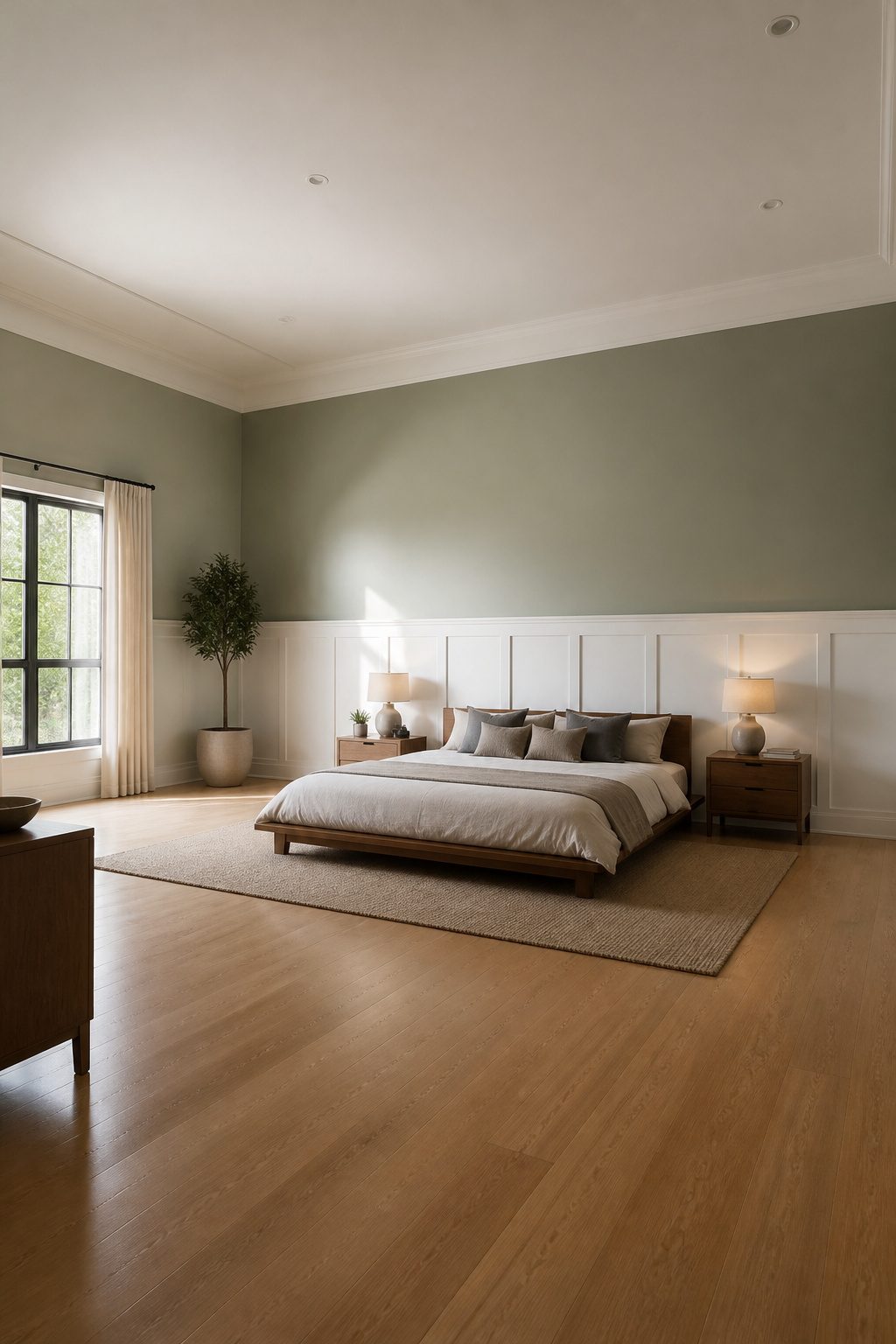
Wainscoting sits lower on the wall than most treatments people picture for an accent wall bedroom search. It runs 32 to 48 inches up, capped with a chair rail, which makes it technically a partial accent rather than a full wall statement.
I still include it because the paneling draws the eye and adds architectural weight where a flat wall would read as builder-grade blankness.
The chair rail height is the decision that shapes the whole look. At 32 inches you get a more traditional proportion that reads almost like a plate rail in an old dining room.
At 48 inches the paneling climbs higher and starts to feel like a modern wainscot that could anchor a bed without competing with it.
I would split the difference at 36 to 42 inches for a bedroom, high enough to frame a low platform bed or a nightstand, low enough that the wall above still holds art or a mounted lamp.
Where this treatment belongs matters. Wainscoting earns its keep in dining rooms, formal entries, hallways, and powder rooms because those are passage spaces where the paneling reads as heritage detail.
In a bedroom I would keep it to the wall behind the bed, the one your eye lands on when you walk in. A side wall with wainscoting fights the room’s natural orientation and fragments the space.
The same paint on the paneling and the wall above, in the same finish, keeps the height from visually chopping the room; the eye does not stop at the rail line, and the ceiling feels taller for it.
Recommended Products

Crafted from sturdy, durable, smooth‑surfaced MDF, this board‑and‑batten wall kit is lightweight, easy‑to‑clean and warp‑resistant. It features a smooth, burr‑free surface for comfortable touch.

Premade Board and Batten Paintable Wainscoting Kit: Package includes 20 premade molding trim slats, 4 decorative edge strips, and two pairs of gloves for convenient installation

Premade Board and Batten Paintable Wainscoting Kit: Package includes 10 premade molding trim slats, 2 decorative edge strips, and two pairs of gloves for convenient installation
7. Painted Accent Wall
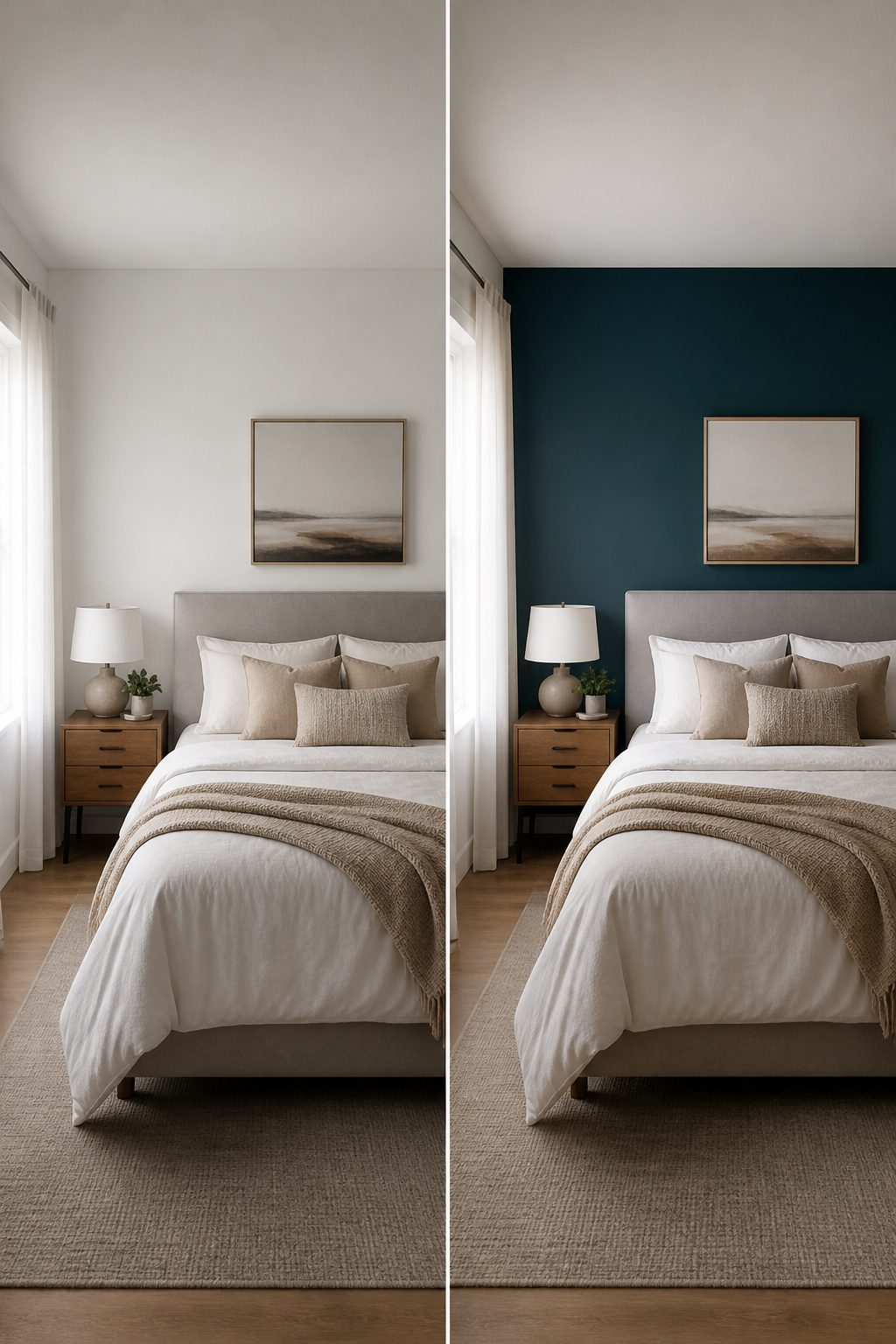
A gallon of premium paint covers two coats on a single wall, and one afternoon is all the time this project asks for.
I default to the wall behind the bed because the bed is already the room’s largest piece of furniture; the paint simply backs up what the layout already announced.
Other walls are fair game, but a side wall or one opposite the entry tends to fight the room’s natural orientation instead of anchoring it.
Color choice is where most painted accent walls go flat. A near-neutral safe pick usually underwhelms, because a single wall in a cautious beige reads like a mistake rather than a decision.
I would reach for saturation: deep teal, smoky charcoal, terracotta, warm earthy green. The wall does the work when everything else stays light and warm around it.
Finish matters less than color but still matters. Eggshell or satin holds up to the occasional brush against the headboard; flat paint scuffs too easily in that spot.
The prep step that separates clean from sloppy is the tape seal. In one video walkthrough, a bedroom painter ran two horizontal lines, 13 inches down from the ceiling and 10 inches up from the floor, then painted between them.
The crisp result came from painter’s tape with edge-sealing technology pressed firmly along the line. Cheap tape or a lazy press means bleed, and bleed means a wobbly line that no amount of touching up fully hides.
Recommended Products

Color and Size: our decorative line strips are made of non-traditional wood colors, which can easily blend into your decoration and add a touch of understated elegance; The size is 15.8 x 1.6 x 0.6 Inch (40 x 4 x 1.5cm), designed to an ideal proportion, easy to install, and will complement your wall
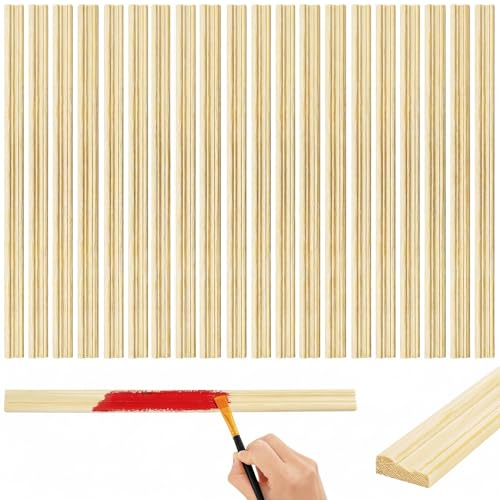
Ready to Use: The package includes 24 packs of unfinished wooden panels (15.7" L x 0.8" W x 0.3" H), providing ample pieces to create a stunning feature wall or accent multiple small areas in one go. It's the perfect DIY wall molding solution for home and offices to add instant character

Enough Quantity and Dimensions: the package includes 12 Grandmillennia Bamboo trims DIY wood trims, each with a measurement of 0.43 inches in width, 15.75 inches in length and 0.22 inches in thickness; The wooden trim is delicately, The uniform size and sufficient quantity cater to various DIY projects, allowing flexibility for cutting and customizing to fit your specific decor needs.
8. Wallpaper Accent Wall
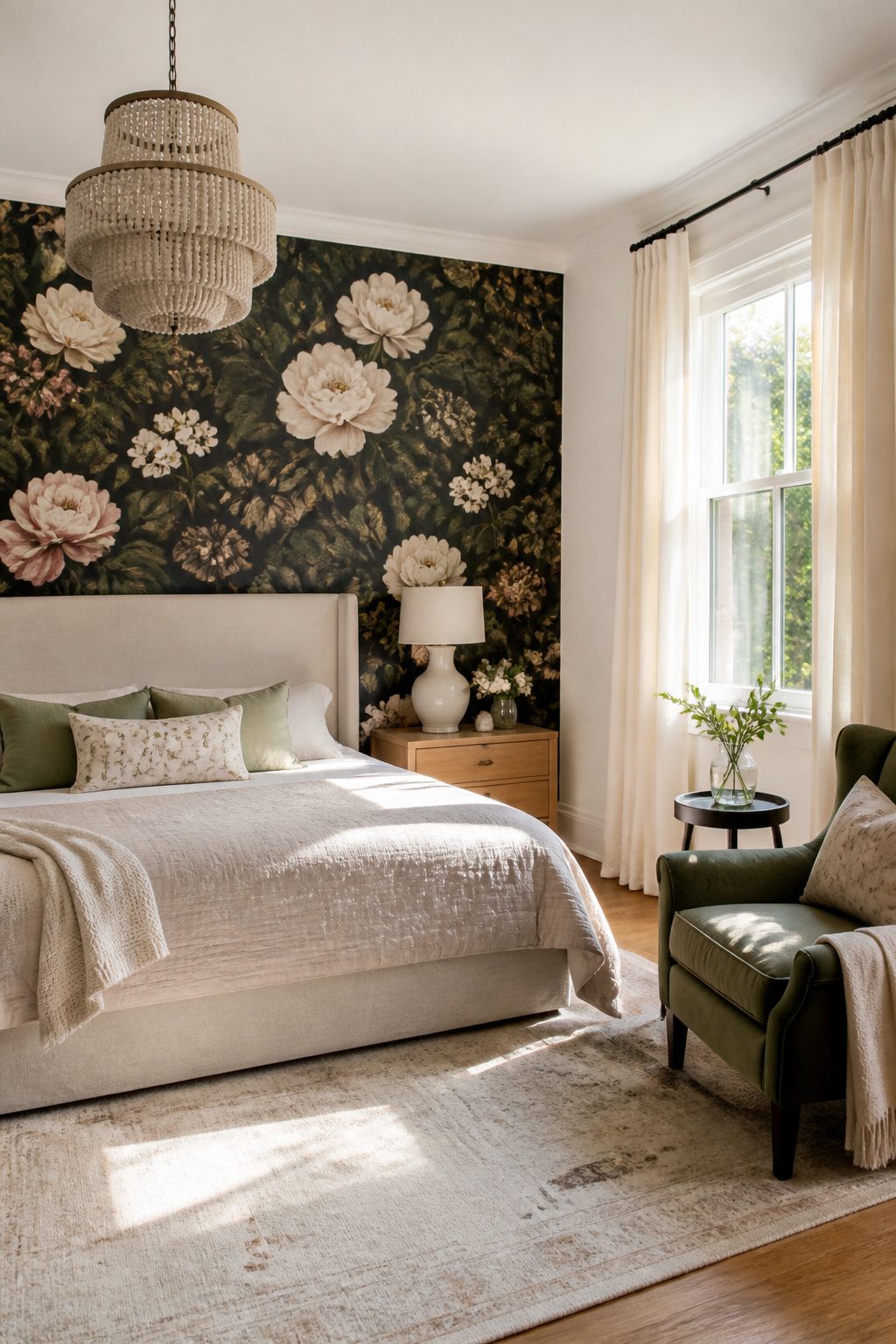
Wallpaper brings color and pattern together in one step, which is why it has come back hard for accent walls.
A single wall behind the bed gets the impact without the cost of papering the whole room, and that restraint matters: the eye needs somewhere to rest.
For renters, peel-and-stick holds up well and comes off cleanly at move-out.
Traditional adhesive wallpaper is cheaper per roll but commits you to the wall and the removal job later. The math on that trade-off depends on how long you plan to stay.
Pattern scale should match the room.
Small rooms or tight spaces, like the wall behind a bed, can handle bold botanical or scenic prints because the surrounding walls stay quiet. In a larger bedroom, oversized patterns read better than tiny repeats that turn busy at distance.
Where I would spend: the wall that faces you when you walk in, since that is the one you actually see. Save on rolls for walls partially hidden by furniture or doors.
Artist-designed papers cost more, but a standard print from a decent brand does the same job if the color is right. The pattern does the work, not the signature on it.
9. Accent Ceiling
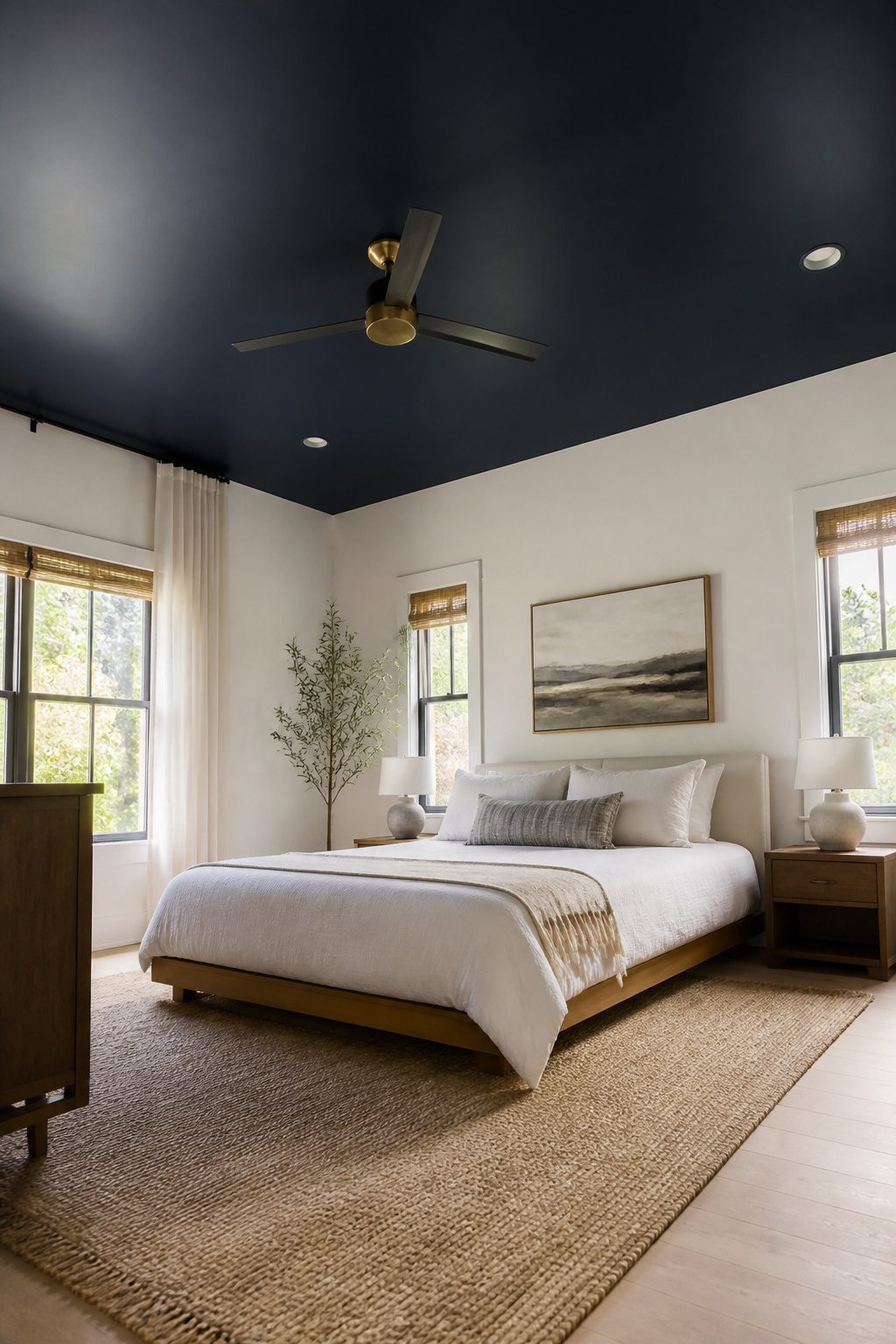
Painting the ceiling is the closest thing to a design cheat code I know.
In most bedrooms, every wall already has a job: the bed wall holds the headboard, the opposite wall faces a door or closet, and the side walls bracket nightstands or windows.
When none of those walls feels right for a bold color, the ceiling becomes your accent wall by default.
A deep painted ceiling with crisp white walls below grounds the room and makes an ordinary bed read like a four-poster even when it isn’t.
The dark color above also draws the eye upward, which makes a low ceiling feel intentional rather than oppressive.
The saturation question matters more up there than on any wall.
I would keep the ceiling color at full strength, not a lighter tint. The surface catches less direct light than vertical walls, so a diluted version can read as muddy or apologetic.
Color drenching, where walls, ceiling, trim and doors all share one deep shade, is the more committed cousin of an accent ceiling. I would only recommend it for a small bedroom where the room can feel cohesive rather than swallowed.
The one bedroom type where I would never attempt an accent ceiling is a room with a ceiling height below eight feet that also lacks strong natural light.
The combination of a dark overhead plane and weak daylight turns the space cave-like in a way that reads as cramped, not cozy. In that case, a painted wall or paneling is the safer move.
Recommended Products
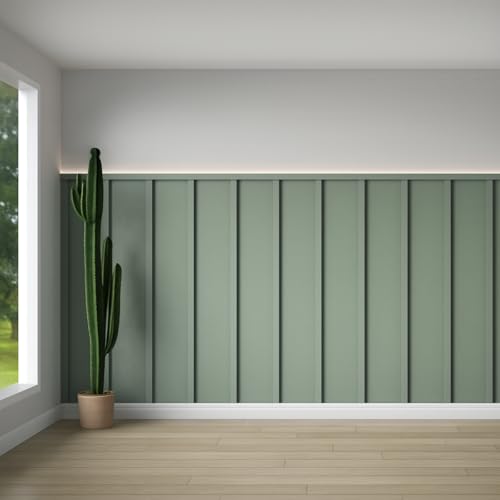
Mdf Material: board and batten wall panel kit is made of MDF, which is durable, waterproof, and easy to clean; The surface is smooth and burr-free, and feels comfortable to the touch

Transformative - Art3d pre-cut molding trim adds depth and character to walls, gives traditional elegance with a hint of contemporary refinement

Wall Molding Kit: the MDF board and batten wall panel kit includes 1 set of wall trim strips; The strips are 4cm wide and 9mm thick, consisting of 21 strips of 87cm width, 12 strips of 100cm width, and 6 strips of 75cm width, for a total of 39 strips; The finished size is 118 x 103 inches; You can paint, stain, or further decorate them according to your preferences to achieve your desired style and color
10. Mural or Ombre Effect
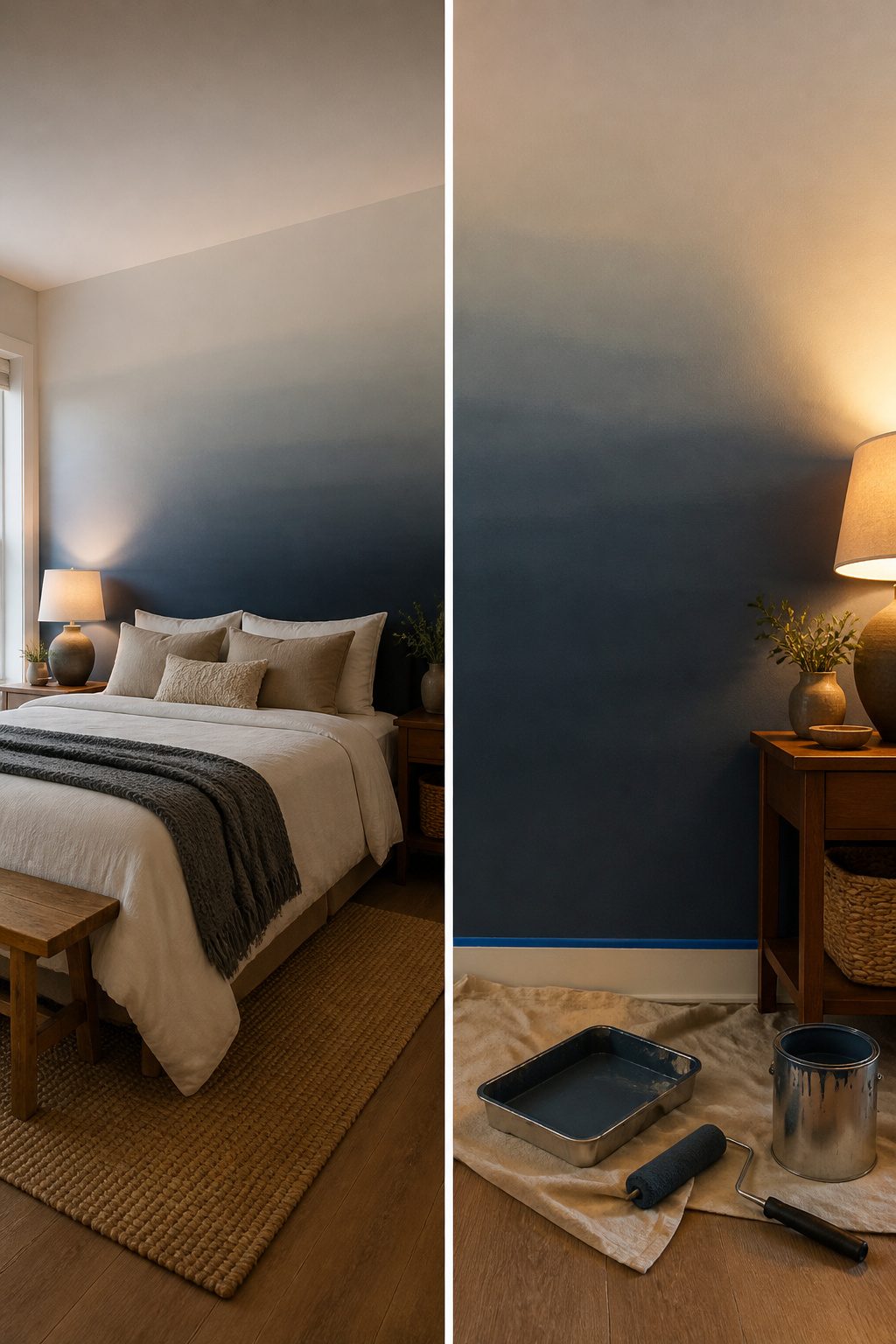
A light wash at the top fading to a deep storm-cloud blue at the bottom gives an accent wall bedroom the kind of softness that reads as intentional, not unfinished.
I like this approach better than a painted mural because the forgiving blend hides hesitation; a mural, even a modern one, asks for a steady hand and a clear image, and most weekend projects have neither.
The skill level here is honest beginner. You need two to three colors in the same family, a roller, a wide synthetic-bristle brush, and a wet sponge for the transition zone.
Work top-down, lightest color first, fully covering the wall, then bring the darker shade up from the bottom while the first coat is still slightly damp.
The brush moves in long horizontal strokes across the middle band where the colors meet.
The drying time is what makes or breaks the blend. If the base coat skins over before you reach it with the next color, you get a hard line instead of a drift.
In a typical bedroom with moderate humidity, that window is roughly the time it takes to roll the full wall once; work in sections, not the whole surface at once. The sponge is your safety net, not your plan A.
I would put this in a primary bedroom or a small reading nook, paired with linen bedding and warm wood furniture. It stays quiet; it does not shout.
Recommended Products

【Double Silencer Steel Nail Gun】our manual nail gun tool is light and it’s convenience for you to carry and handle in various different scenes and comes with double muffler as it’s designed with thickened steel silencer reduces noise and is safer

【Double Silencer Steel Nail Gun】our manual nail gun tool is light and it’s convenience for you to carry and handle in various different scenes and comes with double muffler as it’s designed with thickened steel silencer reduces noise and is safer

Premium Material: Made of premium zinc-plated steel, the 18 gauge brad nails are heavy duty, corrosion-resistant and anti-rust. The Ultimate tensile strength (UTS) is up to 1100MPA
Which Wall to Choose
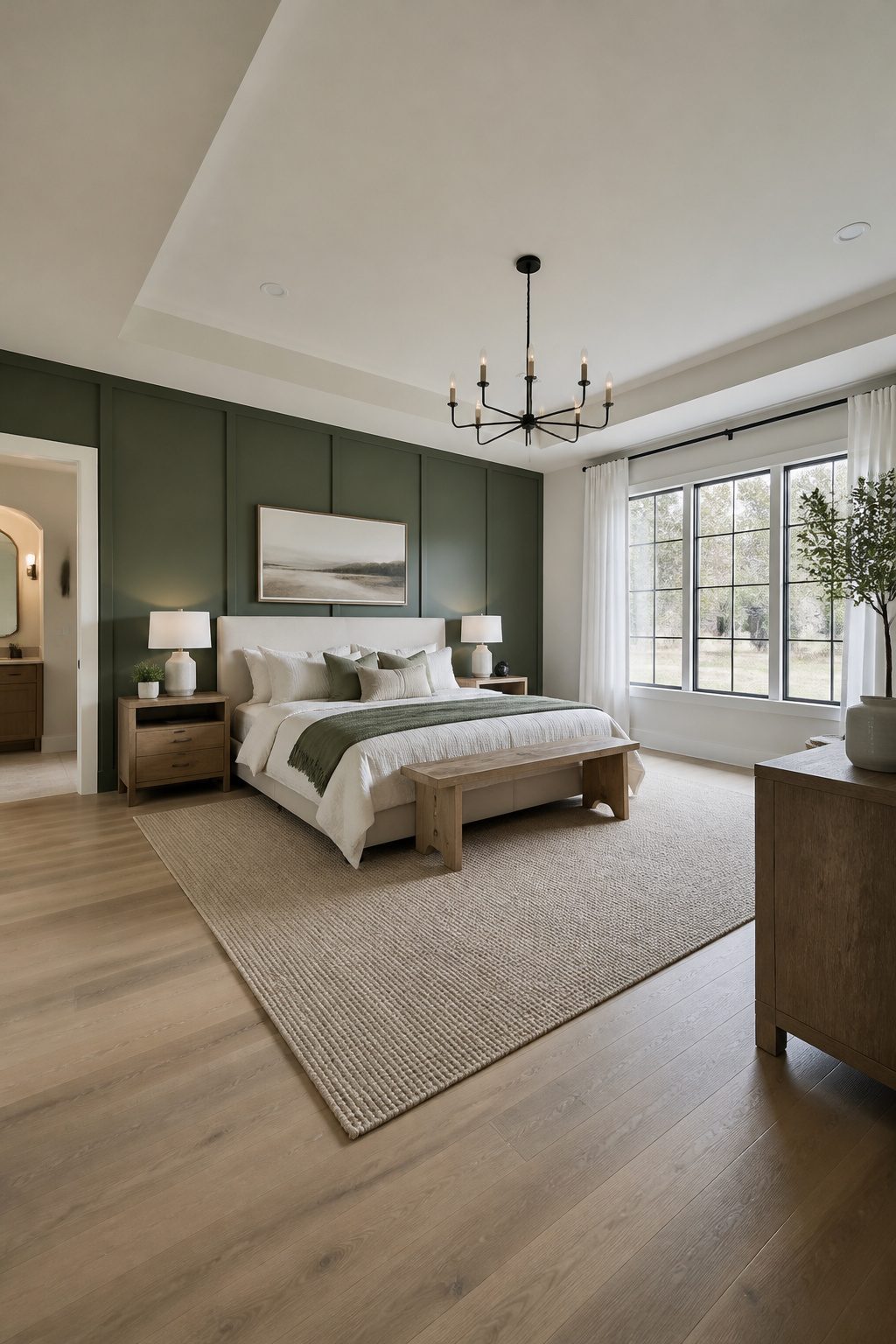
The wall behind your bed is almost always the right choice for a bedroom accent wall, since the bed is usually the largest piece in the room and your eye lands there naturally.
If the bed wall is broken up by windows or doors, the wall opposite the entry can anchor the space instead.
I would skip a side wall in most cases; the treatment ends up fighting the room’s layout rather than guiding it.
Windows and doors are real complications, though a full wall of windows can become the feature itself if you treat the frame and trim as the accent.
Tall ceilings offer one exception worth considering: paint the ceiling a darker shade and let it act as a fifth wall that pulls the room inward and makes it feel cozier.
Color Rules I Follow
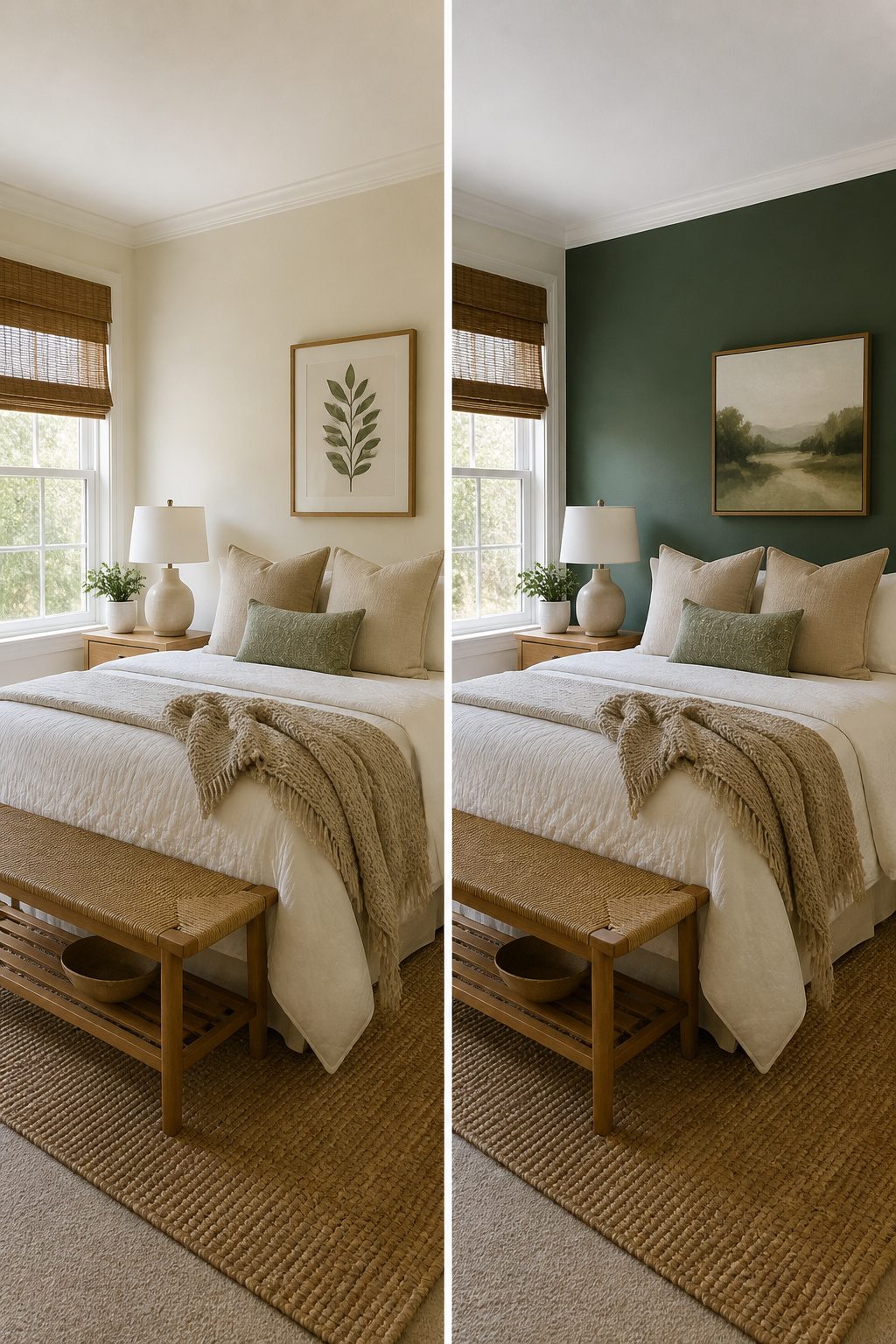
Deep blues, greens, and reds dominate the accent wall bedroom boards I scroll through, but the order I reach for them matters.
I put sage and dusty blue at the top for anyone doing this once and wanting it to last; they shift with the seasons instead of fighting them.
True reds and navy look rich in a south-facing room and flat in a north one, where the cool light leaches the warmth right out.
I learned that the hard way on a bedroom wall that turned almost purple by November.
North light is the variable no paint swatch accounts for.
A color that reads cozy at 4 p.m. in July goes chalky by December afternoon. I do not test on the wall itself; the existing surface color throws the sample off, and primer patches create their own shadow.
Poster board, two coats, moved around the room morning to evening, gives a clean read against trim and bedding both. If it holds up at 8 a.m. and 6 p.m., it stays.
Rental-Friendly Options
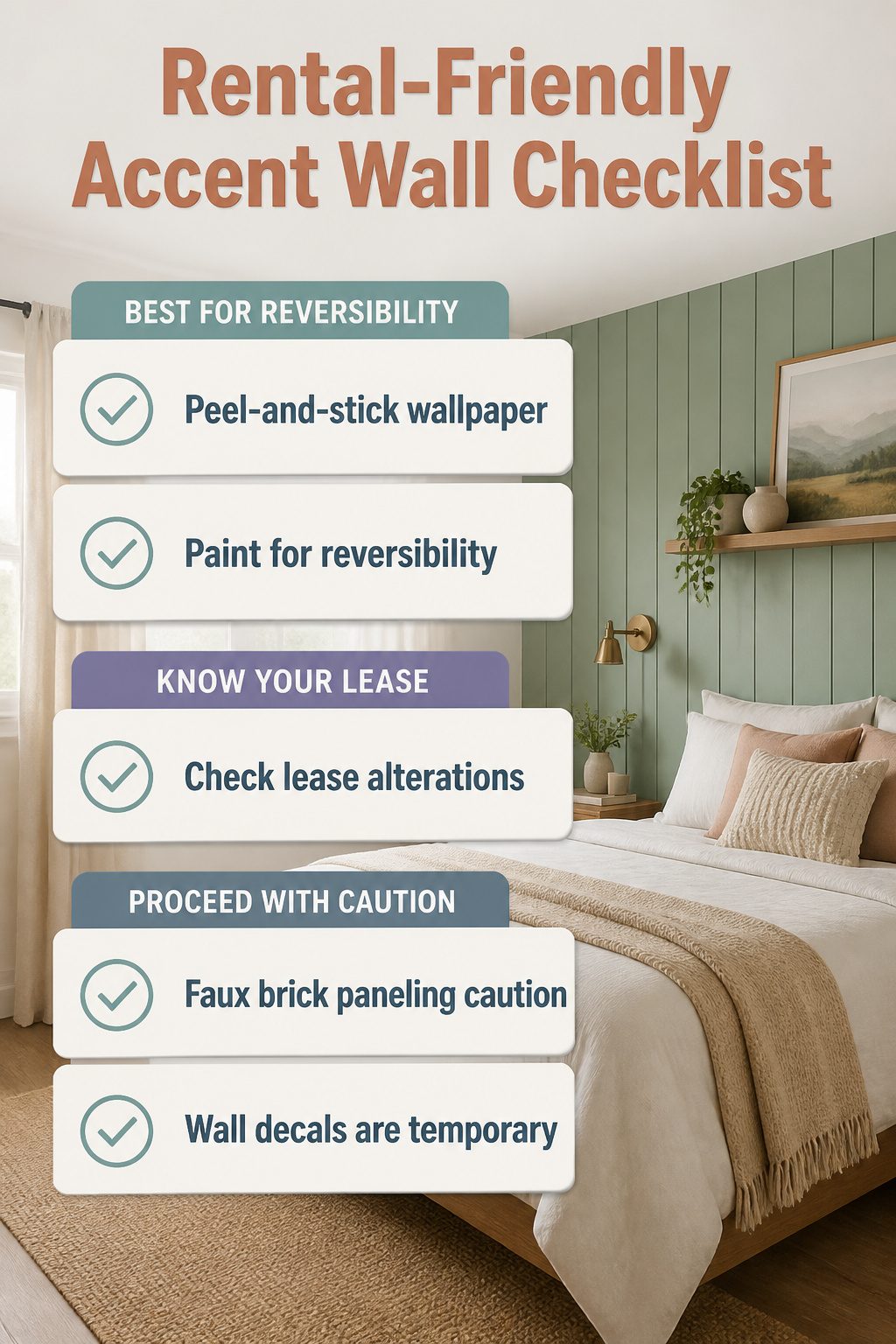
Peel-and-stick wallpaper comes off the wall in one sheet if the surface was clean and the temperature stayed above 50°F during install, so I rank it first for reversibility.
Paint sits at second place: most leases allow it as long as you return the wall to its original color before move-out, and a gallon of white primer plus paint runs less than the cost of one weekend of takeout.
Check your lease for "alterations" or "decorative changes" language, because some landlords define removable wallpaper as an alteration and others do not, and that single word decides whether your deposit is at risk.
Faux brick paneling installed with construction adhesive is gentler on drywall than nails, but I would not risk it in any rental; the adhesive can pull paper facing off drywall in spots, and "gentler" still means repair work that comes out of your pocket.
Wall decals land last on my list, not because they damage walls but because they read as temporary in a way that undermines the point of an accent wall in the first place.
What One Accent Wall Means
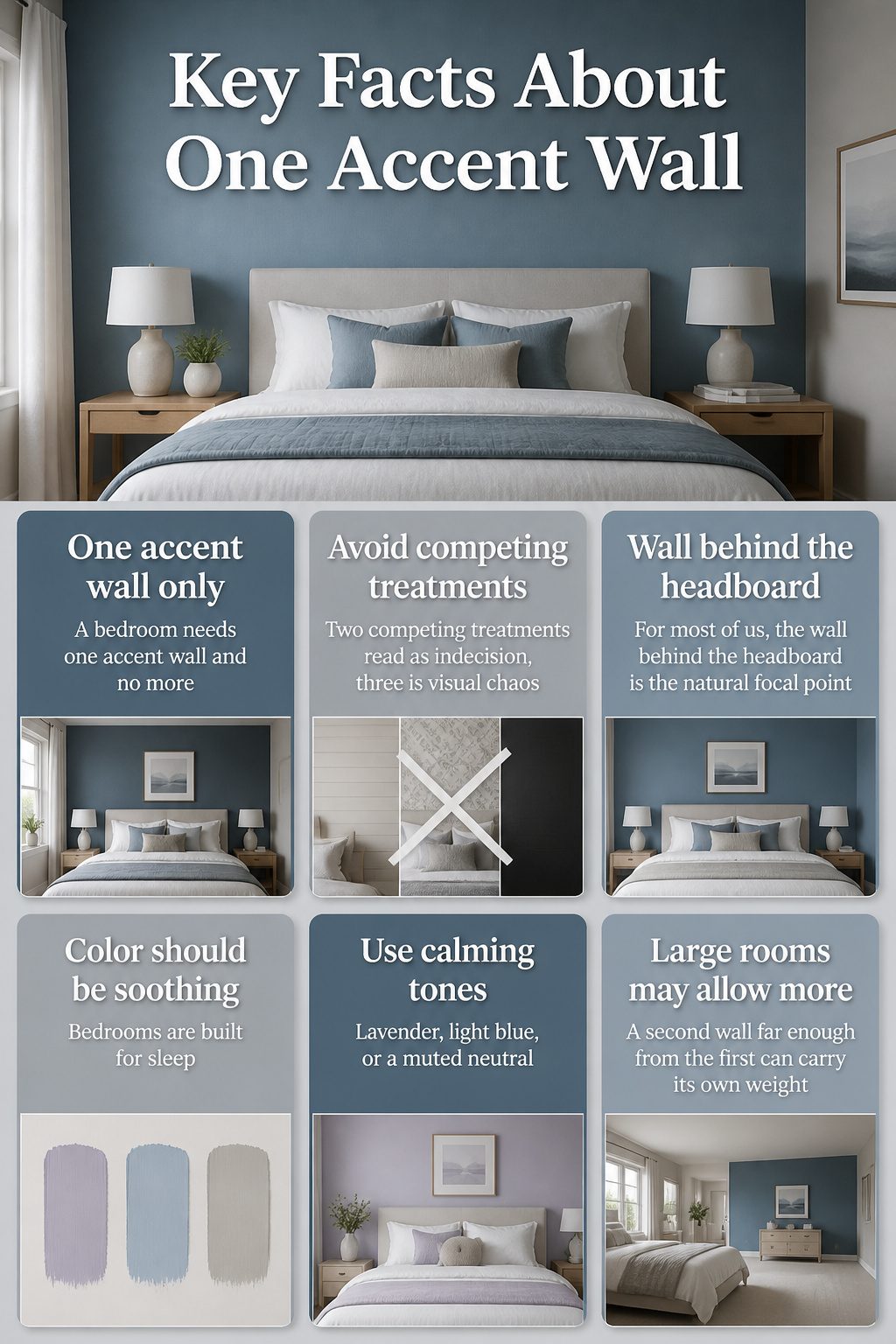
A bedroom needs one accent wall and no more.
Two competing treatments read as indecision, not design, and three in the same room, as one designer put it, lands straight in visual chaos: shiplap, wallpaper, and a black wall all shouting at once.
"No competing accent walls! Stick to one wall."
The rule loosens only in a very large bedroom, where a second wall far enough from the first can carry its own weight without a fight.
For most of us, the wall behind the headboard is the natural single focal point.
Color matters as much as placement. Bedrooms are built for sleep, so I would keep the tone soothing: lavender, light blue, or a muted neutral that recedes rather than advances.
Bright or busy reads as energy, and energy is the last thing I want staring back when I am trying to wind down.
Budget Reality for Each Type
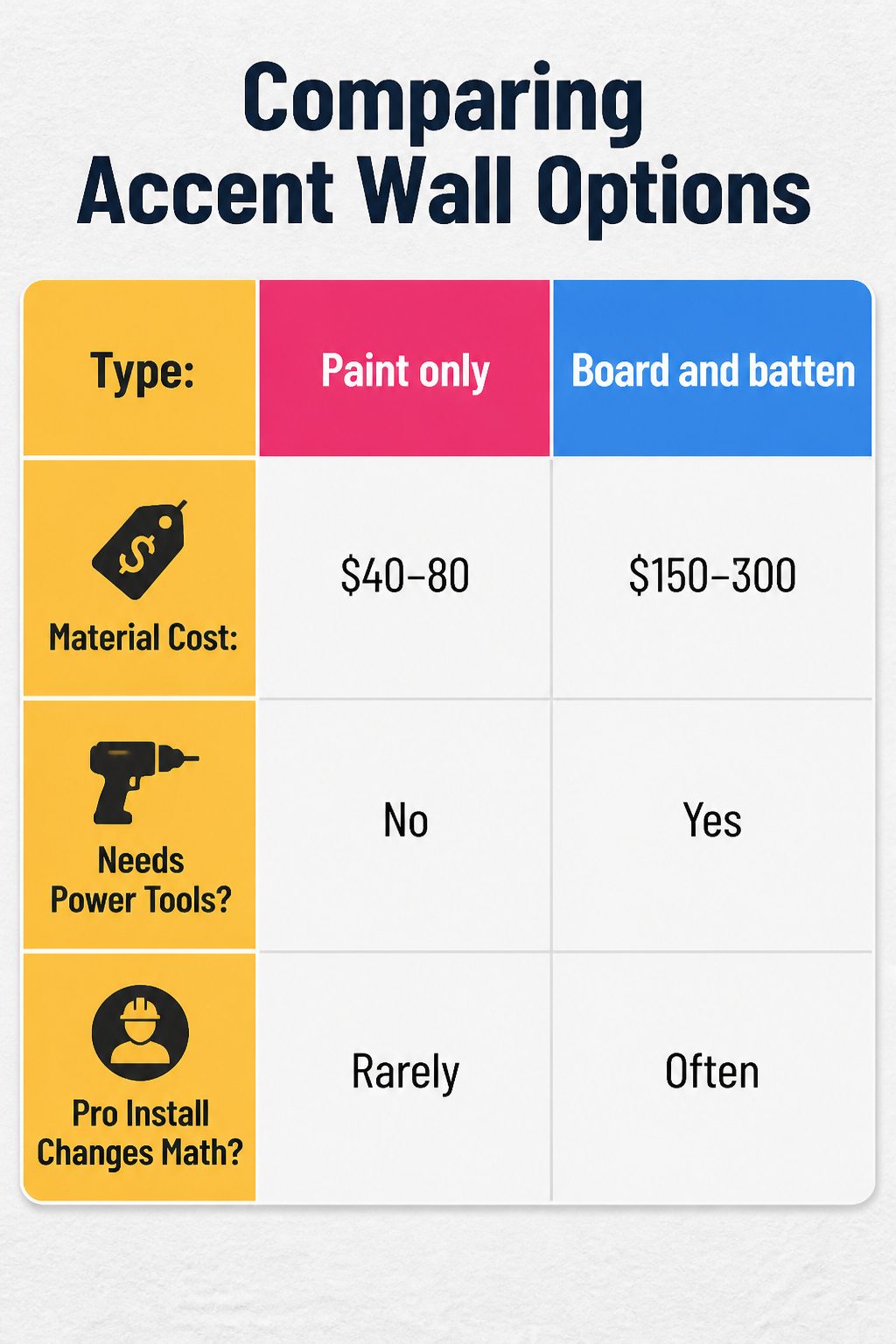
A paint-only accent wall runs $40 to $80 for a quart of paint, roller, tape, and a small brush. Board and batten jumps to $150–300 in materials for an average wall, plus paint.
Wood slats land at $200–500 depending on species. Custom paneling or built-ins start around $500 and climb with trim choices.
| Type | Material Cost | Needs Power Tools? | Pro Install Changes Math? |
|---|---|---|---|
| Paint only | $40–80 | No | Rarely worth it |
| Board and batten | $150–300 | Yes | Often, if no miter saw |
| Wood slats | $200–500 | Yes | Yes, brad nailer skill matters |
| Custom paneling/built-ins | $500+ | Yes | Usually |
The tool assumption matters more than most guides admit.
Starting from zero, budget another $150–300 for a level, miter saw access, brad nailer, and caulk. I would rent the miter saw for a weekend rather than buy, and borrow the brad nailer if possible.
Paint-only is the clear win for anyone without a tool collection already, and even board and batten only pays for pro install if the wall has outlets or windows that need precise cuts.
Frequently Asked Questions
Which wall should be an accent wall in a bedroom?
The wall behind your bed is almost always the right choice, since the bed is usually the largest piece in the room and your eye lands there naturally.
If that wall is broken up by windows or doors, the wall opposite the entry can anchor the space instead. Skip a side wall in most cases; the treatment ends up fighting the room’s layout rather than guiding it.
What colors work best for an accent wall?
Sage and dusty blue top my list for longevity; they shift with the seasons instead of fighting them. Deep teal, smoky charcoal, terracotta, and warm earthy green also work well when everything else stays light around them.
True reds and navy can turn flat in north-facing rooms where cool light leaches the warmth out, so test on poster board and move it around morning to evening before committing.
How much does a DIY accent wall typically cost?
A paint-only accent wall runs $40 to $80 for a quart of paint, roller, tape, and brush. Board and batten jumps to $150 to $300 in materials for an average wall, plus paint.
Wood slats land at $200 to $500 depending on species, and custom paneling or built-ins start around $500 and climb with trim choices. If you own no tools, add another $150 to $300 for a level, miter saw access, brad nailer, and caulk.
Can I do an accent wall in a rental?
Peel-and-stick wallpaper ranks first for reversibility; it comes off in one sheet if the wall was clean and the temperature stayed above 50°F during install.
Paint sits at second place, since most leases allow it as long as you return the wall to its original color before move-out.
Check your lease for "alterations" or "decorative changes" language, because some landlords define removable wallpaper as an alteration and others do not.
What are the rules about bedroom accent walls?
Stick to one accent wall and no more; two competing treatments read as indecision, not design. Bedrooms are built for sleep, so keep the tone soothing rather than bright or busy.
Lavender, light blue, or a muted neutral that recedes works better than something that advances toward you with energy when you are trying to wind down.
Are accent walls out of style in 2026?
Board and batten is current but specific to the modern farmhouse and coastal moods that have dominated the last decade, so I would paint it tone-on-tone rather than high contrast if selling within five years.
Wallpaper, painted ceilings, and wood slats all still read as intentional design rather than passing trend, especially when paired with clean lines and warm materials.
What is the rule for accent walls?
One accent wall per room is the hard rule, loosening only in a very large bedroom where a second wall far enough from the first can carry its own weight without a fight.
The wall behind the headboard is the natural single focal point for most bedrooms. Color matters as much as placement; soothing tones beat bright or busy in a space designed for sleep.
What is the best accent color for a bedroom?
I put sage and dusty blue at the top for anyone doing this once and wanting it to last.
Deep blues, greens, and reds dominate the boards I scroll through, but they need the right light: true reds and navy look rich in south-facing rooms and flat in north ones.
Test on poster board, not the wall itself, and move it through morning and evening light before you decide.