A wooden bed design is the structural and visual center of a bedroom, and the wrong choice makes every other piece fight for balance.
The condition that matters most is not style but construction: solid hardwood rails with through-bolts can be disassembled and reassembled through multiple moves, while screws driven into end grain loosen within a few years.
The Zinus Linda Wood Platform Bed Frame, at under $350 with solid pine slats and a steel interior frame, proves that price does not predict longevity.
Handcarved Wooden Beds
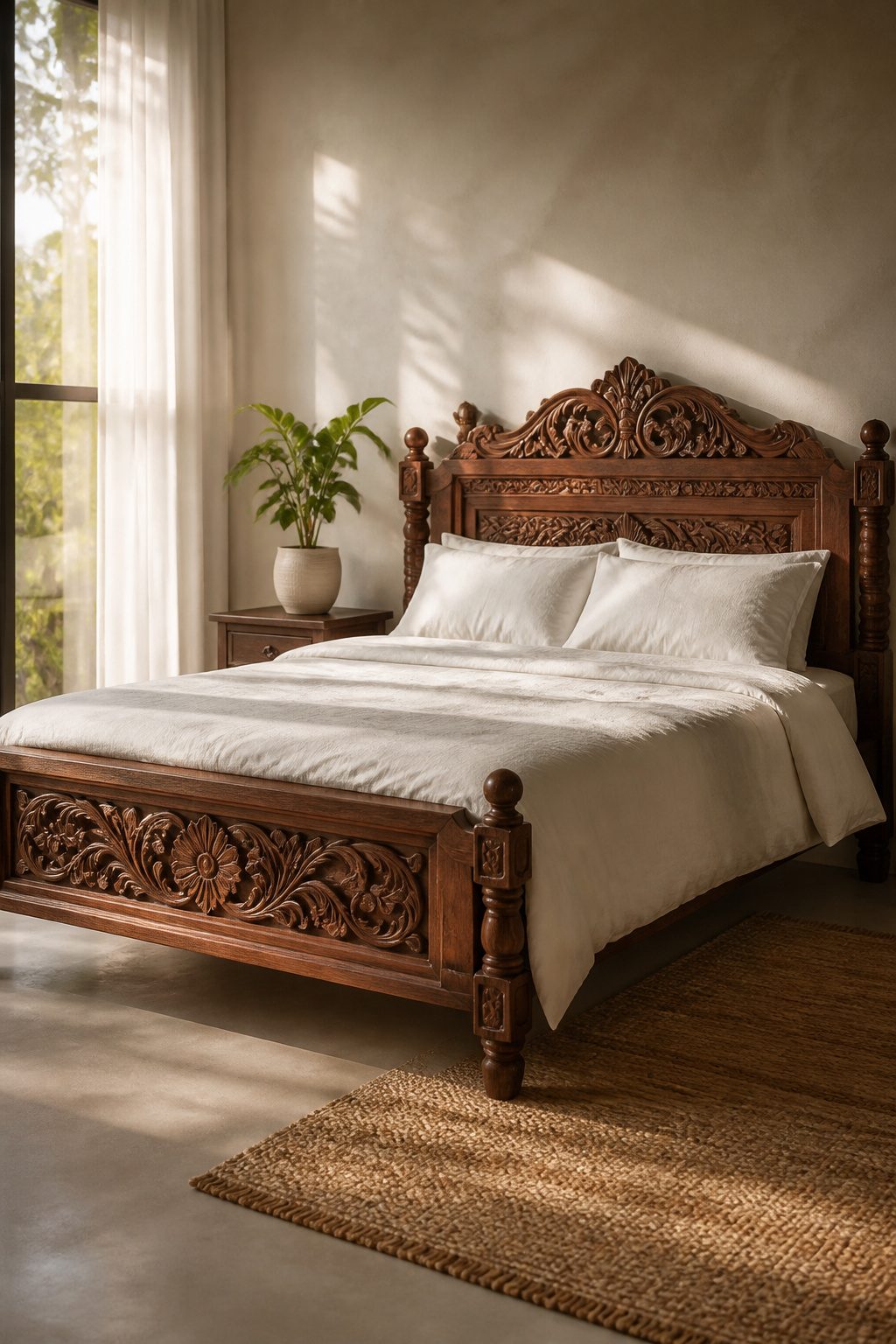
Handcarved wooden beds carry a grain pattern no machine can replicate, because the tool follows the wood rather than forcing it.
The Rural Art builds theirs from solid teak, Indian rosewood, acacia, and mango wood, and the difference shows in how the bed ages.
A machined headboard wears evenly until it looks tired all at once; handcarved surfaces catch light differently across the relief, so the piece gains depth instead of losing it.
The carving itself is what separates a bed that lasts three decades from one that lasts three moves.
Tool marks left by a chisel or gouge sit below the finished surface, creating shadows that hide the small dings of daily life.
Machine-routed patterns are cut to a consistent depth, which looks crisp in a showroom but flattens under real light and shows every scratch.
I would pick Indian rosewood or solid teak if the bedroom gets morning sun, since both oils tighten the grain against drying.
Mango wood works for a guest room or a space you use less aggressively. Weight is the real cost of all that carving.
These frames ship in pieces for a reason, and you will need a second person to assemble the headboard. Factor that into a weekend timeline, or the bed sits half-built until Sunday evening.
Platform Beds
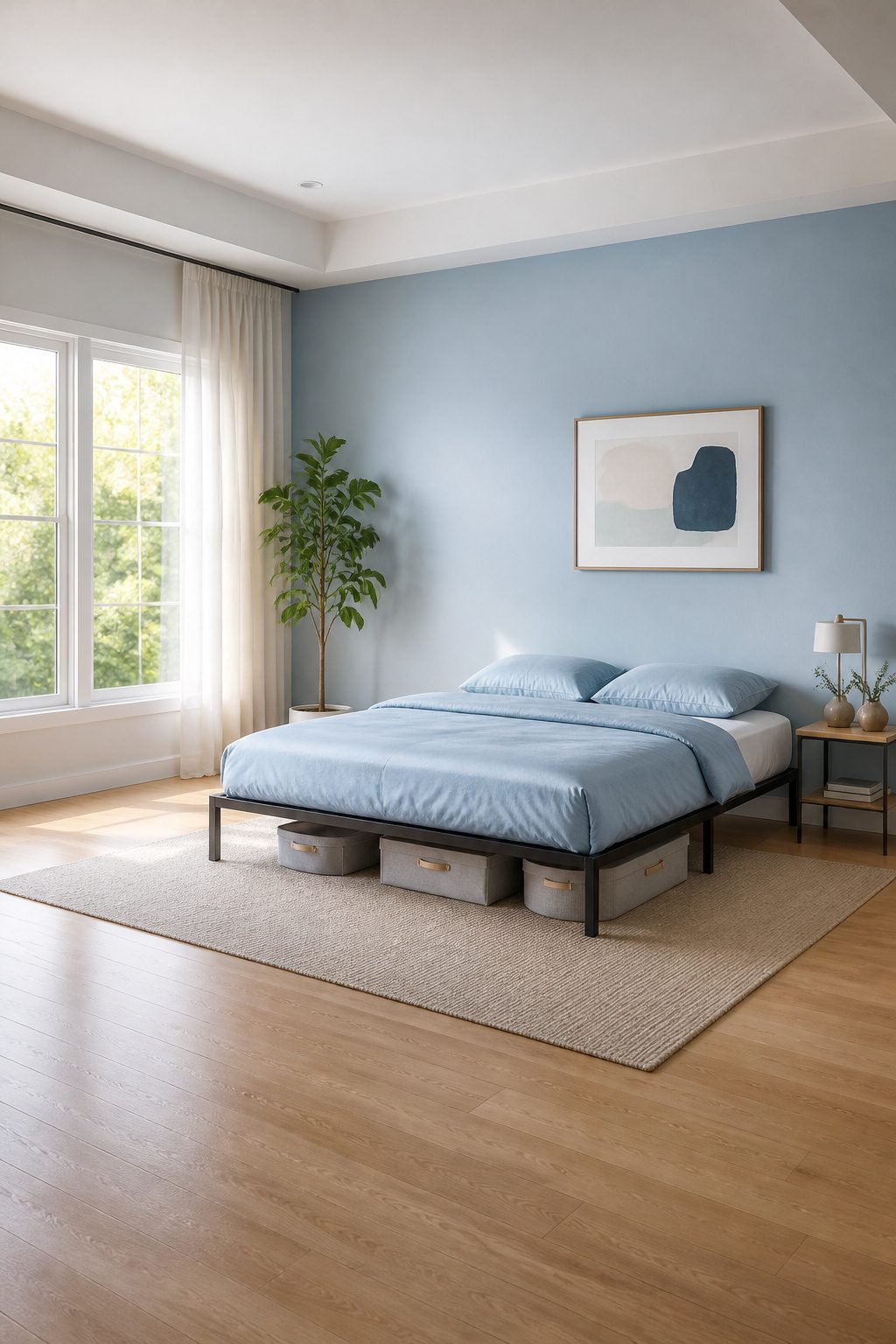
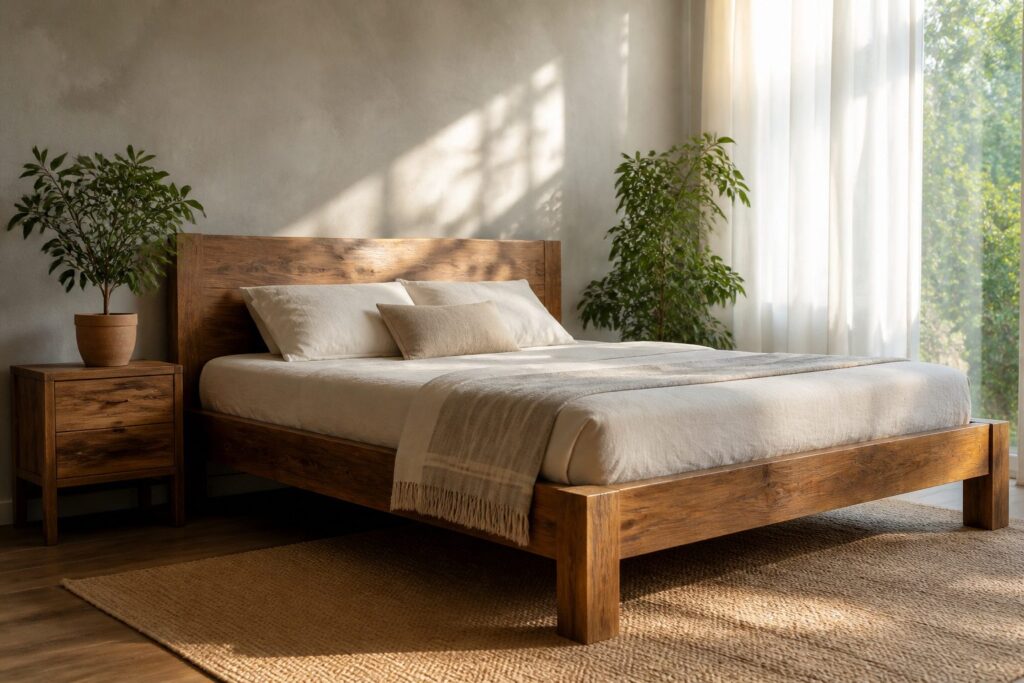
Platform beds strip a wooden bed design down to what actually matters: a solid surface, clean edges, and no visual weight.
The low profile changes how a room feels the moment you walk in. Ceilings read taller, floors read wider, and the bed stops fighting the rest of the furniture for attention.
The Zinus Linda Wood Platform Bed Frame runs under $350 and proves the point. Solid pine slats and a steel interior frame give it the rigidity that cheaper platforms fake with particleboard.
No box spring needed; the slats sit close enough to keep a mattress flat over years of use. One reviewer who has slept on hers since 2021 notes no squeaks, no fading, no joint failure.
Assembly takes patience, and the reward is a frame that reads more expensive than it costs and fits anywhere from a cabin bedroom to a stripped-down city apartment.
Storage underneath depends on clearance. Some platforms ride low enough that only slim bins slide through; others leave a cavity worth planning for.
If you need height, a Japanese-style birch frame with grooved slats runs closer to $1,095 and builds in that space deliberately. The choice is between paying less and buying low, or paying more and gaining function underneath.
Canopy Beds
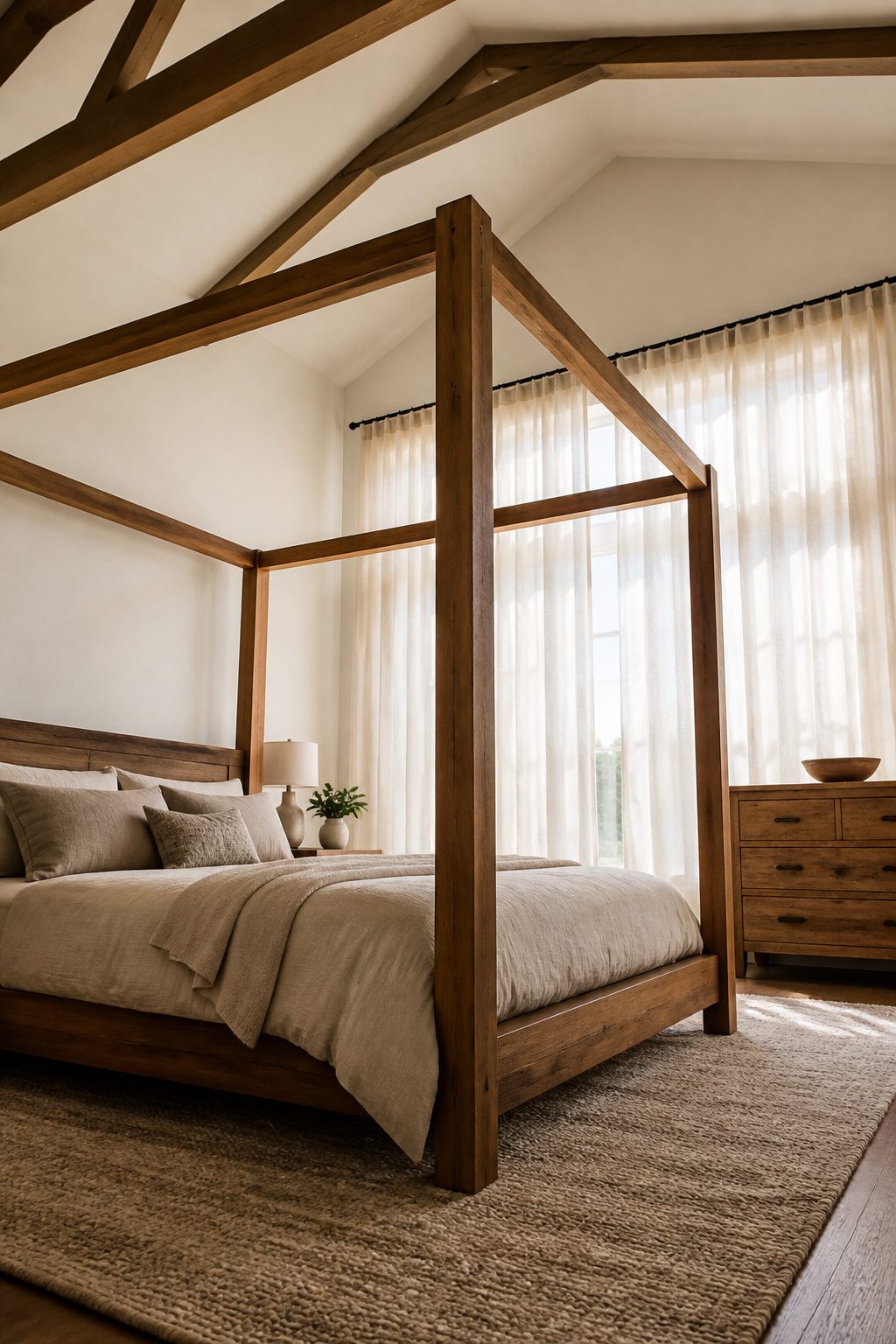
A canopy bed changes a bedroom by drawing the eye up, and the Orlando Solid Wood Canopy Bed does this with a frame tall enough to become the room’s focal point.
Vertical lines from the posts add drama in a way horizontal designs do not, though I would not install one unless the ceiling clears nine feet.
Below that, the canopy starts to press down rather than open up the space, and the visual weight of solid wood overhead turns from grand to cramped.
The Orlando’s detailed craftsmanship matters because a canopy bed lives in plain sight from every angle.
There is no wall to hide a rough joint or an uneven turn. I think the investment in hand-finished posts pays off here in a way it might not on a low platform frame that sits hidden by bedding.
For a renter or first-time owner, the limit is practical: you need ceiling height, and you need floor space around the frame so the posts do not become obstacles.
A canopy bed in a 10-by-10 room fights the walls. Given the choice between this statement piece and a simpler frame in a smaller bedroom, I would skip the canopy and let the room breathe.
Storage Beds
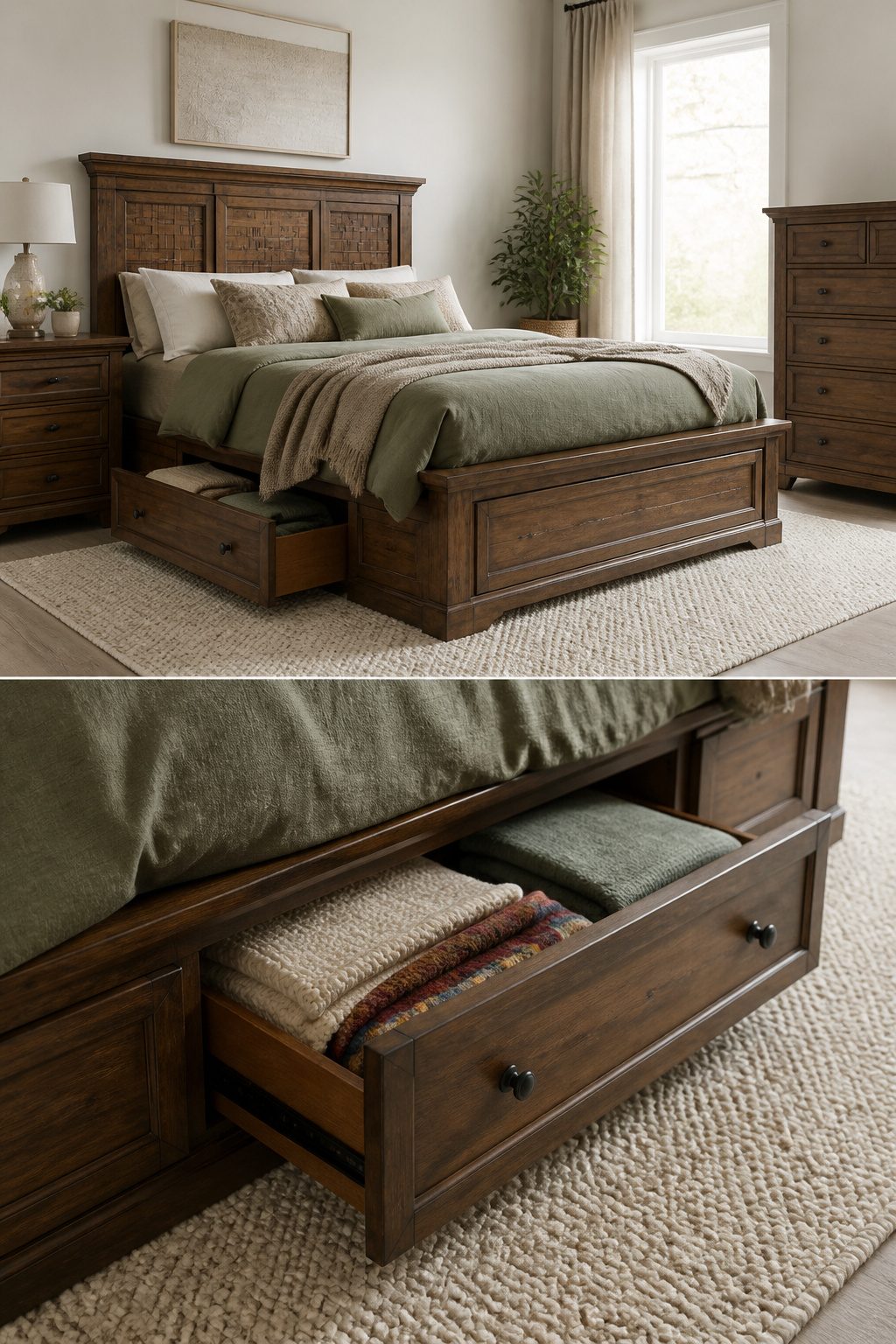
Storage beds give you back the square footage your mattress would otherwise waste, and in a small bedroom that trade is usually worth it.
The Glendale Grandeur Solid Wood Storage Bed keeps the classic carved look while tucking drawers into the base; the West Elm Mid-Century Storage Platform Bed does something rarer and puts the storage in the headboard, with open shelf space on top and a hidden compartment behind for books and chargers.
That hybrid approach solves the nightstand problem in tight floor plans where a traditional bedside table won’t fit, though the floor-to-frame clearance sits at just under six inches, so cleaning underneath takes more work.
Drawers versus lift mechanisms is the real choice. Drawers need aisle space to pull out, which means they fight with rugs and bedside tables; lifts give you the full cavity but require clearing the mattress to reach it.
I would pick drawers for linens I access seasonally and a lift only if I had no other closet space at all. The Glendale runs on the drawer model; the West Elm skips underbed storage entirely and builds upward instead.
Headboard storage wins when your bedroom layout is awkward enough that a nightstand can’t sit close to the bed, and the $1,519 sale price on the West Elm is competitive with buying a separate bed and narrow shelving unit.
Mid-Century Modern Beds
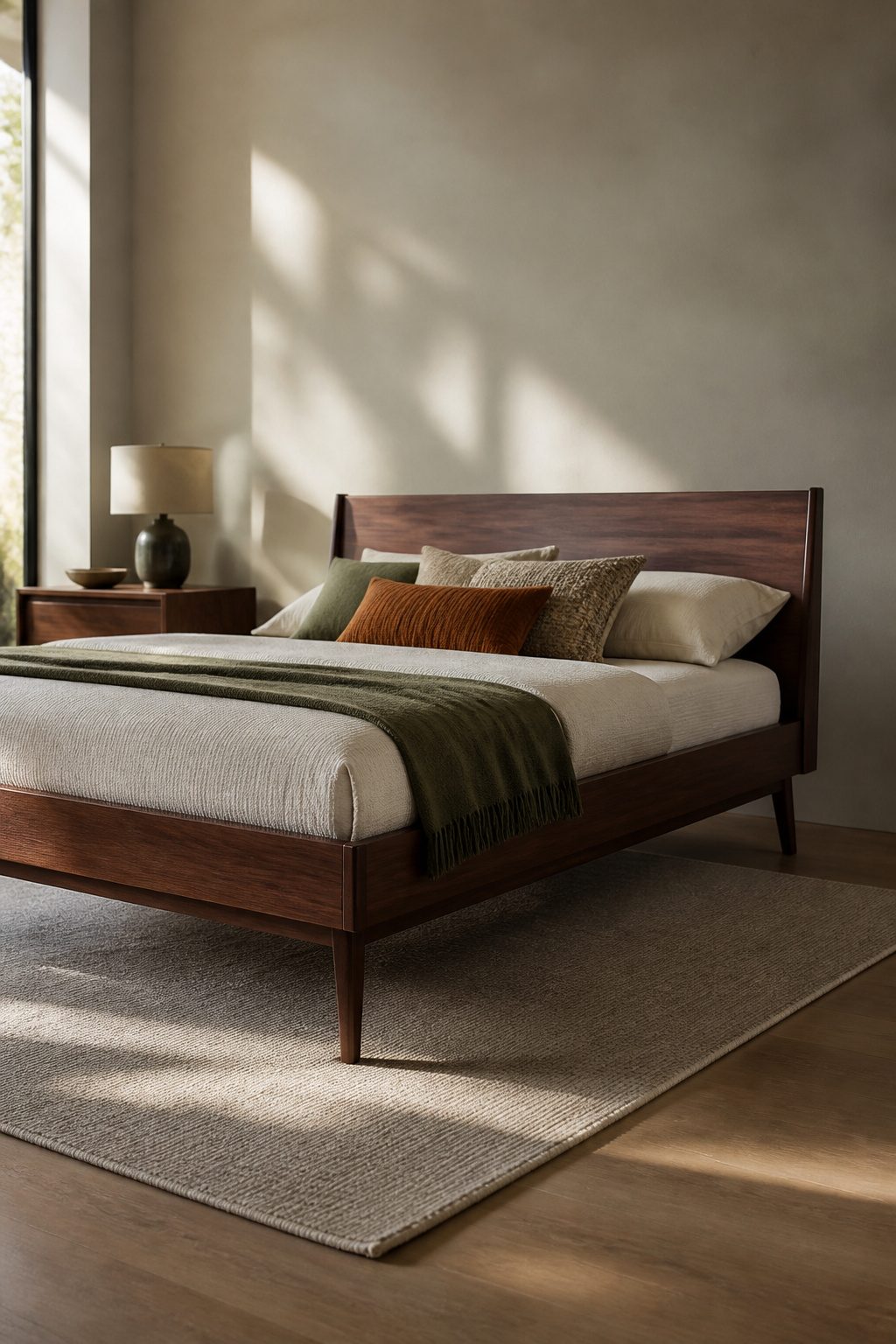
Mid-century modern beds still read as current because the proportions were disciplined: tapered legs that lift the frame clear of the floor and headboards that stay low and flat, never tufted or scrolled.
The look is leggy and horizontal, which makes a small bedroom feel larger because your eye travels under the furniture rather than stopping at a skirted base.
The Article Lenia Bed nails this silhouette in walnut and white oak finishes, and it is one of the few in this price bracket that lets you choose your version.
I would take the classic platform with the solid headboard and skip the spindled option; spindles read more country than mid-century, and the clean plane of the standard headboard is what makes the period reference land.
The underbed storage configuration exists, but adding drawers kills the floating effect that the tapered legs are there to create.
Storage is a practical win, yet on this frame I think it is a trade-off that costs the style its whole point.
White-glove delivery and assembly are included, which matters more than it sounds with a jointed wooden frame; creaky joints have been reported when assembly is rushed, and a pro install dodges that risk.
The one-year manufacturer warranty is standard for the category, not generous, so treat the frame gently in year two.
Rustic Farmhouse Beds
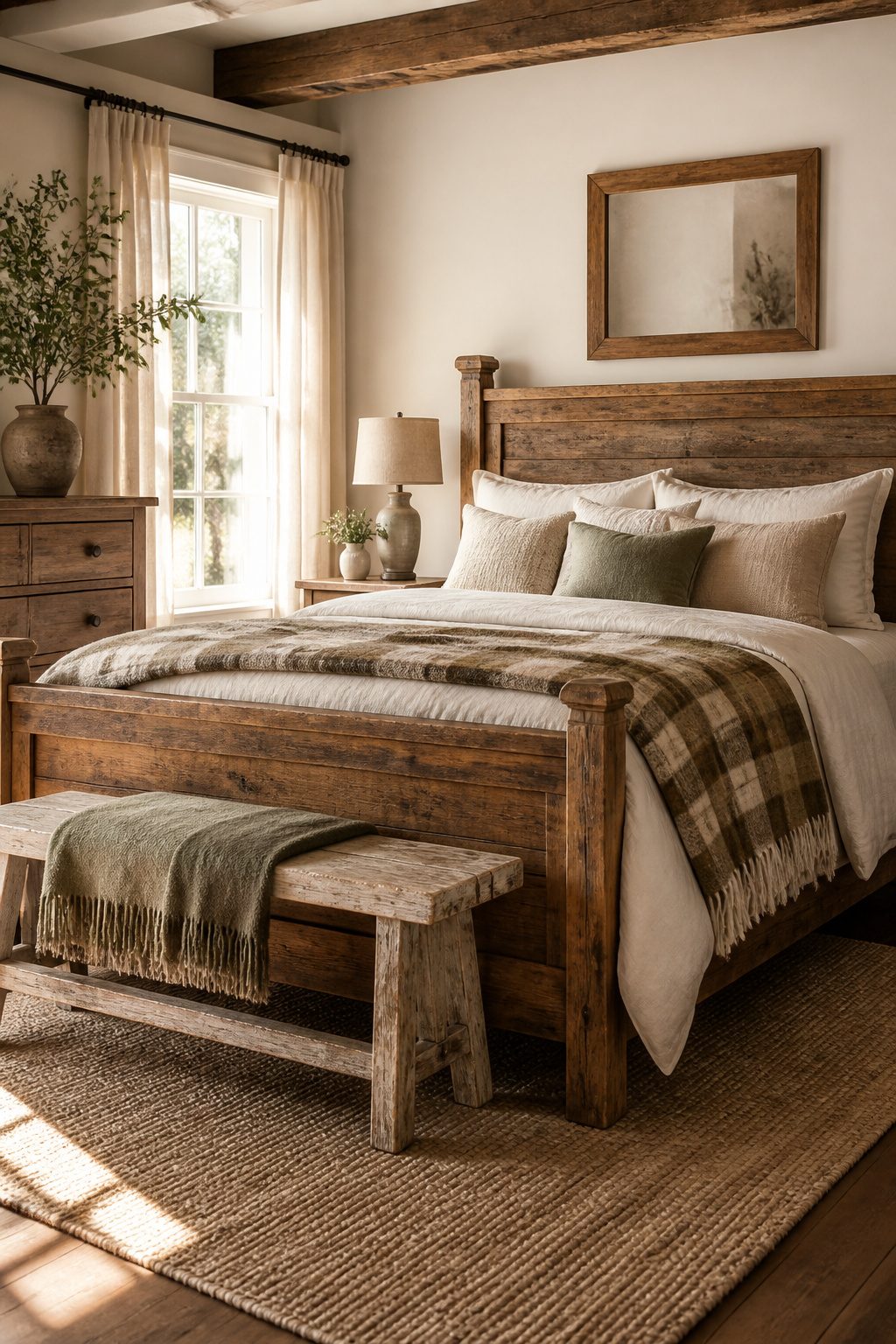
Rustic farmhouse beds lean on the idea that the wood has already lived a life. The Pottery Barn Farmhouse Bed, built from kiln-dried solid pine with poplar and engineered hardwood accents, comes in five finishes and runs $1,799 for a queen.
That price stings until you consider what kiln-drying actually buys you: moisture locked down before the wood ever becomes a headboard, which means the frame will not twist or gap through winter heating seasons.
I would take the kiln-dried spec over a cheaper air-dried frame every time, especially in a climate with real temperature swings.
The finishes range from raw-looking weathered tones to smoother painted options, and this is where I get picky.
Authentic distressing comes from actual wear, saw marks, and hand-planed variation; factory-applied aging uses belts, stains, and orbital sanders to simulate the same story in twenty minutes.
Both are honest about what they are, but only one ages further in your bedroom.
The Pottery Barn frame sits closer to the factory side, which is not a flaw if you want a consistent look that will not read as "too country" in five years.
Nick Mafi at Architectural Digest called it "sturdy but still soft," and I think that balance is exactly why farmhouse style has hung on while trendier looks cycled out.
A basic platform bed in a solid wood grain is always a neutral building block to outfit a bedroom if your furniture tastes are constantly evolving.
That line matters because it names the real advantage of a wooden farmhouse frame: you can swap linens, lamps, and wall color without fighting the bed.
The slightly bulky silhouette is the trade-off. I would skip the footboard if the room is under 12 feet wide, but keep it for a larger space where the bed needs to anchor the whole wall.
Contemporary Wooden Beds
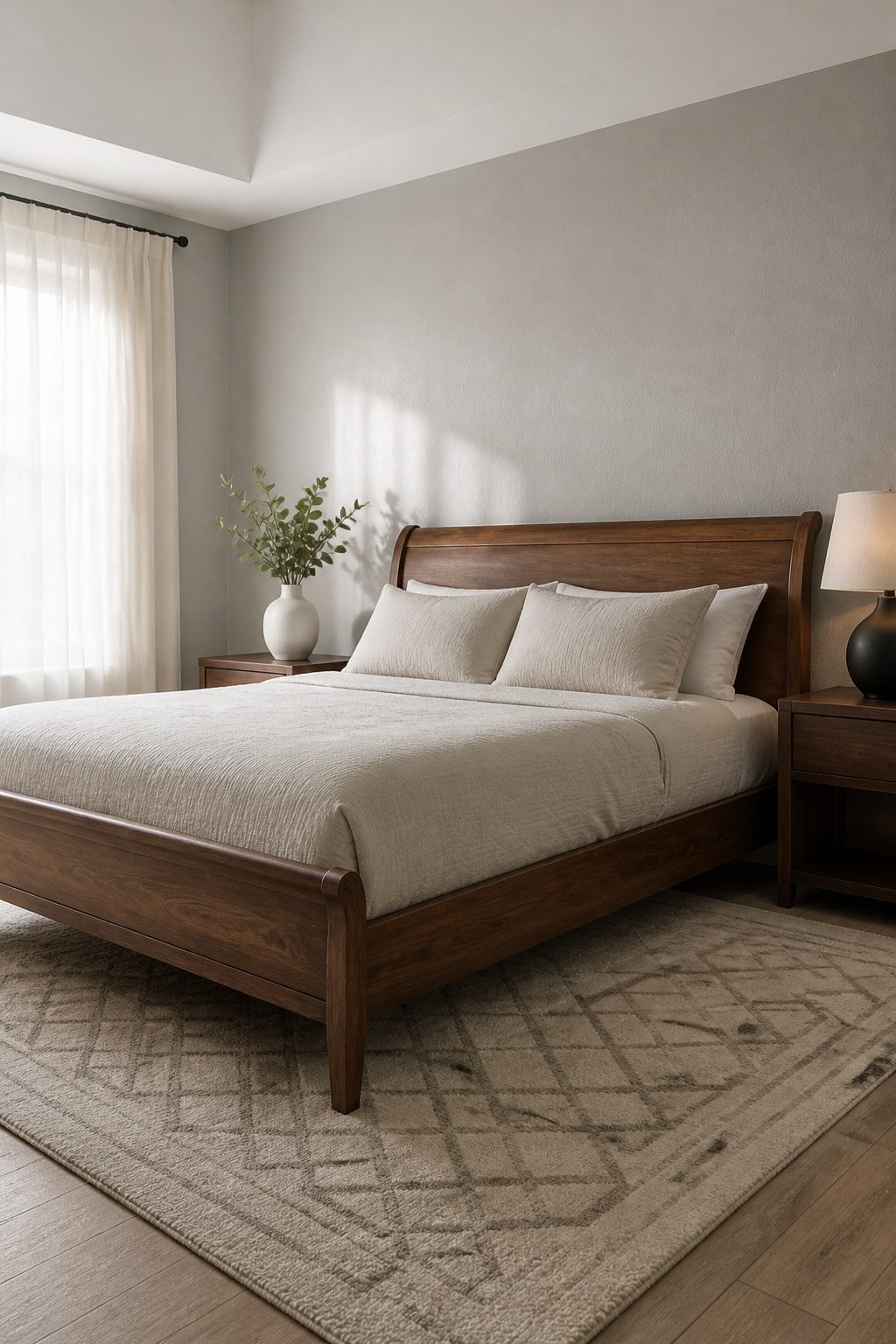
Contemporary wooden beds strip away ornament until only the line remains. I look for frames that sit low to the floor, often platform-style, with the wood grain itself doing the visual work rather than any applied detail.
Teak and pine are common choices in this range, and a basic platform bed in a solid wood grain functions as a neutral building block if your furniture tastes shift year to year.
The Lancaster Sleigh Bed shows how a traditional form gets updated rather than abandoned. It keeps the graceful curves of a classic sleigh profile but refines the detailing so the silhouette reads as current rather than period-revival.
That distinction matters. Contemporary, to my eye, borrows from modernism’s restraint but allows warmth that strict modernism often refuses; it is less doctrinaire about material honesty and more willing to let a curve soften a rectilinear room.
Where a modern frame from the midcentury might angle its legs outward for deliberate tension, a contemporary piece tends to resolve into quieter proportions.
The difference between current and dated often comes down to bulk. A thick, blocky post looks like the 1990s; a slender rail with consistent thickness reads as now.
If you are choosing between two wooden bed designs at similar cost, I would pick the one with the simpler joint and the cleaner edge. It ages better, and it photographs better in resale or rental listings.
Solid Hardwoods and What to Ask For
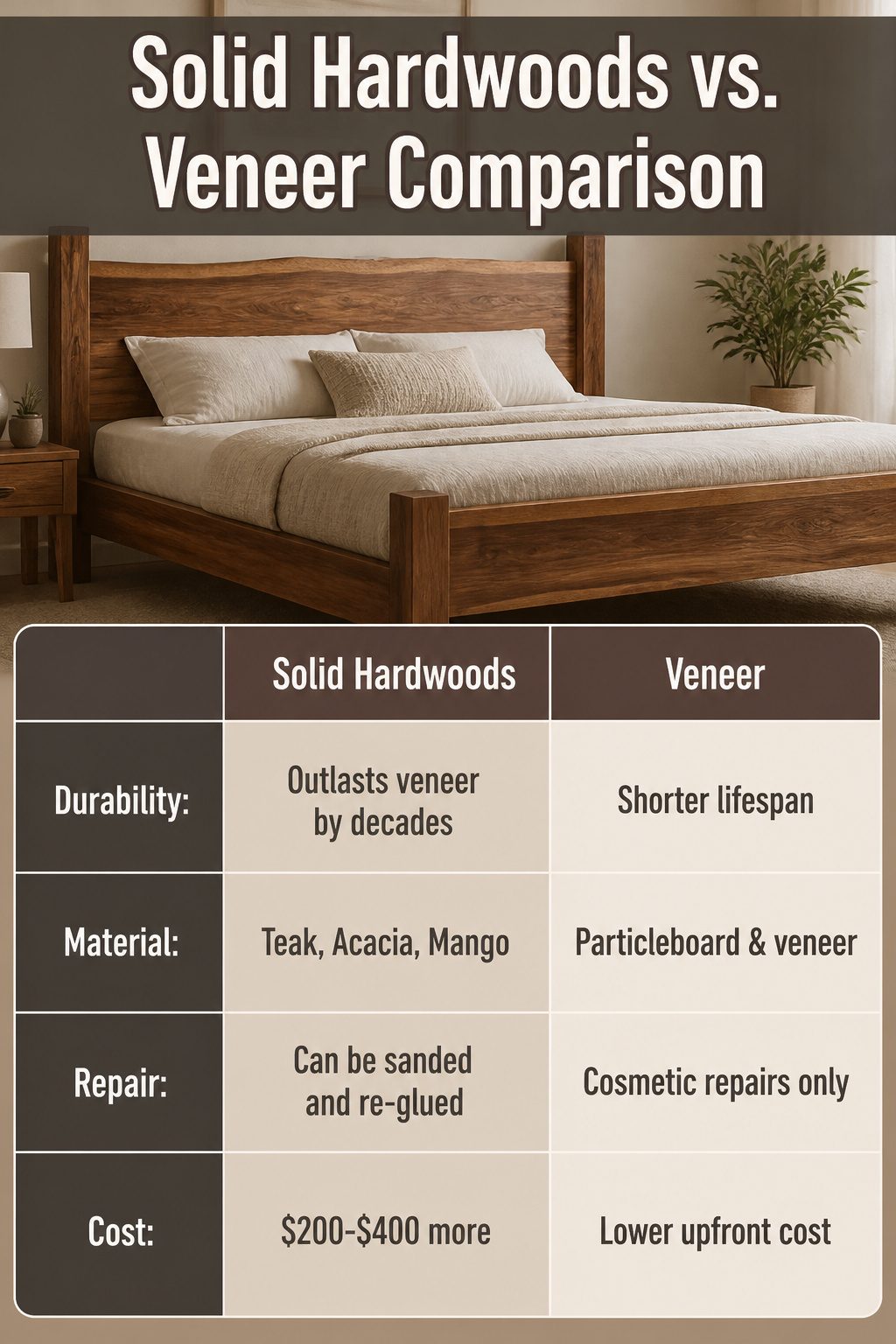
Solid hardwood frames outlast veneer by decades because the grain runs the full thickness of every rail and post.
Teak, acacia, and mango wood each bring something different to a wooden bed design: teak is dense and oily enough to resist warping in dry mountain air, acacia carries a live-edge unpredictability that hides scratches, and mango wood, often reclaimed from spent orchards, darkens to a russet tone as it ages.
No two boards finish identically, which is the point.
Construction matters more than species.
I would ask whether the side rails are single slabs or finger-jointed strips, whether the headboard bolts to the frame with metal hardware or slots into wooden dowels, and whether the slat system is included or sold separately.
A bed built with corner blocks and hardwood dowels can be disassembled and reassembled; one relying on screws into end grain will loosen within a few moves.
Veneer over particleboard costs less upfront, but once the surface chips or the substrate swells, the repair is cosmetic and temporary.
Solid wood can be sanded, re-glued, and returned to service. For a first-home owner planning to keep a bed through a move or two, that repairability is worth the roughly $200–$400 step up in price.
Customization That Changes the Bed
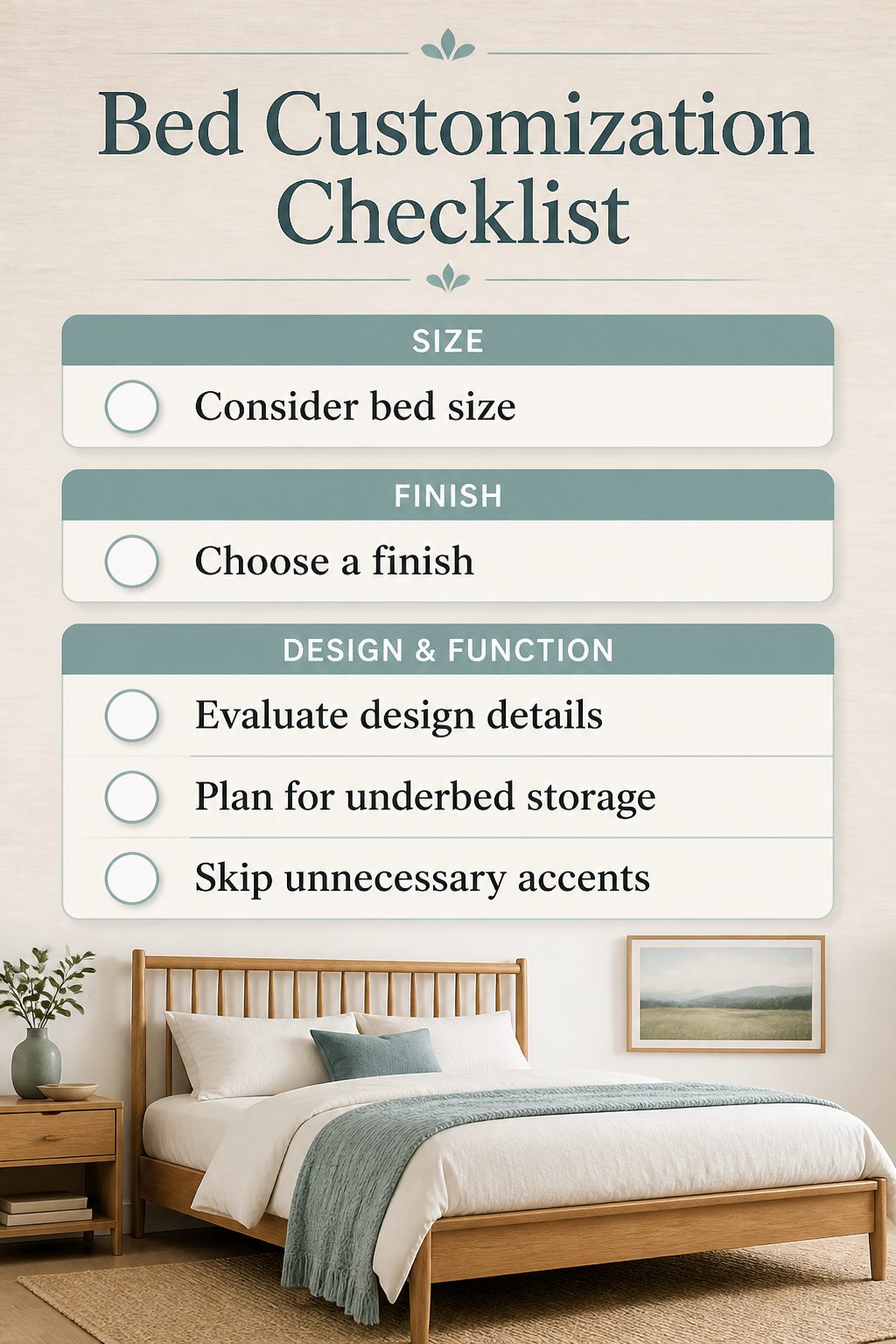
Most customizations add cost faster than they add function. Size is the exception: moving from a queen to a king, or down to a twin for a guest room, changes how you actually use the bed.
The Article Lenia Bed comes in twin, full, queen, and king, which covers most real needs without drifting into specialty dimensions that drive up price for no gain.
Finish is where I would spend carefully and only once. The Lenia offers walnut and white oak, plus a black ash option that suits deeper palettes.
Two to three tones from the same line is enough choice; anything beyond that, like a catalog of four or five proprietary glazes, starts charging for novelty rather than quality.
A finish should solve a problem in your room, not become the reason you are in the room.
Design details split the same way.
A platform versus a spindled headboard changes the silhouette and what bedding reads against it. Underbed storage adds function if you are short on closet space.
These are worth the upcharge. Hand-carved accents or bespoke dimensions, on the other hand, add labor cost that shows up in the final price without changing how the bed sleeps.
I would skip them on a real budget and put that money toward a better mattress instead.
Comfort and Support Under Load
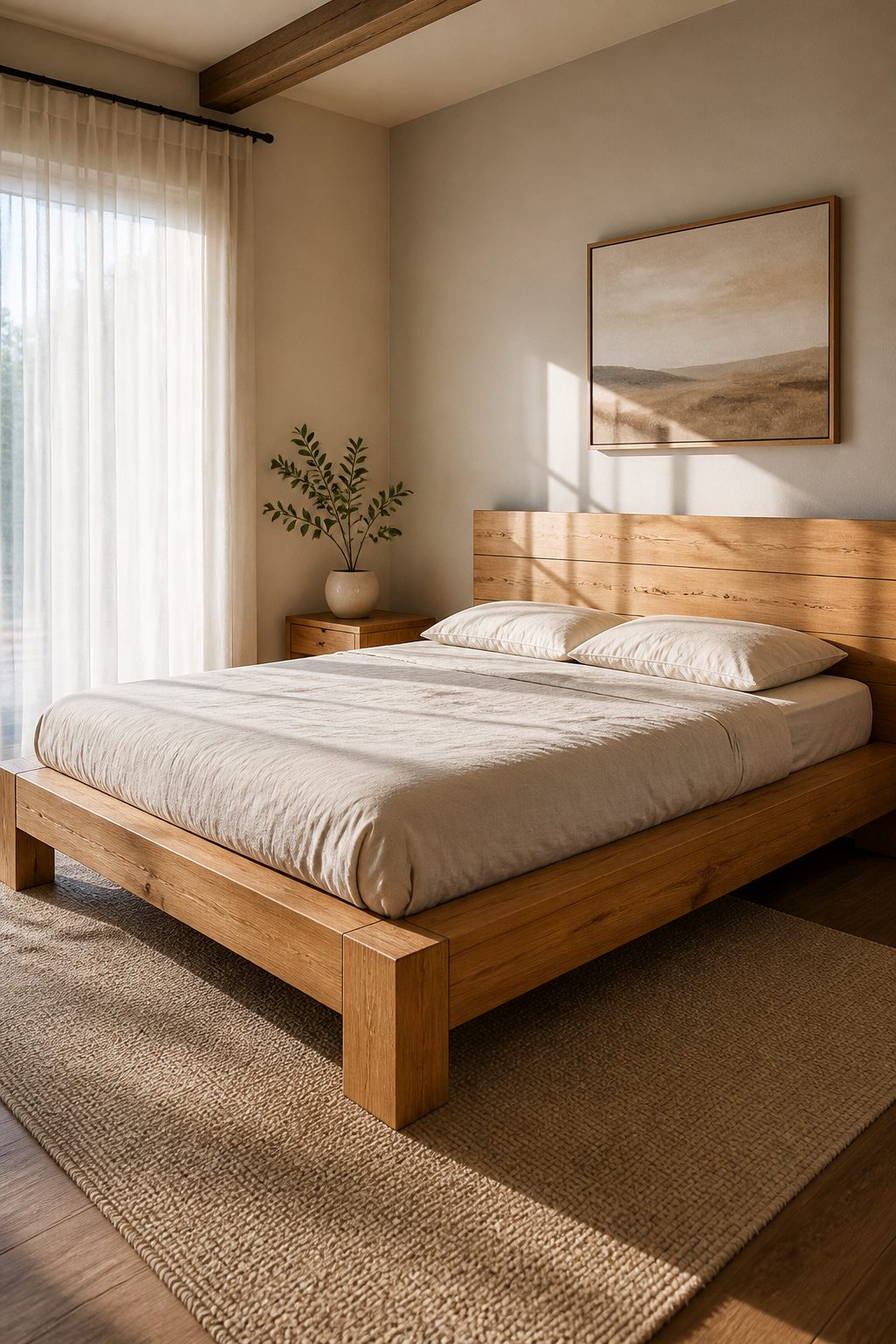
Slat spacing of three inches or less keeps a mattress from sagging between the boards, which is the first place a wooden bed design fails under load.
I would not buy a frame with slats set wider than that, no matter how attractive the headboard looks.
Solid wood carries weight differently than veneer over particleboard because it responds to pressure as a single piece. The joinery may creak after years of use, but the rails do not delaminate.
A center support leg matters more on a queen or king, where the span is long enough that even hardwood will bow in the middle without it.
The Zinus Linda frame pairs solid pine slats with a steel interior frame, which is one reason it still shows no joinery noise after three years of use.
Platform beds eliminate the box spring, so the slats take the full load every night.
That makes construction non-negotiable. A handcarved frame with ornate posts does not excuse loose slat pockets, and a minimalist platform does not get a pass on center support just because the lines are clean.
I would choose solid hardwood rails with through-bolts over a prettier frame with screw-together hardware that loosens with movement.
Aesthetic Appeal and Room Fit
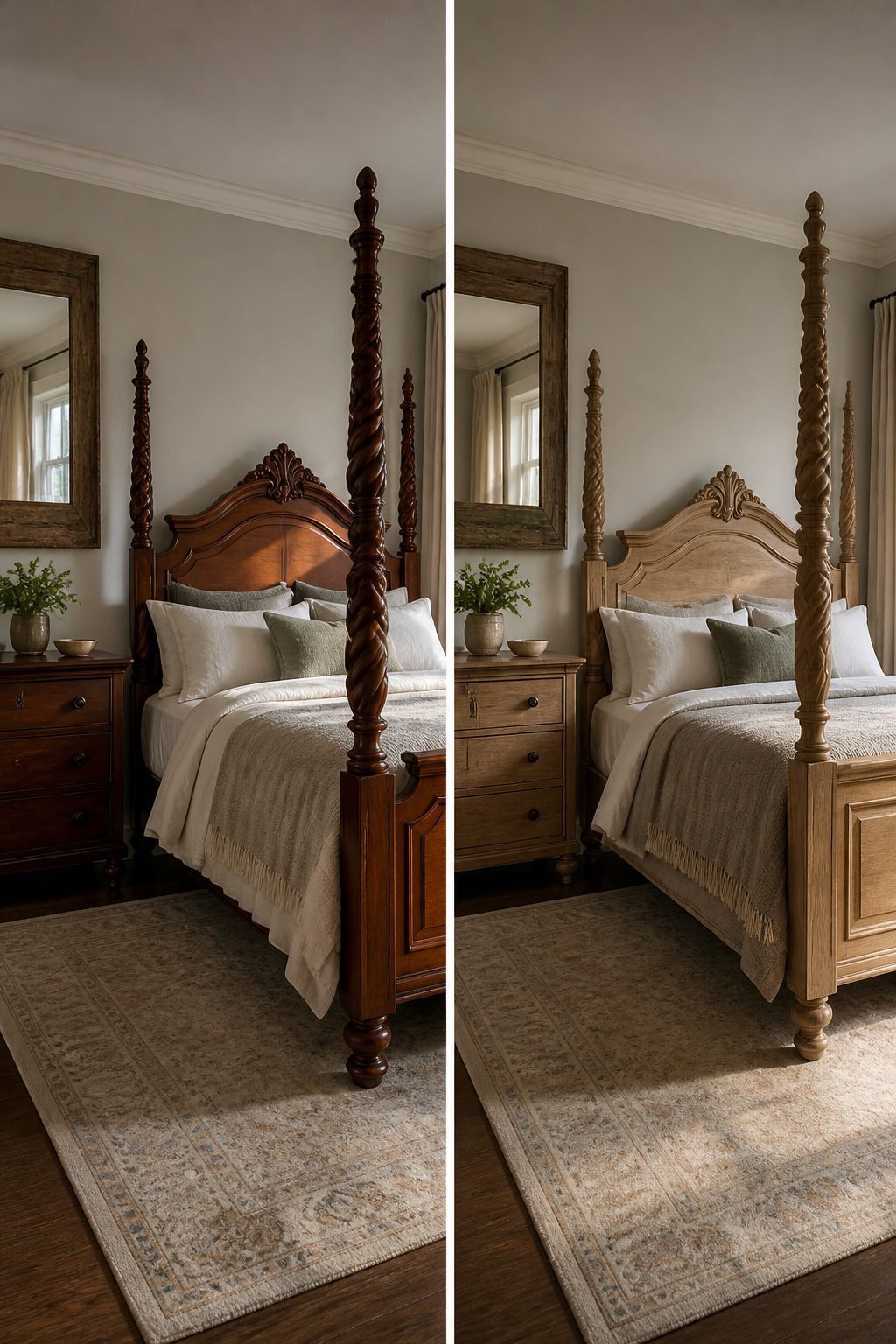
A wooden bed design sets the temperature of the whole bedroom, and the wrong temperature makes everything else fight for attention.
I have seen rooms where a handcarved four-poster with barley-twist columns and raised floral panels looks like a museum piece dropped into an IKEA showroom.
The carving demands shadow and depth; flat-pack furniture kills both with even light and thin planes.
That bed needs at least one other piece with real weight, a dresser with turned legs or a mirror in a heavy frame, or it starts to look like a stage prop.
The opposite mistake is easier to make now because platform beds in pale oak and walnut are everywhere. In a log cabin with exposed beams and rough stone, a low-profile platform with hidden hardware reads as apologetic.
The room wants vertical lines and visible joinery; the bed wants to disappear. Neither wins.
For renters working around existing pieces, I would match the bed’s surface finish to the dominant wood tone already in the room, not the species.
A mid-century modern bed in teak veneer sits fine with a pine dresser if both read warm and similarly matte.
A rustic farmhouse bed in distressed alder needs at least one other element with visible wear, even if that means sanding down and oiling a cheap nightstand until the grain catches light the same way.
Frequently Asked Questions
What are the best wooden bed frames?
The best wooden bed frames depend on your style and needs. The Zinus Linda Wood Platform Bed Frame runs under $350 and holds up without squeaks or joint failure after years of use.
For a statement piece, the Orlando Solid Wood Canopy Bed or the handcarved frames from The Rural Art in solid teak or Indian rosewood carry grain patterns no machine can replicate.
How do I choose a wooden bed frame?
Start with slat spacing of 3 inches or less to prevent mattress sagging, and check whether the frame includes a center support leg for queen or king sizes.
Match the bed’s surface finish to the dominant wood tone already in your room rather than matching species exactly.
If you move often, ask whether side rails are single slabs or finger-jointed, and whether the headboard bolts with metal hardware or slots into wooden dowels; bolted hardware survives disassembly better.
Are wooden bed frames durable?
Solid hardwood frames outlast veneer by decades because the grain runs the full thickness of every rail and post, and they can be sanded and re-glued when worn.
Teak resists warping in dry air, acacia hides scratches with unpredictable grain, and mango wood darkens attractively as it ages. Veneer over particleboard costs less upfront but swells and chips permanently once moisture gets in.
A frame built with corner blocks and hardwood dowels can be disassembled and reassembled; one relying on screws into end grain loosens within a few moves.