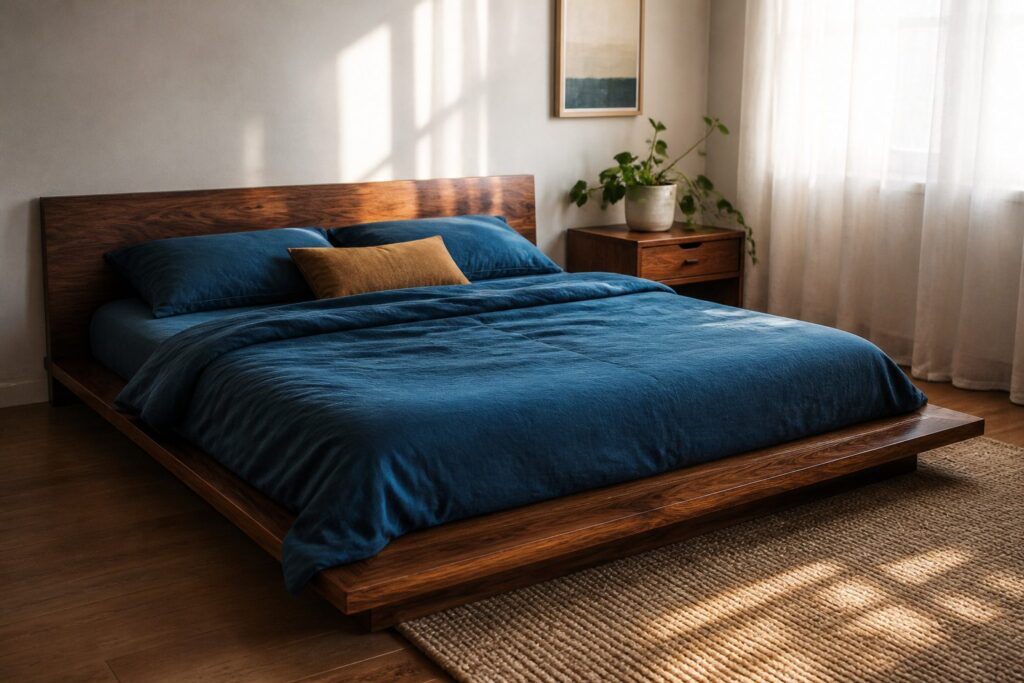
A platform bed frame is the pick that makes sense for almost everyone in 2026, mostly because it kills the box spring entirely and saves the money, stairs hassle, and six inches of headroom.
Buy something else only if getting up from low height punishes your knees or you already own a box spring you are not ready to ditch.
The material choice matters: steel runs around $138 and moves with you, while solid wood near $135 stays put and ages with the room. That weight decision matters more than the price.
1. Platform Beds
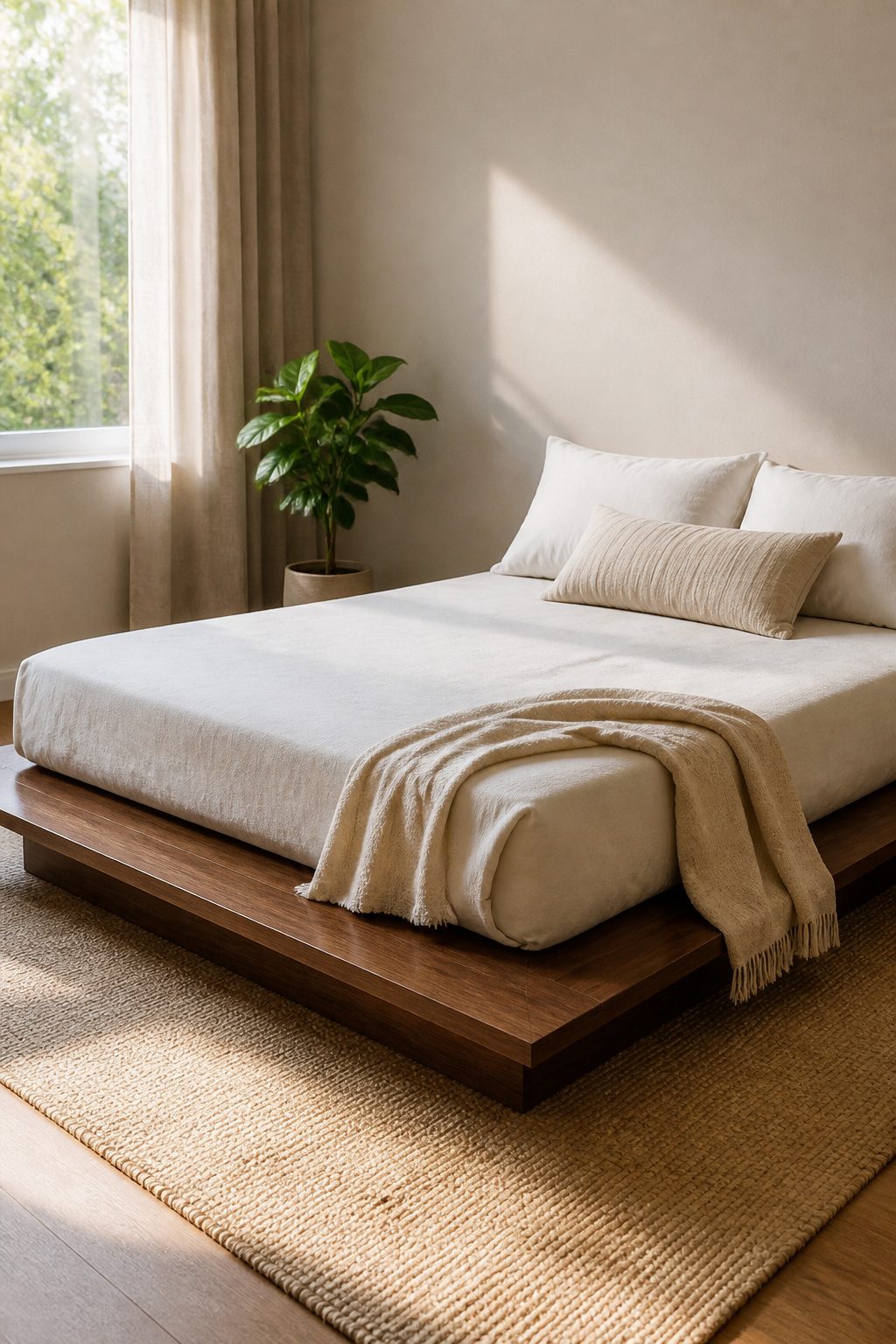
A platform bed frame sits low and holds your mattress directly on a solid or slatted surface, no box spring required.
That single decision saves you money, vertical space, and the hassle of hauling a second bulky piece up narrow stairs.
For a small bedroom, the low profile keeps sightlines open so the room reads larger than it is.
Some frames come with built-in storage underneath, which claws back floor space you would otherwise lose to a separate dresser or bin system. The minimalist lines also pair cleanly with modern and contemporary decor without fighting the architecture.
I would skip this style if getting up from a low height is hard on your knees or back, or if you already own a box spring you are not ready to replace.
Steel options like the Alwyn Home 9-inch run around $138 and assemble in an afternoon, while solid wood frames such as the Mellow Naturalista Classic land near $135 and bring in warmer, mid-century grain.
Both eliminate the wobble of older rail systems, but wood adds weight I would rather not move twice.
For a renter or a first project, steel wins on portability and price; wood wins if you plan to stay put and want the material to age with the room.
2. Canopy Beds
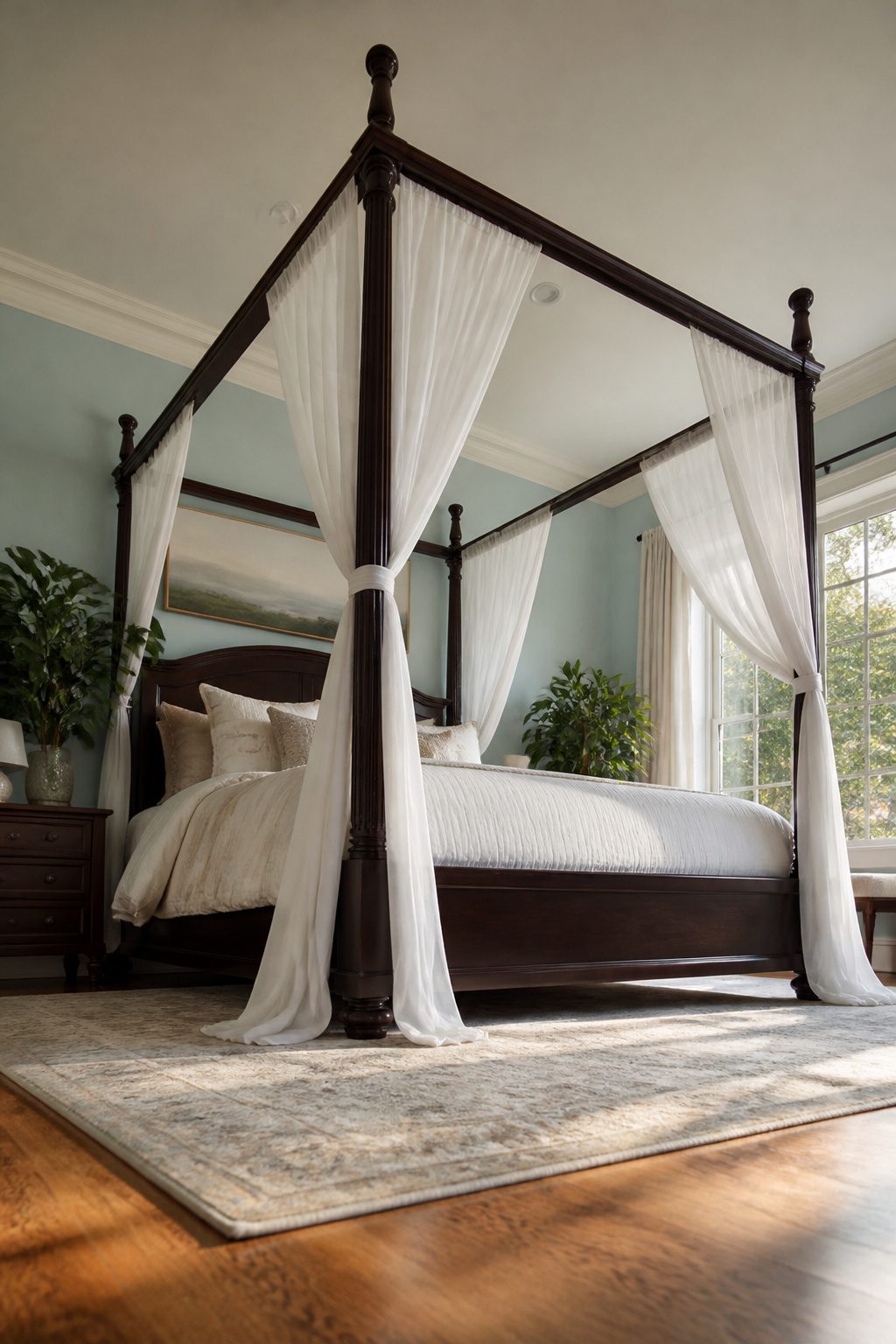
Four-poster canopy frames draw the eye straight up, which is exactly the problem in rooms with standard 8-foot ceilings.
The posts and crossbeams need overhead space to read as dramatic rather than oppressive, and I would not bother with one unless I had at least 9 feet to work with, preferably more.
The tent-like enclosure the draped fabric creates does add warmth and privacy, but that same fabric collects dust and needs regular laundering or it becomes a headache.
In smaller bedrooms, the vertical presence that makes a canopy striking also swallows visual space; I would skip it in anything under about 12 by 14 feet and use the money for better bedding instead.
For renters, the weight matters too. The sturdy construction needed to support fabric weight means a heavy frame that is not moving easily through doorways or up stairs.
If I were choosing between statement and practicality on a weekend timeline, the practicality wins unless the ceiling height and room size are already right.
In that case, a simple four-poster without draping gives most of the vertical drama with half the maintenance.
3. Storage Beds
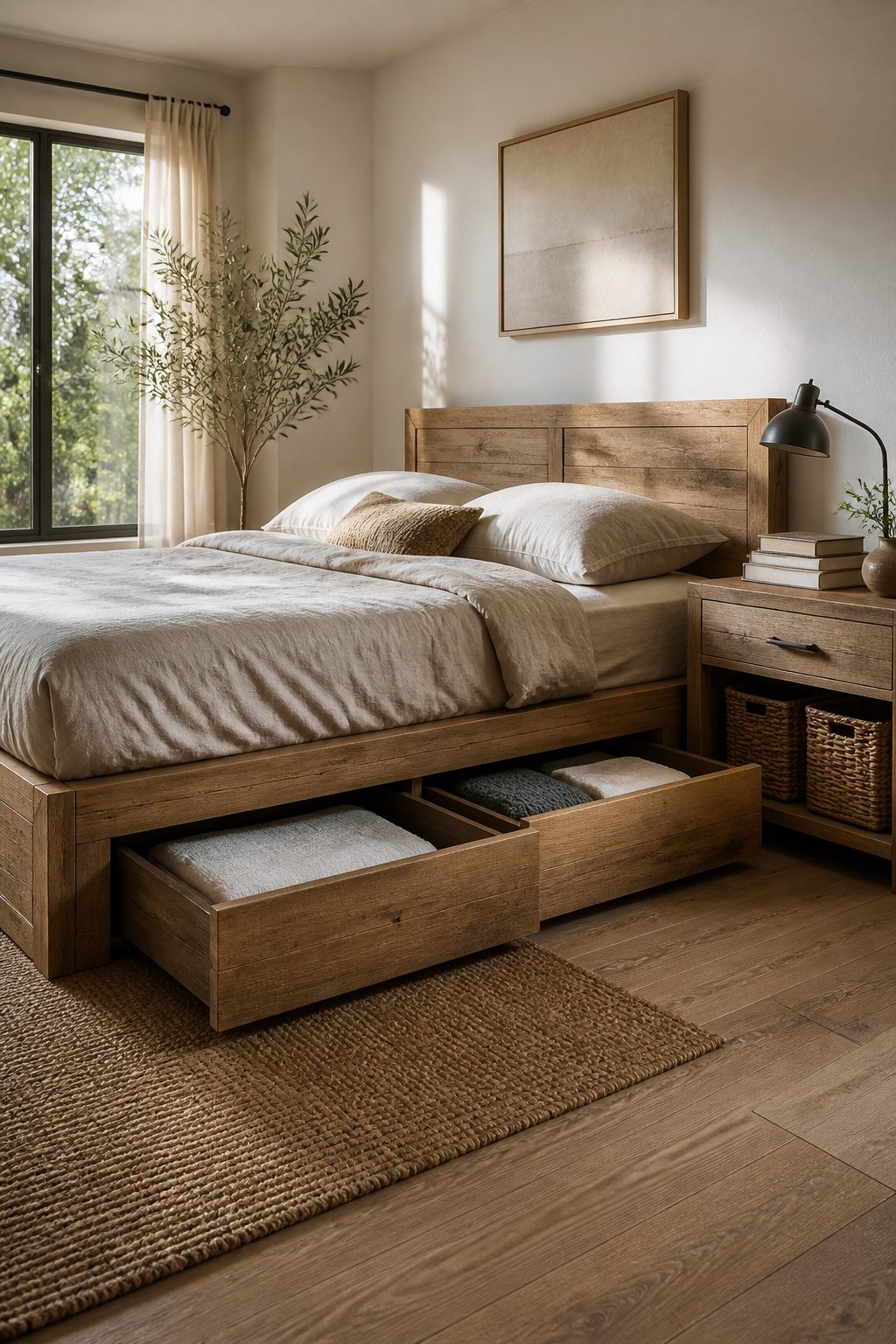
Storage beds split into two camps, and the gap between them widens after the first year. Drawers built into the frame, usually two or four rolling out from the sides, keep bedding and off-season clothes within reach without lifting anything.
The West Elm Mid-Century Storage Platform Bed takes a different route: its headboard holds the compartments, open shelves up top and hidden space below for books and chargers.
That hybrid works when a nightstand won’t fit, though the frame sits under six inches off the floor, so cleaning underneath means dragging the whole bed.
Lift-up platforms with gas-strut assistance store more but ask more of you.
The mechanism matters. Cheap pistons lose pressure by year two and the mattress becomes a dead weight you wrestle alone.
A 150 lb capacity rating on the hardware means nothing if the frame flexes; look for steel corner brackets, not plastic glide blocks, and test the lift with your actual mattress weight in the store if you can.
The birch platform frame I saw on Etsy skips drawers entirely and leaves the cavity open underneath, which is honest about what lasts.
Slats slot into grooves, nothing to jam or sag, and you fill the space with bins you already own. Drawers need perfect alignment to roll smooth; open cavities forgive a warped floorboard or two.
4. Adjustable Beds
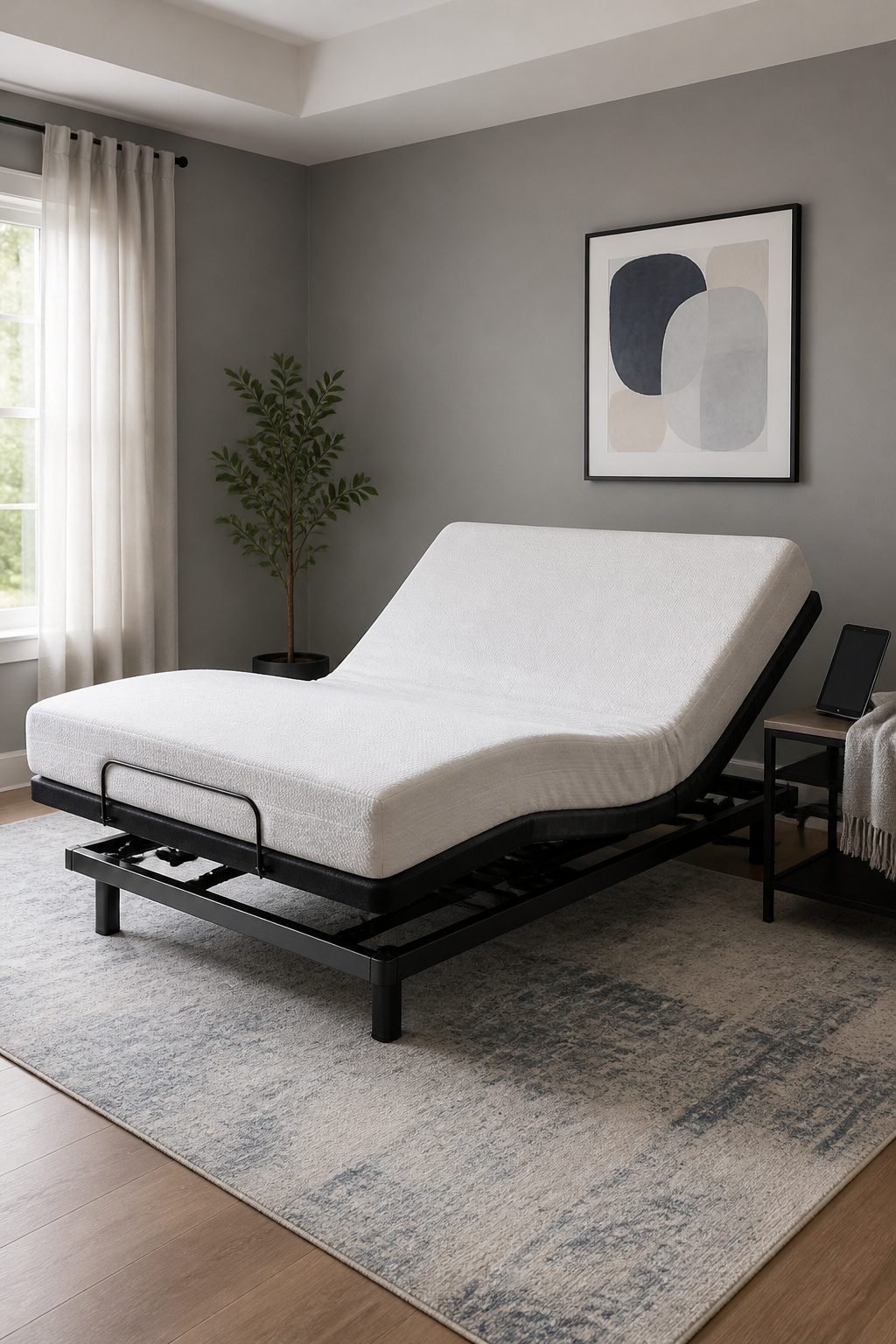
Motorized frames split into head and foot sections that raise and lower by remote, and that adjustability is where the sleep claims come in.
The motor can lift your torso for reading or watching TV, and it can raise the legs to take pressure off the lower back.
Marketing tends to promise relief from snoring, acid reflux, and poor circulation, but the motor itself only changes your angle; whether that fixes your snoring depends on why you snore.
I would not buy one expecting a medical cure unless a doctor has already told you elevation helps your specific issue.
The real draw for me is the convenience of shifting positions without stacking pillows that slide. The downside is the price jump.
Static platform frames sit at the budget end, with many solid options at $500 or less, and plenty of character-filled designs landing between $500 and $1,000. Adjustable frames start around $1,000 and climb fast, with the motor, remote, and reinforced base all adding cost.
If you share a bed, you will need a split king or similar dual setup to move independently, which doubles the motor hardware and the price.
I would put an adjustable frame on the list only if someone in the house actually needs elevation nightly, or if you watch TV in bed enough to justify the premium.
5. Sleigh Beds
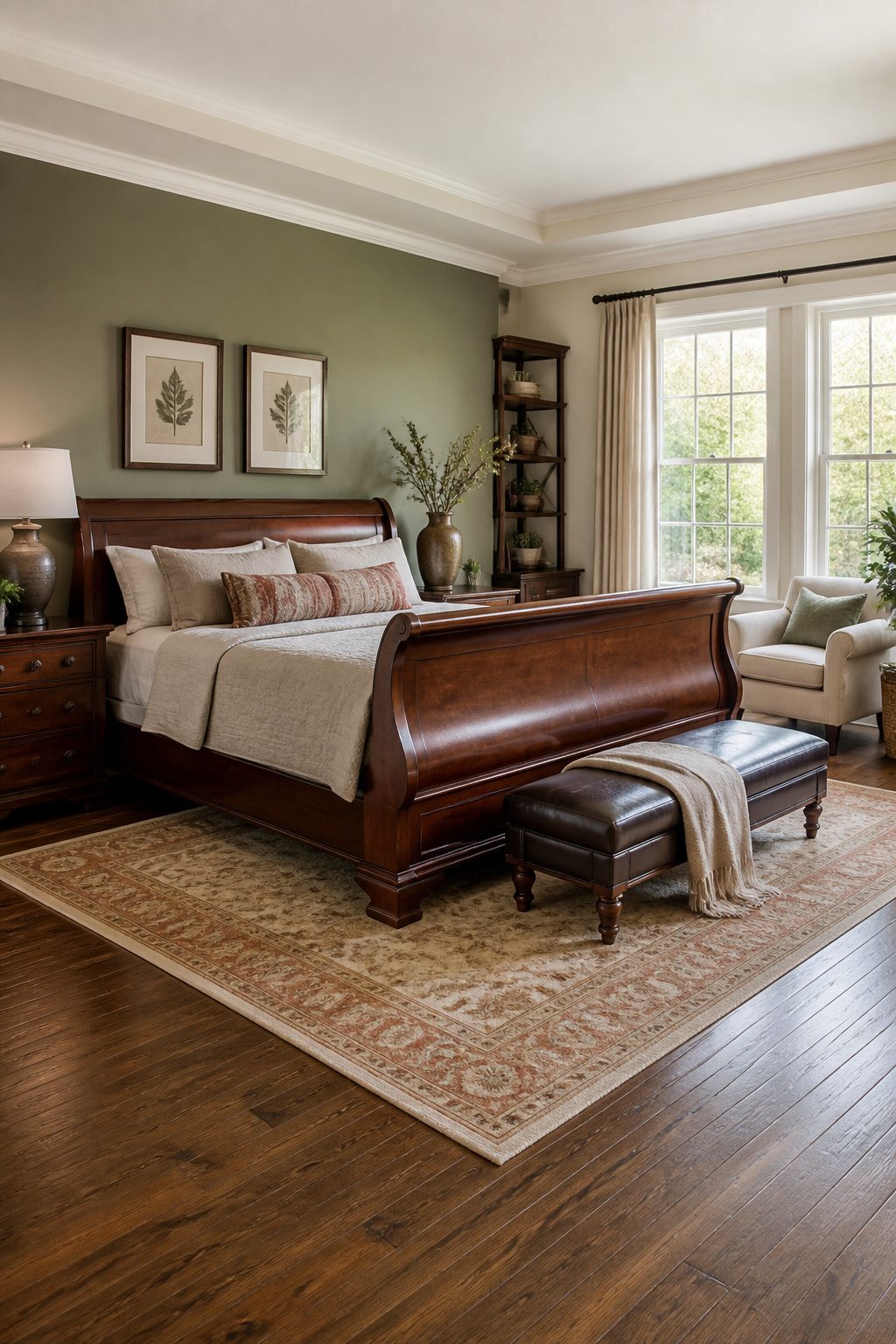
The curved headboard and footboard of a sleigh bed frame design give a bedroom weight and presence that flatter, plainer shapes never quite match.
That same curve is what makes the piece a problem in rooms under 10 by 12 feet; the bowed boards extend a good 6 to 8 inches farther into the room than a flat panel bed, and in a tight layout you lose the walking lane at the foot or the nightstand clearance on the sides.
Solid wood construction is the only route I would take with this style.
Veneer over MDF or particleboard is common at lower prices, but the stress of that continuous bend eventually telegraphs through as hairline cracks where the glue line fatigues.
Hard maple, walnut, and white oak each hold the radius well; soft pine or poplar will take the cut initially, yet the grain compresses unevenly and the curve softens or splits within a few seasons of humidity swing.
A kiln-dried hardwood graded FAS or Select is what keeps the line crisp for the long run.
For a weekend project budget, I would skip the sleigh bed entirely and let a simpler frame carry the room.
The silhouette reads traditional in a way that needs space and editing to land right, and cramped into a small apartment it looks inherited rather than chosen.
6. Panel Beds
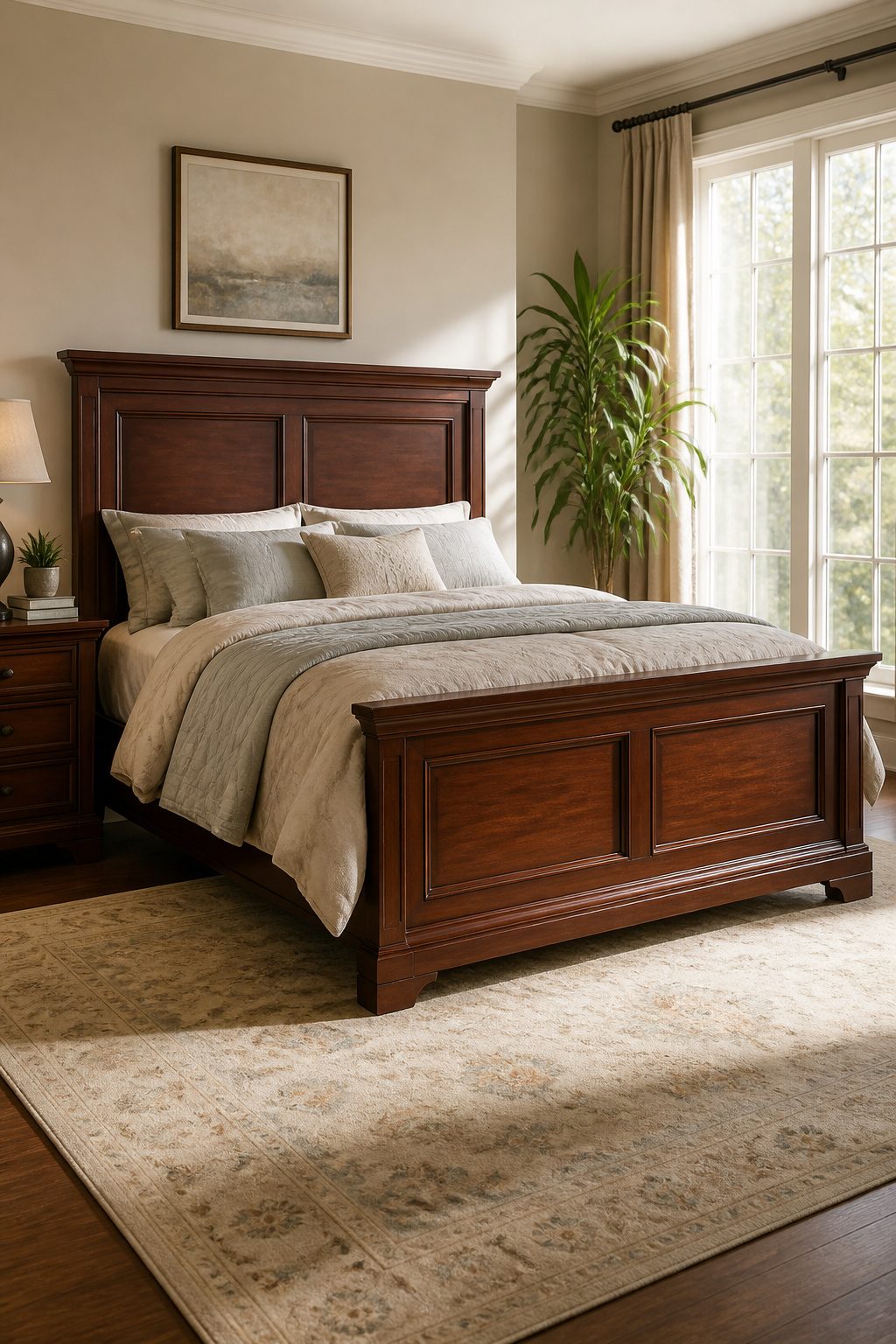
A panel bed frame needs a box spring.
The flat, framed headboard and footboard connect with side rails to hold slats or a metal grid, and that support is built for the height of a box spring plus mattress, not a mattress alone.
That extra height is the main reason the style still shows up in American bedrooms: the bed sits higher off the floor, which makes getting in and out easier and leaves room underneath for storage bins or a dust ruffle.
The construction is traditional in a literal sense. Wood or metal forms a simple rectangular frame, often with decorative molding or raised panels, and the look pairs with classic furniture lines better than a low platform does.
For a renter or first-home owner already owning a decent box spring, keeping it means not spending that money again.
Platform alternatives win on simplicity and built-in storage. A panel bed gives up that convenience for the matched set look and the height.
If I were starting from scratch with no box spring in hand, I would skip the panel style and buy a platform frame instead. The savings on not purchasing the box spring usually cover a better mattress.
But if the box spring is already in the garage or the bedroom set needs that framed silhouette to look complete, the panel bed still does exactly what it was designed to do.
7. Upholstered Beds
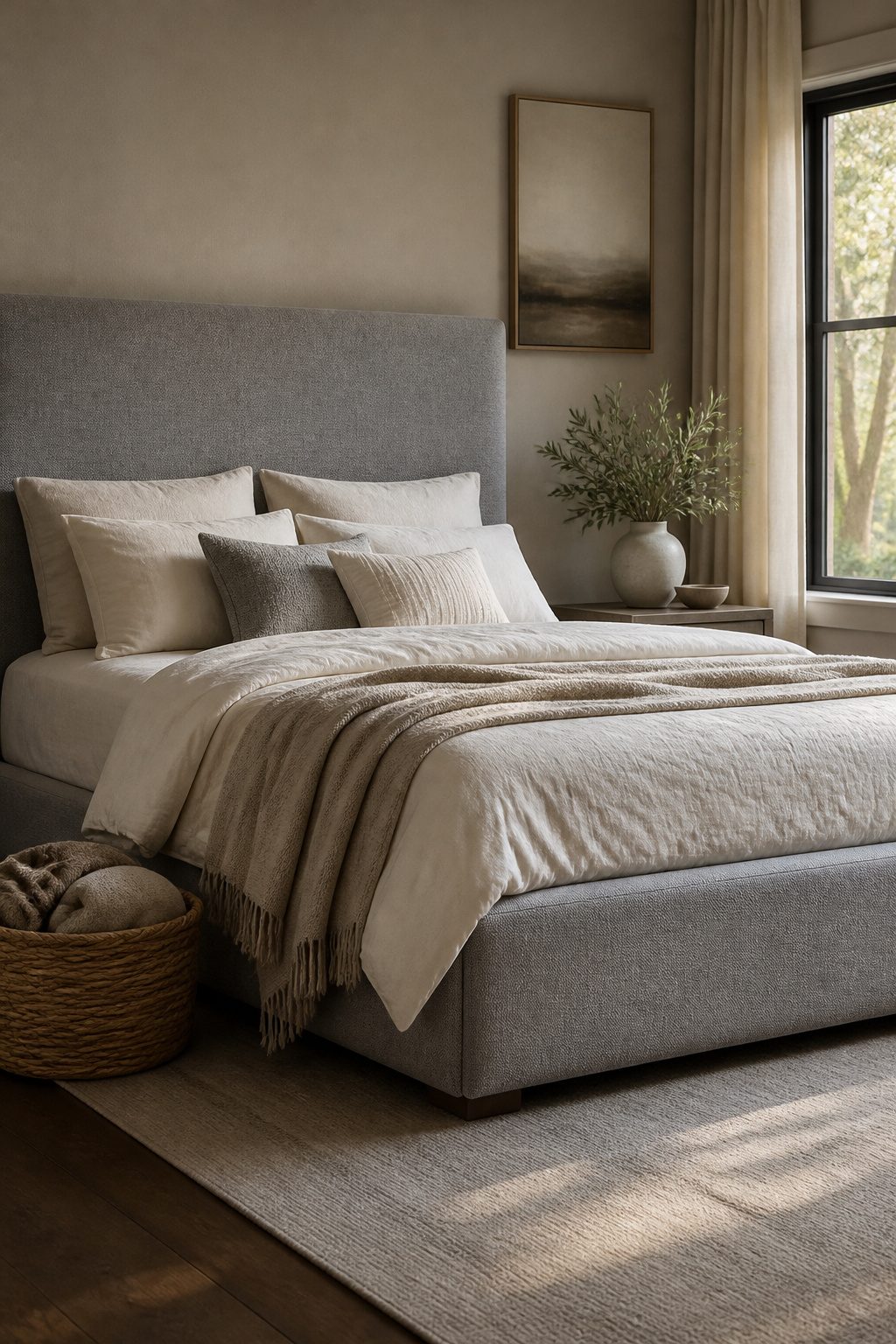
Fabric wraps the frame in padding that softens every edge and quiets the creaks and knocks that travel through bare wood or hollow metal.
A high rub count matters more than thread count here, since the fabric takes abrasion every time you lean against the headboard or a pet scrambles up.
Stain resistance and zip-off cushion covers separate the pieces that survive kids from the ones that look tired in a year.
Velvet, linen, cotton, polyester, and faux leather each handle wear differently, with polyester blends and treated fabrics generally outlasting naturals in active households.
The cost is the downside. Upholstered frames run a clear premium over stripped-down wood or metal, and that gap widens when the construction includes a solid wood frame with center support legs rather than a platform slat alone.
Budget an extra $400–$800 above a basic frame for a quality upholstered king, and accept that cleaning means more than wiping down.
Spot treatments work on some fabrics; others need professional extraction or they watermark. If you have shedding animals or toddlers with markers, a removable, zippered cover pays for itself inside two years.
The Joss & Main Hanson in a linen-blend fabric hits around $999 on sale, while the Sundays Cloud with its sofa-like cushions and removable back pieces runs $1,990–$2,250.
For my own money, I would take the lower-priced wingback with its tailored silhouette and put the savings toward a mattress upgrade, unless the bedroom doubles as a reading nook where that plush, rounded back earns its keep daily.
8. Metal Beds
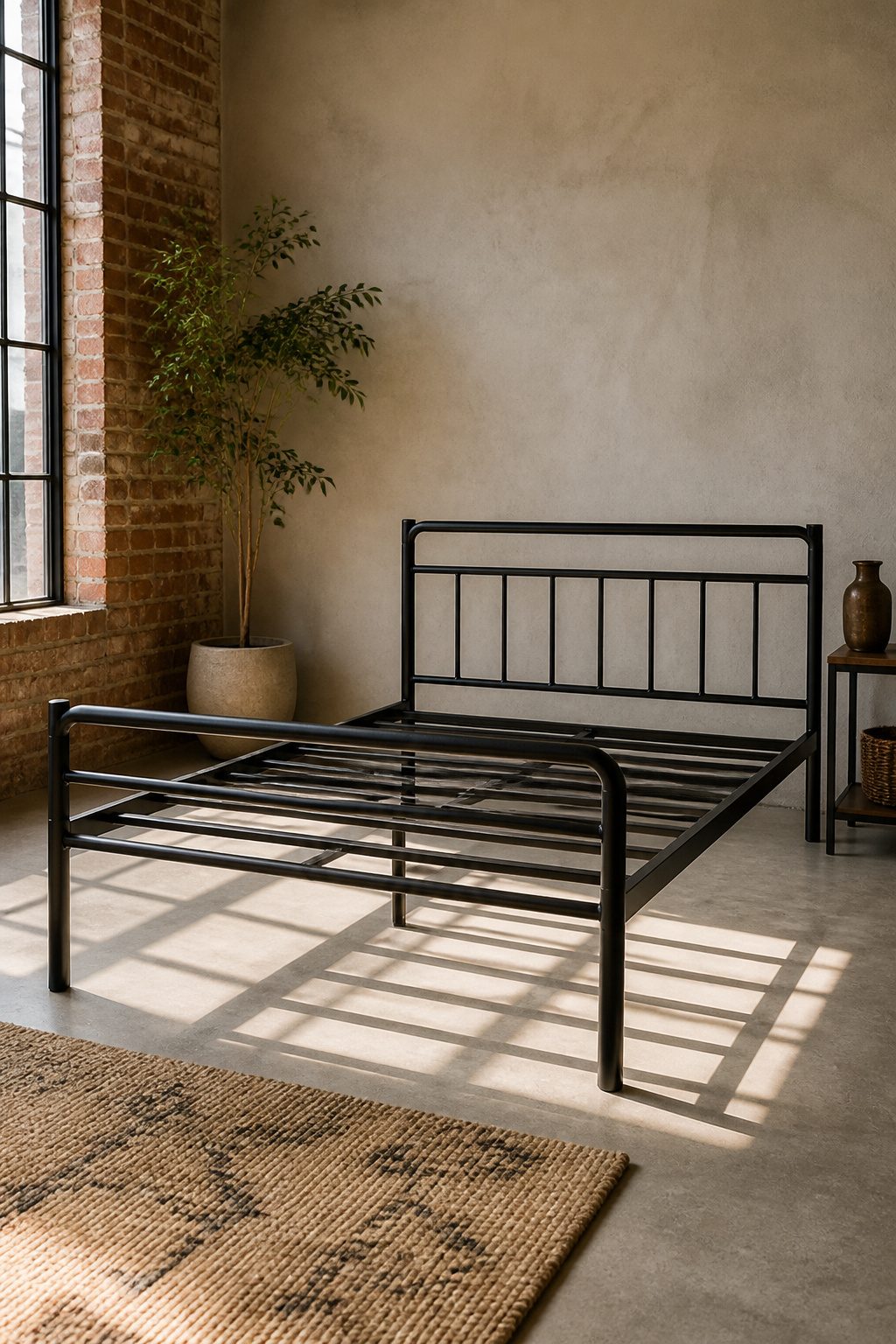
Metal bed frames run on three materials that behave nothing alike.
Wrought iron carries the most visual weight, with hand-worked scrollwork that reads cottage or vintage depending on the casting. Steel is what you actually get in most storefront frames, stamped into rails and cross-members that bolt together in twenty minutes.
Aluminum exists in the space between, lighter than either but prone to flex at the joints where the side rails meet the headboard posts.
The noise issue is real and it is specific. Steel tube frames with slip-in joints and half a dozen bolts will start to tick within a year if anything loosens, and everything loosens.
Wrought iron with welded corners is quieter by default, though the mattress still slides on metal slats unless you add friction strips.
Wood slats solve the noise problem completely, which is why the hybrid frames, steel perimeter with wooden slats laid across, have become the practical standard for anyone who moves apartments more than once.
Weight limits are where the marketing falls apart. A basic steel frame with bolted corners might rate for 250 pounds while a steel platform with welded joints and a center support bar handles double that.
The material is identical; the joint design is what separates a guest bed from a daily sleeper.
Industrial styling leans into this rawness, keeping bolts and seams visible, pairing blackened steel with reclaimed wood in a look that works when the rest of the room holds its own and looks unfinished when it does not.
I would not buy an industrial frame for a soft, layered bedroom. It needs hard flooring, minimal window treatments, and restraint everywhere else to read intentional rather than unfinished.
What the Material Actually Means
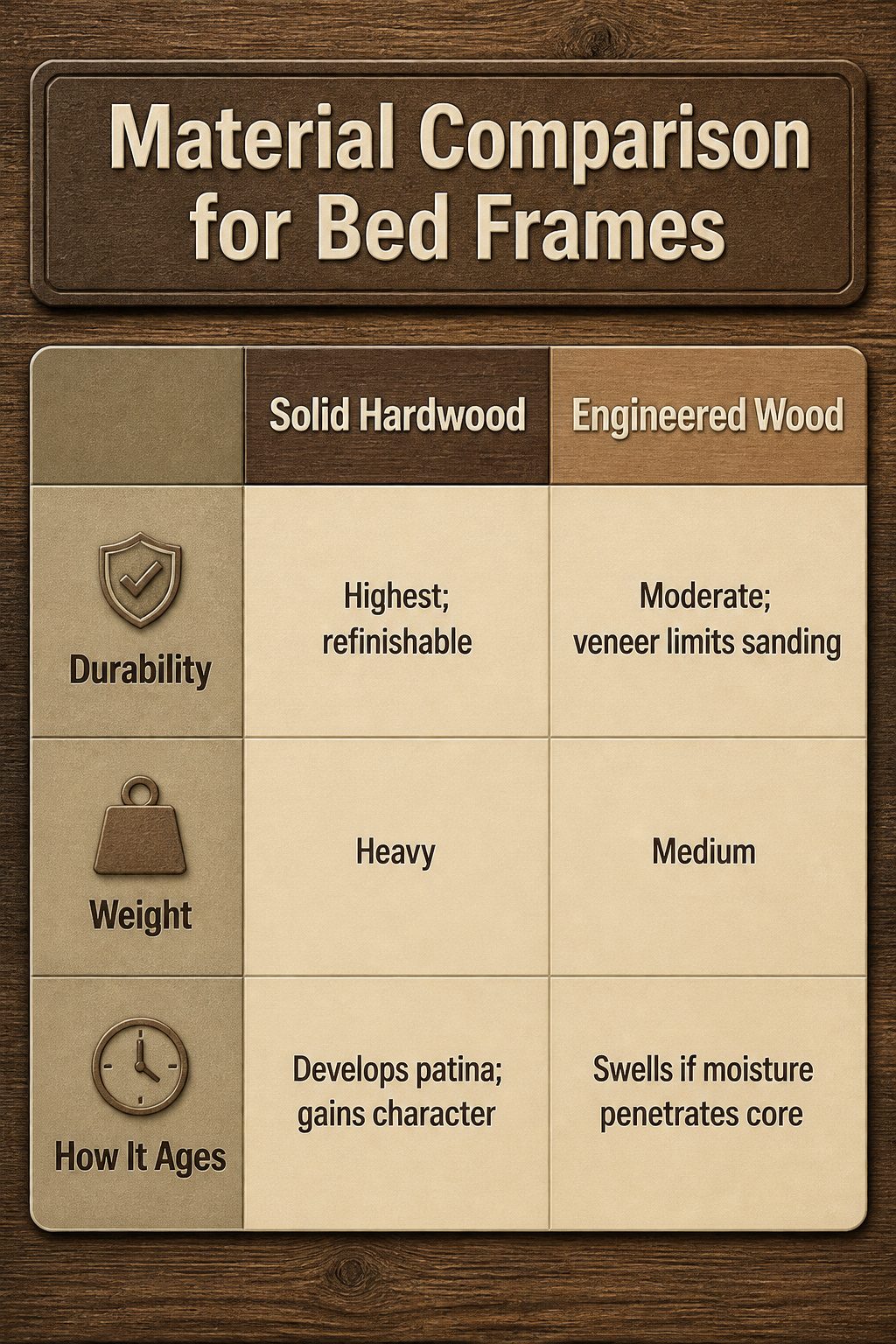
Solid hardwood outlasts every other bed frame material because it resists moisture and can be refinished when the surface wears. Oak and mahogany fall in this category, and they handle decades of use without losing structural integrity.
Engineered wood costs less and works fine for guest rooms or shorter-term setups, though the veneer layer limits how many times you can sand and refresh it.
Metal frames, particularly steel and iron, rank high for durability too, though they transmit more motion and tend to squeak as joints loosen. Upholstered framing adds softness but traps dust and shows wear at the corners faster than hard surfaces.
| Material | Durability | Weight | How It Ages |
|---|---|---|---|
| Solid hardwood | Highest; refinishable | Heavy | Develops patina; gains character |
| Engineered wood | Moderate; veneer limits sanding | Medium | Swells if moisture penetrates core |
| Metal (steel, iron) | High; rigid structure | Medium-heavy | May rust or squeak at joints |
| Upholstered framing | Moderate; corner wear first | Light to medium | Fabric fades; padding compresses |
I would put solid wood in any bedroom I use daily and save engineered wood for a spare room or a first apartment where the budget matters more than the lifespan.
Metal wins if you move often, since the lighter weight and modular breakdown make it easier to haul up stairs.
Style Labels and What They Look Like
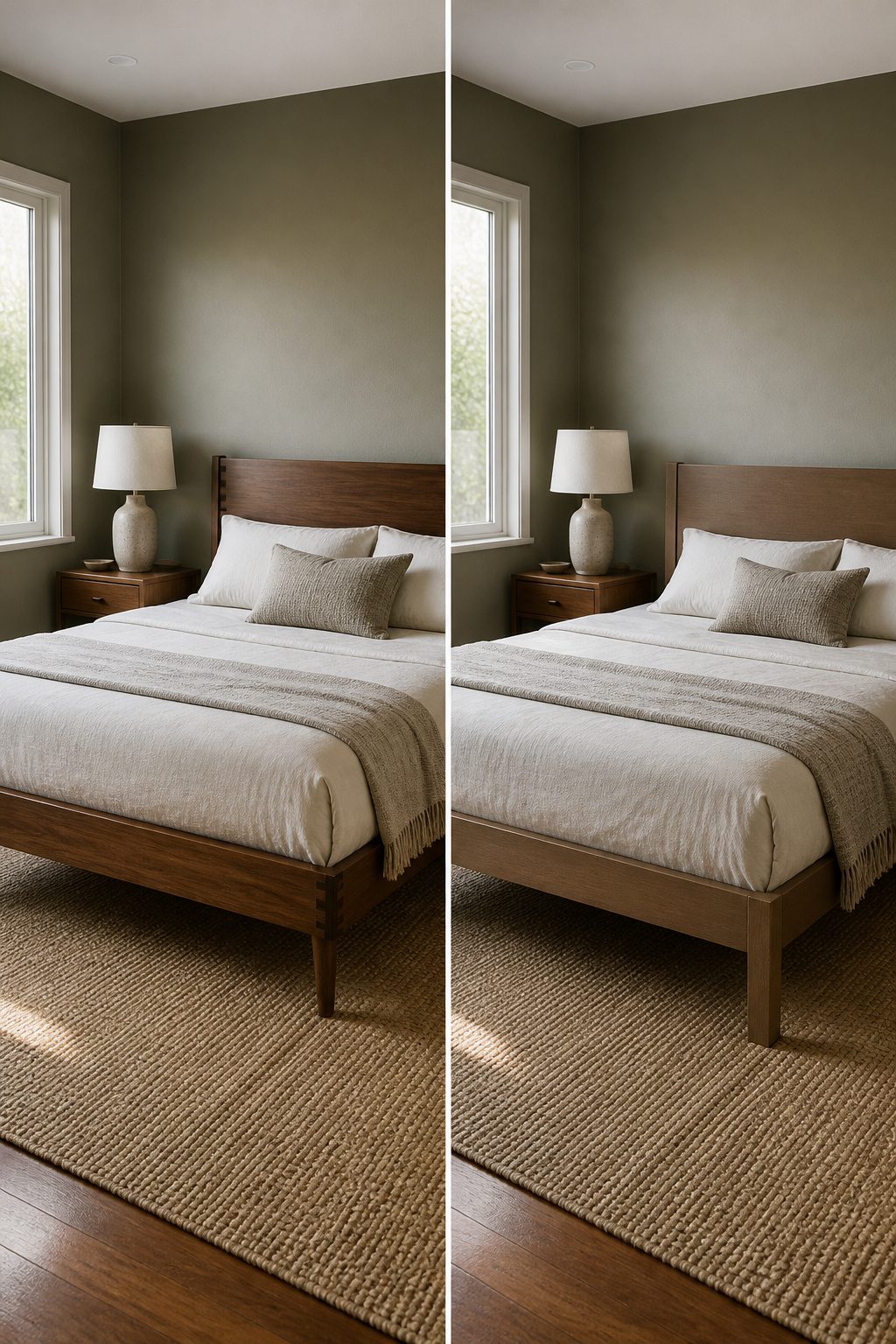
Modern bed frame design comes down to materials and lines, not the label on the tag.
A mid-century frame keeps the profile low and the legs tapered, usually in solid walnut or teak; the joinery is visible because the shape itself is the decoration.
I would pick this for a small bedroom, since the raised silhouette leaves sight lines open underneath. Rustic, by contrast, wants weight and irregularity: thick posts, visible knots, and finishes that look hand-worked rather than factory-perfect.
The West Elm Alexa Reclaimed Wood Bed runs $1,699 to $1,899 and shows exactly what I mean, with its chevron headboard in honey-finished pine that celebrates the grain instead of hiding it.
Industrial borrows from factory floors: raw steel, iron, and reclaimed wood left unapologetic. Wood keeps the frame quiet; metal keeps it standing up to moves and kids.
The two cross over more than stores admit. A farmhouse frame is really just rustic with shiplap and distressing added for country charm; the chunky lumber underneath is the same idea.
I would skip the distressed paint unless the house already has barn doors or a apron sink to match, because a single rustic element in an otherwise clean room reads as a mistake, not a style.
What I Budget For
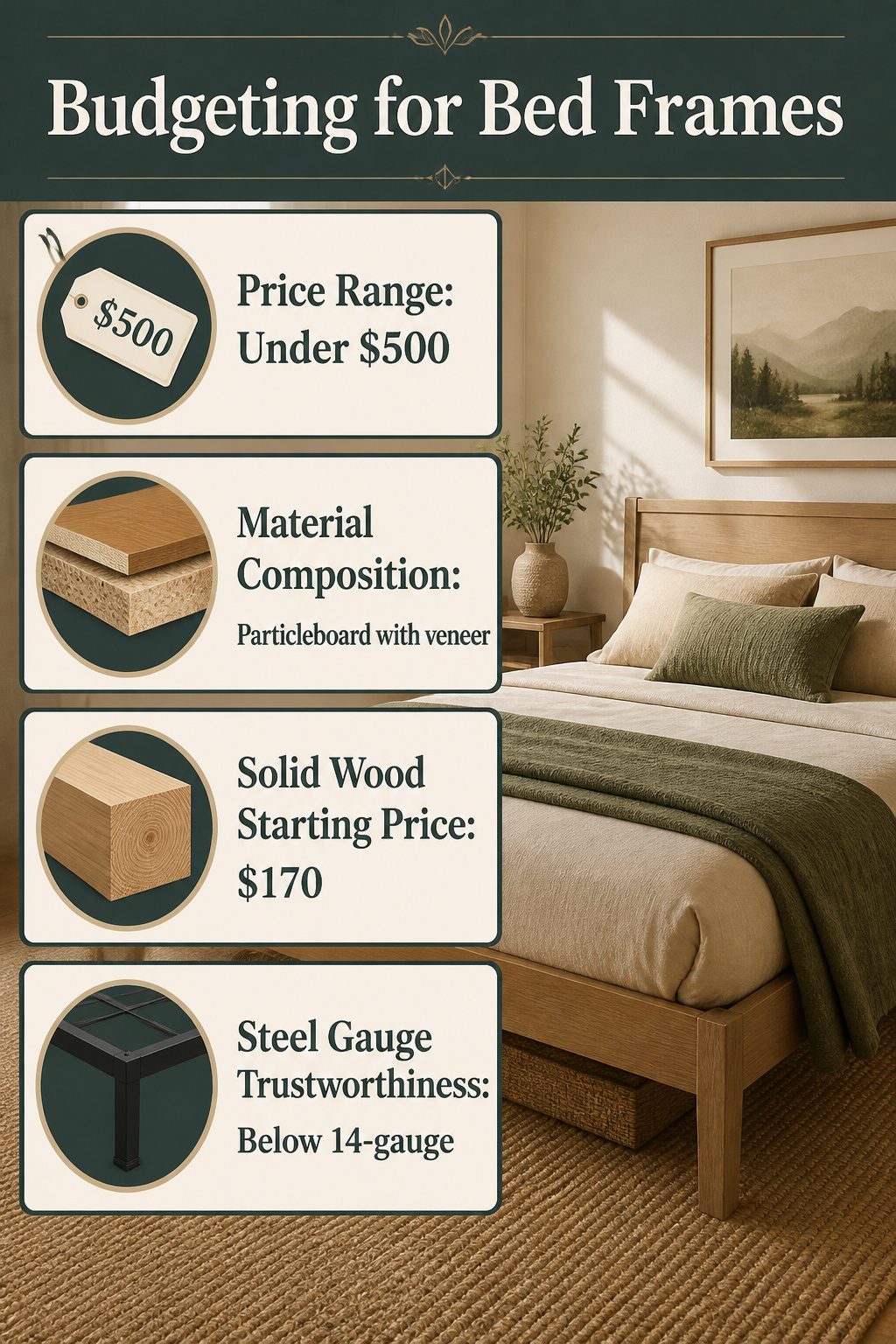
Most bed frames under $500 run on particleboard with a veneer skin, and that is fine for a guest room you refresh every few years.
Past that price, plywood and solid wood start to appear, and the difference matters if you move the frame more than once.
Steel gauge is harder to spot online, but a lower number means thicker metal; I would not trust anything above 14-gauge for a daily-use frame because the legs will eventually sway.
When my partner and I were looking to buy a frame, we really just wanted something that looked nice, was affordable, and wouldn’t fall apart quickly… So, looks-wise, this was a big win, especially at just $170.
That $170 price is the floor where solid wood and a steel interior frame meet, and it is where I would start for a primary bedroom.
The KD Frames fold platform at $239 uses tulip poplar, which is unfinished but serviceable, and the folding hinge is worth the premium if you ever need to store it.
Above $1,000 you are often paying for joinery details and brand name rather than better sleep; I would put that money into the mattress instead and cap the frame at $800 unless the design is doing real work in the room.
DIY and Sustainable Options
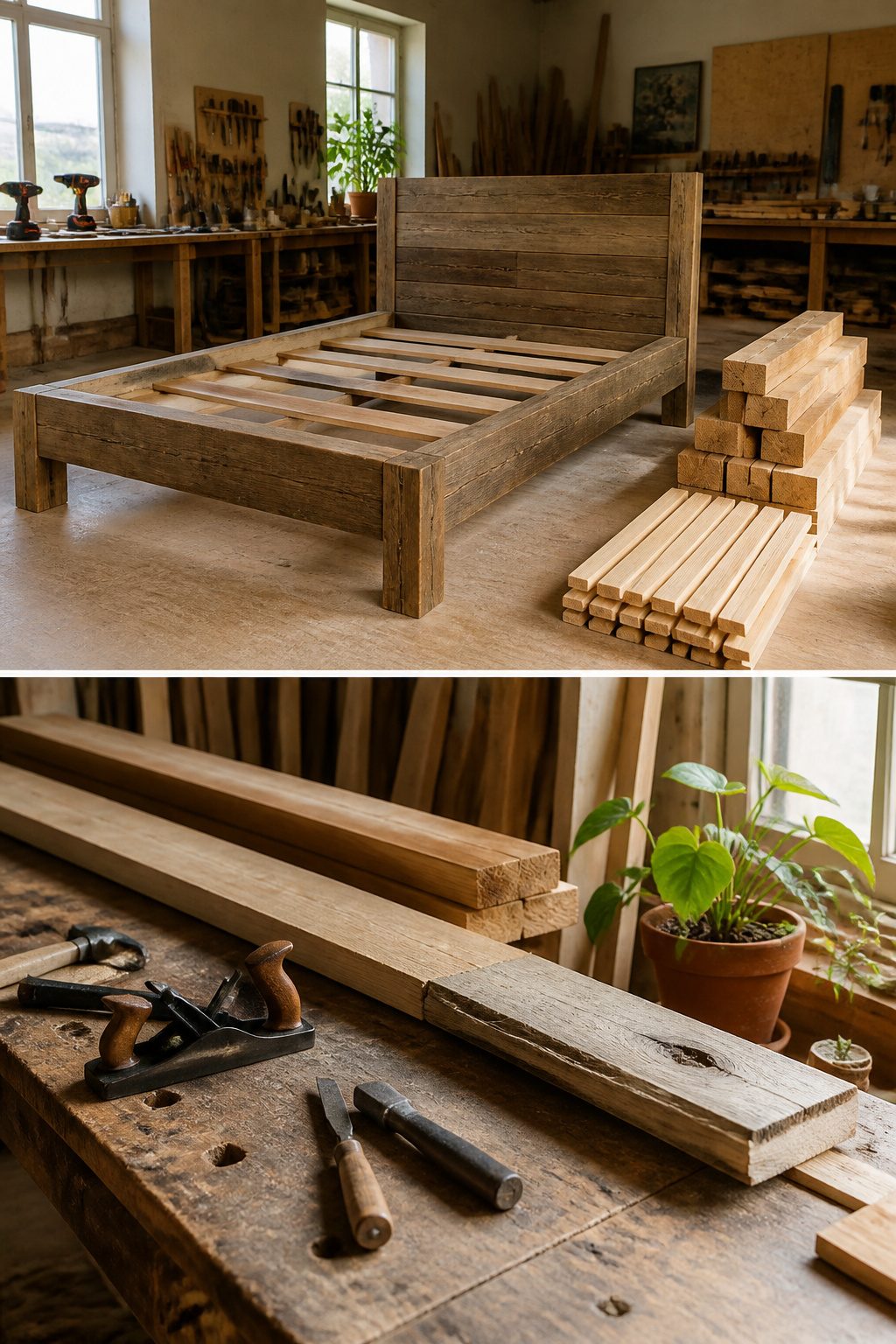
Building your own bed frame sounds romantic until you remember it has to hold two people through 3:00 a.m. turning. Reclaimed wood works beautifully for headboards and side rails, where the barn wood patina and visible knots carry the design.
For the actual structural base, slats and center supports that take the load, new lumber or engineered wood gives you the predictability you need.
The West Elm Alexa Reclaimed Wood Bed mixes both approaches, using reclaimed pine for the tall chevron headboard while relying on a proper engineered frame underneath, and at $1,699–$1,899, that hybrid is what you’re paying for.
If you’re going full DIY, sand every surface smooth, pull every old nail, and inspect pallet wood for chemical treatments before it comes indoors.
Thuma’s approach is worth studying: repurposed wood for the frame, recycled plastic for the slats, cork padding to quiet movement, all GreenGuard Gold certified.
The material can read as faux wood to some eyes, though the easy tool-free assembly and nine-inch underbed clearance sell it for anyone who moves every couple years.
Frequently Asked Questions
What type of bed frame is best for small bedrooms?
Platform bed frames work best for small bedrooms because their low profile keeps sightlines open and makes the room read larger than it is.
Some platform frames also include built-in storage underneath, which replaces a separate dresser and claws back floor space.
Canopy beds and sleigh beds should be avoided in tight layouts; the former swallows visual space and the latter extends 6 to 8 inches farther into the room than flat panels.
How do I choose a bed frame?
Start with five factors: style, size, material, support, and height. A platform frame saves money and space if you have no box spring already, while a panel bed makes sense when you already own one.
Solid hardwood outlasts every other material for daily use, and steel wins if you move apartments often. Budget at least $170 to get solid wood with a steel interior frame for a primary bedroom.
Do bed frames affect sleep quality?
Yes, by offering mattress support, stability, and alignment that prevents sagging.
Adjustable frames can raise your torso or legs to take pressure off the lower back, though they will not cure snoring or reflux unless a doctor has already confirmed elevation helps your specific issue.
A solid base with proper slat spacing also stops the mattress from dipping, which keeps your spine level through the night.
What are the most popular bed frame trends?
Curved and sculptural bed frames are garnering praise in 2026 for their unique design. Floating beds with hidden supports and LED strip lighting underneath are also trending for their dramatic, modern illusion.
Industrial styling remains popular, pairing raw steel with reclaimed wood when the rest of the room holds its own with hard flooring and minimal window treatments.
Are platform beds better than traditional ones?
Platform beds are generally better for most buyers because they need no box spring, often include storage, and carry a modern aesthetic that pairs cleanly with contemporary decor.
Traditional panel beds still make sense when you already own a box spring or want a higher bed for easier access, but starting from scratch a platform frame eliminates a bulky purchase and usually frees budget for a better mattress.
What bed frames are trending now?
Curved and sculptural frames lead 2026 trends, alongside floating designs with concealed legs that create a hovering effect.
Industrial frames mixing raw steel and reclaimed wood stay current in rooms with hard surfaces and restrained styling. Upholstered beds with high rub-count fabrics and zip-off covers are favored in households with kids or pets.
How long do steel bed frames last?
A steel frame with welded joints and a center support bar can last many years under daily use, while a basic bolted frame may start ticking and loosening within one year.
The joint design matters more than the material itself: slip-in joints and half a dozen bolts fatigue fast, but welded corners or hybrid frames with steel perimeters and wooden slats eliminate noise and extend lifespan significantly.