The best modern farmhouse kitchens in 2026 pull back from the all-white, shiplap-heavy formula that dominated the last decade.
What separates a dated look from a fresh one is editing: one or two neutrals, honest wood, and minimalist decor with selective accents instead of collected clutter.
Leanne Ford’s method of adding modernity to existing bones, like pairing gold taps with aged wood countertops, gives you the tension that makes both eras visible without starting from scratch.
1. Introduce Modern Details in a Traditional Kitchen
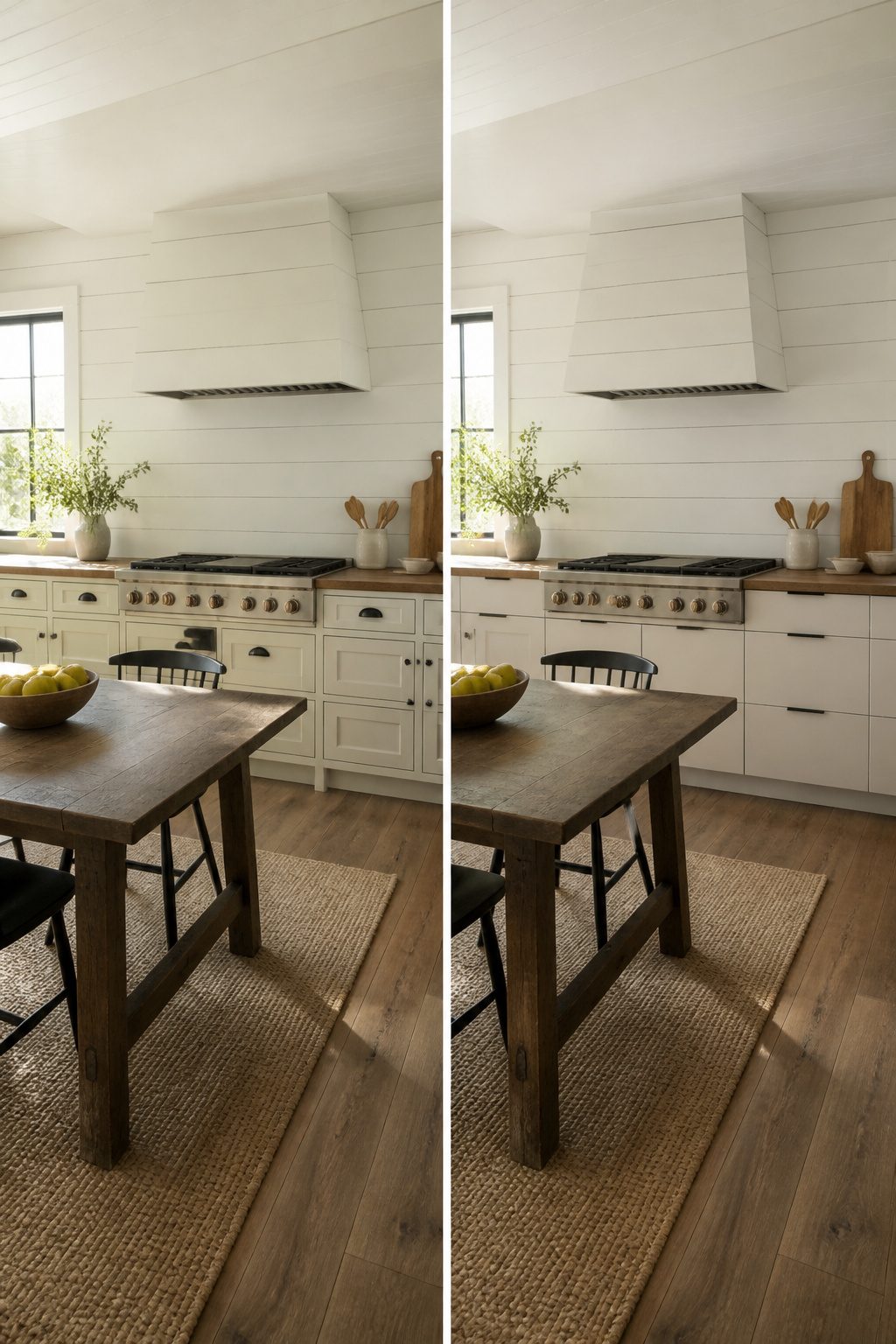
The freshest modern farmhouse kitchens keep the bones rustic and update the joinery.
Flat-panel appliance fronts read cleaner than thepro-style ranges with busy grates and thick handles, and hidden hinges on upper cabinets let the door face read as a single uninterrupted plane.
Streamlined hardware in matte black or brass does the same work: it signals current without shouting.
Leanne Ford’s approach is to add the modernity rather than start from scratch and paste on farmhouse features.
That means a light hand. New gold taps against an existing wood countertop, or one sleek white chair mixed with wooden seats, creates the tension that makes both eras visible.
The all-white, shiplap-heavy version of this style has faded, but the core formula still holds: one or two neutrals, an honest wood element, and minimalist decor with selective wood accents instead of collected clutter.
The editing is what marks it as 2026 rather than 2019.
Recommended Products

Cute Dog Design: Tomhong 2D Flat cartoon dog dishwasher magnetic cover features a joyful group of smiling puppies in bright colors creating a playful pet themed decor perfect for dog lovers

Tree Of Life Design: Features an intricate tree of life with flowing branches and roots in a circular composition symbolizing balance growth and harmony for artistic kitchen decor

Elegant Dual Tone Design: This 2D flat dishwasher cover 23x26 inch features a striking black and white tree of life with butterflies blending nature and modern style into a dramatic kitchen art piece
2. Embrace a Soft Color Palette
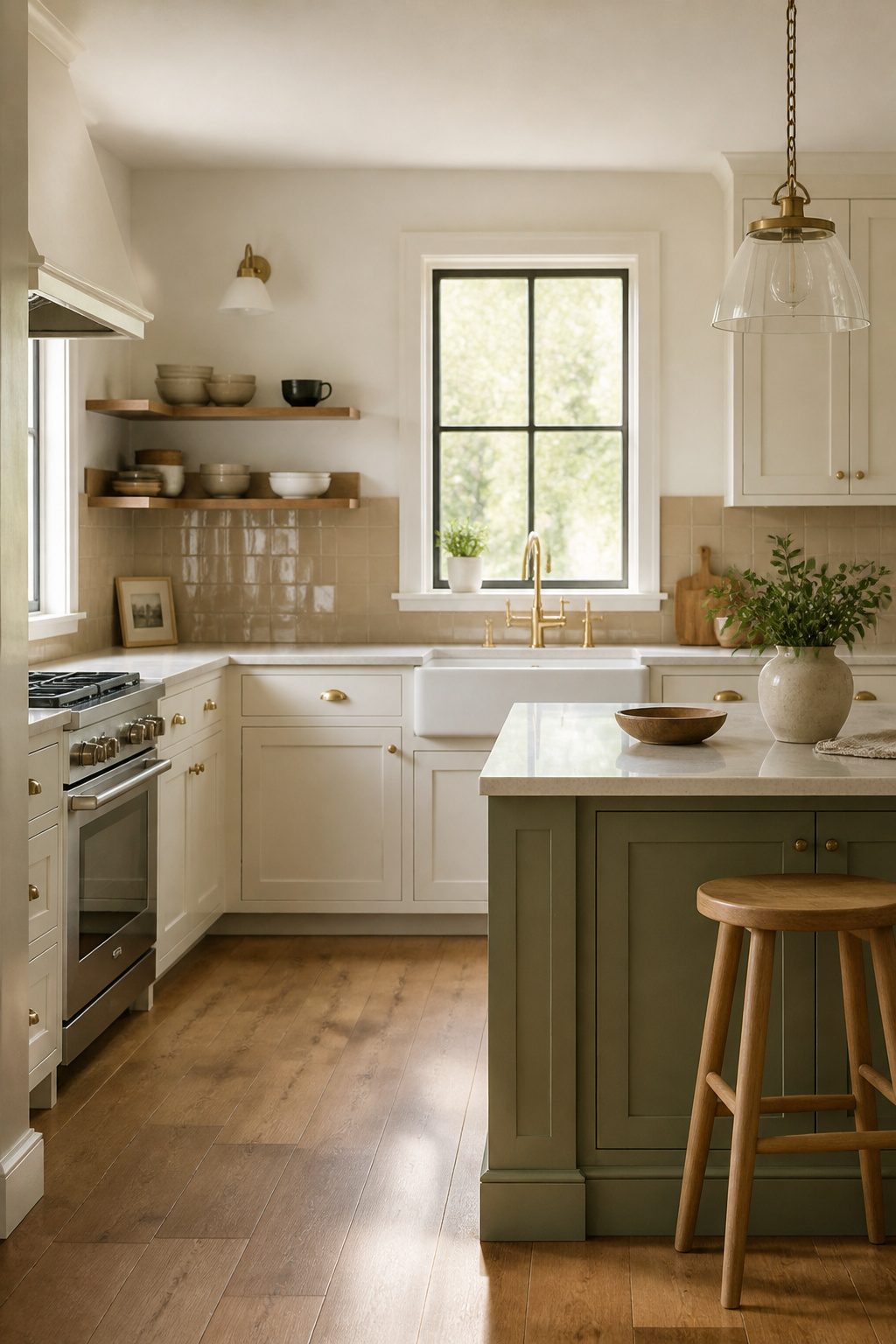
Soft, calming neutrals warm up a modern farmhouse kitchen without the starkness of an all-white room. I start with whites, grays, and muted earth tones layered so no single surface feels flat against another.
A warmer white on the cabinets, a mid-gray grout on subway tile, a putty-toned wall behind open shelving: the shift between them is quiet but enough to keep the space from reading like a clinic.
Pine green deserves a spot in that mix. One kitchen used it as a soft cabinet color that read classic and warm rather than dark or gimmicky, and in natural light it picked up the mountain view outside the window.
That is the test for any color in this style: does it hold its own when the sun hits it, or does it flatten into something you regret by 3 p.m.?
I would not build the whole palette around a single bold choice. Layer two or three muted tones that let the wood and brass details read as intentional, not afterthoughts.
The pine green works because it sits among restrained companions. If everything else is already competing, it becomes one noise too many.
Recommended Products
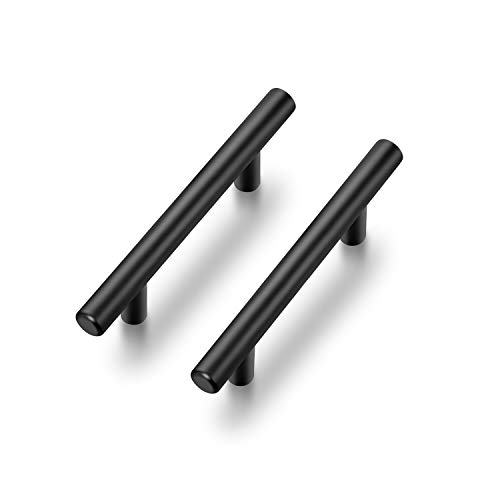
365-Day Evaluation: We believe you'll find value in your Ravinte handles. Use them for a full year, and if they don't meet your needs, we're here to help
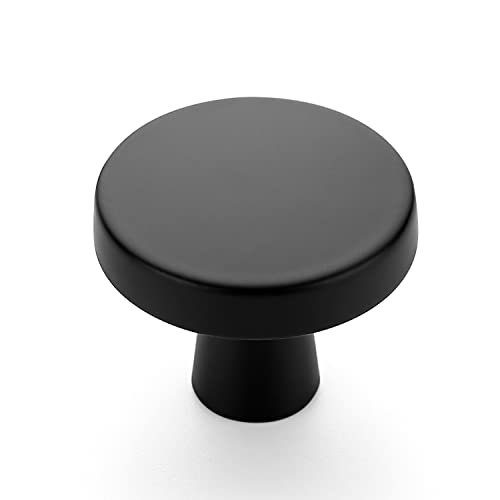
Dimensions: The heavy circular cabinet knob measures 1-1/4 inch (32mm) top diameter, 1/2 inch (12.7mm) base diameter, and projects 1inch(25mm) from the front of the cabinet door or drawer
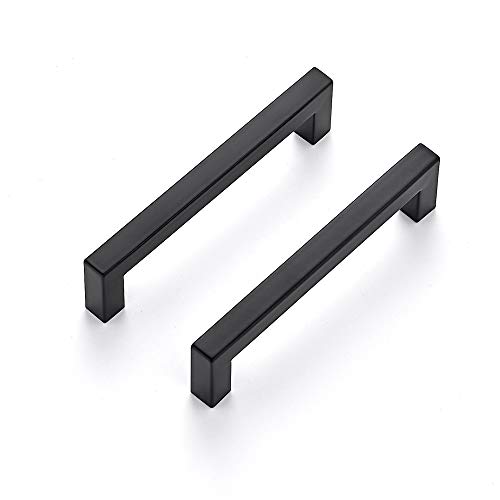
365-Day Evaluation: We believe you'll find value in your Ravinte handles. Use them for a full year, and if they don't meet your needs, we're here to help
3. Pair Warm Neutrals with Brass Details
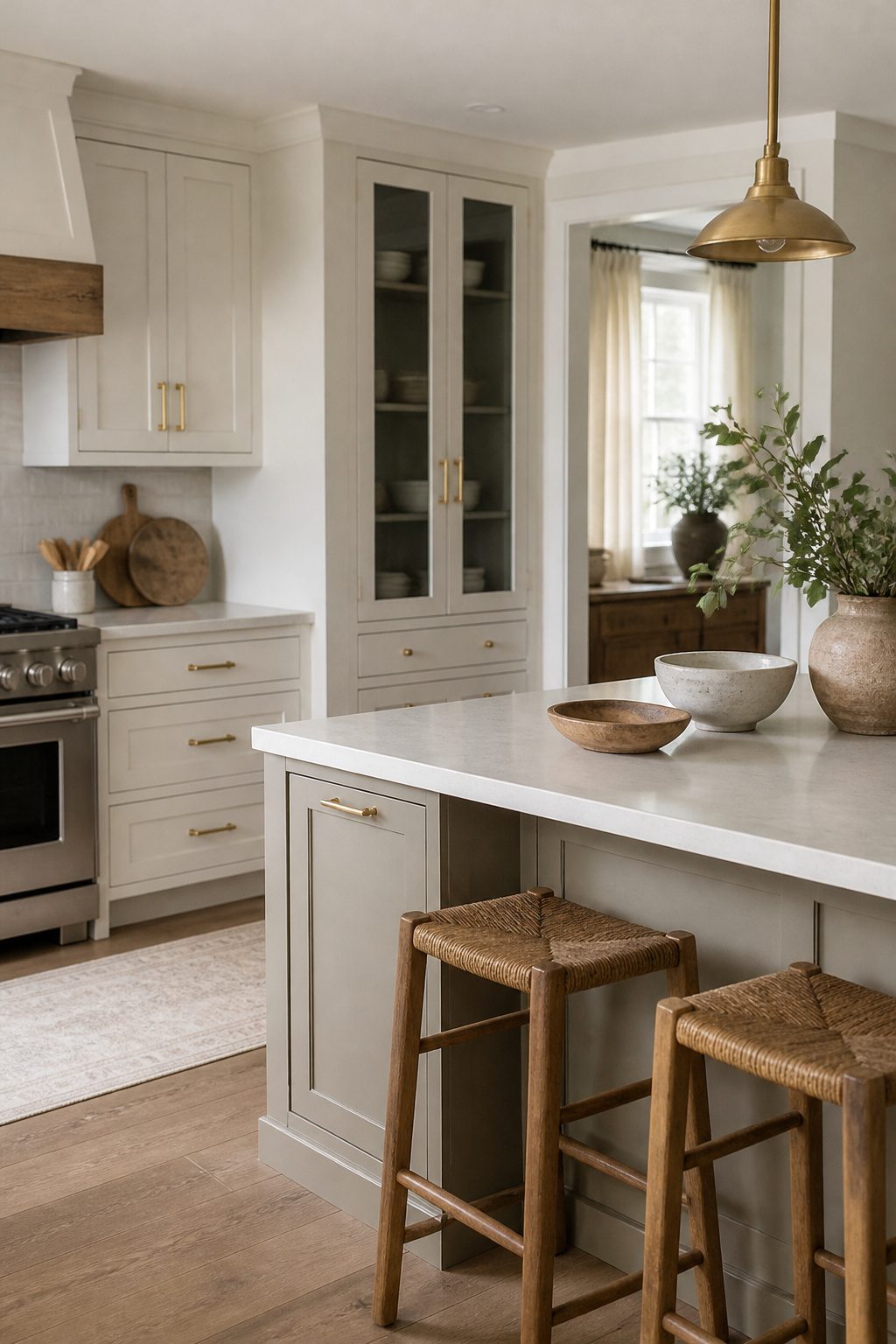
Warm whites and soft grays on cabinets and walls give modern farmhouse kitchens their grounded, rustic base, but the finish that actually wakes the room up is brass.
Unlacquered brass ages naturally, developing a darker patina over months that reads as inherited rather than installed. Satin brass skips that process and stays consistent, which I prefer for busy households that do not want to babysit their hardware.
Where you place it matters more than how much you use. Cabinet pulls, pendant stems over an island, and a pot filler above the range are the three spots where brass gets seen without turning the kitchen into a showroom.
The rest of the room stays quiet and the metal does the work.
"The secret to the perfect modern farmhouse kitchen is a mix of rustic and cozy with luxurious and modern… Go with a warm white for your kitchen walls and backsplash and contrast with wrought iron hardware fixtures, or copper and brass ones if you’re craving a pop of metallic shine."
What this means for a weekend project: you do not need to reface cabinets or retile. Swapping existing black or nickel pulls for brass, or switching one pendant, shifts the whole palette toward that luxe-but-lived-in balance.
Recommended Products

Ample Quantity: with a set of 12 Christmas norfolk imitation kitchen cabinet wreath, you have sufficient options for both use and replacement; The norfolk wreath feature an inner diameter of 9 cm/ 3.54 inches and an outer diameter of 22 cm/ 8.66 inches, ideal meeting your decoration needs; Share the festive joy by adorning your spaces and spreading cheer to friends and neighbors alike

an All Around Greenery Embellishment: make your holiday decoration more comprehensive with our green candle rings wreaths; Made from quality odorless plastic, these Norfolk Pine wreaths not only ensure longevity but also give your decor a fresh and lively touch; A pack of 12 ensures variety and flexibility enabling you to deck up your dining tables, windowsills, and parties just the way you want to

Classic Holiday Charm in a Compact Size: Add a festive touch to your home with this beautifully crafted small Christmas wreath, made from life like pine and cypress leaves. Its compact size makes it perfect for small Christmas wreaths for cabinets or doors, bringing warmth and cheer this holiday season
4. Mix Materials
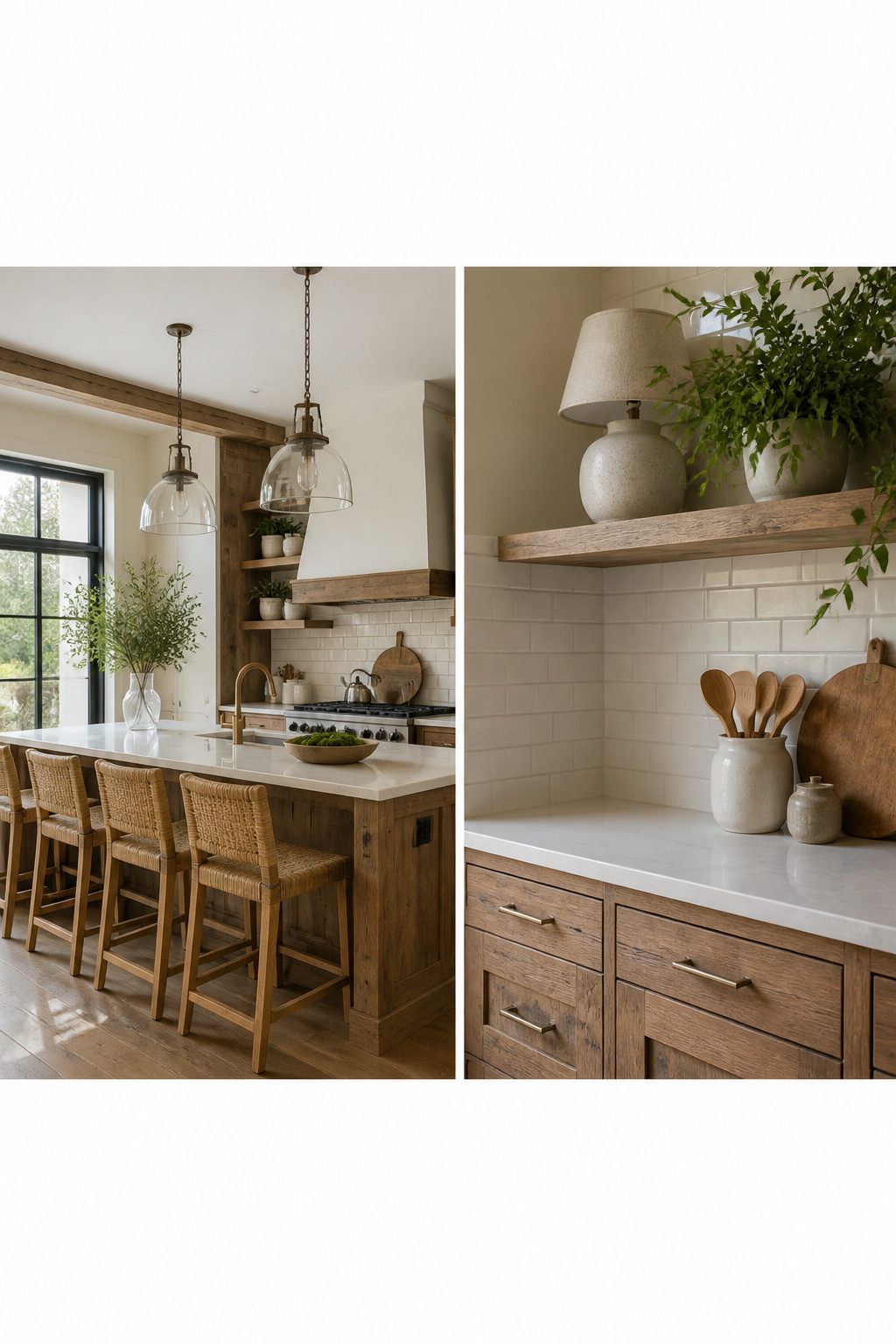
Introducing a range of different materials and finishes is how you create the traditional-meets-contemporary tension that defines modern farmhouse kitchens.
Irene Gunter, who founded Gunter & Co in 2014, puts it this way: mixing materials gives a farmhouse kitchen that modern twist while keeping its timeless charm and cozy atmosphere.
The combinations that work are specific. Rough wood with smooth quartz is one pairing; think reclaimed oak cabinets against a clean stone counter.
Matte subway tile with polished nickel hardware gives you the contrast without clutter. Woven bar stools and glazed ceramic pendant lights add layers you can actually touch.
Gunter’s Cotswolds project ran two different worktops in the same kitchen: a wooden worktop with metal trim on one side, Belgian Blue marble on the other.
Most budgets won’t stretch to two stones, but the principle scales down. Use one material where your eye lands first, a different one where your hands do the work.
The risk is making every surface compete.
I pick two textures, three at most, and repeat them rather than adding more. A matte backsplash, polished faucet, and one rough element like open shelving holds the line between layered and busy.
5. Focus on Finishing Touches
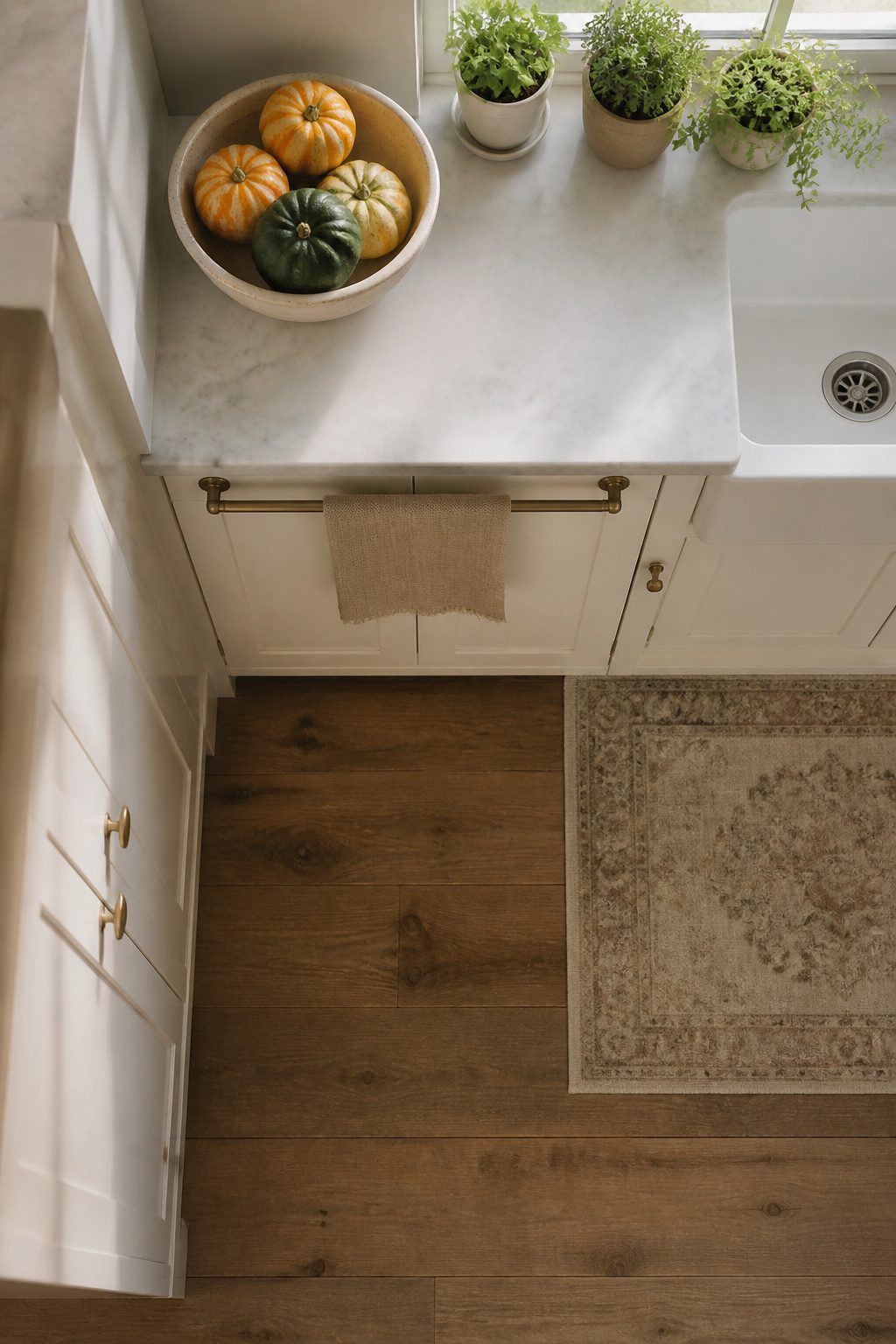
The permanent features carry a modern farmhouse kitchen, but the finishing touches decide whether it reads designed or merely decorated.
I look for three places where a small swap changes the whole mood: the countertop, the towel bar, and the windowsill.
A ceramic bowl on the counter is the easiest seasonal pivot.
In summer it holds lemons or peaches; by October, small pumpkins and dried leaves; in December, pinecones and a strand of fairy lights. The bowl stays put, which saves storage space, but the contents rotate with the month.
A cutting board leaned nearby with whatever produce is current, or a basket of farm eggs, keeps the look grounded in actual use rather than pure staging.
Linen towels shift the palette without repainting anything.
I keep two sets, one in warm oatmeal for October through March and a lighter, weathered blue for April to September. They hang on the same hook and read as a completely different kitchen.
Greenery does the rest. Potted herbs on the windowsill or one larger plant in a corner corner livens the neutral backbone that farmhouse kitchens need.
Small appliances should live in a cabinet, but I make one exception, usually the stand mixer, left out in a color that talks to the rest of the room.
Two pieces on the counter is the limit. Anything more, and the minimalist streak that keeps modern farmhouse from sliding into clutter collapses.
6. Incorporate Natural Elements
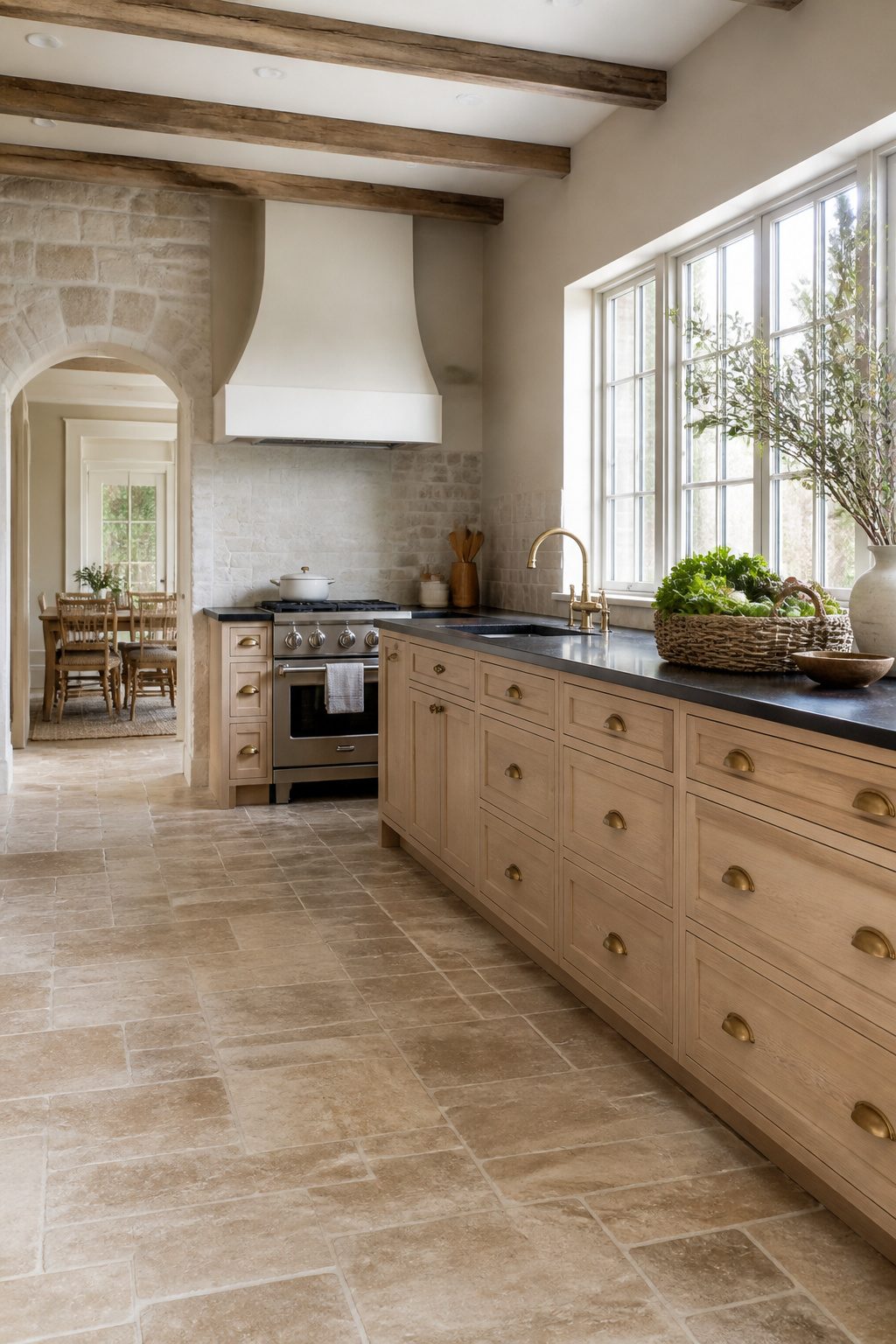
Natural materials sit at the heart of modern farmhouse kitchens, but the trick is using them without the space feeling like a set piece.
I start with the wood species that actually hold up in a kitchen: maple, oak, and cherry for butcher block surfaces that take daily abuse and add the warm tone the look requires.
For countertops and backsplashes, natural stone is where the farmhouse character lives. Soapstone gives you a smooth, heat-resistant surface that handles food prep without the high-maintenance reputation of marble, and it ages into a soft patina rather than staining badly.
Quartz patterns that read as natural stone offer a practical middle path, stain- and scratch-resistant so you are not scheduling repairs every few years.
Stone flooring and light wood cabinetry keep the room airy rather than heavy.
I pair these with unlacquered brass or antique-inspired hardware silhouettes for the detail that signals intent, not theme-park rusticity. Wrought iron or a single reclaimed beam can do the same work as five.
The limit is this: one or two organic materials per surface, styled with something simple like branches in a vessel, and the kitchen reads as modern farmhouse rather than mountain lodge.
7. Blend Trends with Timeless Style
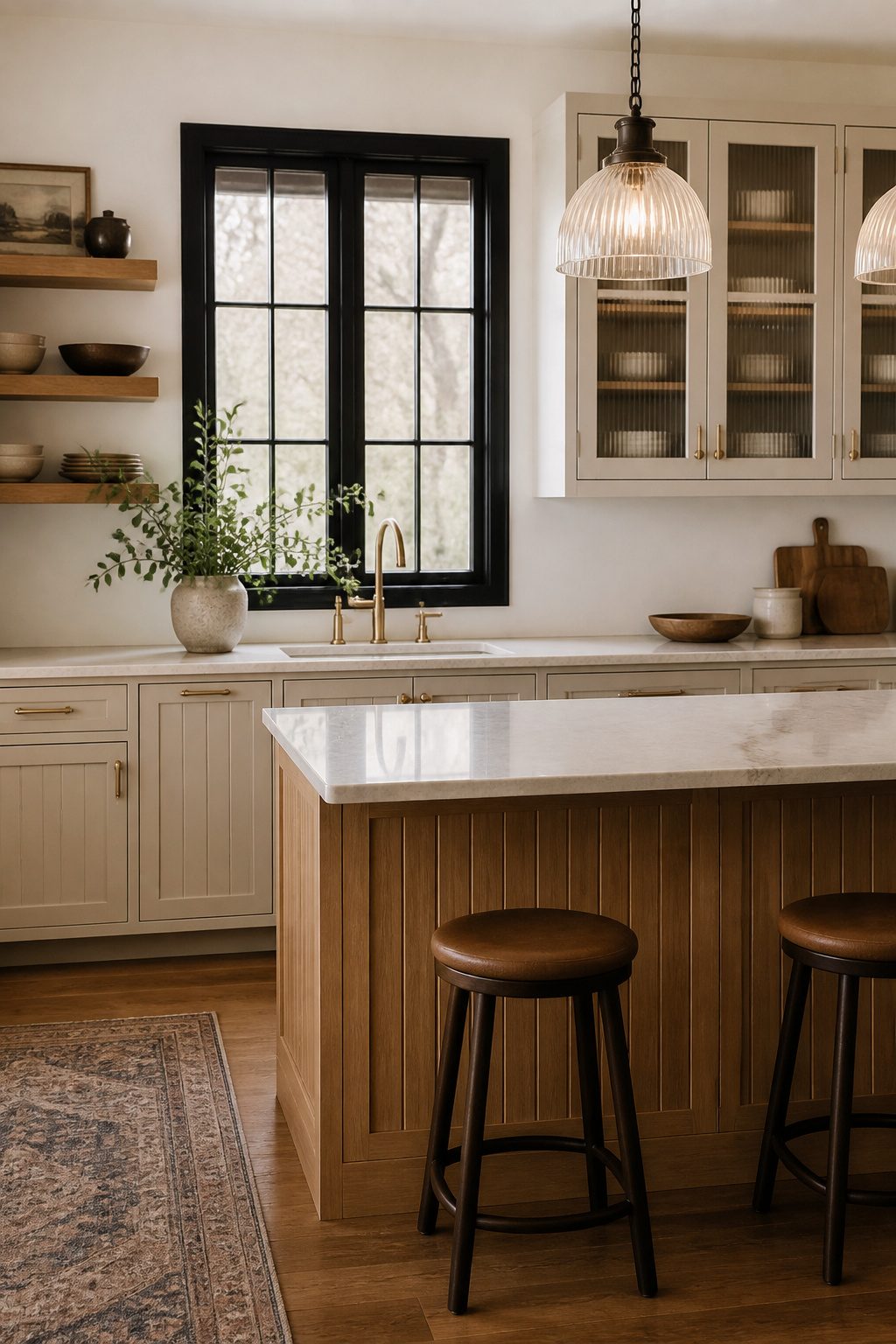
The detail that separates a modern farmhouse kitchen from one that looks dated in five years is usually a single line or texture, not a whole cabinet.
A fluted insert on a Shaker door does this: the Shaker form is 200 years old, but the reeded face reads as current because it borrows from the 2024 glass-and-fluting trend without committing to a full wall of it.
I would put it on one bank of uppers, not every door, so the kitchen keeps its farmhouse bones.
Black window frames work the same way.
In an industrial loft they feel cold, but set against white oak shelves and a farmhouse sink they read as intentional contrast, not borrowed style. The frame color is modern; the proportions around it are traditional.
Reeded glass in a cabinet door follows the same rule. The texture is having a moment, yet the door itself is a form you would have found in a 1920s pantry.
I like it best where the contents behind are simple: stacked white plates, not mismatched storage. The glass provides the trend; the contents provide the farmhouse.
8. Add Warmth with Color and Texture
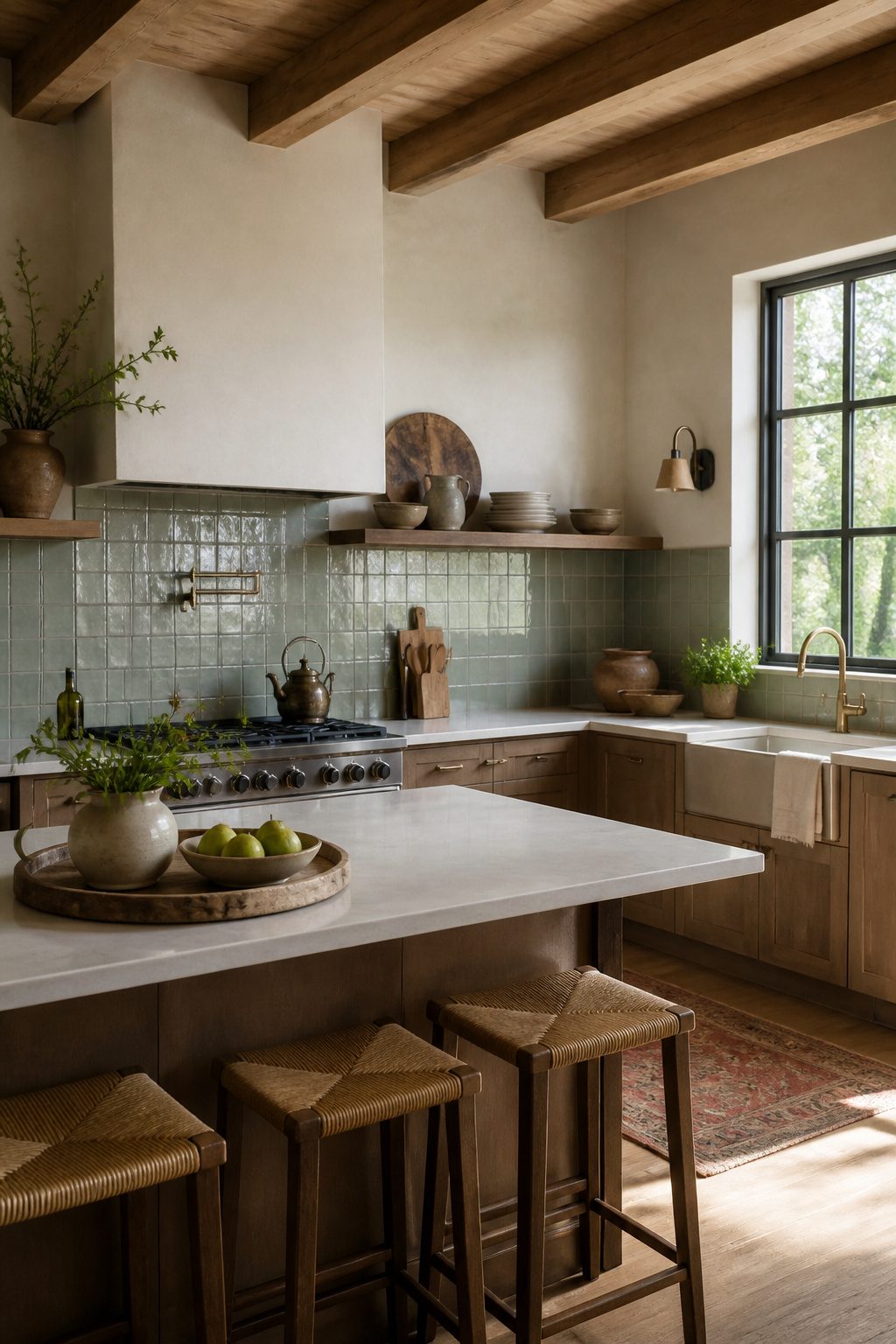
A flat neutral scheme reads cold in a kitchen that is supposed to feel lived-in.
Warm tones with varied texture fix this without adding clutter. I start with hand-glazed tile for a backsplash; the slight irregularity catches light differently across each piece, so the wall has depth even in a single color.
Limewashed walls do similar work on a larger surface, softening edges and giving chalky variation that reads as age rather than flaw.
For textiles, nubby linen on a window seat or roman shade brings in irregular weave that flat cotton cannot match.
Live-edge wood on a floating shelf or countertop edge keeps the grain and edge undisturbed; against painted cabinets, it reads as found object rather than built-in.
The warm tones that work here are ochre, terracotta, and camel rather than bright yellow or orange.
These settle against white or cream cabinetry the way weathered barn siding settles against lime-wash, each gaining from the contrast. Exposed wood beams, where the structure allows, carry this warmth upward and tie the ceiling into the room.
The risk is overloading. One textured element per sightline is usually enough; two compete and the kitchen feels styled rather than gathered.
I would rather have limewash and one live-edge shelf than limewash, hand-glazed tile, nubby linen, and wood beams competing for attention in the same view.
9. Opt for a Rustic Farmhouse Island
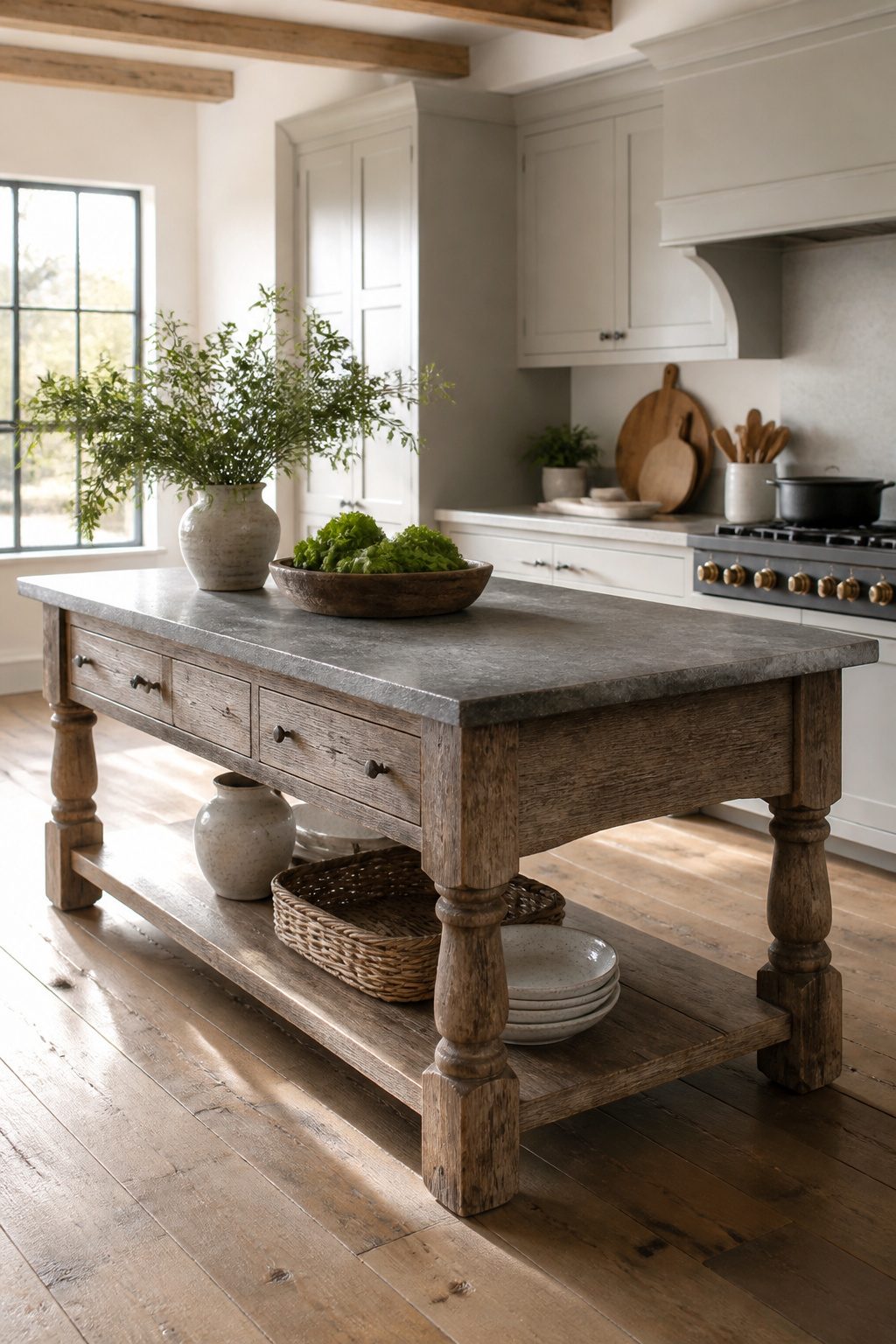
A reclaimed wood base with a stone top anchors the room like a piece of furniture that happened to stay.
I have seen this pairing hold a white kitchen together; the stone gives you the wipe-clean surface you actually need, and the weathered wood underneath keeps the farmhouse side from going sterile.
That contrast of grain against something smooth is what the style is trying to do.
The furniture-style island with turned legs reads more as a found piece than built-in cabinetry.
It works if your square footage can spare the circulation around it. For a tighter kitchen, a slab-top worktable on simple legs eats less visual space while still giving you the work surface.
Height is where I see plans go wrong. 36 inches is prep height: your back will thank you, and your cutting board sits right.
Move to 42-inch height only if you are committing to bar stools and do not mind losing the kneading-and-chopping zone. Depth matters too.
Anything under 24 inches deep is a display shelf, not usable workspace. You need that front-to-back room for a mixing bowl and your elbows both.
10. Choose Statement Light Fixtures
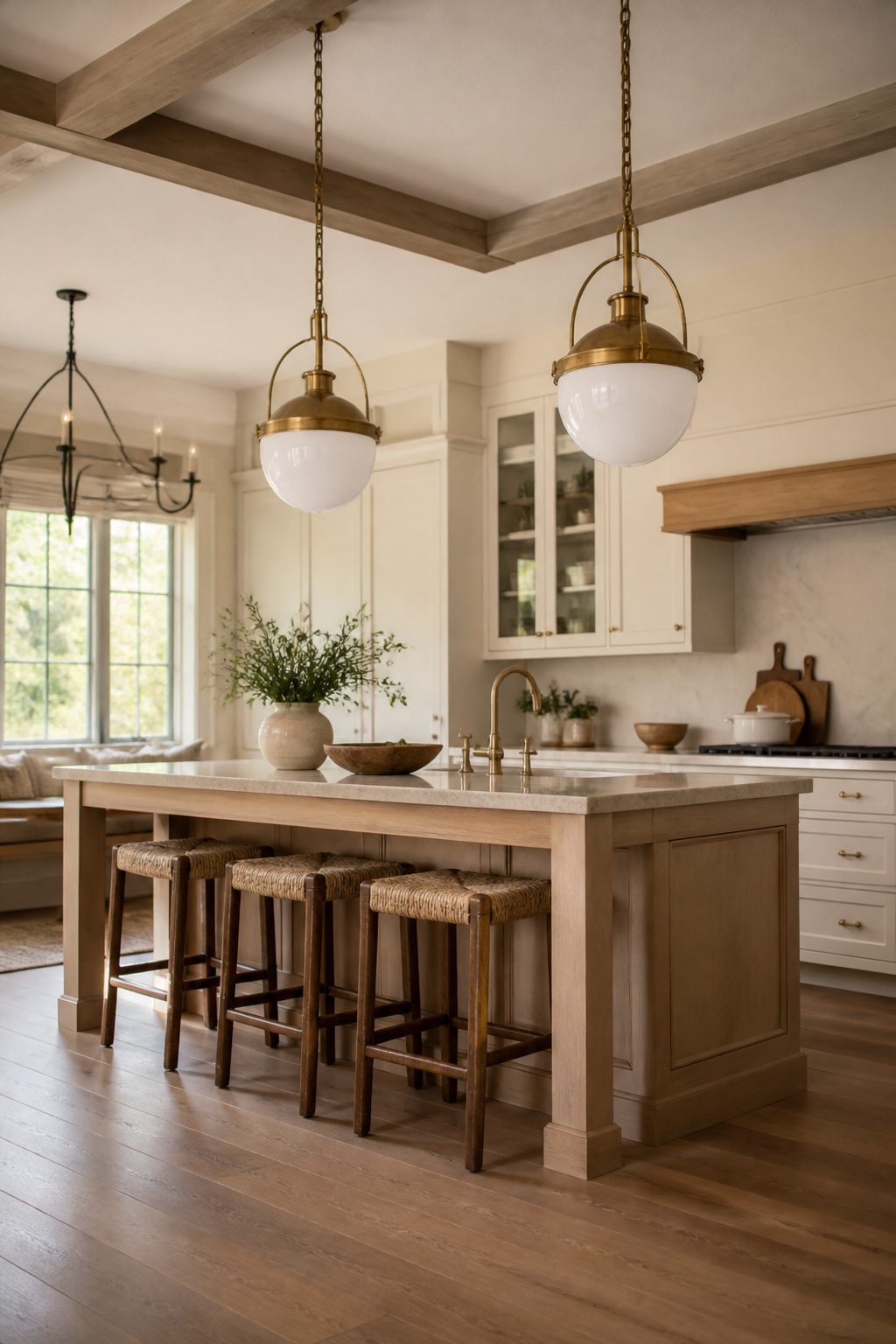
Lighting in a modern farmhouse kitchen works hardest when it balances practicality and aesthetics, and the fixture type you choose sets the whole tone.
I tend to start with oversized pendants over the island, since they anchor the room and give you task light exactly where you prep.
Schoolhouse globes with antique brass details read vintage without feeling staged, while wrought-iron chandeliers fitted with Edison bulbs add the rustic edge that keeps the look from going too slick.
Scale matters more than most people expect. Space island pendants 30 inches apart and hang them 30–36 inches above the counter; anything higher and the light pools uselessly, any lower and you’re blocking sightlines across the kitchen.
Brass or copper with a matte finish casts the warm glow that reads farmhouse, but I would skip high-gloss metals here; they bounce too much light and break the relaxed mood this style depends on.
Shaker-Style Cabinets and the Farmhouse Sink
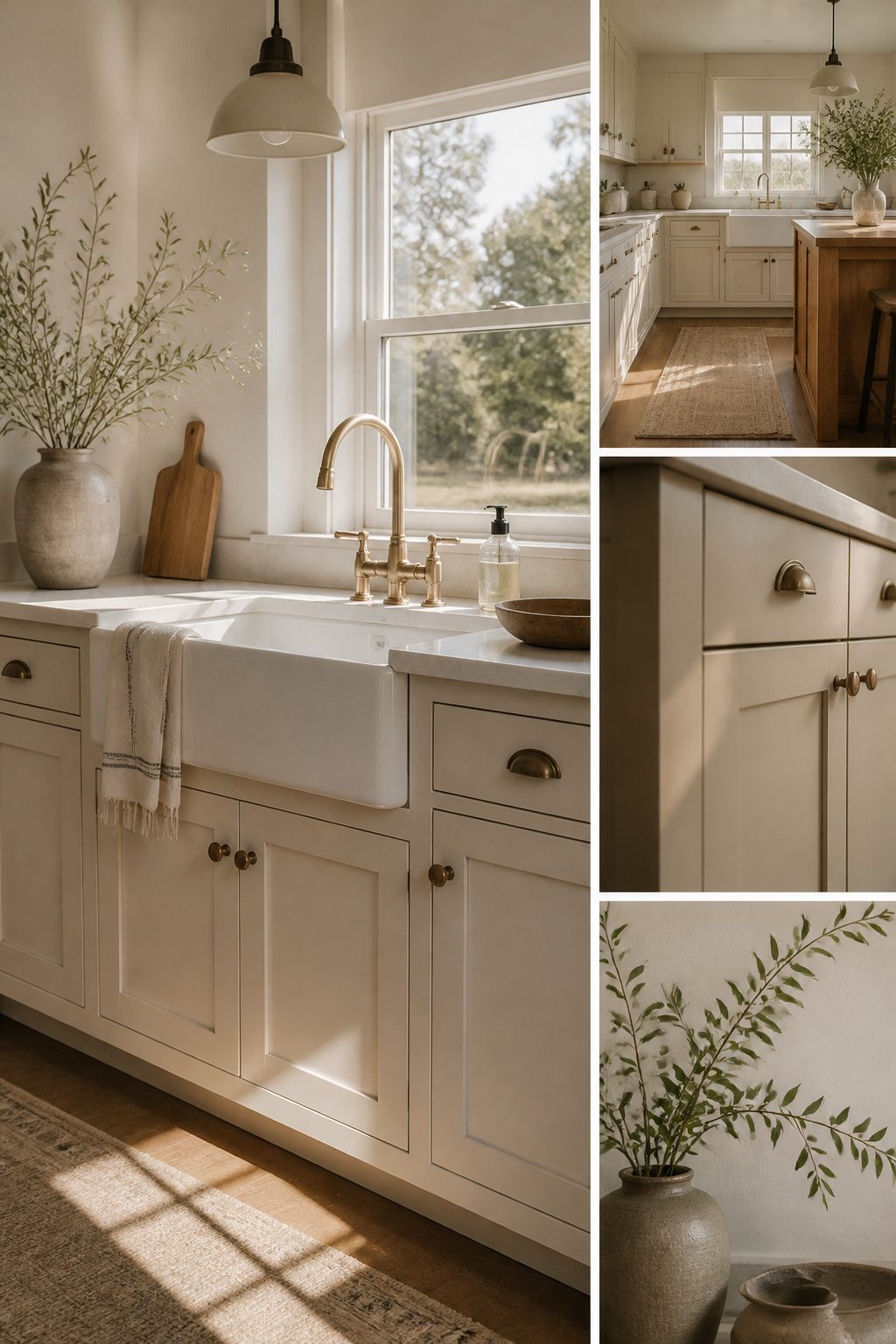
Shaker-style cabinets are the structural backbone most modern farmhouse kitchens build from, and the reason is in the door itself.
The five-piece construction, a frame with a recessed flat center panel, carries just enough history to feel rooted without the applied molding or carving that dates a kitchen to one revival or another.
That restraint is what keeps them current. A glaze or light distressing on the wood pushes the look further vintage if you want it, though the plain painted finish in ecru, alabaster, or eggshell reads cleaner for longer.
The farmhouse sink sits opposite the cabinets in weight and presence. One source calls it the most defining feature of a farmhouse kitchen, and I agree: the deep, wide apron-front basin is what you notice first when you walk in.
Porcelain and stainless steel are the common materials, though cast iron in a color like Kohler’s Whitehaven white is the choice if the budget allows.
Silgranite is the practical fallback. The apron-front installation, with the sink front exposed past the cabinet line, is what separates it from an undermount bowl; that projection is the detail that signals farmhouse rather than just large.
Open Shelving Versus Closed Storage
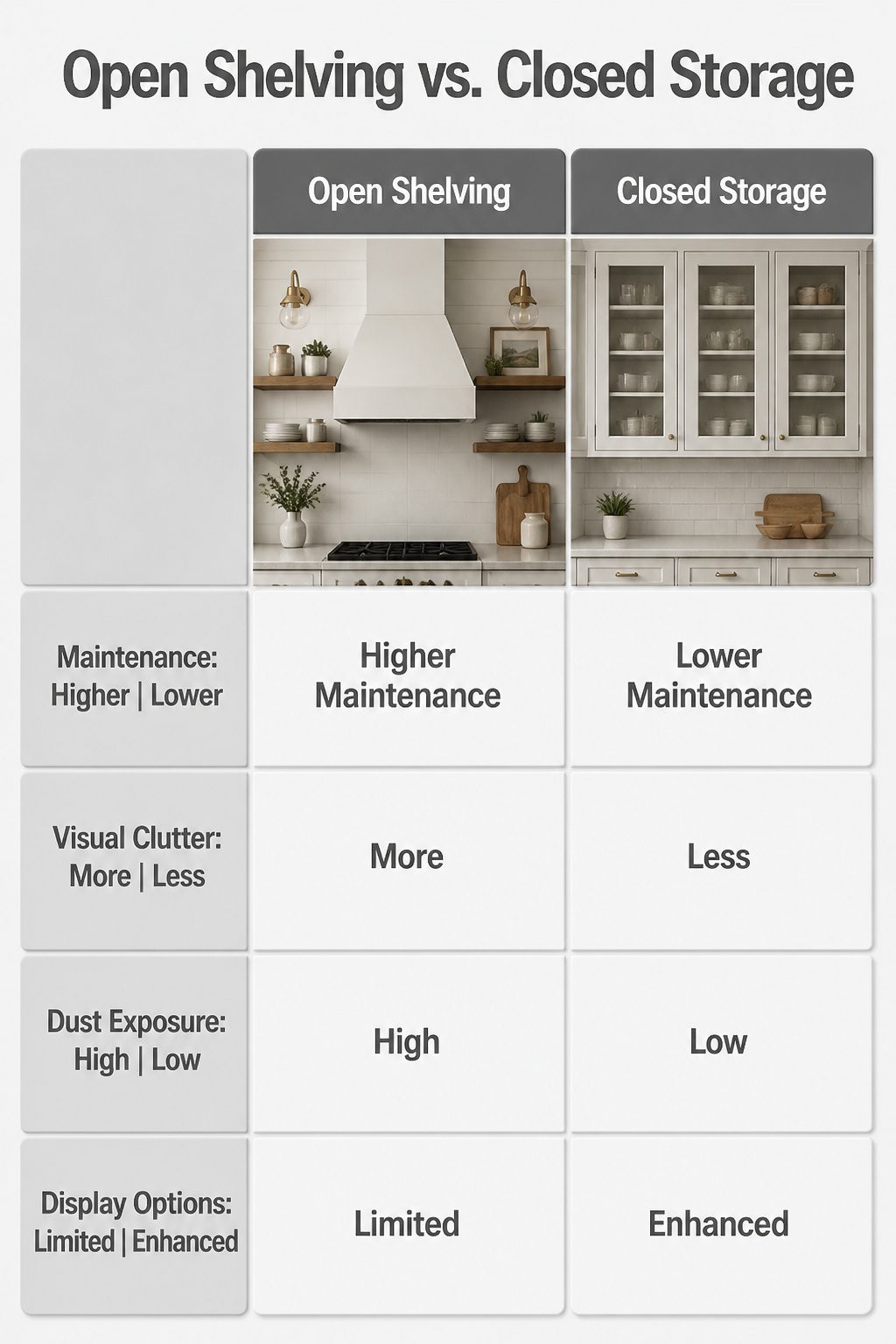
Open shelves are not a requirement for a modern farmhouse kitchen, but they earn their place in specific spots.
Flanking a range hood, they frame the room’s focal point and give you a natural place for cookbooks or a few stacked serving pieces.
At the end of a cabinet run, they break up the wall of doors without sacrificing the storage you actually use daily.
A coffee station is another smart placement: everything sits ready for morning use, and the visual clutter stays contained to one corner.
Grease collects on anything open within four feet of a cooktop, which makes that placement more maintenance than most busy households want.
Everyday dishware faces the same problem: dust settles fast, and plates you use three times a day never look styled for long.
Glass-front cabinets solve both issues. They read as open and light against neutral walls, but the glass stops dust and cooking residue from reaching what is inside.
You still get to display vintage glassware or a set of dishes you like, just without wiping them down before every meal.
For my own preference, I would skip open shelves entirely near the cooking zone and use them only where function justifies the upkeep.
The rest of the wall line benefits from closed storage, whether solid or glass-front, because a modern farmhouse kitchen still has to work on a Tuesday night, not just in photographs.
Vintage Elements That Add Character
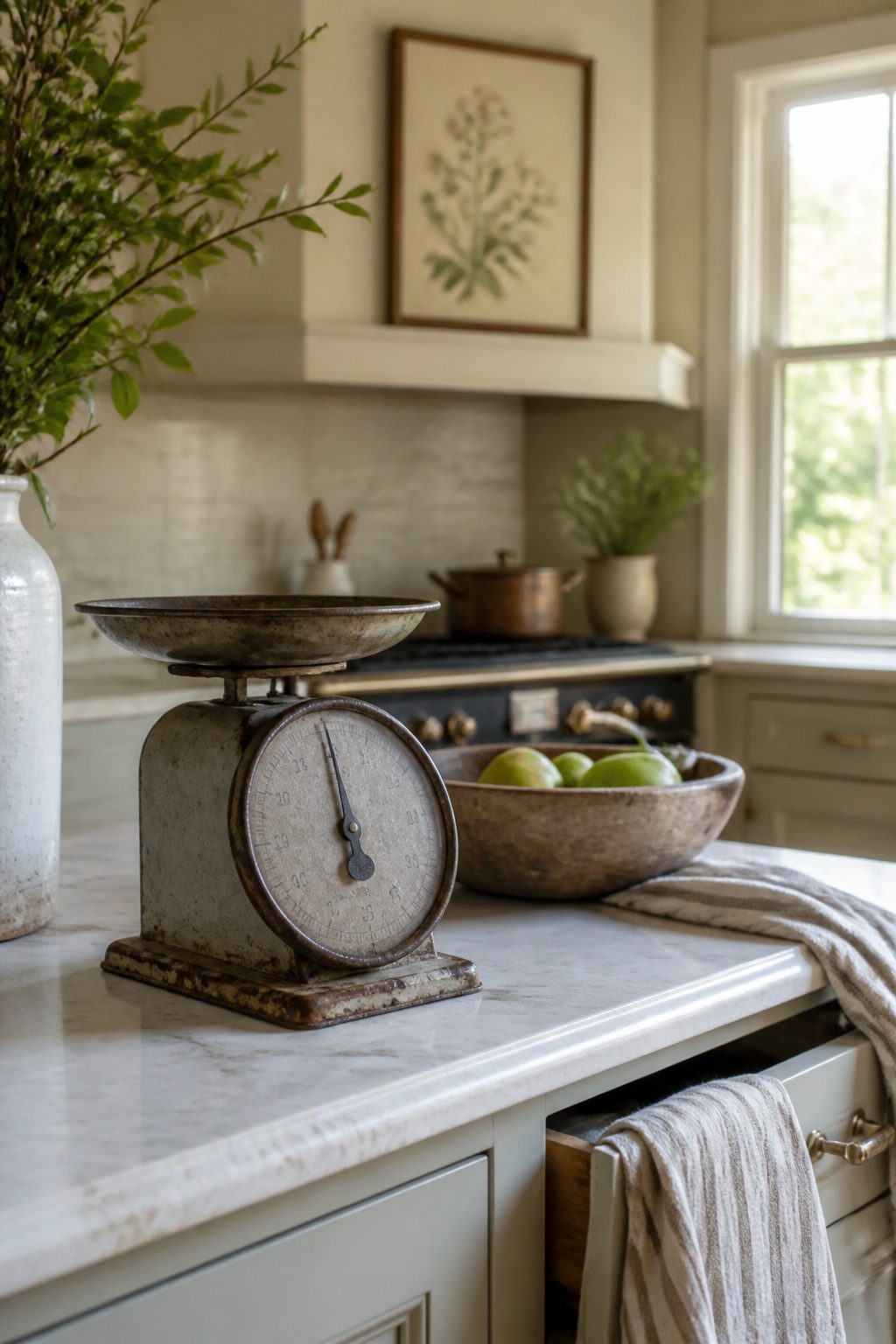
A refurbished bridge faucet with cross handles brings genuine vintage function into a modern farmhouse kitchen, but most of us will find the better payback in pieces that sit on counters or hang on walls.
A cast-iron produce scale, an English ironstone bread bowl, or a glazed ceramic crock for wooden spoons give the eye something weathered to land on without the cost and plumbing headaches of installed salvage.
The line between vintage as functional and vintage as purely decorative matters more than people admit. A butter mold mounted above the range looks quaint for about six weeks, then it collects grease and becomes clutter.
A framed botanical print, a set of grain-sack tea towels in a drawer you actually open, or a stack of 1940s mixing bowls you reach for daily stay alive in the space.
If the piece does not earn its place through use or genuine visual weight, skip it. One or two displayed items with honest wear beat a shelf of thrifting trophies every time.
Patterns and Textures That Bridge Old and New
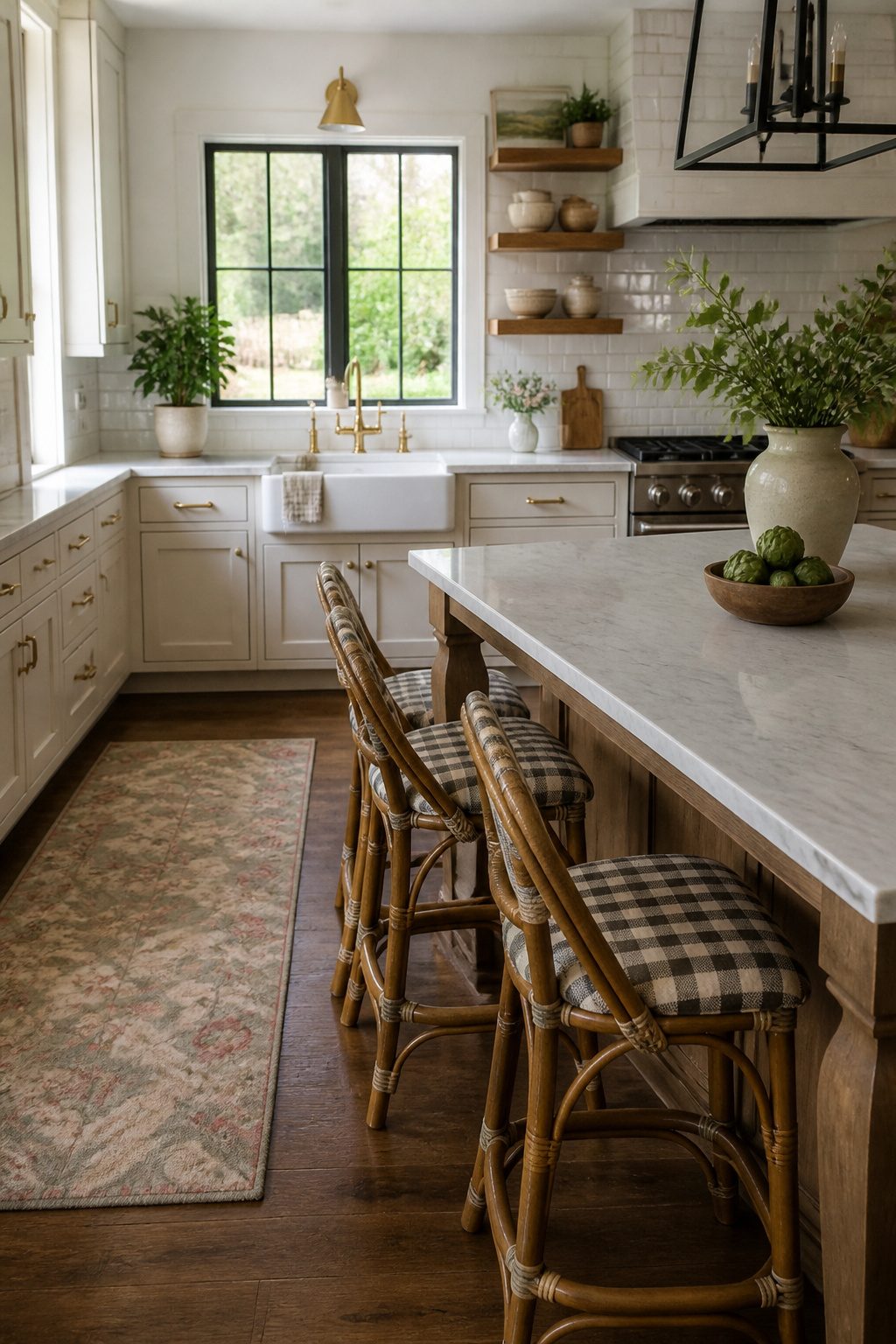
Gingham, ticking stripe, and soft floral prints carry the farmhouse side of the equation without turning the kitchen into a period set.
I would use them on curtains, chair cushions, or a runner rather than on every soft good in the room, because the limit that keeps modern farmhouse from looking cluttered is three textures visible at once.
Rustic wood grain on open shelves, honed stone counters, and brushed metal hardware already give you two hard surfaces before you add fabric.
Pick one pattern family, keep it in the same tonal range as your neutral base, and let that single layer do the nostalgic work.
A crisp white subway tile backdrop gives gingham or a faded floral the contrast it needs without the colors competing. Cross into paisley or mix a cool gray stone with warm yellow wood, and the balance tips toward chaos.
For my money, ticking stripe wins for longevity; it reads as clean lines from a distance and farmhouse detail up close, which is exactly the old-meets-new tension these kitchens are after.
Natural Light and How to Maximize It
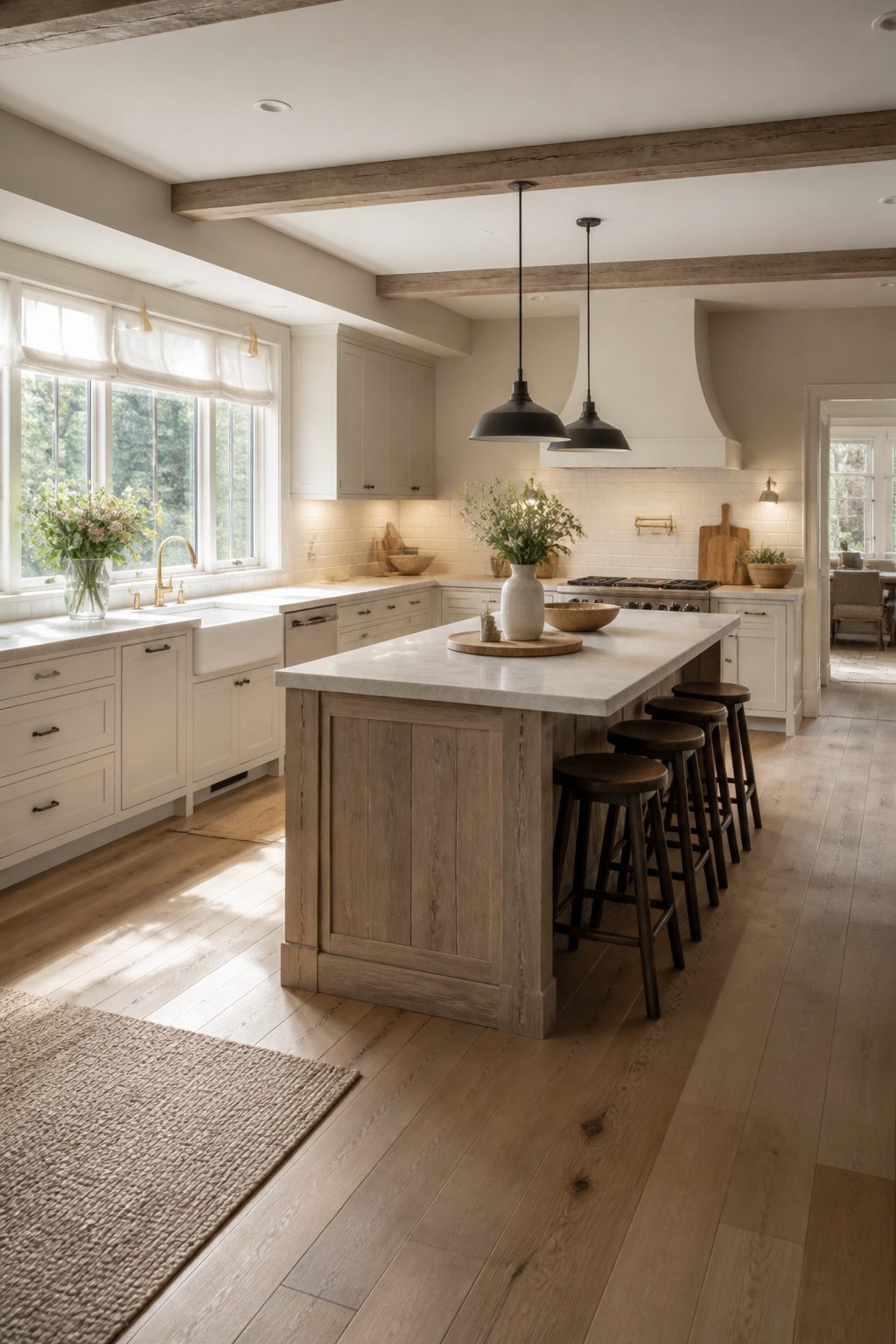
Large windows, glass doors, or skylights are the structural moves that bring real daylight into a modern farmhouse kitchen. The sources agree on this much, though they split on execution.
I would put oversized windows at the top of the list; wide sills double as display space for fresh-cut flowers or a small planter, which is the detail that makes a farmhouse kitchen feel intentional rather than just bright.
Skylights work if your roofline allows them, and French doors do the same job with the added benefit of a view.
If you are working with the walls you already have, reflective backsplashes and light wall colors are the practical substitutes. A glossy subway tile behind the range bounces whatever window light exists deeper into the room.
Under-cabinet lighting that mimics daylight temperature fills the shadows that windows cannot reach, and a mirror placed opposite your main window will carry that light another few feet.
Transparent or translucent curtains on existing windows let in more than bare windows with heavy fabric, and the cost is minimal enough to not delay other projects.