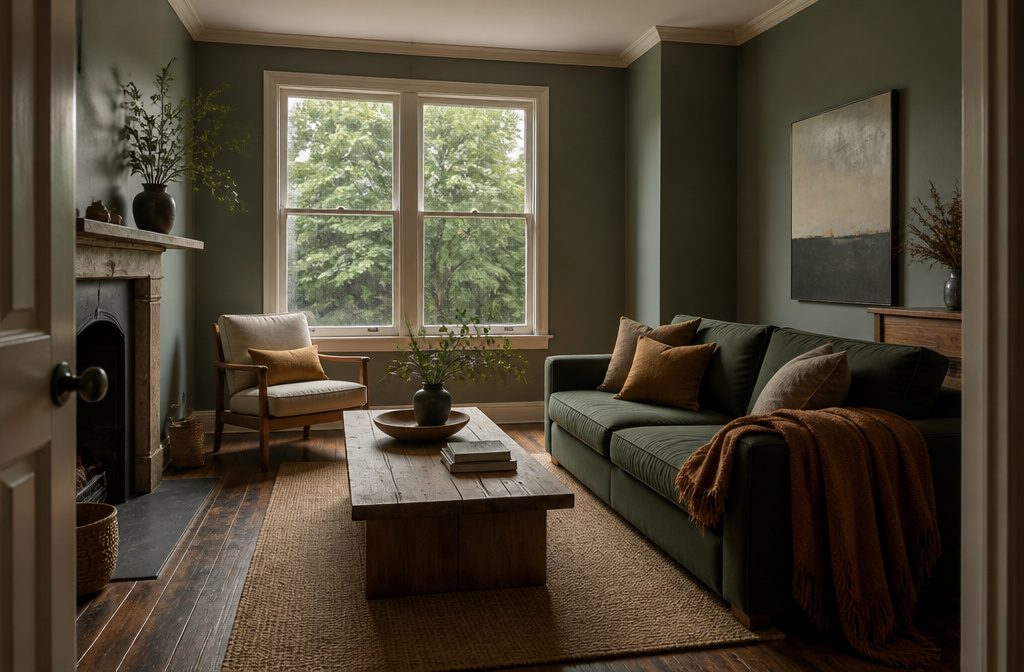
A medium living room sits between the tight corner where every centimeter counts and the open floor that lets you spread furniture without consequence.
What changes the approach is whether you have the light to support pale walls or need the room to work in darker tones, and whether your ceiling height lets you pull furniture inward or forces everything against the perimeter.
Benjamin Moore Decorator’s White and Rookwood Shutter Green by Sherwin Williams both show up in rooms this size, chosen for opposite reasons that depend on which windows you have.
1. Choose a Color Direction
Color sets the room’s temperature before a piece of furniture goes in. Light walls in white or soft neutral tones reflect daylight back into the space and make a medium room feel open rather than hemmed in.
Benjamin Moore Decorator’s White works for exactly that reason: it reads clean without going cold, and it lets the room breathe.
You can layer bolder color into pillows, rugs, or a single accent wall without the space closing in on you.
Dark paint makes the opposite choice and commits to it.
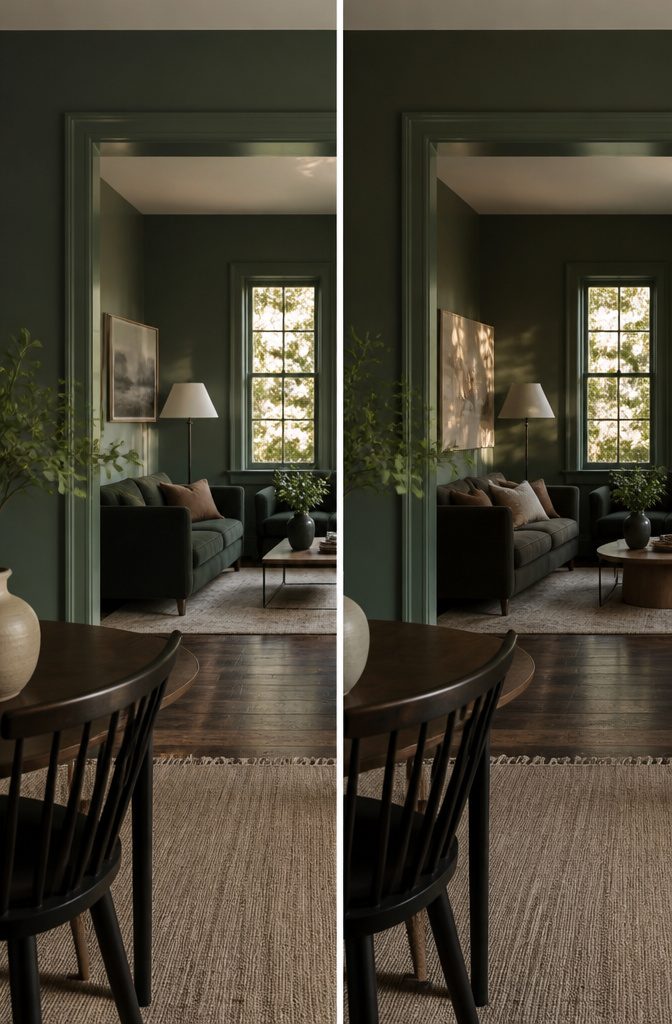
Rookwood Shutter Green by Sherwin Williams in eggshell on walls and semi-gloss on trim turns a medium living room into a deliberate retreat, especially when the furniture follows the same depth.
The monochrome approach makes the ceiling disappear instead of press down, and southern light through the windows plays the darkness into warm shadows rather than a black pit.
A dark room only works if you go all the way with it; half-dark just looks dim.
2. Make the Layout Serve the Room’s Use
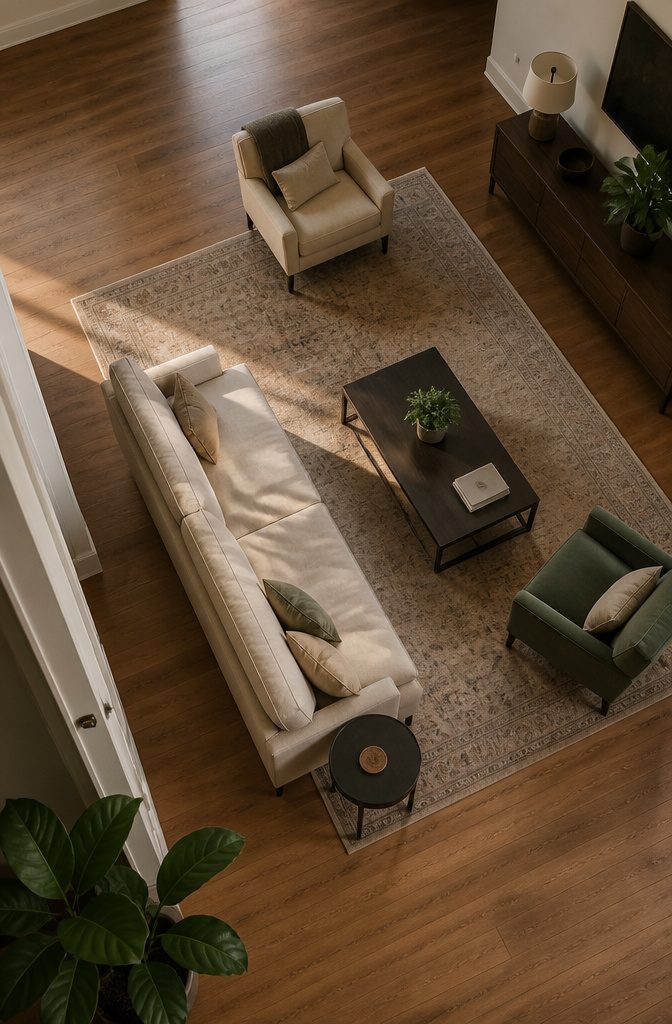
Arrange seating toward where people will actually sit and talk, not in a ring around the perimeter.
Pull sofas and chairs into a loose grouping a few feet from the walls, angled slightly inward so no one ends up shouting across empty floor.
That opens circulation behind the furniture and keeps the center of the room from feeling like a hallway.
If you watch TV in here, face the seating toward the screen and leave the path to the kitchen or hallway clear.
A coffee table placed dead center often blocks that line, and you end up sidestepping it twice a day. I have seen rooms improve the moment the table moved to one end of the sofa or left the room entirely.
Grouping furniture in threes—a sofa flanked by two chairs, or a chair with a side table and a floor lamp—gives the layout a settled look without filling every corner.
Horizontal pieces like low benches or long console tables stretch the sight line and make a medium room read wider than it measures.
3. Use Furniture as a Focal Point
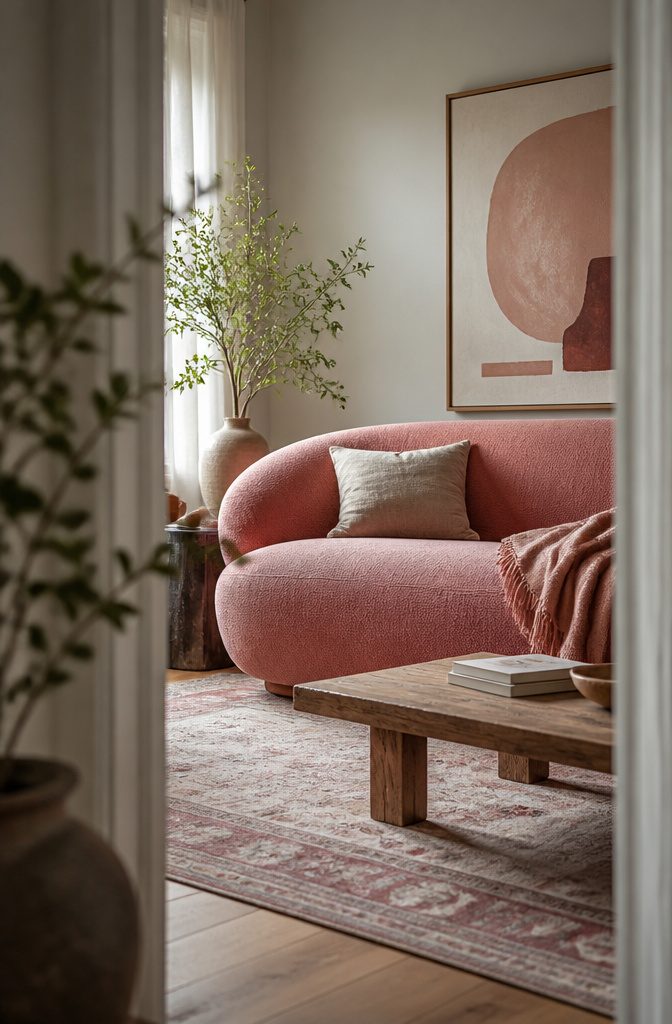
A sofa in a bold color or an unusual silhouette can anchor the whole room. Pick one piece that makes you stop, then let everything else defer to it.
Laura Jenkins designed an Atlanta living room around a Pierre Augustin Rose sofa in pink, chosen first to complement a rustic coffee table, then used a textile from Aloka Home to tie the palette together.
Article’s Sven sofa in Pacific Blue velvet works the same way: the color decides what goes on the walls and what fabrics come in after.
Start with that one call and build outward.
If the sofa is neutral, the art or a chair can carry the weight instead. But put the decision somewhere definite rather than trying to balance six medium-intensity choices that never resolve into a point of view.
4. Add Mirrors and Reflective Surfaces
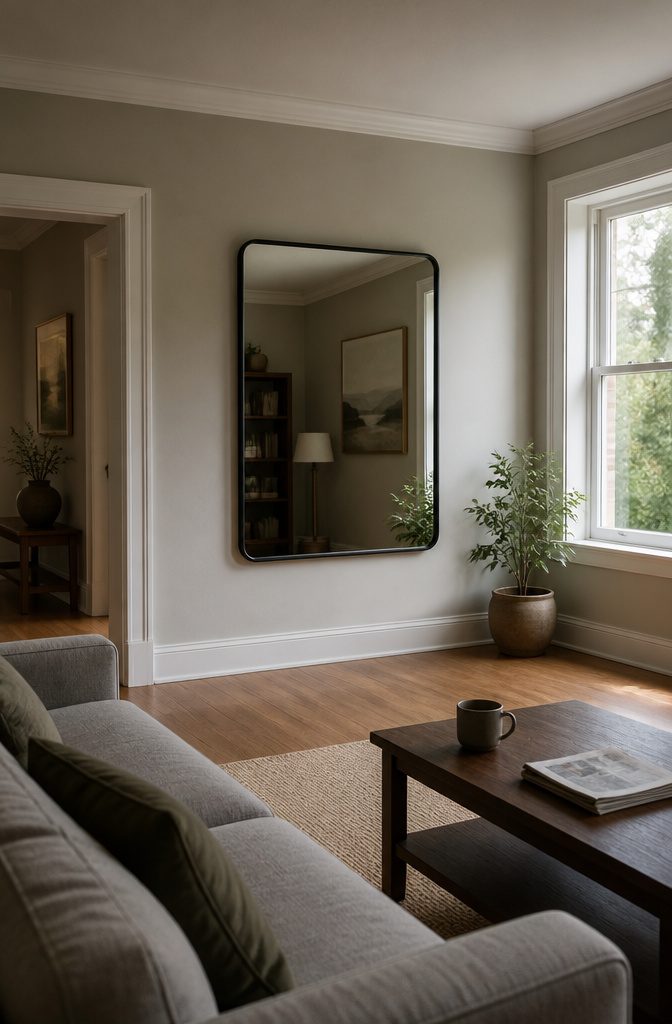
Mirrors reflect light and pull the room open, and the effect depends on where you put them.
The center of the mirror should sit at roughly 1.5m, which is average eye level — any higher and the reflection misses you; any lower and it catches only the furniture.
Place the mirror near a window or next to a lamp. The reflected light brightens the whole room and adds a layer of depth that makes the space read as larger than it is.
Large mirrors work better than collections of small ones. Ornate frames and multiple mirrors crowd the wall and split your attention without delivering the openness a single large mirror gives.
Bunnings and Temple and Webster both stock mirrors at reasonable prices, and the range is wide enough that you can match whatever style the room already has.
5. Use Wall Space for Display and Storage
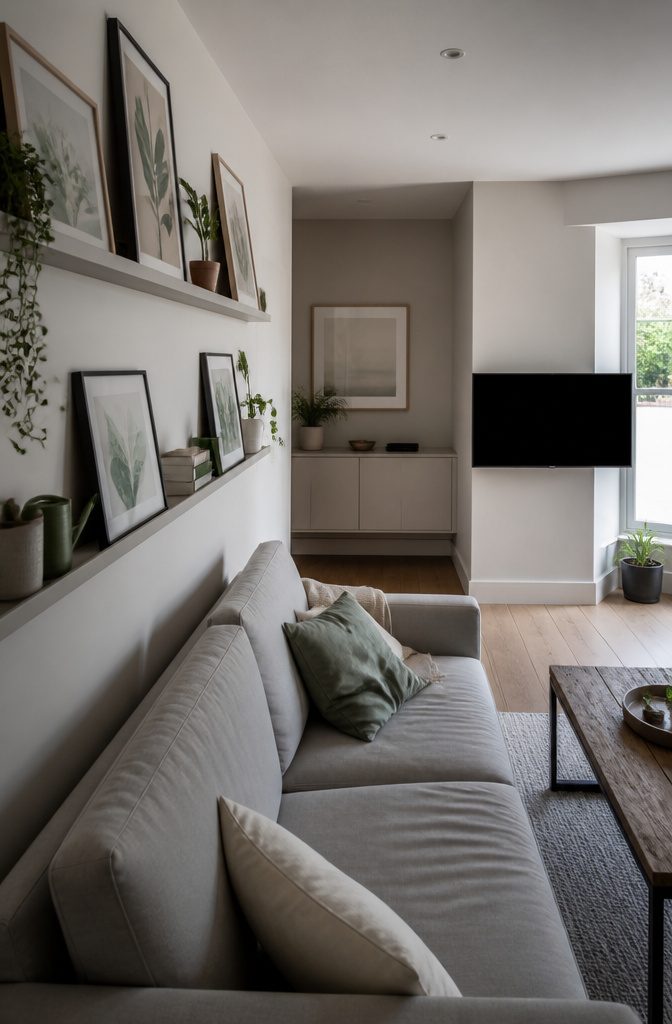
Floating shelves let you keep floor space open while giving you a place to show off books, plants, or framed prints. Mount them above a sofa or in a dead corner where a bookcase would crowd the room.
Picture ledges work the same way but let you lean artwork instead of committing to nails—swap pieces out when you want a different look, and the whole arrangement stays clean.
A wall-mounted TV clears out the need for a media console, and even ten centimeters of recovered floor area changes how the room reads when you walk in.
If you have an awkward nook, a shallow cupboard mounted at the right height turns wasted depth into real storage without eating into the walking path.
Push what you can against the walls first, then look at what you can hang to pull more weight off the floor.
6. Layer Lighting and Lighter Touches
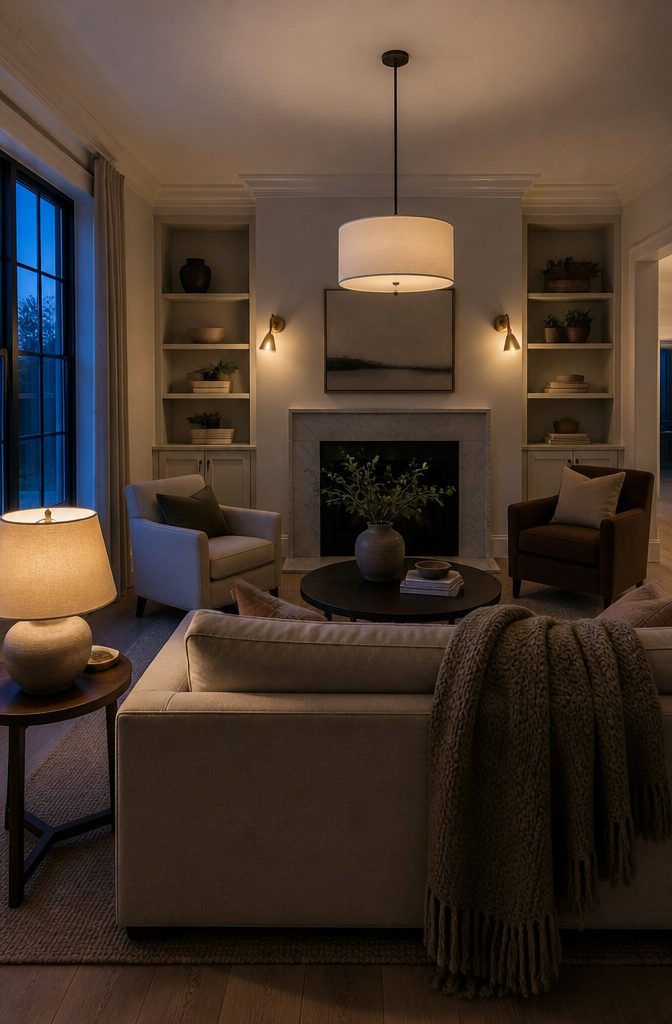
A fixture mounted above the conversation area pulls the eye up and leaves floor space open — even ten centimeters saved matters when you’re trying to fit a side table between a sofa and the wall.
A pendant or chandelier works if your ceiling height allows it, and a dark room gains dimension when you add brass or polished nickel sconces that catch whatever daylight comes through.
Schoolhouse Electric makes ceiling fixtures and table lamps that lean industrial without reading cold, and their proportions suit a medium room better than an oversized drum shade that competes with the furniture below it.
Pairing overhead light with a couple of table lamps gives you options at night: full brightness when you need it, softer pools of light when you don’t.
7. Bring in Texture and Natural Elements
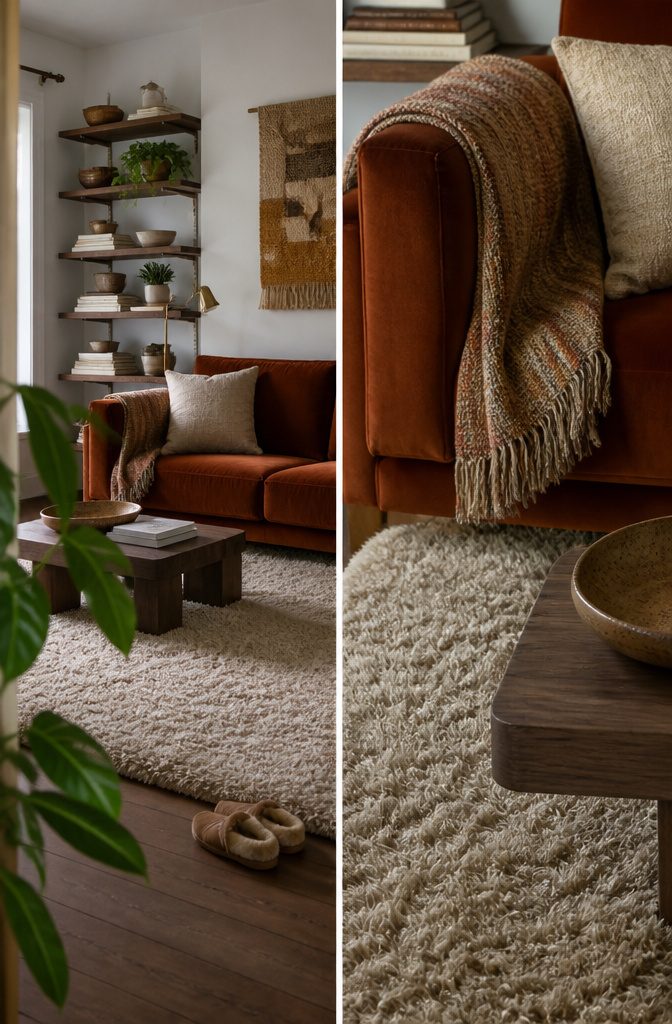
A mohair sofa in rust or maroon reads warmer than linen in the same color, and a shag or high-pile rug underfoot makes the room feel softer the moment someone walks in.
Velvet, leather, woven linen—each one changes how the space feels without moving a single piece of furniture.
In one Toronto apartment, wooden shelves sit next to textile art and thrift finds on the wall behind the sofa, and the mix gives the eye something to move across instead of a flat plane.
Plants and vintage pieces work the same way: they break up manufactured surfaces and tie the room to something that feels lived-in rather than staged.
A neutral-toned rug lighter than the surrounding floor keeps a dark room from feeling like it drops away, and a tall conical pendant or brass lamp body adds a warm metal note that plays against all the fabric.
8. Make the Room Feel Personal
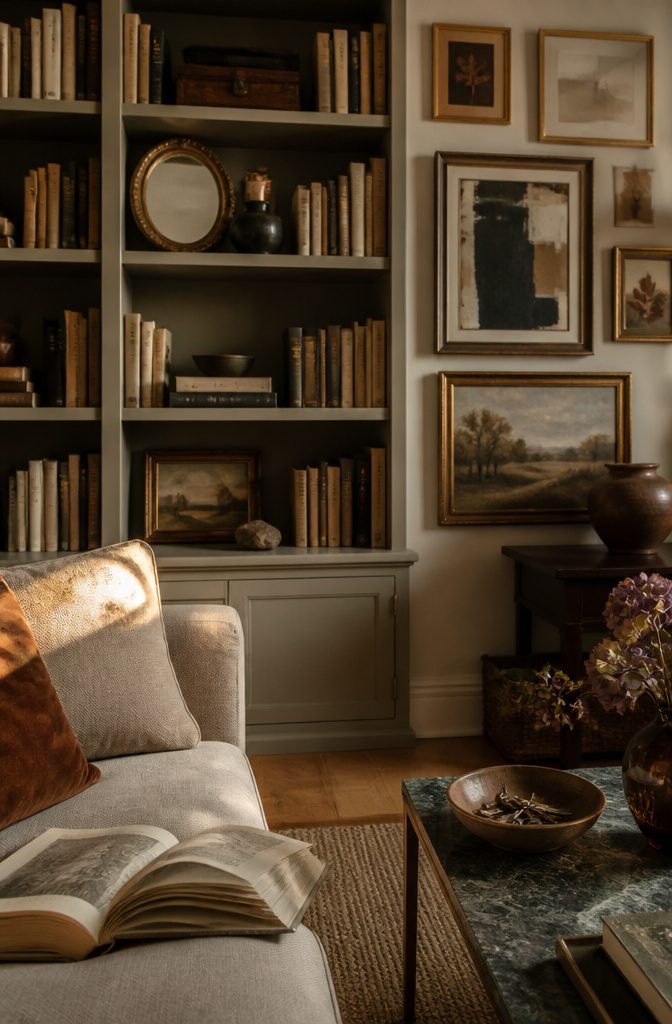
Art and collections give a room a look that belongs to the people using it, not the catalog it came from.
Books on the shelves, framed photos, the oil painting you bought at a flea market — these make a space feel lived in rather than staged.
One designer filled her built-in bookcase with vintage mirrors, a cement bust, and paintings collected over years, each one tied to a specific trip or find. The pieces didn’t match, and that was the point.
Avoid arranging everything to feel too perfectly paired. When furnishings and art coordinate too tightly, the room reads as a single decision made all at once, which flattens personality.
Let each item speak on its own. If you want the space to feel worn-in and full of character, lean into well-thumbed books, tchotchkes you actually care about, and art with a story behind it.
Display turns a box with furniture into a room that reflects the person spending time in it.
Start with One Decision and Build Around It
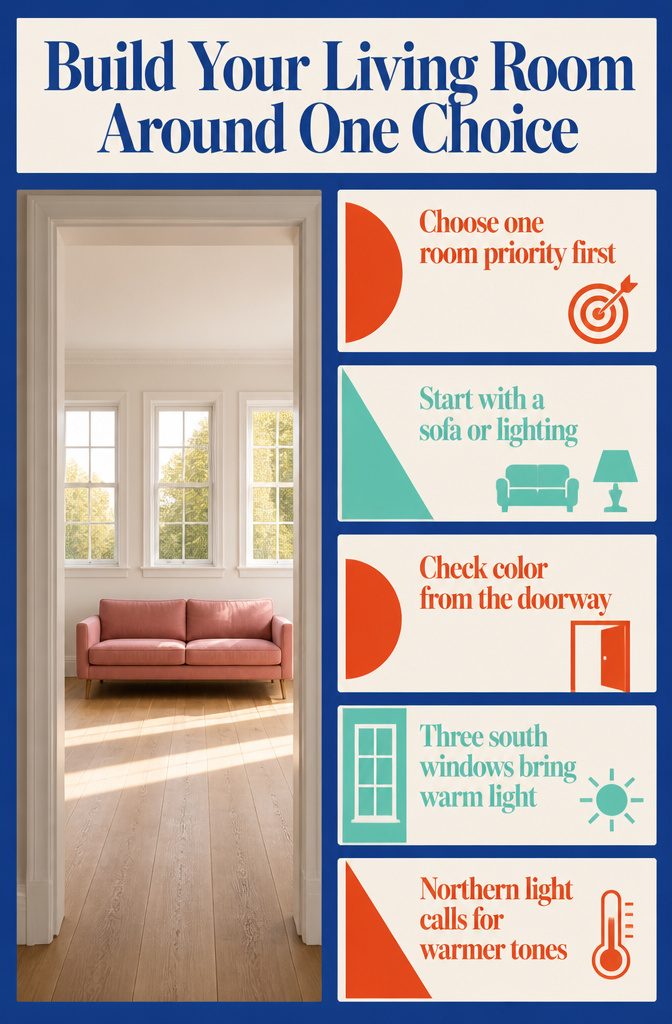
Pick one thing the room needs and let everything else follow. If a sofa in a color you’ve wanted for years would make the space yours, buy that first and fill the room around it.
If you walk in mornings and the lighting feels flat, start there and choose lamps before you choose paint.
Start with one decision first and build around that.
If the living room sits near other rooms you’ve already finished, check how the new color reads when you stand in the doorway between them.
A pink sofa works differently against white walls than against grey ones, and you’ll see it from the hallway before you see it from the couch.
Natural light changes the read too. Three windows facing south flood a room with warm light most of the day, and pale walls stay bright without looking cold.
Fewer windows or northern exposure call for warmer tones in the paint or the upholstery to keep the room from feeling grey.
Use Vertical Space in Smaller or Tighter Corners
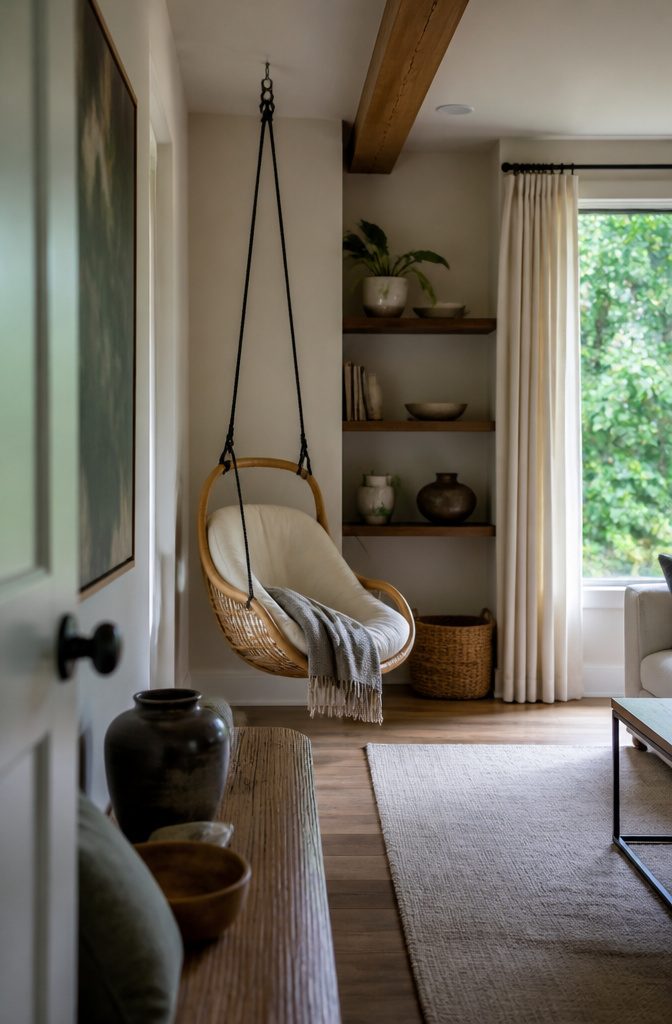
Corners that won’t fit a full chair or bookcase work fine for hanging swing chairs—the kind that mount to a ceiling joist and take up nothing at the floor level.
They add a seat without blocking the path to the door or the sight line across the room, and they work in spots where even a slim chair would make the traffic pattern feel tight.
Wall-mounted shelves do the same thing for storage. Floating shelves keep books and plants off the floor and pull the eye up, which makes the room feel taller than a console would.
The same goes for televisions: a wall mount opens up ten or twelve inches that a stand would have eaten, and in a medium room that difference shows.
Most modern sets come with installation hardware, but if you’re not confident drilling into studs, hire someone rather than risking a fall or a cracked screen.
Push furniture against the wall before you start adding more. That step alone clears the center and makes the space feel less cramped, and it costs nothing.
Frequently Asked Questions
How should people approach designing a living room?
Start with one decision first and build the room around it. That could mean choosing a bold sofa, a lighting fixture, or an art piece, then letting everything else follow from that anchor.
Check how your choice reads in different light and from adjacent rooms before committing the rest of the space.
How do you pick a living room color scheme?
Consider how the color will work with your furnishings, window treatments, and how it carries from one room to another.
Light walls in white or soft neutrals open up the space and reflect daylight, while dark paint creates a deliberate retreat if you commit fully to it.
You can layer bolder color through pillows, rugs, or a single accent wall without closing the room in.
What is the 60-30-10 rule for decorating living rooms?
The 60-30-10 rule splits color across a room: 60% dominant color (usually walls), 30% secondary color (upholstery, curtains), and 10% accent color (pillows, art).
Is a 15×15 living room considered large?
A 15×15 living room (225 square feet) sits in the medium range.
It has enough space to pull furniture a few feet from the walls and create a proper seating group without feeling cramped, but it still benefits from smart layout choices like vertical storage and careful furniture placement.
What are some good things to decorate my living room?
Mirrors near windows or lamps reflect light and open the space, while floating shelves and picture ledges let you display books, plants, and art without taking up floor area.
Personal items like framed photos, collected art, and well-thumbed books make the room feel lived in rather than staged. Textured pieces like a mohair sofa, shag rug, or velvet upholstery add warmth without moving furniture.