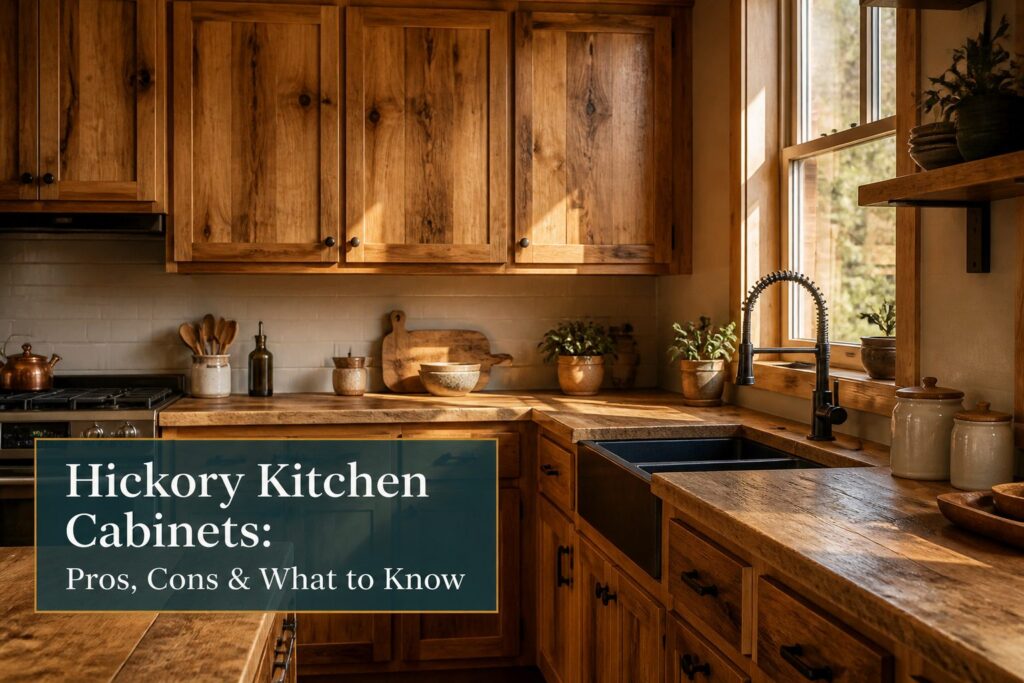
Hickory kitchen cabinets are domestic hardwood storage built from one of North America’s densest available species.
Their value depends entirely on whether you want the rustic look their dramatic grain forces; the wood resists reading as sleek no matter the hardware you choose.
At 41% harder than red oak, they survive dented cans and toddler-stepped drawers that softer woods show within a year.
Hickory vs. Oak Cabinets
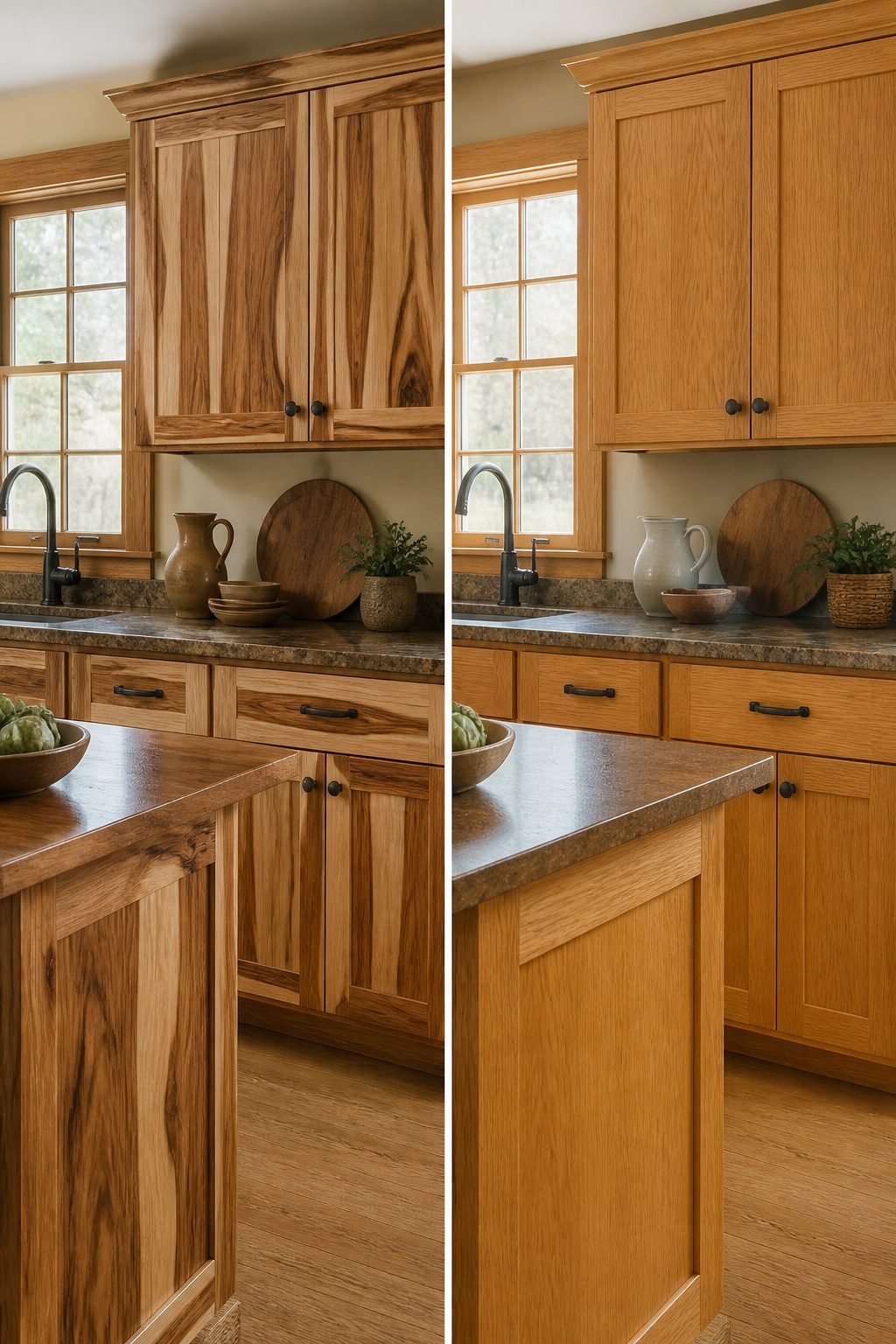
Hickory and oak both sit high on the hardness scale, but hickory lands noticeably higher at 41% harder than red oak. That gap matters in a kitchen where drawer fronts take daily abuse from pots and knees.
The grain tells the bigger story. Hickory carries dramatic light and dark streaks across the same board, almost like two woods married together.
Oak shows open pores with arching rings that read as quieter and more uniform. Either can take stain, but hickory’s color jumps make it harder to subdue; oak accepts finishes from bleached modern to honey traditional without fighting back.
Moisture resistance runs close enough that both survive normal kitchen humidity if the finish stays intact. The real split is aesthetic.
Oak shifts between traditional and modern kitchens depending on door style and hardware. Hickory leans rustic even with clean lines, those wild streaks pulling toward cabin territory whether you planned it or not.
| Attribute | Hickory | Oak |
|---|---|---|
| Hardness | 41% harder than red oak | Hard, standard benchmark |
| Grain pattern | Dramatic light/dark streaks | Open pores, arching rings |
| Moisture resistance | Good | Good |
| Best fit | Rustic, mountain, cabin | Traditional to modern |
If your kitchen opens to a great room with stone and timber, hickory belongs there. If you might sell in five years or your taste shifts, oak leaves more doors open.
Recommended Products

Measurement: Hole center distance: =3 inches (76 mm), Length =4.2 inches (106 mm), width =7/8 inches (22 mm), projection =1.2 inches (30 mm)

Made in America - At QuickLOCK, we take pride in supporting American businesses and preserving traditional craftsmanship. Each cabinet is hand sanded to perfection at a gentle 180 grit, showcasing the natural beauty of the wood. Add some American-made charm to your home today!

HIGH-QUALITY, SOLID METAL CORE: Crafted with a solid metal core, our cabinet pulls and knobs stand far above the hollow knockoffs flooding the market. Embrace the difference as you feel the weight and sturdiness in your hands, experiencing the unmistakable mark of true high-end hardware. Built to last, these pulls exude unparalleled durability, ensuring they withstand the test of time and daily use. Elevate your space with our superior, solid core pulls and knobs- the epitome of elegance, strength, and unmatched craftsmanship.
What Hickory Looks Like
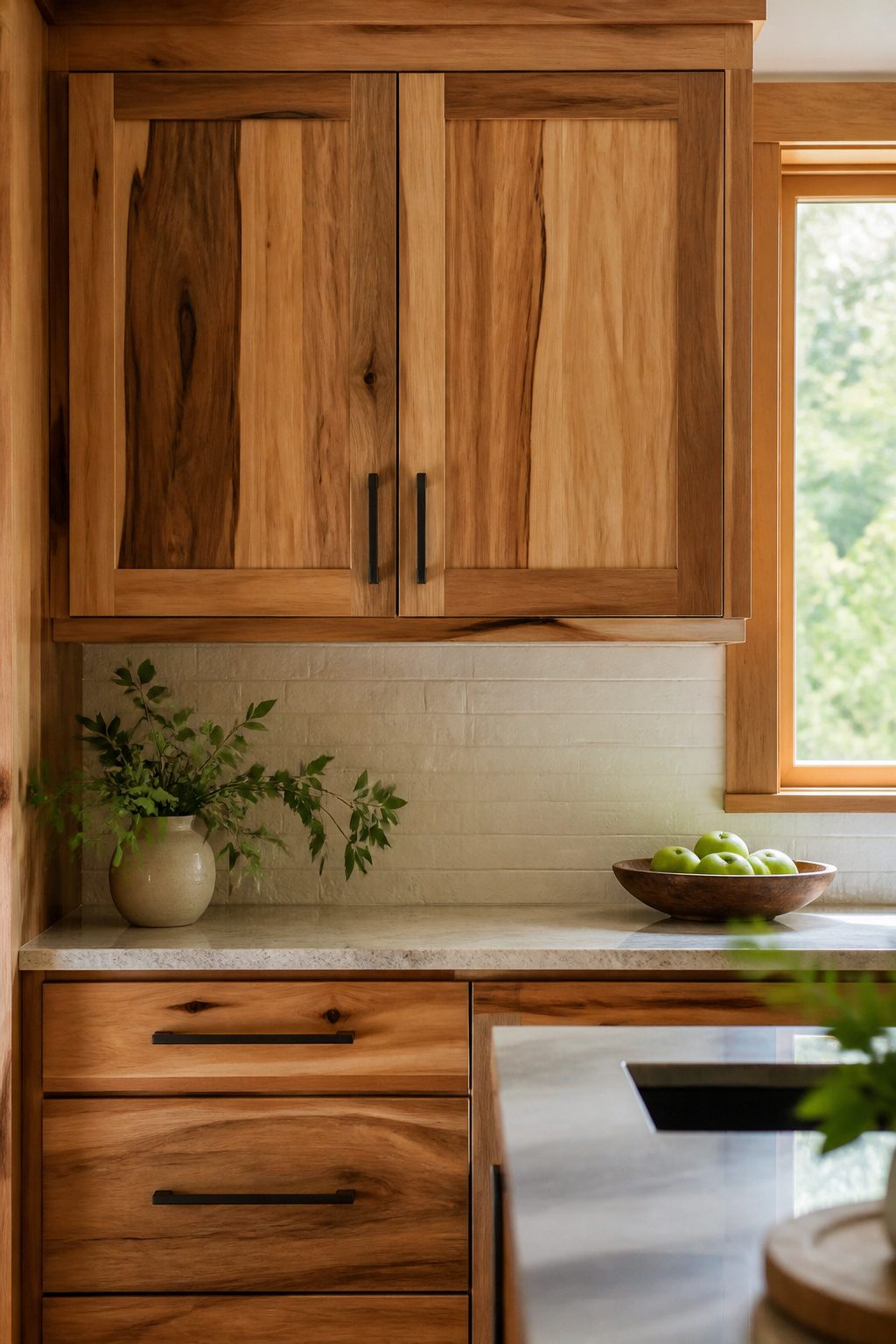
Hickory cabinets announce themselves before you even touch them.
The grain runs in dramatic streaks, light honey beside dark walnut-brown, sometimes within the same door panel. That variation is why you choose hickory, not a flaw to work around.
A rustic kitchen leans into it; a more modern space can balance it with simple hardware and a quiet countertop, though I would not try to make hickory read as sleek. The wood resists.
No two hickory cabinets match exactly, which is either the selling point or the dealbreaker.
If you need your kitchen to feel controlled and uniform, hickory will fight you. If you want warmth that looks gathered over time rather than installed in a weekend, this is the visual character that delivers it.
The tone stays in the warm family, never drifting toward ash-gray or orange-pine. That limits your pairing options but also keeps the decision simple: brass and black hardware both work; chrome fights the warmth.
Recommended Products

Solid hickory construction - This cabinet is built to last with a solid hickory door and face frame. The natural wood grain and rustic finish will add charm and character to your kitchen while providing sturdy storage for all your refrigerator needs.

Ready to assemble - Our vanity base cabinet comes ready to assemble with easy-to-follow instructions, making it a hassle-free experience. Save time and money by easily putting together your own beautiful vanity.

Solid hickory craftsmanship - Made from the finest solid hickory wood, this cabinet boasts durability and strength. The natural variations in the wood grain add a touch of rustic charm to any room.
Why Durability Matters in a Kitchen
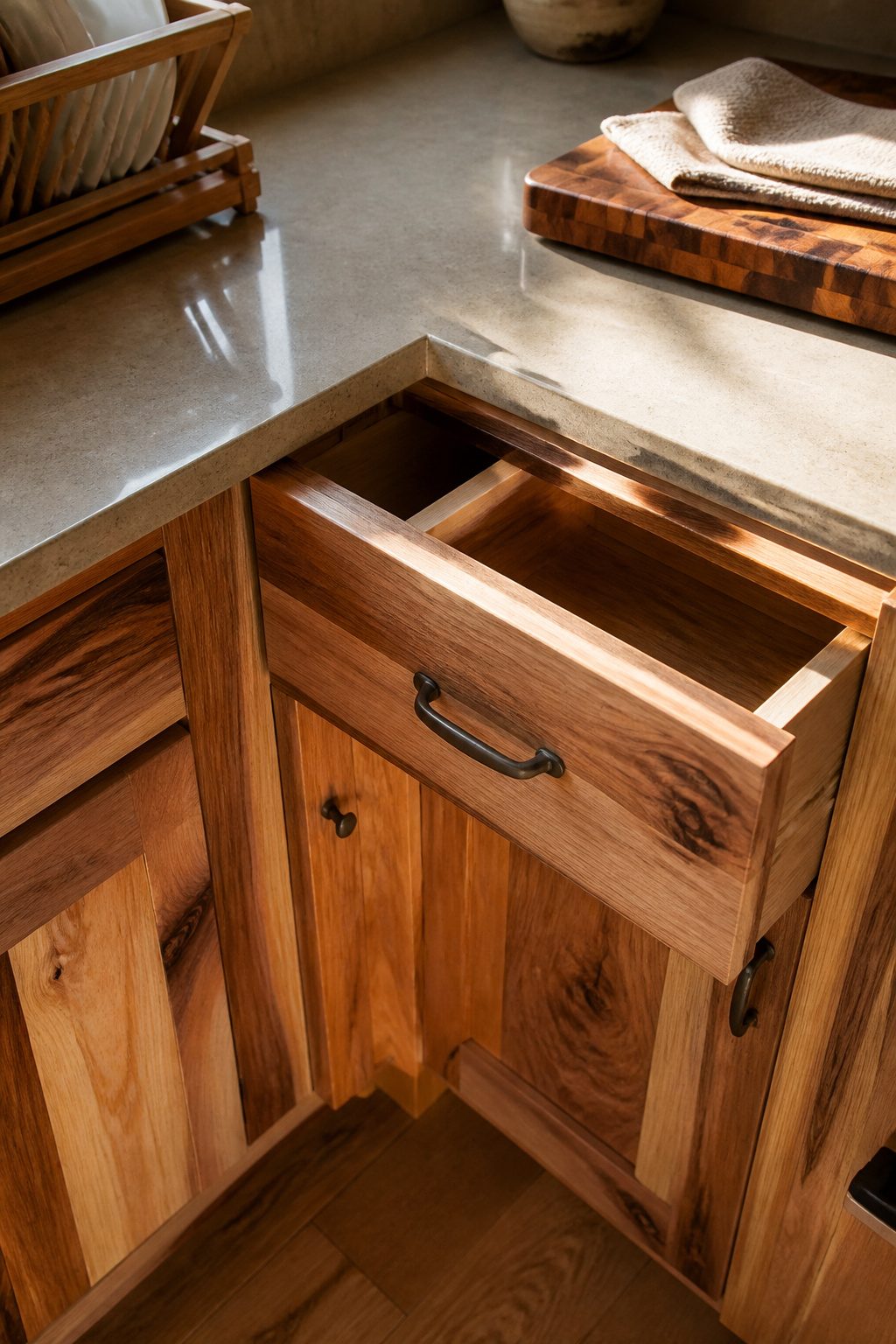
Hickory ranks among the hardest domestic woods available in North America, roughly 41% harder than red oak by the standard Janka scale.
That number matters less than what it translates to in a kitchen: cabinet faces that resist the dents and dings from a dropped can of tomatoes, drawer fronts that do not splinter when a toddler uses them as a step, and frame joints that hold their shape through years of humidity swings from boiling pasta and winter heating.
I see the value in kitchens that actually get cooked in, not photographed and abandoned.
A softer wood shows wear within the first year where the trash bin pulls out, where the dishwasher door bumps the cabinet edge, where you lean to reach the back of the counter.
Hickory’s density pushes that damage back by years, sometimes by decades, which is the difference between refinishing at year fifteen and replacing at year eight.
What you give up is weight and workability. Hickory is heavier than most cabinet woods, so wall cabinets need solid blocking behind the drywall, and the wood will blunt cheap saw blades faster than maple or cherry.
I think the extra effort on install day is worth it for a cabinet box that still closes square at year twelve, but a weekend renovator with only a cordless drill and a borrowed table saw should know the material fights back more than the usual plywood-and-maple build.
Recommended Products

Solid Hickory Construction with Rustic Finish: Built from genuine solid hickory, showcasing natural woodgrain and tonal variation for a warm, authentic look that complements rustic cabinetry.

Are Hickory Cabinets Outdated
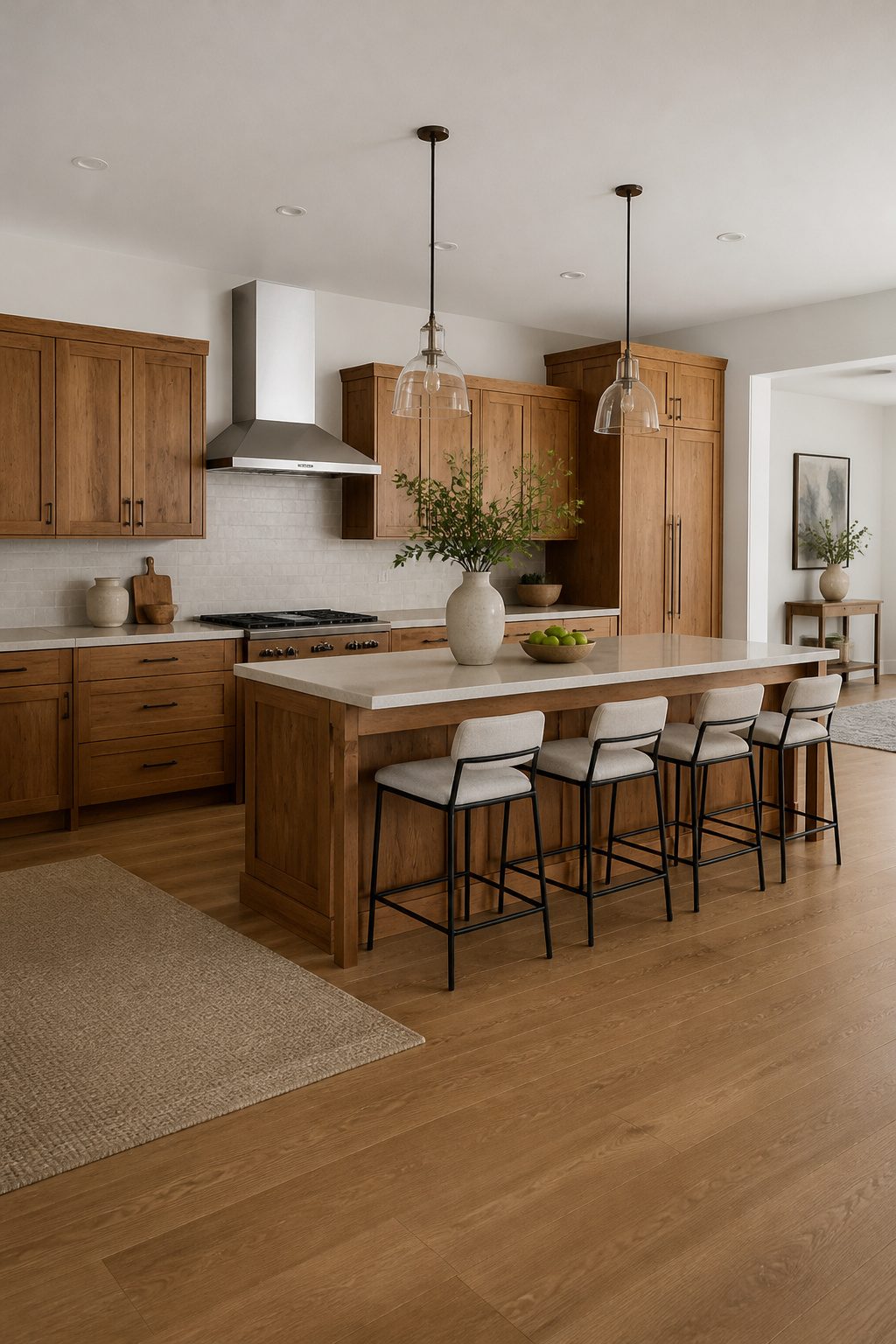
Hickory carries a heavy, solid presence that sits at odds with the clean lines and clutter-free look dominating current kitchen trends.
That weight is exactly why some designers treat it as a leftover from another era, and why the question of whether hickory is outdated keeps surfacing.
The honest read is that hickory works if you want rustic, and risks looking dated if you don’t. In a minimal or modern space, the dramatic grain and warm tone fight the streamlined aesthetic rather than support it.
But the same density and character that make it visually heavy also give it genuine staying power as a material, and that durability has kept it from disappearing entirely.
Finish and hardware decide which side of the line a hickory kitchen lands on.
A flat-panel door with a matte black pull reads contemporary despite the wood; a raised-panel door with antiqued brass tips toward the style that sources now label as passé.
The wood itself has not changed. What changed is the surrounding design vocabulary, and hickory needs more careful translation into it than lighter-toned alternatives.
For a renter or first-home owner working a weekend project, the risk is real: hickory commits to a look that resists easy reversal. If rustic warmth is what you actually want, the wood delivers country charm that lasts.
If you are chasing the current trend toward pale and minimal, hickory asks more of your space than a few hundred dollars and a Saturday can reliably fix.
Recommended Products

Extraordinary detail poured in to every unique design for an eye-catching statement that never fades


HIGH-QUALITY, SOLID METAL CORE: Elevate your space with our high-quality cabinet pulls and knobs. Crafted with unmatched durability and elegance, these solid core hardware pieces exude strength and luxury.
The Pros
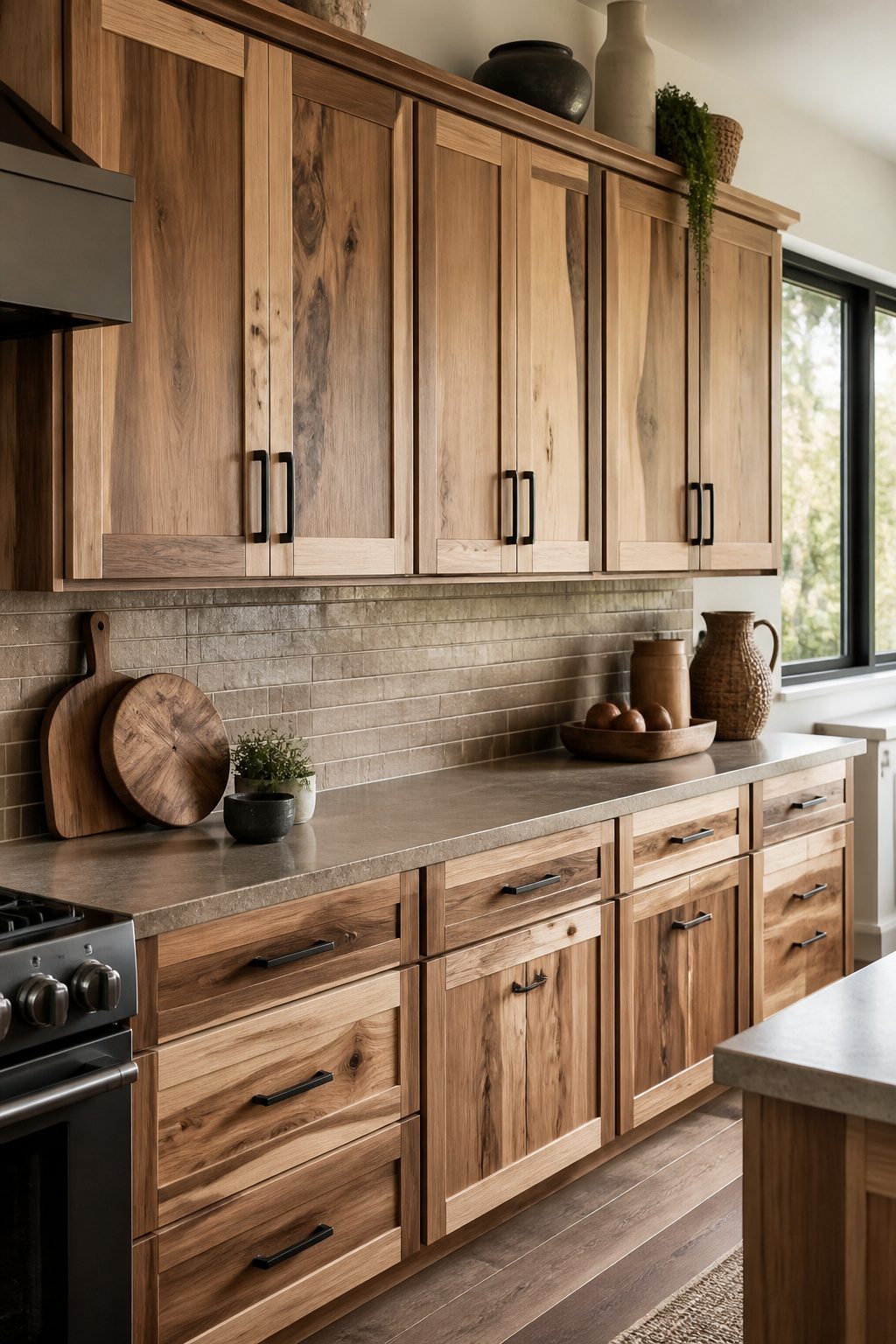
Hickory kitchen cabinets earn their keep on two counts: hardness and variation.
- Hickory is 41% harder than red oak, which puts it at the top of domestic hardwoods for resisting dents, scratches, and the daily abuse of a high-traffic kitchen. The cabinets stay presentable longer with less babying.
- No two cabinets look alike. The same board can carry pale sapwood beside nearly chocolate heartwood, so the grain does the decorating. For homeowners who want a kitchen that reads as individual rather than installed, that unpredictability is the draw.
- The rustic warmth pairs with mountain or cabin settings naturally, but a clean finish and modern hardware can push it toward contemporary without fighting the wood’s character.
I would not choose hickory for a sleek, uniform look. The variation is the point, and that point costs you consistency.
Recommended Products

HIGH-QUALITY, SOLID METAL CORE: Crafted with a solid metal core, our cabinet pulls and knobs stand far above the hollow knockoffs flooding the market. Embrace the difference as you feel the weight and sturdiness in your hands, experiencing the unmistakable mark of true high-end hardware. Built to last, these pulls exude unparalleled durability, ensuring they withstand the test of time and daily use. Elevate your space with our superior, solid core pulls and knobs- the epitome of elegance, strength, and unmatched craftsmanship.
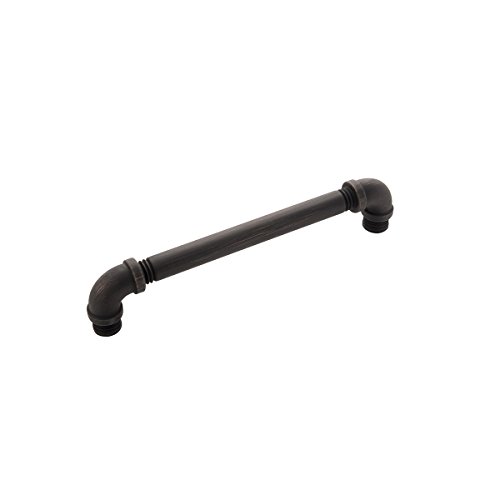
True To The Inspiration: The Pipeline collection is rustic and industrial. This collection pairs well with the industrial décor that is popular today and can be used in more playful and whimsical applications.

Appliance Pulls:3"Hole Center,4.4"Total Length,1.18"height
The Cons
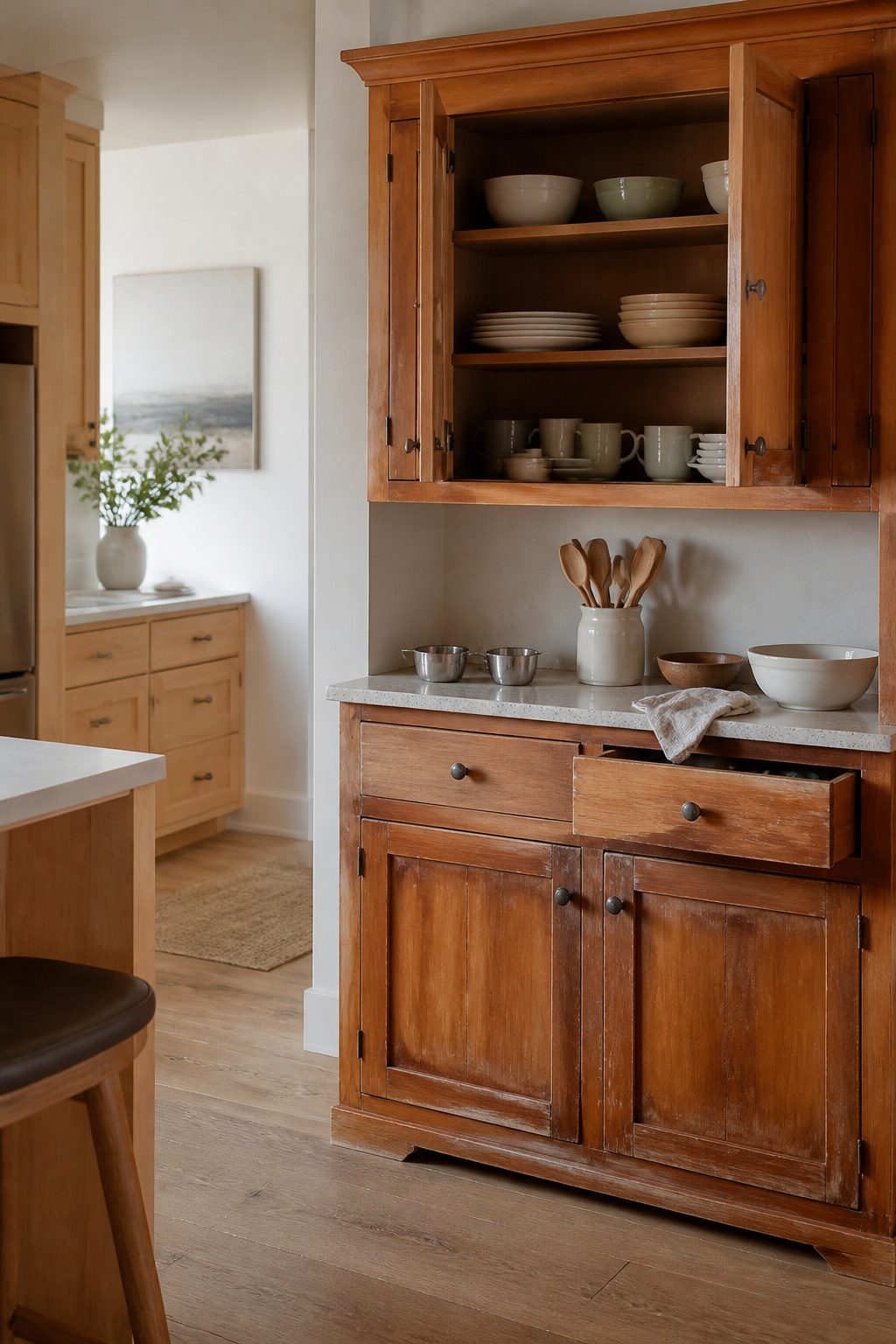
Hickory asks more of you than most cabinet woods, and that is the first thing to weigh against its strengths.
- Regular maintenance is non-negotiable. Hickory needs frequent polishing to keep its shine intact and to guard against moisture damage. Skip the routine and the surface dulls fast; in a kitchen, that means committing to a schedule most homeowners do not want to keep.
- The current shift toward low-maintenance kitchens works against it. Homeowners who want to wipe and walk away will find hickory demanding.
- Lighter wood tones are dominating right now. Ash, maple, and birch are the woods being chosen to brighten spaces and create an airy feel. Hickory’s darker, more varied coloring sits outside that trend.
- A kitchen built around minimalism and light will probably fight hickory rather than let it shine.
I would not install hickory for a client who wants the room to read current in five years without effort.
The wood is honest and warm, but it asks for attention and it reads traditional in an era that favors pared-back palettes.
Recommended Products

Solid 100% Hickory Construction: Crafted from genuine solid hickory—not veneer or composite—for lasting durability and rich, natural grain variation that enhances rustic cabinetry.

Easy assembly - Tired of complicated instructions? Our QuickLOCK design makes putting this cabinet together a breeze. No special skills or tools required.

100% Hardwood - We believe in using only the best materials in our products, which is why this end panel is made from 100% hardwood. Durable and long-lasting, it will maintain its beauty for years to come.
Keeping Hickory Looking Right
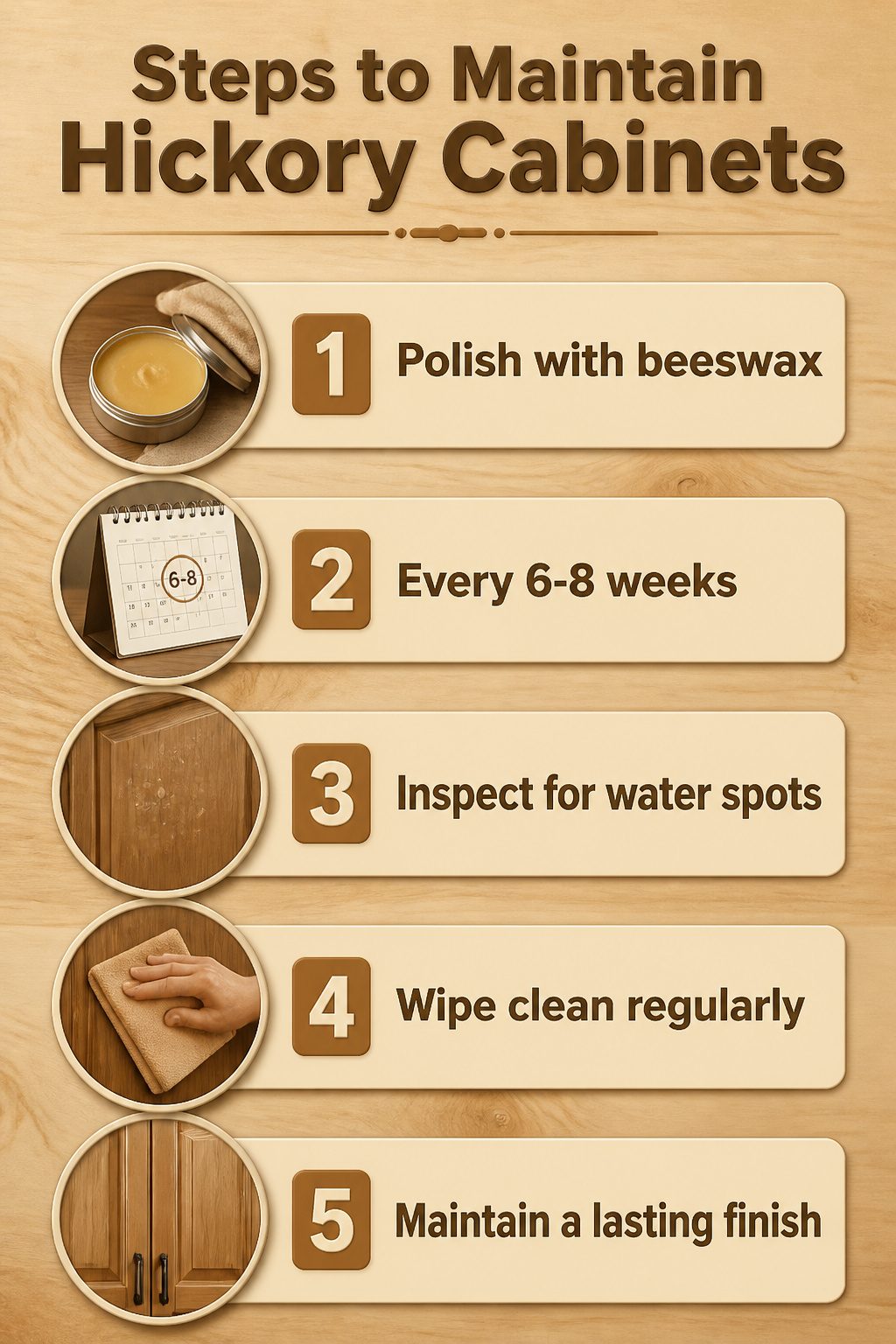
Hickory’s density works against it in one way: moisture sits on the surface instead of soaking in, but that same surface shows every water spot and dull patch if you let it go.
I polish mine every six to eight weeks with a furniture-grade beeswax, not the spray-and-wipe stuff that evaporates in three days.
The wax actually fills the grain slightly, which keeps steam from the dishwasher or pasta pot from raising the fibers.
Skip that routine and you will notice the difference inside a year. The areas around the sink and stove lose their depth first, turning matte and slightly rough to the touch.
Refinishing hickory is possible, but the hardness that makes it durable also makes sanding evenly a genuine project, not a Saturday morning. Regular polishing is the trade you make for a wood that otherwise shrugs off dents and dings.
Some homeowners find that frequency annoying in a kitchen they actually cook in. I get it.
If your priority is wipe-and-forget, hickory asks more than painted MDF or a factory-finished oak. The reward is a cabinet that still looks intentional after a decade of real use, but only if you stay ahead of the maintenance.
Where Hickory Fits Now
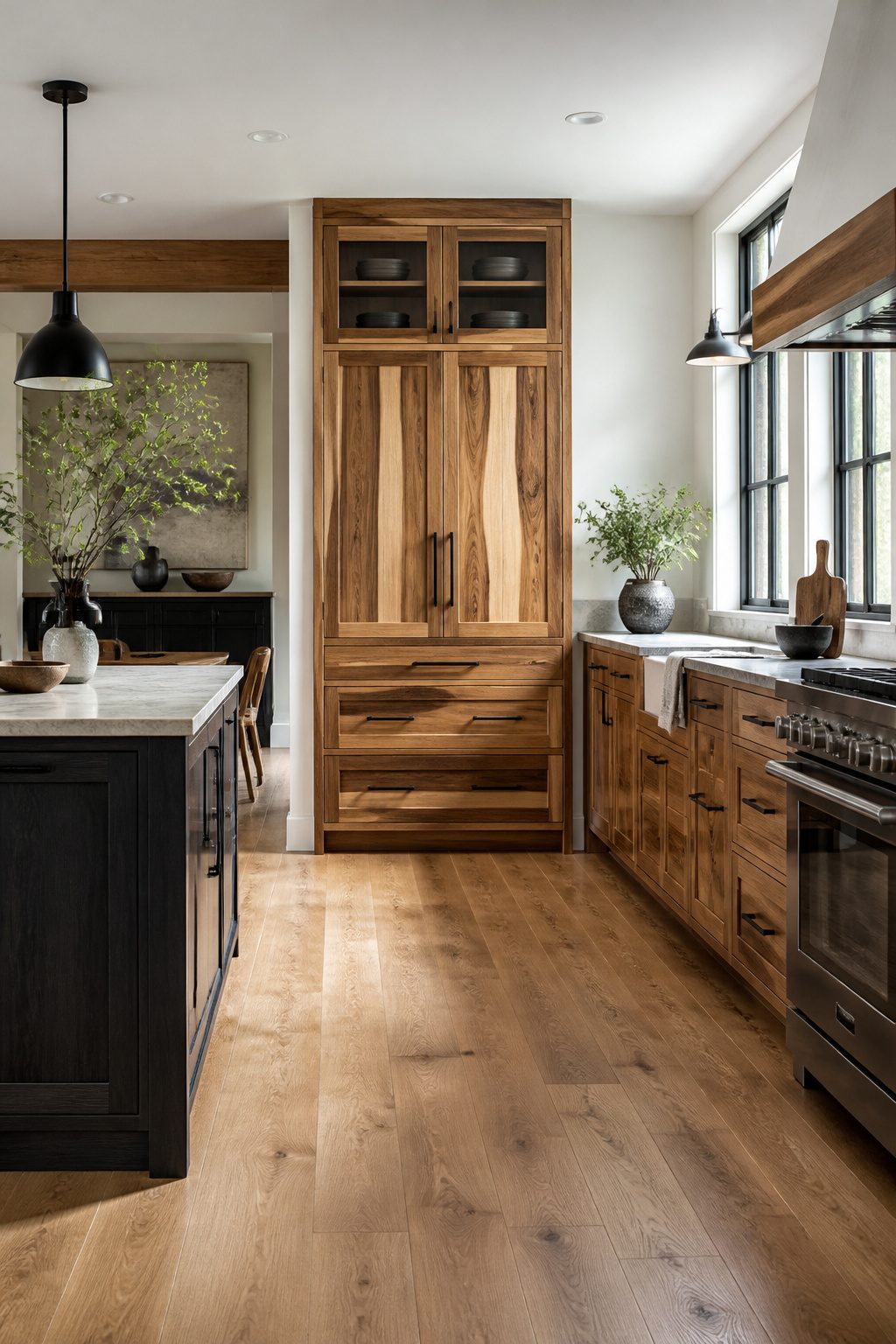
Hickory’s dramatic light-and-dark streaking gives it a rustic character that reads as country charm, but the same grain can work in cleaner spaces if you control the finish.
A matte or lightly toned sealant quiets the contrast without erasing it, and pairing the cabinets with simple hardware, thin pulls in brushed nickel or black, keeps the look from tipping into lodge territory.
I have seen hickory read almost contemporary in kitchens where the surrounding palette stays neutral and the lines stay flat-panel.
The tension now is that minimalism and lighter wood tones dominate the kitchens showing up in feeds.
Hickory’s naturally heavy appearance runs against that current, and its density carries another cost: harder woods demand more energy to grow and harvest, which sits awkwardly with the push toward sustainable materials.
If eco-credentials matter to your project, hickory may not align with where sourcing priorities are heading.
For renters and first-time owners working weekend timelines, the question is whether the wood’s 41% hardness advantage over red oak justifies choosing a material that looks bolder and carries a heavier environmental footprint than the alternatives.
Recommended Products

DESIGNED IN THE USA SINCE 1893: Our designers reside in our corporate office in Grand Rapids, Michigan. Over the years our designers have sketched, molded and created over 50 unique collections. At Hickory Hardware we offer a range of high-quality and stylish options to choose from. Mix and match pulls, cup pulls, and knobs to create a stunning and cohesive look in your kitchen or bathroom.

DESIGNED IN THE USA SINCE 1893: Our designers reside in our corporate office in Grand Rapids, Michigan. Over the years our designers have sketched, molded and created over 50 unique collections. At Hickory Hardware we offer a range of high-quality and stylish options to choose from. Mix and match pulls, cup pulls, and knobs to create a stunning and cohesive look in your kitchen or bathroom.

Modern Form, Lasting Appeal: Clean lines and balanced simplicity define this BARNET Collection ladder shelf, combining a steel frame with rustic panels to create visual depth and pair easily with matching storage units for a cohesive, modern interior
Frequently Asked Questions
Recommended Products

Durable Build - Our cabinet is made from 1/2" birch plywood, providing exceptional strength and durability. It is designed to withstand daily use in a busy kitchen, making it the perfect investment for your home.

HIGH-QUALITY, SOLID METAL CORE: Crafted with a solid metal core, our cabinet pulls and knobs stand far above the hollow knockoffs flooding the market. Embrace the difference as you feel the weight and sturdiness in your hands, experiencing the unmistakable mark of true high-end hardware. Built to last, these pulls exude unparalleled durability, ensuring they withstand the test of time and daily use. Elevate your space with our superior, solid core pulls and knobs- the epitome of elegance, strength, and unmatched craftsmanship.

Vintage Style Design: Featuring a classic vintage design that evokes nostalgia, adding a unique historical and artistic atmosphere to kitchens, appealing to customers who appreciate vintage aesthetics.
Are hickory cabinets outdated in 2024?
Hickory cabinets work if you want rustic, and risk looking dated if you don’t.
The dramatic grain and warm tone fight minimal or modern aesthetics, though flat-panel doors with matte black hardware can read contemporary. The wood itself hasn’t changed; what changed is the surrounding design vocabulary toward clean lines and lighter palettes.
What are the pros and cons of hickory cabinets?
Pros: hickory ranks 41% harder than red oak, shrugging off dents and daily kitchen abuse, and no two cabinets look alike thanks to dramatic light-and-dark streaking.
Cons: regular polishing every 6–8 weeks is non-negotiable to prevent dulling and moisture damage, and the bold, heavy appearance sits outside current trends toward minimalism and lighter wood tones.
What countertop goes with hickory cabinets?
A quiet countertop balances hickory’s dramatic grain. Simple, understated surfaces prevent the kitchen from tipping into lodge territory.
Are wood cabinets coming back in 2026?
It notes that lighter wood tones like ash, maple, and birch currently dominate kitchen design, while hickory’s heavier appearance runs against that current.
Does Kraftmaid make hickory cabinets?
It discusses hickory as a material choice rather than brand availability.