Updating oak runs from a few hundred dollars in materials for a weekend stain refinish to a full appliance suite that stretches into the thousands and needs months to deliver.
The single factor that decides which path fits your kitchen is the state of the existing finish: stain only works if the surface sands cleanly, paint demands grain filler to avoid telegraphing pores, and door swaps fail when old boxes have settled out of square.
Most homeowners start with hardware and wall color, then sequence the bigger moves from there.
1. Refresh Oak Cabinetry With a Stained Finish
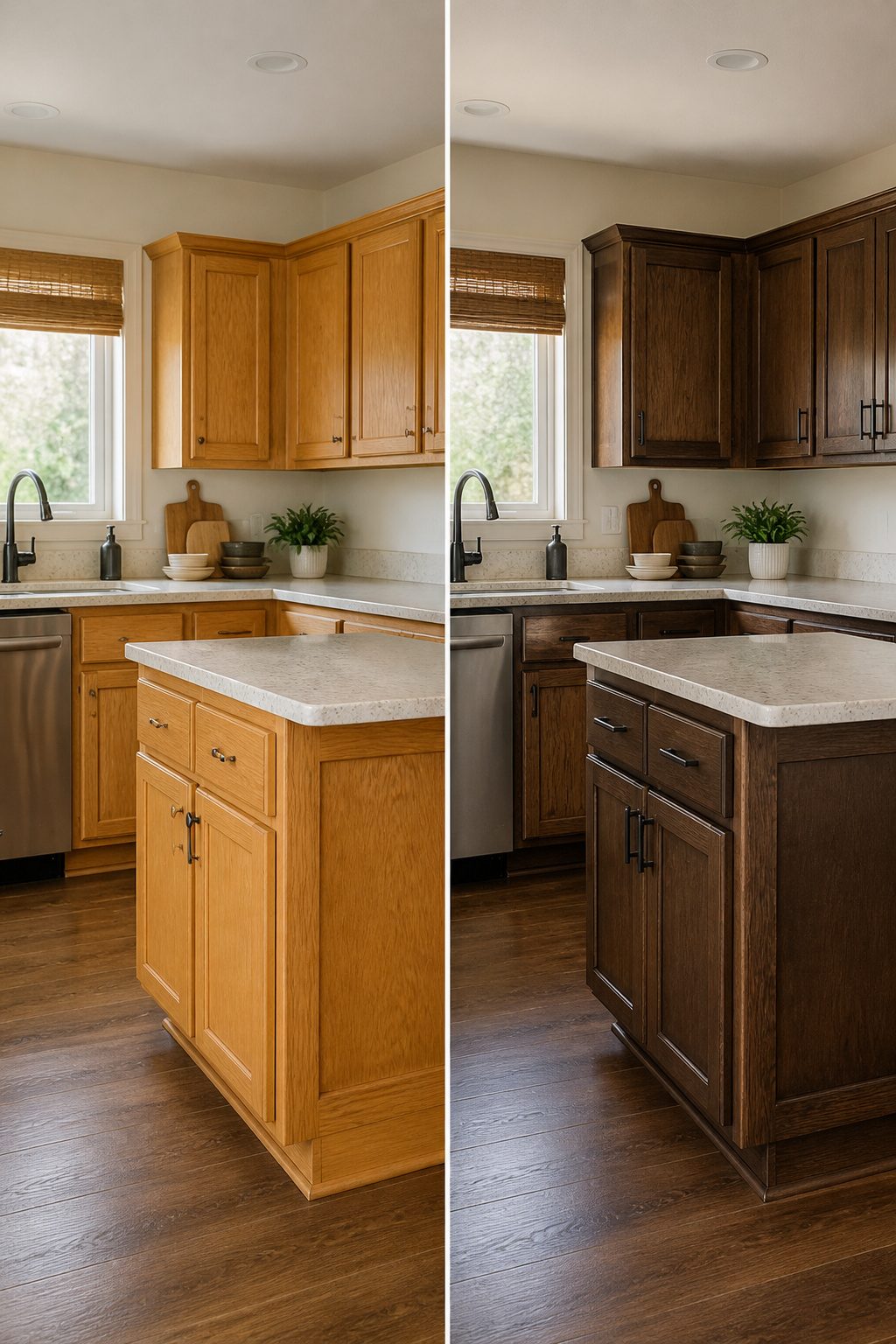
A stained finish lets you keep your existing oak cabinets and shift the tone instead of starting over.
The honey color that dates so many kitchens comes from the stain, not the wood itself, and sanding down to bare oak opens up a different palette entirely.
I like a darker stain for this, something that reads closer to walnut or espresso.
It keeps the grain visible, which is the whole reason to choose oak in the first place, but loses that yellow-orange cast that reads as 1990s builder grade.
A cooler stain, even a medium tone with gray undertones, does the same work of updating without stripping the cabinets for paint.
The existing finish has to be intact enough to sand cleanly. Water damage, heavy wear, or previous refinishing that left the surface uneven will telegraph through a new stain and look worse than what you started with.
If the doors are sound, the work is straightforward: remove hardware, sand to 120 grit, wipe down, stain, seal. Two weekends, a few hundred dollars in materials, and you have cabinets that read current without the cost of replacement.
Sheen is the last decision. Stained oak grain already catches light, so a matte finish keeps the look modern and quiet.
Gloss pushes it toward traditional, which may suit your kitchen or may not. I lean matte almost every time, but the grain is the story here either way.
2. Flat Slab Door Styles for Modern Oak Cabinets
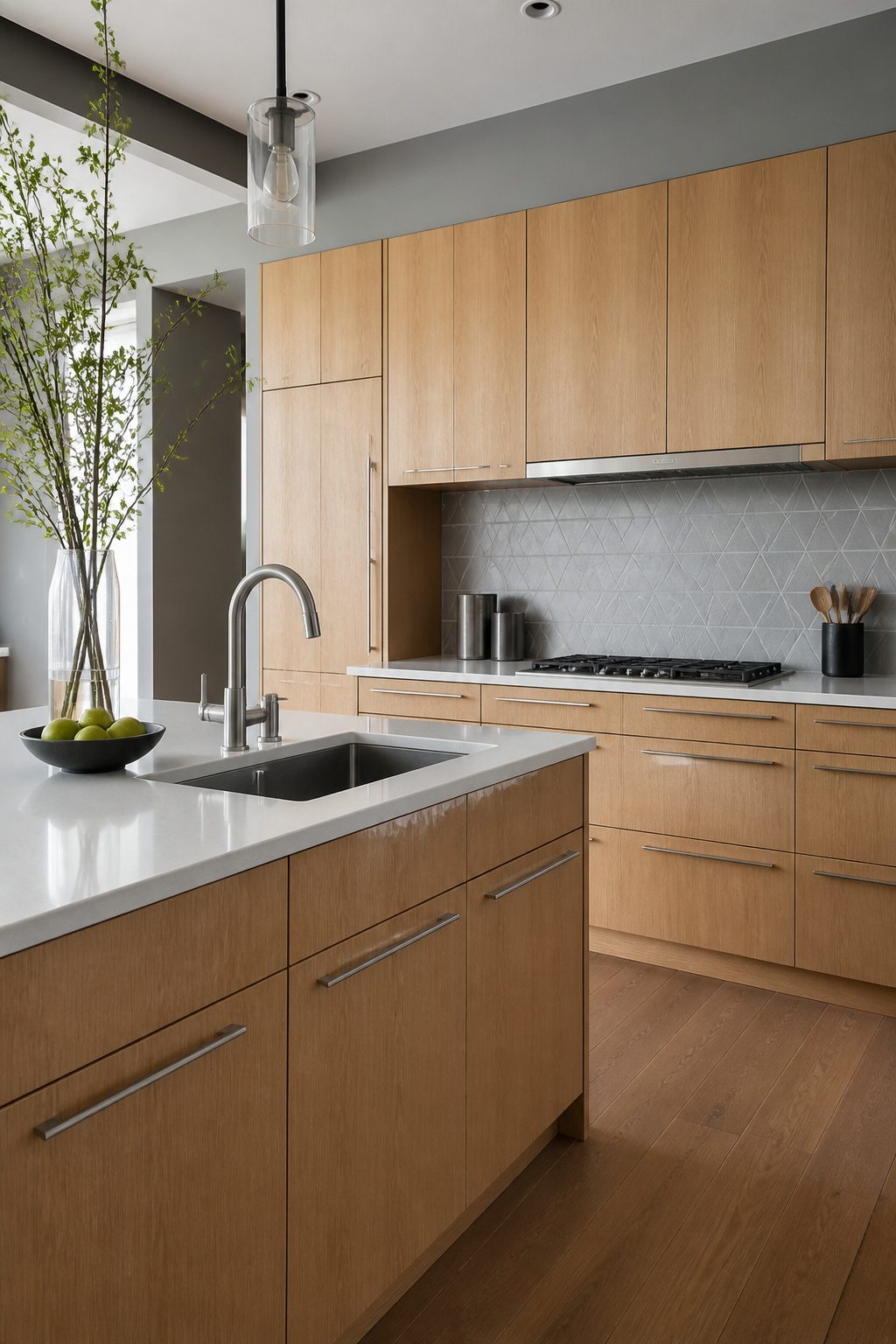
Flat slab doors strip away every bit of the ornamentation that dated oak cabinets in the first place.
No arched profiles, no routed edges, no raised panels catching grease and shadow. What remains is the oak grain itself, running uninterrupted across a clean plane, and that restraint reads as modern because the eye has nowhere to get stuck.
The hardware matters as much as the door. Long, slim pulls running most of the drawer or door length keep the same straight-line discipline.
They are never bulky, never the squat knobs that read farmhouse or the heavy twists that read Mediterranean. The square, oversized bar pull in a matte finish is the move here: it echoes the slab’s flatness rather than fighting it.
Swapping only the doors, not the whole cabinet box, is where the budget breaks in your favor.
The frames stay, the footprint stays, but the face of the kitchen changes entirely. That is the practical path for a weekend project, and it is the one I would take before I touched a wall color or a countertop.
3. Replace Old Hardware
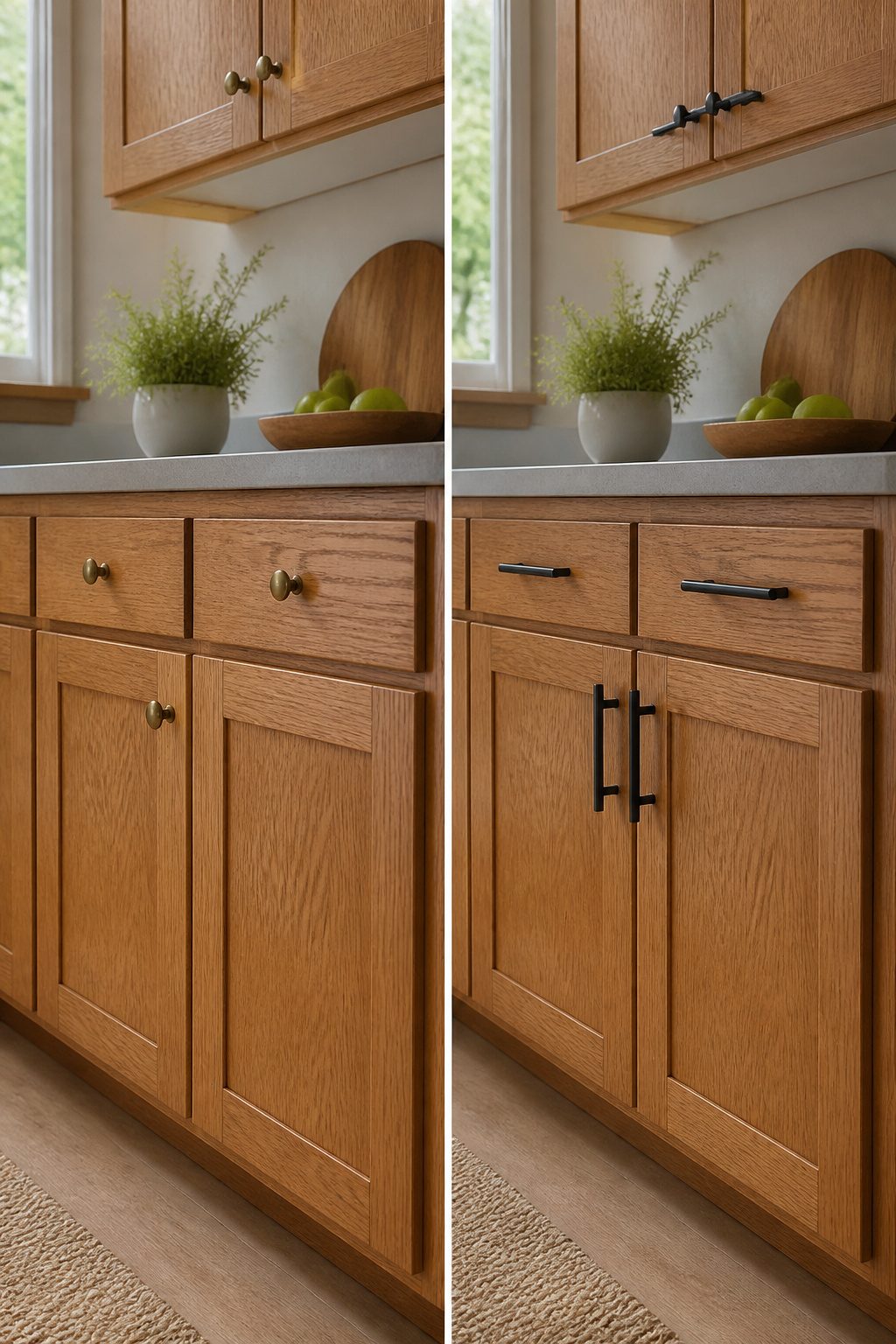
Swapping hardware is the fastest, cheapest move you can make on kitchen oak cabinets, and the change reads instantly from across the room.
I look for long, slim pulls that run most of the drawer or door length, square in profile and never bulky.
On flat-panel oak, a bar pull or edge-mounted handle draws the eye along the clean horizontal line instead of breaking it with a dot.
Small knobs fight the modern look; they read as the hardware equivalent of an arched, embellished door, and that is exactly the association oak is trying to shed.
If your cabinets still carry the old rounded knobs, this single afternoon of unscrewing and re-drilling does more to shift the whole kitchen toward current than almost anything else at this price.
4. Switch Out the Appliances
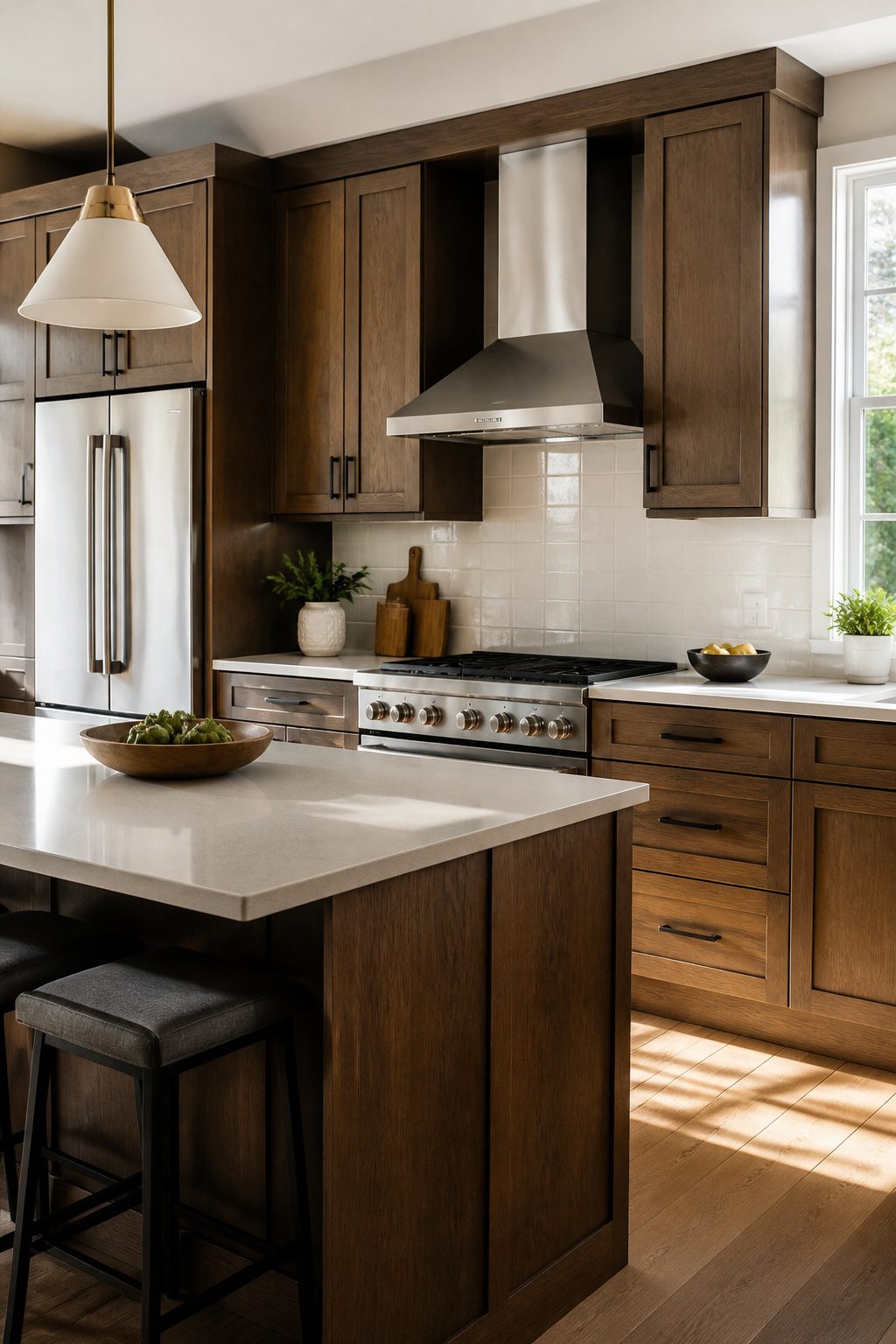
Stainless steel appliances pull the eye downward and outward, away from the oak cabinets overhead. Their sharp, neutral planes read as deliberate design rather than leftover building-grade fixtures, and that alone shifts a kitchen from the 1990s toward now.
Panel-ready units go further by letting the cabinetry skin continue across the dishwasher or refrigerator, which dissolves visual clutter rather than adding competing finishes.
This is the most expensive move on the list. A full suite runs well past the thousand-dollar weekend-project ceiling that defines most of these refreshes.
If the budget allows only one swap, the range hood or over-the-range microwave moves the needle farthest because it sits at eye level between wall cabinets, where dated white or bisque plastic registers immediately.
A stainless chimney hood or a paneled microwave drawer changes the room’s era even when the oak itself stays untouched.
You will spend time as well as money.
Delivery windows for appliances run three to twelve weeks right now, and electrical or gas hookups often need a pro. I would rather see someone paint cabinets and swap hardware first, then budget these larger pieces for the following year.
5. Play Around With the Wood Grain
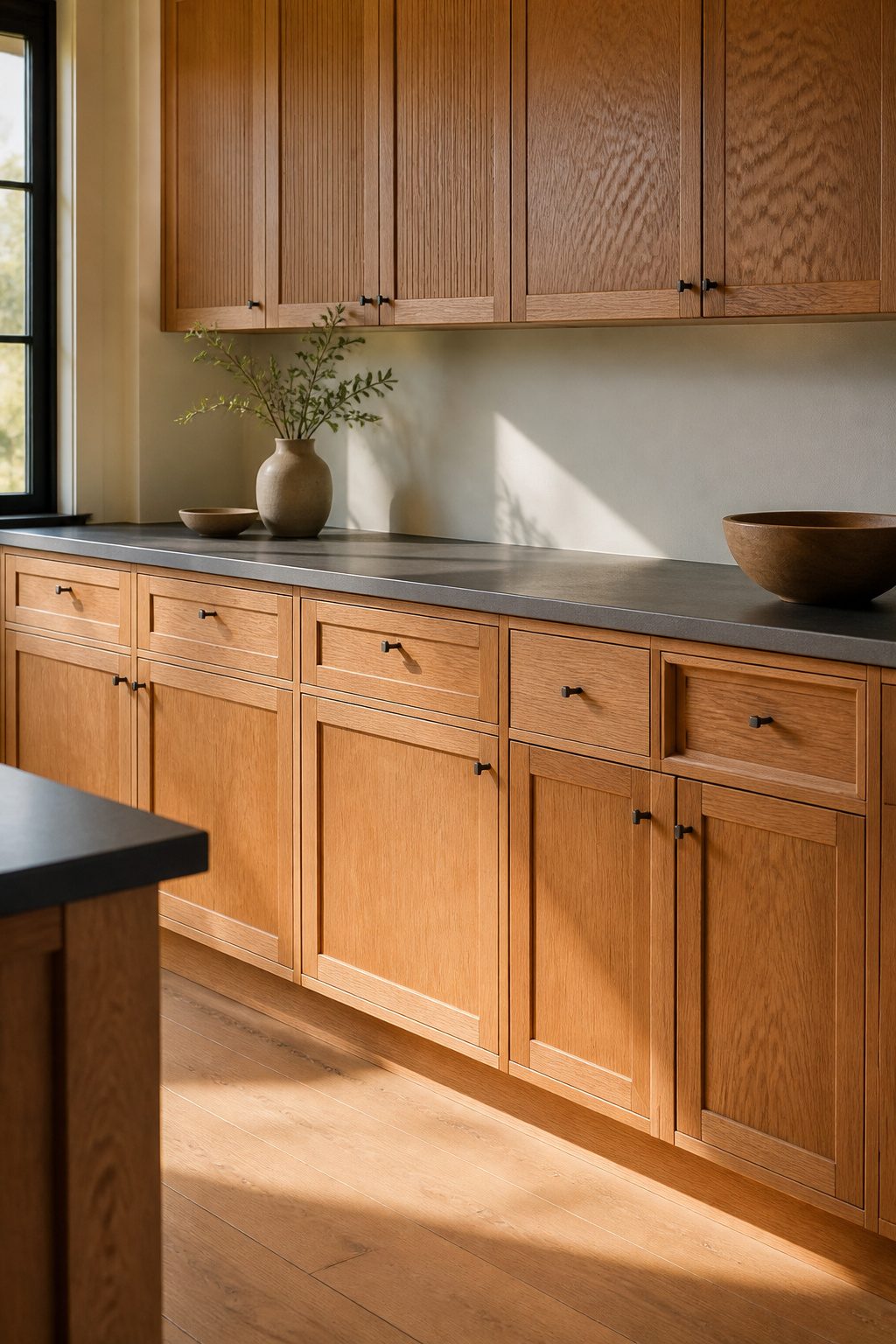
Oak’s grain is the first thing you notice, and the cut you choose decides whether it stays loud or settles back.
Flat-sawn boards show the full cathedral pattern, those sweeping arches that read as busy in a whole wall of cabinets.
I skip them when I want a calmer kitchen. Rift-sawn and quarter-sawn oak run the grain straighter and tighter, which quiets the figure without hiding that it is wood.
Quarter-sawn adds those faint ray flecks, a little shimmer at certain angles; rift-sawn strips even that out for the most uniform face.
Both cost more than flat-sawn, but the difference is in the milling, not a separate species, and suppliers usually stock them.
Finish matters as much as cut. A clear lacquer or light oil pops every pore and pore line.
I go the other way: a wiping stain that soaks in and mutes the contrast between earlywood and latewood, or a matte varnish that dulls the reflection so the eye does not keep catching on texture.
Paint-grade oak is a waste of the material, but a stained finish that reads as a tone rather than a pattern keeps what makes oak durable while losing what dates it.
6. Use Surrounding Pieces to Highlight the Oak Cabinets
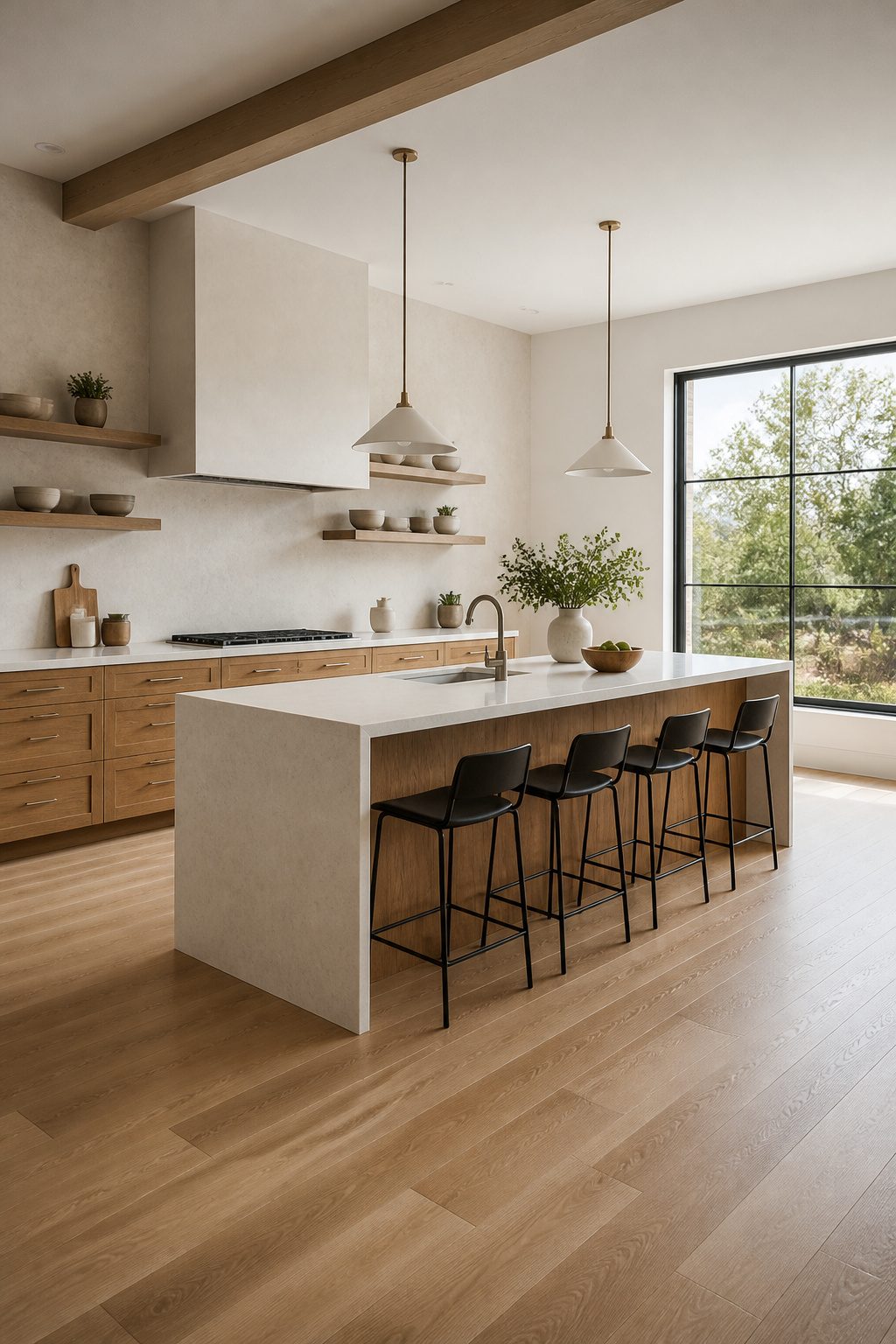
The countertop is the single largest surface in most kitchens, and it decides whether oak cabinets read as intentional or stuck in the past.
I like white or dark countertops with oak, kept simple and not too busy, because a subtle pattern lets the grain lead instead of fighting it.
Waterfall countertops take this further: the stone runs down the sides of an island or cabinet end, framing the oak as a deliberate design choice rather than leftover builder grade.
Open shelving works the same way. Floating shelves in natural wood add texture that complements the oak rather than competing with it, and they give you a place to keep everyday dishes where the warmth feels functional, not dated.
Let oak lead in one area while lighter materials recede in others.
White walls, light flooring, or a pale backsplash create breathing room so the cabinets do not weigh the space down. Glass tile or stainless steel appliances bounce light around and keep the kitchen from feeling heavy.
Flat trim or simple panels help too.
Ornate crown molding draws the eye away from the oak and toward decoration that ages faster than the wood itself. The less trim competes, the more the cabinets look like something you chose, not something you inherited.
7. Repaint the Oak Kitchen Cabinets
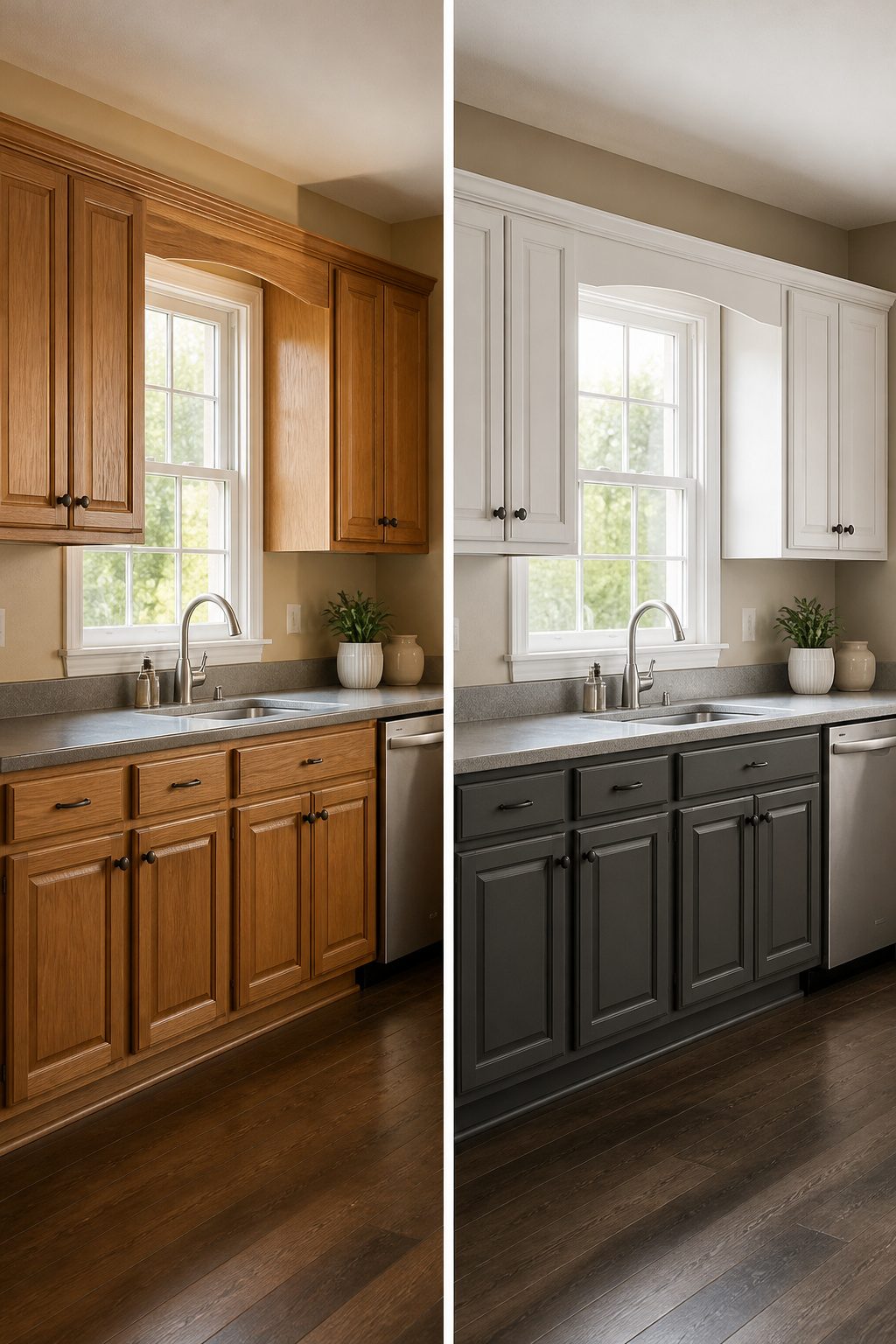
Paint works best when the existing finish is damaged past what stain can hide, or when you need a solid color to match a specific palette.
I have seen oak cabinets with water rings and worn edges that no amount of sanding would even out; in those cases, paint is the practical fix.
The traditional honey-toned finish on many older oak cabinets appeals to a narrowing buyer pool, so a repaint can also matter for resale if you are planning to list.
The grain is what makes this hard. Oak’s open pores will telegraph through standard paint unless you fill them first with a grain filler, which adds a full day of work and extra material cost.
Skipping that step leaves a surface that looks fine from across the room but reads as textured up close. For upper cabinets especially, where light hits at eye level, that texture is hard to miss.
White or off-white on uppers with a darker base below is the combination I would choose for reflecting light and adding contrast, but only if the grain is filled or the household is genuinely okay with a subtle ribbed look.
8. Cool Tones and Contrasting Accents
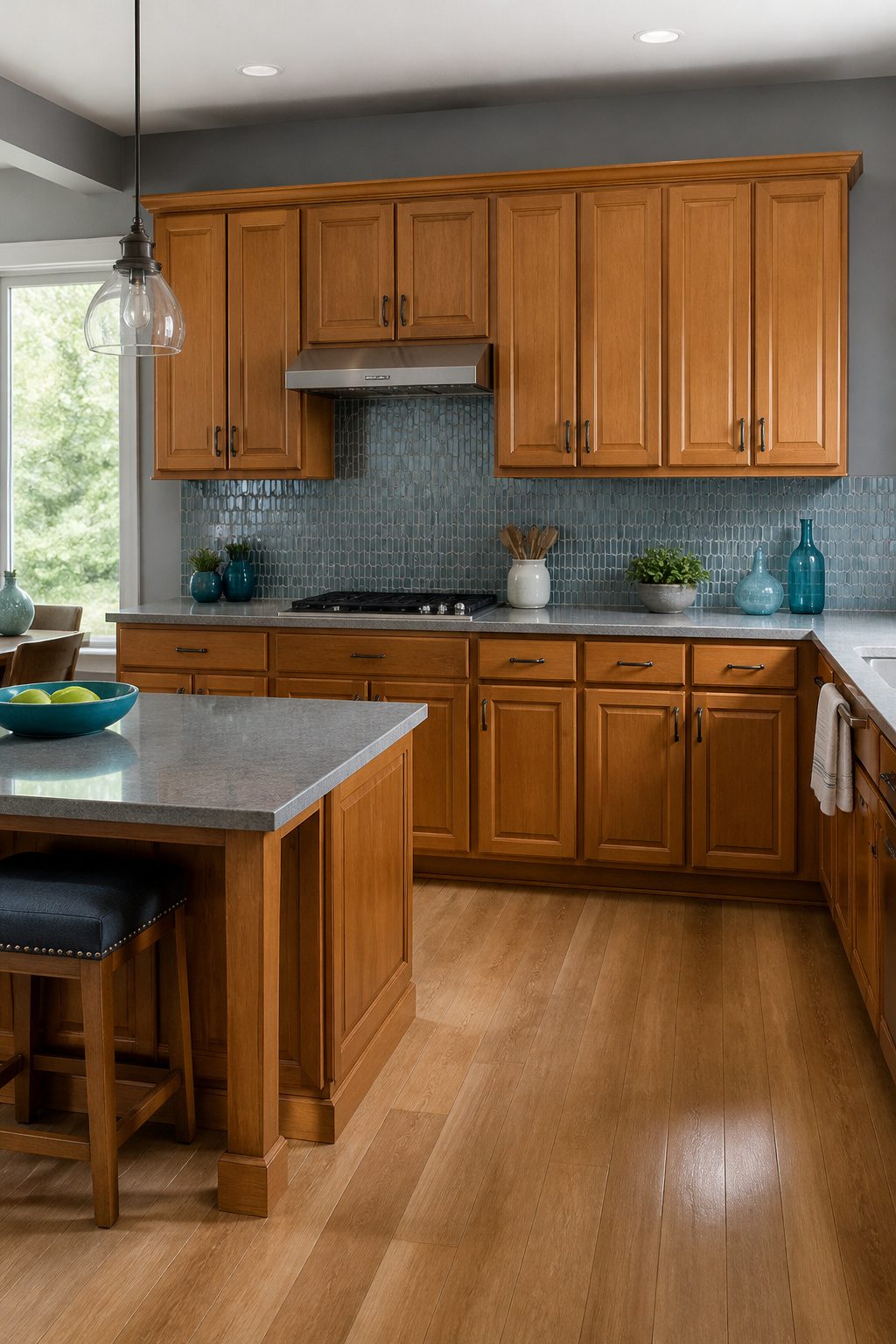
Honey oak cabinets carry a warm undertone that can shift toward orange under certain light, and the fastest way to correct that drift is to pair them with blues or greens on the walls, backsplash, or accessories.
A cool gray wall does the heavy lifting first, then teal tile in a backsplash adds a second layer that pulls the eye away from any amber cast in the wood.
I like teal because it sits between blue and green, so it reads as intentional color rather than a clash with the oak.
Small accents reinforce the same idea without a full renovation. Ceramic planters, dish towels, or a colored glass vase in the same cool family keep the palette consistent across open shelves or countertops.
Lighting fixtures matter too, though I would choose them for how they complement the overall look rather than treat them as the main fix.
The real work is the color relationship: cool tones against warm wood create balance, and balance is what keeps honey oak from feeling dated.
9. Create a Focal Point Away From the Cabinetry
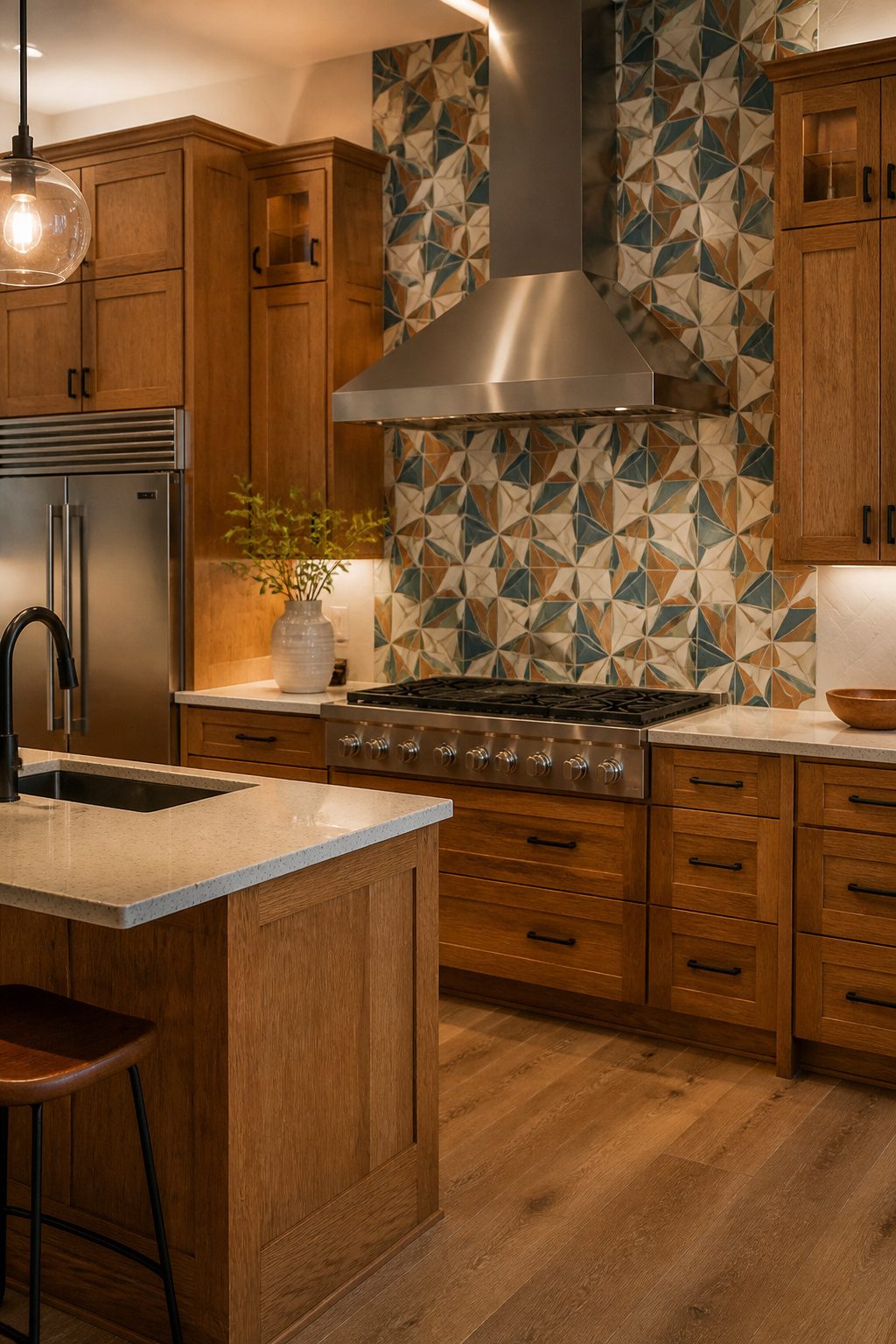
A kitchen with oak cabinets already has warmth built in; you just need to decide where the eye lands first. When cabinets run wall to wall, they can swallow the room unless something else grabs attention early.
I think the best move is a tile backsplash with enough scale and contrast to own that first glance, or a range hood with real presence above the cooktop.
Either one shifts the visual hierarchy so the oak reads as background rather than boss.
Placement matters as much as the piece itself.
A backsplash that stops at the upper cabinets, for instance, only frames more wood. Run it to the ceiling behind open shelving, or stack it full height behind the range, and the tile becomes the story.
Same logic for a hood: a standard 30-inch insert disappears, while a hood that projects forward and carries some mass, whether metal or plaster, creates a shadow line that breaks the cabinet rhythm.
The oak is still there, doing its job, but it is no longer the only thing to look at.
10. Mix Wood Tones for Contrast
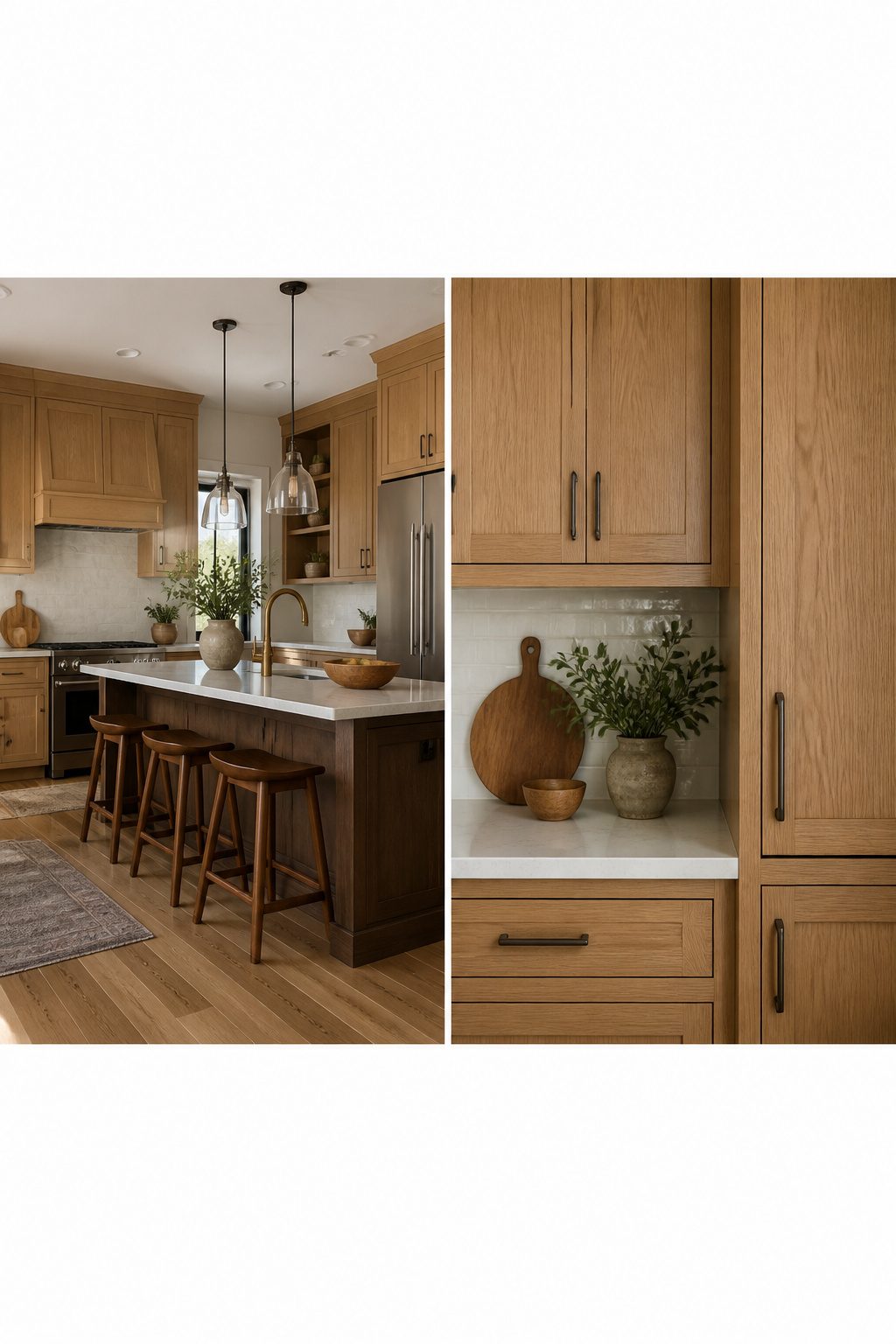
A kitchen built entirely from the same oak finish reads flat, no matter how good the grain is.
Contrast works best when you plan it, not when it accumulates from leftover pieces. Pairing oak cabinets with walnut on an island or maple on open shelving adds depth because the eye registers two distinct temperatures and densities of wood.
Walnut’s darker tones ground the space; maple’s lighter ones lift it. Painted wood, say a sage or navy built-in, does the same job by introducing a color break that still reads as material rather than coating.
The risk is the accidental mix: a walnut stool here, a maple cutting board there, until the kitchen feels like a furniture store floor.
I decide on one secondary tone before I buy anything, then repeat it at least twice so the choice looks intentional. Two walnut bar stools and a walnut shelf bracket signal a scheme; one stool looks like a mistake.
The same rule holds for painted accents: a blue hutch and blue window trim tie together, but a single blue chair floats without purpose.
Shiny surfaces help this read as modern rather than rustic.
Glass tile or stainless steel appliances reflect light between the wood zones and keep the contrast from feeling heavy. I want layers the eye moves through, not a single wood box from floor to ceiling.
11. Sleek Contemporary Oak Cabinets
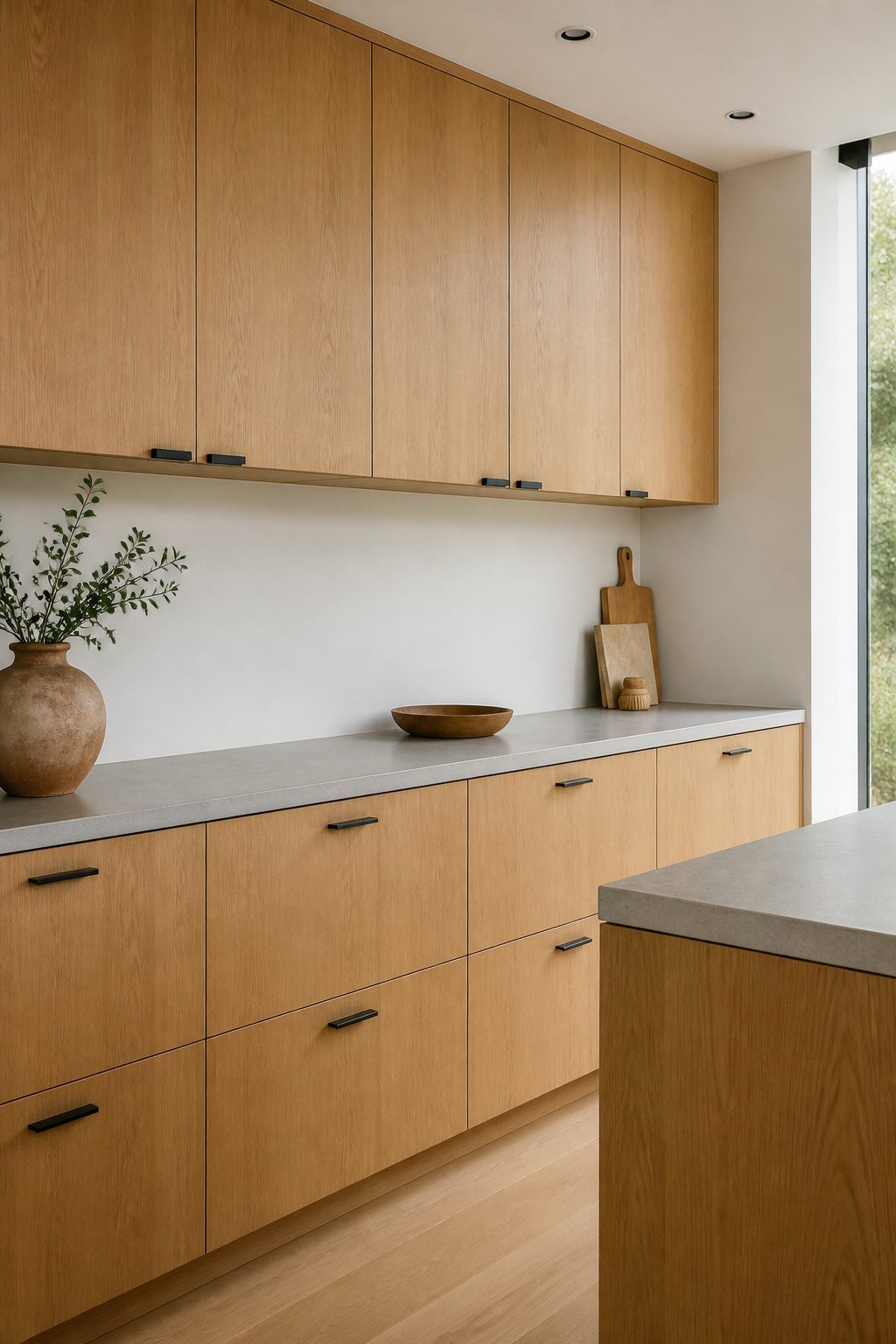
Oak earned its old-fashioned reputation from heavy arched doors piled with embellishments, not from the wood itself.
The fix is to swap to flat slab doors: no panels, no routing, just a smooth plane of oak that reads as contemporary geometry.
I keep the grain visible with a matte natural finish, no lacquer, because high-gloss varnish is what dated the kitchens of decades past.
The hardware disappears next. I go for handleless channels or slim linear pulls, never the wrought-iron knobs that read cabin.
What I am borrowing here is the restraint of Scandinavian and Japanese kitchens: clean sightlines, everything behind a plane, nothing applied for decoration alone. The wood does the work.
Clutter is the enemy in this setup.
Oak already carries visual weight, so I edit countertops to essentials and add back only one or two quiet accessories. Traditional oak kitchens layer on detail; this approach strips to structure and lets the material breathe.
12. Pair Oak Cabinets With Light Tones
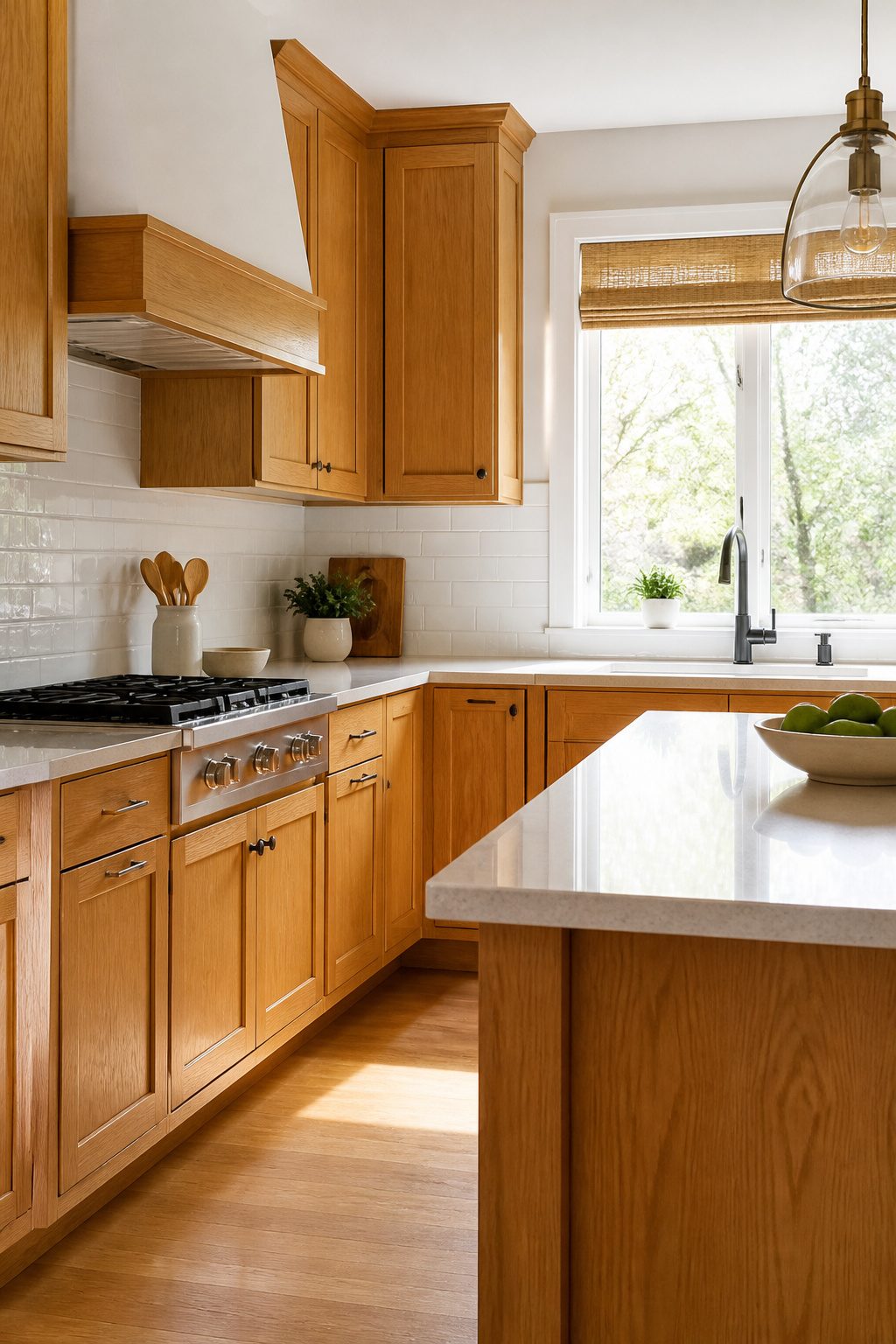
Light countertops and backsplashes pull oak cabinets out of the 1990s faster than almost any other move. The cabinets already carry warmth and weight; pale surfaces keep the room from feeling like a basement rec room.
I like white quartz or a soft gray marble-look laminate for the counter, and subway tile or small glass mosaic for the backsplash. Glass tile in particular catches and throws light around, which helps if the kitchen lacks windows.
Honey oak with beige or cream reads muddy every time. The tones sit too close together without enough contrast, and the whole kitchen ends up looking like it is trying to be neutral but failing.
White or pale gray walls keep the edges crisp and let the wood grain read as texture rather than as a color problem.
I have seen renters paint walls in a weekend and leave the cabinets entirely alone; the change is that dramatic.
If you are choosing between a warm cream paint and a clean white, take the white. The oak brings all the warmth the room needs.
13. Two-Tone Oak Cabinetry
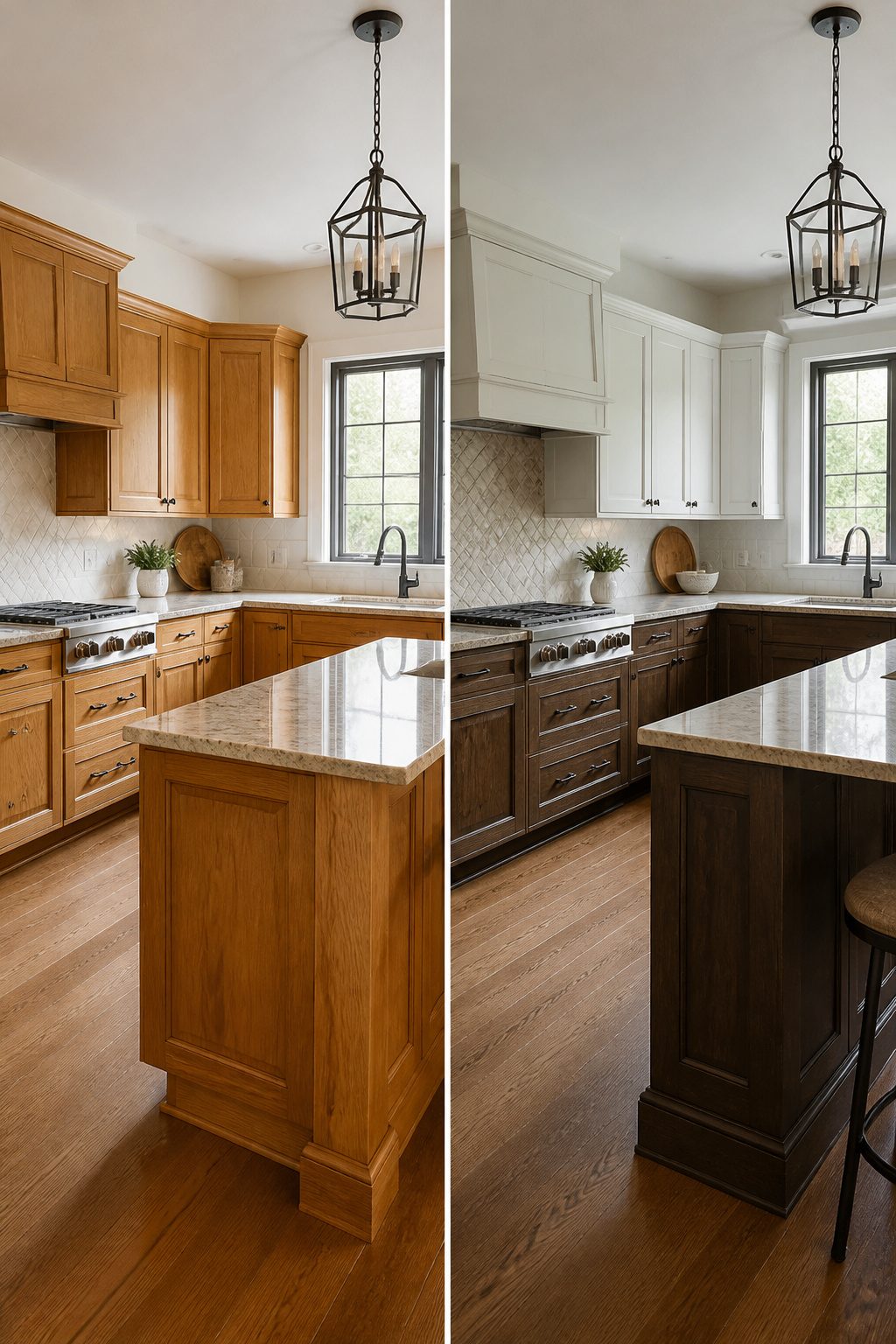
Two-tone oak cabinetry splits the finish between upper and lower runs, or between the island and the perimeter wall cabinets, and that split is what keeps oak from feeling like one flat slab of wood.
I like stained lowers with painted uppers for kitchens with standard ceilings; the darker base grounds the room while the lighter top half bounces light back down.
Warm white is the safest paint choice above, and repeating that exact shade in accessories keeps the scheme from looking accidental.
The island-versus-perimeter route works better if you have the square footage.
A darker stained island against lighter perimeter oak builds the same depth, but it also creates a piece of furniture in the middle of the room that can handle a bolder color without overwhelming the space.
Light oak perimeter cabinets paired with a darker island accent are the combination I see working most often in modern updates, and raised panel detailing on the doors adds enough refinement that the contrast reads as intentional, not mismatched.
The risk is choosing two finishes that fight each other. Keep one tone clearly dominant, roughly two-thirds to one-third, and tie them together with hardware or a backsplash that picks up both colors.
14. Update Oak Cabinets With New Doors
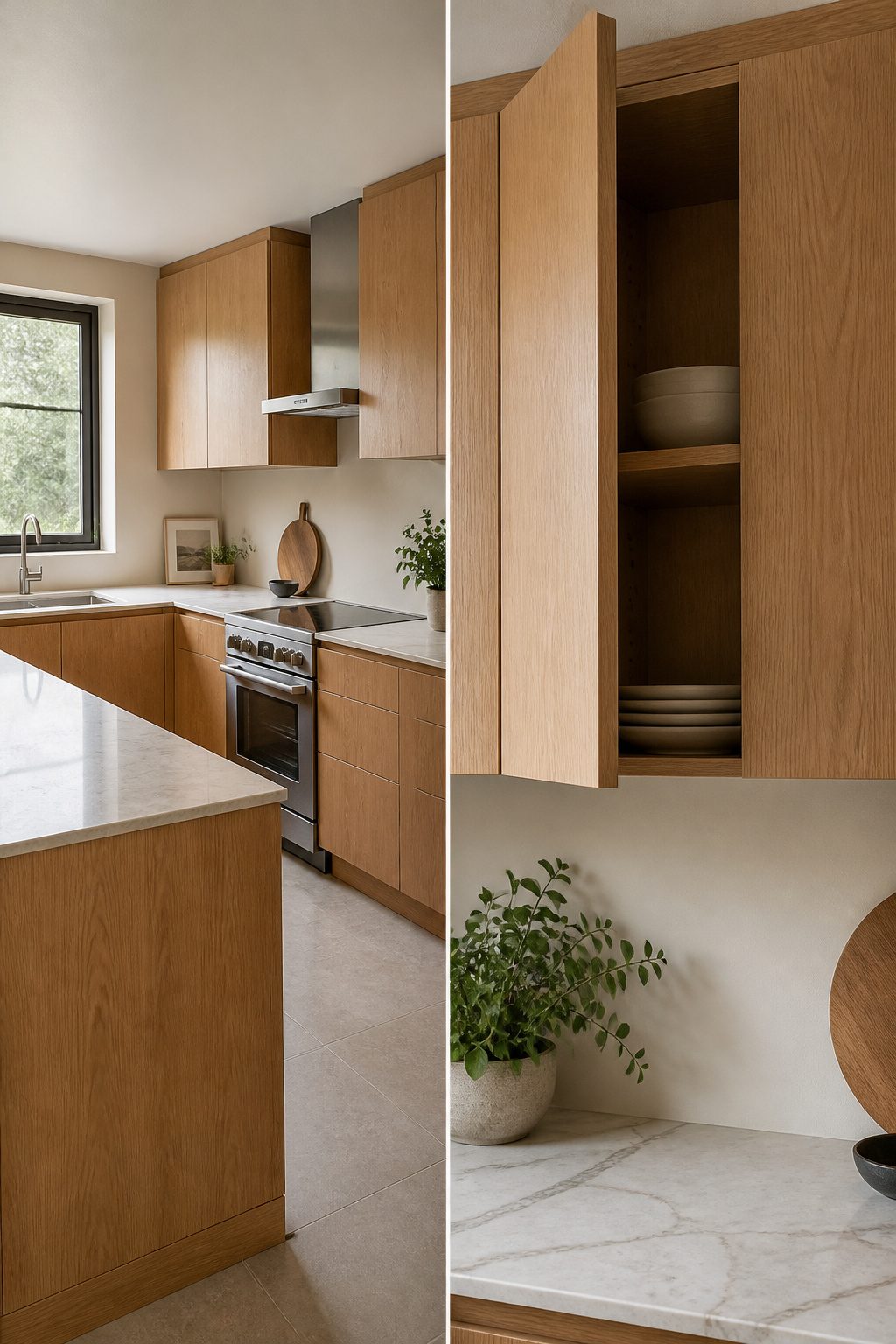
Swapping doors while keeping the solid oak boxes is the middle path that saves real money.
Full cabinet replacement runs into the thousands for a single kitchen wall; door replacement costs a fraction and still strips away the heavy arched panels and scrollwork that date most older oak kitchens.
Flat-panel or Slaker doors do the work. They smooth the whole visual plane and let the oak grain read as texture rather than ornament.
Raised center panel doors are still an option if you want some shadow line, though I think the cleaner edge wins for a weekend project’s worth of effort.
The hinge boring and fit are what make this tricky. Your existing boxes need to accept the new door mounting, and older oak frames sometimes settle out of square between the sink and the stove wall.
Measure a few openings before ordering. Custom doors cost more but correct the gap if your boxes have shifted, and they still come in under a full replacement budget.
I would skip the premade big-box sizes unless every opening is within a sixteenth. A door that gaps on one corner ruins everything.
15. Quality Countertops and Backsplash
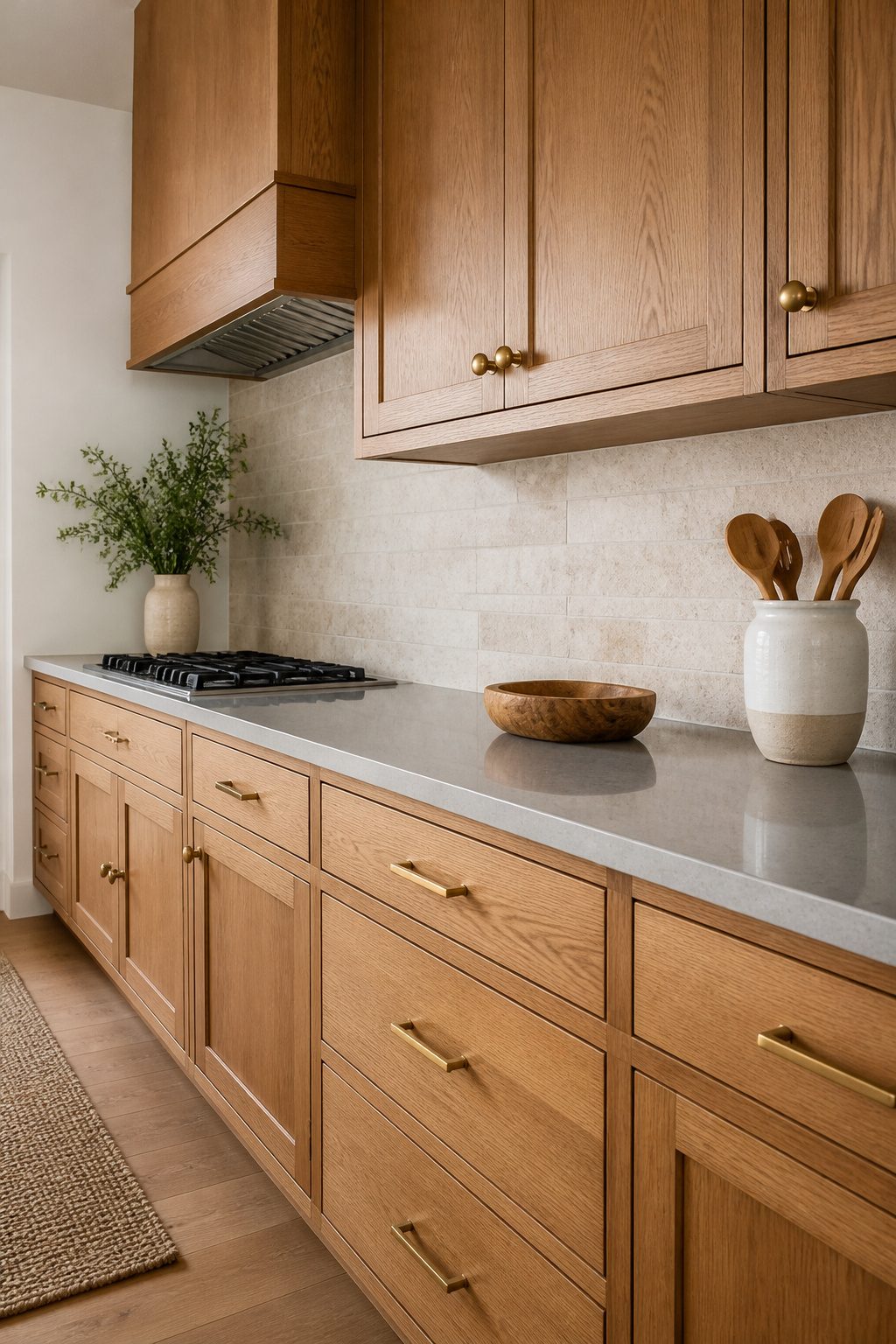
If you want to keep your oak cabinets looking current, granite or quartz in a neutral tone is the surface that does the work without stealing attention.
I mean soft gray, warm white, or a muted green, not the busy patterns that read dated against honey-toned wood. These materials sit in the same warmth family as oak but dial the visual weight down.
A stone backsplash in the same palette finishes the bridge.
Glass tile adds reflection, which helps if your kitchen lacks natural light. Stone does the same thing in a quieter way.
The combination lets the oak read as intentional rather than leftover. That is the difference between a kitchen that looks refreshed and one that looks like it is trying to hide something.
Frequently Asked Questions
How can I modernize my oak cabinets?
Refresh them with a darker stained finish in walnut or espresso tones, swap to flat slab doors, or replace dated hardware with long, slim bar pulls.
Staining keeps the grain visible while losing the yellow-orange cast that reads as 1990s builder grade, and new hardware shifts the whole kitchen toward current for the cost of one afternoon.
What are the best colors to pair with oak cabinets?
Cool tones like blues and greens balance honey oak’s warm undertones and correct any amber drift.
Teal tile works especially well because it sits between blue and green, reading as intentional color rather than clash. White or pale gray walls and countertops keep edges crisp so the wood grain reads as texture, not a color problem.
How do I create a focal point in a kitchen with oak cabinets?
Install a striking tile backsplash run to the ceiling behind open shelving or the range, or choose a range hood with real presence that projects forward and carries mass.
Either shift draws the eye first so oak reads as background rather than the only thing to look at. A standard 30-inch insert or backsplash that stops at uppers only frames more wood and misses the effect.
What type of oak are cabinets made of?
Kitchen oak cabinets are built from the same oak species regardless of cut, but the milling changes how they look.
Flat-sawn boards show full cathedral arches that read busy across a whole wall; rift-sawn and quarter-sawn run the grain straighter and tighter, with quarter-sawn adding faint ray flecks. Both cost more than flat-sawn but come from the same wood.
Can I paint over oak cabinets without sanding them?
You can, but oak’s open pores will telegraph through standard paint and leave a textured surface visible up close, especially on upper cabinets where light hits at eye level.
Filling the grain first with grain filler adds a full day of work but gives a smooth result. Paint works best when the existing finish is damaged past what stain can hide.
How to lighten honey oak cabinets?
Sanding down to bare oak and applying a lighter or cooler stain shifts tone without starting over. A medium stain with gray undertones mutes the honey color while keeping grain visible.
Paint is the other route, though it hides the grain entirely and requires pore filling for a smooth surface. Either way, the existing finish must be intact enough to sand cleanly.
How to refinish cabinets with stains?
Remove hardware, sand to 120 grit, wipe down, stain, then seal; two weekends and a few hundred dollars in materials.
The work is straightforward if doors are sound and the existing finish is intact, but water damage or uneven previous refinishing will show through. Choose sheen last: matte keeps the look modern and quiet, while gloss pushes toward traditional.