
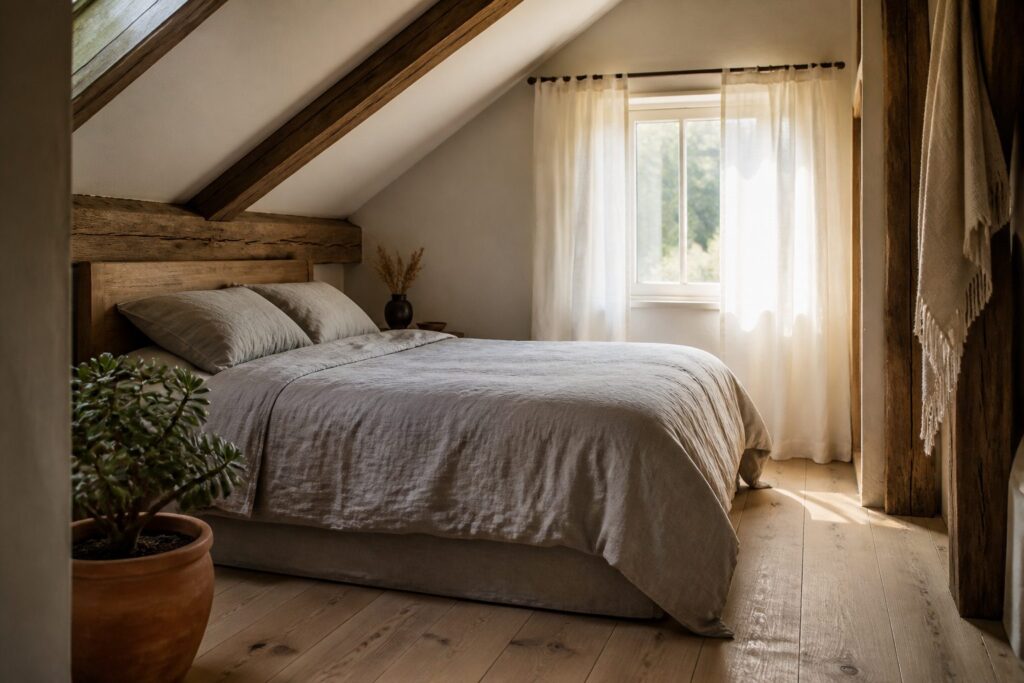
A full bed sits in a narrow space where six inches of width either direction changes what the room can hold, and the frame matters as much as the mattress.
The 54 by 75 inch footprint rewards restraint: neutral tones, soft finishes, and one organic accent beat a crowded surface every time.
What trips people up is treating a full mattress like a blank slate for bold choices when its smaller surface area leaves almost no room for error.
1. Comfort Begins With the Bed
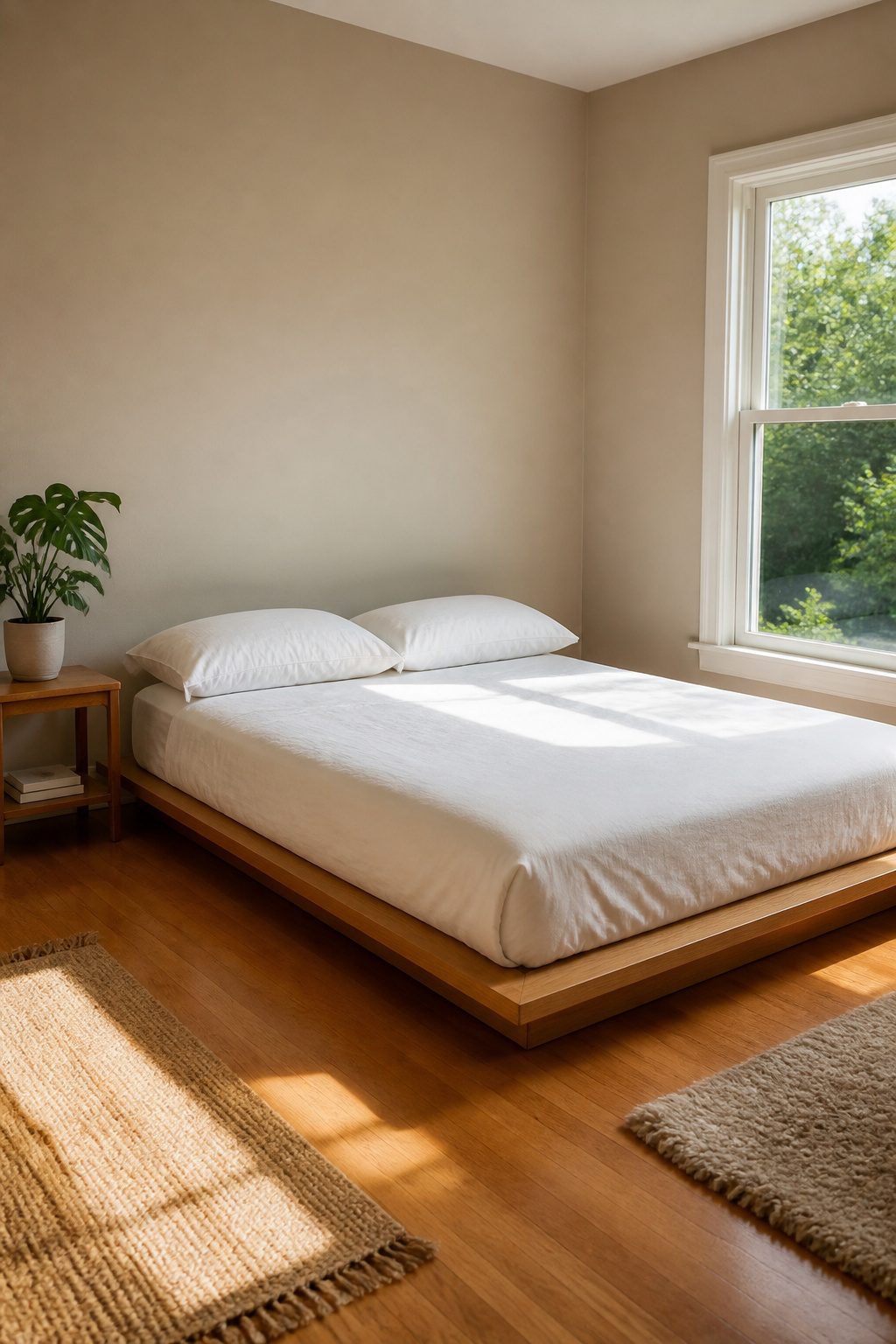
A full mattress measures 54 by 75 inches, and every choice after that starts from those dimensions.
The frame matters as much as what goes on top of it, because a full bed sits in a narrow space between twin and queen where six inches of width either direction changes what the room can hold.
I would put my money into the mattress first, then buy the simplest solid frame I could find that gets it off the floor cleanly.
A low-profile platform in oak or a painted metal rail both work; what I would skip is anything with an upholstered headboard built in.
That combo locks you into one look, and the fabric collects dust in a way that reads tired after two years.
For a renter, a standalone frame on short legs gives you storage underneath and leaves the wall behind it open for whatever headboard solution you want later. The mattress itself is where quality shows.
A medium-firm hybrid with a trial period is what I would pick for a full bed used by one person who might occasionally share it; anything softer and the 54-inch width starts feeling smaller than it is.
2. Keep Bedding Tonal and Tailored
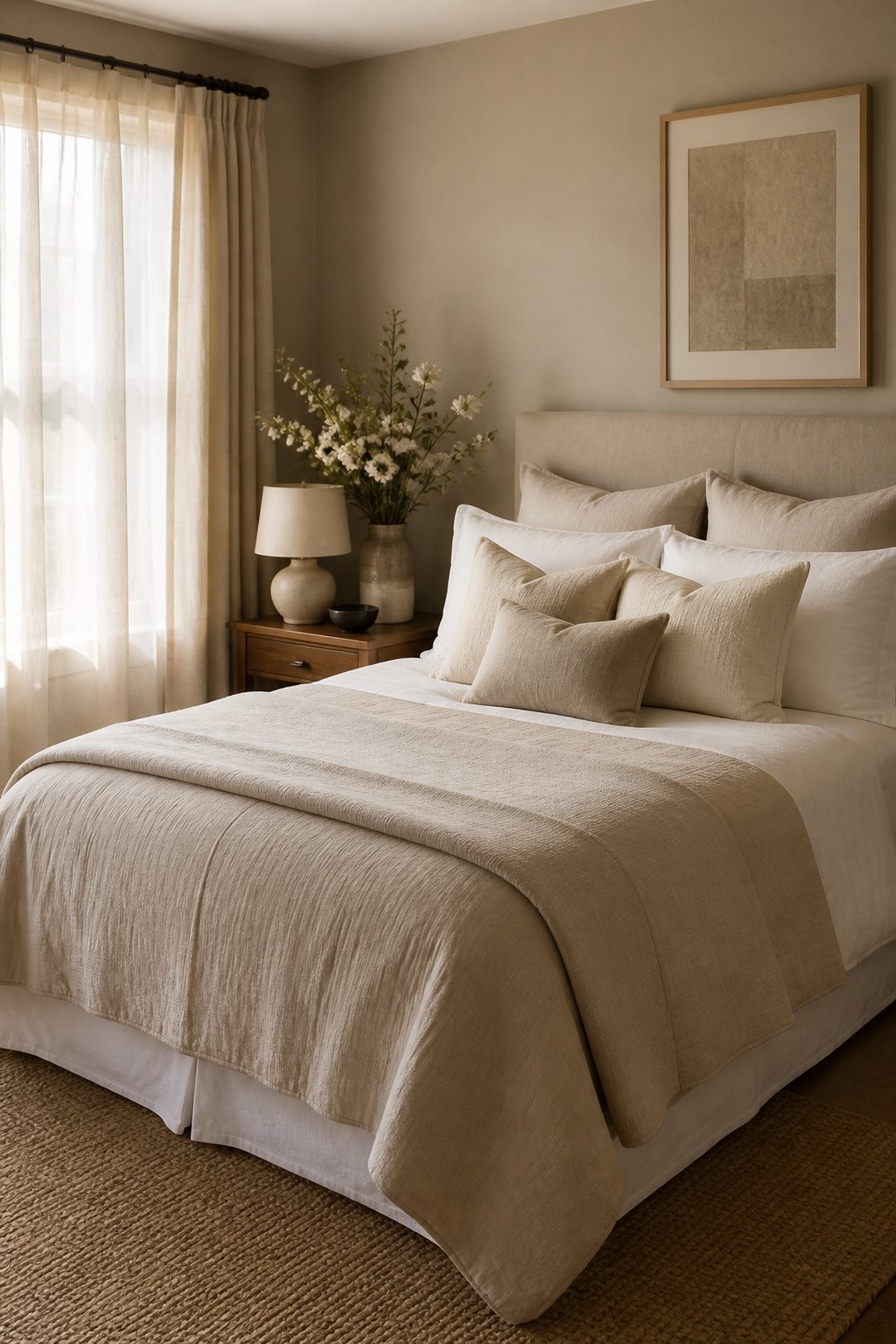
A 2026 study of over 3,000 bed purchases found that 56% of customers preferred neutral tones, with warmer browns rising while cooler greys and blues declined.
That shift toward earthy, grounded palettes works particularly well on a full bed, where the smaller surface area leaves little room for error.
Busy patterns tend to dominate on a full mattress, visually shrinking the room and fighting whatever wall color or furniture you already own.
Tonal bedding in sandy, stone, or almond layers lets the bed settle into the space rather than shout over it.
I would start with crisp white sheets as the base, add a structured bedspread in a warm neutral, and keep cushions within one tonal family.
The tailored detail matters here: matching pillowcases and a clean edge on the bedspread read as intentional, not spare.
Clay or blush touches can warm the palette without breaking the calm.
On a full bed, I would limit those accents to one throw or a single cushion pair. Cohesion matters more than contrast.
3. Style With Soft Finishes
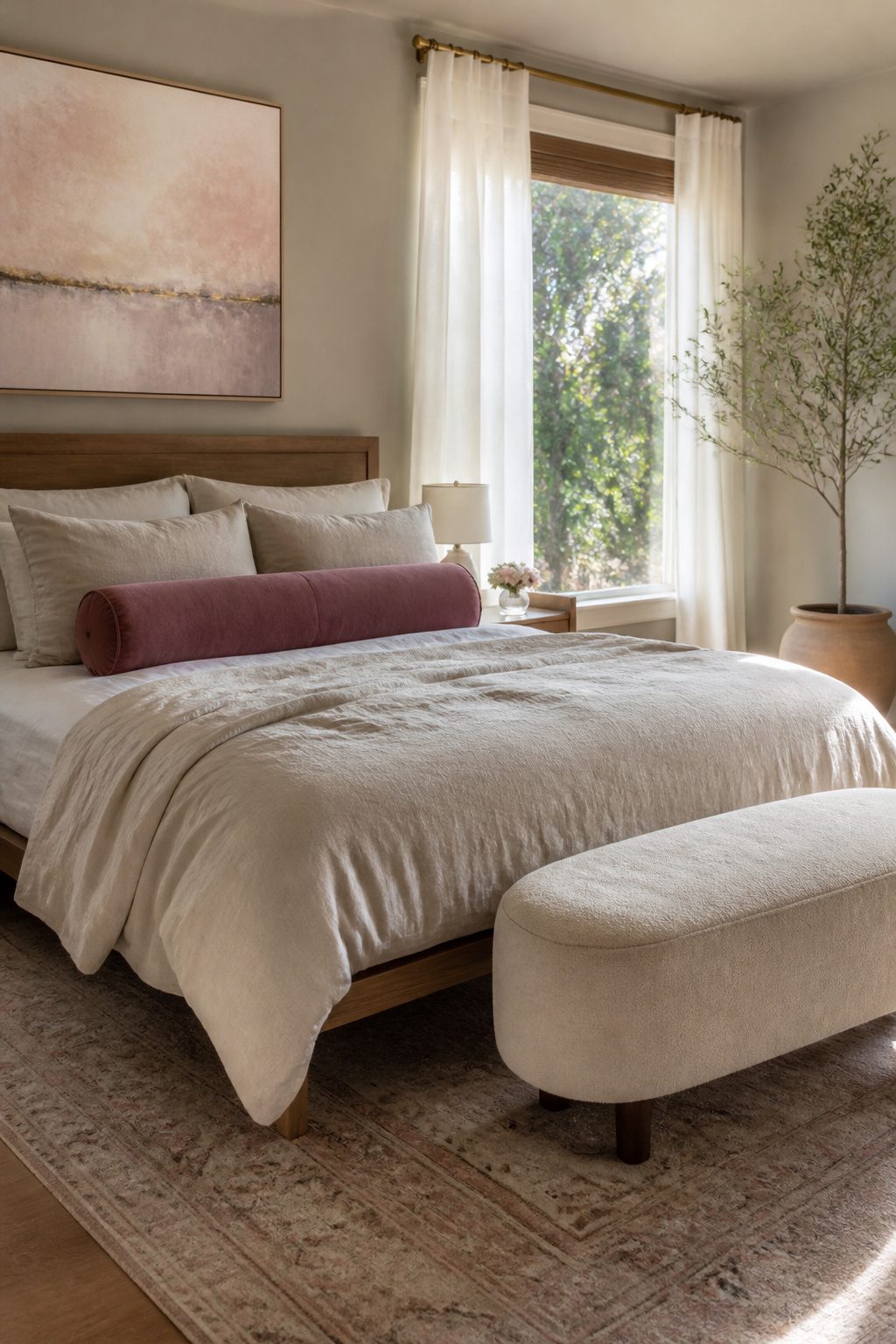
Linen, bouclé, and velvet each add depth to a full bed without relying on loud color, but they behave differently across seasons.
Velvet wins for winter nights because its dense pile traps heat and catches lamplight in a way that makes a mountain bedroom feel like a retreat.
I would keep it to the headboard or a single bolster, though. Too much velvet reads heavy by March.
Linen pulls ahead in summer for the same reason it can feel spare in January: the open weave breathes.
I would choose it for the duvet cover and let it stay slightly rumpled, since the texture is why you picked it. Bouclé sits between them, nubby and forgiving, but I would skip it for bedding itself.
It works better on an ottoman at the foot of the bed or a throw pillow, where it defines a reading corner without competing with the sleep zone.
For a mountain-inspired bedroom, I would start with linen as the base layer and add velvet for the colder months.
The mix structures the room without drawing focus from the bed, and both materials age well on a real budget. Bouclé is a nice accent if you find it secondhand, but I would not build the palette around it.
4. Introduce Texture Over Bold Color
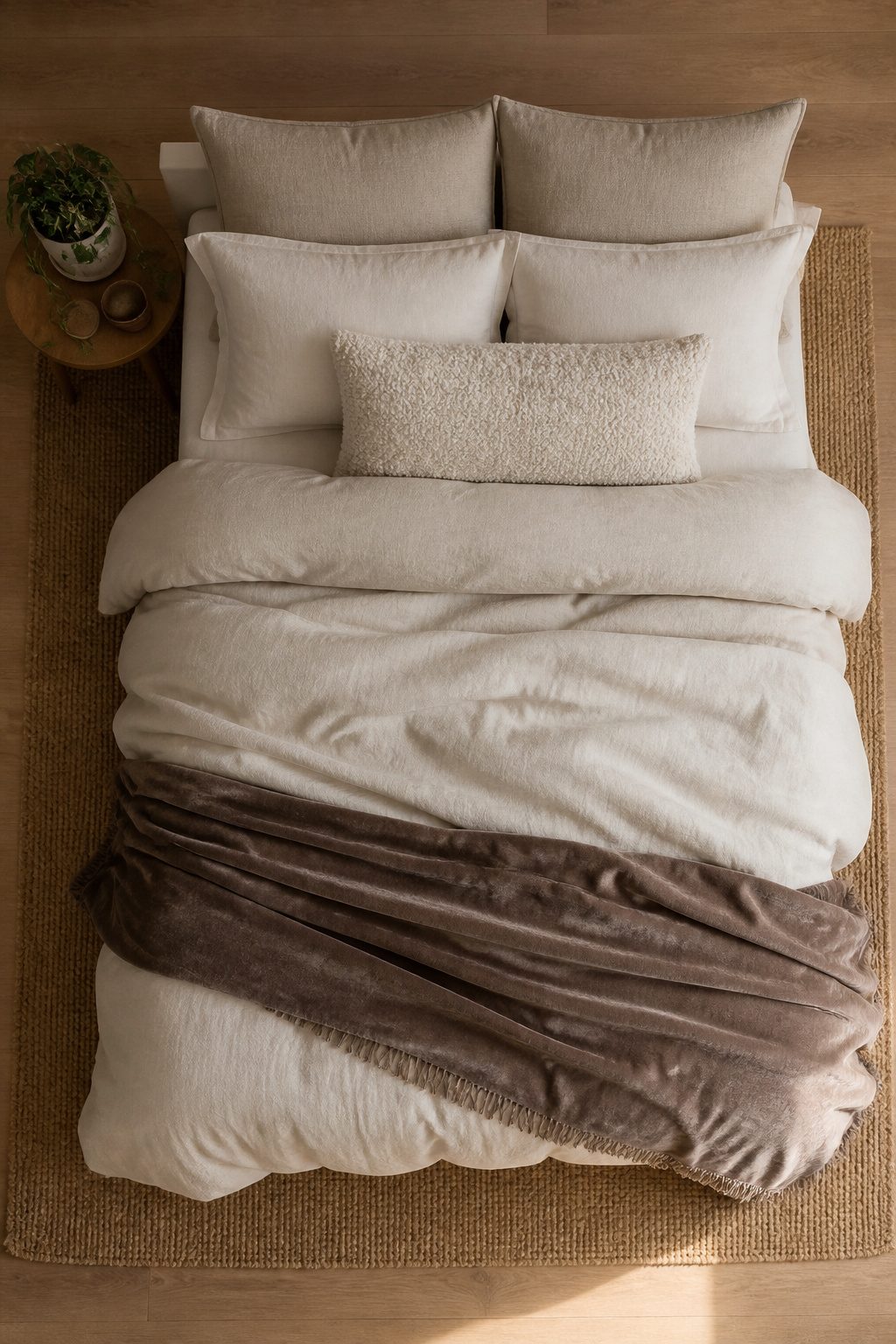
Linen, bouclé, and velvet each read differently from ten feet away, which is exactly what you want on a full bed where the footprint is tight and the eye lands on everything at once.
I layer them in threes across pillows, the throw, and any upholstered piece in the frame, and three textures in one view is the practical limit before the bed starts looking like a laundry pile.
Linen on the sleeping pillows keeps the face calm and breathable, bouclé on a single lumbar or euro sham adds the nubby depth that photographs well for Pinterest, and velvet folded at the foot or draped over an ottoman introduces the weight that stops the whole arrangement from floating away.
The ottoman itself, if you have the floor space, is where I anchor the third texture in upholstery rather than adding another competing throw. Two bouclé pieces in the same sightline cancel each other out; two velvets read as heavy.
I keep the palette in the warm neutrals the bed demands, soft beige or sand against pale grey or stone, so the variation happens in the hand rather than the hue.
The reader who rents and moves her setup twice a year can swap these out in a Saturday morning without touching paint or hardware, and the cost stays in the few-hundred-dollar range if you hunt the throws and shams separately rather than buying a matched set.
5. Layer Sculptural Furniture
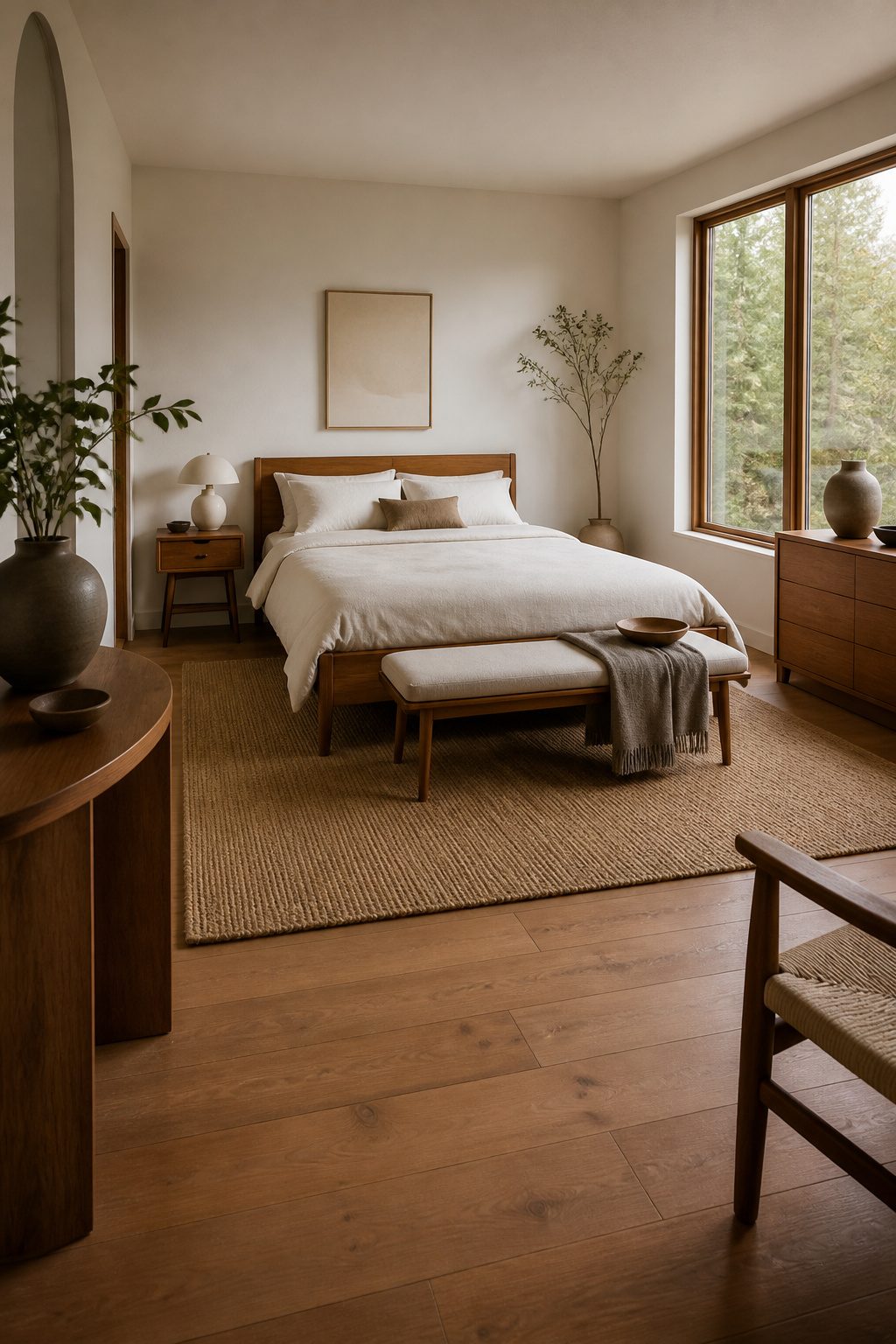
Nightstands and benches around a full bed add depth only when their shapes earn the space they take.
A full mattress measures 54 by 75 inches, so the footprint is tight; bulky, boxy pieces read as walls closing in. I look for a slender silhouette with a defined form instead, something that reads as deliberate rather than leftover.
A curved or tactile bed frame pairs well with a bedside table that has some vertical line to it, maybe a slight taper or a leg that lifts the body off the floor.
That gap underneath matters in a smaller room; air circulates visually where solid wood would block it.
For a bench at the foot, I skip anything deep or overstuffed. A low, narrow profile with a clean edge gives you a place to set down a bag without turning the bed into a corridor obstacle.
Diagonal placement of an armchair, if the room allows it, introduces fluidity that a rigid grid denies.
The diagonal is the move here, not the chair itself; even a simple side table set at an angle breaks the expected rectangle of bed, nightstand, opposite nightstand.
I would skip matching sets for a full bed. Two identical chunky tables on either side of 54 inches of mattress look like furniture store leftovers.
One slender table and a wall-mounted shelf on the other side, or a small stool that tucks away, keeps the room functional without the clutter.
6. Use Timber to Ground the Bedroom
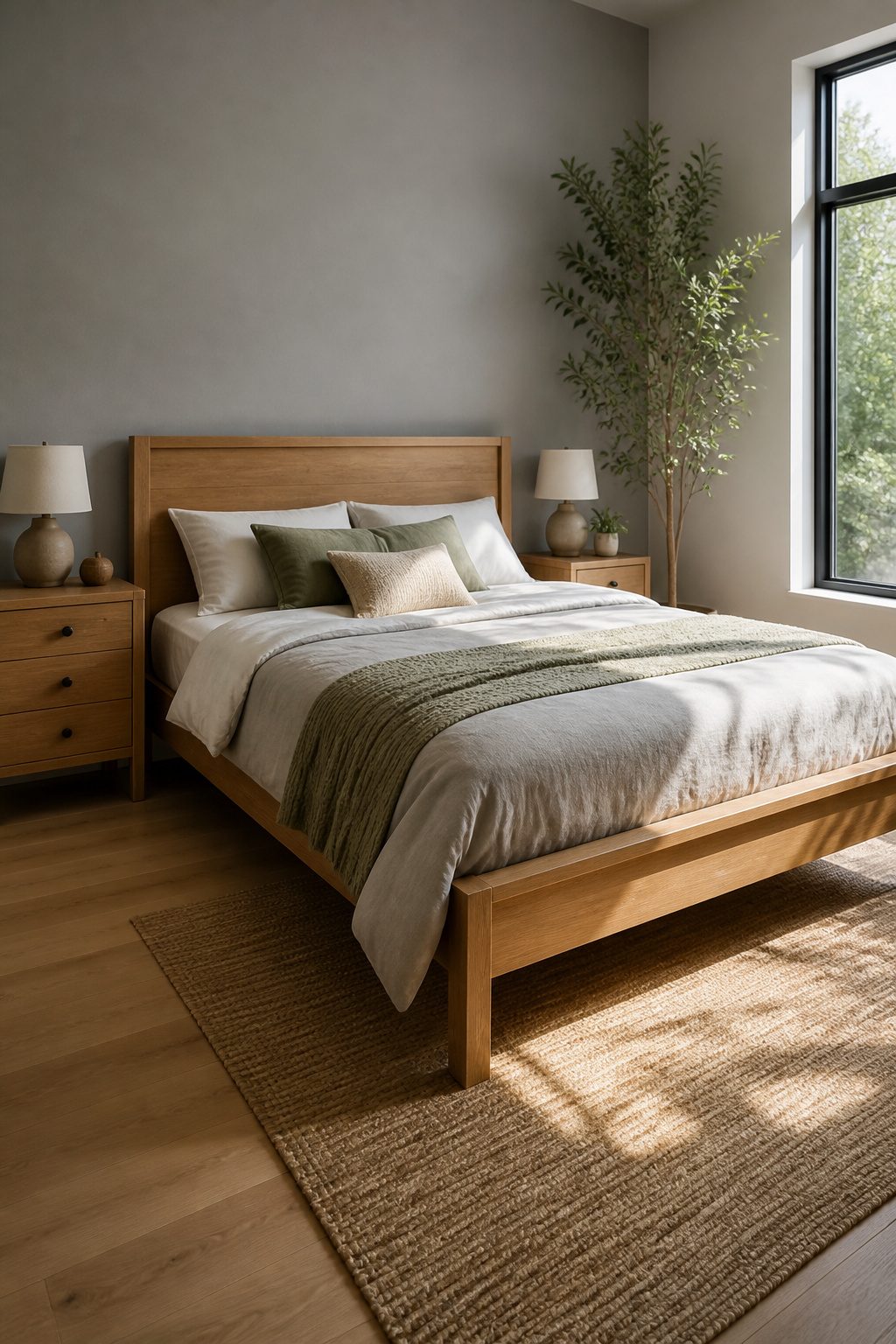
Timber grounds a bedroom the way bedrock anchors a ridge. In a full bed setup, where every inch of visual space matters, lighter or mid-tone timber keeps the room open while still carrying that mountain warmth I look for.
Natural Oak and American Walnut both read warm without the heaviness that can make a smaller bedroom feel like a cabin closet.
The bed frame itself is where timber shows first and matters most.
From there, the grain can carry through to bedside tables or a slim bench at the foot of the bed, but I would stop short of timber-on-timber across every surface.
Two pieces in matching tone, or a deliberate contrast like Natural Oak against Smoked Oak, give the room structure without turning it into a furniture showroom.
For renters especially, timber legs on a simple platform frame or a solid-wood headboard you can take with you beats built-in bulk.
The pieces last, they move with you, and they ask for little beyond an occasional wipe. That durability, not just the look, is what makes timber worth the investment over a weekend project.
7. Embrace Japandi Principles
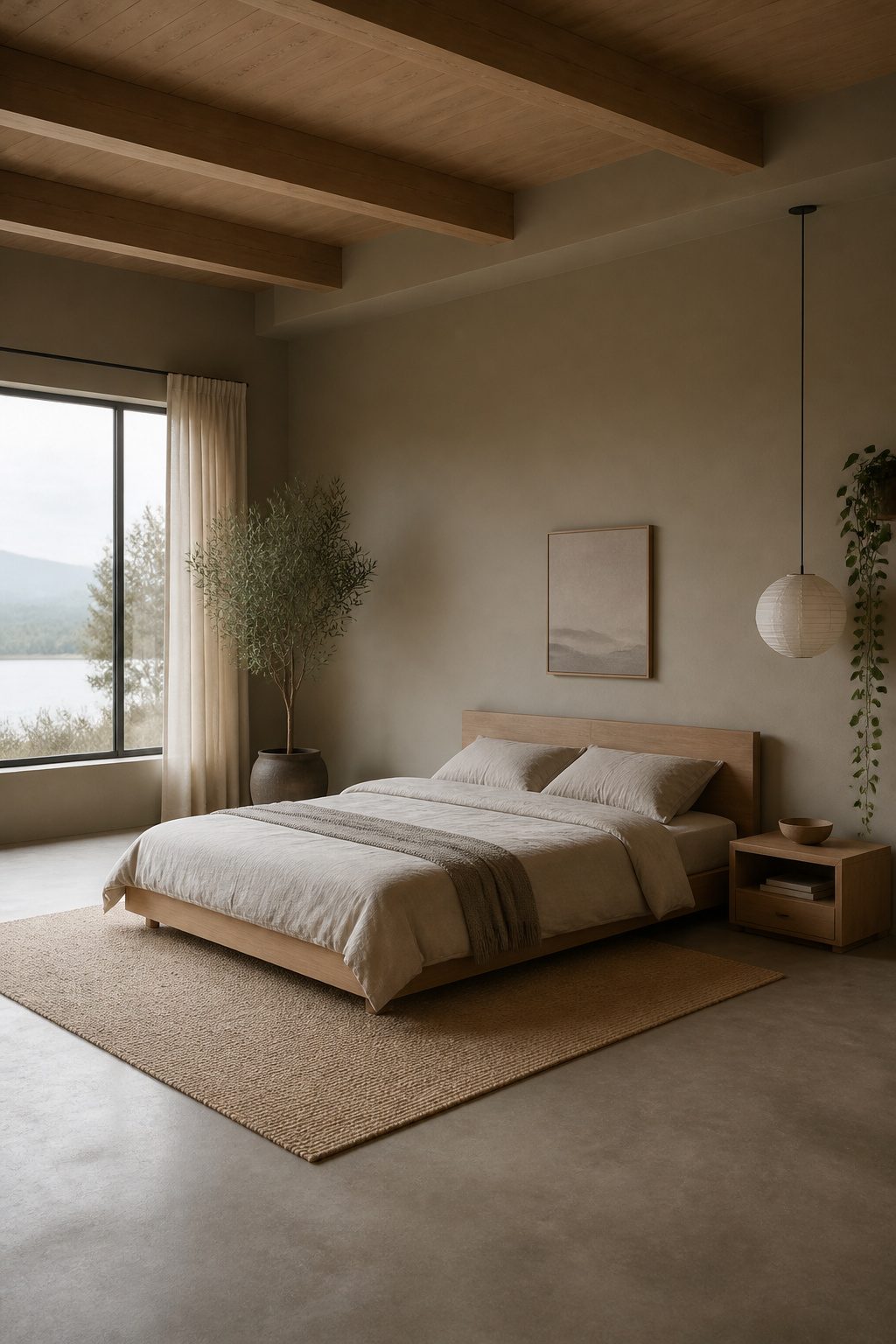
Japandi is the pairing of Japanese simplicity with Scandinavian warmth, and it works especially well around a full bed with a lower frame.
A platform or low-profile frame sits closer to the floor, which opens up wall space and makes the room feel larger than a taller bed would.
The restraint matters more than the style.
One ceramic bowl, one trailing plant, one stack of linen-bound books: that is enough decoration. The empty space left around each object does the work of making the room feel calm.
Natural timber surfaces and organic shapes keep the warmth from tipping into coldness.
I would skip anything that reads as ornate or purely decorative. Stillness matters more than display.
A full bed in this style becomes a place for slow rituals: morning stretches, evening wind-down, a cup of tea before sleep. The room feels collected because so little is there, and what is there was chosen with intention.
8. Focus on Seamless Storage
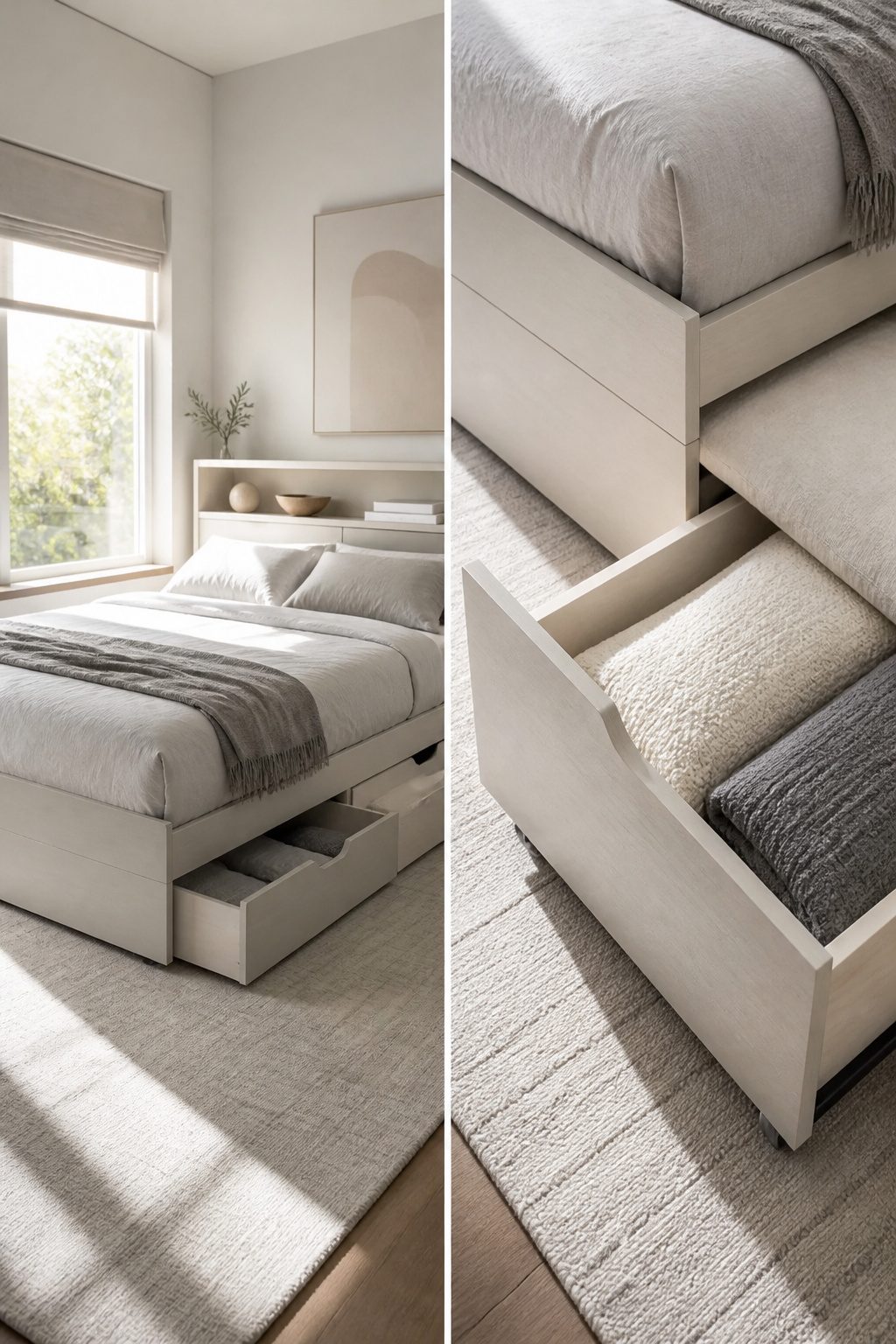
A full bed leaves you about 54 inches of width to sleep on and not much floor to spare, so storage has to live inside the furniture itself.
Under-bed drawers on casters are the first place I look, because they roll out without lifting the mattress and they keep dust off whatever is inside.
I have had better luck with drawers that ride on a center track than with side-mounted ones; the side mounts sag over time if the drawer gets heavy with sweaters or extra bedding.
Headboard shelving is the second option worth considering, especially for renters who cannot drill into walls. A headboard with a 6-inch ledge and a small cabinet on each side replaces the nightstand entirely and frees the corners beside the bed.
I skip the deeper cubbies; they collect clutter and read as bulky in a room this size.
Footboard storage I almost always pass on. The lift-up mattress platforms look efficient in photos, but raising a 50-pound mattress to reach linens is not a one-handed job, and the pneumatic struts fail after a few years.
For a weekend project with a few hundred dollars, drawers at the sides and a slim headboard shelf give you the same capacity without the mechanical gamble.
9. Add a Lounge Element
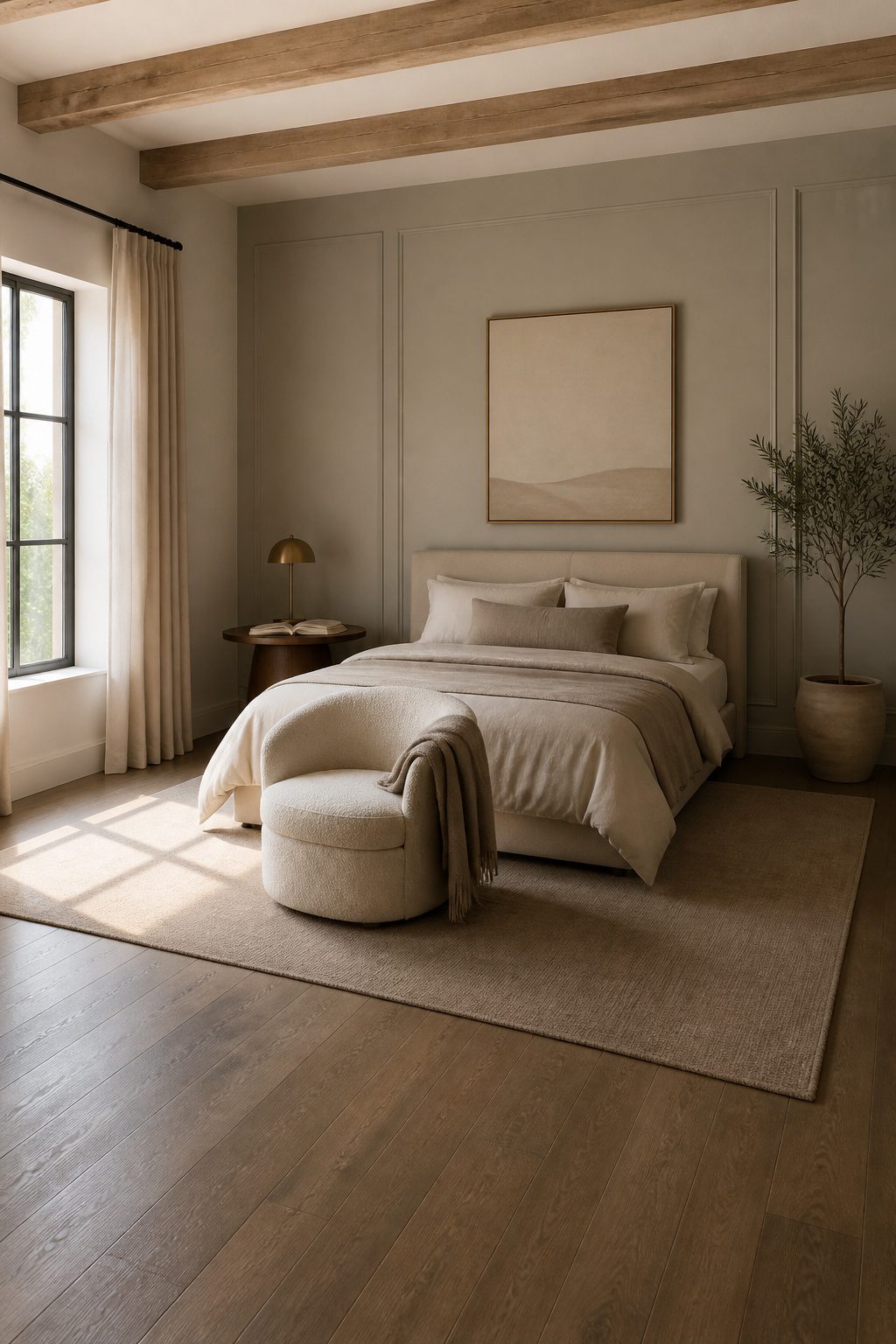
A full bed leaves just enough room for one small seat, and that single piece changes how the room feels.
I place it where it does not cut off the door swing, usually along the wall opposite the foot of the bed or tucked beside a nightstand if the wall is long enough.
The rule I measure by is 24 inches of clear walkway after the chair is in place.
Anything tighter and you are stepping around furniture in the dark. A low slipper chair or a narrow bench with an upholstered top works best; wood arms or a wide recliner steal space you do not have.
I skip anything over 28 inches deep. A small bench at the foot of the bed also holds a folded throw or tomorrow’s clothes, but only if it sits low enough that you still see the bedding when you walk in.
10. Layer Lighting Thoughtfully
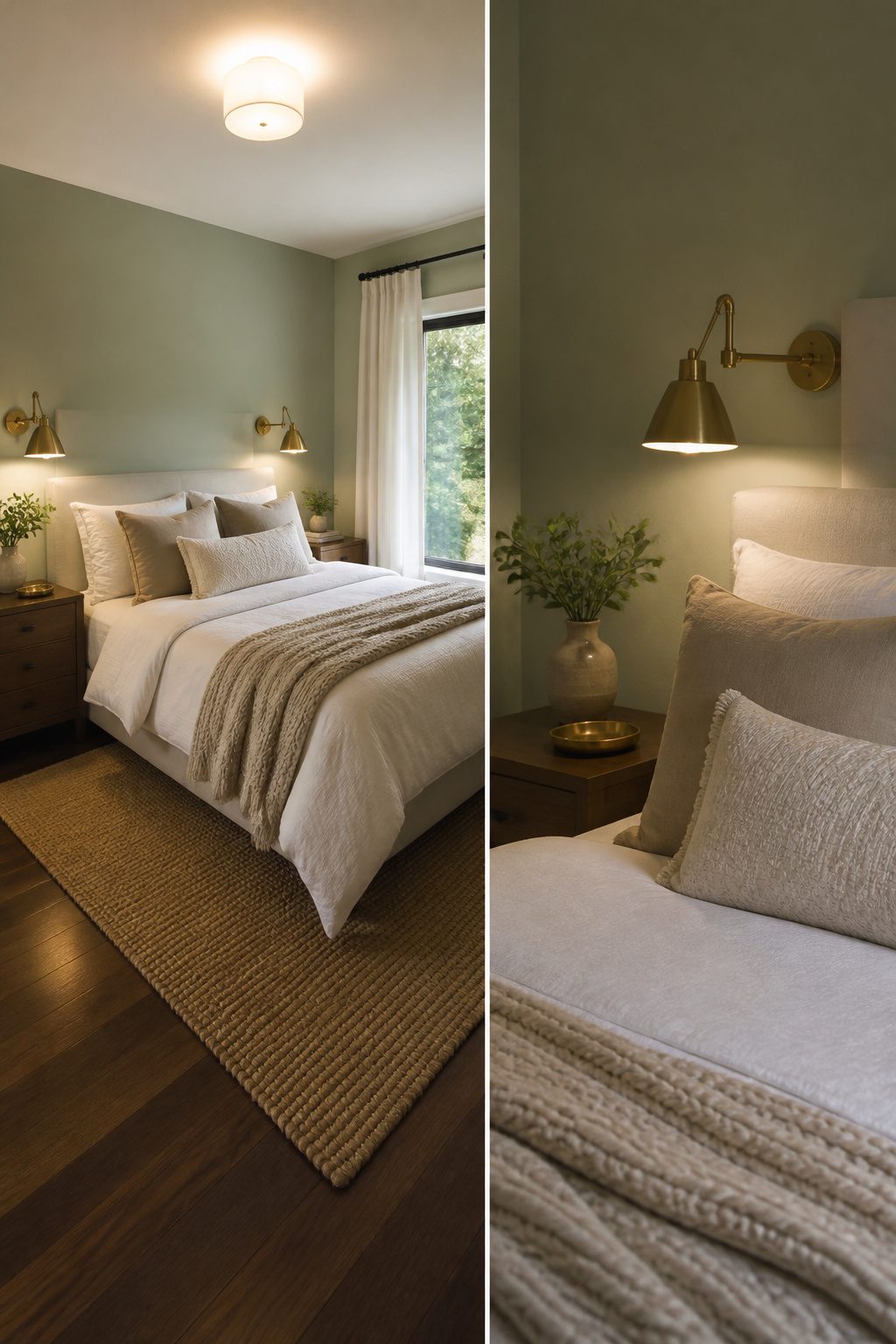
A full bedroom needs three light sources to actually work.
Overhead ambient light handles the morning routine, a focused task light gives you somewhere to read without squinting, and a low source, dimmed or small, eases the wind-down that the brighter layers interrupt.
Warm white bulbs, dimmable where possible, keep circadian rhythms in check from early starts to midnight.
The nightstand is where most full bedrooms run short on space. A table lamp claims most of the surface, leaving little room for water, a book, or the phone you already charge there.
Swing-arm sconces fix this by moving the light to the wall, freeing the top for what you actually use it for.
Mount one on each side of the headboard, wired if you are staying put, plug-in if you rent and need to take it with you when the lease ends.
11. Incorporate Organic Shapes
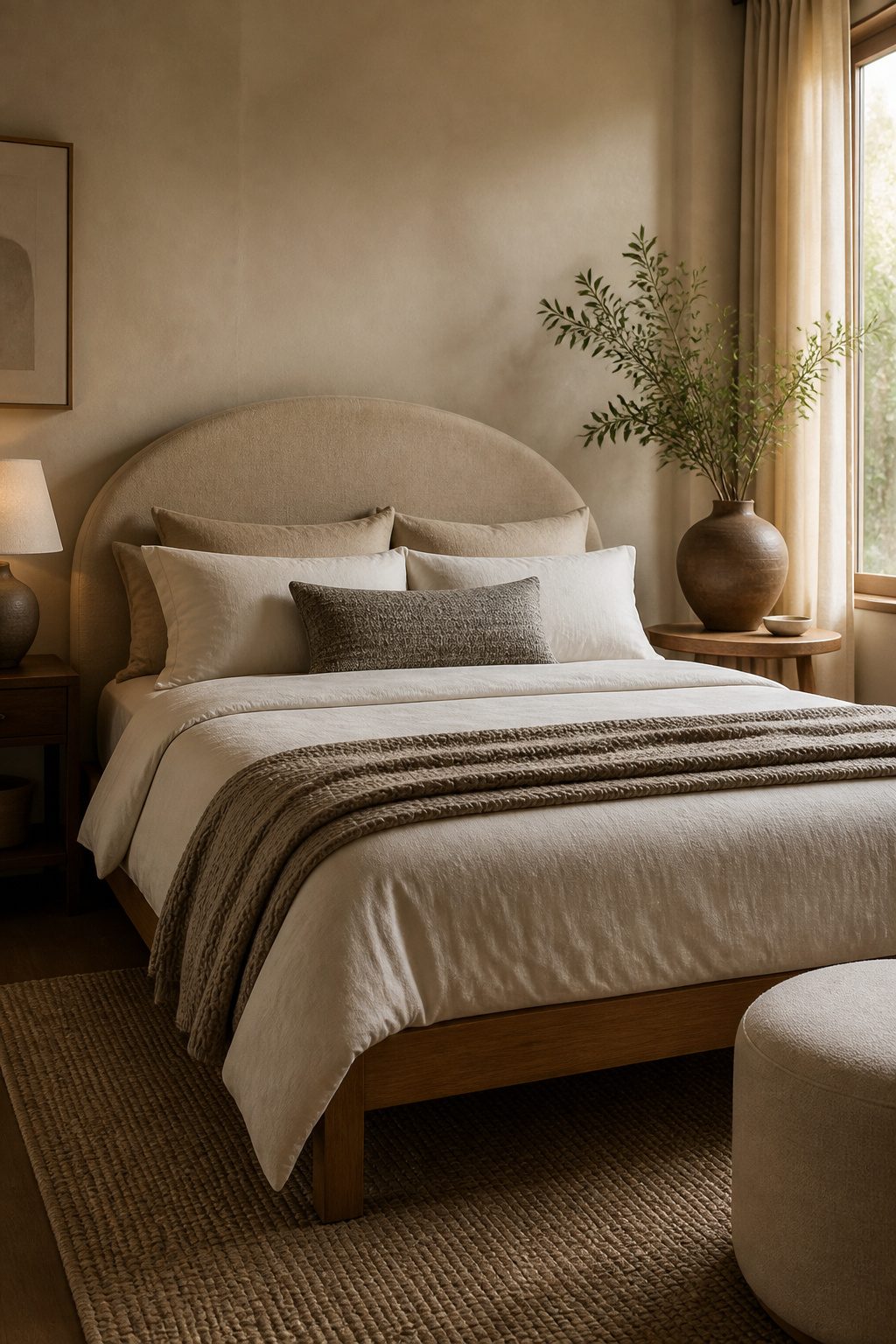
A full mattress is a rectangle, and most bedrooms stack more rectangles on top of it: nightstands, dressers, rectangular frames. After a while the room starts to feel like a grid.
Rounded headboards, curved lamps, and irregular ceramics break that pattern without demanding a full redesign. I look for one organic piece as the accent, not three or four competing for attention.
Something has to give. Curved furniture costs more because the joinery is harder, and a lamp with a bulging ceramic base limits what else sits on that nightstand.
Matching becomes trickier too; an amorphous vase does not line up neatly with a straight headboard edge.
I treat these pieces like punctuation in a sentence, one per room, placed where the eye lands first. A rounded headboard behind the pillows does more good than a curved side table tucked in a corner.
12. Add a Touch of Dark Contrast
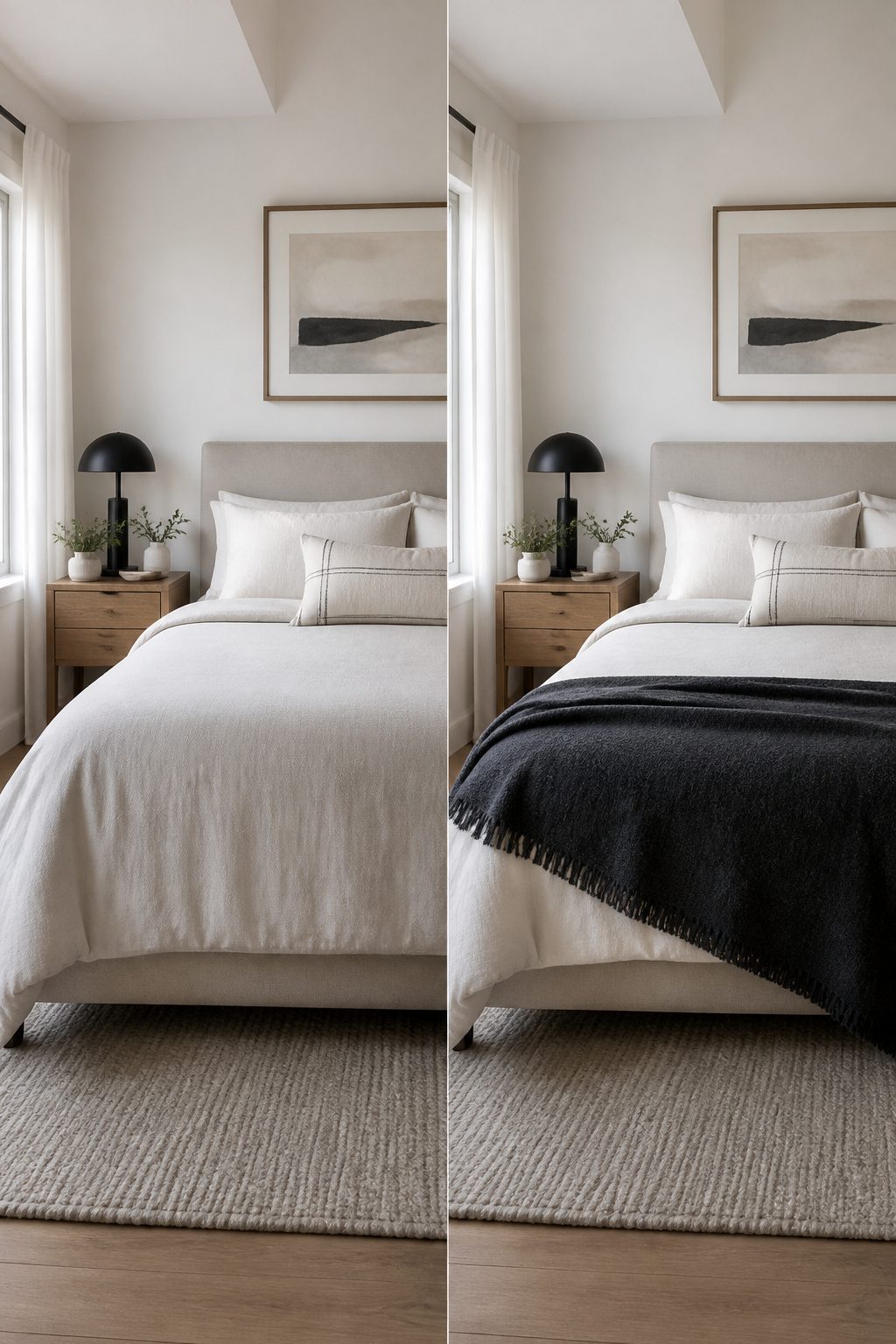
A single dark accent in a neutral full bedroom does the work that dark walls promise without shrinking the room.
I would put it at the bedside: a charcoal wool throw folded at the foot of the bed, a black ceramic lamp base, or an ebonized detail on the frame itself.
That one point of contrast gives the eye somewhere to land and keeps the palette from going flat.
Dark walls in a full bedroom are the mistake I see most often.
The bed already takes up most of the floor footprint; surround it with deep color and the space starts to feel like a cave instead of a retreat.
A dark element you can move or switch out gives you the same mood with none of the commitment. Renters especially should skip the paint can and buy the lamp.
13. Choose Drapery Over Blinds
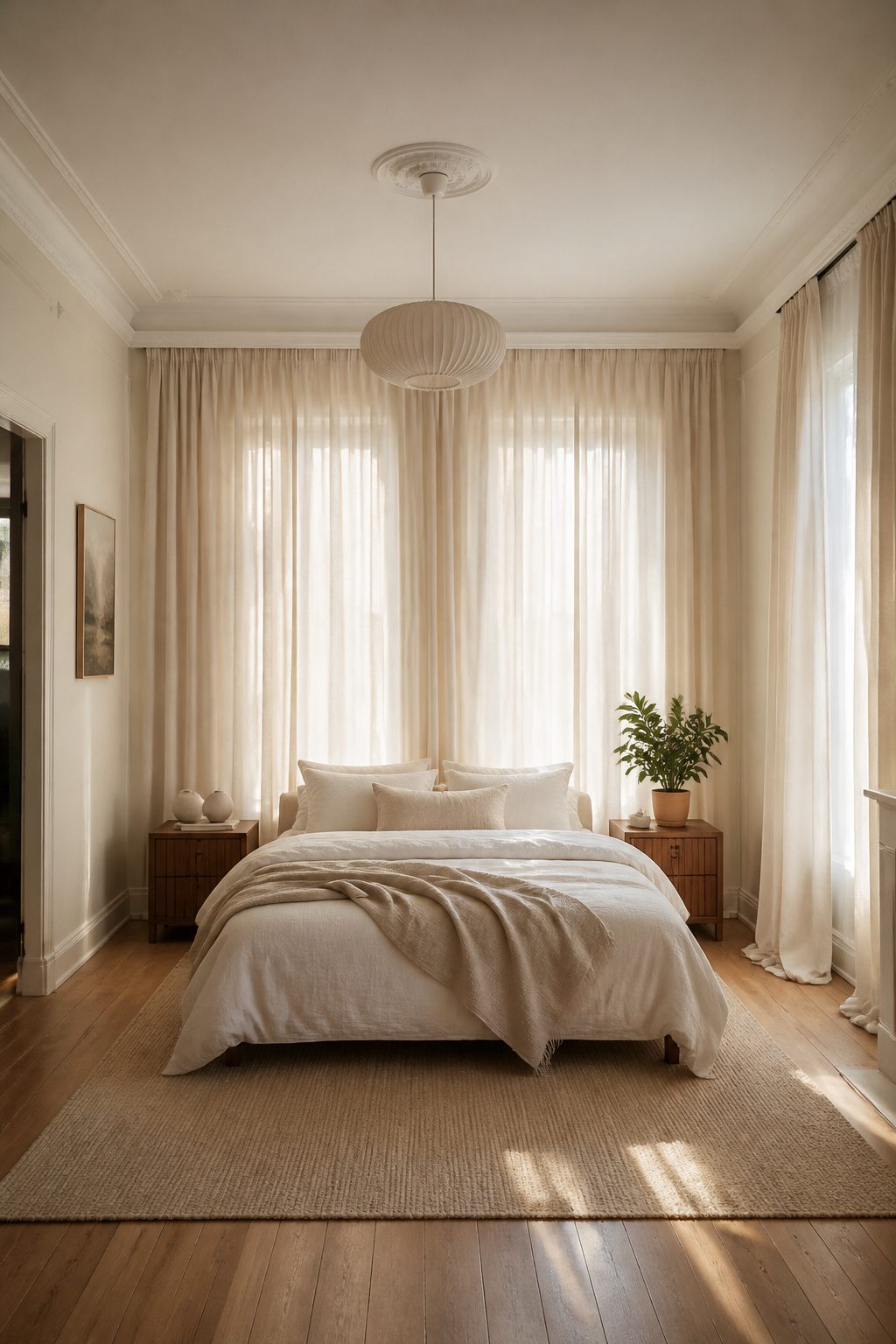
Fabric window treatments do something blinds cannot: they bring a tactile softness that turns a bedroom into a place you actually want to wake up in.
Linen or cotton panels diffuse morning light instead of blocking it, and the slight movement of fabric softens sound in a way that makes the room feel settled.
For renters, this is the practical win.
A tension rod and ready-made panels install in ten minutes, leave no holes, and move with you to the next place. No landlord conversation required.
Length is where you see the real difference. Floor-length drapes draw the eye upward and give a full bed the vertical presence it needs.
A bed that size can look low and cramped against bare windows; long panels frame it like a deliberate choice rather than a furniture afterthought.
The extra fabric pools slightly at the floor, and that small detail reads as intentional luxury in a mountain-inspired room where you want calm, not clutter.
Blinds save space and cost less upfront, but they read as office-grade. In a bedroom built around rest, drapery is the layer that finishes the job.
14. Elevate With Art and Objects
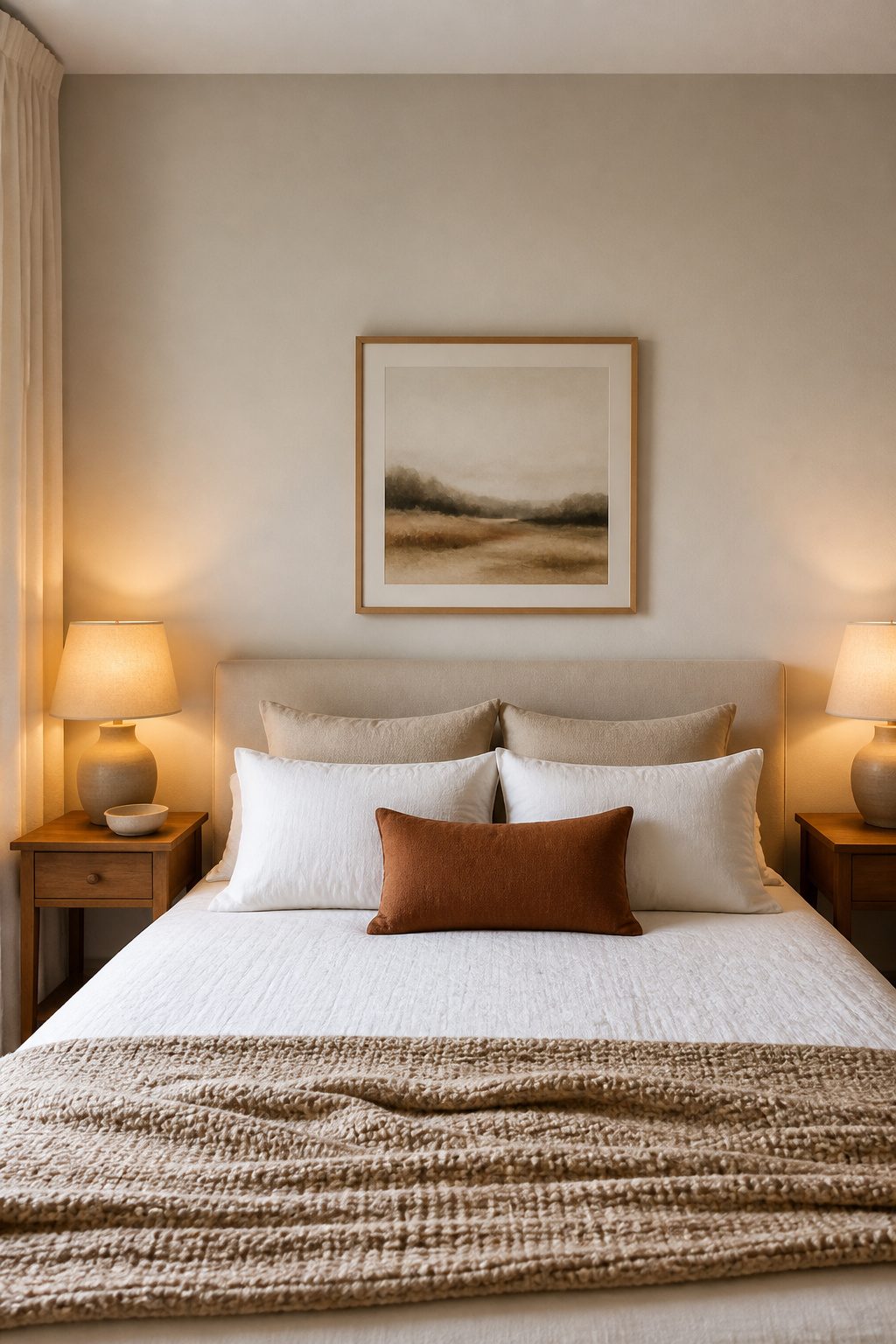
Art above a full bed needs to sit low enough to feel connected to the headboard, not floating in the middle of the wall.
I hang the bottom edge 8 to 10 inches above the mattress top, which puts the center of the piece roughly at eye level when you are standing beside the bed.
On a full, that usually means one horizontal piece 24 to 36 inches wide, or two smaller vertical pieces flanking the center.
I skip oversized art here; a full mattress is only 54 inches wide, and a 48-inch canvas starts to feel like it is leaning over you.
Symmetry works better on a full bed than on a king because the proportions are tighter and the room itself is usually smaller.
A single nightstand throws the whole wall off balance in a 10 by 12-foot bedroom, so I always use a pair, even if one side ends up holding a stack of books I never finish.
On those nightstands, I keep the height low: a lamp under 20 inches, one small dish for earrings or a watch, and nothing else.
The surface area is limited on most full-bed frames, and clutter reads as chaos fast. I would rather have one ceramic bowl I actually use than three objects competing for attention.
15. Finish With a Personal Touch
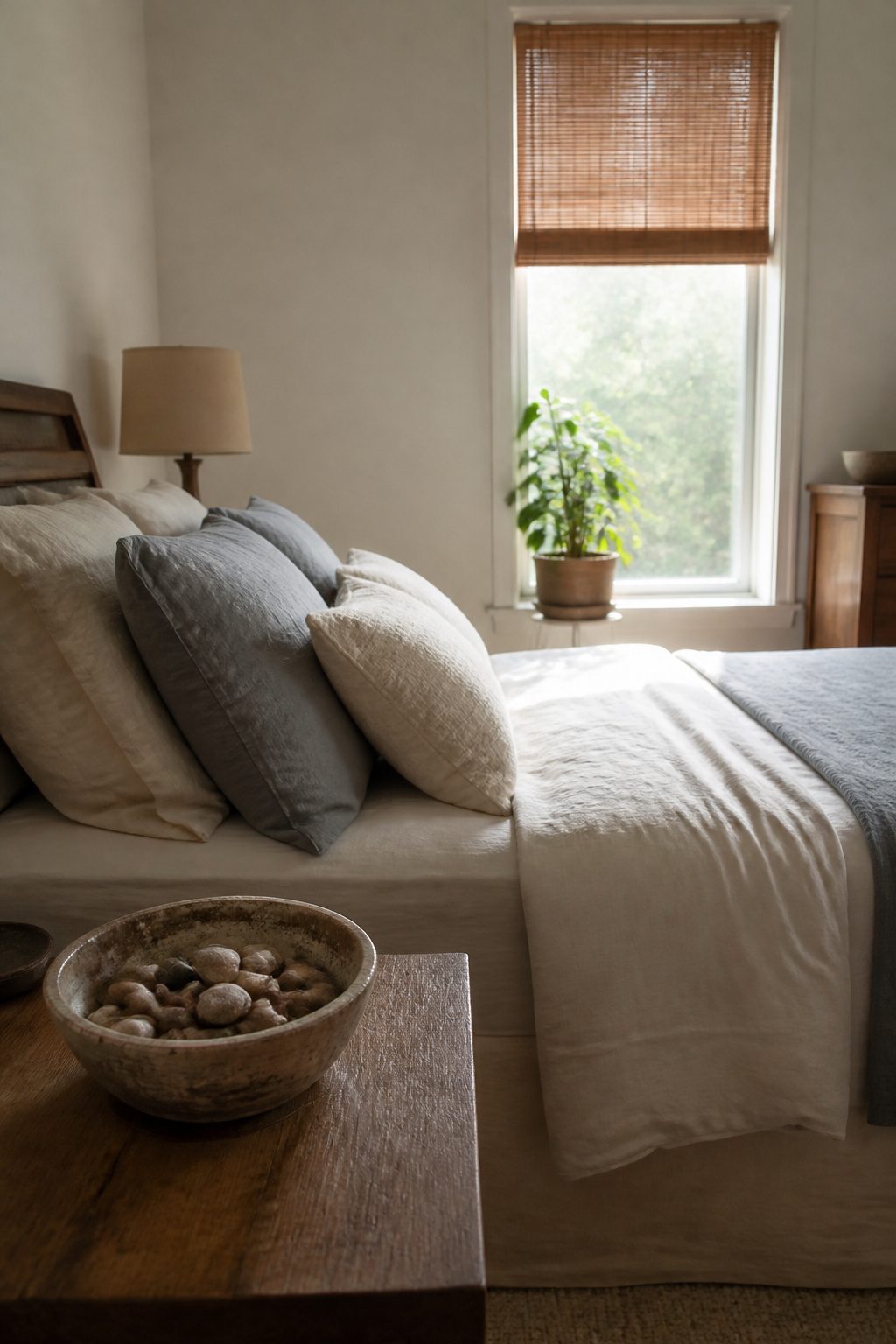
The last thing a full bed needs is one object that actually belongs to the person sleeping in it. A single piece with a story, a ding, a history, does more than a styled shelf ever could.
I have watched rooms where every surface holds a carefully grouped cluster, and the effect is a showroom that happens to contain a bed. The lived-in version wins because it costs nothing extra and takes no time to arrange.
One piece with meaning beats a vignette every time. A chipped ceramic bowl from your grandmother’s kitchen, a river stone you carried home from a hike, a paperback with a cracked spine you actually finished.
These sit on the nightstand without trying, and they shift the room from photographed to occupied.
For a weekend project on a real budget, this is the move that costs zero and delivers the most. Discipline is the price: you stop adding.
One object, not three. The restraint is what makes it read as personal rather than decorated.
Frequently Asked Questions
Is a full size bed just 2 twins?
No. A full mattress measures 54 by 75 inches, while a standard twin is 38 by 75 inches.
Two twins pushed together would create a 76-inch width, closer to a king than a full. A full bed sits between twin and queen in both width and overall room footprint.
How to style a full-size bed?
Start with tonal, tailored bedding in warm neutrals like sand or stone, then layer three textures maximum across pillows and throws.
Keep the frame simple and low-profile to open wall space, and add one organic accent piece to break the rectangle. Floor-length drapes and a single dark contrast element finish the look without crowding the 54-inch width.
What are the trendy bed styles for 2026?
Neutral, earthy palettes are leading 2026 preferences, with warmer browns rising and cooler greys declining.
Japandi principles, low-profile platform frames, and natural timber finishes are central to current bedroom design. The emphasis is on restraint, organic shapes, and tactile materials like linen and bouclé rather than bold patterns or ornate details.
Who is a full-size bed good for?
A full bed works best for one person who occasionally shares it.
At 54 by 75 inches, it fits smaller bedrooms where a queen would overwhelm the floor plan. The width gets tight for two regular sleepers, especially on softer mattresses that let bodies sink toward the center.