The right bedroom design inspiration depends on whether you want a single weekend project or a full renovation budget. A statement headboard reaching 48 inches tall reads as architecture rather than furniture, resetting the whole room for as little as $314.
1. Statement Headboard
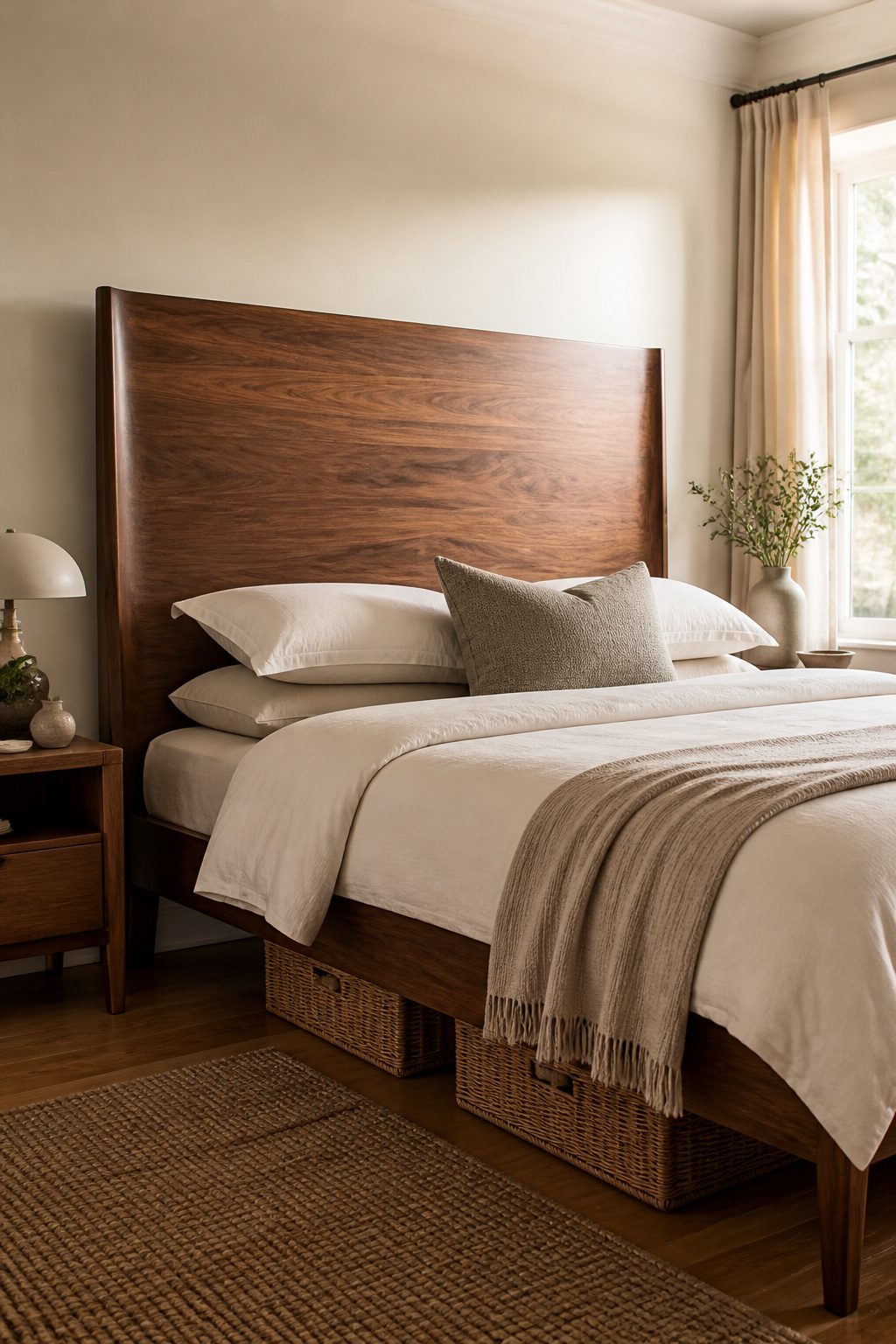
A headboard commands the wall the moment you walk in, and that single vertical plane does more to set the room’s tone than any other piece you will buy.
Scale matters more than ornament. A headboard that reaches 48 inches or taller reads as architecture, not furniture, and it lets you skip the gallery wall or the oversized art you were probably pricing out.
Wood gives the most warmth for the money, and a midcentury profile keeps it from feeling like a lodge cliche.
The Zinus Linda Midcentury Wood Platform Bed Frame runs $314 and delivers that presence without the platform-bed price tag that usually follows the word "statement."
The walnut grain is real veneer over solid steel slats, so the frame stays quiet and the headboard still photographs like something from a catalog shoot.
I would not bother with a fabric headboard at this budget. Upholstery that looks cheap up close costs twice as much to do right, and it collects dust in a way wood simply does not.
The Linda’s tapered legs lift the frame enough to fit storage bins underneath, which matters in a first bedroom where the closet is already spoken for.
One piece resets the whole room. Move your existing nightstands six inches wider to clear the wider profile, swap in a single table lamp with some weight to it, and the bed becomes the photograph you would pin.
Recommended Products

Mid Century Modern Fluted Design: Elevate your bedroom with this exquisite wood headboard queen size, featuring a beautifully curved profile and sophisticated vertical slats. The warm walnut finish enhances your space with timeless elegance and depth, making it the perfect centerpiece for a Mid Century Modern style bedroom. Add a touch of luxury and class to your home with this statement headboard.

Elegant Fluted Design & Soft LED Glow:Features vertical sculpted grooves and integrated ambient LED lighting that effortlessly complements any bedroom decor. The soft, warm backlight creates an inviting atmosphere while adding a touch of sophistication to your space.

Farmhouse Style - This farmhouse bed frame features a 51.2" tall, horizontal-panel headboard, with natural wood grain, and a rich White finish. The rustic wooden bed frame brings warm, timeless character to your bedroom.
2. Layered Lighting
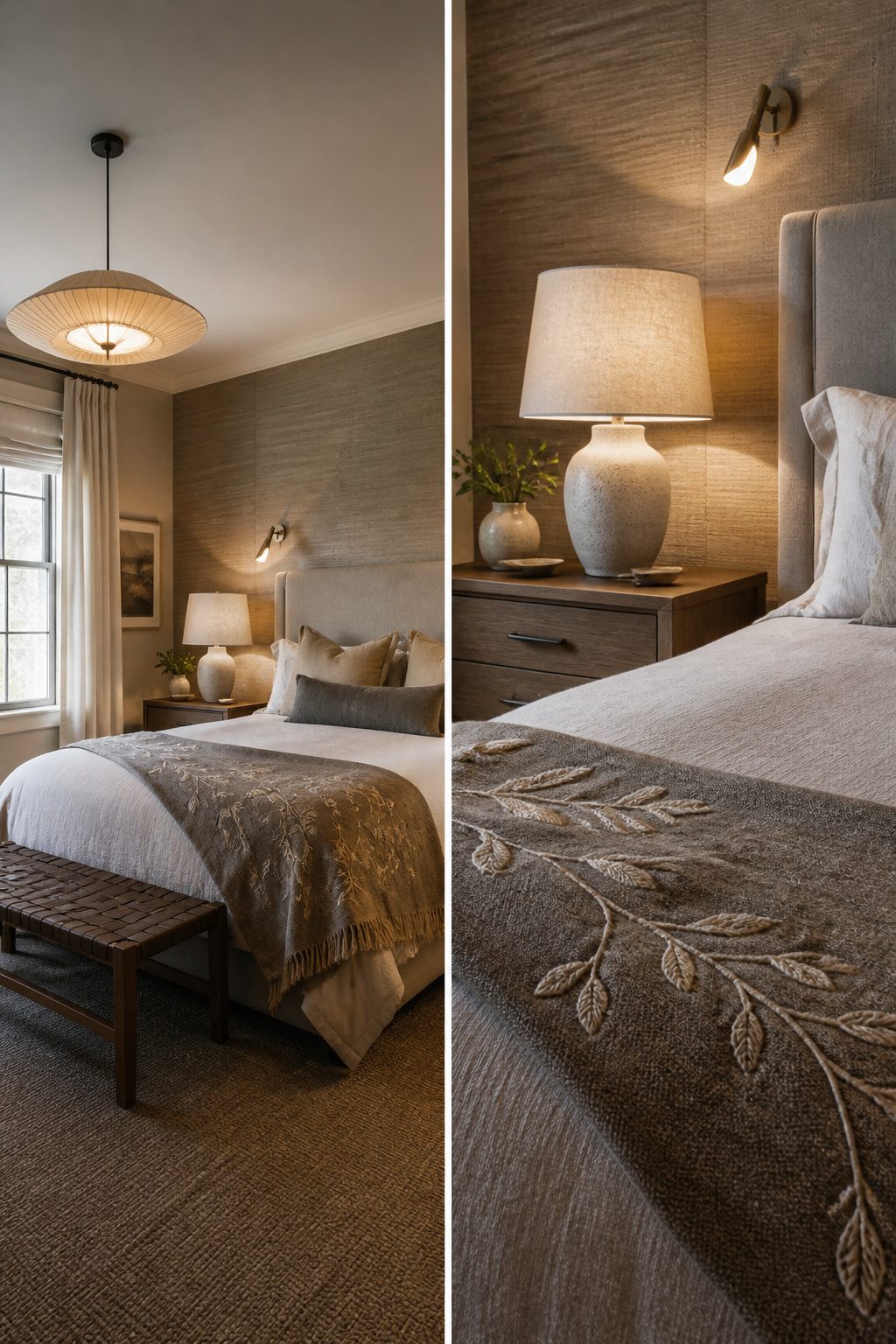
Most bedroom lighting advice stops at the idea of layering without naming the fixtures or heights that make it work.
Ambient light from an overhead fixture with a dimmer handles general brightness and should sit on a switch you reach from the door.
Task lighting at the bed needs to land at a specific height: the bottom of a bedside lampshade should sit roughly level with your chin when you are sitting up against the pillows, which for most standard mattresses and nightstands puts it about 24–27 inches above the floor.
Lower than that and the bulb throws light straight into your eyes; higher and it reads as a ceiling fixture that happens to be near the bed.
Wall sconces and single pendants free up nightstand surface, which matters in a small bedroom where every square foot counts.
If a lamp is your only option, a shaded lamp with soft diffusion or a dimmable bulb wins over an exposed bulb for exactly the reason you think: the last thing you want before sleep is glare.
I would skip the USB-port lamps unless you already know you need the charging; the ports date fast and the base bulk often throws off the scale.
Accent lighting, the third layer, is where most bedrooms stay unfinished. A narrow-beam directional fixture aimed at a textured wall or the curve of a headboard adds depth that ambient light alone flattens out.
The dimmer on your overhead is non-negotiable here: full brightness for cleaning, 10–20 percent for winding down. Without it, you have two moods (on and off) instead of a room that actually shifts with the hour.
Recommended Products

【Vintage Craftsmanship, Cozy Atmosphere】 Classic retro semi-buried ceiling lamp with artisanal Amber glass shade and matte black metal base, outstanding texture. The soft light reflects the charming shadow through the glass, easily creating a warm and cozy home atmosphere.
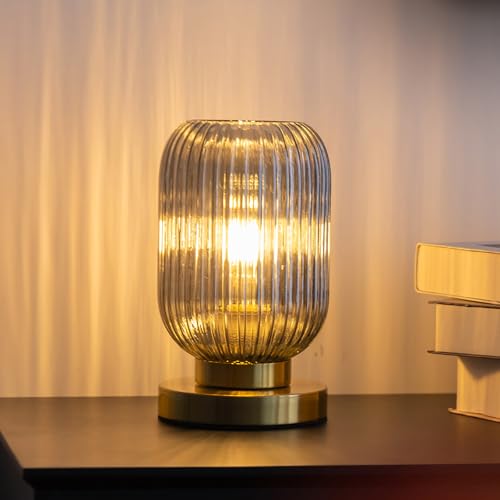
【Modern Glass Table Lamp】Crafted with a sturdy metal base and smoky gray glass shade, this mid century modern lamp combines durability with understated modern style for long-lasting daily use. Its elegantly curved shade casts soft, flattering illumination, creating a warm, inviting glow that elevates any interior ambiance. Ideal as a bedside night light, it also makes a thoughtful and stylish gift for family, friends, and colleagues.

BRUSHED BRASS METAL FRAME WITH AMBER GLASS GSHADE: 5.9"(15cm) small amber glass diffuses harsh light to eliminate eye strain; brass canopy and lamp holder hold long-lasting luxury golden finish for indoor spaces
3. Bold Bedding
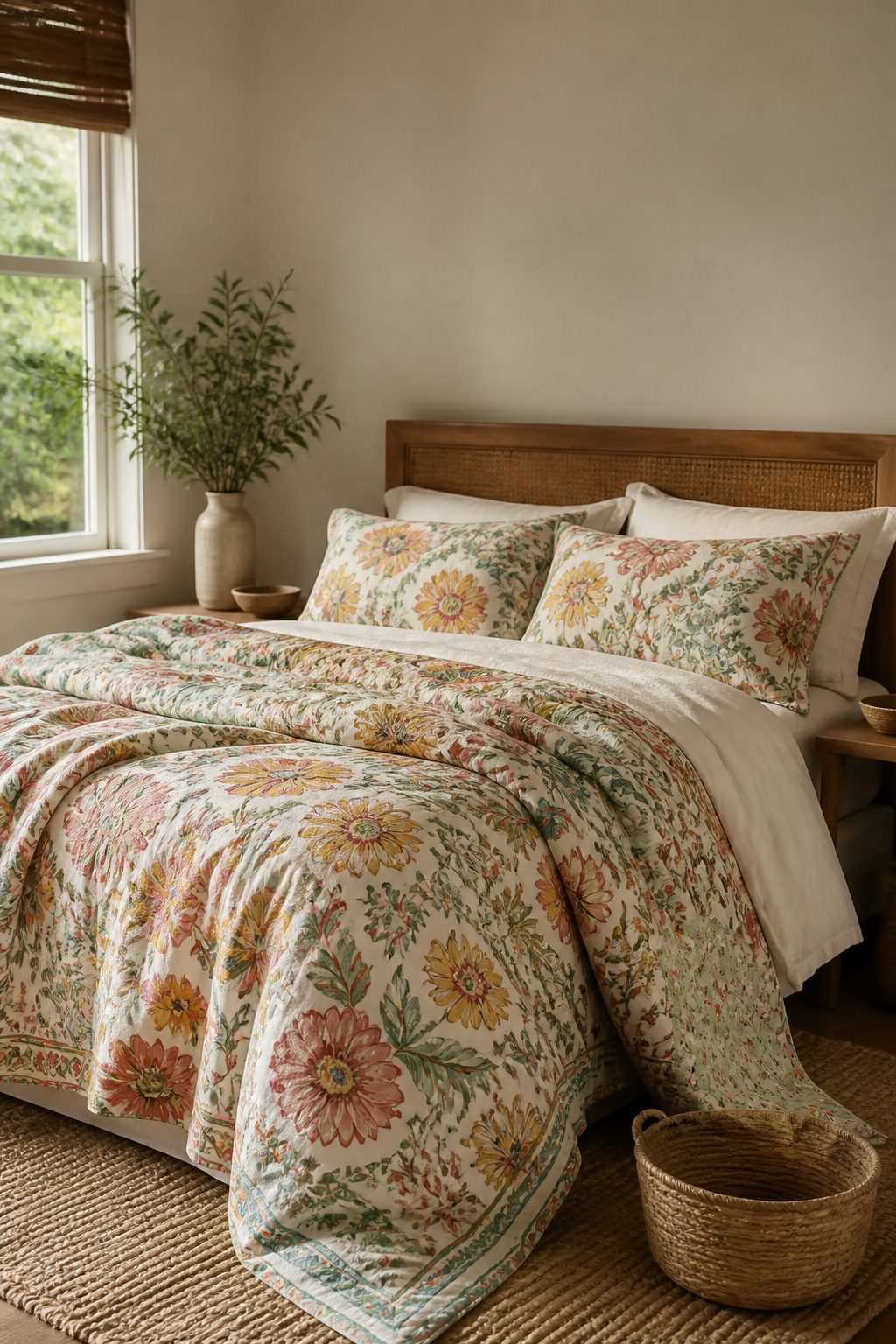
Bedding is where most bedrooms fall flat, and it is also where the easiest win hides. A bed dressed in something other than hotel white becomes the focal point without a single new piece of furniture.
The Parachute Linen Sheet Set at $359 has the relaxed, rumpled texture that reads mountain cabin immediately, and the Nickey Kehoe Nonna Floral Coverlet at $600 delivers the kind of pattern that carries a whole room.
I would skip both at those prices. The linen set is lovely but $300 for what is basically a texture, and the coverlet, while striking, asks $600 for a single layer you will want to swap seasonally.
The bold look comes down to material choice, not label. A cotton percale or matelassé coverlet in a strong floral or check runs $80–$150 from Target or similar, and the crisp weight reads intentional rather than cheap.
Pair it with a solid flat sheet in a warm ivory or oatmeal, add two standard shams in the same pattern as the coverlet, and the bed becomes the center of attention for under $200.
What you give up is longevity: the budget cotton will soften and fade faster than the Parachute linen, but at half the price you can swap the whole look in two years when the mood changes.
For a renter or a first-home owner doing one project a year, that is the better math.
Recommended Products

Simple Sense with Compact Design: Pairing subtle contemporary inspiration with slender silhouette and hardback drum shade, this collection will bring a sense of mid-century charm to your living space. Using practical cantilever design, our bedside table lamp can offer a perfect sized lampshade with small footprint on the tabletop to you.

Flower Table Lamp Design: This exquisite bedside lamp combines vintage simplicity and modern elegance, featuring a lily of the valley motif and soft green hue for serene bedroom, study, or living room decor. Its slim gooseneck ensures flexible angles, making it a practical reading lamp, stylish living room lamp, or functional office lamp. This LED lamp provides warm ambient lighting, perfect as a corner lamp, while its retro and Tiffany-style design adds artistic charm to any space.

【 3 Color Temperatures Switch Control Lamp 】You will receive a bedroom lamp controlled by the switch. Each switch on will change the color temperature (3000K Warm White, 4000K Natural White, 6500K Cool White). Different color temperatures meet your distinct needs. This desk light can be used as an ambience lamp, reading lamp, night light, study lamp for home office, bedroom, college dorm room, living room and gaming room
4. Built-In Drawers
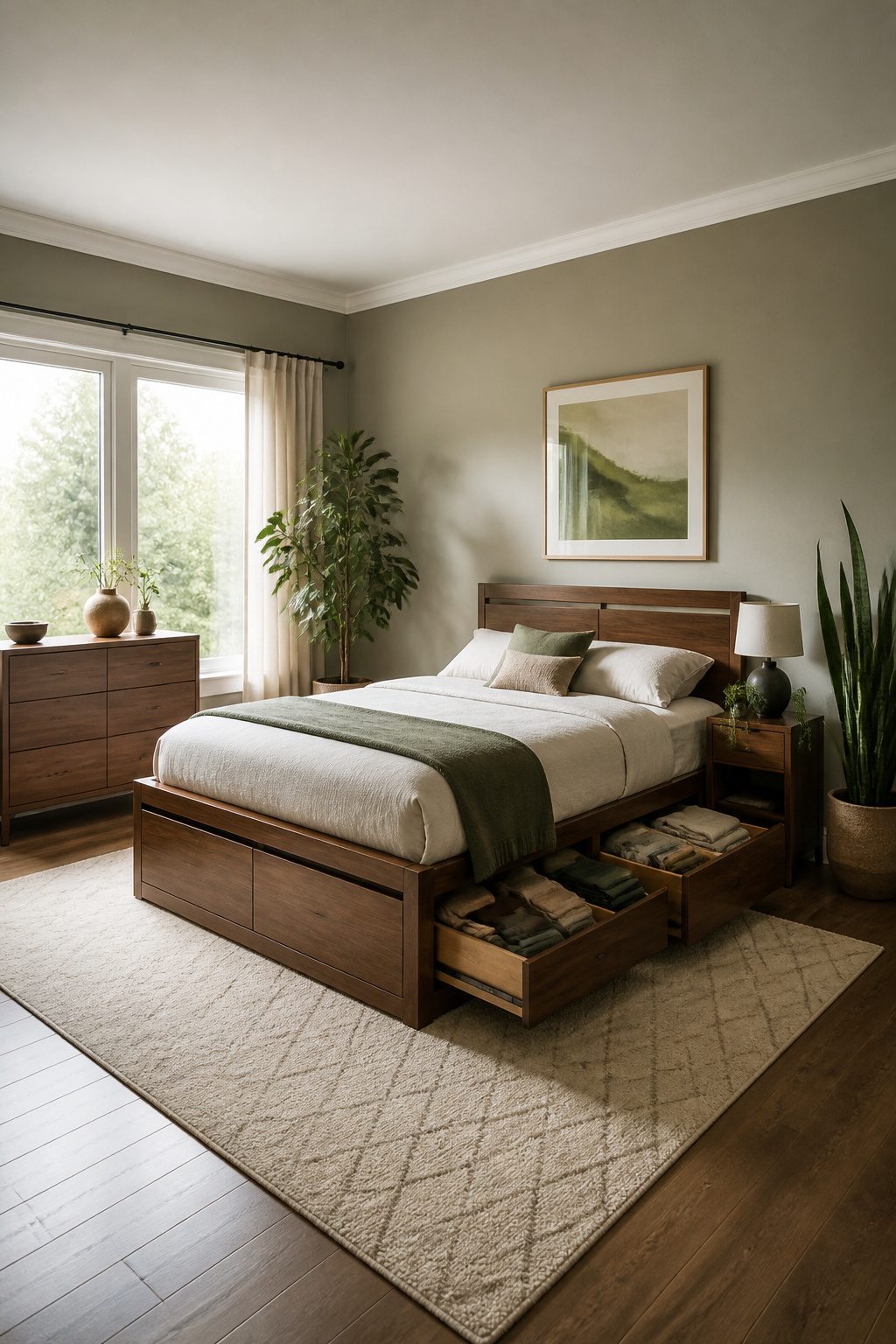
A bed frame with built-in drawers puts the one space you already sleep on to work as storage.
Laura Fenton, who wrote The Little Book of Living Small, keeps a wooden captain’s bed with six drawers in her own apartment; she and her husband store all their folded clothing there and skip the chest of drawers entirely.
Built-in drawers save roughly the footprint of a dresser, which matters when a small bedroom leaves you choosing between floor space and furniture.
Renters should look for freestanding storage beds that arrive in a box and assemble with a hex key.
Owners who plan to stay can go further: a Murphy bed folds vertically into a wall cabinet and frees the whole room for a desk or reading nook during the day.
That second option is real carpentry, not a Saturday project. The install-yourself route from Wayfair or similar lands closer to a captain’s bed with drawers underneath, which two people can set up in an afternoon without touching drywall.
I would pick the drawer bed for almost every first project.
It demands no permission from a landlord, no wall anchoring, and no custom cabinet order. The Murphy bed wins only if the room must serve two purposes daily, not just store more.
Recommended Products

【Farmhouse Dual-Mount Design】Featuring double clear glass shades, these vanity wall lights blend contemporary and classic farmhouse aesthetics, supporting upward and downward mounting to seamlessly match various interior decor styles and space layouts.

Soft and homely:The wall sconce supplied with a Energy-saving and Non-flickering 9W LED G9 bulb (3000K warm white) without switch. The bulb can be replaced,max 40w. NO battery operated.

Wireless & Easy to Install: Depuley wall sconces set of two battery operated with two E26 USB charging led bulb, say goodbye to outlet and wired limitations, only takes 20 min to install. Our sconces wall decor set of 2 will elevate your room with a sleek and modern design. Great for halloween decoration.
5. Window Dressings
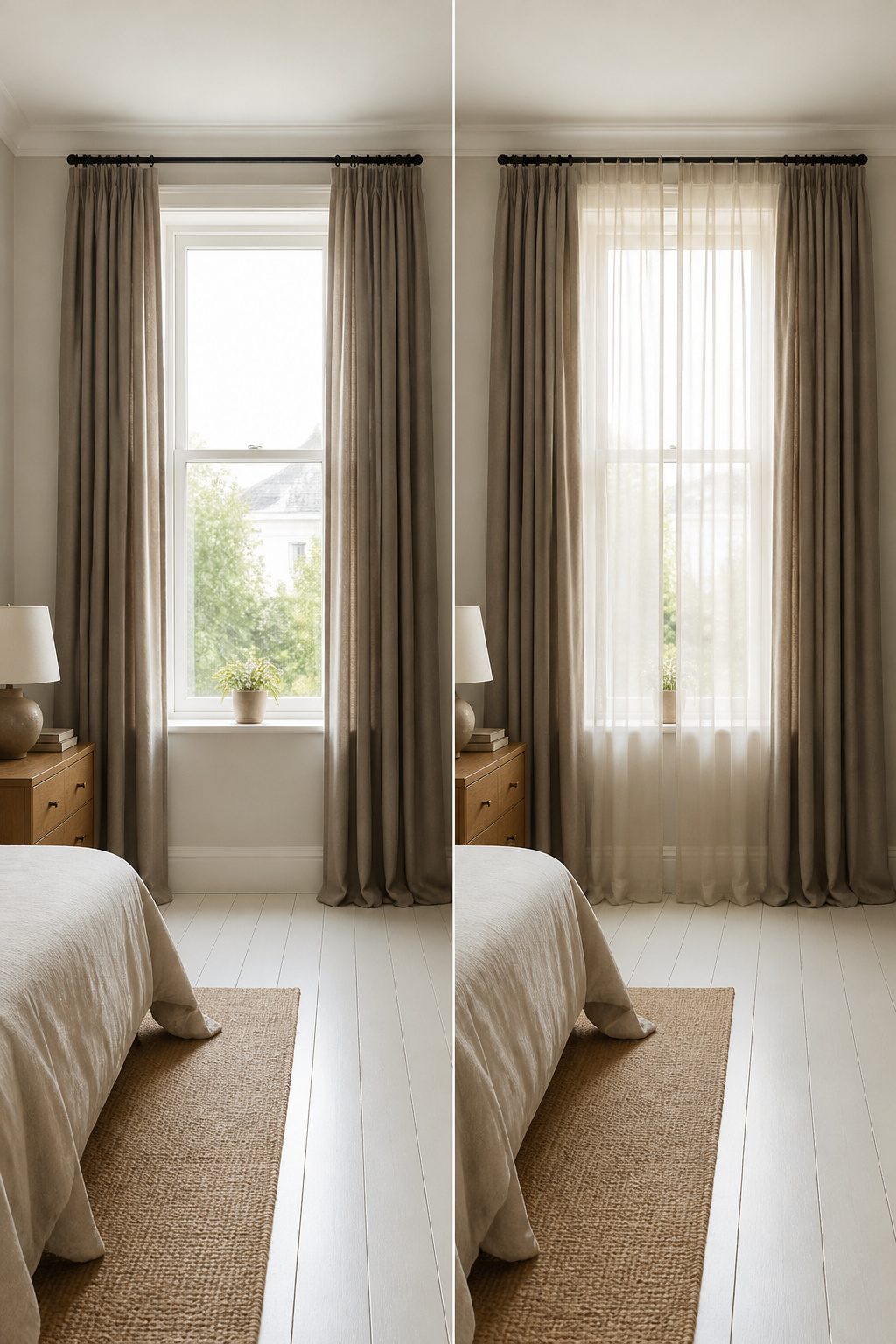
Window treatments in a bedroom do two jobs that matter equally: they decide how much light hits your eyes at 6:00 a.m., and they add the soft layer that keeps the room from feeling like a box.
Blackout curtains hung close to the ceiling and running floor to ceiling handle the first part completely.
They turn an east-facing bedroom into a space that sleeps like a cave, which is why I would not skip them on any window that gets morning sun.
The texture comes from layering.
A sheer panel underneath the blackout lets you pull back the heavy drape and still have privacy with daylight. The sheer catches the light; the blackout kills it when you need to.
For the hardware, mounting the rod 6 to 12 inches above the window frame and extending it past the width on each side tricks the eye into reading a larger window.
I have used this in a north-facing room where the actual glass is modest but the wall feels bigger with the fabric stacked wide, not crowding the casing.
My own call: east bedroom, blackout lining is non-negotiable. North bedroom, where the light is flat and gentle all day, I would still run the same double layer for the texture but would not stress about the lining weight.
The sheer does more of the work there, and the blackout becomes occasional use, not daily defense.
Recommended Products

Hold Up to 66lbs: Yecaye under bed storage with wheels is made of high quality 300D PU fabric and sturdy metal frame, can hold up to 66 lbs, stronger than other fragile metal mesh, spacious capacity perfect for storing clothes, toys, books, shoes and other heavy items also won't compromise stability and durability

80L Expandable Larger Capacity : Under the bed storage with dimensions 31.5 x 15.75 x 9.45 inches (with wheels), height adjustable from 9.45" to 11.02" to fit most bed frames. Perfect for storing clothing, shoe, bedding, pillow, towel, and seasonal decor like wrapping paper, Christmas and Halloween supplies. Slides smoothly under bed, couch, closet and table to maximize unused space

Under-the-bed storage bag (2-pack) helps keep items safely stored, freeing up extra closet and drawer space
6. Two-Tone Color Palette
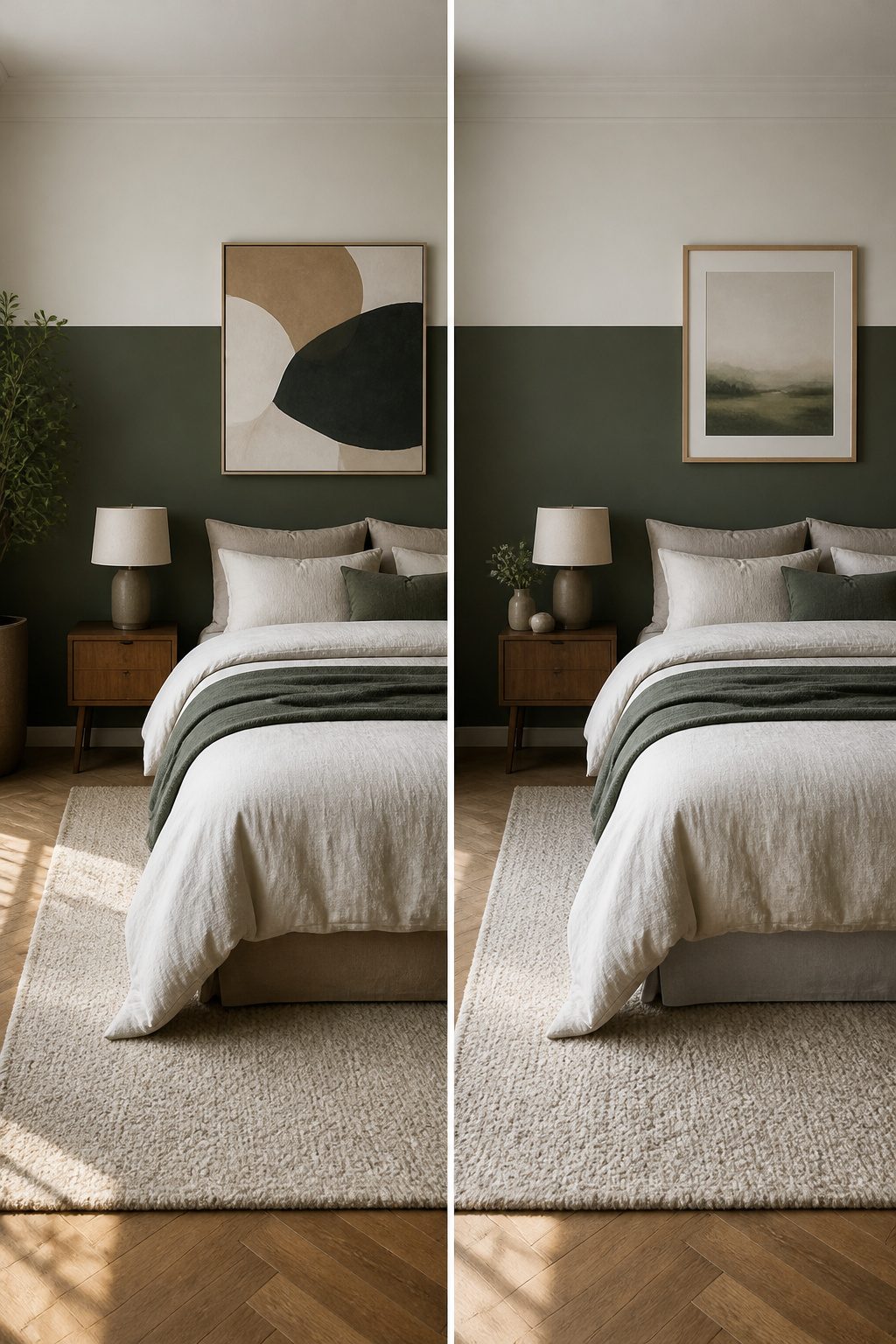
A two-tone wall treatment does more than add color; it changes how the room feels in space.
I put the darker tone on the lower third, starting around chair-rail height or just below, and keep the ratio at roughly 70 percent light to 30 percent dark.
That keeps the ceiling from feeling pressed down, which is the mistake that kills most two-tone bedrooms.
For a grounded, quiet look, Farrow & Ball’s Calke Green No.34 on the lower wall with Skylight above works like a built-in wainscot without the carpentry bill.
The green reads as shadow, not statement, and Skylight stays warm enough to avoid that cold hospital gray.
If you want something bolder, aubergine on the lower half with a warm white above gives you the depth without turning the room into a cave.
I skip the accent wall in most bedrooms.
One loud wall tends to fight the bed for attention, and the bed already wins that fight. Two-tone wraps the room instead, so the color moves with you as you walk in.
The 70/30 split keeps the darker color working as architecture, not decoration. Tape the line with low-tack painter’s tape, pull it while the second coat is still tacky, and you get a sharp edge that reads like trim.
Recommended Products

WOOD HEADBOARD - Refresh your guest bedroom, kid's room, or college dorm with the retro modern style of this twin headboard featuring a window pane design, organic aesthetics, and mid-century accents

Mid-Century Style & 100% Solid Wood: Create a relaxing bedroom retreat. Built for durability, it blends timeless style with lasting comfort so couples can unwind together every day.

【Solid Pine Wood Frame】 Built with a solid pine wood frame and visible natural grain, this queen size wood bed frame brings a deep dark walnut look to your bedroom. The mid century modern platform design works well for master bedrooms, apartments, guest rooms, and everyday bedroom upgrades.
7. Natural Elements
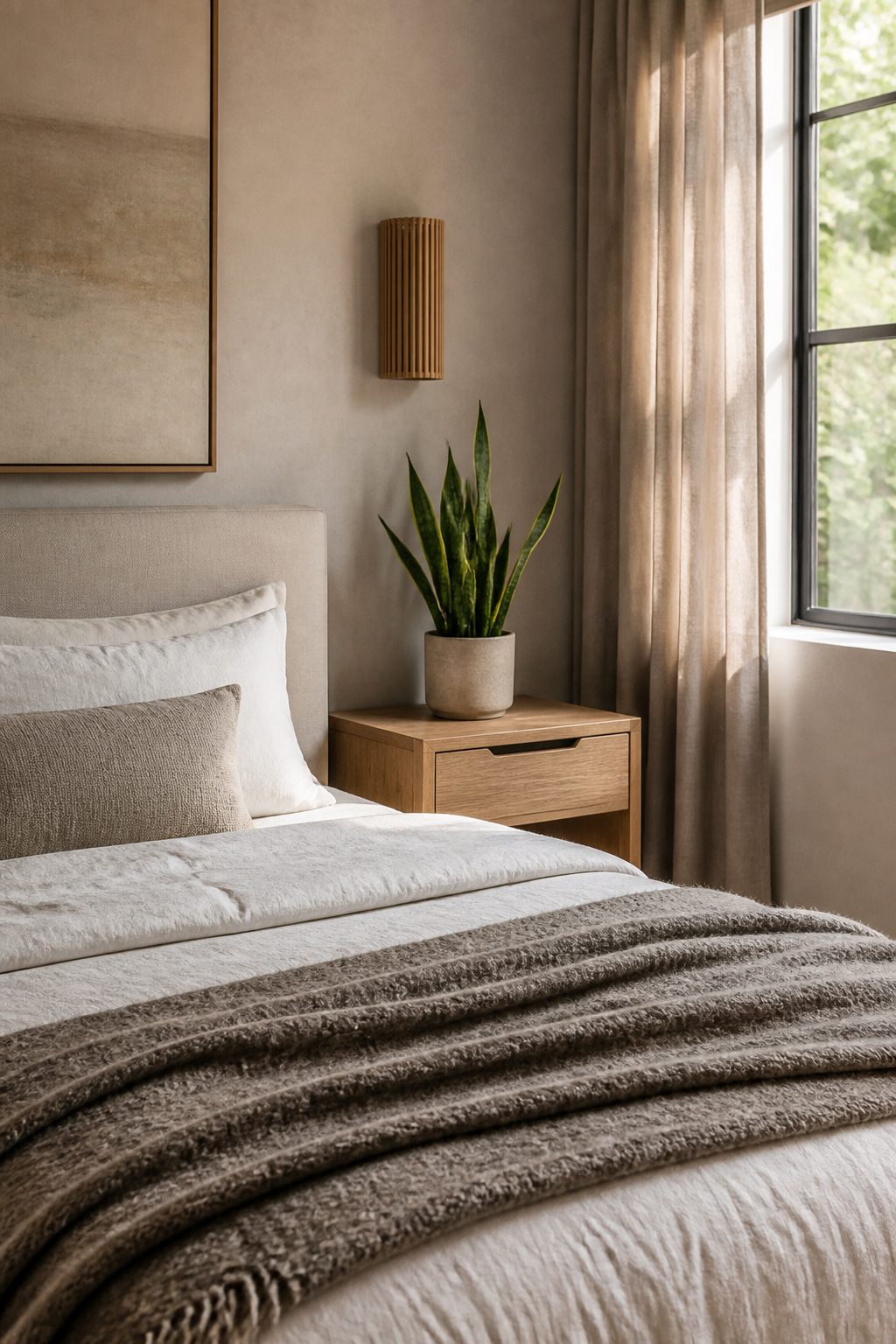
Greenery in a bedroom only works if the plant survives the low light, and most do not.
A snake plant or ZZ plant will handle north-facing windows without the drama of brown leaves, which is why I keep them on nightstands instead of fussier options that need rotation schedules I will not maintain.
Wood grain matters more than people expect. Oak with a visible cathedral grain reads rustic fast; I prefer rift-sawn white oak or ash with a subtle, straight pattern that warms the room without turning it into a lodge.
The finish matters too: a matte oil over a high-gloss lacquer keeps it current.
The ceramic piece that keeps surfacing in this space is the Jun Tsunoda Ceramic Vase at $350.
It is beautiful, and if you collect, that price is what it is. For a shelf that needs one quiet shape, I skip it and buy stoneware at thrift stores for $8–$15.
The glaze is usually more interesting on a forty-year-old studio piece anyway, and if it chips on a bedroom dresser, I am not out a car payment.
Cotton or linen bedding layered with a wool throw does the actual work of making the room feel organic. The textiles touch your skin; the vase just sits there.
Recommended Products

Cute mushroom lamp enhances elegance and warm: The beautiful mushroom table lamp is simple, minimalist and cute. It creates an elegant, cosy and pleasant atmosphere in the room. Simple and durable. Perfect as a gift for children, women etc.

【A Retro Touch of Elegance】This glass table lamp looks very pleasing thanks to its high-quality ribbed glass and sleek metal base - an absolute retro feeling that elevates your decor. Beautiful lit or unli.

【Classic Design】 DSMJFU 3-light vanity lighting fixtures is made of durable metal frame and carved white glass shade. The combination of carved white and brass gold creates a perfect visual display, which can showcase a elegant atmosphere for decoration. This exquisite bathroom lamp is suitable for various decoration styles, making it the perfect choice to enhance your home lighting.
8. Vintage Furniture
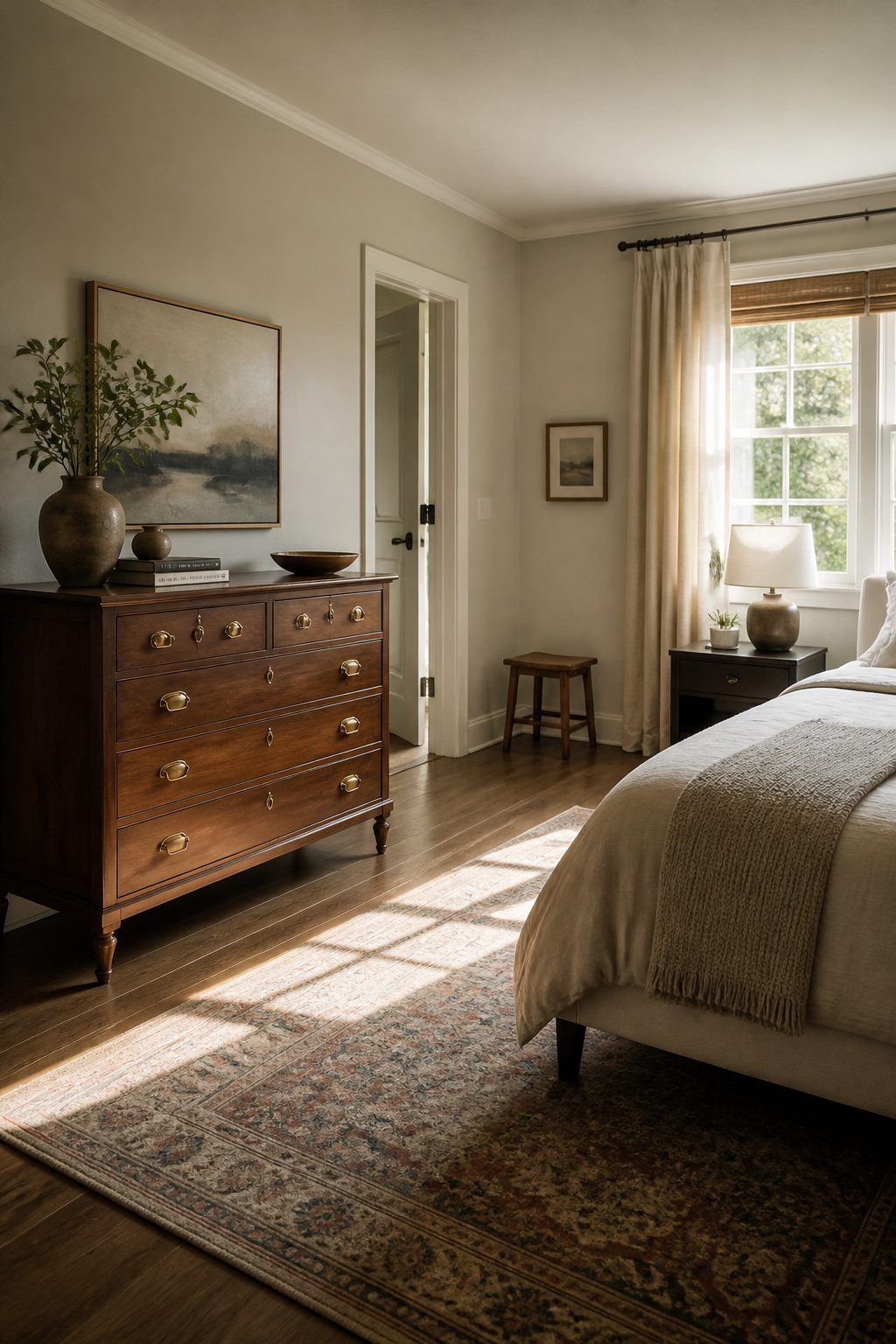
A vintage dresser with dovetailed joints and brass pulls does what no flat-pack piece can: it holds the room together with weight that reads as permanence.
I hunt for these at estate sales and the back corners of Habitat ReStores, where the good stuff sits behind rows of particleboard because no one wants to haul it.
Before you buy, pull every drawer.
Feel for the glide. If it sticks or tilts, the runner is warped or the joint has loosened, and fixing it means rebuilding the carcass, not a weekend adjustment.
Check the bottom of the drawer too; thin plywood stapled to the sides will sag under a sweater load.
One solid nightstand beside a platform bed from the big-box store changes the whole equation.
The contrast makes the new piece look intentional rather than cheap, and the vintage piece looks chosen rather than inherited. The risk is real, though.
I have passed on dressers with perfect faces because three of four drawers jammed on their tracks. A stuck drawer in a bedroom kills the calm you are building; you will fight it every morning.
Recommended Products

Elegant charging with USB Port: With an integrated USB port, this decorative table lamp enables you to elegantly charge your mobile phone, tablet, Kindle reader, and other small electronic devices. It’s also the perfect solution for portable speakers, radios, CD players, or MP3 docking stations. The convenience make it perfect as a bedroom lamp or a table lamp in your living room, office, or anywhere you need to charge a device.

Customize Your Lighting in Seconds: Imagine You’re settling into your favorite chair, and with just a quick button press, you can set the perfect mood. Our small bedside lamp offers three color temperatures—warm (3000K), neutral (4000K), and cool (6000K)—so you can easily switch between cozy, balanced, and bright lighting to match your activity or vibe. (Pro tip: Press the switch button twice to cycle through the colors!)

Height Adjustable : Modern floor lamp with minimalist design decorate your living room, bedroom, office. Innovative retractable pole allows you to adjust the height of the floor lamp.Choose the right height for your working or sitting on sofa
9. Layered Textures
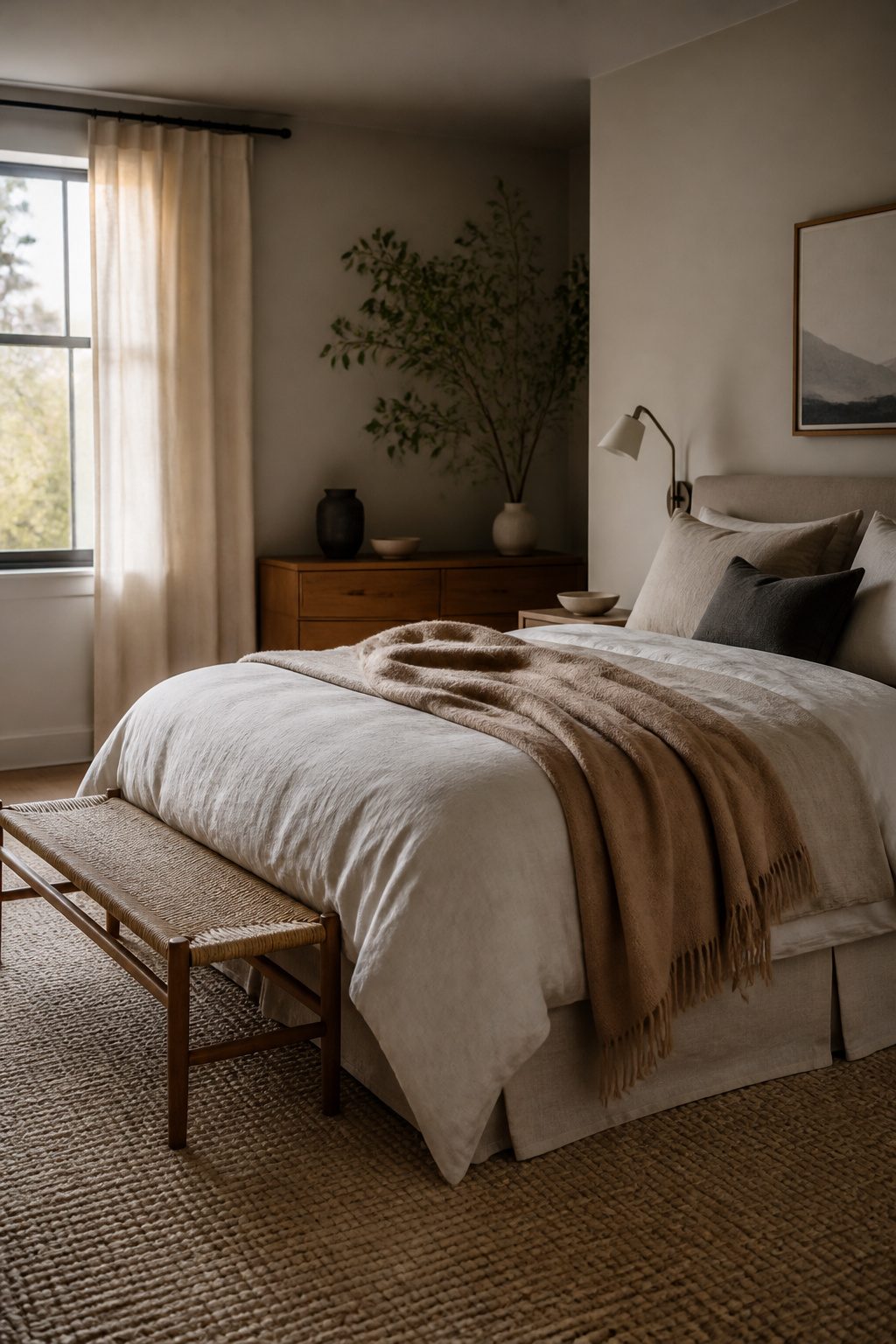
Linen against wool is the pairing I keep coming back to in a bedroom.
The linen stays cool and slightly crisp against your skin, while wool brings in the warmth you actually feel, a difference that matters when you are trying to sleep rather than entertain guests.
Velvet with rattan works too, but I would save that tension for a living room where the contrast reads as deliberate. In a bedroom, the mix needs to settle down.
The line between layered and cluttered sits at about three distinct textures in view at once.
A soft woven wool carpet underfoot, cotton or linen bedding above it, and one throw in a contrasting weave, cashmere or mohair if the budget allows.
Add a second small rug on top of the first and you have stepped over into visual noise, which is why I stop there.
Matte fabrics next to something with a subtle sheen, a cotton duvet against a slightly lustrous coverlet, give you depth without demanding attention.
Natural fibers win for the same reason they work in Japandi spaces: they feel honest against your skin and they keep the room feeling tranquil.
Synthetic blends can mimic the look, but they do not breathe the same way and they tend to read as cluttered faster because the eye catches something off before the mind names it.
Recommended Products


Modern Design & Minimalist Style: The LED wall sconce encapsulates modern sophistication with its cutting-edge design and minimalist style. With clean lines and a sleek matte black finish, the wall scones seamlessly integrate into modern living spaces, adding a touch of chic simplicity. The minimalist style and thoughtfully curated design details contribute to the overall ambiance, making it a standout choice for those seeking a balance of modernity and understated elegance in their home decor.

3-Temperature Wall Sconces Set of 2: Enhance your home’s ambiance with this stunning set of two wall sconces. Offering three adjustable color temperatures—3000K for a warm, cozy glow, 4500K for a balanced, inviting atmosphere, and 6500K for a crisp, focused brightness—these wall lights are perfect for any activity. Whether you’re reading, working, entertaining, or unwinding, these wall sconces set the mood just right.
10. Statement Lighting
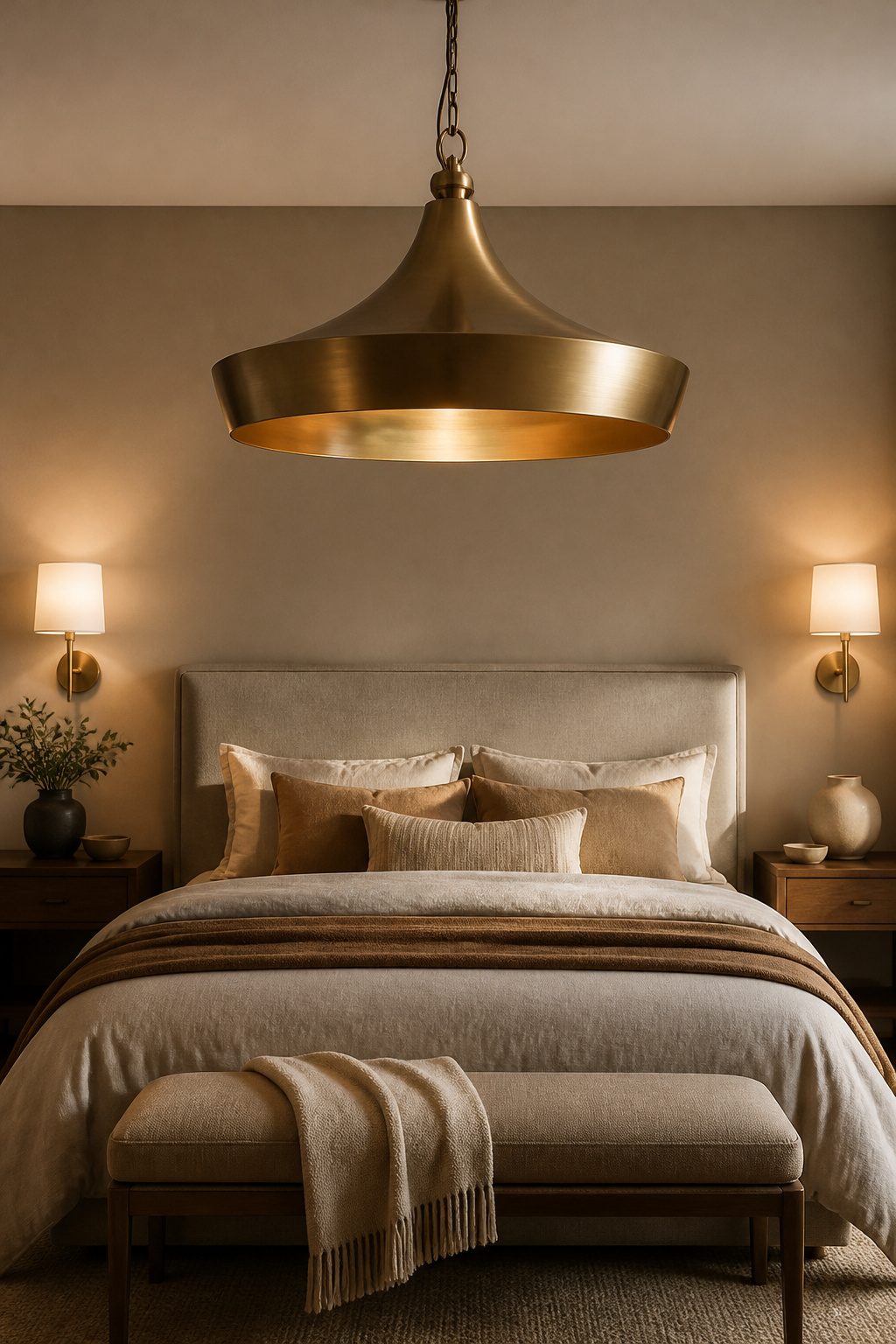
A single pendant or sconce with real presence can carry a bedroom the way a headboard does, and it frees your nightstands for books and water glasses.
Scale it to ceiling height: in an 8-foot room, a pendant wider than 16 inches or hanging lower than 7 feet above the floor starts to feel like an obstacle.
Taller ceilings can take something with more spread, but the fixture should still read as furniture, not architecture.
I prefer hardwired for this role. Plug-in sconces solve the problem of no junction box, yet the cord trailing down to an outlet ruins the whole effect of a statement piece.
Hardwiring costs more and usually means an electrician, but the clean wall is worth it for something meant to draw the eye.
Exposed bulbs, smoked glass, or industrial metal sconces all work here; mixing metals keeps the room from feeling too matchy, though I would keep the finish in the same temperature family, warm with warm.
Swing-arm wall lamps or a small chandelier can double as decor and practical light source.
Brass or iron from makers like Visual Comfort & Co. lean into that handmade, slightly repurposed feeling that turns a bedroom into an actual escape at night.
Skip anything that needs a special bulb you cannot buy at the grocery store; maintenance matters as much as the first impression.
Recommended Products

[Quality Metal Container] Never settle for flimsy plastic&linen under bed storage bins which rip all too easily. This under the bed storage container is completely made of metal, compared with other under bed storage bins, smaller mesh size of the shelf is used for a larger load-bearing capacity. Plus, the whole frame was welded into a whole that never falls apart.
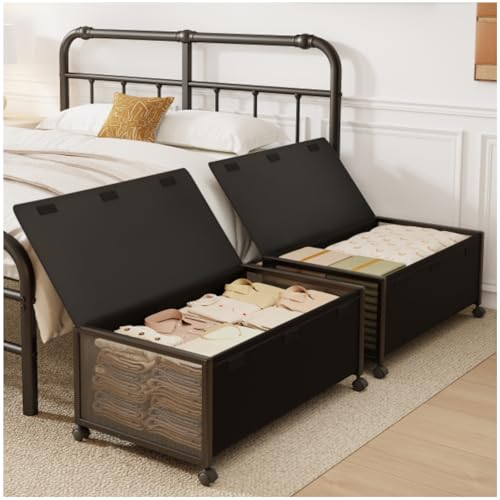
LARGE UNDER BED STORAGE:Fokyfok under the bed storage offers 2 times the capacity of a regular under the bed storage containers,allowing you to make good use of the space,our under the bed storage with wheels can be used as under crib storage,college dorm under bed storage drawers,shoe rack under the bed,With its generous size,you can store and organize a wide range of items,from clothing and bedding to shoes gear and seasonal decorations

Versatile Dividers: Yecaye under bed storage containers comes with 2 adjustable dividers that let you organize items of varying sizes effortlessly. Whether it’s winter boots or seasonal clothes, configure the compartments to fit your exact needs. Our underbed storage ensures every inch of space is utilized efficiently, transforming chaos into an artful organization
11. Feature Wall
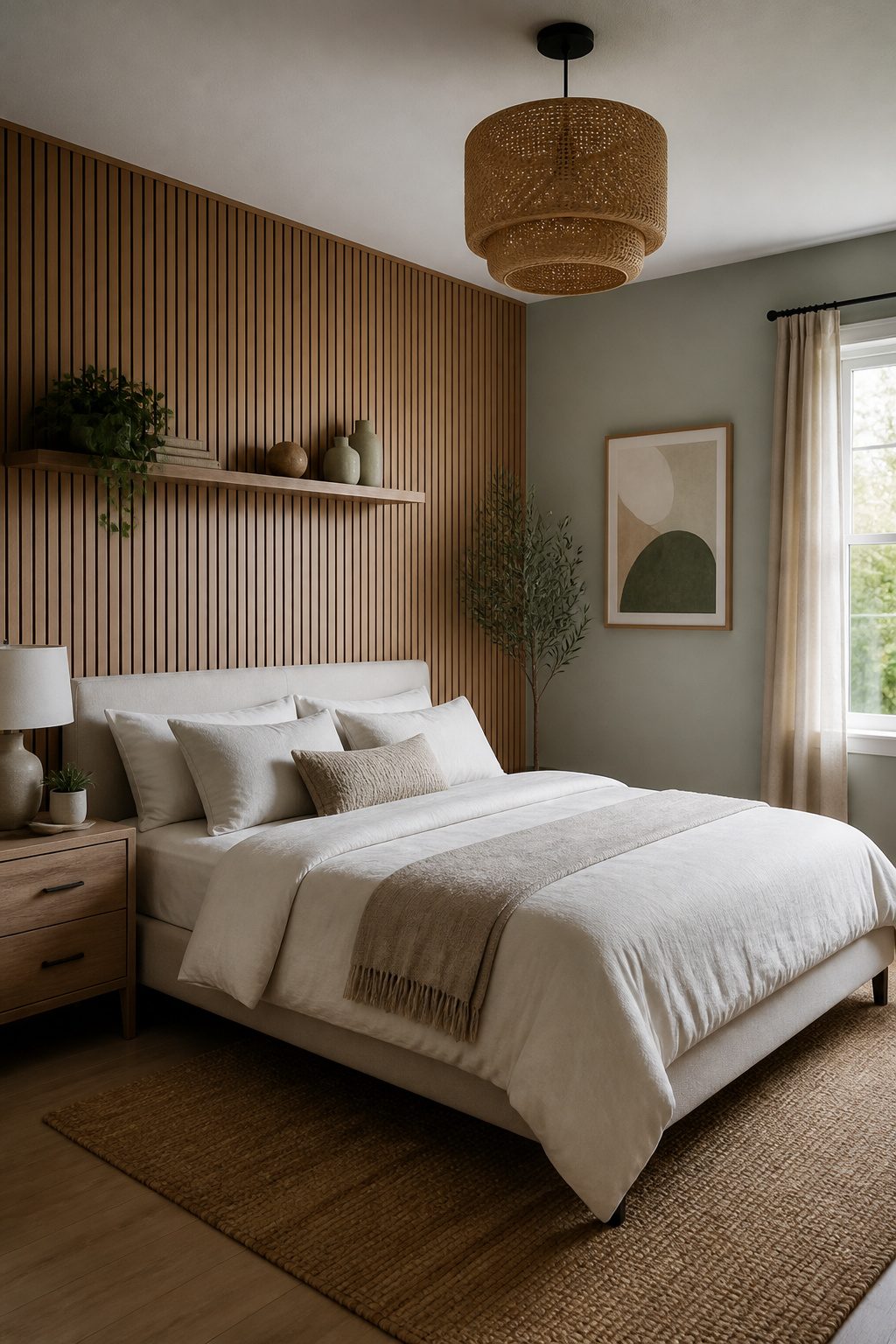
A feature wall is the single surface that changes material or pattern, not a two-tone scheme that splits the room.
Wood paneling is the move here if you want warmth with structure. The DIY route works in modern bedrooms just as well as traditional ones, and no existing trim is required to pull it off.
Paint is the faster weekend option: mask a geometric shape above the bed and fill it with a strong color.
Benjamin Moore’s director calls this the most effective way to draw the eye in a bedroom, and I agree, though I would keep the shape simple.
A square or a wide rectangle reads cleaner than something busy when you are lying in bed looking up.
Place the headboard wall against the treated surface, never across from it.
The bed becomes the anchor, and the feature wall becomes the backdrop. Put the bed on an adjacent wall and the room feels off-balance, like the wall is performing for empty space.
Paneling behind the bed adds depth without clutter; paint behind it gives you the freedom to go darker than you would dare on four walls.
Either way, one wall is enough. Two and the bedroom starts to feel like a set, not a room you actually sleep in.
12. Minimalist Decor
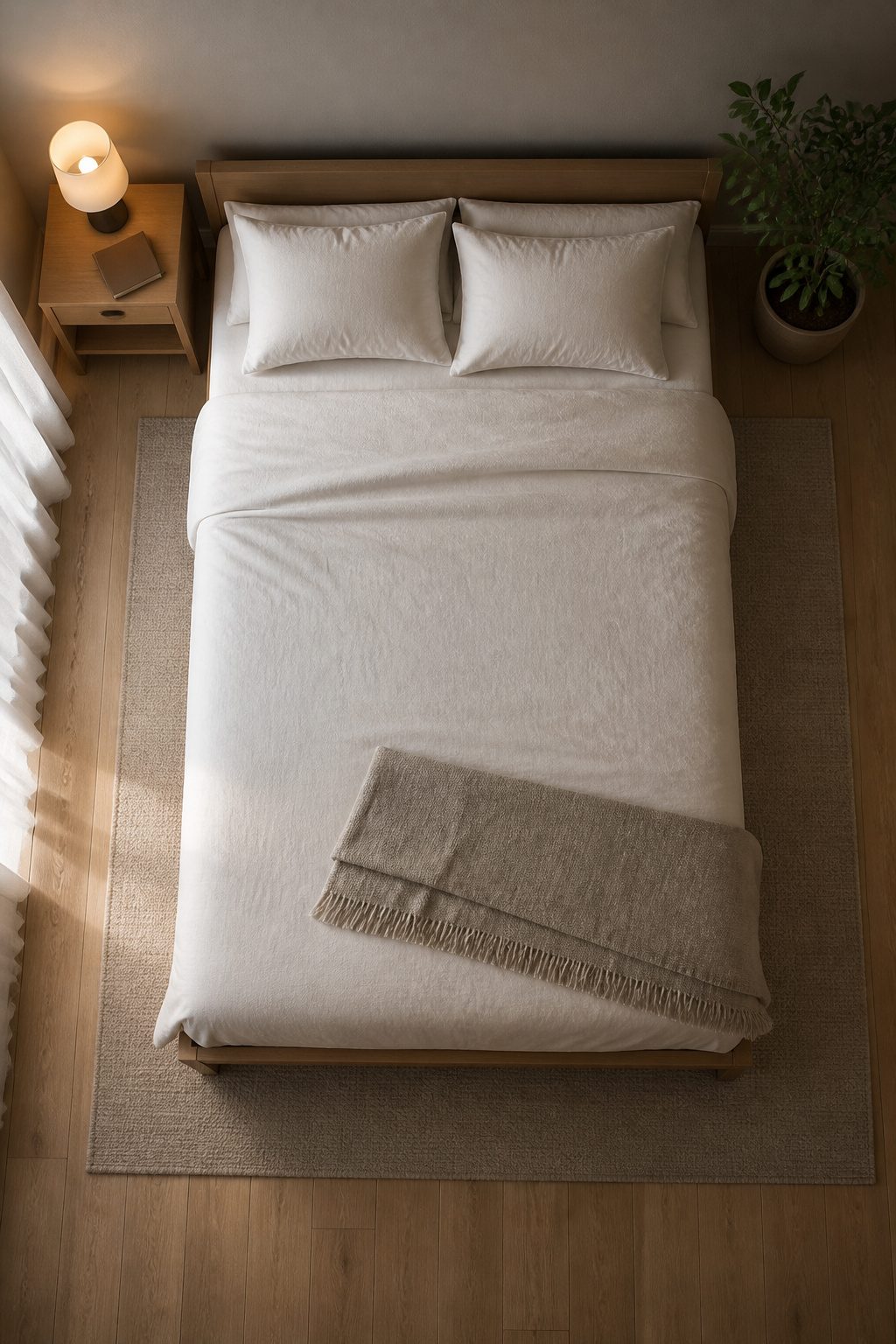
Minimalism in a bedroom does not mean stripping the room bare.
It means every object left in it has a reason to be there. I start by clearing three surfaces: the nightstands, the top of any dresser, and the floor within two feet of the bed.
Those are the zones that catch clutter first, and they are the ones your eyes land on when you wake or try to sleep.
What goes first are the items that carry daytime energy: mail, chargers, the book you finished last month, the glass that has been there since Tuesday.
The bed itself stays dressed, not hotel-sparse. A single throw at the foot and two pillows you actually sleep with are enough.
The designer who freed surfaces in a small bedroom by hanging lights and choosing a slim-profile king bed understood this: the room felt larger because the horizontal planes were open, not because the walls were empty.
This restraint matters for sleep quality even when the rest of your house is layered and collected.
Bedrooms are where your eyes close, but your window treatments and bedding still influence how you rest. A calm room signals the nervous system to downshift; a busy one keeps it scanning.
Your space should be a place of relaxation and renewal, though exactly how you decorate a bedroom to visually express those traits is fully up to you. Your eyes may be closed the majority of the time you spend here, but everything from your window treatments to your bedding influences the quality of your night’s rest.
For the reader, this means the bedroom is where you edit most aggressively, even if your living room is full of pattern and memory.
The rest of the house can tell your story. This room only needs to let you sleep.
13. Wallpaper
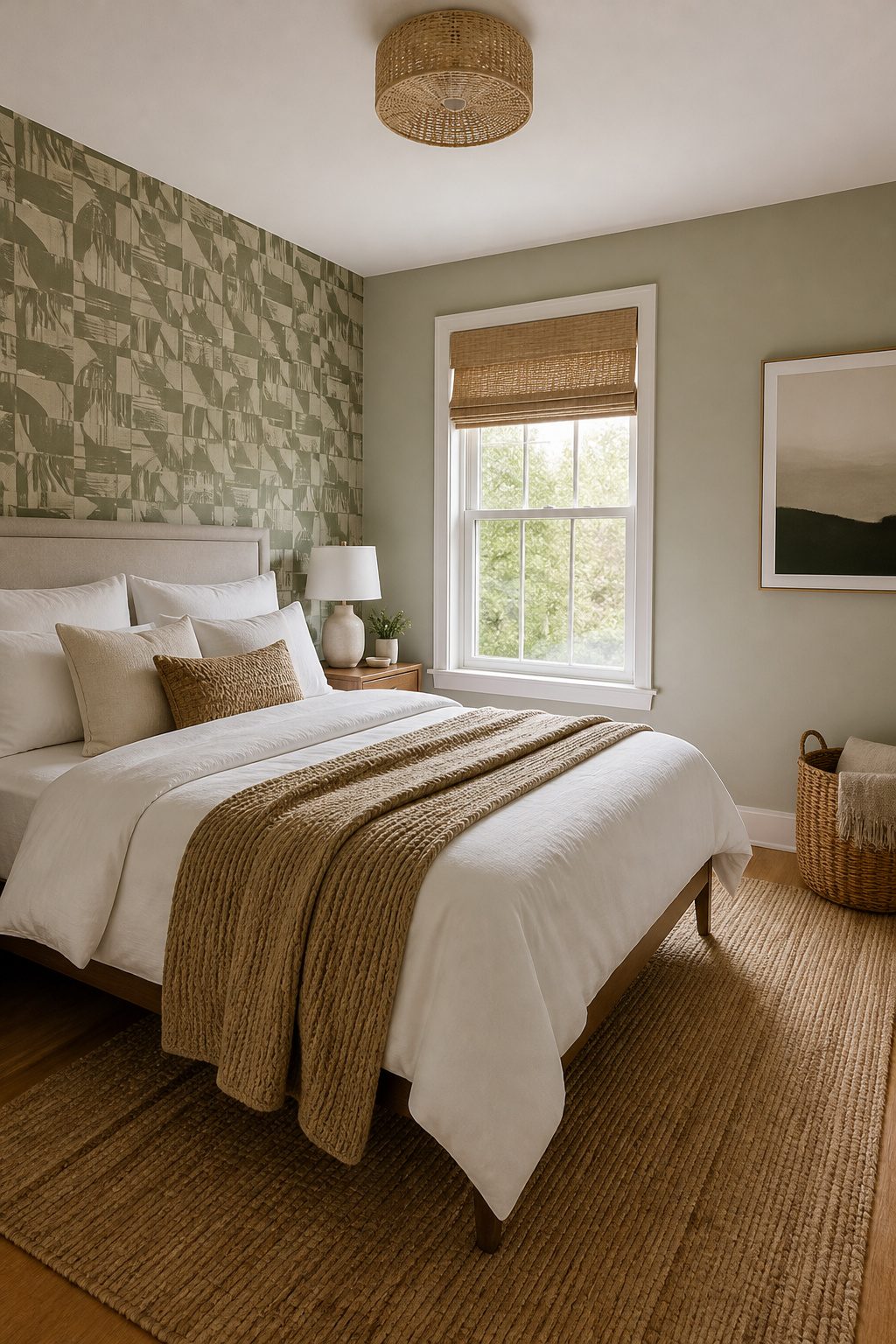
Peel-and-stick wallpaper has turned what used to be a contractor job into a Saturday morning project you can finish before dinner.
The modern adhesive backings release clean from painted drywall, which matters more in a bedroom than a powder room because you are staring at that wall while you fall asleep and while you wake up.
In a bedroom, I put pattern on the wall behind the headboard and keep texture everywhere else, since a busy print on all four walls closes the room in by morning light.
A powder room can handle a full wrap because you are in and out in five minutes; a bedroom needs restraint.
I have paid roughly $1.50 to $2.50 per square foot for the better vinyl options that do not show seams under a lamp.
Above $3.50, I start comparing against hiring a painter for two coats of a custom color instead, and the wallpaper rarely wins that math unless the pattern is something paint cannot fake.
The texture papers, the ones that read like grasscloth or linen without the fragility, are what I would pick for a rental where the deposit matters.
They hide wall imperfections and read as intentional in a way flat paint never quite manages.
14. Mirrors
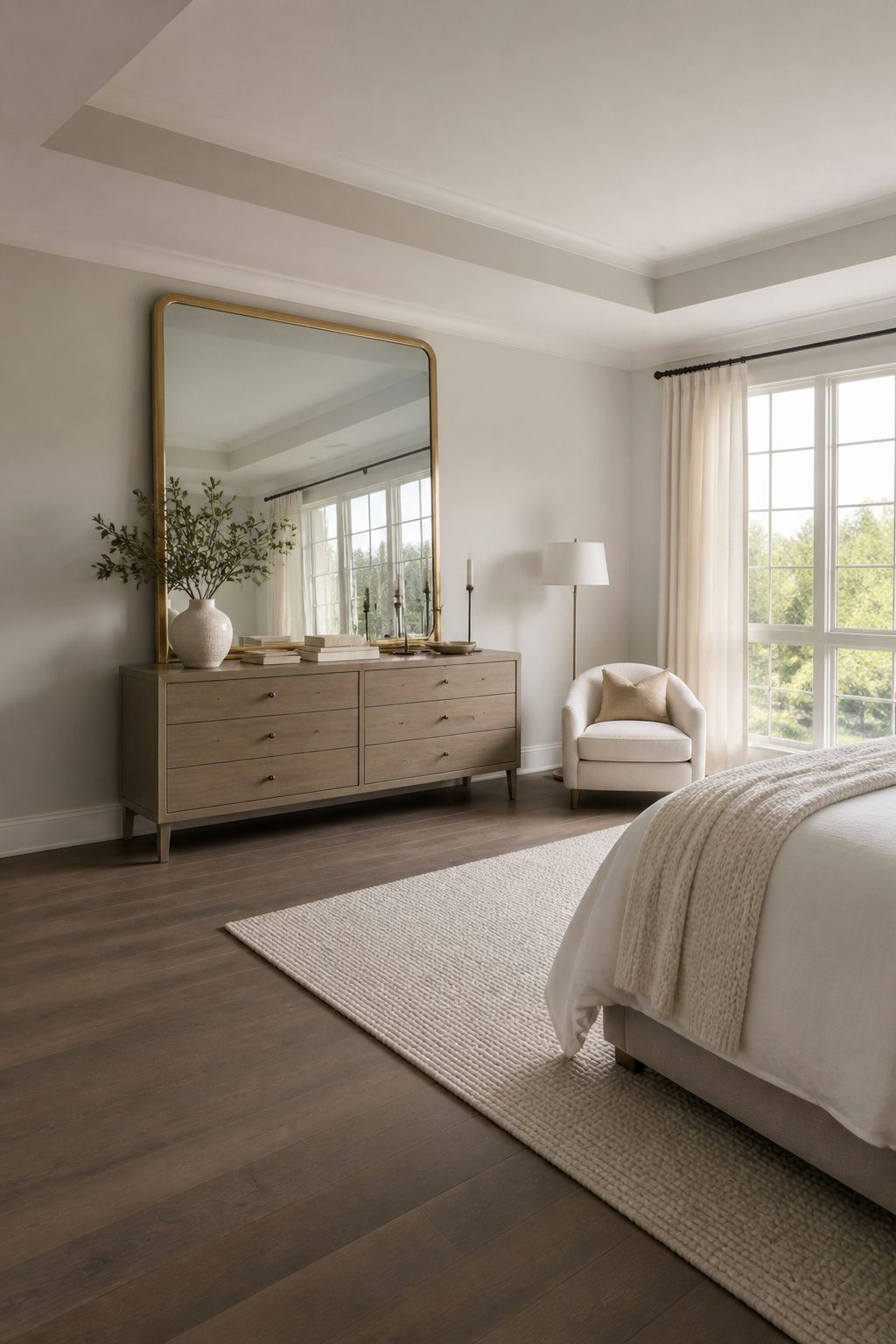
A mirror opposite a window catches the light you already have and pushes it deeper into the room than any fixture can manage for free.
I place them adjacent only when the window wall itself is taken, since the bounce is softer and the effect reads more like a bright wall than a doubled source.
One large mirror wins over a gallery of small frames every time in a bedroom.
A single piece at 30–40 inches wide holds the eye still and lets the room expand in one direction. A cluster of small mirrors breaks the wall into bits, which is the opposite of what sleep space needs.
Size the mirror to the furniture, not the wall.
A piece wider than your headboard or dresser fights the thing it hangs above; narrower reads as an afterthought. I aim for a width that sits inside the furniture’s edges by a few inches on each side.
The real risk is placement opposite the bed.
Waking to your own reflection at 3 a.m. is disorienting in a way a nightlight never is. I angle mirrors away from the foot of the bed, or hang them where morning light hits before my eyes do.
15. Canopy Beds
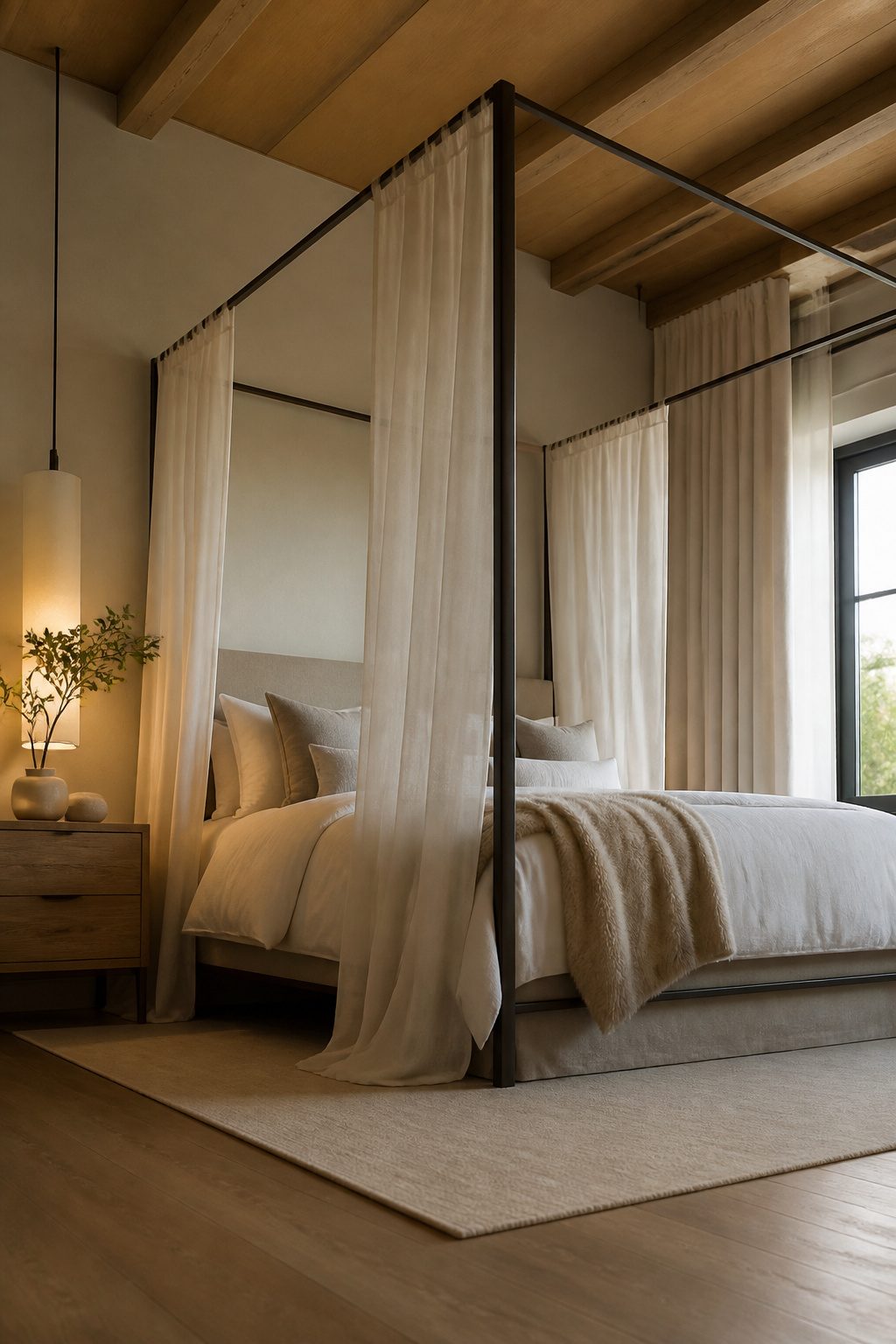
A canopy bed frames the sleep space without eating square footage, which matters in apartments where every inch counts. Patrick Mele’s butterfly-print installation in an Aspen bedroom proves the point: ceiling-mounted fabric creates a room-within-a-room feeling with zero footprint loss.
I would skip heavy drapes unless you want to block morning light; a sheer panel or simple metal four-poster gives you the architectural presence without the cave effect.
Sam Sacks used exactly this move in a Toronto bedroom, keeping everything crisp and white so the bed itself carries the weight.
Ceiling height under 8 feet makes most canopies feel oppressive, and I would not attempt a full fabric drape there at all. A wall-mounted rod or minimalist frame reads as suggestion rather than statement and keeps the air moving overhead.
For renters, tension-cable systems or a lightweight metal frame from Wayfair’s cleaner-lined options move with you and do not demand patching eight holes later.
The grown-up four-poster designs now on the market let you dress the frame up or leave it bare; I would start bare and add only if the room still feels unfinished after a week of living in it.
Frequently Asked Questions
What are some bedroom color ideas?
A 70/30 split of light to dark tones keeps the ceiling from feeling pressed down.
Put the darker color on the lower third starting around chair-rail height, with ratios like Farrow & Ball’s Calke Green below and Skylight above for a quiet look, or aubergine with warm white for more depth.
Two-tone wraps the room better than a single accent wall, since the color moves with you as you walk in.
How can I maximize space in a small bedroom?
Built-in drawers save roughly the footprint of a dresser by putting the space under your bed to work as storage.
A captain’s bed with six drawers can hold all folded clothing and eliminate the chest of drawers entirely. For renters, freestanding storage beds that assemble with a hex key demand no landlord permission and no wall anchoring.
What are the best lighting options for a bedroom?
Layer three heights: ambient overhead with a dimmer for general brightness, task lighting at the bed with the bottom of the lampshade roughly level with your chin when sitting up against pillows, and accent lighting like a narrow-beam directional fixture aimed at texture or the headboard curve.
The dimmer is non-negotiable; without it you have two moods instead of a room that shifts with the hour.
How do I choose a headboard?
Scale matters more than ornament. A headboard reaching 48 inches or taller reads as architecture and lets you skip the gallery wall.
Wood delivers the most warmth for the money, and a midcentury profile avoids lodge cliche. I would not bother with fabric at lower budgets; cheap upholstery collects dust and costs twice as much to do right.
What are some DIY bedroom decor ideas?
Peel-and-stick wallpaper turns a feature wall into a Saturday morning project, with modern adhesive backings that release clean from painted drywall.
For $1.50 to $2.50 per square foot, better vinyl options hide seams under a lamp. Mount the wallpaper behind the headboard only, keeping texture everywhere else, since a busy print on all four walls closes the room in by morning light.
What are the 7 golden rules for bedroom design?
It does emphasize editing surfaces aggressively so every object has a reason to be there, clearing nightstands, dresser tops, and the floor within two feet of the bed.
A calm room signals the nervous system to downshift; a busy one keeps it scanning.
What are the 2026 bedroom trends?
It focuses on current design strategies like two-tone palettes at 70/30 light-to-dark ratios, canopy beds that frame sleep space without eating square footage, and natural elements such as rift-sawn white oak with matte oil finishes rather than high-gloss lacquer.
What are some inspirations for bedroom interior design?
Bedroom design inspiration includes a statement headboard at 48 inches or taller for architectural presence, layered lighting at three heights with dimmers throughout, bold bedding in cotton percale or matelassé coverlets rather than expensive linen sets, and built-in drawer beds that save the footprint of a dresser.
Each idea prioritizes function that reads as intentional, not decoration for its own sake.
Can ChatGPT redesign my room?
It does recommend starting with one piece that resets the whole room, such as a statement headboard, then moving existing nightstands six inches wider and swapping in a single table lamp with weight to it so the bed becomes the focal point you would pin.