A family room works when it fits what your household does most nights, and that requirement narrows the list faster than style preferences or budget.
The fix people skip is arranging furniture for conversation instead of aiming every seat at the screen; the rooms that feel most welcoming position a sofa and a pair of chairs so people face each other, then add the television where it fits that layout rather than building the layout around it.
1. Comfortable Seating and Flexible Arrangements
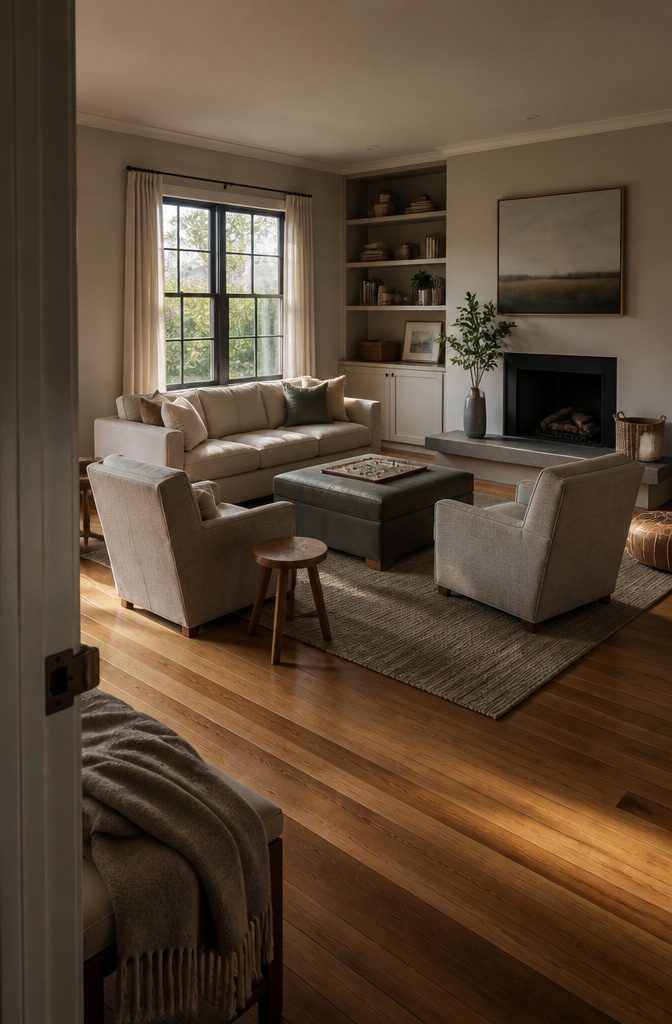
I need enough seating for the whole family plus a handful of guests, and I need it to work whether we’re watching a movie together or the kids are playing on the floor while I’m reading.
A sectional gives you the most seats in the least floor space—pair it with an ottoman and you’ve got room for six or seven without crowding the room.
If the room allows it, a sofa with a pair of armchairs makes the layout more flexible: you can pull the chairs into a circle for conversation or angle them toward the screen when you need to.
Stools work well for kids who move around constantly, and poufs or bean bags tucked in a corner add seating without taking up the visual weight of another full-size chair.
Recliners fit if you’ve got the depth, but they lock you into one orientation.
Modular sofas let you rearrange sections depending on whether you’re hosting or just the four of you are home, and stackable chairs store flat when you don’t need them.
Recommended Products

Delivered in 3 Separate Packages: Considering the large volume of product packaging, in order to meet practical needs and facilitate transportation, this 4-seater L-shaped couch will be divided into 3 separate packages for delivery, so they may not arrive at the same time. Package 1: one single sofa and one ottoman. Package 2: 2 single sofas and 2 throw pillows. Package 3: left and right armrests for the couch
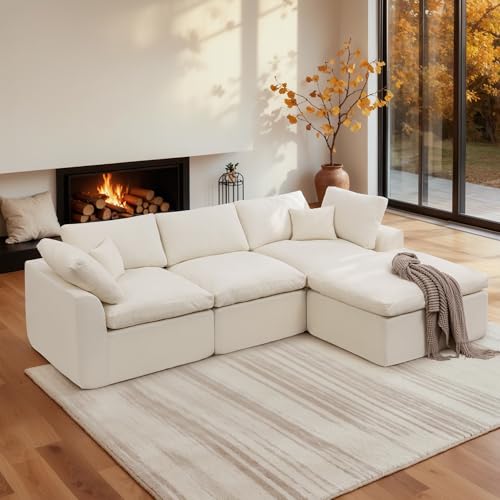
【ONE-STEP ASSEMBLY】Forget complicated setup—your couches for living room are designed for effortless assembly. Simply place the cushion onto the base, where a strong magic tape strip locks it securely into place. Allow 48–72 hours for the boneless couch to fully expand into its fluffy form. Gently pat the cushions or use an ironing machine to help regain its cloud-like shape. Then, get ready to sink in and relax. No extra tools or complicated steps are needed—Your comfort is moments away.

SECURE YOUR SECTIONAL WITH CONFIDENCE - The Couch Clamp PRO is your reliable solution for keeping sectional couch connectors securely attached, eliminating annoying gaps. Bid farewell to the frustration of slipping through sofa gaps with this easy-to-install 4-pack that ensures a seamless and sturdy connection for your couch and sofa. Transform your living space into a haven of stability with Couch Clamp PRO.
2. Storage That Hides Clutter
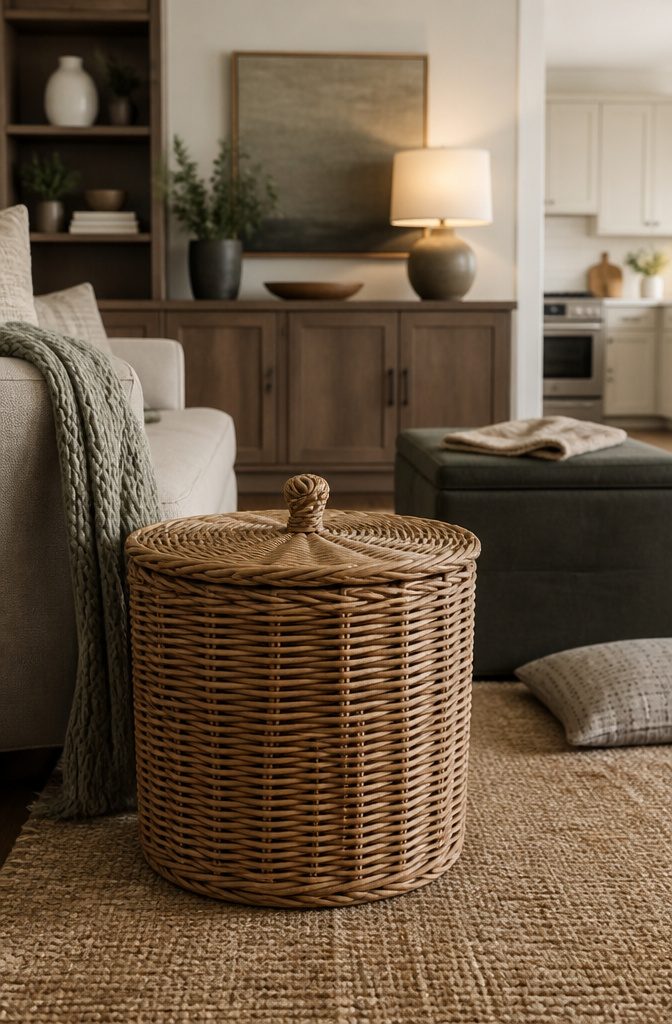
Cabinets with doors, built-ins with drawers, and baskets that close put toys, remotes, and game controllers out of sight when company walks in.
At least 50% of your storage should be closed — open shelves work for a few styled objects, but they turn into a visual list of everything you own when the family room gets daily use.
A credenza behind the sofa or an entertainment unit with cabinet doors gives you somewhere to sweep clutter before guests arrive, and it reads cleaner than a wall of bins.
Wicker baskets sit low enough for kids to reach but hide the bright plastic toys that fight with grown-up furniture.
Storage ottomans do two jobs: extra seating when you need it, and a place to stash throw blankets and pillows that migrated in from bedrooms.
Under-seat storage in a bench or window seat works the same way. The items you use most stay within arm’s reach; the visual noise disappears.
Recommended Products

Spacious Laundry Basket: With dimensions of 15"W x 15"L x 18"H, this large capacity laundry basket offers ample space to store clothes, blankets, towels, toys, and other household items. Perfect for use in the laundry room, living room, kids room, bathroom, bedroom, or nursery. This clothes hamper features an big open top for dry quickly.

Large size Blanket Basket:22”x17”x12”, which perfect for throw pillows, ,cushions,blankets, comforter,toys and clothes.Keep in the kids room, family room, or any room in the house that could use extra storage: fits on a closet shelf, beside the sofa or bed

Size: 12W x 6.5D x 5.25H" – This mini basket is the perfect shallow basket for organizing small spaces or creating cute gift baskets empty to fill with your favorite items.
3. Personal Art and Family Mementos
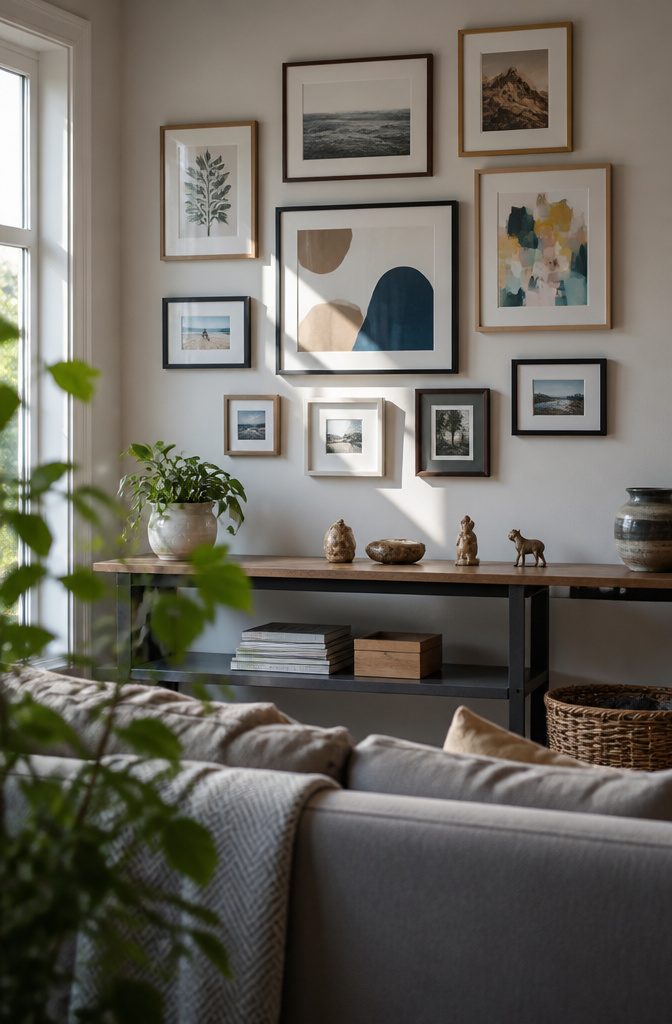
A gallery wall of family photos, children’s artwork, and travel souvenirs turns the family room into a record of the people who live there.
Mix frame styles and sizes rather than matching them all—combining a few large framed prints with smaller snapshots keeps the arrangement from looking like a grid.
Kids’ art holds up next to pieces by known artists when both are framed the same way; visitors often can’t tell which is which.
Personal items work anywhere you’d hang art: a single shelf for keepsakes, a corner devoted to photos from one trip, or artwork scattered across the room instead of grouped on one wall.
The room feels more welcoming when it reflects actual family history instead of catalog styling. Add a few pieces with a backstory and the space reads as lived-in without requiring a full wall renovation.
Recommended Products
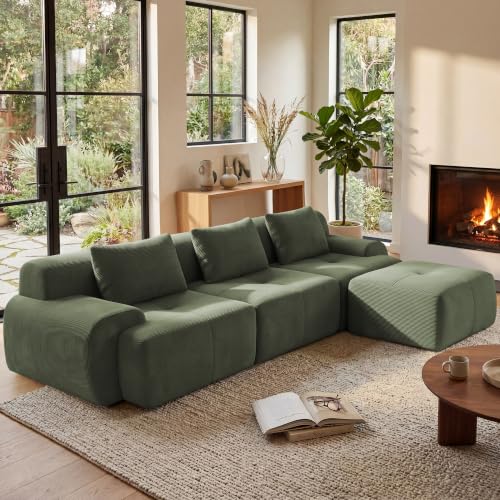
Boneless Comfort and Expert Tufted Craftsmanship: Say goodbye to the discomfort of hard skeletons. Our sectional sofa features a boneless design combined with tufted details, delivering a soft, skin-friendly seating experience. The deep seat design allows your body to fully relax and unwind. The unique tufted craftsmanship creates a naturally contoured surface that better conforms to your body's curves, enhancing support and envelopment.

Sink Into Cloud-Like Softness: Looking for couches for living room that feel like a warm embrace? Sink into the ultimate relaxation with our modular cloud couch, designed to wrap you in plush, cloud-like softness after a long day. Whether you're binge-watching your favorite series, hosting friends, or taking a cozy nap, the deep seats and high-resilience foam cradle your body just right. Experience a living room upgrade that turns every moment into a luxurious escape from daily stress.

Multiple Package Issues: Multiple package may not arrive at the same time. If you have any questions about the tracking numbers or the tracking state of the sectional sleeper sofa we will help you
4. Textiles and Soft Furnishings
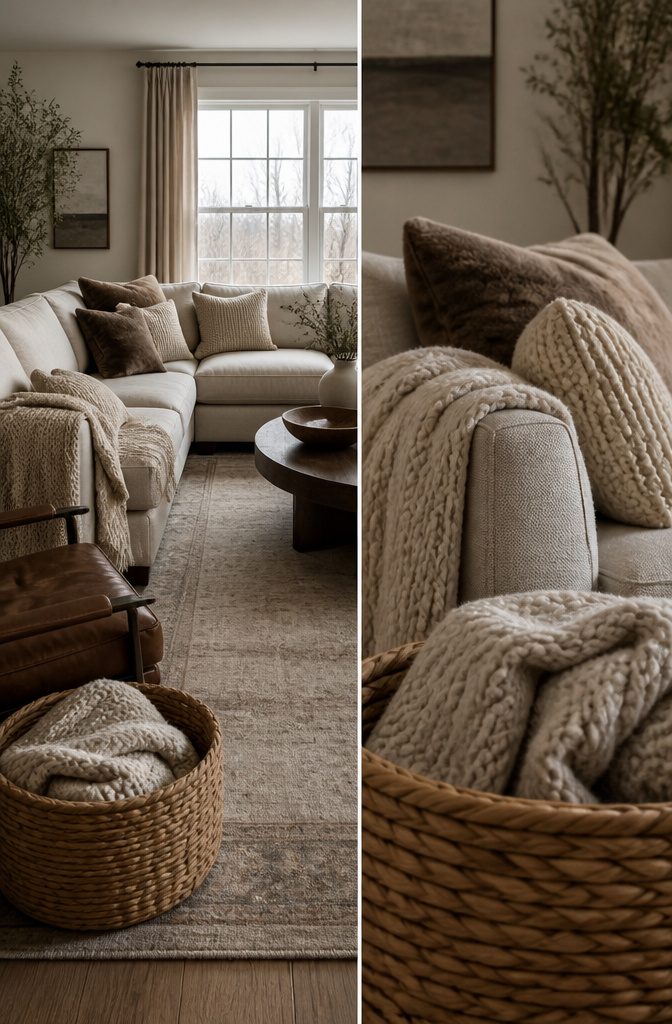
Pillows and throws let you add color and pattern without repainting or reupholstering. Soft materials like chenille, faux fur, and knit make the room feel warmer, and oversized pillows stuffed full give a sectional the visual weight it needs.
Stay inside your existing palette rather than introducing a new accent color—throws work best as a highlight, not the brightest thing in the room.
Rugs anchor seating areas and give kids a soft place to sit on the floor.
Layering rugs in high-traffic zones cuts down on dirt buildup, and animal hides clean easily since you treat them like hair. Darker upholstery hides wear better than pale linen if the room sees daily use by children and dogs.
Mixing textures—leather on a chair, velvet on a pillow, woven fiber in a basket—adds depth without adding clutter. The variety keeps the eye moving, and tactile differences make a neutral room feel intentional rather than unfinished.
5. Entertainment and Media
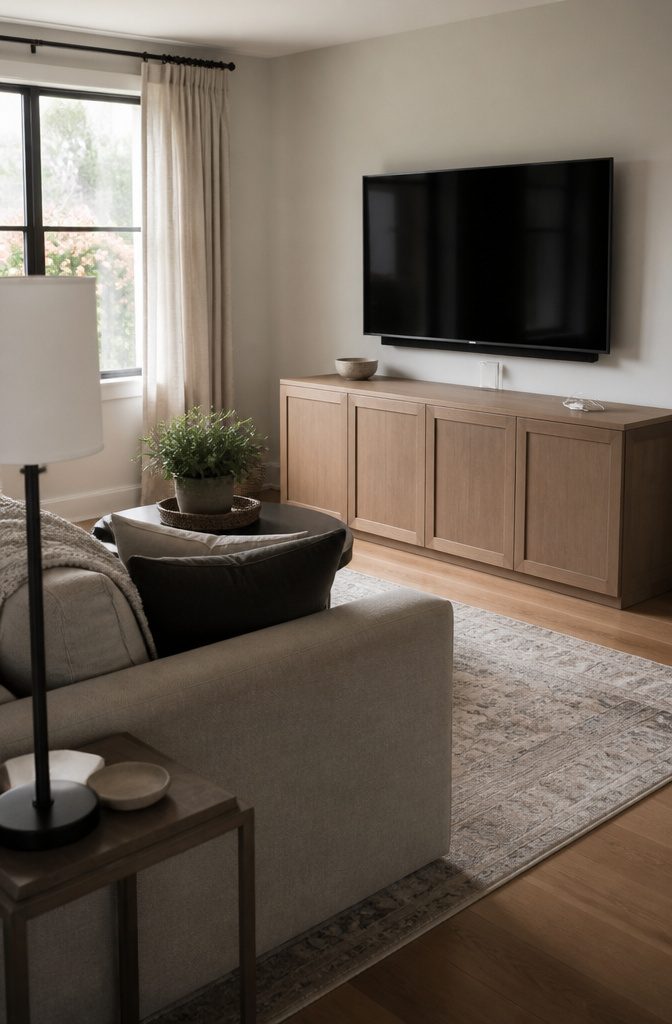
A wall-mounted television opens up floor space and keeps cords out of reach if you run them through an in-wall channel or surface-mount raceway.
Mount height matters: eye level from the main seating puts the center of the screen 42 inches off the floor in most rooms, though you adjust that figure up or down based on couch height and how far back you sit.
I prefer the screen slightly lower than the mantel-height mounts you see in staged photos, because nobody wants to tilt their head up through a two-hour movie.
Closed cabinets under or beside the screen hold remotes, game controllers, and the tangle of charging cables that otherwise colonize the coffee table.
A credenza with doors works, or built-in cabinetry if the room has it. Drawers beat open shelves when you want to shut the door on the mess.
Store what you use weekly within arm’s reach of the couch and what you use monthly farther out, so you are not crossing the room for the HDMI switcher.
A corner setup frees the main wall for seating and pulls the screen closer to a side window, which cuts glare during daytime viewing.
Angle the TV toward the center of the seating area rather than pointing it straight out from the corner.
6. Rugs and Floor Comfort
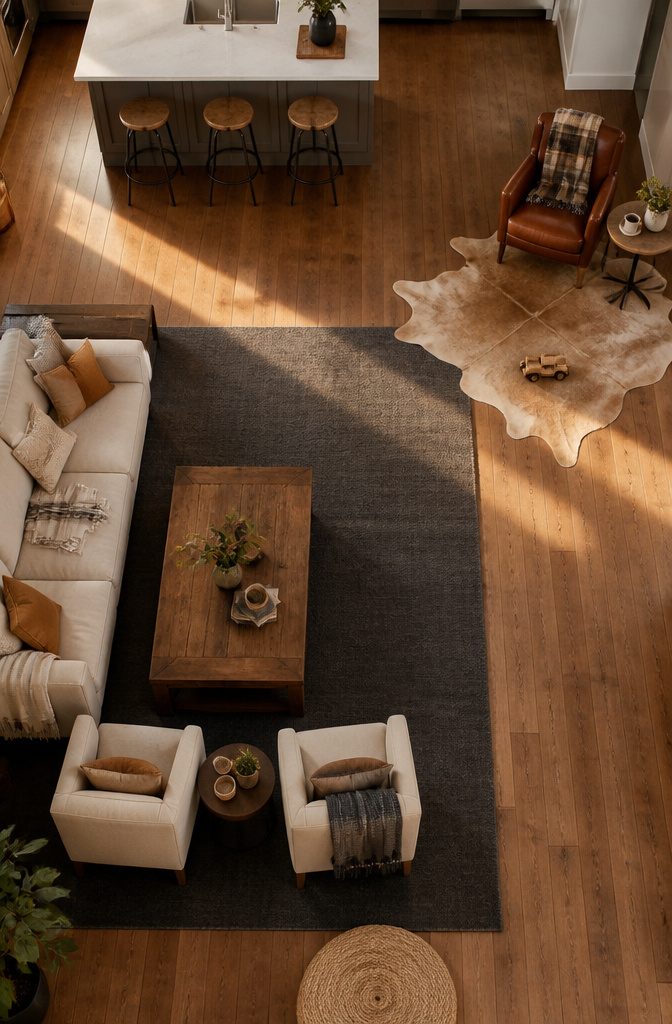
A rug defines where people gather without boxing in the room.
Place one under the coffee table and seating area, sized so the front legs of each piece sit on it, and you’ve marked the zone where the family watches TV or talks without adding a wall or rearranging furniture.
A second rug on the opposite side can separate the play corner or reading nook, keeping the floor plan open while giving each activity its own anchor.
Rugs absorb sound in ways hard flooring cannot.
Drop a toy on bare wood and the noise bounces through the house; add a rug and textiles in the room, and the echo stops. The difference matters most in open-plan homes where one hard surface leads straight into another.
Darker tones and layered rugs hold up better in traffic.
Animal hides clean like hair and work well layered over a larger base rug in the spots that see the most footfall, cutting down on visible dirt without covering the whole floor in something too precious to use.
7. Lighting
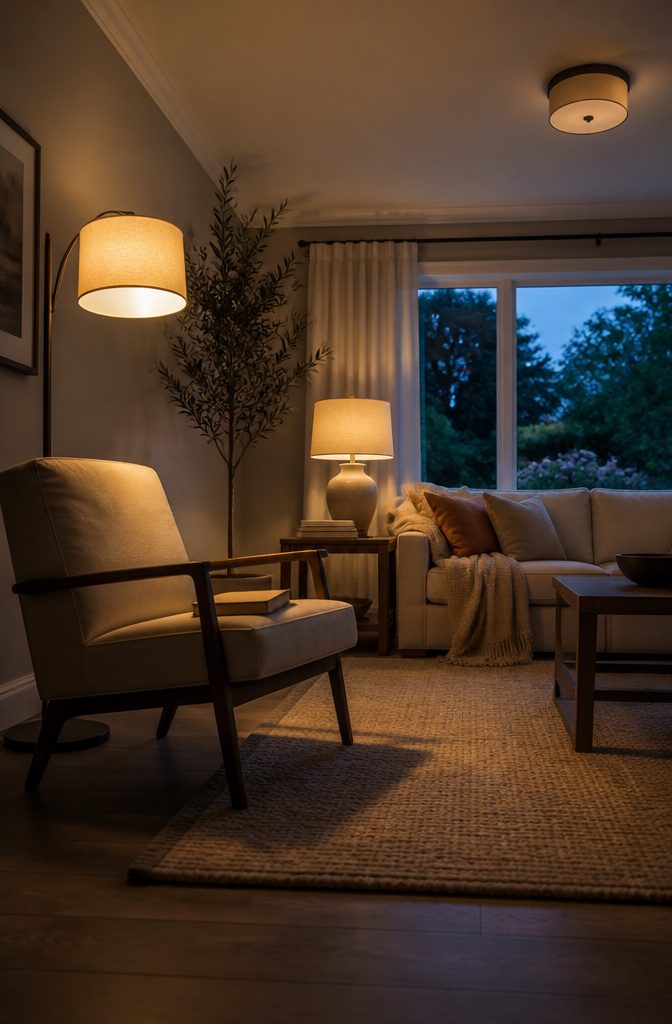
I start with overhead light — a flush mount or a simple pendant — and build from there. Overhead handles the room when you walk in and when the whole family is gathered, but it flattens out if it’s working alone.
Add a floor lamp near the couch and a table lamp on a side table, and the room gains depth. The layered approach means you can read without glare in one corner while someone watches a screen across the room.
I place lamps where they do something specific: next to the chair where someone reads, beside the couch for evening conversation, or aimed at a wall if the room needs more bounce.
A lamp with a dimmer lets you dial the mood down when a movie starts.
If the room has a play area or a corner for hobbies, a task light there keeps the rest of the space softer and more inviting.
8. Color and Paint
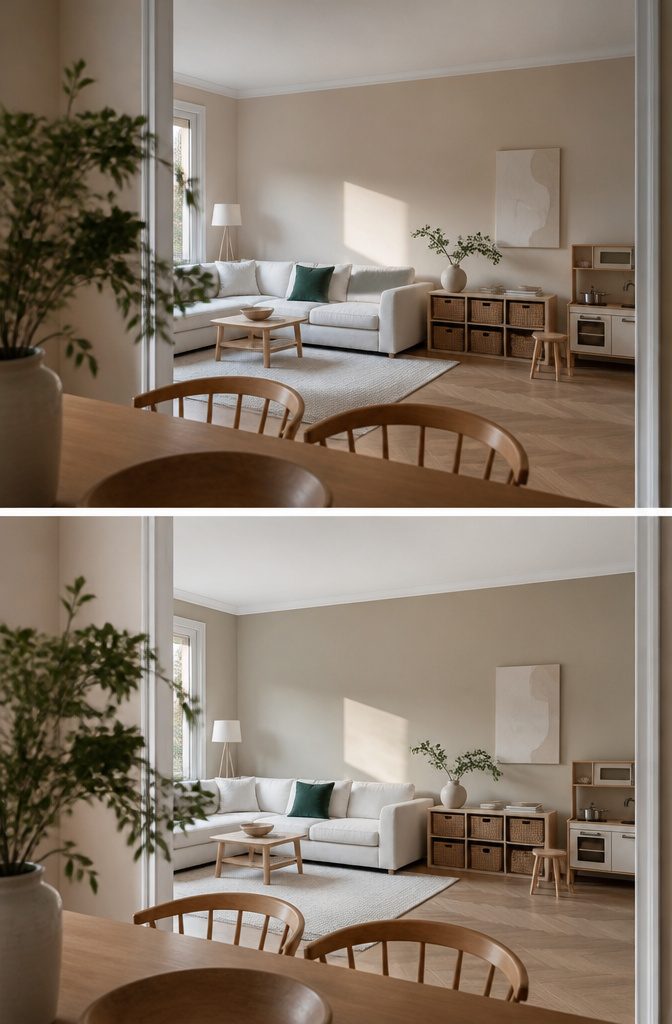
I painted the walls in my family room Tapestry Beige by Benjamin Moore, and the shift in mood was immediate—warm enough to feel lived-in, neutral enough that every piece of furniture read clearly against it.
Beige, cream, white, and light grays all do the same work: they bounce more light around the room, which makes the space feel larger and more open than it is.
That matters in a family room where you’re trying to fit seating, storage, and a play zone into one footprint.
A neutral backdrop also lets you control where the eye goes. If you bring in a jewel-toned throw or a patterned rug, the color lands harder because it isn’t competing with the walls.
You can lean into bold hues for an energetic feel, or keep the palette quiet and let textures carry the interest.
Either way, the wall color sets the baseline, and a fresh coat of paint in a softer shade is the fastest fix if the room feels cramped or chaotic.
9. Coffee Table or Ottoman Function
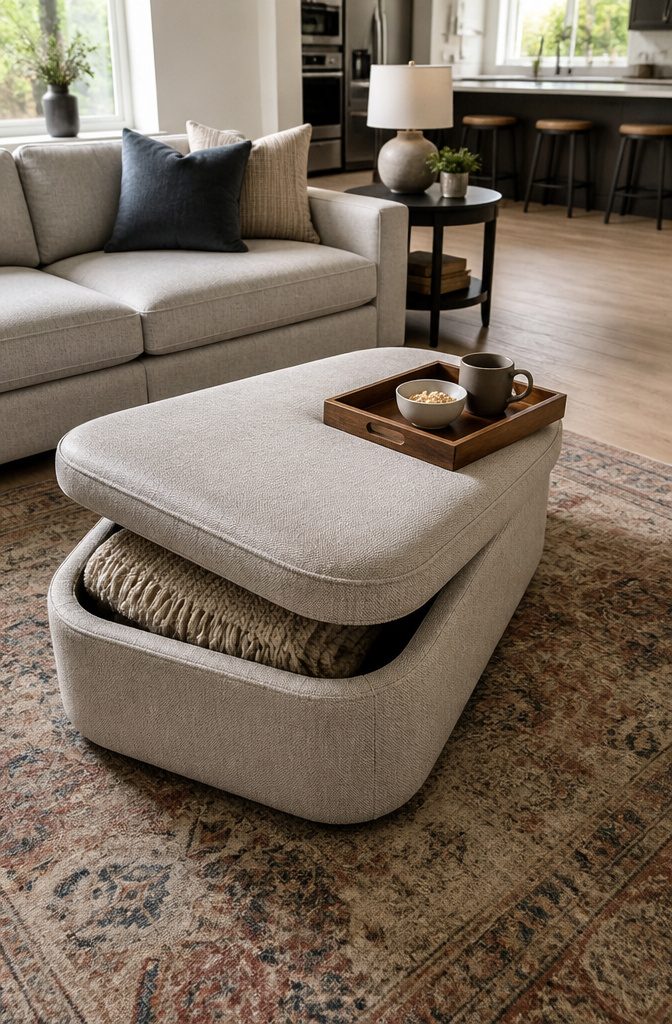
A coffee table needs room for a mug or a glass without asking you to first clear a stack of décor.
I leave at least half the surface open — books and a small tray are fine if you actually use them, but most of what gets sold as "coffee table styling" just forces you to move things every time you sit down.
The table is there to hold what you’re holding, not to display objects you never touch.
An upholstered ottoman with a tray solves the hard-corner problem if you have a toddler in the room.
You pull the tray off during the day and the surface stays soft; drop it back on in the evening and you have somewhere stable for drinks and snacks.
You lose storage when you switch from a lift-top ottoman to a solid coffee table: the ottoman hides blankets and remotes; the table does not.
Pick based on what the room needs more: a padded edge or a place to stash clutter.
10. Layout for Conversation and Shared Activities
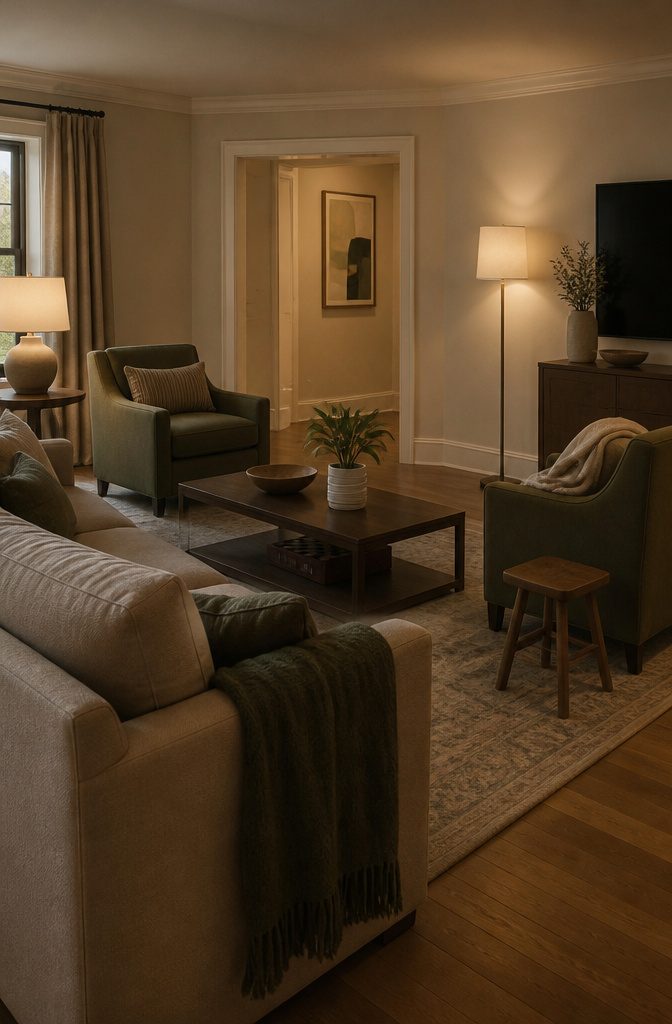
Arrange seating so that people face each other, not just the screen.
Position a sofa and a pair of chairs around the room rather than lining everything up against one wall, and the space opens up for board games, conversation, or a holiday crowd without moving furniture.
The television still works when you want it; it just stops being the only reason the room exists.
Flexible seating beats a single large sectional if the room allows it. A sofa paired with armchairs or poufs gives you options when more people show up, and kids can pull a stool in without claiming a full seat.
Modular pieces that shift position work the same way: you can adjust the layout for movie night and pull it back open the next morning.
The layout decides whether people stay.
If every seat points one direction, the room reads as a place to watch something and leave. A circular arrangement — even a loose one — makes it a place to sit and talk.
11. Distinct Zones or Open Floor Space
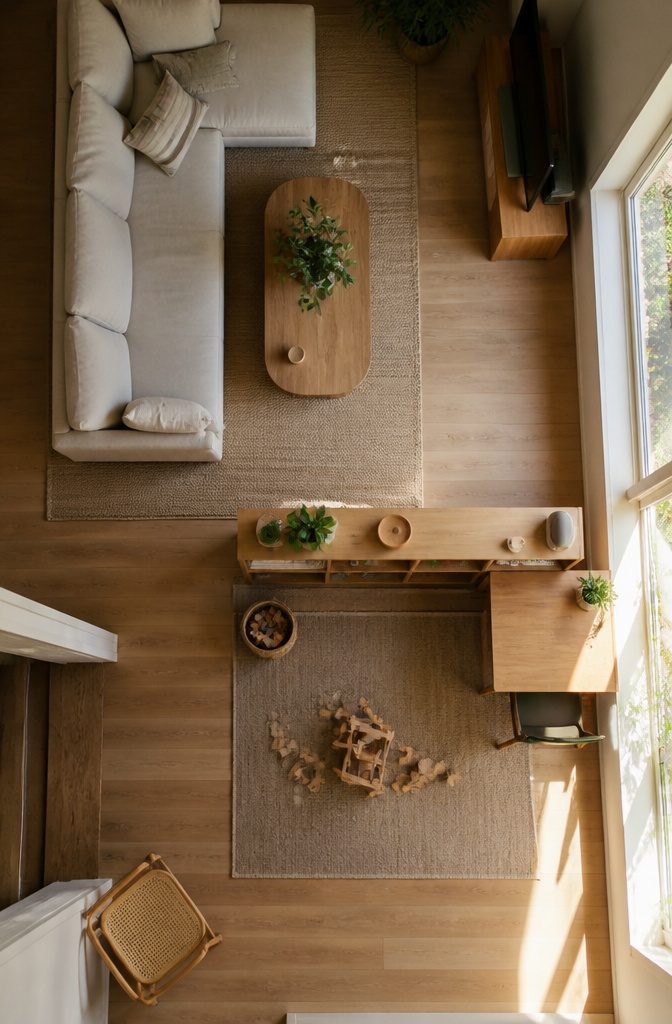
A rug marks off the play corner from the seating area without boxing anyone in.
Drop one under the sofa and coffee table, another where the kids spread out toys, and the room reads as two zones even though nothing blocks the sightline.
Modular furniture helps when the activity changes — stackable chairs move to the table for game night, then back against the wall when floor space matters more.
Room dividers work if they stop short of the ceiling and let light through.
A low bookshelf between the desk and the TV keeps work separate from screen time but folds back into storage when you need the room to open up.
The flow stays accessible because nothing anchors permanently, and each area holds its purpose without claiming the whole room.
12. Durable, Easy-Care Materials
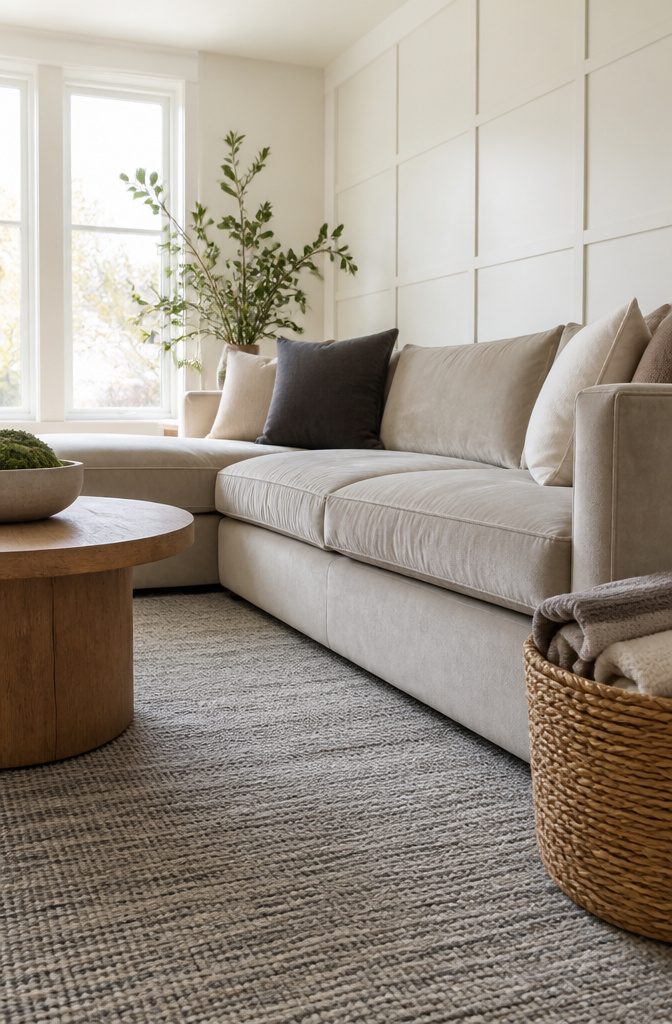
Performance fabrics are no longer the plasticky compromise they used to be.
Treated upholstery holds up to spills, pets, and daily wear without giving up softness or texture, and most velvet and linen is now available in a performance finish that can be spot-cleaned without leaving a ring.
If performance weave is not an option, ask to have the piece sealed before delivery; the treatment adds a repellent layer that buys you time to blot up a spill before it sets.
Paint finish matters more than color. Satin or eggshell cleans without showing every fingerprint, while flat paint telegraphs every smudge and does not wipe down well.
Limewash and paneled walls hide scuffs better still, their texture breaking up marks that would stand out on a smooth surface.
Boucle and wool rugs look warm but do not survive the traffic a family room sees.
Both pill, trap dirt, and show wear lines faster than flatweave or low-pile synthetics that can be hosed down outside or run through a rug cleaner without matting.
13. A Focal Point or Statement Feature
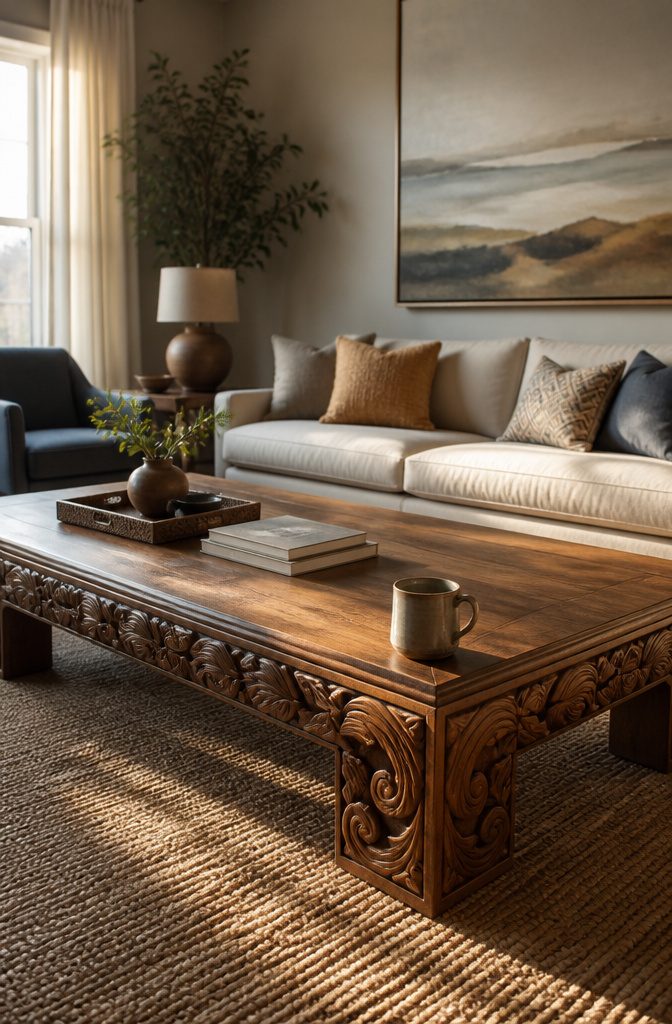
A coffee table, media console, or piece of art can do the work of organizing everything else when you give it that job.
I choose one element strong enough to hold attention and let it sit at the center—literally or visually—so the seating, storage, and side pieces fall into supporting roles.
A carved wood coffee table or a single large-scale landscape above the sofa answers the question of what the room is about before anyone asks it.
The coffee table wins this role in most layouts because it sits where sight lines cross. A rectangular vintage planter or a stack of hardbound books works better than three small objects that never quite look balanced.
I leave at least half the surface clear for an actual coffee mug or wine glass; decoration that crowds out function reads as staging rather than living.
For walls, art scaled to fill the space without hanging over the edge makes the room feel larger. Trompe-l’œil subjects—landscapes with depth, architectural views—push the wall back visually.
Small, under-scaled pieces do the opposite. One large canvas beats a scattered arrangement unless you commit to a full gallery wall.
14. Special-Use Room Concepts
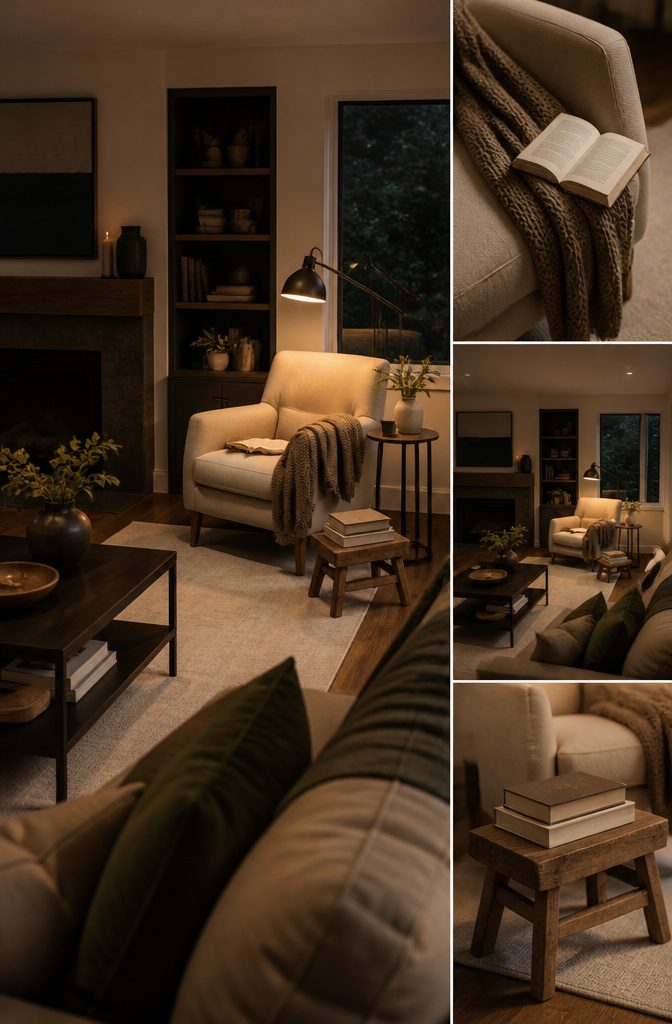
A family room can hold more than furniture and a television.
You can carve out a corner for something that matters to you: a place to read before bed, a craft table, a space that goes dark for movie nights with the projector, or a tech-free zone where phones stay elsewhere.
I tend to see these options work best when they are built around what the family actually does:
- A reading corner — one chair with good light and a narrow side table that holds a book and a mug. No requirement for floor-to-ceiling shelves; a single stack on a stool will do.
- A creative area — an open surface for drawing, puzzles or building blocks, positioned where it does not block traffic but stays visible enough that a project can sit unfinished for a week.
- A home theater setup — blackout curtains, a white wall or retractable screen, seating aimed at one end of the room. This works in a rectangular layout but fights an open plan.
- An unplugged den — a space marked by what is not in it. No screens, no charging station. Board games, cards, a record player if that is your preference.
- A storytelling or memory nook — a soft chair flanked by framed family photos, travel souvenirs or a wall-mounted map with pins. Somewhere a child can sit and ask about the stories behind the objects.
Pick one concept that fits what you actually want to do in the room, not what sounds appealing in principle.
A reading corner that no one reads in becomes a pile of laundry; a craft table used three times a year wastes the square footage a coffee table would have served better.
What Makes a Family Room Different
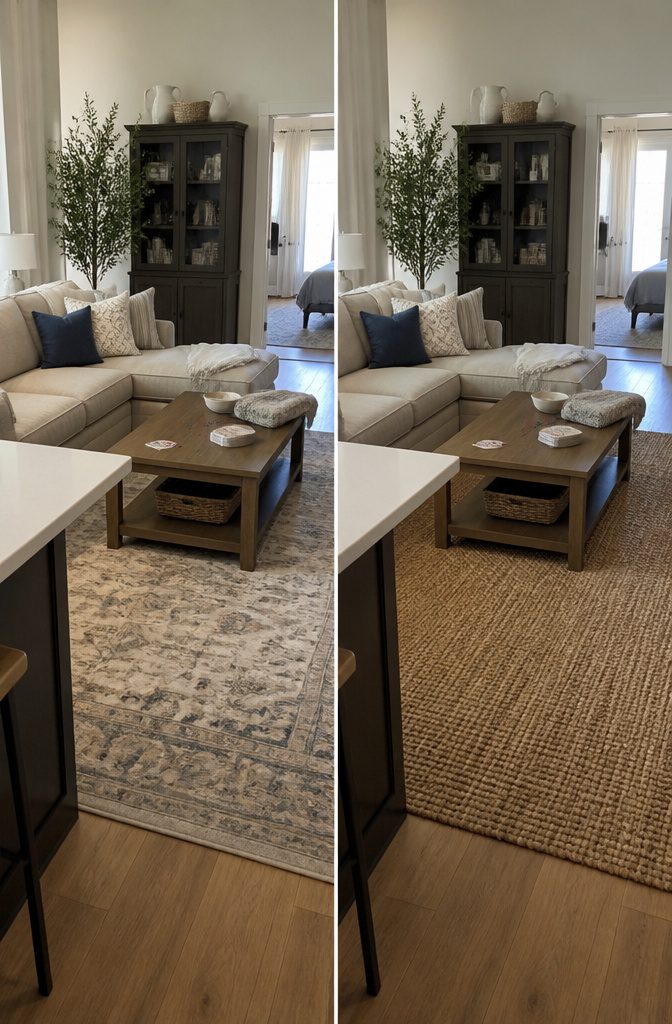
A family room is built for daily use by the people who live there, not for guests.
The furniture is comfortable rather than formal, the layout prioritizes convenience over presentation, and the room sits in a more private part of the house—often next to the kitchen or bedrooms—instead of near the front door where a living room typically goes.
The living room is meant to impress visitors and gets used for special occasions; the family room is where you sit every night.
Both may have a sofa and a coffee table, but the family room skips the showroom polish in favor of durable surfaces and a setup that supports whatever your household actually does: watching TV, playing games, reading, or just being in the same room together without an agenda.
Frequently Asked Questions
How do I set up a family room?
Start with comfortable seating scaled to your space: a sectional for maximum seats in minimum floor space, or a sofa with armchairs for flexibility.
Add closed storage to hide daily clutter, layer your lighting with overhead plus floor and table lamps, and arrange seating so people can face each other, not just the screen.
Choose durable, easy-care materials like performance fabrics and satin-finish paint that survive spills and fingerprints without constant maintenance.
How can I make a small family room feel larger?
Paint the walls in a light neutral like beige, cream, or soft gray to bounce more light around the room and make the space read as open.
Use multi-function furniture like storage ottomans and stackable chairs that serve double duty without taking up visual weight.
A single large rug under the seating area defines the zone without boxing it in, and one statement piece (a coffee table or large-scale art) organizes the room better than scattered small objects.
What are the best lighting options for a family room?
Start with overhead lighting for when the whole family gathers, then add a floor lamp near the couch and a table lamp on a side table to create depth.
This layered approach lets one person read without glare while someone else watches TV across the room.
Place lamps where they do something specific (next to a reading chair, beside the sofa for conversation) and use dimmers to dial the mood down when a movie starts.