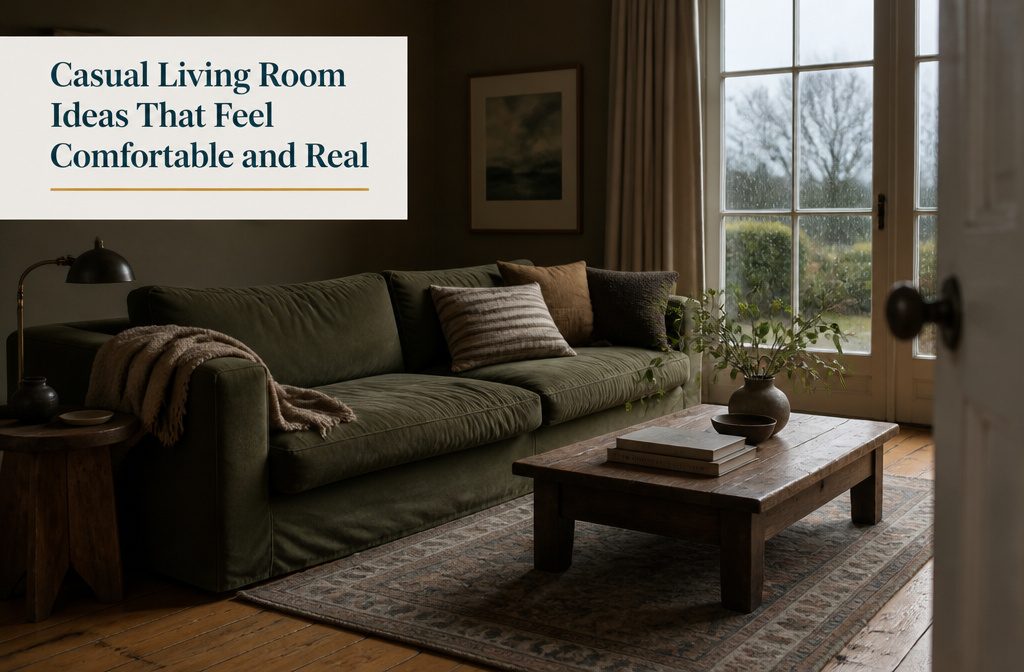
A casual living room sits somewhere between formal and sloppy, and what separates the two is proportion: deep seating you can actually sink into, enough texture that the room reads as layered rather than matched, and a layout that lets people talk without leaning forward.
The depth matters more than the price—the 84-inch Remington Sofa works because deep seats let you curl up sideways, which shallow seating never allows.
1. Comfort-First Seating That Invites People to Sit
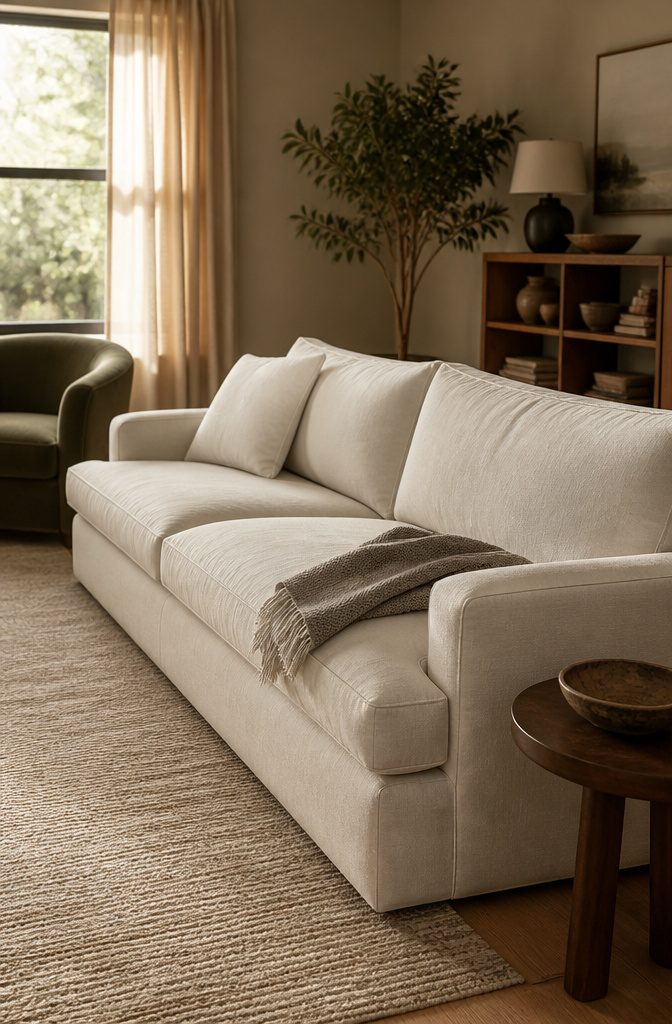
A plush sofa matters more than any other piece in a casual living room because people actually use it.
I’ve owned the Remington Sofa in the 84-inch length with Crypton Nomad Snow performance fabric since January, and the depth makes the difference—deep seats let you curl up sideways or stretch out in ways a shallow sofa never allows.
Performance fabric handles real life without looking clinical.
Sectionals work when the room layout supports them, but a single long sofa often fits better in smaller spaces and leaves room to move chairs around.
Look for pieces with loose back cushions rather than tight upholstery; they give when you sit and look softer even when empty.
A lounge chair or oversized armchair in the corner finishes the seating without crowding the center of the room.
2. Layer Textures and Materials to Make the Room Feel Lived-In
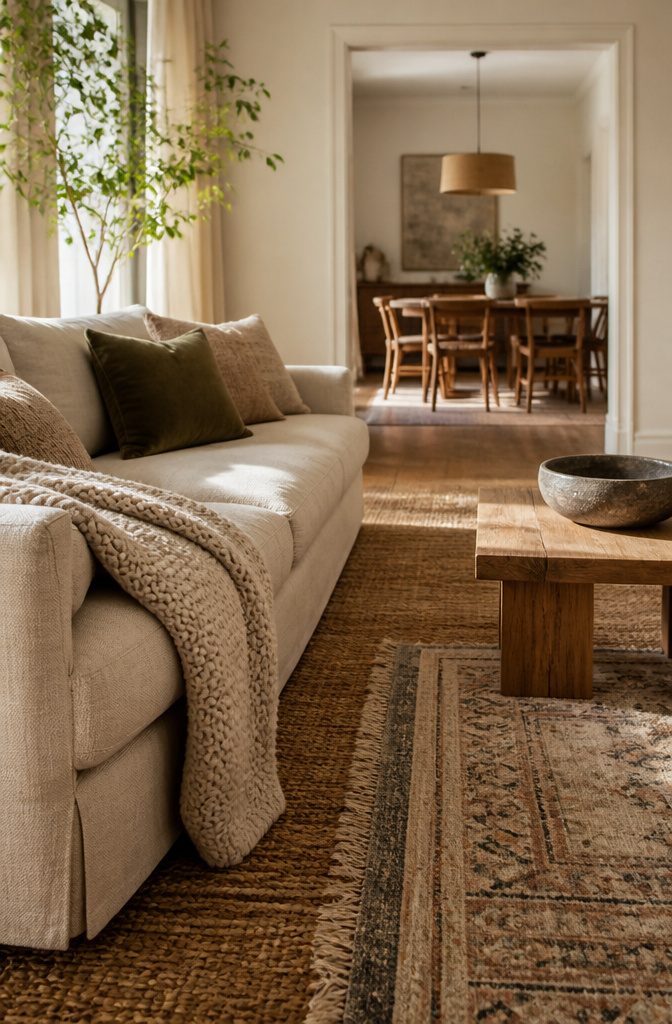
Mixing materials is what stops a room from reading as a showroom.
Blair Moore paired oatmeal linen on the sofa with woven fibers underfoot and natural accents throughout a DC row house, letting each texture add character without competing for attention.
The ivory curtains matched the walls, so the contrast came from fabric weight and surface finish rather than color jumps.
Rugs ground the scheme and give you a second chance at texture. Layering them works in open layouts where one rug would look too small or too safe.
Darker or patterned rugs anchor a moody scheme; lighter rugs in natural fiber keep things airy if you lean coastal. A wool-and-silk rug can warm up a space that skews industrial, the way soft fibers always soften hard edges.
Velvet cushions, chunky knit throws, and linen curtains turn a sleek sofa into something you actually want to sit on. You want enough variation that your hand notices a difference when it moves from one surface to the next.
3. Use a Warm, Calm Color Palette
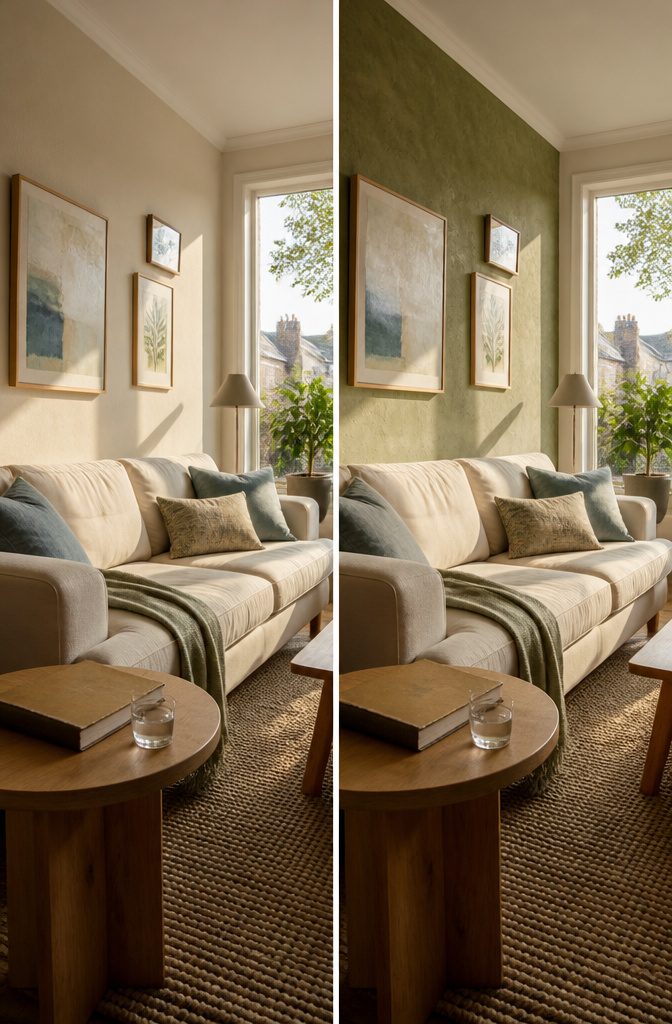
I gave the living room walls a first coat of Sherwin Williams Alabaster last spring, and the warmth it brought in surprised me—neutral without the builder-grade chill.
Warm neutrals anchor a casual room without locking you into one mood, and they let you bring in stronger accent colors through art or throws when you want them.
Muted blues and earthy greens work the same way, keeping the backdrop calm while you add personality elsewhere.
If you want something bolder, a deep limewash like Ritual by Color Atelier shifts the whole feeling.
Christina Cruz used it in a small living room to give the space the moody, tucked-away feeling of a Spanish coffee bar, and the textured green made the collected art above the sofa look intentional rather than scattered.
Dark walls need lighter furniture to keep the room from closing in, or you can balance deep tones with soft pastel accents in the textiles.
4. Arrange Furniture to Create Conversation Areas
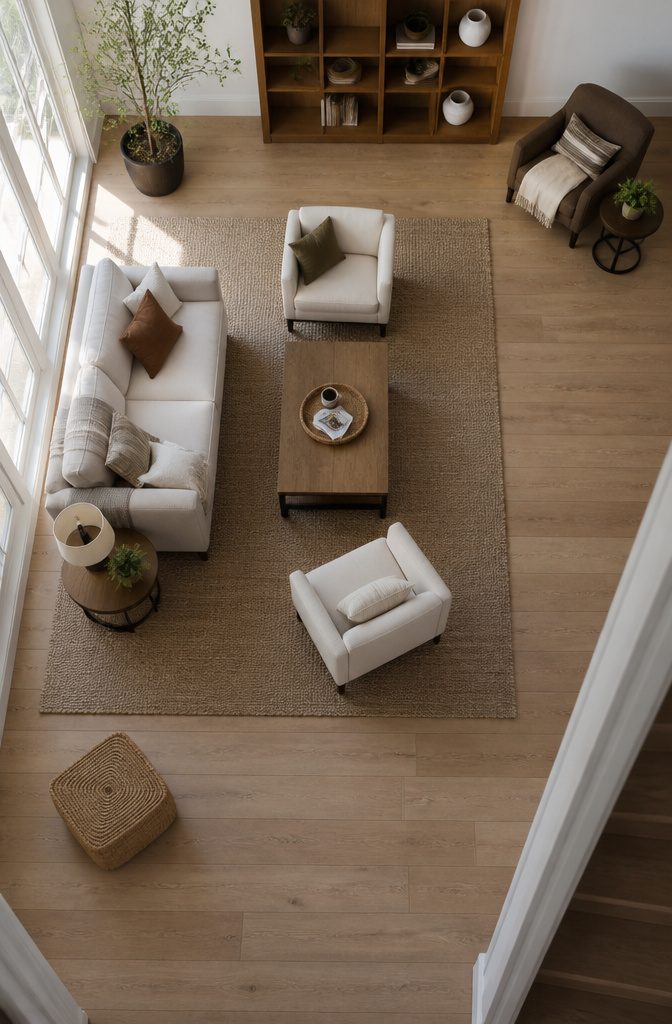
I place a sofa and two chairs so they face each other across a coffee table, close enough that someone sitting in any of them can hear a normal voice without leaning in.
Six to eight feet between seats keeps the conversation easy without the furniture crowding the center.
In a larger room, I use an area rug to mark off that zone, then repeat the pattern elsewhere: a reading chair and side table in one corner, a pair of stools near a bookcase in another.
Each area works on its own, but nothing blocks the path between them.
Angling one chair slightly toward the sofa brings people into the group instead of lining them up like an airport gate.
I keep bigger pieces low and simple so the room reads as one space divided by use, not chopped into separate boxes.
5. Add Personal Objects and Collected Pieces
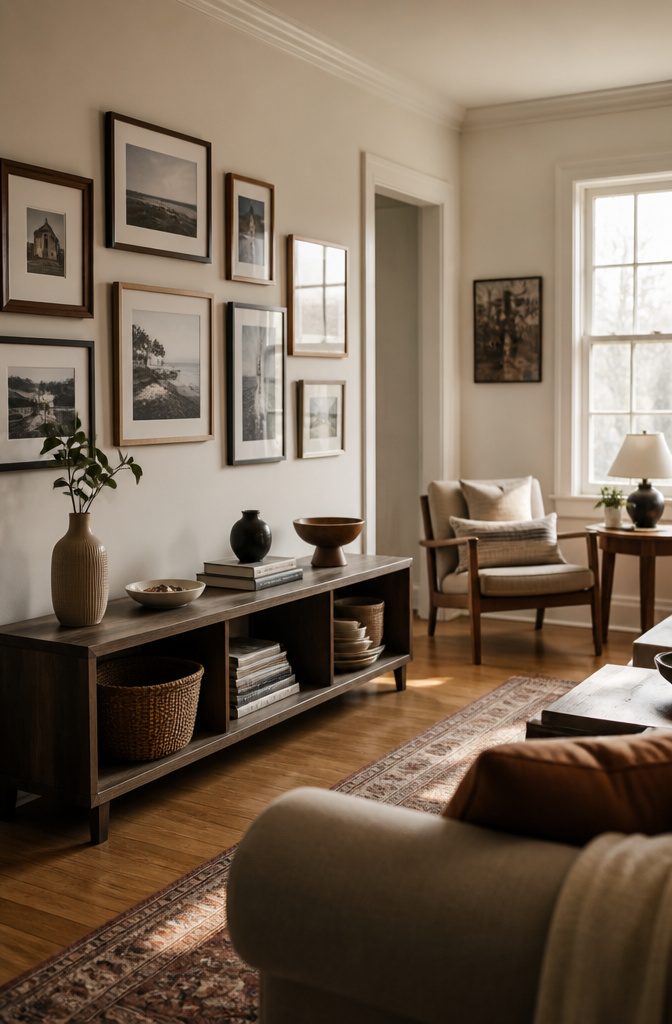
Art and collected objects turn a generic room into one that reads as yours.
A few meaningful pieces carry more weight than a wall full of filler—travel finds, inherited dishes, a painting you chose because it stopped you, framed photos from a trip that mattered.
Grouping objects in odd numbers on a shelf or mantel keeps the arrangement from feeling too symmetrical.
A collage of half a dozen or so framed photos fills an empty wall without the cost of large art, and mixing frame finishes adds a relaxed, gathered-over-time feel that uniform frames miss.
Curation matters more than quantity. A console stocked with books and personal objects becomes part of the room’s story when the palette stays calm and each piece has a reason to be there.
The restraint is what makes layering work—color and texture show up without crowding the eye, and the space feels like it evolved rather than arrived all at once.
6. Make the Room Functional for Everyday Living
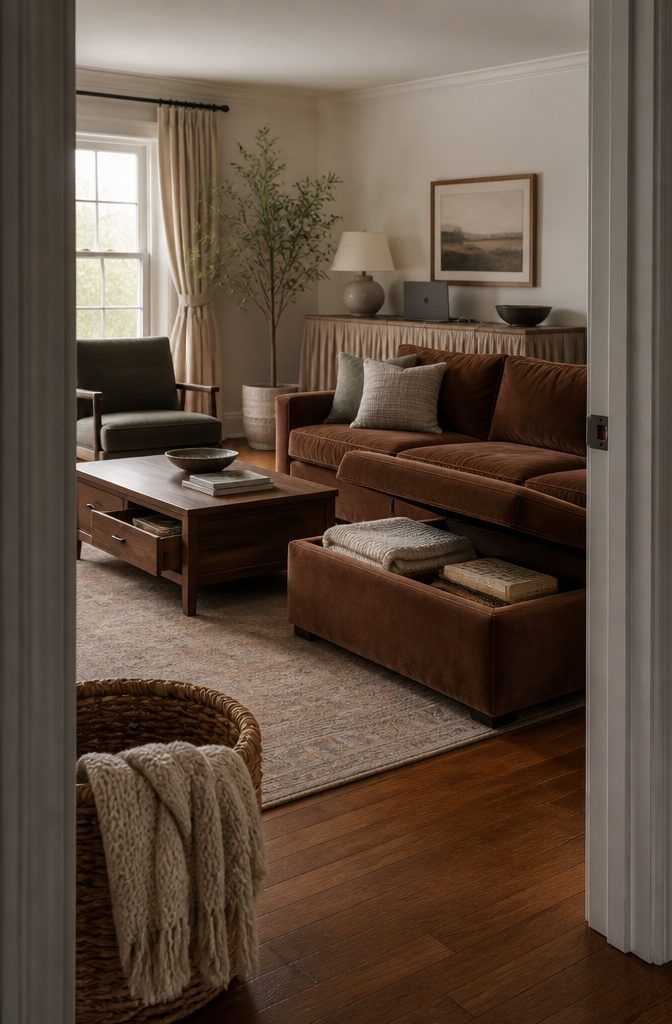
A sleeper sofa handles overnight guests without claiming a whole room for a bed, and a coffee table with a lift top or a drawer keeps remotes and charging cables out of sight when people come over.
Decorator Meredith Ellis worked a sleeper into a walnut-brown velvet sofa and hid a printer under a skirted console, so the room handled daily work and the occasional houseguest without looking like either.
Storage ottomans double as footrests and extra seats, and the lid lifts to stash throws or board games.
Leave enough room to walk through without sidestepping furniture.
A clear path from the doorway to the sofa means you can carry a tray or a laundry basket without knocking into a side table, and being able to pull a chair out without hitting the wall makes the seating actually usable.
Furnishings that move easily let you rearrange for a game night or push everything back when you need floor space.
7. Use Art or a Gallery Wall as a Focal Point
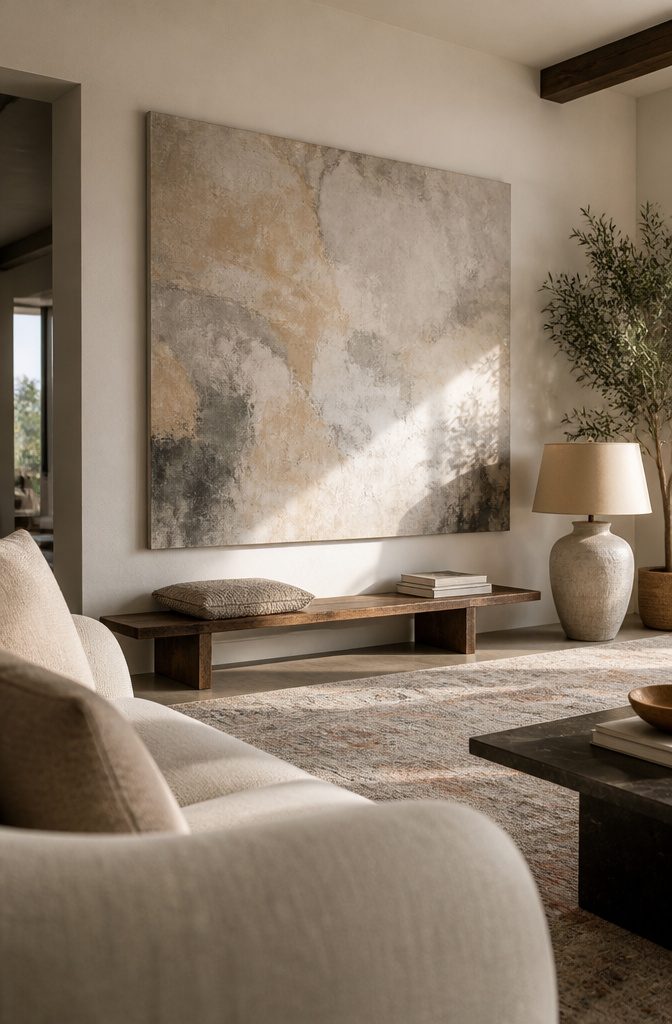
A gallery wall lets you fill blank space with pieces that mean something to you without committing to a single large frame.
The mix of sizes and subjects reads as collected rather than purchased all at once, which suits a room meant to feel lived-in.
Hang frames in odd groupings—three, five, seven—and vary the frame finishes if you want a looser look, or keep them uniform if the room leans modern.
A single oversized piece works when you want immediate impact without the layout work. One large canvas or print sets the tone faster than a dozen smaller frames, and it holds attention in a way that scattered art does not.
Place pull-up stools or a low bench near it if the wall sits in a corner; the seating acknowledges the art as something worth stopping for, not just something to fill the wall.
Either approach gives the room a focal point that isn’t the television.
8. Bring in Greenery or Flowers
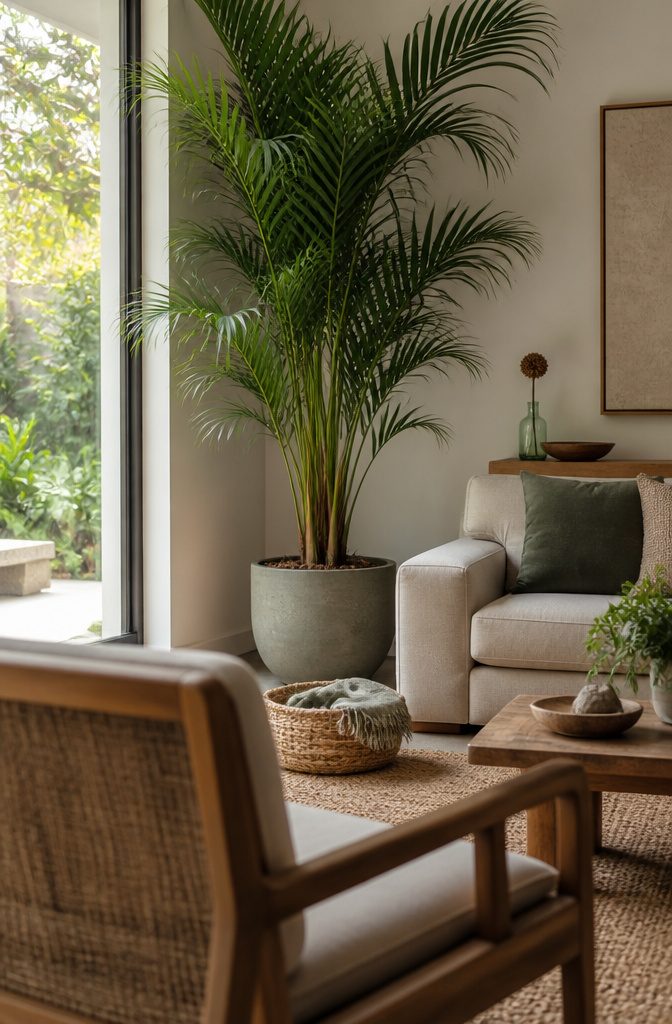
A tall plant fills vertical space without taking much floor—the Nearly Natural 6.5-foot Palm Tree works in a corner where a side table would feel cramped.
Real plants need light and watering schedules; faux ones let you put green wherever the room calls for it without checking the window first.
Orchids read formal but stay casual when the pot is simple—the 30-inch Real Touch Phalaenopsis Orchid sits on a console or bookshelf and holds its shape for years.
Smaller pieces layer in easily: the 19-inch Tall Koi Ginger Jar brings pattern and can hold stems if you want them or sit empty if you don’t.
Fresh flowers change weekly and cost accordingly; dried arrangements or a single stem in a glass bottle give you the organic shape without the maintenance.
9. Use Rugs to Anchor Seating Areas
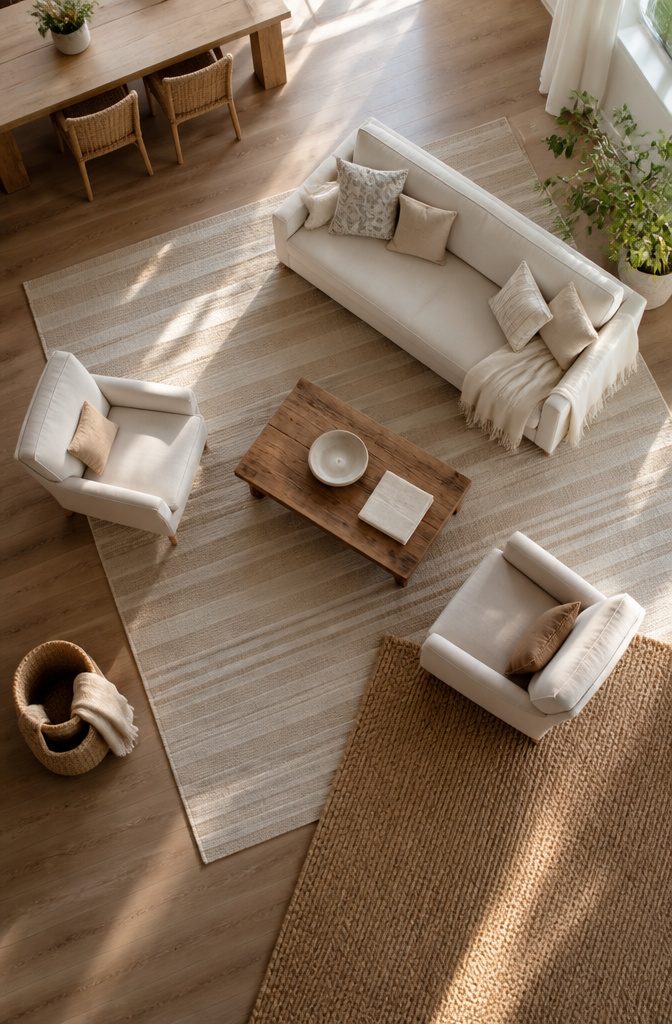
A rug sets where the conversation happens. The standard 9 by 12 feet size works for most living rooms and pulls seating into a zone rather than leaving chairs adrift along the walls.
I go for tonal stripes when pattern matters but nothing should shout—the champagne and cream rug from SAFAVIEH runs around $200 and reads neutral enough to let other pieces carry color.
Softness underfoot changes how a room feels when you walk into it barefoot, and rugs in natural fiber keep that relaxed look if the space leans coastal or airy.
Darker rugs or patterned ones anchor a moodier room without fighting the furniture.
Layering a second rug over the first adds visual weight in open layouts where one zone bleeds into the next, though proportion matters: the rug should sit under the front legs of the sofa and chairs, not float in the middle like an island.
10. Choose Lighting That Supports a Relaxed Atmosphere
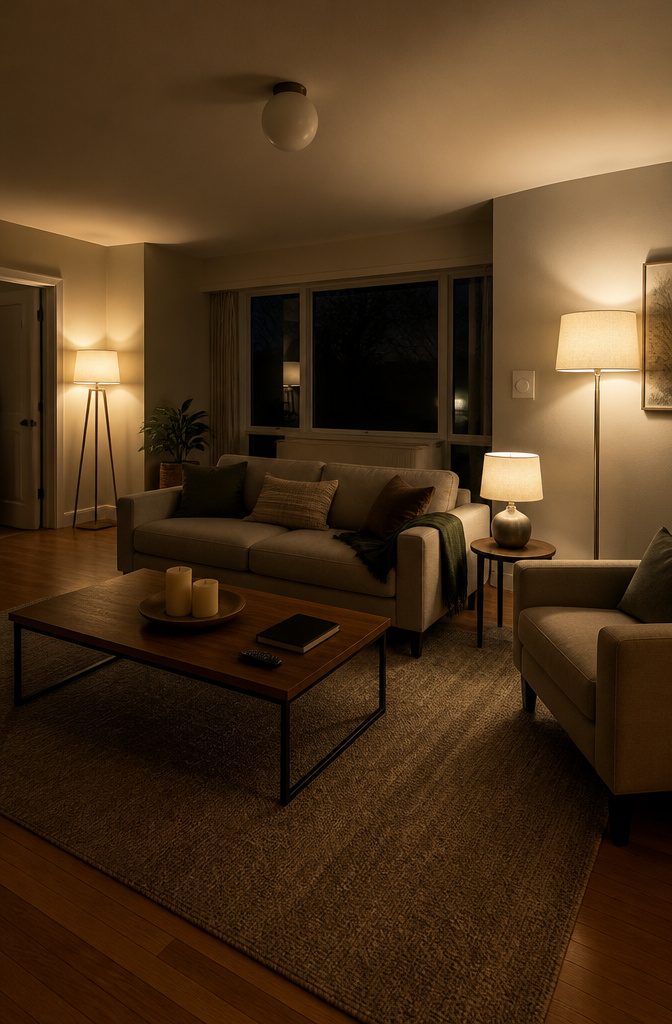
Floor and table lamps give you the warmth overhead fixtures rarely do.
A couple of floor lamps in opposite corners create pools of light that feel softer than a single ceiling fixture flooding the whole room, and you control where people gather.
Candles work the same way — a few grouped on a coffee table or mantel add glow without wiring.
Dimmable switches let you drop the brightness for a movie night or bring it up when someone needs to read, and the flexibility matters more than the fixture style.
Metallic finishes on lamp bases reflect a little extra light without adding another bulb.
Skip the crystal chandelier.
It reads formal, and a casual living room does better with a simple globe fixture or no overhead light at all. The standard ceiling mount does the job when you need it; the lamps do the rest.
11. Make a Fireplace, Bar, or Feature the Focal Point
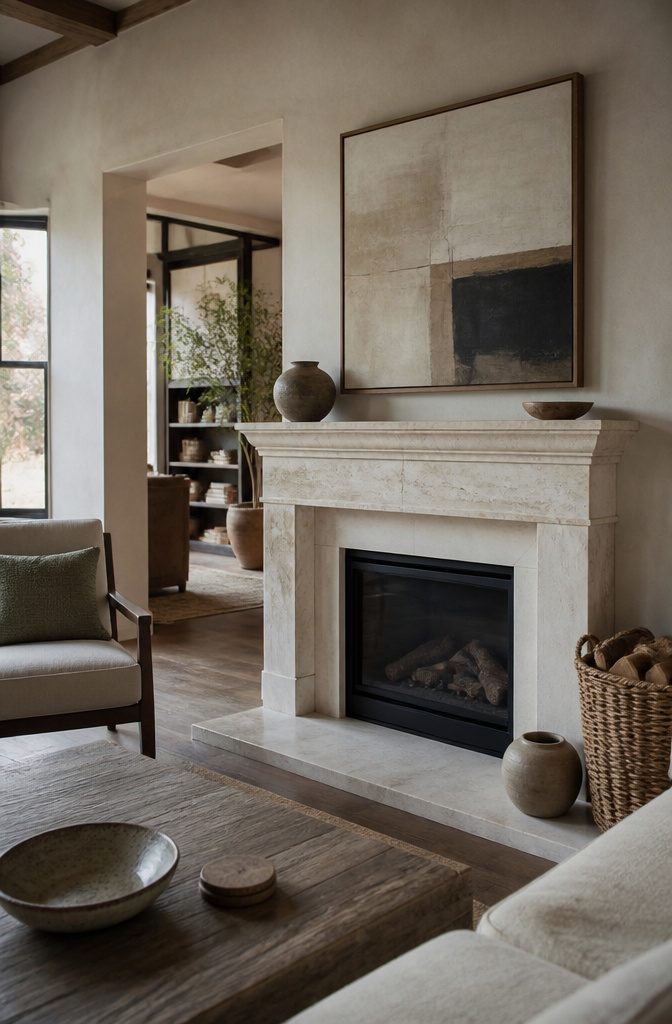
A fireplace gives the room somewhere to gather, even when it isn’t lit.
I’ve seen people repurpose an electric unit by plastering over the surround in a finish that matches the room—venetian plaster in a pale tint like Alabaster works if your walls are plaster too—then slide the unit into an older mantel.
The result anchors the seating without fighting the rest of the aesthetic.
A built-in bar does the same job with more function.
A shallow niche painted in a saturated blue or jewel tone pulls people into the space, and brass shelving against mottled tile adds enough shine to make it a destination even when you’re serving in another room.
The compact bar idea works in a small living room because it takes a few square feet and turns them into a reason to stay.
12. Mix Traditional and Modern Styles
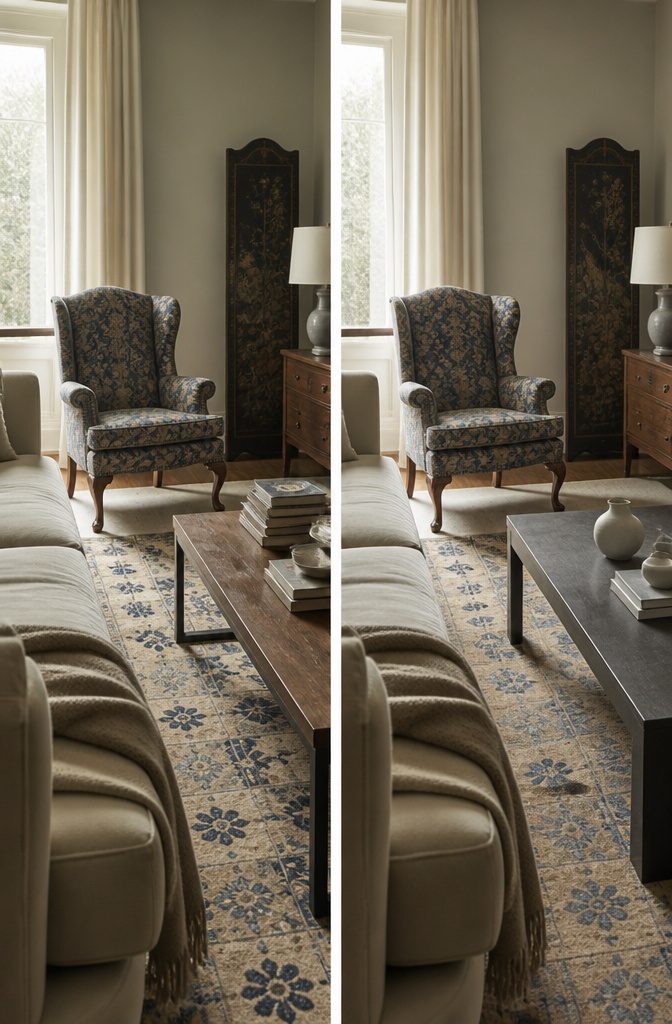
A 1940s Finnish rug under a clean-lined sofa, a Spanish high-back chair next to a contemporary coffee table, an antique Japanese screen on the wall behind modern ceramics — blending periods stops a room from reading like a showroom.
The collected look comes from pairing one or two traditional pieces with simpler modern furnishings rather than committing to a single era.
The contrast does the work. A vintage Swedish rug grounds a space when everything else leans contemporary, and a secondhand wingback chair brings weight to a room full of low-profile seating.
The traditional piece carries detail and age; the modern ones stay quiet and let it.
Global pieces layer in the same way. English and French furniture mixed with Spanish and Portuguese pieces reads as traveled rather than themed, especially when the patterns vary — checks against florals, geometrics against ikats.
The room feels like it came together over time instead of all at once.
13. Use Storage or Built-Ins to Organize Belongings
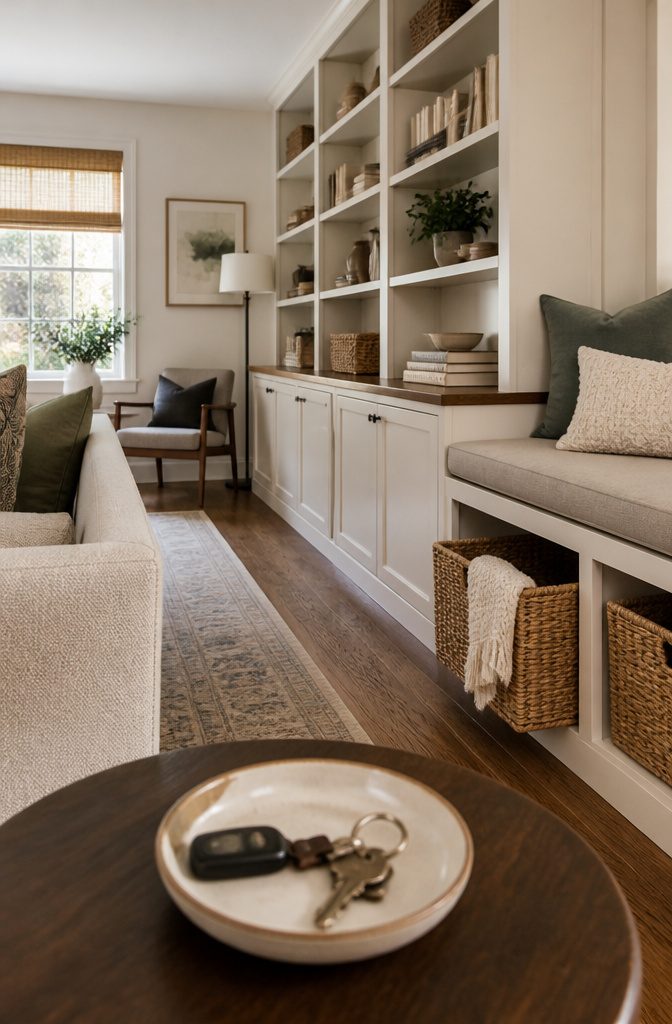
Built-ins handle the tension between showing things off and keeping them out of sight.
A floor-to-ceiling unit gives you closed storage at the bottom for remotes, chargers, and everything else that piles up, then open shelves above for books and objects you want in view.
The division keeps the room from looking either sterile or cluttered.
A console works the same way on a smaller footprint. One with closed drawers hides what needs hiding, and the surface becomes a drop zone or display ledge.
In a narrow room, it lets you pull the sofa forward without losing storage, so the layout opens up instead of pushing everything against the walls.
Built-in benches add seating that doesn’t eat floor space, and the cavity underneath takes baskets or bins.
That matters most in small living rooms where every piece has to do two jobs—the bench seats people and stores blankets, and it does both without a footprint that blocks traffic or sight lines.
14. Make the Layout Feel Open and Airy
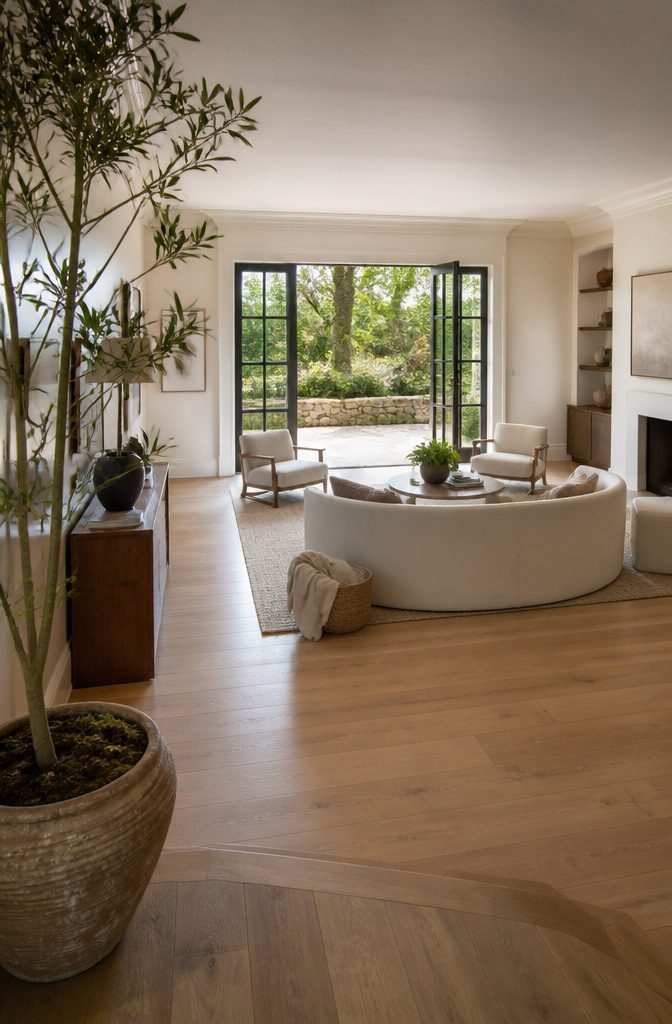
I’d thought floating a sofa only worked in large rooms, but a low-back piece changes that.
The Texas firm Shane and Pierce set a 10-by-10-foot sectional away from the walls in a modest living room, and the space read larger than it had with smaller furniture pushed to the perimeter.
The low back keeps sightlines open across the room, so you’re not staring at the back of a tall sofa when you walk in.
"The sectional is rather large at 10 by 10 feet, but the low-back, lounge-style sofa allows the space to feel open and does not interfere with the lines of sight," says Pierce Jordan, cofounder of the Texas-based firm Shane and Pierce.
Low-profile seating keeps the room feeling breathable even when the footprint is generous.
A curved sofa with a low back hugs the room without chopping it up, and the rounded line moves your eye through the space instead of stopping it.
Float the piece near French doors or windows if you have them—natural light washing over low furniture amplifies that sense of openness.
15. Use a Sofa or Large Piece as a Sculptural Anchor
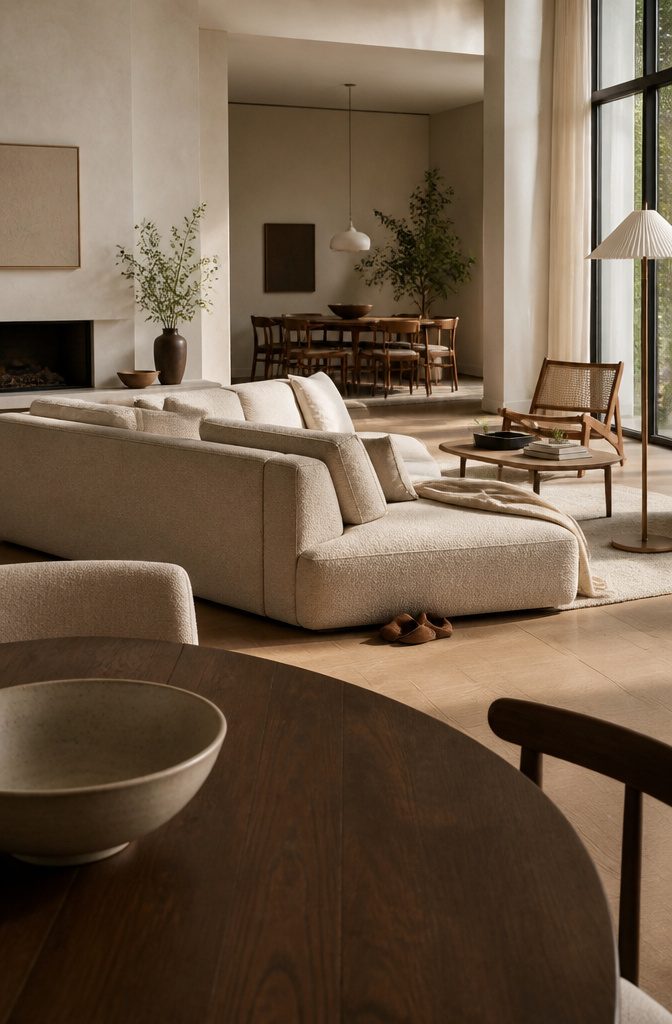
A large sofa or sectional can do more than seat people—it can hold the room together visually when everything else is light or low.
The 10 by 10 feet sectional works here because the low back keeps sightlines open even at that scale, so the piece reads as substantial without crowding the room.
Float it rather than pushing it against a wall, and it becomes the anchor the rest of the furniture orbits around.
Match the proportions to the room.
A big sectional in a small space feels like a mistake; the same piece in an open floor plan gives the seating area definition without needing rugs or dividers to mark where the living room starts.
Stick with neutral upholstery if the sofa is doing this much work—pattern or strong color on something that large turns the anchor into the only thing you see.
Frequently Asked Questions
What is the 2/3 rule for a living room?
The 2/3 rule suggests that a rug should cover about two-thirds of the seating area, with the front legs of sofas and chairs resting on it while back legs stay off.
This grounds the furniture grouping without making the rug look too small or floating in the middle of the room. A standard 9 by 12 feet rug works for most living rooms and pulls seating into a defined zone.
What is the 3-5-7 rule for decorating?
The 3-5-7 rule means grouping objects in odd numbers—3, 5, or 7 items—to create visual interest that feels balanced without looking symmetrical.
Odd groupings on a shelf, mantel, or gallery wall read as collected over time rather than purchased all at once. This works for framed photos, vases, candles, or any decorative objects you want to display together.
How to make a small living room look nice?
Float low-profile furniture away from the walls instead of pushing everything to the perimeter, which counterintuitively makes the room feel larger by keeping sightlines open.
Choose pieces that do two jobs, like storage ottomans that work as footrests and extra seating, and leave clear paths between furniture so you can move through without sidestepping.
Light rugs in natural fiber and warm neutral wall colors keep the space feeling airy without builder-grade chill.