Corner decor ranges from a $20 art print to a built-in window seat, and the right choice depends on whether the corner gets natural light and how much floor space you can spare.
Poor light rules out real plants but works fine for faux greenery or a floor lamp; tight corners take a ladder or floating shelves where a bookcase would block traffic.
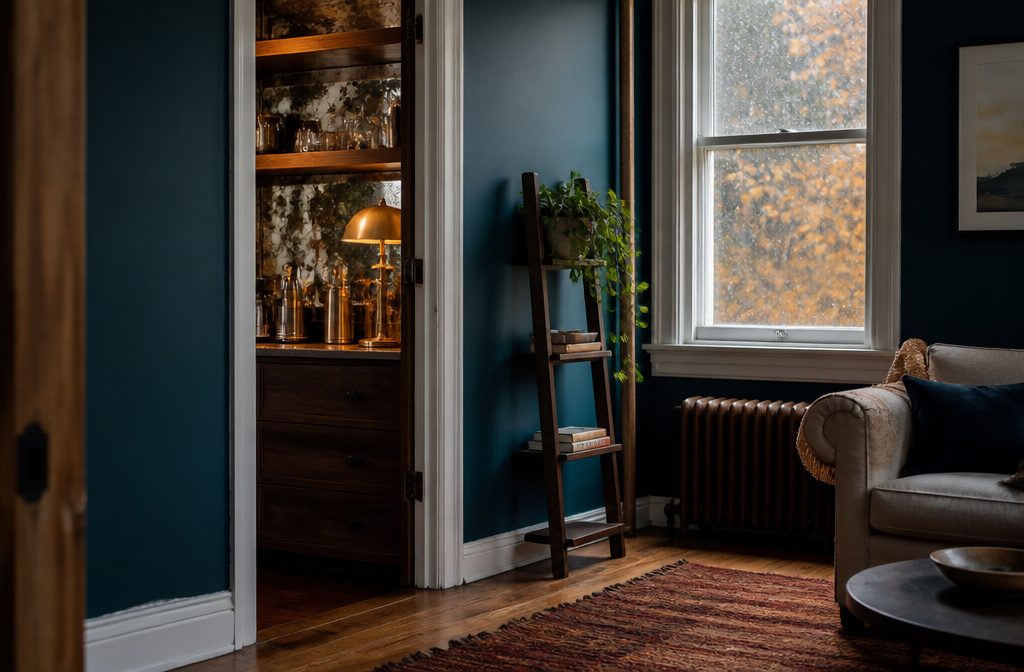
Designer Jean Liu built a coffee and cocktail station inside a linen closet with shelves backed in mirror tile, proving that even hidden corners hold more potential than most rooms use.
1. Seating or a Reading Nook
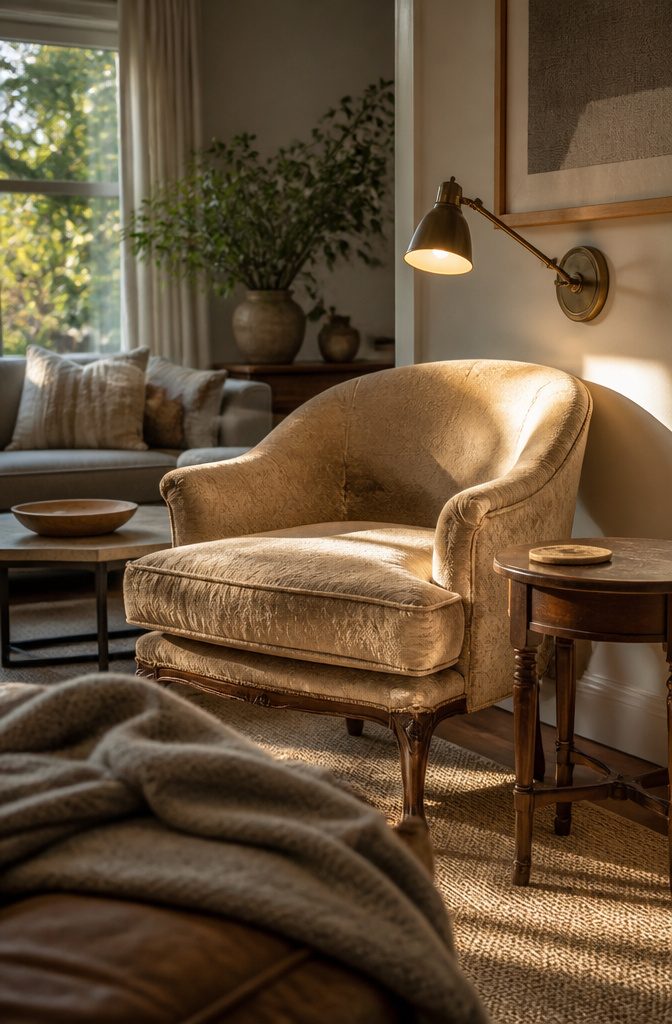
A chair tucked into a living room corner turns dead space into somewhere you actually want to sit.
Sectionals work if the corner has room for a full seating arrangement, but a single accent chair fits tighter spots and doubles as extra seating when guests arrive.
Window seats are worth building out if the corner lands next to a window—they give the corner dimension and turn it into the room’s anchor rather than an afterthought.
I’ve had chairs like this in a bedroom corner for over seven years, and the setup still holds: a comfortable chair with decent back support beats a statement piece you avoid sitting in.
Pair it with a small side table if floor space allows, or wire a reading lamp into the wall above if it doesn’t.
Thrift stores and antique malls are better hunting grounds than big-box retailers when you want something with actual character. A neutral fabric keeps the corner flexible; pattern or accent color works if the rest of the room stays quiet.
2. Indoor Plants or Greenery
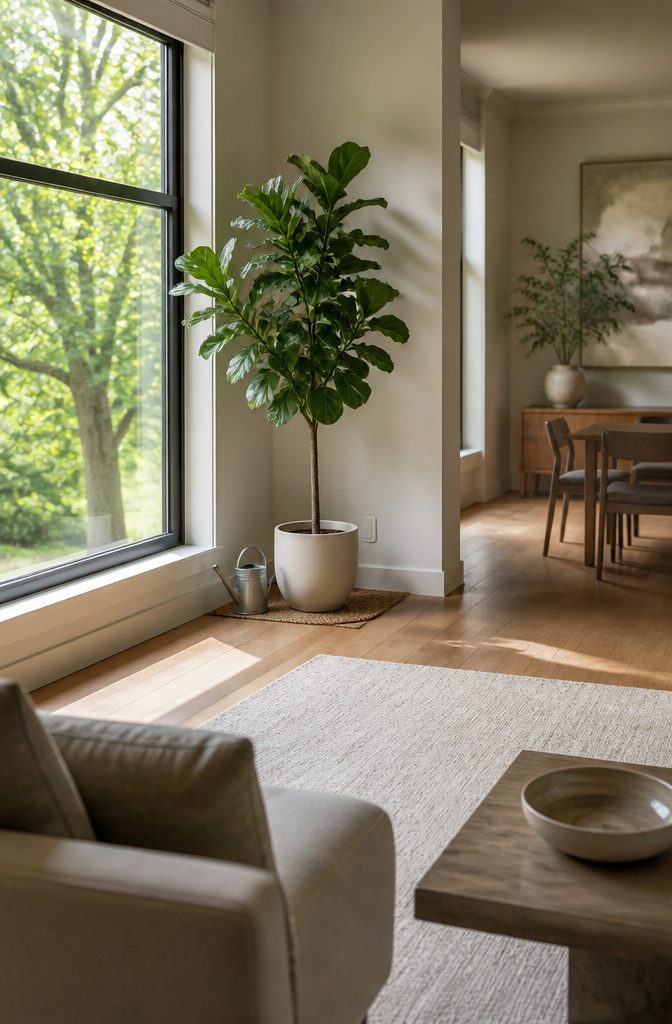
A potted plant works in almost any corner, and if the spot gets good natural light, a large-leaf plant like a fiddle-leaf fig tree fills the vertical space without cluttering the floor.
The broad leaves make a statement in ways that smaller, bushier plants don’t.
Poor light calls for faux plants instead. A tall artificial plant keeps the greenery idea alive without the maintenance or the slow decline real plants suffer in dim corners.
Look for options with realistic leaf texture and branching rather than the stiff, obviously fake stems that cheapen the look.
Windowsill corners give you a third route: line the sill with small potted plants in pretty ceramic or glass containers.
The horizontal display keeps the floor clear and takes advantage of light that would otherwise go unused. This works especially well in corners where a floor plant would block foot traffic or make the room feel tight.
3. Plant Stand or Pedestal
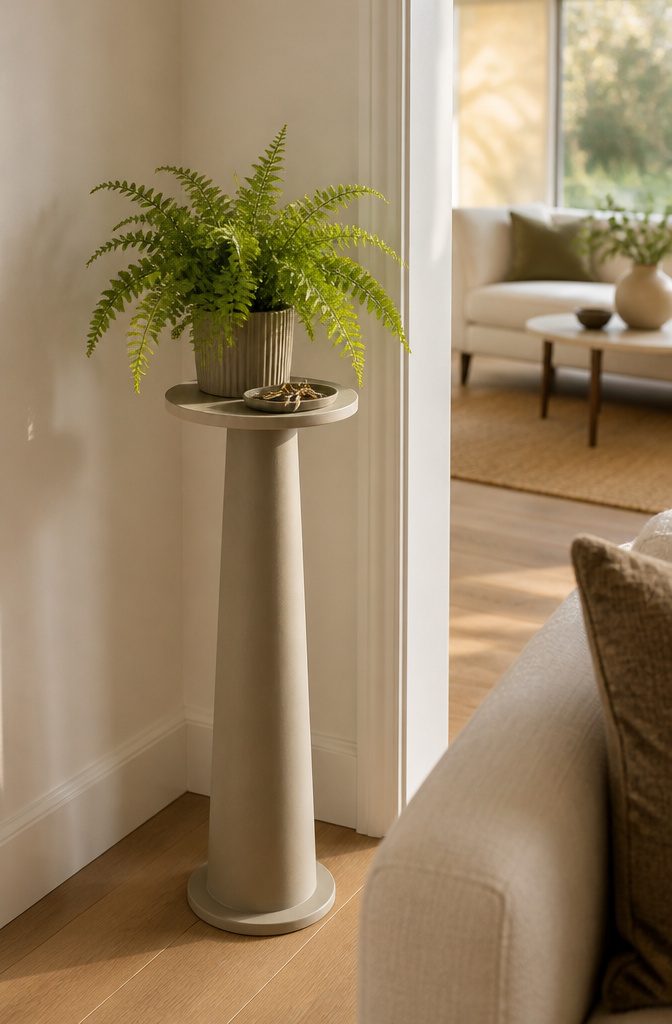
A plant stand or tall pedestal turns a bare corner into a display without crowding the room.
The vertical footprint stays small — most stands run six to twelve inches across — which makes them workable even in tight spots near doorways or between furniture.
A vintage column or chippy plant stand adds texture under a potted fern or trailing pothos.
For a cleaner line, a simple round pedestal in a neutral finish fits almost any style and gives you room for a vase, a catchall dish, or a small sculpture.
Place it in an entryway corner and it becomes a landing spot for keys and mail alongside something decorative.
If the corner backs onto a wall that gets no foot traffic, you can use the pedestal for a sculpture instead of a plant — just pick one that reads well from the front, since the back stays hidden.
4. Ladder
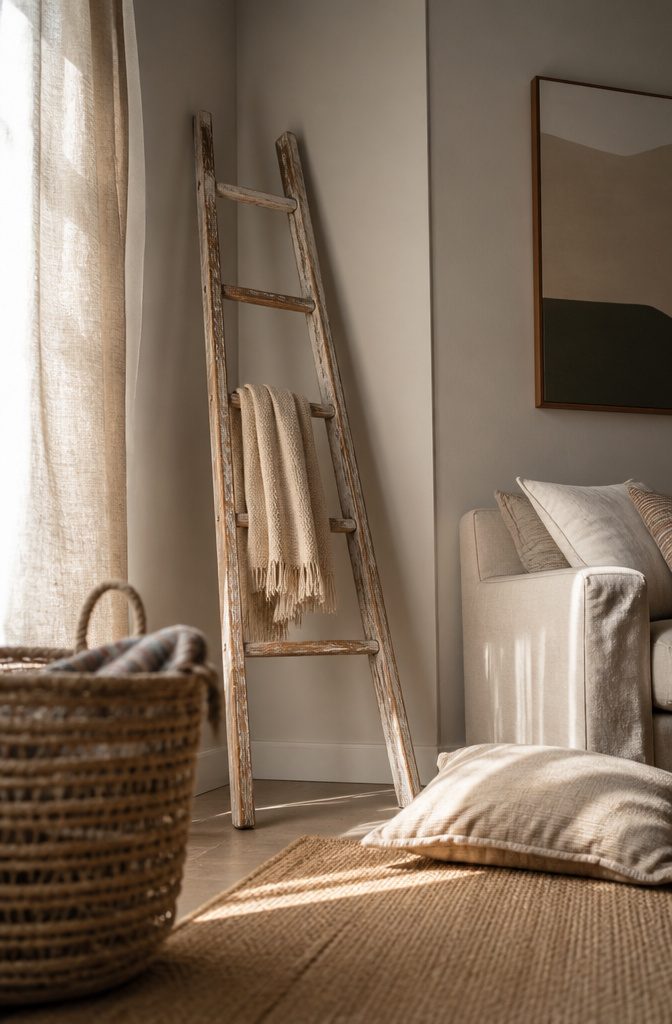
A decorative ladder leaned into the corner brings in vintage or farmhouse warmth without claiming much floor space.
The ladder itself works as the focal point—an old wooden one with worn paint fits French country or primitive styles—but you can also drape a throw blanket or two over the rungs to soften the look and keep something cozy within reach when you need it.
Load one or two rungs at most.
A single lightweight throw is enough to break up the hard lines and tie the piece into your seasonal palette. Leave the rest of the rungs bare so the wood shows through, and the corner stays open rather than cluttered.
If you swap throws with the season, the ladder becomes part of your rotation without taking up closet space between uses.
5. Bookshelf or Bookcase
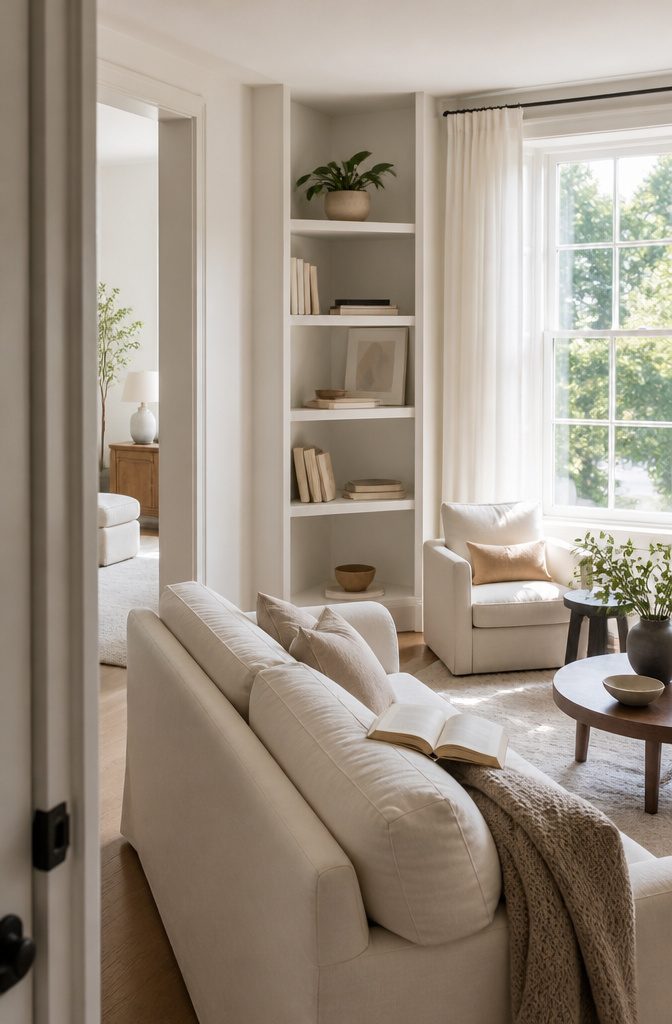
A bookcase turns a dead corner into working storage and gives you shelves to rotate through plants, framed photos, and whatever else you want visitors to notice.
Measure the corner width and depth before you shop, and leave a few inches on each side so the bookcase doesn’t wedge itself in or block trim.
A tall, narrow unit works when floor space is tight; a wider one with three or four shelves fits a corner that opens up past the furniture line.
I like painting the bookcase the same color as the walls.
It reads as built-in rather than furniture you shoved into a gap, and the whole corner recedes so the objects on the shelves come forward instead of competing with the frame.
6. Cabinet or Other Closed Storage
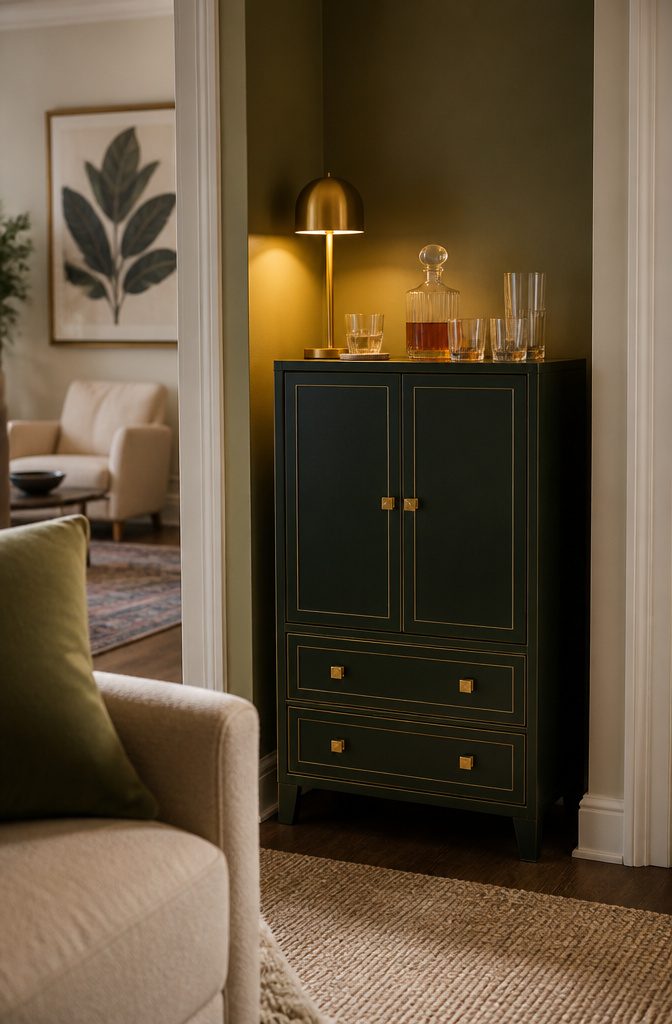
A cabinet gives you closed storage where you need it and a surface to work with at the same time.
A tall cabinet fits a narrow corner; a shorter sideboard or chest of drawers leaves wall space above for art or a mirror leaning against the paint. Either way, you gain drawers or shelves behind doors instead of open clutter.
An Art Deco-esque cabinet with geometric lines or brass pulls turns a corner alcove into a small bar setup, stocked with glassware and bottles that stay out of sight until you want them.
If your corner goes in and then back out, measure the alcove depth before you buy—a console table with a lower shelf can slot in where a full cabinet won’t, and you still get two levels of storage.
A cabinet with a bookshelf on top and closed storage below splits the difference: display books and plants where they show, hide remotes and chargers where they don’t.
7. Baskets
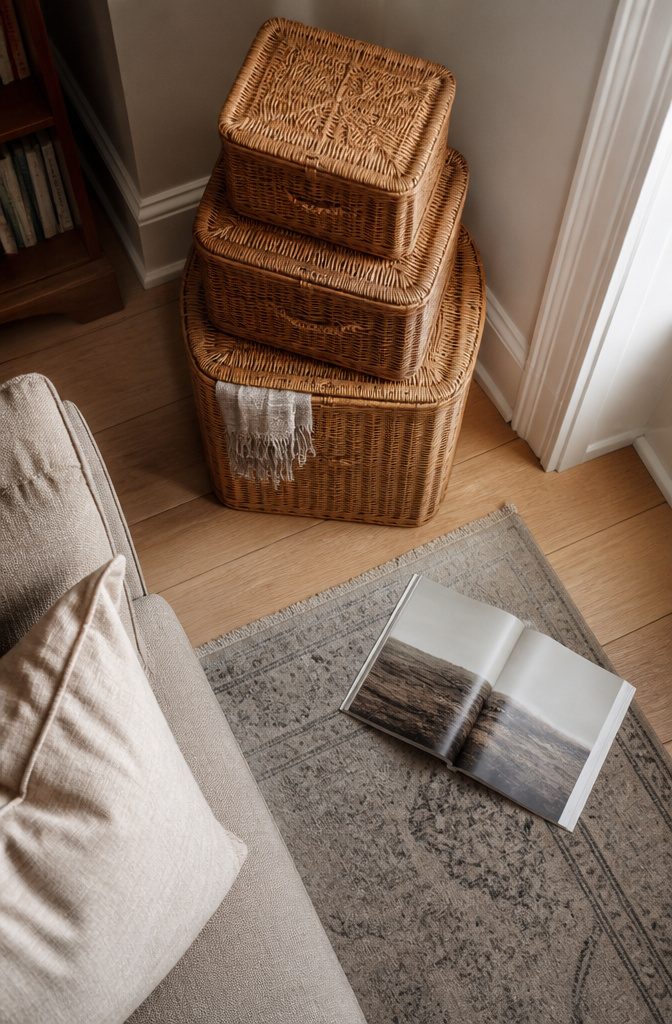
Baskets stacked in a corner add storage that doesn’t announce itself. A set of wicker baskets with lids—two or three in graduated sizes—holds blankets, throw pillows, magazines, or handbags while reading as texture rather than furniture.
Vintage baskets from antique malls or thrift stores bring the most character, though you may need patience to find sizes that stack cleanly.
Start with a solid new basket at the base if the hunt takes too long, then layer older pieces on top.
The storage is practical enough that I’d put baskets in a corner before I’d add something purely decorative.
They keep the room tidy without a door or drawer, and the woven texture warms up a blank wall better than most objects you’d place there.
Earthy tones work with nearly any scheme, and stacking them vertically uses corner space that a single basket would waste.
8. Side or Accent Table
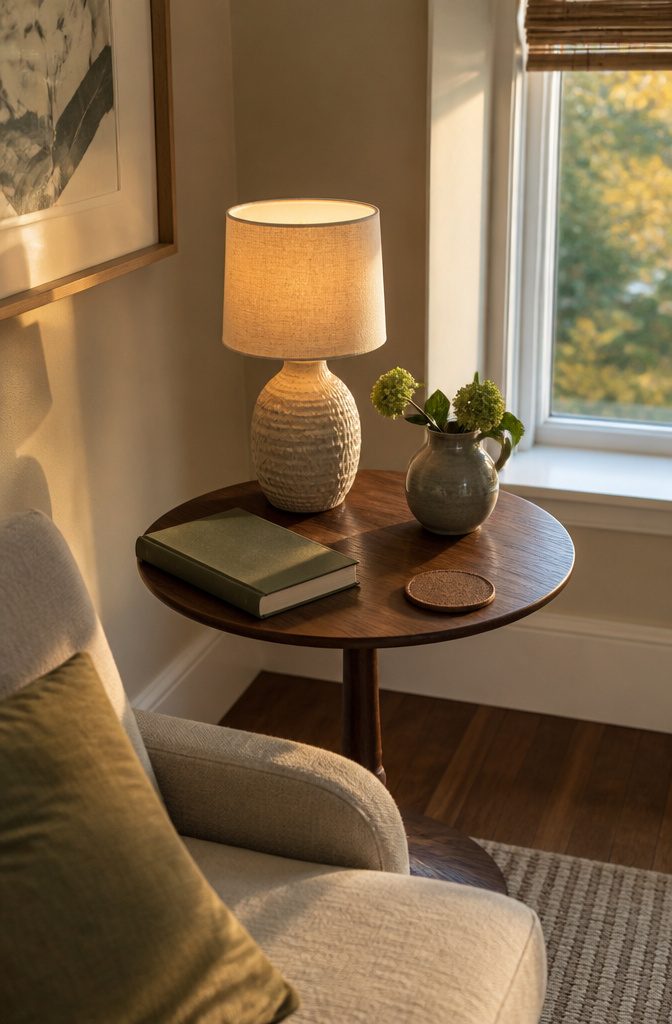
A small table fits where a larger piece would crowd the corner, and gives you a surface for the things that make a room feel finished.
Round tables soften the hard angle better than square ones, and at 18–24 inches across they slip between a sofa arm and the wall without blocking traffic.
Decorate the top with a table lamp, a flower vase, a few stacked books, or a candle.
Small plants work if the corner gets enough light, and a lantern or photo frames add personality without taking up the whole surface. Keep one or two spaces open so the table stays useful for setting down a drink.
Wood, marble, and metal finishes all hold up in a living room. Pick the one that matches your other furniture rather than introducing a new material the rest of the room does not echo.
9. Bar or Coffee Station
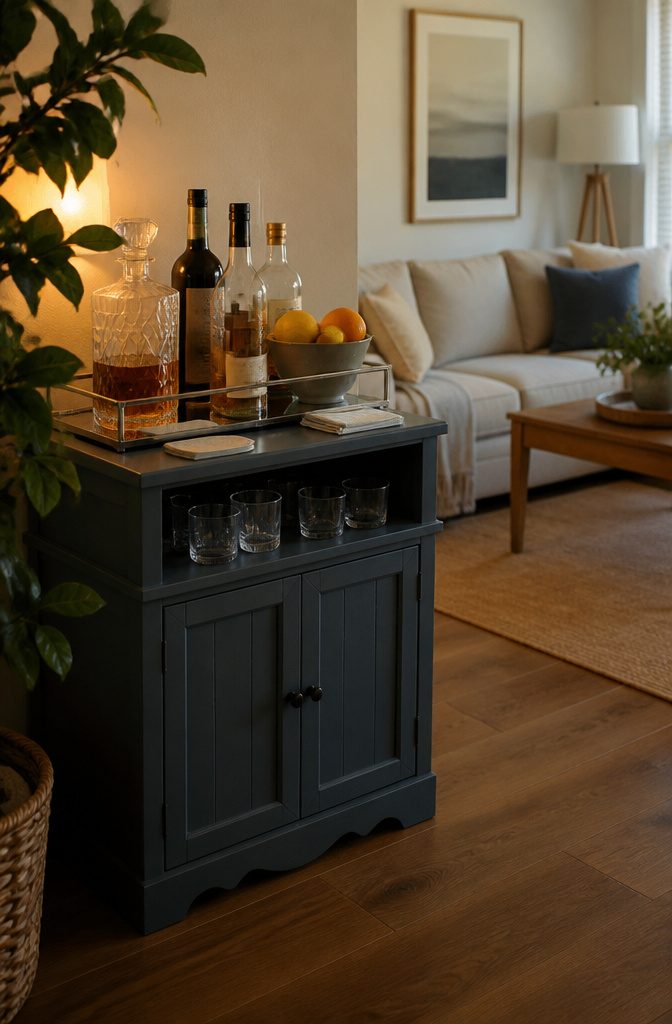
A corner bar cart holds liquor, glassware and mixers in about two square feet, and you can roll it out when people arrive.
Designer Jean Liu built a coffee and cocktail station inside a linen closet—shelves backed with mirror tile, door painted a bold color—so the whole setup disappears between uses.
If you don’t have the closet, a small cabinet or repurposed nightstand works the same way: Fitz Pullins propped barware on top of a low cabinet and stored glasses inside, turning furniture you already own into a bar without buying the cart.
The corner placement keeps bottles and glassware from cutting through the center of the room, and a well-designed bar cabinet becomes the thing guests notice first when they walk in.
10. Wall Art or Gallery Wall
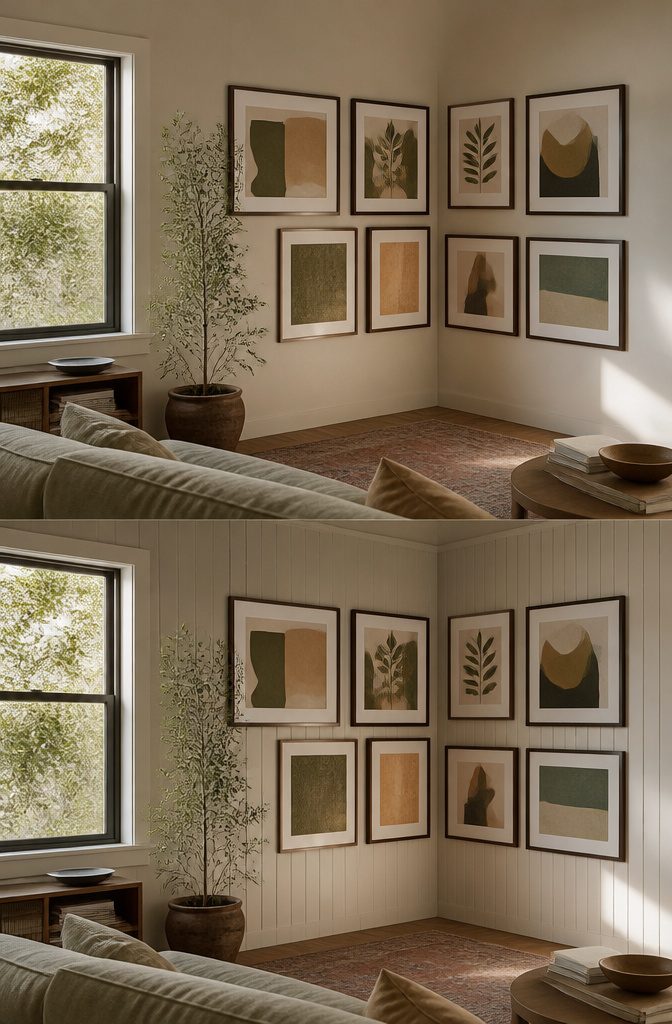
Framed prints or family photos work in a corner the way they work anywhere else, except people notice them more because corners surprise.
Use neighboring walls to create a right-angle display—two pieces that turn with the room rather than sitting on a single flat plane.
Hang them at the same height for a traditional look, or stagger one lower for an asymmetrical contemporary feel.
You can build a full gallery wall in the space if the corner is genuinely empty, mixing frame styles or keeping them uniform depending on how controlled or collected you want the result to read.
Art sets run under $20, so the cost barrier is low even if you are filling several frames.
11. Desk or Workstation
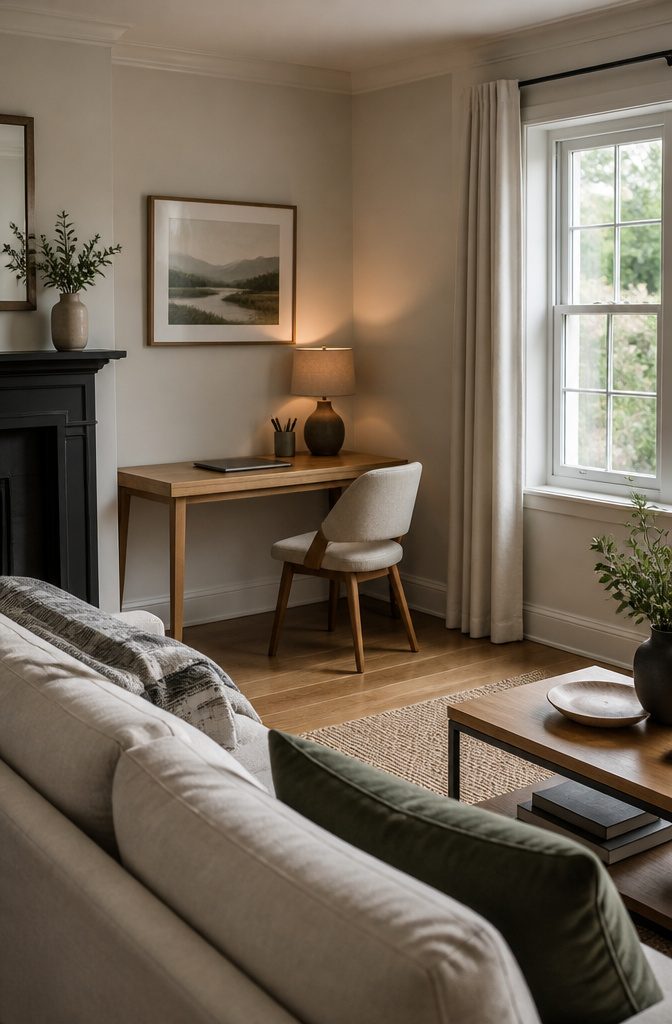
A corner with a view makes a good spot for a small desk.
The window light saves you from adding a lamp during the day, and looking up from the screen puts something other than a wall in front of you.
A writing desk works better than a full office setup—it takes less floor space and keeps the living room from turning into a second bedroom.
Pair it with an occasional chair instead of a task chair so the corner still reads as part of the room when you’re not using it.
If the corner is interior, the desk still carves out a work zone without needing a separate room.
It gives the living room more than one purpose, which makes the space feel larger rather than cluttered. Pick a desk narrow enough that it doesn’t block traffic, and make sure the chair tucks under when you’re done.
12. Lighting
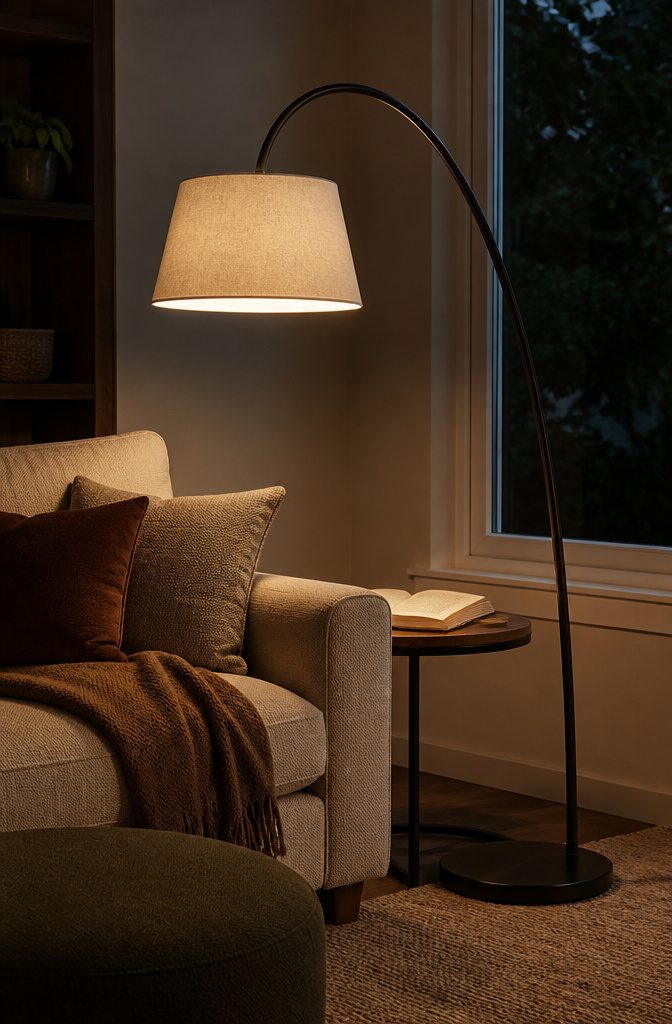
A floor lamp in the corner fills two gaps at once: the empty space and the need for another light source at a different height.
Position one next to a chair or sofa and you have a reading light that doubles as a design element, the way a sculptural arc lamp or a tripod floor lamp anchors the corner without claiming much floor area.
If the corner sits near your main seating, a wall sconce does the same work without taking any floor space at all.
Smaller corners work with table lamps placed on an accent table or plant stand. The lamp itself becomes part of the display, especially if the base has texture or finish worth looking at.
For atmosphere rather than task lighting, a lantern with a candle or string lights inside throws warm, diffused light that makes the room feel more settled.
Glass, metal, or wood lanterns fit modern interiors without reading too rustic, and the soft glow works particularly well at night when overhead lighting feels too stark.
13. Shelves
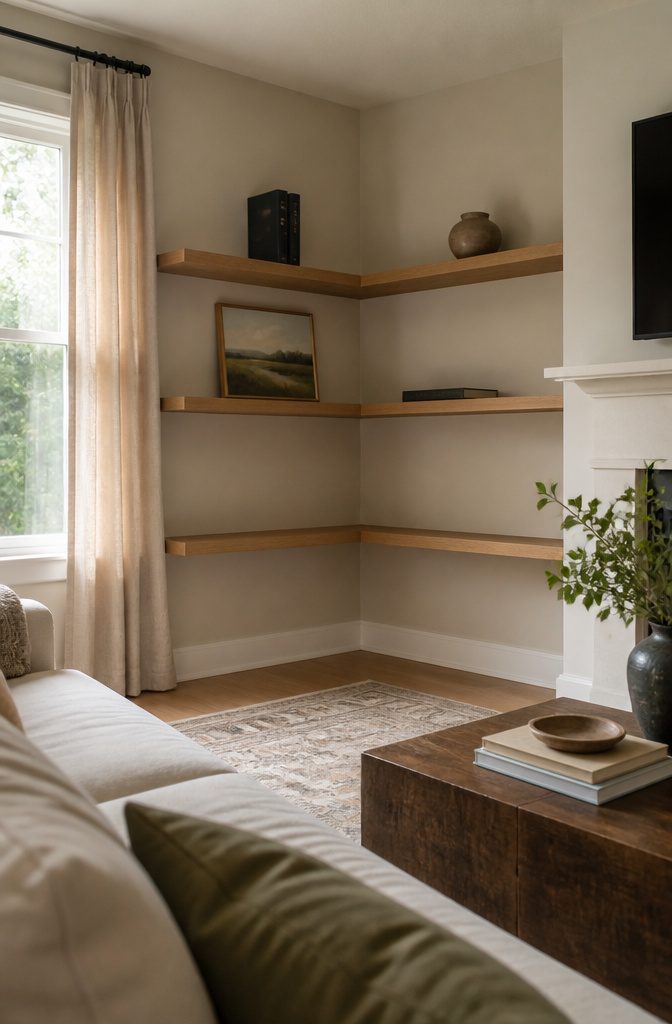
Floating shelves fill a corner without the bulk of a full bookcase, and you can stop at one shelf or stack three depending on how much wall you want covered.
Corner shelves—the ones designed to wedge into the angle itself—work in tight spots where even a narrow unit would block traffic.
I mount mine about 60 inches up so they sit at eye level and break up blank wall without crowding furniture below.
What goes on them matters as much as the shelves themselves. A few hardcover books standing upright, a small ceramic piece, or a framed photo keeps the display from looking like you’re storing overflow.
Leave some of the shelf empty—a packed corner reads as clutter rather than design, and the breathing room is what makes someone’s eye stop there on purpose.
14. Mirror
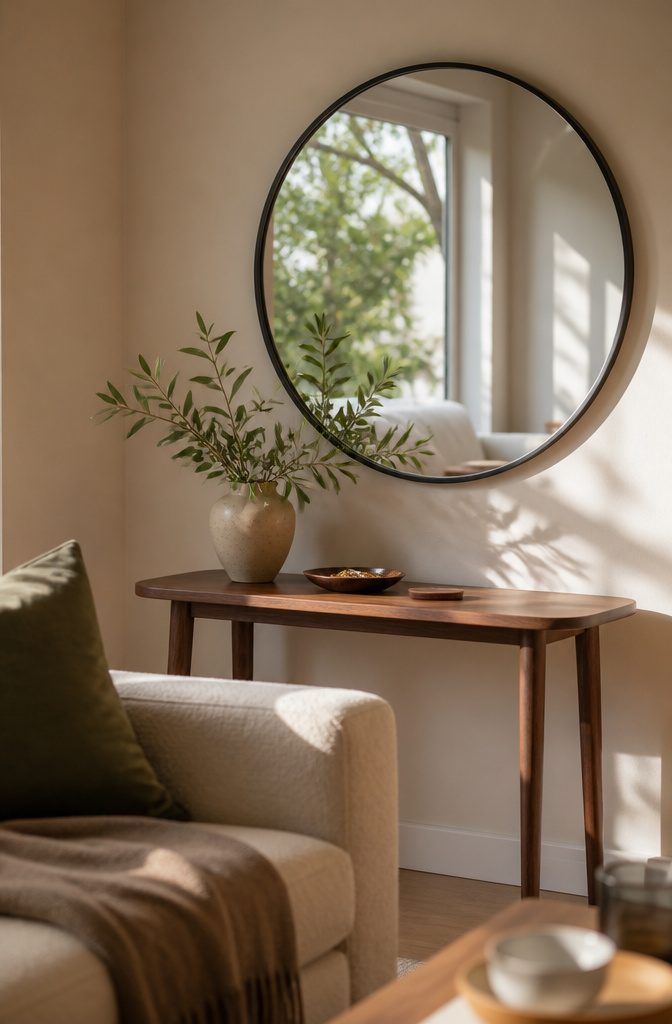
A mirror opens up a tight corner and bounces light back into the room.
Round or large wall mirrors work best in small living rooms because they reflect natural light and make the space feel bigger and brighter without adding furniture bulk.
Frame choice shapes the look. Black-framed mirrors read modern and graphic, metal frames add industrial edge, and wooden frames warm things up.
I’d pick based on what the rest of the room already has—match the coffee table legs or the window trim rather than introducing a new finish.
Hang the mirror above a side table if you want a composed vignette, or keep it solo on the wall if the corner needs to stay open.
The paired approach gives you a landing spot for keys or a vase, but a mirror alone does the spatial work without claiming floor space.
15. Decorative Screen
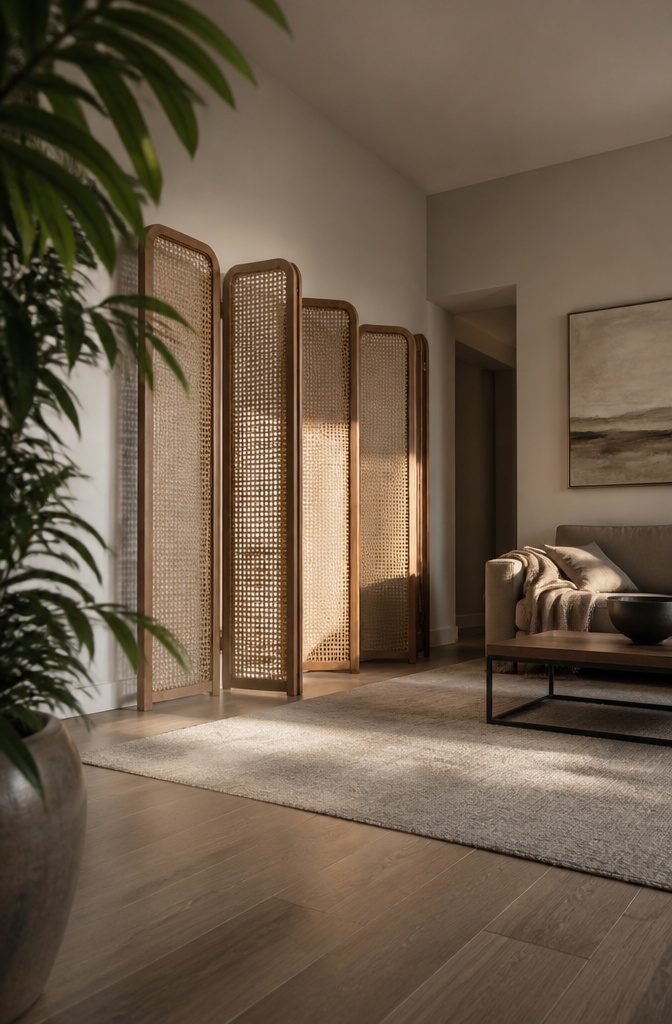
A folding screen sits in the corner like sculpture—bendable panels let you fit it snugly into the angle, and the tall profile fills vertical space without mounting anything.
Screens work best in larger living rooms with high ceilings, where the height emphasizes your headroom and the footprint has room to spread.
They fold out across the corner and a chunk of both adjacent walls, so measure the full span before you buy one.
Use a screen as a room divider if the corner opens into another zone, or pick one with a pattern or texture strong enough to stand alone as a focal point.
The flex in the panels means you can adjust the angle until it fits the corner exactly.
Frequently Asked Questions
What should I put in the corner of the living room?
A chair or reading nook works in most corners, especially if you pair it with a small side table or wall-mounted lamp.
Other options include a tall plant (real or faux depending on light), a bookcase for storage and display, or a small accent table topped with a lamp or vase.
Baskets stacked in the corner add hidden storage for blankets and magazines while bringing in texture.
How can I decorate an empty corner in my living room?
Start with a floor lamp or tall plant to fill vertical space, then add a side table if floor space allows.
Mirrors open up tight corners and reflect light back into the room. You can also lean a decorative ladder against the wall and drape a throw blanket over the rungs, or stack wicker baskets for storage that doubles as texture.
Which mirror is best for a small living room?
Round or large wall mirrors work best because they reflect natural light and make the space feel bigger and brighter.
Pick a frame that matches what the rest of the room already has: black frames read modern, metal adds industrial edge, and wood warms things up.
Hang the mirror above a side table for a composed look, or keep it solo if the corner needs to stay open.
What can I place on a side table for decoration?
A table lamp, flower vase, a few stacked books, or a candle work well without taking up the whole surface.
Small plants fit if the corner gets enough light, and photo frames add personality. Keep one or 2 spaces open so the table stays useful for setting down a drink.
Are decorative baskets useful for living room decor?
Yes. A set of wicker baskets with lids holds blankets, throw pillows, magazines, or handbags while reading as texture rather than furniture.
Stack them in graduated sizes vertically to use corner space efficiently. The woven texture warms up a blank wall better than most purely decorative objects.
How do I make my living room corner look cozy?
Put a comfortable chair with good back support in the corner and pair it with a reading lamp.
Add a throw blanket draped over a decorative ladder or folded on the chair itself. A floor lamp with warm, diffused light makes the corner feel settled at night when overhead lighting feels too stark.