
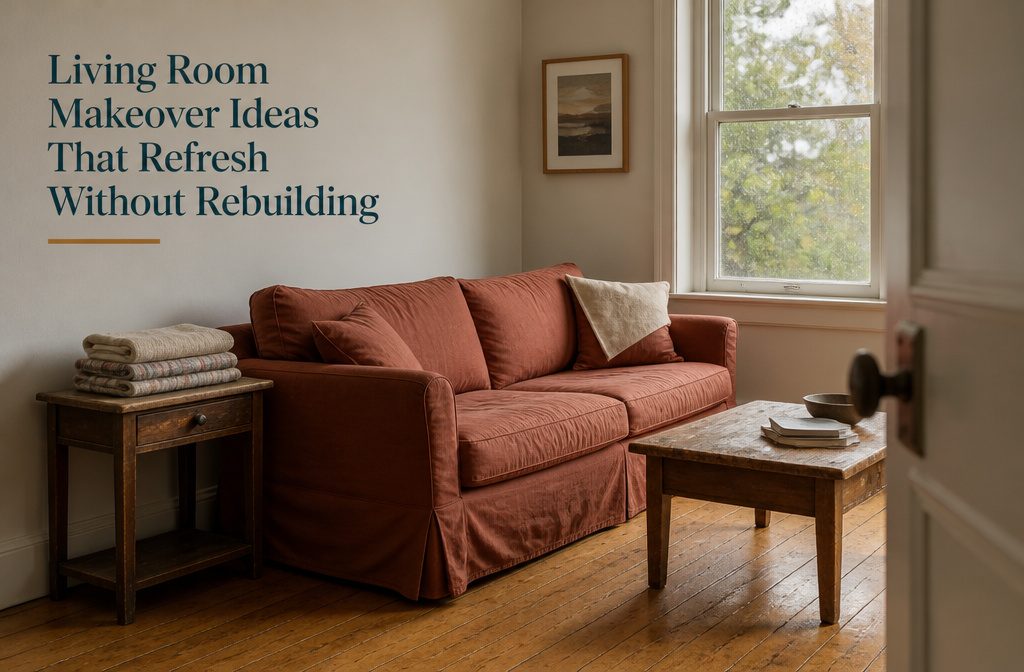
A living room makeover spans paint-only refreshes that cost under $100 to full furniture swaps that run into thousands, and the right entry depends on whether you own the furniture or inherited it.
The difference shows fastest in what you can change without permission: renters repaint trim and rotate textiles, owners refinish tables and reupholster frames.
Slipcovers and removable cushion covers let you throw fabric in the machine when someone spills, and the piece comes back looking new without professional cleaning.
A sofa with washable covers stays in service five or six years past the point where fixed upholstery would be ruined, which matters more than whether the frame matches the coffee table.
1. Start With Anchoring Furniture or a Statement Rug
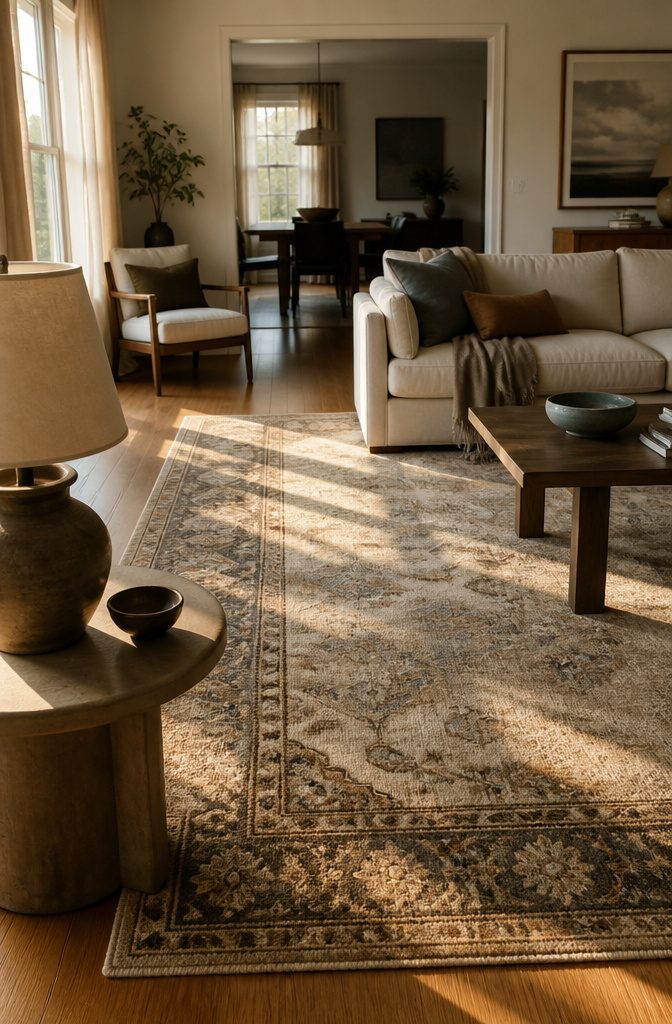
A large sofa or a well-proportioned rug decides everything that follows. The 1977 Sofa in Tempest Natural, for instance, anchors a room not just by size but by setting a tone—neutral, structural, grounded—that smaller choices respond to.
A statement rug works the same way: it defines where the seating group sits and how much floor shows around it.
Get the rug size wrong and the whole arrangement reads too small or too floaty, no matter what you add later.
Start here because these pieces occupy the most visual weight.
Once a sectional or an oversized rug claims its territory, the layout is half-decided. Side tables, lighting, and wall decor fall into place around what the anchor already established, and you’re working with the room’s proportions instead of fighting them.
2. Pick Durable, Adaptable Furniture
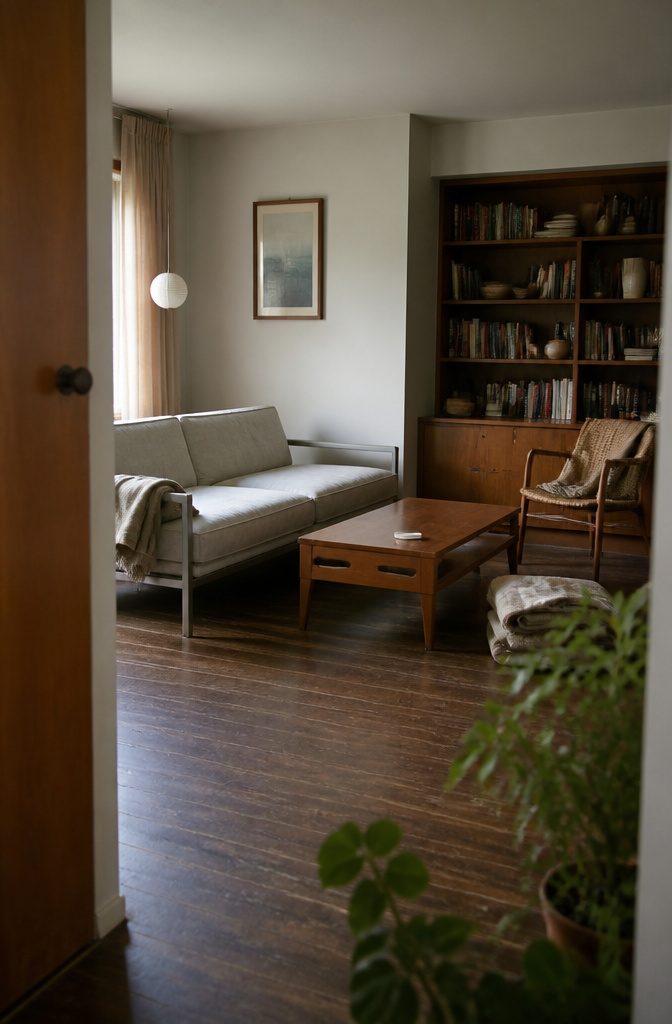
Well-crafted pieces outlast trends and budgets. A sofa with a steel frame and high-density foam gives you years before sagging sets in, and that matters more than whether it matches the chair.
The 1977 Sofa works in sectional arrangements or as a standalone because the frame adapts without looking like it’s trying too hard. When the rest of the room shifts, the sofa stays.
Mixing furniture from different eras keeps a living room from looking like a showroom floor.
A vintage coffee table next to a modern sofa reads as collected rather than coordinated, and the combination holds up better than a matched set that dates itself the moment one piece wears out.
A 1963 house can hold seating from the 1920s without the room turning into a museum — each piece works on its own before it works together.
Flexibility counts as much as build quality. Removable covers let you change fabric without replacing the frame, so a single sofa carries you through moves and makeovers instead of landing in a dumpster when tastes shift.
3. Use Neutral Furniture as Your Base
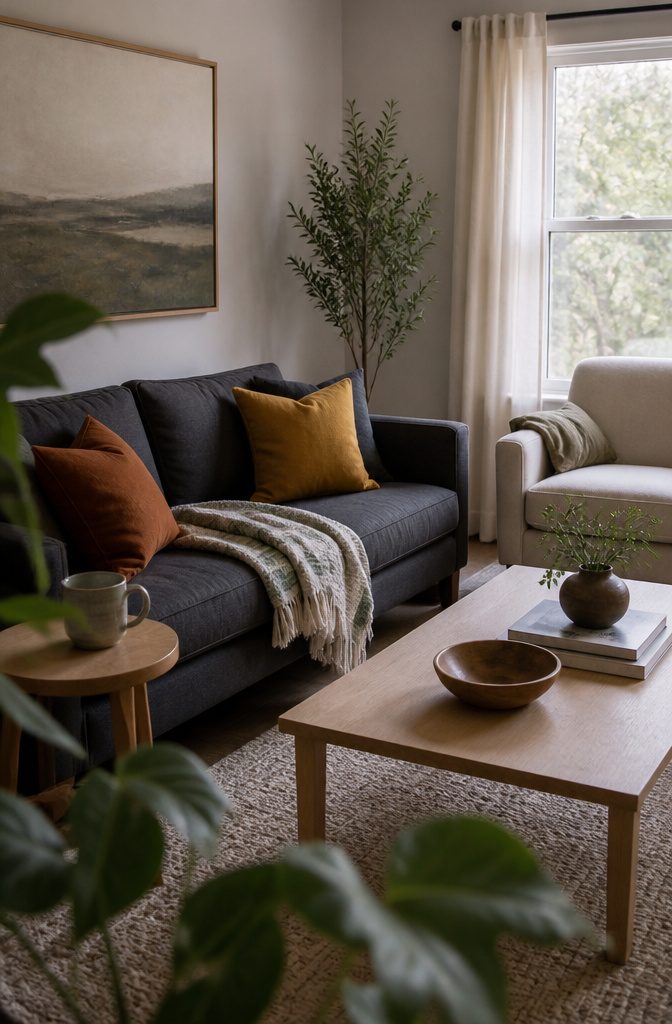
Neutral furniture—sofa, chairs, coffee table in gray, beige, cream or taupe—gives you a backdrop that takes on whatever mood you layer over it.
Swap out throw pillows from rust and mustard in fall to white and sage in spring, and the same couch reads completely different.
You’re spending on cushion covers and a couple of throws, not a new sectional every time you’re tired of the look.
This matters most if you like to change things up or if you’re renting and know the furniture will move with you into spaces with different lighting and wall colors.
A charcoal linen sofa fits a dozen schemes; a jewel-toned velvet one commits you to working around it for years.
4. Choose Furniture With Removable Covers
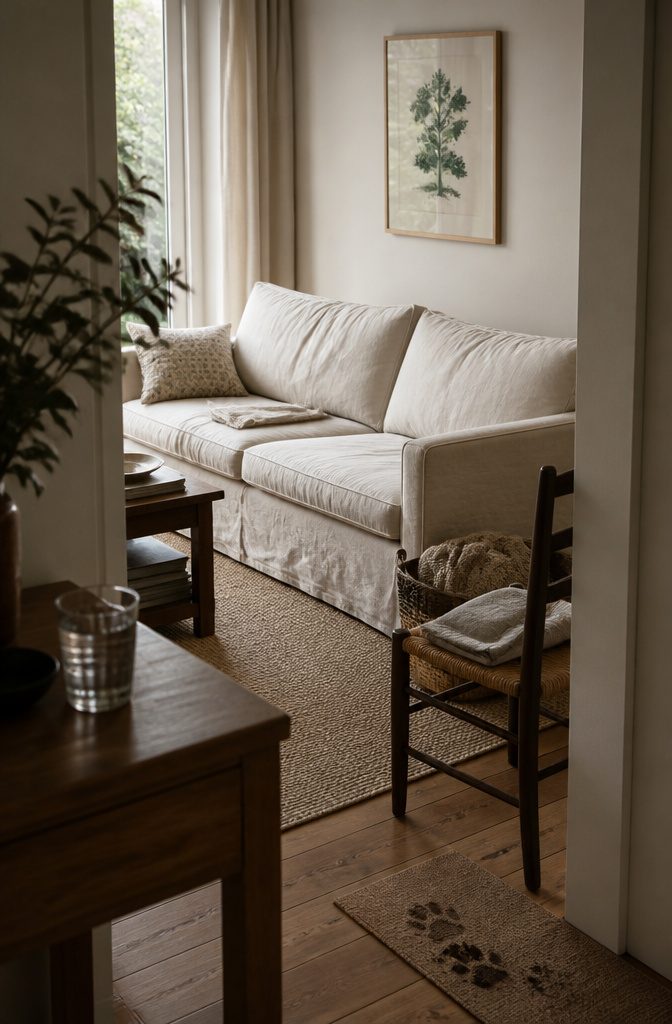
Furniture you can unzip and wash keeps a living room looking fresh longer than fabric you have to work around.
Slipcovers and removable cushion covers let you throw them in the machine when someone spills red wine or a dog tracks mud across the sofa, and the piece comes back looking new without professional cleaning or replacement.
I’ve seen sofas stay in service five or six years past the point where a fixed cover would have been ruined.
The same covers give you a second option when you want a different look. Swap a light linen slipcover for a heavier cotton or velvet one in fall, or change the color entirely without buying new furniture.
It costs $80 to $150 for a decent slipcover versus $800 or more for a new sofa, and the frame underneath often outlasts three or four cover changes.
5. Set a Cohesive Color Palette
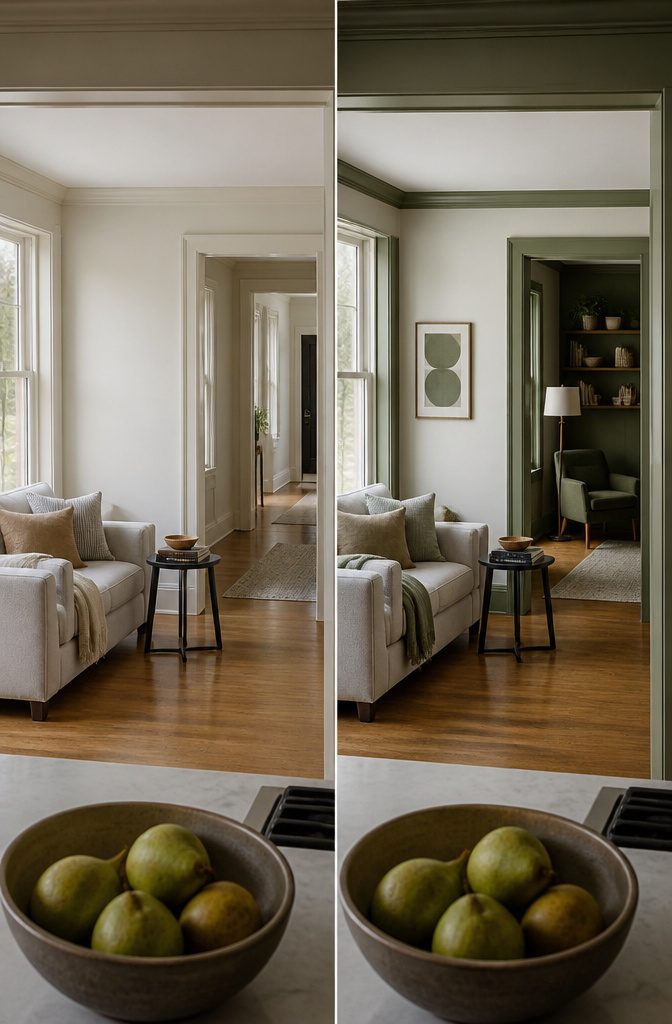
I limit a makeover palette to 3 or 4 colors so the room feels pulled together instead of scattered.
Paint and furnishings follow the same rule: pale shades open up a small room, deeper tones make an oversized space cozier, and warm neutrals hold up across furniture changes.
Think about how color travels from one room to another. And don’t be afraid to go for color, whether that’s painting the wood trim the same color as the walls or keeping your walls neutral and painting the trim a contrasting color.
That advice matters most in an open floor plan, where the living room bleeds into a hallway or kitchen.
A muted palette carried across walls and trim reads minimalist; contrasting trim against neutral walls adds definition without buying new furniture. For a feature wall or reading nook, a single darker tone anchors the space without repainting the whole room.
6. Layer Textures to Add Depth
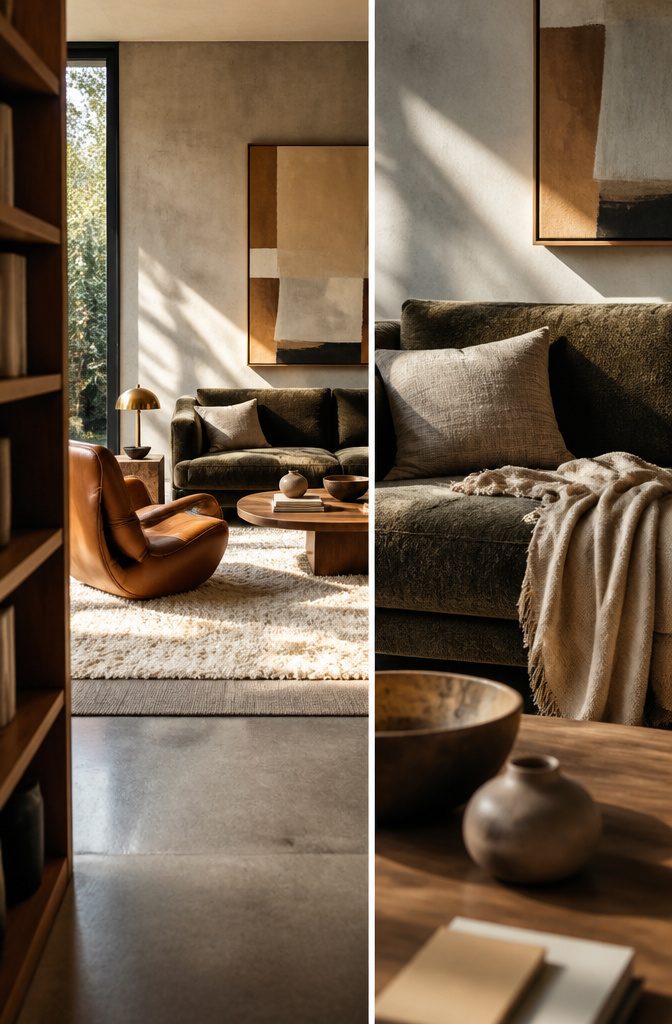
Soft linen, woven jute, a little brass—mixing materials instead of matching them is what makes a room feel finished rather than furnished.
A deep sofa in mohair sits better with a shag rug underfoot than with more mohair. The rough and the smooth need each other.
Skip the matching living room set. Leather and velvet in the same space, wood tones that don’t line up, shapes that aren’t all squared off—that layering is what gives a room depth.
A curvy lounge chair next to a sofa upholstered in Rose Uniacke wool doesn’t clash; it makes both pieces more interesting. Structural, unusual shapes work the same way texture does: they break up the sameness.
A wool and silk rug can soften a space that leans too industrial.
Metallic accents pull in a third finish without adding weight. Aim for tactile variety, not visual noise—each material should be distinct enough that the room doesn’t flatten out.
7. Choose and Place a Well-Sized Rug
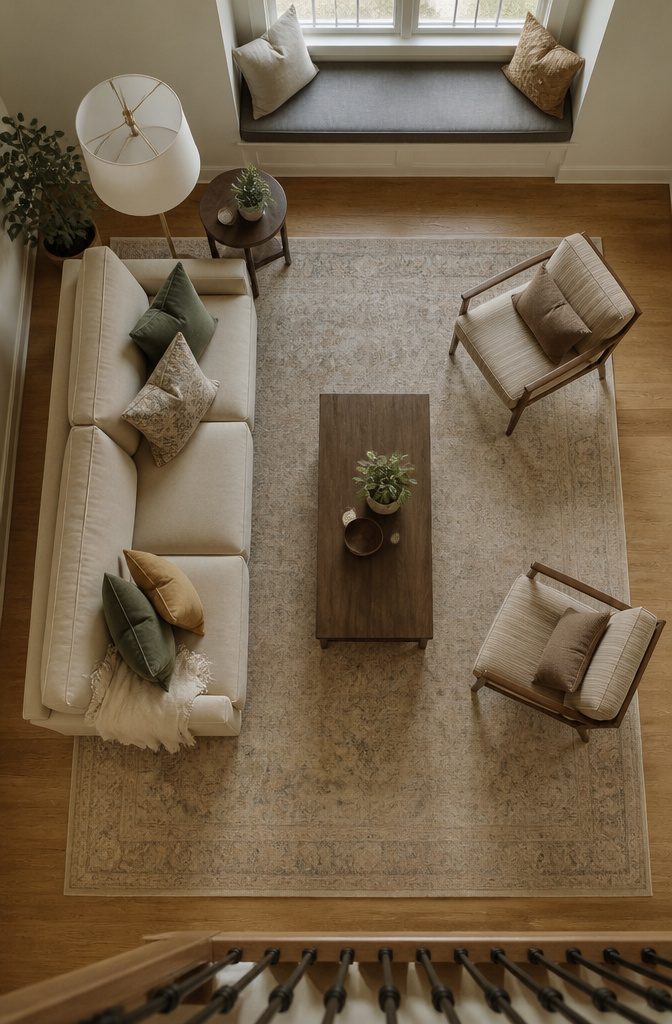
A rug that barely reaches the sofa legs shrinks the room visually.
You want at least 6 inches of rug beyond each side of the sofa, and 8 inches reads better. Standard living room rugs run 8 × 10 feet or 9 × 12 feet, and the larger size usually wins unless the room is tight.
I have seen 9 × 12-foot rugs that still looked small once the furniture sat down, and a 10 × 14-foot option would have closed that gap.
When the choice sits between two sizes, go bigger. The rug grounds the seating area, and undersizing it leaves the furniture floating.
Run the rug the length of the sofa and let the front legs of chairs rest on it; that pulls the grouping together without forcing every piece fully onto the rug.
8. Add Multifunctional Pieces
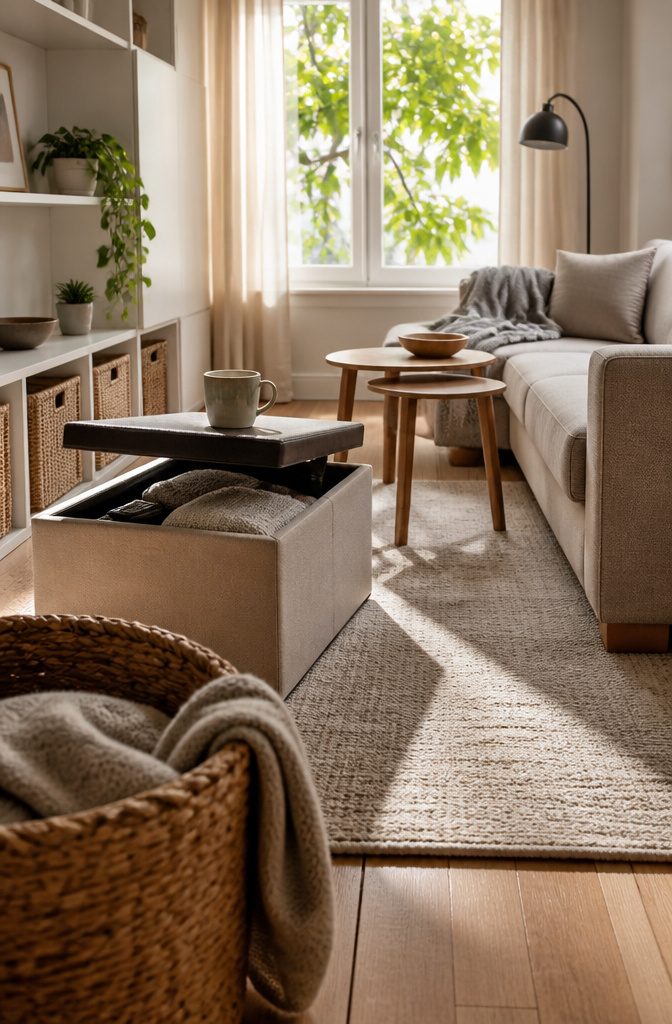
Furniture that works two ways keeps a living room flexible without adding more pieces to crowd the floor.
Ottomans with lift-top storage hold throws and remotes, then pull into service as extra seating or a coffee table when someone sets a tray on top.
Nesting tables tuck together most of the time and spread out when you need surface space for drinks or a laptop.
A few pieces to consider:
- Storage ottomans — seating, footrest and hidden storage in one frame
- Nesting side tables — stack them or scatter them depending on how the room is being used
- Modular shelving — rearrange the cubes or add sections as needs change without replacing the whole unit
- Sleeper sofas or futons — regular seating that converts to a guest bed
These pieces adapt without locking you into a single layout, which matters when a living room has to shift between everyday use and hosting.
9. Refresh Existing Furniture
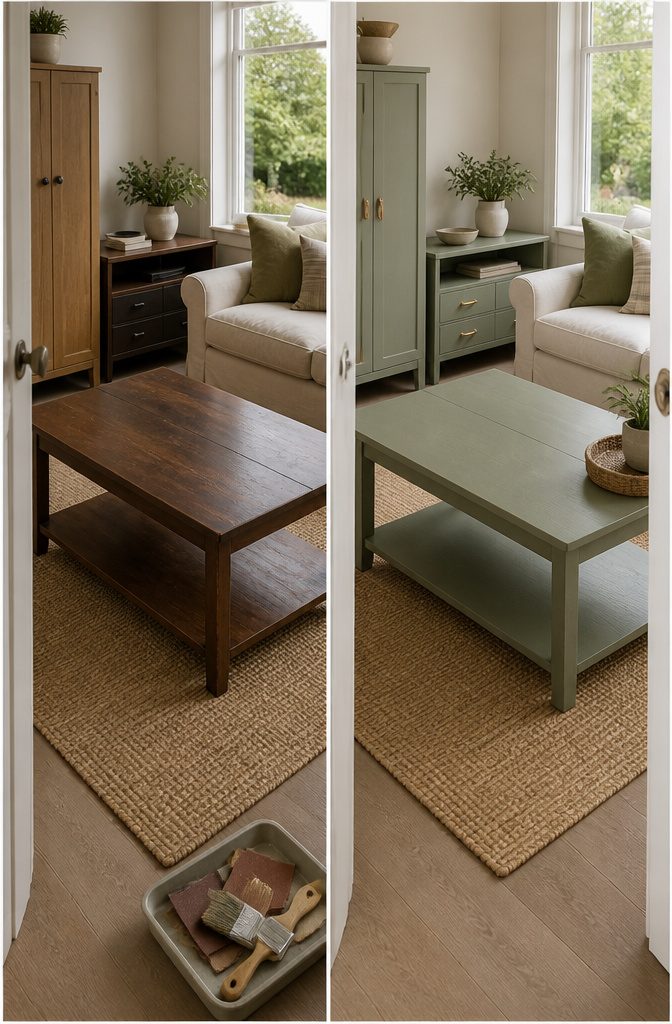
Paint changes wood furniture faster than anything. A dated coffee table or side table turns modern with a coat of satin white, or leans warmer in sage or soft gray.
Sand lightly first if the finish is glossy, then apply two thin coats rather than one heavy pass—the grain stays visible and the result looks deliberate instead of covered up.
Swapping hardware costs under $30 and takes ten minutes per piece. Brass pulls replace the builder-grade nickel on a media console; leather loops in place of wooden knobs give a credentialed cabinet a cleaner line.
Drill holes rarely line up exactly, so check the screw spacing before you buy or plan to fill the old holes with wood filler and re-drill.
Slipcovers work when upholstery does not.
A sofa in good structure but tired fabric gets another few years under washable linen or canvas, and you pull the cover to clean it instead of paying someone to steam the cushions twice a year.
10. Use Wall Art to Shift the Focal Point
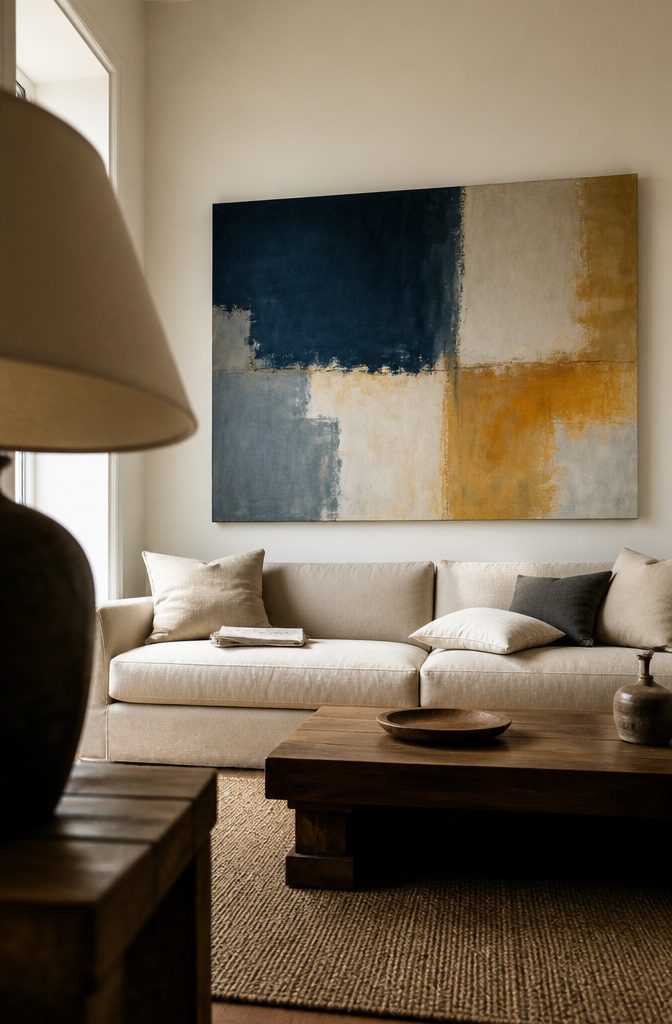
A large piece over the sofa pulls the eye up and gives the room a taller feel, but art needs to fill at least two-thirds the width of what sits below it to look anchored rather than lost.
A single canvas or a gallery arrangement works as long as the outer edges hit that span.
Hanging height matters just as much: center the piece so its midpoint lands at seated eye level, roughly 57 inches from the floor, and it reads as part of the conversation instead of floating near the ceiling.
Bright or high-contrast work commands attention the moment someone walks in, which makes it useful when you want to steer focus away from a worn chair or an awkward corner.
White or light walls let bold abstract pieces pop without competing, so the art becomes the room’s anchor and everything else can stay neutral.
If the collection leans contemporary, resist the urge to match furniture finishes to frame colors—each piece holds more weight when it stands on its own rather than coordinating too neatly with the sofa fabric.
11. Update the Lighting
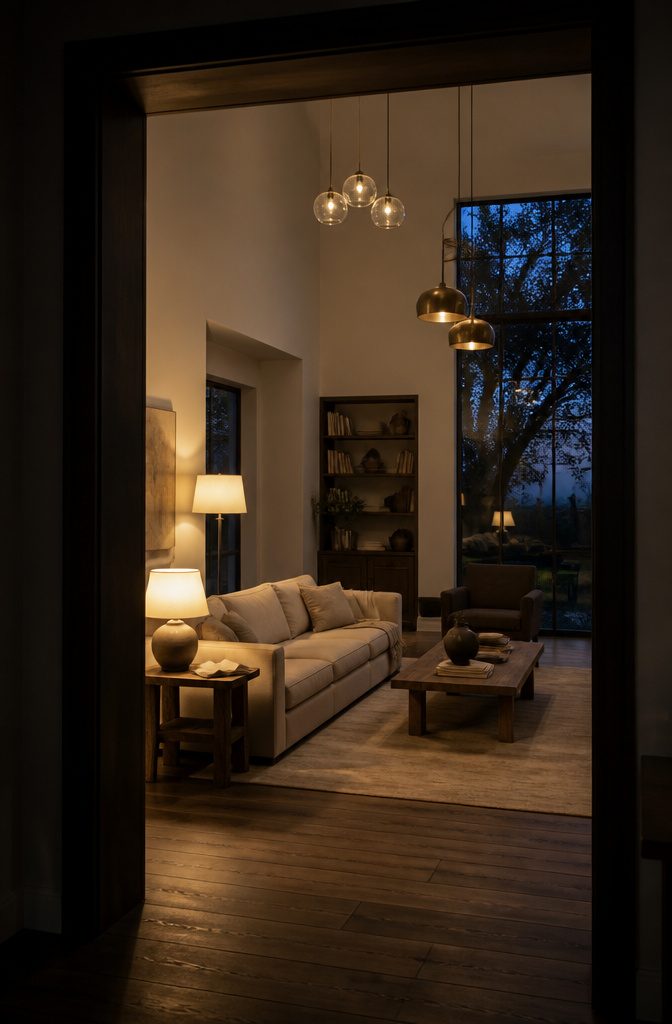
Swapping a pendant or adding a floor lamp changes the feel of a room faster than most furniture moves.
A new fixture draws the eye to a different height, and dimmable lighting lets you dial the mood down at night without relying on overhead glare.
If your ceiling runs tall — picture 30 feet with two clusters of custom pendants — the lighting pulls focus upward and opens the room instead of leaving all that vertical space dark.
Floor lamps and table lamps work best in combination, at least one of each depending on room size. Different heights keep your eye moving and balance light across the space rather than pooling it in one corner.
A floor lamp might sit behind the sofa; a table lamp on the side table answers it without matching the style exactly. At night you can skip the overhead fixture entirely, and the softer sources settle the room before bed.
Just check that the bottom of the shade lands near eye level when you sit down, or the bulb glares straight at you.
12. Add Greenery
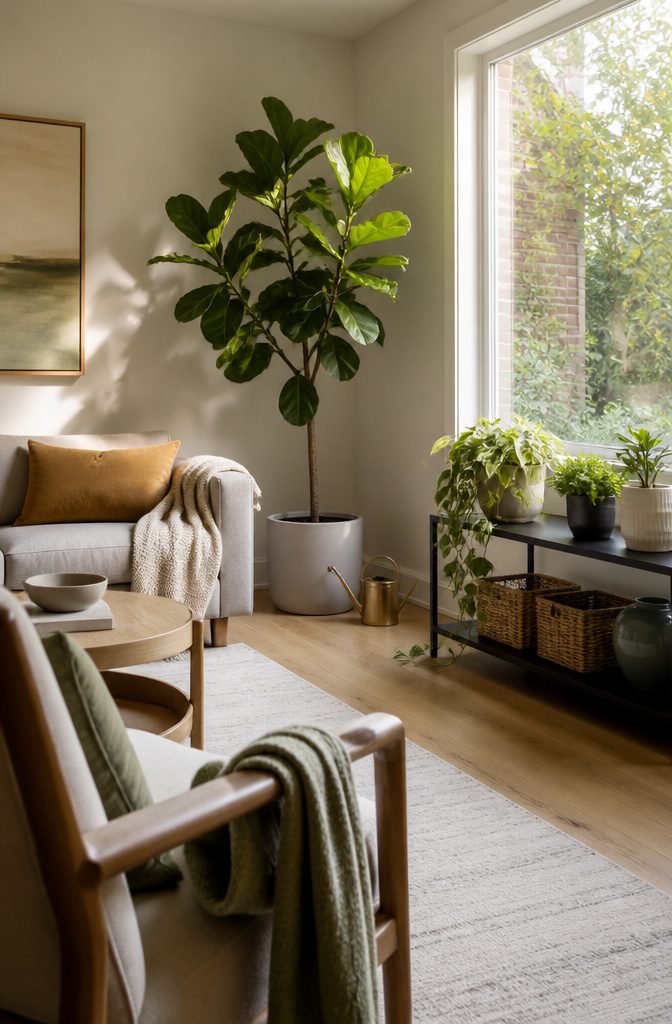
A potted fiddle-leaf fig or rubber plant anchors an empty corner without eating floor space you need for traffic, and the height pulls the eye up the same way a tall lamp does.
If the corner sits behind seating, keep the pot low enough that leaves clear the sightline across the room.
Smaller plants work on side tables and shelves, but group three rather than scattering singles—a cluster reads as intentional, a lone succulent reads as leftover.
I stick to real plants when the room gets decent light; good fakes cost enough that the price gap narrows, and a real one gives you something to water when you need an excuse to move around the house.
Variegated pothos trails well if you mount it above a bookshelf, and it tolerates low light better than most of the sculptural options do.
13. Rotate Accessories Seasonally
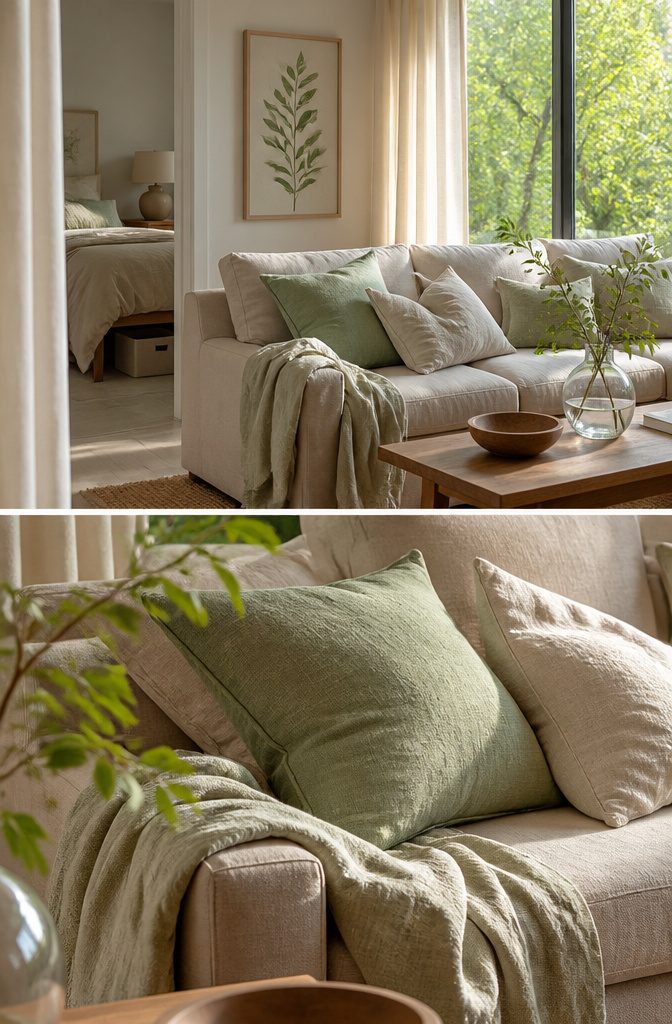
I keep cushions and throws for every season stored in a labeled bin under the guest bed, and swapping them takes about fifteen minutes twice a year.
Spring gets linen in soft green or cream; fall brings wool and heavier cotton in rust or charcoal. The room reads completely different without moving furniture or repainting a single wall.
The advantage is not just the look.
Rotating decor keeps the extras from piling up on surfaces year-round, and storing what is out of season means each piece comes back feeling deliberate instead of like something that has been sitting there since March.
A vase that worked in summer might go into the bin in October, replaced by a wooden bowl or a stack of books in deeper tones.
Small changes, but they reset the room without the cost or commitment of a larger project.
14. Plan a Functional Layout
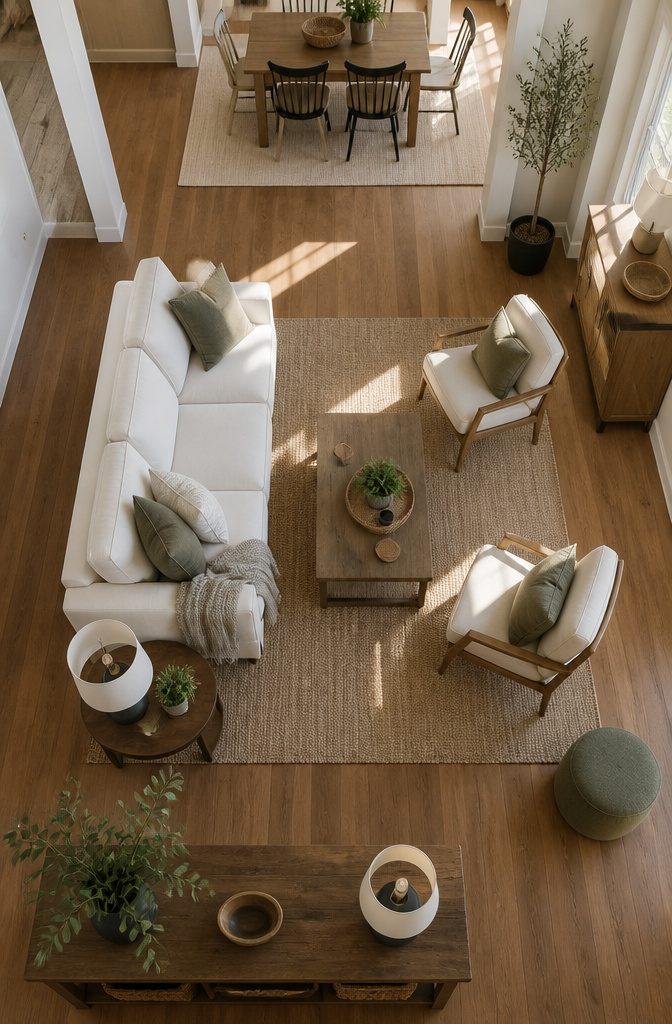
Walkways need 30 to 36 inches to feel comfortable, though you can go as narrow as 18 to 24 inches in tighter rooms.
I measure from the edge of the sofa to the coffee table and leave 16 to 18 inches so someone can sit down without bruising their shins. That spacing also keeps drinks within reach without a lean.
Conversation matters more than symmetry. I arrange seating so two people can talk without shouting across the room, which usually means a sofa facing a pair of chairs or an L-shape that pulls everyone into the same corner.
A room that is 27 feet long can tempt you to push everything against the walls, but floating furniture away from the perimeter makes the space feel used rather than hollow.
Flexibility helps in a room that does double duty: a lightweight chair or an ottoman moves when you need floor space, then comes back when guests arrive.
Measure and Plan Before You Start
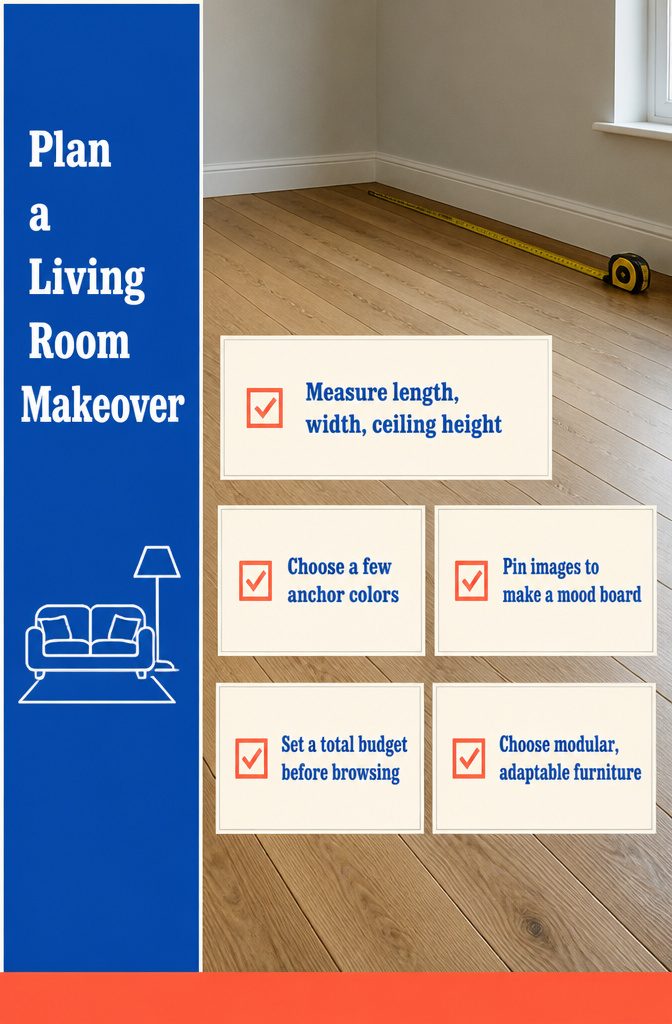
Planning keeps scale right and spending on track. The room’s actual measurements decide whether furniture fits or crowds, and a clear vision before you shop means you skip the returns.
- Measure the room first. Dimensions set proportion — length, width, ceiling height — especially before buying a sofa, rug, or coffee table.
- Choose a color palette early. Pick a few anchor colors to build the room around so choices stay consistent instead of drifting.
- Make a mood board. Pin images that match the feeling you want. Seeing ideas together reveals what actually belongs.
- Set a budget before you browse. Decide what you’re comfortable spending so each choice is measured against the total, not made in isolation.
- Pick adaptable pieces. Furniture that works now and adjusts as your household changes — modular seating, neutral frames — outlasts trend-driven buys.
Frequently Asked Questions
How can I modernize my living room?
Start with neutral, adaptable furniture that lets you change the mood through accessories rather than replacing major pieces.
Refresh what you have by painting wood furniture, swapping hardware, or adding slipcovers, then layer in new textures, update the lighting, and rotate seasonal decor. The structure stays the same while the look shifts completely.
What size rug do I buy?
Go at least 6 inches beyond each side of the sofa, and 8 inches reads better.
Standard living room rugs run 8 × 10 feet or 9 × 12 feet, but the larger size usually wins unless the room is tight. When the choice sits between two sizes, go bigger so the furniture does not float.
How do I choose the right piece for my space?
Measure the room first so you know what fits without crowding, then pick furniture that adapts as your household changes.
Neutral frames, modular seating, and pieces with removable covers work across multiple layouts and color schemes. Start with one large anchoring piece like a sofa or statement rug, and let smaller choices respond to what it establishes.
How do you pick a living room color scheme?
Limit the palette to 3 or 4 colors so the room feels pulled together instead of scattered.
Think about how color travels from one room to another, especially in an open floor plan. Pale shades open up a small room, deeper tones make an oversized space cozier, and warm neutrals hold up across furniture changes.
What is the 3-5-7 rule for decorating?
Group decor items in odd numbers (3, 5, or 7 pieces) rather than even numbers for a more balanced, natural look.
This applies to arrangements on shelves, coffee tables, or walls. Three plants clustered together reads as intentional; a lone one reads as leftover.
Is there a free app that will help me design my living room?
Many free apps let you visualize furniture placement and color schemes before you buy, including room planners and virtual staging tools.
A mood board (digital or physical) works just as well: pin images that match the feeling you want so you can see whether ideas belong together before you commit.
The planning step matters more than the tool you use for it.