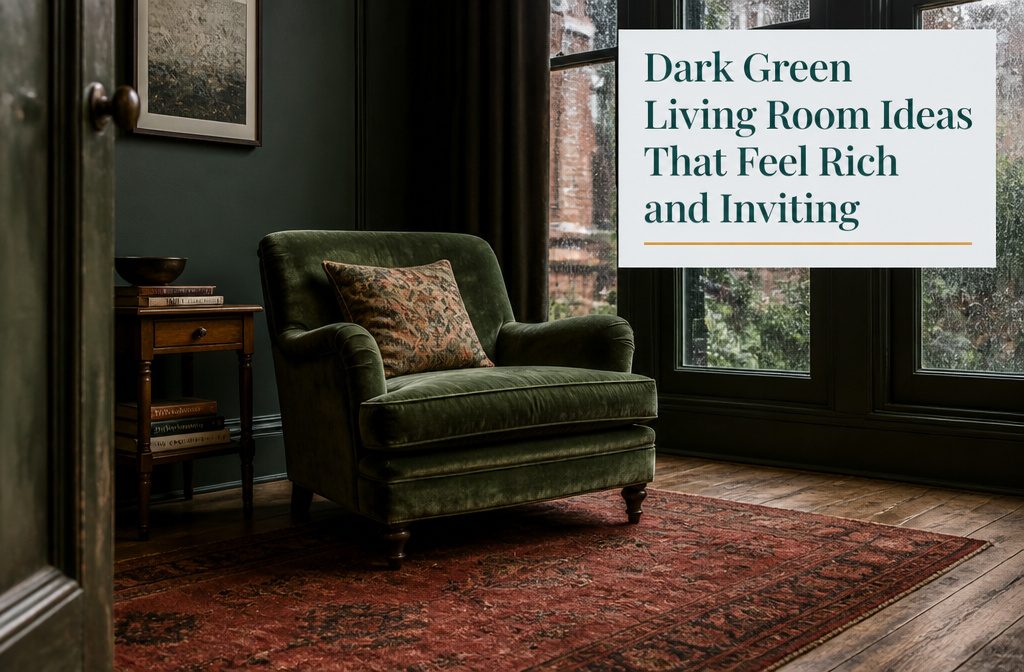
Dark green works whether you’re painting one accent wall or buying a single velvet chair, but the choice depends on how much natural light the room gets and whether you’re renting or own.
A west-facing room that already runs dark may only want one painted wall, while a bright space can handle floor-to-ceiling curtains and a full sofa.
Blue Jade by Valspar took six months to choose, which gives you some sense of how many greens exist and how different they read once they’re up.
1. Use Dark Green on a Wall
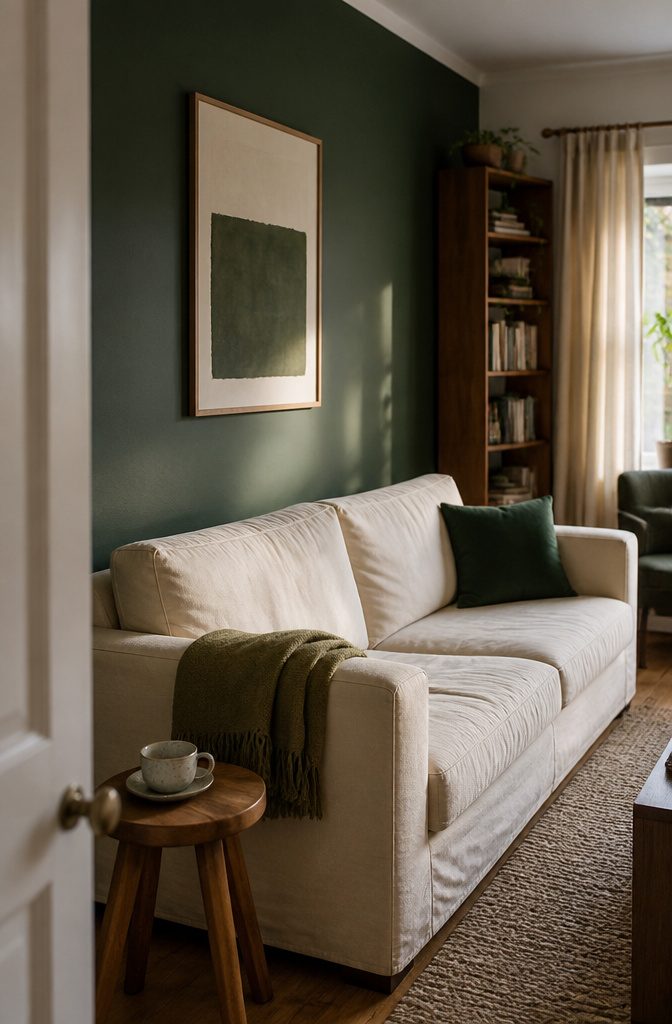
Blue Jade by Valspar took six months to choose, which tells you something about how many greens there are. An accent wall is the safer start, especially in a west-facing room that already runs dark.
Paint one wall, live with it for a week, and if it still works, decide whether the whole room needs it or whether repeating the green in cushions and accessories is enough.
If the room is small, the accent wall may be all you want — a full-room treatment can feel claustrophobic when the ceiling height is average and natural light is scarce.
Farrow & Ball Studio Green No.93 and Benjamin Moore Forest Green both lean rich without going black, and either works on paneling or flat drywall.
Wallpaper in dark green with a subtle pattern adds texture without the commitment of paint, and it works as a feature wall behind the sofa or entertainment center.
Pair any of it with cream furniture and keep curtains neutral so the green does the work.
2. Make a Dark Green Sofa the Focal Point
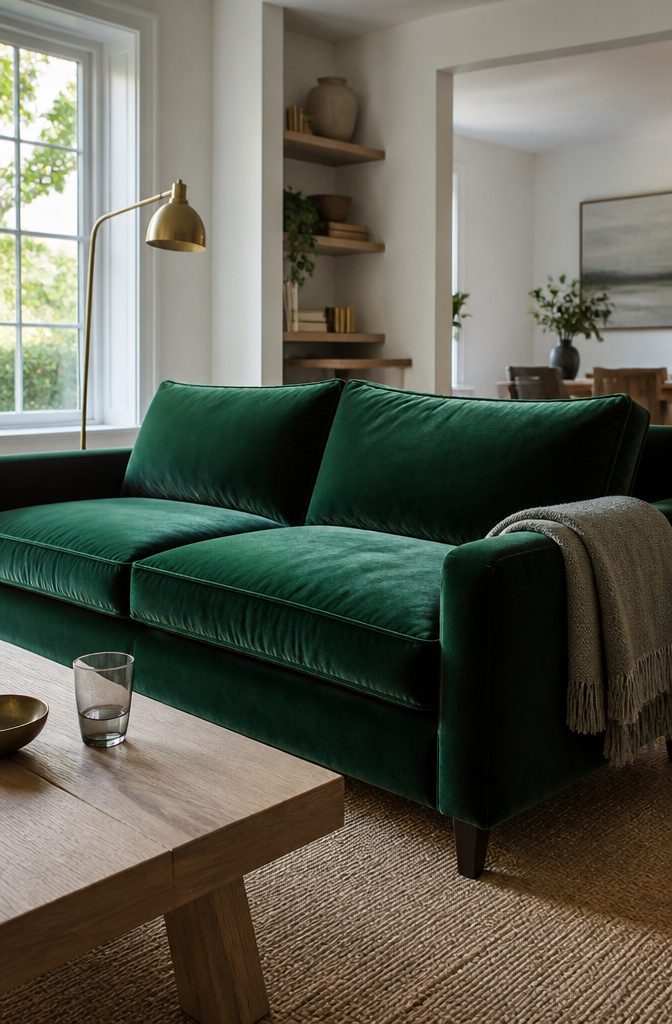
A green sofa or sectional turns the color into the main event without touching the walls.
The Jade Smart Velvet shade pulls off that saturated jewel tone without reading dark or heavy, and the fabric picks up light in a way flat paint never will.
An 84-inch upholstered piece anchors a standard living room and leaves enough visual weight that you can keep accent colors minimal.
If you paint the whole room dark green, a large green sofa disappears into the walls. Keep at least two walls neutral or go with a lighter shade so the furniture holds its own.
The sofa works as the only green element in the room, or you can layer in smaller green accents once the piece is in place.
Wood tones and gold both look clean next to deep green velvet, so the rest of the room can stay simple.
3. Add a Dark Green Chair
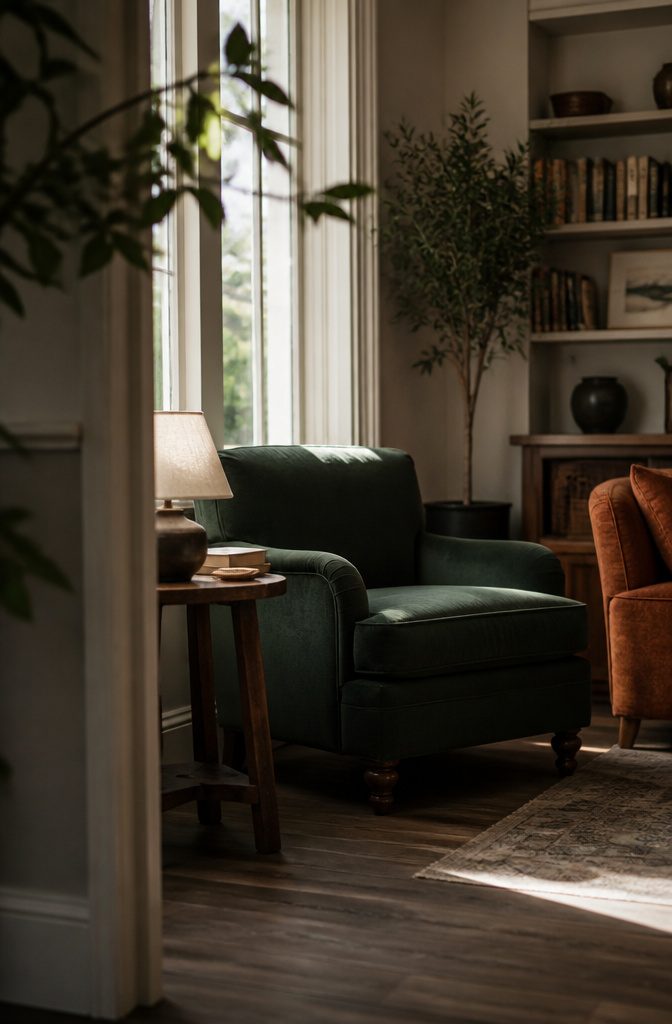
A single chair puts dark green in the room without asking for a whole wall or sofa commitment.
An armchair in hunter or forest green works in a corner near a window, paired with a side table and a lamp, and it reads as a reading spot rather than overflow seating.
If the rest of the room runs neutral or monochrome, one green chair is enough contrast to keep the space from feeling flat.
The orange-chair trick from rental styling flips the usual approach: instead of matching green to green, drop in one warm accent piece—burnt orange, rust, terracotta—and let it anchor the eye first.
That single opposing color keeps a green-heavy room from going muddy, especially when the walls are already dark or layered with shelves. Add the warm chair before you add more green.
4. Use Dark Green Curtains
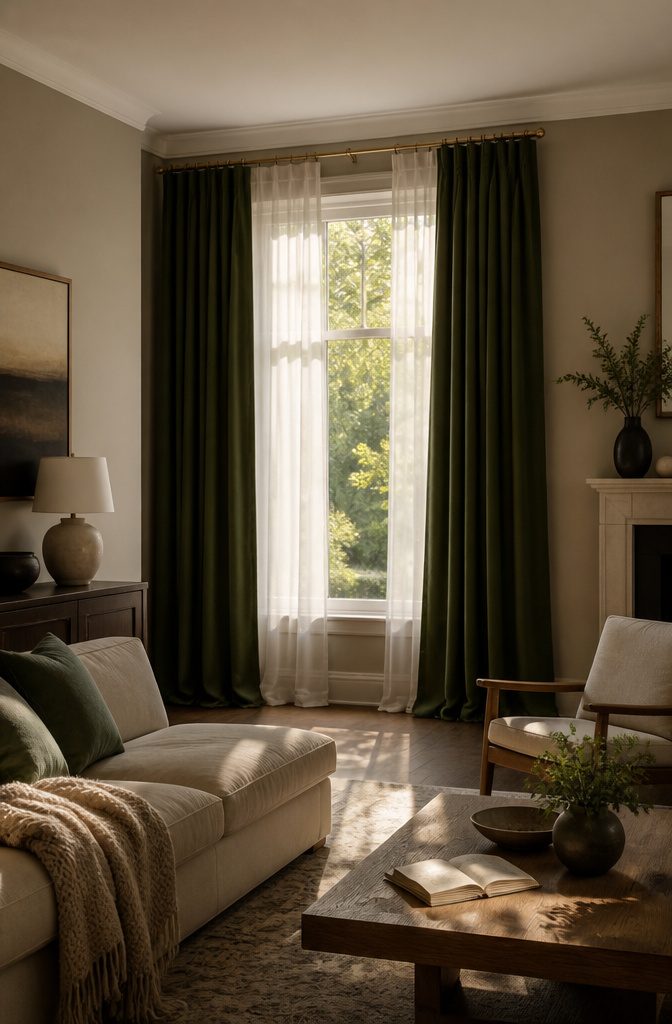
Floor-to-ceiling curtains in dark green stretch the wall and add enough fabric to make the room feel finished.
The Dunelm Peyton Emerald curtain drops the color at the windows without a custom workroom, and the weight of full-length panels frames the glass better than something stopping at the sill.
I pair dark green curtains with sheer white panels behind them when the room needs light control that still lets the day through.
The white softens the green without washing it out, and you can pull one layer or both depending on the hour.
Gold curtain rods pick up warm metal elsewhere in the room, but plain brass works just as well if the budget is tighter.
Dark green works on neutrals and holds up in a room that already has color.
The curtains add privacy, muffle sound from the street, and give you one tall gesture that finishes the space for a few hundred dollars instead of repainting.
5. Bring in Green Artwork
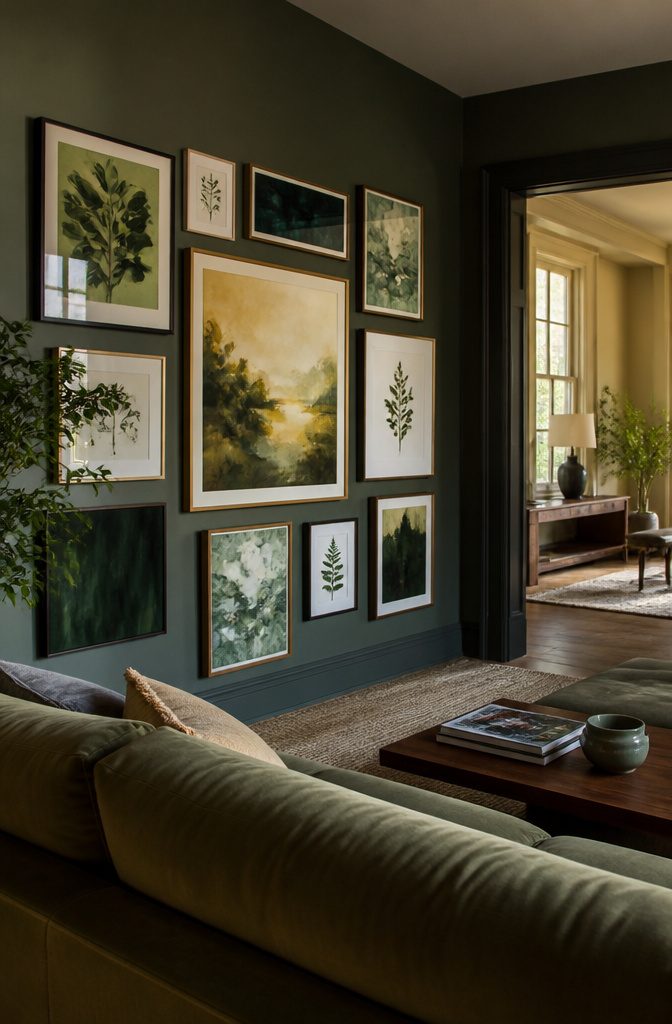
A gallery wall lets you repeat the green without painting a second wall. Mix botanical prints, abstract pieces in different green tones, and a few monochrome frames to tie the scheme together without making it feel matched to death.
Pull in gold or yellow where the art allows it—those warm tones keep dark green from reading cold.
Hang one large portrait in warm tones if you’d rather own the wall with a single piece. It does more for an olive sectional than three small prints ever could, and it costs less than reupholstering furniture you already own.
Forest prints work the same way for renters who can’t paint: the art carries the color instead of the wall, and you’re not patching holes when you leave.
6. Ground the Room with a Dark Green Rug
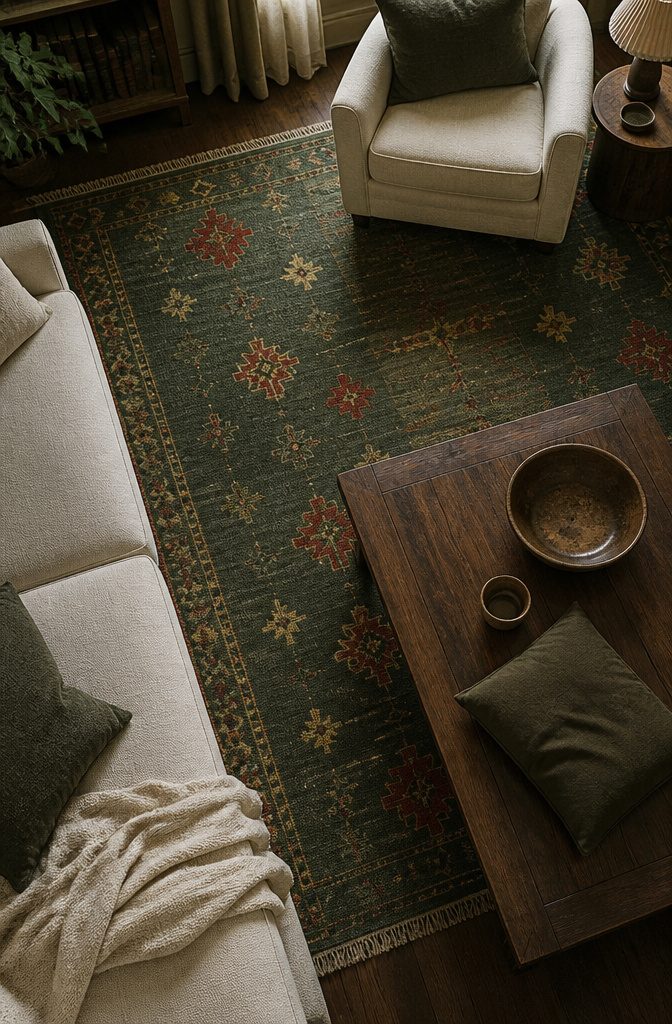
A dark green rug pulls the seating area together and adds warmth underfoot without committing to paint.
I like how a patterned rug softens the look — a kilim rug in a movie room I saw brought in reds and yellows that kept the space from reading too cool or formal, even with green walls and gold accents throughout.
Solid green works if you want the rug to disappear into the scheme, but pattern gives you contrast.
Place it under the coffee table and arrange seating around the edge, or center it beneath a sectional to anchor the whole zone. The Morris & Co.
Blackthorn Forest Green Tufted Rug is one option that brings texture without busy pattern. Pair it with beige or cream furniture so the green grounds the room without darkening it.
7. Add Green Cushions and Throws
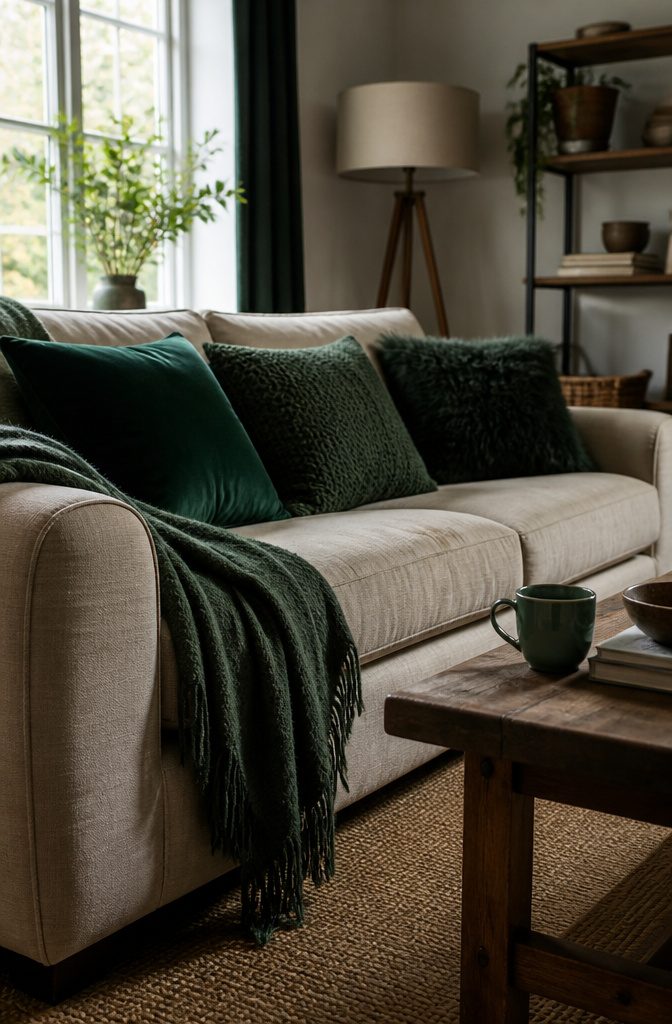
Cushions and throws let you test dark green without committing to new furniture.
I draped a forest green throw over a beige sofa that had gone flat in my eye, then stacked three cushions in the same family of green — one solid velvet, one wool, one faux fur — and the whole piece looked deliberate again.
Fox & Ivy cushions from Tesco run around £10 to £15 and hold their shape through a season of actual use. The Amelia 200cm x 200cm throw from Dunelm sits at £25 and covers enough sofa to read as intentional rather than decorative.
Velvet catches the light differently than wool does, so mixing both gives you depth without pattern.
Faux fur adds weight at one end of the sofa and keeps the arrangement from looking too matched. If the base furniture is neutral, the throws do the color work; if it is already dark, the texture does it instead.
8. Add Green Decorative Accessories
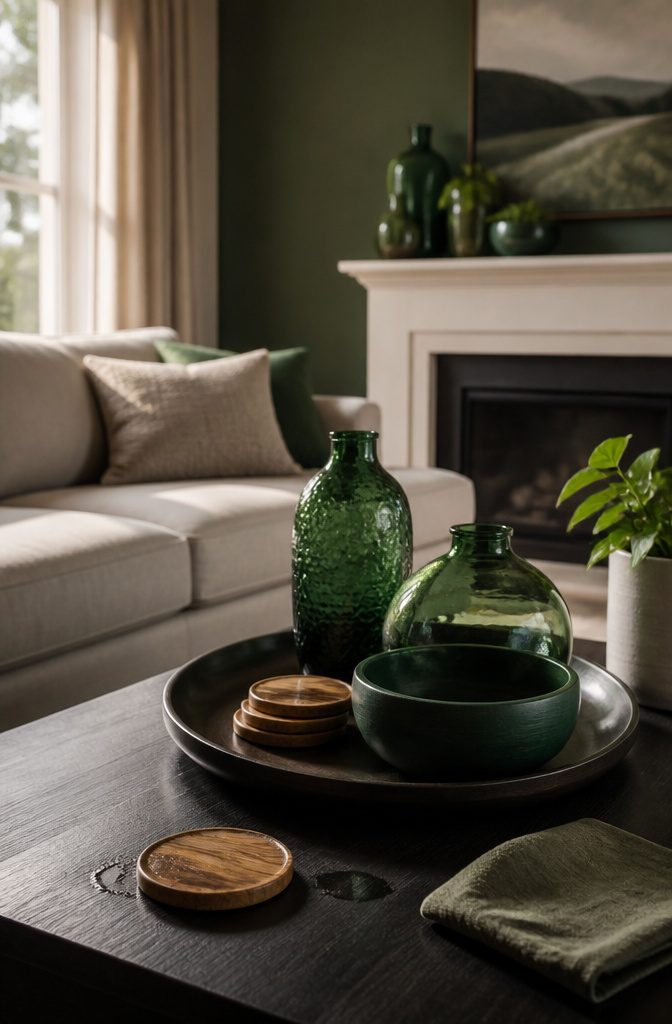
Green glass vases catch daylight differently than ceramic ones do—the way they filter light adds movement to a shelf without taking up visual weight.
I keep a few emerald or forest green glass pieces on the coffee table and mantel, and the effect shifts through the day as the sun moves.
Vases work, but so do bowls, candle holders, and glassware if you want the color without committing to fresh flowers every week.
Sculptures and picture frames in green tones tie a room together when the big pieces—sofa, walls, rug—are already doing their job.
A wooden bowl in dark green or a set of olive wood coasters brings the color down to tabletop height, which matters more than it sounds like it should.
These smaller items let you test how much green the room can handle before you buy anything larger or harder to move.
Group a few together on a tray or shelf if the rest of the room runs neutral; scatter them if you’ve already got green elsewhere and just need the thread to continue.
9. Use Plants and Foliage
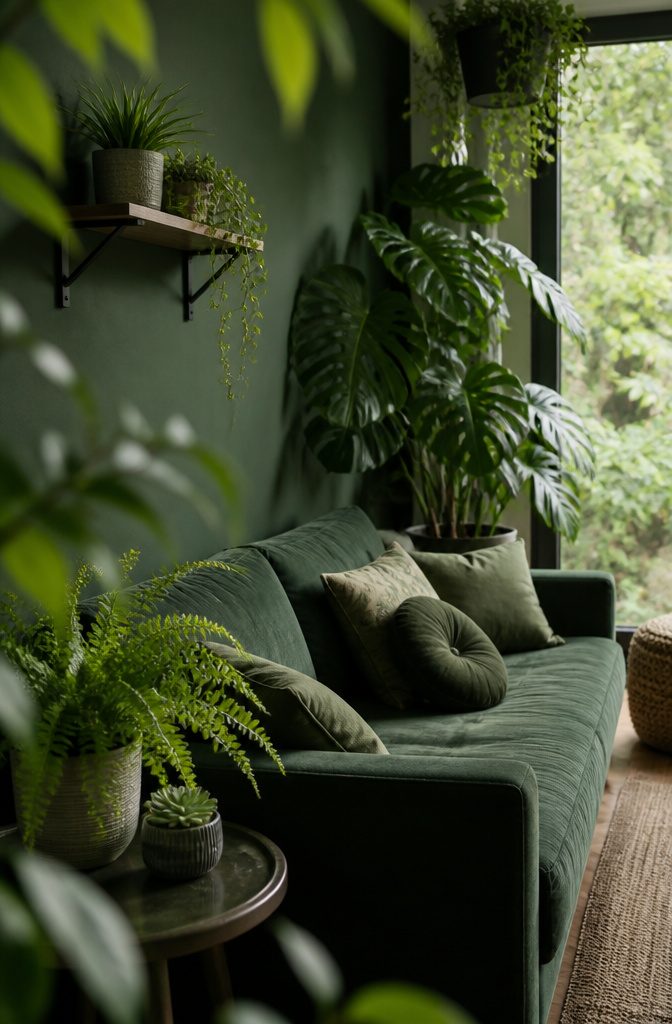
Potted plants pull the dark green theme through the room and add movement nothing else can.
Large leafy plants — monstera or fiddle leaf figs — fill vertical space and bring texture that paint alone never delivers. Put one beside the sofa or in a corner that feels empty, and the scale shifts immediately.
Smaller plants work where a big one would crowd: succulents or ferns on a shelf, a side table, or grouped on the floor in front of a window.
Mix plant sizes instead of sticking to one, because the variety keeps the eye traveling and softens hard furniture lines. A hanging planter drops greenery into the room’s upper third, which most decor never touches.
The plants reinforce the palette without matching it exactly — living green reads warmer than painted green, and that contrast makes both feel more intentional.
10. Pair Dark Green with Gold or Brass
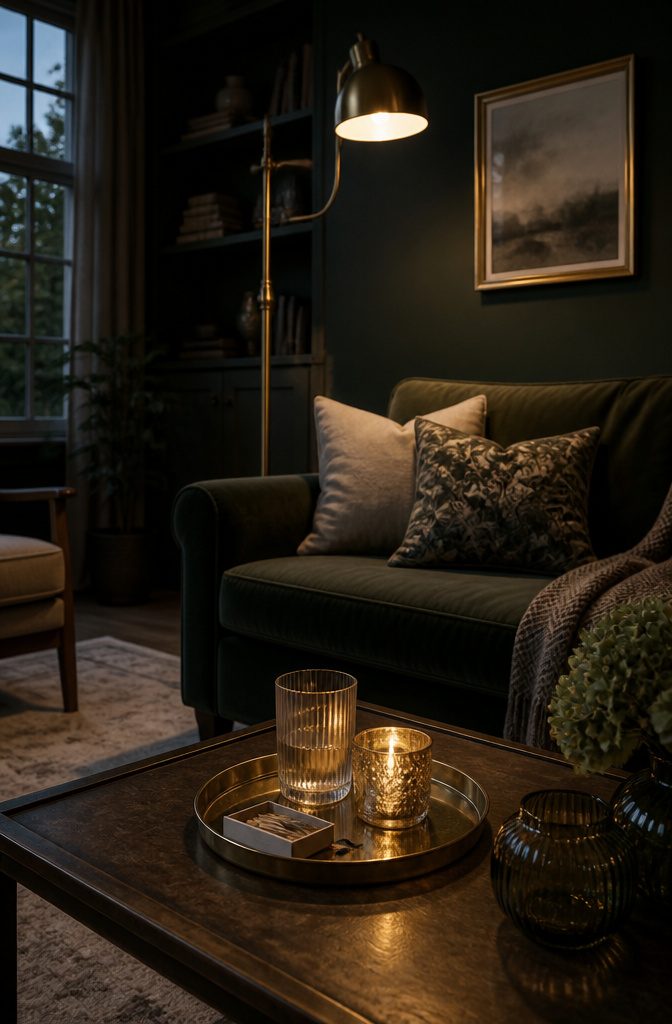
Gold and brass bring just enough shine to keep a dark green room from feeling flat.
A mirror frame spray-painted gold, a brass floor lamp beside the sofa, or even a secondhand bar cart refinished in metallic paint adds contrast without competing with the green.
The warm metal tones catch light and reflect it back into the space, which matters in a room anchored by a color this saturated.
Small pieces work as well as larger ones. Picture frames, candle holders, a tray on the coffee table—anything reflective in a warm metallic finish lifts the palette.
I’ve seen charity-shop finds given a coat of gold spray paint for under £5, and the result reads expensive against hunter or forest green walls.
Brass pendant lights or a chandelier do double duty: they provide the functional lighting a dark room needs and introduce the metallic accent at eye level, where it registers first when someone walks in.
11. Choose Green Lighting or Shades
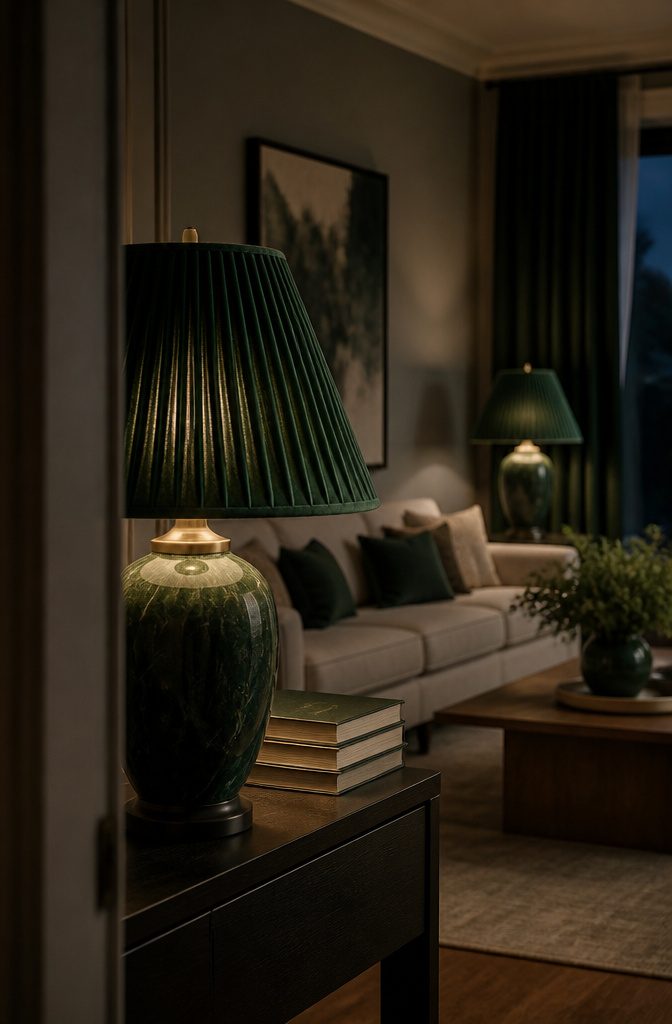
A dark green pendant over the sofa or a pair of table lamps with forest green shades brings the color into the room at eye level, where it registers as part of the furniture arrangement rather than just backdrop.
Pendants work particularly well in rooms with high ceilings, pulling focus downward and anchoring a seating area without adding floor clutter. Table lamps give you flexibility: move them between a console and an end table as the layout shifts.
Dark green marble lamp bases paired with pleated velvet shades in the same tone deliver a layered green moment that reads as intentional rather than matched-set safe.
The marble adds weight and a natural grain that keeps the look grounded, while the velvet pleats soften the light and add texture the room can feel from across the space.
If the rest of the room leans neutral, green lighting becomes the accent without requiring a gallery wall or upholstery commitment.
12. Use Patterned Green Wallpaper
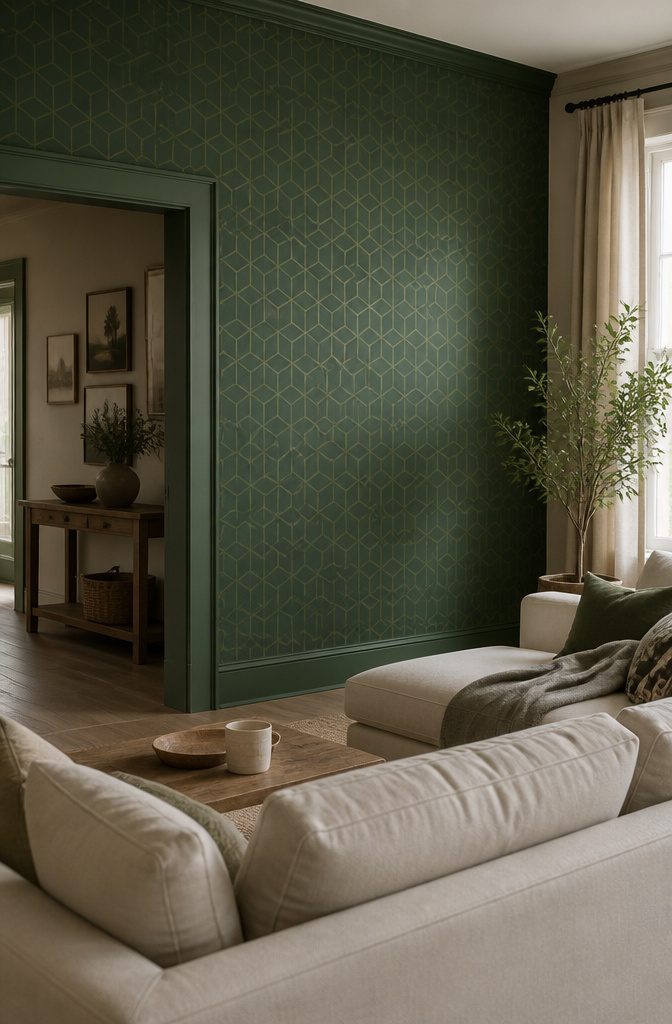
Patterned wallpaper gives you texture that a flat paint color can’t, and it stops a green sofa from disappearing into a green wall. The pattern creates separation even when the colors match.
Small geometric prints or dots work better than large florals here — the repeating detail adds depth without fighting for attention. A subtle pattern holds the background role while your furniture stays the main shape in the room.
This move works particularly well on a single accent wall if you’re not ready to commit to four walls of pattern. Pair it with light upholstery or natural wood pieces to keep the green from feeling heavy.
The wallpaper brings personality without needing much else on that wall — no need to layer art or shelving over a surface that’s already doing the visual work.
13. Pair Dark Green with Wood
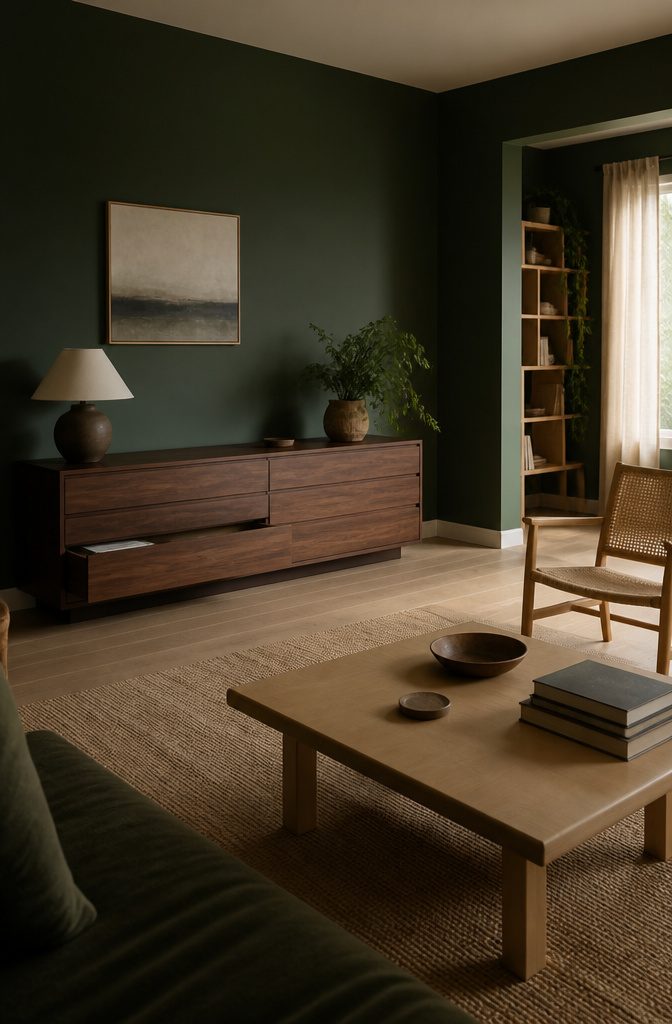
Wood furniture softens the richness of dark green without pulling the room into cold territory. A parquet coffee table brings pattern at eye level when you’re seated, and the grain reads warm even when the finish leans light.
I’ve seen mid-century pieces work particularly well here — a low chest of drawers in walnut or teak holds its own against a dark wall without fighting for attention.
Light wood moves faster than dark in this pairing.
Oak coffee tables and beechwood chairs keep the floor plane from going heavy, and a pale shelving unit breaks up a long stretch of painted wall while adding somewhere to set a lamp.
If you’re working with existing dark green upholstery, blonde wood legs on a side table or plant stand will do the same job for less money. The contrast stays visible without turning sharp.
14. Balance Dark Green with Neutrals
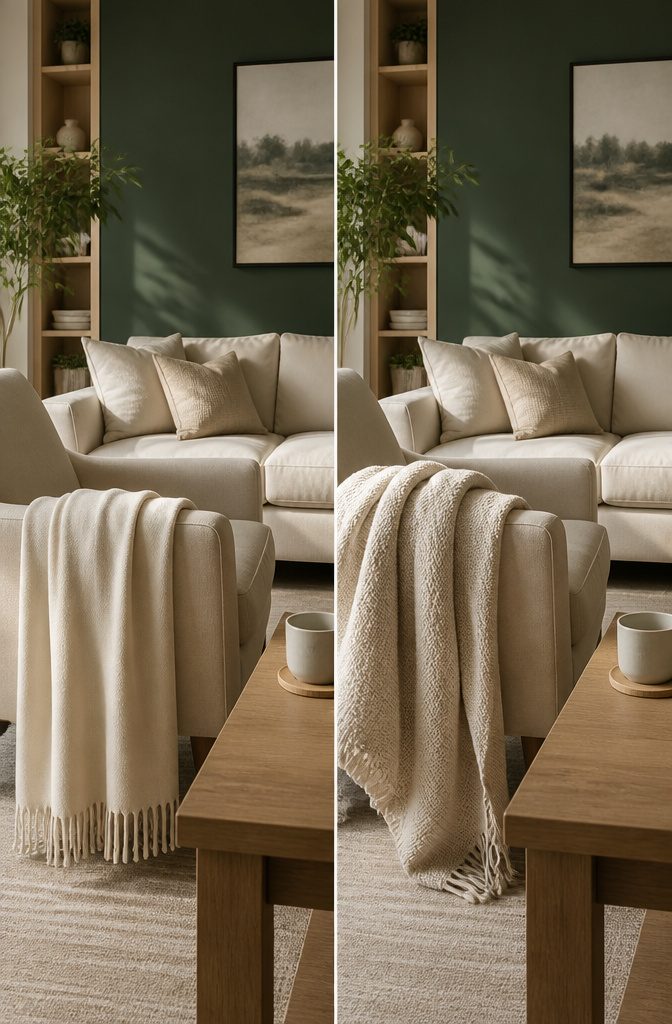
White or cream furnishings pull dark green back from the edge.
A dark green feature wall stays grounded when the sofa opposite runs beige or the armchairs are upholstered in cream — the lighter pieces open the room up and keep the green from closing in.
Grey works the same way, especially a pale grey that reads almost white in daylight.
Wooden accents add warmth without weight.
A coffee table in natural oak or a set of shelves in light ash introduces texture that complements the green rather than competing with it. The combination feels organic, and the wood keeps the palette from landing too cool.
Soft fabrics in neutral tones lighten the mood further.
Beige linen cushions or a cream throw draped over the arm of a chair soften the contrast and make the space feel livable, not staged. Proportion matters: enough green to set the tone, enough neutral to let the room breathe.
15. Add a Contrasting Color
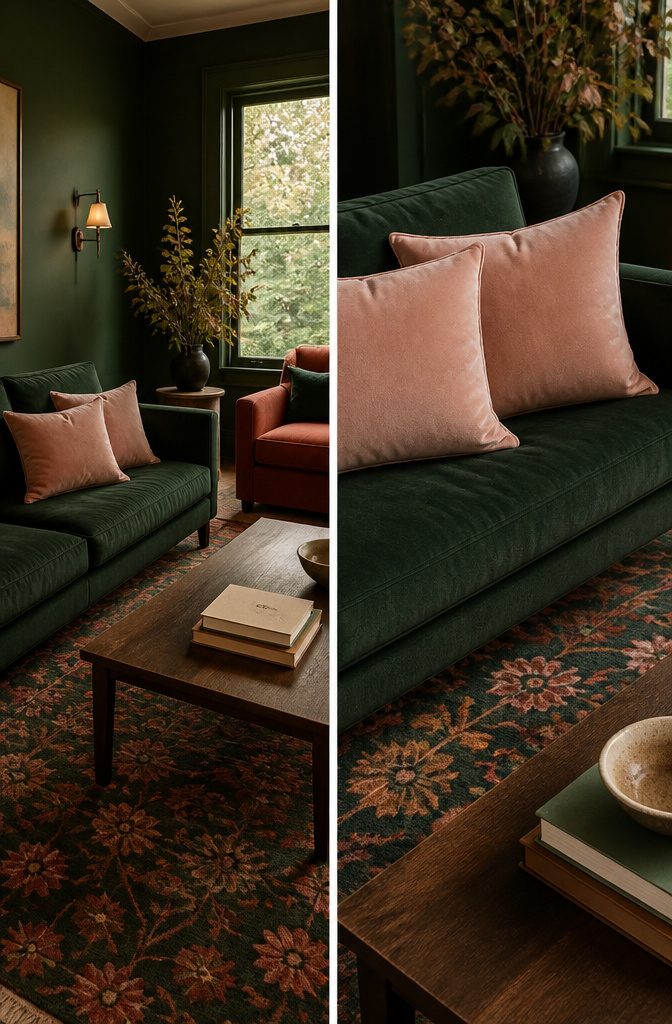
A green room stays balanced when you pull in a warm accent that sits opposite on the color wheel.
Pale pink in throw pillows or a patterned rug cuts the intensity without fighting it, and the pairing reads more sophisticated than safe neutrals alone.
Mustard yellow works the same way in smaller doses—a single cushion or the spine of a book stack—while burnt orange shows up best in upholstery, where the saturation holds its own against deep green walls.
Rust-colored chairs anchor a green living room without adding more cool tones, and a patterned rug that mixes rust, terracotta, or coral with the green ties the palette together in one piece.
The contrast keeps the room from going too botanical, and the warmth makes it feel lived-in rather than styled.
Frequently Asked Questions
What colors go with dark green walls?
Neutrals like cream, beige, and grey keep dark green walls from feeling heavy, while gold and brass add warmth and catch light. Wood tones, pale pink, mustard yellow, and burnt orange all work as accent colors.
What color sofa goes with dark green walls?
A cream or beige sofa opens up the room and keeps the green from closing in.
Navy blue or pale pink velvet adds contrast, and brown or tan leather brings warmth. If you paint the whole room dark green, avoid a green sofa since it will disappear into the walls.
Is dark green suitable for small living rooms?
Yes, but an accent wall works better than a full-room treatment in small spaces.
Dark green on all four walls can feel claustrophobic when ceiling height is average and natural light is scarce. Pair it with light furniture and keep curtains neutral so the green does the work without overwhelming the space.
How can I make a dark green room feel cozy?
Soft textures like velvet cushions, wool throws, and faux fur add warmth without adding color.
Warm lighting matters in a room anchored by a saturated color, so use brass or gold fixtures to catch and reflect light. Plants bring movement and soften hard furniture lines.
What type of furniture works best with dark green walls?
Light wood furniture like oak coffee tables and beechwood chairs keeps the floor plane from going heavy.
Velvet sofas pick up light in a way flat paint never will, and brass or gold accents introduce warmth. Avoid dark wood or heavy pieces that make the room feel closed in.
Do grey and green go in a living room?
Yes. Pale grey reads almost white in daylight and opens up a room with dark green walls.
Grey works the same way cream or beige does, giving the eye somewhere to rest. The combination feels organic when you add wood accents for warmth.