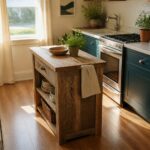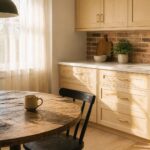
Closed cabinets and drawers beat open shelving when you need a room to look clean without clearing it first.
That applies most to TV stands, sideboards, and storage ottomans, where the mess you hide — remotes, cables, toys — is what you reach for daily.
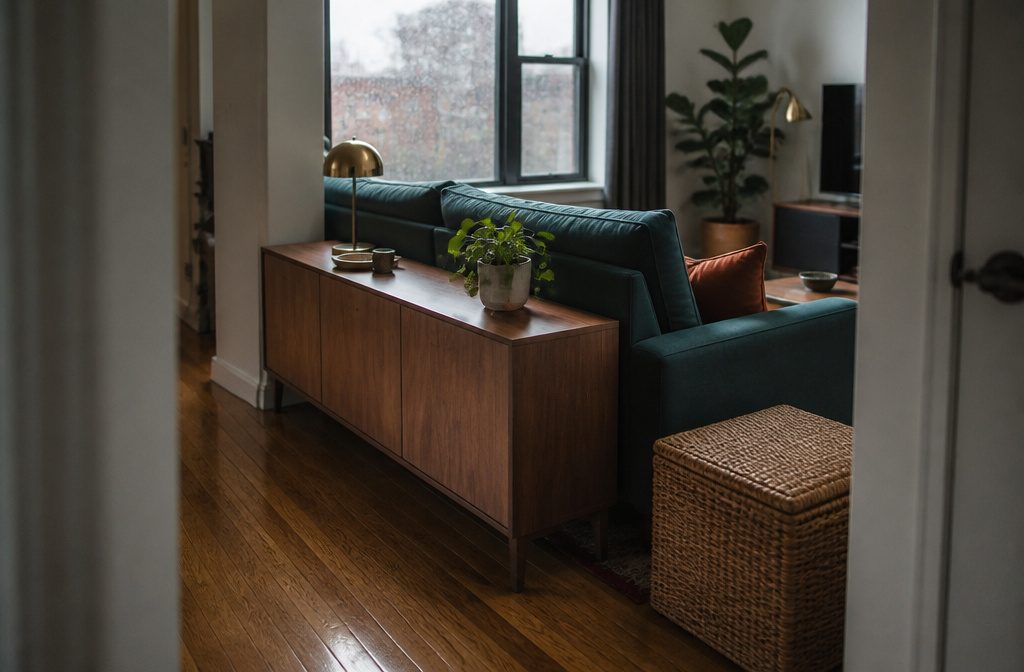
A hinged storage ottoman starts at $45, and a narrow sideboard behind the sofa turns 13 inches of dead floor space into usable storage without blocking walkways.
1. Shelves and Bookcases
Bookcases and open shelving turn vertical wall space into storage that works twice: the items sit where you need them, and the arrangement itself becomes part of the room.
Floating shelves go up fast — a few hours and a drill — and sit above a TV or sofa without taking floor space. They hold books, baskets, and anything decorative enough to leave out.
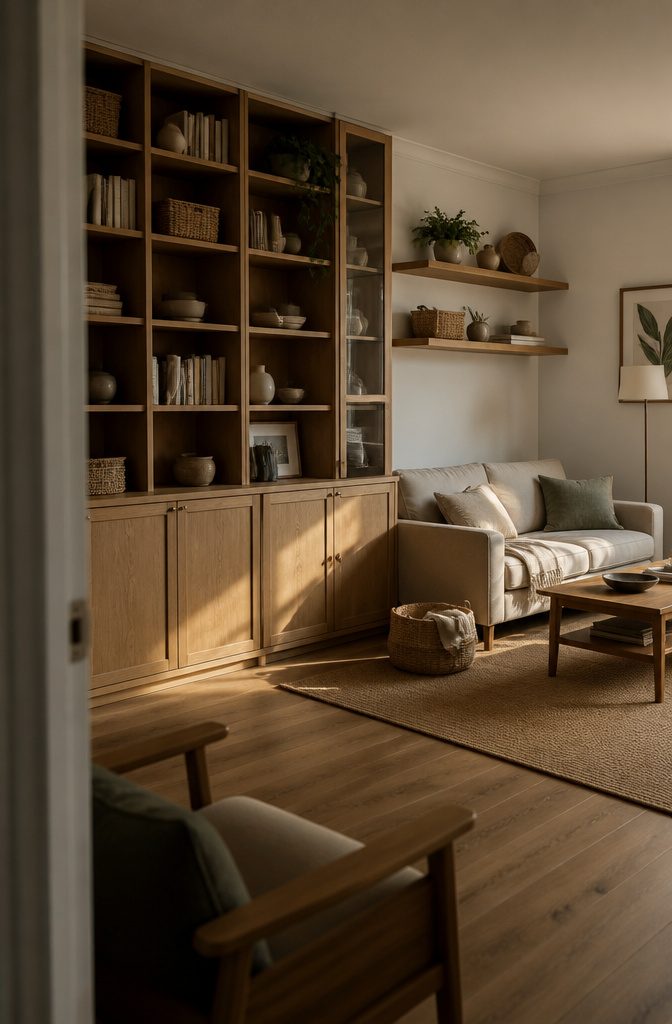
Built-in shelving with a mix of open and closed sections hides clutter behind cabinet doors while the open shelves display what you want seen.
If custom joinery is out of reach, a freestanding bookcase against the wall gives you the same vertical storage for a fraction of the cost. Pair shelves with baskets to corral small items that would otherwise scatter across the surface.
Glass display units work when you collect things worth showing off but need them contained. The case keeps dust off ceramics or books while the glass lets you see what is inside.
2. Built-Ins and Custom Joinery
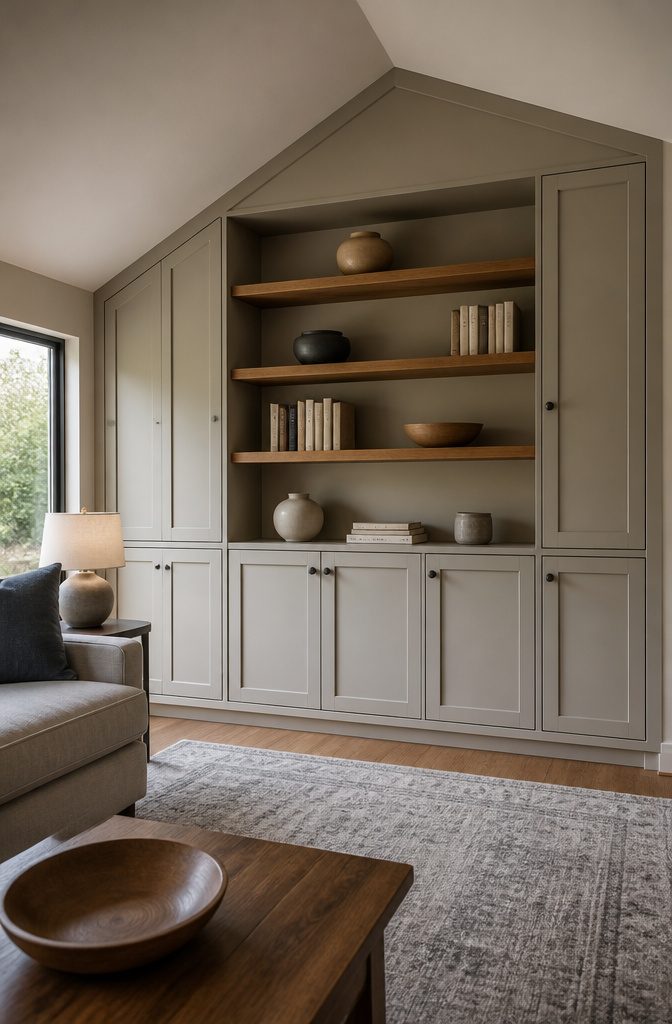
Built-ins make sense when you’re staying put and the room has awkward spaces that regular furniture won’t fill.
Alcoves, corners with sloped ceilings, and narrow walls between windows all become useful storage when joinery is cut to fit them. The result sits flush with the wall and uses depth that freestanding pieces can’t reach.
‘Make sure it’s money well spent by incorporating it into tricky areas such as alcoves and optimizing every inch of space.’
Custom work costs more than buying off the shelf, so it makes the most sense where nothing else will do the job.
Mix open shelves with cabinet doors. The open sections hold books and display pieces; the closed ones hide electronics, cords, remotes, toys, and anything else that looks messy when stacked in view.
Cabinet doors let you shut the clutter away without clearing it first, which is what storage needs to do if it’s going to keep a room looking clean between guests.
3. Tables With Storage
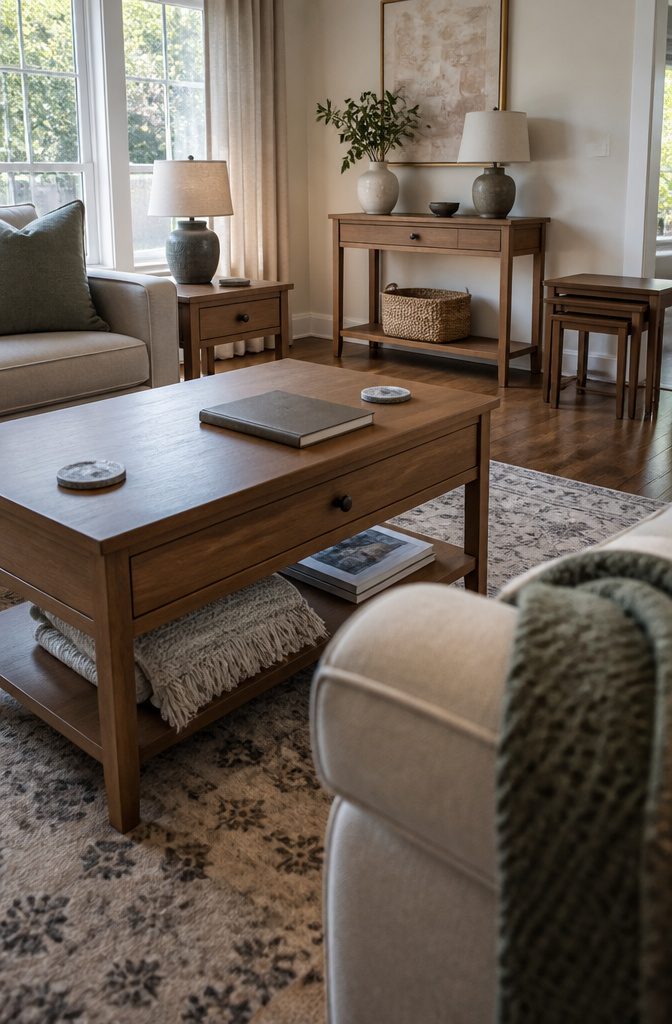
A coffee table with drawers keeps remotes, coasters, and charging cables where you need them without the visual noise of a basket sitting on top.
Drawers beat open shelves when you want a clean surface for drinks and books—the clutter stays behind a front panel instead of collecting dust in plain view.
End tables and side tables work the same way: one drawer handles what you reach for from the couch, and a lower shelf holds larger items like magazines or a throw blanket folded flat.
Console tables add storage along a wall without eating into walkway space. A single shelf underneath holds bins, and the top stays clear for a lamp or a tray.
Nesting tables solve the problem when floor area is tight—two or three tables stack together as one unit and pull apart when you need extra surface space for drinks or a laptop.
Some nesting tables lift off at the top to reveal hidden compartments for storing throw pillows or blankets, which keeps seasonal items out of sight until you need them.
Prices range from $70 for a compact set with lift-off storage to around $260 for solid wood nests.
4. Ottomans and Benches With Storage
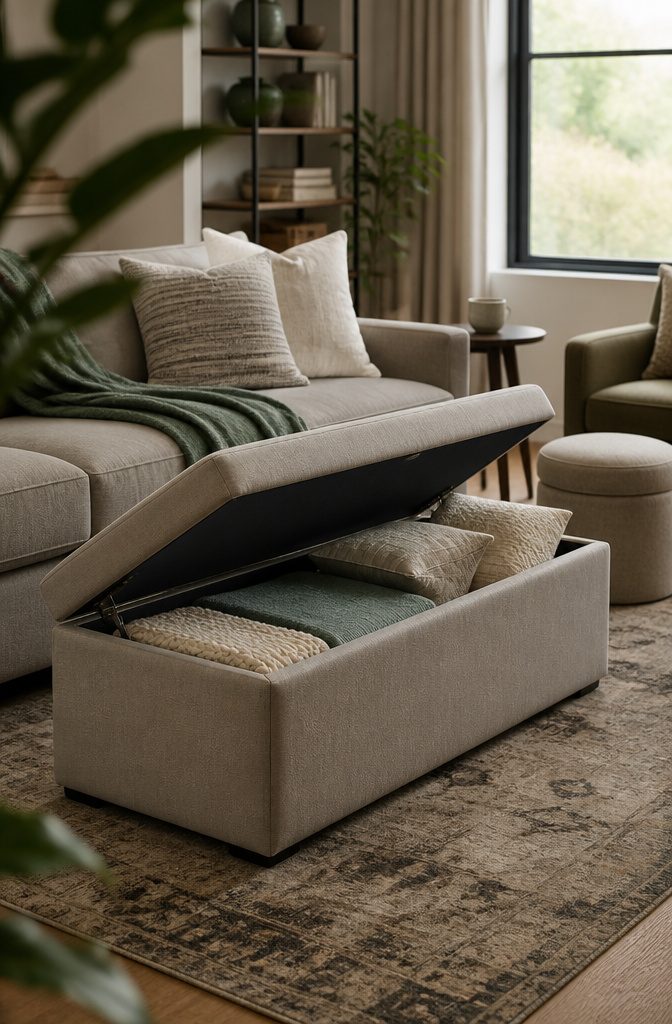
An ottoman or bench that opens up gives you somewhere to sit and a place to hide what you don’t want on display. The storage compartment holds blankets, throw pillows, toys, or board games without taking up extra floor space.
A standard hinged storage ottoman runs around $45 for a sturdy model, though a tufted round version sits closer to $82 and wicker styles land near $100.
If you want something that doubles as a coffee table, expect to pay $170 to $400 depending on the finish. The wide, flat-topped versions work well in front of a sofa; smaller round ottomans fit next to a chair.
Pick a solid color or fabric that keeps the piece looking like furniture rather than a bin, and it blends into the room while doing the work of a cabinet you didn’t have space for.
5. TV Stands, Media Cabinets, and Entertainment Units
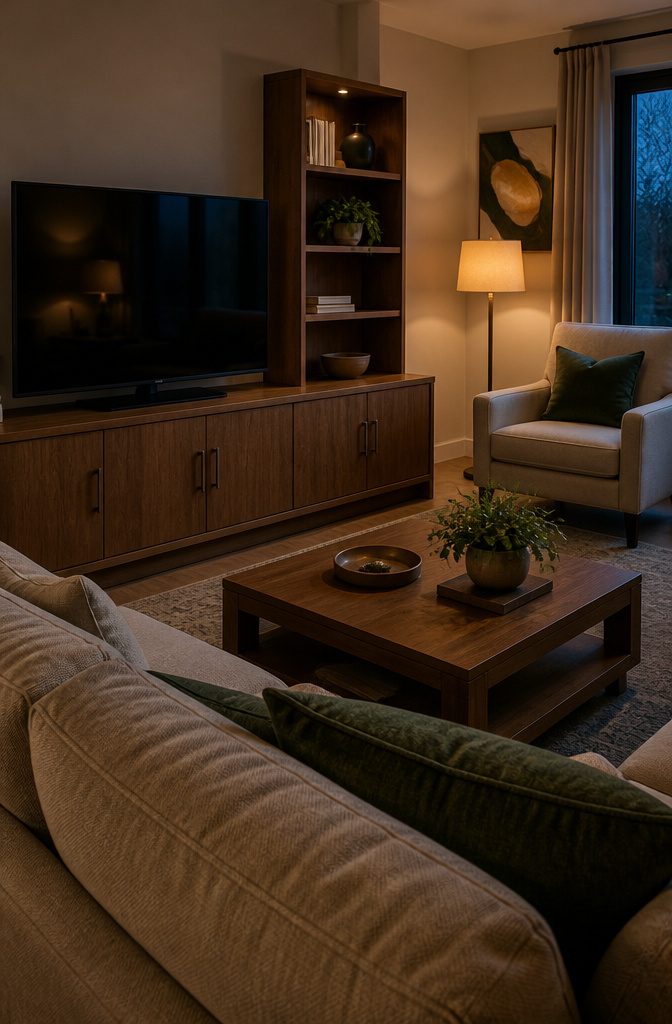
A TV stand with closed cabinets solves the visual mess before you unplug a single cable.
Remotes, game controllers, streaming boxes, and the tangle of cords behind the screen all disappear behind doors, and the room reads cleaner the moment you close them.
Media cabinets and entertainment units handle that entire zone with one piece of furniture rather than asking you to hide things piecemeal.
Match the cabinet material and finish to what is already in the room. Wood tones work if your coffee table or side tables are wood; painted finishes in white or gray suit rooms with upholstered pieces and metal accents.
The style range is wide enough that a console fits without forcing you to redecorate around it.
Closed storage beats open shelving here because dust settles on electronics faster than on anything else in a living room, and wiping down a cabinet face once a week takes less time than dusting each device.
If you want some open display space, wall units that combine closed lower cabinets with upper shelving give you both: gear hidden low, books or plants visible above eye level.
6. Baskets and Bins
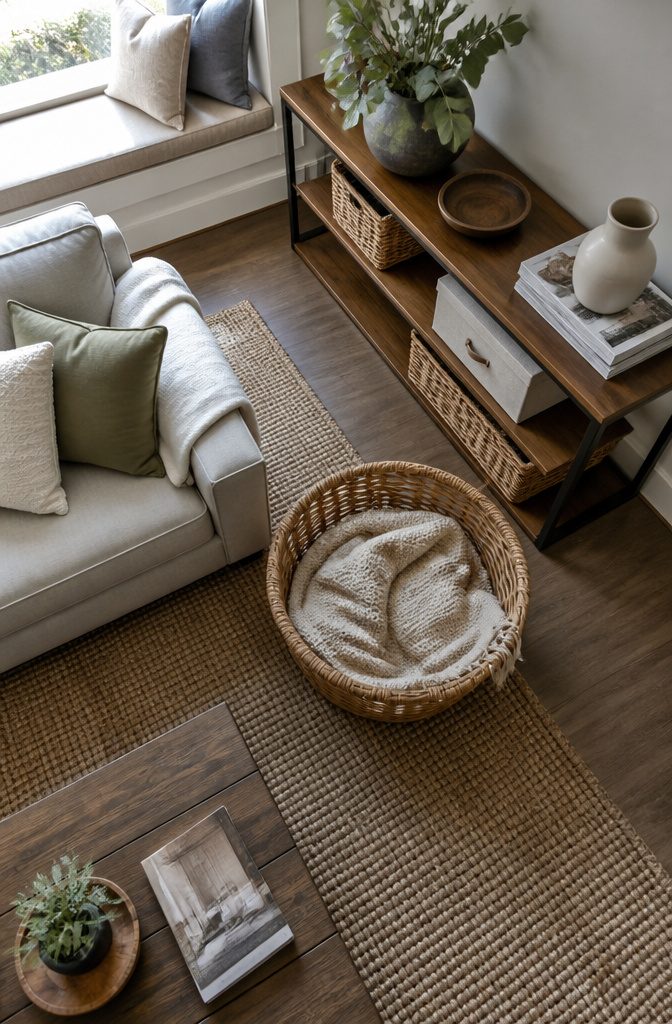
Baskets work anywhere you can set them down.
A 20 x 13 inch basket holds full-size throw blankets without folding them into tight squares, and anything that size or larger sits on the floor next to a couch without looking like you forgot to put it away.
Smaller versions fit on shelves between books or under a console table, and woven ones in matching sets read as intentional rather than random.
I use them for anything that piles up during the week—magazines, charging cables, dog toys, the remotes that migrate off the coffee table.
Lidded boxes hide what’s inside if that matters, but open baskets let you grab what you need without lifting anything first, which is why they work better for things you use daily.
7. Sideboards, Credenzas, and Side Cabinets
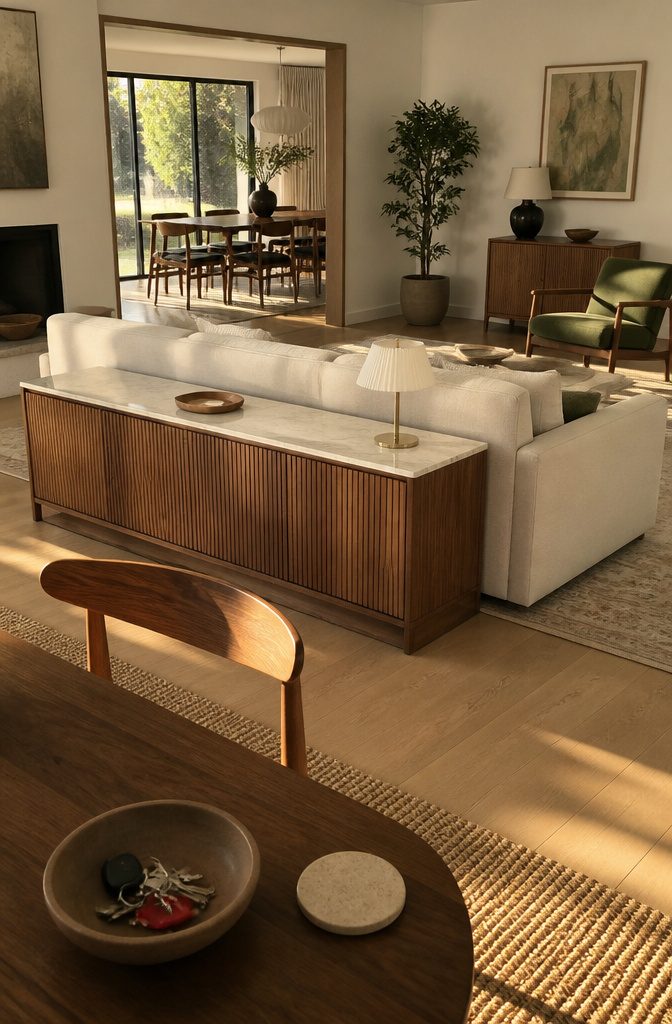
A sideboard or credenza placed behind your sofa turns wasted floor area into usable storage, especially in open-plan rooms where you can walk around the furniture.
The piece hides the plain back of the couch, holds household items or toys behind closed doors, and works as a visual divider between living and dining zones without blocking sightlines.
Look for something narrow enough to leave walking room—most sideboards designed for this spot measure 13 to 18 inches deep.
The Valencia sideboard from Sunpan and similar cabinet-style pieces keep clutter out of view while adding wood, carved fronts, or textured door panels that read as intentional furniture rather than afterthought storage.
A marble or laminate top turns the surface into a landing zone for keys or a place to set a drink when you lean over the back of the couch.
Side cabinets work anywhere you have a gap: next to an armchair, in a corner, or along a wall that does not fit a full bookcase.
8. Multifunctional Furniture
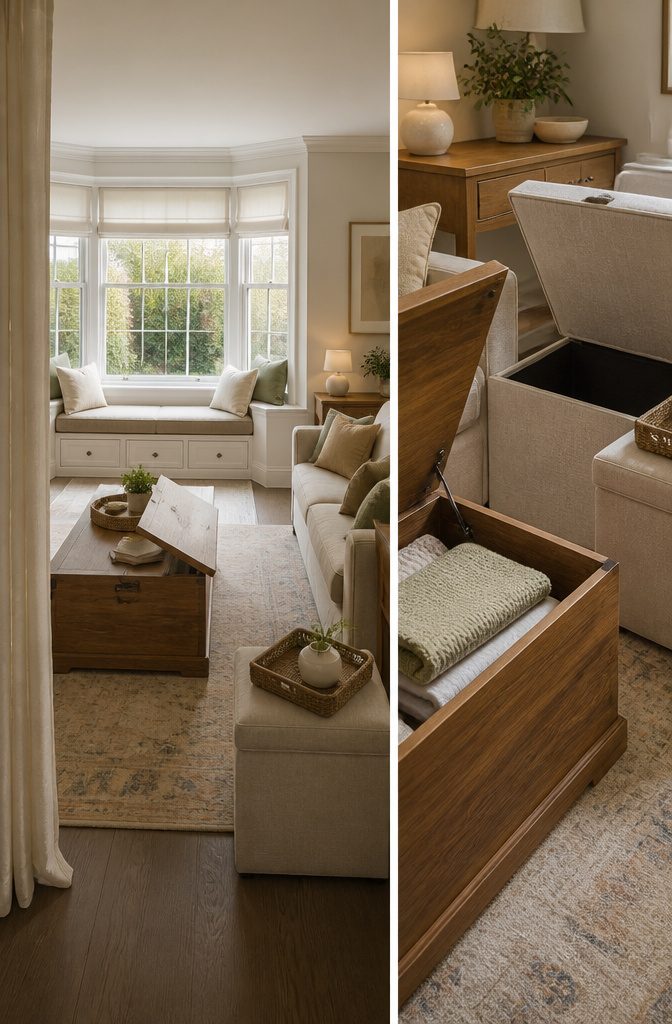
A chest doubles as a coffee table and hides throws, remotes and anything else that migrates to the center of the room.
The lid lifts, the clutter drops in, and the surface stays clear. Ottomans with hinged tops work the same way — storage underneath, seating or a tray on top — and most hold more than you expect once the cushion comes off.
Sofa tables that open into compartments turn dead space behind the couch into a place for shoes, chargers or mail.
Some designs hinge down from the top; others pull forward with shallow drawers. Either way, the back of the furniture becomes functional instead of just filling the gap between the sofa and the wall.
Window seats built over drawers or lift-up bins give you seating and a place to stash seasonal items, extra linens or toys.
A cabinet maker can fit one to a bay window so nothing goes to waste, and if you need regular access, drawers beat a hinged seat every time.
9. Concealed Storage
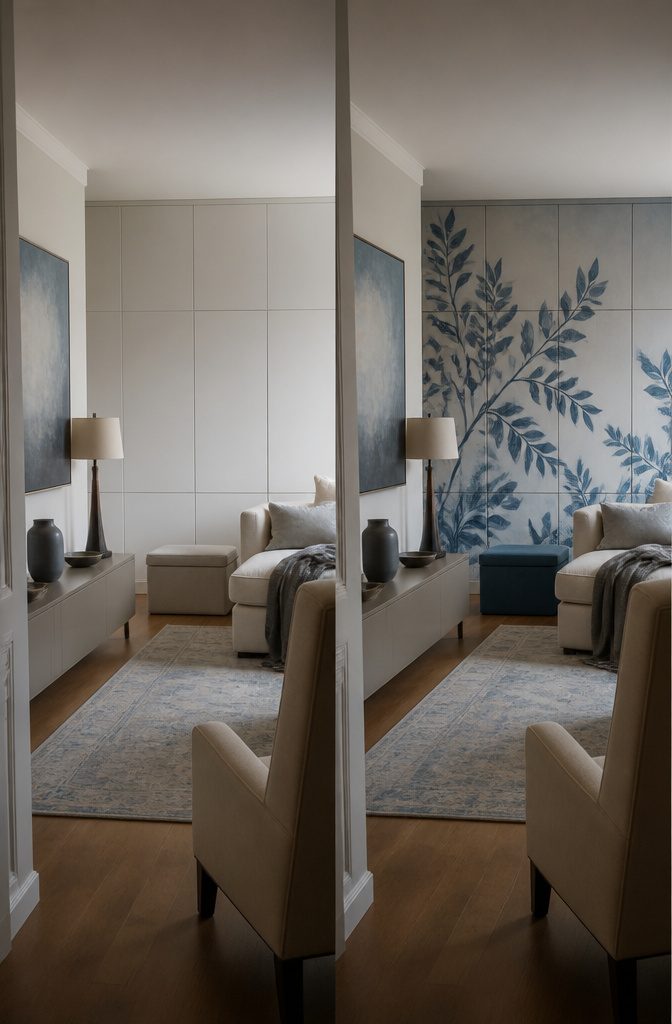
Doors and cupboards keep the mess out of sight when you need the room to read as ordered.
A mural-concealed cupboard does the work without giving up wall interest — Marie Soliman painted one across cabinet fronts in a cottage living room and fit a home bar, wardrobe and additional storage behind it, all inlaid in Yves Blue.
The door surface becomes the feature instead of competing with it.
Storage ottomans and benches hide blankets, pillows, or toys inside a lid that doubles as a seat, and they move around the room as you need them.
A TV cabinet with doors clears remotes, DVDs, and game controllers off the shelf, and a side cabinet that closes works in any corner where open shelving would read as cluttered.
If a desk folds into a cabinet, it stays available for evening work without anchoring the layout around it during the day.
10. Display Cabinets and Glass-Front Storage
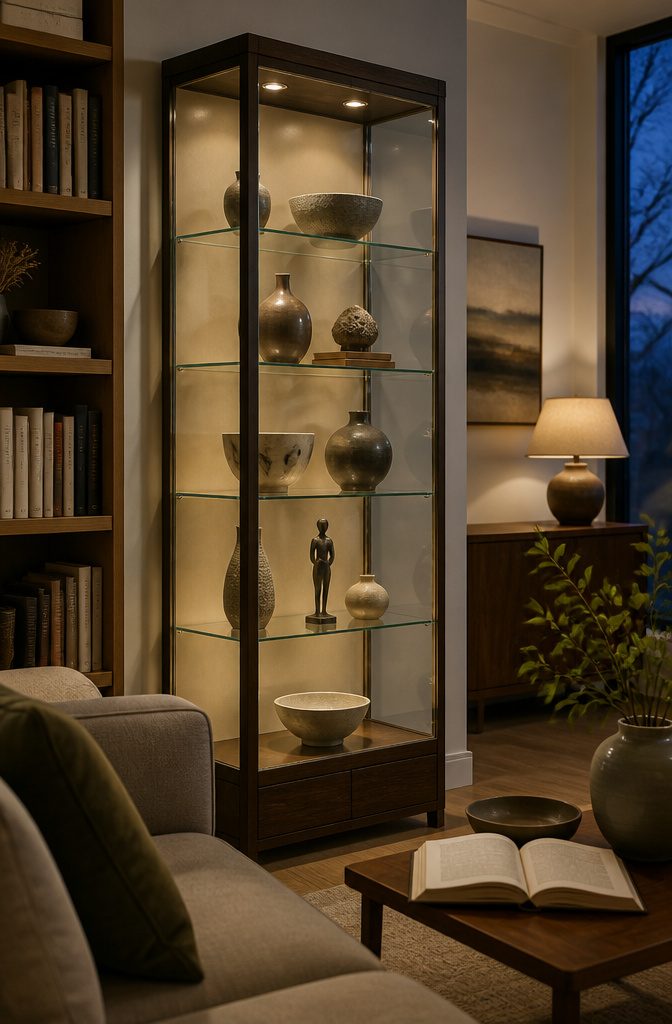
Glass-front cabinets let you keep a collection on display without letting it take over the room. The glass contains dust while the structure keeps individual pieces from wandering across every surface.
If you collect ceramics, small sculptures, or anything else worth looking at, a display cabinet gives each piece a frame without boxing it away in a drawer.
A cabinet with interior lighting makes the display work at night, when most people actually use the living room.
Look for units with adjustable shelves so you can fit taller pieces without wasting vertical space. The Valencia display cabinet from Sunpan is one option built for this—tall, clean-lined, glass on three sides.
Bookcases work the same way if books are what you’re displaying. A floor-to-ceiling bookcase organizes the spines and turns the collection into something intentional rather than piled.
11. Window-Seat Storage
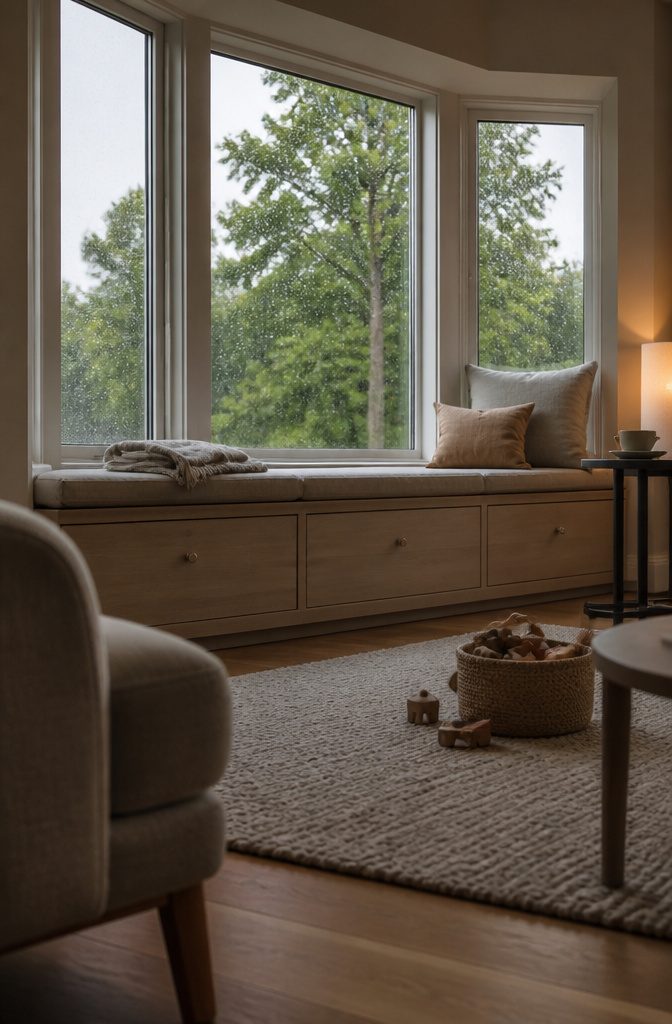
A window seat built into a bay or bump-out gives you a lid that lifts on toy bins, spare throws, or anything you don’t reach for daily.
The bench itself becomes extra seating when people gather, and the storage underneath stays completely hidden until you need it.
Pick the lid style based on how often you open it. A hinged top works when you store seasonal items—holiday pillows, winter blankets—that sit untouched for months.
Drawers or cabinet doors make more sense if you’re pulling out board games, charging cables, or kids’ toys a few times a week, since you won’t have to lift cushions every time.
A cabinet maker can fit the bench exactly to your window’s width and depth, which matters in older homes where bay angles don’t follow standard measurements.
Tell them what you’re storing so they can size the compartments right—shallow drawers for remotes and magazines, deeper bins for bulky throws.
12. Storage Mirrors
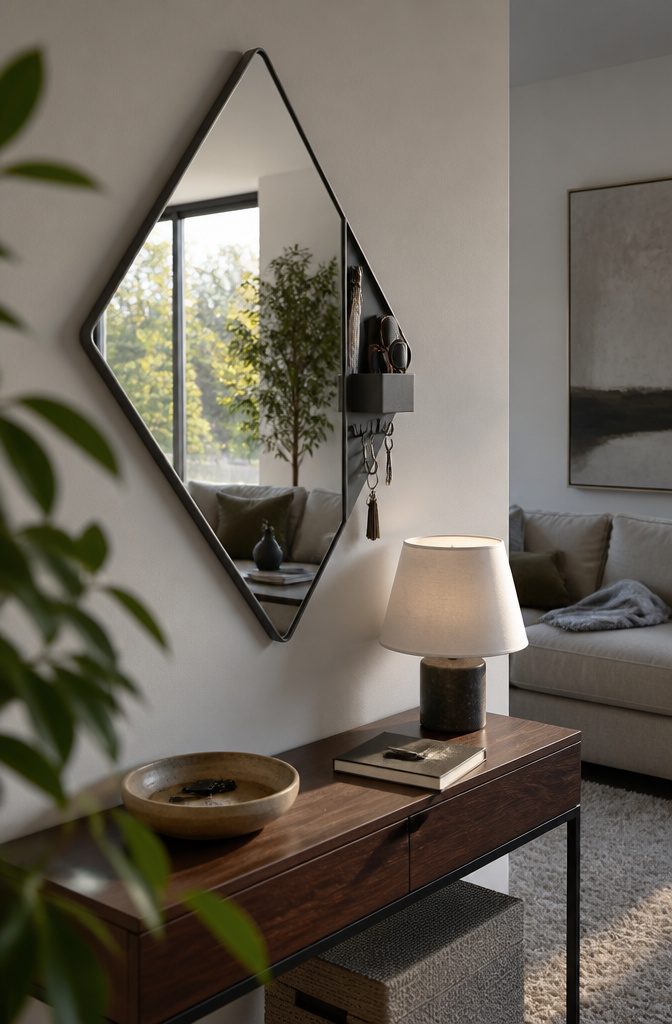
A decorative mirror already hangs in most living rooms, which means you have wall space committed to something that could work harder.
Swap it for a storage mirror with shelves and pockets behind the glass—the kind that opens like a medicine cabinet but sized for a living room wall.
A wall-sized version runs about $55 and holds remotes, charging cables, or anything else you want within reach but out of sight. A diamond-shaped option at $63 leans more decorative if the living room calls for it.
If you prefer surface storage, a mirror with attached containers and hooks solves a different problem.
It holds less than a full cabinet—keys, a wallet, sunglasses—but everything stays visible and easier to grab on the way out. Expect to spend around $134 for one that mounts flat and keeps the footprint minimal.
Fit Storage to How You Use the Room
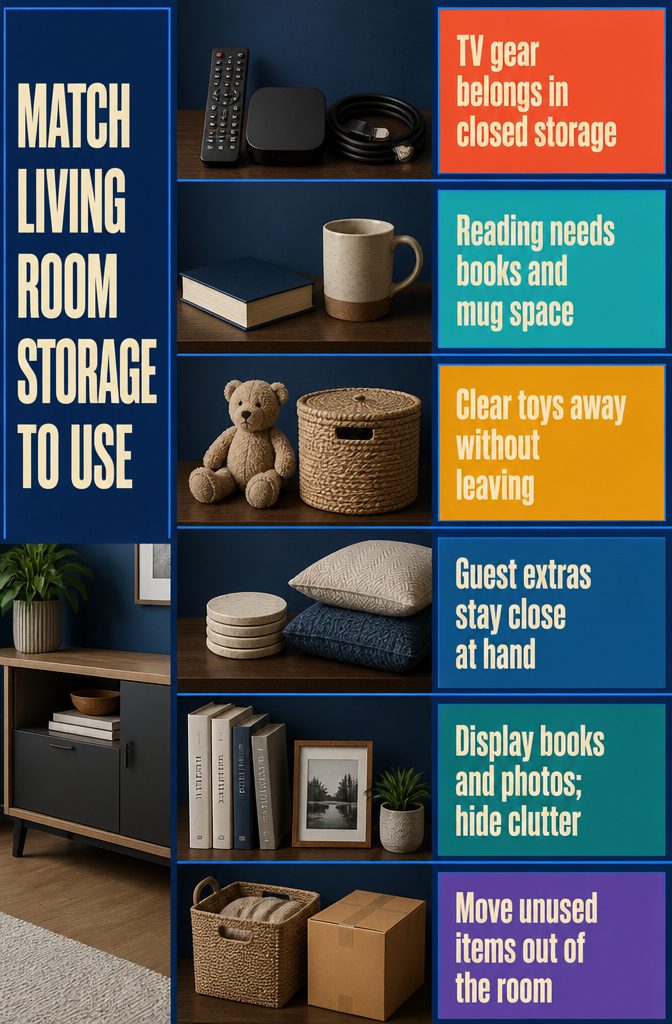
Start by listing what actually happens in your living room.
TV watching means remotes, streaming devices, and cables need a home. Reading requires a spot for books in rotation and a place to set down a mug.
Kids playing means toys migrate in, and you need a place to clear them at the end of the day without leaving the room. Guests coming over means coasters, extra throw pillows, and serving pieces have to live somewhere close.
Once you know what lands in the room, sort it by whether it should stay visible or get closed away.
Decorative books and a few framed photos earn shelf space. Charging cables, old magazines, and the pile of DVDs you haven’t touched in two years do not.
Functional items go in cabinets or drawers; display-worthy pieces sit out. That split drives whether you need more closed storage, more open shelving, or both.
If something doesn’t get used in the living room, move it out entirely.
A chest of holiday decor or a box of craft supplies sitting in the corner just takes up space that could go to what you actually reach for every week.
Why Storage Helps You Stay Organized
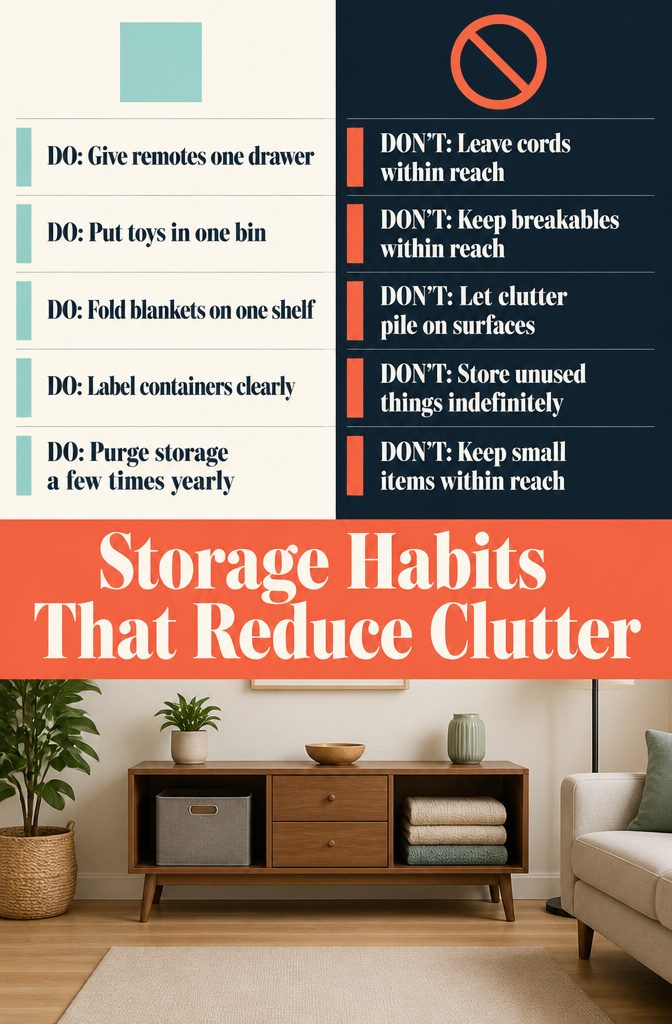
Storage keeps surfaces clear and items sorted, which means less time cleaning and fewer places to hunt when you need something.
The remote stays in one drawer, the toys go into one bin, and the blankets fold onto one shelf instead of piling wherever they landed.
That consistency makes it easier to put things back, since you know exactly where they belong.
Less clutter also improves safety if you have children or pets. Cords, small items, and anything breakable can move into closed storage instead of sitting within reach.
I label containers so anyone in the house can find what they need without opening every lid, and I purge the room a few times a year to keep storage from turning into a holding pen for things we stopped using months ago.
Frequently Asked Questions
What is the best storage for a living room?
The best storage matches what you actually use the room for while fitting the space you have.
Closed cabinets and TV stands hide remotes and cables, open shelves hold books and display pieces, and baskets corral small items that scatter. Pick pieces that solve a specific problem rather than adding furniture for its own sake.
How do I make storage space in my living room?
Use furniture that doubles as storage: coffee tables with drawers, ottomans that open, and TV stands with cabinets.
Floating shelves and bookcases turn vertical wall space into storage without taking floor area. If you have alcoves or corners, built-ins fit spaces that freestanding pieces can’t reach.
How can I hide my storage in a living room?
Use closed cabinets, ottomans with hinged tops, and TV stands with doors to keep clutter out of sight.
A sideboard behind the sofa or a bench with lift-up storage hides items completely until you need them. Cabinet doors let you shut things away without clearing surfaces first, which keeps the room looking clean between guests.
What are usually stored in the living room?
Living rooms hold remotes, charging cables, throw blankets, books, magazines, coasters, toys, board games, and DVDs.
Seasonal items like holiday decorations and extra pillows also end up here. The mix changes based on how you use the space, but most of it needs a home that keeps surfaces clear.