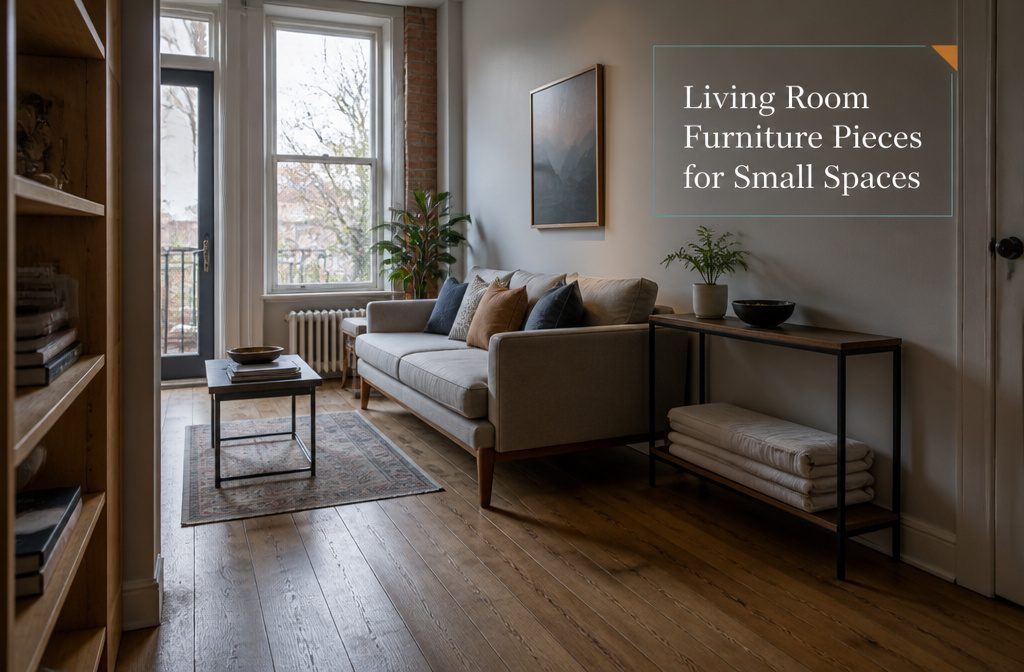
Living room furniture for small spaces runs from $67 folding ottomans to $2,699 custom sleeper sofas, and the right pick depends on whether you need the piece to do one thing well or three things adequately.
A sofa that converts to a guest bed solves a real problem in a 650-square-foot apartment, but it costs more and sits heavier than a loveseat half its width.
Legs matter more than style.
A bookcase or sofa lifted three to five inches off the floor shows enough open space underneath to make the room feel less packed, and that strip of visible floor works whether the piece is mid-century, industrial, or whatever the manufacturer called it this year.
1. Apartment-Sized Sofas and Loveseats
Standard sofas run 84 to 96 inches wide, and a piece that size tends to dominate a short wall.
An apartment-sized sofa or loveseat drops that down to 60 to 72 inches, which opens up room for a side table, a plant stand, or circulation space without giving up a real place to sit.
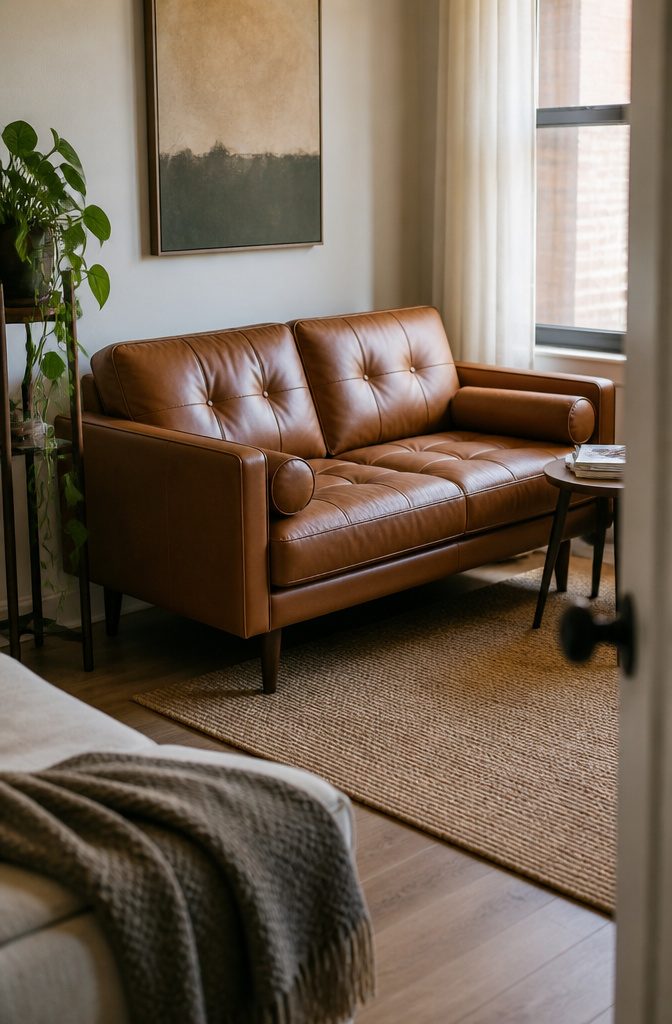
The Article Sven loveseat sits at 72 inches wide and $1,599. Its tufted leather upholstery and bolster cushions give it a finished, mid-century look that reads more like a deliberate choice than a compromise.
The Joybird Levi loveseat is narrower at 60.5 inches and $1,373, with slim squared arms that preserve seat depth and a higher back for more upright support.
Both work well on a short wall or in an apartment nook.
Slim arms and raised legs are the details that matter here—they keep the piece from sitting heavy and help the floor plane feel open rather than blocked off.
Recommended Products

【Attractive Sofa Design】 The overall dimensions of this modern minimalist fabric sofa are 32.3"(D) x 71.25"(W) x 36.6"(H). Perfect for smaller spaces such as living rooms, offices and reception rooms.

68" Perfect for Small Spaces: Our 68 inch loveseat is a compact couch for apartment with high-resilience spring foam cushions, which can easily accommodate 2 people sitting at the same time. Paired with thick spring cushions and breathable wear-resistant fabric, it can also provide soft and strong support for the cushion and backrest, even during all day rest or entertainment. Simple colors and exquisite designs can easily adapt to various home decoration, adding versatile styles to your home.
2. Modular Sectionals You Can Reconfigure
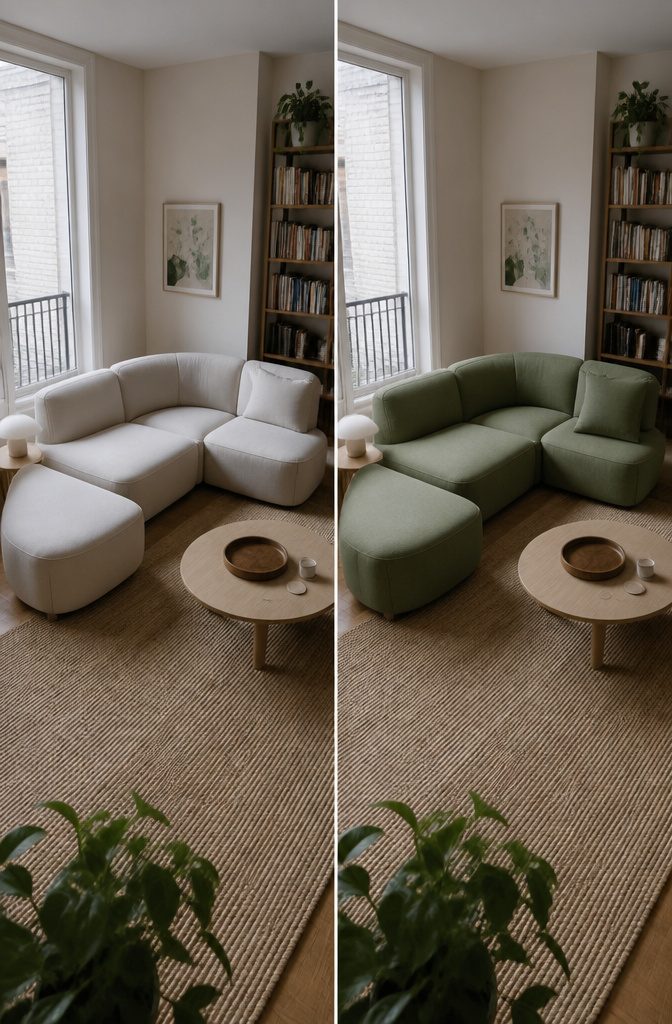
Modular sectionals let you split and rearrange sections to match the room or shift from movie night to a party layout, and a decent number of configurations stay under 72 inches on each leg, which keeps them apartment-friendly.
Place one in a corner and you lock down more seats than a sofa-and-chair pair without eating the floor plan.
The modular angle also solves the furniture-through-the-stairwell problem: pieces that come apart make it into basements and third-floor walkups where a single-frame sectional would get stuck at the landing.
Scale still decides whether this works. A low profile, narrow arms, and a chaise that does not run the length of the wall keep the piece from dominating.
Oversized designs meant for suburban family rooms will swallow a small living room whole, so measure the actual corner before you fall for one in the showroom.
Designers favor curvy and irregular shapes at 43 percent, and modular sections often follow that direction rather than stiff right angles, which softens the look without adding bulk.
Recommended Products

Delivered in 3 Separate Packages: Considering the large volume of product packaging, in order to meet practical needs and facilitate transportation, this 4-seater L-shaped couch will be divided into 3 separate packages for delivery, so they may not arrive at the same time. Package 1: one single sofa and one ottoman. Package 2: 2 single sofas and 2 throw pillows. Package 3: left and right armrests for the couch
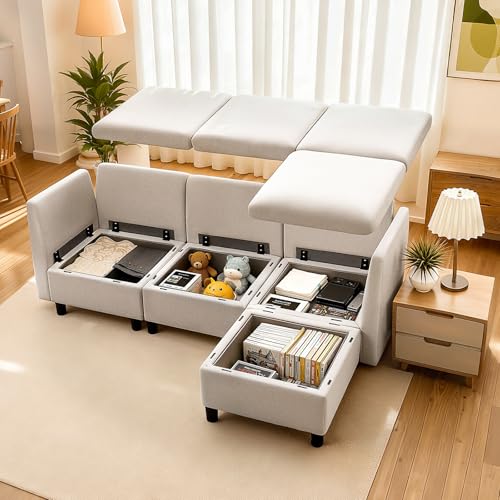
Comfortable Cloud Sofa: Breathable cotton-linen fabric provides a soft, skin-friendly touch, while plush cushions with high-resilience foam provide lasting comfort. A solid wood frame holds up to 250 lbs / 113.4 kg per seat—ideal for your living room set

3. Sleeper Sofas That Convert for Guests
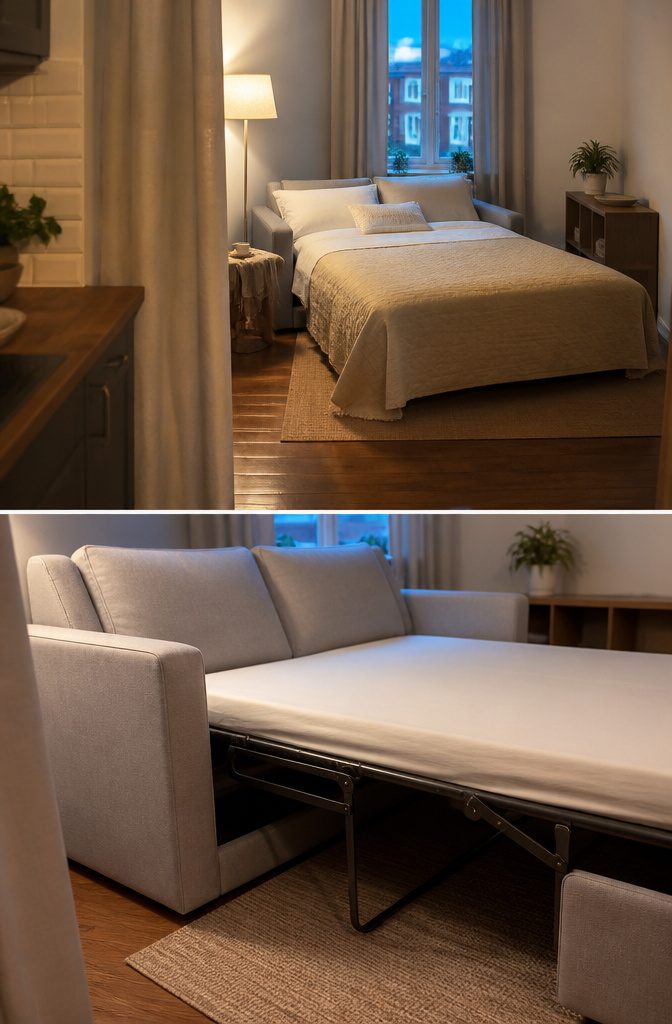
A sleeper sofa gives you everyday seating that pulls out to a full bed when family stays over, which matters more now that 45% of U.S. homes are multigenerational.
The POVISON Aurora-Power Sofa Bed runs 83 inches wide and 41 inches deep, so it needs a clear wall and weighs about 340 pounds once delivered, priced at $2,599.
West Elm’s Henry Sleeper Sofa offers more control: you pick the width anywhere from 61 to 79 inches, then choose your fabric and mattress type, with prices starting at $1,279.20 and climbing to $2,699 depending on what you build.
IKEA’s FRIHETEN Sleeper Sectional sits at 90.5 inches wide and 59.5 inches deep for $999, includes a storage compartment under the chaise, and backs that with a ten-year limited warranty.
Assembly takes longer than a pre-built piece, and the deeper footprint can press hard against a narrow layout.
Recommended Products

【3-in-1 Convertible Sofa Bed】: This multi-functional Folding sofa bed switches between three modes, a comfortable floor sofa, a chaise lounge chair, and a single bed, with zero complicated steps. This space saving foldable couch maximizes small living spaces, ideal for apartments, dorms, and living rooms, and doubles as a guest bed for overnight visitors, solving small-space pain points in one compact piece

3-in-1 Space Saver & Folding Sofa Bed: Experience ultimate versatility with this Lumbershed convertible sleeper chair! Effortlessly transforms between a plush boneless couch for lounging, a supportive single chair, and a folding sleeper bed—perfect for guests, small apartments, or creating a cozy multipurpose zone

3‑IN‑1 CONVERTIBLE SLEEPER CHAIR: Boasting a concealed pull‑out bed design, this sleeper chair can be easily converted into a single sofa chair, reclining lounge chair or compact sofa bed with a simple pull. Ideal for daily relaxation and unexpected overnight guests, this multi‑functional chair‑bed is perfect for watching movies, reading or resting. It helps you make the most of your limited space and adds extra practicality to your home.
4. Storage Ottomans That Do Three Jobs
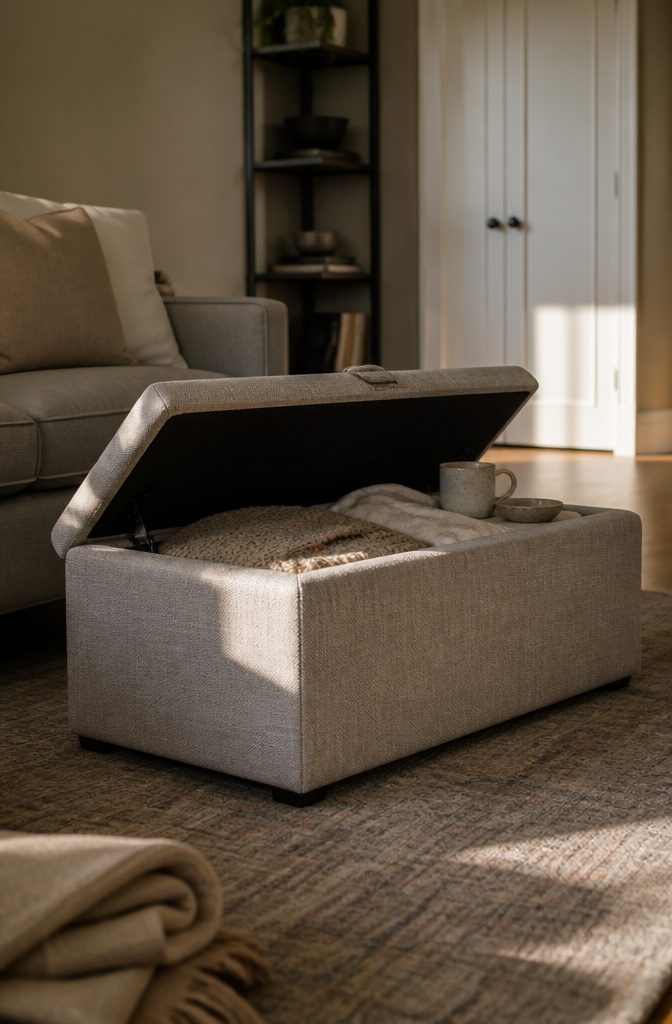
Storage ottomans hide clutter while serving as a footrest, coffee table, or extra seat when friends visit.
The SONGMICS 43 Inches Folding Storage Ottoman Bench costs $66.99 and holds blankets, magazines, or toys completely out of sight. Open the top, drop in whatever crowds your shelves, and close it again.
The folding design lets you collapse it flat and slide it into a closet when you need the floor clear. That matters in a room where every piece competes for the same 80 square feet.
Use the surface as a coffee table until someone needs a place to sit, then clear it off and let them take the spot. The dual role cuts the furniture count without cutting what the room can do.
Recommended Products

[HIGH QUALITY FABRIC] This Slim Arm 1 Piece Sofa Cover is crafted from 85% Polyester,15% spandex high stretch knitted jacquard fabric which is soft, durable, anti slip, wrinkle free

[HIGH QUALITY FABRIC] This Slim Arm 1 Piece Sofa Cover is crafted from 85% Polyester,15% spandex high stretch knitted jacquard fabric which is soft, durable, anti slip, wrinkle free

[HIGH QUALITY FABRIC] This Slim Arm 1 Piece Sofa Cover is crafted from 85% Polyester,15% spandex high stretch knitted jacquard fabric which is soft, durable, anti slip, wrinkle free
5. Nesting Tables You Can Tuck Away
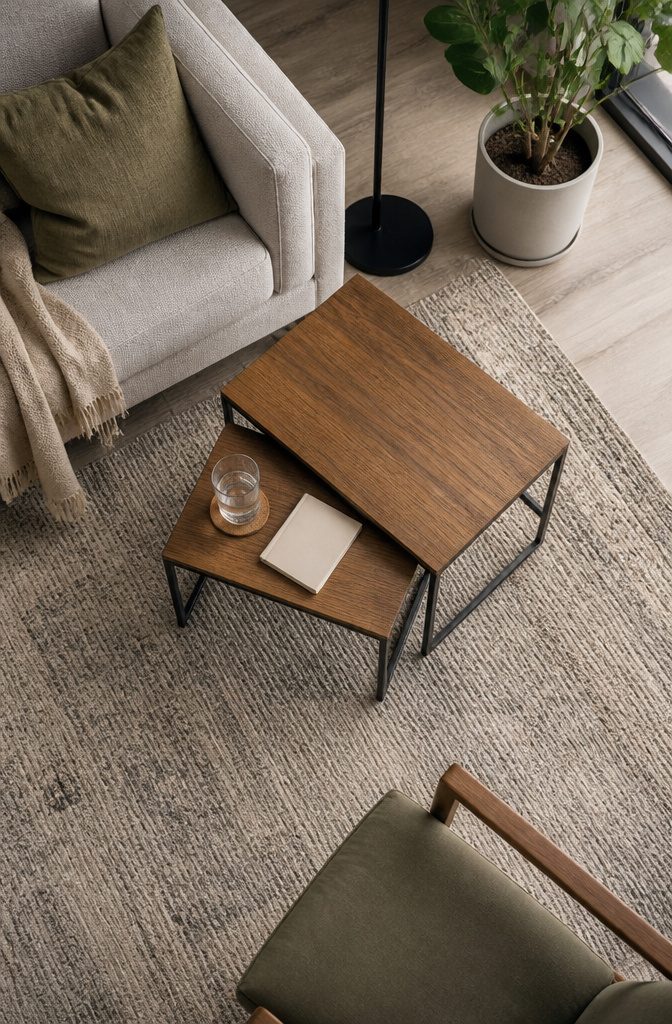
Nesting tables give you surface space when you need it and nearly disappear when you don’t. The smaller tables slide under the larger one, so the set takes up only the footprint of the biggest table when stacked together.
Pull one out when someone needs a spot for a drink or a laptop, then tuck it back when the floor needs to open up again.
The flexibility matters more than the storage, though some designs add that too. A pair with removable wood tops lets you drop blankets or throws inside before nesting them, which works if you’re short on both surfaces and hidden storage.
Most versions stay simple: two or three tables in descending sizes, metal or wood frames, tops that nest with an inch or two of clearance.
They cost less than a coffee table and ottoman combined, and you can separate them across the room when you’re entertaining or leave them stacked against a wall the rest of the week.
Recommended Products

👍【Sturdy And Stable Bed Risers】 Our table risers are made of high quality thickened PP plastic, which is strong enough to support any heavy furniture for home or office. The internal mesh reinforcement design greatly increases its load-bearing capacity. Top bumps and rubber bottom of the desk risers can firmly grip the furniture legs, shock absorbing and anti-slip to avoid furniture sliding, protect the floor from friction and reduce noise.

[High Quality] - The furniture risers are made of premium natural solid wood, sturdy and durable. The wood furniture legs are finished with environmentally friendly coating, smooth and bright.

👍【Sturdy Bed Risers 4 Inch Heavy Duty】 Our bed lifts risers are made of high quality thickened PP plastic that can hold up to 6,000 pounds and are strong enough to support any heavy furniture like bed, chair, desk, cabinet, sofa, table, TV stand for home or office. The internal mesh reinforcement design of the couch risers 4 inch heavy duty greatly increases its load-bearing capacity. The bed risers heavy duty can carry the weight of bed raisers for dorm twin xl, king size bed, queen bed, etc.
6. Coffee Tables With Lift Tops and Storage
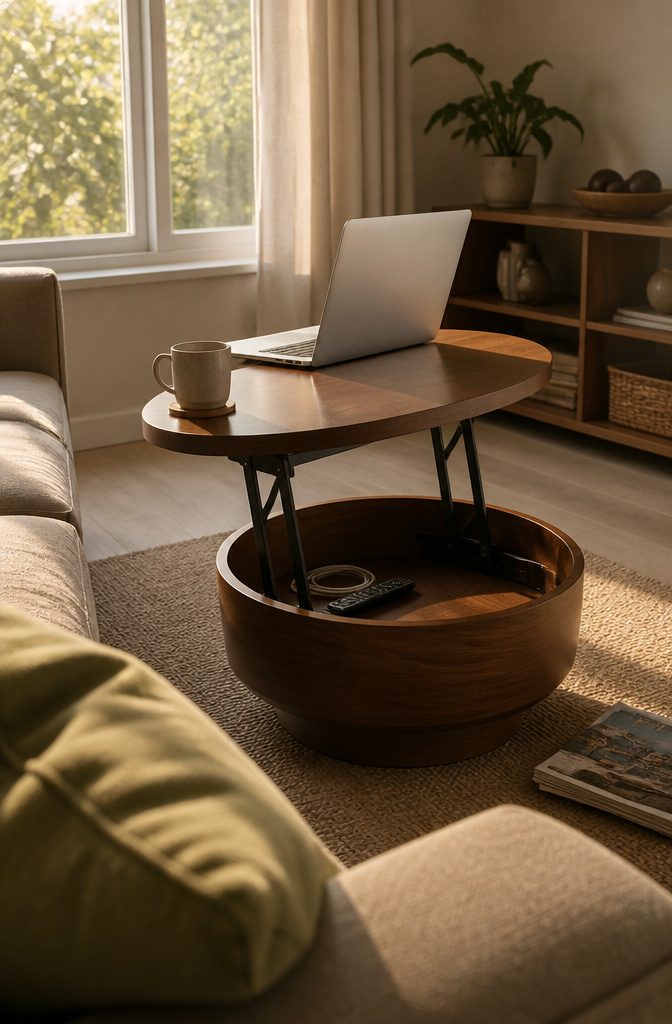
A lift-top coffee table lets you work from the sofa without hunching over a low surface.
The top rises 6 to 8 inches, creating a laptop desk or meal tray at a comfortable height, and most models hide storage underneath for remotes, cords, and magazines that otherwise pile up on the cushions.
The Silva lift-top coffee table has a 31.5-inch round profile that fits tighter layouts without sharp corners catching shins.
Its surface lifts from 16.9 to 23.2 inches, and drawers below keep small clutter out of sight. At $800, it covers coffee table, work surface, and storage in one footprint.
For a rectangular option, the Lift Top Extendable Frame Coffee Table runs $1,199.90 and adds pull-out sections for spreading out papers or serving plates. Round tops soften compact rooms but give you less spread-out work area than a rectangular desk would.
Recommended Products
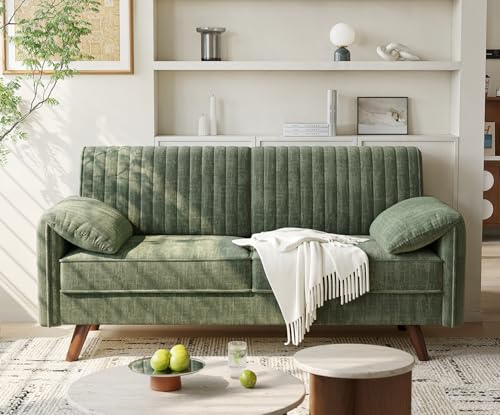
Chic Sofa Design: Overall Sizes: 64.5" W x 31.8"D x 33.2" H. This loveseat couch features padded arms design with a clean and simple silhouette, perfect for living rooms, offices, dorms, bedrooms and small spaces

FSC Certified Solid Wood - Made with materials from well-managed forests that support sustainable forestry practices. This loveseat sofa is known for its sturdiness and solidity, with a maximum weight capacity of 772 lbs. Additionally, the sofa couch features non-slip protective backing on the bottom of the legs, providing stability and preventing damage to flooring

【Hassle-Free Installation】You won’t have to worry about complicated sofa assembly. This 59in convertible sofa bed needs no tools. Just unbox, let it expand for 48–72 hours, then fix the frames to enjoy your boneless couch bed. With quality corduroy and compression technology, this convertible sleeper sofa is convenient and practical. technology, this convertible sleeper sofa is a convenient sofa bed couch.
7. Wall-Mounted Shelves and Floating Media Units
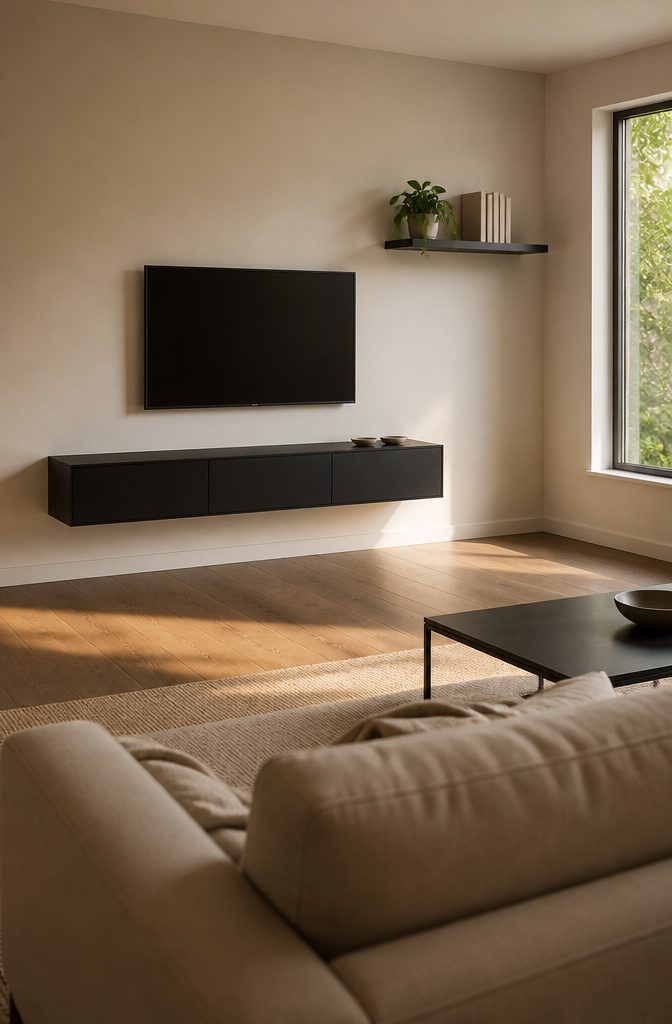
Wall-mounted shelves and floating media units free floor space while keeping storage where you need it.
The POVISON Merrin 63-inch Black Floating TV Stand mounts to the wall at 14.57 inches deep, creating three enclosed cabinets that hide remotes, games, and cables without claiming any floor footprint.
It arrives assembled, so the only work is mounting it securely to a solid wall—not an option for unsupported drywall or most rental agreements. The unit costs $699.
For open display, the EdnaFayeCreations Heavy-Duty Floating Shelf runs $28.50 and handles books, plants, or a record collection without adding bulk below.
Adults age 15 and older spent an average of 2.6 hours per day watching TV in 2025, which makes the media wall one of the hardest-working spots in a small living room.
A floating setup keeps that wall functional while leaving sightlines open across the room.
Recommended Products

Cloud-Like Comfort: Featuring 3D cutting technology, the memory foam sofa is filled with 30D elastic foam, providing excellent support and resilience for a more comfortable seating experience. Experience cloud-like comfort the moment you sit down

Adjustable Height for Versatility: Easily adjust between 8 height levels from 24.4" to 32.7" to better suit different sofas, desks, or storage scenarios—designed to adapt to your needs.

Adjustable Height for Versatility: Easily adjust between 8 height levels from 24.4" to 32.7" to better suit different sofas, desks, or storage scenarios—designed to adapt to your needs.
8. Tall Bookcases That Use Height, Not Width
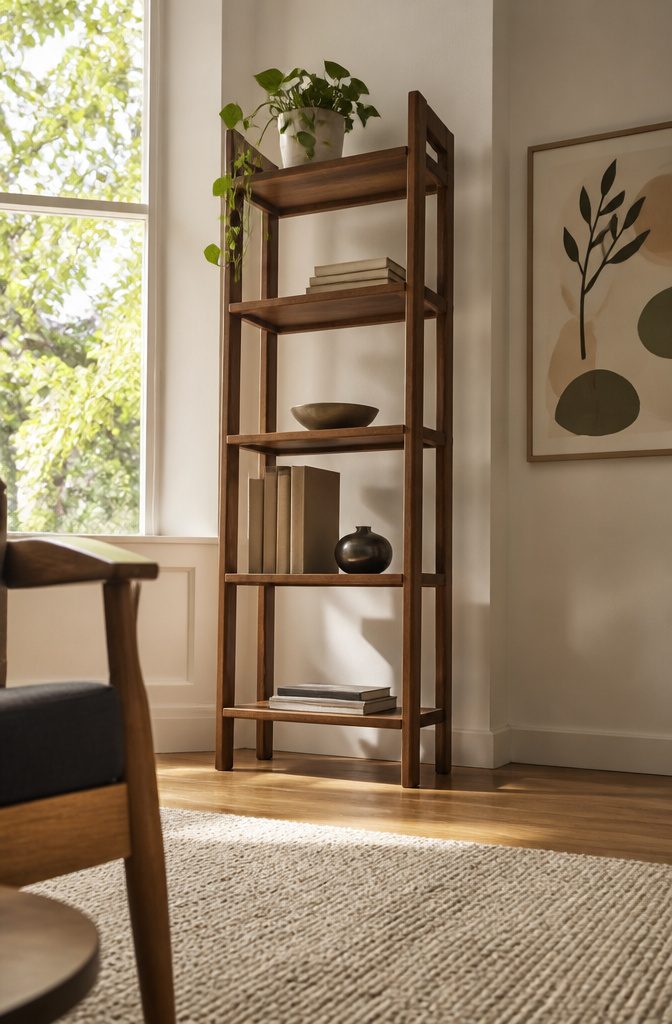
Vertical storage pulls books and decor up instead of out across the room, and that trade leaves you floor space where a wide shelf would have taken it.
The Simple Living Margo Mid-Century Modern 3-Tier Bookshelf sits 36 inches wide and $218.99, narrow enough to slide between a window and a corner without blocking light or claiming the whole wall.
The open back keeps it light — no solid panel stopping your sight line — so it works as a divider in a studio or just a bookshelf that doesn’t feel like furniture closing in.
I’d use the top shelf for a plant or a lamp rather than stacking it all with spines; the height gives you that third layer for free, and leaving some of it open keeps the vertical from feeling like a tower.
Recommended Products
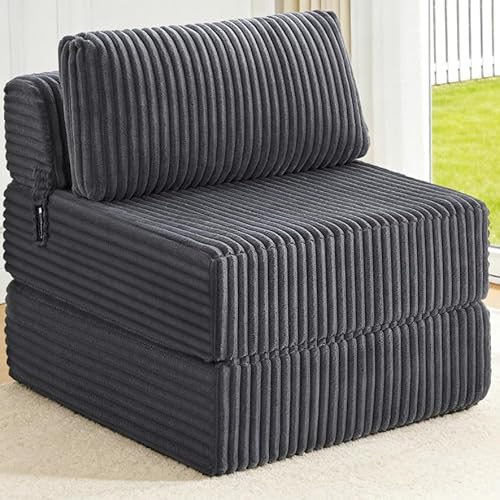
[More Size Options] Six sizes available, including standard S/T/F for users up to 5'9" and XL versions SXL/TXL/FXL with extended legroom for taller sleepers up to 6'4". Our size range caters to all height needs from kids through adults. The S-Series offers a perfect fit for smaller body frames, including slim adults, teens, and kids.

【Luxurious Velvet Comfort】 Sink into our premium sofa bed crafted with a solid wood frame, sinuous springs, and high-density foam. This elegant sofa bed couch features smooth black velvet fabric and two plush pillows, delivering unparalleled comfort for your daily lounging and relaxation.

【4-in-1 Space-Saving Sleeper Sofa】Reinvent your space with our compression futon sofa bed! This corduroy foldable sofa converts in seconds to a bed. Use it as a lounger, studio sleeper, or guest bed. The compact design folds flat and the adjustable backrest offers multiple positions. Ditch bulky furniture for smart versatility.
9. Furniture With Exposed Legs
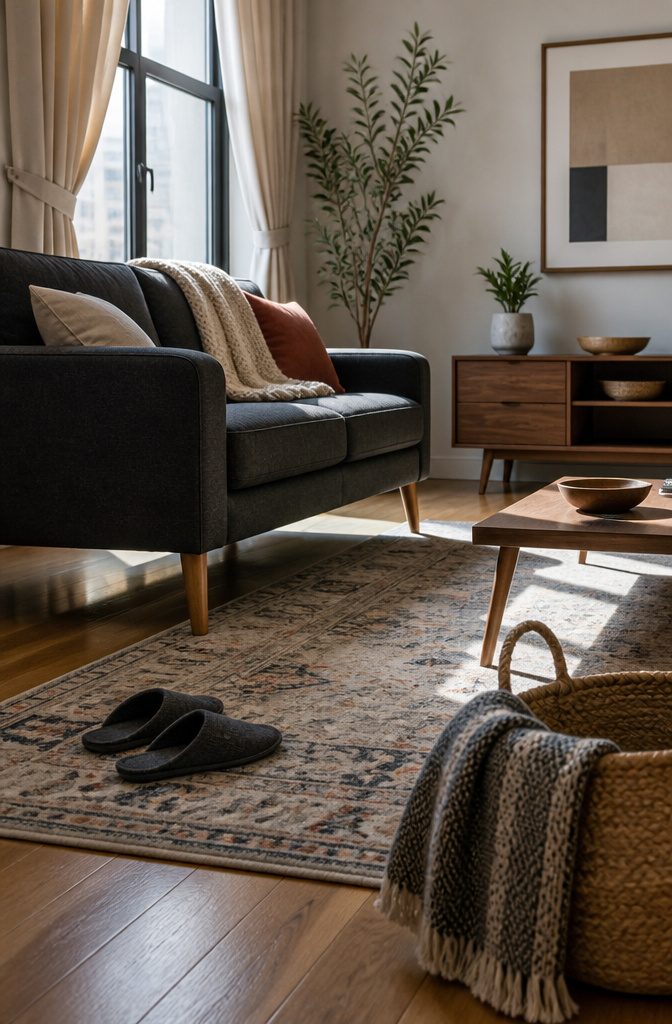
Visible floor beneath a sofa or chair makes the room feel less crowded, and legs that lift the frame three to five inches off the floor deliver that effect without forcing you into a particular style.
A dark sofa still reads as heavy when it sits flat against the floor, but add slim legs and the same piece feels lighter because your eye registers the open space underneath.
The trick works on coffee tables, media consoles, and storage units just as well. A bookcase on legs shows a strip of floor that a flush-to-ground bookcase hides, and that strip is what keeps the wall from feeling packed solid.
Recommended Products

✨3-in-1 Couch Table✨: Our sofa armrest tray combines three functions in one. The slim storage slot holds phones and remotes, while the two 4.3" cup holders fit most mugs, cans, and drinks. The tray is large enough for plates up to 7.8". Keep your drink, phone, and snacks all within easy reach.
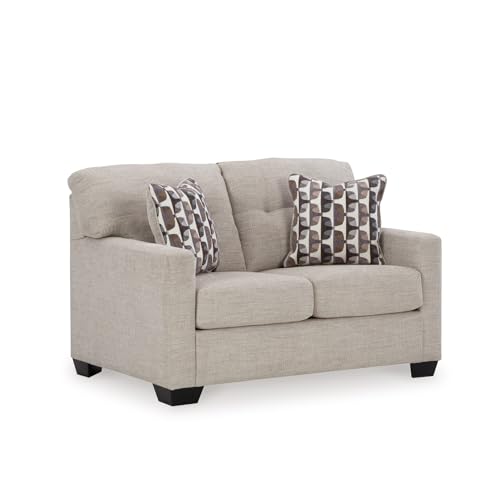
NO ASSEMBLY REQUIRED - Enjoy your furniture immediately because this space-saving Ashley furniture sofa arrives fully assembled and ready for everyday lounging

【Built for Lasting Comfort】This loveseat features a sturdy hardwood frame, durable spring wrap and high-density foam padding for superior support. Soft cushioned armrests on both sides let you lean comfortably while reading or lounging. Despite its compact size, it offers full-body comfort without taking up extra space.
10. Slim Side Tables and C-Shaped Tables
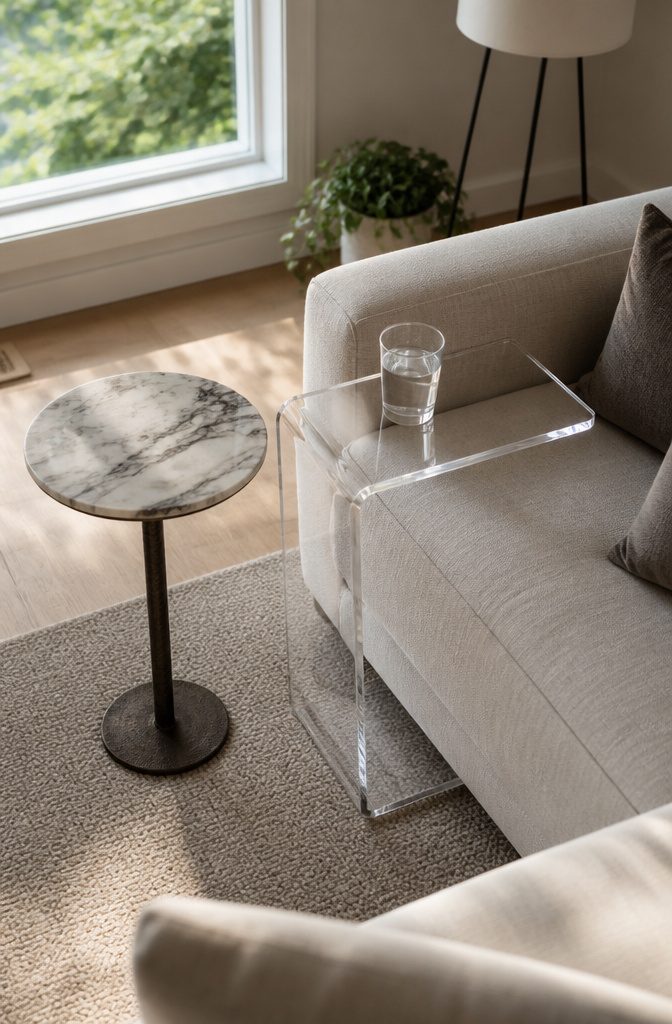
A slim side table holds a drink or a remote without blocking the path around the sofa.
Martini tables sit on a single narrow leg and occupy about as much floor space as a dinner plate—the Prost Medium Marble Round Drink Table costs $169 and pairs an antiqued iron base with grey and black marble.
C-shaped tables slide under the sofa cushion or over the arm so the tabletop floats where you need it and the base tucks out of the way entirely.
Clear acrylic keeps sightlines open: the CB2 Novo Acrylic Folding Table runs $159, folds flat for storage, and works as a laptop surface or serving table when you pull it out.
Acrylic shows fingerprints, so it suits renters who value the visual lightness over a polished look.
Recommended Products

【Sturdy and Stable】Our desk riser is made of thickened pp plastic with solid construction. The rubber non-slip design on the bottom can easily grip the floor not easy to slide. Compared to other bed lifts risers, our plastic risers are small and lightweight but definitely durable for heavy furniture ! Whether it's heavy furniture for home or office, it can be lifted easily and securely.

👍【Sturdy And Stable Bed Risers】 Our table risers are made of high quality thickened PP plastic, which is strong enough to support any heavy furniture for home or office. The internal mesh reinforcement design greatly increases its load-bearing capacity. Top bumps and rubber bottom of the desk risers can firmly grip the furniture legs, shock absorbing and anti-slip to avoid furniture sliding, protect the floor from friction and reduce noise. BEST FOR STATIONARY ITEMS AND SMOOTH FLOORS.

High Quality- The furniture risers are made of solid rubber wood, which make them sturdy and durable. Each furniture leg is finished with smooth edge and nice painting.
Measure the Room Before You Buy Anything
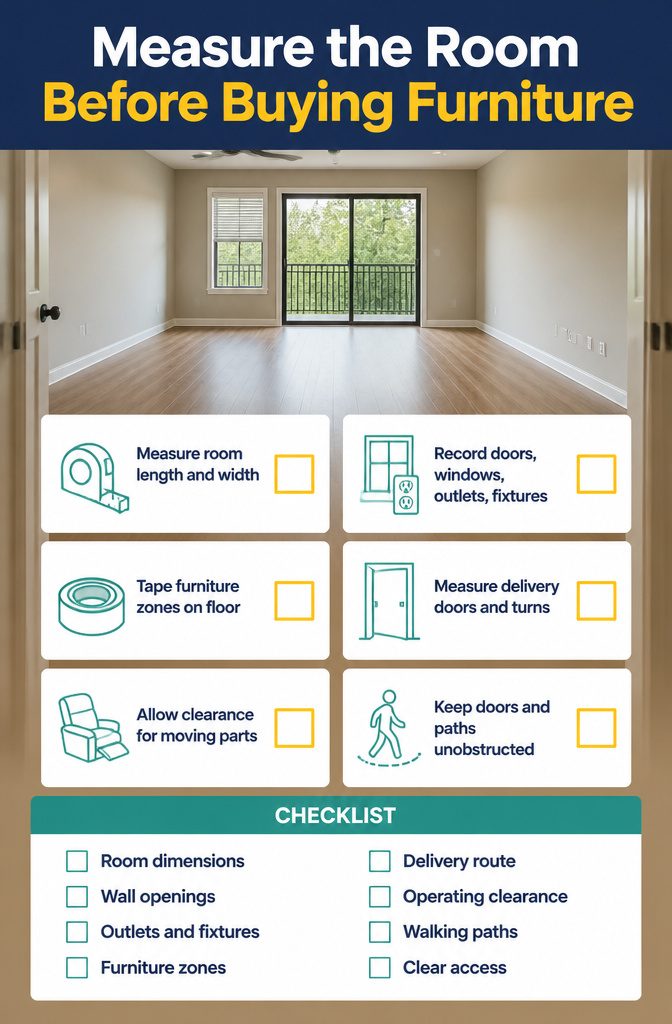
I measure the length and width of the room first, then add every door, window, outlet, and anything fixed to the wall.
The furniture zone gets marked with painter’s tape on the floor so I can walk the space for a day and see whether a piece will block the door or cut across the path to the patio.
Delivery clearance decides what actually makes it inside. Measure entry doors, hallway turns, stairwells, and elevator interiors before ordering — a sofa that fits the room but not the doorway sits in the hall until someone hauls it back out.
Recliners, pull-out beds, lift-top tables, and drawers all need clearance to open.
A recliner pushed against the wall stays upright forever, and a drawer that hits the coffee table stays shut. I account for the function, not just the footprint, or the piece does not work the way it was sold to.
Leave 30 Inches for the Main Walking Path
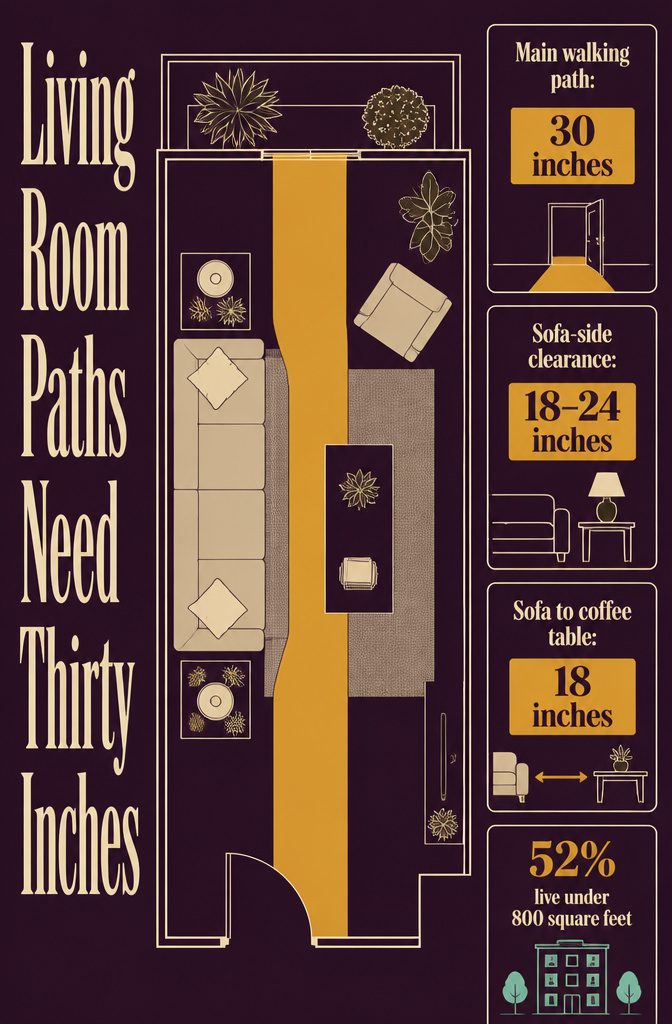
The 30-inch rule keeps paths open enough to move through without turning sideways. That’s the main corridor — the one from the doorway to the hallway, or across the room to the balcony door.
On either side of the sofa, 18–24 inches is enough for a side table or a lamp without blocking traffic. Between the sofa and the coffee table, 18 inches lets you reach forward without your knees hitting the edge.
52% of U.S. millennials in apartments live in under 800 square feet, so circulation isn’t a luxury.
A layout that looks fine on paper can fail when someone carrying laundry has to squeeze past the armchair every time. The sketch comes first: mark the paths people will actually walk, then arrange furniture around them, not through them.
Frequently Asked Questions
What is the best type of sofa for a very small living room?
An apartment-sized sofa or loveseat at 60 to 72 inches wide works best, with slim arms and raised legs that keep the piece from sitting heavy. A sleeper loveseat or modular sectional can also fit if scaled correctly.
Are sectional sofas a bad idea for small living rooms?
No, a modular sectional placed in a corner can seat more people than a sofa and chair without dominating the floor plan. Avoid oversized designs meant for larger rooms, and measure the corner before buying.
How can I make my living room look bigger without buying all new furniture?
Declutter first, then place a mirror opposite a window to reflect light. Swap heavy textiles for lighter colors and rearrange furniture to open walking paths.
What colors and fabrics make a small room look bigger?
Lighter colors like beige, light gray, or cream reflect more light and make the space feel open. For darker pieces, choose slim legs that lift the frame 3 to 5 inches off the floor so you see space underneath.
What should you measure before buying small living room furniture?
Measure the furniture zone and mark it with painter’s tape, then walk the space for a day. Also measure entry doors, hallway turns, stairwells, and clearance for recliners, pull-out beds, and drawers to open.
What is the 2/3 sofa rule?
A sofa should take up about two-thirds of the wall length to balance the room without crowding it.
For a 12-foot wall, that puts the sofa at 8 feet or 96 inches, though apartment-sized pieces at 60 to 72 inches work better in tighter layouts.