
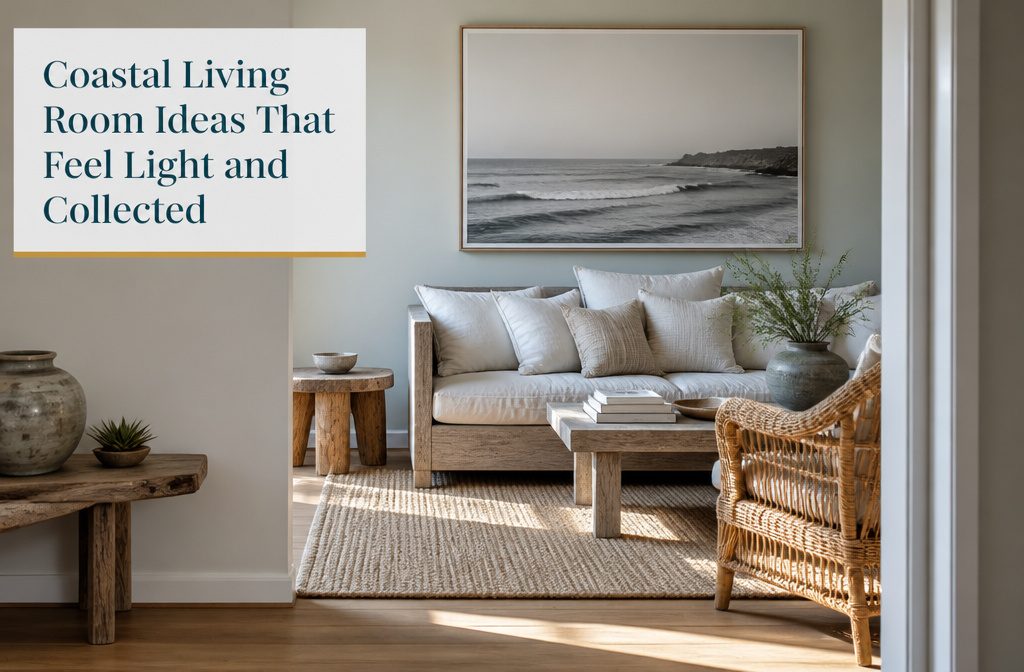
Coastal living rooms span from minimalist whites to layered textures heavy on jute and rattan, and what separates one from the other is how much visual weight you’re willing to let natural materials carry before the room reads cluttered instead of collected.
The restraint matters more than the palette: Benjamin Moore Beach Glass 1564 sets a hazy backdrop, but it’s the jute rug anchoring all front legs of the seating and the single large seascape photograph that keep the space from flattening into one beige plane.
1. Light Coastal Colors
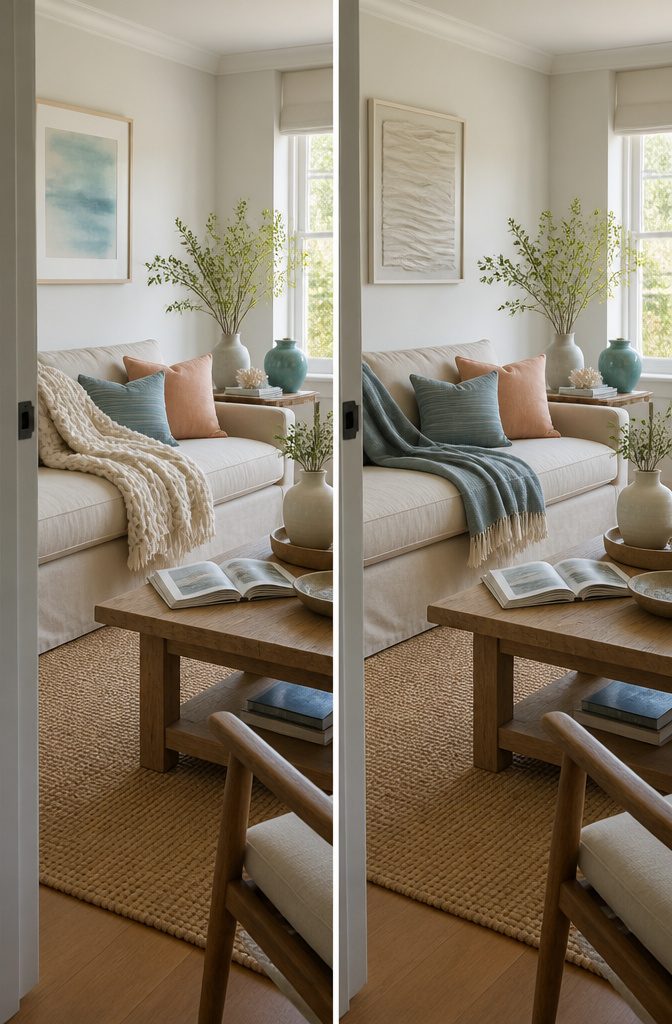
Whites and warm sand tones set the base, and they hold the room open without reading stark. I lean toward off-whites over pure white — something with a slight cream or gray undertone keeps the space soft rather than clinical.
Benjamin Moore Beach Glass 1564 brings in that hazy, sun-washed feel, while Sherwin-Williams Tidewater SW 6477 sits just barely blue enough to register as coastal without tipping into theme-park territory.
Farrow & Ball Borrowed Light No.235 works when you want a cooler, more reserved backdrop that still feels airy.
Blue stays the primary accent — denim, faded navy, or soft aqua depending on how literal you want the shore reference.
Greens work if they lean sage or sea glass rather than tropical. Brighter pops come in sparingly: coral, sun-bleached yellow, or weathered turquoise in a pillow or vase, not across a whole wall.
2. Natural Textures and Materials
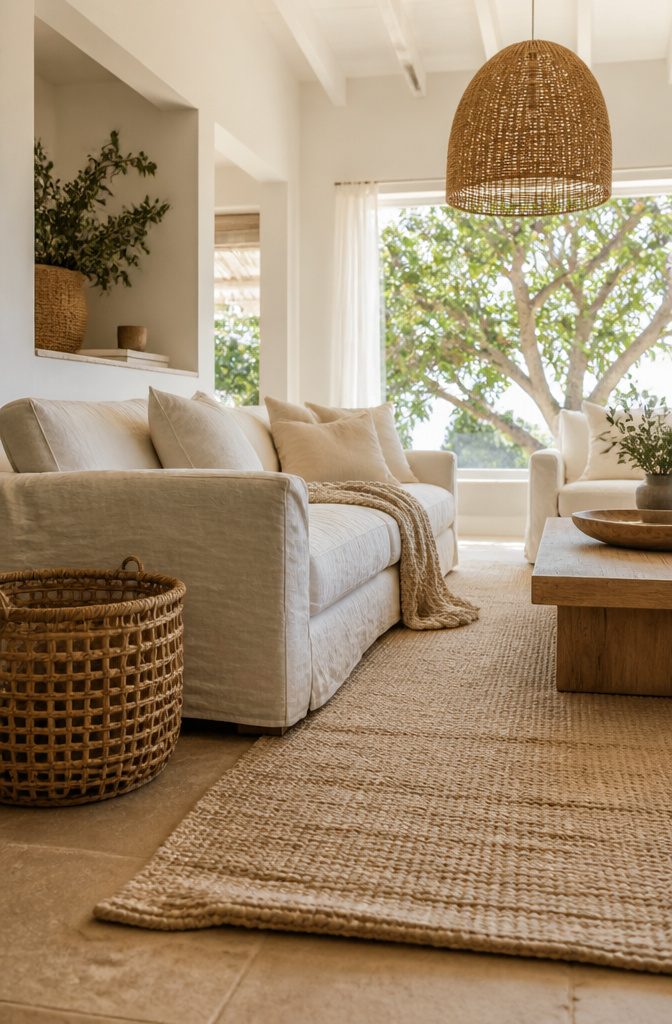
Coastal rooms stay visually interesting when you layer enough natural materials that the eye lands on something tactile wherever it moves.
Jute and seagrass rugs anchor the seating area with organic texture underfoot, and they breathe better in warm weather than synthetic pile. I pair those with linen or cotton upholstery — both drape softly and read as relaxed rather than stiff.
Rattan shows up in furniture now, not just accent pieces: full sectionals, pendant lights large enough to work as the room’s statement fixture, dining chairs pulled into the living room seating arrangement. Woven baskets add storage that doubles as texture.
A chunky knit throw over linen upholstery gives you smooth against rough in one move. You need enough contrast that a soft palette of whites and beiges doesn’t flatten into one visual plane.
3. Relaxed, Light-Feeling Furniture and Seating
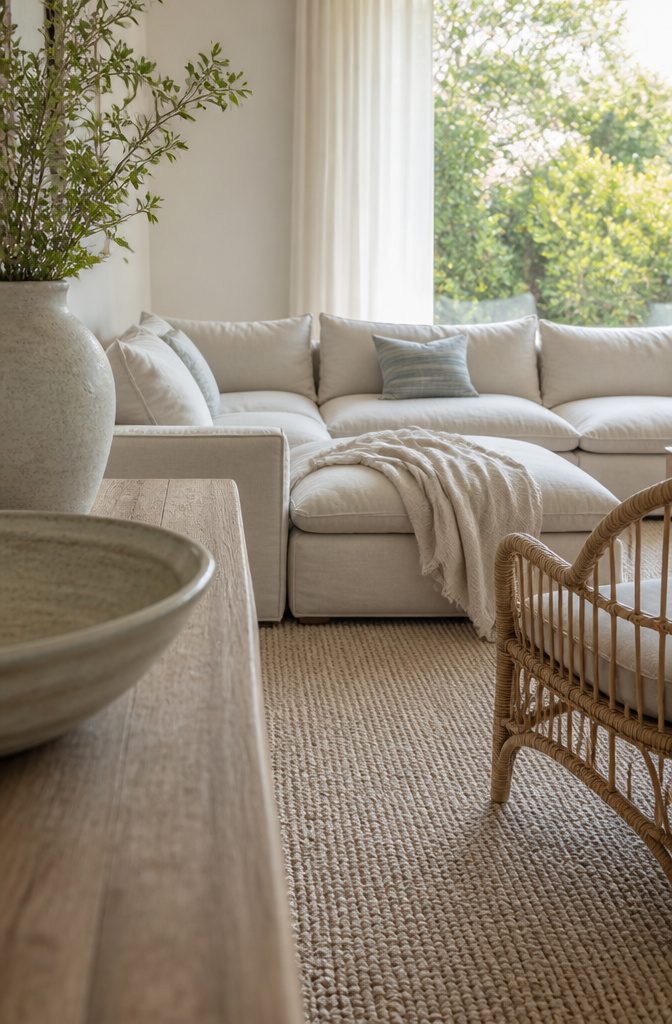
A slipcovers sectional gives you room for the whole group and resets to clean between beach weekends. White reads classic coastal; heathered beige adds texture without losing the light feel.
Look for washable slipcovers if you’re dealing with wet swimsuits, sandy feet, or dogs that claim the corner cushion. The piece stays practical without looking like you armored it.
Ducaroy’s Togo sofa works here if you reupholster it in something shore-leaning—blue and white Scalamandre fabric turns the low-slung silhouette into something that belongs near water.
For year-round shore houses, indoor-outdoor fabric on a clean-lined sofa like the Crofthouse handles the realities: kapok filling dries fast, and nobody worries about dripping swimsuits on a piece built for it.
Rattan lounge chairs keep the room from reading too soft, and their open weave feels light even when the profile isn’t minimal.
4. Coastal or Sea-Inspired Art and Decor
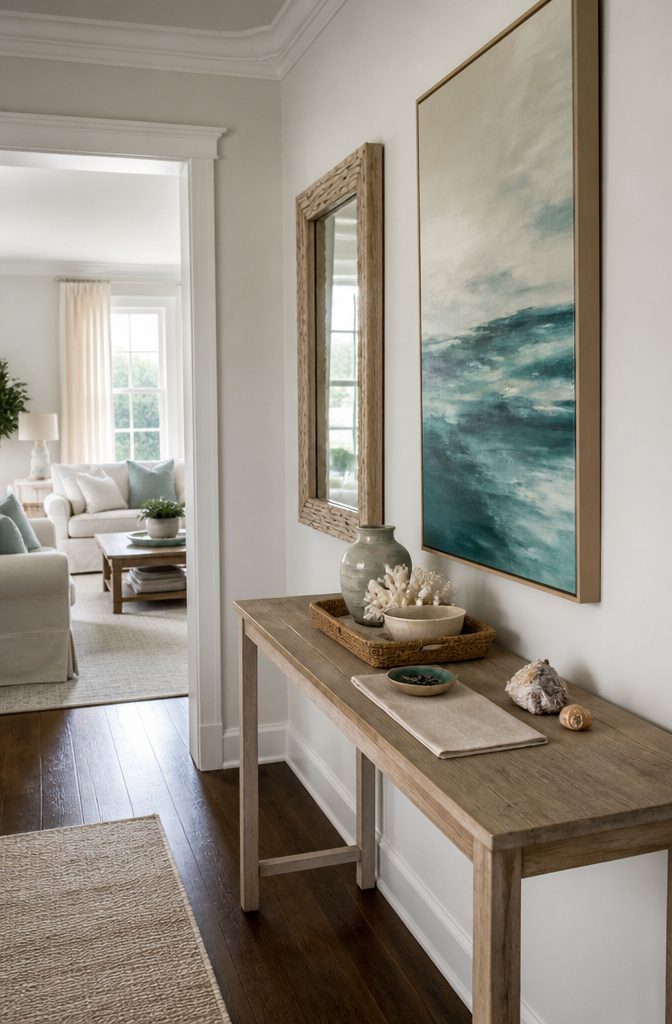
A single large seascape photograph works better than three framed shell prints.
The restraint matters—one abstract painting in ocean blues or greens sets the mood without announcing "beach house" to everyone who walks in. Black-and-white coastal photography adds sophistication a literal sailboat scene never will.
Coffee tables and consoles give you room for smaller pieces: a ceramic bowl, faux coral, a weathered vase.
Group them on a tray rather than scattering them across the surface, and rotate what sits there seasonally instead of committing to a permanent arrangement.
Driftwood and shells belong here only if they look collected rather than purchased as a set—the Rio Coastal Wood Wall Decor brings texture to a blank wall without reading as décor-aisle filler.
Mirrors reflect light and make small rooms feel larger, especially when the frame shows weathered wood or rope detail.
Pair one with a slim console for a drop zone near the door, or hang it alone and leave the wall space for hooks.
5. Woven or Natural Rugs
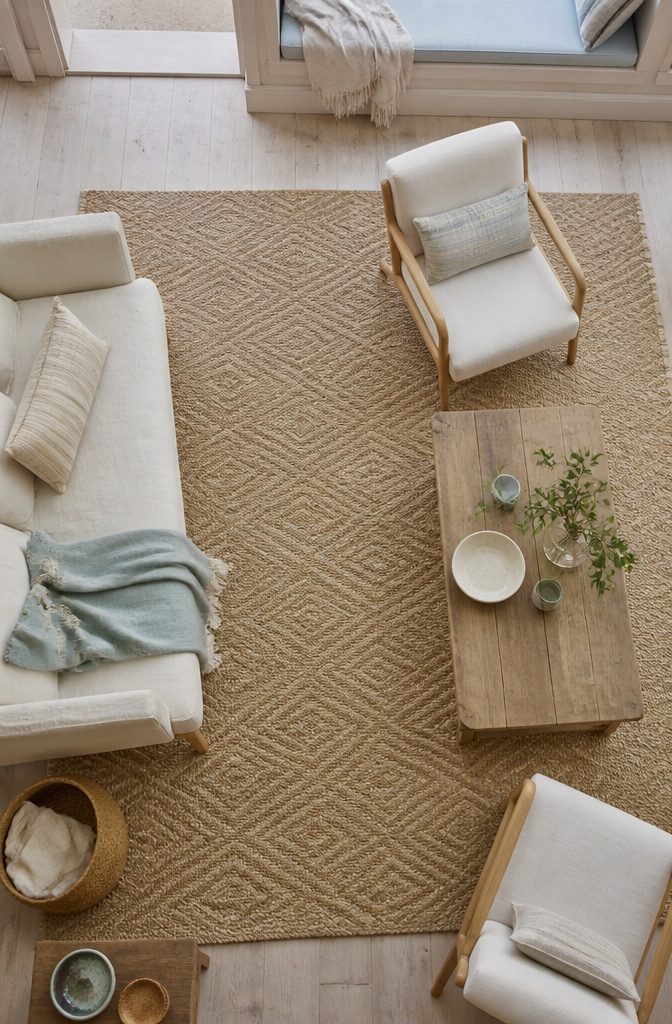
A jute or sisal rug under your seating area adds the organic texture that separates a genuinely coastal room from one that just looks beach-themed.
Jute brings warmth and a slightly rough, natural feel underfoot; sisal and seagrass are harder-wearing and better suited to high-traffic zones.
Flatweave cotton rugs work well in summer—they’re reversible, soft on bare feet, and hold up to sand tracked in from outside.
For families, polypropylene indoor-outdoor rugs in coastal stripes or solid blues are waterproof, stain-resistant, and UV-stable, so spills and wet towels do not ruin them.
Size the rug so all front legs of your seating furniture rest on it—that pulls the arrangement together and defines the seating zone as one piece rather than scattered chairs.
Look for natural undyed tones, subtle color-blocking, or woven geometric patterns that add visual interest without competing with the rest of the room.
6. Airy Window Treatments and Natural Light
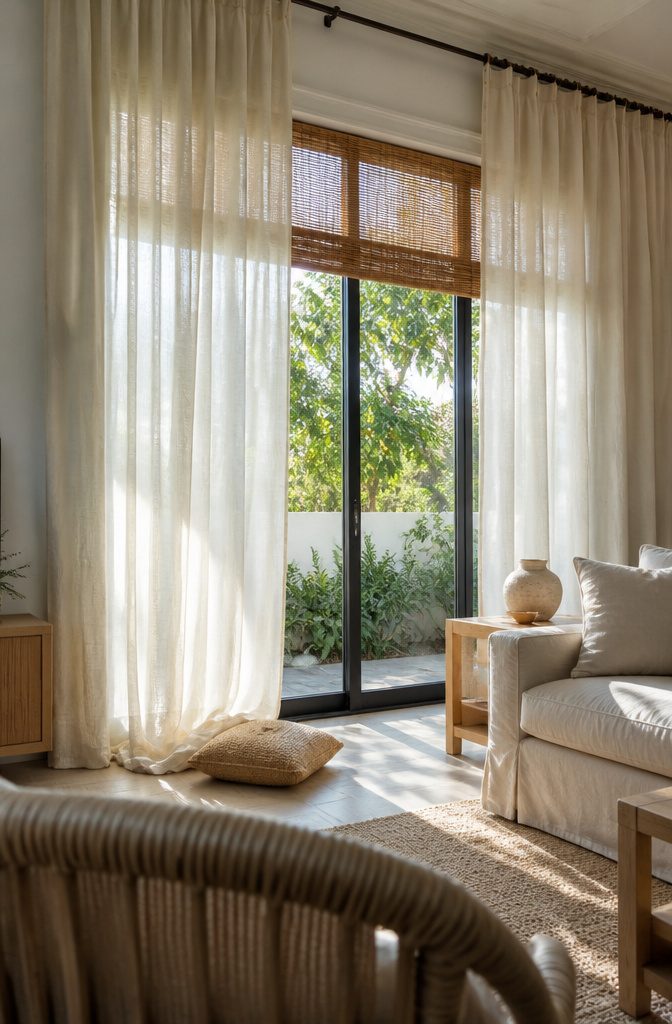
Sheer linen panels in white or off-white filter sunlight into the soft, diffused glow that makes a coastal living room feel open rather than stark.
I hang floor-to-ceiling panels that pool slightly on the floor — the extra length reads as generous and relaxed, not fussy, and the way they move in a breeze reinforces the airy feeling you are building everywhere else in the room.
Woven wood roman shades and bamboo roller blinds add texture at the window while still letting light through their weave.
The dappled, golden quality they create during the day is worth more than the privacy they provide at night, though both matter. Layering sheer panels with a woven shade gives you flexibility without weight.
Heavy lined curtains that block light work against the whole premise. Coastal living rooms depend on natural light as the primary atmospheric tool, so anything that cuts it off contradicts what the rest of the room is trying to do.
7. Pillows, Throws, and Layered Patterns
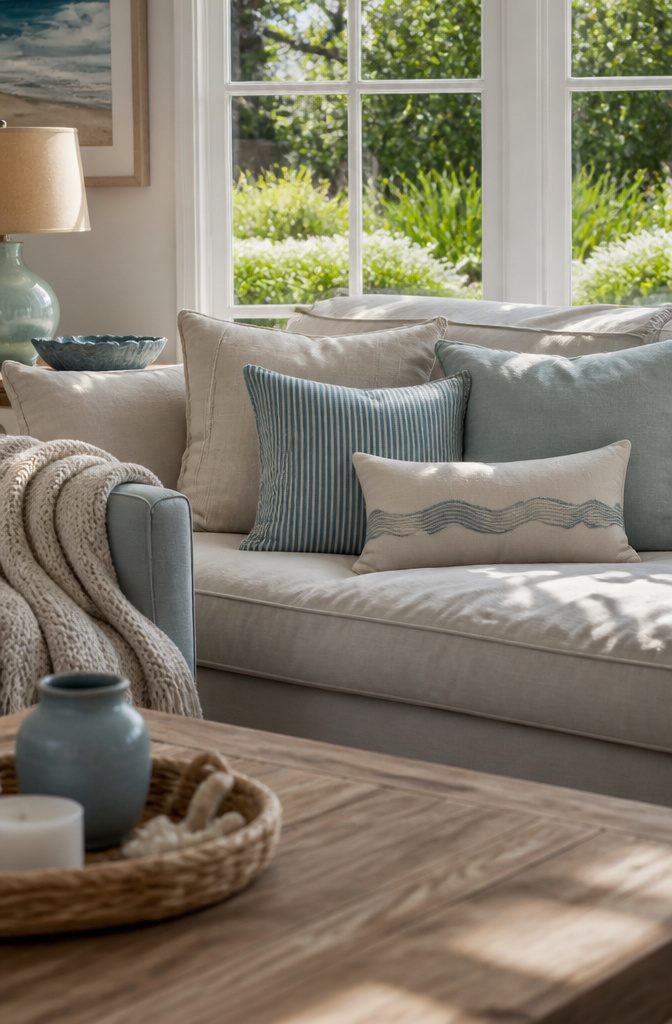
I stack pillows in three sizes to avoid the matched-set look that reads more hotel than home.
A 24-inch square in natural linen anchors each end of the sofa, a 20-inch pillow in soft aqua or navy stripe sits in front of it, and an 18-inch lumbar with an embroidered sea star or simple wave pattern finishes the arrangement.
The size variation creates depth without clutter, and the whole refresh costs $50 to $150.
Stripe patterns show up constantly in coastal rooms because they carry nautical energy without reading literal. I prefer them in navy and white or soft blue and cream rather than the high-contrast versions that feel too graphic.
Pairing a striped pillow with a solid linen one in seafoam or aqua keeps the palette coastal without tilting into theme-park territory.
Texture matters as much as color. A tufted pillow next to a smooth linen one, or a woven cotton throw like the Wren Throw layered over the arm of a chair, adds the organic richness that flat solids miss.
I layer patterns in similar shades rather than mixing wildly different ones—it holds the room together while still feeling collected rather than styled within an inch of its life.
8. Greenery and Flowers
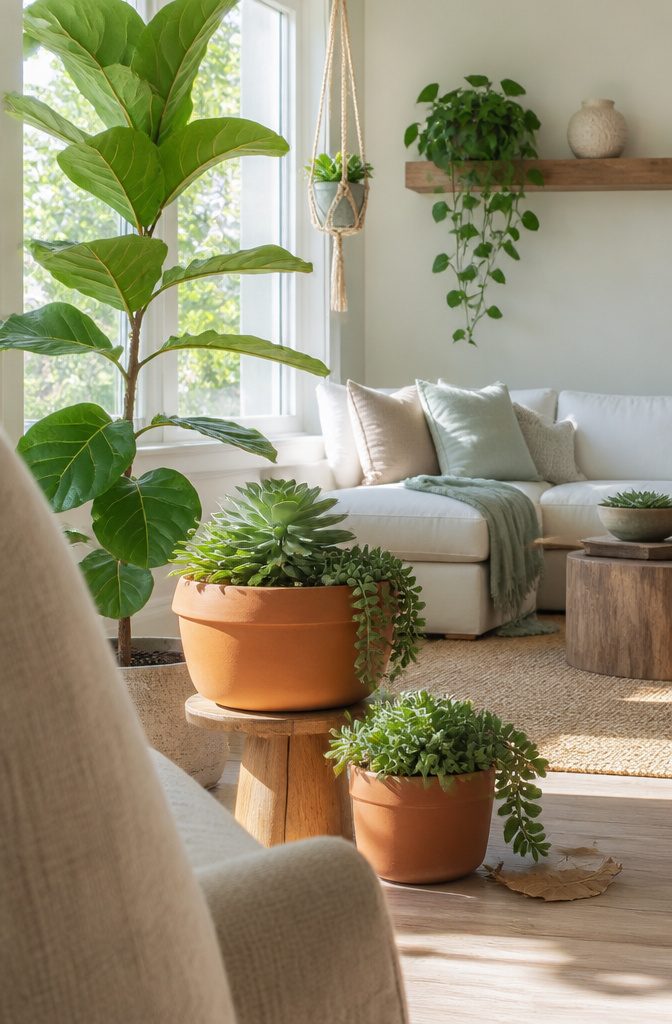
I keep a fiddle leaf fig in the corner by the window and a trailing pothos on the floating shelf above the sofa, and both pull the room toward coastal without reading as literal beach plants.
The fiddle leaf and bird of paradise work because their broad leaves reference tropical coastal zones; monstera deliciosa does the same. On the drought-tolerant end, succulent arrangements in terracotta pots mimic the plants that actually survive in sand.
String of pearls cascades from the shelf edge the way vegetation trails over coastal cliff faces, and tall ornamental grasses in floor pots look exactly like the beach grass that defines American shoreline landscapes.
I use whitewashed ceramic pots and terracotta rather than glazed finishes, and I added a hanging macramé planter in natural cotton cord near the window.
The combination of organic plant forms and woven natural fiber reads as both coastal and bohemian. For flowers, hydrangeas or geraniums arranged in a short vase keep it casual; heirloom roses in a tall vase shift it toward elegant.
I group terracotta pots at different heights instead of scattering small plants evenly across every surface — a single large specimen plant makes more coastal impact than six small ones.
9. Lighting
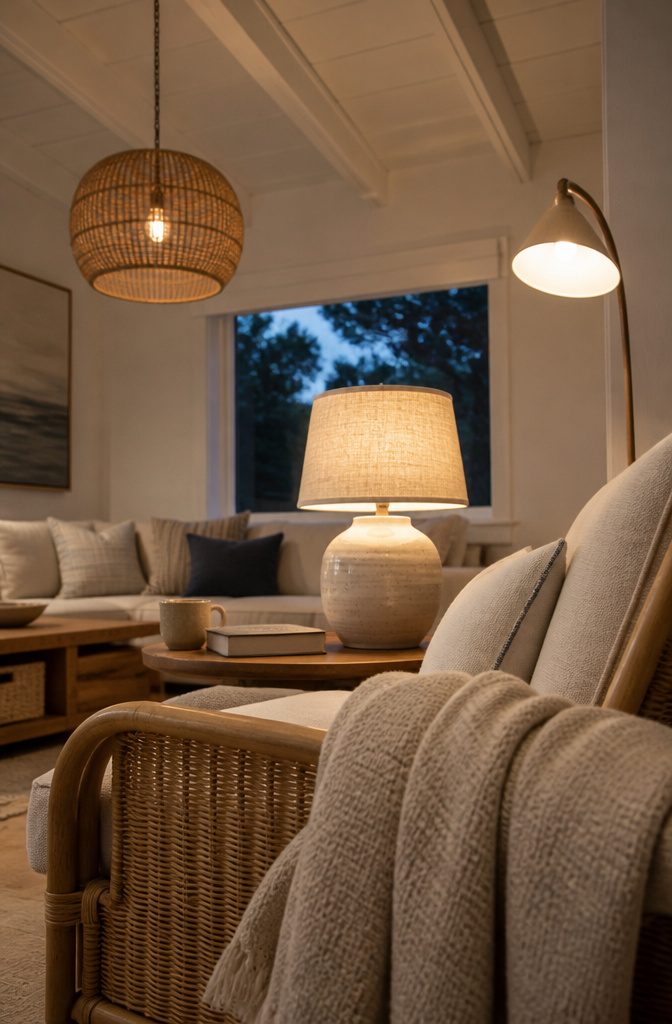
Woven pendants and natural-material fixtures add the texture a coastal room needs without weighing down the sightlines.
A rattan chandelier like the Theta brings warmth overhead while keeping the visual field open, and woven drum shades or seagrass pendants work the same way over a side table or reading nook.
Pair them with warm-white bulbs at 2700K so the light reads golden rather than sterile—cooler temperatures flatten the room and kill the relaxed feeling you built everywhere else.
Layer the light: overhead for general coverage, a table lamp on linen or ceramic for task work, and a floor lamp in the corner to fill shadows.
The variety keeps the space from relying on a single glaring source, and the materials themselves—wicker, rope-wrapped bases, bleached wood stems—carry the shore reference without needing explicit shells or anchors.
Using Coastal Style Away from the Shore
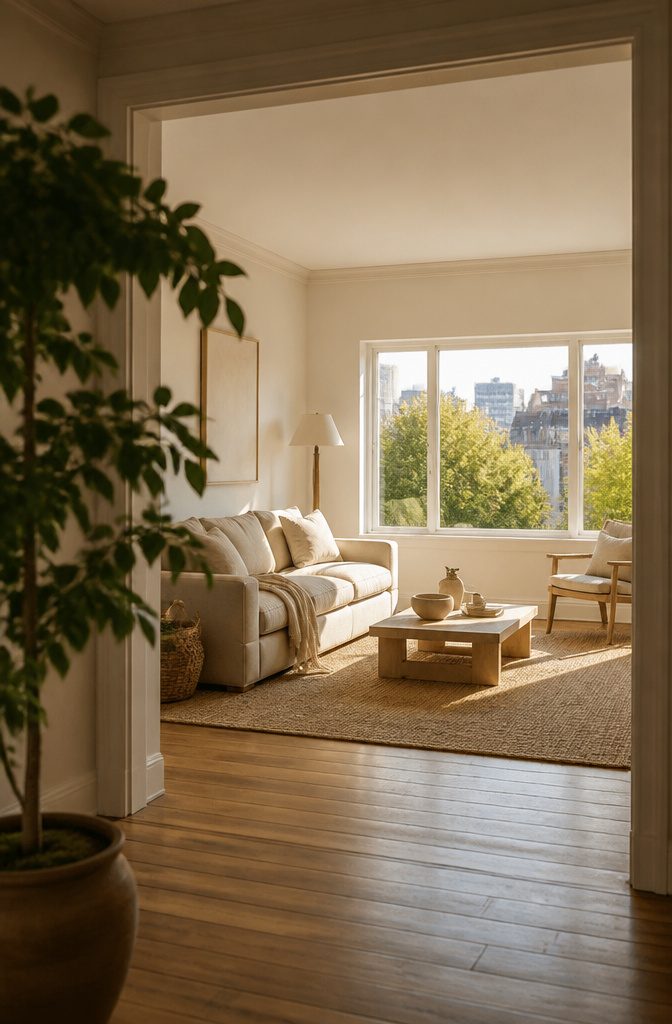
Coastal style doesn’t need an ocean nearby. The look is built on color, light, and material choices that work anywhere — a Denver condo benefits from airy whites and natural textures just as much as a Rhode Island beach house does.
The aesthetic evokes the emotional state of vacation rather than a specific geography, which is why a colonial in Connecticut and a ranch in Arizona both respond well to the same principles.
Light palettes reflect heat instead of absorbing it, making coastal-styled rooms feel measurably cooler in summer. Natural fiber rugs and linen upholstery breathe better than synthetic alternatives, reducing the sticky discomfort that dense carpets and polyester create in warm weather.
The coastal approach is less about decorative objects and more about openness, breathability, and the quality of light — three things any home gains from regardless of how far inland you live.
Open Shelving and Coffee-Table Styling
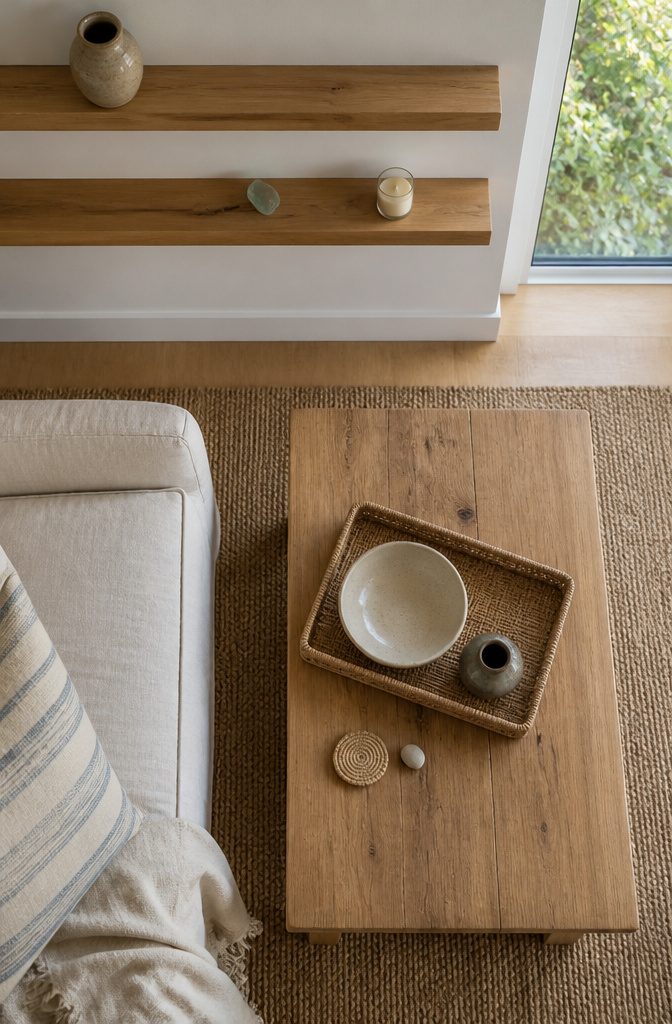
Open shelving drops the visual weight closed cabinets carry. Floating wood or modern shelves work equally well; spacing what you display so the wall shows through is how either one looks right.
I use them for a mix: a few pieces of sea glass, a neutral ceramic vase, a candle, maybe one practical item. Crowding defeats the point; three grouped objects read lighter than seven.
Coffee tables want the same restraint. A tray corrals small pieces into a single footprint — a candle in a salt-air scent, a shallow ceramic bowl, a jar of white pebbles or sand.
Faux coral or a slim sculpture if you lean sculptural, a stack of vintage books if you don’t. One handmade pottery piece finishes it without tipping into curation theater.
Console tables follow the same principle with more vertical room.
I start with weathered ceramic vases or decorative books at different heights, add one sea-inspired sculpture, then either hang matching prints above or lean a tall piece of art against the wall.
A striped ottoman slides underneath for seating, or wicker baskets if you need the storage instead.
Frequently Asked Questions
What is coastal living room style?
Coastal living room style balances airy space, casual comfort, and subtle shore references using soft hues, natural light, and organic materials like jute, linen, and rattan.
The palette centers on whites, sand tones, and blues that reference water without reading literal. It’s built around creating a room that feels like vacation every day, prioritizing relaxed furniture arrangements and breathable textures over formal design.
What paint colors look good in a coastal living room?
Benjamin Moore Beach Glass 1564 brings a hazy, sun-washed aqua-gray, Sherwin-Williams Tidewater SW 6477 offers a sophisticated muted teal, and Farrow & Ball Borrowed Light No.235 delivers a cooler, airy backdrop.
Lean toward off-whites with cream or gray undertones over pure white to keep the space soft. Blue accents work in denim, faded navy, or soft aqua, with greens that lean sage or sea glass rather than tropical.
Is coastal decor still in style?
Coastal style remains current because it’s built on color, light, and material choices that work anywhere, not decorative objects tied to a specific trend.
The aesthetic evokes the emotional state of vacation rather than a specific geography, which is why it adapts well to homes from Connecticut colonials to Arizona ranches.
Light palettes and natural textures offer practical benefits like reflecting heat and improving breathability in warm weather.