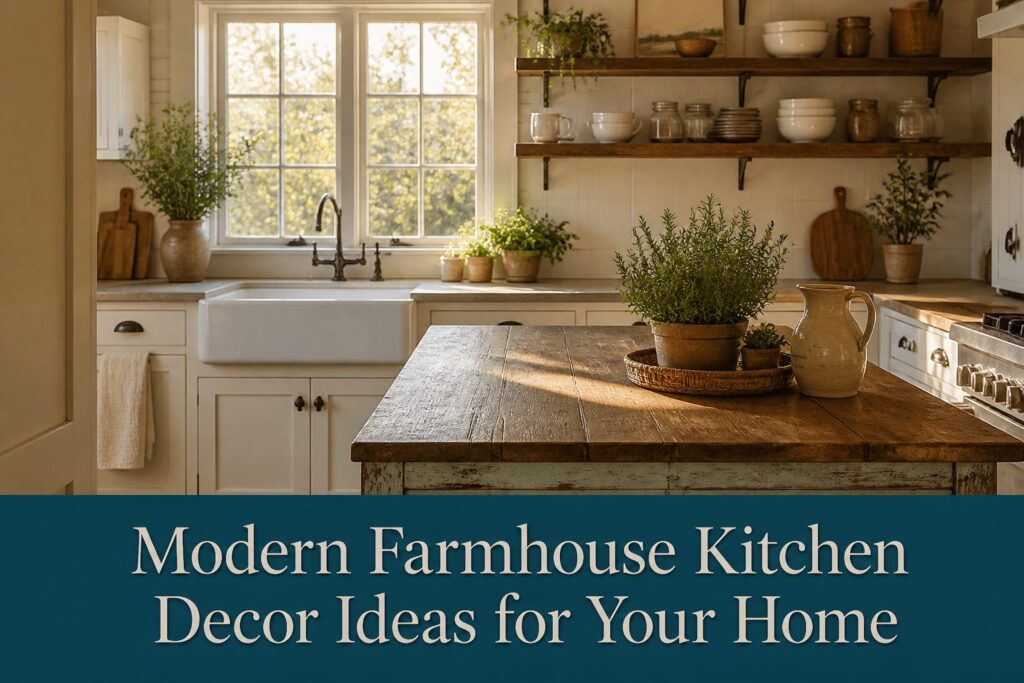
Modern farmhouse kitchen decor runs from a $2-per-square-foot vinyl checkered floor to a custom reclaimed wood table, and the deciding factor is permanence: what you can undo when the lease ends or the trend shifts.
That distinction matters because the style’s best details, shiplap to barn doors, sit on a sliding scale of commitment most guides gloss over.
The one entry that earns its place is the element you will actually live with, not the one that photographs best.
1. Shiplap Walls
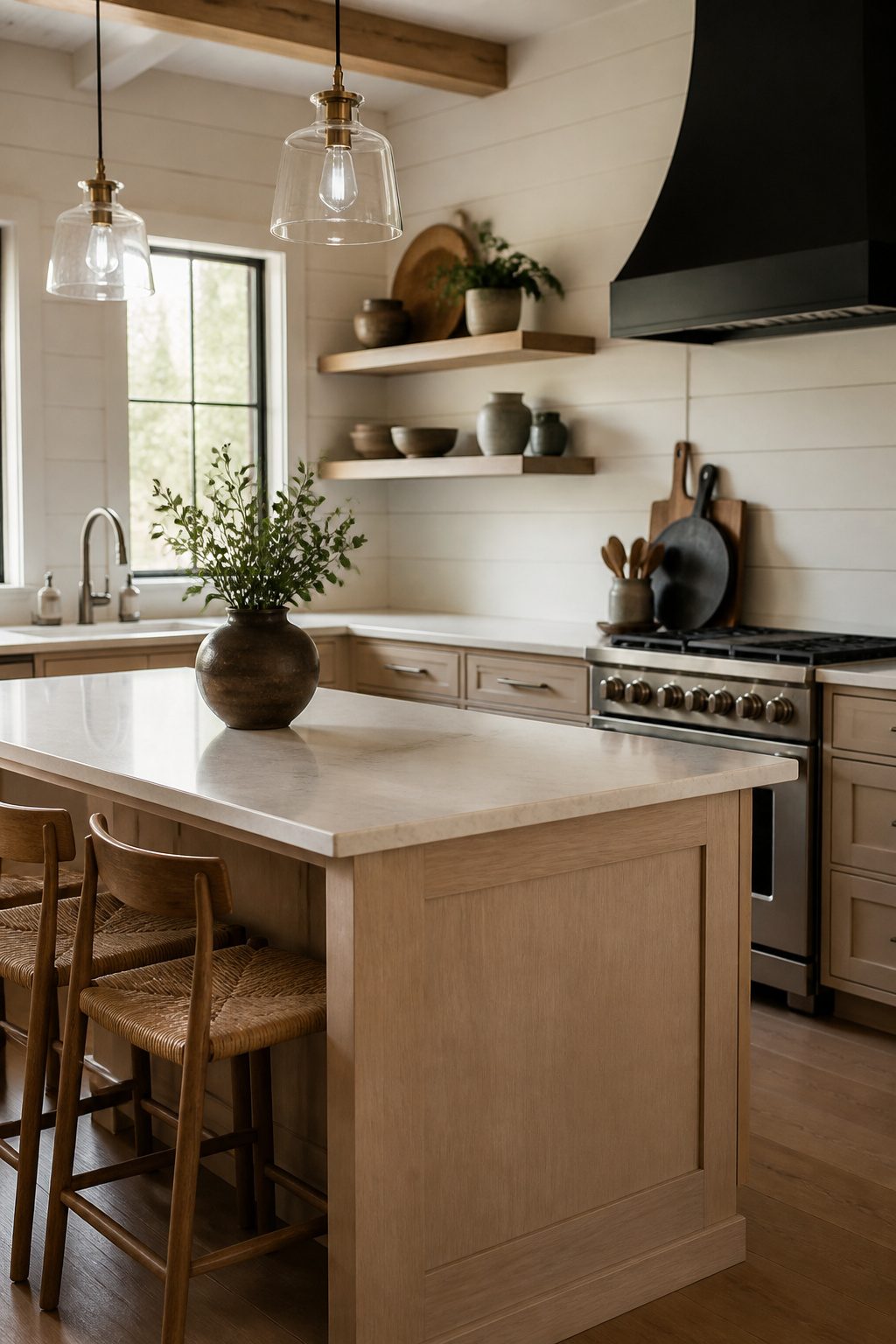
Shiplap walls set the tone for a modern farmhouse kitchen, but the direction you run the boards changes the whole feel. Horizontal planks read rustic and traditional, the look Joanna Gaines made familiar.
Turn those same boards vertical and the lines draw the eye upward, giving the wall a cleaner, more contemporary silhouette that keeps the farmhouse element from overwhelming the room.
If you are adding shiplap, spacing the boards with a deliberate gap casts a thin shadow between each plank and adds visual interest without extra ornament.
A one-inch gap hits the balance: enough to create depth, not so wide that the wall looks unfinished.
Paint matters as much as the wood. Sherwin Williams Aesthetic White SW7035, a soft greige with enough warmth to avoid sterility, works across the full wall and lets cabinetry or a black range hood stand out as the statement.
The color also reads slightly different as light shifts through the day, which keeps a neutral kitchen from feeling flat.
I would skip the urge to distress or weather the boards; raw shiplap already carries enough texture, and adding artificial aging pushes the look toward theme-park rustic rather than modern farmhouse restraint.
Recommended Products
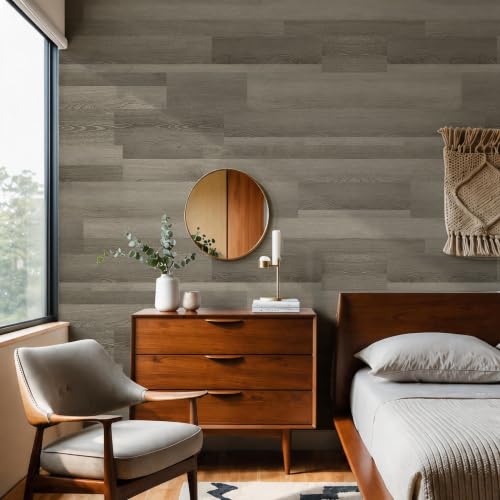
MATERIALS AND FEATURES: Vinyl wall panels with realistic wooden textures bring natural beauty, especially suitable for bedrooms, living rooms, etc. Due to its use of PU material, it also has advantages such as waterproofing.

PVC WALL PANELS, 6-PIECE KIT: Elevate your walls with Plastpro’s 3-ft wainscoting panel kit. The complete solution for bathrooms, kitchens, bedrooms & living rooms. Includes 6 reversible PVC panels (3 ft high × 7¼ in wide), each pre-finished, pre-grooved, and ready to interlock. No nails or adhesive required.

🌴WOOD WALLPAPER FEATURES: Wood contact paper is easy to stick and remove. Realistic vintage wood texture wallpaper. Decorating your rooms or cafes without spending too much time and money.
2. Brick Accent Walls
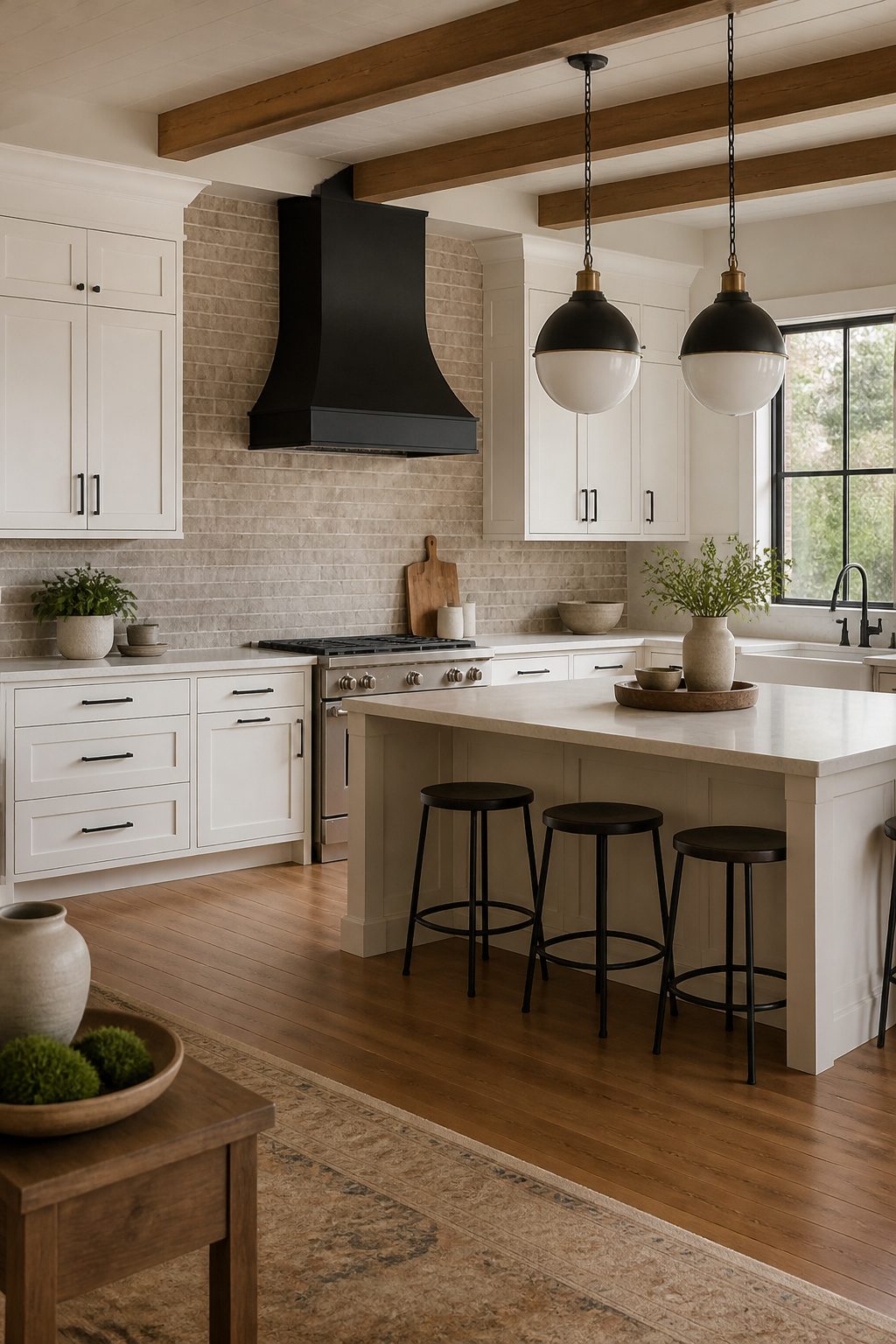
Shiplap owns the modern farmhouse look, but brick gives the same visual weight with more warmth and less predictability.
A single brick wall behind the range hood or at the far end of a galley kitchen does the bridging work: the texture reads rustic, the geometry reads clean.
Painted brick in a soft white or warm greige keeps the palette modern and brightens a space that might otherwise feel dim.
Exposed red or salmon brick, especially if it carries some age variation, leans harder into the farmhouse side and pairs well with black hardware and matte fixtures.
Either way, limit it to one wall or the effect shifts from intentional to themed.
Behind the hood is the safest placement. The brick catches grease and splatter like any backsplash, so a matte sealant helps, but the texture hides the wear that would show on painted drywall.
On an end wall, brick works best if the kitchen opens to another room and the wall reads as architectural rather than added.
You pay more and you commit to the look.
Brick veneer runs more than shiplap, and removing it later is a project. For renters, a peel-and-stick brick panel on one small section is the compromise I would make, though it will not fool anyone up close.
Recommended Products

3D faux brick wall panels are made of high quality PE foam.Tasteless, non-toxic, formaldehyde free, no release of harmful substances.The surface is waterproof and dustproof, easy to clean.
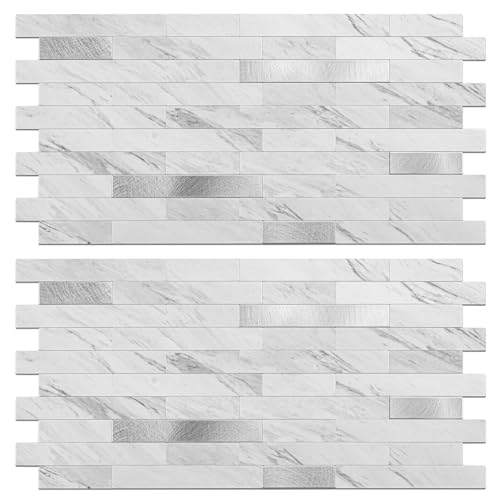
【𝗠𝗮𝗱𝗲 𝗼𝗳 𝘁𝗵𝗶𝗰𝗸 & 𝗿𝗶𝗴𝗶𝗱 𝗣𝗩𝗖 𝗺𝗮𝘁𝗲𝗿𝗶𝗮𝗹 𝘄𝗶𝘁𝗵 𝗵𝗶𝗴𝗵 𝗱𝗲𝗻𝘀𝗶𝘁𝘆】 eco-friendly and superior to thin plastic traditional wallpaper. It features great stiffness, is not easy to warp or deform, and delivers long-lasting use with premium texture.

【𝗠𝗮𝗱𝗲 𝗼𝗳 𝘁𝗵𝗶𝗰𝗸 & 𝗿𝗶𝗴𝗶𝗱 𝗣𝗩𝗖 𝗺𝗮𝘁𝗲𝗿𝗶𝗮𝗹 𝘄𝗶𝘁𝗵 𝗵𝗶𝗴𝗵 𝗱𝗲𝗻𝘀𝗶𝘁𝘆】 eco-friendly and superior to thin plastic traditional wallpaper. It features great stiffness, is not easy to warp or deform, and delivers long-lasting use with premium texture.
3. Enamelware Accessories
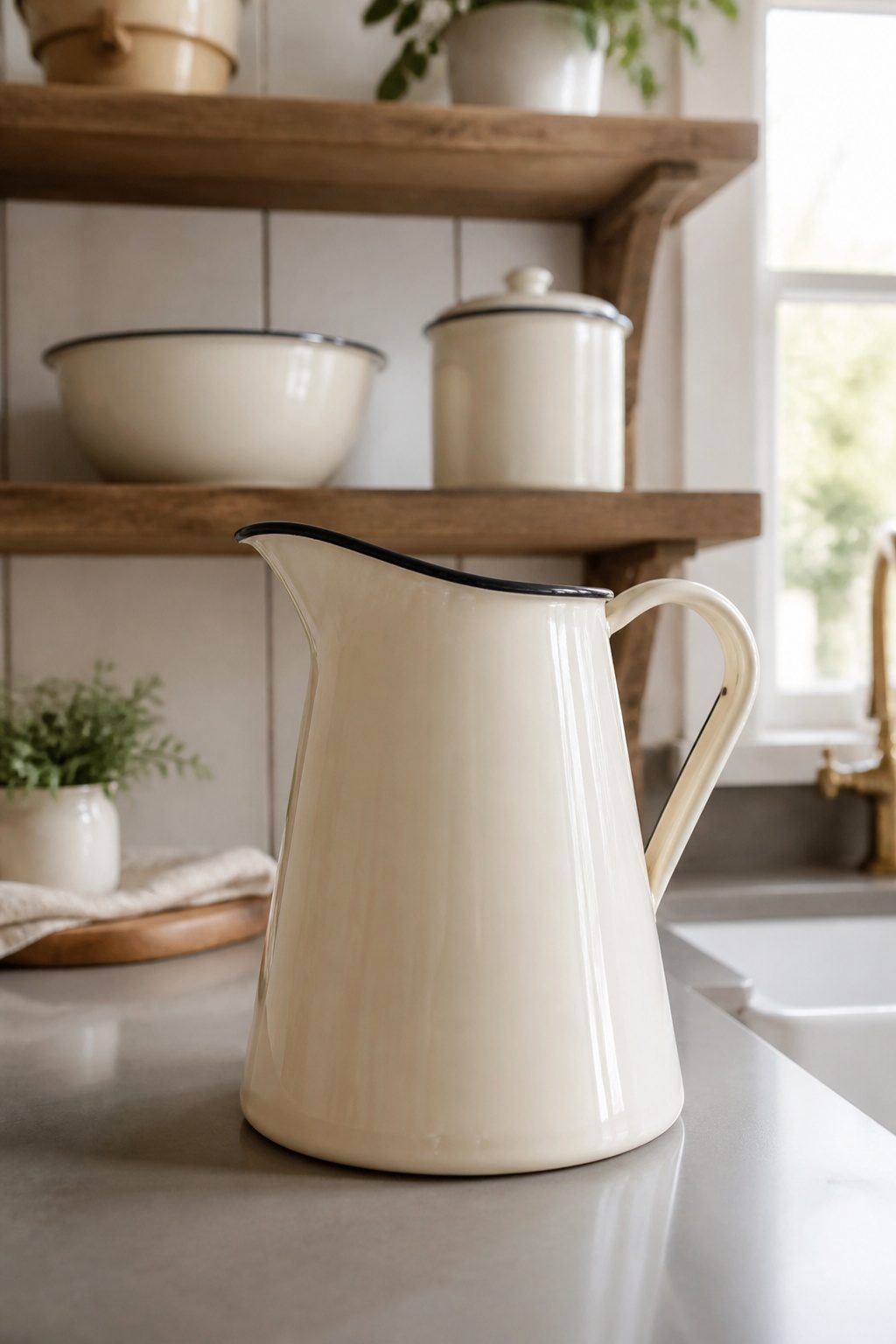
Enamelware accessories carry the vintage farmhouse feel without asking you to commit to a permanent change.
A pitcher, a mixing bowl, or a mug in white or soft cream sits on open shelving where you can see it and reach for it daily.
The finish is glass fused to steel, so it handles hot liquids and rough handling better than ceramic that chips on the first drop.
I like the pieces best when they are not all the same age. One bowl with a worn rim next to a cleaner canister gives the shelf the collected-over-time look that reads as real rather than staged.
The color matters more than the pattern: stick to white or cream and let the shape do the work.
A countertop vignette of three pieces, maybe a pitcher with wooden spoons and a lidded canister, fills the space without cluttering it.
The limit is weight.
Enamelware is lighter than cast iron but heavier than it looks when stacked three deep. Two shelves’ worth is plenty for display; anything more and you are running a storage problem, not a decor choice.
Recommended Products

Rustic Farmhouse Style: This kitchen table combines natural with delicacy, It's crafted from reclaimed solid wood in a natural finish. Featured a rectangular shaped design, which has a simple yet stylish design, can fit well in kitchen area

Handcrafted Cedar Root Construction: Each table is handcrafted from carefully selected reclaimed cedar roots by skilled artisans. Rich wood grain, organic textures, and natural variations create a distinctive piece that showcases the beauty of authentic cedar wood.

Spacious Dining Table for 4–6: This 70" x 31" kitchen table provides plenty of room for everyday meals and family gatherings. The modern farmhouse design makes it a beautiful centerpiece that easily elevates your dining room or kitchen space.
4. Wicker or Rattan Chairs
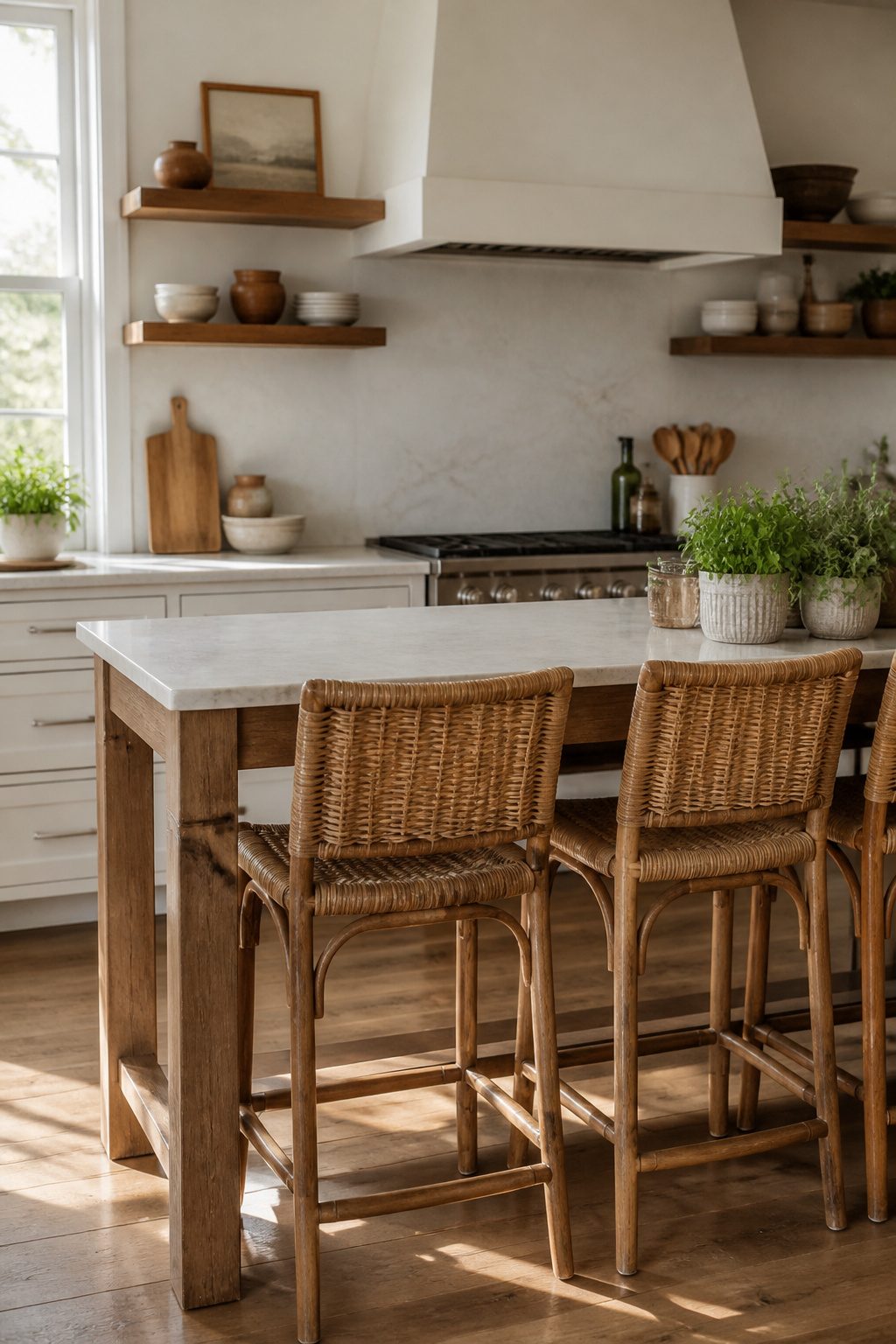
Woven seating at a kitchen island or breakfast nook softens the hard edges that dominate most modern farmhouse kitchens.
Stone countertops, metal hardware, and painted cabinets all read as flat surfaces; a rattan or wicker chair introduces the irregular texture that keeps the room from feeling like a showroom display.
I look for natural, undyed tones rather than painted weaves. Honey or driftwood finishes ground the space and pair cleanly with white oak or black metal table bases.
The risk is piling on too much cottage detail. I avoid matching woven chairs with turned legs, floral cushions, or a pedestal table; that combination tips quickly into the grandmotherly look the modern side of farmhouse is trying to escape.
A cleaner-lined table, something with straight legs and minimal apron, balances the ornament of the weave. One or two woven seats are usually enough; mix them with simple wood or upholstered chairs so the texture reads as intentional, not thematic.
For renters, lightweight wicker stools tuck under an overhang without anchoring a permanent layout, and they move to a patio when the season changes.
5. Herb Garden Window
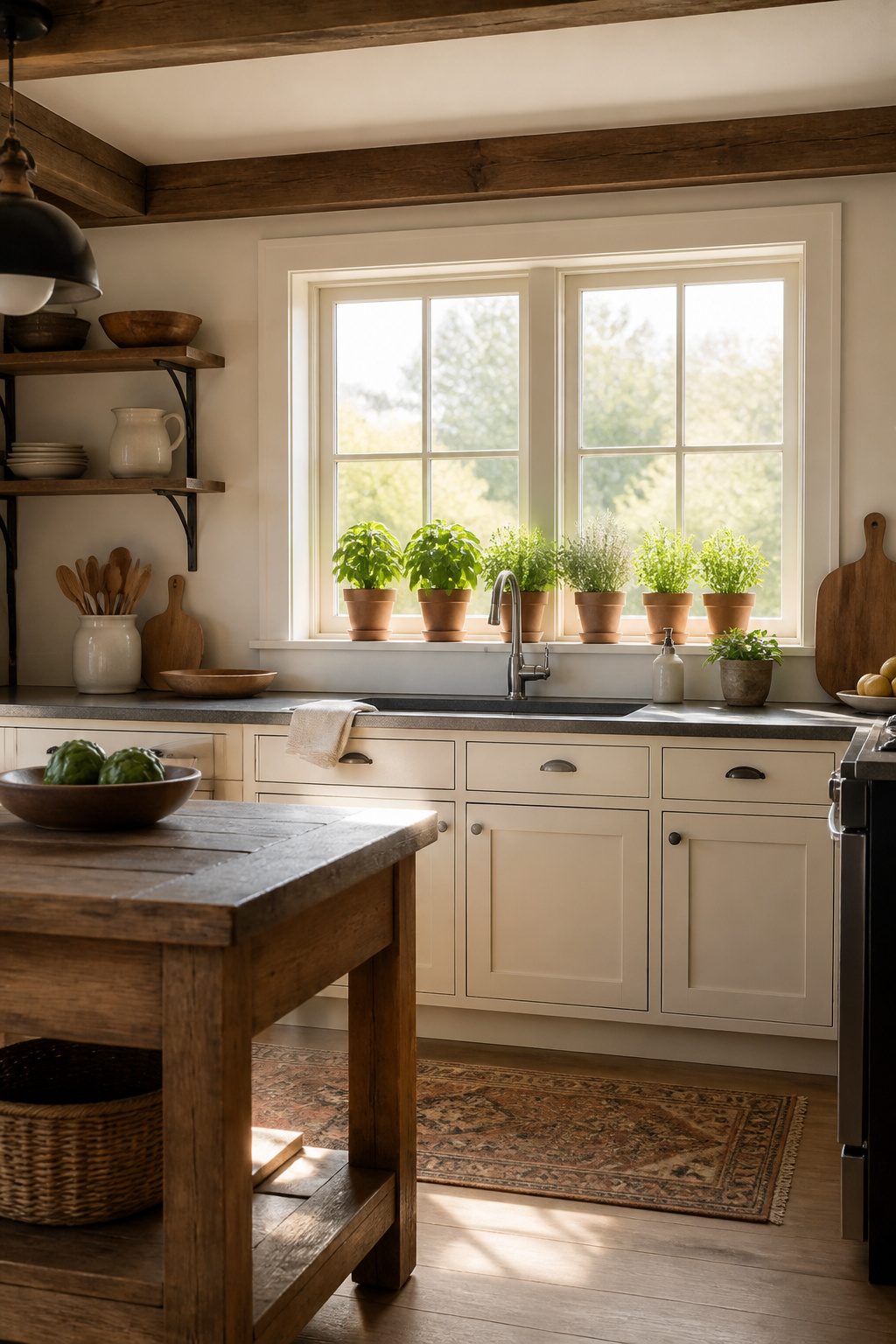
A windowsill herb garden reads as decor first and only later as a kitchen tool, which is exactly why it works in a modern farmhouse space that prizes function disguised as form.
Basil, rosemary, and thyme tolerate the bright but indirect light most kitchen windows receive, while parsley and chives manage with less. Mint will overrun the others, so it belongs in its own pot, not the shared box.
Terracotta keeps the look honest and unfussy. The clay weeps moisture, which prevents the root rot that kills most indoor herbs, and its warm color ties to the wood tones already in the room.
Simple galvanized metal works too, but only if the finish is dull, not shiny; a bright zinc pot looks like it wandered in from a hardware catalog.
I skip ceramic with saucers because the stack of dish and pot reads as clutter on a narrow sill, and I avoid mixed heights in a single window.
Three pots of the same size, lined up, look intentional. Three different sizes look like you collected them by accident.
Water when the soil is dry a finger’s depth down, not on a schedule. Overwatering kills more windowsill herbs than underwatering ever has, and a drooping plant in the foreground ruins the whole arrangement.
6. Checkered Floors
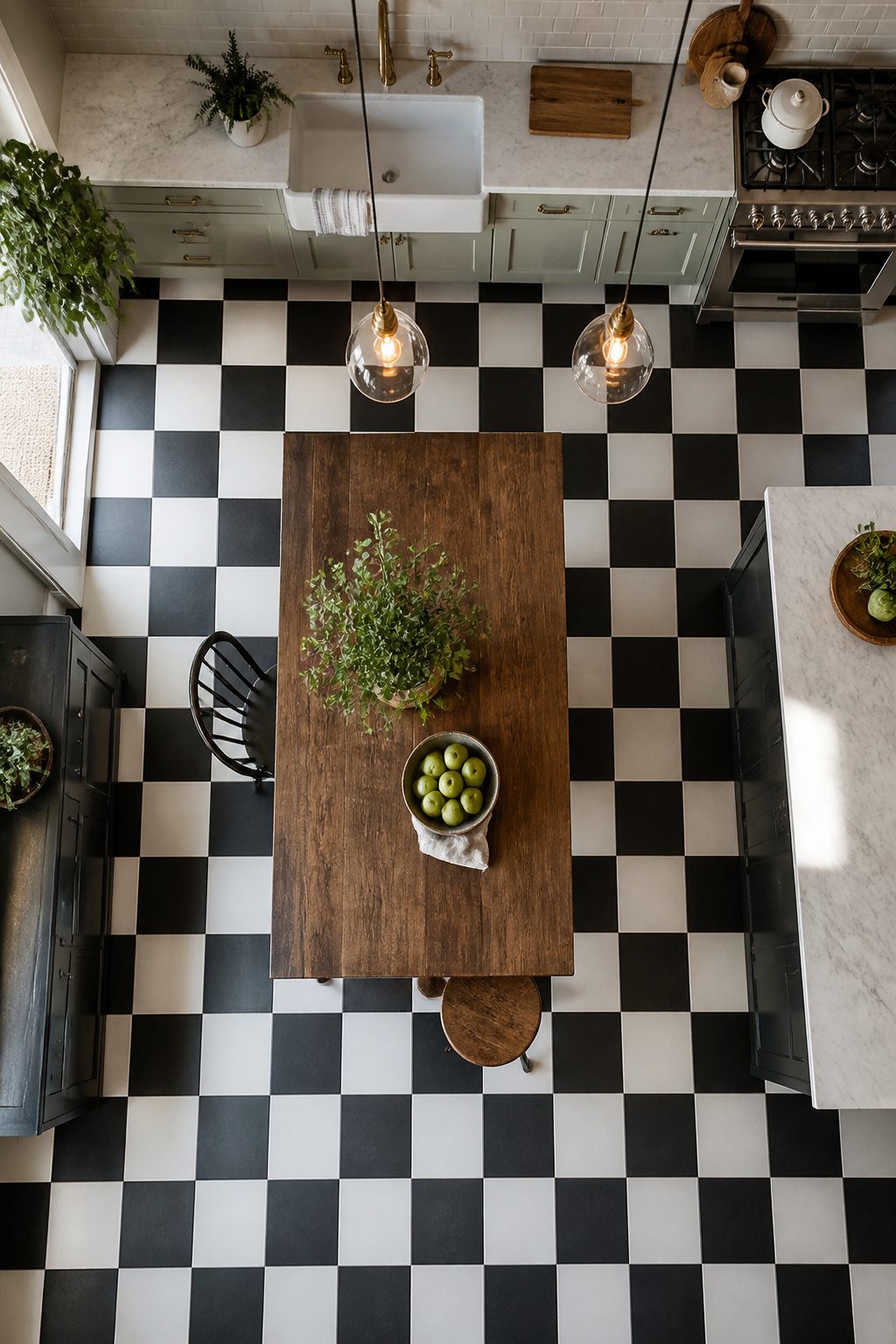
A checkerboard floor reads as farmhouse because it is old and a little loud, which is exactly why it needs quiet company everywhere else.
I would keep cabinets to a single color, matte white or a muted sage, and let the countertops do no more than echo that tone in stone or butcher block.
The pattern is the star, and the room falls apart when two elements compete for attention.
Vinyl plank in a checkered print runs about $2–$4 per square foot and clicks together over existing floors, which matters if you are renting or laying it yourself on a Saturday.
Porcelain tile costs more and needs grout, but it holds up against dropped cast iron and years of tracked-in salt.
Painted wood is the most authentic to old farmhouses, though I would not attempt it on anything but a sound subfloor, and even then, plan on fresh coats every few years where the finish wears through near the sink.
The rule is simple: if the floor is busy, the backsplash should be a subway tile or nothing at all. A patterned backsplash against a checkered floor turns the kitchen into a visual argument.
I have seen it work once, barely, with a very pale gray checkerboard and cabinets painted to match the darker square, but that took restraint most weekend projects do not have. Start with contrast underfoot and let everything else recede.
7. Wire Basket Storage
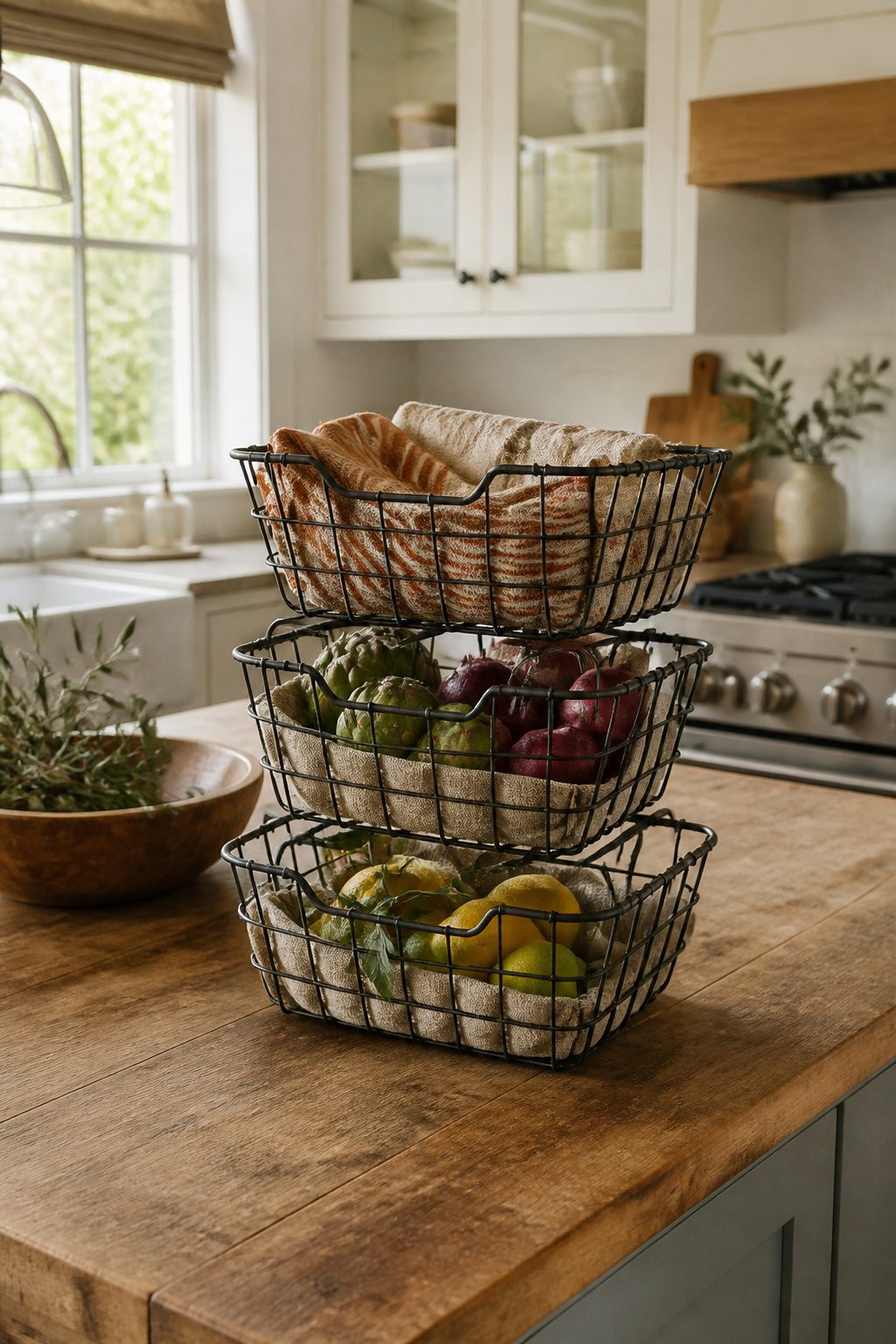
Wire baskets stack industrial texture onto modern farmhouse kitchen decor without losing the utilitarian honesty that holds the style together.
I like the ones with a matte black or aged zinc finish best; glossy chrome looks too commercial kitchen and fights the warmth you are after.
Freestanding wire baskets on a counter or open island shelf keep produce from bruising in a dark drawer and let you see the last onion before it sprouts.
A stack of two or three graduated sizes handles a full pantry overflow without eating floor space.
Mount them on a wall or the side of a cabinet, though, and they turn into grab-and-go holding for dish towels, oven mitts, or the spare cloth napkins you reach for three times a day.
Mounted placement wins in tight kitchens where counter space is already committed.
You will be dusting more often. Open storage means you wipe the basket itself now and then, and whatever sits in it.
Wire also leaves small marks on soft fruit if you are not layering in a linen or butcher paper liner, which I would do for anything that sits more than a couple of days.
8. Beadboard Cabinets
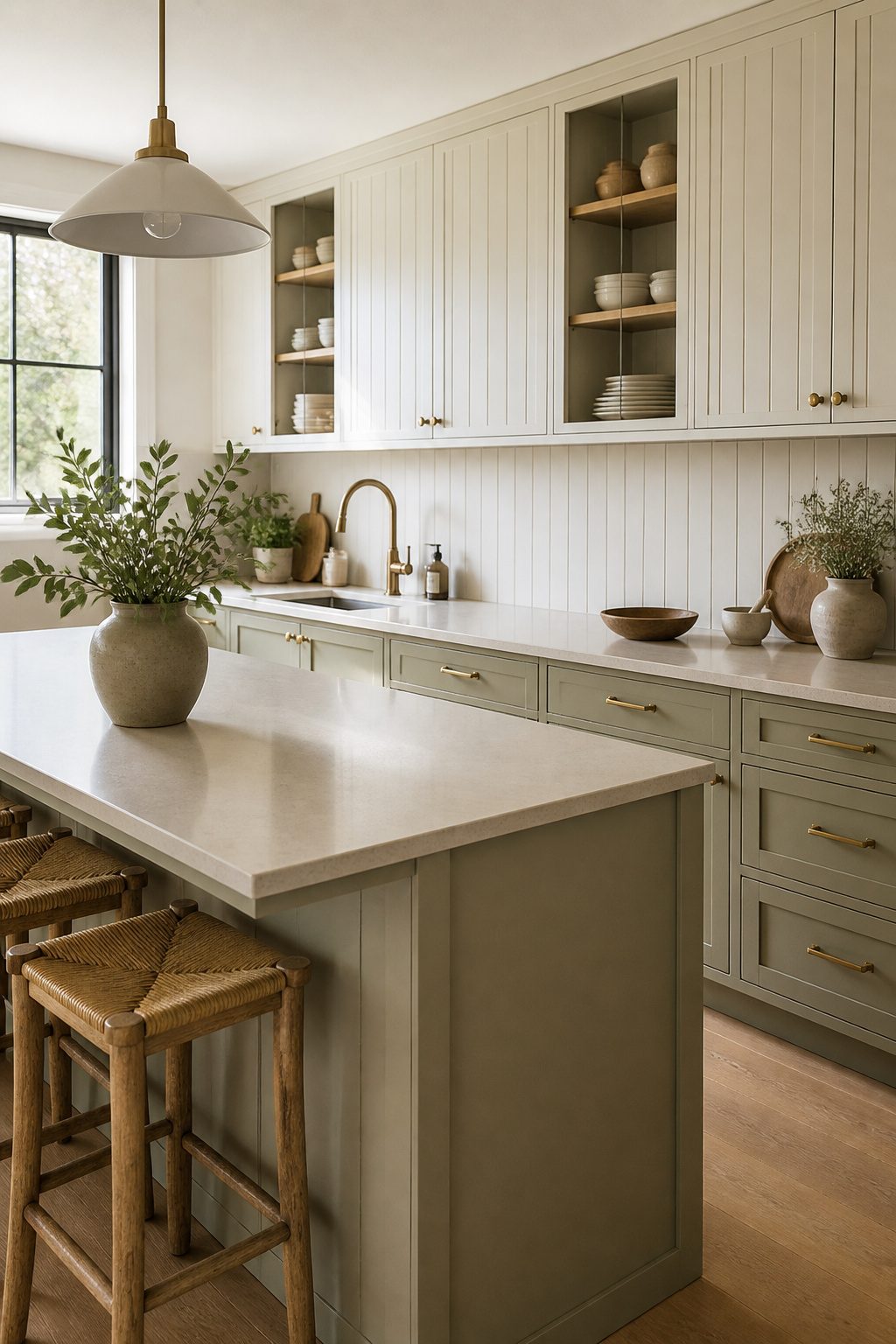
Beadboard paneling on cabinet doors adds the vertical grooves that separate modern farmhouse kitchen decor from the flatter planes of Shaker or slab styles.
The ridges catch morning light differently than a smooth surface, which reads softer from across the room and up close gives your fingers something to trace while you decide on dinner.
Where you place it matters more than the style itself. Upper cabinets carry it best because the light hits the grooves directly and the shadow line stays consistent all day.
An island panel in beadboard works as a deliberate focal point, especially on the side facing the living area where it reads as furniture.
A single pantry door can anchor an otherwise plain wall of cabinetry without the cost of replacing every front.
The risk is overuse. Run beadboard across every base cabinet and the kitchen starts to look like a cottage that got stuck halfway.
Flat drawer fronts below counter height keep the pattern from overwhelming the workspace, and I would skip it entirely on cabinets that sit in shadow or under deep overhangs where the grooves disappear and leave only a busier outline.
If your cabinet order forces an all-or-nothing choice, paint the beadboard in a single matte color rather than two-tone; the monochrome treatment quiets the texture enough to use it more widely.
9. Wood Range Hood
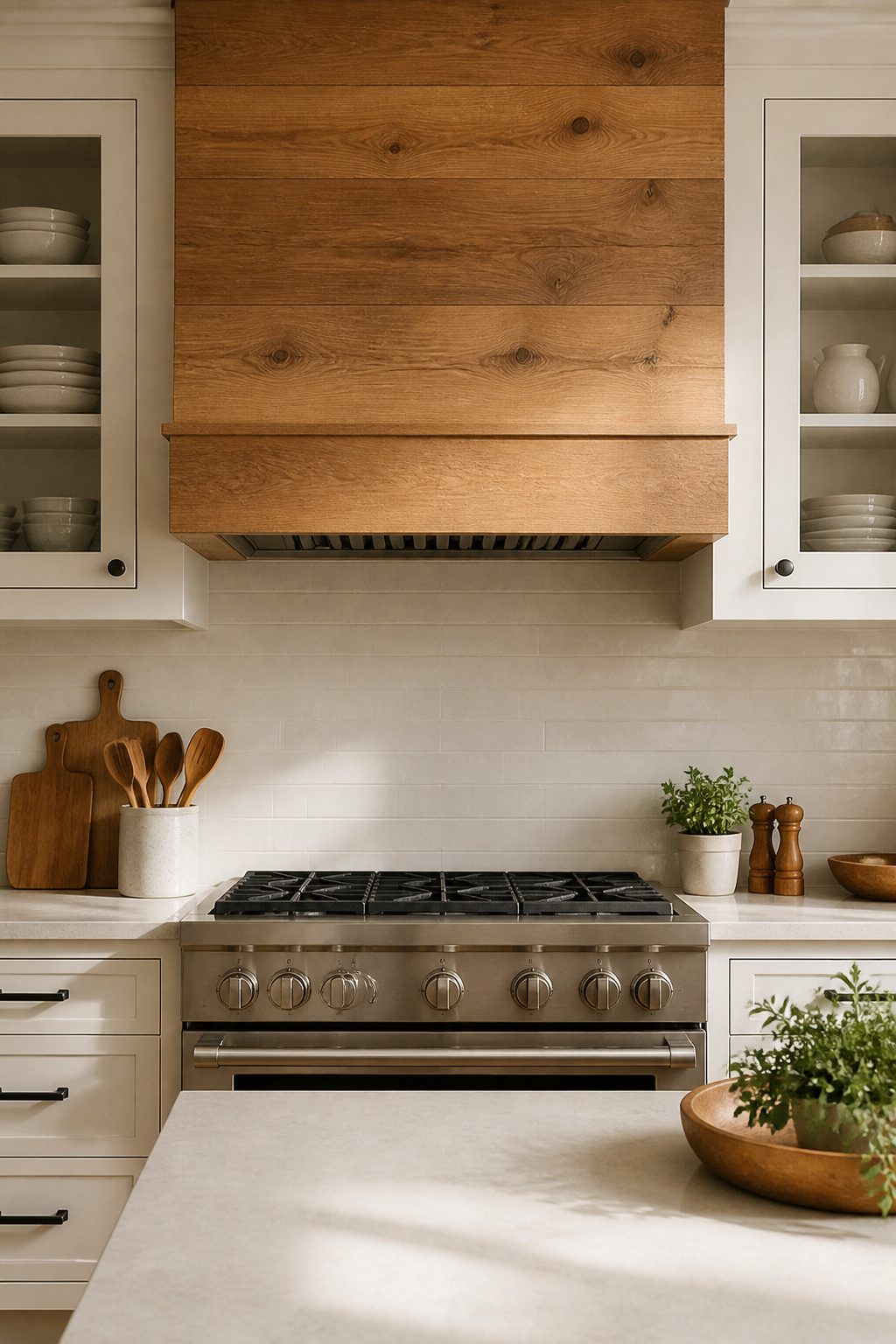
A stained or natural wood range hood pulls the eye upward and gives a white kitchen the one thing it otherwise lacks: warmth that feels intentional, not decorative.
Scale matters more than the species you choose. The hood should feel substantial enough to anchor the range below it, typically running a few inches wider than the cooktop on each side so it does not read like an afterthought.
A simple box shape, built from flat panels with invisible joints, reads modern where carved corbels or heavy scrolled brackets read country-kitsch. Corbels and brackets add visual weight that fights the cleaner lines of cabinets and counters.
If you want the nod to farmhouse without the fuss, a plain rectangular box with a slight taper toward the ceiling stays modern while the wood grain does the rustic work.
I would keep the finish matte or satin, nothing glossy, and match the tone to floors or open shelving if you have it.
The one trade-off: a raw or lightly sealed wood surface collects grease and requires more frequent wiping than painted metal.
For a rental where you cannot rebuild, a standalone wood hood cover that bolts over the existing ducting gives the look without the carpentry.
10. Distressed Wood Ceiling Beams
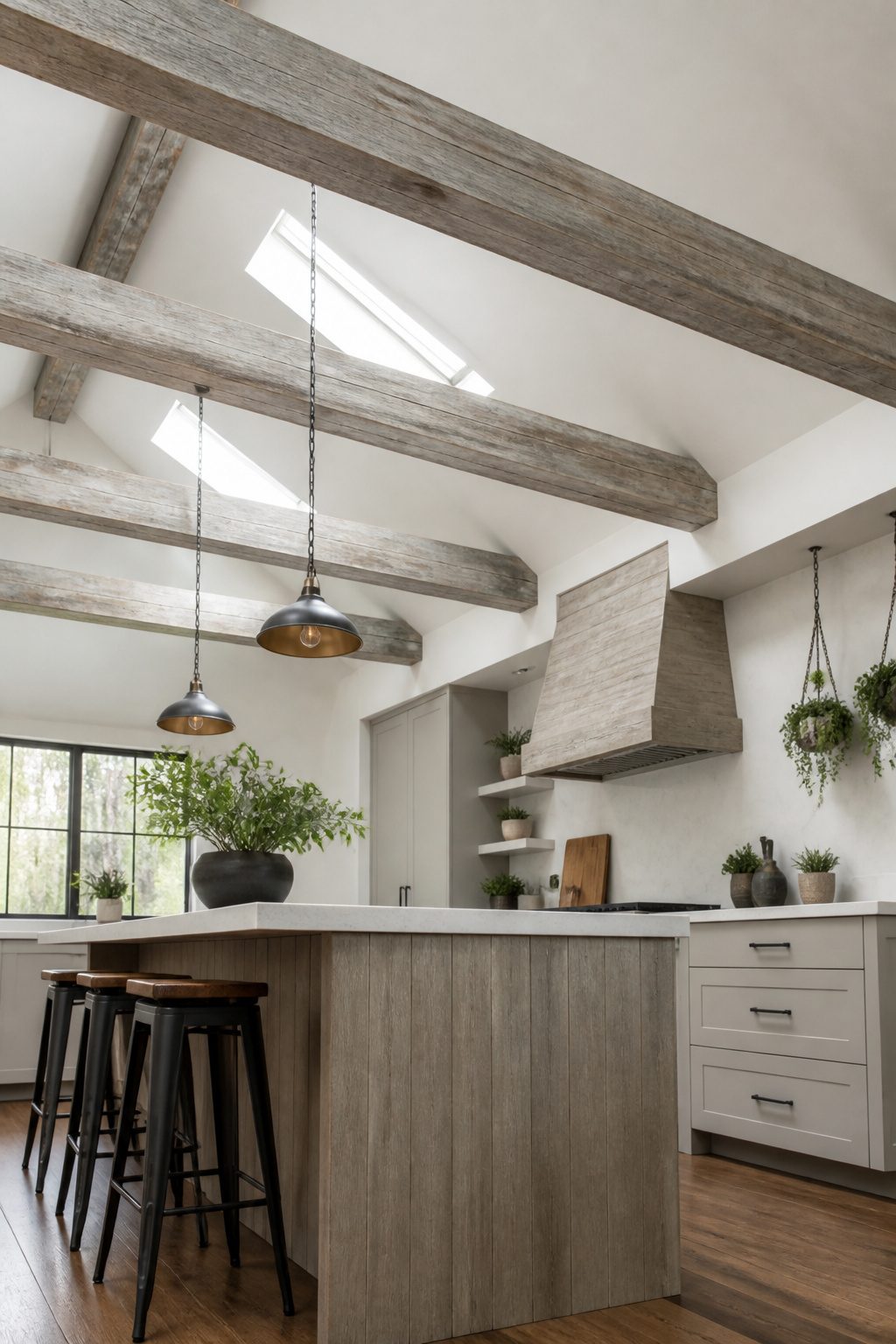
A flat white ceiling reads as drywall and nothing else. Distressed wood beams break that plane and give a kitchen its vertical character without touching the floor plan.
Real structural beams carry load; hollow box beams carry only appearance.
Both work for the look, but box beams run lighter and install in a weekend without an engineer. The gap matters most where the beam meets the ceiling.
A real timber shrinks and breathes, so that joint stays slightly imperfect. A box beam sits flush, and the seam can look like a sticker if you are not careful with caulk and paint.
Distressing is where modern farmhouse lives or dies. Heavily gouged, dark-waxed beams read rustic cabin.
For modern farmhouse, stay lighter: wire-brushed texture, a gray or taupe stain that shows the grain without shouting. The distressing should look like wear from use, not like a machine attacked it.
The mistake I see most is fake-aged stain that pools in corners and looks painted on rather than worn in.
Real wear happens at edges and high spots. If the darkest color sits in the hollows and the beam face looks uniformly coated, your eye catches the artifice before it catches the charm.
Skip any beam where the "distressing" matches a repeating pattern. Wood ages randomly, and the best replicas do too.
11. Open Wood Shelving
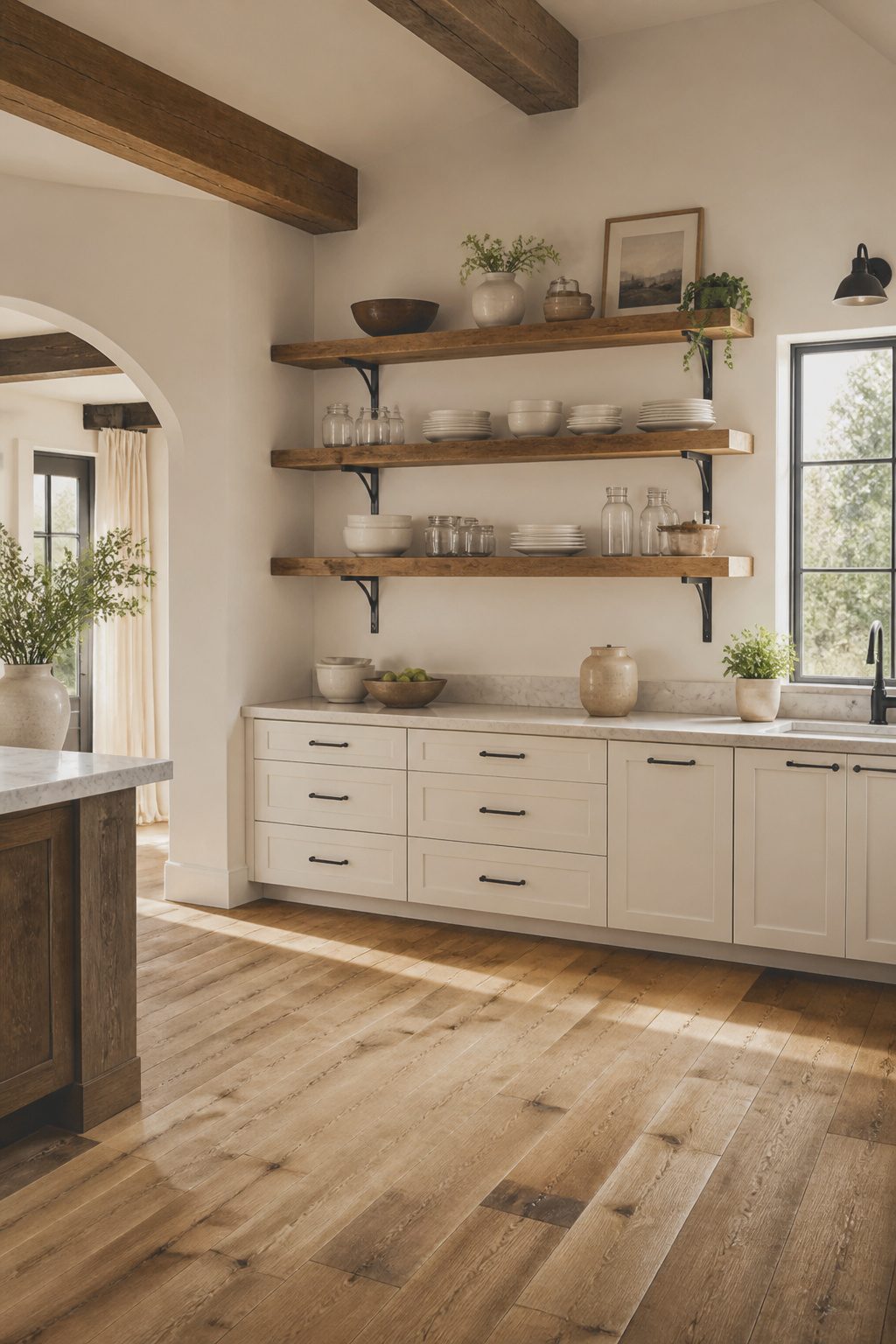
Floating wood shelves free up a kitchen wall without the boxed-in feel of uppers, and the ones that read as modern farmhouse rather than unfinished tend to land between 1.5 and 2 inches thick.
Anything under that looks skimpy once dishes and glassware sit on it; much over 2 inches and the shelf starts to compete for visual weight with the items it holds.
Brackets make or break the look.
Hidden supports drilled straight into studs give you that clean plank-against-the-wall effect, though I think black iron L-brackets flanking a window frame do more of the heavy lifting for the farmhouse side of the equation.
The iron adds contrast against pale wood and gives the eye something deliberate to rest on.
The real work, though, is what you leave off.
Open shelving in a working kitchen collects grease and demands editing. I would rather see three mismatched white plates stacked with breathing room than a crowded row of every cereal bowl you own.
If you cannot commit to paring down to what fits in a single visual line, keep the cabinets. The style only holds if the discipline does.
12. Apron-Front Sink
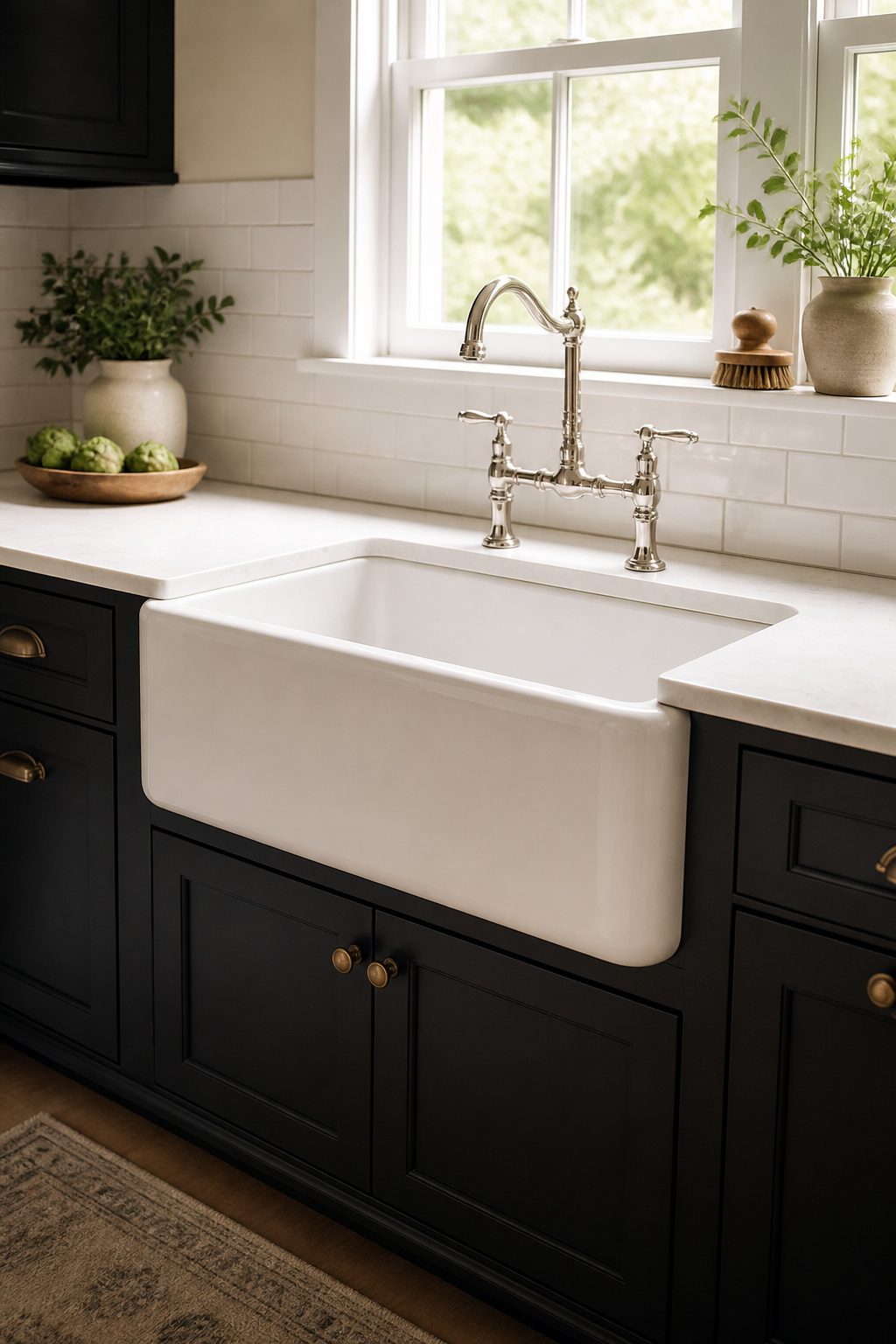
A farmhouse sink is the single detail that signals modern farmhouse before anything else in the room. Kohler’s Whitehaven in cast iron comes in 12 colors, though white remains the reference most builders and buyers measure against.
The apron front of that single-basin model swallows sheet pans and stockpots whole, which is why I lean toward it over the divided bowl for anyone who cooks more than they rinse.
Double basin has its case if you wash on one side and drain on the other, but the uninterrupted depth of a single bowl matches the scale of farmhouse cooking better.
Where the sink meets cabinetry matters as much as the basin itself.
The exposed apron sits equally well against a traditional beaded panel door or a slab-front modern line, and that pairing is what keeps the look current rather than costume.
A marble countertop and simple backsplash drawn tight to the apron read modern; a ceramic sink beneath a window with bridge hardware reads heritage. Both work because the sink anchors them without dictating the rest.
13. Vintage Mason Jars
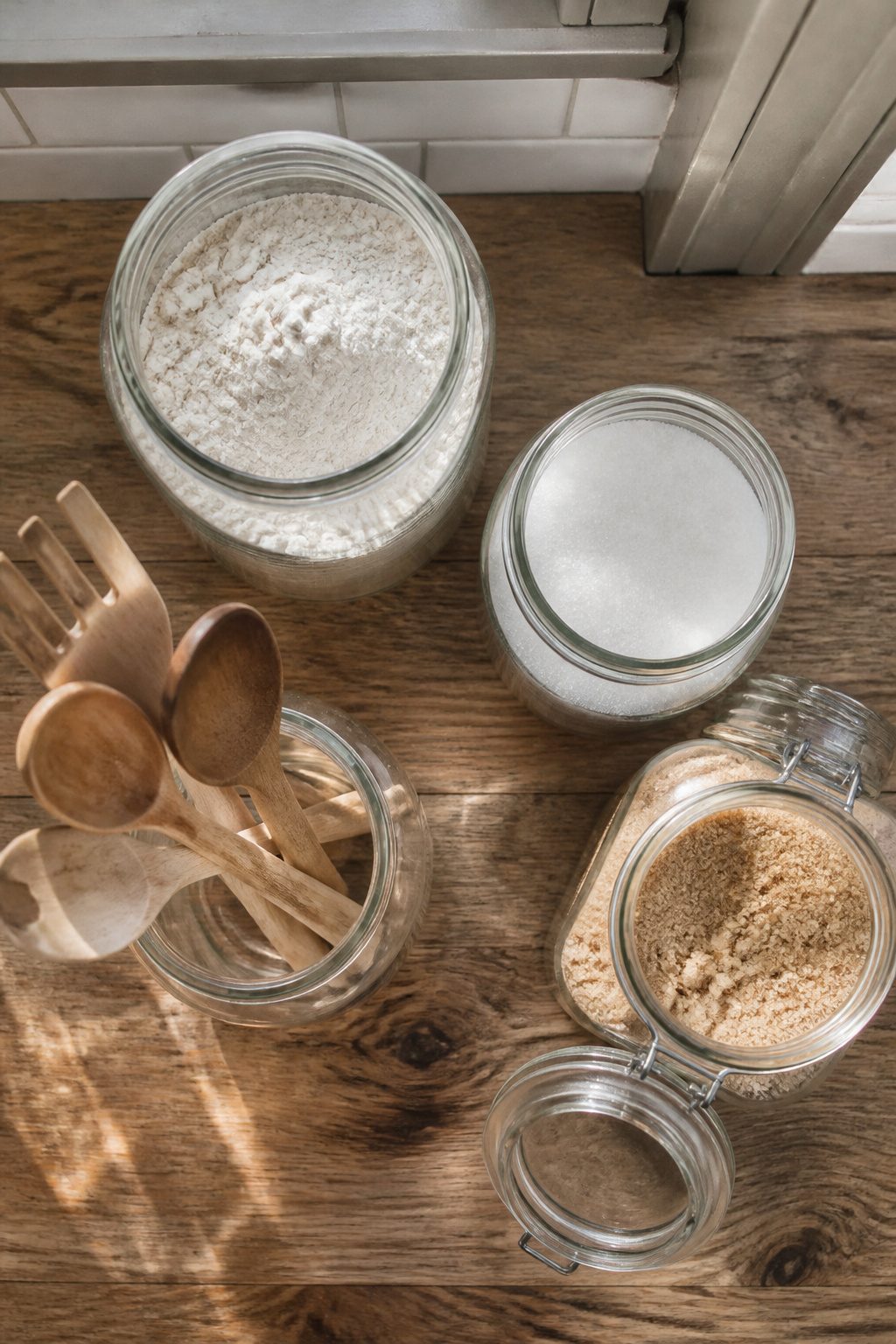
Mason jars earn their spot in a modern farmhouse kitchen only when you treat them like functional storage, not craft-supply clutter.
The half-gallon size holds flour or sugar on an open shelf where you can see the level at a glance; pint jars corral wooden spoons and spatulas by the stove.
Keep them clear or amber, never painted or wrapped in twine, because color variation is what turns a useful container into a Pinterest-fail centerpiece.
Amber cuts some light and looks slightly more deliberate against white subway tile, though clear is easier to read at a distance.
I skip the zinc lids for daily use; they corrode near steam and read more "canning cellar" than "kitchen I actually cook in."
The French Modern approach to glass, with its two or three-tone restraint, applies here too: one jar style, one color family, and the contents do the visual work.
14. Sliding Barn Door
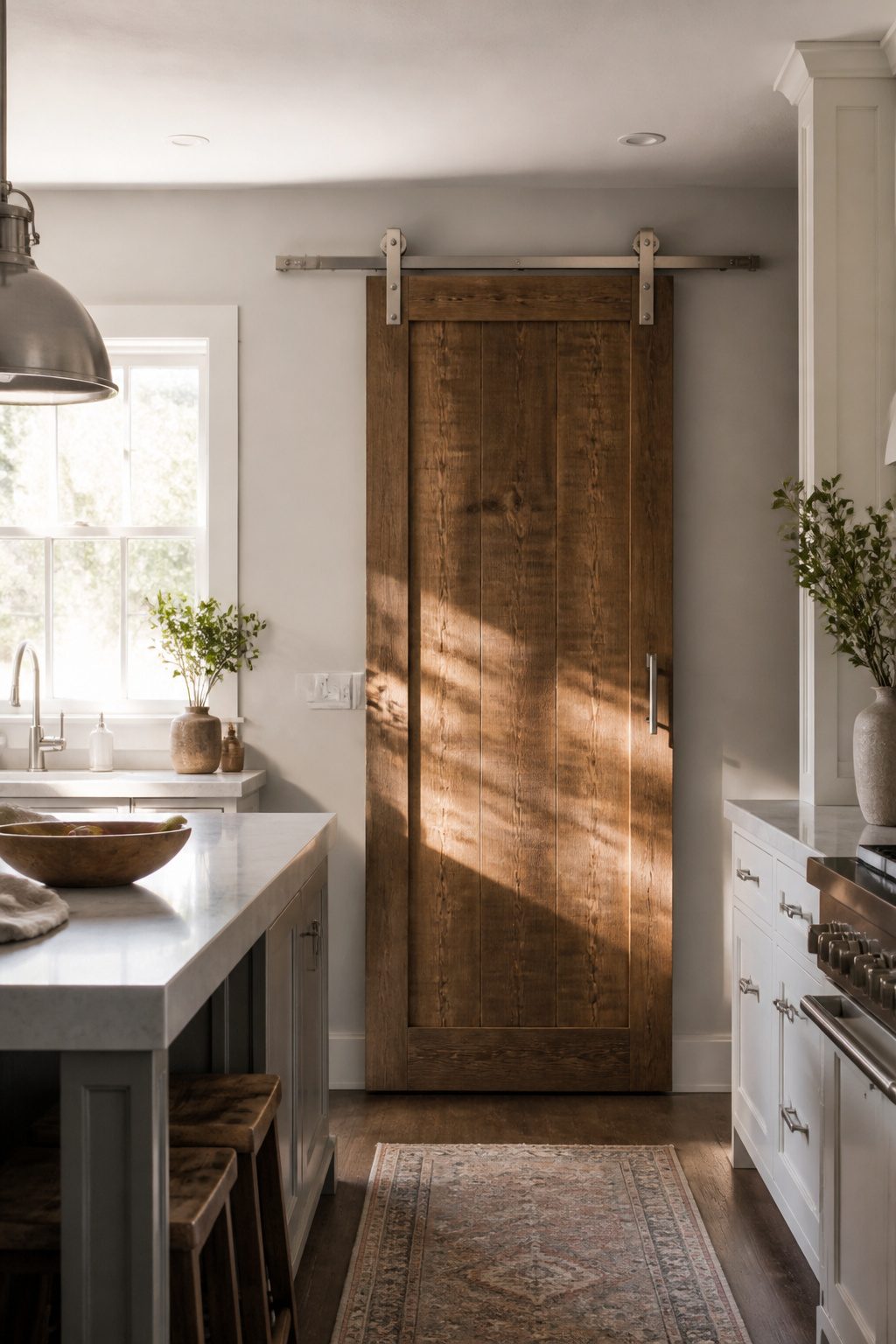
A sliding barn door saves the square footage a standard swing door wastes in a tight kitchen pantry or laundry nook. Hardware finish sets the tone: black iron reads rustic, brushed nickel leans cleaner, and oil-rubbed bronze splits the difference.
I would pick brushed nickel in a kitchen that already has stainless appliances, since mixing warm and cool metals there looks accidental rather than intentional.
The door panel itself matters as much as the track.
Cross-braced or Z-pattern construction signals classic barn style, which can feel busy against sleek countertops. A flat panel door, maybe with a subtle vertical plank detail, keeps the farmhouse reference without turning the kitchen into a theme park.
I have seen cross-braced doors work, but only in rooms with otherwise plain cabinetry and no other reclaimed wood competing for attention.
Installation is straightforward if the wall has blocking above the opening, but a hollow door on a long track will wobble. Solid-core MDF or a real wood slab adds the weight that lets the hardware glide instead of rattle.
Expect to spend $150 to $400 for the track kit and another $100 to $300 for the door, depending on whether you build from scratch or buy pre-made.
15. Reclaimed Wood Dining Table
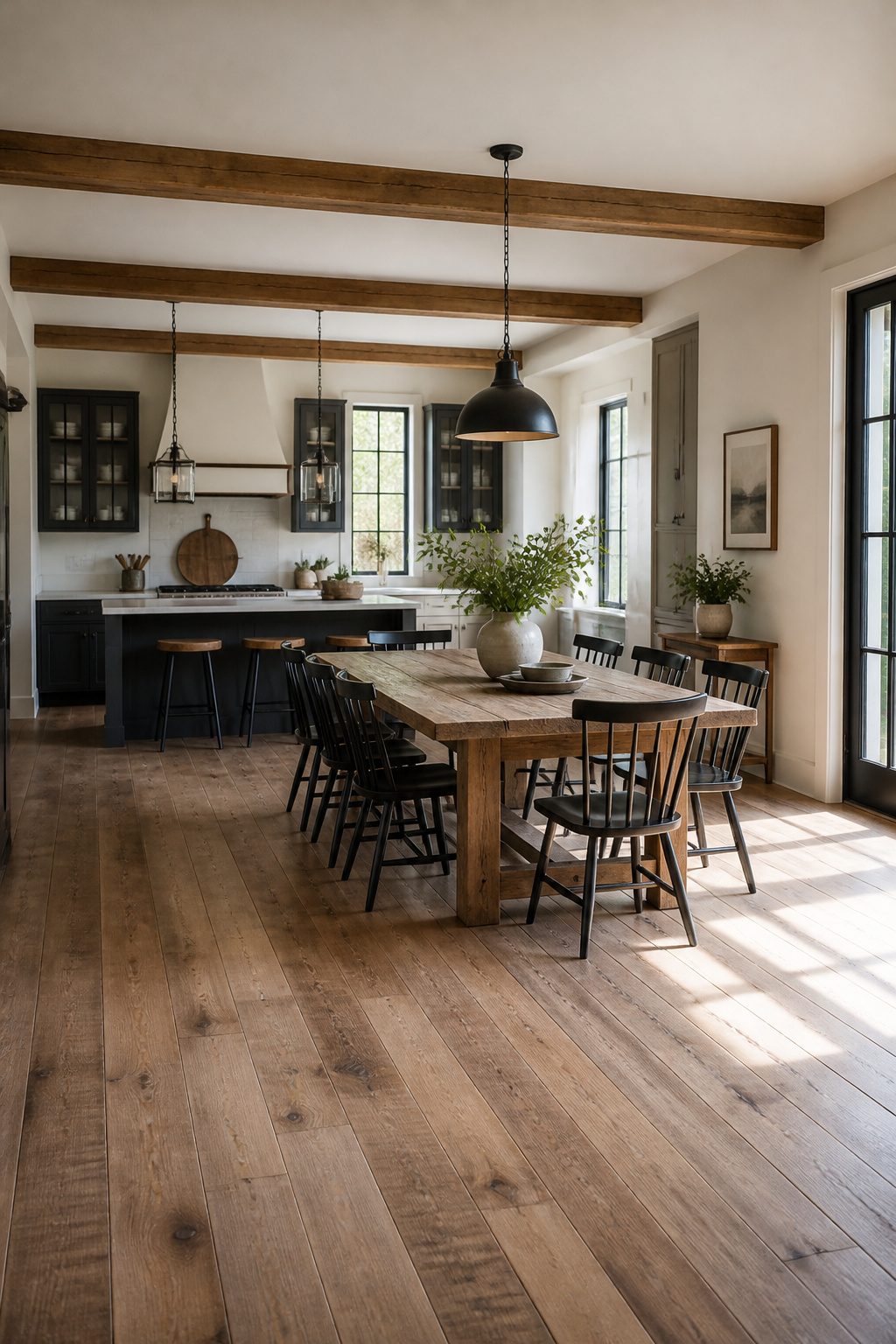
A reclaimed wood dining table or island extension anchors the modern farmhouse kitchen better than any single fixture. Salvage yards still turn up old doors, flooring, and framing timber with enough character left to matter.
Thickness drives the look: three to four inches feels substantial without turning into a butcher block, while anything under two looks like an afterthought once the chairs slide in.
Finish options run from raw to sealed. Raw wood gives the most honest grain and the most maintenance; matte sealant, like the matte stain on a farmhouse island, keeps the texture alive without the shine that reads traditional.
I lean toward matte sealant for a kitchen that actually gets used. It still invites touch, but it survives a spilled glass of wine.
The pairing with modern chairs is where most people falter.
Keep the chair silhouette clean: straight legs, no turned spindles, nothing that competes with the timber’s story. A caned seat with a simple frame, or a slim metal leg with a wood back, bridges the eras without clashing them.
The table carries the farmhouse weight; the chairs carry the modern line. Let each do its own job.
Frequently Asked Questions
What color cabinets are best for farmhouse kitchens?
Soft whites, warm neutrals, muted greens, and deeper shades like navy work best, with darker tones often used in modern farmhouse kitchens to create contrast and a more tailored finish.
In a modern farmhouse kitchen, keep cabinets to a single color if the floor is busy, such as matte white or muted sage, to avoid visual competition.
What flooring works best in a farmhouse?
Stone, limestone, and reclaimed wood are popular choices that combine durability with natural character.
For a checkered farmhouse floor specifically, vinyl plank runs about $2–$4 per square foot and installs easily, while porcelain tile costs more but withstands heavy use, and painted wood is most authentic but requires regular maintenance.
What is modern farmhouse kitchen style?
Modern farmhouse kitchen style blends rustic farmhouse elements like natural materials and traditional forms with sleek finishes, cleaner lines, and a more restrained color palette.
It sits between old and new, favoring warmer neutrals with darker accents rather than the full wooden surfaces and earthy greens and yellows of traditional farmhouse kitchens.
What are the key elements of a modern farmhouse design?
The key elements include natural materials like wood and brick, utilitarian textures such as shiplap or beadboard, open shelving or glass-front cabinets, apron-front sinks, and a mix of old and new finishes.
The style relies on restraint: one rustic element per area, paired with clean-lined modern pieces so the room reads as intentional rather than themed.
What are some ideas for a modern cottage kitchen?
Modern cottage kitchen ideas overlap with modern farmhouse but lean lighter: beadboard on upper cabinets only, wicker or rattan seating with straight-legged tables rather than turned legs, enamelware in white or cream on open shelves, and herb gardens in simple terracotta pots on the windowsill.
Avoid floral cushions, matching sets, or anything that tips into grandmotherly territory.
Is farmhouse still in style in 2026?
The modern farmhouse kitchen remains current when it avoids the rustic clichés that dated the look, such as artificial distressing, weathered signs, or excessive reclaimed wood.
The evolved version prizes cleaner lines, matte finishes, and single-statement rustic elements paired with modern counterparts, which keeps the style from reading as a passing trend.