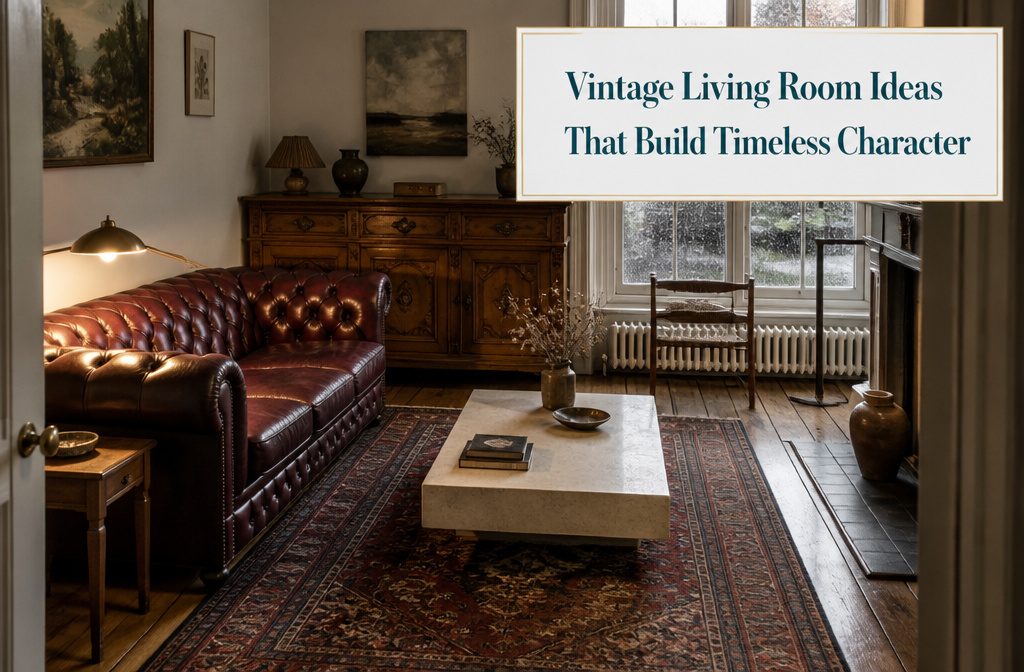
A vintage living room pulls together pieces across decades rather than one fixed era, and the rule that makes it work is letting one substantial piece set the character so the rest can stay simpler.
Chesterfield sofas and carved sideboards carry enough weight that newer seating fits beside them without breaking the look, but only if the vintage piece has solid construction and real joinery rather than surface distressing over particleboard.
Start with a patterned rug sized so the front legs of your furniture sit on top, then layer in warm lighting around 2700K and one modern anchor—a plain sofa or a coffee table with clean lines—to keep the room from reading like a period display.
1. Furniture with Vintage Character
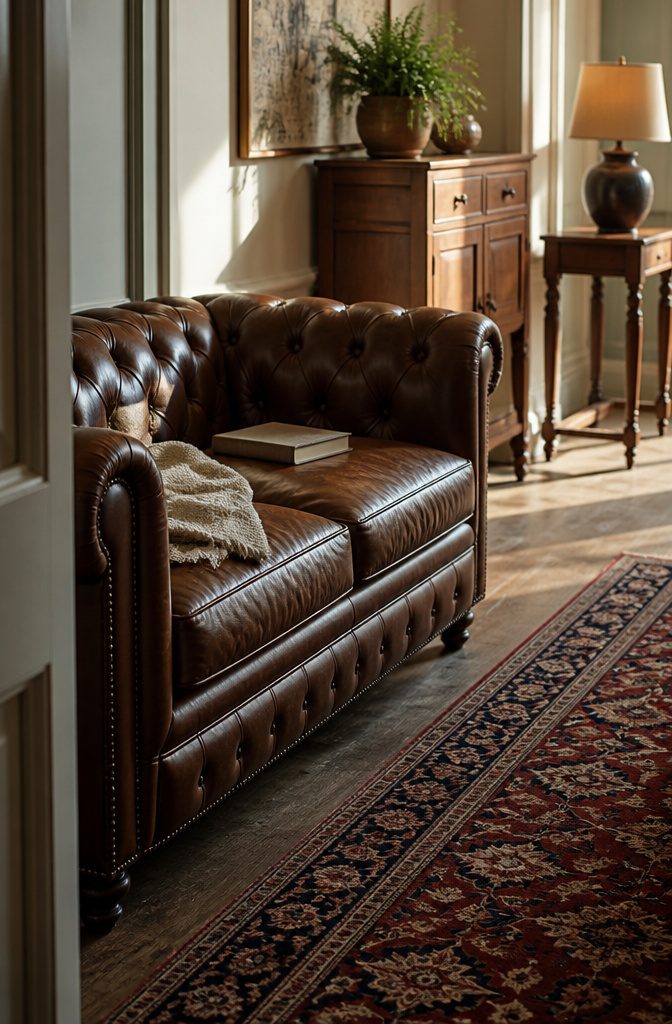
A Chesterfield sofa puts tufted upholstery and nailhead trim right where you see them first, and the silhouette reads as vintage even when the fabric is new.
Leather ages into the look; fabric upholstery softens it faster. Either way, the frame does the work.
Wood pieces with turned legs or carved drawer fronts carry the same weight without filling the room.
A console table behind the sofa holds a lamp and sets up a place to work or read; an ottoman tucked beneath keeps the floor clear until you need it.
The carving matters more than the finish—imagine the piece as a flat black shape, and if the legs or the cabinet proportions still hold, the design is doing its job.
A sideboard makes the call for the whole room.
The wood finish and the profile should be strong enough that the rest of the furniture can stay simpler. One substantial piece often establishes enough character that newer seating and tables sit comfortably beside it.
Condition decides whether a piece works.
Ask about materials, joinery, repairs, and refinishing history before you buy, and request photos of the back, underside, and any damaged areas. Solid-wood construction lasts; surface distressing without a real frame beneath it does not.
Recommended Products


Classic Vintage Look: Featuring iconic Chesterfield styling, this faux leather couch merges vintage elegance with modern flair. It delivers timeless retro charm alongside contemporary fashion. Built with practical functions beneath its elegant look, this leather sofa is ideal for your home or office.
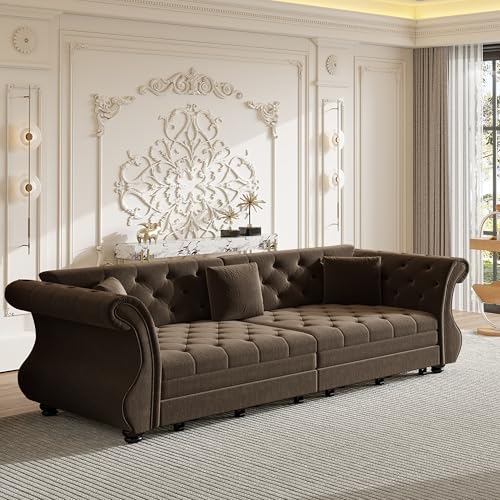
【3-In-1 Convertible King Sleeper Sofa Bed】 A 3-in-1 king sleeper sofa bed that works as a spacious 4-seat sofa, chaise lounge, and smooth pull out couch bed. Built with a hidden reinforced metal frame for daily conversion, this velvet couch with pull out bed opens into a roomy sleeping space—perfect for overnight guests, movie nights, and everyday lounging
2. Rugs That Add Warmth and Pattern
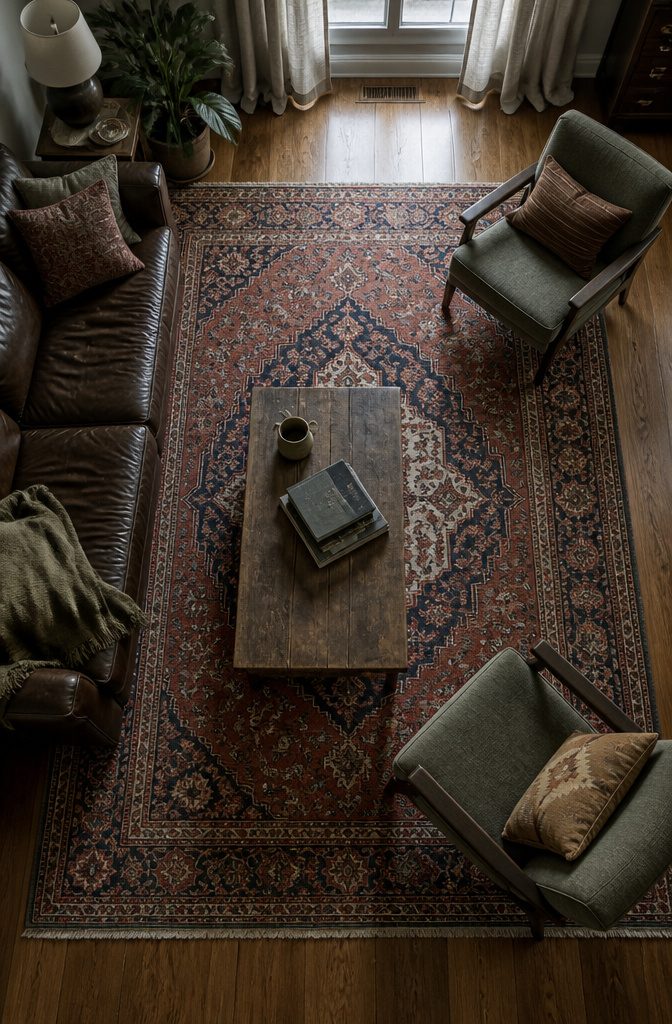
A patterned rug pulls together the vintage character of a room in a way few other pieces can manage.
Oriental designs, Turkish-inspired medallions, and Kilim geometrics each bring warmth and a sense of history while connecting the colors of scattered furniture into a single coherent seating area.
The pattern itself reads as aged even when the rug is new, which makes it one of the easiest ways to add vintage weight without hunting estate sales.
Size the rug so that at least the front legs of your sofa and chairs sit on top.
That anchors the seating and keeps the arrangement from floating. A rug that stops short and leaves all four legs on bare floor fractures the grouping instead of unifying it, no matter how strong the pattern.
Recommended Products

【Hollow Carved Accent Cabinet】Vintage-style accent cabinet with 4 doors showcases hollow carved floral pattern, paired with Roman column legs and antique bronze handles. Unlike cheap decals, each engraving is meticulously crafted, transforming a practical storage space into a treasured work of art.

Exquisitely Carved Vintage - Style Cabinet : This white storage cabinet features two doors. Utilizing an antiquing process and masterful wood - carving techniques, it seamlessly blends vintage charm with French elegance. It's a captivating addition that can enhance the aesthetics of any room.

Elegant Sideboard: With a natural wood finish, Roman column style cabinet legs, and the doors designed with delicate carved flowers and slim handles, this buffet cabinet perfectly combines vintage element with contemporary aesthetics. Dimensions: 63" (L) x 15.75" (W) x 32" (H)
3. Vintage Lighting
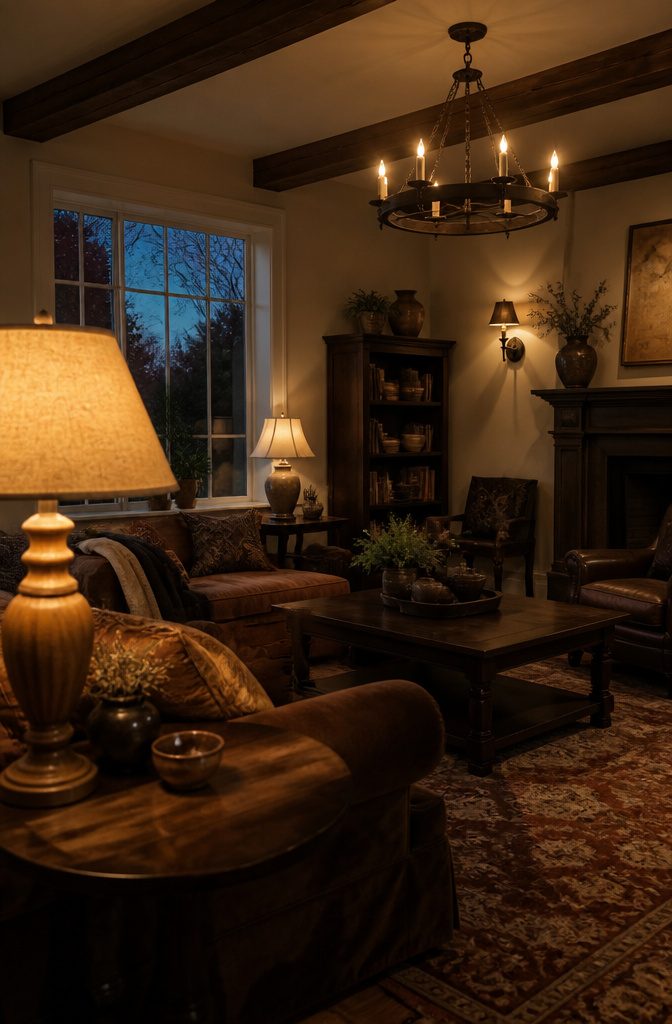
A chandelier centered over the coffee table grounds the room and sets the lighting hierarchy from the start.
Candelabra silhouettes work in traditional spaces; wagon-wheel frames bring a cozy, rustic edge. Both styles benefit from antiqued metal finishes that read as genuinely aged rather than costume vintage.
For warmth, start testing around 2700K—ENERGY STAR calls this soft white, and it is the baseline most vintage rooms need before you factor in shade material, wall color, and how much light dark wood actually absorbs.
Dim-to-warm LED systems drop lower as you reduce output, which helps velvet and leather gain depth after sunset without turning everything orange.
Layer the overhead fixture with table lamps on side tables. Fabric shades diffuse light for reading without glare.
Add sconces near shelving or art to create directed highlights where you want them, and let ambient light handle movement through the room. Older wired fixtures need an electrician’s inspection before installation.
Recommended Products


[Bohemia Design] A stylish combination of modern and traditional design elements, this bath rug features floral edges with oriental Tribal overtones in a bohemian base, making your home an elegant and stylish addition to an exotic look.
4. Art and Gallery Walls
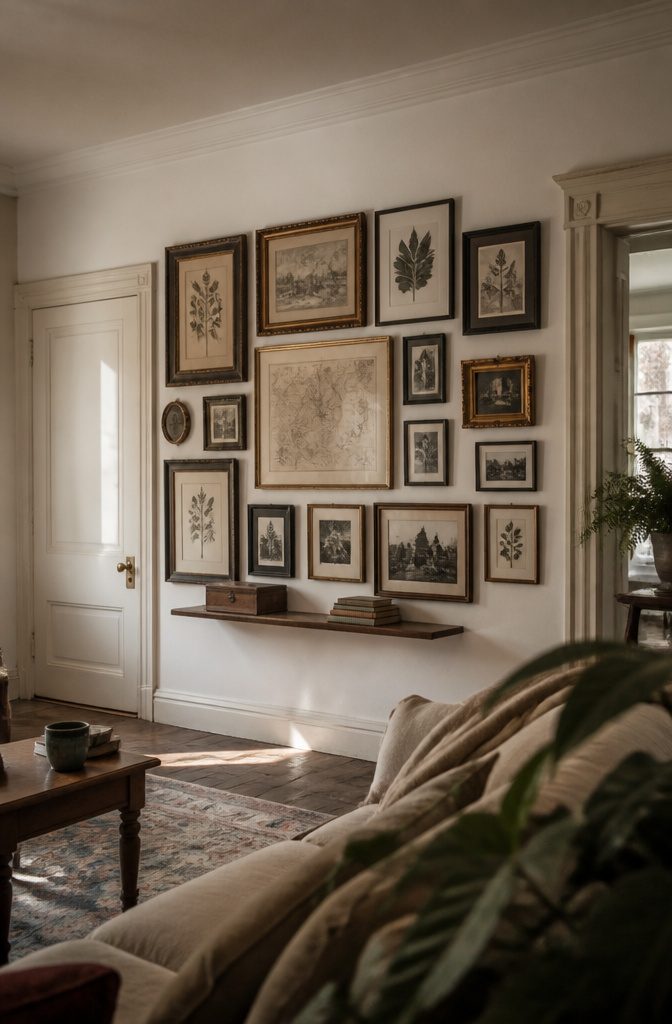
Lay out framed vintage prints, antique frames, and old photographs on the floor before you hang anything. The arrangement you end up with is rarely the one you imagined, and fixing it on the wall wastes holes.
Mix carved frames with brass corners alongside simpler wood ones—mismatched frames with classic details pull off the antique look better than a matching set ever could.
Stick to a shared color palette across the prints themselves. botanical prints, old maps, and black-and-white photographs all sit together when the tones repeat, even if the subjects don’t. The frames can vary; the art inside them shouldn’t fight.
Family photographs in vintage frames add warmth that store-bought art can’t match.
An old jewelry box or a stack of vintage books on the shelf below roots the wall in something real rather than just decorative. Personal artifacts make the space feel lived in, not staged.
5. Decorative Objects and Keepsakes
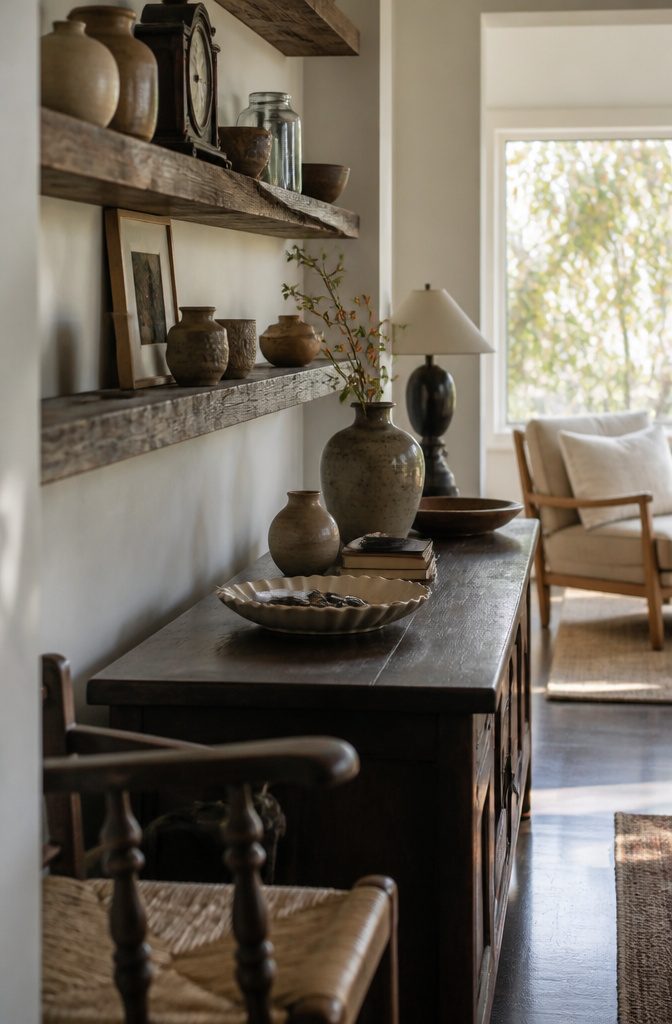
I group ceramic vases, pottery, and artisan-made pieces on open shelving where their texture reads at a glance.
A handcrafted ceramic vase next to a reclaimed wood bowl and a stack of books builds depth without matching everything to a theme.
Scalloped bowls work as catchalls on a console table—keys and mail land there instead of the counter—and the fluted edge keeps them from looking purely functional.
Bookcases hold inherited pieces and vacation mementos alongside vintage-inspired finds.
I prefer neutral collections: cream pottery, wood trays, glass jars in amber or clear. Crown molding or glass doors on the bookcase frame the display without demanding a single era.
An antique clock or chinoiserie ginger jar anchors a vignette on a console table in a deep espresso finish, and I swap in seasonal branches or a few stems to keep it from looking static.
Reclaimed materials add character that new pieces lack. Shelving in weathered wood or a small side table made from salvaged timber carries visible age, and the grain variation tells you it was something else first.
6. Plants and Botanical Decor
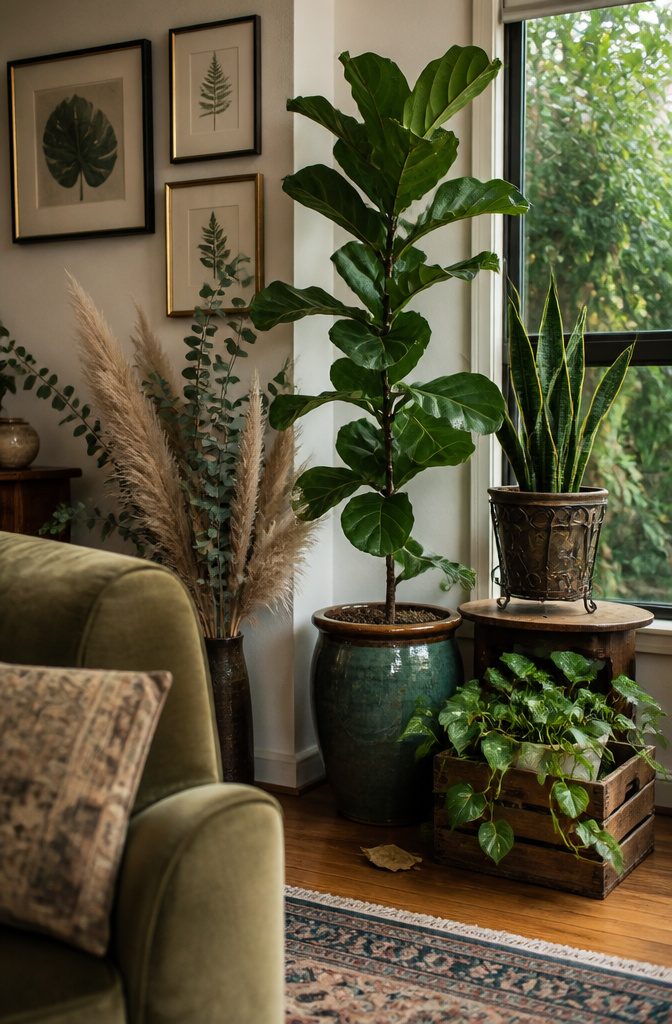
Houseplants in ceramic or wrought-iron planters pull the room toward nature without fighting the vintage baseline.
I arrange them at different heights — a tall fiddle-leaf fig in a ceramic planter next to a snake plant in wrought iron on the side table — so the eye moves instead of stopping on a single green dot.
Reclaimed wooden boxes work for succulents or trailing pothos if you want something rougher than glazed pottery.
Dried flowers add nostalgic weight that fresh arrangements sometimes skip past. A bundle of pampas grass or eucalch in a tall vase fills vertical space, and dried stems hold their shape for months without the weekly water change.
Faux stems are practical if the room gets no direct light, though I check that the material reads as linen or silk rather than plastic from six feet away.
Botanical prints framed in thin black or gilt frames extend the greenery across wall space when floor room runs out.
7. Patterns and Textiles
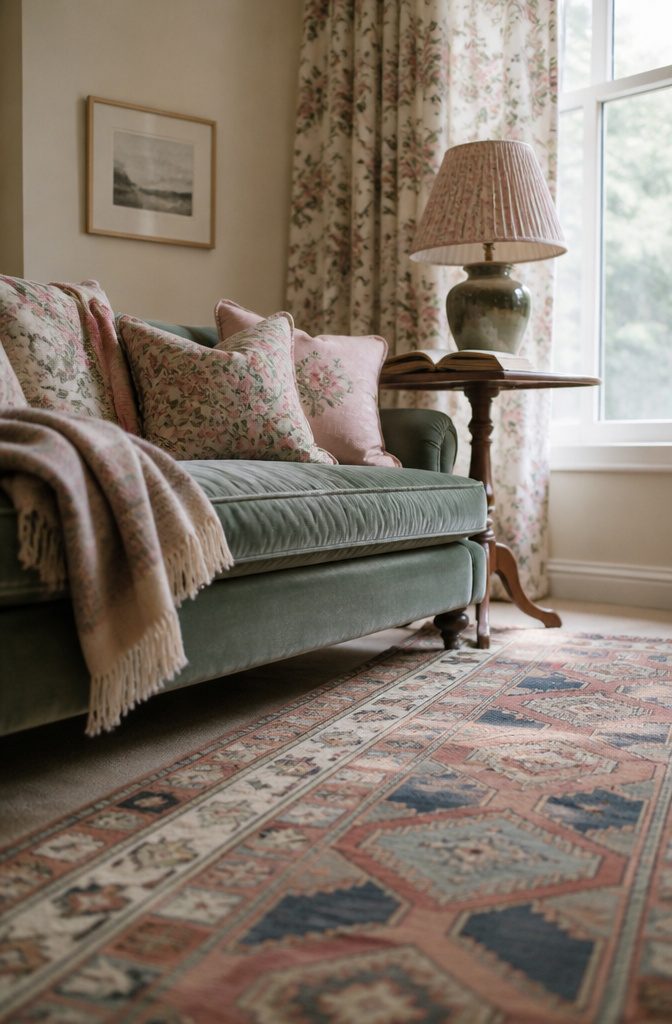
Chintz florals on throw pillows or curtains layer easily with solid velvet and bring in the traditional pattern weight a vintage room expects.
Start with piped-edge solids or embroidered cushions in one or two base colors, then add florals—chintz works, so do Turkish Kilim motifs—and finish with a wool or velvet piece for texture.
The mix reads richer than any single pattern would.
Soft pastels in floral prints keep the look welcoming without tipping into museum formality.
A floral sofa paired with matching curtains can feel heavy-handed in small doses, but if the scale and color are dialed back—pale pinks, muted greens—the effect holds.
Antique or vintage-inspired rugs with intricate patterns, Persian or hand-knotted wool, anchor the layering and pull the palette together when the upholstery gets busy.
8. Wood Details and Reclaimed Materials
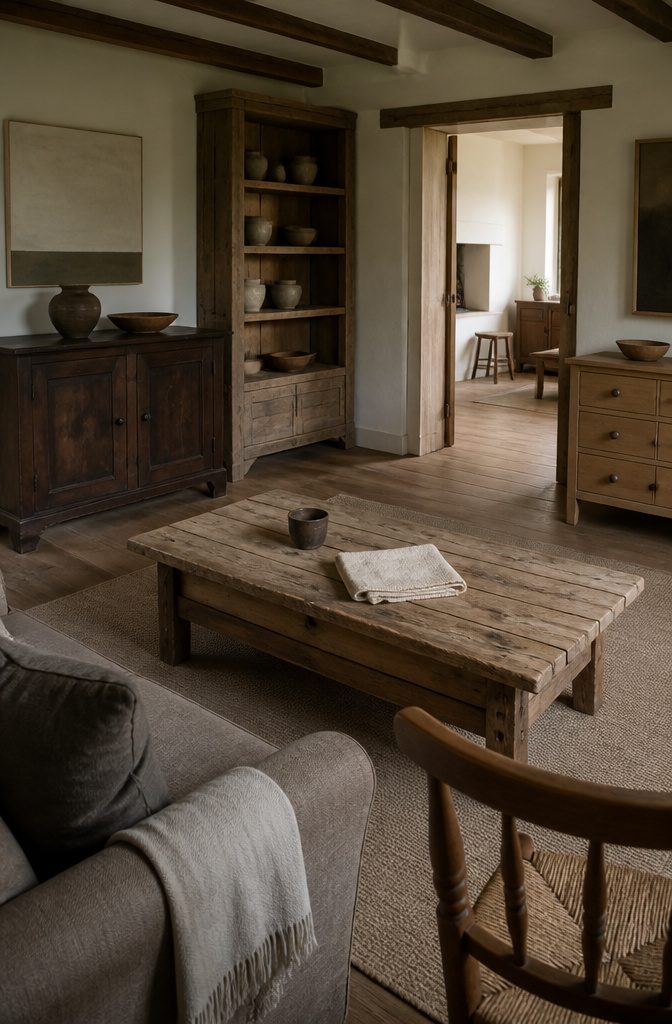
Wood brings the kind of texture a vintage living room actually needs — the grain shows age in a way paint never will.
I look for reclaimed pieces first: a coffee table with weathered planks, open shelving made from salvaged barn wood, or even a single accent wall clad in boards that carry dents and nail holes.
The imperfection is the point. New wood reads clean no matter how you stain it; reclaimed material has already lived somewhere else.
Different tones can share the room if one broad temperature leads and the rest echo it. A dark walnut cabinet sets a cool, deep anchor; pale oak furniture around it works when the undertones stay in the same family.
Compare visual mass as you go — a single large piece in heavy wood can overpower three lighter ones even when the colours coordinate.
Turned legs, carved drawer fronts, and solid construction all push a piece toward vintage rather than reproduction. I skip anything that feels too matchy; the woods should relate, not match.
9. Mix Old and New
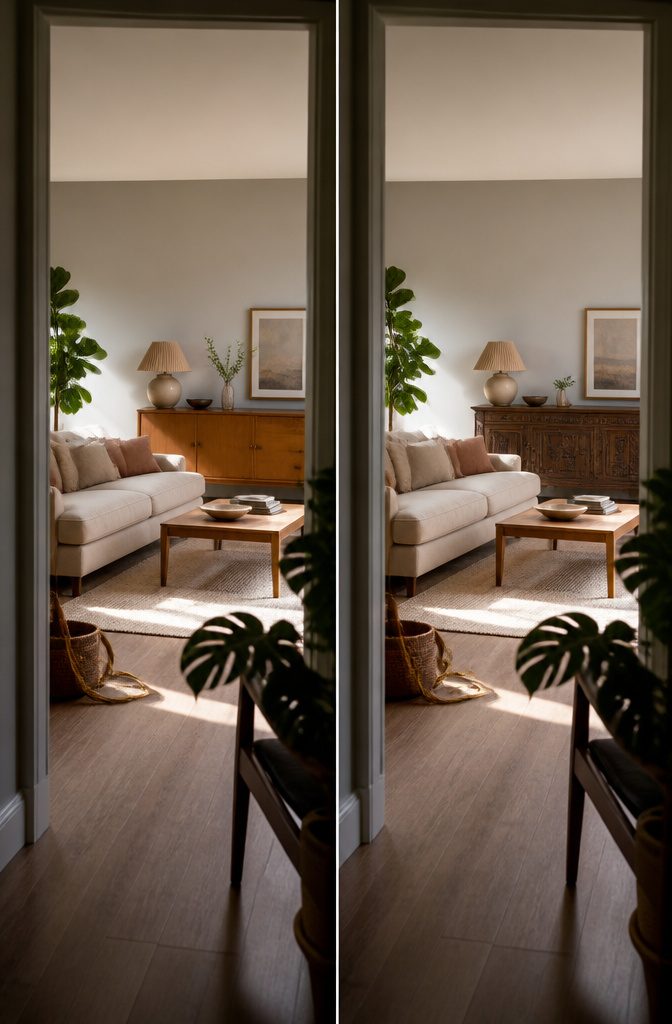
A vintage piece stands out more when it shares the room with something current.
The 70% vintage with 30% modern guideline keeps the space from reading like a period room, and one modern anchor—a plain sofa, neutral walls, or a coffee table with clean lines—gives the eye a place to rest between older textures and silhouettes.
The connection happens through proportion and visual weight more than through matching. A mid-century credenza and a contemporary media console can sit in the same room if their heights relate, their lines echo, or their materials share warmth.
Scale matters: a heavy carved sideboard next to a spindly modern chair looks unintentional, but pair that sideboard with a solid linen sofa and the room holds together.
Start with the function you need—seating, storage, surface area—and measure the real volume before you commit.
Height, depth, and circulation matter more than the listed width, and a piece that fits on paper still has to clear the doorway on delivery day.
10. Mantel Displays
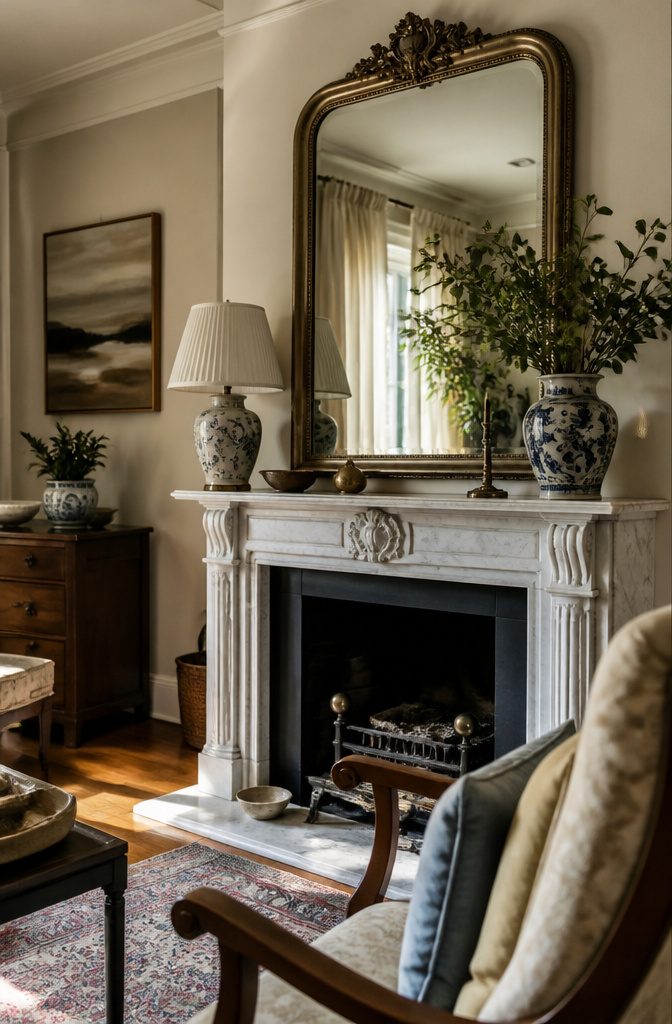
A large mirror or a piece of art anchors the mantel and pulls the eye up.
The 40×42 inch Gold Metal Ornate Mantle Mirror, running around $495, works particularly well over a fireplace because the antiqued metal reads as collected rather than new, and the scale fills the wall without crowding the objects below.
If you go with art instead, frame it in something substantial—gilt, carved wood, anything with enough visual weight to hold its own above the stone or brick.
Layer in a few pieces on the mantel itself: a ceramic lamp on one side, a vase with blue-and-white floral patterns on the other.
Keep the count low. Three to five objects look intentional; more than that starts to feel like a shelf that needs editing.
The white marble fireplace surround in one example pairs cleanly with the mirror’s metal, but if your mantel is wood or painted brick, let that texture show rather than covering every inch.
Checking Furniture Condition Before You Buy
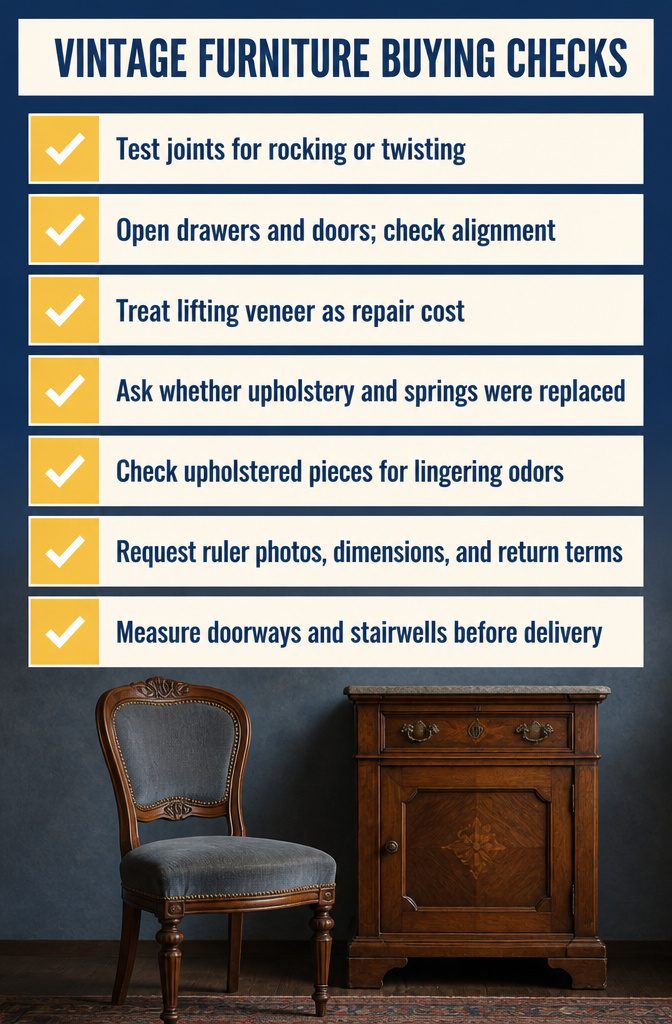
Check the joints first.
Push gently on the corners of chairs and case pieces—stable furniture won’t rock or twist. Open every drawer and door to see whether they bind, sag, or sit misaligned, and check that hardware still holds securely.
- Veneer that lifts, bubbles, or shows water damage is a repair cost, not just character; patina changes appearance while the piece stays stable and usable, but damage affects structure or keeps getting worse.
- Ask whether upholstery, webbing, springs, or foam have been replaced—not just whether the fabric looks fresh.
- Check for smoke, mildew, or pet odors before committing to upholstered pieces; they rarely leave.
- For online buys, request photos of defects next to a ruler so "small scratch" means something concrete, and ask about dimensions, age, prior repairs, materials, and return policy.
- Measure doorways and stairwells before delivery; a piece that won’t reach the room is money wasted.
Color and Material Coordination
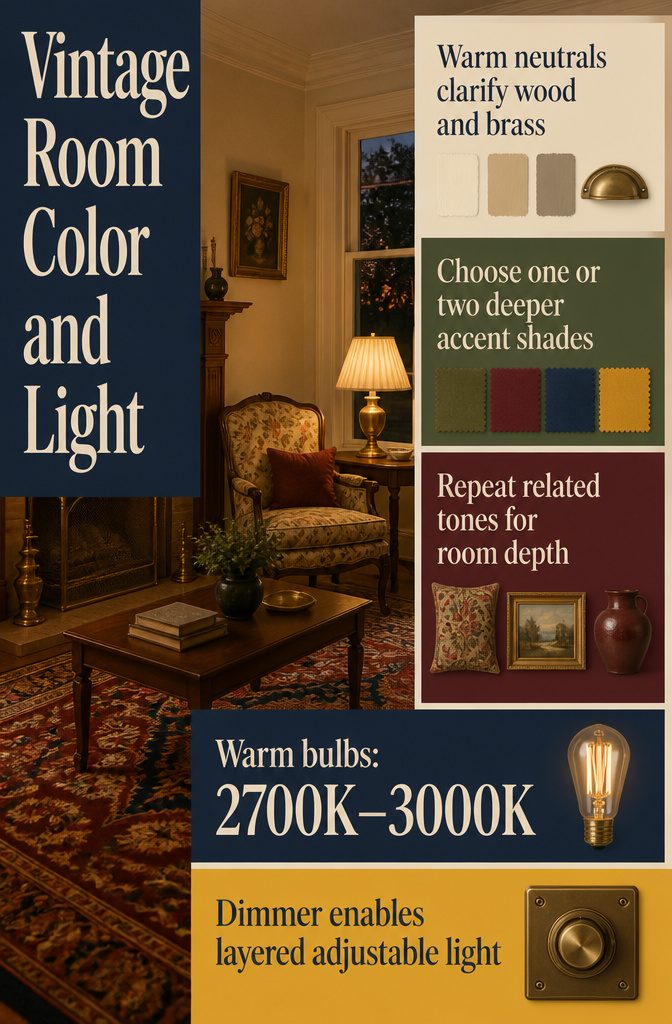
Warm neutrals form the foundation—cream, beige, and taupe let antique wood and brass read clearly without fighting for attention.
Layer in one or two deeper accent shades: olive green, burgundy, navy, or mustard pull the eye without taking over, and they sit comfortably next to patterned rugs and florals.
Repeat a few related tones rather than matching every finish in the room, which tends to flatten the space instead of giving it depth.
Lighting temperature matters as much as paint. Warm bulbs at 2700K–3000K soften edges and make vintage textiles and wood glow the way they did originally, while cooler white light turns the same pieces harsh and clinical.
Add a dimmer if the fixture allows it; vintage rooms look best with layered, adjustable light rather than one overhead fixture running at full strength.
Frequently Asked Questions
Can different wood tones work in the same living room?
Yes, if one broad temperature leads and the rest echo it.
A dark walnut cabinet can anchor lighter oak pieces when the undertones stay in the same family. Compare visual mass as you arrange furniture: a single large piece in heavy wood can overpower 3 lighter ones even when the colors coordinate.
How do I make a vintage living room look stylish, not old-fashioned?
Mix vintage pieces with modern elements using the 70% vintage with 30% modern guideline.
One modern anchor like a plain sofa, neutral walls, or a coffee table with clean lines gives the eye a place to rest between older textures and silhouettes. The connection happens through proportion and visual weight more than through matching.
Which colors work best for a vintage-style living room?
Warm neutrals like cream, beige, and taupe form the foundation, then layer in 1 or 2 deeper accent shades such as olive green, burgundy, navy, or mustard. Repeat a few related tones rather than matching every finish in the room.
What are the best vintage decor pieces to start with if I’m on a budget?
A patterned rug pulls together vintage character more easily than most other pieces.
Oriental designs, Turkish-inspired medallions, and Kilim geometrics bring warmth and a sense of history while connecting scattered furniture colors into a single coherent seating area. The pattern itself reads as aged even when the rug is new.
Should the sofa be the vintage anchor?
Not necessarily. If the existing sofa is comfortable and correctly scaled, a chair, cabinet, coffee table, rug, mirror, or lamp can establish vintage character with less cost and less hidden construction risk.
How can I tell the difference between patina and damage on vintage furniture?
Patina changes appearance while the piece remains stable and usable.
Damage affects structure, movement, comfort, or continued deterioration. Loose joints, lifting veneer, active splits, failing upholstery, and doors that no longer operate should be priced as repair questions.
What should I ask before buying vintage furniture online?
Ask about dimensions, age or maker, repairs, materials, condition, upholstery, delivery, damage procedures, and returns. Request photos of defects next to a ruler so "small scratch" means something concrete, and measure doorways and stairwells before delivery.