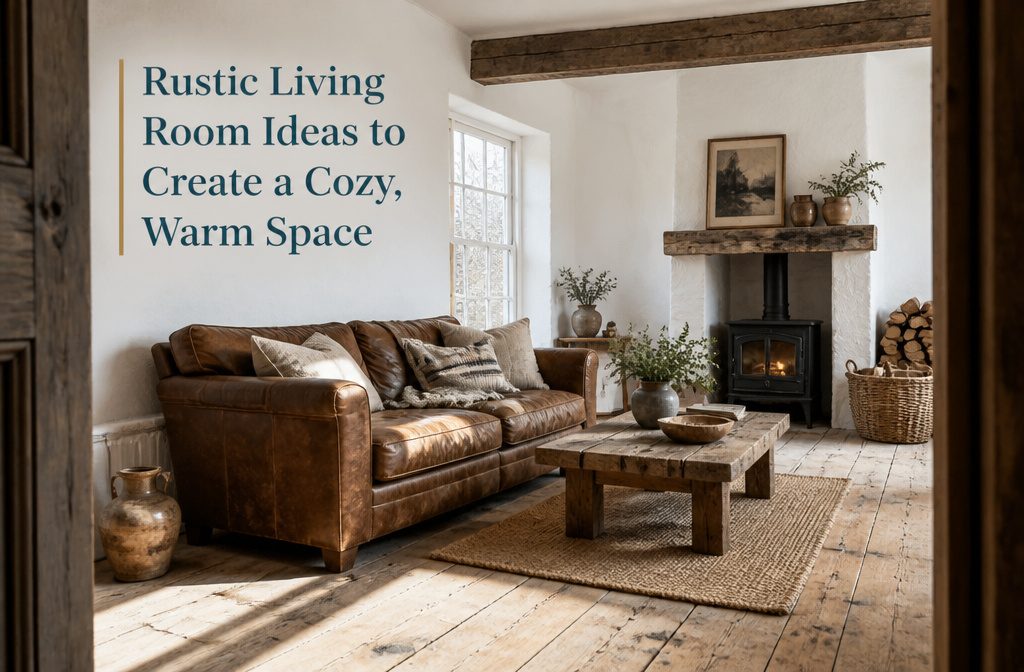
Rustic living rooms range from light farmhouse to dark lodge, and the deciding factor is how much wood you’re willing to live with.
The style works in small spaces as easily as large ones, but without enough natural light, the room turns into a cave—white walls or raised ceilings fix that before you add a single piece of furniture.
A leather sofa costs less than you’d think secondhand, jute rugs start around $50, and reclaimed wood from a salvage yard runs cheaper than new pine.
1. Use Natural Wood and Other Raw Materials
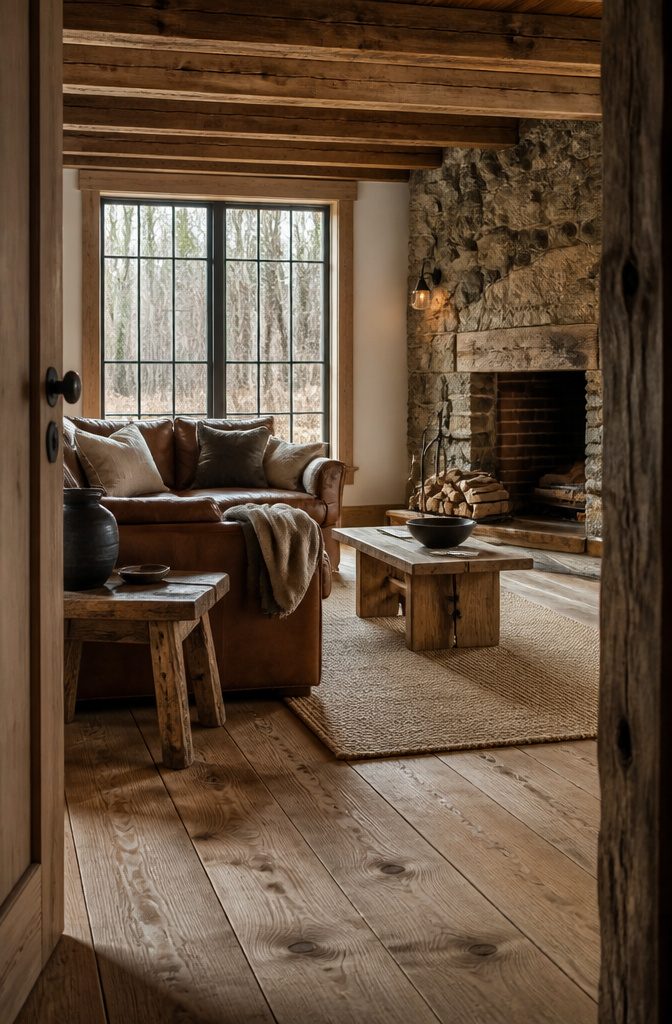
Wood carries the room. I build around pine for affordability, maple when the grain needs to look clean, and fir plywood where large panels matter more than character.
Cedar and birch work when their color fits what you already own. Reclaimed pieces bring texture without requiring a story attached to them.
Stone and brick anchor one wall—a fireplace surround, an exposed chimney, or a single accent behind the couch.
Metal shows up in fixtures and frames, aged or industrial depending on whether you want lodge or farmhouse. Leather furniture ages visibly, which suits the style; if that bothers you, woven textiles hold up without looking too polished.
The materials do the work.
Exposed beams, wide-plank floors, and rough-hewn walls create dimension without adding objects to the room. Natural fabrics in solid colors keep the focus on the wood and stone rather than competing with them.
Recommended Products

Premium Wood Construction: Made from real fir wood with a durable wear‑resistant veneer, this coffee table is built to handle real life. The natural wood grain adds warmth to your living room, and it'll keep looking beautiful for years to come—through morning coffee, movie nights, and everything in between.

【SOLID WOOD WITH NATURAL CHARACTER】 Crafted from solid wood, this square coffee table showcases distinctive grain patterns, knots and natural color variations that give every piece its own character. The distressed finish enhances the organic texture for a warm, lived-in farmhouse look.

Ships fully assembled
2. Choose Warm, Earthy or Neutral Colors
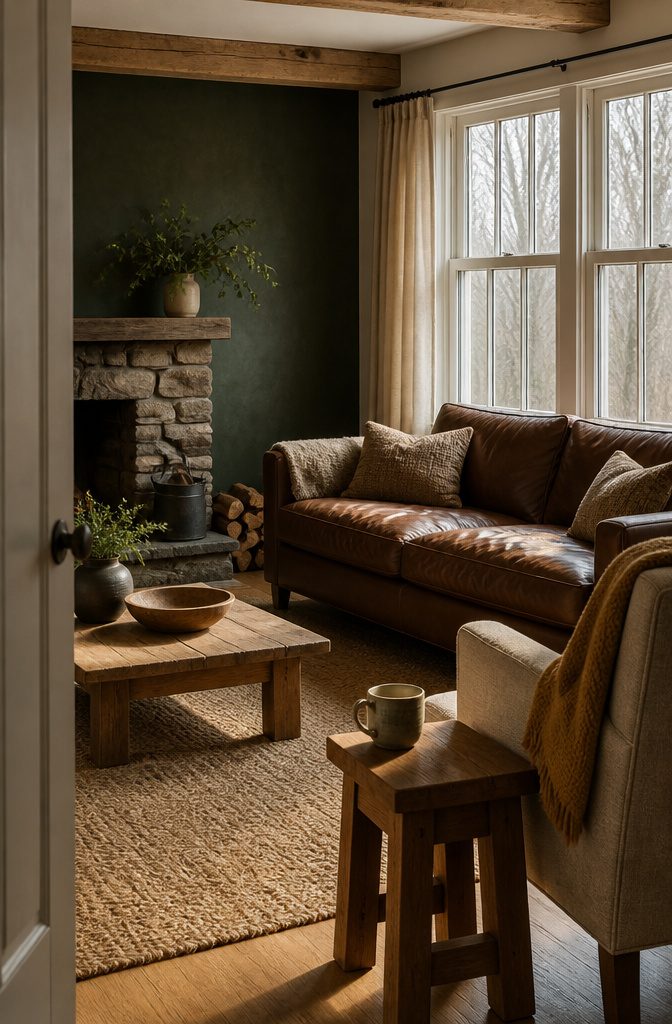
Muted earth tones give a rustic living room its grounded feel.
Start with rich browns, soft beiges, deep greens, and warm greys — colors that reflect what you would see outside. These work as the foundation, and they let you layer in texture without the space feeling cluttered or loud.
If you want more than neutrals, keep accent colors restrained. Dusky pinks, mustard yellows, and olive greens fit the palette without pulling the room into something too bright or modern.
An accent wall in forest green or burnt orange adds depth, but use it sparingly — too many bold tones compete with the warmth you are building.
Lighter colors keep the room from feeling too dark.
White or cream on trim, or even painted halfway up the wall, opens the space and gives contrast. That balance matters more than sticking to one side of the color wheel.
Recommended Products

100% NATURAL JUTE : This rug has been carefully handmade using 100% natural jute fibers, which can result in slight variations in color and weave. These variations add to the rug's individuality and uniqueness.

NATURAL JUTE & COTTON BLEND: This rug is handmade using a durable blend of natural jute and cotton fibers, combining strength with a soft, comfortable feel underfoot. As each piece is handcrafted, slight variations in color and weave are natural and add to its rustic, organic charm — no two rugs are exactly alike.

[COLOR & DESIGN]: SAFAVIEH's Natural Fiber area rug features a chunky, loop-woven jute texture in a soft neutral tone; actual color may appear darker or lighter than shown, depending on lighting and screen settings.
3. Layer Textures and Textiles
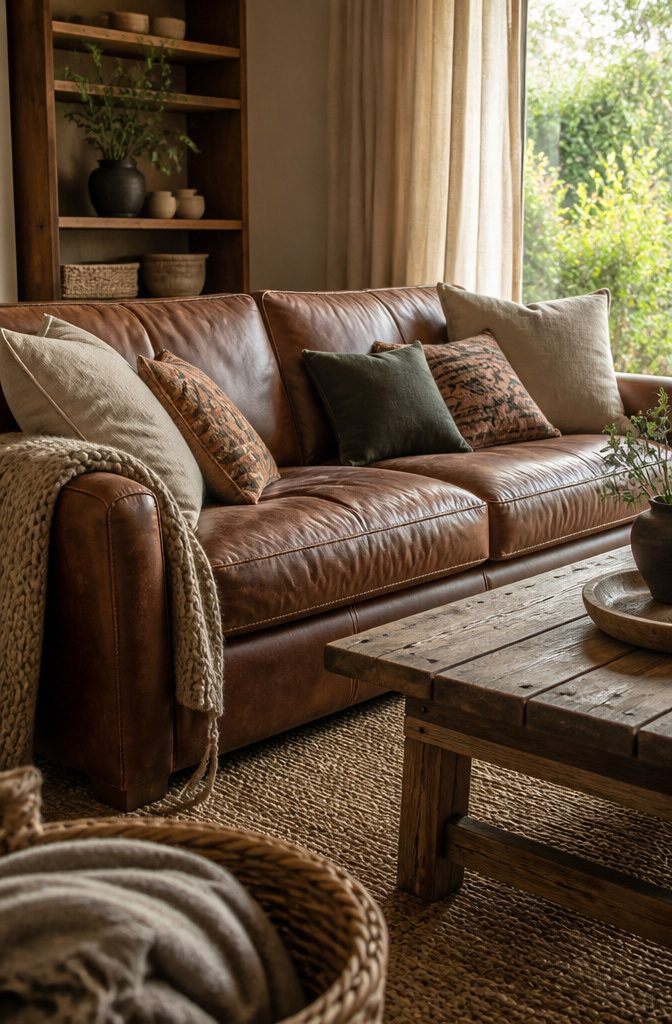
A rustic living room gets its warmth from texture more than color. Wood, linen, leather, wicker, and wool each catch light differently, and stacking them in one room creates the depth that makes a space feel lived-in rather than staged.
Drape a chunky knit blanket over the arm of a leather sofa, set a jute rug under a reclaimed wood coffee table, and the contrast does the work—no pattern required.
Pillows follow the same logic.
Two patterned and two solid-color pillows per sofa is enough; arrange them so the largest sit on the outside. Linen, wool, and leather work well together here, and keeping the palette in earth tones lets the texture carry the look.
A floor-to-ceiling linen curtain in a warm neutral ties the layers together without adding visual weight, and a woven throw or sisal rug grounds everything without competing for attention.
Recommended Products

Mid Century Modern Leather Loveseat - Immerse yourself in luxury with this TYBOATLE Mid Century Modern Loveseat Sofa. Featuring elegant faux leather in a rich black hue, this comfy love seat embodies the essence of mid-century modern design with its tufted stitching and smooth, sophisticated curves. Whether placed in your living room, bedroom, play room, office, or conference room, its versatile design complements any decor. Dimensions: 60.63"(L) x 27.95"(W) x 30.70"(H).

【COMPACT DESIGN FOR SMALL SPACES】This loveseat features a compact silhouette, serving as an ideal pick for apartments, offices and all small-area rooms. With a 69-inch seat width, it delivers ample space for sitting and lounging while occupying minimal floor space to greatly save room layout space.

【Perfect Contemporary L Shaped Couch】TYBOATLE sectional couches has a quality aesthetic design. This comfortable sofa is ideal for any space, with a wide sofa arm shape, convenient arm side pockets, and a highly technological USB charging feature, a sofa that is a perfect blend of modern and mid-century style that can be placed in living rooms, offices, RVs, apartments, and more
4. Make a Fireplace a Focal Point
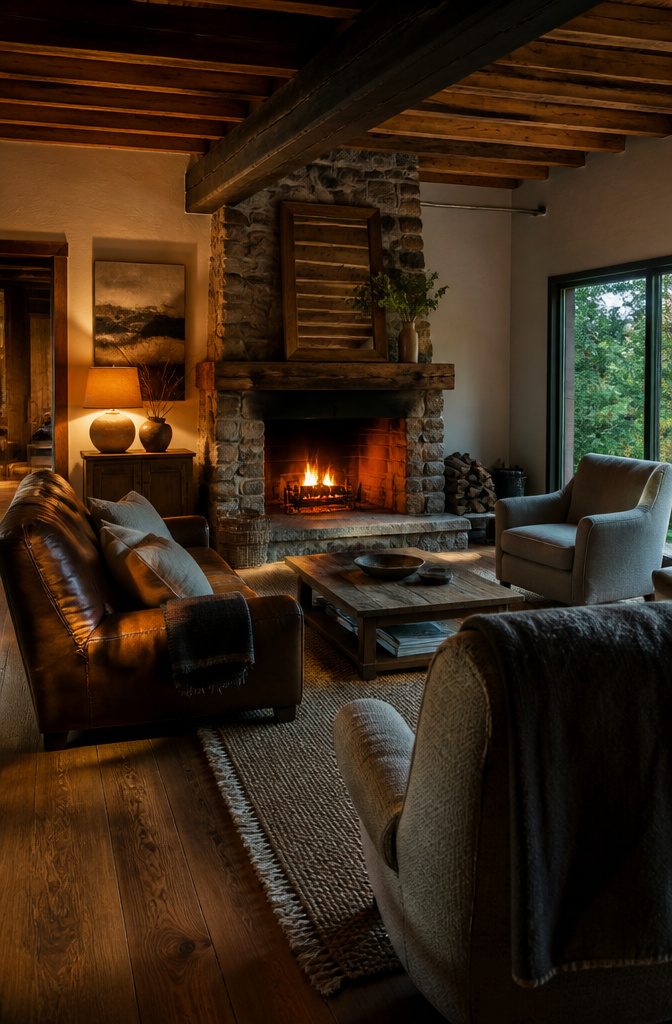
A fireplace anchors the room the way a hearth does in a cabin.
If you have one, build the furniture arrangement around it — the couch angled toward the flames, chairs pulled close enough to feel the heat. Stone surrounds or a reclaimed wood mantel reinforce the rustic pull without adding clutter.
No working fireplace?
Stack firewood against the hearth and flank it with lanterns or pillar candles. The stacked wood reads as both utility and texture, especially when the wall behind it contrasts — white-washed brick makes the grain stand out.
Keep the mantel edit tight: a large mirror, a single piece of framed art, or a branch of seasonal greenery.
Three objects at most. A center that draws the eye without requiring maintenance every time you walk past it.
5. Use Reclaimed, Distressed, Antique, or Vintage Pieces
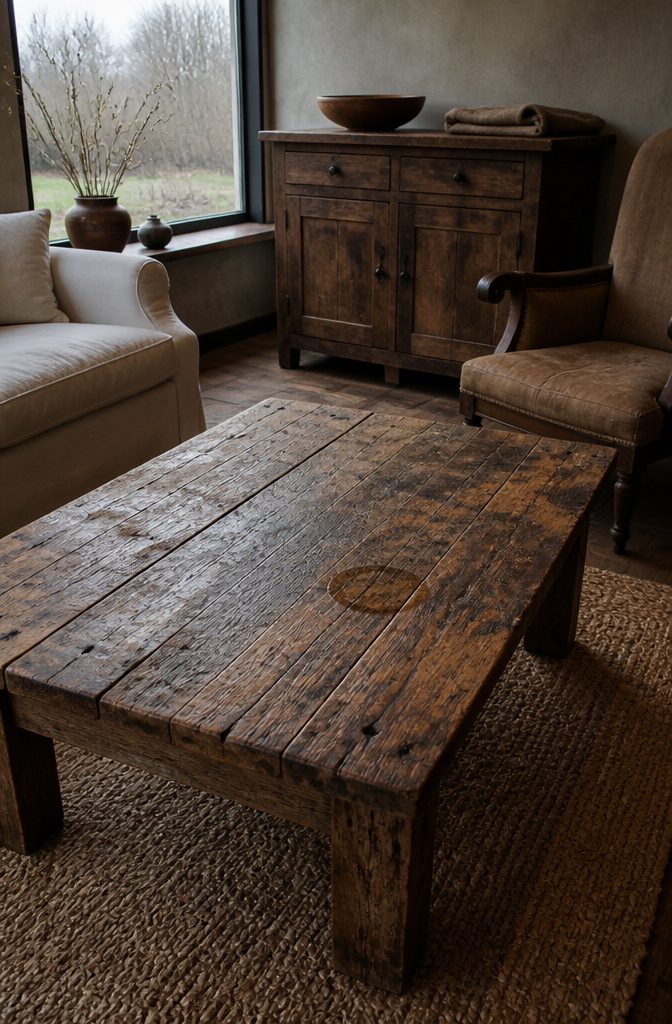
Reclaimed wood furniture carries the marks of its former life—saw cuts, nail holes, color shifts within a single plank—and that wear is what makes it work.
A sideboard pulled from a barn or a coffee table built from old flooring brings texture you can’t fake with a stain, and the imperfection is the point.
Antique stores and thrift shops turn up chairs, benches, and side tables that may need new upholstery or a coat of paint, but if the shape appeals, the rest can be fixed on a weekend.
Some pieces look better stripped back to their base cloth or left distressed, and a bit of visible age fits a rustic room better than anything pristine.
You’re not hunting perfection; you’re after something that looks like it had a life before it landed in your living room.
Recommended Products

Item Description: Timberthane Sandblasted Faux Wood Beam, 3-Sided (U-beam), 10"W x 12"H x 96"L, Factory Prepped
Item Description: Timberthane Sandblasted Faux Wood Beam, 3-Sided (U-beam), 6"W x 4"H x 168"L, Factory Prepped
Item Description: Timberthane Sandblasted Faux Wood Beam, 3-Sided (U-beam), 10"W x 12"H x 144"L, Factory Prepped
6. Bring in Natural Light and Views
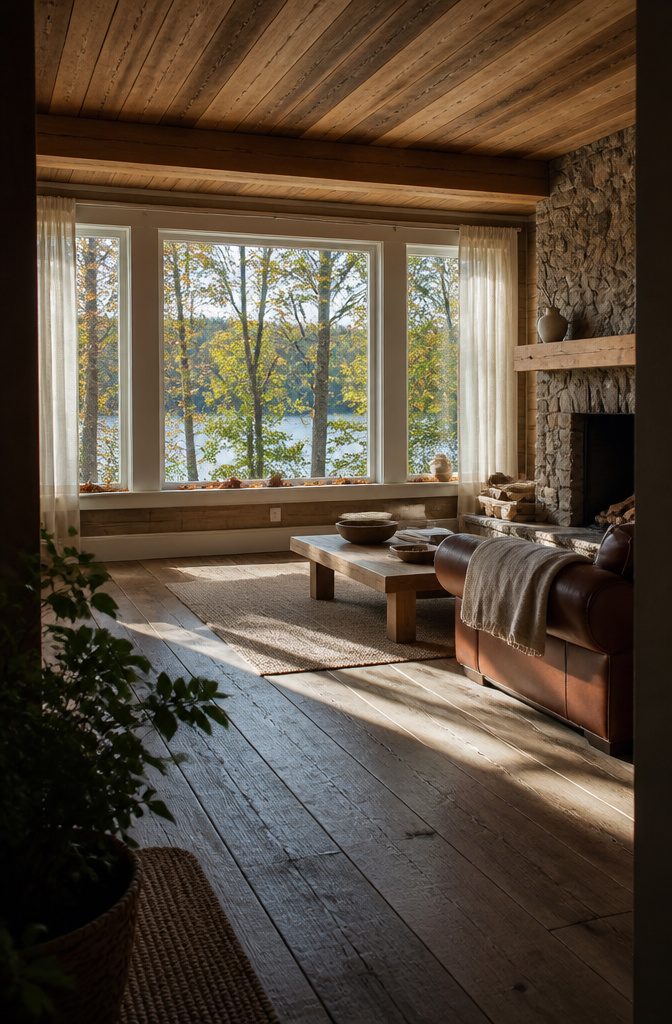
Windows keep the space from closing in. Rustic pulls toward dark — wood ceilings, stone, leather — and without enough daylight the room starts to feel like a cave.
If you’re planning a remodel or have control over window placement, add more glass or raise the ceiling to pull in light from above.
Already built? Open the curtains or skip them entirely if the view and privacy allow it.
Let what’s outside become part of the room. A wall of windows facing trees or water makes the landscape the backdrop, and the rustic materials inside read as an extension of it rather than a closed-off lodge.
Paint walls white or a pale neutral if the wood or stone threatens to darken things too much — reclaimed pine planking stays rustic when it’s bordered by white trim and sheer linen at the windows.
Recommended Products

【Robust and Stable】: Solid reclaimed wood consists of reused timbers such as teak, mango wood, pinewood, and beech. These materials are recycled from old buildings such as factories, sheds, and boats. The iron frame of table legs enhances your interior with an industrial style and provides exceptional durability and stability.

WEDGED THROUGH MORTISE TENON - HOKYHOKY wood coffee table displays Real Wedged Through Mortise-Tenon and concealed hardware, producing a polished and quaint farmhouse impression.

Essential Living Room Table With Lift-Top: Do you often find yourself hunched over your coffee table to type on your laptop or eat a quick lunch? OKD coffee table with lifting top allows you to raise the tabletop to a more comfortable height for task. Equipped with high-quality hinge that take minimal effort to operate and provide smoothest motion, allow the tabletop can be easily raised or lowered to meet different needs, ensuring a comfortable user experience. Plus, additions to the farm decor
7. Add Rustic Wall Treatments
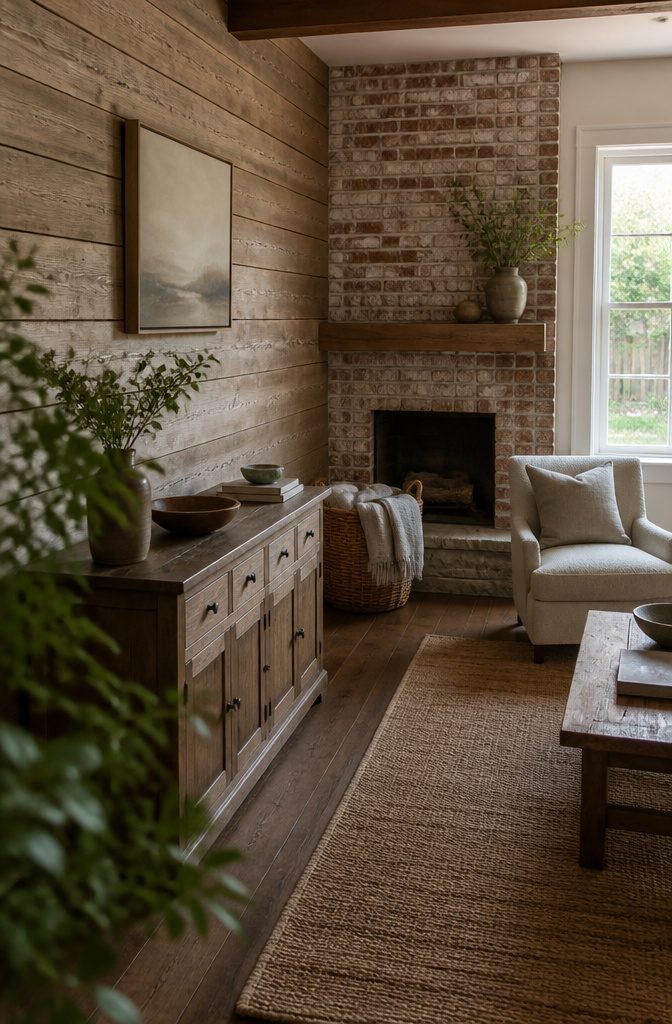
Wood paneling brings immediate warmth to walls, and shiplap is the quickest install if you want visible grain without heavy lifting.
A feature wall works where budget or time won’t stretch to a full room, and wood-effect wallpaper gives you the look at a fraction of the cost when real boards aren’t an option.
Exposed brick or plaster effects add texture without competing for attention the way a busy pattern would.
Stone works the same way, especially around a fireplace or as flooring. Limestone and slate both handle foot traffic and age well, and real marble is an option if the budget allows.
Stone-effect tiles deliver a similar look for less, and most hold up better in high-traffic zones than you’d expect from something imitating the real thing.
8. Choose Comfortable, Functional Furniture
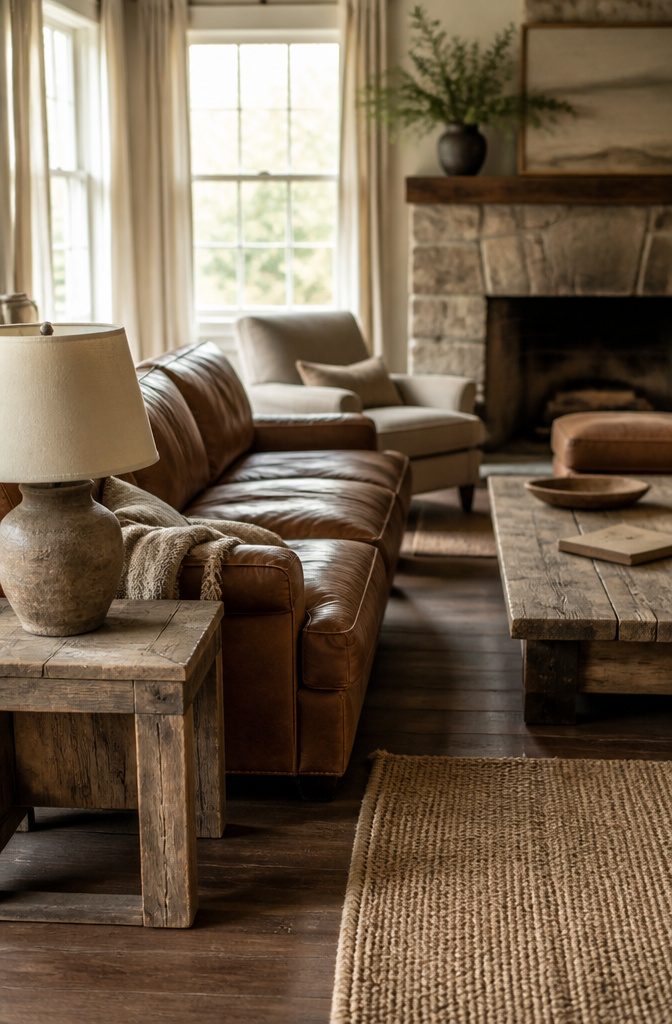
A leather sofa in warm brown or a deep armchair upholstered in linen or wool anchors the room without looking stiff.
Rustic furniture leans toward pieces you actually want to sink into—something sturdy enough to handle daily use but soft enough that nobody perches on the edge.
Modular seating works especially well here because you can push sections together for movie night or split them into individual chairs when the room needs to breathe.
Reclaimed wood coffee tables and side tables add texture without taking over, and their uneven grain keeps the space from feeling too matched.
If you’re filling the room from scratch, start with the piece you’ll use most—whether that’s the couch, a console for your TV, or a reading chair near the window—and build the rest of the layout around it.
A bay window or a fireplace will pull focus on its own, so angle seating toward whichever architectural feature you want people to notice first.
Recommended Products

Convertible Sofa Bed: This versatile futon easily converts from a stylish loveseat to a comfortable sleeper by simply lowering the backrest. With a sofa size of 69.3"W x 19.7"D x 16.5"H and a sofa bed size of 69.3"W x 39.4"D x 16.5"H, it provides spacious seating by day and a cozy sleeping space by night. Ideal for apartments, living rooms, dorms, home offices, or guest rooms.

Leather Upholstery: Made with premium leather that provides a soft, refined texture. It's easy to maintain and perfect for everyday use in busy areas.

Extra-long Leather Sofa: Measuring 84"W x 33"D x 30"H, this extra-long faux leather sofa comfortably seats 3 adults. With a 71" usable length, it doubles as a sofa bed, perfect for stretching out—even for someone 6 ft tall.
9. Use Plants and Natural Objects as Decor
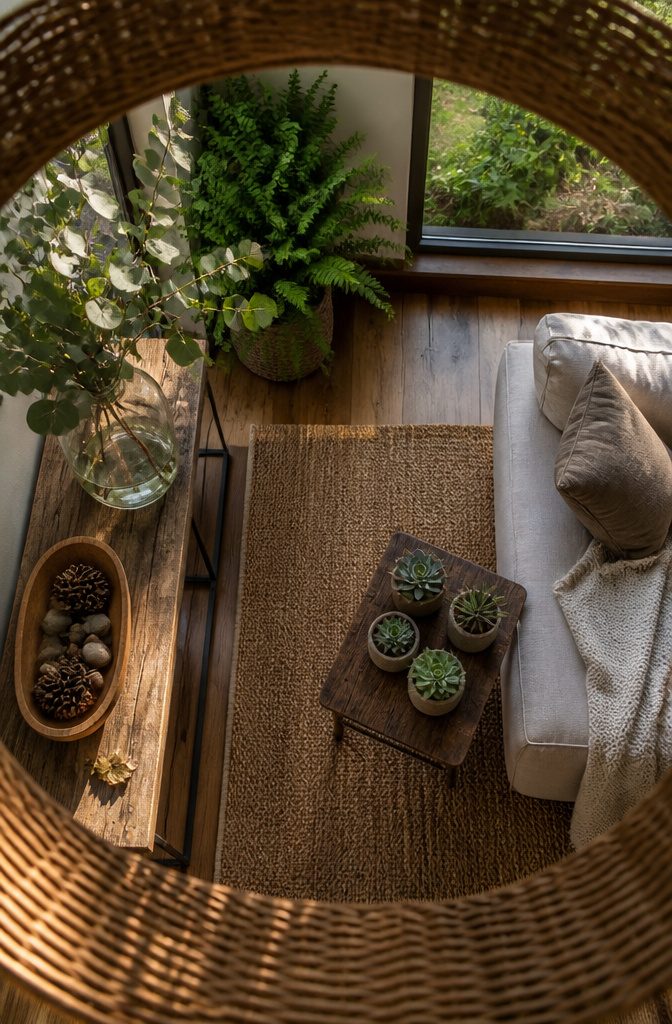
Ferns fill corners without fighting for attention, and eucalyptus stems lean in a tall glass vase the way they would if you picked them yourself.
Succulents sit low on a side table and need watering about once a month, which matters if you travel.
A bundle of eucalyptus or olive branches brings texture you can see from across the room without adding a single hard edge.
Pinecones in a wooden bowl, a few smooth stones on a stack of books, or bare branches in a ceramic jug all work because they already look like the outdoors. None of it needs to be precious.
Repetition: one plant reads as housekeeping, but three or four scattered through the room start to feel like a choice. Keep the containers simple so the greenery does the work.
Recommended Products

Ready to Hang: Size : 12x16in(30x40cm),wall art is already perfectly stretched over solid wooden frame and hooks have been mounted on panel, you could easily hang the framed canvas wall art on at any time
SPARKLE FOR WALLS: Our paint glitter additive is an easy & effective way to add a unique, shimmering finish to any interior surface; particles capture & reflect light for an enchanting effect.

ARTWORK SIZE - Each canvas panel is 12 x 16 inch (30x40cm), total 3 panels are 16 x 36 inch (40x90cm). Please measure your place before purchase this modern wall decor, then your chosen size is suitable.
10. Add Lighting That Supports a Warm Mood
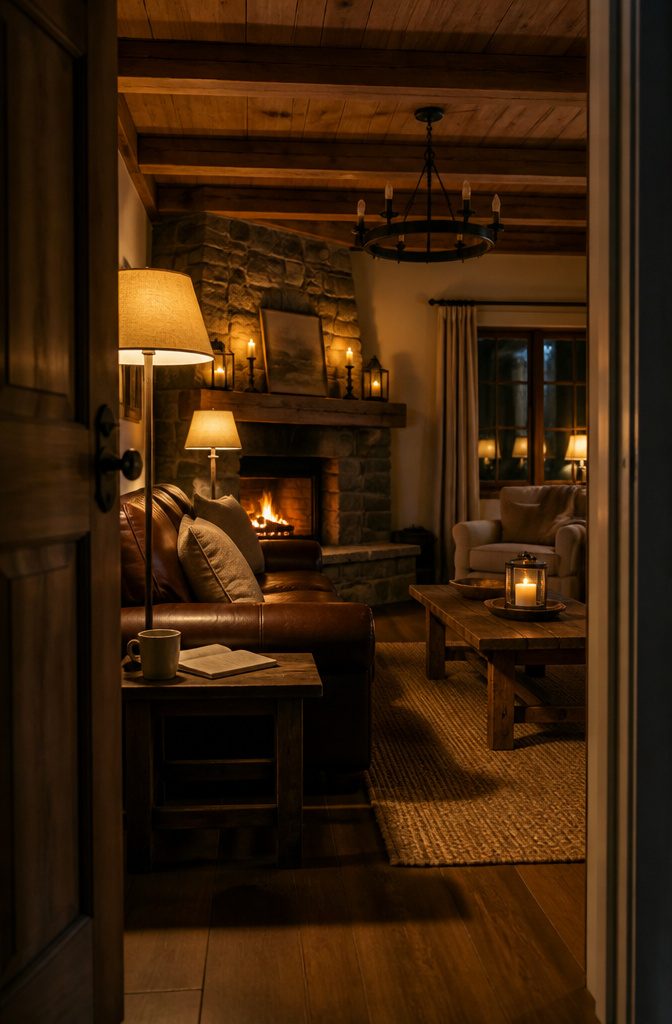
Lamps with warm bulbs make a bigger difference than the fixture itself.
I keep LED bulbs under 2700 Kelvin in every lamp in the room—anything higher reads cold, and the whole rustic effect depends on that yellow-toned glow. Some LED bulbs last up to 20 years, so the upfront cost disappears fast.
Fixtures in wrought iron or distressed metal fit the style without trying too hard.
A floor lamp next to the sofa works better than overhead lighting for evening hours, and table lamps on mismatched side tables add warmth without matching too carefully.
Shades in burlap or linen soften the light further. Candles in lantern-style holders or lined up on the mantel add depth when you need the room to feel more intimate, though they’re atmosphere rather than task lighting.
Recommended Products
Item Description: Timberthane Sandblasted Faux Wood Beam, 3-Sided (U-beam), 12"W x 12"H x 96"L, Factory Prepped
Item Description: Timberthane Sandblasted Faux Wood Beam, 3-Sided (U-beam), 12"W x 6"H x 192"L, Factory Prepped
Item Description: Timberthane Sandblasted Faux Wood Beam, 3-Sided (U-beam), 4"W x 8"H x 192"L, Factory Prepped
11. Mix Rustic with Modern or Other Styles
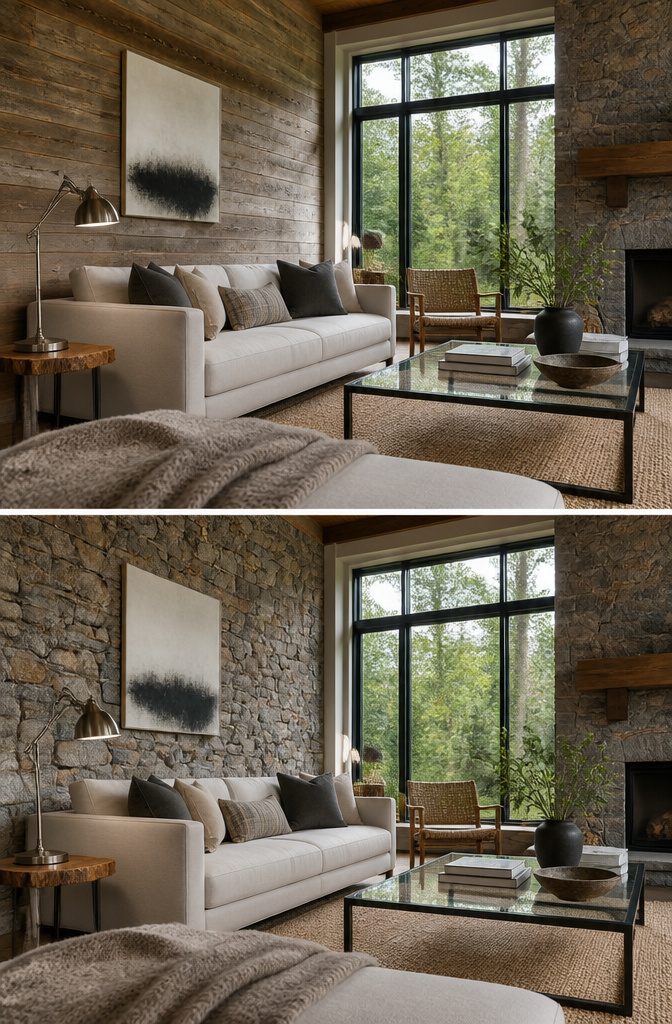
Rustic works best when it shares the room with something else. Pair reclaimed wood walls with clean-lined modern furniture — a glass-top coffee table or streamlined sofa keeps the space from tilting too cabin-heavy.
Or layer in traditional pieces: a turned-leg side table next to a leather armchair, both sitting against pine paneling, reads more pulled-together than pure lodge.
Rustic is nice, but if not balanced properly, it can become overbearing.
That balance is the difference between cozy and claustrophobic.
Contemporary art on a stone wall, white paint brightening reclaimed wood, a sleek lamp on a live-edge table — the contrast lets each material do its job without the room feeling like a single theme statement.
Rustic style covers farmhouse, coastal, Tuscan, and lodge looks, so mixing in pieces from any of those directions still lands you in the same family.
12. Style with Rugs, Displays, Patterns, or Art
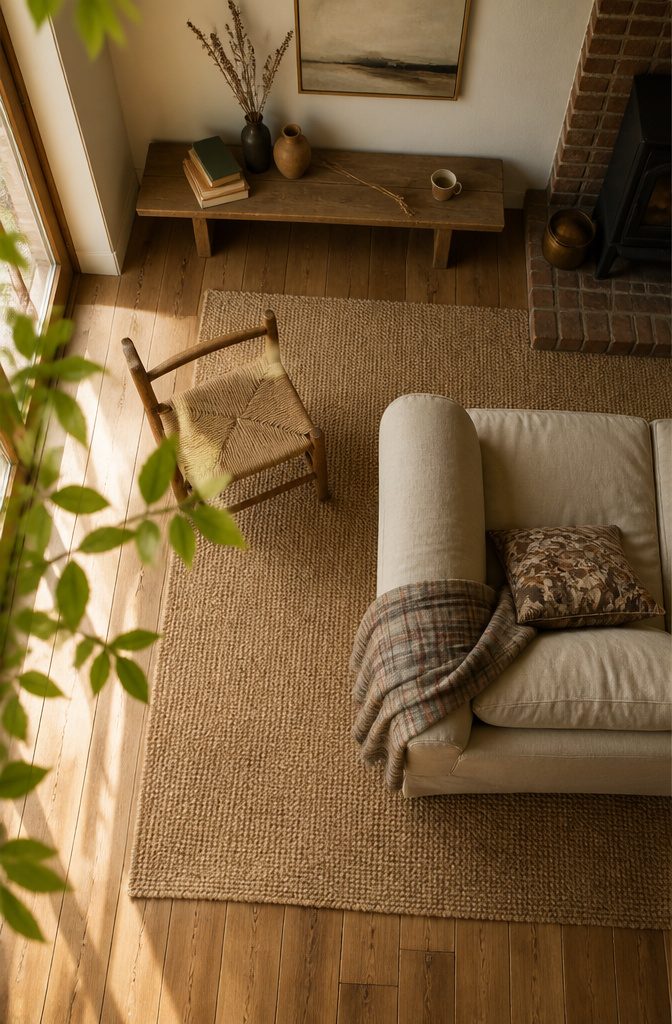
Rugs in jute or sisal bring natural fiber underfoot and give the room a grounded feel without fighting for attention.
If you’re working with hardwood — oak, hickory, or maple are all solid choices for rustic rooms — a textured rug in a warm neutral pulls the seating area together and softens the sound.
I prefer jute when the floor itself has a lot of grain; sisal when I want a bit more tooth.
Patterns work best when they stay quiet. Plaid or houndstooth on a throw adds structure without turning the room into a lodge catalog, and a small floral print on a pillow reads as rustic if the colors stay earthy.
Go past two patterned pieces and the space starts to feel busy.
Wall displays let you show what you’ve collected: a stack of books mounted like sculpture, a row of dried stems in simple vases, firewood framed against white brick.
Nature-themed art fits, but so does anything with texture or an imperfect edge. Personality, not decoration for its own sake.
How to Work Rustic into Small Spaces
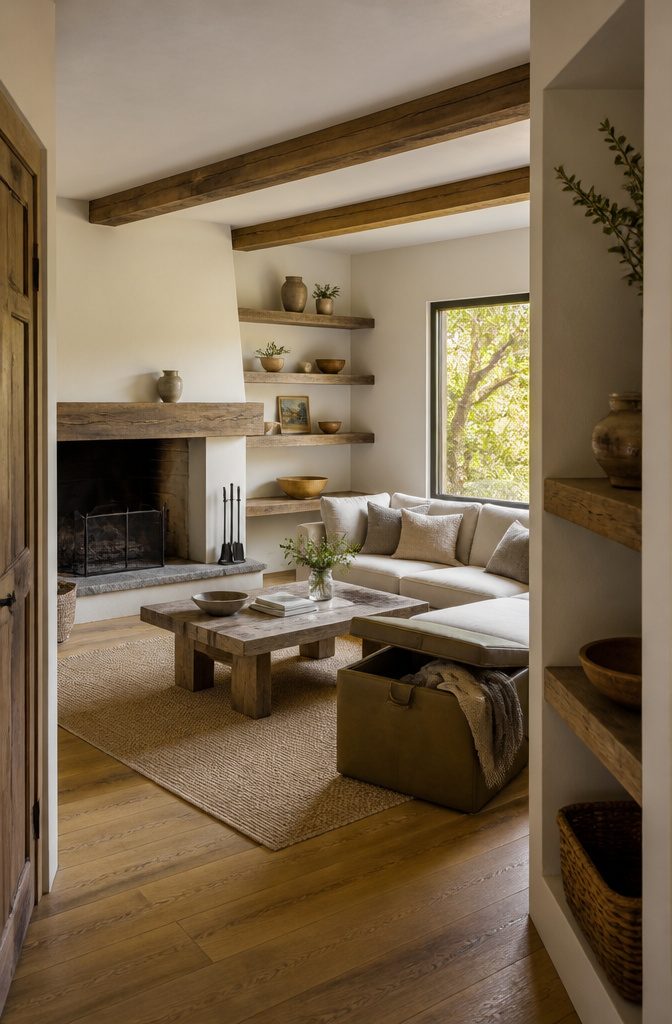
A small living room turns rustic just as easily as a large one, and the style actually helps: the warm wood tones and soft textures make a tight space feel like a retreat instead of a box.
I paint the walls white to give the room as much light as possible, then bring in wooden accents through a coffee table, floating shelves, or picture frames.
A rug anchors the seating area and adds another layer of warmth underfoot.
Modular furniture keeps the layout flexible. A sectional that breaks into separate chairs lets me rearrange for different uses without committing to one configuration, and a storage ottoman does double duty as a footrest and a place to tuck blankets.
I keep the mantel clear except for one or two pieces, since a fireplace reads as the focal point without extra decoration, and clutter shrinks a room faster than square footage does.
Rearranging what I already own costs nothing and often solves the problem before I buy anything new.
Budget and DIY Choices That Work

A rustic look does not require a designer budget, and most of the best pieces come from places you would not expect.
- Secondhand furniture saves hundreds over new — check estate sales, thrift stores, and yard sales for solid wood pieces where the shape matters more than the finish. Small dents and worn spots add character, and you can skip professional reupholstery unless the frame is truly worth it; paying someone else to redo a chair often costs $300 to $1,000.
- Salvage yards and architectural salvage shops carry barn wood, old doors, and metal brackets you can turn into shelving or wall decor for a fraction of retail.
- DIY projects like building a coffee table from reclaimed boards or distressing a newer piece with sandpaper cost under $50 and give you control over the final look.
- Buy less and choose better — a single standout vintage trunk does more than three mass-market accent pieces.
Frequently Asked Questions
What are some creative rustic living room ideas for small spaces?
Paint walls white to maximize light, then layer in wooden accents through a coffee table, floating shelves, or picture frames.
Use modular furniture that breaks into separate pieces for flexible arrangements, anchor the seating area with a jute or sisal rug, and keep the mantel clear except for 1 or 2 pieces so the fireplace holds focus without clutter.
What makes a living room rustic?
Natural materials like wood, stone, leather, and metal form the foundation, usually with exposed beams, wide-plank floors, or a fireplace as a focal point.
Warm earth tones (browns, beiges, greens, greys) and layered textures from linen, wool, and woven fabrics create depth without pattern. Reclaimed or distressed furniture adds character through visible age and imperfection.
What is modern rustic style?
Rustic materials paired with clean-lined contemporary furniture, like reclaimed wood walls next to a glass-top coffee table or a streamlined sofa.
White paint brightens the wood, sleek lamps sit on live-edge tables, and the contrast keeps the space from feeling too cabin-heavy while letting each material do its job.
What does the term ‘rustic vibe’ mean?
A casual, cozy feel built from natural materials, warm tones, and visible texture rather than polish. The look accepts imperfection (grain variations, worn edges, aged finishes) as part of the appeal and focuses on comfort over formality.
What does a rustic home look like?
Rustic homes feature natural wood (pine, maple, fir), stone or brick accents, and raw materials like leather and metal throughout.
Wide-plank floors, exposed beams, earth-toned palettes, and reclaimed or distressed furniture create a lived-in look. Rustic style covers farmhouse, coastal, Tuscan, and lodge aesthetics, all sharing that unpretentious, organic feel.