
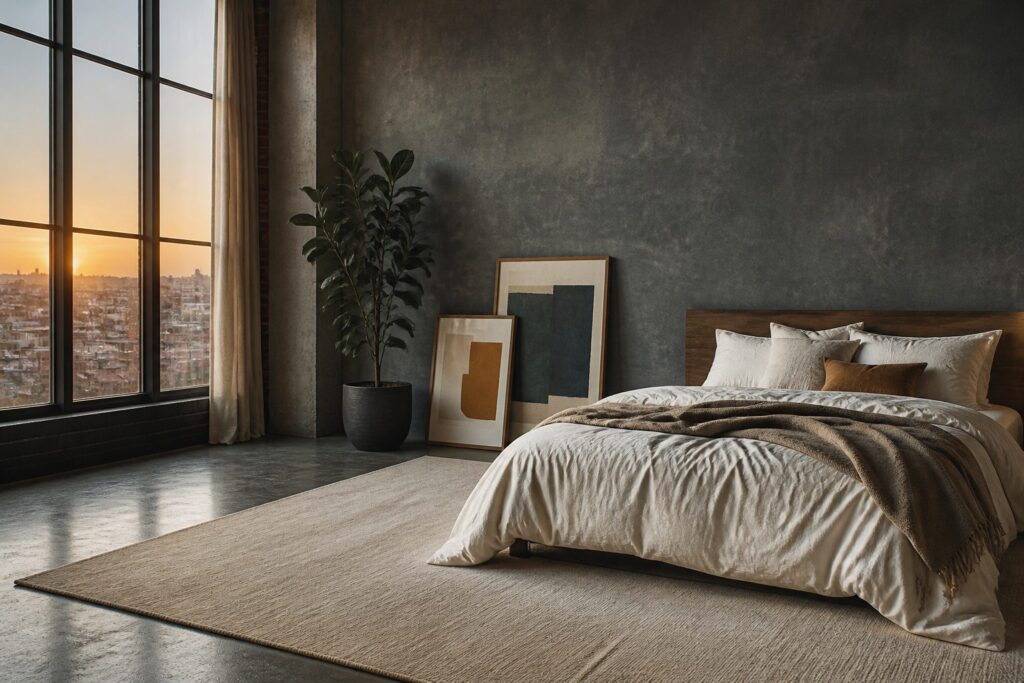
Modern master bedrooms range from a $60 limewash wall to built-in millwork that eats a full weekend, and the deciding factor is how much quiet you actually need from the space.
The detail that trips most people up is rug sizing: a 5’x7′ under a queen looks like a misplaced bath mat, while an 8’x10′ with 18 inches of exposed border on three sides turns the sleep zone into a single deliberate plane.
1. Low-Profile Platform Bed
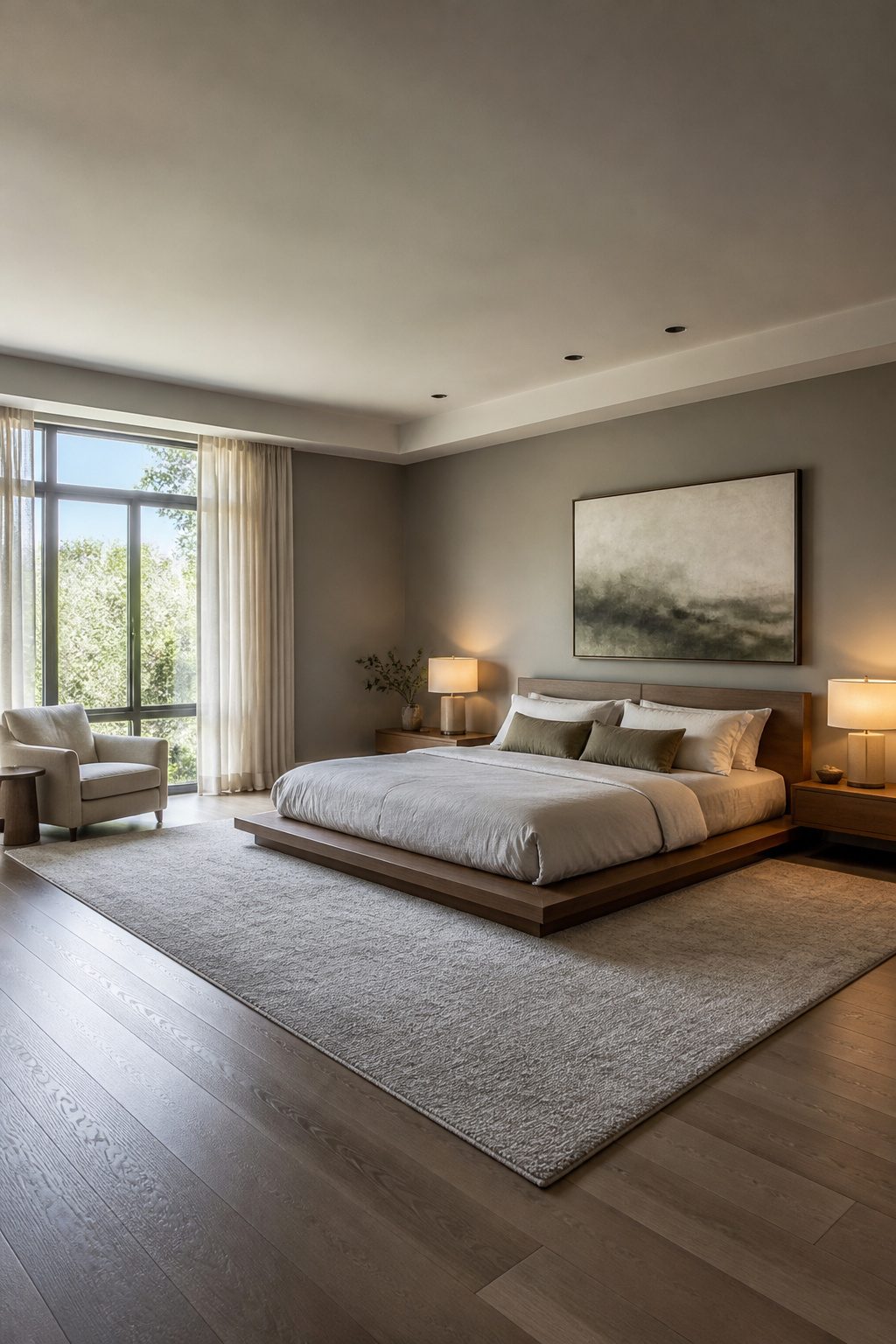
A low-profile platform bed kept 18–24 inches from the floor changes how a room reads more than almost any other single piece.
At that height, getting in and out stays easy; your hips do not drop below your knees, and you are not crouching to stand.
The visual weight disappears compared to a frame on legs. The mattress seems to rest directly on the floor, which stretches the wall line horizontally and makes the ceiling feel higher.
Rug sizing matters more with a platform bed because there is no skirt, no dust ruffle, nothing to hide a too-small choice underneath.
A king needs a 9’x12′ rug and a queen an 8’x10′ to anchor the sleep zone properly.
The rug should extend at least 24 inches past each side and the foot, sitting under both nightstands so the whole bed area reads as one deliberate plane rather than a mattress floating on bare floor.
Skip accent rugs that peek out; they make the space feel smaller, not cozier.
2. Warm, Muted Color Palette
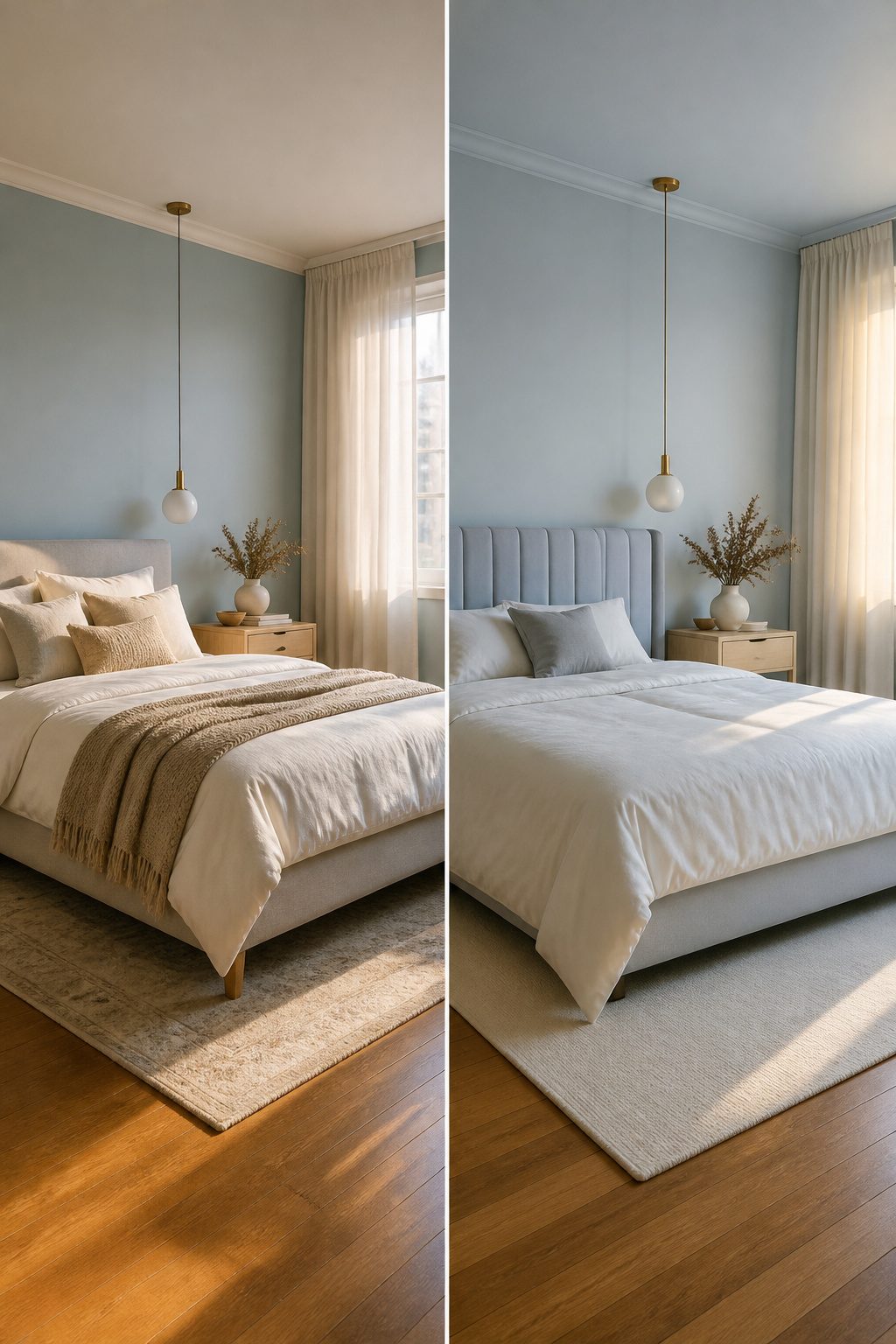
Soft blues, muted greens, and light neutrals do the actual work of calming a room rather than just photographing that way.
I would start with one of those three as the main wall color and keep everything else within two tones of it.
The reason these particular shades work is that they read as nature-adjacent: a soft blue pulls from sky or water, a muted green from sage or moss, and a light neutral from sand or stone.
Your nervous system recognizes them faster than your eye does.
I skip gray-on-gray entirely.
It ranks well on Pinterest because it photographs as clean and empty, but live in it and the room goes flat. Without a warm undertone, gray sucks the life out of morning light and evening lamplight alike.
Designers specify creamy whites or soft neutrals with warm undertones, not cool gray, because warmth is what makes a bedroom feel welcoming rather than institutional.
A palette with no warmth in it leaves you with a space that looks designed for a listing photo and feels, by 8 p.m., like a hotel you are ready to check out of.
If you want a darker accent, keep it small and keep it warm: a deep terracotta or a moody olive, not charcoal. The room still needs to feel like somewhere you would actually sleep.
3. Layered Lighting With Dimmers
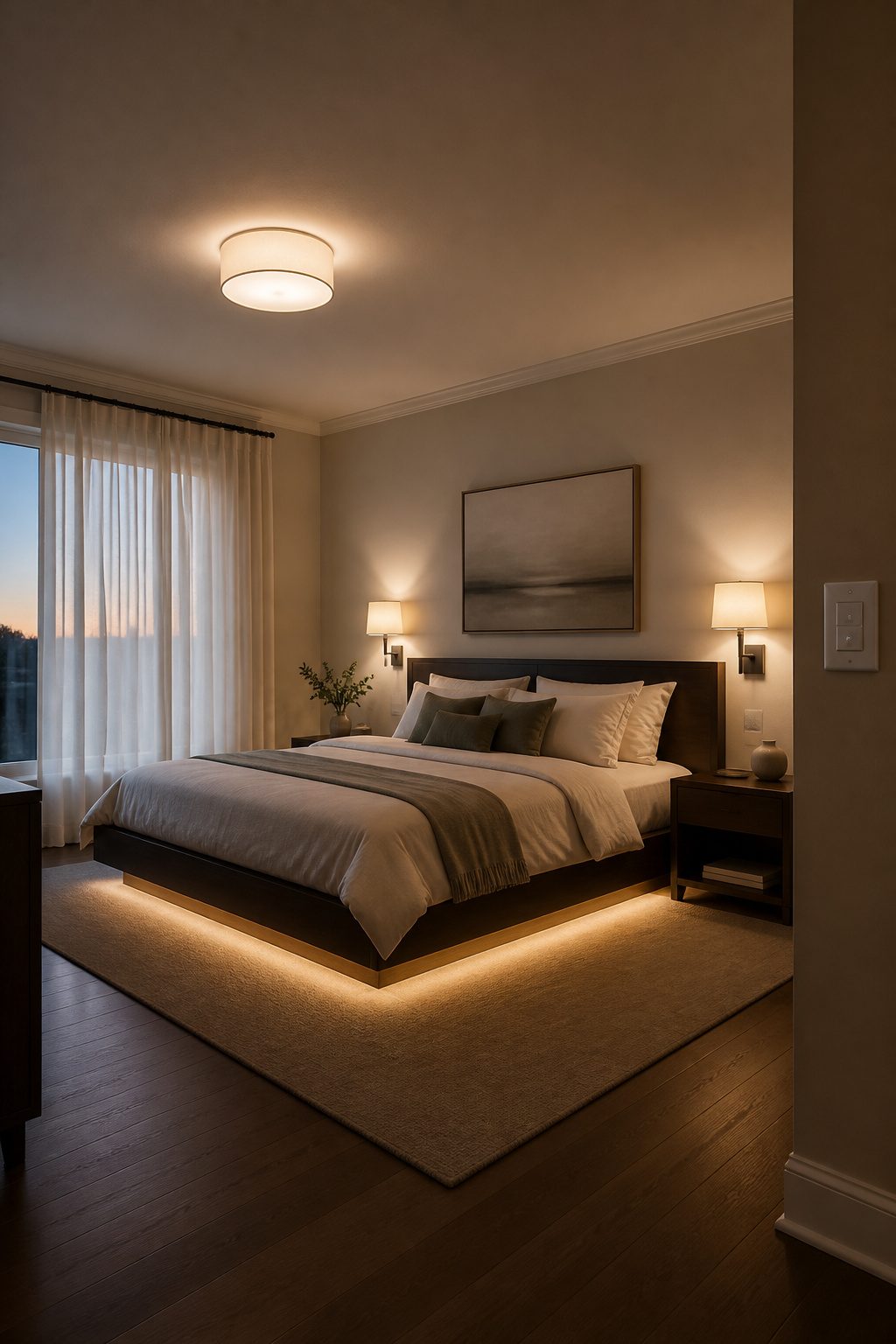
A modern master bedroom needs three lighting layers working together, and the order matters more than the fixtures themselves.
2700K bulbs hit the warm end of white without tipping into yellow, and that color temperature belongs in every layer: ambient from a slim flush-mount or recessed ceiling fixtures, task from bedside sconces or adjustable swing arms for reading, and accent from LED strip lighting tucked under the bed frame or behind the headboard for a soft glow that does not compete.
Dimming matters more in a bedroom than any other room in the house. The same eyes that need bright light for morning routines want near-darkness an hour later, and a wall dimmer handles that shift without pulling out a phone.
I wire dimmers at the switch during any project that opens the wall, because the alternative is smart bulbs that demand an app at midnight.
The app route fails when the network hiccups or when someone else just wants to turn off the light and sleep.
Ceiling fans with lights are the one fixture I would skip entirely. They add visual bulk and almost never read as contemporary, no matter how slim the blades look in the box.
4. Floor-to-Ceiling Curtains
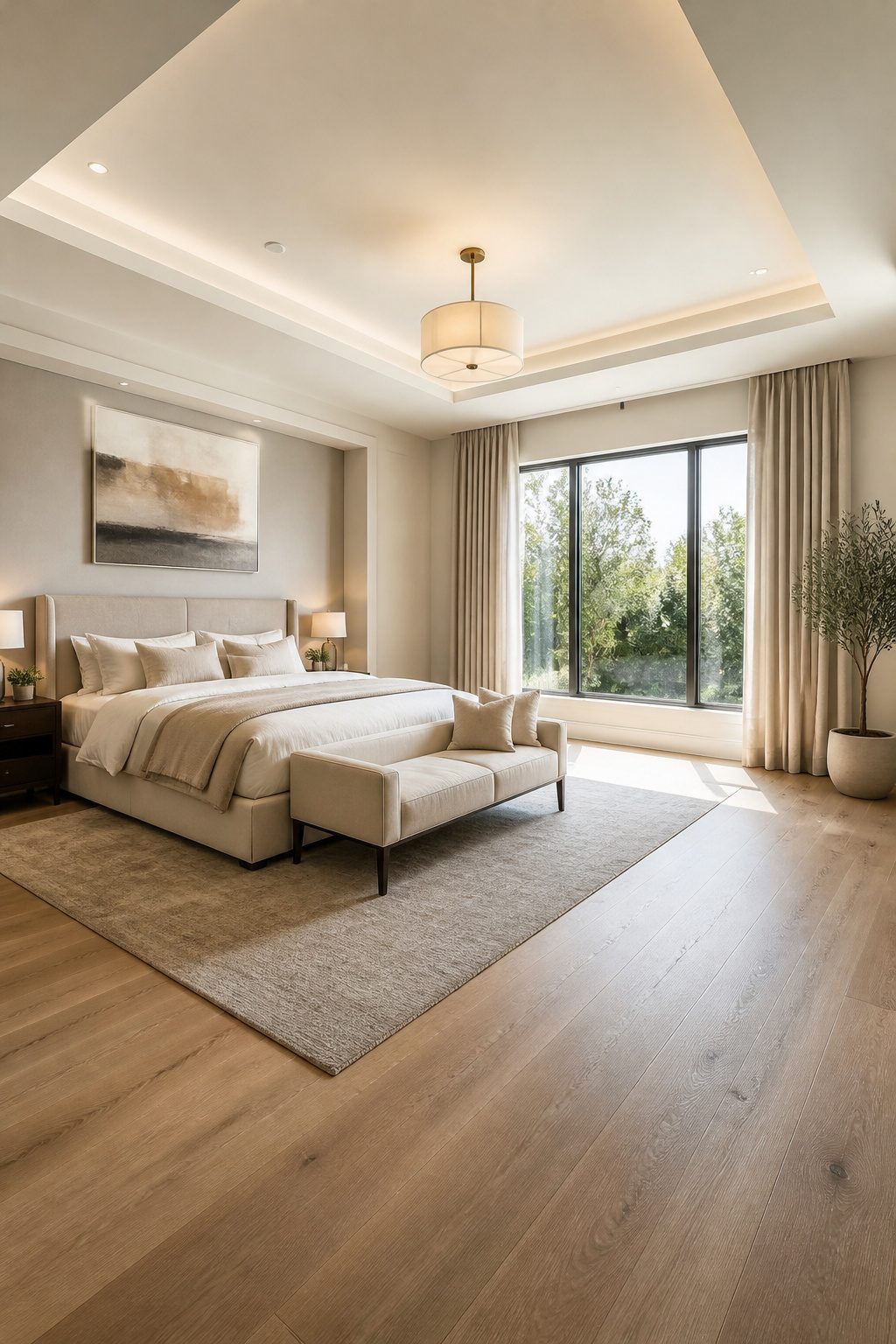
The rod placement matters more than the fabric price.
Mount it 8–12 inches above the window frame and extend 6–10 inches past each side. That overlap lets the curtains stack flat against the wall instead of blocking glass when they are open, so the window reads as larger than it is.
For fabric, I stick with linen or a soft cotton blend in a tone close to the wall.
Panels should disappear when open and read as architecture, not decoration. I always add blackout lining; a modern master bedroom needs full darkness for sleep, and the lining gives the panels weight to hang straight.
I skip grommets entirely.
The rings break the line every few inches and read busy to me. Back-tab or ripplefold keeps the heading flat and the fold consistent from top to bottom, which is the cleaner look I want in this room.
The hardware finish should match the rod itself; a mismatched ring or bracket is the kind of detail that makes the whole installation feel off.
5. Feature Wall Behind the Bed
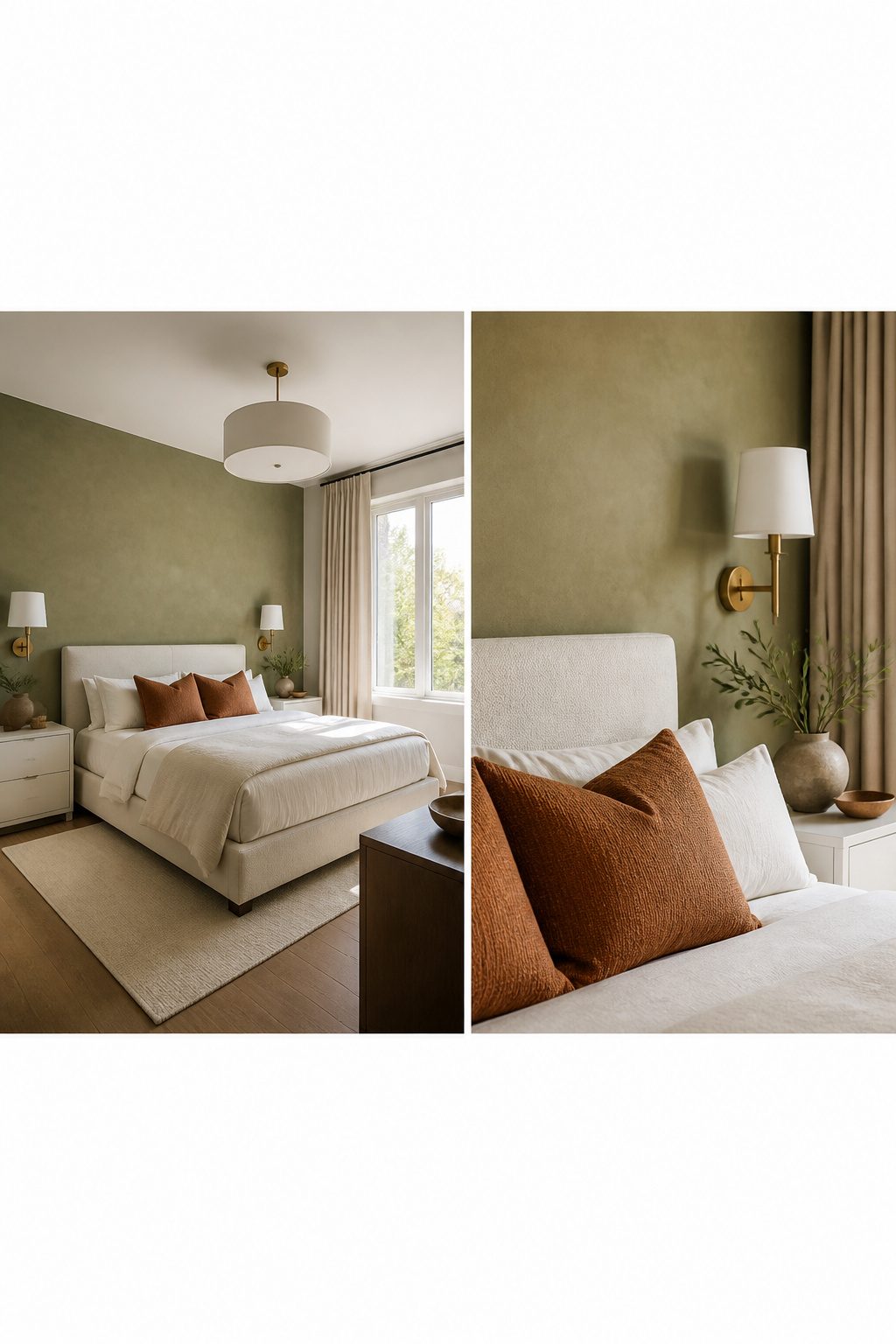
A modern bedroom needs one wall with presence, not two competing for attention. Wood slat panels run $400–$800 in materials and eat a full weekend: you are cutting, leveling, and filling nail holes that show on every row.
Upholstered panels in linen or velvet look polished but start around $600 for a queen wall and demand exact stud placement; misaligned channels read as a mistake from across the room.
Limewash wins for a Saturday project. A gallon covers roughly 180 square feet, costs under $60, and the prep is just a wipedown and a coat of primer if your wall is currently dark.
The finish is matte, slightly chalky, and forgiving of brush marks in a way high-gloss paint never is.
I would skip the Venetian plaster kits; they add $150 and two days of trowel work for a look that reads the same in bedroom light.
Painted drywall scuffs; wood veneer or microcement holds up better to headboard bumps and vacuum nicks. Limewash scuffs if your headboard rubs it nightly, so I would leave a 6-inch gap or use a floating frame.
One wall, one coat, one weekend. The other three stay quiet.
6. High-Quality Bedding
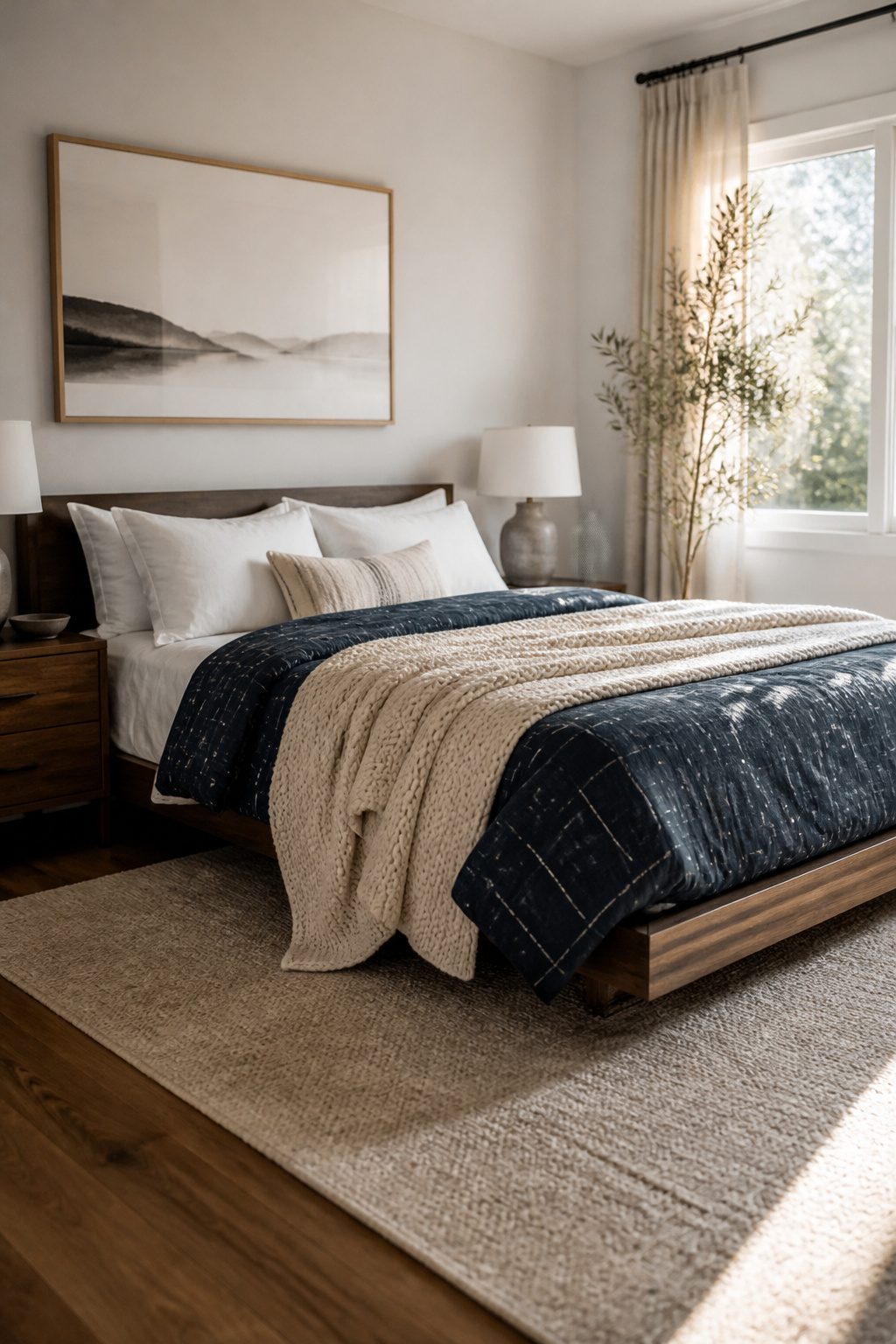
Thread count on the label is mostly marketing noise past a certain point. What actually changes how sheets feel against your skin is the weave and the cotton itself.
Percale runs crisp and cool with a matte surface; sateen drapes heavier and carries a slight sheen that reads more polished in a modern room.
Both can work, but I would pick percale for a bedroom that already has a lot of smooth, hard surfaces and wants some textural contrast.
Long-staple cotton, whether Egyptian or Pima, is where I would put my money. The longer fibers spin into smoother, stronger yarn that softens with washing instead of pilling into fuzz.
A set of long-staple percale in a solid, muted color gives you the clean visual line a modern space needs without looking like a hotel supply closet.
I would buy the best sheets I could justify and go cheaper on the duvet cover.
The sheets touch you directly every night; the cover is visual and gets layered with a top sheet anyway. If you want that relaxed, modern look without the crisp percale edge, linen is the honest alternative.
It wrinkles as soon as you look at it, which is part of its character, but you have to actually want that rumpled texture rather than fight it.
7. Minimal Upholstered Headboard
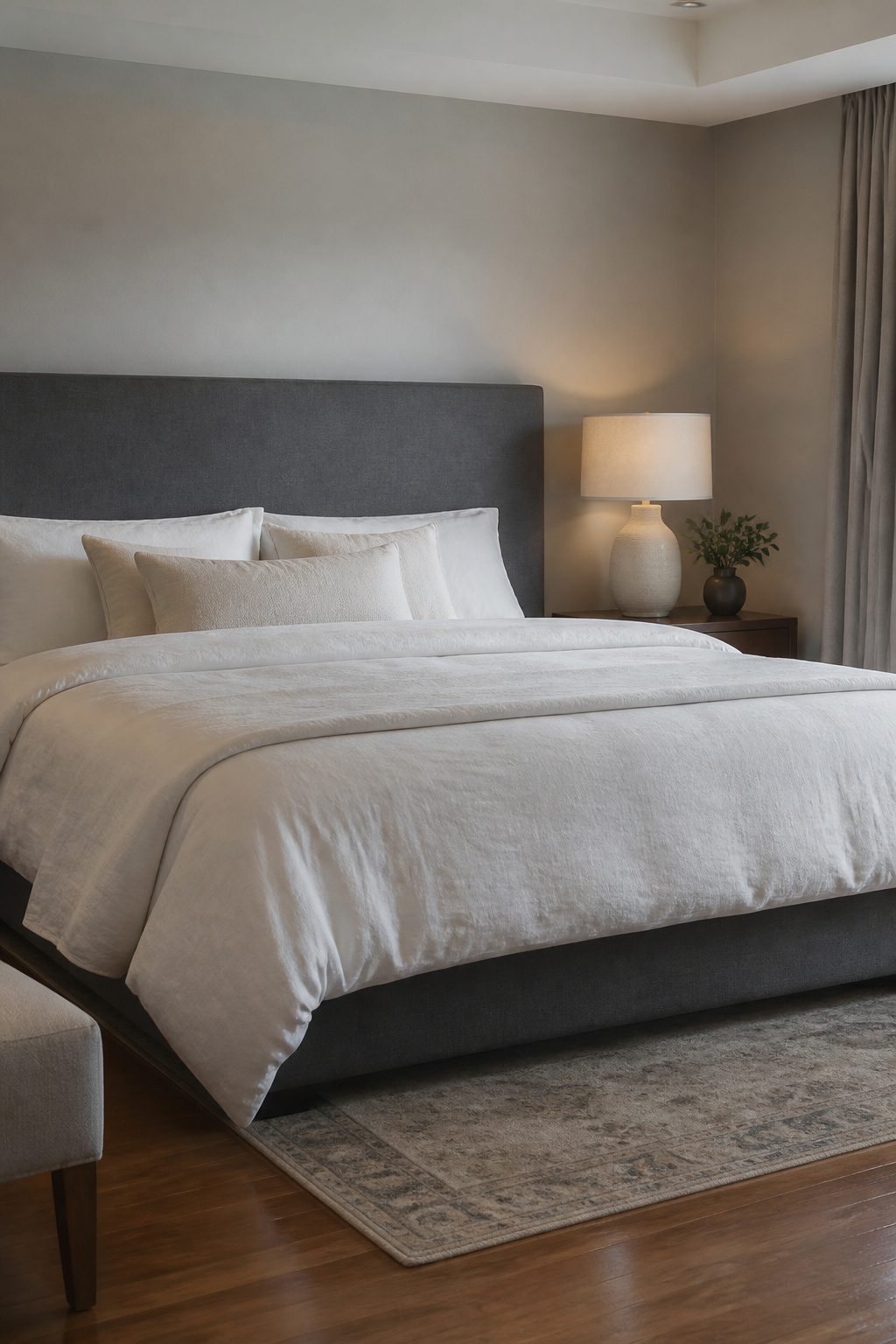
A headboard under 36 inches tall keeps modern proportions without crowding the wall, or you can run it wall-to-wall and low for a horizontal, grounded feel that reads more like architecture than furniture.
I would pick the low, wide route for most rooms; it stretches the eye across the space and does not fight low ceilings.
Foam density matters more than shoppers notice. Anything less than 2 inches of foam collapses against the wall within a year, so I treat that as the minimum and usually look for closer to 2.5 inches.
For fabric, I skip anything that cannot handle hair products and skin oil: performance linen, velvet, or bouclé in oatmeal, charcoal, slate, or blush.
Those colors stay calm against bedding changes, and the weave hides the wear that shows up on cheaper polyester.
I skip tufting entirely. Buttons break the plane, collect dust, and read traditional the moment the light hits them.
A clean, untufted surface is what lets an upholstered headboard look like a textured wall plane that happens to be soft, not a piece of bedroom furniture fighting the rest of the room.
8. Bedroom Bench at the Foot of the Bed
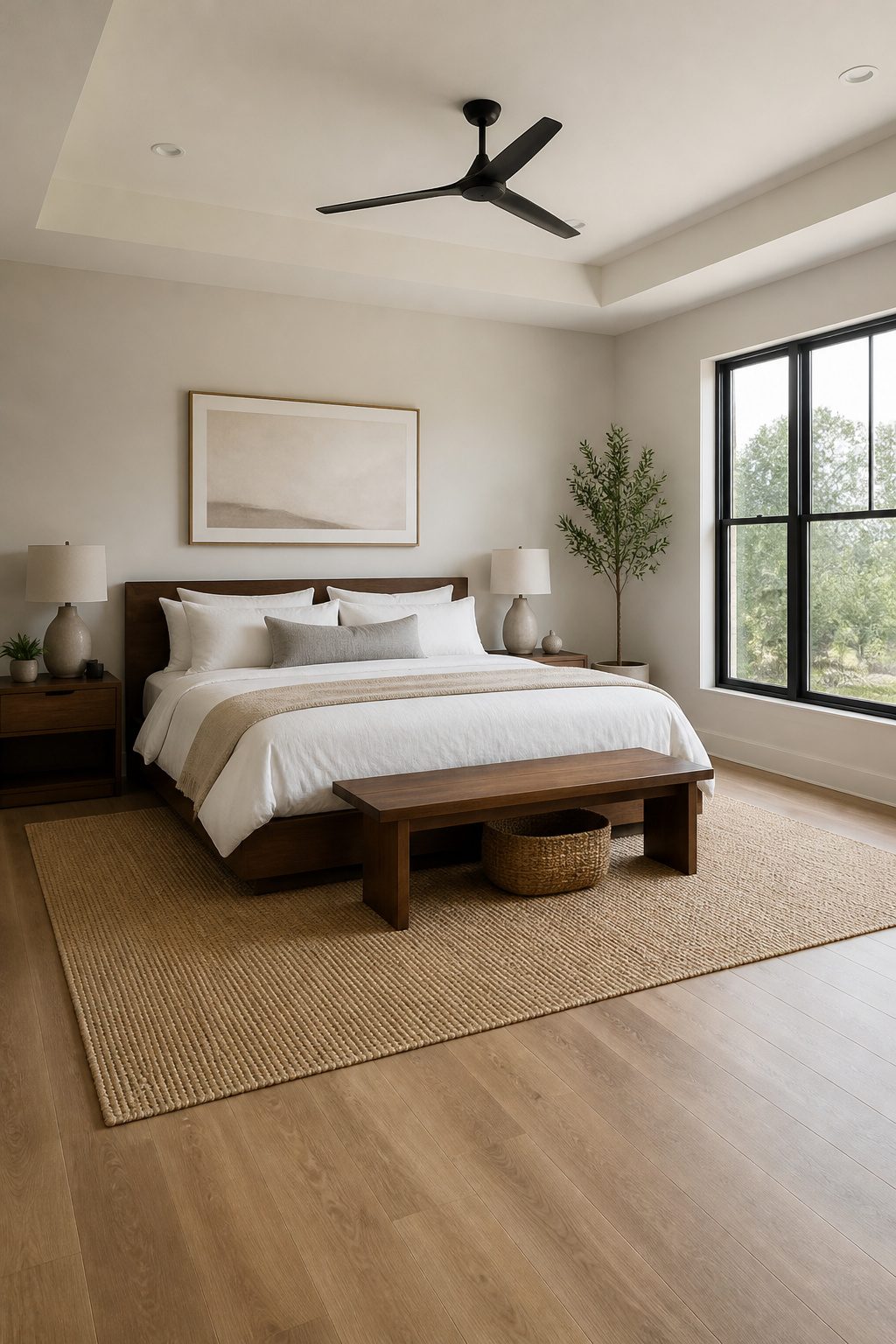
A bench at the foot of the bed only works if the proportions read as intentional, not leftover.
Keep it between two-thirds and three-quarters of the bed width; full-width benches flatten the room’s depth and turn the bed into a wall of furniture. Height matters just as much.
Within 2 inches of the mattress top, the bench reads as part of the bed. Taller and it blocks sightlines; lower and it looks like a footstool that wandered in from another room.
Storage benches tempt anyone short on closet space, but the lift-top ones fight you every morning when you’re making the bed.
An open frame keeps the visual weight light, which suits modern rooms better anyway. Leather wipes clean and ages well; fabric softens the look but collects dust and demands more upkeep than most people expect.
Particleboard benches under $150 fill search results, yet the veneer chips at the corners inside a year.
A finished pine board cut to length and four hairpin legs runs about the same money if you already own a drill, and you control the exact dimensions. The wood gains character; the particleboard gains dings.
I would build before I would buy, but only if the finish is already smooth enough to sit on bare legs. Otherwise the savings cost you in sanding time you did not plan for.
9. Rug That Extends Beyond the Bed
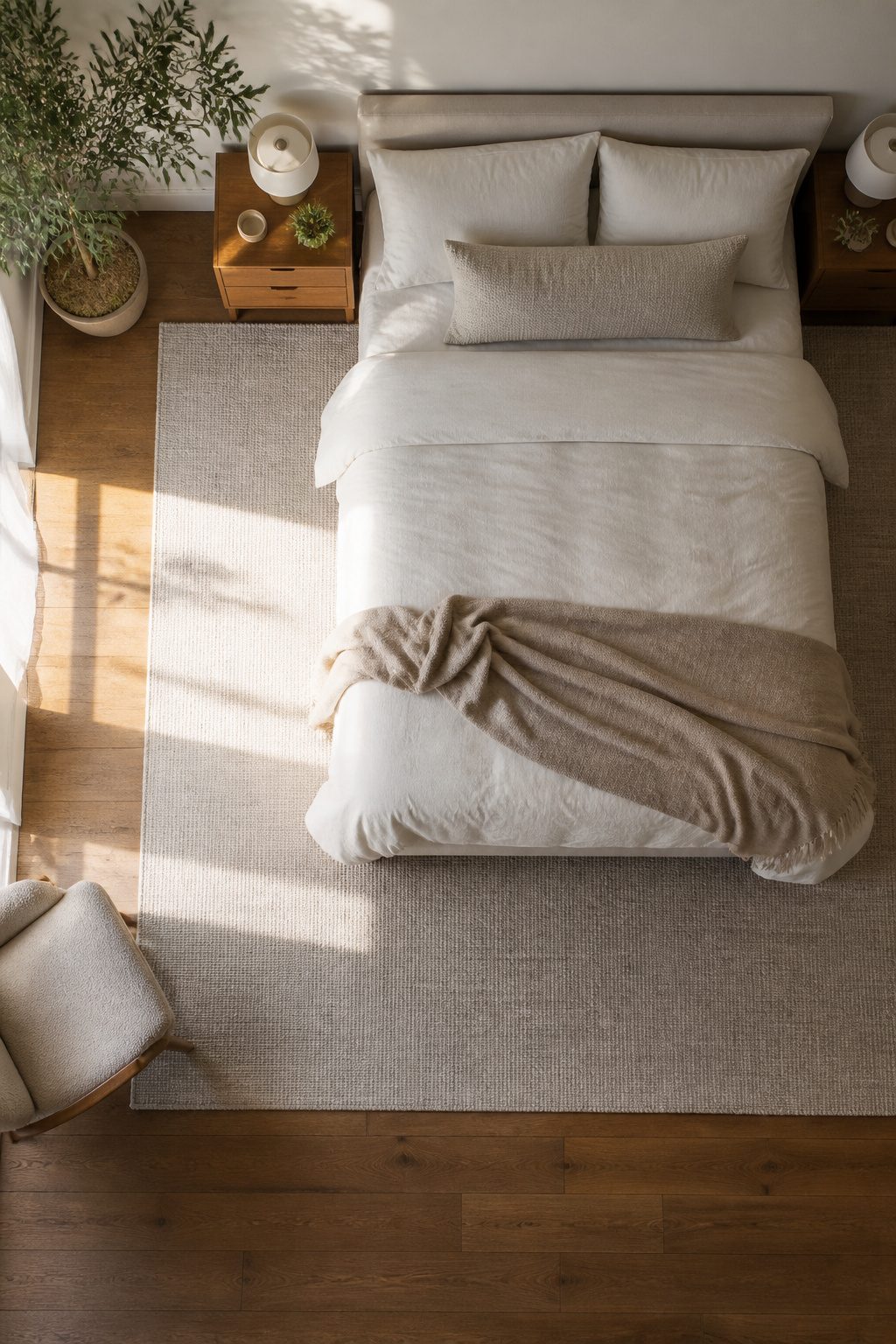
A rug under the bed should extend at least 18 inches beyond three sides, not just peek out from under the frame. A 5’x7′ under a queen looks like a bath mat someone forgot to move.
For a queen bed, I would go with an 8’x10′; for a king, a 9’x12′ gives the sleep zone proper anchoring and lands under both nightstands.
Low-pile wool or a flatweave is what works in a modern room.
The surface stays clean-lined underfoot, and a vacuum passes over it without fighting through fibers. I skip shag entirely.
It reads dated in a modern space, and the height fights with chair legs and door clearance. Jute works too if you want the texture, though it feels rougher first thing in the morning.
The exposed border does more than frame the bed. It gives your feet a warm landing when you step out, and it visually holds the room together at a scale that matches the furniture.
A too-small rug breaks the floor into pieces and makes the space feel smaller, not cozier.
10. Reading Corner or Sitting Area
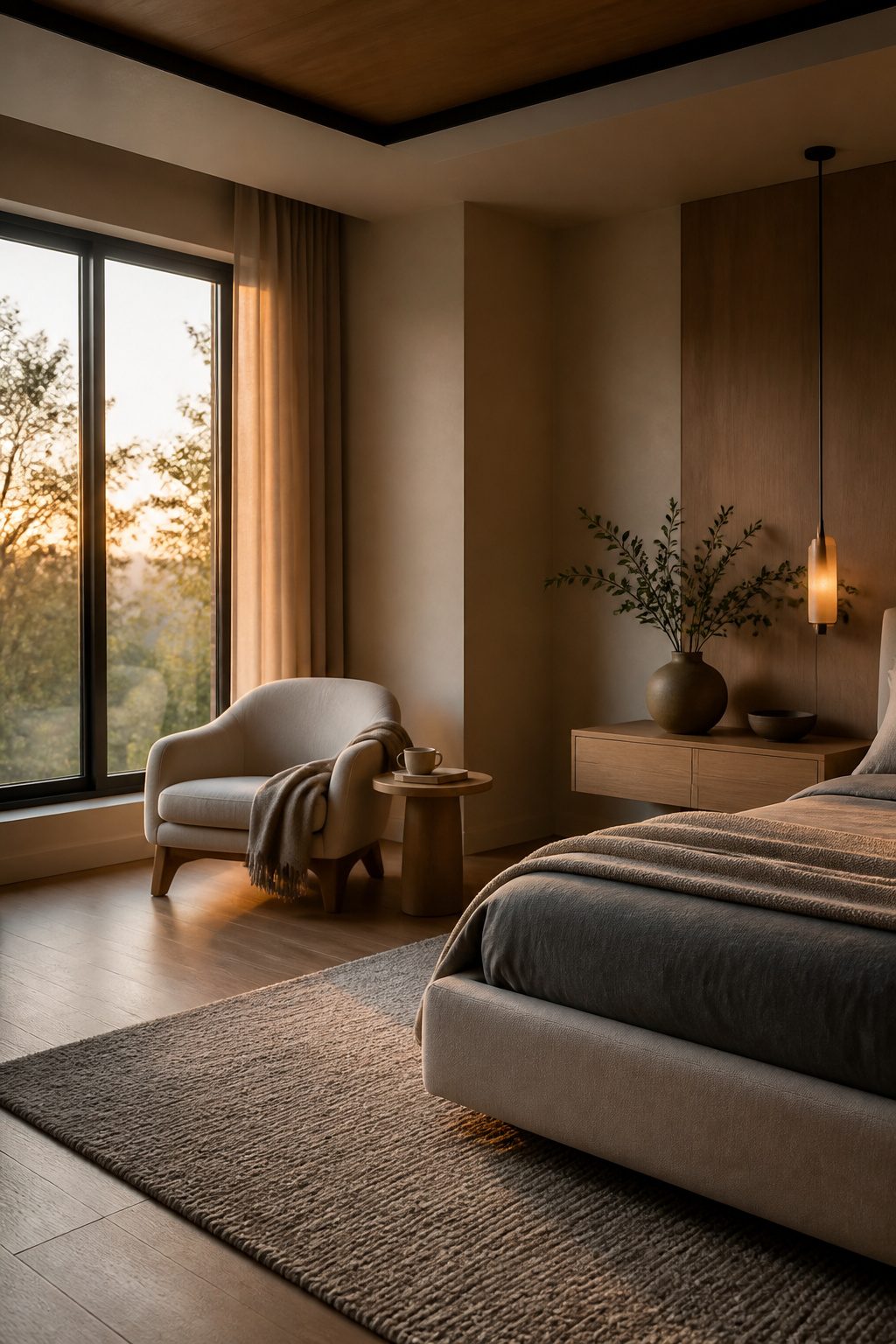
A reading corner needs at least 30 inches of clear space on all sides so the chair and small table do not block traffic or closet doors. Two layouts work in a modern master bedroom.
Angle the chair toward the bed so the corner feels connected to the room, or place the chair with its back to the bed facing a window for morning light and a view.
Either way, scale matters. A chair with clean lines and slim legs fills the space without crowding it; a tiny hotel-lobby chair looks lost and cheapens the whole room.
For lighting, I would use a floor lamp with a fabric shade rather than an arc lamp.
The shade softens the bulb into warm, ambient light that suits a bedroom, while an arc lamp throws a harsher beam and its curved arm tends to dominate the corner visually.
Keep the lamp adjustable so it can tilt toward a book when needed, but let the shade do the work of making the light feel like part of a retreat, not a task station.
11. Natural Materials for Warmth
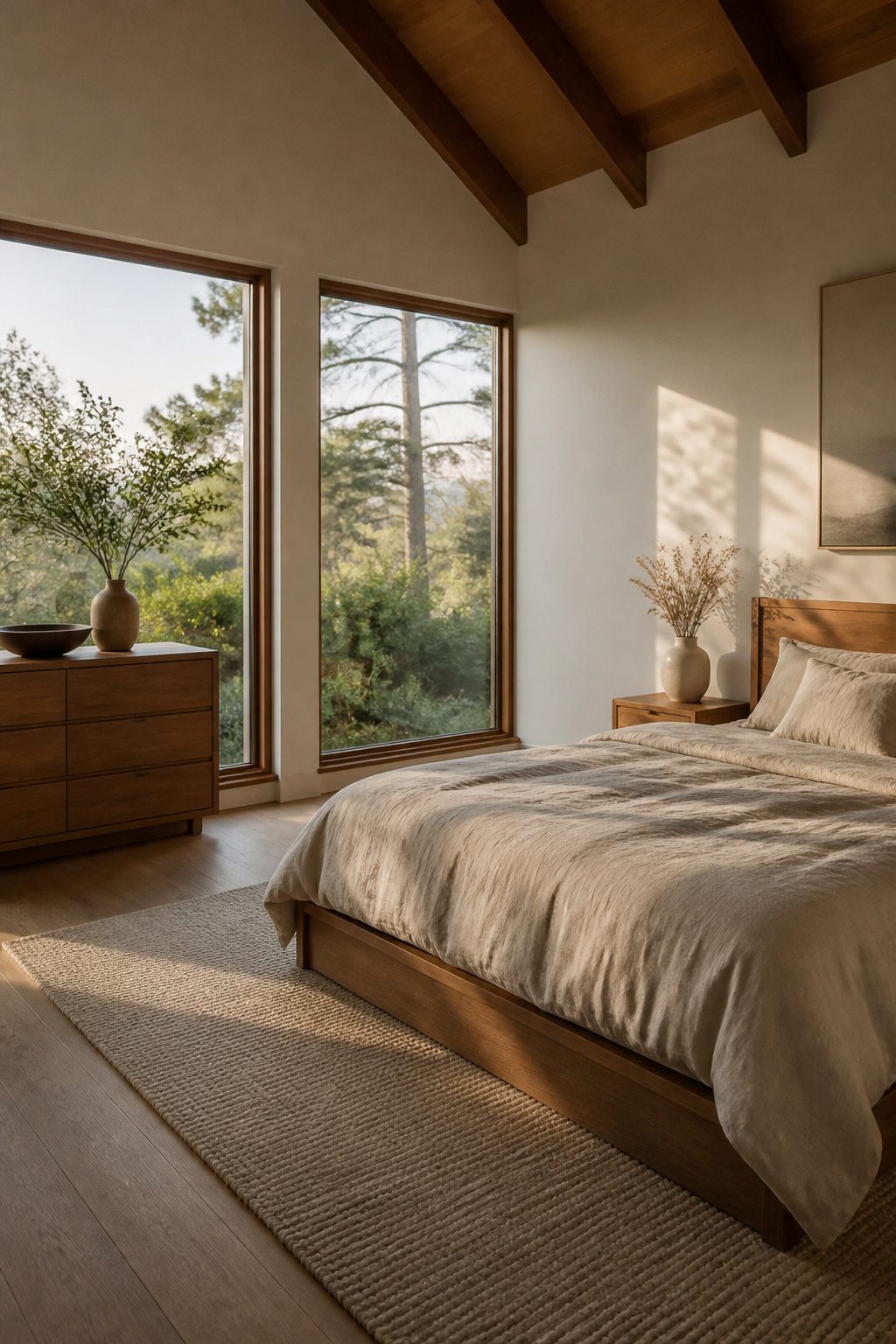
A modern bedroom can slip into showroom territory fast if every surface is engineered to look perfect.
The fix is real material, not printed texture. I would put warm-toned wood on the largest pieces, the dresser and nightstands, where grain and weight ground the room.
Stone works better small, a lamp base or a single ceramic vase, because stone slabs or heavy accents quickly dominate a restrained space.
Linen covers the soft goods, bedding and throws, since its slubbed weave softens light and reads as lived-in from day one.
Leather I would keep to accents, a small bench or a strap detail, for the same reason stone stays small: too much and the room tilts masculine in a way that fights calm.
What I would skip is anything pretending to be what it is not. Fake wood grain on MDF drawers, printed stone laminate on accessories, bonded leather on pillows.
The eye catches the flatness under modern lighting, and the contrast you wanted, between smooth furniture and rough organic texture, collapses into sameness. One temperature, warm or cool, should run through all of it.
Pale birch beside dark slate feels discordant in a quiet room; I would pick warm wood and cream ceramics, or commit to cool entirely, and let the consistency do the work.
12. Streamlined Closet or Dressing Area
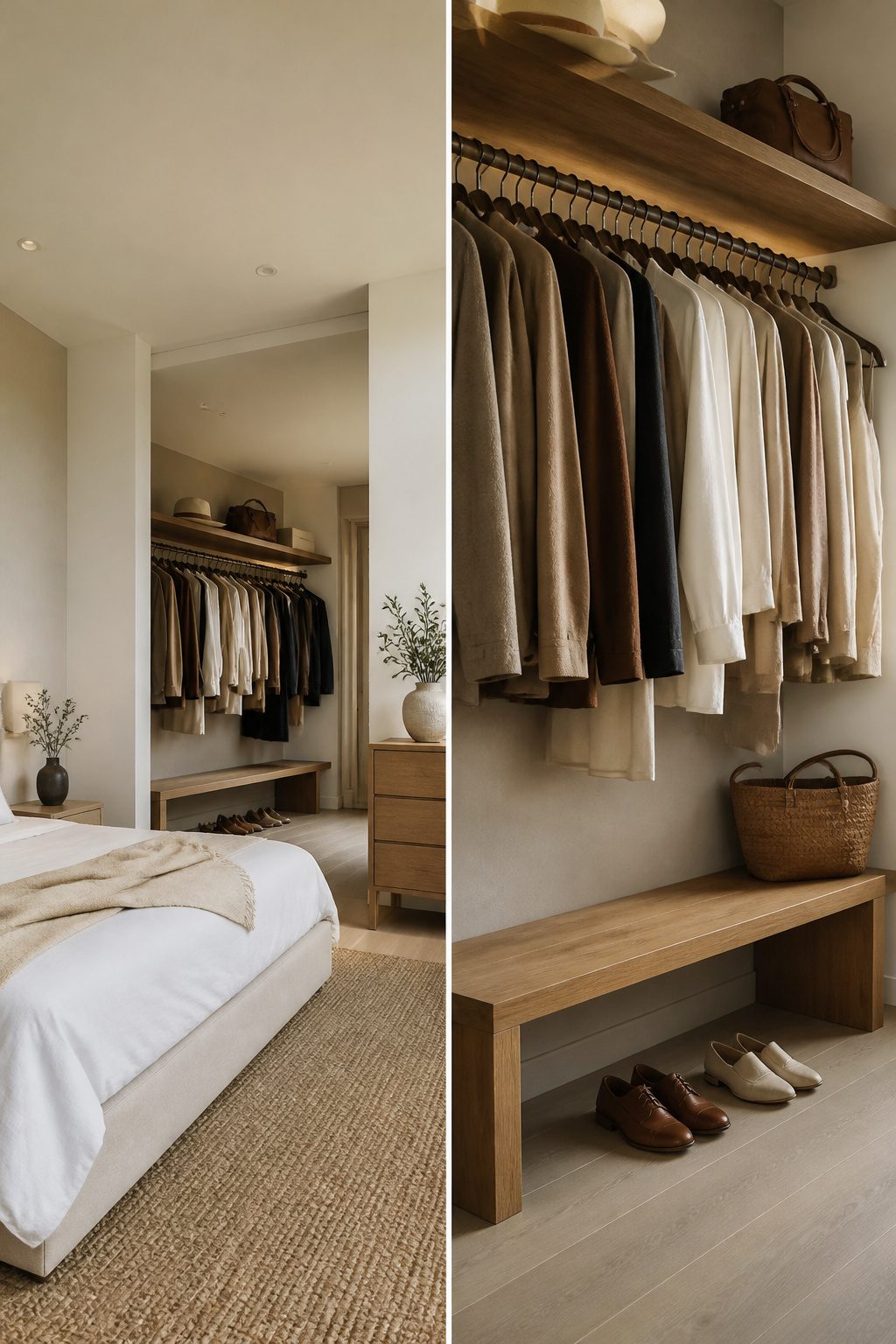
Built-in storage reads as architecture when the rod sits at 24 inches deep, minimum. Anything shallower and coats bunch at the front or drag against the back wall.
I would skip doors entirely. Open hanging with matching hangers and a single material for shelves or drawers lets the closet feel like an extension of the room, not a storage closet tacked on.
If the closet is too small for that illusion, a freestanding wardrobe works as a room divider instead.
Place it perpendicular to the bed, back it with the same finish as the wall behind, and it becomes a piece of millwork rather than a piece of furniture.
Pocket doors or frosted glass sliders are the compromise if you need enclosure, but only if the bedroom layout forces it.
Swing doors break the sightline and read dated; the bench at the foot of the bed already needs to sit narrower than the bed by 6 inches on each side, and every extra door swing eats that breathing room.
13. Declutter Every Surface
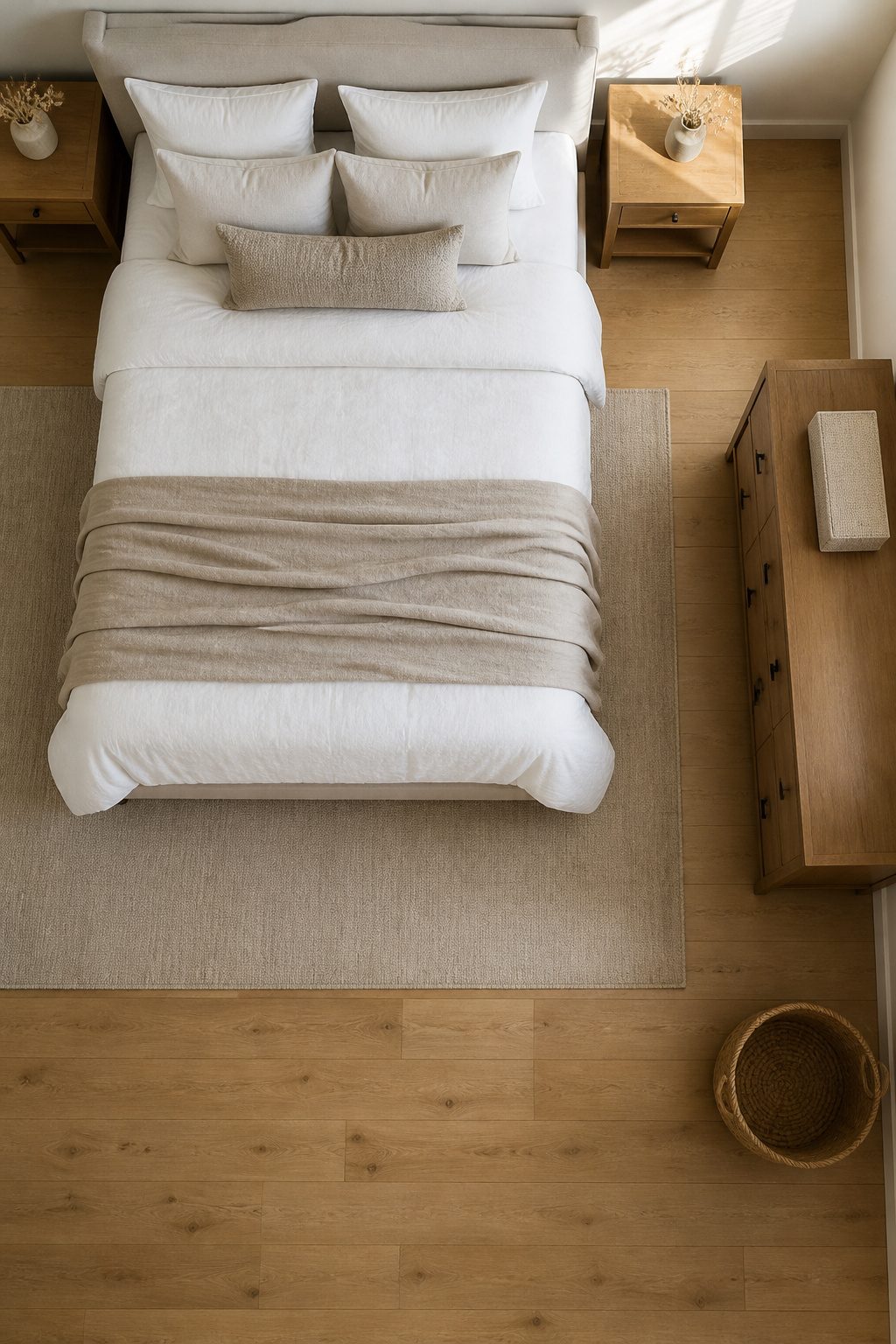
The clutter that kills a modern master bedroom is not the stuff you own; it is the stuff you leave out because you have nowhere else to put it. One object per surface, two if they are a pair.
That is the rule I run every dresser, nightstand, and window ledge against. A lamp and a small dish for earrings.
A single ceramic vase. When I find myself negotiating for a third item, the surface is too small or the storage is too far away, and the room starts reading as messy rather than styled.
Nightstands are where this usually breaks down.
I would rather have a small table with one drawer than a wide table with none. The drawer buys you the eight inches of hidden space that let the top stay empty.
Without it, the phone charger, the lip balm, and the book you are halfway through colonize the surface by Tuesday, and the calm you built the room for is gone.
Drawer dividers help, but the real fix is the drawer itself. If your current table has none, a fabric bin slid underneath is the half-measure that at least gets the clutter off eye level.
14. Statement Art Piece
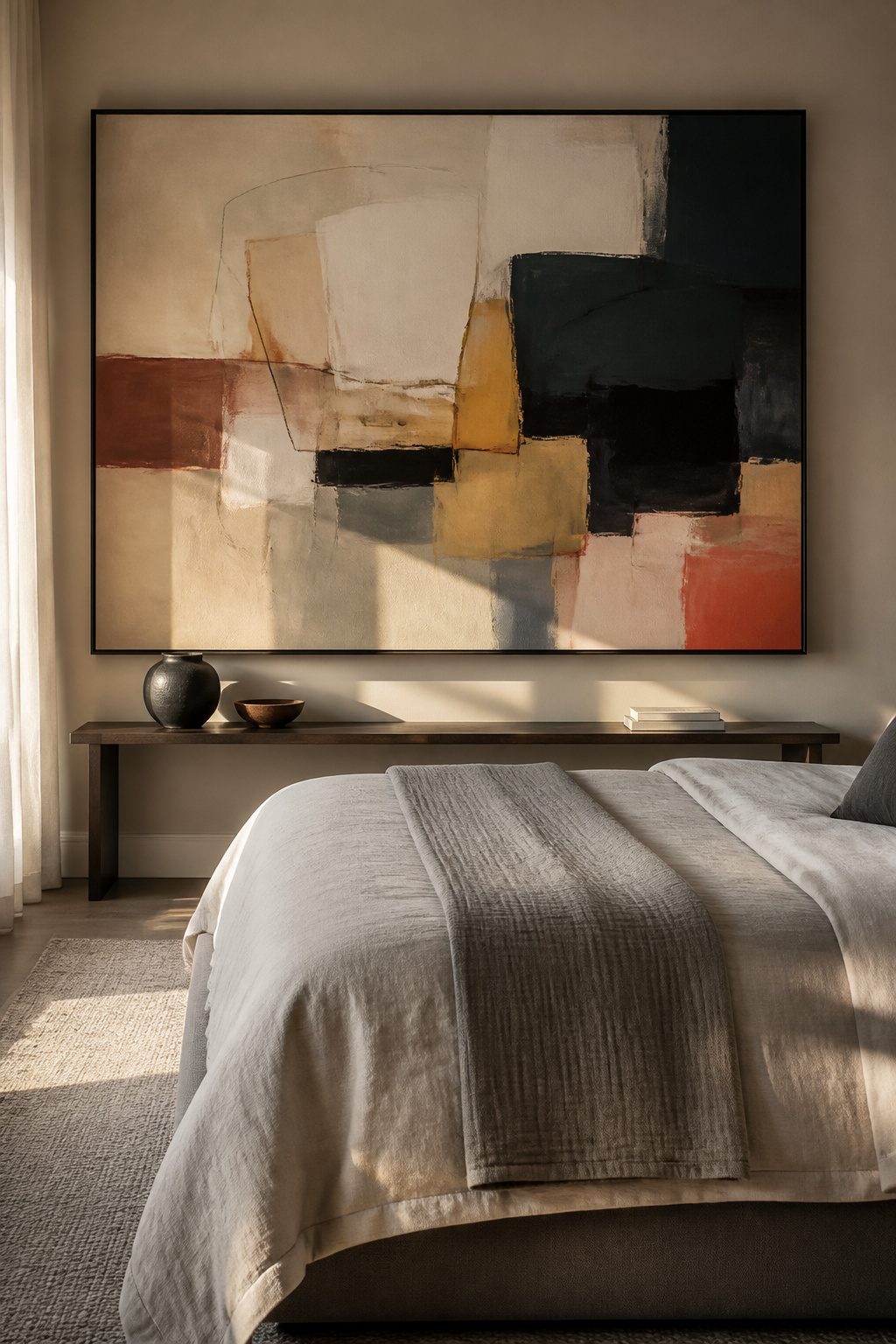
A single bold piece beats a gallery wall in a modern master bedroom because it gives the art space to command the room without visual competition.
Scale it to two-thirds to three-fourths of the wall width above the bed, or place one large piece on a side wall if the headboard wall is already busy.
The minimum that reads as intentional is 24" x 36" for most bedrooms; larger is better if the wall allows.
I would buy original work from a local artist over a mass print every time. The price gap is often narrower than people assume, and you get texture, scale, and a conversation that no big-box reproduction matches.
For photography, a thin black metal frame keeps the look contemporary and clean. Canvas originals work best in a float frame, which sets the work slightly apart from the wall and lets the edges read as deliberate.
A wrapped canvas with clean sides needs nothing at all; adding a frame there only clutters what the artist already finished.
15. Smart Technology Done Quietly
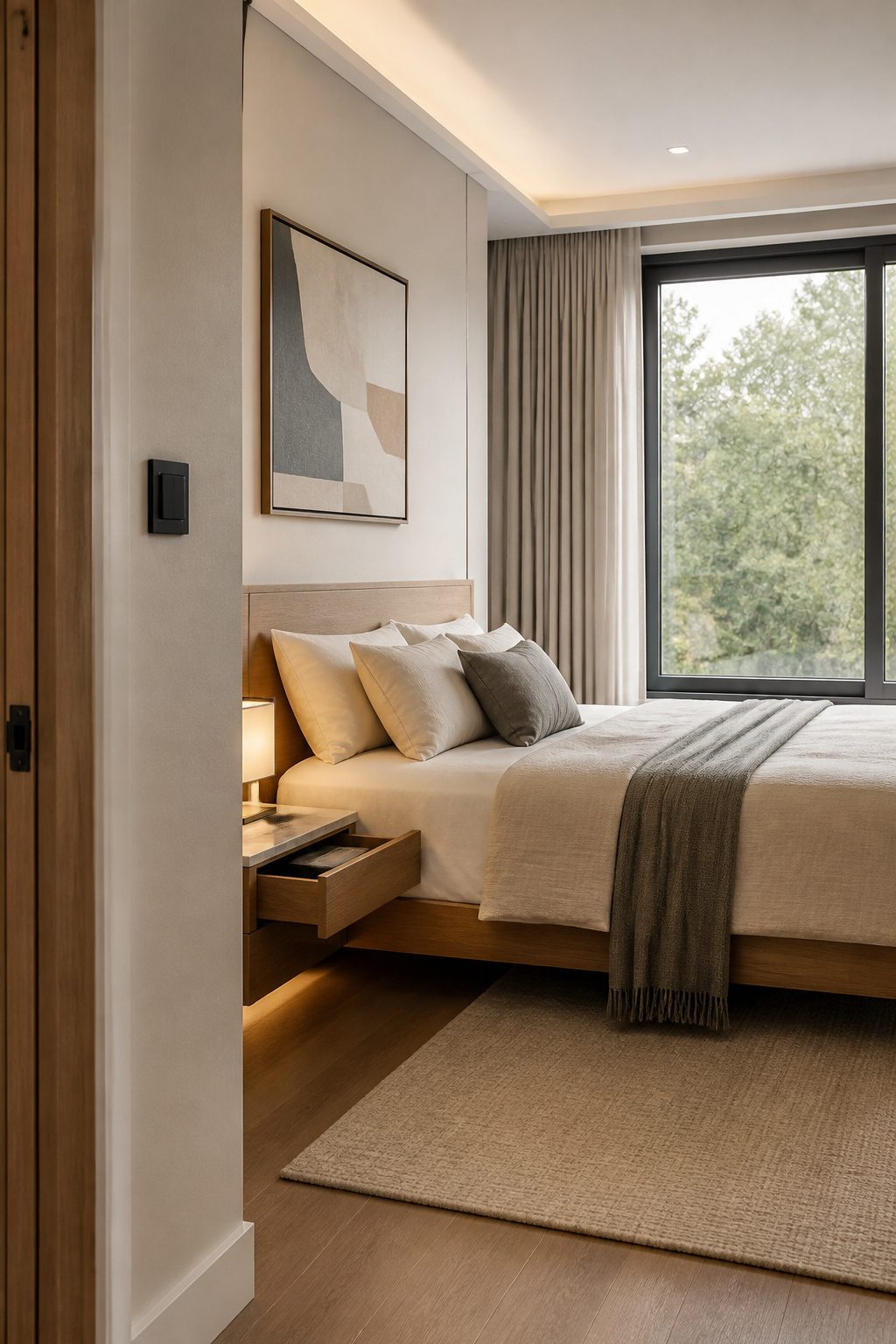
Motorized blackout shades are the one piece of bedroom tech I would actually wire for during a remodel, and the detail that matters is the wall switch, not the app.
A physical switch by the door lets you drop the room into darkness without reaching for your phone, and it still works when the Wi-Fi drops.
I would skip anything that makes the room feel like a showroom demo: voice assistants that listen all night, visible cable runs along baseboards, or LED strips under the bed frame that throw the same blue glow as a gaming setup.
Temperature control earns its place only when it is invisible. A smart thermostat in the hallway is fine; a display that lights up the wall beside your pillow is not.
The same rule applies to charging. I would build a shallow drawer into the nightstand with a wireless pad inside, or recess a single outlet behind the headboard at mattress level.
What I would never do is leave a cable snaking across the nightstand to a phone propped against a water glass.
The quiet version of smart technology is the one you stop noticing after a week. If the system still demands your attention every evening, it has failed the bedroom test.
Frequently Asked Questions
How can I make my master bedroom look nice?
Start with a warm, muted color palette on the walls, such as soft blue, muted green, or a light neutral with warm undertones rather than gray.
Add one object per surface, two if they are a pair, so dressers and nightstands stay clean rather than cluttered.
Layer three types of lighting, ambient, task, and accent, all at 2700K, and put every one on a dimmer so the room shifts from bright morning light to near-darkness at night.
How can I create a luxury master bedroom?
Put your money into long-staple cotton percale or sateen sheets in a solid, muted color rather than chasing a high thread count label.
Choose a low-profile platform bed kept 18 to 24 inches from the floor to stretch the wall line and make the ceiling feel higher.
Add a single statement art piece scaled to two-thirds to three-fourths of the wall width above the bed, or one large piece on a side wall, and invest in original work from a local artist over a mass print if you can.
How can I make my master bedroom cozy?
Layer real natural materials rather than printed textures: warm-toned wood on the dresser and nightstands, linen on bedding and throws, and small stone or leather accents.
Use 2700K bulbs in every lighting layer and wire wall dimmers at the switch so you can drop the room into warm, low light without pulling out a phone.
Keep the palette within two tones of your main wall color so the room feels connected and calm rather than busy.
How do I arrange furniture in a master bedroom?
Position the bed first where you can walk around both sides with about three feet of clearance to the wall.
Add nightstands on either side if space allows, and place a bench at the foot of the bed kept between two-thirds and three-quarters of the bed width and within 2 inches of the mattress height so it reads as intentional.
If the room is large enough, add a reading corner with at least 30 inches of clear space on all sides and a floor lamp with a fabric shade angled toward the bed or a window.
How do I style my master bedroom?
Build the room around one feature wall with presence, such as a limewash finish for a Saturday project, and keep the other three walls quiet.
Choose a clean, untufted upholstered headboard under 36 inches tall or run it wall-to-wall and low for a horizontal feel.
Match your curtain hardware finish to the rod, use back-tab or ripplefold headings rather than grommets, and mount the rod 8 to 12 inches above the window frame and 6 to 10 inches past each side so the panels stack flat and the window reads larger.
How to make a bedroom modern?
Keep lines clean and surfaces intentional: skip tufting, grommets, ceiling fans with lights, and accent rugs that peek out from under the bed.
Choose a low-profile platform bed, minimal upholstered headboard, and streamlined open closet storage with matching hangers rather than doors.
Run smart technology quietly, such as motorized blackout shades with a physical wall switch and wireless charging hidden inside a nightstand drawer, so nothing competes with the calm you built the room for.