
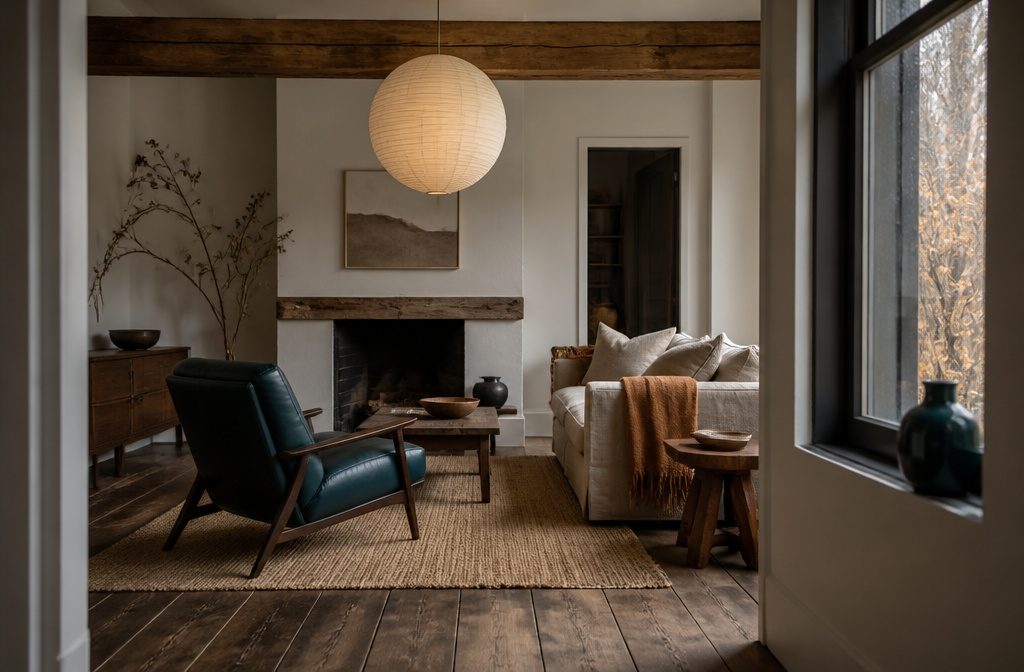
Modern farmhouse living rooms range from strict neutrals with vintage accents to relaxed mixes that pull in midcentury chairs or coastal textures, and which one works depends on how much contrast you want between old and new.
White shows every smudge within a week, where oatmeal linen fades into itself, and that gap between theory and daily use is where most of these choices get made.
Jute rugs run about as neutral as carpet but handle foot traffic without complaint, 45-inch paper lanterns soften high ceilings without competing for attention, and reclaimed beams cost less than new furniture trying to look old.
1. Use a Soft or Neutral Base, with Selective Color
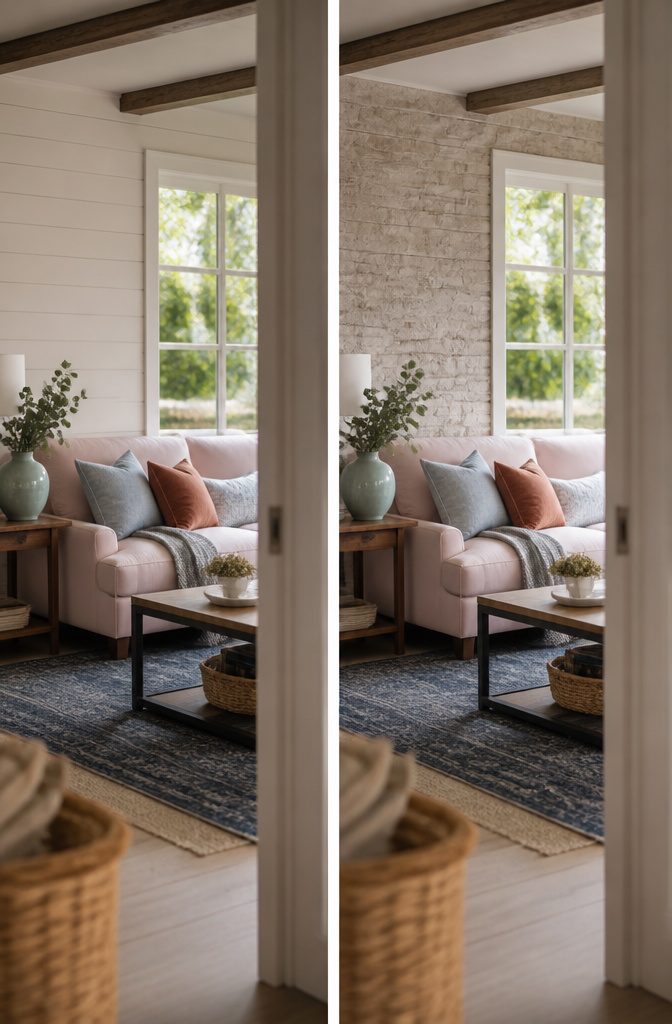
Whites, grays, and beiges anchor the palette, but modern farmhouse rooms lean on color to feel lived-in rather than staged.
Navy blue rugs and light blue pillows add depth without breaking the calm, and soft pinks work surprisingly well—blush sofas and pale pink walls that read almost white in certain light bring warmth without tipping into country kitsch.
Sage green functions as a near-neutral, introduced through a throw or a single vase, and ties the room to the outdoors.
Warm reds and oranges show up in textiles and play off the natural red tones in wood, while rust-colored pillows against a rich brown sofa create contrast that feels intentional.
The neutral base keeps the room from feeling busy, and the selective color keeps it from feeling empty.
2. Mix Old and New, Including Vintage and Reclaimed Pieces
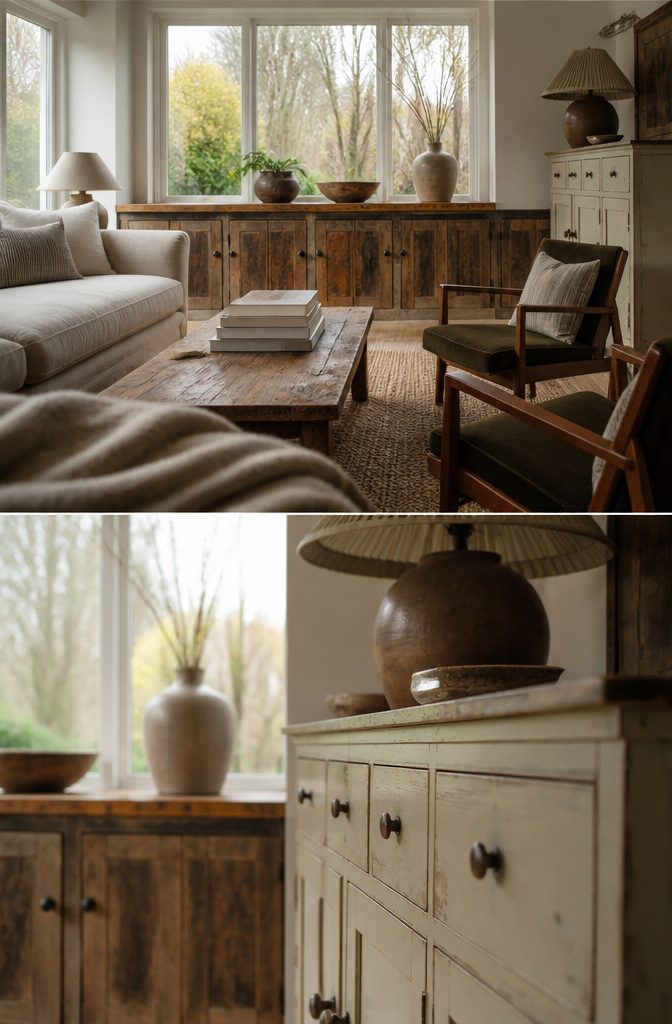
A $100 daybed from Craigslist reads differently than a new one off the showroom floor, and that gap between old and new keeps a modern farmhouse living room from looking like it came out of a catalog in one order.
I’ll pair a contemporary sofa — neutral fabric, clean lines — with one or two genuinely vintage pieces: midcentury chairs pulled from a salvage shop, a distressed coffee table holding a stack of old books, reclaimed wood built into cabinetry or wall paneling.
The vintage piece doesn’t need to be expensive; a grain-sack pillow runs about $40, and architectural salvage often costs less than new furniture trying to look old.
One or two objects in the room should carry actual age, whether that’s a handed-down cabinet you sanded and repainted or a wood ladder from a yard sale now holding blankets.
The imperfect paint job fits here; farmhouse styling leans into wear rather than trying to hide it.
3. Add Natural Materials and Texture
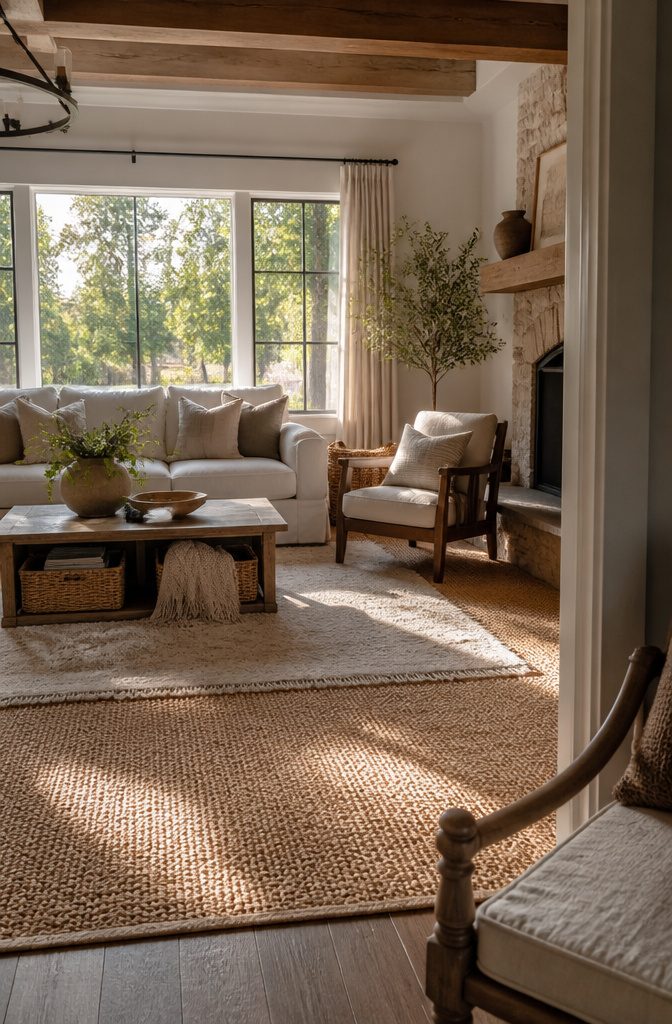
Wood, stone, metal, and woven fibers soften the clean lines of a modern farmhouse living room without crowding it.
Jute, seagrass, and sisal rugs bring golden warmth underfoot and a hand-woven texture that grounds the furniture arrangement. They handle daily traffic without complaint and work as a neutral layer under a softer rug if you want more comfort.
Seagrass baskets keep blankets and remotes out of sight while adding organic texture to corners or the space under a coffee table.
They move easily when your needs shift and bring a handmade feel that contrasts well with straighter, contemporary pieces.
Layered textiles — linen, cotton, wool — add depth without pattern overload, and the mix of rough and smooth keeps the room from reading as too polished or too bare.
4. Choose Comfortable, Practical Seating
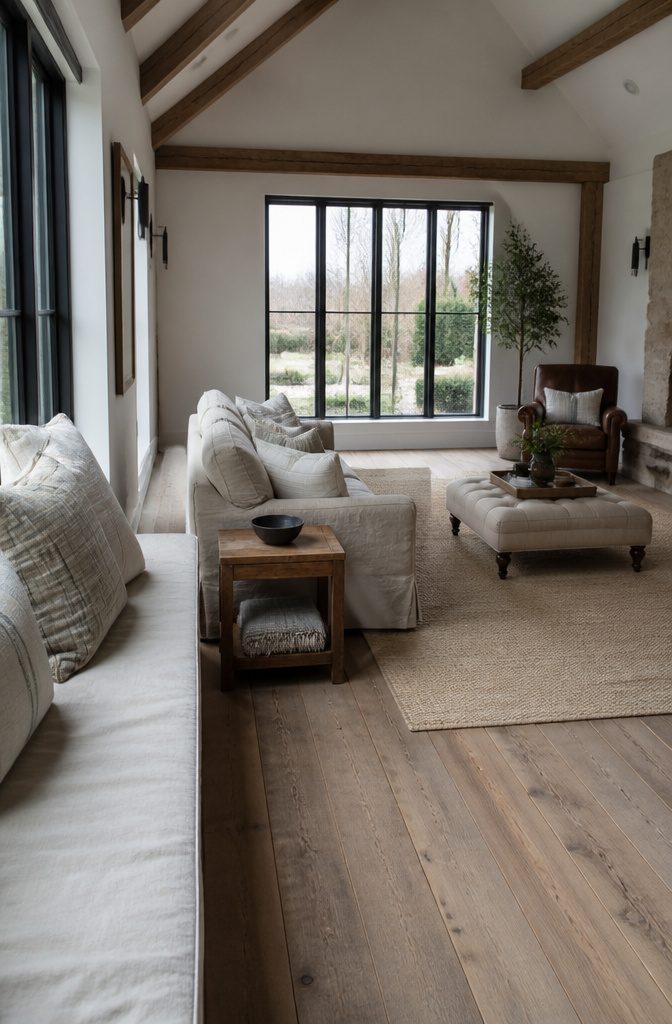
I put an oatmeal slipcover on the sofa a few years back, and it hides everyday wear far better than white ever did — white shows every smudge within a week, where oatmeal fades into itself.
Slipcovered sofas in linen or heavy cotton come off for washing, which matters more than it sounds like it will.
Sectionals work when the room is large enough to float them; otherwise a standard three-seat sofa leaves more flexibility for chairs. Leather ages well in a farmhouse room, especially on accent chairs or stools that get moved around.
I have seen tufted ottomans used as footrests, extra seats, and low tables with a tray on top, and that triple function is why they keep showing up.
A built-in window seat with cushions adds seating without taking floor space, and it turns an architectural detail into the best spot in the room.
5. Use Wood Beams, Paneling, or Shiplap for Character
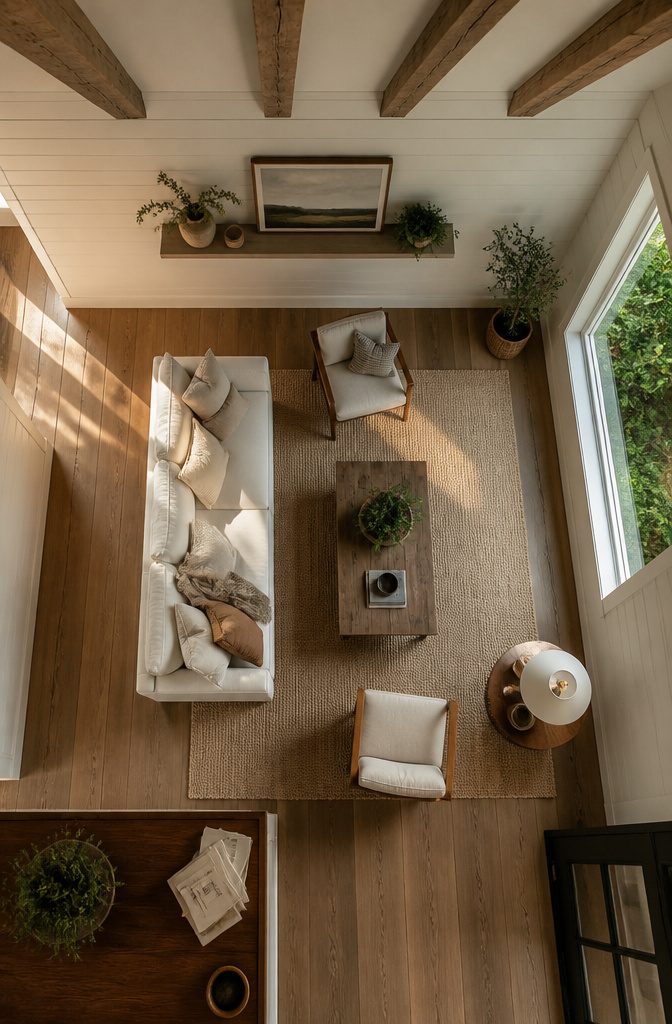
Wood on the walls or ceiling changes the feel of a room faster than paint alone. Shiplap runs horizontally in strips typically around 7 inches wide, giving you clean lines without much fuss.
It shows up white in most modern farmhouse rooms, but knotty pine planks work when you want more warmth and less of the expected look.
One designer used 8-foot pine tongue-and-groove on his ceiling and entry walls, thin enough that door casings stayed in place.
Reclaimed or exposed beams add depth overhead without covering usable wall space.
The grain and variation in old wood reads as character rather than decoration. White shiplap still lets you hang art and shelves the way you normally would, so the architecture stays in the background until the light hits it.
6. Make a Fireplace or Mantel a Focal Point
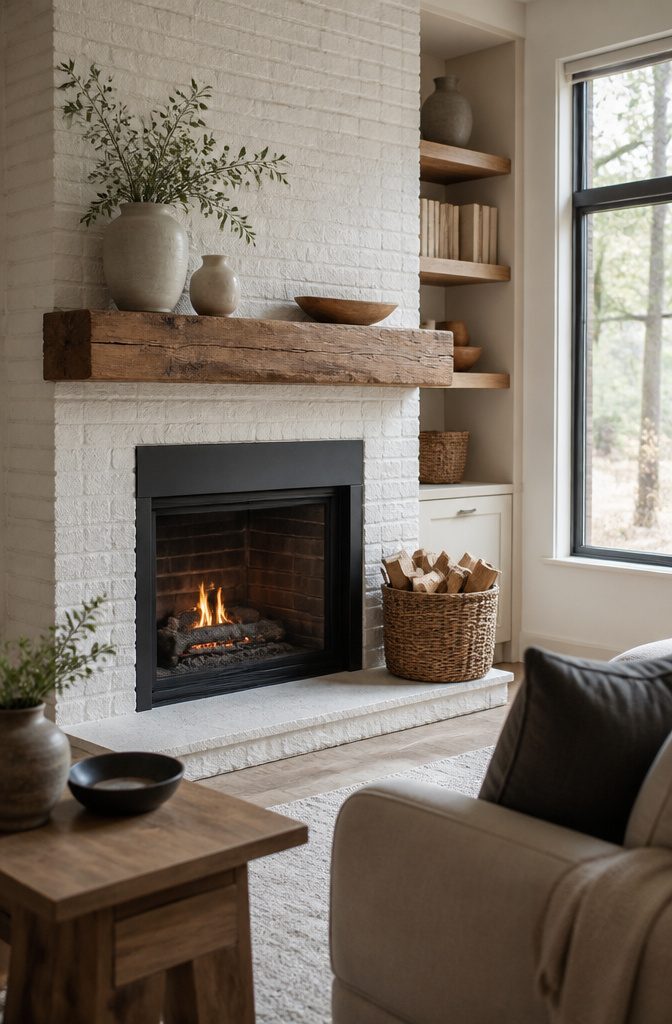
A fireplace brings weight to the room, and stone or brick cladding keeps it textured rather than slick.
I’d pair stone with a wood mantel—a thick reclaimed beam works better than something machined smooth—and leave the wood unstained if the grain shows character on its own.
White-painted brick is another route, especially if you’re setting a TV above the mantel; painting the mantel itself black makes the screen recede into the wall instead of fighting it.
Shelving on either side of the fireplace holds the things that personalise the space without crowding the mantel. A white brick wall takes open shelves easily, and the contrast with a black mantel keeps the setup from going too precious.
If you’re working with a plain surround, wood planking or weathered board adds farmhouse texture without tearing into the wall behind it.
7. Choose Lighting That Balances the Room
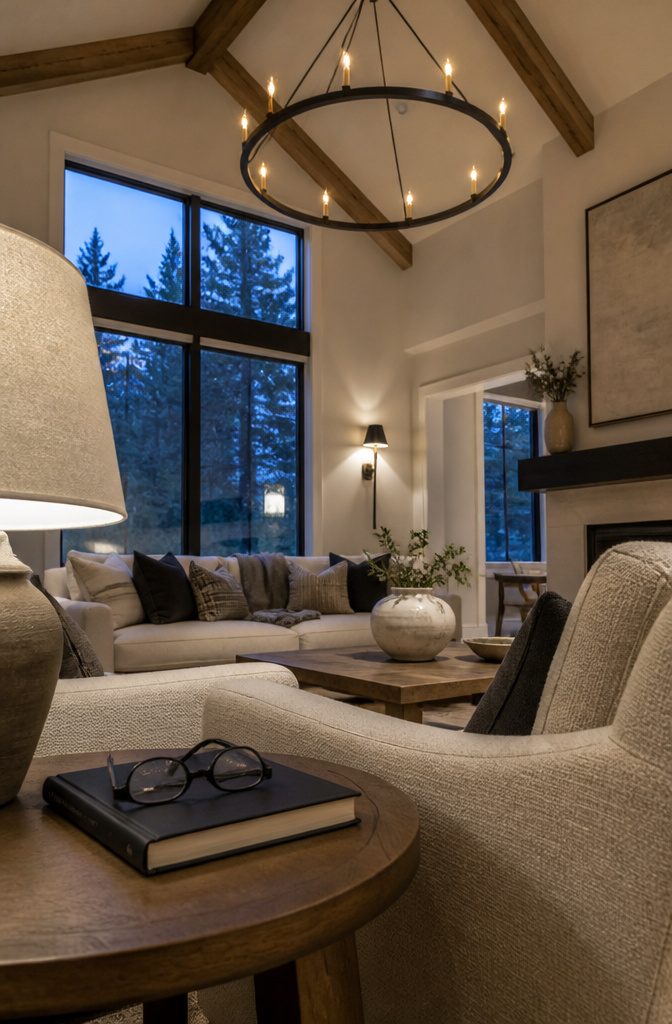
A chandelier or set of sconces in black metal or wrought iron sets the tone for the whole room—the contrast pins down everything lighter around it and keeps the look from drifting too sweet.
A simple circular iron chandelier works in rooms with high ceilings or exposed beams, where it reads as both structural and traditional without fussing.
Matte black sconces free up side-table space and throw focused light for reading, which matters more than most overhead fixtures do.
Scale matters as much as finish. In a large room with original cedar walls, a 45-inch round Noguchi paper lantern brings softness without competing for attention.
The most common farmhouse pendant is the wagon wheel chandelier—a metal ring lined with bulbs, held together by radiating bands—but it needs ceiling height to clear heads and not feel heavy.
I’d use it only in a two-story space where it can float; in a standard-height room, the single iron hoop reads cleaner and less thematic.
8. Use Rugs to Ground the Seating Area
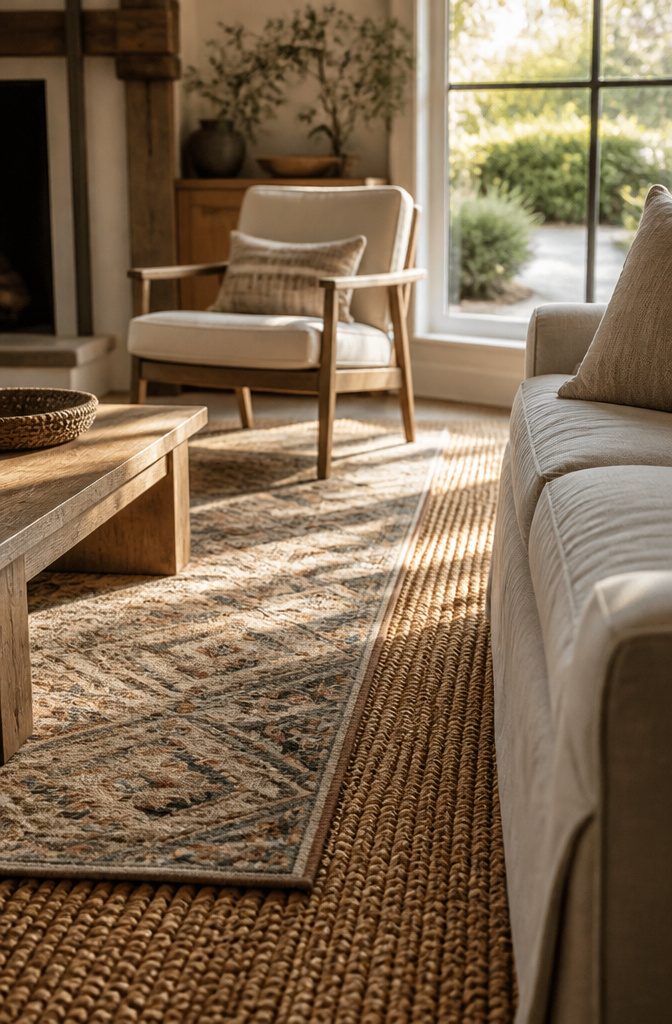
A jute rug large enough to sit under the front legs of your sofa and chairs pulls the seating group into one visual unit.
Jute, seagrass, and sisal are sustainable natural-fiber materials that bring a warm, hand-woven texture to the floor without competing for attention.
The golden-brown tones read as neutral but warmer than gray, and the coarse weave handles foot traffic without showing wear the way a plush rug would.
Layering a smaller patterned rug over the jute base lets you introduce color or a geometric print in the center of the seating area while keeping the larger footprint simple.
The two textures underfoot—rough natural fiber below, something softer on top—add depth and make the layout feel deliberate rather than accidental.
Start with the jute sized to the furniture arrangement, then layer a 5×7 or 6×9 patterned rug where people actually sit.
9. Bring in Plants and Natural Accents
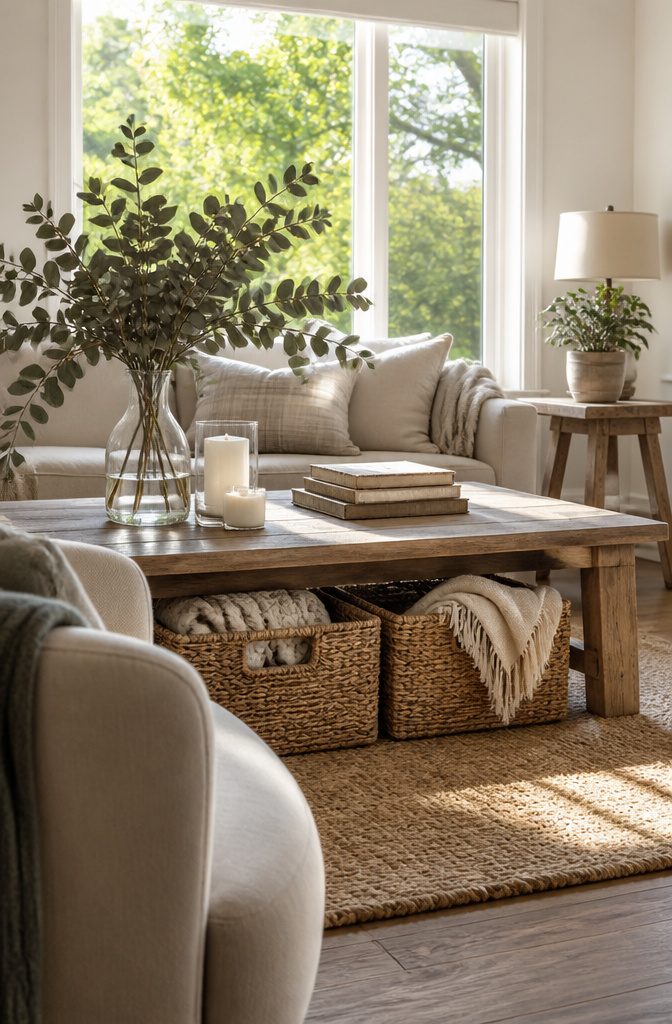
A few potted plants or a bundle of stems in a vase softens the lines of a modern farmhouse living room without adding clutter.
Eucalyptus branches in a glass vase sit well on a coffee table next to candles and a stack of books, bringing in organic shape and a little movement.
The gray-green color holds up next to neutral upholstery and wood tones without looking fussy.
Baskets do double work. Seagrass storage baskets tucked under a coffee table or in a corner keep blankets and remotes out of sight, and the woven texture adds another layer of warmth against painted walls.
You can also hang a collection of flat baskets on the wall for textural interest if you have the space, though that takes more wall real estate than most renters have to spare.
Fresh flowers, potted herbs on a side table, or even a eucalyptus wreath hung near a doorway all pull the look together. Break up the harder materials with something that grows, without filling every surface.
10. Add Storage and Display with Baskets, Shelves, or Built-Ins
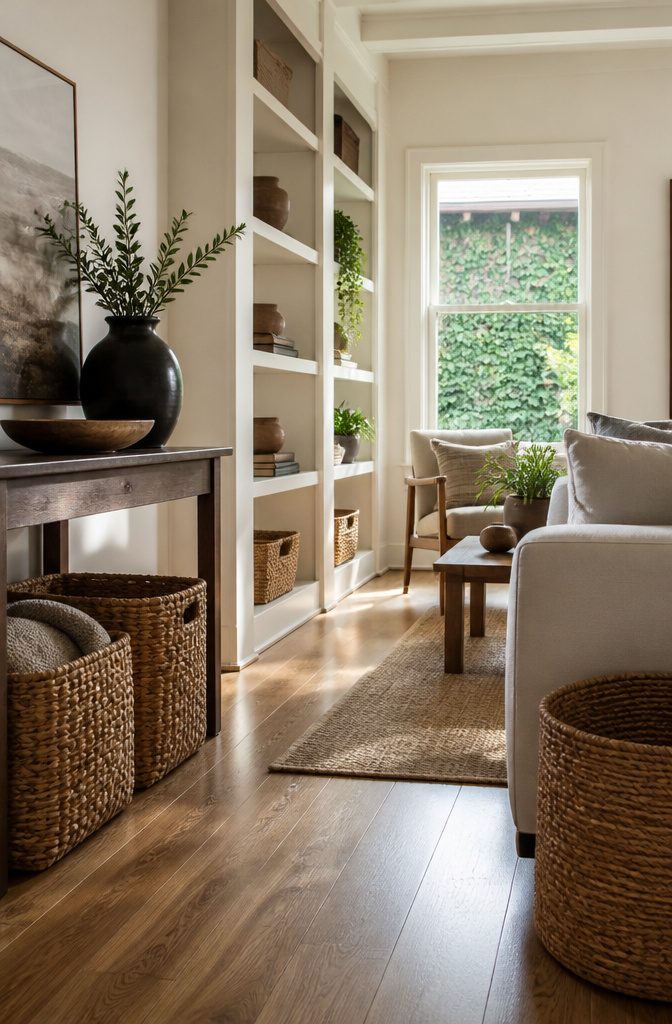
Baskets tucked under a console or beside the sofa hold throws and remotes without breaking sightlines, and the woven texture adds warmth that metal bins don’t.
Seagrass works in any corner or under a coffee table, and you can move them as needs shift. They fit the relaxed feel of the style while keeping clutter from piling up on surfaces.
Open shelving replaces closed cabinets when you want the room to feel larger and less boxed in.
It pushes you to keep only what you actually want visible, which means fewer objects but the right ones. In smaller rooms, skipping heavy furniture on the walls prevents the space from closing in.
Built-in bookshelves do the same job with more permanence, giving you room to show books, plants, or anything that reflects how you live without sacrificing function.
11. Personalize with Meaningful Objects and Collections
A generic modern farmhouse living room looks like every other one because it stops at the checklist.
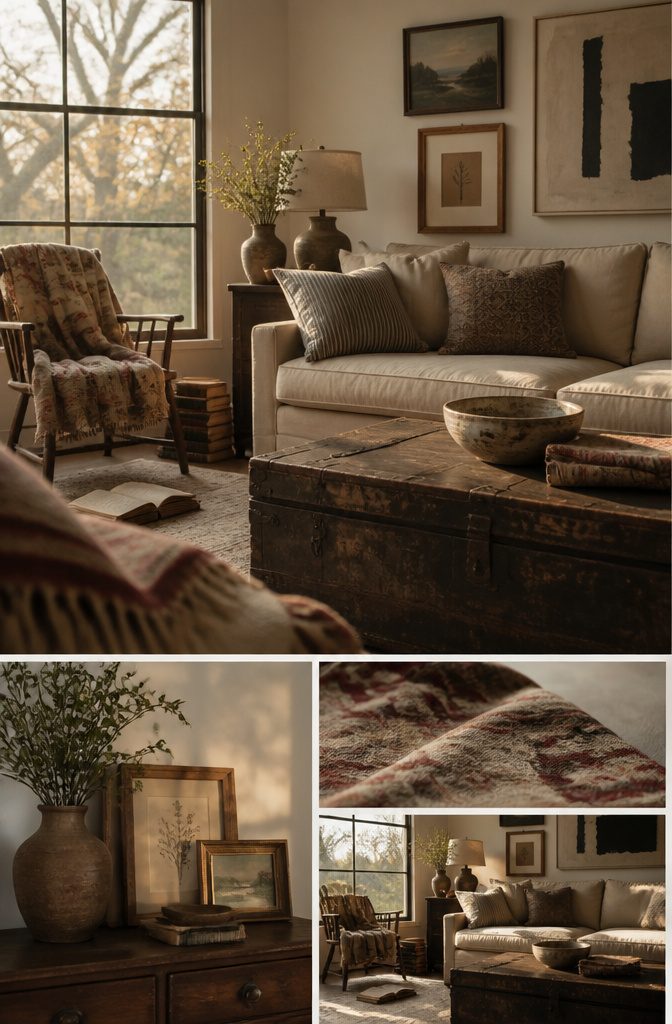
The rooms that feel like someone actually lives there fill shelves and surfaces with things that carry a story—vintage blankets folded over a chair, a stack of old books, framed family photos, pottery you picked up on a trip.
Start with what cozy means to you, not what it means in a catalog.
Ceramicist Erica Shirey hand-painted 8-by-8 tiles for a guest bathroom shower, pulling the pattern from the homeowner’s collection of vintage blankets. That level of personal detail turns a standard feature into something you stop and look at.
Hang art that matters to you, display a collection you’ve been building, put an old trunk in front of the sofa instead of a new coffee table. Eclectic pieces and antique finds give the room texture a matched set can’t.
12. Use Barn Doors as Functional Farmhouse Detail
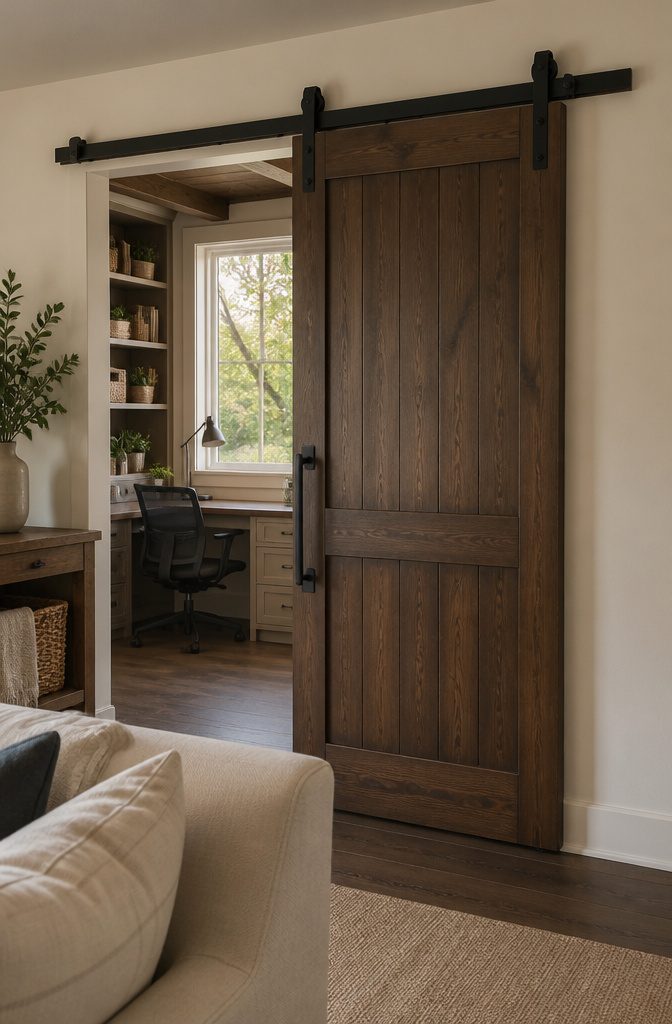
Sliding barn doors save floor space while creating a distinct farmhouse moment on the wall. The door moves along a metal track instead of swinging, so it works in tight corners where a standard door would block furniture or traffic.
You can close it when you want the living room separated from a home office or hallway, or leave it open for flow between rooms.
The hardware matters as much as the door itself. Black metal tracks read cleaner and more modern than brushed nickel, and the weight of a real wood door on sturdy hardware feels intentional rather than flimsy.
Any solid door can become a barn door with the right track system, so you are not locked into the X-brace style if that is not your look.
Paint matters too. A white door on a beige or gray wall keeps the modern side sharp, while a stained wood door pushes warmer and more rustic.
Contrast gets attention: a dark door on a light wall, or the reverse, turns the door into a feature rather than background.
What Modern Farmhouse Style Means
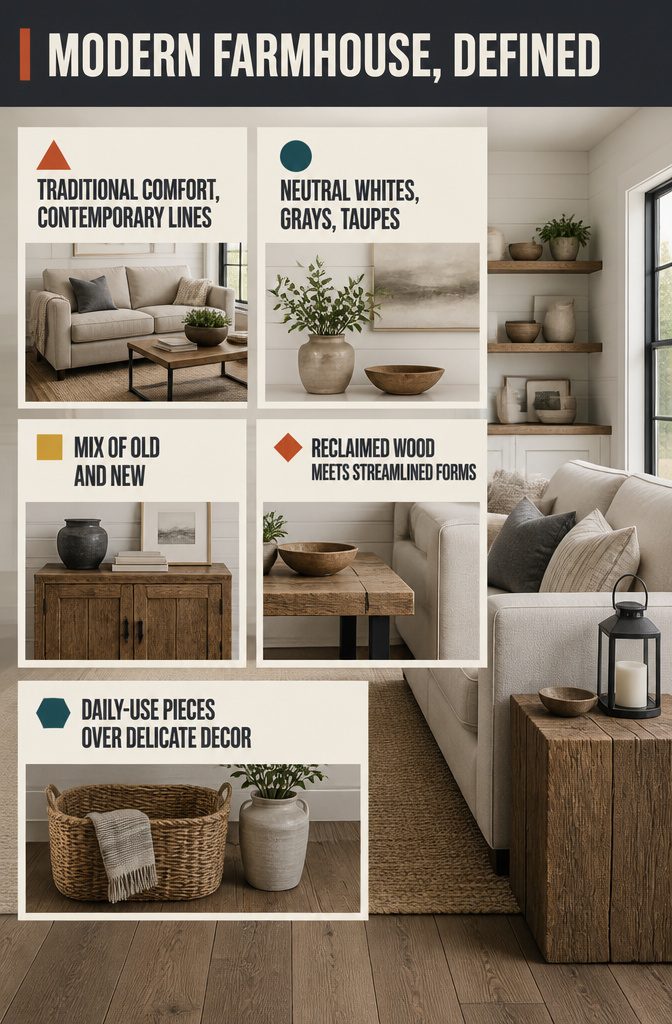
Modern farmhouse style takes traditional farmhouse comfort and pairs it with contemporary design, cleaner lines, and a restrained color scheme.
The result feels warm without the clutter, polished without losing the invitation to sit down and stay. It works in any home, not just renovated barns or rural properties.
The defining move is the mix of old and new: reclaimed wood next to a streamlined sofa, shiplap on one wall and open shelving instead of upper cabinets, wide plank floors under furniture that reads modern in shape.
Neutral palettes dominate—whites, grays, taupes—with architectural salvage, wrought iron, and vintage accessories adding character without overwhelming the room.
The style avoids fussiness. Big, comfortable furniture matters more than delicate pieces, and every decorative choice should feel functional enough to use daily.
Combining Farmhouse with Other Styles
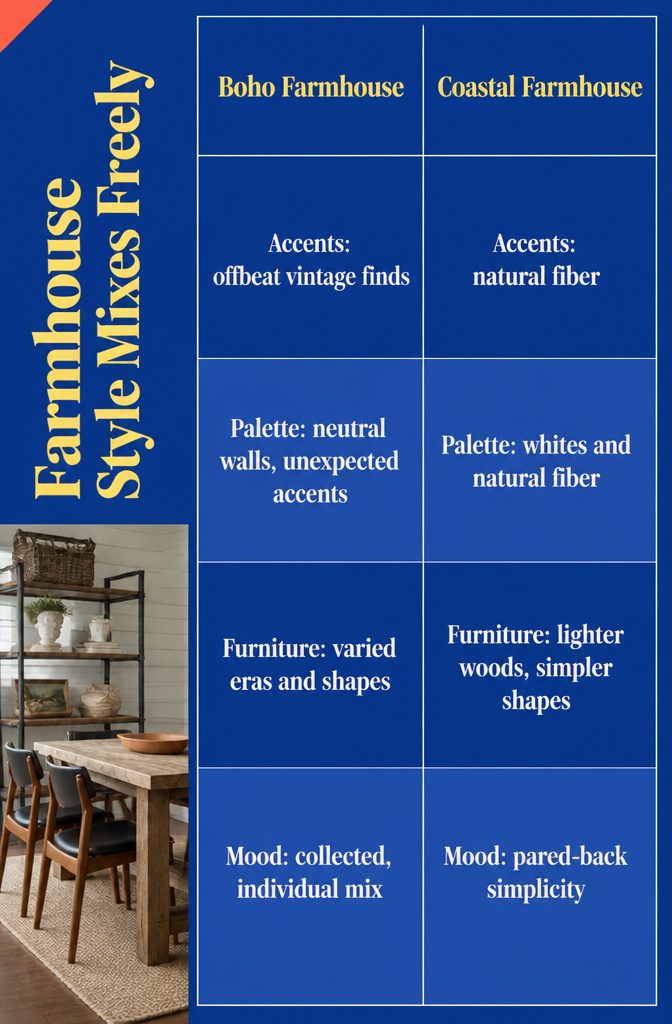
Midcentury chairs around a farmhouse table, or industrial metal shelving against shiplap — modern farmhouse doesn’t demand a single pure look.
Max Humphrey calls it more a state of mind than a fixed style, and the rooms that prove it pair tailored upholstery with reclaimed wood or swap slouchy slipcovers for cleaner lines.
A boho spin shows up through offbeat finds: a bust planter on the mantel, a vintage couch painted an unexpected green, striped pillows layered in.
Coastal farmhouse leans on whites and natural fiber; Scandinavian farmhouse strips back to lighter woods and simpler shapes.
The glue is always neutral walls and natural materials, but the furniture and accents can pull from wherever fits the room you want. Combining eras and styles makes the space feel collected rather than catalog-matched.
Frequently Asked Questions
What is modern farmhouse style?
Modern farmhouse style blends traditional farmhouse comfort with contemporary design, clean lines, and a restrained color scheme.
It pairs reclaimed wood with streamlined furniture, neutral palettes with architectural salvage, and vintage accessories with modern shapes. The style avoids fussiness and feels warm without clutter, polished without losing the invitation to sit down and stay.
What are the best colors for a modern farmhouse living room?
Whites, grays, and beiges anchor the palette, with selective color layered in to keep the room from feeling empty.
Navy blue, light blue, blush pink, sage green, and rust all work when introduced through textiles and accents rather than covering entire walls. The neutral base keeps the room calm, and the color keeps it lived-in.
Is a white sofa practical in a modern farmhouse living room?
White shows every smudge within a week, so oatmeal or light gray slipcovers hide everyday wear far better.
Slipcovers in linen or heavy cotton come off for washing, which matters more than it sounds like it will. A washable cover makes a light sofa practical for daily use.
Can I combine modern farmhouse with other styles?
Modern farmhouse doesn’t demand a single pure look.
Midcentury chairs around a farmhouse table, industrial metal shelving against shiplap, or boho finds layered in all work when the glue is neutral walls and natural materials. Combining eras and styles makes the space feel collected rather than catalog-matched.