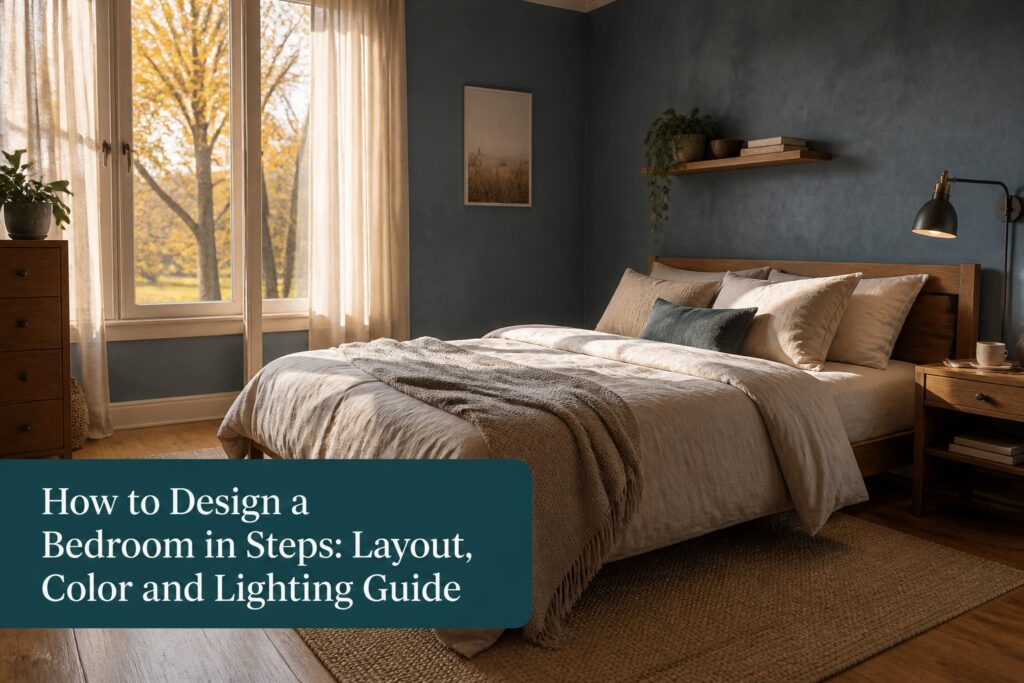
A finished bedroom that actually sleeps well takes about a weekend, under $200 if you start with storage furniture, and the discipline to stop after one style instead of mixing three.
The trap is layout: people center the bed on the wrong wall and lose the 24–30 inches of side clearance that makes the room usable. Lose that circulation space and no color or lamp fixes it.
1. Define the Concept
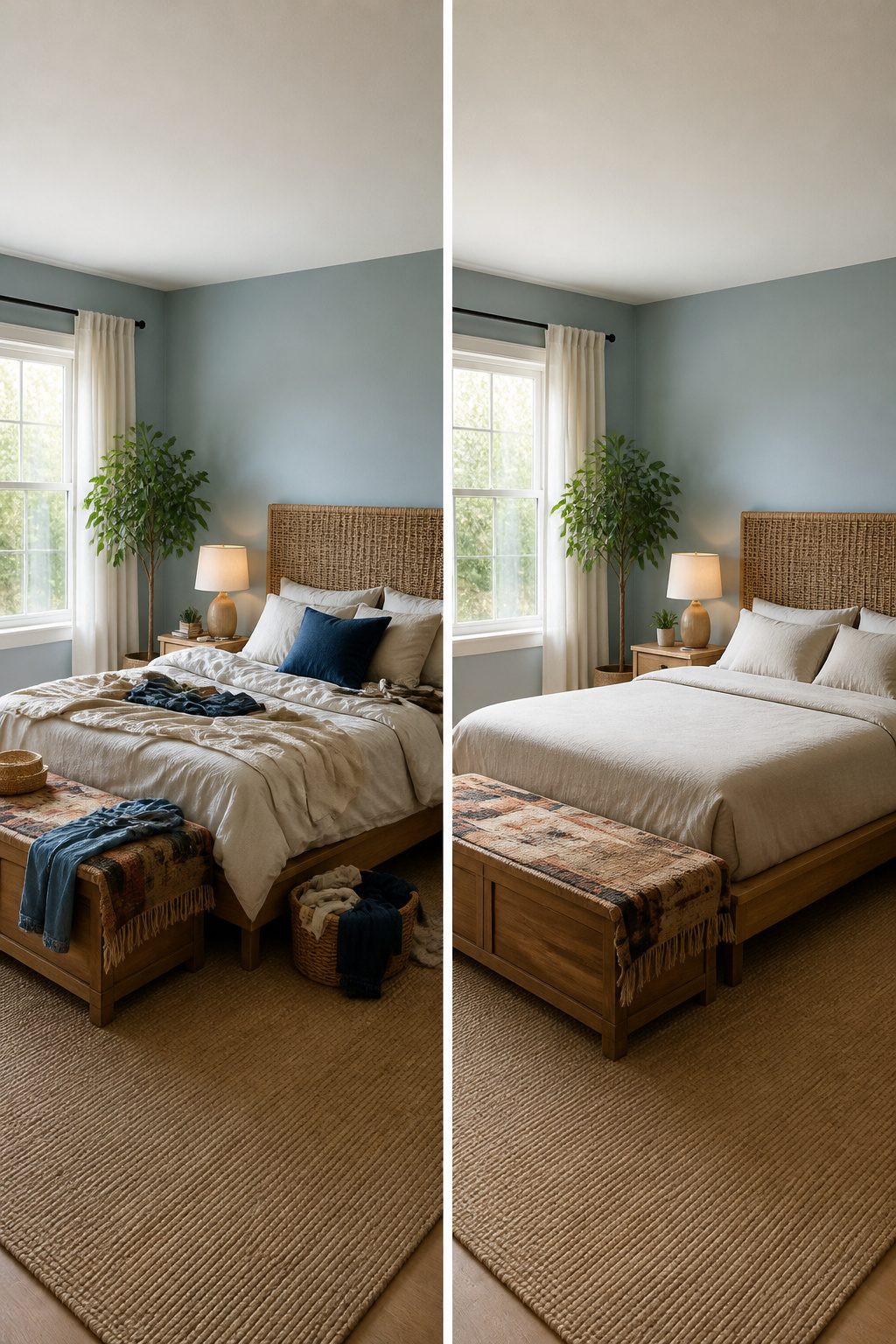
A bedroom design works best when it commits to one direction instead of borrowing from three. I would pick either modern, cabin, or Scandinavian and let that choice filter every decision that follows.
Mixing them usually produces a room that feels assembled rather than designed, because each style carries its own proportions and materials that do not translate across boundaries.
For renters staring at a cluttered space they did not create, a Zen concept strips the room to essentials: a low platform bed, one task light, storage that hides rather than displays.
The reset happens fast and moves with you. Bohemian can work too, but only when textures are chosen deliberately, a woven headboard paired with a single vintage textile, not accumulated over years until the walls disappear.
I would skip the accumulated version; it fights the calm a bedroom needs.
Recommended Products

【JAPANESE ZAISU FLOOR CHAIR DESIGN】Inspired by traditional Japanese seating, this modern floor chair brings a simple and relaxing Zen style to your home.


【JAPANESE ZAISU FLOOR CHAIR DESIGN】Inspired by traditional Japanese seating, this modern floor chair brings a simple and relaxing Zen style to your home.
2. Select Key Furniture Pieces
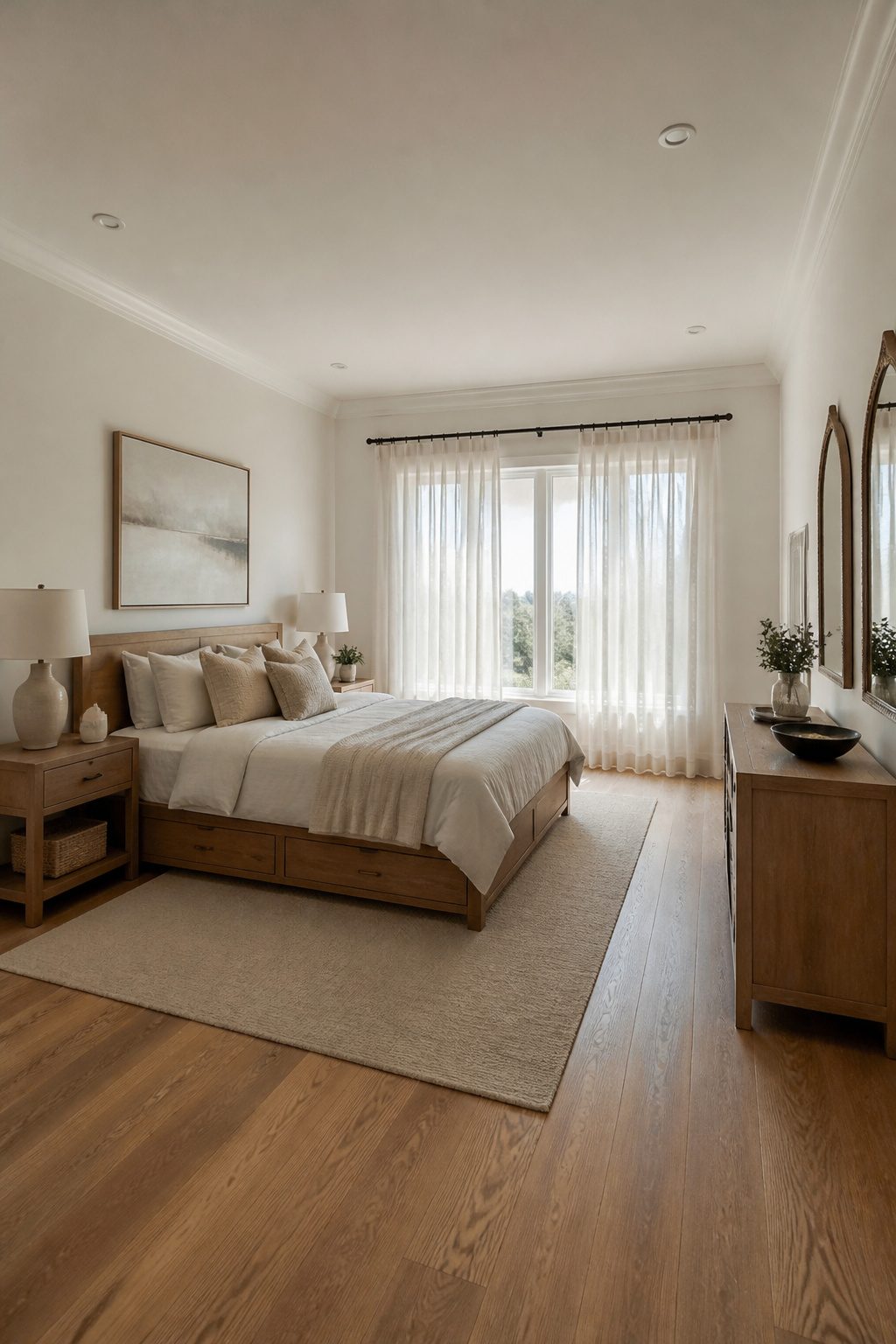
The bed sets the scale for everything else. For a queen, I would look for nightstands between 18 and 24 inches wide; anything wider crowds the walkway.
Nightstand height should match the top of the mattress, not the frame, so you are not groping downhill for water or your phone at 2 a.m.
A storage bed with built-in drawers replaces a dresser in tight quarters, but the frame sits higher and the drawers add weight you feel every time you change sheets.
I would take the storage route only if the closet is truly small enough that a dresser would block circulation.
In a narrow room, the better move is often a smaller bed, one nightstand instead of two, and the bed pushed against a wall to open the center aisle.
You lose the symmetrical look, but you gain floor space you actually use.
Recommended Products

【Oversized Velvet Headboard with Vertical Channel-Tufted Design】Standing at 66.14 inches tall, this queen bed frame with headboard features a striking vertical channel-tufted design upholstered in premium blue velvet with a plush sponge layer. This tufted queen bed frame creates a bold focal point while offering comfortable back support for reading or lounging in bed

Ample Storage with 2 Built-in Nightstands: This bed frame features 2 built-in nightstands, each equipped with 2 smooth-gliding drawers and 3 tier shelves — plus an additional open shelf above the headboard. Each nightstand also includes a side pegboard panel that lets you hang small items like keys, headphones, or jewelry for easy access and extra organization. Offering generous storage for books, phones, glasses, alarm clocks, and bedtime essentials right where you need them

❤ Premium Fleece Upholstery : Fully wrapped in plush white Fleece fabric with heavy padding. Cloud-like softness, modern look, and a safe, bump-free frame for kids and pets.
3. Plan the Layout
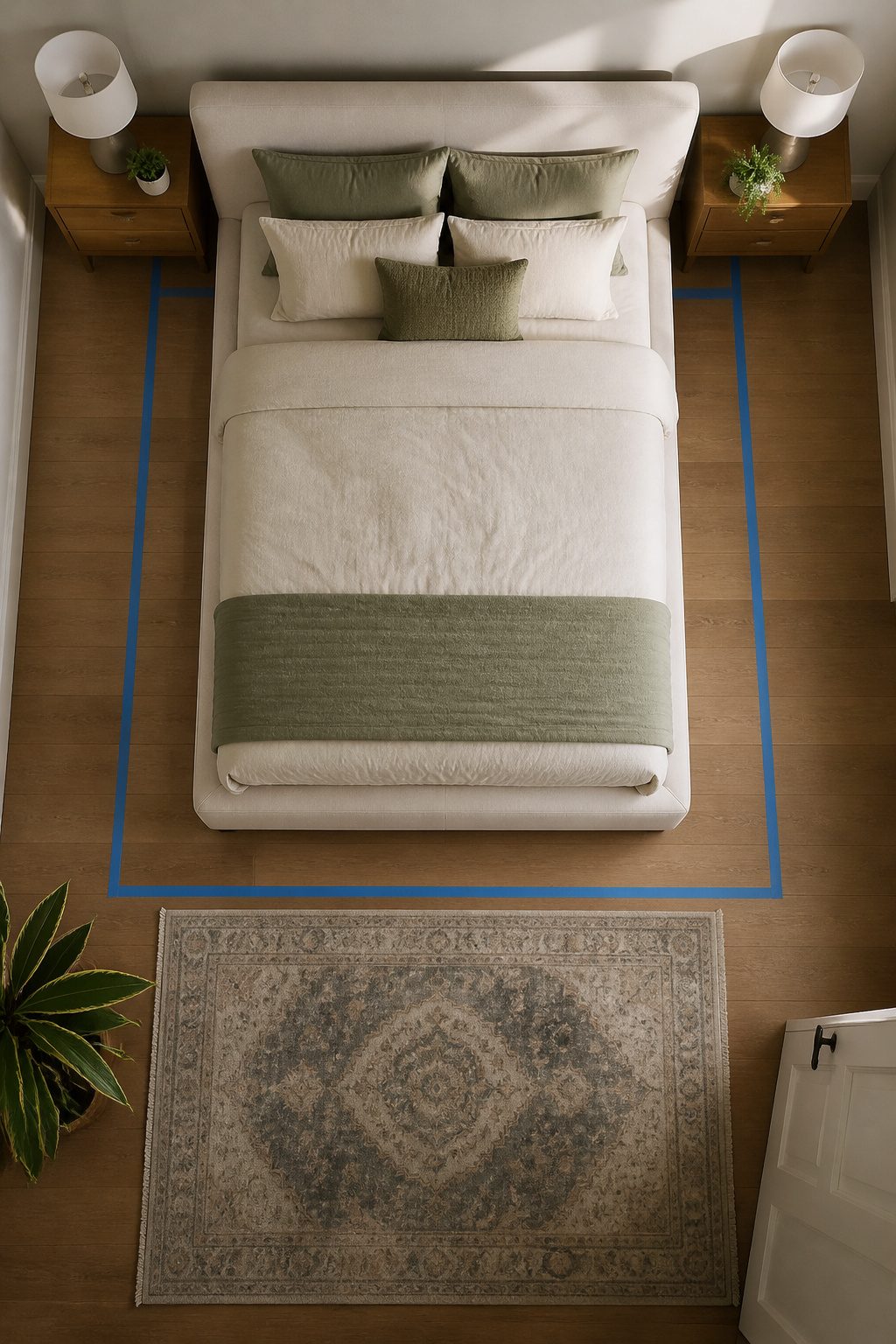
The bed should go on the longest wall you see when you walk in, centered so it reads as the clear focal point.
I place it there because the eye travels straight to that wall anyway, and fighting it just makes the room feel off-balance.
Once the wall is picked, leave 24–30 inches between the bedframe edge and any obstacle on the sides, whether that is a wall, dresser, or wardrobe.
That is the minimum for comfortable walking and making the bed without a shuffle. At the foot, 36 inches is the floor; anything tighter and you are squeezing past drawers or bench legs every morning.
Before anyone lifts a box spring, I mark the footprint with painter’s tape on the floor.
Bedframes always read smaller than they are, especially upholstered or platform styles with thick rails, and tape shows the real circulation space without the commitment.
If the tape leaves you a tight squeeze, the bed wins; a bench or oversized nightstand can always wait for a bigger room.
Recommended Products

【Farmhouse Bed Frame】Elevate your bedroom with our white farmhouse bed frame queen size, where classic American charm meets modern innovation. Designed with a timeless aesthetic that complements a wide range of decor styles, this versatile wood queen bed frame features a harmoniously crafted headboard and footboard, making it a perfect fit for virtually any age and taste.

【Ample Storage Space】 Equipped with 4 large under-bed storage drawer on wheels and a adjustable headboard shelf, thisqueen platform bed with storage provides plenty of room to organize clothes, books, toys, and daily essentials, helping maximize small bedroom space.

BEDSIDE POWER STRIP: Charge a lamp, phone and tablet from the built-in station holding two AC sockets, one USB port and one Type-C port, mounted where cords stay short and tidy.
4. Choose Materials and Colors
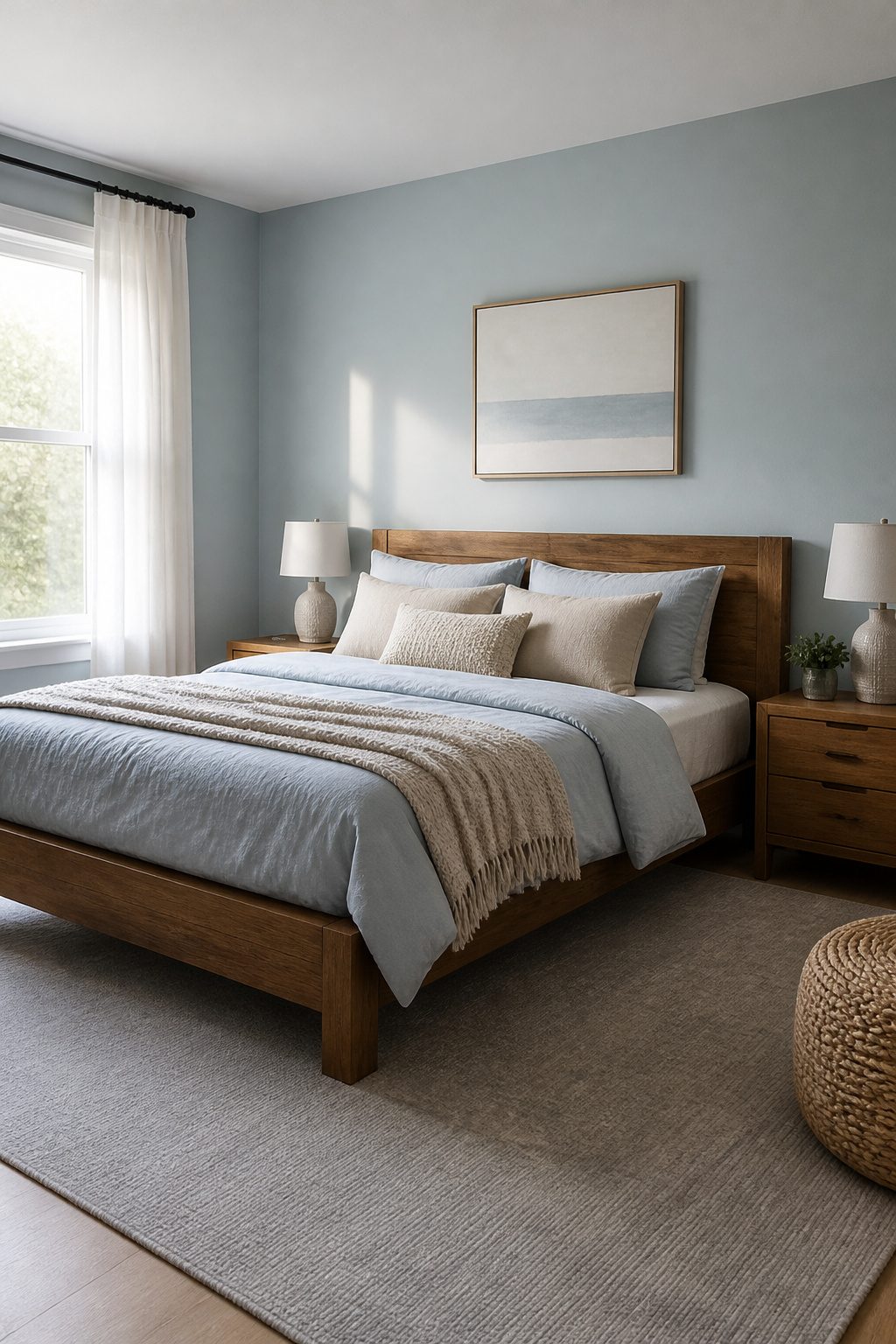
Light blue, light green, beige, and grey work for a bedroom because muted versions of cool and neutral tones signal your brain to wind down.
Bright reds or saturated oranges do the opposite, pulling your attention toward them even with your eyes closed.
I would skip the pure white walls that show up in a lot of Pinterest boards; they read as sterile at 10 PM and show every scuff from moving furniture in a rental.
Solid wood furniture, low-VOC paint, and natural fiber rugs cost more upfront, though I think they earn their place in specific spots.
A solid wood bed frame takes abuse for years and can move with you, so the premium over particleboard pays back if you keep it past your first lease.
Low-VOC paint matters less to me unless you are painting in winter with the windows shut; in summer with a fan running, standard paint off-gasses fast enough that I would spend the difference on better rollers and a second coat.
Natural fiber rugs feel good underfoot but shed and stain; I would put that money toward a jute runner in a low-traffic corner rather than under the bed where you will never notice it.
Recommended Products

【Design Excellence】This black modern minimalist metal flower wall decor features 2 symmetrical tree branches as a group, the appearance is simple and stylish, giving a sense of spiritual harmony, the two metal leaves are relatively thin and may fold together during transportation; please separate them manually!

★ PAINTING SIZE ▶1 panel "Inspirational Canvas Wall Art" canvas art 32"Wx16"H(80cmx40cm),The image is just for displaying, please measure your place before purchase.

Preferred Material: This wall decoration is made of high-quality wood, and the fonts are printed with UV ink, which will not fall off, crack, fade, and is safe to use
5. Incorporate Lighting
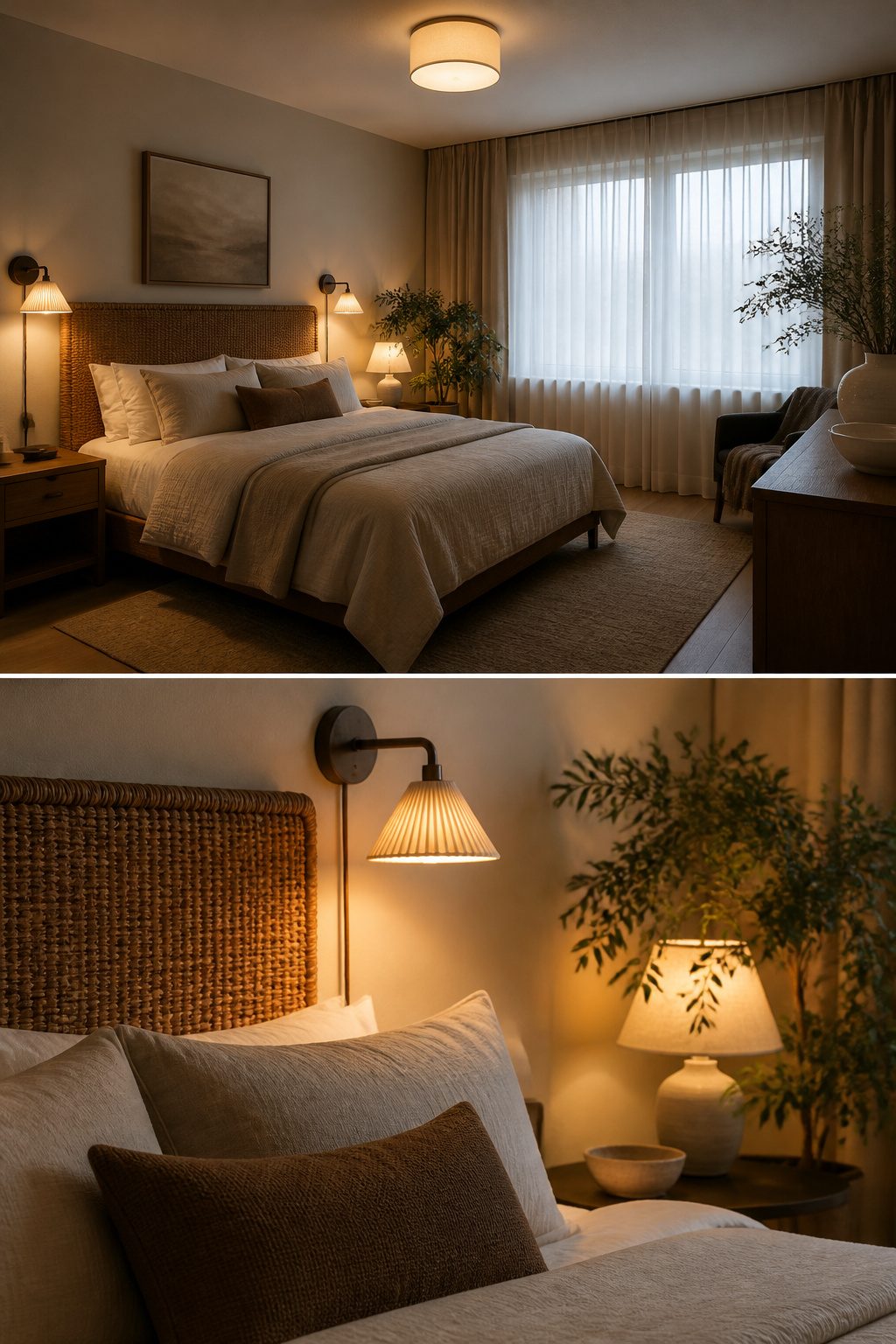
Bedroom lighting works best in three layers, and the difference between a room you tolerate and one you want to spend time in usually comes down to whether you control all three or settle for the overhead fixture the landlord installed.
General lighting fills the space and belongs on the ceiling or high on the wall. A flush-mount or semi-flush fixture does the job without eating headroom, and a dimmer lets you drop it from functional brightness to background glow.
If you rent, smart bulbs in the existing socket get you the same control without touching the wiring; I would pick those over rewiring every time.
Task lighting sits where you actually use your eyes. Bedside reading calls for a focused beam, and here plug-in sconces are the renter’s best move.
Mount them to the wall with a couple of screws, run the cord behind the headboard, and you have directional light that frees the nightstand surface. Swing-arm models let you push the light aside when you are not reading.
Accent lighting is the layer most people skip, which is why their bedrooms feel flat.
A small directional fixture aimed at artwork, a plant, or the texture of a woven headboard adds depth that overhead light washes out. Picture lights, clip spots, or even a well-placed table lamp with a narrow shade will do it.
Dimmer control on every layer matters more than the fixture style. A single bright source at 9 PM feels clinical; the same output at 20% feels like a cabin evening.
Smart bulbs cost more upfront than standard LEDs, but they let you program scenes and adjust from bed, and that convenience is what turns the hardware into a room you actually use.
Recommended Products

CRAFTED CAREFULLY - Industry standard ink printed onto our signature canvases.

This Japanese style platform bed features a low profile, hardwood frame with matching symmetrical nightstands, finished in a Wenge veneer.

UNFORGETTABLE ARTWORK - Professionally printed artwork on custom-built framed canvas. Set of 3, each panel is 16"x24".
6. Add Accessories and Decor
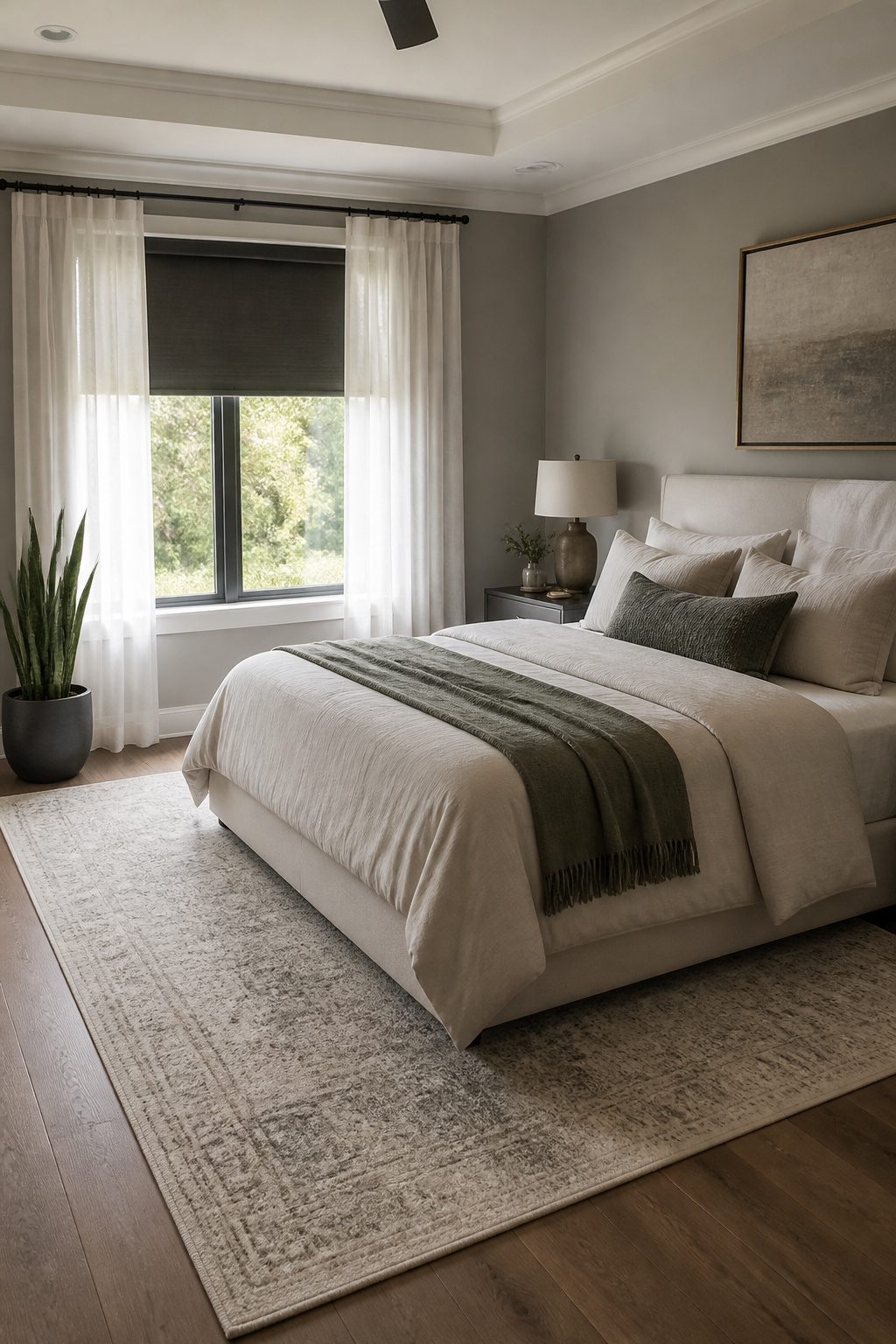
A 9 by 12 foot rug anchors a queen bed properly, extending roughly 24 to 30 inches past the sides and foot so your first step out lands on wool or jute, not cold floor.
Anything smaller and the rug floats in the room; anything larger swallows the floor.
For windows, I would run two layers: a sheer for daylight and privacy, then a blackout shade or drapery behind it for sleep.
The sheer keeps the room from feeling boxed in, and the blackout layer is what you actually use at 10 p.m. A double track costs more, but skipping it means fighting with one compromised layer for years.
Plants finish the room, but one living thing beats three dried ones.
I would pick a single low-light survivor, a snake plant or ZZ, and set it where it gets indirect light from that sheer window. Water it when you remember, and it will still look intentional six months later.
Recommended Products

Dependable Support for Everyday Use-Built with a reinforced frame, durable wood slats, and sturdy metal support rails, this platform bed provides reliable stability for daily use and supports up to 800 lbs. Overall dimensions: 83.5"L × 61.77"W × 43.3"H.

EXTENDED HEADBOARD WITH BUILT IN NIGHTSTANDS: Transform your master bedroom completely. This queen bed frame with storage integrates 2 floating bedside tables. Keep your phone and coffee within easy reach. It also includes 2 extra display shelves. Show off your favorite family photos. Get a luxury hotel look at home. Save bedroom space without buying extra furniture
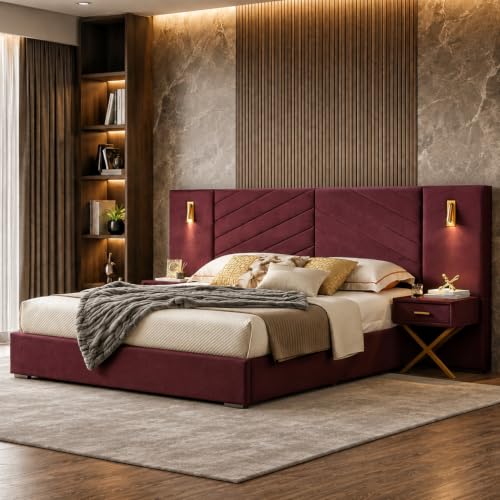
【Luxury Dual-Side Storage Design】This queen bed frame features an oversized modern winged headboard with built-in storage shelves on both sides. Effortlessly store daily essentials while eliminating the need for extra nightstands. Place your teacup, book, glasses, electronics, and more on the shelves before bedtime—combining practicality with contemporary style.
Furniture Placement Rules
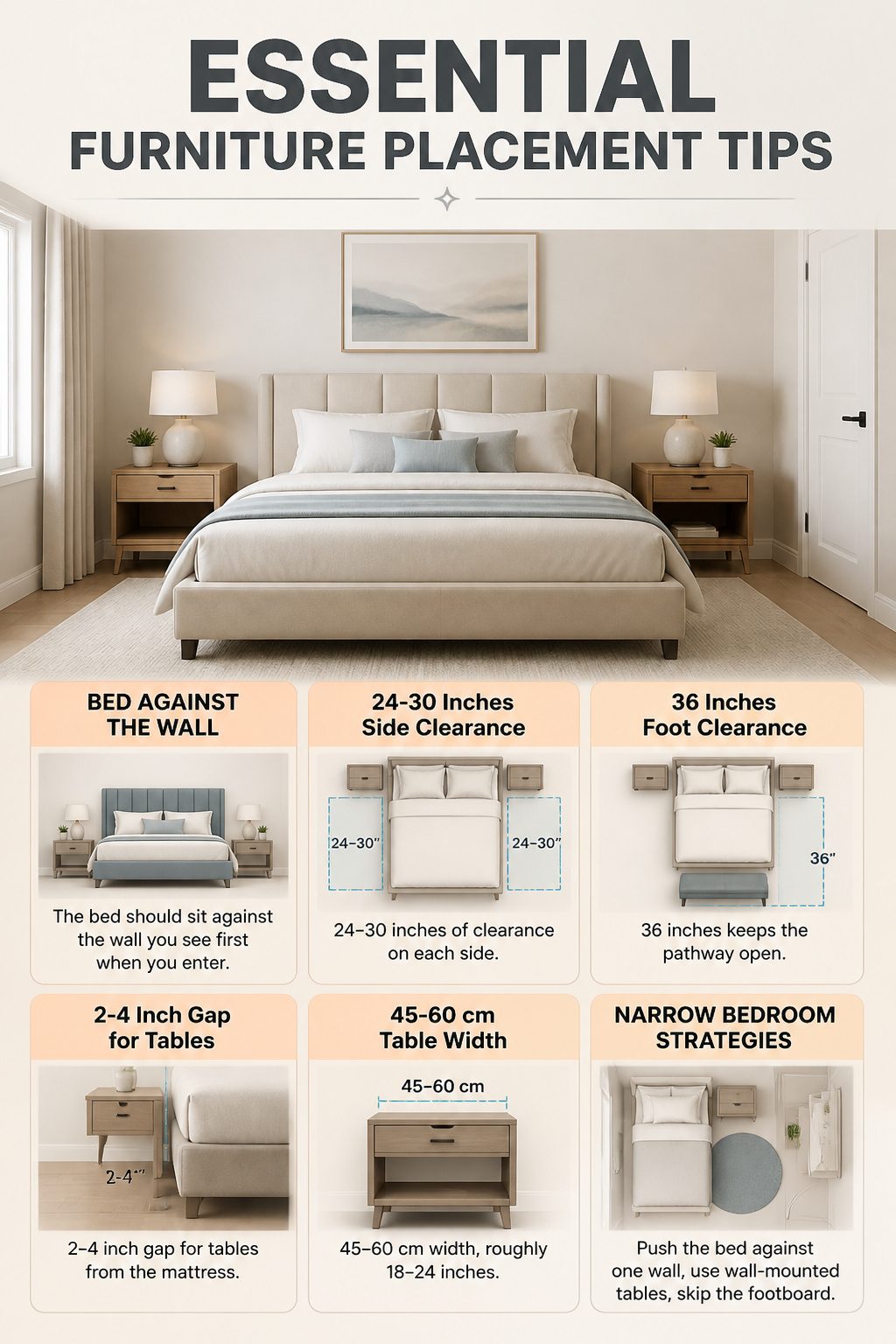
The bed should sit against the wall you see first when you enter, and the frame, not the mattress, is what you measure from.
24–30 inches of clearance on each side gives you room to walk, change sheets, and open wardrobe doors without a shuffle. At the foot, 36 inches keeps the pathway open; add a bench only if the remaining walk still clears that line.
Bedside tables work best within easy reach, about a 2–4 inch gap from the mattress so the setup does not feel crowded.
A 45–60 cm width, roughly 18–24 inches, stays in proportion with a queen or king without stealing walkway space. If the table sits against a wall that doubles as a path, keep 24 inches clear beyond it.
Narrow bedrooms force harder choices.
I would downsize the bed before I would cram a queen into a space that leaves you squeezing sideways. Wall-mounted nightstands reclaim the floor footprint entirely, and skipping a footboard saves precious depth where every inch counts.
Pushing the bed against one wall, with a single table on the open side, beats the illusion of symmetry when the room cannot support it.
Recommended Products

4 ROLLING STORAGE DRAWERS: This full bed frame comes with 4 spacious built-in storage drawers underneath, each equipped with a secure lock. Perfect for storing bedding, clothing, and personal items while keeping your bedroom tidy and organized. Maximize under-bed space without any wasted room.

12 Fabric Drawers for Ample Storage-LIKIMIO bed frame queen-size features 12 built-in fabric drawers (6 on each side), providing massive hidden storage for bedding, clothes, shoes, and other items, perfect for small bedrooms or anyone needing extra space

Spacious Under-bed Fabric Drawers: Equipped with two large movable drawers on smooth-rolling wheels, this queen bed frame is designed to organize your clothing, bedding, shoes, and essentials efficiently, maximizing your bedroom's storage efficiency while maintaining a clutter-free environment and allowing easy cleaning access
Color Schemes for Sleep
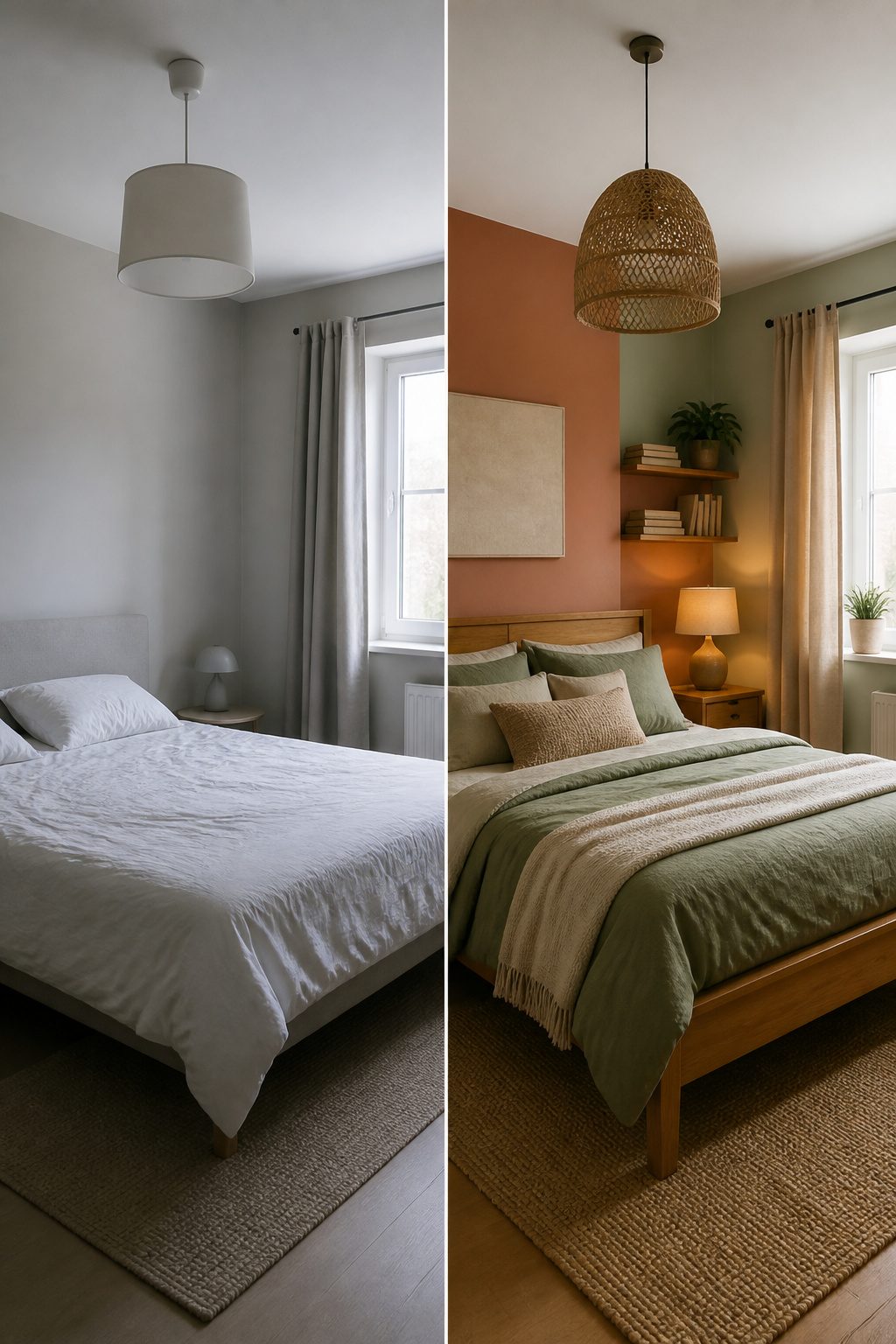
Light blue, light green, beige, and grey all work for the same reason: they keep the eye from hunting for something to resolve.
Light blue pulls the heart rate down a little, which is why I would use it in a room that also gets used for reading before bed.
Light green does almost the same thing but reads as slightly more organic, less coastal.
Beige and grey are the safer bets if your furniture already has strong tones; grey in particular needs warmth added back in, or the room turns flat.
That warmth can come from tan trim, warm white bedding, or a single muted accent wall in something like terracotta or dusty rose.
The accent wall gives the eye a place to land without closing the space the way a dark ceiling would.
One muted wall beats four dark ones for renters, because repainting charcoal or navy to get your deposit back is a weekend you will not want to spend.
Trendy dark colors look dramatic in magazine shots where the room is 400 square feet and professionally lit. In a real bedroom with one window and a landlord inspection, they read as smaller and harsher than you planned.
Recommended Products

Warm Welcome Message: Features the inviting phrase "Stay Awhile" accompanied by a delicate heart symbol, creating a warm and hospitable atmosphere. This piece makes guests and family members feel truly welcomed and cherished in your home.

Misty Lake Elk: A bugling bull elk beside still water creates atmospheric wildlife canvas wall art with a calm forest lake setting.

Smart Motion Lighting: These wall sconces battery operated set of 2 add helpful light to dark spots without leaving a switch on all night. Choose daytime motion sensing, night sensing, or constant-on mode for a bedroom wall, stairway landing, or hallway where light is useful when someone passes by.
Storage Solutions
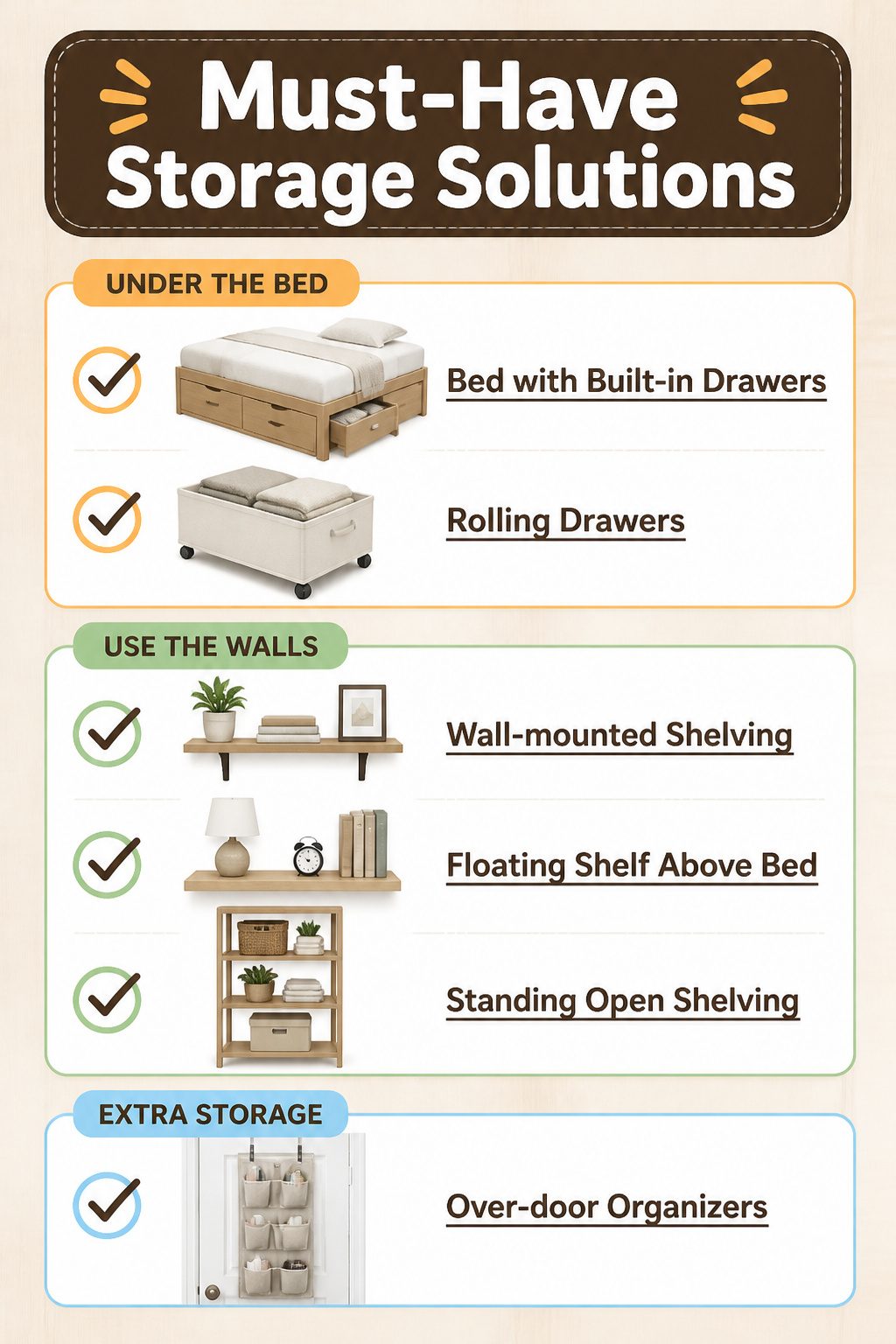
A bed with built-in drawers is the first purchase I would make for a small bedroom under $200.
It stores out-of-season clothing and extra bedding where there would otherwise be none, and it frees up closet space without adding another piece of furniture to the floor plan.
For renters or anyone who already owns a bed, rolling drawers underneath work nearly as well.
Wall-mounted shelving is the next move, and I would skip the nightstand entirely in a tight room.
A floating shelf above the bed holds a lamp, alarm clock, and books while the floor stays clear. Standing open shelving is the better choice if you cannot drill into walls; it moves with you and costs nothing to install.
Over-door organizers handle the last of the clutter, but they can wait.
In a narrow bedroom, vertical storage wins and floor-hogging dressers lose. Push the bed against the wall, keep one shelf instead of two bedside tables, and let the walls do the work.
Recommended Products

CRAFTED CAREFULLY - Industry standard ink printed onto our signature canvases.

UNFORGETTABLE ARTWORK - Professionally printed artwork on custom-built framed canvas. Set of 3, each panel is 24"x36".

LEAF ARTWORK FOR WALLS: Hang this Haus and Hues botanical wall art to give your space a nature-inspired experience & infuse freshness and a zen-like mood. This collection of 4 leaf prints wall art and botanical art was designed to provide warmth and beauty to your living room, bedroom, workplace, dorm, or freshly renovated apartment. These plant posters can provide some life to your room all year round. Add these plant prints wall art to your room to quickly transform it from dull to intriguing!
Lighting Options
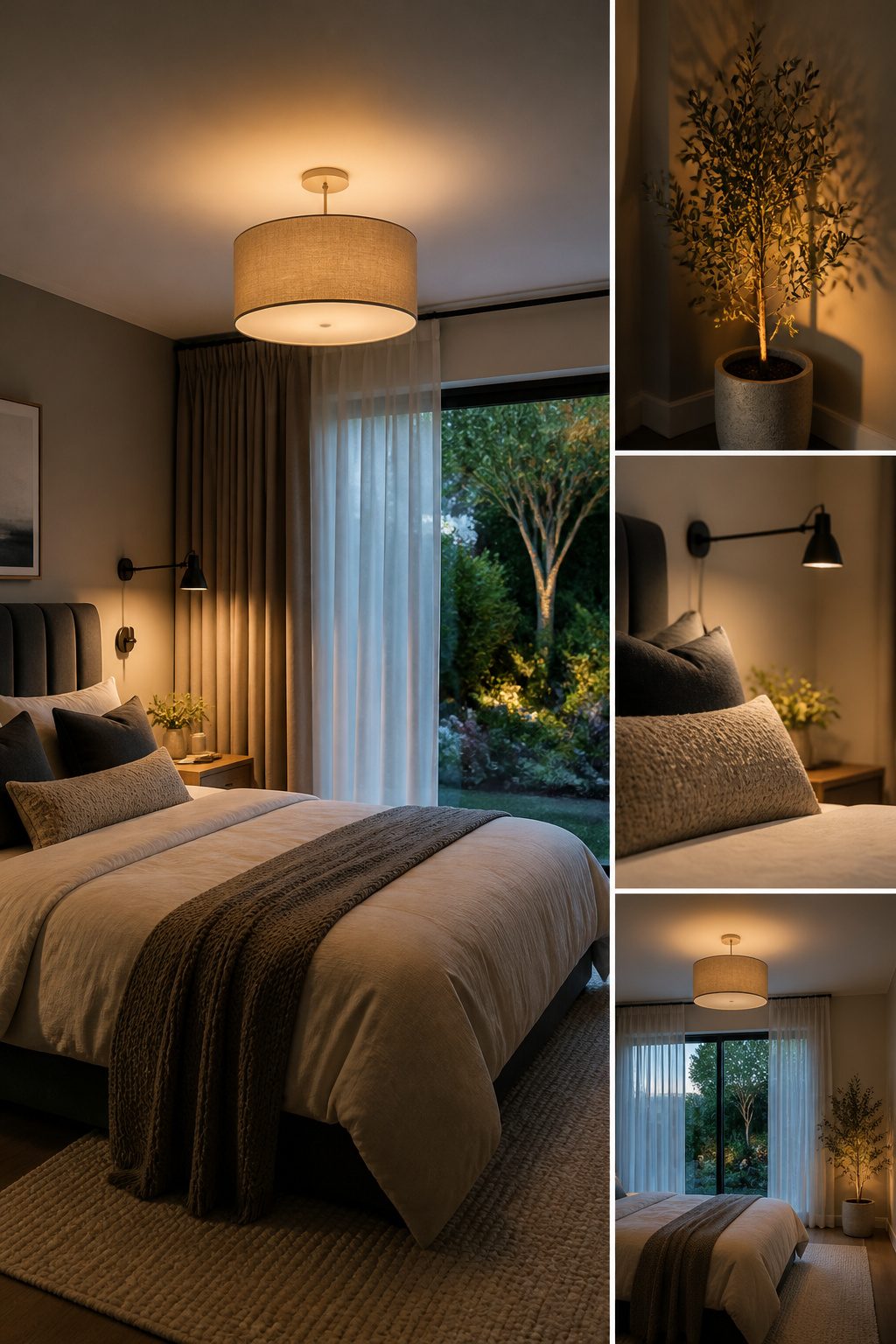
Bedroom lighting works in three layers, and the mistake most people make is stopping at the first one. General overhead light gets you dressed, but it does nothing for reading in bed or making the room feel smaller at night.
I add task lighting last, not first, because once you see where the shadows actually fall, you know whether you need a swing-arm sconce by the headboard or a floor lamp angled across a chair.
Dimmers change everything, and they are the one upgrade I would make if the budget allows only one.
A $25 Lutron toggle dimmer installs in ten minutes with a screwdriver, and it turns the same overhead fixture from morning prep light to something you can fall asleep under.
Smart bulbs are the renter’s workaround where the switch box is off-limits; the bulb itself dims via app, though I find the phone-in-bed habit worse than reaching for a wall plate.
For renters avoiding an electrician entirely, plug-in sconces with fabric cords solve the bedside problem without opening the wall. Clamp lights on shelving or headboards cost less than $20 and aim exactly where you need them.
Floor lamps with three-way switches give you 50, 100, and 150 watt equivalents in one fixture, which covers more moods than most people expect from a single corner.
Recommended Products

EXTENDED HEADBOARD WITH BUILT IN NIGHTSTANDS: Transform your master bedroom completely. This queen bed frame with storage integrates 2 floating bedside tables. Keep your phone and coffee within easy reach. It also includes 2 extra display shelves. Show off your favorite family photos. Get a luxury hotel look at home. Save bedroom space without buying extra furniture

EXTENDED HEADBOARD WITH BUILT IN NIGHTSTANDS: Transform your master bedroom completely. This queen bed frame with storage integrates 2 floating bedside tables. Keep your phone and coffee within easy reach. It also includes 2 extra display shelves. Show off your favorite family photos. Get a luxury hotel look at home. Save bedroom space without buying extra furniture

EXTENDED HEADBOARD WITH BUILT IN NIGHTSTANDS: Transform your master bedroom completely. This queen bed frame with storage integrates 2 floating bedside tables. Keep your phone and coffee within easy reach. It also includes 2 extra display shelves. Show off your favorite family photos. Get a luxury hotel look at home. Save bedroom space without buying extra furniture
Window Treatments
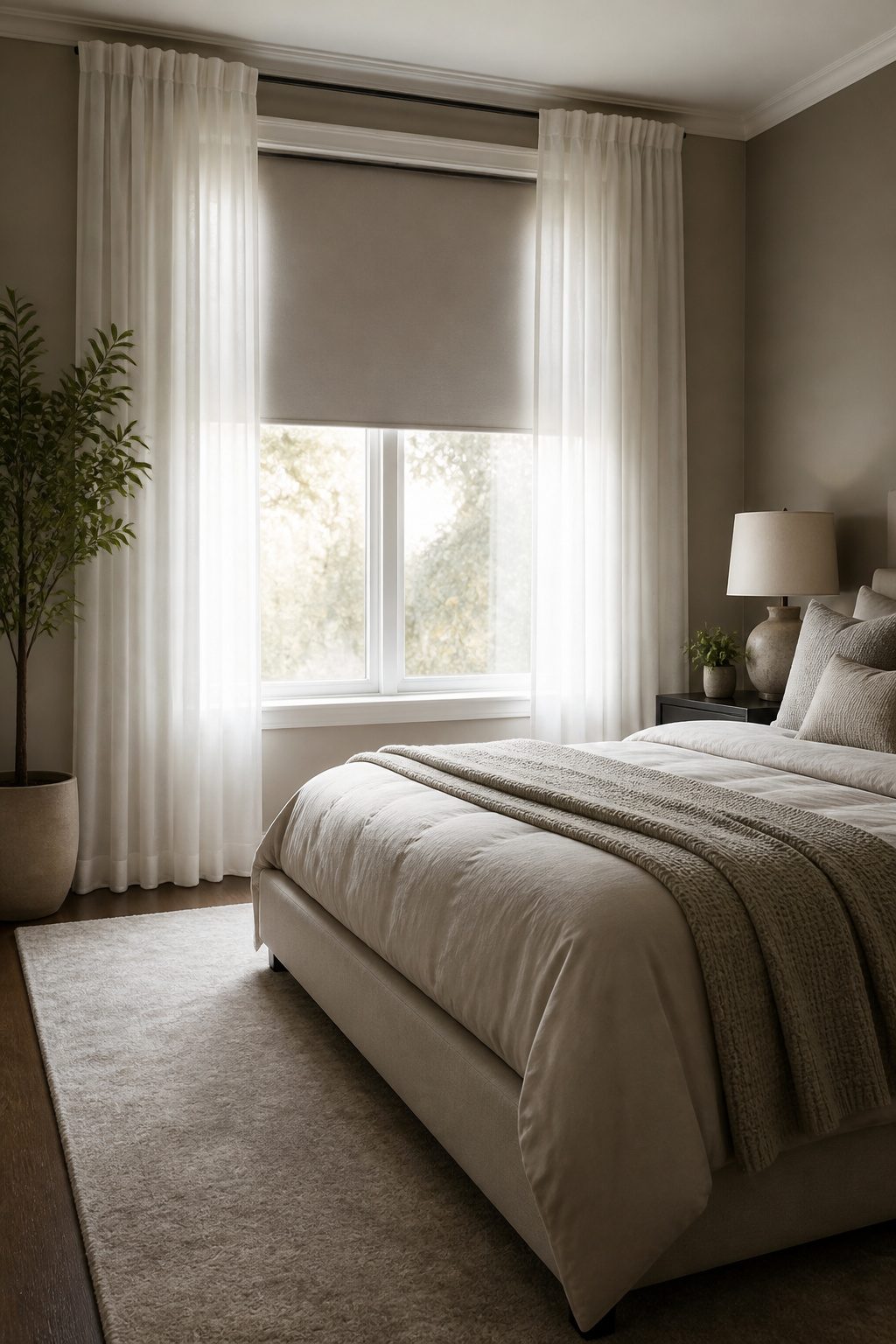
Window treatments do the most work when you layer them. A sheer panel gives you daylight and privacy during the day, and a blackout roller or second panel behind it blocks morning sun and streetlight at night.
The sheer goes on a front rod, the blackout on a back rod or inside mount, and you draw whichever one the hour calls for.
The hardware matters more than the fabric if you are renting. A tension rod inside the frame leaves no holes in the drywall, and most landlords will not flag it on move-out.
If you want the window to look larger, mount the rod 6 to 8 inches above the frame and extend it past the sides by the same measure. The eye reads the wall as the window, not the glass.
If the budget only allows one layer, skip the sheer and buy the blackout. You can crack the panel an inch for daylight and still sleep through sunrise.
A basic blackout roller runs about $15 to $30 per window, and the upgrade to a layered pair doubles that. I would rather have one working blackout in the bedroom than two half-measures that let light through at six a.m.
Frequently Asked Questions
How can you create storage in a small bedroom?
Start with a bed that has built-in drawers, which turns unused space under the mattress into storage for out-of-season clothing and extra bedding.
Add wall-mounted shelving or floating shelves above the bed to hold a lamp, clock, and books without taking up floor space.
Rolling drawers underneath an existing bed work nearly as well if you already own the frame, and over-door organizers handle the last of the clutter without adding furniture to the room.
How do you design a narrow bedroom?
Downsize the bed before forcing a queen into a space that leaves you squeezing sideways; a smaller bed with one nightstand beats cramped symmetry.
Push the bed against a wall to open the center aisle, and use wall-mounted nightstands to reclaim the floor footprint entirely. Skip the footboard to save precious depth, and let vertical storage on the walls replace floor-hogging dressers.
What color works best in a cozy bedroom?
Light blue, light green, beige, and grey all keep the eye from hunting for something to resolve, which helps your brain wind down.
Light blue in particular pulls the heart rate down slightly, making it ideal if you read in bed before sleep.
Avoid bright reds or saturated oranges; they pull attention toward them even with your eyes closed, and pure white walls read as sterile at 10 p.m.
How do I start designing a master bedroom?
Pick one style direction first, whether modern, cabin, or Scandinavian, and let that choice filter every decision that follows.
Then place the bed on the longest wall you see when you walk in, centered as the clear focal point, and mark the footprint with painter’s tape before moving any furniture.
Leave 24–30 inches of clearance on each side of the bedframe and 36 inches at the foot so you can walk and make the bed without a shuffle.
What is the 70/30 rule in interior design?
The design approach described here instead emphasizes committing to one style direction and letting that single choice guide all furniture, color, and material decisions rather than mixing proportions.
How to do a bedroom makeover?
Start by stripping the room to essentials if it feels cluttered; a low platform bed, one task light, and storage that hides rather than displays creates a fast reset.
Mark new furniture footprints with painter’s tape on the floor before committing, since bedframes always read smaller than they are.
Then build back in three layers of lighting, general overhead, task at the bedside, and accent on textures or artwork, with dimmer control on each.
What makes a home look cheap?
Mixing styles without committing to one direction produces a room that feels pieced together, and accumulating decor over years until walls disappear fights the calm a bedroom needs.
Bright reds or saturated oranges in a sleep space, or pure white walls that show every scuff, also undermine a finished look.