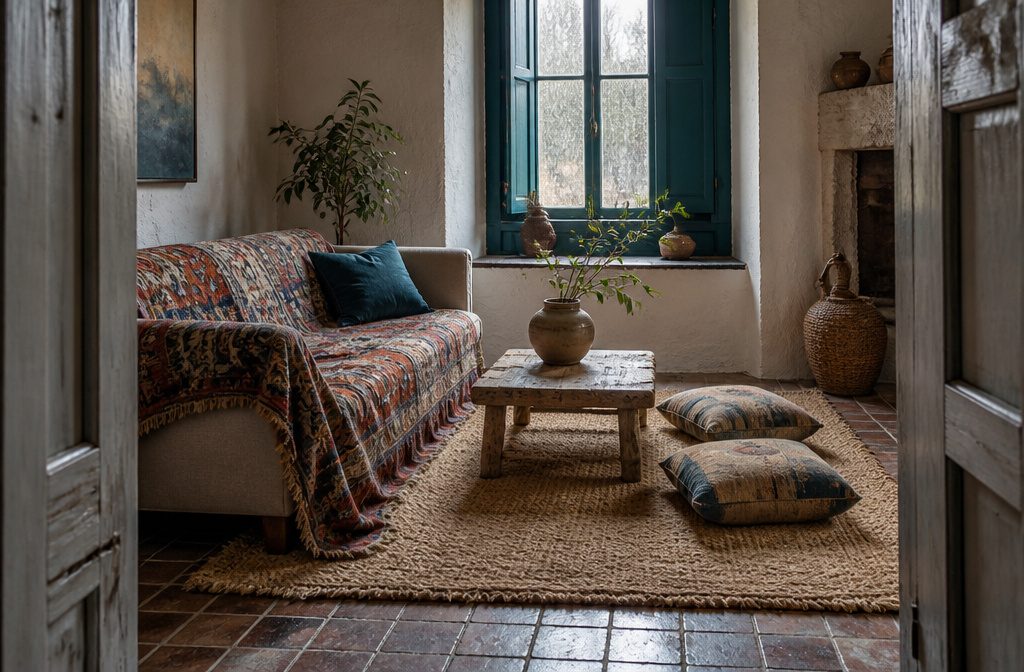
A room that pulls off boho without looking cluttered runs on one rule: repeat 3 base colors across rugs, pillows and walls, then add 1 or 2 accent tones through smaller pieces.
That repetition with breathing room is what separates layered from chaotic, and it matters more in a small space where every textile shows at once.
The advice here spans furniture-first layouts to $29 jute rugs and DIY macramé, with texture doing more work than pattern.
A Moroccan shag rug costs $275 to $1500 depending on size, floor cushions replace accent chairs when the room is tight, and one 19th-century Uzbek textile over a modern sofa holds more visual weight than six new pillows ever will.
1. Choose a Color Direction
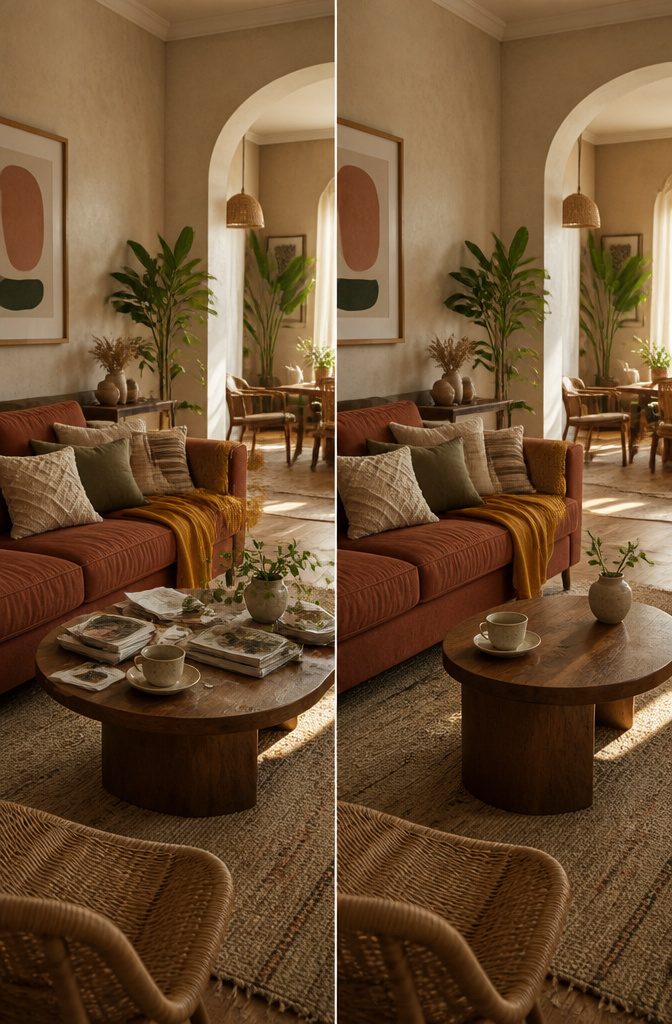
Boho color lives on warm, earthy tones as your base — terracotta, sandy beige, olive green, mustard yellow — then layers in either muted accents or deeper jewel tones depending on how much energy you want.
Some rooms stay calm with coral or peach pops against oatmeal walls; others go bolder with emerald green or sapphire blue pillows on a rust sofa.
The rule of 3 keeps it from turning chaotic: pick 3 primary colors for your foundation, then add 1 or 2 accent colors through art, throws or cushions.
Tonal mixing helps too — sandy beige with taupe, or different shades of green layered across the room.
You can keep walls neutral and bring all the color through textiles and plants, or paint an accent wall if that suits you better. Aim for warm and inviting, not matchy.
2. Layer Textiles and Textures
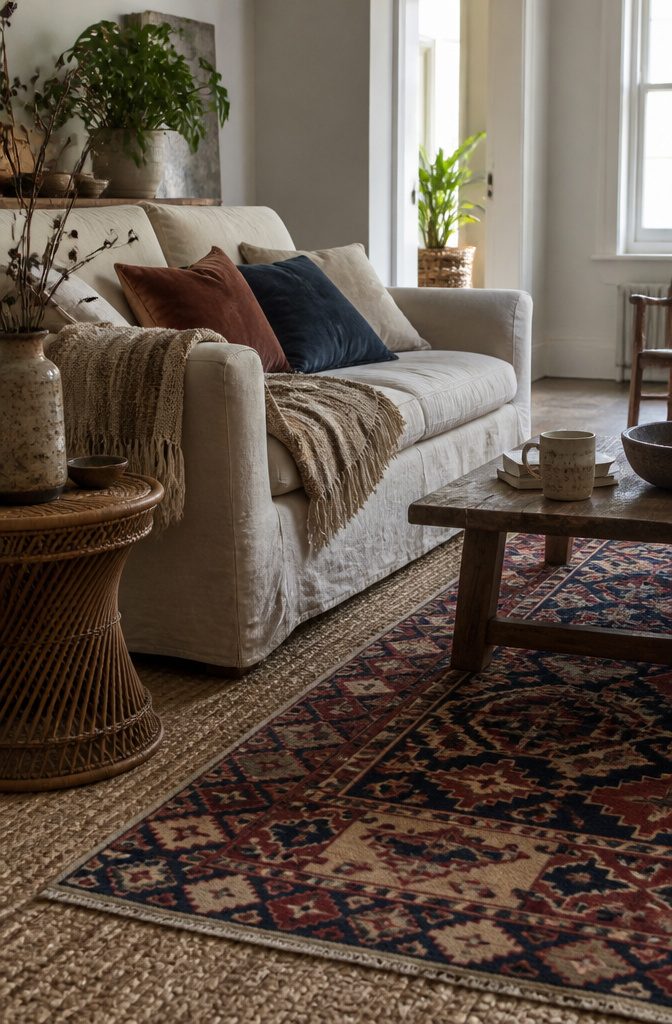
Rugs layered over rugs, velvet pillows next to linen ones, a woven throw across the arm of the sofa — that’s how texture builds the warmth boho lives on.
Start with a statement rug, something with pattern and weight: a Turkish kilim or Moroccan Beni Ourain sets the tone.
Then add smaller pieces that vary the feel but keep some thread of connection, whether that’s color or weight or finish.
Wool, linen, jute, cotton, woven fibers — mixing them stops a neutral room from going flat. A linen sofa gains dimension when you pile on velvet cushions in different sizes and a chunille throw.
Rattan furniture next to soft fabric, wood paired with woven baskets. Mix confidently: larger patterns with smaller intricate ones, smooth surfaces next to tactile ones, all on that neutral base so the layers read as depth rather than noise.
3. Bring in Plants and Greenery
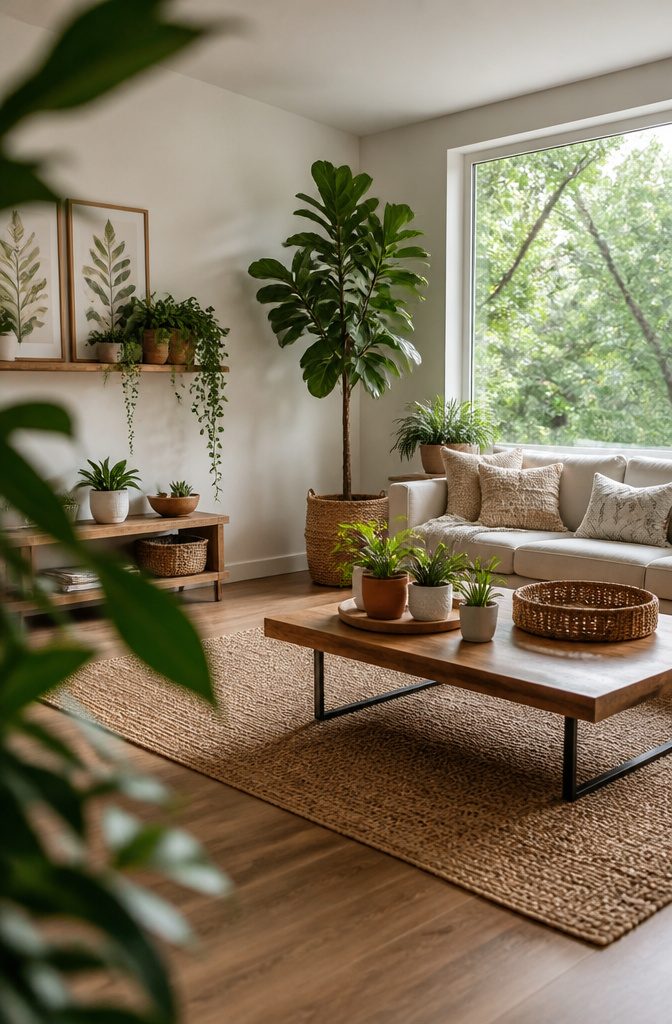
Plants fill in the gaps between furniture and soften hard edges without adding clutter.
A large fiddle leaf fig or a trailing pothos on a shelf brings the organic, collected-over-time feel that holds a boho room together, and you can mix real with faux depending on light and how often you remember to water.
Snake plants and succulents work in low light and need almost nothing from you.
Peace lilies handle dim corners and flower occasionally. String of hearts trails down from a macramé hanger and grows fast enough that you notice it month to month.
Fiddle leaf figs make a statement in a bright corner but cost more upfront — faux versions sit around $180 and look convincing from a few feet away if the leaves have some texture variation.
Cacti and small potted plants cluster well on a coffee table or windowsill, and botanical prints or pressed leaves in simple frames extend the greenery to the walls when floor space runs out.
4. Use Natural Materials and Woven Details
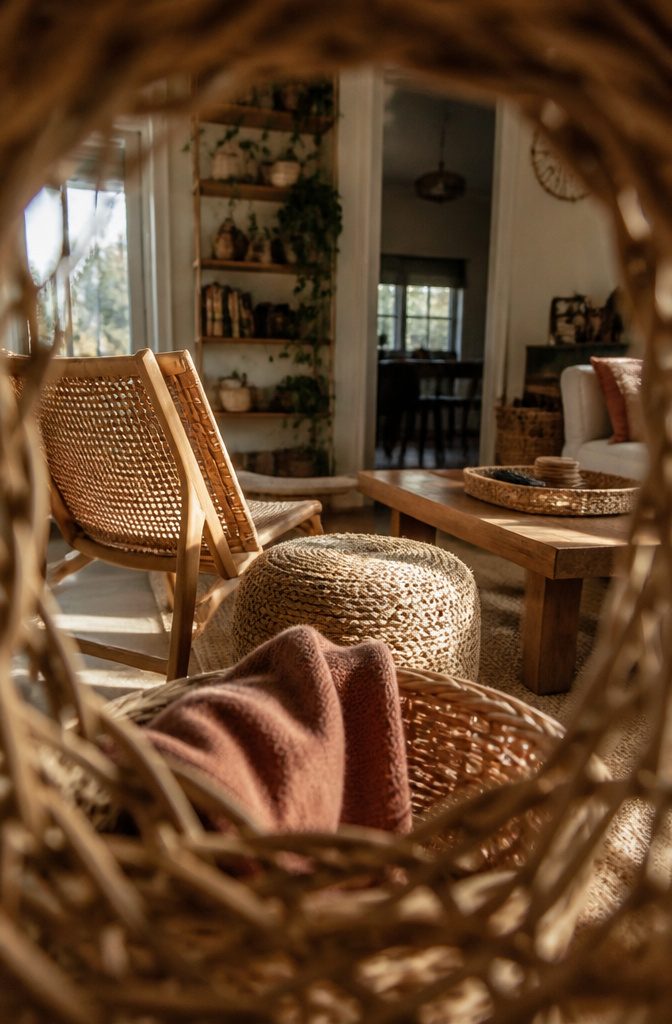
Wood, rattan, wicker and jute all carry a handmade feel that pulls a boho room together.
A rattan chair or woven jute ottoman grounds the space without looking too polished, and the texture reads warm even when the piece itself is simple.
I look for furniture where the grain or weave shows rather than pieces painted or finished so heavily the material disappears.
Woven trays, baskets and sisal rugs layer in more fiber without adding clutter. A tray on the coffee table holds remotes and coasters; a basket next to the sofa works for throws.
The repetition of natural material across different surfaces—legs, shelves, floor—ties the room to itself and keeps it from feeling like a collection of disconnected ideas.
5. Mix Vintage, Handmade, and Modern Pieces
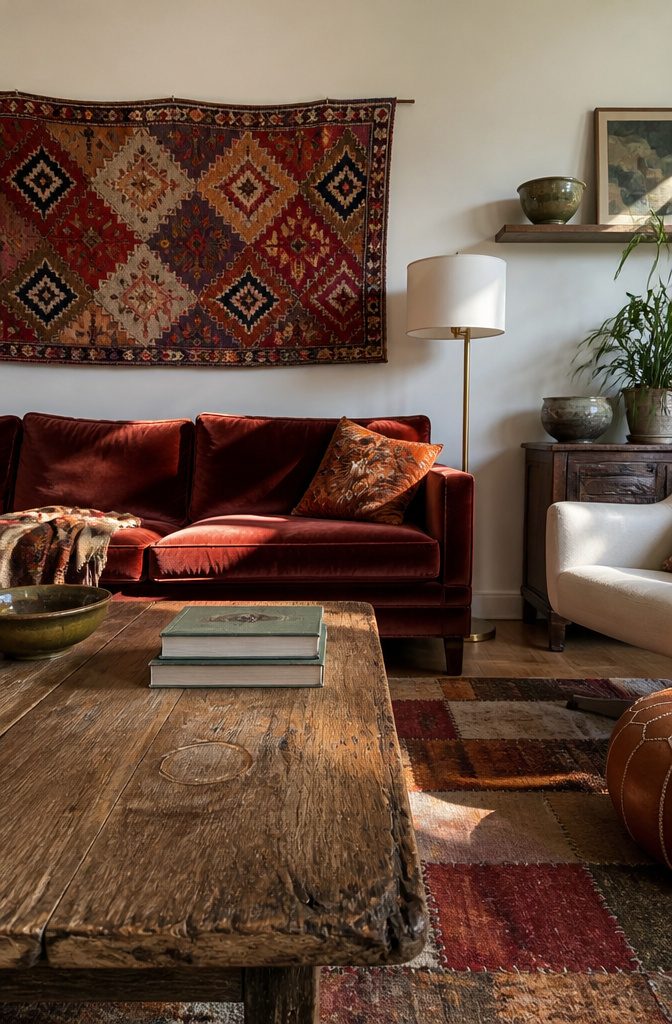
A 19th-century Uzbek textile over a red velvet sofa next to a sleek modern lamp — that’s the look. Boho works because it pairs things from different eras without trying to match them.
The contrast is the point. A traditional wooden coffee table grounds a contemporary sofa, and a quirky vintage find sits next to something you bought last month.
The appeal is the collected-over-time feeling, the sense that the room grew piece by piece rather than arriving all at once from a single store.
I look for one or two older items — an antique side table, a framed textile, a carved wood piece — and let them anchor the space while newer furniture fills in around them.
The old pieces carry texture and history; the modern ones keep it from tipping into museum territory.
Start with furniture that spans that range, then bring in smaller finds. A vintage compote vase on a clean-lined shelf, patchwork rugs under a minimal sofa, French or Mexican antiques next to mass-market seating.
Personal artworks help, too — they break up the commercial polish and make the mix feel intentional rather than accidental.
6. Make Seating Relaxed and Comfortable
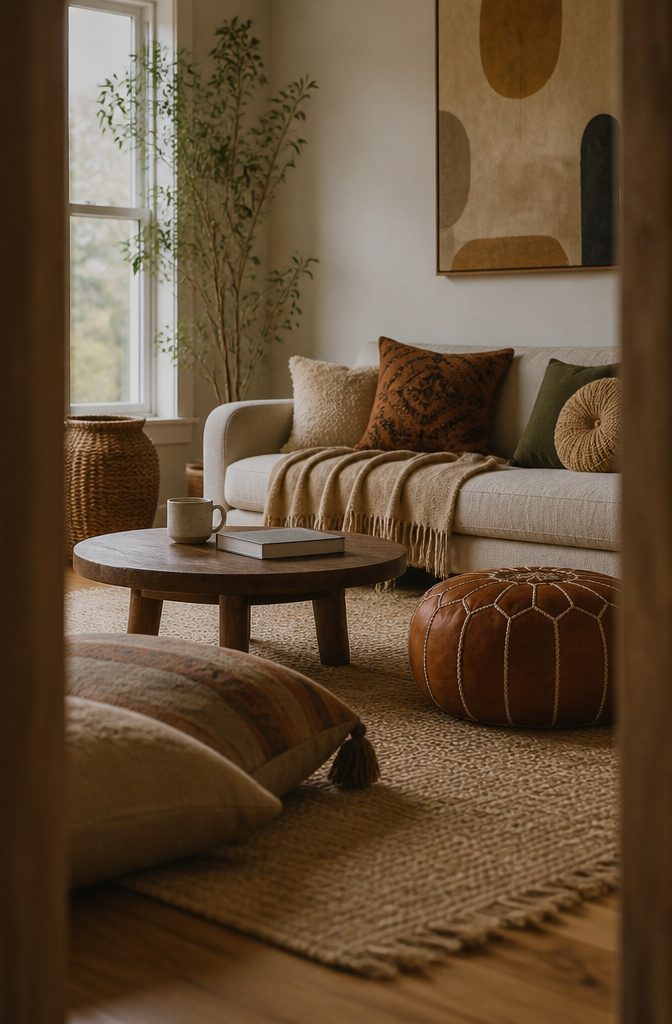
A low-profile sofa or a set of floor cushions makes the room feel approachable right away. Boho seating works best when it sits closer to the ground and invites people to settle in without worrying about formality.
A Moroccan pouf at $298 or a leather ottoman at $154.99 gives you flexible seating that moves where you need it, and both double as a footrest when the room is full.
Floor cushions fill in around a coffee table or against a wall, and a set of 5 cushion covers in 24×24 gives you enough to scatter without the room looking cluttered.
You want seating that adjusts to how you actually use the space—one night it’s extra seats for friends, the next it’s a reading corner with your back against the sofa base.
Keep edges soft and shapes organic, and skip anything that makes you sit upright.
7. Use Rugs to Ground or Define the Room
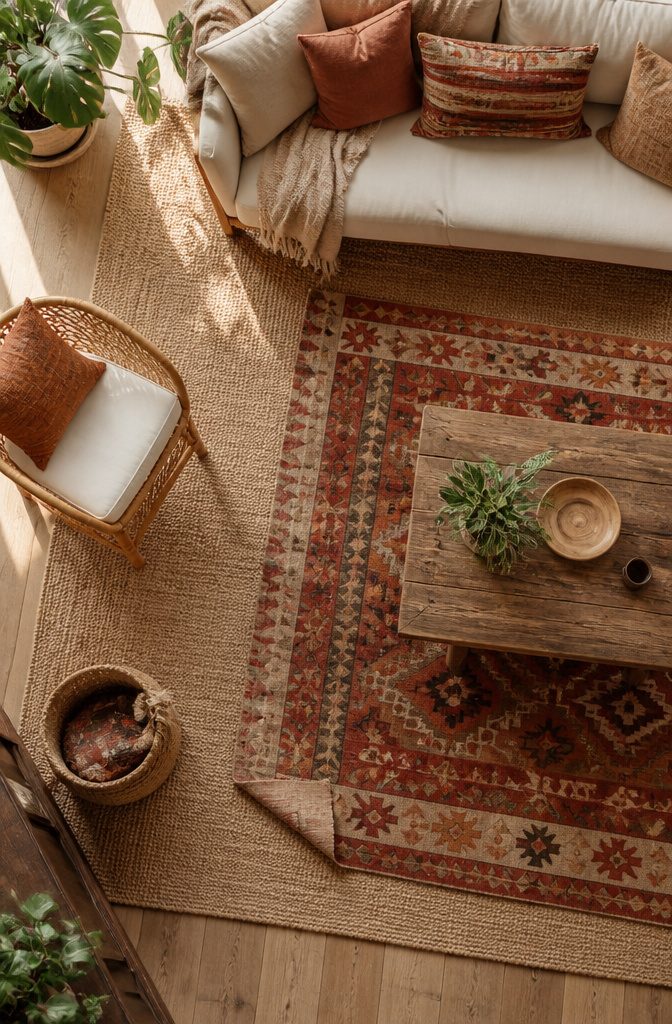
A rug can pull the room together or mark where the seating actually happens.
A large jute rug ($29 to $549) grounds the whole zone and keeps the furniture from feeling disconnected, especially in a small room where a tiny rug makes everything float.
Moroccan shag rugs ($275 to $1500) add warmth and pattern if you want the floor to carry more color.
Some people layer rugs — a flatweave jute under a smaller patterned kilim or Moroccan piece.
It works when the colors share at least one or two tones, but in a compact space one larger rug usually reads cleaner than two competing for attention.
If you do layer, the base rug should be neutral enough that the top one stays the focus.
Texture matters as much as pattern. Shaggy wool feels different underfoot than sisal or jute, and that tactile shift is part of what makes a boho room feel lived-in rather than decorated.
8. Add Personal Art and Wall Decor
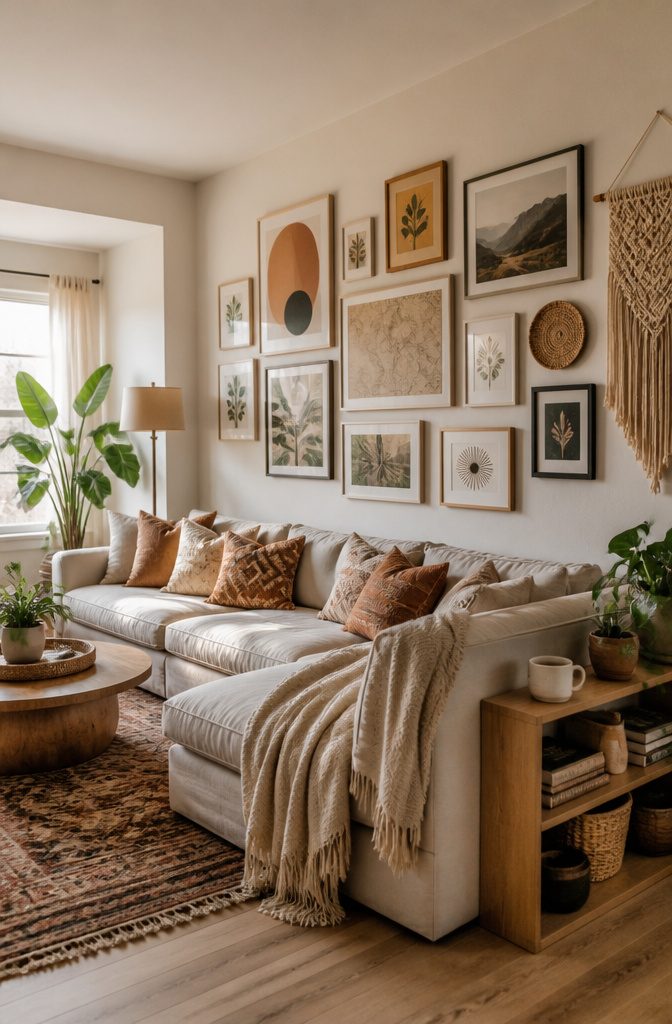
Art on the walls is where a boho living room stops looking decorated and starts looking lived in.
A gallery wall of prints, photographs, and objects from places you’ve been tells the story no catalog can script — maps from cities that meant something, original pieces that caught you off guard on a trip, family pieces that already had a history before you hung them.
Macramé wall hangings and woven tapestries work as anchor points when a wall feels bare, and their texture softens hard surfaces without needing a frame.
A single large piece centers the room; smaller hangings layered near doorways or tucked above shelves add depth without fighting for attention.
Art prints let you test ideas on a tight budget — Etsy and Target both carry options you can swap by season — and mixing abstract themes with natural imagery keeps the eclectic feeling grounded instead of chaotic.
The goal is not curation; it’s showing what you actually care about.
9. Create Warm, Soft Lighting
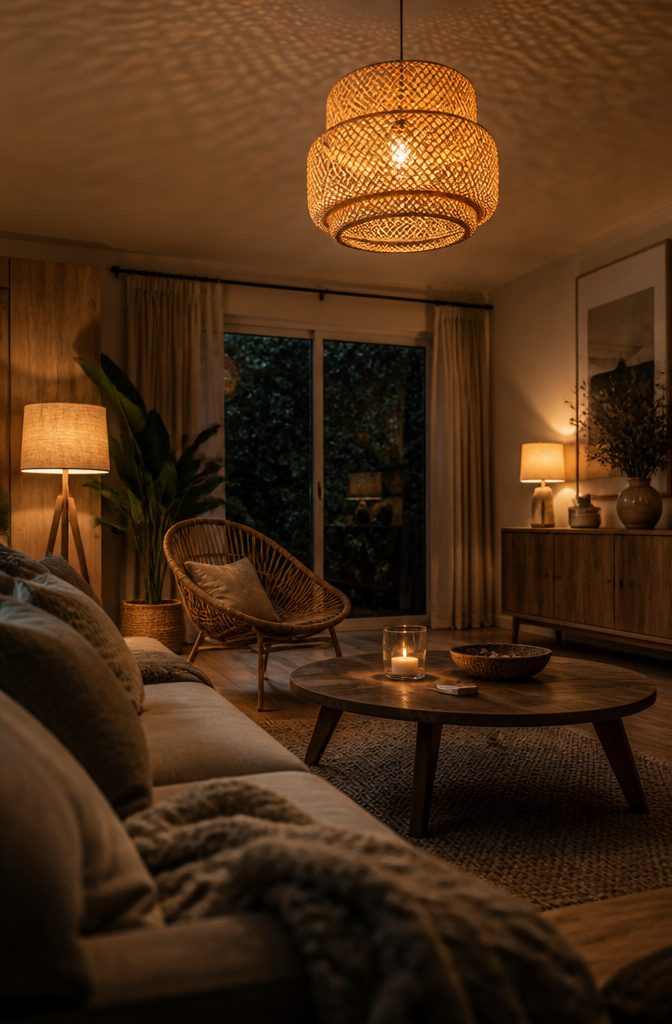
Overhead light flattens a boho room. Lamps scattered around the space pull the eye to different heights and let you control how much light each corner gets.
A rattan chandelier or woven pendant drops warm light without the glare of a ceiling fixture, and the texture of the shade matters as much as the bulb inside it.
Floor lamps with fabric or macramé shades work near seating; table lamps fill in the gaps on sideboards or plant stands.
Candles add another layer when you want the room to feel slower. Globe lanterns or painted paper fixtures bring in that low, diffused glow boho spaces are known for, and the flicker changes how the textures read.
Fairy lights are fine if you keep them subtle—wrapped around a beam or tucked behind a shelf, not draped across every surface.
A Tassel Chandelier runs $194 and gives you a fixture that holds its own without tipping into formal. Warm bulbs in everything, and if the fixture has a dimmer, use it.
10. Add Global or Cultural Accents
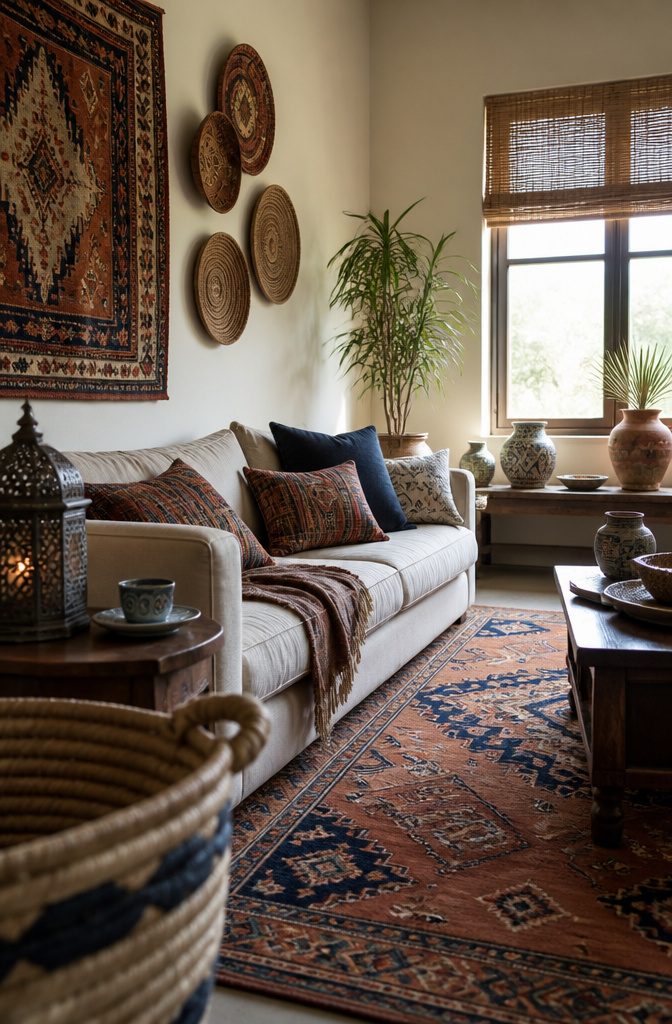
The overlap between boho and global design isn’t accidental.
Boho grew out of artists and travelers mixing what they found—Indian block prints, Moroccan lanterns, Mexican ceramics, African baskets—so a living room that leans boho almost expects pieces from more than one place.
A Moroccan rug under a low sofa, Turkish pillows on the arm, a set of woven baskets on the wall gives the room that collected-over-years look without requiring years or a passport.
Pattern matters more than matching. Kilim stripes next to African mud cloth works because the rhythm changes between them.
A 19th-century Uzbek textile over a velvet sofa, the way Kathryn Ireland used one in Santa Monica, pulls off that same trick—different eras, different countries, same visual weight.
The room reads as intentional rather than random when the colors talk to each other even if the patterns don’t.
Start with one or two pieces that anchor the room, then layer smaller accents around them.
A large patterned rug or a bold textile hanging sets the palette; pottery, lanterns, and smaller woven goods fill in from there. I keep the base furniture neutral so the global pieces can move or rotate without repainting walls.
11. Make a Nook or Small Zone for Relaxing
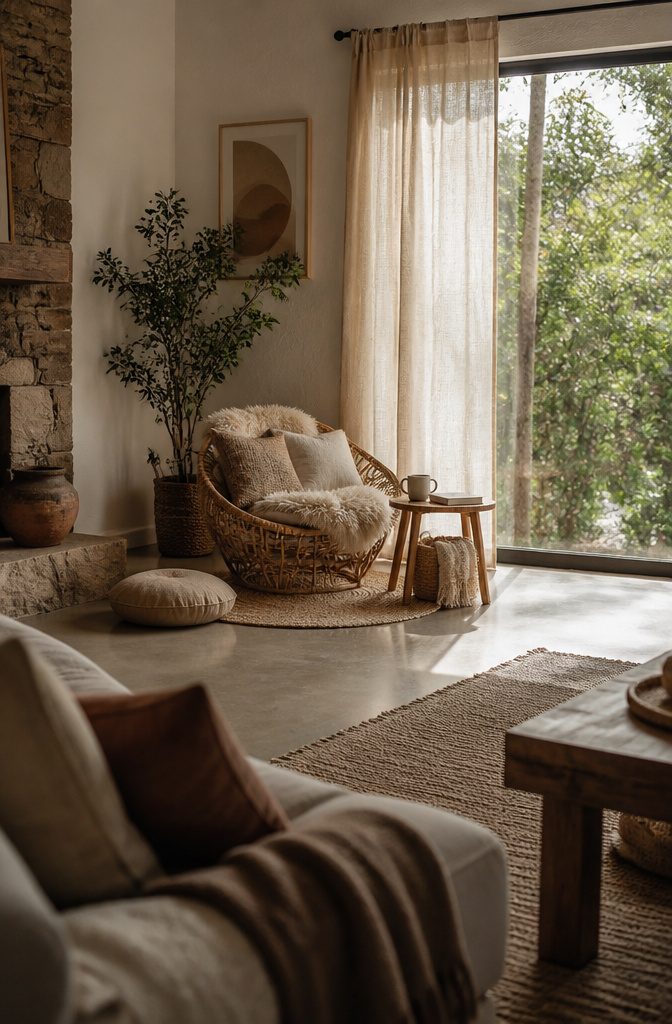
A corner set up for reading or unwinding gives the room a place that feels intentionally yours. I look for a spot near a window or away from the main seating, somewhere quiet enough that it reads as separate.
A rattan chair or an oversized cushioned seat works—both have the relaxed profile boho rooms lean on—and a soft throw and a couple of pillows make it somewhere you actually want to sit for more than five minutes.
Floor cushions or poufs keep the seating low and informal, which opens up sightlines if the room is small.
A side table next to the chair holds a book or a mug without cluttering the arm. Layering a small rug under the nook grounds it visually and adds warmth underfoot, especially on tile or hardwood.
12. Balance Visual Interest with Restraint
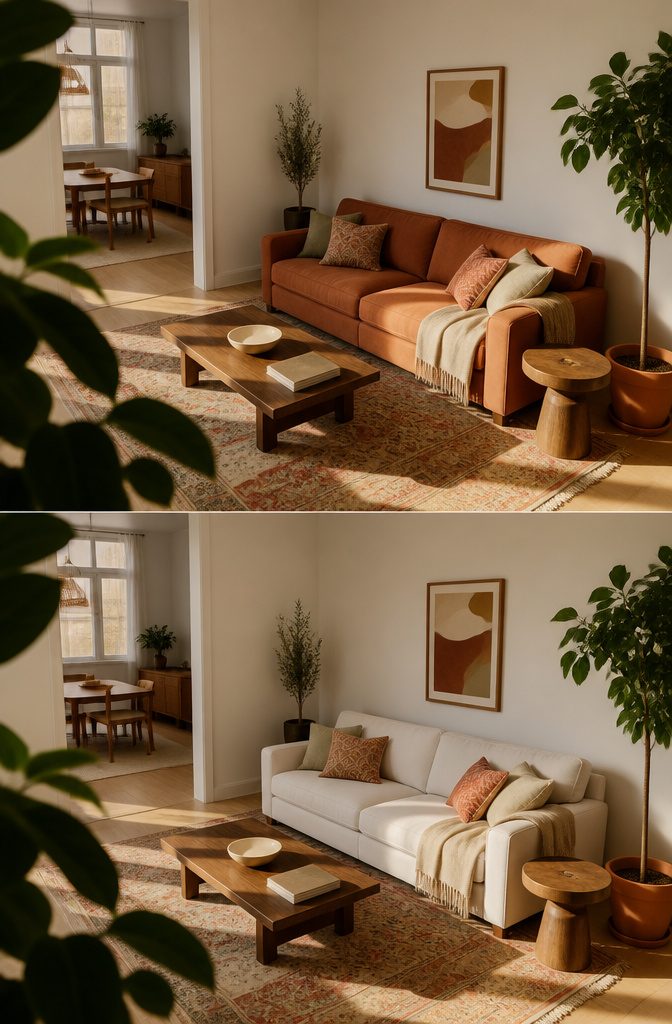
A boho living room pulls together multiple textures, colors, and objects without looking like a flea market exploded. The line between layered and cluttered comes down to repetition and breathing room.
If the rug brings in rust, cream, and sage, those same colors should show up in pillows, throws, or a piece of art—not ten new ones. That consistency lets you add more pieces without the room fragmenting into chaos.
Space matters as much as what fills it. Not every corner needs a plant stand, and not every surface needs a stack of books or a candle.
Leave walkways clear around the sofa and coffee table, keep one wall relatively open, and let a few larger pieces anchor the room instead of scattering small objects everywhere.
You want a room that feels collected over time, not decorated in a single weekend.
Small-Room Planning
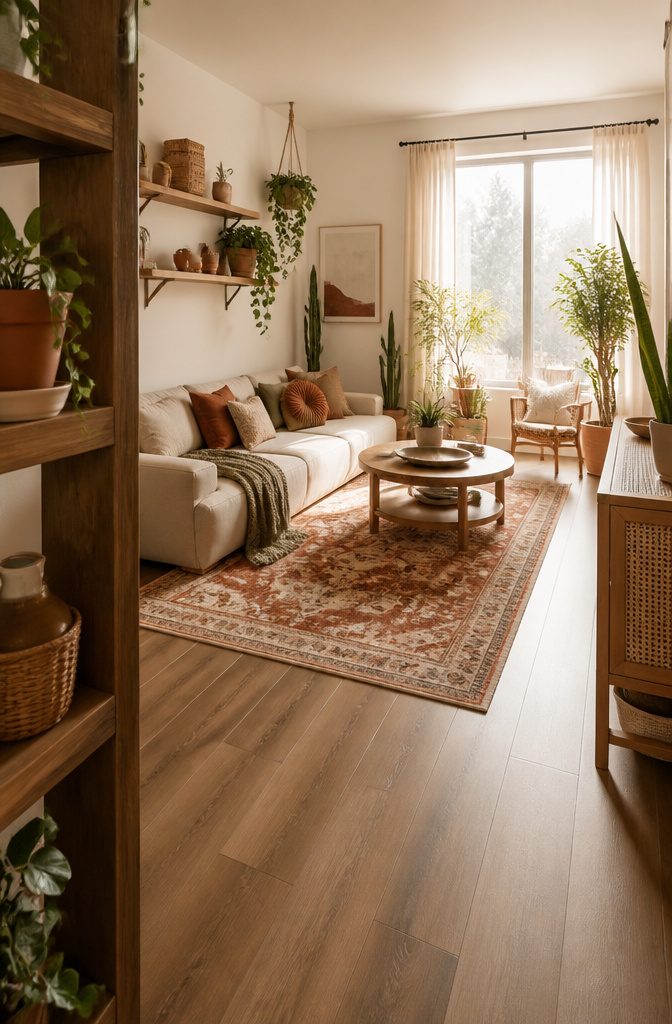
A small living room can support the boho look if you keep the floor open and let furniture breathe.
Pick a sofa with clean arms or a lower profile, and avoid oversized accent chairs that shrink a narrow room. One larger rug works better than a small one that makes the seating feel disconnected.
Free up floor space by going vertical:
- Use wall-mounted shelves or hanging plants instead of filling corners with baskets and floor cushions.
- Keep 2 to 3 repeated colors across pillows, rug, and decor rather than mixing several bold patterns with no shared color.
- Choose storage furniture with warm texture so daily items stay out of sight.
- Leave walkways clear around the sofa and coffee table.
Low seating—floor cushions or a low-profile sofa—makes the room feel more open while keeping it grounded.
Start With Furniture Before Accessories
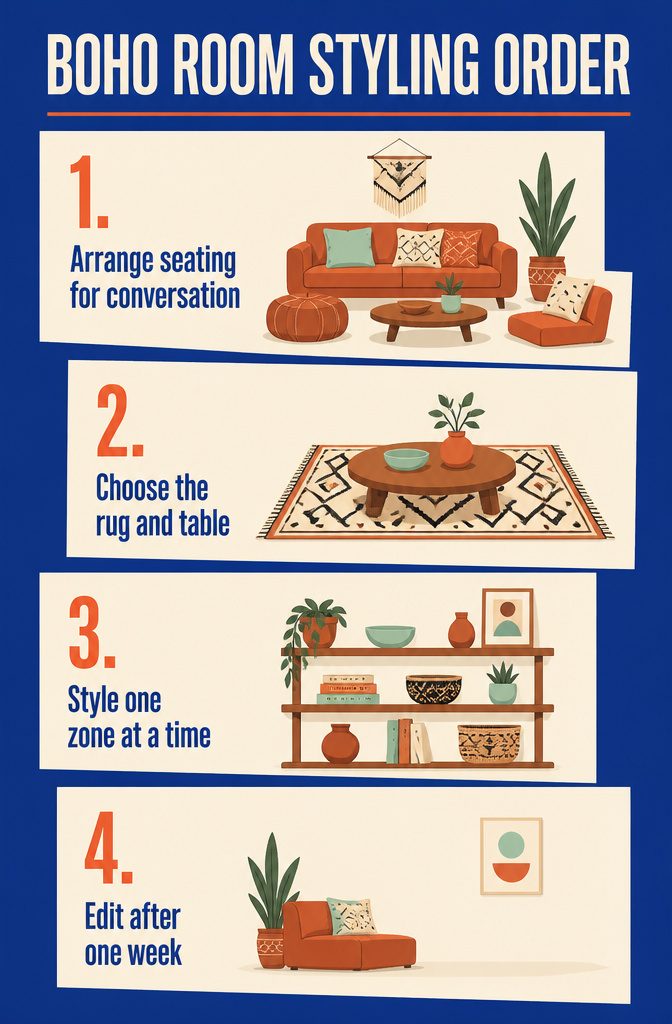
I build furniture layouts first because a low-slung sofa or floor cushions arranged for actual conversation shape the room’s character more than any pillow pile can fix later.
Once seating makes sense for how you move through the space and where people actually sit, the base palette follows—a rug that anchors the seating, a coffee table that clears your shins, maybe one large textile on the wall.
Accessories come after that framework is working, and they go on one surface or zone at a time rather than all at once.
A bookshelf styled completely before the mantel gets touched keeps you from buying six trays because each spot looked bare in isolation.
Editing happens when you step back after a week; what felt necessary the day you set it out often turns out to be the one thing the room doesn’t need.
Budget Approaches
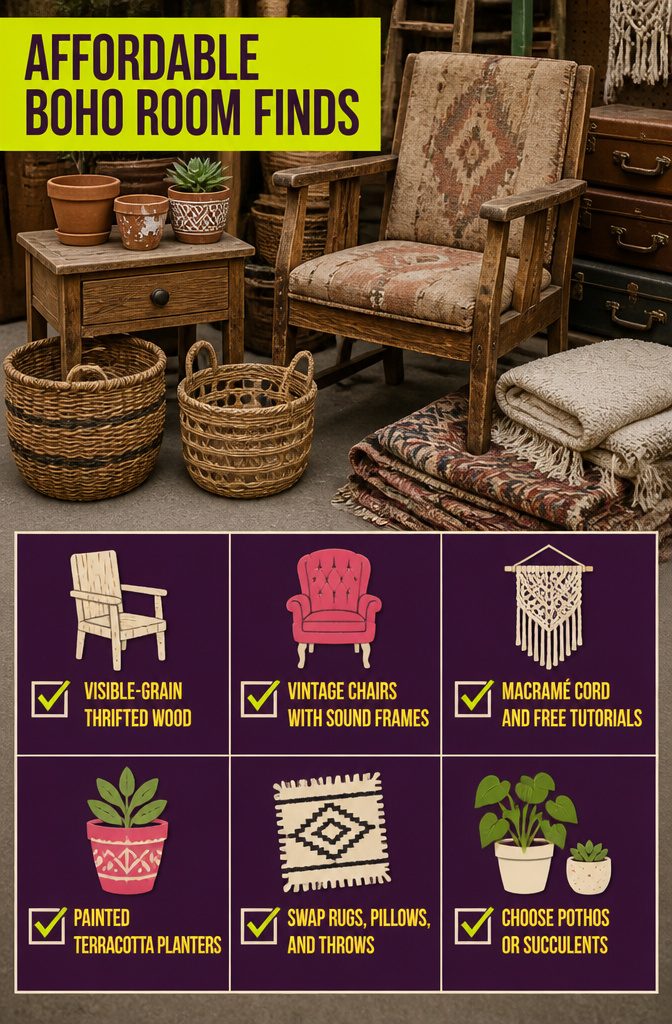
Thrift stores and flea markets are where a lot of this style comes from in the first place, and the prices let you test ideas without commitment.
Look for wood furniture with visible grain, vintage armchairs with good bones, or woven baskets — even worn pieces work if the structure is sound. A can of paint or new upholstery fabric costs less than buying new.
DIY projects worth the time:
- Macramé wall hangings — cord is cheap, tutorials are free, and the result looks intentional even if the knots are loose
- Painted planters from terracotta pots
- Upcycled furniture: an old door becomes a coffee table, a ladder turns into a bookshelf, vintage suitcases stack into storage
Swap textiles before spending on furniture. A new rug, throw pillows, and a blanket change the whole room for a few hundred dollars, and you can replace them again when you’re ready for something different.
Smaller plants like pothos or succulents cost less than larger varieties and still fill the space.
Frequently Asked Questions
What defines a boho living room style?
A boho living room mixes colors, textures, patterns, and natural materials in a relaxed way that looks collected over time rather than decorated all at once.
It includes pieces like woven rugs, plants, vintage finds, handmade details, and soft lighting. The style balances layered warmth with enough breathing room to keep the space from feeling cluttered.
What colors are best for a boho living room?
Start with warm, earthy tones like terracotta, sandy beige, olive green, and mustard yellow as your base.
Then layer in either muted accents or deeper jewel tones like emerald green or sapphire blue depending on how much energy you want. Pick 3 primary colors for your foundation, then add 1 or 2 accent colors through art, throws, or cushions.
How can I make my small living room look boho?
Keep the floor open with a low-profile sofa or floor cushions, and use one larger rug instead of a small one that disconnects the seating.
Go vertical with wall-mounted shelves or hanging plants rather than filling corners with baskets. Stick to 2 or 3 repeated colors across pillows, rug, and decor, and leave walkways clear around the sofa and coffee table.
What are some budget-friendly boho living room ideas?
Thrift stores and flea markets carry wood furniture with visible grain, vintage armchairs with good bones, and woven baskets at prices that let you test ideas without commitment.
DIY macramé wall hangings from cheap cord, paint terracotta pots, or upcycle old furniture like turning a door into a coffee table.
Swap textiles before spending on furniture since a new rug, throw pillows, and a blanket change the whole room for a few hundred dollars.
What types of plants work well in a boho living room?
Snake plants and succulents handle low light and need almost nothing from you. Peace lilies work in dim corners, string of hearts trails down from a macramé hanger, and fiddle leaf figs make a statement in bright corners.
Cacti and small potted plants cluster well on a coffee table or windowsill, and botanical prints extend the greenery to the walls when floor space runs out.
Can a boho living room still look modern and uncluttered?
Yes, if you keep the floor open and let furniture breathe.
Pick a sofa with clean arms or a lower profile, use 2 to 3 repeated colors across pillows and decor rather than mixing several bold patterns with no shared color, and leave walkways clear.
Space matters as much as what fills it: not every corner needs a plant stand, and not every surface needs a stack of books or a candle.
How can I incorporate patterns and textures into my boho living room?
Layer rugs over rugs, velvet pillows next to linen ones, and a woven throw across the arm of the sofa.
Start with a statement rug like a Turkish kilim or Moroccan Beni Ourain, then add smaller pieces that vary the feel but keep some thread of connection.
Mix wool, linen, jute, cotton, and woven fibers so larger patterns balance smaller intricate ones and smooth surfaces sit next to tactile ones.